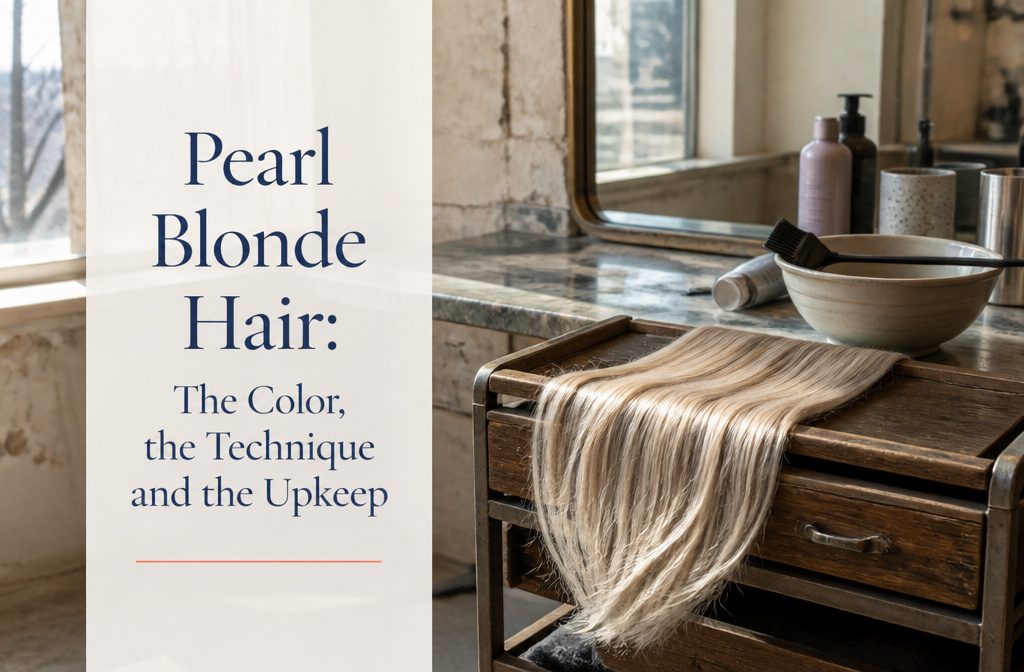
Pearl blonde is a light, multi-tonal blonde between champagne, vanilla, and cool beige, made by lightening first and then laying a toner or gloss over it.
It’s built for cooler undertones. Go very cool and very pale on warm or darker skin and it can read flat or ashy, so the toning decides everything.
What Pearl Blonde Looks Like
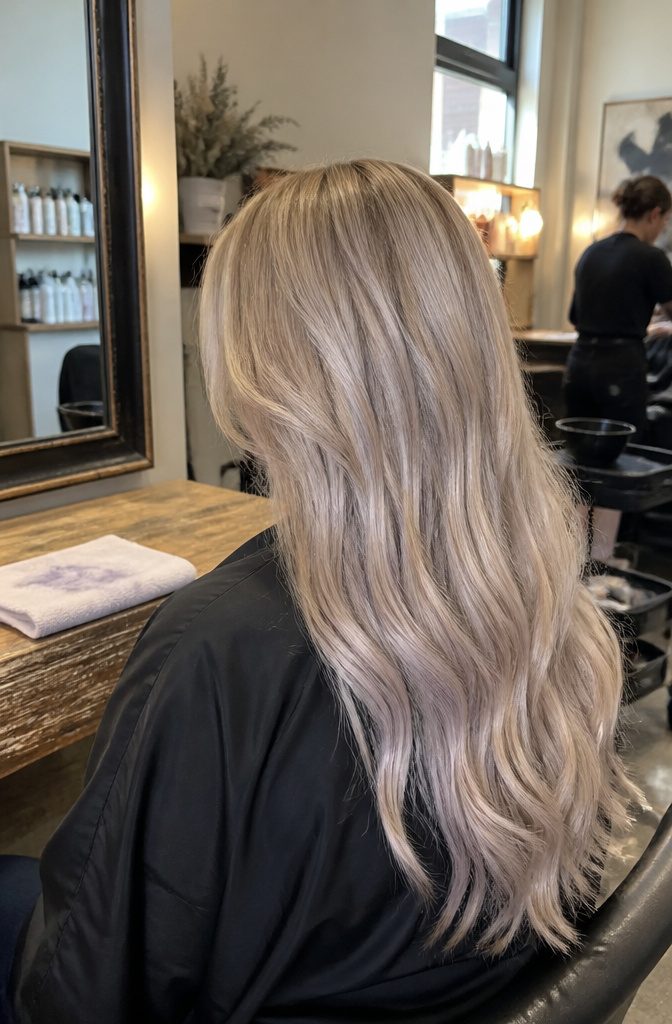
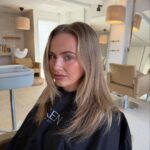
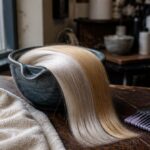
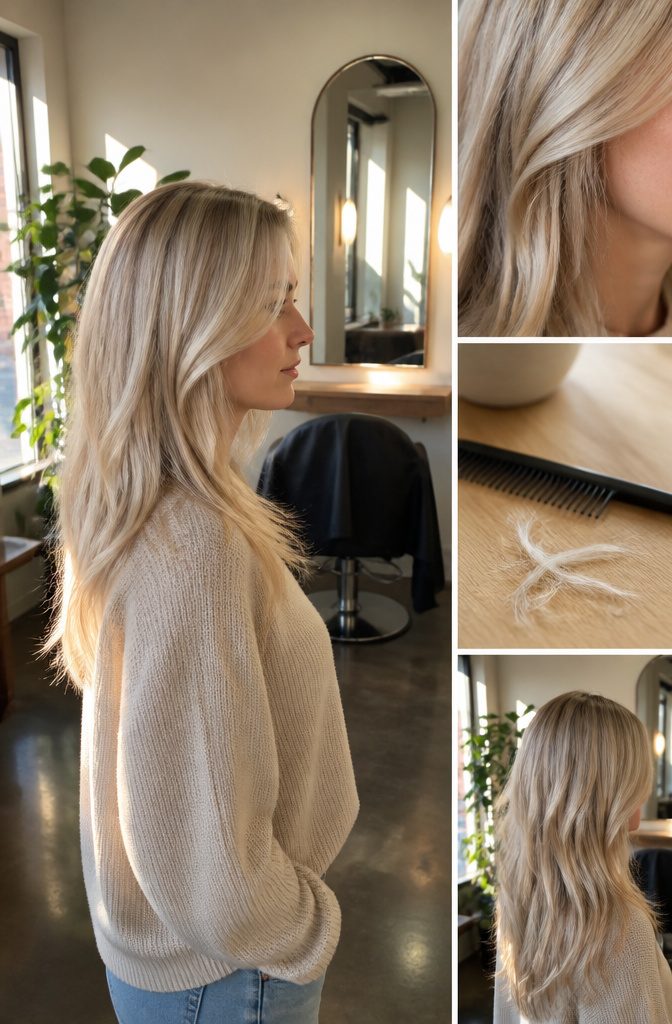
Pearl blonde sits somewhere between champagne, vanilla, and cool beige, a light, dimensional blonde with cool or neutral undertones and a soft, almost iridescent finish.
The shade can lean slightly beige, champagne, ivory, or even a whisper of pink depending on the starting color and the toner used.
I think of it as multi-tonal the way an actual pearl is: hints of silver, grey, blue, green, sometimes yellow, all swirled together rather than a single flat tone.
That separates it from stark, silvery platinum, which reads much paler and cooler.
Pearl blonde has a creamy quality that keeps it from looking overly white or flat. It also shifts depending on the light: bright and cool in daylight, softer and warmer indoors.
The range runs from nearly platinum to deeper silver, and the best versions blend cool silvery shades with warm creamy ones for that reflective quality.
How Pearl Blonde Is Created
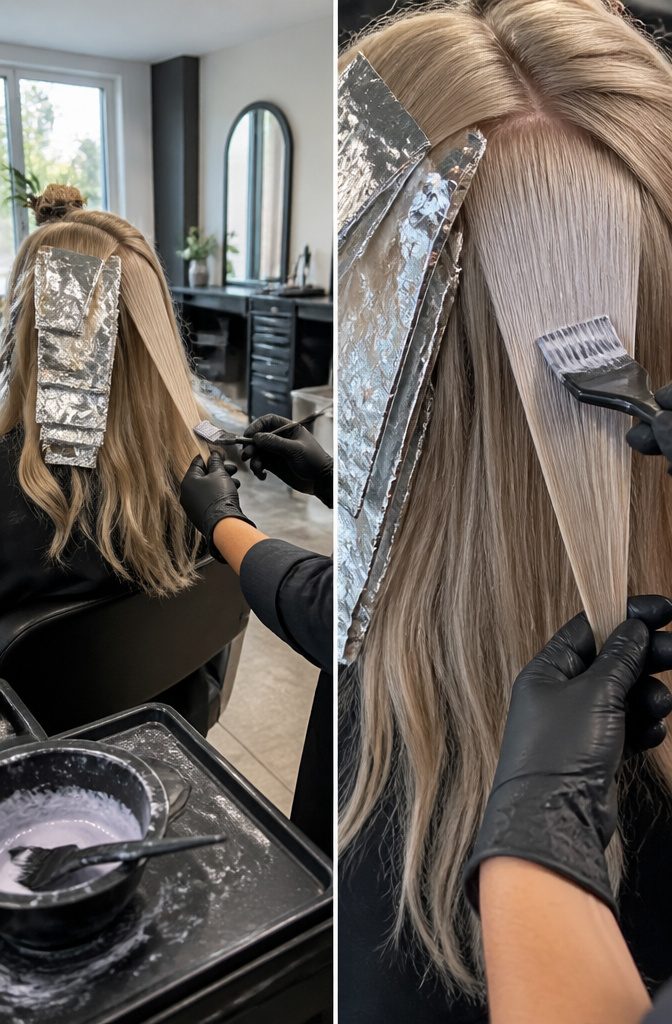
The color is made in two parts: lightening first, then a toner or gloss on top.
The pearl is the tone over the top, and that second step is where the iridescence happens. Pearl blonde is easiest to achieve on a light base, but the process changes depending on where you start.
Darker hair often gets foils because they hold body and scalp heat while the lightener develops, and a dark background helps the light tones stand out.
Colorists use L’Oréal Professionnel toners to counteract the natural warmth from lightening and make way for that iridescent shine.
The result is champagne-y, beige-y, biscuity but still cool-toned without reading ashy or dull. You can tone as lightly or as heavily as you want, so if you want a little natural warmth to shine through, tone more lightly.
A little violet customizes a cooler result for cooler skin tones, though cooler shades work across the board.
Who Pearl Blonde Suits
The question of who can wear pearl blonde doesn’t have one agreed answer. Sources differ on whether the shade suits a wide range of skin tones or works best on cooler undertones.
Two colorists say pearl blonde can be tailored to suit pretty much anyone by adjusting how heavily you tone, and that cooler shades work across the board.
Another source warns that the cool, silvery sheen contrasts strongly with warm undertones and may highlight the different hues in your skin if you’re warm-toned or have darker skin.
A third source notes that the result varies with your starting color and how the toner is applied but gives no rule about skin tone at all.
I think the answer lies in the toning process itself: if your colorist can leave a little natural warmth showing through or adjust the violet, the shade becomes more forgiving.
Go very cool and very pale on warm skin and the color can wash you out, leaving your face looking sallow next to the hair.
Keeping Pearl Blonde Bright
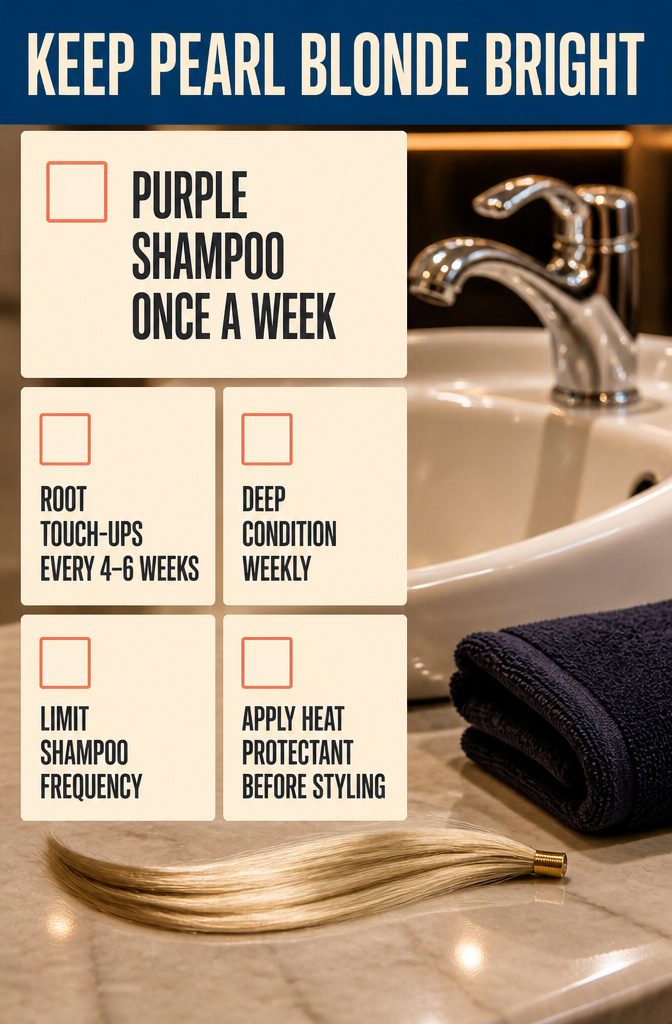
Pearl blonde sits on the cooler end of the spectrum, and purple or violet shampoo once a week keeps yellow tones from creeping back in.
Between salon visits, that one step does most of the work. Fanola No Yellow Shampoo and Amika Bust Your Brass Cool Blonde Repair Shampoo both keep things neutral without overdoing it.
You might get balayage done three or four times a year, but you can tone at any point in between those visits for an instant refresh to keep on top of health and shine.
That lighter schedule only works if you keep up the tone in between. A few other basics:
- Touch-ups every 4–6 weeks to stay ahead of root growth
- Deep conditioning weekly, since bleached hair dries out faster
- Limit how often you shampoo to preserve color
- Heat protectant before styling to prevent breakage
If purple products leave the color looking flat or overly cool, a salon gloss brings the brightness back.
Pearl blonde with a gradual root-to-end fade needs less work overall, since the grow-out reads as intentional. For moisture, Olaplex Rich Hydration Mask keeps the surface smooth enough to hold light the way this color is supposed to.
Cuts That Show the Color
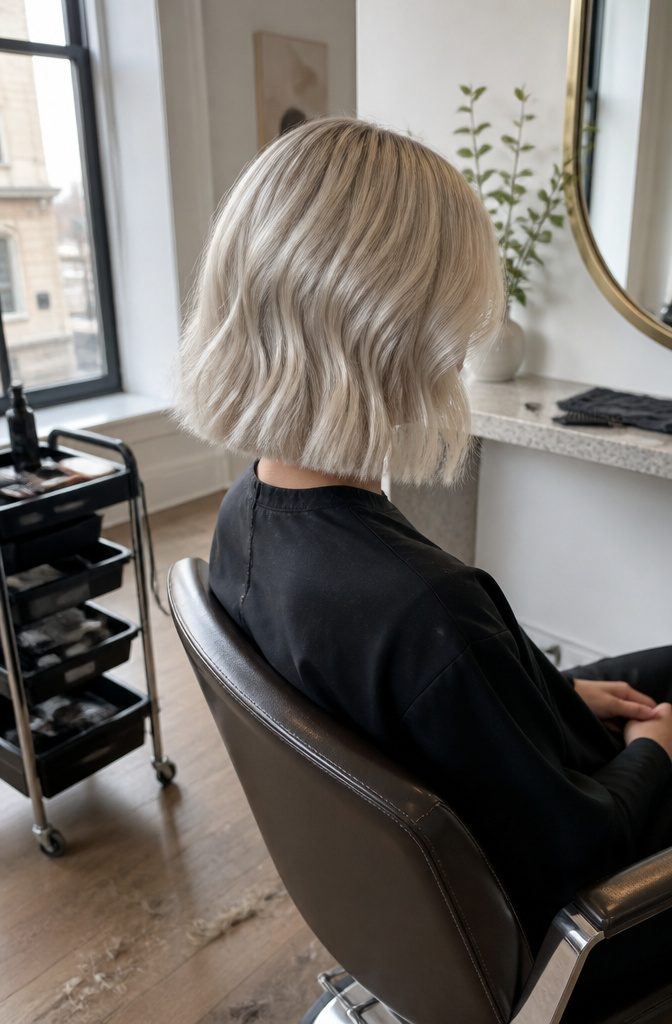
The cut matters because movement reveals the light and depth in pearl blonde. A flat, textureless style makes the color look one-dimensional, while layers, waves or curls let the shade shift as the hair catches the light.
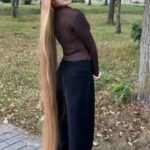
Pearl blonde works on pretty much any length except very short hair. Long layers feel soft and romantic, especially with a loose bend or brushed-out wave.
A blunt bob gives the shade a sharper, more graphic quality and puts the reflective finish front and center. Cropped cuts and pixies can look striking, too, because the color becomes part of the silhouette.
Face-framing layers are another good option. They brighten the area around your face without requiring every strand to be equally light.
But layering the crown too heavily can make balayage look patchy, since the layers tend to sit just above the blonde. I’d go for more movement around the face instead.
Asking Your Colorist
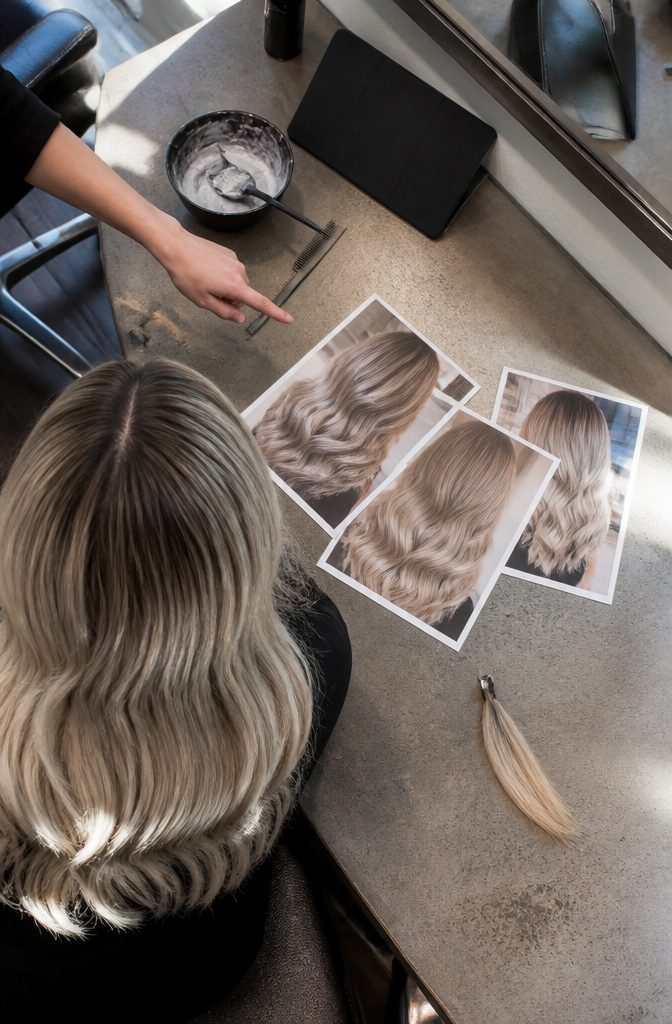
Bring several photos that show pearl blonde in different lighting, since the shade can photograph warmer or cooler depending on the setting.
Explain whether you want a brighter all-over look or more dimensional blonde with a softer root. If you want the color to grow out with less contrast, ask about a subtle root melt or softly shadowed root.
Some colorists want a detailed brief, while others do better with a single photo and a free hand. One approach is to bring cool-toned reference images and discuss your current color and the tone you want.
The other is to let the colorist assess how your hair lifts and choose the tone themselves, since darker hair has limits on lift and they need freedom to get the technique right.
I lean toward the first if you know you want pearl balayage specifically, but if you’re open on the exact execution, giving the colorist room to judge lift and tone in the moment gets better results on darker bases.
Light Summer and Bright Winter
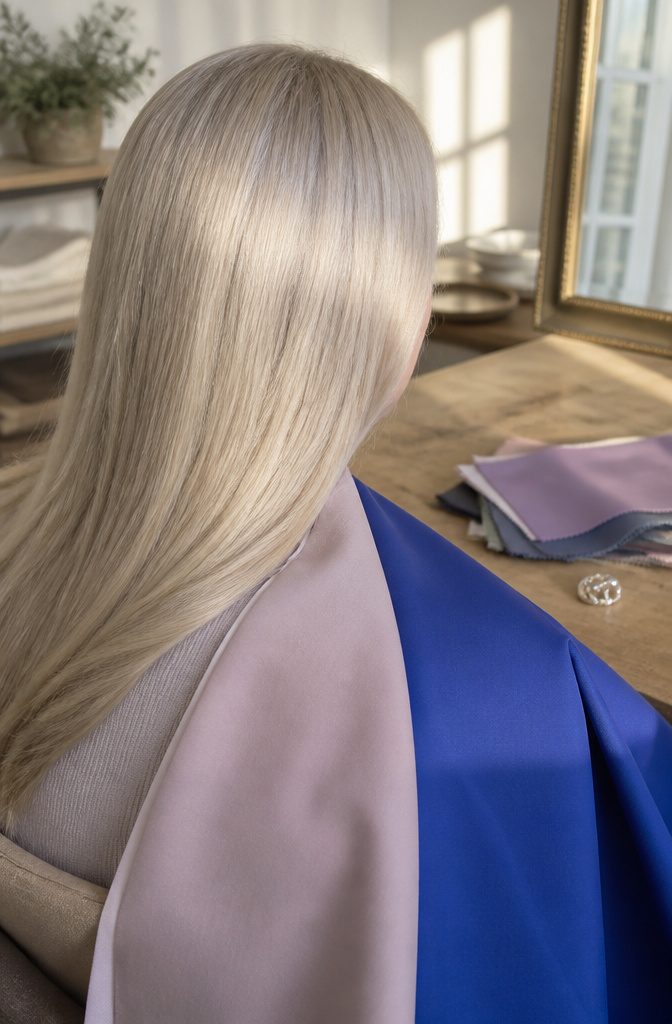
One color analysis framework links pearl blonde specifically to two seasonal palettes: Light Summer and Bright Winter.
Light Summer is built around soft, muted, cool colors, and the argument goes that pearl blonde’s light base and pearly undertones mirror that delicate, low-contrast quality.
Bright Winter sits at the opposite end of the contrast scale, defined by vivid, high-contrast cool shades, but the same cool silvery undertones that define pearl blonde fit the palette’s emphasis on clarity and brightness.
Both recommendations rest on the same underlying principle: cool undertones work best with this shade.
If your skin leans warm, pearl blonde can read flat or ashy rather than luminous, which is why the framework steers warm-toned clients toward honey or butter blondes instead.
Professional color analysis can confirm where you sit, but the quick test still holds: if silver jewelry flatters you more than gold, you are likely cool enough for pearl blonde to work.
Frequently Asked Questions
What is pearl blonde hair?
Pearl blonde hair is a light, dimensional blonde with cool or neutral undertones and a soft, iridescent finish.
It falls between champagne, vanilla, and cool beige, with traces of silver, grey, and sometimes pink or yellow blended together. It is creamier and less stark than platinum, and it looks cooler in daylight and warmer indoors.
Does pearl blonde hair suit all skin tones?
It flatters cool undertones most reliably, but the answer depends on how the color is toned.
Some colorists say the shade can be adjusted for nearly anyone, while other sources warn that a very cool, silvery pearl blonde can contrast sharply with warm undertones or darker skin.
If you are warm-toned, ask your colorist to leave a little natural warmth showing through.
How do I maintain pearl blonde hair?
Use a purple or violet shampoo about once a week to keep yellow tones from returning, and book touch-ups every 4–6 weeks to stay ahead of root growth.
Bleached hair dries out and breaks easily, so deep condition weekly, wash less often, and apply heat protectant before styling. A salon gloss between visits brings back brightness if the color starts to look flat.
How do I ask my colorist for pearl blonde hair?
Bring several photos of the shade in different lighting, since it can photograph warmer or cooler depending on the setting.
Tell your colorist whether you want a brighter all-over look or a more dimensional blonde with a softer root, and be upfront about your current hair color.
If you want an easier grow-out, ask about a subtle root melt or a softly shadowed root.