Where your hair starts sets the workload: medium brown usually gets there in a single lightening session, dark brown needs a few rounds, and black has to be lifted slowly over several visits.
The 17 looks here run from fine hairline highlights and wide ribbon highlights that leave the roots dark to all-over honey blonde with no contrast pieces, and the more of your head you lighten, the more regrowth you sign up for.
Undertone then sets the shade: warm and neutral skin take golden honey, while cool skin does better with a beige-mixed version.
1. Honey Blonde Balayage
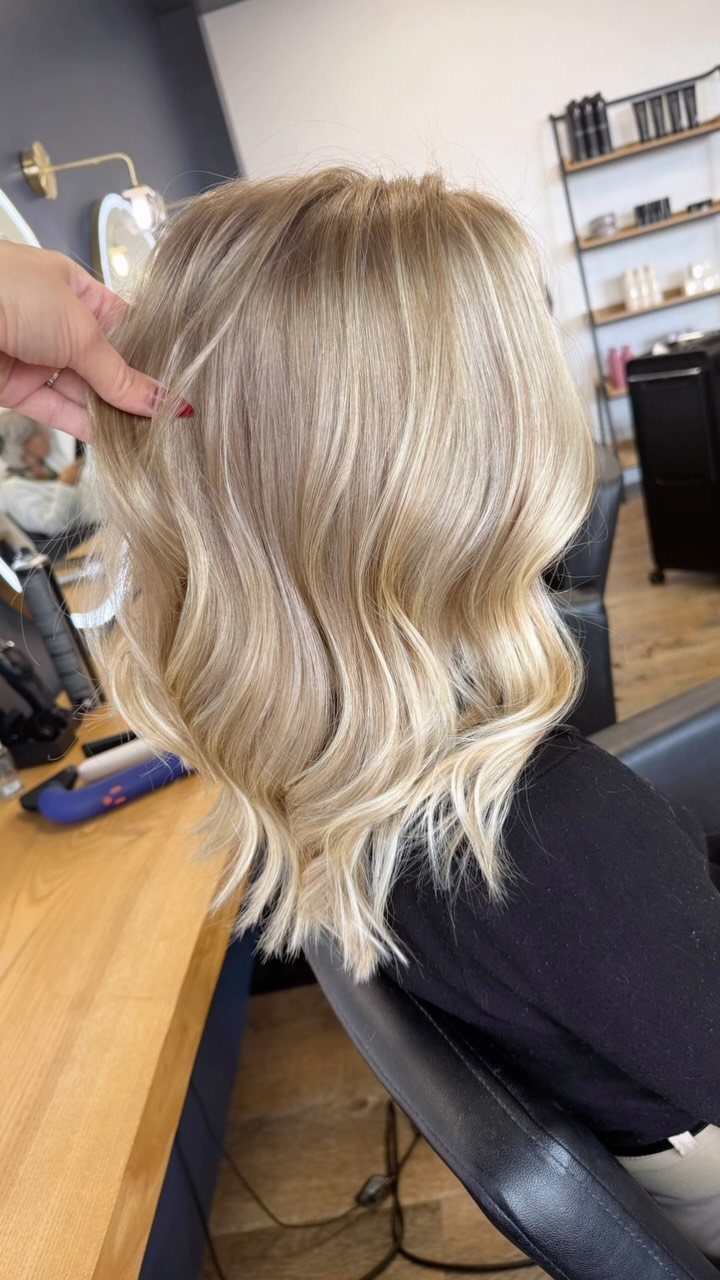
Hand-painted color is what gives this balayage its softness. The honey tones sit where the sun would naturally catch the hair, and the darker roots stay in place, so there is no hard line when it grows out.
I’d ask for that rooted blend by name. A wave or loose bend in the hair shows off the dimension best, while flat-ironed hair hides some of it.
2. Honey Blonde Highlights
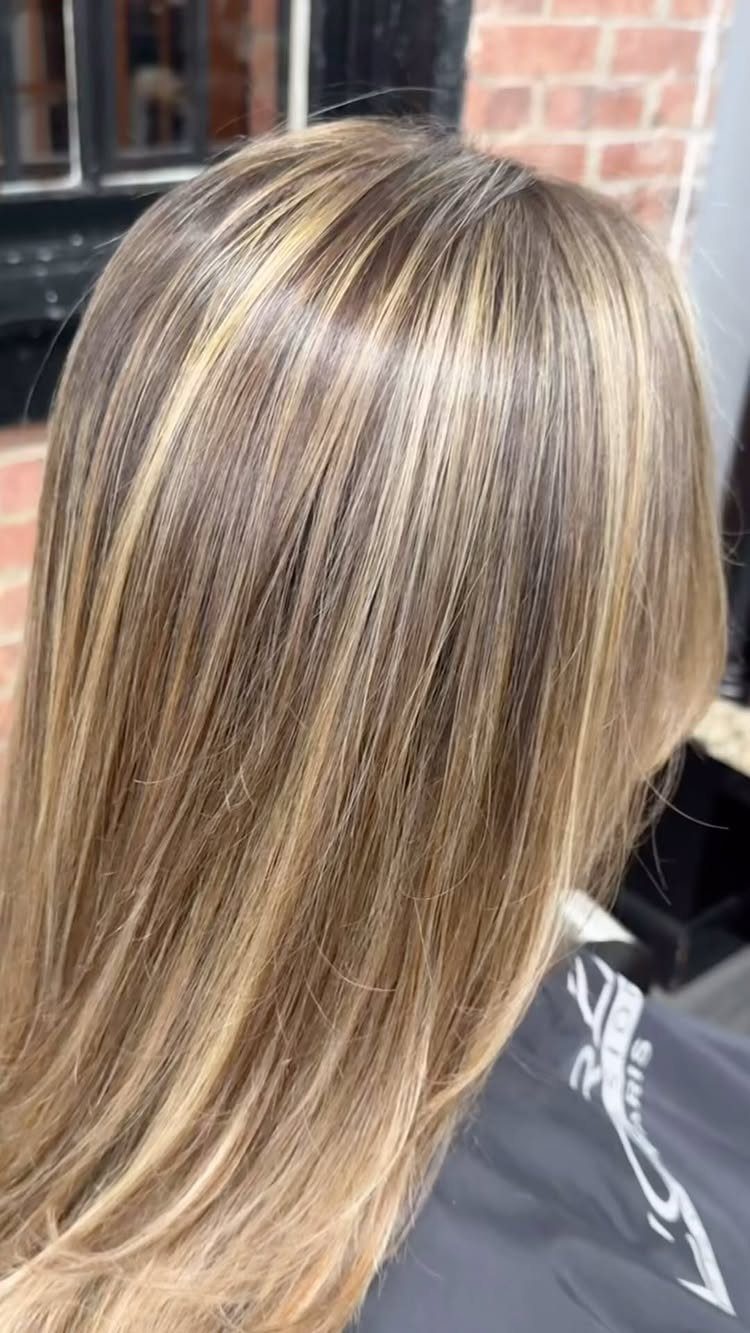
Fine honey strands are a gentle way to brighten light brown hair without a full color change. Because the highlights are thin, they warm the base and add shine rather than a stripe of contrast.
Ask your stylist for fine, honey-toned pieces and say you want warmth, not lightness for its own sake. Straight hair shows each strand clearly, which is a good test of whether the placement looks even.
3. Honey Highlights on Dark Hair
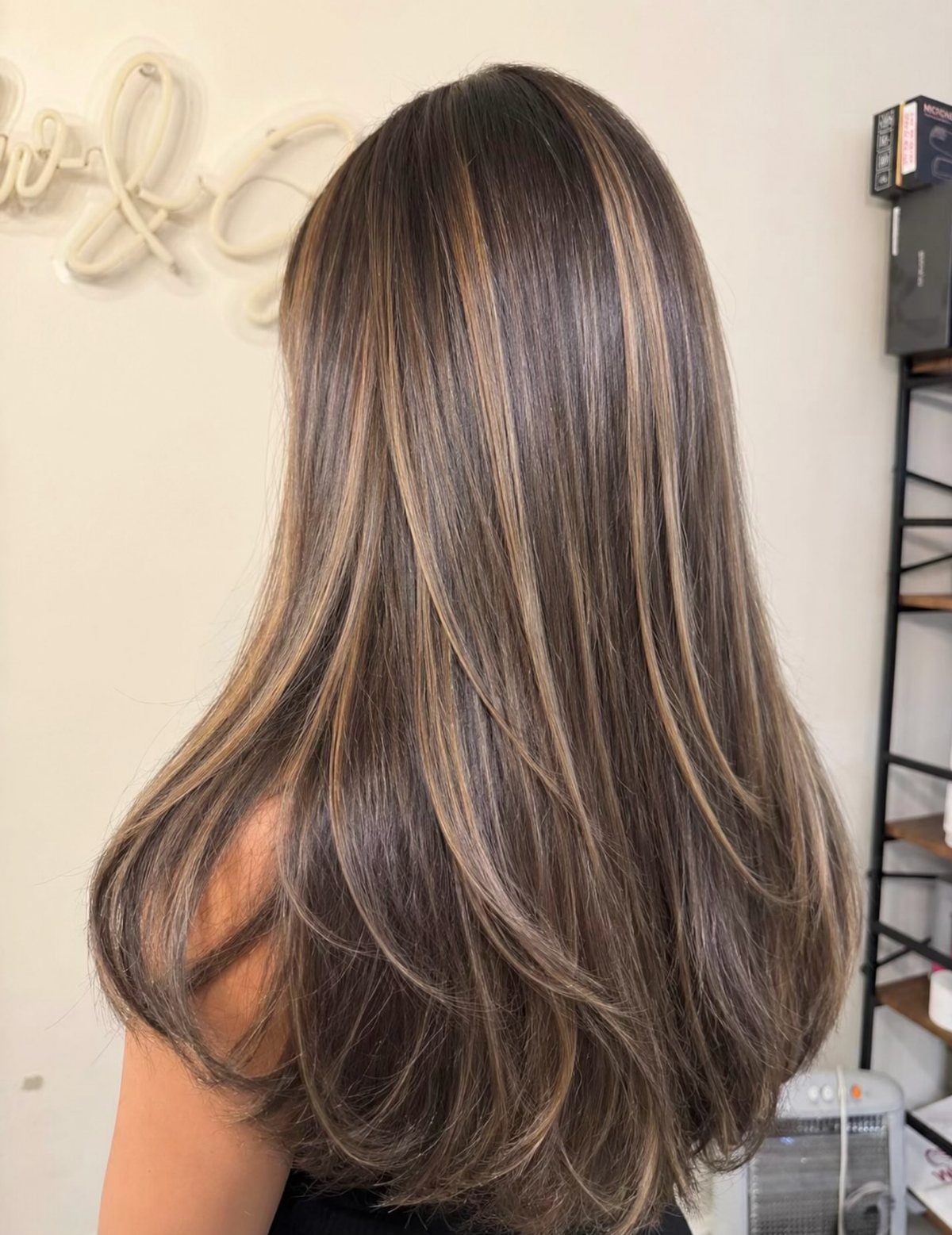
Black and brown hair can carry honey without going near platinum. Fine highlights add brightness on dark layers, and the contrast makes the movement in a cut easier to see.
My advice is to keep the strands thin and the honey tone consistent. Heavy, chunky pieces on a dark base look striped; thin ones look like light catching the hair.
4. Honey Ribbon Highlights
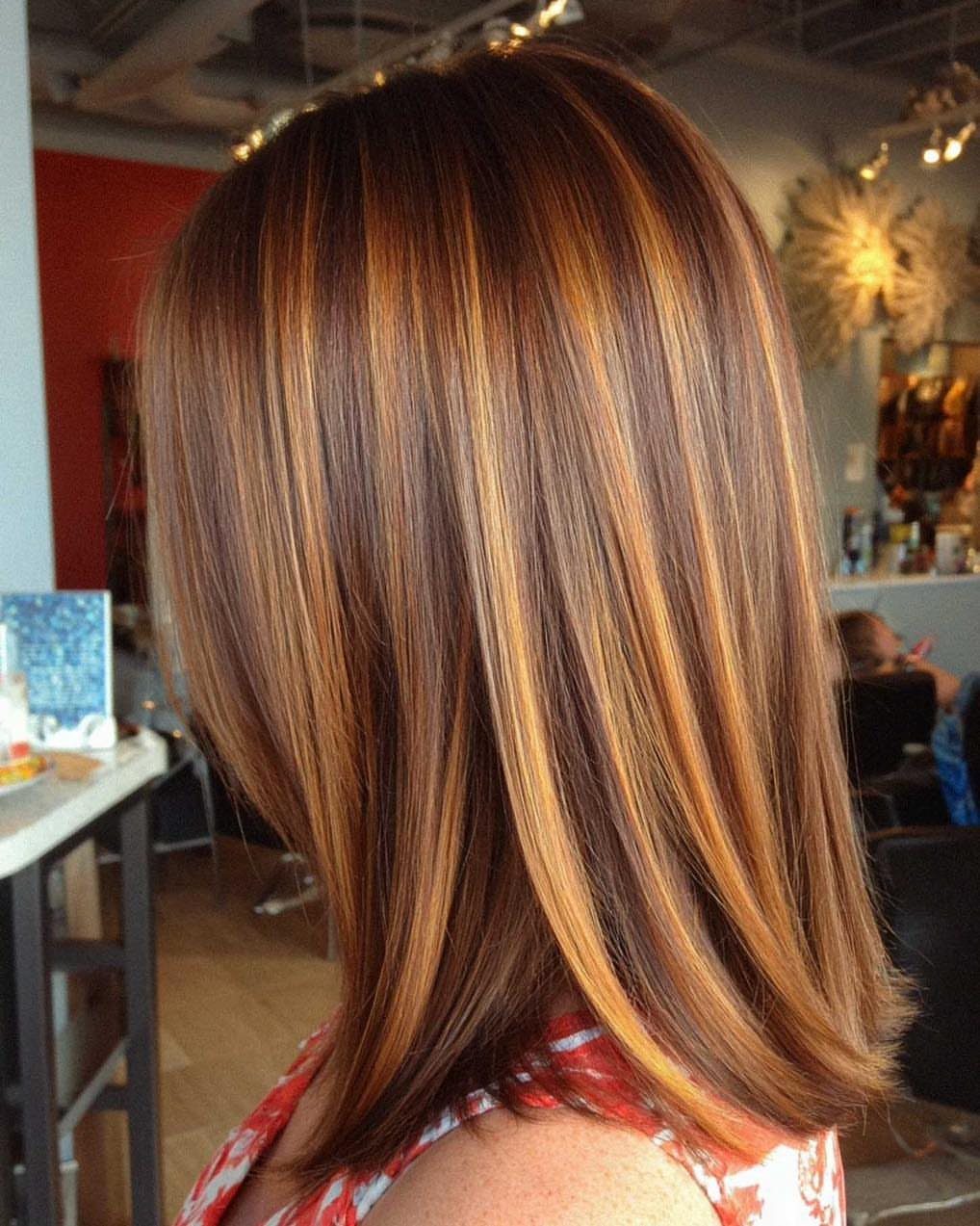
Ribbon highlights are wider, softer bands of blonde that weave through brown hair, with the natural roots left dark. That rooted base is what makes this one low-maintenance: nothing glaring shows as the color grows out.
For a golden finish, ask for honey ribbons rather than ash. Brunettes who want blonde without a salon visit every few weeks will get the most from it.
5. Cool-Toned Honey Balayage
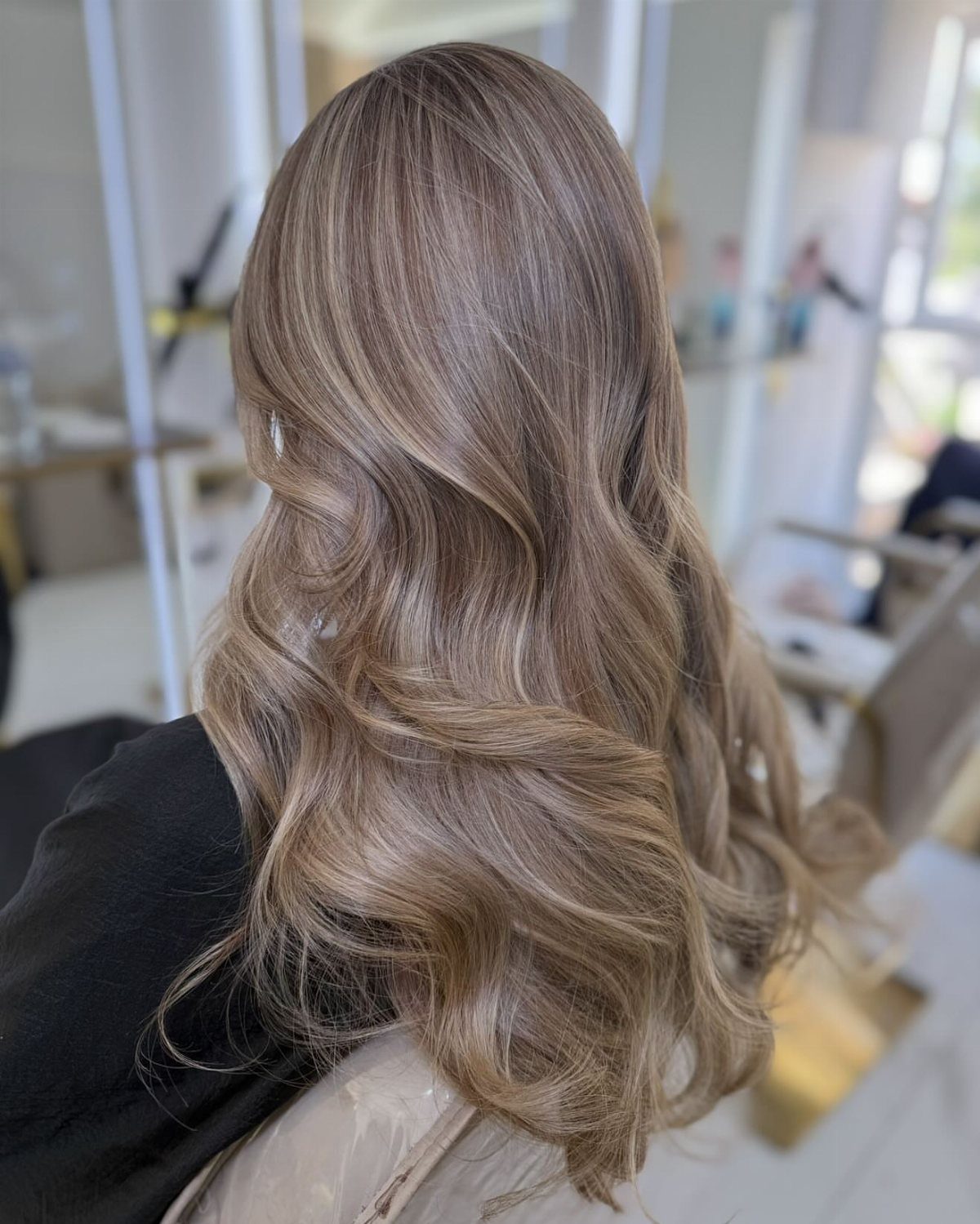
Cool honey sounds like a contradiction, and I love it for that. The colorist blends brown and blonde shades, then pulls the honey toward a cooler, less golden finish.
If warm gold tends to look orange on you, this is the version to bring to the salon. Say "cool-toned honey" out loud, because "honey" alone usually gets you the warmer shade.
6. Honey Hairline Highlights
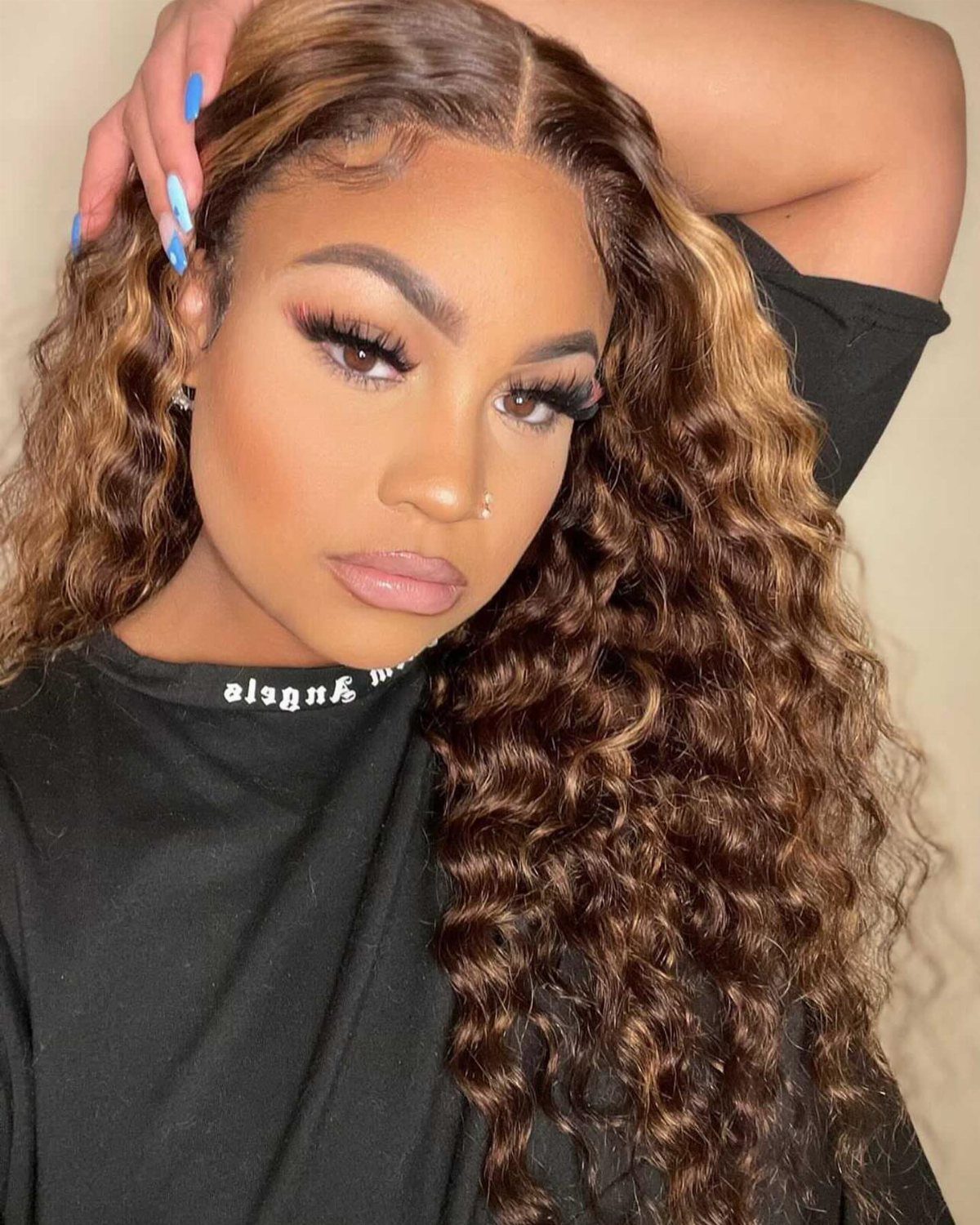
Brightness here sits right at the face. Honey color concentrated around the hairline frames the skin and lifts the whole look without lightening the rest of the hair.
It suits curls especially well, since the lighter pieces stand out against the darker mass.
For anyone nervous about going blonde, hairline highlights are the smallest commitment of any honey look: a few fine pieces around the face, with the rest of your color left alone.
7. Light Honey Blonde
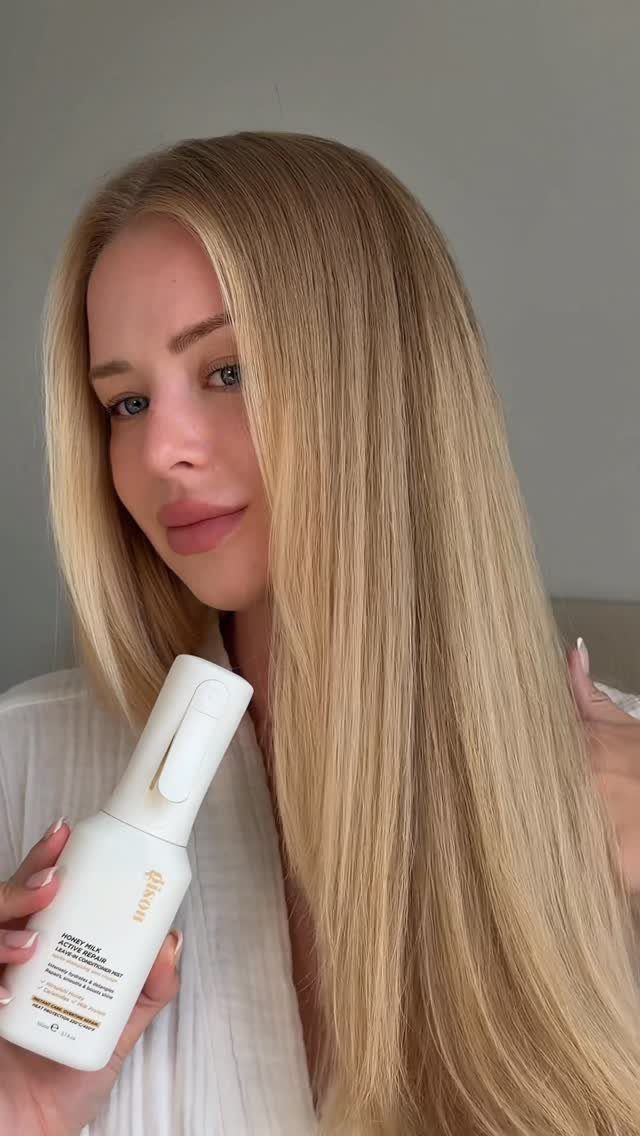
Light honey blonde sits closer to golden champagne than to caramel, with enough warmth that it never reads as pale or washed out. On long, straight hair, the glossy finish is the whole appeal.
I’d choose this over platinum if you want brightness without the icy edge. Ask for a light, golden honey and bring a photo, since "honey" means something different to every stylist.
8. Dark Honey Blonde
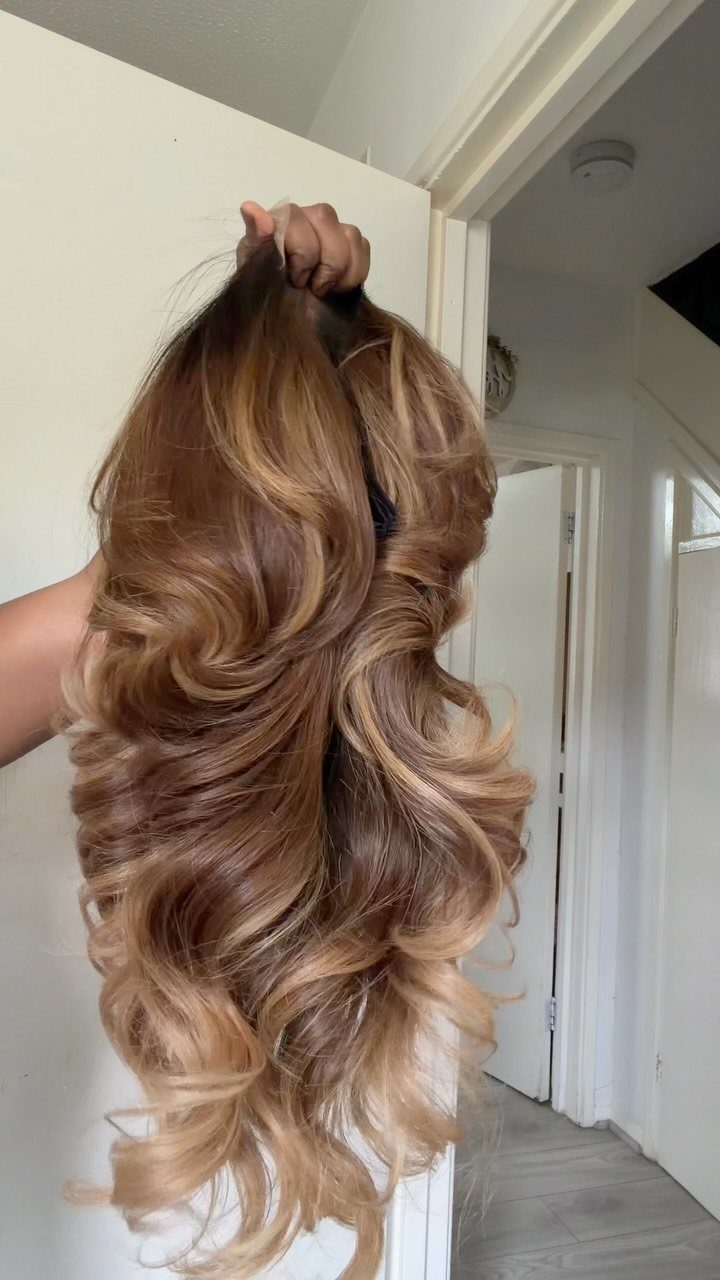
Depth is what sets this shade apart: a richer, darker honey that reads almost like warm brown with gold running through it. Lighter strands near the face keep it from looking heavy.
Curls and waves make the best case for it, because the shift from deep honey to lighter lengths shows in every bend.
I like it for anyone who wants blonde without going very light. Ask for the face-framing pieces to be a step brighter than the rest.
9. Sun-Kissed Honey Beige
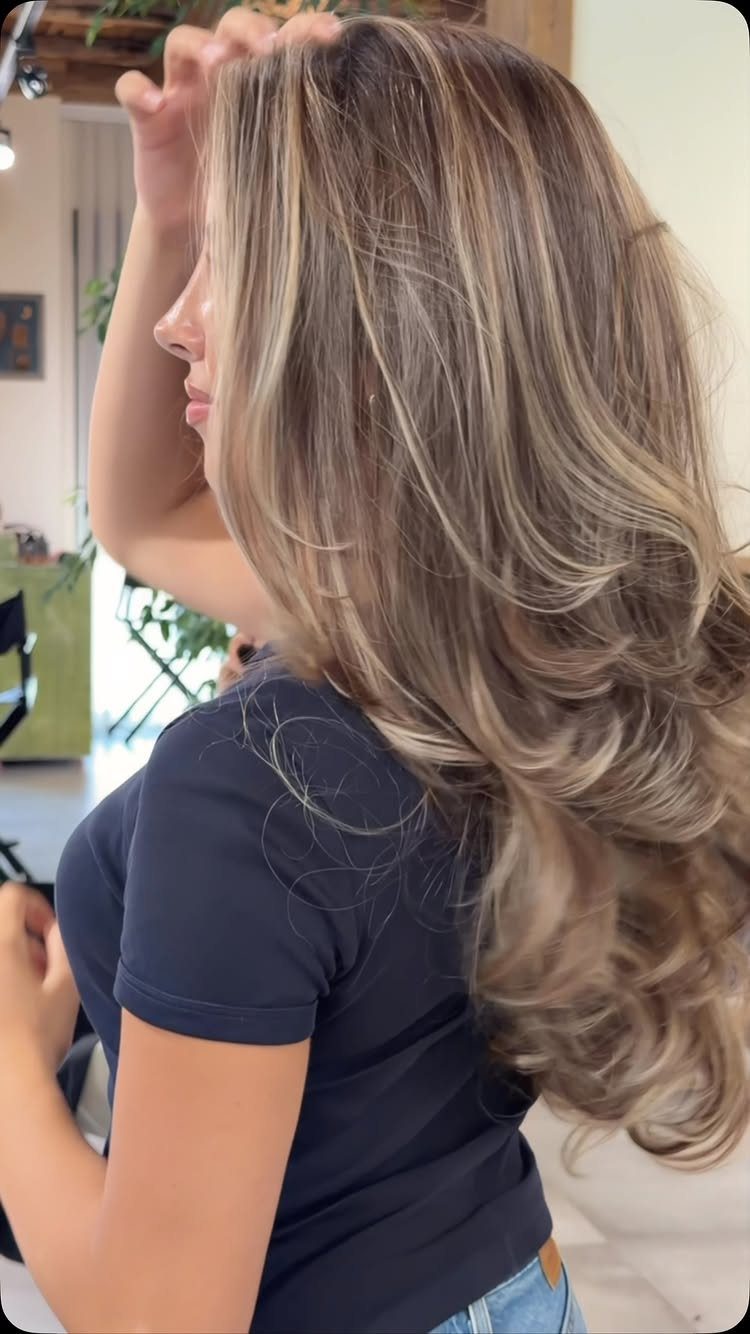
Think sandy rather than golden. Sun-kissed honey beige blends bright highlights into a softer, muted base, and the result looks like a week on the beach.
Wavy hair suits it best, since the texture scatters the highlights instead of lining them up. Ask for "honey beige" by name and say you want a sandy finish, not a bright yellow one.
Sun-kissed honey beige is one of the easiest honey shades to wear every day, since its soft, slightly muted warmth looks natural on most skin tones.
10. All-Over Honey Blonde
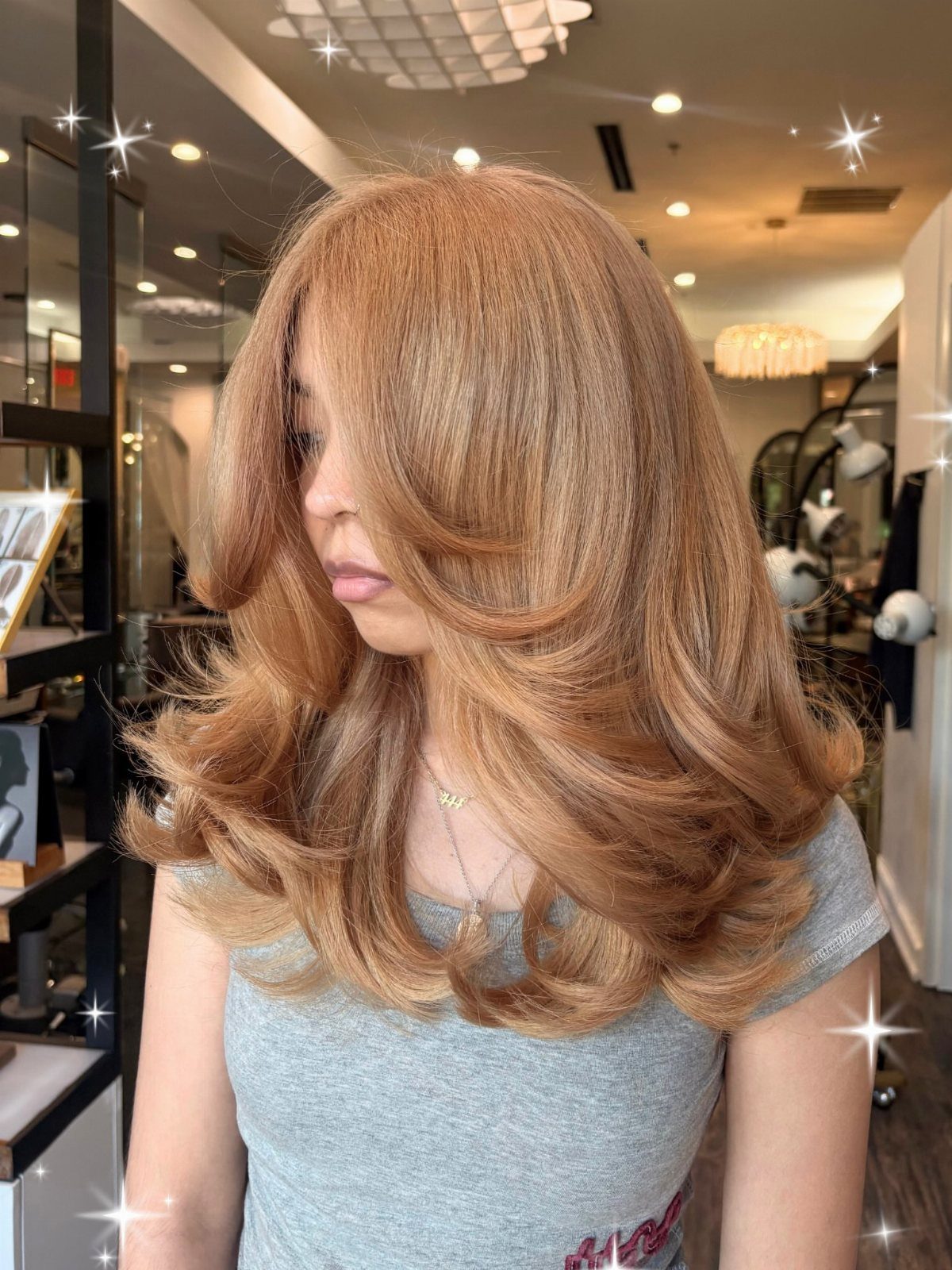
Every strand carries the same warm honey tone here, with no roots, ends or contrast pieces to tell you where the color starts. Layers and big curls give it movement, which is what keeps solid color from looking flat.
If you like a uniform, polished look, this is the one to ask for.
I’d choose it over highlights for that reason alone. The trade-off is that nothing hides regrowth, so expect to book root touch-ups.
11. Toasted Honey Shade
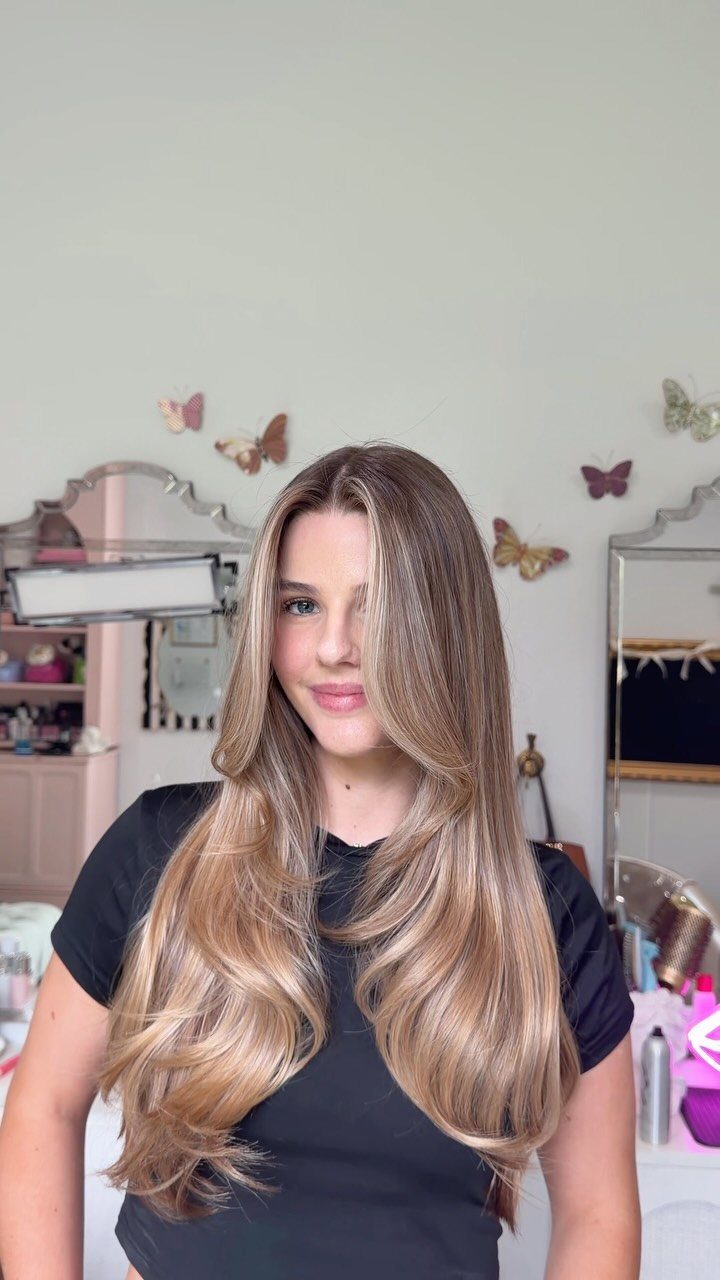
Toasted honey is a dark blonde built from honey and caramel, and it stays warm instead of drifting ashy. That makes it a good fit for anyone who finds cool blondes flat against their skin.
Curls show off the mix of tones nicely.
Ask your stylist for dark honey with caramel through it, and say plainly that you don’t want ash. It’s my pick for brunettes easing toward blonde.
12. Honey Blonde Ombre
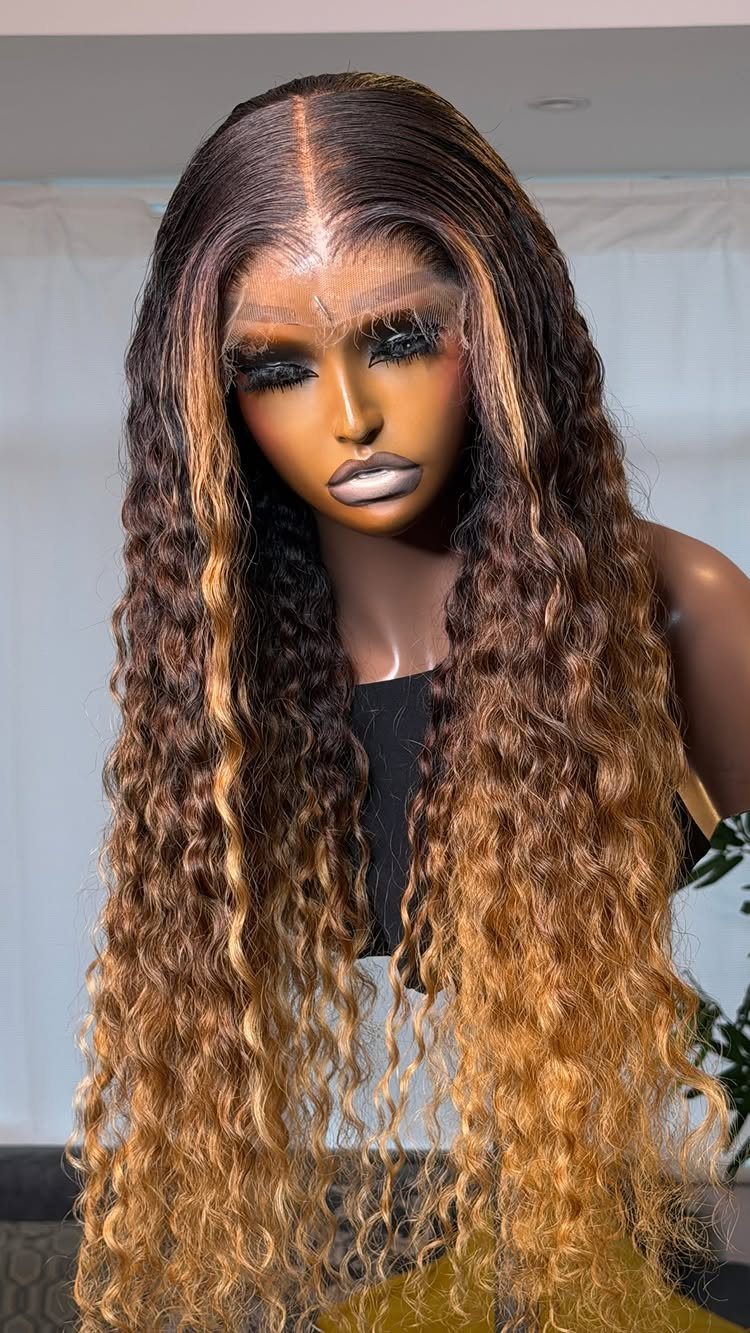
Dark roots melt into honey blonde ends, and the 2 shades are chosen to sit well together, so the shift looks planned instead of grown out. Long, loose waves spread the gradient over more length and make it look softer.
I’d ask for a gradual blend rather than a sharp band. Because the roots stay natural, this is a good option if you’d rather not touch up color often.
13. Medium Honey Blonde
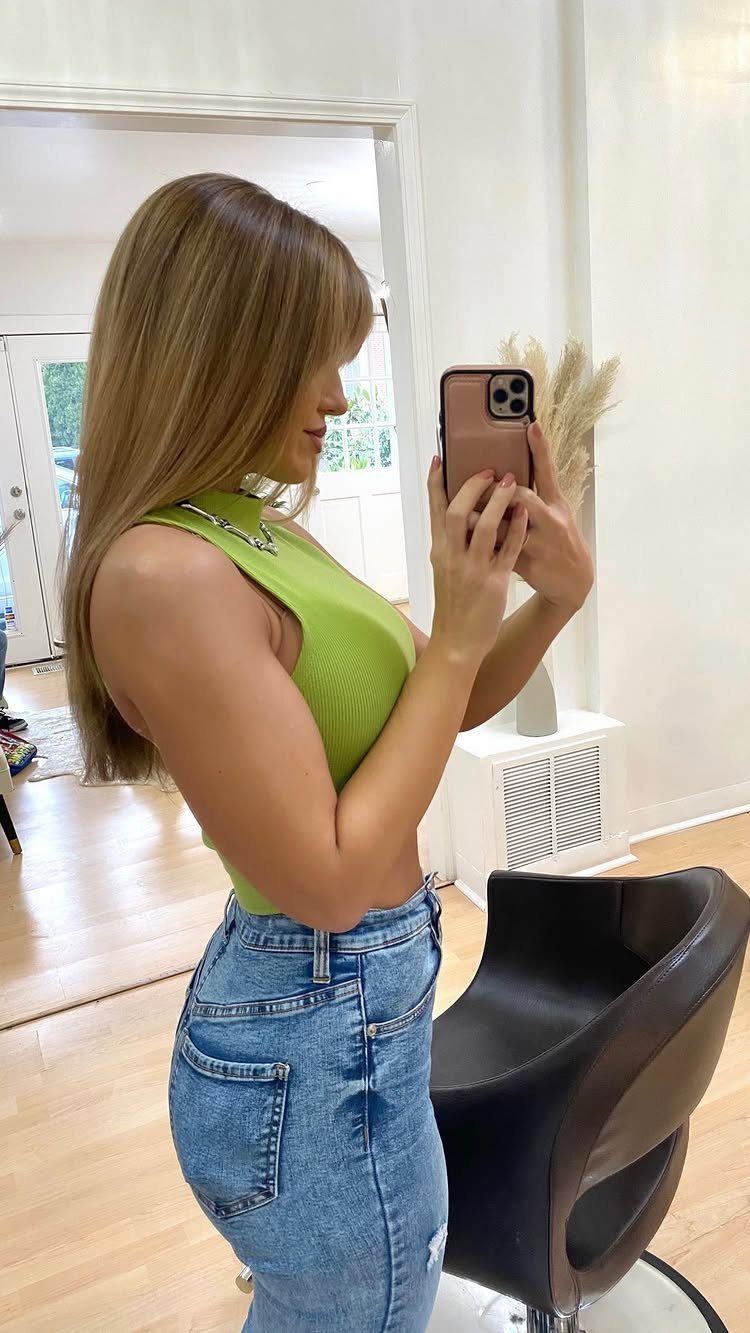
Bronde is the word for this one: a shade parked between brown and blonde, with honey supplying the warmth. It flatters warmer skin tones best, and long, straight hair like this shows the color evenly from root to end.
Tell your stylist you want the middle, neither deep brown nor light blonde. I’d bring a photo and ask for "medium honey" so the shade doesn’t drift lighter than you planned.
14. Honey Ash Blonde
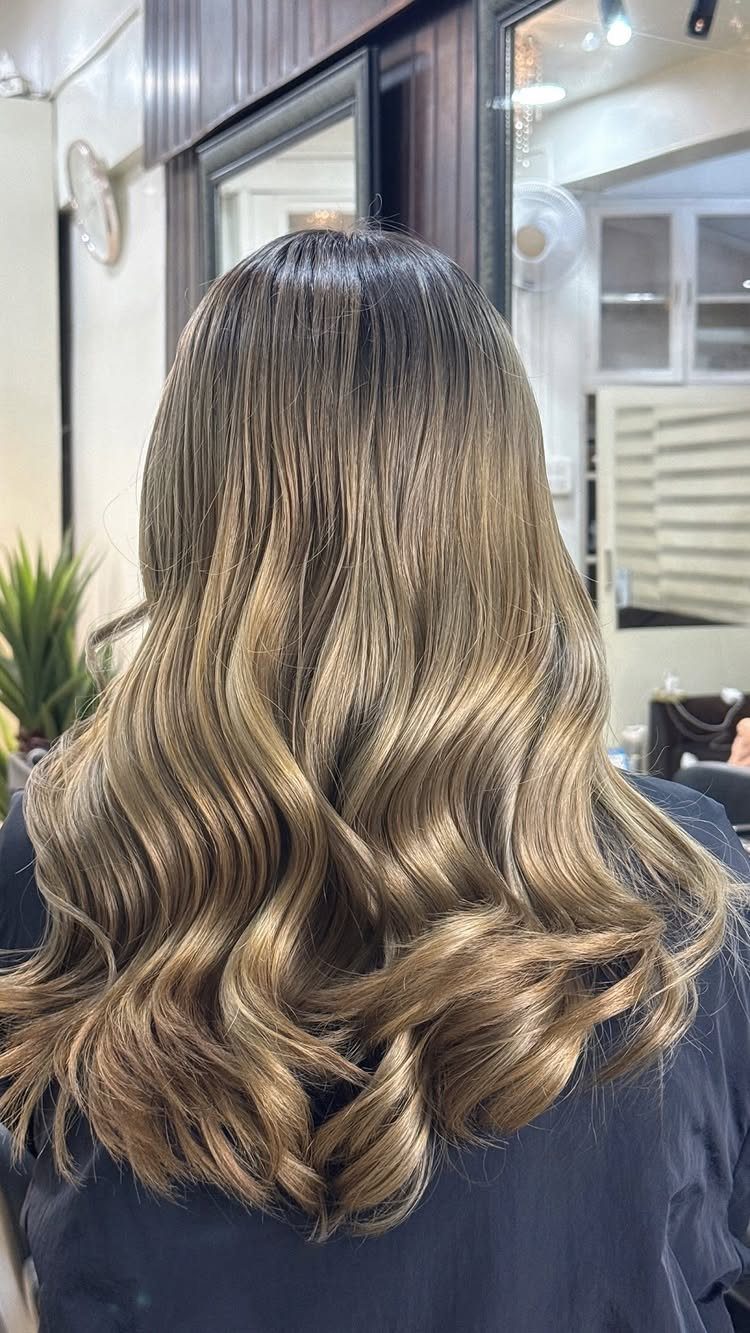
2 temperatures share this color. Honey brings the warmth, ash cools it, and they sit in layers rather than blending into one flat tone.
Loose waves are where the layering shows, because every bend catches a different shade.
Ask for honey and ash together and say you want both to stay visible. For anyone who finds pure honey too golden and pure ash too gray, I’d choose this middle route.
15. Honey and Wheat Highlights
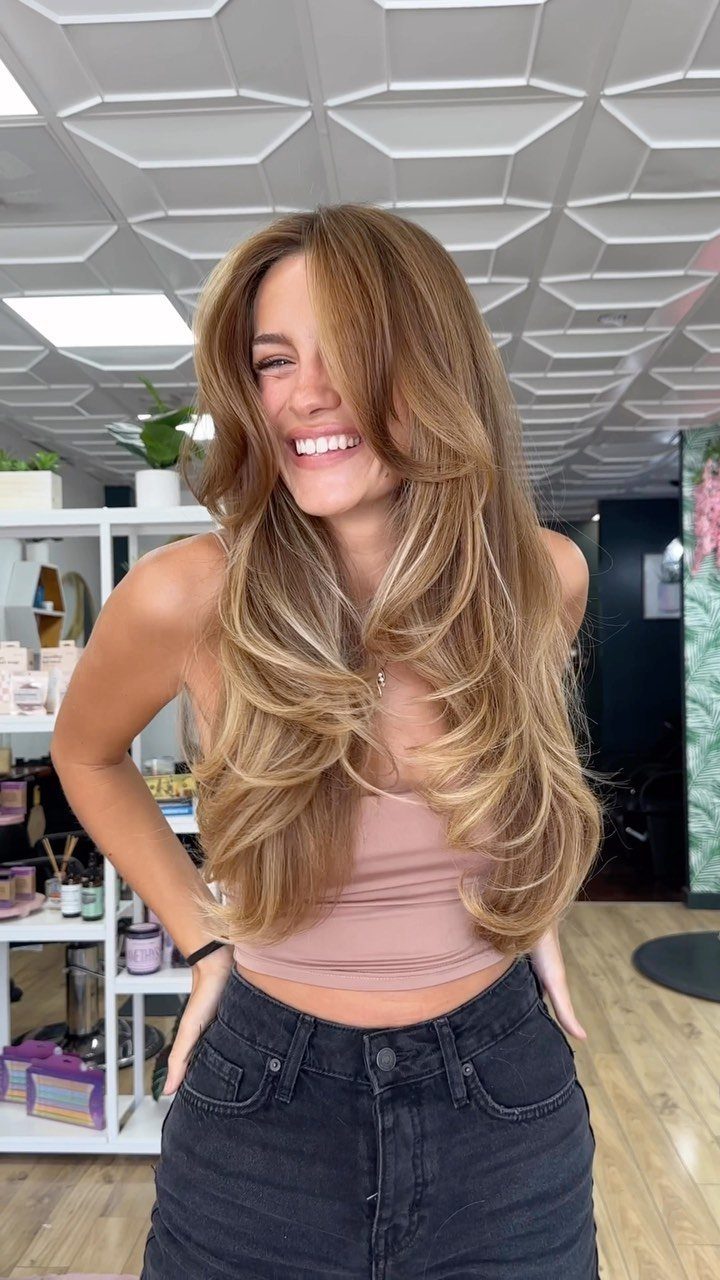
Wheat is a paler, straw-like gold, and set against honey it makes highlights read bright without looking stark. Brought through a golden base, those lighter pieces bring out the richness of the hair color already there.
Layered cuts give the highlights more places to catch light. Ask for wheat-toned highlights over honey, and I’d have the brightest ones placed toward the front, where they get seen first.
16. Toasted Almond Shade
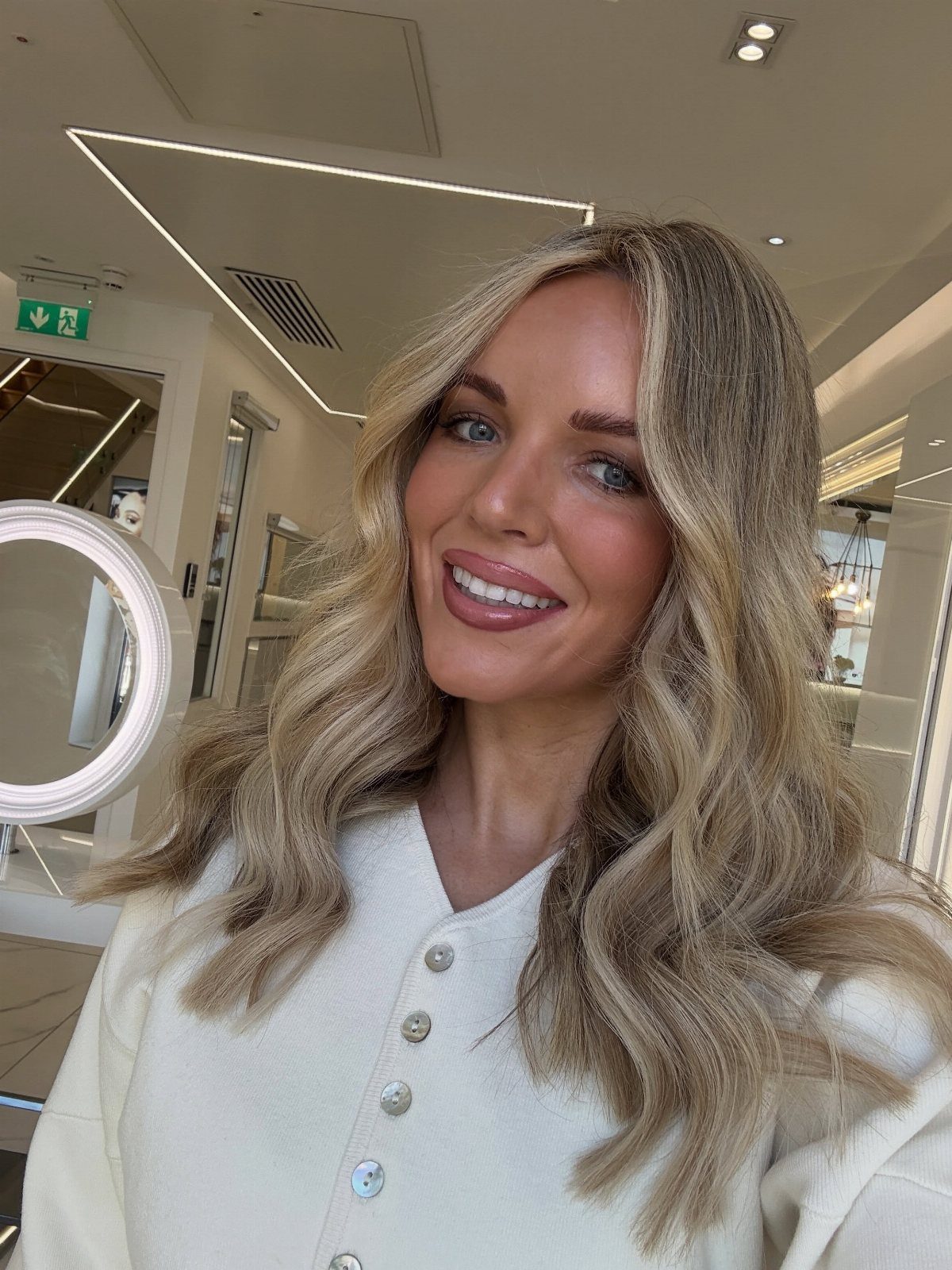
Picture light brown hair with warm blonde brushed through it, and the brown still showing underneath. That’s toasted almond, and the highlights make the whole head look dipped in honey.
Wavy lengths work well because the texture moves the blonde in and out of view.
Ask for "toasted almond" and say the brown base should stay visible. Light brown starting hair gets there with the least change.
17. Blonde Copper
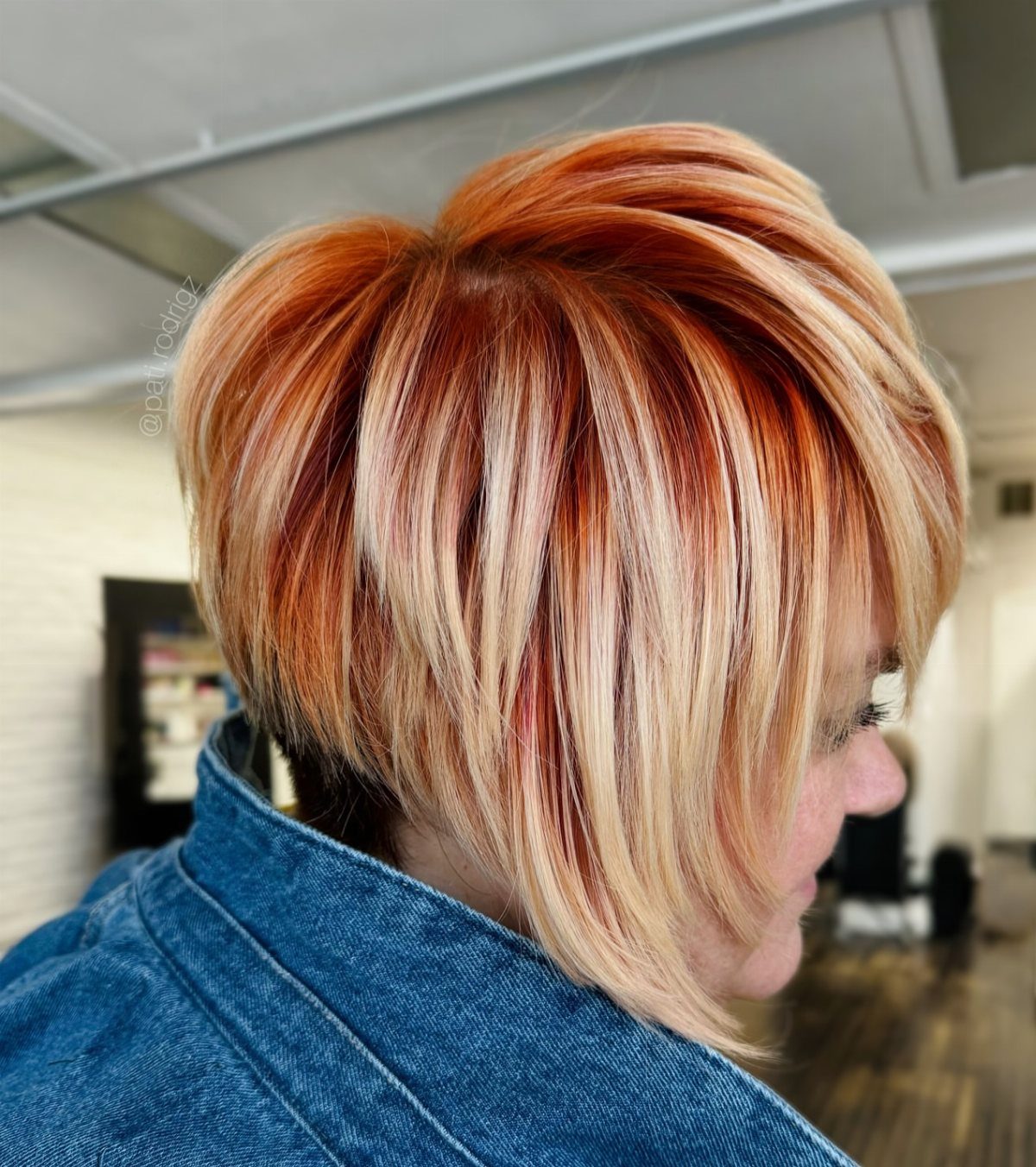
Copper at the root with blonde streaks through the lengths gives a short cut real color to show. On an angled pixie, the balayage is painted across a small area, so each streak counts.
Bring photos of both the color and the cut.
I’d ask for copper to lead and the blonde to act as accent pieces, not the other way round. Blonde copper is a bolder pick than most honey shades, and I like it for that.
Matching Shade to Undertone
Warm and neutral undertones get the most from honey blonde, because the gold picks up the warmth already in the skin. Cooler or pink undertones can wear it too, but the shade has to move toward beige or neutral.
I’d match them to undertone like this:
- Warm: rich golden honey
- Neutral: a balanced honey
- Cool: a softer honey mixed with beige
Strong honey can look too yellow on some cool or deep-winter complexions. If the color reads yellow beside your face, ask for the beige-mixed version.
At the consultation, a stylist reads your skin tone and decides how much honey and how much gold the formula needs. I’d let that read adjust your plan, even if you walk in with a different shade in mind.
Salon Process and Hair Health
Your starting color decides how much work honey blonde takes, so settle that before you pick a shade.
- Medium brown: one lightening session
- Dark brown: multiple sessions
- Black: a gradual lift plan
Dark brown and black hair are better off with a slow process. Rushing the lift is how you end up with dry, fragile strands.
Lightening can dry hair out at any starting point. Use a deep conditioner between appointments, and ask the salon about professional bond-protecting treatments.
Bring more than one photo to the consultation, and include one of a shade you don’t want. Photos get you closer to the right honey than words do.
Brassiness and Upkeep
Brassiness in honey blonde is mostly about yellow creeping past the shade you wanted.
A gentle violet or blue toning shampoo once or twice a week keeps it in check, and I’d stay within that, since toning is meant to calm yellow, not erase the gold.
Heat styling pushes color toward brass, so go easy on hot tools.
Maintenance timing depends on the technique:
- Balayage: expect 8–12 weeks between salon visits.
Book by your roots and your color, not the calendar. If the ends look dull before the roots show, a gloss visit comes first.
Frequently Asked Questions
What color is similar to honey blonde?
Caramel blonde and golden champagne sit closest.
Think of honey as gold stirred into light amber: it sits warmer than beige blonde and gentler than a loud golden blonde. A light honey leans toward golden champagne, while a deeper one picks up caramel.
Can I dye my hair honey blonde without bleach?
Only if your hair is already light blonde, where a toner or gloss may be enough. Rushing that lift on dark hair is what leaves strands dry and fragile.
How do you make dark roots fashionable?
Pair them with a honey blonde balayage or ombré, where the colorist hand-paints the honey and leaves the roots dark. Stylists often leave about ½ to 1 inch of natural root, or blend into a longer ombré or sombré.
What highlights go with honey blonde?
Wheat-toned highlights over a honey base are my first pick: the paler, straw-like gold brightens the color without looking stark.
For a cooler, layered finish, ash placed alongside honey keeps both temperatures visible. Copper can also suit a honey base, so ask your stylist whether it flatters your coloring.
How do you do honey blonde highlights on curly hair?
Ask for a honey balayage, where the stylist hand-paints selected pieces, often the ones around the face.
That selective placement is a safer route for curls, and at-home dye is best skipped. Hairline highlights are the lightest-touch option: a few fine, brighter pieces stand out against the deeper mass of curls.
Does honey blonde look good on dark hair?
Yes. Honey works on black and brown hair as thin highlights or balayage, with no need to go anywhere near platinum.
Dark hair usually needs lightening first, sometimes over several sessions. Fine strands in one steady honey tone look like light catching the hair.