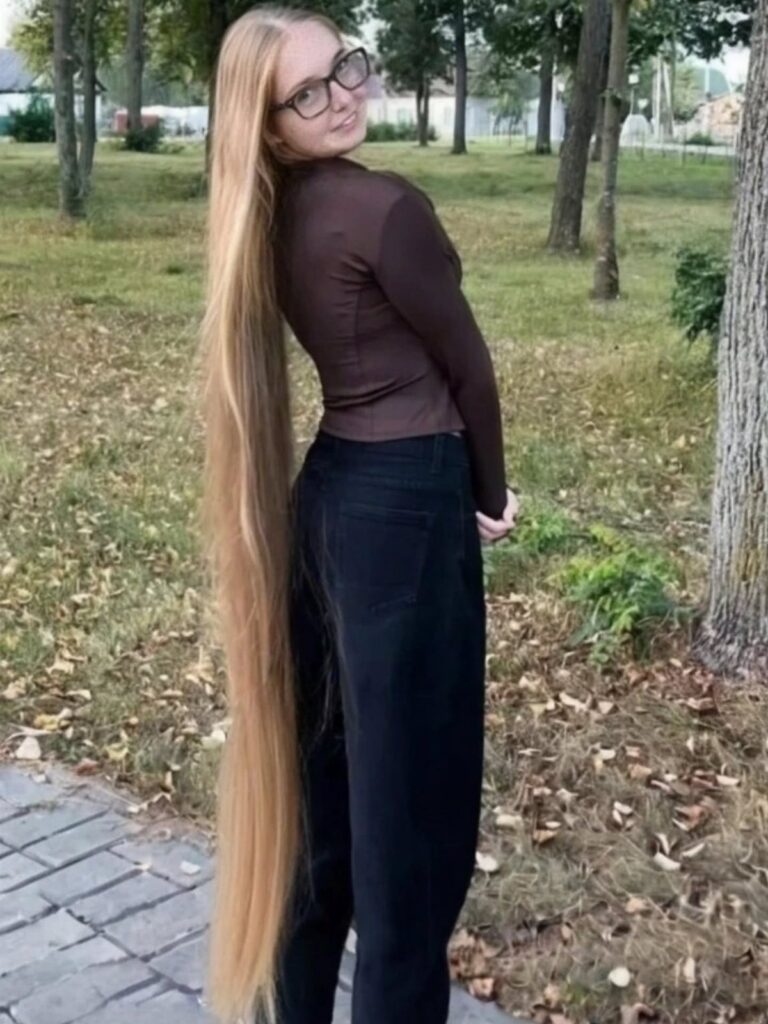
Skin undertone decides which blonde belongs on you. If gold jewelry flatters you more than silver, honey and strawberry blonde will sit well, while neutral skin, I think, does better with creamy champagne or beige.
The range runs from shades that need little upkeep to painted highlights that belong in a salon chair, and the last section covers safety and testing for anyone coloring at home.
1. Jennifer Lawrence Blonde
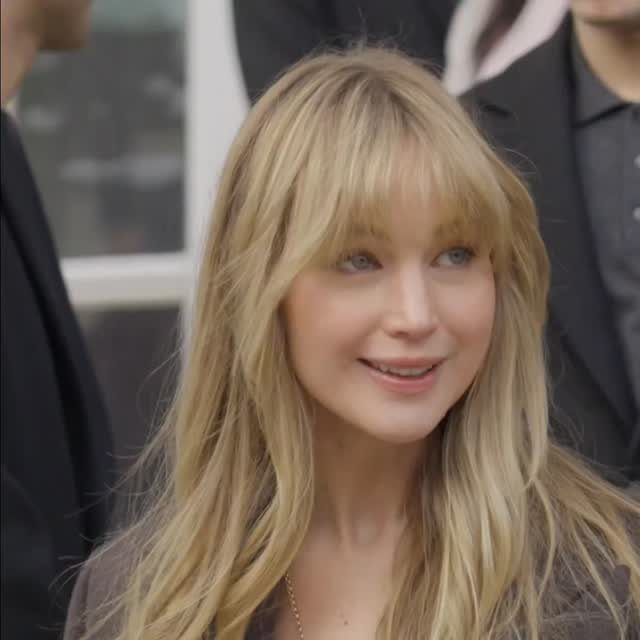
Champagne blonde sits between warm and cool, which is why this shade reads creamy instead of icy or platinum. For a reader who doesn’t want to fight brassiness every few weeks, that middle position is the appeal.
Long hair with bangs shows it well, since the fringe puts the color right at the face.
I’d pick this over a stark platinum if your skin sits anywhere near neutral. Ask a stylist for "creamy champagne blonde" and say you want neither gold nor ash to take over.
2. Strawberry Blonde
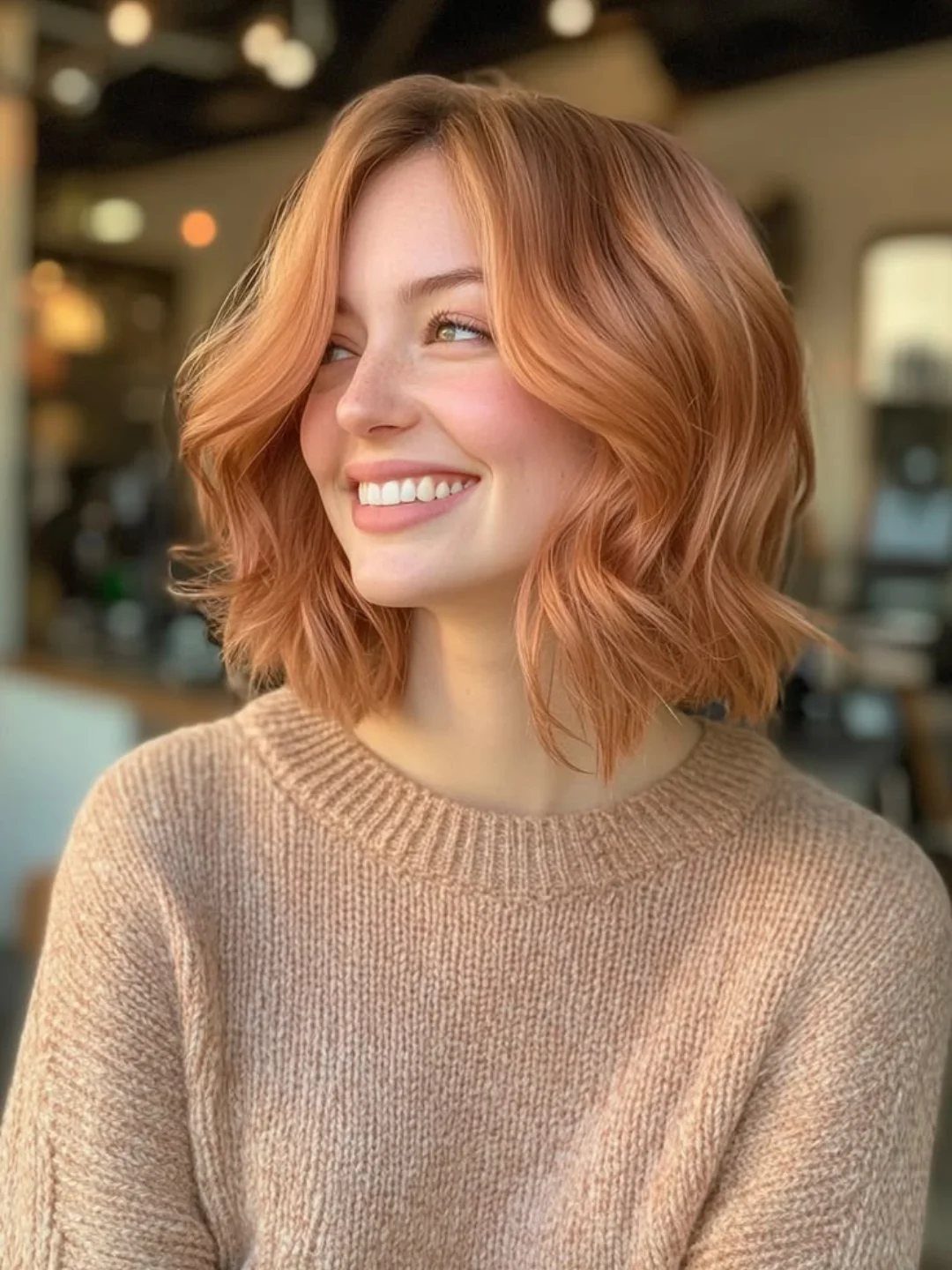
Strawberry blonde leans warm, with a soft coppery note running through the blonde. Wavy hair like this shows it best, because the bends catch light and the color shifts a little from strand to strand.
If your skin runs warm, this is a kind choice, and it pairs well with beige and tan clothing.
Bring a photo and ask for the red to stay light, since too much copper pushes the result away from blonde entirely. I’d start there rather than going bold.
3. Natural-looking Blonde Dimension
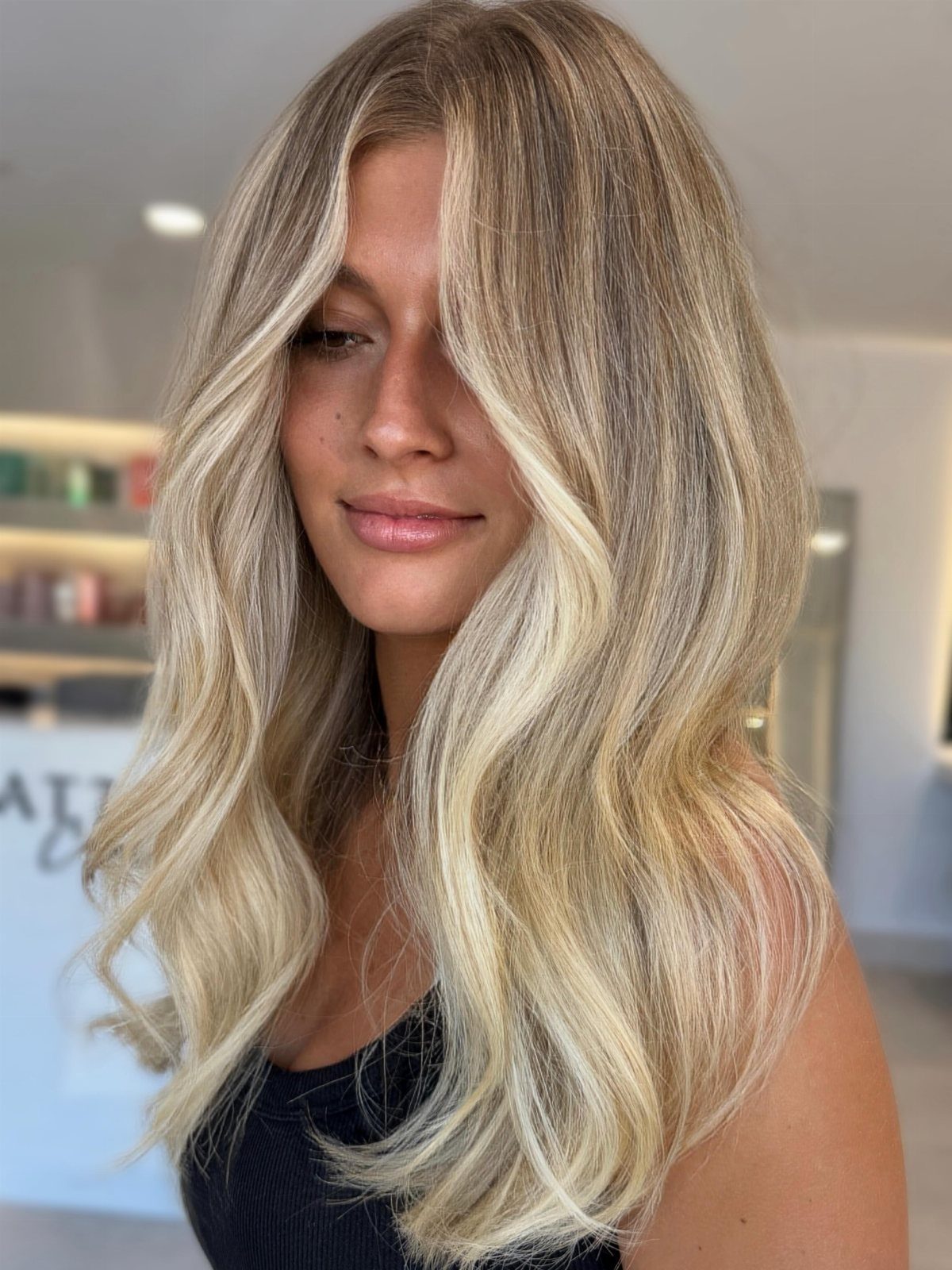
A believable blonde never sits at one flat shade. Darker roots melting into creamy lengths is what makes long waves look grown rather than painted, and I’ll always choose that over a single uniform color.
Ask for variation in tone and depth, with the root left deeper than the ends.
Waves help, since every curve shows a slightly different tone. For anyone coloring at home, this look forgives more than solid blonde, because a soft root blends into the rest instead of showing a hard line.
4. Margot Robbie Blonde
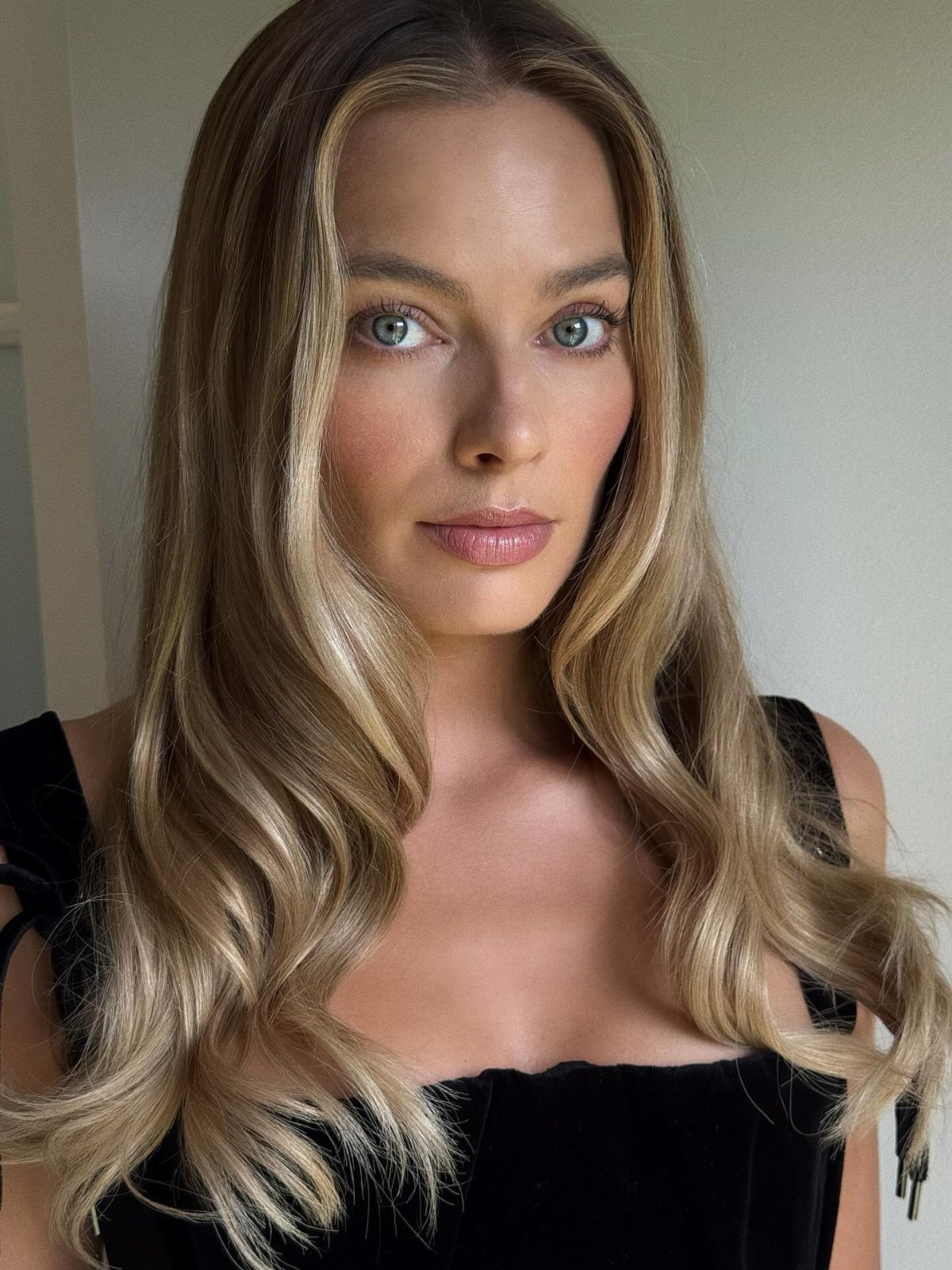
Creamy beige with a sun-kissed finish: that’s the shade here, built on a deeper base with brighter pieces around the face. The contrast is the whole look, so don’t let a stylist lighten everything evenly.
Loose waves show the dimension best. Ask for a deeper base and brighter face-framing strands, and call the tone "creamy beige" so it doesn’t turn yellow or gray.
I find it easier to wear than an all-over light blonde because the darker base keeps it looking natural.
5. Sophie Turner Blonde
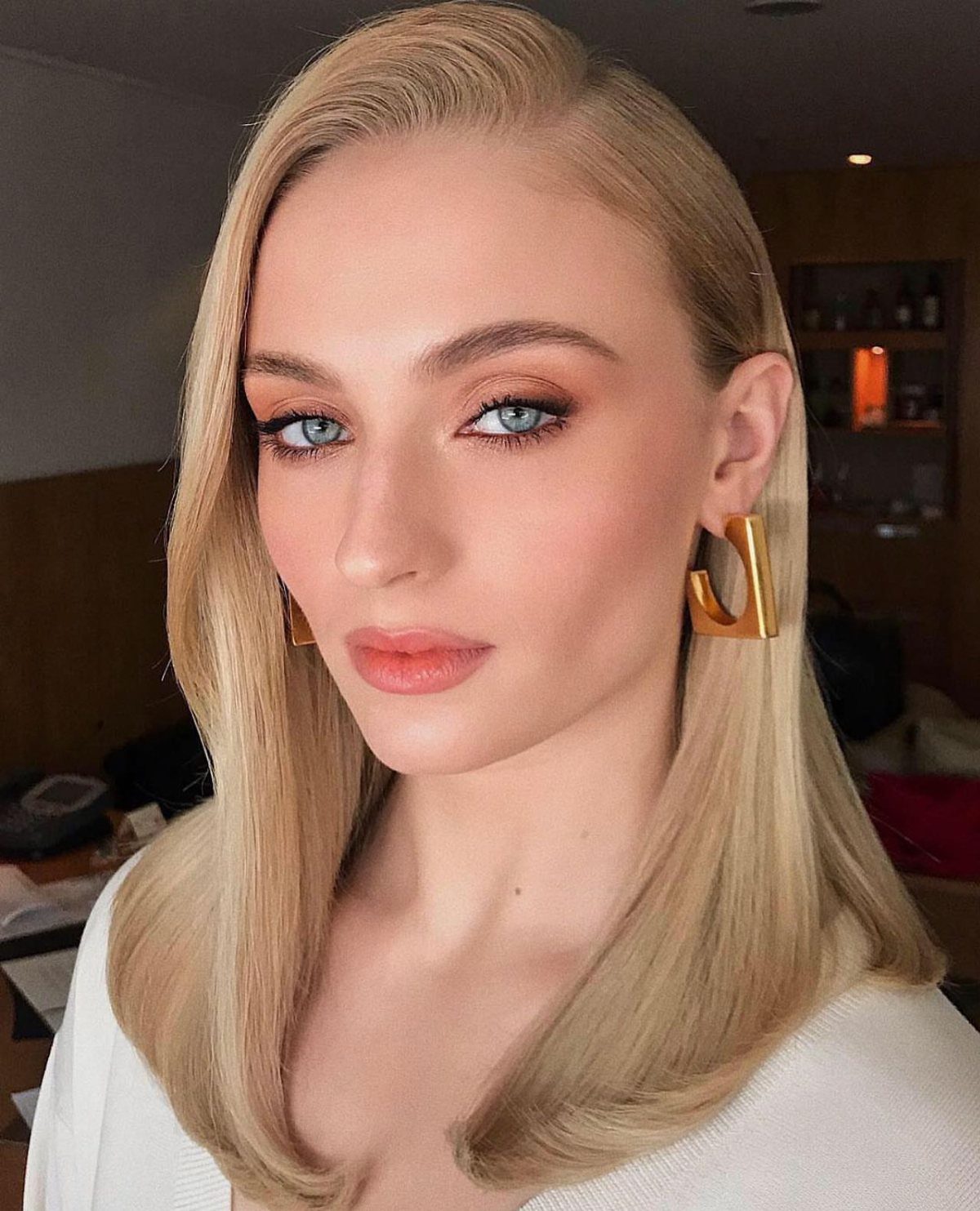
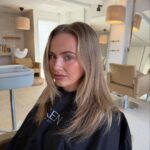
Honey blonde with a little depth at the roots sits well on shoulder-length hair, and if gold jewelry looks better on you than silver, this warm shade will likely flatter your skin too.
The depth matters: honey that’s too bright goes flat, while a little shadow through it looks rich.
Ask for honey with softness at the root, not a stark line. I like this shade because it reads blonde without demanding the upkeep of a cooler, paler one.
6. Painted Blonde Highlights
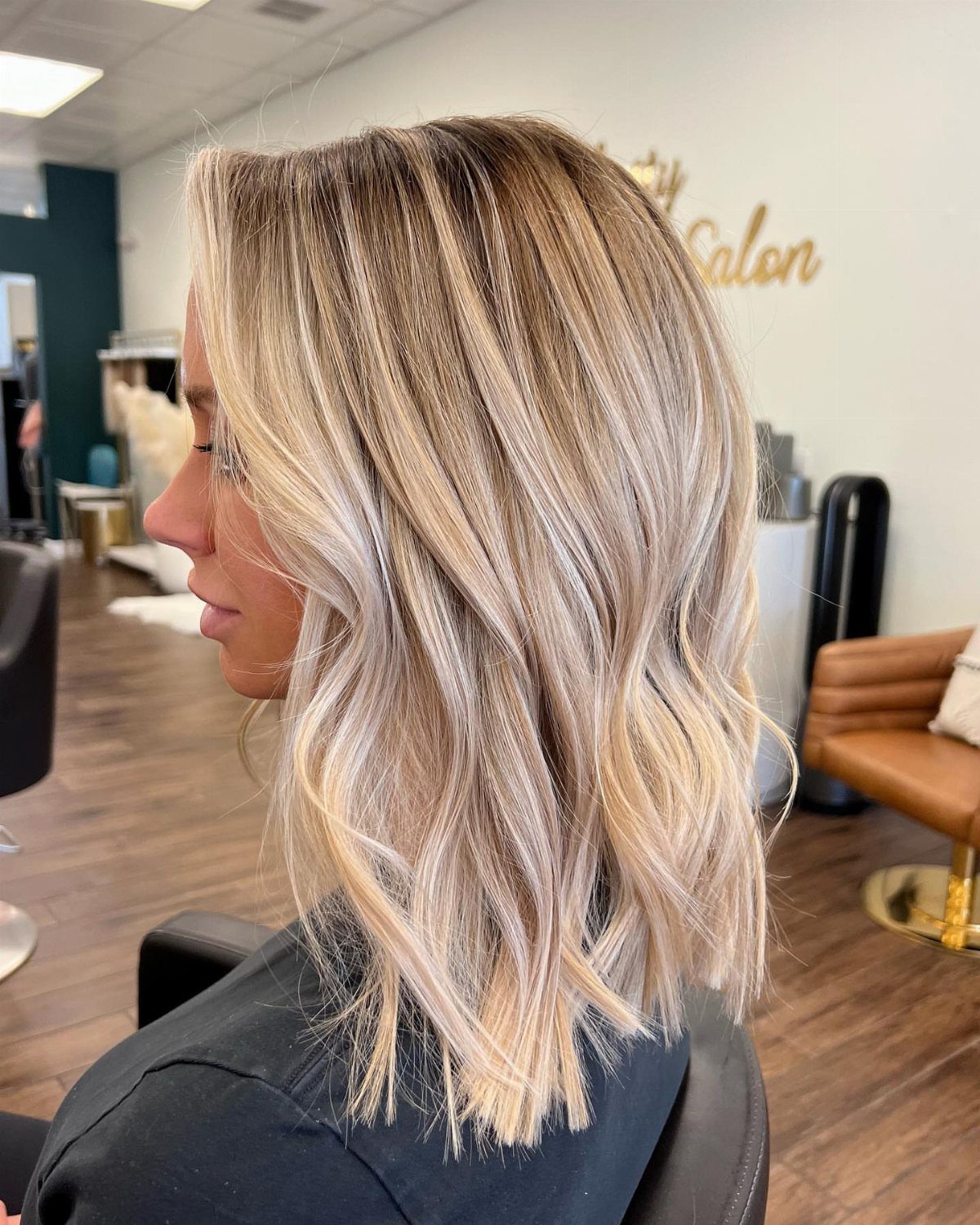
Painted highlights are applied freehand, so they land in uneven, staggered pieces instead of rigid stripes. On shoulder-length hair with darker roots, that gives dimension without the heavy banded look foil can leave behind.
Ask for "casual, staggered painted highlights" and keep the roots deeper.
Because the placement is irregular, grow-out is gentle, with no obvious regrowth line to cover. This is a salon technique, and I wouldn’t try it at home.
At-home Color Safety and Testing
Before any lightener touches your hair, check its porosity and its color history. Both decide which approach is safe, so a box dye you used last year matters as much as how your hair feels today.
If you’re starting dark, say a level 5 milk chocolate aiming for a level 7/8 medium to light blonde, the dark pigment has to come out before you lighten.
Apply color remover to dry hair, keep it off the regrowth, work fast, and wrap the hair in plastic wrap. A second round aimed mostly at the darkest ends is fine, but two applications in one day is the ceiling.
Success at this stage looks brassy, not blonde: you want a warm version of your natural shade. Once you see it, do a strand test before committing to the full head.
You’ll need the remover, an applicator bottle, sectioning clips, a protective cape and plastic wrap.
Frequently Asked Questions
Are there true natural blondes?
Real natural blondes exist, but they’re rare: roughly 5% of people in Europe and North America have the shade.
Plenty of famous blondes, including Marilyn Monroe and Gwen Stefani, weren’t born with golden hair, which makes blondes look more common than they are.
Is my hair blonde or brown?
Go by level. On the level scale, a 5 reads as brown, and a 7 or 8 is where hair turns blonde, from medium to light.
If your hair sits closer to 5, it’s brown, and the dark pigment would need to come out before lightening could get you to blonde.
What is the best hair dye for natural blonde hair?
Clairol Natural Instincts is a solid place to start: it’s ammonia-free and runs from 7 Dark Blonde up to 9 Light Blonde.
Test the dye on a small hidden strand first, and check the color after the full processing time before it goes on your whole head.