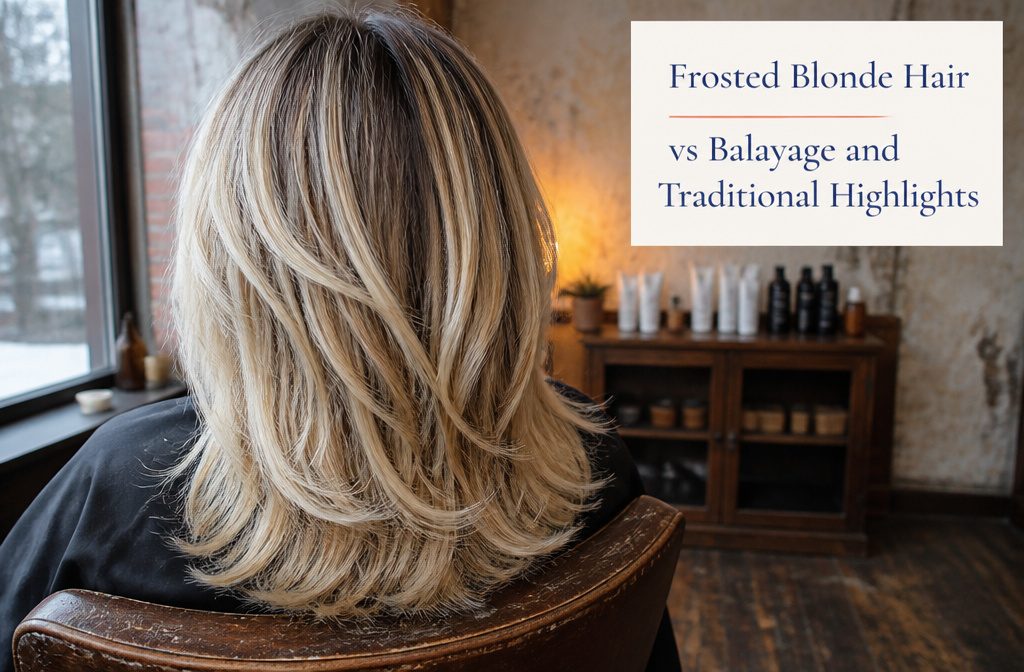
Frosted blonde hair beats balayage and traditional highlights for anyone who wants soft dimension with minimum salon commitment. You’ll visit about every six months instead of every six to eight weeks, and the result reads as sunkissed rather than striped.
The catch: frosting depends on face-framing highlights to look intentional instead of faint, so that’s where stylist Tylor Johnson spends the budget first.
What Frosted Blonde Hair Means Today
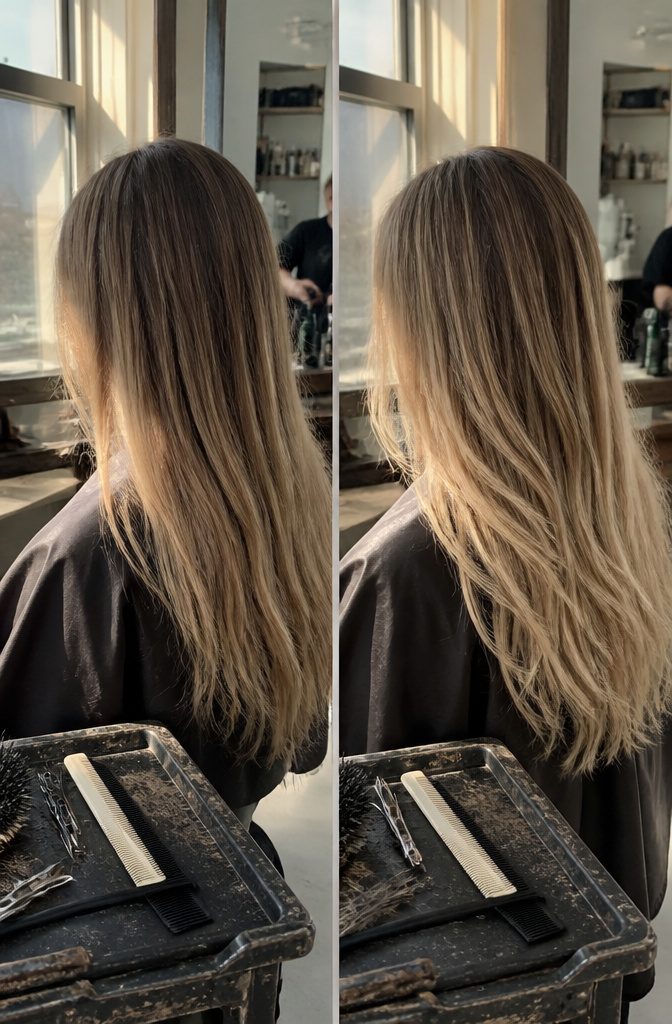
Frosted blonde hair is fine, delicate highlighting applied from the root area to the ends, and it leaves a soft, sunkissed look instead of visible stripes.
It’s described as an up-and-coming trend of 2025, and I’d call the result sweet and subtle.
The ’90s version was the opposite: conspicuous frosted tips, the *NSYNC look. The chunkier blonde highlights of the late ’90s and early Y2K were also made to be noticed.
Modern frosting starts a shade lighter than your natural color and fades to two shades lighter toward the ends, so it reads as dimension rather than contrast. It’s softer than balayage too, which makes it an easy first color.
Frosted Hair Against Balayage
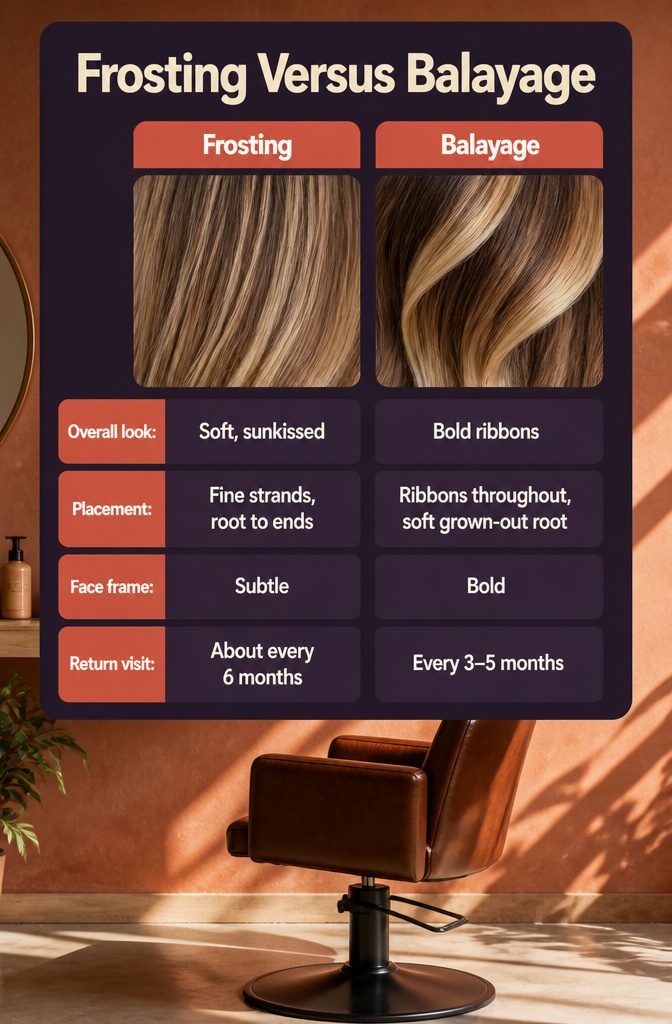
Frosting is the softer option: delicate strands run from regrowth to ends, while balayage lays bolder ribbons of dimension and a bolder face frame. Balayage appointments typically run every 3–5 months, because the grown-out root stays soft.
The two compare like this:
| Frosting | Balayage | |
|---|---|---|
| Overall look | Soft, sunkissed | Bold ribbons |
| Placement | Fine strands, root to ends | Ribbons throughout, soft grown-out root |
| Face frame | Subtle | Bold |
| Return visit | About every 6 months | Every 3–5 months |
Johnson, the stylist Bustle quotes, ranks the face frame first:
The most important part of the frosted hair look is the addition of face-framing highlights.
— Bustle
Skip those pieces and frosting just looks faint, so I’d spend the budget there.
Frosted Hair Against Traditional Highlights
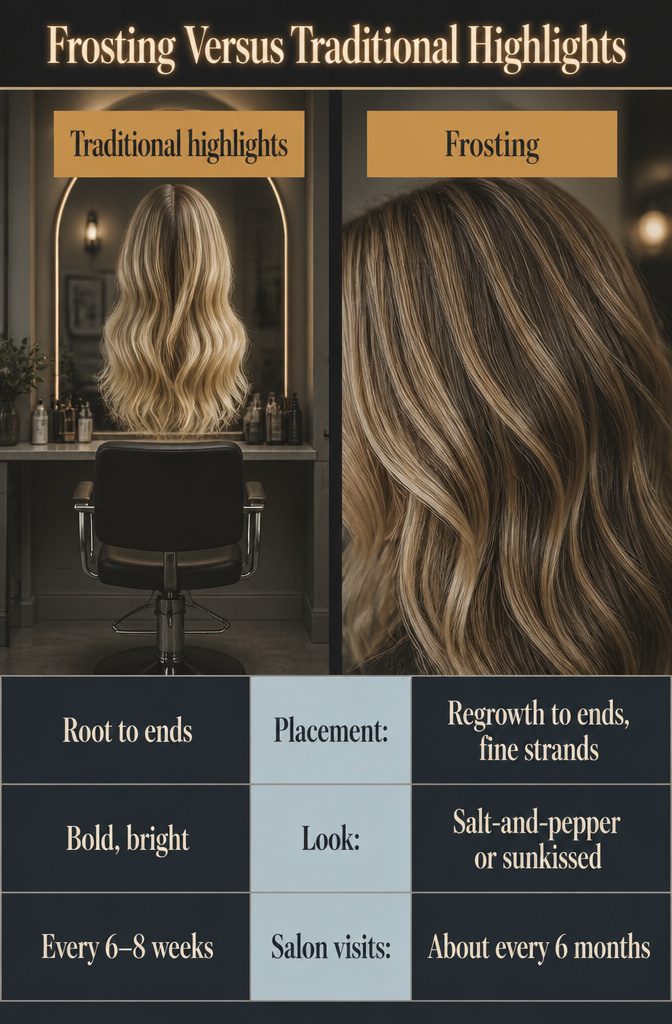
Traditional highlights run to the root, so the blonde looks bold and bright, but you’re back for a lightening service about every 6–8 weeks. Frosted blonde hair places fine strands from regrowth to ends for a salt-and-pepper or sunkissed effect.
Side by side:
| Traditional highlights | Frosting | |
|---|---|---|
| Placement | Root to ends | Regrowth to ends, fine strands |
| Look | Bold, bright | Salt-and-pepper or sunkissed |
| Salon visits | Every 6–8 weeks | About every 6 months |
I’d pick frosting for anyone who wants low commitment: a visit about every 6 months easily beats one every 6–8 weeks. Traditional highlights win only if you want bright blonde right at the root.
How Strand Size and Placement Create the Look
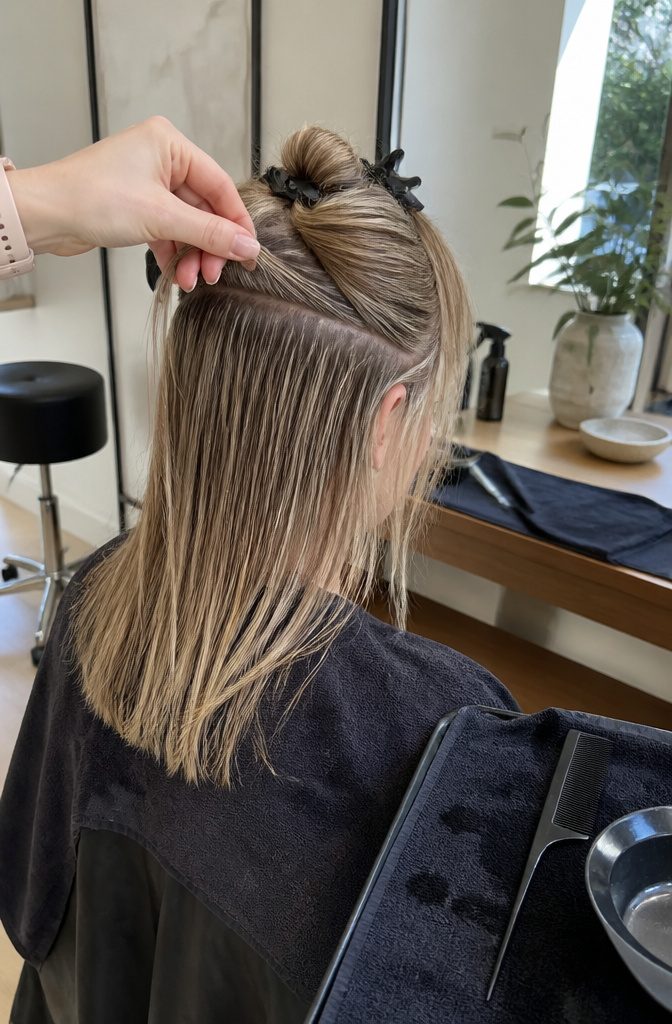
Frosting depends on tiny strands. Frosting reads as a salt-and-pepper effect: highlights sprinkled on very fine sections from regrowth to ends, and the smaller the section, the cooler the tone that comes through.
Tylor Johnson places very fine sections toward the bottom, then adds a few sporadic pieces through the top layer and ends. Her non-negotiable is face-framing highlights, which add dimension and pull attention to the face.
Placement should also follow your habits. I’d make sure the stylist knows where you part your hair and whether it’s often up, since both change which pieces actually get seen.
Choosing the Frosting Color
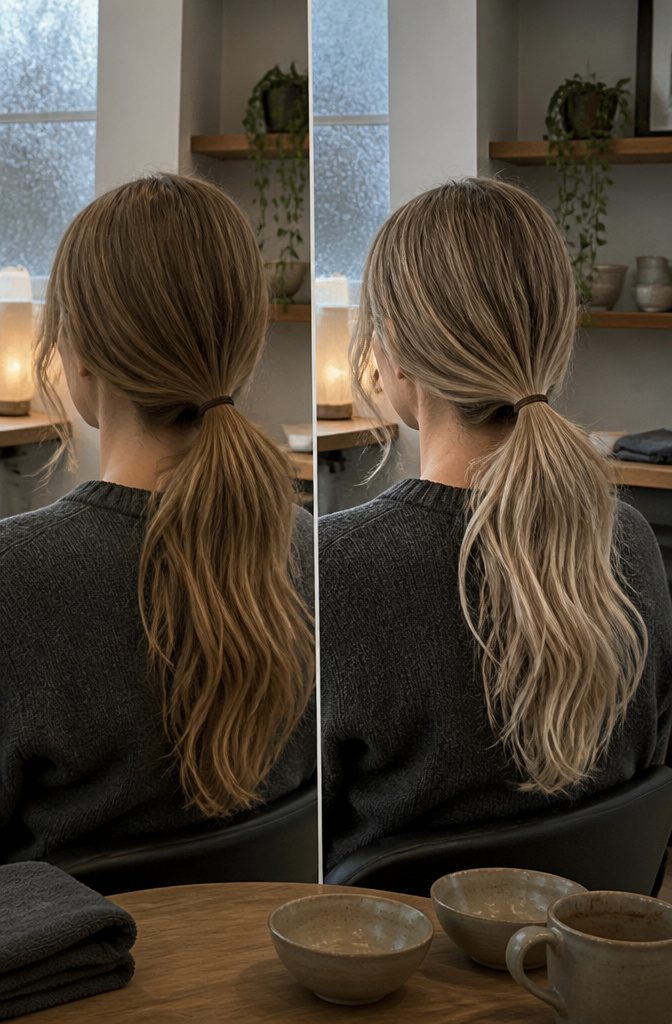
Everything is measured from your natural color.
The frosting should start one shade lighter than your natural hair and fade into a color two shades lighter than the base. That gradient gives dimension and a quieter pop than the stark, bright tips frosting is remembered for.
Your own color should also decide what the highlights emphasize. A shade picked from a photo, without regard to your base, is what makes frosting look stamped on.
For winter, I’d pull the color back: highlights only one or two shades lighter than natural, kept in the same tone family. The result is more monochromatic, but it still has visible dimension.
Lightener Options for Frosting
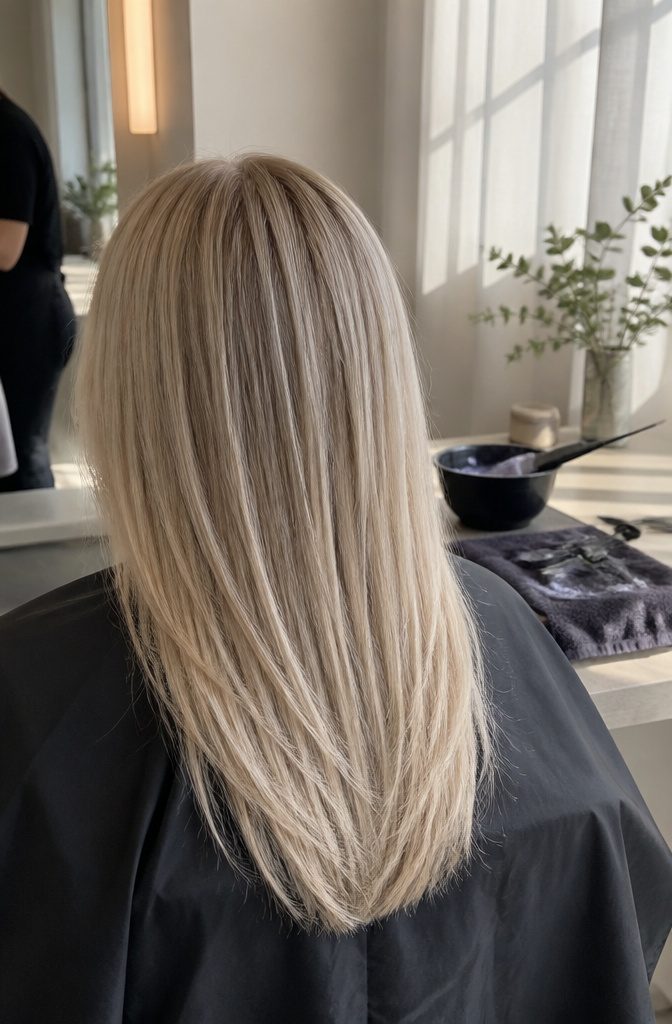
Frosting can be done with traditional lightener or clay lightener, and neither is the single correct choice. Which one is used depends on your hair type and the stylist’s preference.
A stylist who knows one product well will usually get a cleaner result from it than from a product picked to match a photo, so I’d describe your hair and let them decide.
Either way, strand size matters more than the lightener.
Finer sections allow cooler tones, and the application runs from regrowth to ends. The result is a soft, multidimensional blend with very low maintenance.
Who Can Wear Frosted Hair
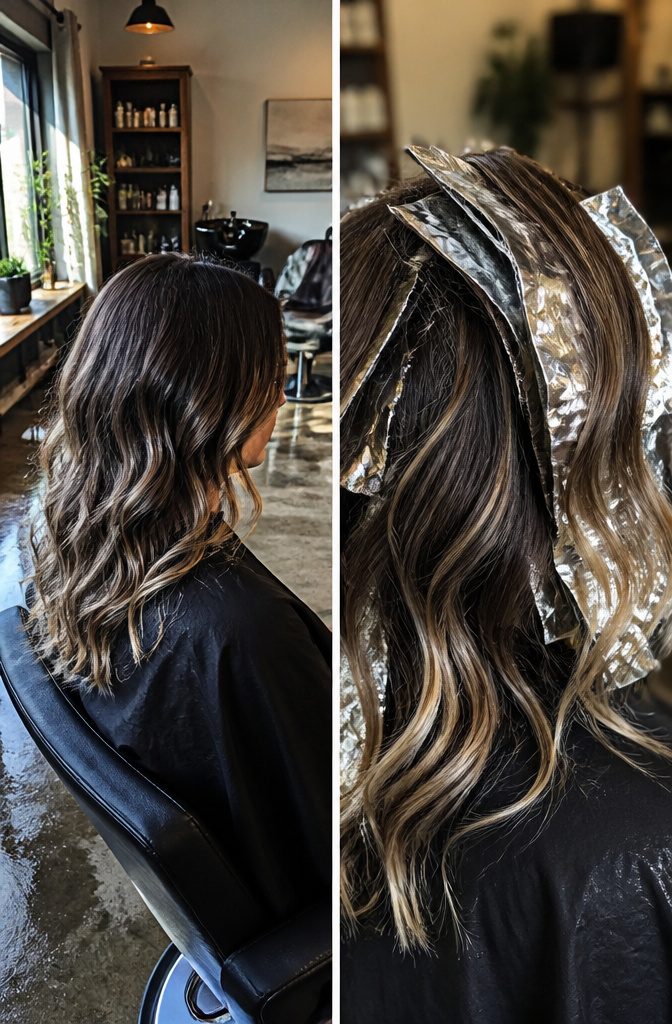
Curly, straight, wavy or textured, frosting adapts to all of it, because you set the brightness level instead of following a fixed formula.
That flexibility makes it a sensible first color for anyone who has never lightened their hair and wants a soft glow. It can also be used on clients who need gray coverage.
Blondes don’t own this look. Brunettes Kaia Gerber and Hailey Bieber have both worn it recently.
On darker hair, I’d pick frosting over heavier highlights if you want shine and dimension without looking obviously highlighted. Because the lightest pieces sit at the bottom and around the face, the result stays cohesive however your hair moves.
How to Ask Your Stylist for Frosted Hair
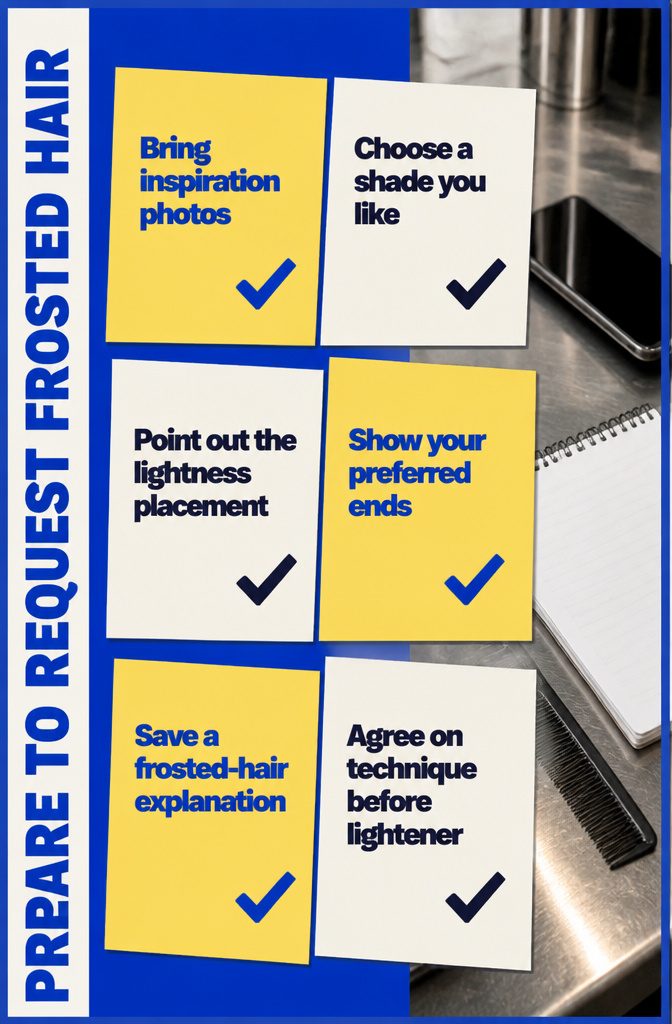
Photos do most of the talking. "Frosted," "icy" and "bright" can mean one thing to you and something quite different to your stylist, because each of you has your own version of a tone or a style.
Bring inspiration photos and point to what you like in each one: the shade, how the lightness is spread, how the ends look.
Add a written description of the technique too. Pulling up an article that explains frosted hair on your phone gives the two of you the same vocabulary before any lightener comes out.
I’d rather spend five minutes on that at the start of the appointment than find a mismatch at the shampoo bowl.
Using Gloss to Deepen the Color
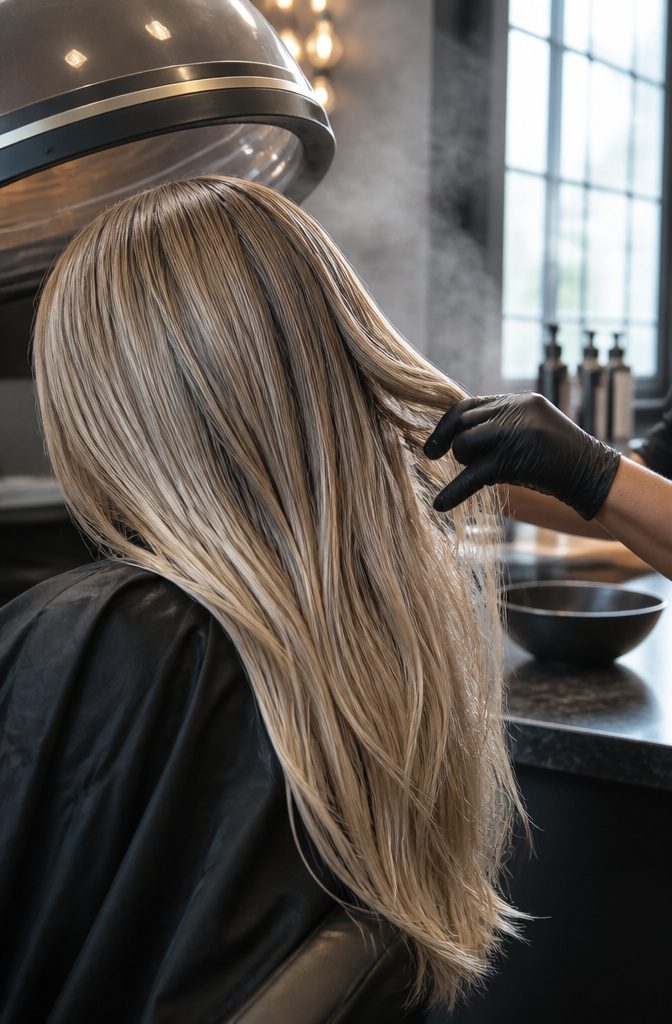
A fresh frost can look stark against the roots, and gloss is the quickest way to soften it.
A gloss deposits a sheer wash of tone over the lightened strands, so they pick up depth and sit closer to the rest of the hair instead of reading as bright stripes.
Nous Haircare glosses are one example of the finishing products a colorist might reach for here.
I treat this step as part of the color rather than an add-on. Without it, lightened pieces can look flat and a little harsh, so ask for a gloss after the lightening step when you book.
Frequently Asked Questions
What does frosted blonde hair mean?
Frosted blonde hair is fine, delicate highlighting applied from the root area to the ends for a soft, sunkissed look.
The highlights start about one shade lighter than your natural color and fade to two shades lighter at the ends, so the result reads as dimension instead of visible stripes.
It’s a softer, more subtle technique than balayage or traditional highlights.
What is the difference between frosting your hair and highlighting your hair?
Traditional highlights go right to the root and look bold and bright, requiring salon visits every 6–8 weeks.
Frosting places fine strands from regrowth to ends for a salt-and-pepper or sunkissed effect, and you’ll return about every 6 months. Frosting is the lower-maintenance option.
How is frosting different from balayage?
Frosting is softer: delicate strands run from regrowth to ends, while balayage lays bolder ribbons of dimension and a bolder face frame.
Balayage appointments typically run every 3–5 months, while frosting runs about every 6 months. Frosting is easier to wear as a first color.
Will frosted hair work on anyone?
Frosting adapts to curly, straight, wavy or textured hair because you set the brightness level instead of following a fixed formula.
That flexibility makes it a sensible first color for anyone who has never lightened their hair and wants a soft glow, and it can also be used on clients who need gray coverage.
How do I ask for frosted hair?
Bring inspiration photos and point to what you like in each one: the shade, how the lightness is spread, how the ends look.
Pull up an article that explains frosted hair on your phone so you and your stylist share the same vocabulary before any lightener comes out. Photos and a written description together do most of the talking.