Going from brown to blonde means lifting out your natural pigment with bleach, then toning away the orange and yellow it leaves behind.
Dark brown or black hair rarely gets there in one visit: expect 2–3 sessions spaced 4–6 weeks apart, and at least $1,800 at a salon before the tip.
Assess Your Hair History
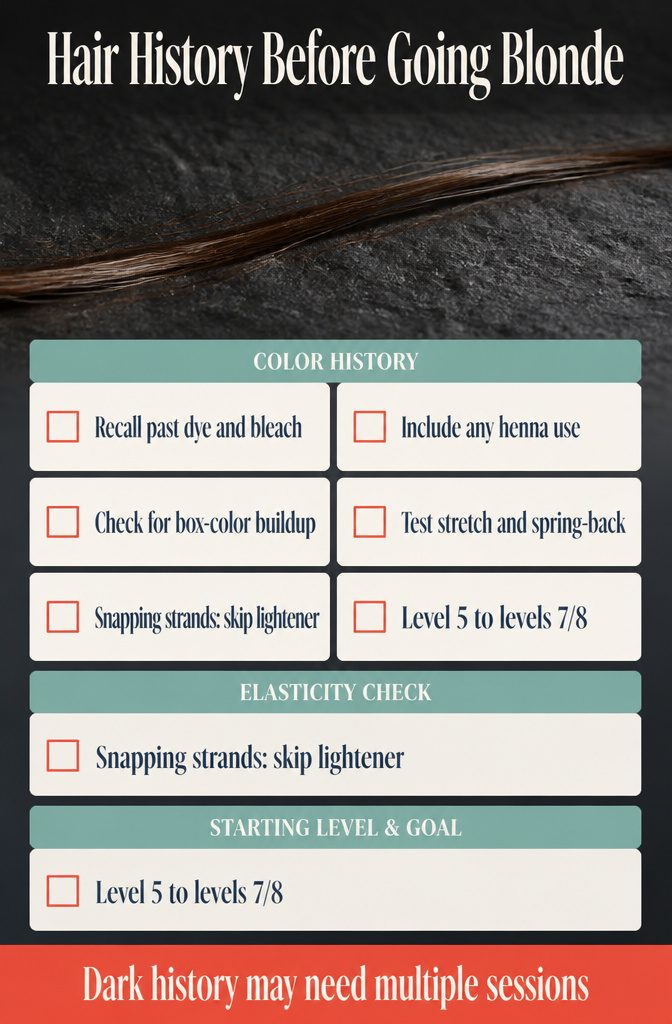
Past dye, bleach and henna all change how new color behaves, so list every one you can remember, plus any buildup from box color.
Then run the elasticity test: a healthy strand stretches and springs back without snapping, and I would not put lightener on one that breaks. Fine hair tends to lift more easily, while thick or dense hair lifts slower.
Starting shade against your goal sets the workload.
Take level 5 Milk Chocolate hair aiming for levels 7/8: the dark pigment has to come out before any lightening starts. The darker the start and the heavier the color history, the more likely you need more than one session.
Choose Your Blonde Shade
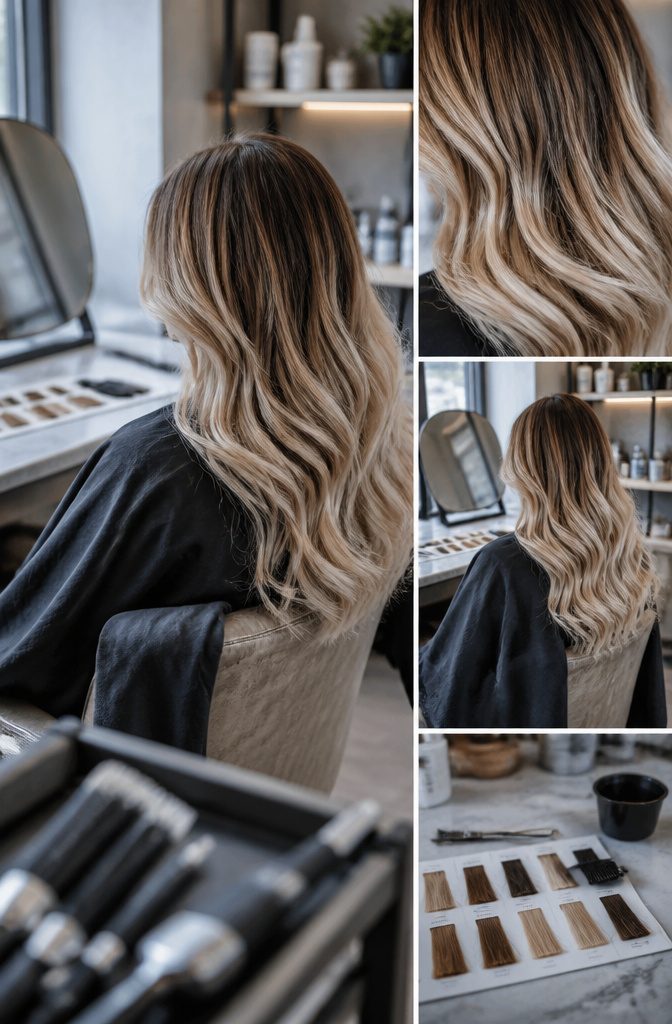
Check your veins and eyes before you save a photo.
Pink undertones, blue veins and blue, gray or cool brown eyes suit ash, ice or platinum. Yellow or golden skin, green veins and gold or hazel eyes suit honey, dark blonde or bronde.
Upkeep should break the tie. A platinum with a deeper root that melts into bright blonde grows out with a softer, more gradual line, and I’d pick that over an all-over single shade for anyone who dreads regrowth.
Staying close to the tones already in your hair is the lowest-maintenance route, so bronde is the easy win for warm brunettes. Curly or dry hair oxidizes color faster, so plan on more frequent touch-ups with any shade.
Prepare and Test the Hair
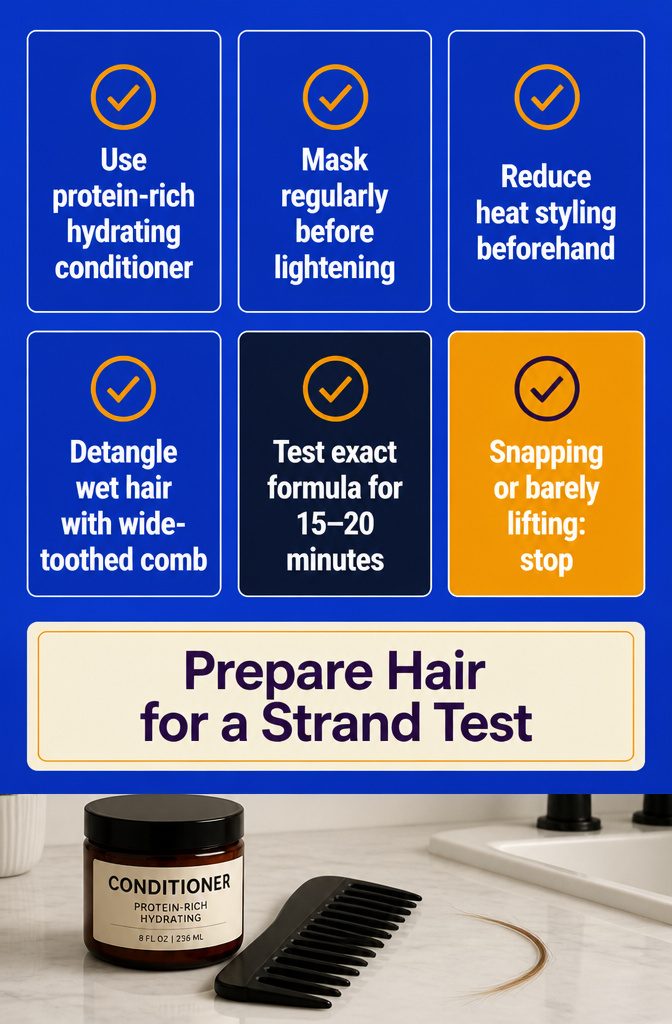
Hair that starts out conditioned lifts more evenly, and the strand test is the step I’d never skip.
- Use a protein-rich, hydrating conditioner, because color bonds to protein. Mask regularly in the weeks before.
- Cut back on heat styling during that stretch.
- Detangle wet hair with a large-toothed comb instead of a brush.
- Apply your exact formula to a thin section from the middle of your head. Give it 15–20 minutes.
- The strand shows two things: whether your hair can take bleach without breaking, and roughly what shade you’ll land on.
- If the strand snaps or barely changes, don’t commit the full head.
Remove Old Color First
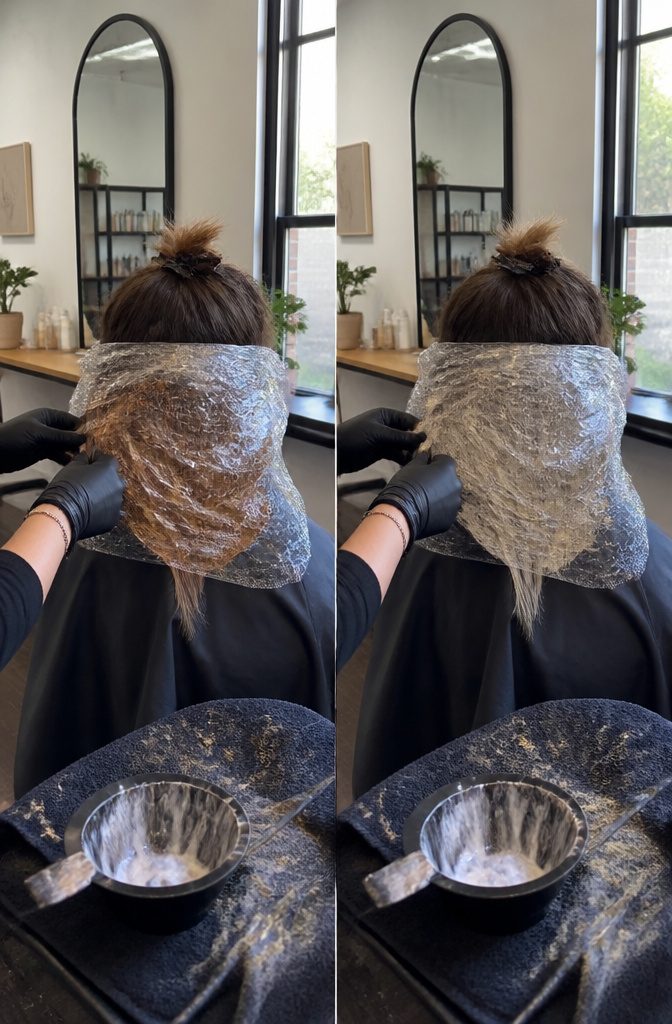
Box color is the reason to start with a remover. Years of it can call for color removal before highlights, because the dark pigment has to come out before lightening.
For level 5 Milk Chocolate heading toward levels 7/8, apply the remover to dry hair, skip the regrowth, and work it through quickly.
Then wrap the hair in cling wrap. A second round can go mostly on the darker ends, and 2 applications is the most you can do in one day.
Stop when the hair looks like a brassy version of your natural shade. That brassiness is the sign it’s ready for lightener, and toner handles it later.
Pre-Lighten or Bleach
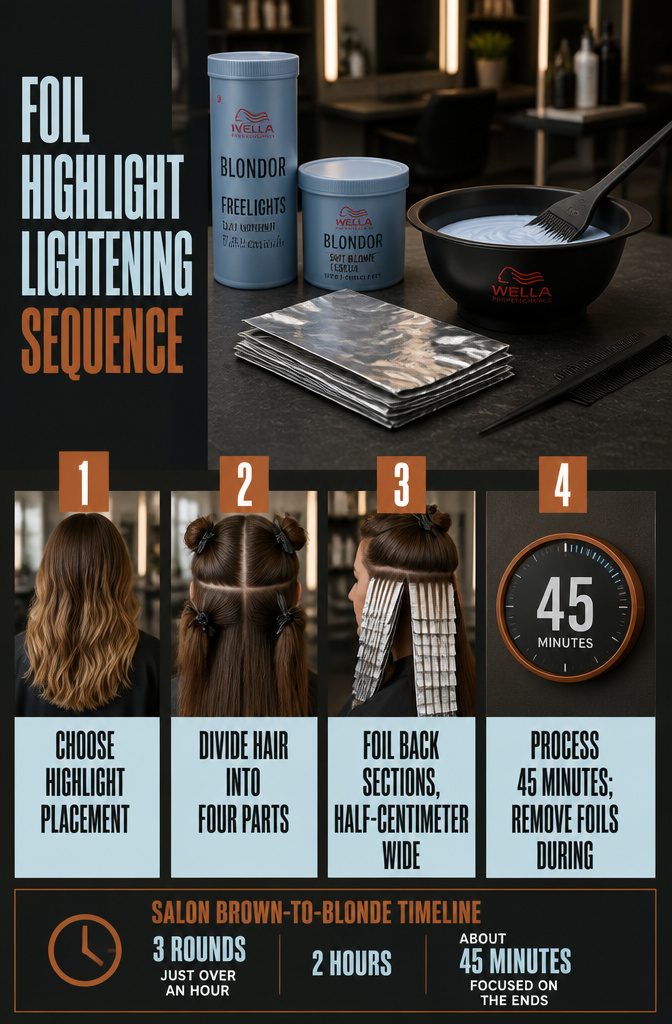
Highlights, balayage, an ombre effect and all-over blonde use the same lightener, so settle on placement before you mix anything. Wella Blondor is the pro product I’d point to, with lifters ranging from Blondor Freelights to Blondor Soft Blonde Cream.
For foil highlights, split the hair into four parts, start at the back, and pull sections about half a centimeter wide.
Keep the starting point a few centimeters from the scalp and leave some strands untouched for variation. Use 40 volume developer and process for 45 minutes, taking the foil off during processing so the darker back sections catch up without overcooking.
A salon brown-to-blonde can run much longer: three rounds, just over an hour, then two hours, then about 45 minutes focused on the ends.
Rest 4–6 Weeks Between Sessions
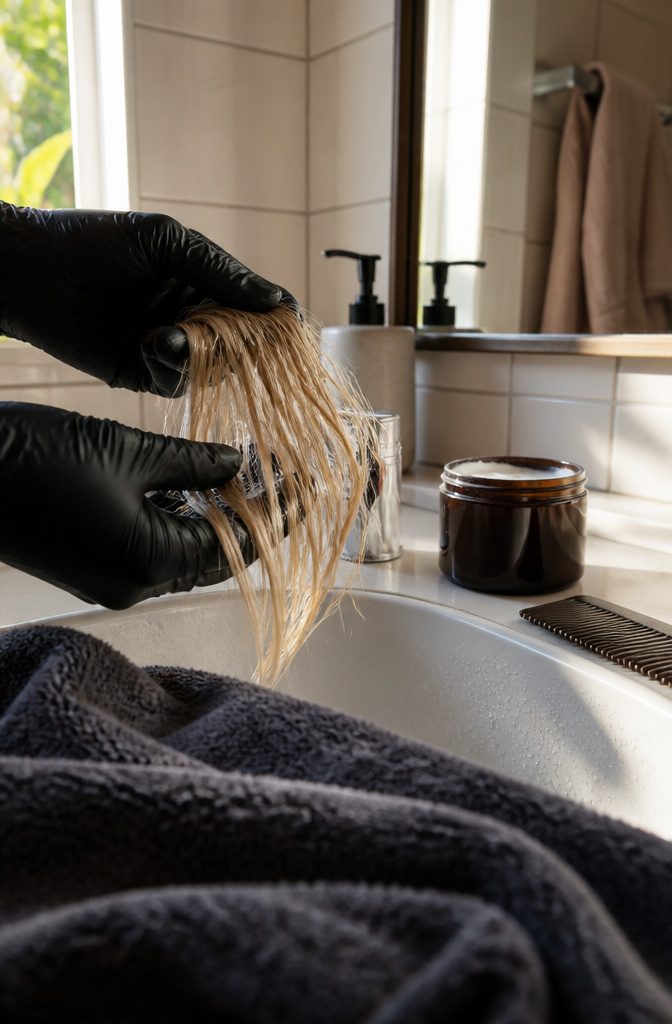
Brunettes going bright often need 2–3 sessions, and the gap between them matters. Wait 4–6 weeks between bleaching rounds.
I lean toward the full six for fragile or already-lightened hair, because lifted strands need that time to recover. Four weeks only makes sense if the hair still feels strong after round one.
During the pause, skip heat styling as much as you can and use a reparative mask once a week, such as L’Oréal Paris Elvive Total Repair 5 Damage Erasing Balm Rinse-Out Mask.
Before you rebook, wet a few strands and give them a gentle tug. Hair that feels gummy, stretches, or snaps needs more time, so push the appointment back.
Repeat Lightening If Needed
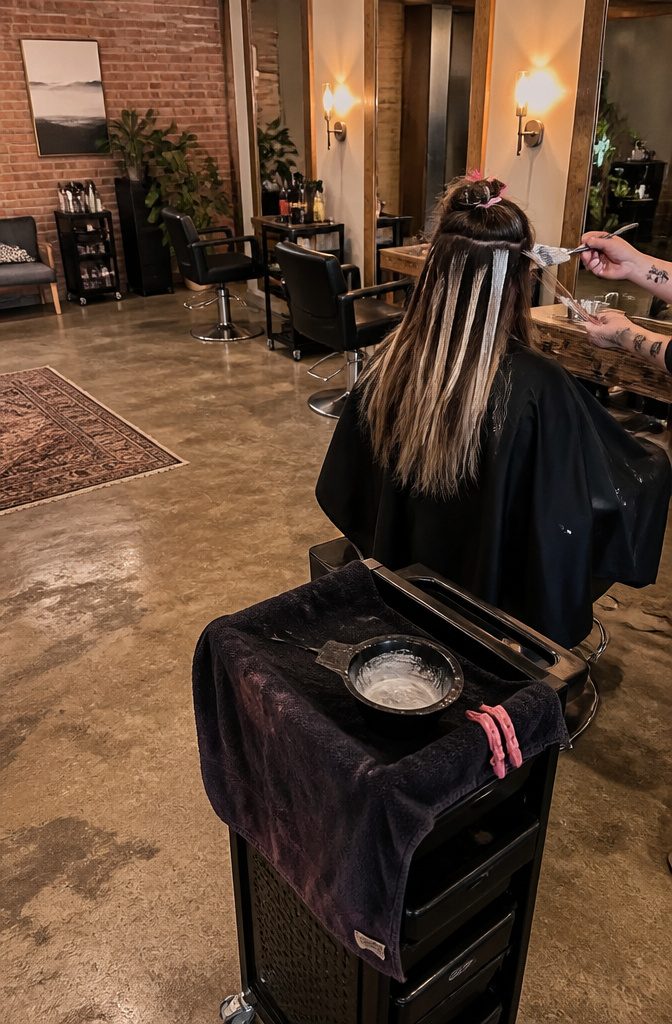
Dark brown hair rarely reaches blonde in one visit, and black hair needs even more patience.
If the first round falls short, wait about 6 weeks before lightening again. On later visits, a stylist can lift only the darker pieces that remain instead of putting bleach on from scalp to ends every time.
Knowing when to stop matters as much as the lightening. Thin, fine hair with little color history can lift faster than thick, resistant hair with years of dye, so your timeline won’t match the one on someone else’s Pinterest board.
Once the shade is close, I’d settle for it and only touch up the outgrowth.
Pushing lighter and lighter is how hair ends up damaged beyond repair, and a slightly deeper blonde that stays healthy looks better than a pale one that snaps.
Apply the Blonde Color
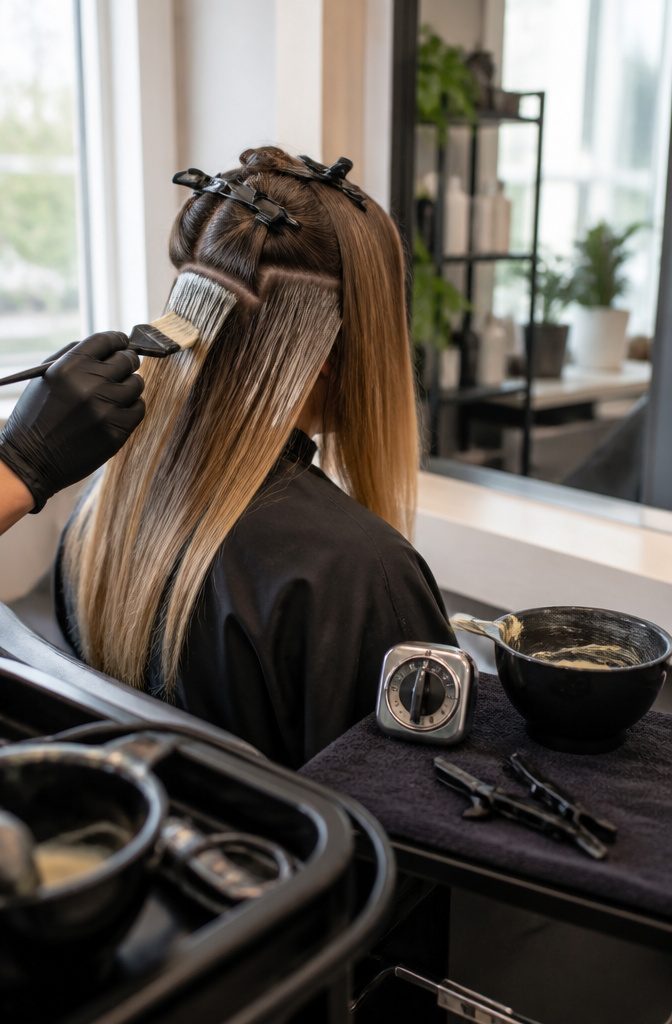
Hair has to be light enough for the dye to show before any blonde goes on. Read the box instructions all the way through first, because processing times differ from formula to formula.
A workable root mix is half 7 Medium Blonde and half 8.2 Beige Blonde, blended with 20 volume developer. Section dry hair into four parts and start at the front.
Paint the mix onto regrowth, tapering down to the top of any highlights. Letting it slip slightly over them softens the line, and any areas without highlights get color through to the ends.
Then set a timer for 35 minutes. L’Oréal Féria Hyper Platinum is the option for a bigger jump, since it lifts up to eight levels.
Tone or Gloss the Hair
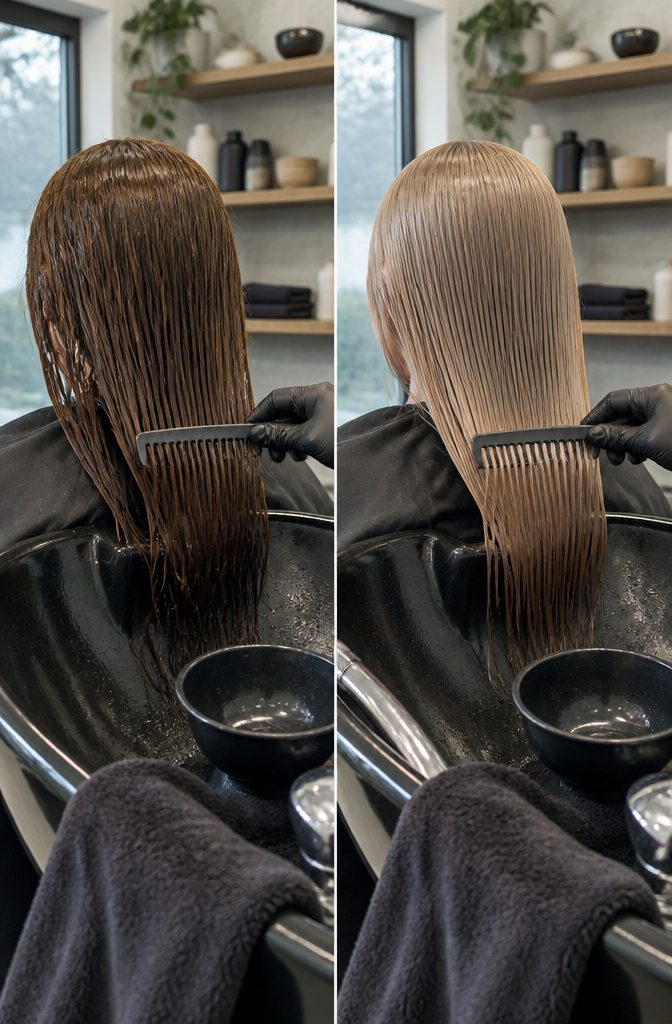
Dark brown hair gives up orange and yellow as it lifts, and toner cancels them.
Pick a demi-permanent like Color Touch or a permanent like Koleston Perfect; both come in light-reflective blondes. Apply it during the last 20 minutes of processing and comb it from roots to ends.
Salons finish with gloss:
She applied two different color combinations of hair gloss … and let that soak in for around 20 minutes.
— Allure
A gloss adds 4–6 weeks of shine, so I treat it as part of the color, not an add-on. Keep purple shampoo to twice a week at most; over-toning turns blonde silvery or lavender.
Maintain the Blonde
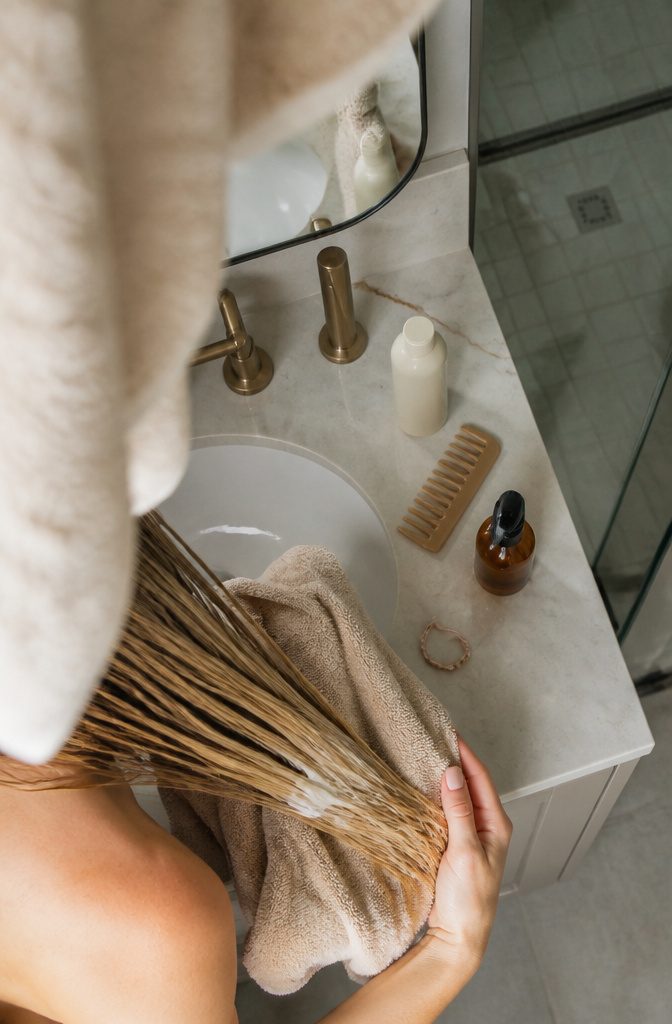
Brown to blonde holds its color longest on a gentler routine:
- Use a color-safe, sulfate-free shampoo and wash less often. Dry shampoo stretches the days between washes.
- Deep condition once a week. I’d also ask the stylist about a bonding treatment.
- Skip hot tools for the first 2–3 weeks. After that, use a heat protectant rated up to 450°F every time.
- Purple shampoo goes on once a week or every third wash, at most twice weekly, or the blonde turns silvery or lavender.
- Gloss 2–3 times weekly to hold tone and shine.
- Book salon visits every 4–6 weeks at first, then settle into root touch-ups every 6–8 weeks.
How Much Damage to Expect
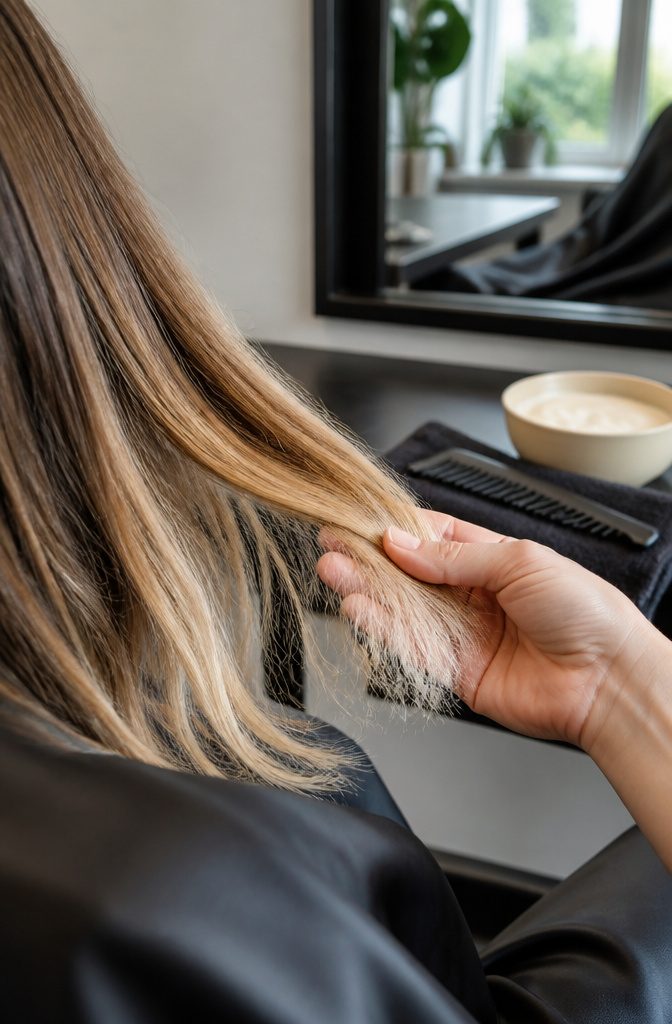
Bleach always damages hair to some degree, because it changes the hair’s structure.
How much depends on your hair’s condition, its color history, the number of lightening sessions and your aftercare. Old bleached ends from past highlights make the job harder.
I’d choose gradual lightening over one big jump.
Dark brown usually needs a couple of rounds, and mask-heavy breaks between them protect the hair better than cramming. For the weeks before, mask regularly and cut back on heat styling.
Owners on Reddit say bleached hair ends up dryer and more brittle, and that it never returns to the health of your natural hair.
Blonde is more fragile, so I’d always use a heat protectant and go easy on hot tools.
How Long It Takes and What It Costs
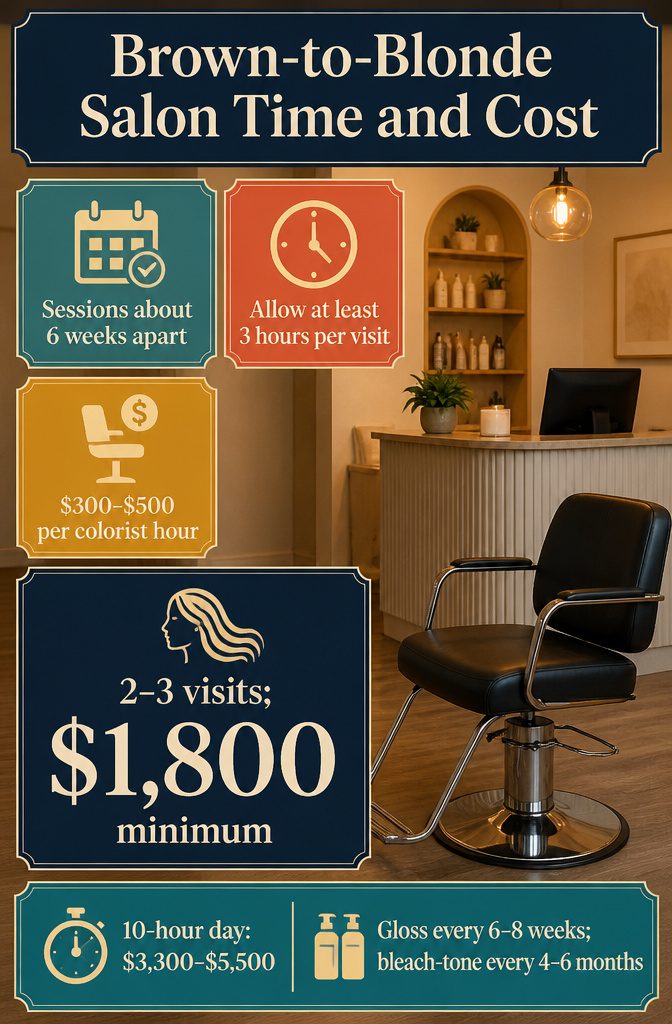
Light brown hair with no prior color can finish in a single weekend.
Dark brown or black takes several sessions. The numbers to plan around:
- Dark brown or black hair needs sessions about 6 weeks apart to protect the hair.
- Set aside at least 3 hours per visit, and clear the afternoon.
- Colorists charge $300–$500 per hour. Apprentices cost less but have less bleaching experience, so on dark hair I’d pay for a master.
- A typical plan is 2–3 sessions of about 3 hours each, with a bill of $1,800 minimum before a tip of at least 20%.
- A full 10-hour day runs $3,300–$5,500.
- Upkeep adds glossing every 6–8 weeks and bleach-and-tone visits every 4–6 months.
Salon or Home Color
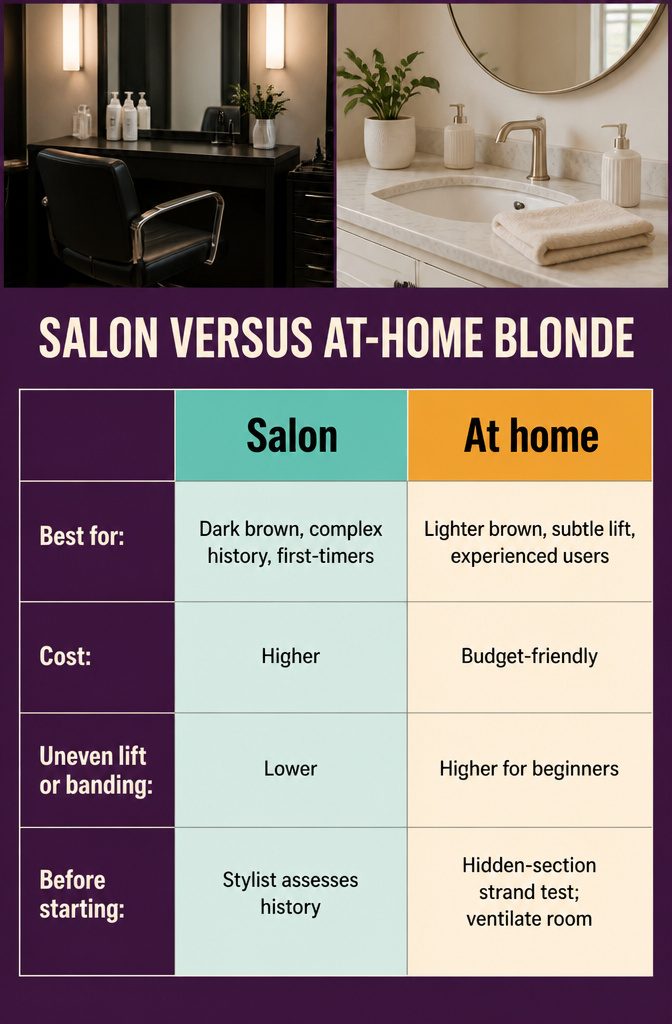
For dark brown to blonde, book the salon. A stylist reads your hair history and works to prevent uneven lift, banding (distinct lines where color was applied) and breakage.
At home, a lighter brown base, a subtle lift or some coloring experience is what makes the box worth trying. Side by side:
| Salon | At home | |
|---|---|---|
| Best for | Dark brown, complex hair history, first-timers | Lighter brown, subtle lift, experienced users |
| Cost | Higher | Budget-friendly |
| Risk of uneven lift or banding | Lower | Higher for beginners |
| Before you start | Stylist assesses your history | Strand test on a hidden section; ventilate the room |
Brown to Blonde Without Bleach
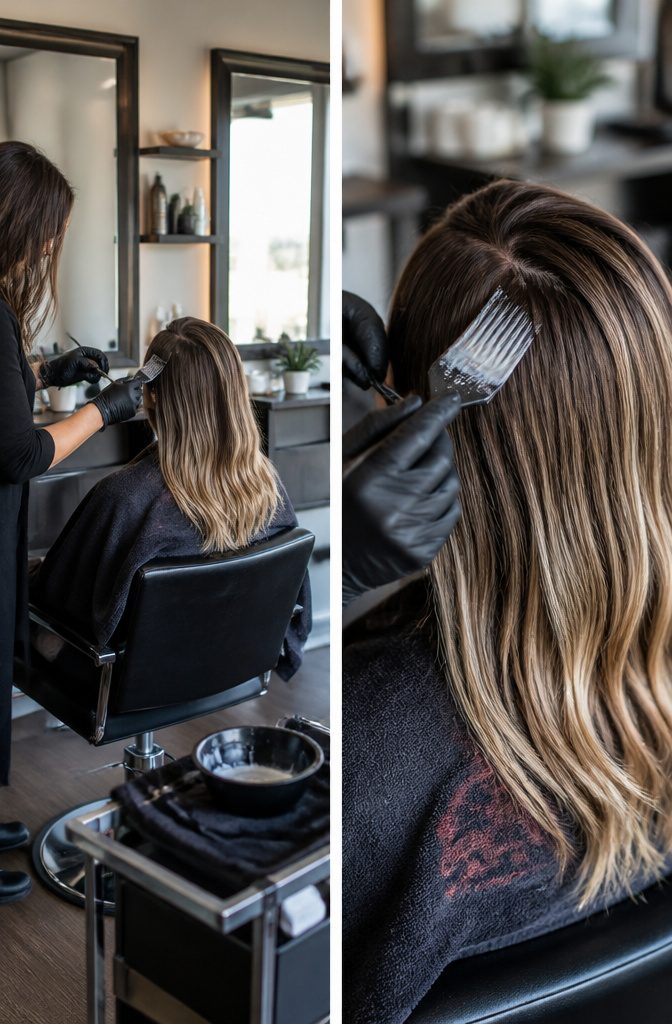
High-lift color is the one real no-bleach route, and it only works on virgin light brown hair when you want blonde just a few levels lighter.
Skipping traditional bleach doesn’t make it gentle, since these formulas still use strong lightening agents to lift your natural pigment. On a small jump, though, it’s the less damaging choice, and I’d pick it over bleach there.
Dark brown hair, or hair previously dyed dark, is another story: blonde dye alone won’t show up.
Bleach opens the cuticle and neutralizes the pigment inside, giving the dye a clean slate to grip. So yes, for dark brown you usually need it.
Balayage for Easier Upkeep
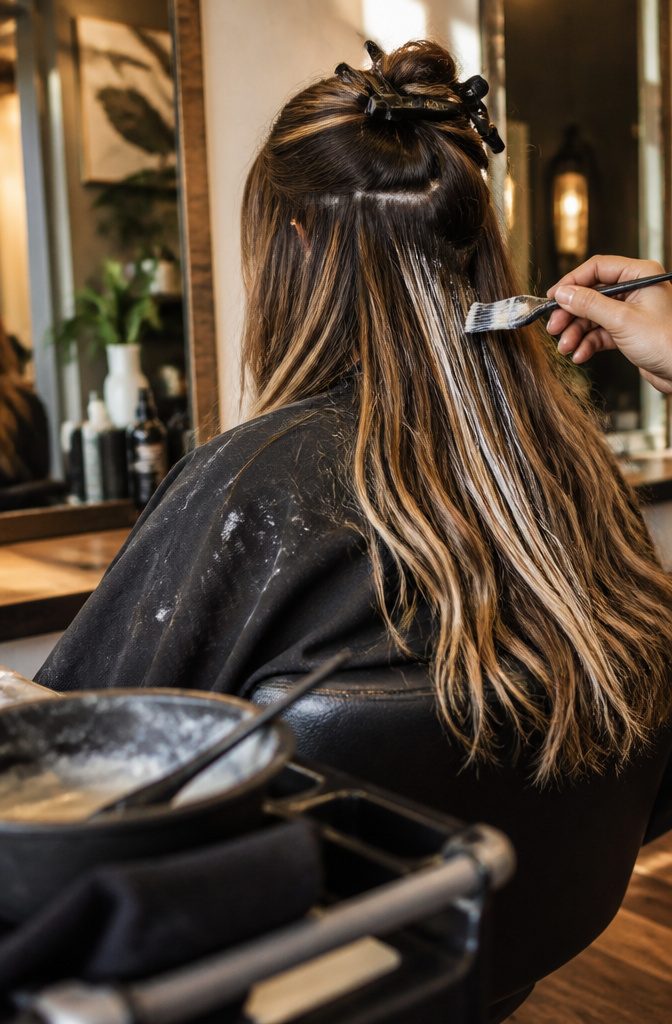
Balayage is painted on by hand, so the lightness melts into your natural brown instead of stopping at a hard line. That blend is why the grow-out looks softer.
With no stripe of dark regrowth at the scalp, new roots read as depth rather than a missed appointment. It also tends to mean fewer salon visits than all-over blonde, which needs frequent root touch-ups to stay even.
For a first move from brown to blonde, I’d choose balayage over a full head of color for that reason alone.
Ask your stylist for a soft, lived-in root and tell them you want to stretch the time between visits. The limit is that balayage won’t give you the solid, head-to-toe platinum of all-over color.
Frequently Asked Questions
How long does it take to go from brown to blonde?
Light brown hair with no color history can get there over a single weekend.
Dark brown or black hair takes several sessions spaced about 6 weeks apart, so one session won’t do it. Brunettes going bright often need 2–3 visits, and each one runs at least 3 hours.
Do you need to bleach brown hair to dye it blonde?
Usually yes, especially with dark brown hair or hair previously dyed dark, because blonde dye alone won’t show up.
The one exception is high-lift color on virgin light brown hair when you only want to go a few levels lighter. Even then, those formulas use strong lightening agents, so they aren’t gentle.
How much does it cost to go from brown to blonde?
Colorists charge about $300–$500 per hour, and a typical plan is 2–3 sessions of roughly 3 hours each.
That puts the bill at $1,800 minimum before a tip of at least 20%. A full 10-hour day runs $3,300–$5,500, and upkeep adds glossing every 6–8 weeks plus bleach-and-tone visits every 4–6 months.
How damaging is going from brown to blonde?
Some damage is unavoidable, since bleach changes the structure of the hair.
How much depends on your hair’s condition, its color history, the number of sessions and your aftercare. Lightening in gradual rounds with mask-heavy breaks in between is gentler than one big jump.
How often will I need root touch-ups after going blonde?
Plan on root touch-ups every 6–8 weeks once you’ve settled into your shade.
Early on, salon visits come closer together, every 4–6 weeks. The exact timing shifts with how fast your hair grows and how much contrast sits between your roots and your blonde.
Who suits a brown to blonde transformation?
Skin undertone is a good starting point: pink undertones, blue veins and blue, gray or cool brown eyes suit ash, ice or platinum, while golden skin, green veins and gold or hazel eyes suit honey, dark blonde or bronde.
Your hair history, the time you can spend in the chair and the upkeep you’re willing to take on matter just as much.
Is balayage easier to maintain than all-over blonde?
Yes. Balayage is hand-painted, so it blends into your natural brown and grows out softly without a hard line of dark regrowth.
It usually means fewer salon visits than all-over blonde, which needs frequent root touch-ups to stay even. It uses the same lightener as other blonde methods, though, so the gain is in upkeep and grow-out.