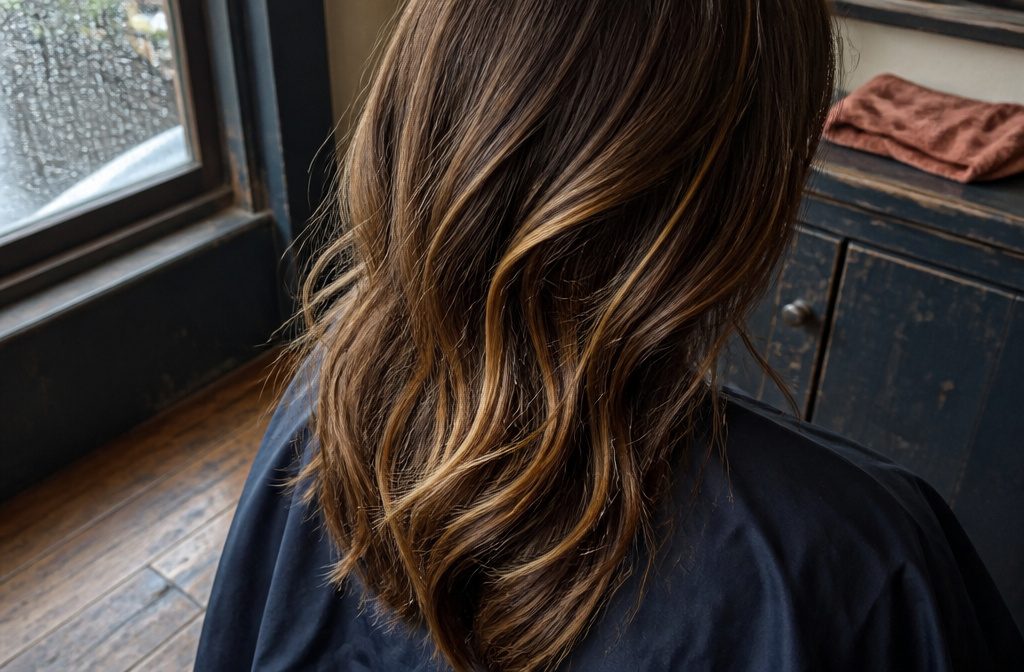
Honey and caramel highlights layered into brown hair give you dimensional, sun-kissed color that grows out softer than a single-process dye job.
Appointments run 2 to 4 hours depending on length and thickness, and the color fades faster than virgin hair if you wash more than 3 times a week.
The placement matters more than the shade: hand-painted balayage through the mid-lengths mimics what sun actually does to brunettes, pulling warmth to the surface without erasing the depth underneath.
1. Warm Caramel Brown Hair With Chocolate Depth
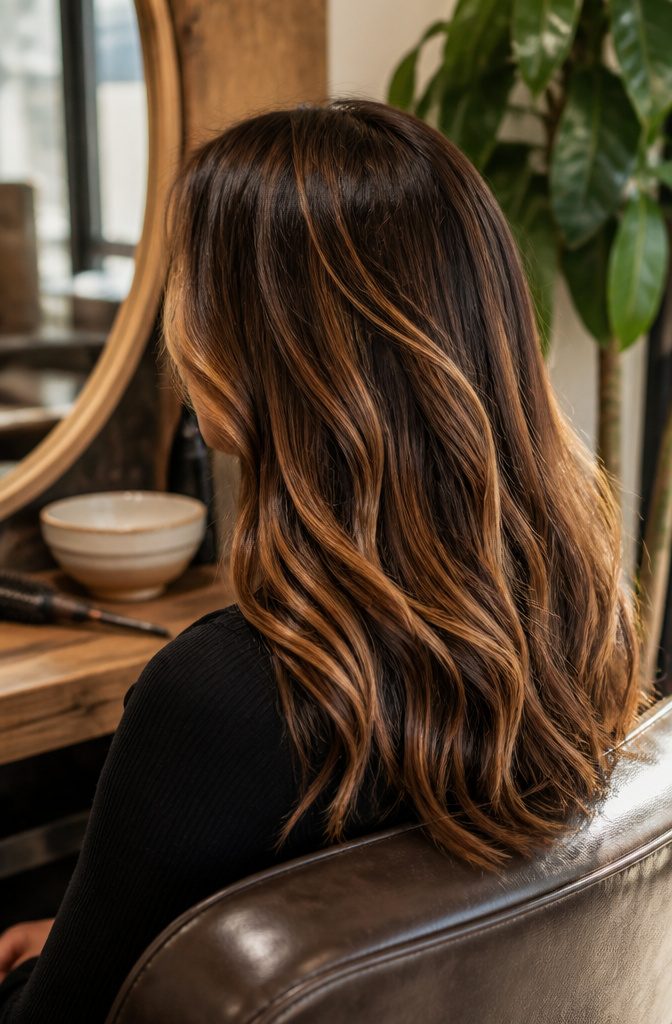
Warm Caramel Brown Hair With Chocolate Depth
Caramel-blonde highlights layered into dark chocolate hair give you that dimensional, sun-kissed finish warmer skin tones wear best.
The contrast between deep base and lighter ribbons reads as luminous rather than flat, and the interplay of chocolate brown, honey, and caramel tones keeps the whole thing from looking like a single stripe job.
I think this combination works because it mimics what sun actually does to brunettes: it pulls warmth to the surface without erasing the depth underneath.
The blonde isn’t fighting the brown; it’s sitting inside it. That means the grow-out is softer and you’re not racing back to the salon every six weeks to cover a hard line at the roots.
2. Honey Caramel Highlights for Lower Maintenance
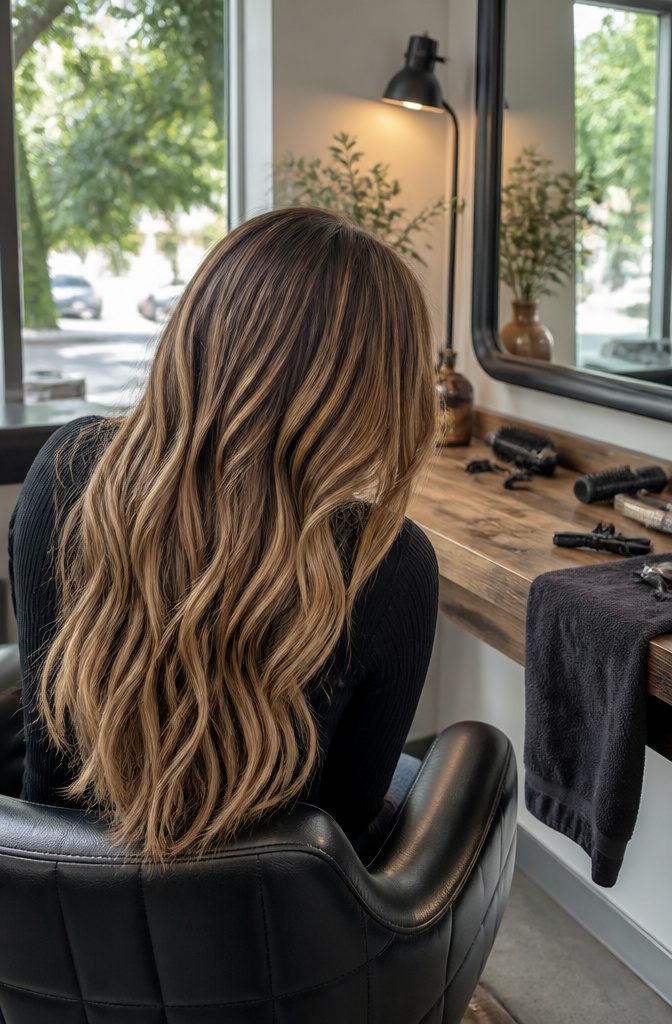
Honey caramel highlights blend honey blonde with caramel accents, adding warmth and dimension without committing to all-over color.
The placement matters here: because they’re just accents woven through your base, you skip the constant touch-up cycle that comes with full balayage or a solid color change.
The maintenance advantage is real. Your natural root line stays intact, so regrowth blends instead of announcing itself every four weeks.
One stylist notes that since these are just highlights rather than a base change, touch-ups stretch to every few months instead of every six weeks. That’s fewer appointments and less damage over time.
Subtle highlights mean less contrast, so the color reads softer and grows out without a harsh line. If you want a dramatic lift or a completely different tone, this won’t get you there.
But for adding shine and a sun-kissed feel to brunette or darker hair without the upkeep load, honey caramel highlights let you test the palette before going deeper.
3. Sun-Kissed Caramel Brown Hair
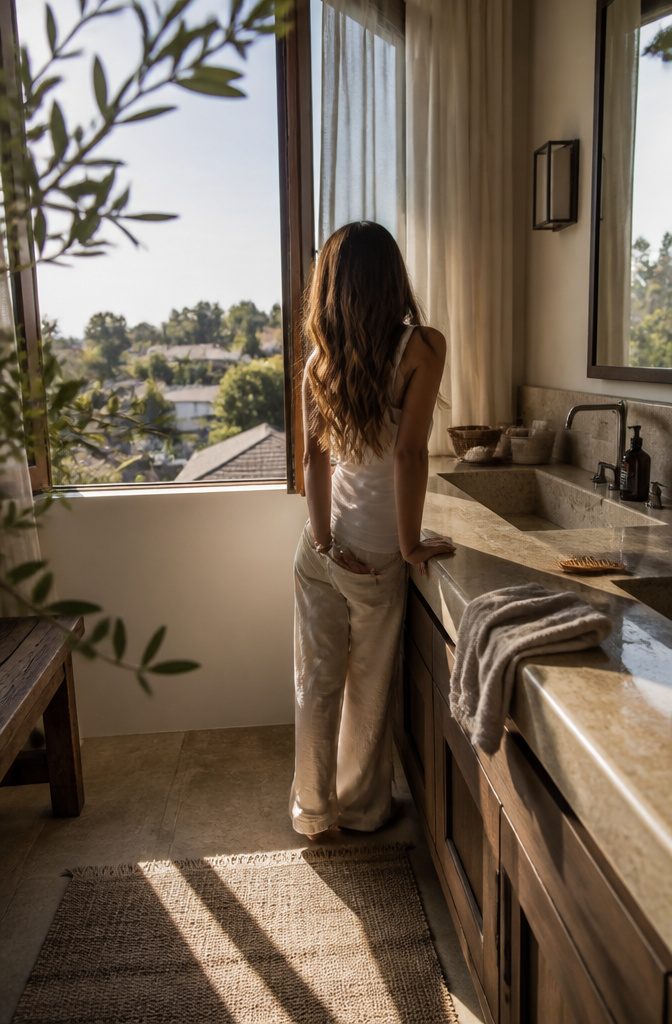
The highlights sit hand-painted in fine, uneven strokes rather than foiled in uniform sections, which gives you the irregular pattern sunlight would leave if it actually fell through your hair all summer.
Stylists call the technique balayage, and the placement matters more than the shade itself.
Instead of saturating whole pieces from root to tip, the colorist sweeps caramel through the mid-lengths and ends where natural lightening happens first, leaving the roots untouched and the overall base a rich brown.
That means no obvious line of regrowth and no appointment every six weeks to keep it looking intentional.
The effect reads casual in a way traditional highlights never quite manage. I think of it as the difference between something you paid for and something that just happened, even though you absolutely paid for it.
It works best if your natural color falls somewhere in the medium-to-dark brown range, because the contrast between base and highlight stays soft enough to look like weather rather than a salon.
4. Dark Honey Caramel Brown Hair With Cool Undertones
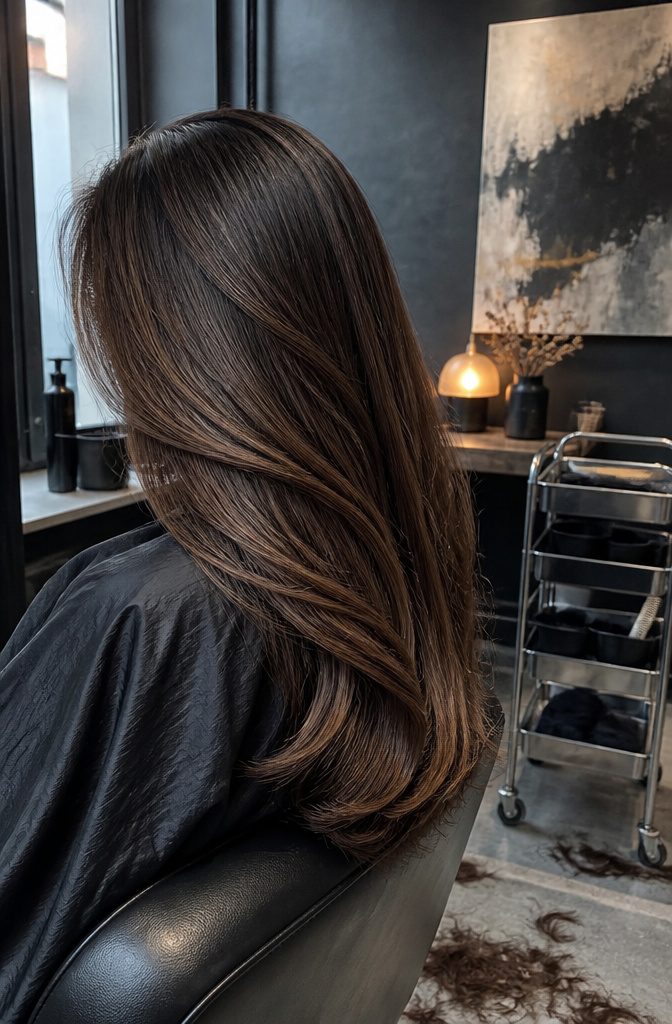
Dark honey caramel brown pushes the honey and caramel tones deeper, so they sit inside brown hair instead of floating on top of it.
The cool undertones create the drama. Golden tones on a dark base tend to read sunny and sweet, but a cool edge makes them moodier and sharpens the contrast with your natural color.
That contrast stays subtle rather than stripey, which is why I’d choose this over bright highlights if you want depth without a loud change.
It works on curly hair and on sleek, straight strands alike. Ask your stylist for deeper honey and caramel with a cool undertone, and bring a photo, since "caramel" alone leaves the undertone open to interpretation.
5. Caramel and Honey Through Wavy, Medium Hair
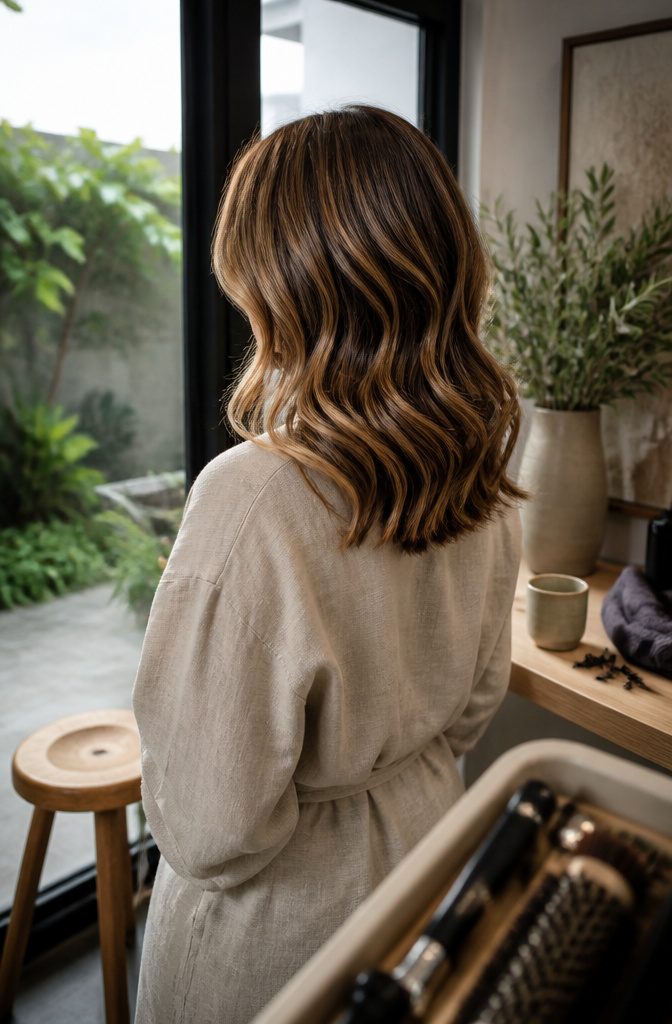
Wavy hair catches light differently with every shift, and that movement gives caramel and honey tones somewhere to live.
Highlights and lowlights worked through waves build dimension that straight hair has to fake, because the color placement follows the curve of each wave rather than sitting in flat stripes.
Hand-painted balayage tends to win here over foil highlights: the sweeps of color mirror the way waves already move, so the finish looks intentional rather than segmented.
The interplay matters most where waves crest and dip. Lighter honey tones placed at the peak of a wave catch overhead light and read brighter, while deeper caramel sits in the troughs and anchors the whole thing.
That contrast brings out texture you already have, making medium-length waves look fuller and more deliberate without adding actual volume.
The result skews sun-kissed rather than structured, which suits the casual movement of wavy hair better than a precise, high-contrast color block would.
6. Caramel-Honey Tones on Curly, Thick Hair
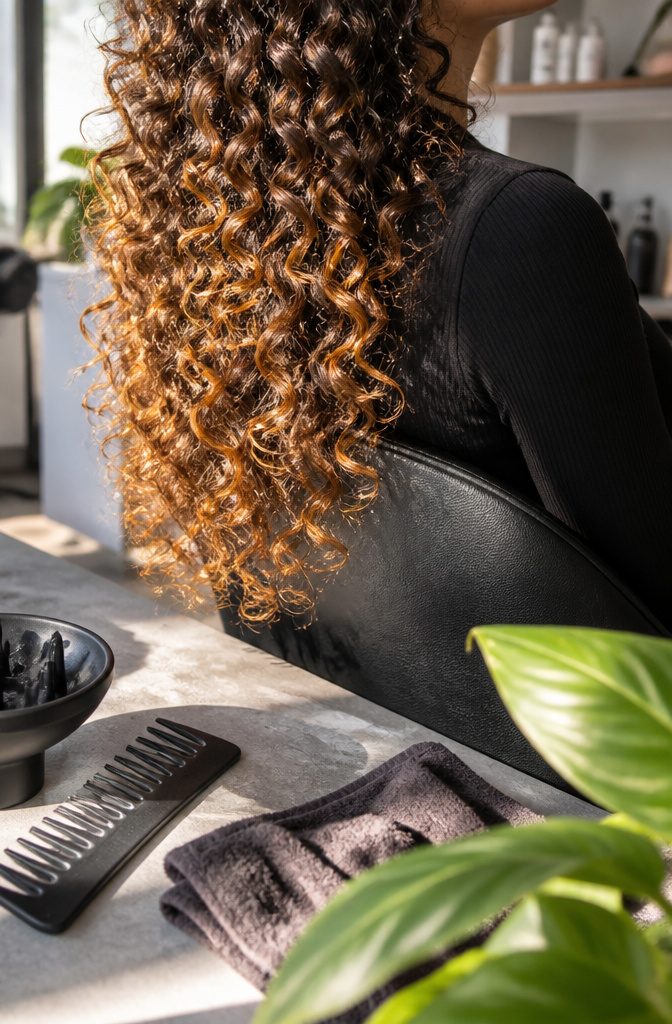
Curly hair already carries volume and dimension in the curl pattern itself. Caramel and honey tones painted strategically through that texture bring out the bounce rather than flattening it, catching light at different depths as the curl moves.
The placement matters more on thick, textured hair than it does on straight or fine hair. Paint too evenly and the color reads flat, losing the natural contrast the curls already hold.
Better to concentrate the lighter honey tones where the curl catches the most light and leave the deeper caramel at the root and through the underlayers, so the curl itself becomes the shape that reveals the color shift.
Hair extensions in matching tones can add length without losing the dimension, though they need the same strategic placement or they sit as a separate block of color rather than blending into the movement.
Choosing Tones for Your Skin Undertones
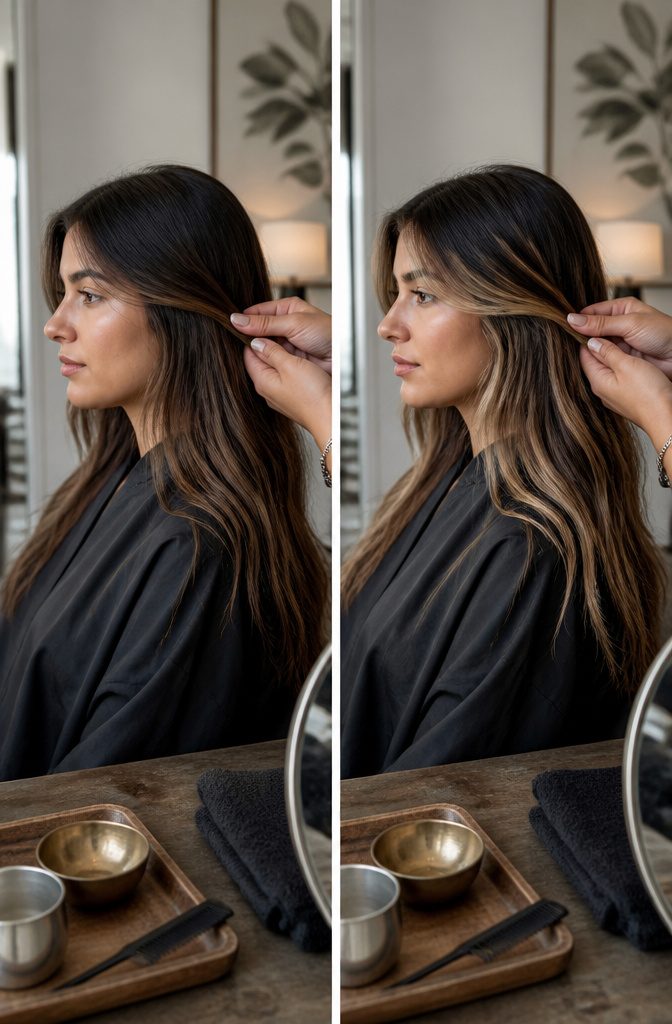
Matching the right tone to your skin starts with knowing whether you lean warm, cool or neutral.
Warm or olive undertones tend to suit honey tones, which pull more golden and sun-warmed, while cooler caramel shades work better for cooler or neutral skin.
If you are not sure where you land, think about which metal flatters you more: gold usually means warm, silver points to cool.
The placement of color matters as much as the shade itself. Face-framing highlights can draw attention to your cheekbones or define your jawline, while more scattered placement adds dimension without pulling focus to one feature.
I mention face shape during the consultation because a stylist who knows what you want to emphasize can adjust where the lightest pieces fall.
Soft ribbons near the face read differently than highlights pushed further back, and that conversation before the color goes on is where you lock in a result that actually fits.
What to Expect at Your Balayage Appointment
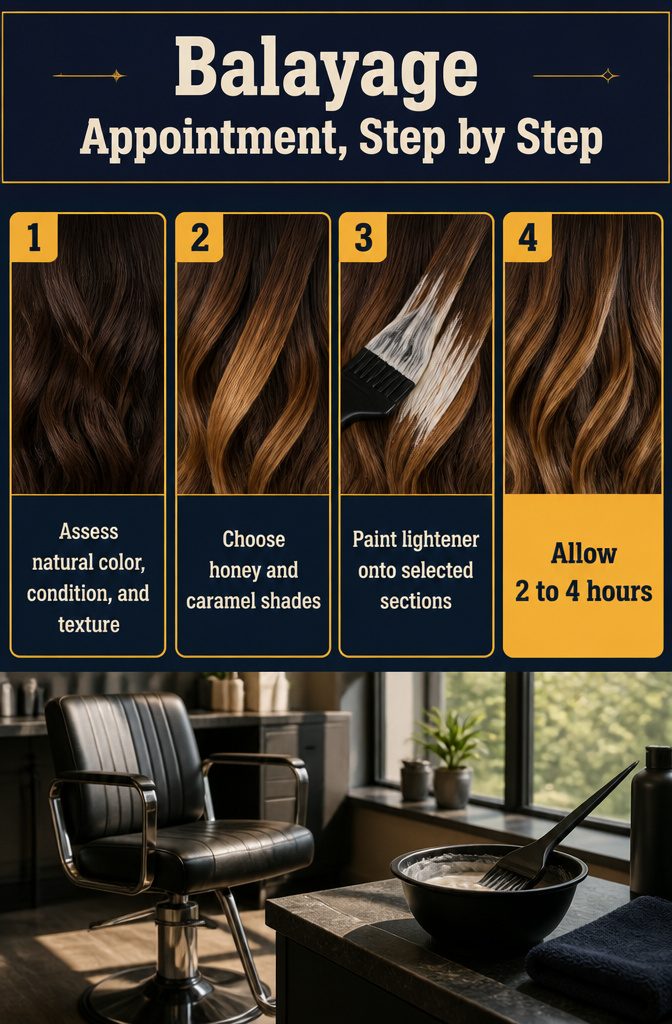
Balayage is lightener painted by hand onto selected sections, so the stylist decides exactly where each strand of honey or caramel lands.
Placement follows your natural color, your hair’s movement, and its texture, which gives you more personalized results than foils or cap highlights.
The appointment starts with a look at your hair’s condition, natural color, and texture. Only then does the stylist choose the caramel and honey shades.
Plan on 2 to 4 hours, depending on length, thickness, and how light you want to go. With long, thick hair, I’d block out the full four and skip the tight lunch reservation afterward.
Keeping the Color From Fading
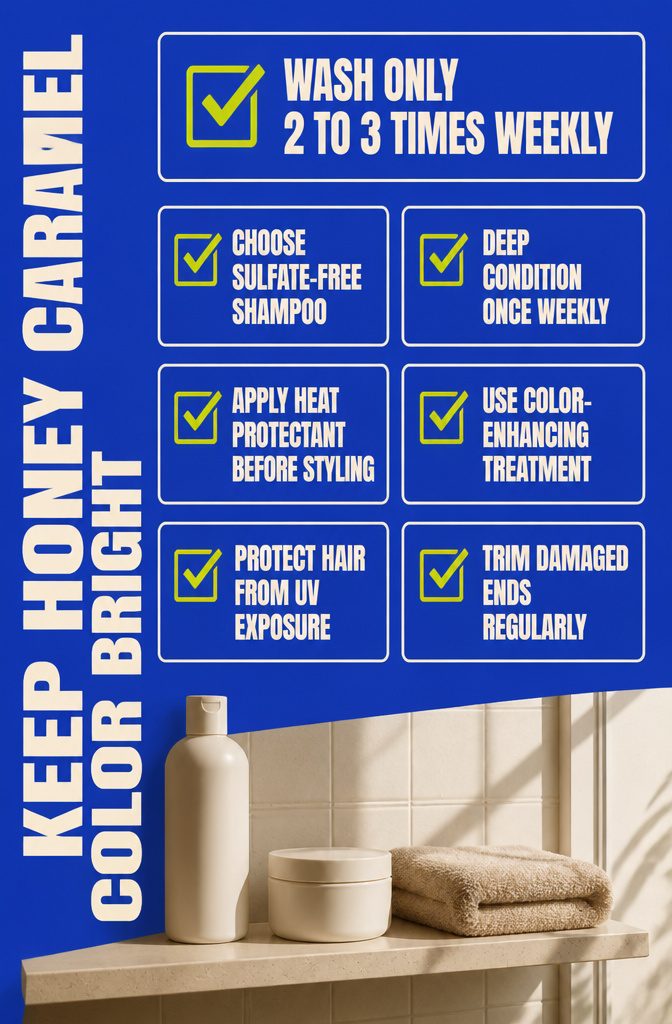
Honey and caramel fade faster than you expect if you treat them like virgin hair. Here’s what keeps the color bright and the tone from slipping brassy:
- Wash only 2 to 3 times a week. Over-washing strips the toner that holds those warm shades in place, and the color goes flat within weeks.
- Use sulfate-free shampoo. Sulfates pull pigment out with every lather.
- Deep condition once a week with a moisturizing mask. Lightened hair is porous, and dry hair fades noticeably faster.
- Apply heat protectant before blow-drying or using hot tools. Heat damage accelerates fading and turns the ends brassy.
- Consider a color-enhancing shampoo or treatment for balayage or highlighted hair to keep the tone from shifting.
- Protect from sun exposure. UV breaks down the pigment molecules that give you those golden tones.
- Get regular trims to cut off damaged ends before they start looking straw-colored.
The color care matters more than the cut here. Skip the sulfate-free routine and you’ll be back in the chair for a toner refresh every six weeks instead of every three months.
Frequently Asked Questions
What is the difference between honey highlights and caramel highlights?
Honey highlights pull more golden and sun-warmed, while caramel shades lean richer and deeper with warmer brown undertones. Honey works better on warm or olive skin tones, while caramel can shift cooler or warmer depending on the formula.
Both are often combined in the same head of hair for dimension, with honey placed where light hits most and caramel worked deeper through the underlayers.
How to do caramel hair color?
Caramel is typically painted by hand through sections of hair using balayage technique rather than foiled from root to tip.
The stylist analyzes your natural color, texture, and skin tone, then freehand-paints caramel and honey shades onto mid-lengths and ends where natural lightening would occur.
The process takes 2 to 4 hours depending on hair length and thickness, and placement follows your hair’s natural movement for a softer grow-out.