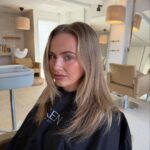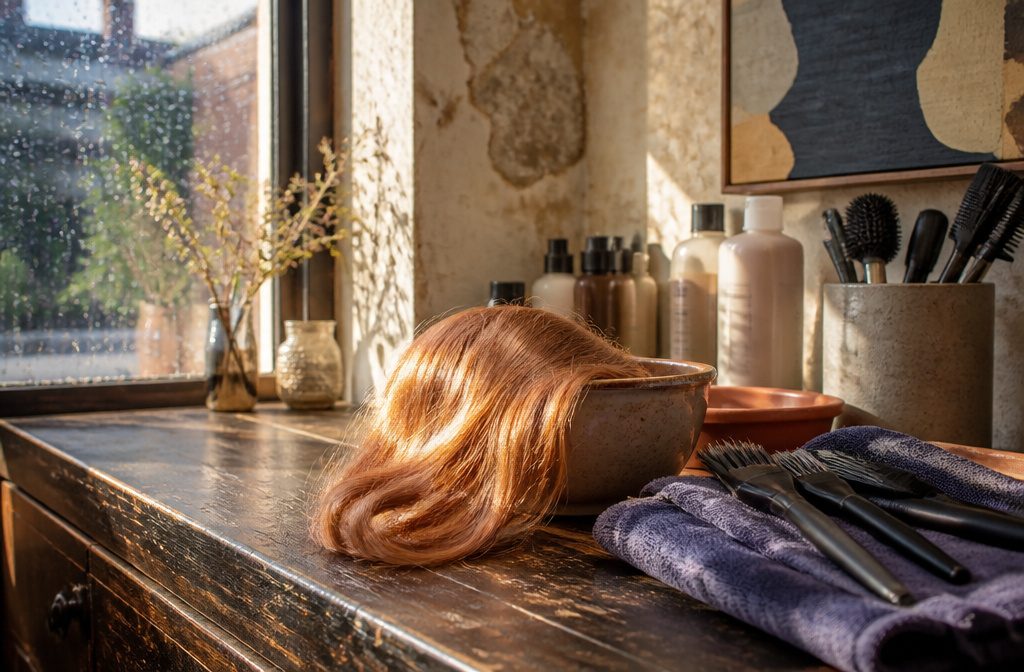
These shades run from a soft golden copper that flashes red only in direct light to a peach blonde that fades first, and the pick comes down to how much color you want to announce.
Most need pre-lightened hair, and BlondorPlex reaches up to 9 levels of lift; on dark, un-bleached hair the red reads muddy or brassy.
1. Copper Blonde Ombré
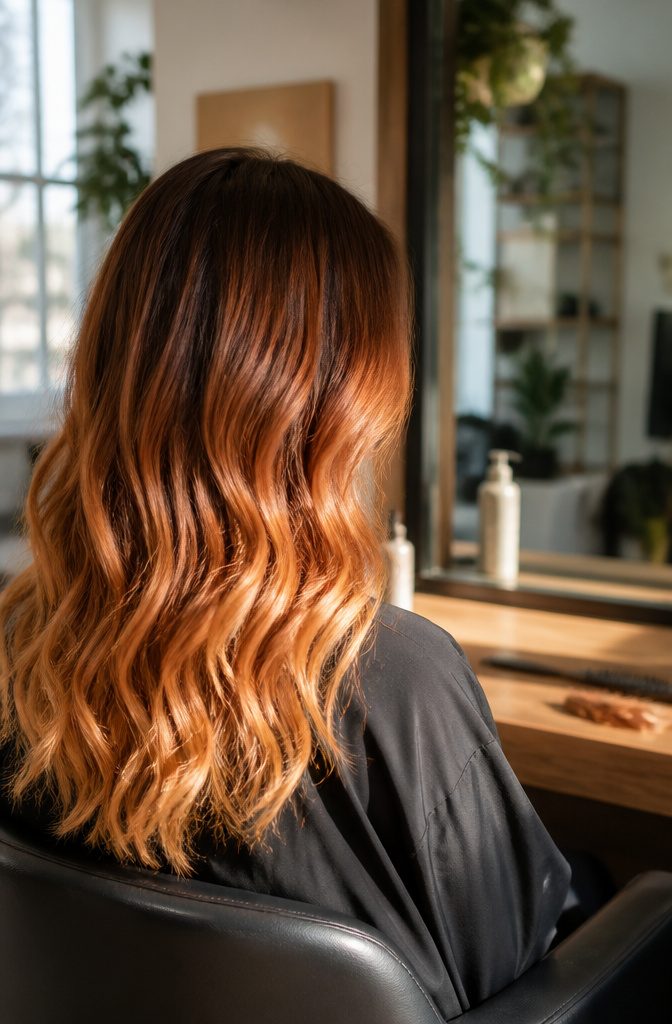
Dark roots transition through copper mid-lengths to red-blonde ends, and the whole thing grows out without a hard line because the color shift is already built in.
Roots stay untouched or deepened slightly, so regrowth reads as intentional rather than overdue.
The look asks for pre-lightening through the mid-lengths and ends to reach the copper and red-blonde tones, and BlondorPlex gives up to 9 levels of lift while reducing breakage by 97%.
Once the hair is lifted, a demi-permanent toner like Color Touch layers in the copper through the middle and the red-blonde at the ends.
More than 100 shades in the palette means your colorist can dial in each zone separately: the shadowed root, the warm copper transition, and the lighter finish. The contrast is the point here, not something to soften.
2. Auburn Blonde

This approach keeps warmer brown tones through the lower layers while concentrating copper-blonde brightness from mid-lengths to the ends.
The depth underneath stops the look from reading as flat or overly light, and the contrast gives you dimension that mimics how sun naturally lightens the surface of your hair first.
I like this one for fall because the brown anchor feels grounded without losing the brightness that makes strawberry-blonde what it is.
The placement matters more than you’d expect. Keeping the darker tone below means you can push the copper tones richer and more intense on top without the whole head turning orange or too loud.
Koleston Perfect handles this kind of split-tone work well because it delivers color that stays true rather than shifting muddy as it develops, and the built-in Metal Purifier keeps the blonde part from grabbing brassy.
It also covers grey completely if that’s part of the job.
3. Copper Blonde Balayage
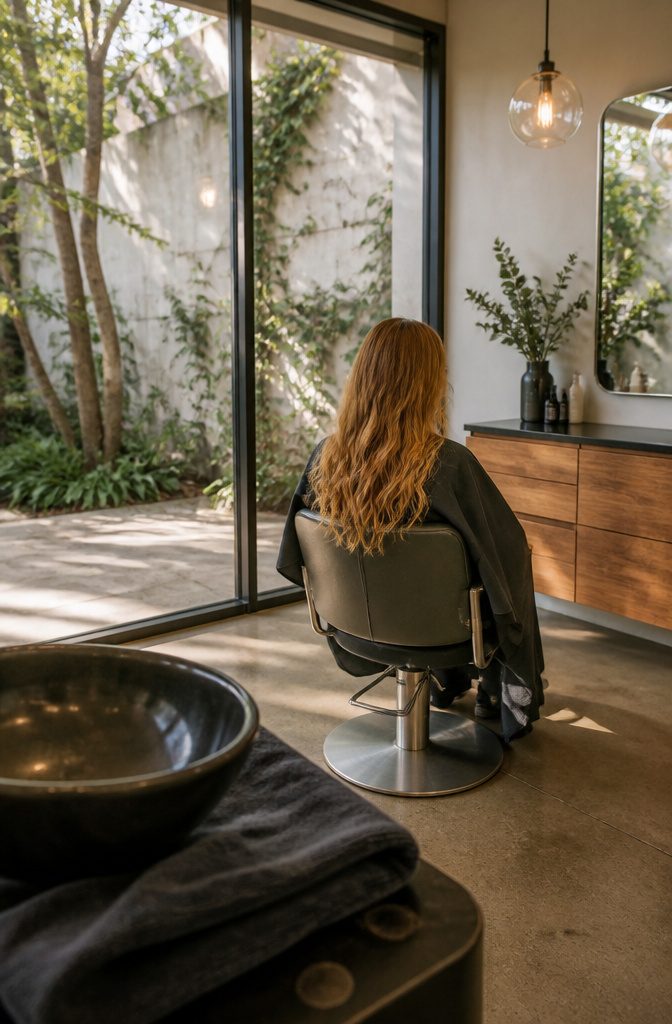
Balayage puts the copper-strawberry lightness where it reads fastest: through the mid-lengths and ends, leaving your roots untouched.
The technique suits anyone who wants low-maintenance color, because regrowth blends rather than announcing itself with a hard line the way ombré does.
Ombré concentrates all the lift at the ends and keeps a visible boundary; balayage hand-paints lighter pieces wherever they catch light, so the transition feels gradual.
Natural redheads get the warmth without committing to full-head blonde, and pre-lightened blondes can use a zero-lift glaze like SHINEFINITY Color Glaze to revive grown-out highlights with copper tone and gloss in one session.
The color sits on top rather than lifting, so you add warmth without damage.
I like that this approach stretches salon visits: the root grows out soft, and the copper stays visible longer than a single-process blonde that fades to yellow.
4. Blonde Face Frame on Copper Hair
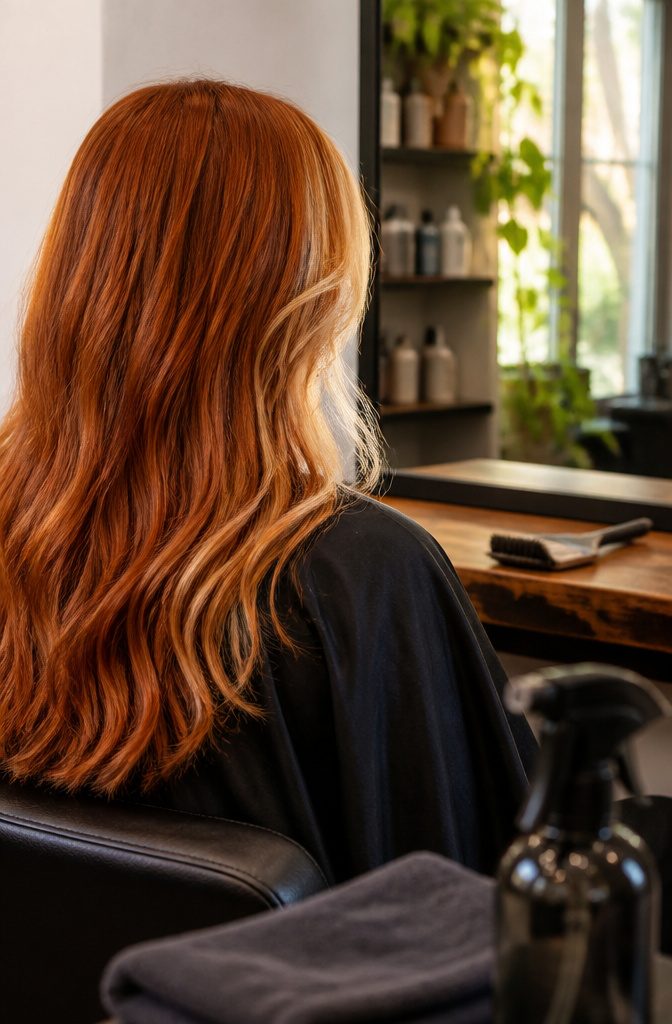
Blonde face-framing highlights lift the front without pulling you out of copper territory. Your colorist paints lightness through the layers that sit closest to your face, brightening your complexion while the rest of your hair stays firmly red.
The effect reads as subtle glow rather than contrast, which keeps it wearable if you’ve been nervous about going too blonde too fast.
BlondorPlex is the lightener worth asking for by name. It delivers up to nine levels of lift with 97% less breakage, which matters when you’re working on the often-fragile front pieces.
Once the blonde is in, a color depositing mask like Color Fresh Mask in Copper Glow keeps the red tones alive between salon visits.
You work it through clean, damp hair on wash day, and the argan oil inside conditions while the pigment refreshes what the water tries to strip.
5. Golden Copper Blonde
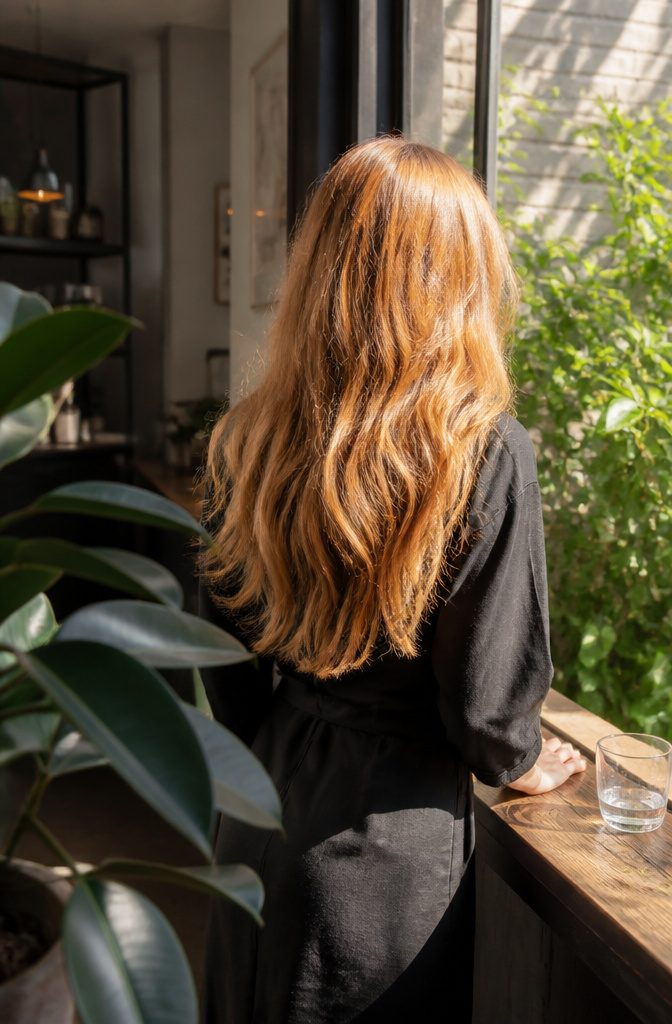
Golden copper blonde looks different indoors and out.
The color reads warm copper in ambient light, but once direct sunlight hits, golden blonde tones come forward and give the hair a shiny, almost shimmery finish. That shift is what makes the shade feel alive rather than flat.
The warmest effect happens in strong natural light, where the gold reflects more visibly than the copper base.
Indoors or in shade, the copper dominates and the color sits deeper. If you want a shade that changes with the environment rather than staying locked to one tone, this delivers it.
Illumina Color is the formula behind one version of this look. It uses Microlights technology to protect cuticle clarity, so light enters the hair and illuminates it from within instead of just bouncing off the surface.
The result is color that looks natural and radiant, plus up to 100% grey coverage if you need it.
6. Apricot Blonde Glass Hair
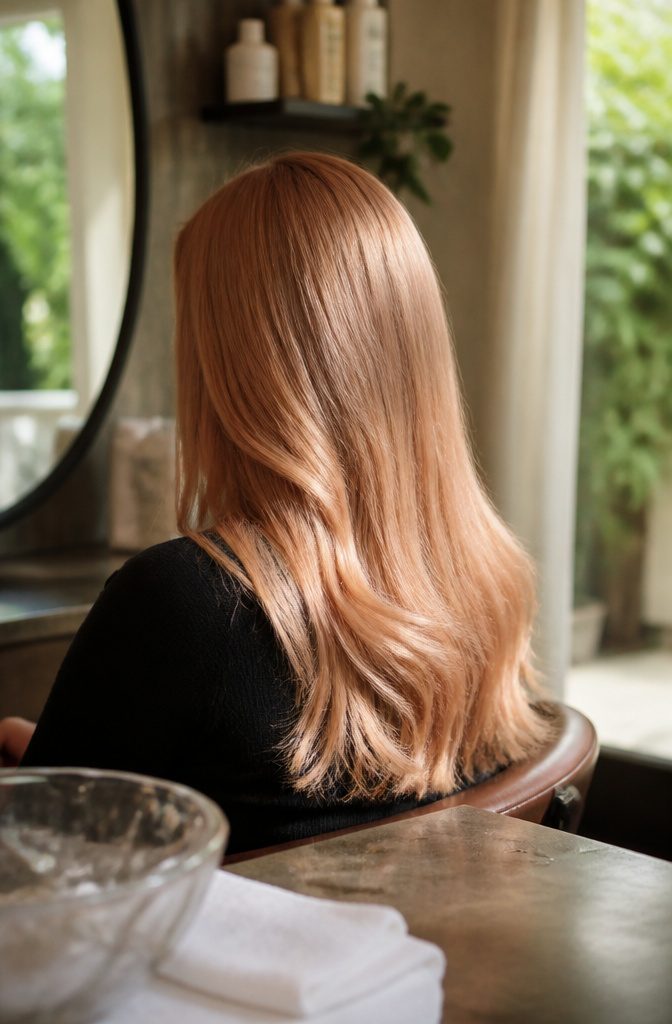
This shade layers apricot and copper-blonde reflections to get a finish that actually catches light the way glass skin does in Korean beauty routines.
The look comes from Wella’s Golden Glass Hair menu, which treats color the same way those routines treat skincare: multiple passes of pigment and gloss instead of one flat coat.
The natural-looking apricot base stays soft enough to read as blonde in most light, but the copper catches when you move. I like that the warmth doesn’t tip into orange or red the way some strawberry formulas do.
Book this at a Wella salon and the colorist builds it in layers, finishing with products that smooth the cuticle enough to give you that glass effect.
A mirror-like shine is the goal, so upkeep matters. Plan on gloss treatments between color appointments if you want the finish to last.
7. Copper Honey Blonde
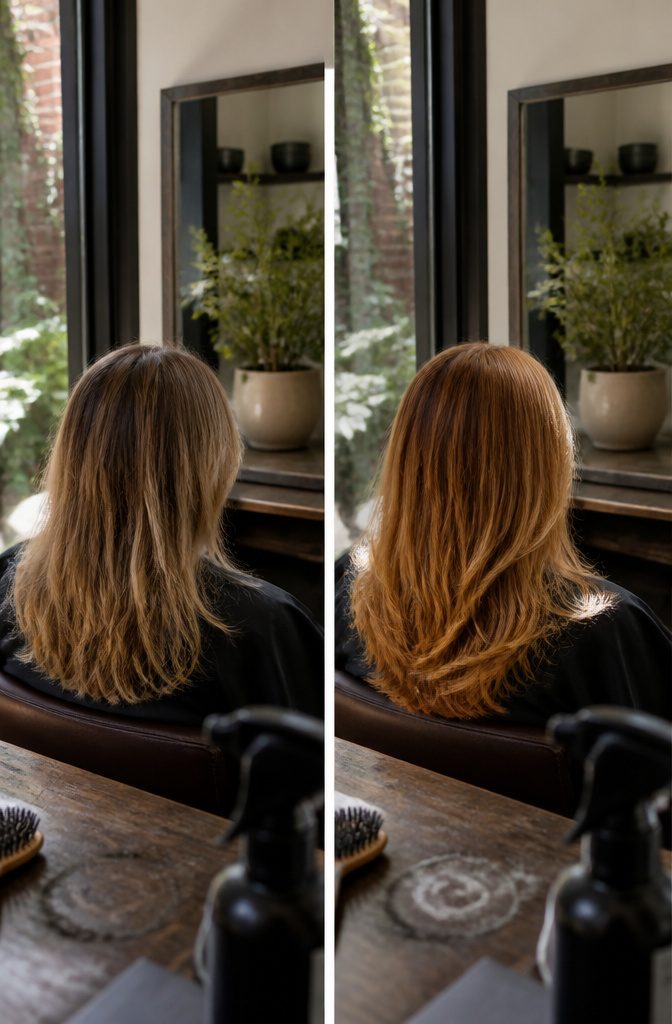
Copper honey blonde sits right in the middle of warm and warmer, blending the richness of honey with a coppery glow that reads as lived-in and sun-touched rather than obviously dyed.
Color Touch offers over 100 shades to fine-tune the balance, so a colorist can lean the formula lighter, darker or more saturated depending on your skin tone.
You can wear it all over for full warmth, or place it as highlights through a darker base for contrast that still feels natural.
The highlight route wins if you want to keep your natural depth at the roots and avoid lifting everything, since balayage or babylights let the copper honey live in the mid-lengths and ends where light hits.
Either way, the color brings dimension without flattening into one tone, and a little copper keeps honey from looking generic.
8. Peachy Copper Blonde
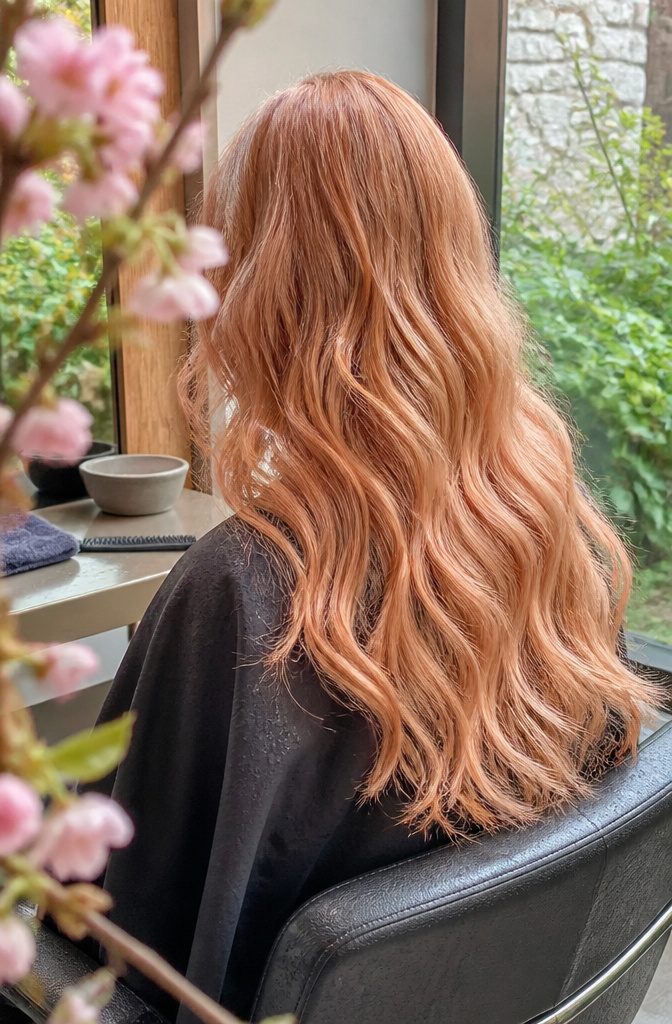
Peach is the boldest variation on this list, and the word that matters is "hints." A full wash of pastel would bury the copper.
If you want to give copper blonde a statement twist, ask your colorist for hints of pastel peach. You’ll still be working a wearable red but with an eye-catching, spring/summer-ready edge.
— Wella
That makes it a seasonal color, so I’d book it for warm months. SHINEFINITY Color Glaze comes in a range of peachy hues, and as a zero-lift, translucent veil it adds shine without lightening your hair.
The cost is upkeep: expect to refresh peach more often than the warmer coppers, since pastels fade first.
9. Coppery Golden Blonde
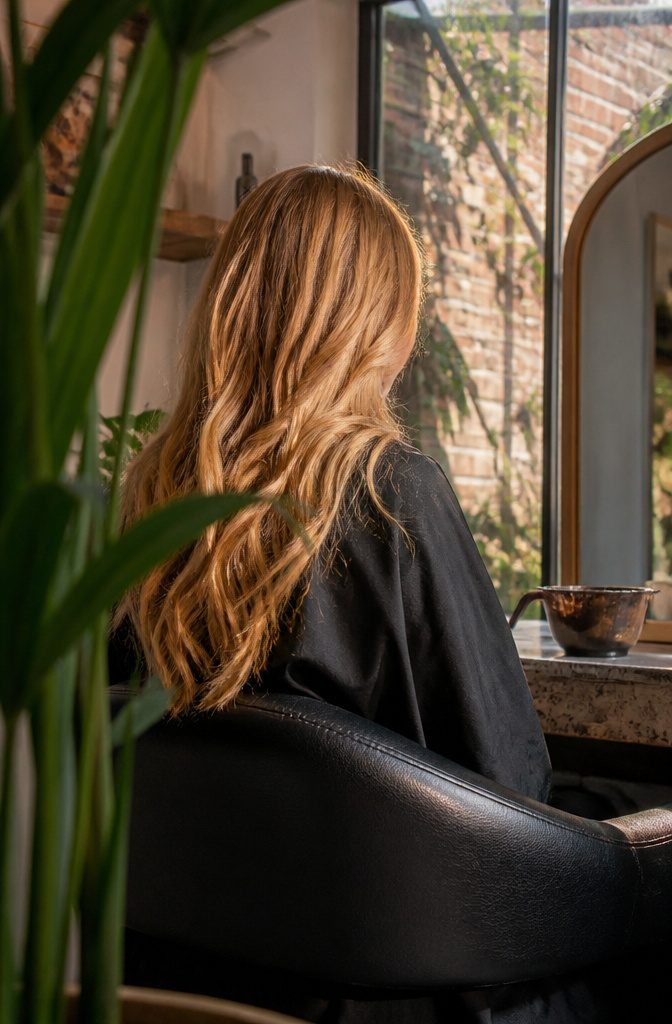
This sits somewhere between full copper and pure gold, warmer than standard bronde but without the bright punch of a true strawberry blonde.
The red glints through in direct light rather than announcing itself at first glance, which makes it a solid move for naturally dark hair that has already been lifted.
You see the copper flash when the sun hits or when you turn your head under indoor lights, but the base reads as a rich golden blonde most of the time.
The look works best on pre-lightened hair because you need enough lift to let the copper show without muddying. On darker, un-bleached hair the red tone can read muddy or brassy rather than warm and intentional.
A five-minute translucent toner layered over lightened lengths gives you that copper veil without committing to a full deposit color, and because it processes fast you can adjust on the next round if the red reads too subtle or too strong.
Zero damage helps if you are already working with processed hair that does not need more stress.
How Copper Blonde Differs from Strawberry Blonde
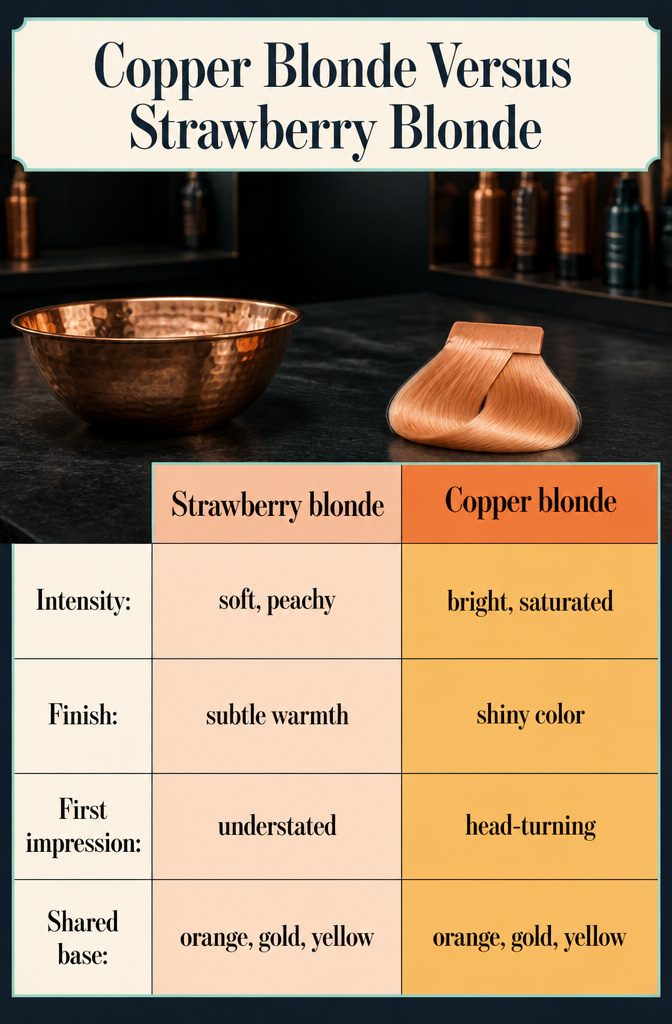
The difference between the two comes down to intensity. Strawberry blonde leans soft, almost peachy, while copper blonde dials up the brightness for a shinier, more saturated finish.
If you want subtle warmth, strawberry wins. If you want heads turning at the first glance, copper delivers.
Both share the same foundation: orange, gold and yellow undertones that catch light and read as warm without tipping into full red. That overlap is why they work across a wider range of skin tones than you’d expect.
Cool complexions get the contrast they need, warm complexions get harmony. I’ve seen both shades pull off that trick, which is rare for anything in the red-blonde family.
The choice isn’t about what flatters. It’s about how much color you want to announce.
Three At-Home Formulas That Work
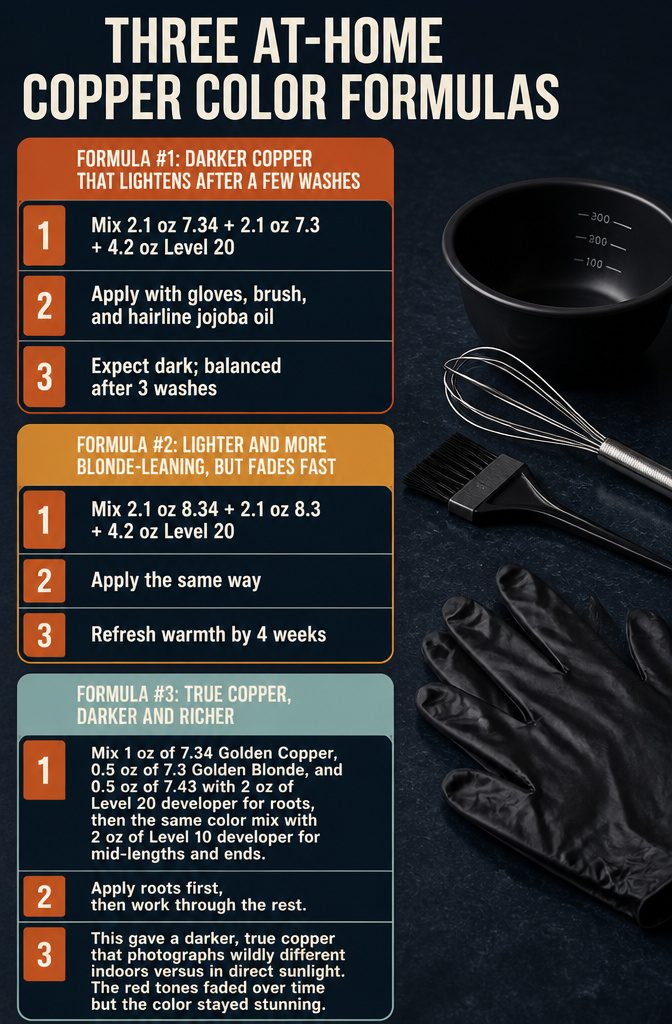
Three L’Oréal INOA formulas can produce copper strawberry blonde, but each lands differently. My hair is 99% gray, so if yours still has pigment these results will shift.
Formula #1: Darker copper that lightens after a few washes
- Mix 2.1 oz of 7.34 Golden Copper and 2.1 oz of 7.3 Golden Blonde with 4.2 oz of Level 20 INOA developer in a color bowl using a whisk and scale.
- Apply with a pin-tail brush, wearing gloves and keeping jojoba oil handy for your hairline.
- Expect it to look too dark at first. After 3 washes it settled into a pretty, balanced copper strawberry blonde.
Formula #2: Lighter and more blonde-leaning, but fades fast
- Mix 2.1 oz of 8.34 Golden Copper and 2.1 oz of 8.3 Golden Blonde with 4.2 oz of Level 20 developer.
- Apply the same way.
- This one came out perfect right away, more blonde than copper, but by 4 weeks it needed a red refresh to bring the warmth back.
Formula #3: True copper, darker and richer
- Mix 1 oz of 7.34 Golden Copper, 0.5 oz of 7.3 Golden Blonde, and 0.5 oz of 7.43 with 2 oz of Level 20 developer for roots, then the same color mix with 2 oz of Level 10 developer for mid-lengths and ends.
- Apply roots first, then work through the rest.
- This gave a darker, true copper that photographs wildly different indoors versus in direct sunlight. The red tones faded over time but the color stayed stunning.
Keeping the Color From Fading
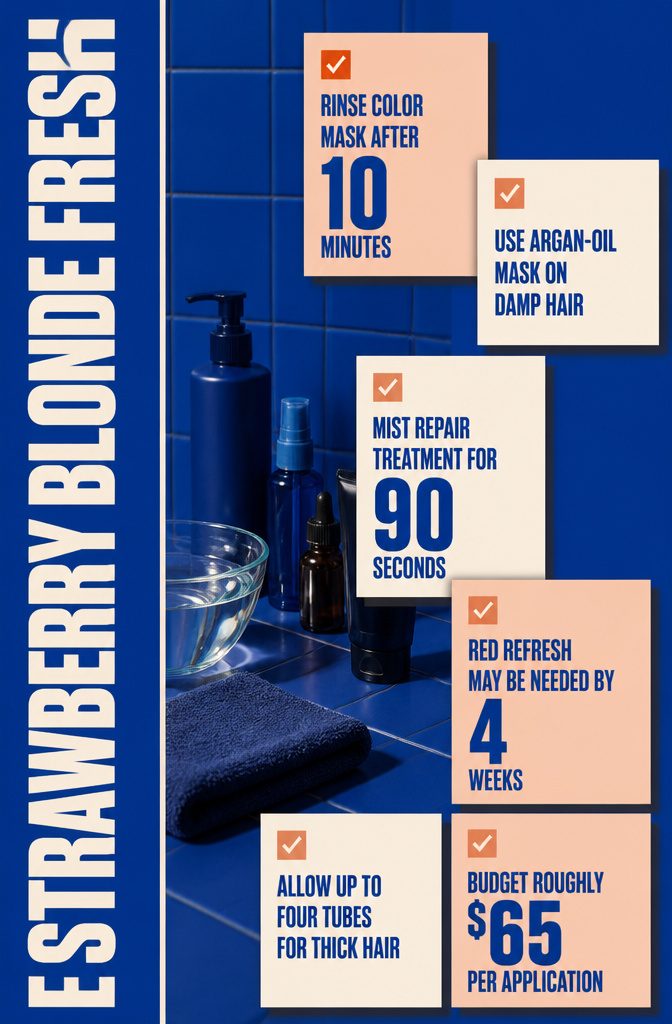
A few habits keep copper looking fresh between appointments:
- Smooth Color Fresh Mask in Copper Glow or Peach Blush through clean, damp hair and rinse after 10 minutes. It deposits color and conditions with argan oil.
- Mist ULTIMATE REPAIR Miracle Hair Rescue from roots to ends; it repairs visible damage in 90 seconds. ULTIMATE SMOOTH Miracle Oil Serum then adds luster, frizz control and heat and UV protection.
- Formulas fade at different speeds. One golden copper mix looked perfect at first but needed a red refresh by 4 weeks. Another, slightly dark on day one, looked right after 3 washes.
- INOA is thick and slow to spread. Longer or thicker hair can take up to four tubes at $15 each, roughly $65 per application.
Frequently Asked Questions
Is copper blonde the same as strawberry blonde?
No.
Strawberry blonde is softer and almost peachy, while copper blonde is brighter, shinier and more saturated. Both share orange, gold and yellow undertones, so the real difference is how loudly the color announces itself.
What skin tone does copper strawberry blonde hair look best on?
It suits a wide range of skin tones.
On cool complexions the orange, gold and yellow undertones add contrast, and on warm complexions they blend in harmoniously. Pick between copper and strawberry by how much color you want to show, not by what flatters.
How can I wear copper strawberry blonde hair?
Balayage is the easiest entry point because the roots stay natural and regrowth blends in without a hard line.
Ombré with deeper roots gives more contrast, and blonde face-framing pieces on copper hair keep the change subtle. For a spring or summer twist, ask your colorist for hints of pastel peach.