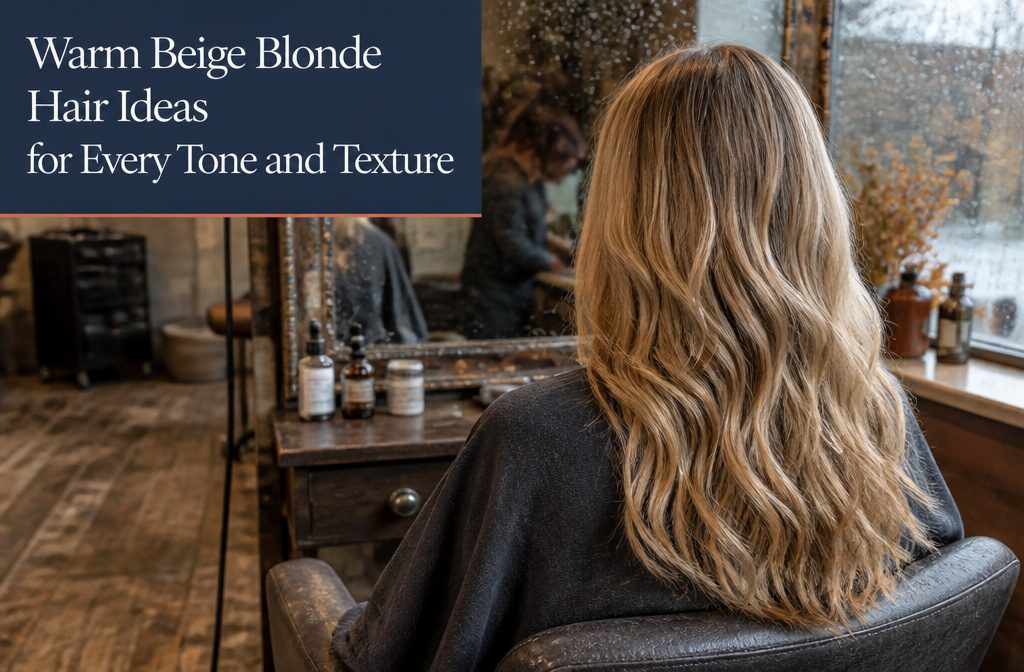
Beige blonde runs from level 7 to level 10, and your starting color decides which of these you can actually get.
A dark blonde base needs only a little lift and a beige toner. Dark brown won’t reach it in one step, so expect a warm golden-tan first and a second session for the finished shade.
1. Warm Beige Blonde Waves
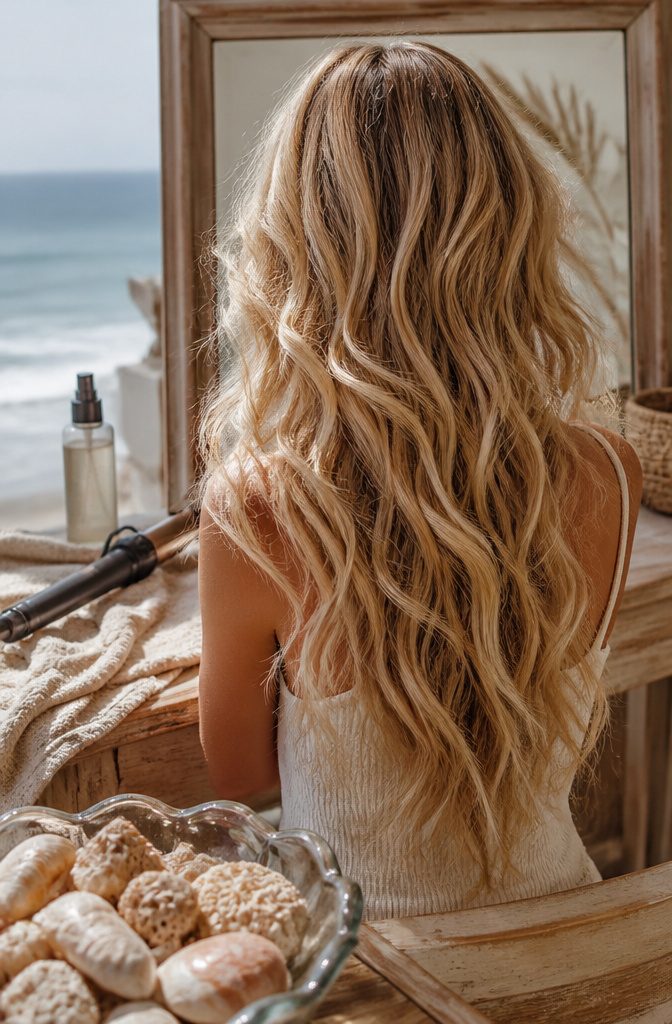
Warm beige paired with soft, tousled waves catches light in a way that flat hair never will.
The bends scatter reflection along each piece, so the sandy base and those warmer golden notes read as live movement instead of a single flat tone.
Beach waves or gentle S-bends give the color somewhere to play, and the dimension you get from the texture does half the work a highlight placement would.
The match works especially well on fine to medium hair, where the waves add body and keep the color from looking too quiet.
A sea salt spray and a curling wand get you there without much fuss. Styling time stays short: you’re after that loose, sun-bleached look rather than anything structured.
The texture helps, but it does ask you to refresh the wave every couple of days and protect the ends from the heat tool you’ll be reaching for most mornings.
2. Beige Blonde Balayage
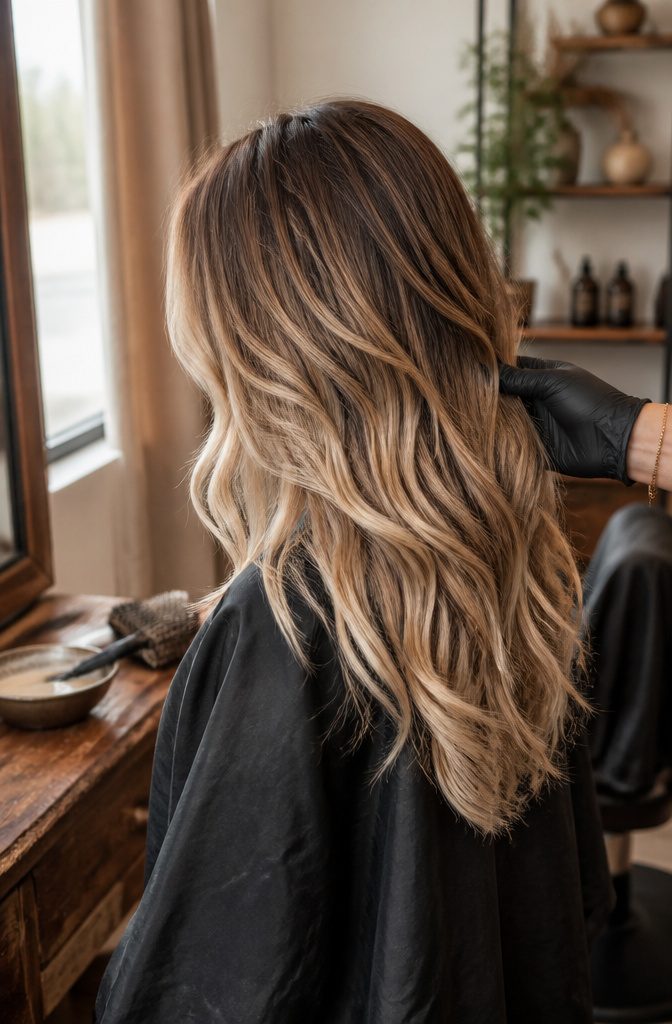
Balayage means the color is painted on by hand rather than applied through foil, and that method suits beige blonde especially well.
The technique gives you soft, gradual lightening that blends into your natural base without a hard line where the color starts, so regrowth grows out looking intentional rather than obvious.
Champagne beige blonde balayage works beautifully on mid-length to long hair with medium or thick density, where the hand-placed highlights can move through the layers and catch the light differently depending on how you style it.
A warm creamy blonde boosted with golden tints transitions naturally from brown when paired with a shadow root, giving summer dimension without all-over color upkeep.
Balayage sits at the low-maintenance end of the warm beige blonde list because you’re not fighting a visible line every six weeks.
3. Shadow Root Beige Blonde
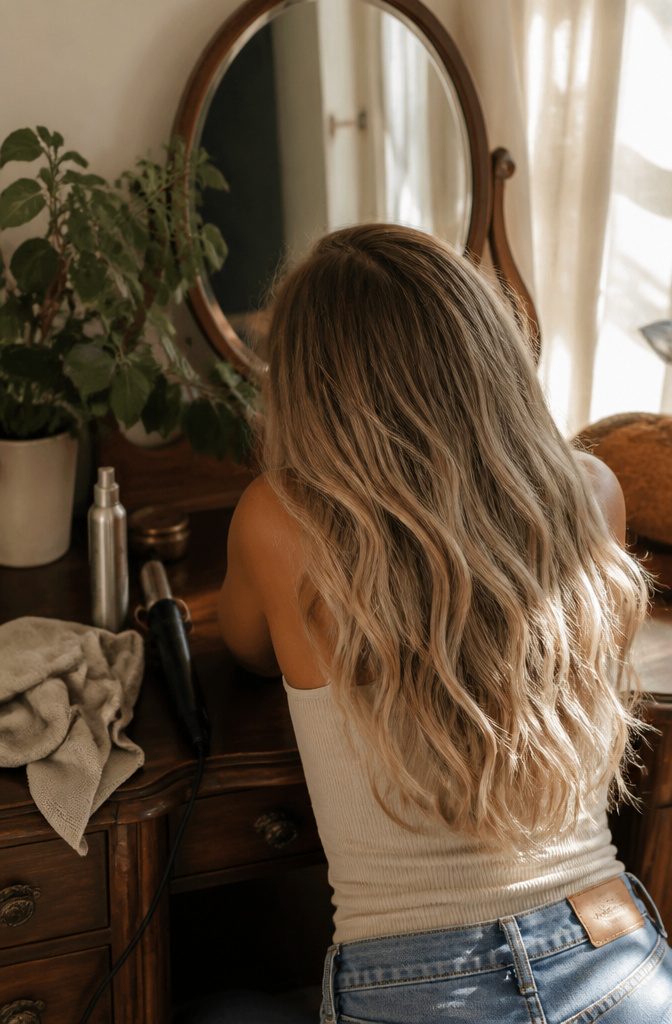
A darker, smudged root keeps beige blonde looking intentional as it grows. Because the color melts into the lengths, there is no hard line to catch up with, which stretches the time between appointments.
The formula I’d copy is Lisa Futterer’s: Illumina Color in 5/81 with 5/ and 6/16, applied on damp hair for a softer finish.
The smoky transition adds depth and dimension on medium to thick hair, and long layers around an oval or heart-shaped face show it off. Style it with a heat protectant and a curling wand for soft waves.
4. Champagne Beige Blonde
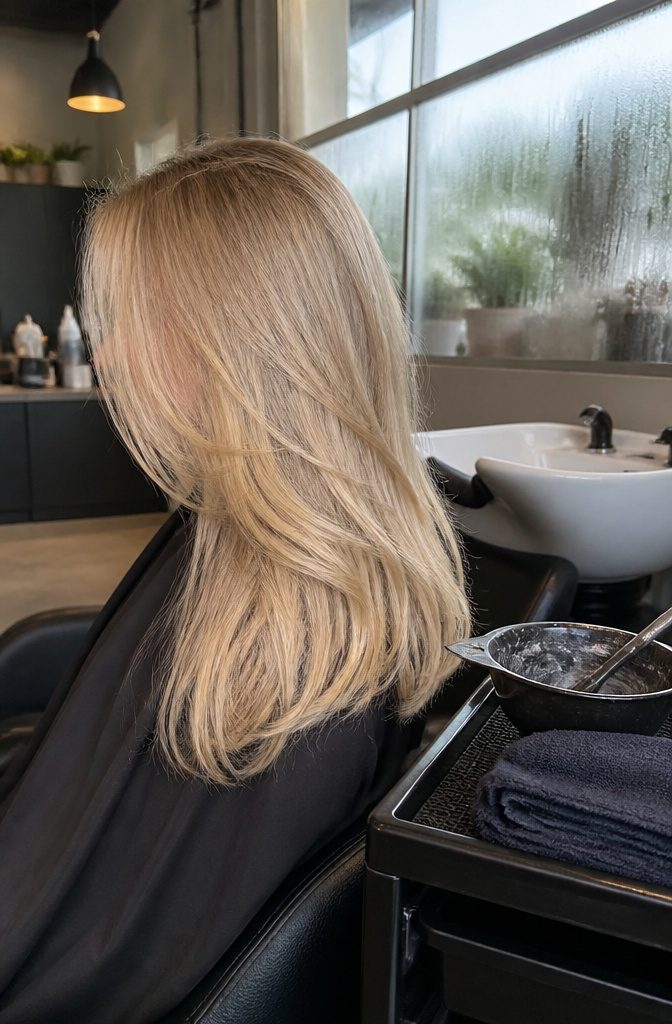
Champagne sits on the warm side of the blonde palette, but blended with beige it lands in the middle: a creamy, balanced blonde that is neither buttery gold nor icy.
That balance is why I call it the safest pick for cool and neutral skin tones. Warm shades can look off against a cool complexion, and this one rarely does.
The cost is upkeep. Plan on a salon visit every 6–8 weeks for toners and root touch-ups, and budget for it before you commit.
If you can’t keep that schedule, a lower-contrast beige with a softer root will forgive the gap better than a clean champagne blend.
5. Honey Beige Blonde
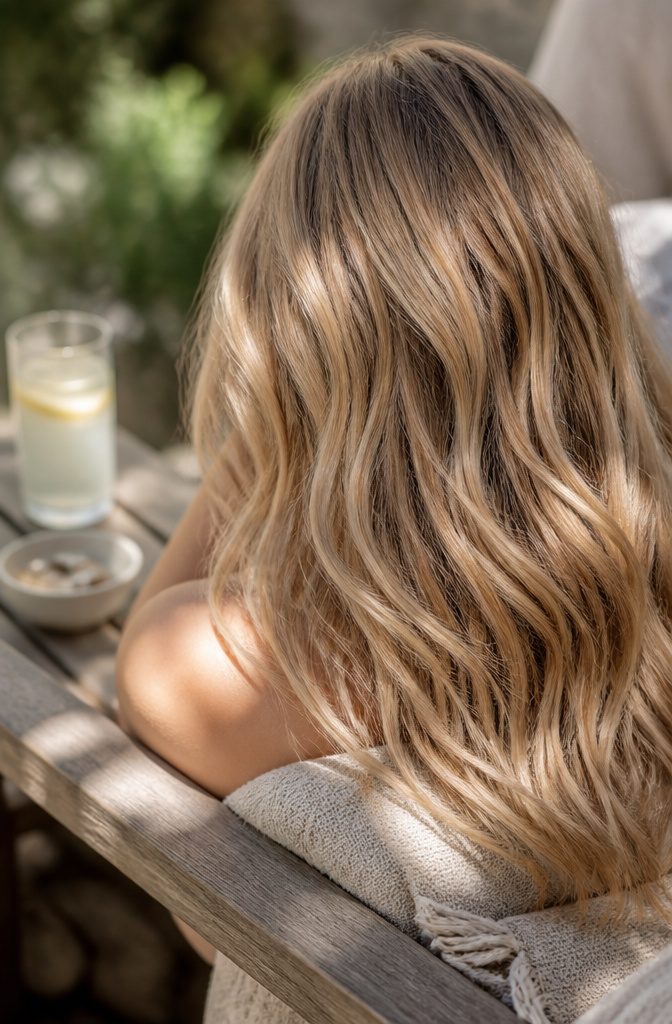
Honey beige is plain beige with gold stirred in. In daylight, plain beige reads soft and neutral, almost sandy, while honey pushes the same base toward amber and looks sun-warmed.
It flatters skin with a sun-kissed cast most. Highlights give a pop of color against natural hair, and balayage gives a softer, more balanced result, so I’d pick balayage for a first try.
The shade works year-round: natural and sun-touched in spring and summer, a glow against skin in fall and winter. The added warmth is also what tips honey toward brassy, so plan on toning as it fades.
6. Golden Beige Blonde
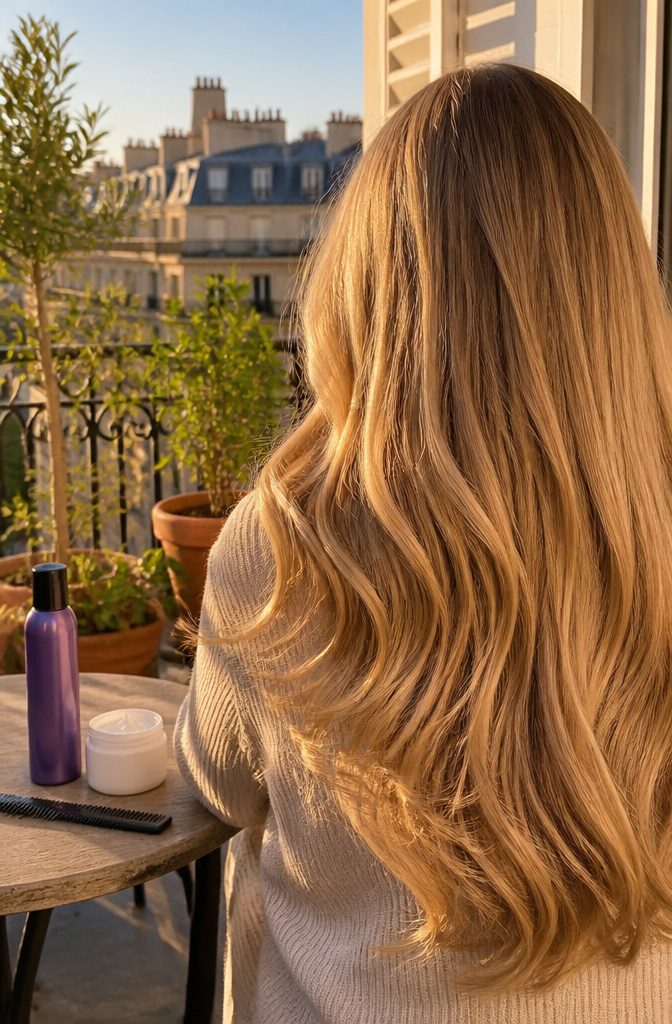
Golden beige is the version of the shade that catches light. Honey leans amber and a little deeper, while this one runs brighter and glossier, with the gold sitting inside a beige base.
Putting the lightest pieces at the front frames the face and boosts skin radiance, and it flatters a tan. I’d choose it over honey for long hair, where the shimmer and dimension have room to show.
Toning is what it asks for.
Gold drifts toward brass quickly, so plan on regular toning treatments plus a purple shampoo to hold the beige. Routine conditioning protects the shine.
7. Ash Beige Blonde
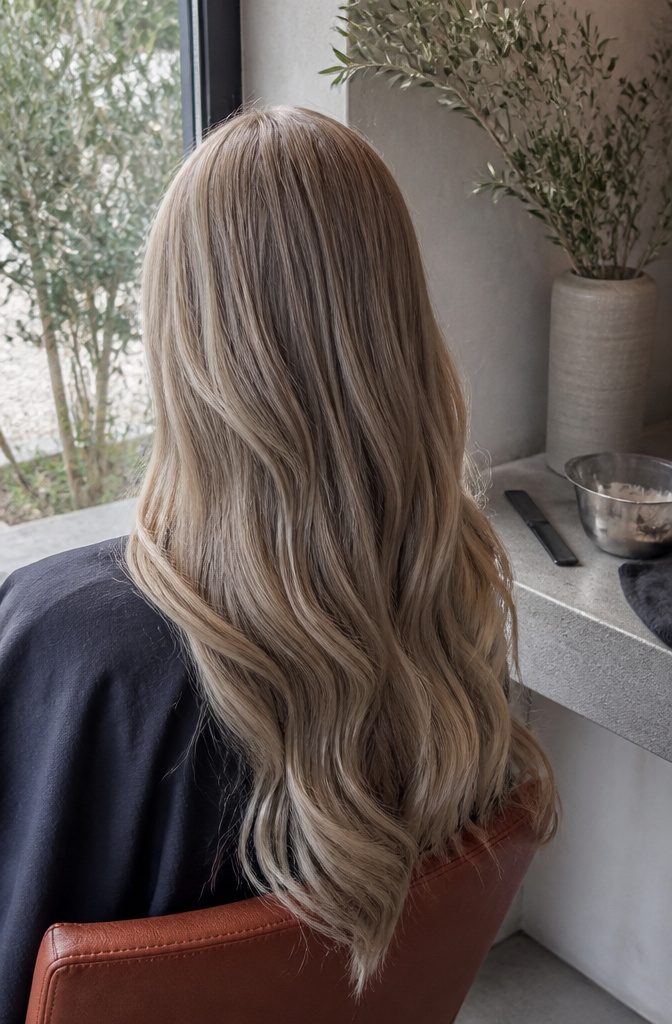
Mixing beige with ash blonde gives you the cool end of the family.
I’ll say it plainly: this is not a warm beige, and anyone booking it for golden softness will be disappointed. The ash pulls the shade toward a neutral hue that reads clean and minimal on any length.
It flatters warm or neutral undertones and sits well against tan and olive complexions.
Lighter skin needs a different plan: ask your colorist to lift the hair to level 7 or higher so the ashy beige shows up. More ash makes it cooler, and a touch of warmth softens it again.
8. Creamy Beige Blonde
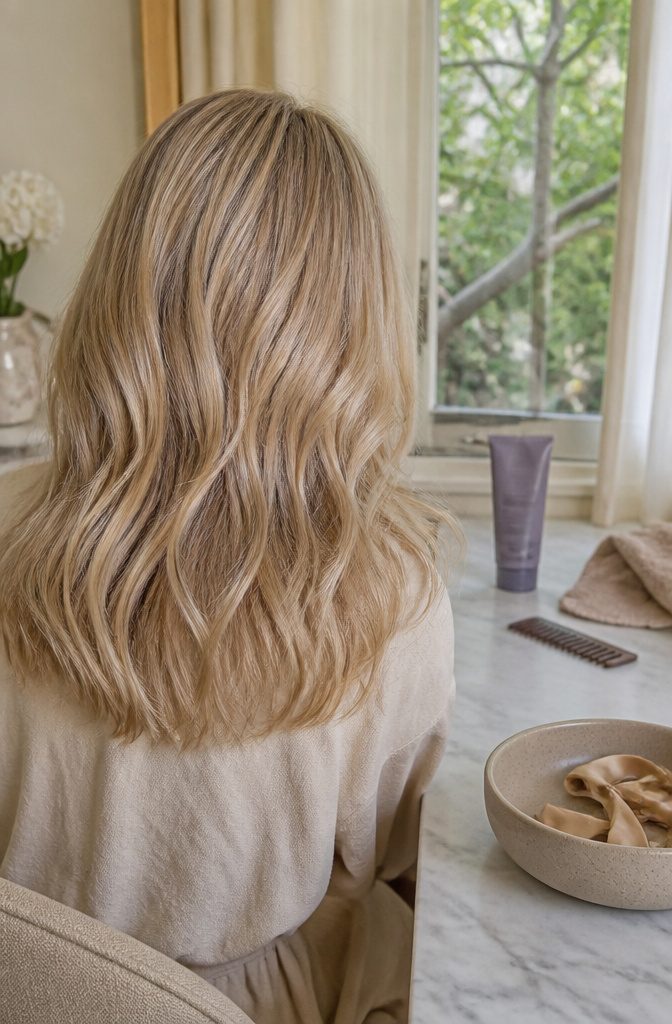
Creamy beige is blonde with the gold turned down. Golden shades read sunny and bright, while this one blends soft, muted warmth with a trace of ash, so the result looks milky and low-contrast.
I think it flatters warm and neutral skin undertones most, and it’s especially good on tan and olive complexions. On lighter skin, ask your colorist to lift the hair to a level 7 or higher to reach the shade.
Fading is where brassiness shows up, and regular toning plus a purple shampoo keep the cream looking cream. It’s still relatively low-maintenance next to brighter blondes, which is a big part of why I’d pick it.
9. Light Beige Blonde
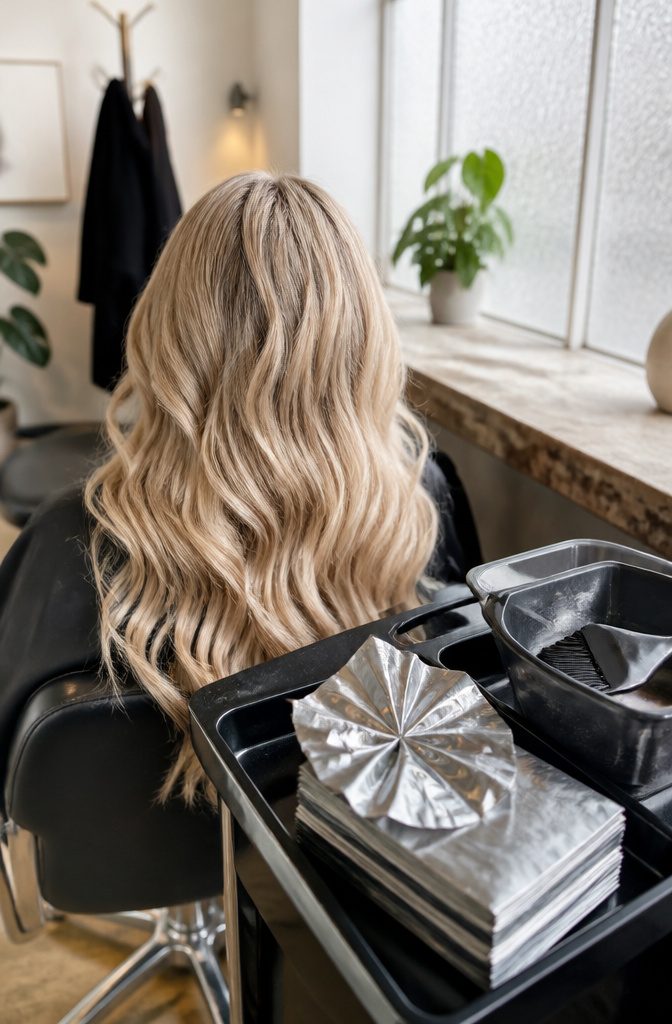
Light beige blonde is the brighter, cleaner end of the family. Beige blonde runs from level 7 to level 10, and this tone sits in the upper half of that range.
Some color charts file it as 8.2 Light Beige Blonde. The finish is crisp, like ivory silk, and cooler than the honey-leaning beiges.
One salon route starts with Blondor Multi-Blonde Powder and Welloxon Perfect 6% in a full head of foils.
The glow then comes from permanent Illumina Color in 10/69 and 10/1. I’d start with the lighter commitment of Wella’s demi-permanent Color Touch in 7/1 or 9/97, since it costs you less if the shade reads too cool.
10. Medium Beige Blonde
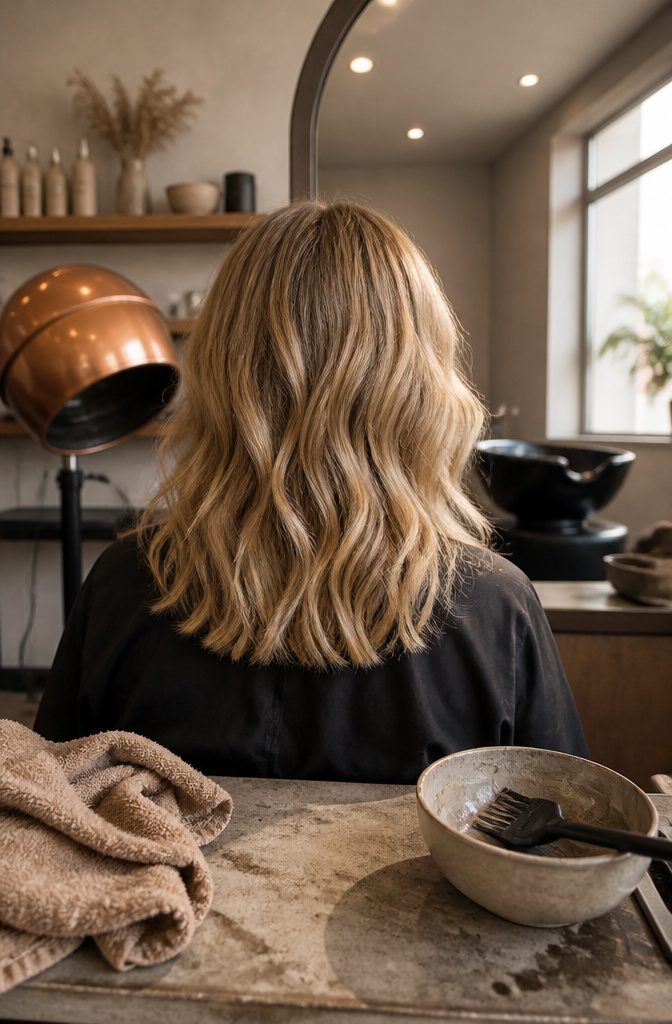
Medium beige blonde sits at middle depth and can lean warmer or cooler. I’d pick the warmer version, because honeyed tones make mid-depth hair look healthier than a flat, grayed beige.
The professional route takes two steps. First, pre-lighten with Koleston Perfect Special Blonde 12/96.
Then rinse and neutralize the hair, and tone with Illumina Color 8/93 mixed with 9%. These permanent Koleston formulas lift up to five levels, so check how far your current color sits from the target before booking.
If the gap is bigger than that, the pre-lightening step needs more than color alone. Take both shade numbers to your stylist.
11. Beige Bronde
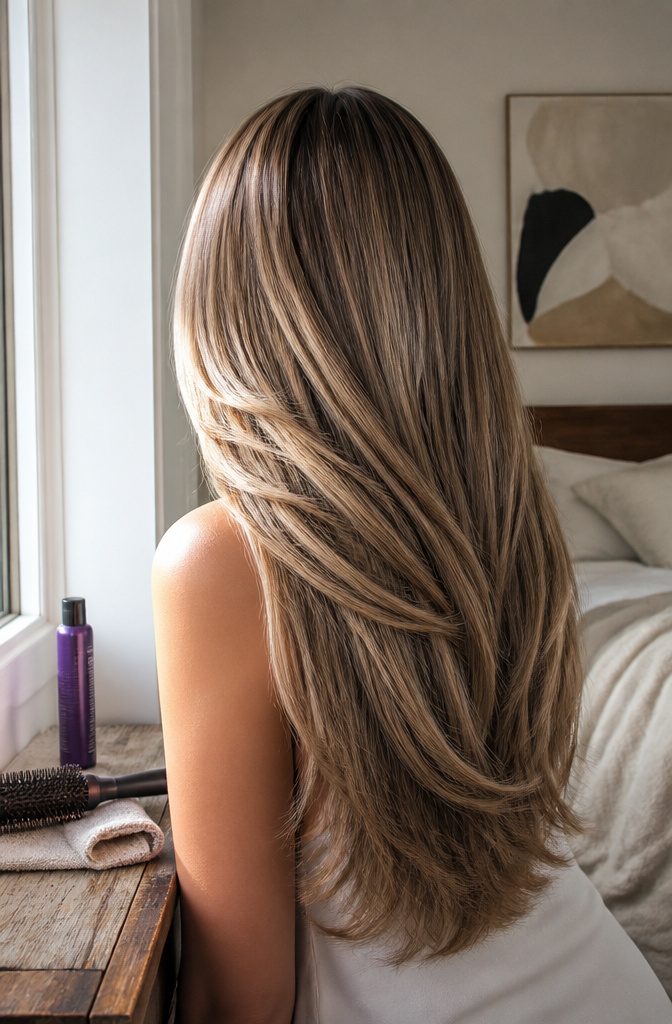
Beige bronde is a dark beige blonde with brunette ribbons shimmering through it, so the brown never fully leaves.
It suits anyone who wants blonde without giving up their brown base, and it asks far less commitment than a full color change.
Because the depth stays near the roots, regrowth reads as a soft blend rather than the hard line a solid light blonde shows.
Long layers with a ribbon blowout flatter oval and heart faces and work best on medium to thick hair. A round brush is all the styling it needs.
I’d reach for purple shampoo here: it works on both the blonde and the brown, so one bottle keeps brassy warmth in check.
12. Beige Blonde Highlights
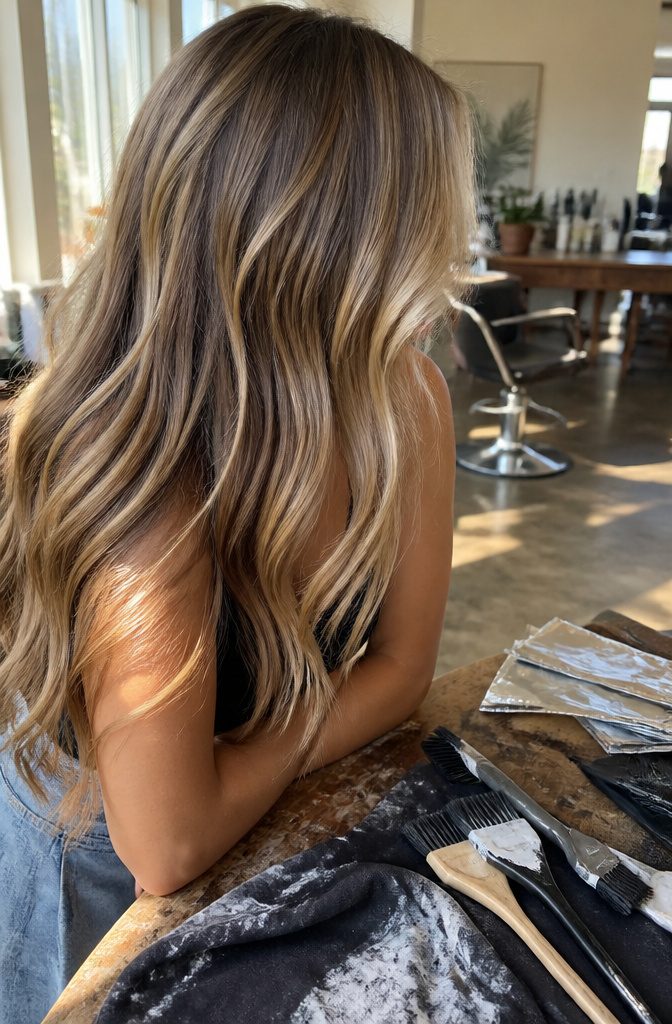
Placement decides how much beige shows.
Hand-painted highlights concentrated in the front locks give a rich, face-framing glow, and they add depth that helps long hair look fuller. Spread them through the whole head and the color reads as a full beige blonde instead.
On a dark blonde base, the lightened strands sit close to your natural color, so the effect is soft movement, especially with beach waves.
On brown hair the same strands stand out more, which gives a natural-looking edge, and I’d say brown is where beige highlights look most deliberate.
For a multi-tonal finish, ask about tweed highlights: a mix of balayage, highlights and strand lights, lifted with Blondorplex.
13. Beige Babylights
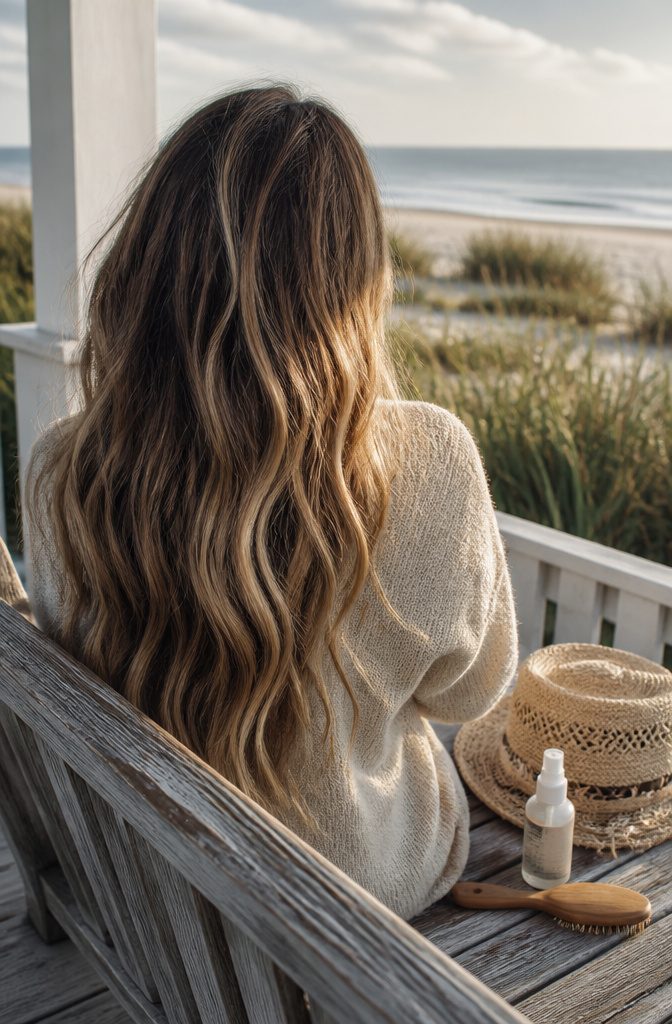
Babylights are fine, narrow lines of brightness, and that thinness is the appeal. Bolder foils leave a visible stripe, while babylights read as shine first and color second.
Varying the intensity from strand to strand gives a sun-kissed finish without bleaching the whole head. On dark hair, light beige babylights add glow without a hard line against your base.
Adding subtle golden tones and loose waves pushes the look toward beachy. I’d send anyone who wants change without a big contrast here, especially if you’re nervous about going lighter.
The result stays quiet. If you want people to notice the color from across the room, bolder foils win.
14. Money Piece Beige Blonde
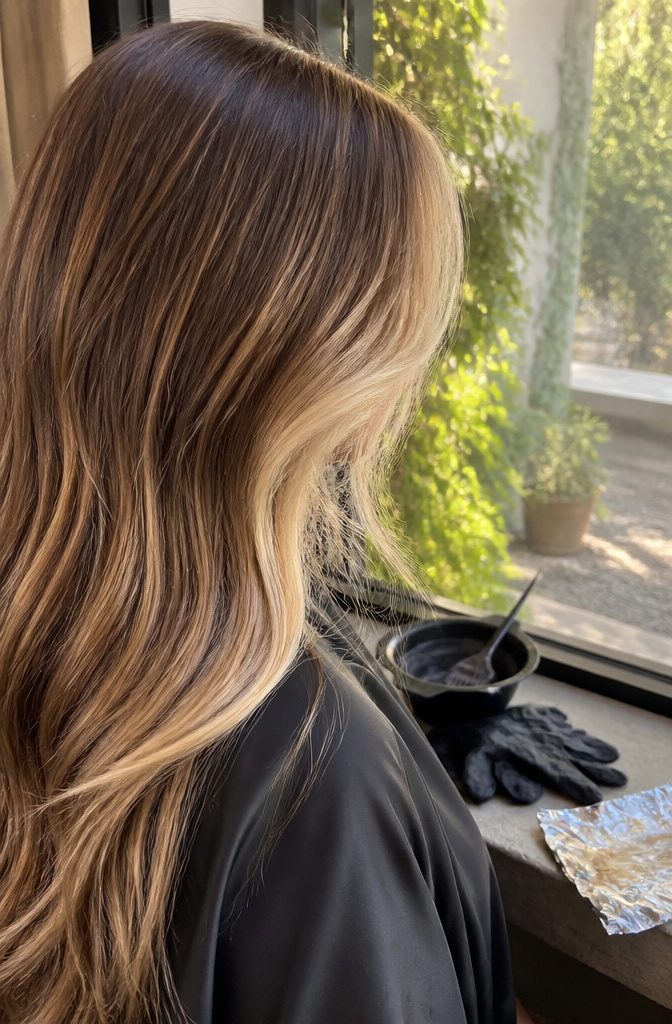
Brightness right next to the skin is the whole job of a money piece.
The strands on each side of your face go lighter than everything behind them, and the skin looks shinier and more luminous. For warm to neutral skin tones, a beige shade in those pieces flatters instead of washing you out.
I’d pick this over an all-over lift whenever the hair is already tired, since face-framing pieces need less aggressive bleaching than going bright blonde all over.
Ask for a softened root on the pieces so no hard line forms as the color grows out.
That softness also takes the edge off bold features. On warm-toned brown hair, keep the shade warm so it blends instead of striping.
15. Beige Blonde Lowlights
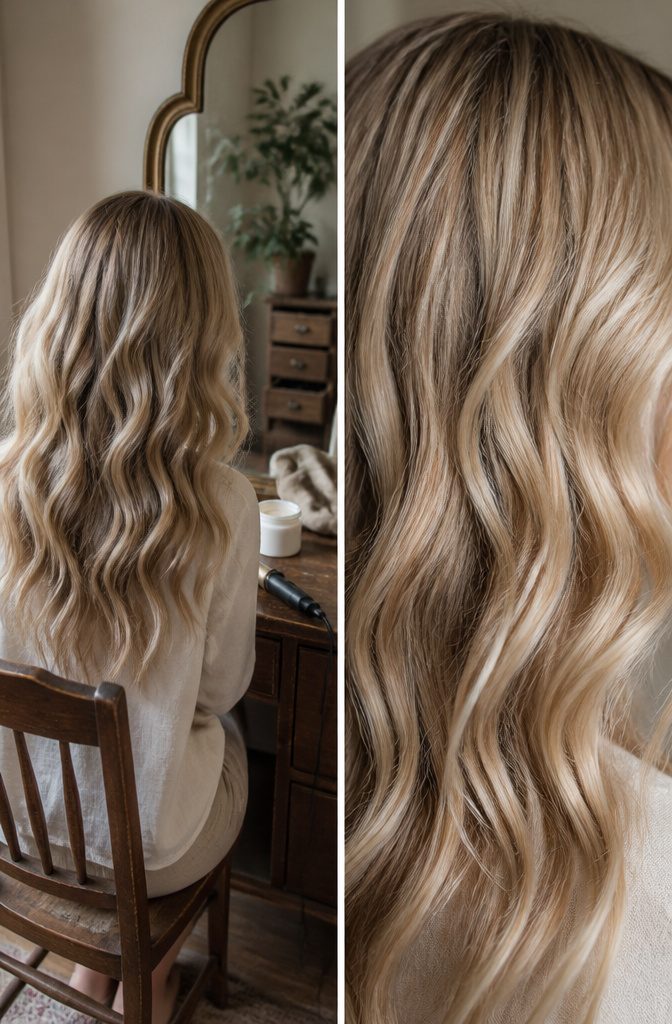
Hair that has been lightened again and again often turns one-note, with every strand sitting at the same brightness.
Darker beige pieces woven through break that up. The shadow makes the lighter strands beside it look brighter, and the depth reads as fullness.
The effect is strongest on mid-length, dense hair, which is where I’d start. Add subtle waves so the dark and light pieces shift as you move; that movement is what gives the glowing look rather than a striped one.
Keep the lowlights in the beige family, only slightly deeper than your blonde, so they read as dimension and not as a separate color.
16. Beige Blonde Ombré
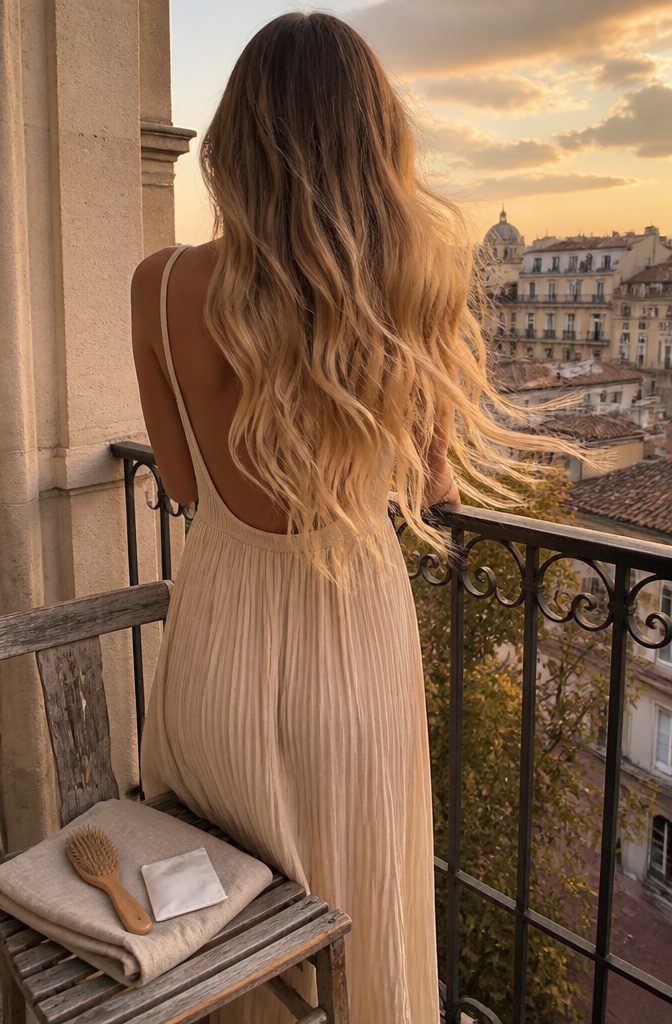
Beige sits on the mid-lengths and ends, while the roots stay close to your natural brown. A root shadow blends the two, so regrowth never shows as a hard stripe.
That is why the ombré lowers root touch-ups better than any all-over blonde: new growth just extends the dark top of the gradient, and you can stretch appointments out.
Beige is a direction, not one shade. A warm, creamy blonde with golden tints looks best melting out of brown, and a little cool, icy tone in the mix keeps the ends from tipping into plain honey.
Tell your stylist how golden you want the ends, and bring a photo.
17. Lived-In Beige Blonde
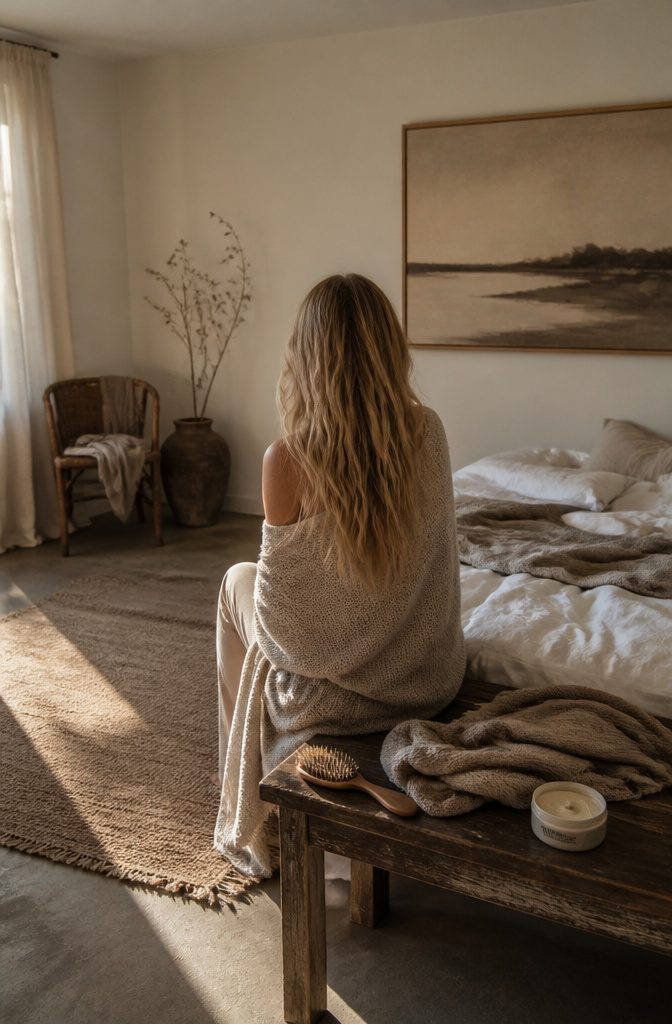
Lived-in beige blonde works because nothing in it has a hard edge.
The root stays soft and close to your natural shade, the lightening is deliberately uneven, and the gap between dark and light is kept low, so new growth never draws a line across your part.
For anyone who dislikes salon calendars, I think this is the smartest beige to ask for.
An even, all-over blonde shows regrowth fast, while this blend just looks a little more grown-in. The color rarely needs redoing, and appointments can stretch much further apart than they would with a bright, solid shade.
What you give up is the crisp, polished finish.
If that’s the look you want, skip this one. If your hair looks better slightly undone, this is the easiest beige to live with.
18. Beige Platinum Blonde
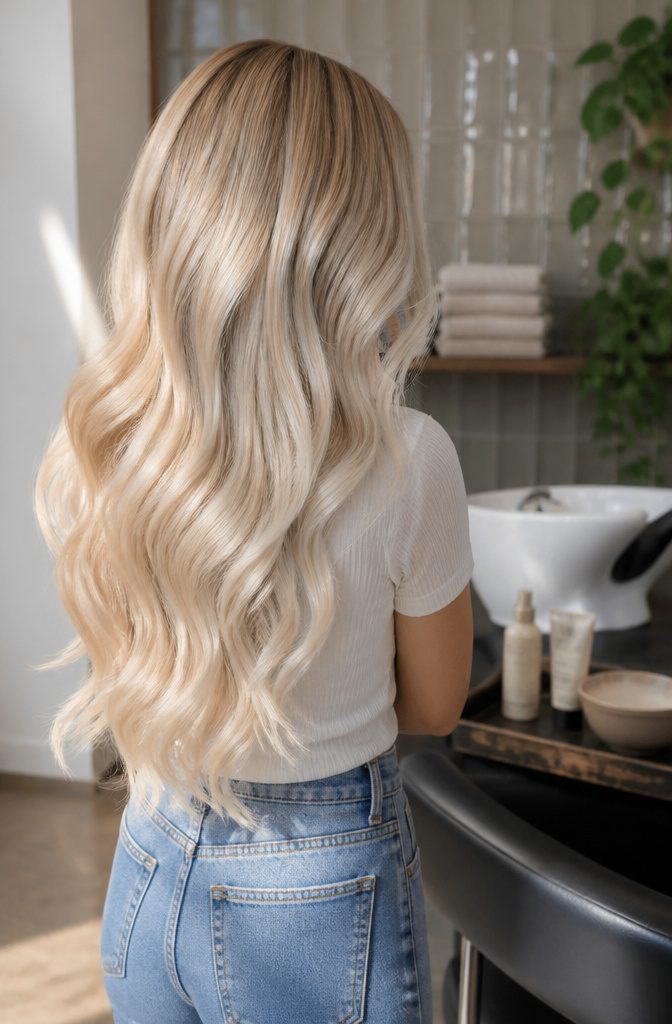
Beige platinum is the palest end of this family: soft, creamy and radiant, never the stark white of an icy toner.
Two shade numbers get you there. 10.2 Very Light Beige Blonde is the lighter-leaning everyday option, and 902 Extra Light Beige Blonde gains real lifting power when mixed with 40 volume developer.
It’s packed with extra pigment, so it lifts and leaves a smooth, bright finish rather than a flat one. I’d pick 902 for a true platinum effect, but the brighter you go, the more thorough your aftercare has to be.
Warm platinum lasts at least two months with proper care. If a full head feels like too much, a warm platinum balayage gives you the same glow with less commitment.
19. Buttercream Beige Blonde
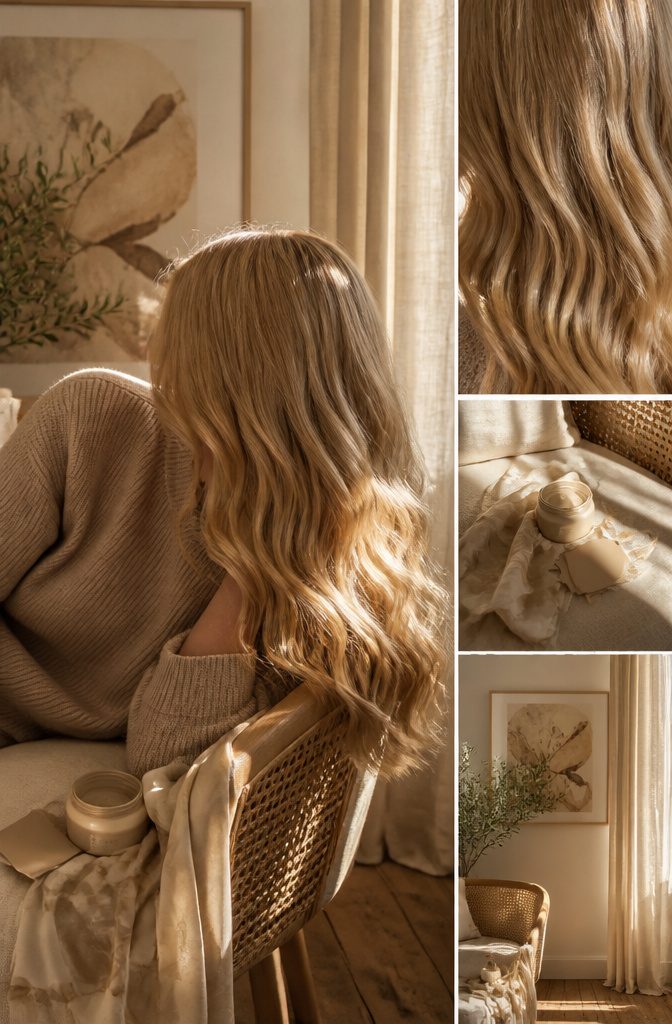
Buttercream Blonde is where beige picks up gold on purpose.
It blends beige and golden pigments into a warm, toasty, creamy light blonde that stays well clear of cool. Old Money Beige Blonde sits at the quieter end of the family.
It mixes 10.2 Very Light Beige Blonde with 8.2 Light Beige Blonde, which gives a soft, balanced result with no harsh gold and no icy ash. If brassiness worries you, I’d start there.
Ask for Buttercream when you want visible warmth, and Old Money when you want it restrained. Butter Blonde is the third name in this group, so have your stylist show you the mix before they apply it.
20. Beige Strawberry Blonde
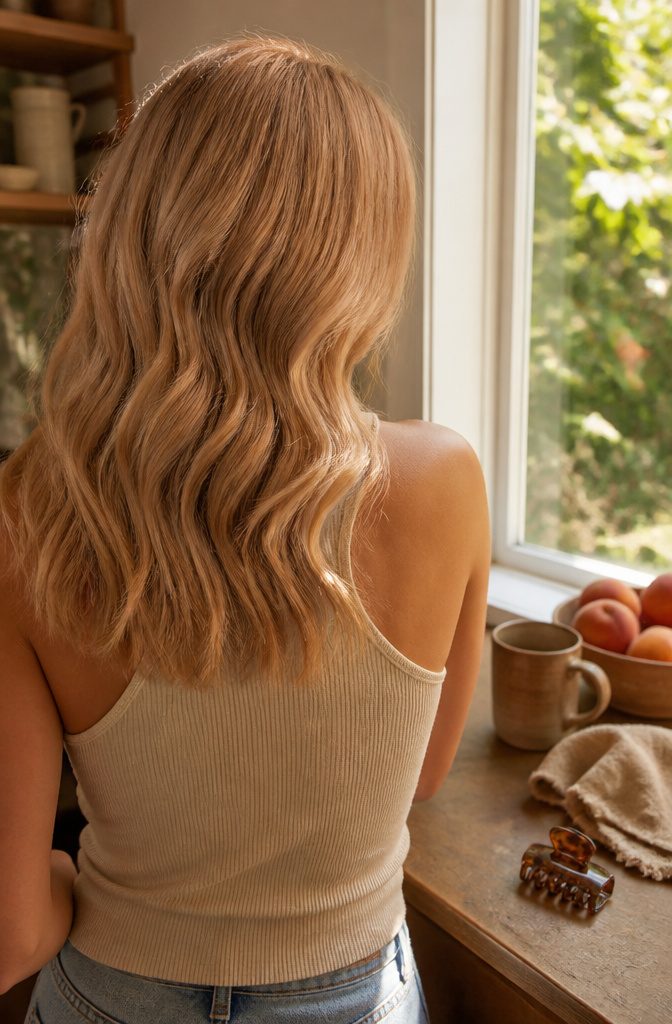
Beige strawberry blonde lands in the middle of the depth range, neither pale nor dark, with just enough reddish tone to read as warm rather than red.
Expect a hint of copper or rose over a beige base, not a full strawberry. I’d choose it over honey or golden when those feel too yellow and you want a flushed, flirtier warmth instead.
Smooth, subtle waves suit it best. They show off the shape of a cut like a chop and let the red catch the light.
For a juicy summer version, take a Khloe Kardashian-style strawberry hue to your stylist. A warm dark blonde base keeps upkeep low, and a few lighter pieces add glow.
21. Beige Blonde on Dark Brown
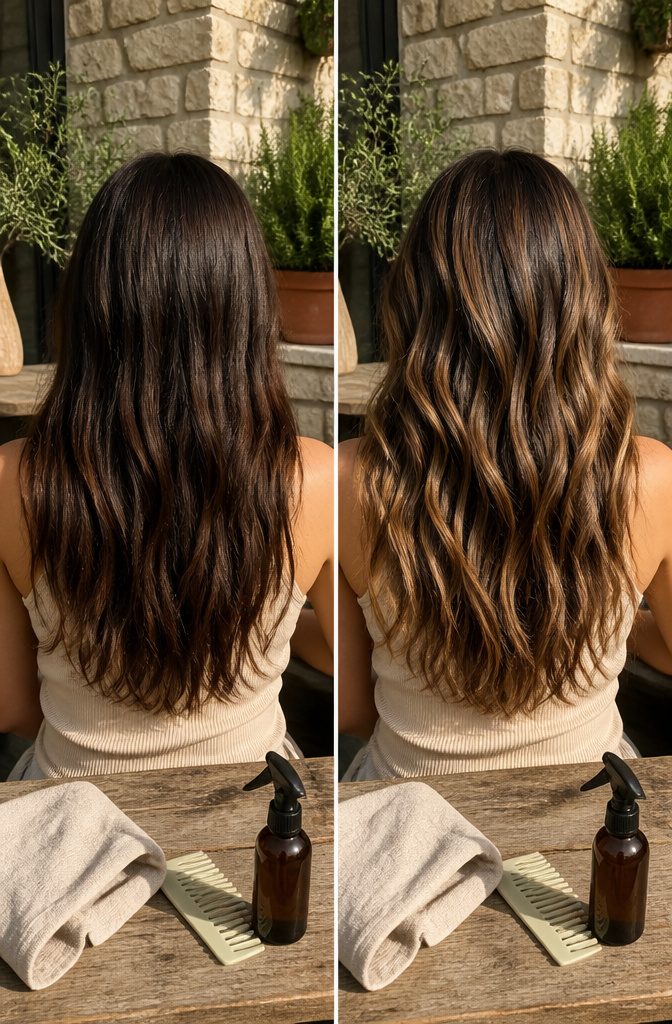
Dark brown hair will not reach beige in one step.
The pigment has to lift through orange and yellow before a toner can settle it, so a first appointment often ends on a warm golden-tan rather than the soft shade in your saved photo.
A second session is how the finished color usually arrives.
Streaks are a smarter route than all-over color. Warm beige ribbons over the brown base add depth and dimension, and chunky ones can stretch to at least six weeks between visits.
Loose beach waves finish the look as a natural beige bronde. A near-silver melt over warm, nutty brown looks great, but it is the expensive version.
22. Beige Blonde on Dark Blonde
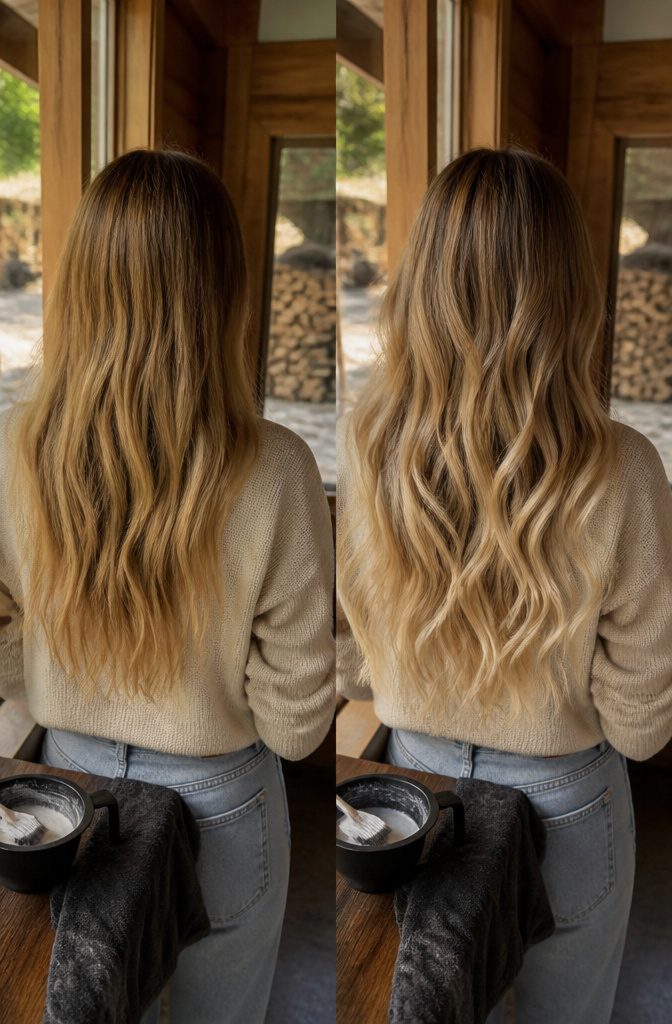
Dark blonde is already most of the way to beige, so balayage here refreshes the color rather than rebuilding it.
Brunette hair needs serious lightening to reach this shade, while a dark blonde base needs only a little lift and a beige toner.
What changes is tone and brightness, not depth: your base stays where it is, and the painted strands catch more light with a softer, creamier cast.
For the most natural result, I’d ask for babylights, which lay in fine lines of brightness and add shine without obvious stripes.
On long hair, loose beach waves make the balayage read as movement, so the color seems to shift as you walk.
23. Beige Blonde for Gray Blending
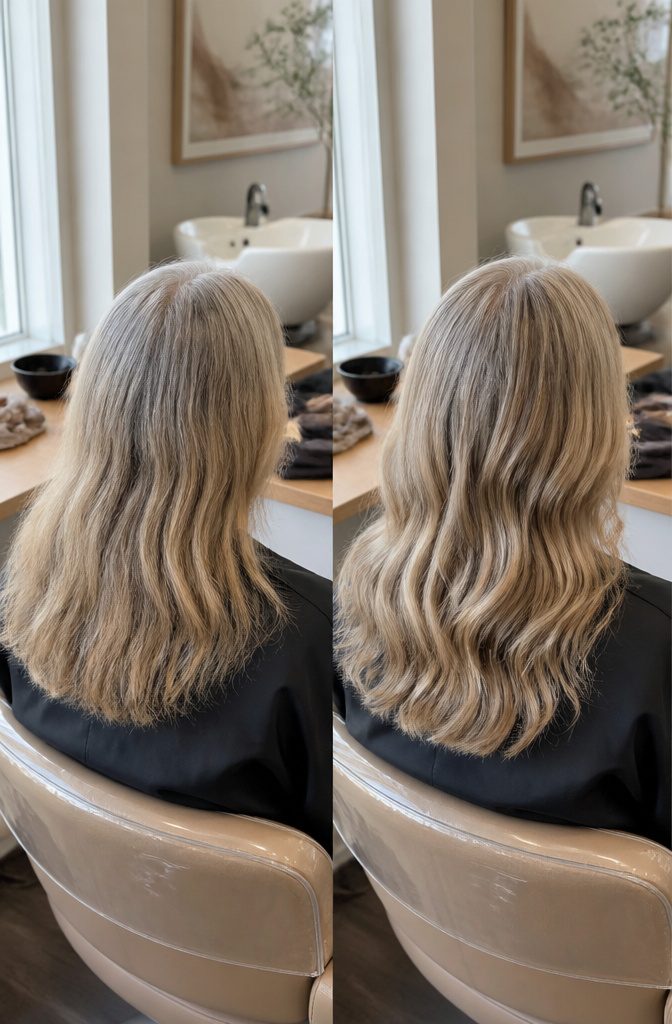
Gray moves the goal. When the root is white, flat color looks flat and the line where it meets the length is obvious a week in.
Soft beige does better because it sits close enough to natural white that the transition reads as dimension rather than regrowth.
The muted warmth means you are not asking one solid tone to hide what is underneath, you are letting highlights and lowlights blend with what is already there.
Chunky warm blonde highlights push that further. The variation breaks up any line, and because the lightest pieces already read as lifted, new gray that comes in blends into the palette instead of standing out against it.
That buys you at least six weeks without coloring, sometimes more depending on how much gray you are working with and how fast it grows.
For older women especially, warm beige keeps things lighter around the face without tipping into the brassy territory that a true golden blonde can hit when warmth is dialed too high.
24. Beige Blonde for Curls
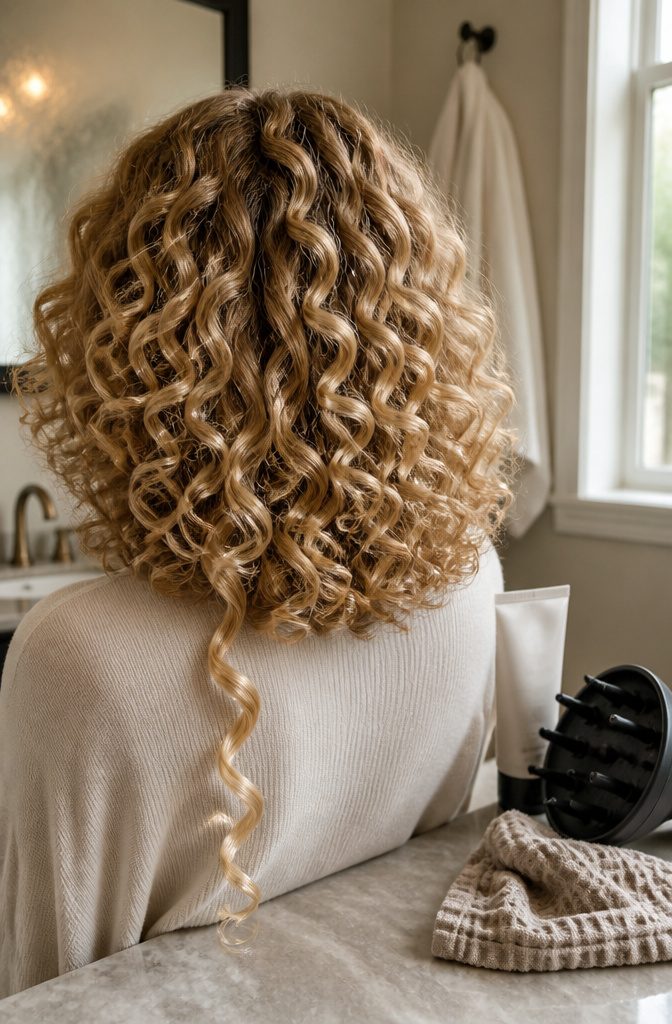
Defined curls are the best canvas for beige blonde. Each curl catches the light at a different angle, so the shade reads as soft, shifting pieces instead of one flat sheet.
For the cut, stop at the shoulders: a curly shape rounds out better at that length, and the color stays packed into the curl instead of stretching out below it.
Past the shoulders, I’d expect the outline to lengthen and lose that round, full look. If you’re taking a photo to a stylist, pick one where the curls are clearly defined, because that’s the texture this color is built around.
25. Beige Blonde for Fine Hair
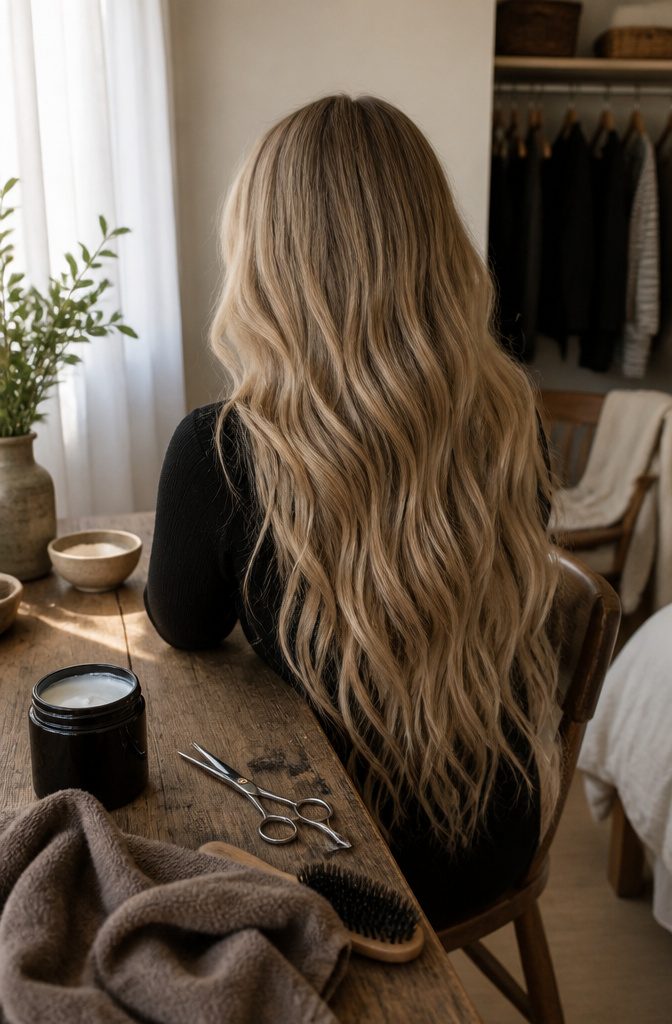
Balayage is what I’d ask for first on fine hair. Painted-on lightness makes long, fine strands look thicker and more voluminous, and warm beige tones suit nearly every skin tone, so the shade itself is a low-risk pick.
Layers and dimensional color add the rest: a flat, single-tone blonde sits against the head, while shifting beige tones create depth the hair lacks on its own.
If your hair breaks easily, skip an all-over lightening and ask for painted pieces instead.
Use Olaplex at home before and after the salon session, then book a trim to dust the ends once the lightening is done. That keeps the color looking fresh.
26. Beige Blonde With Layers
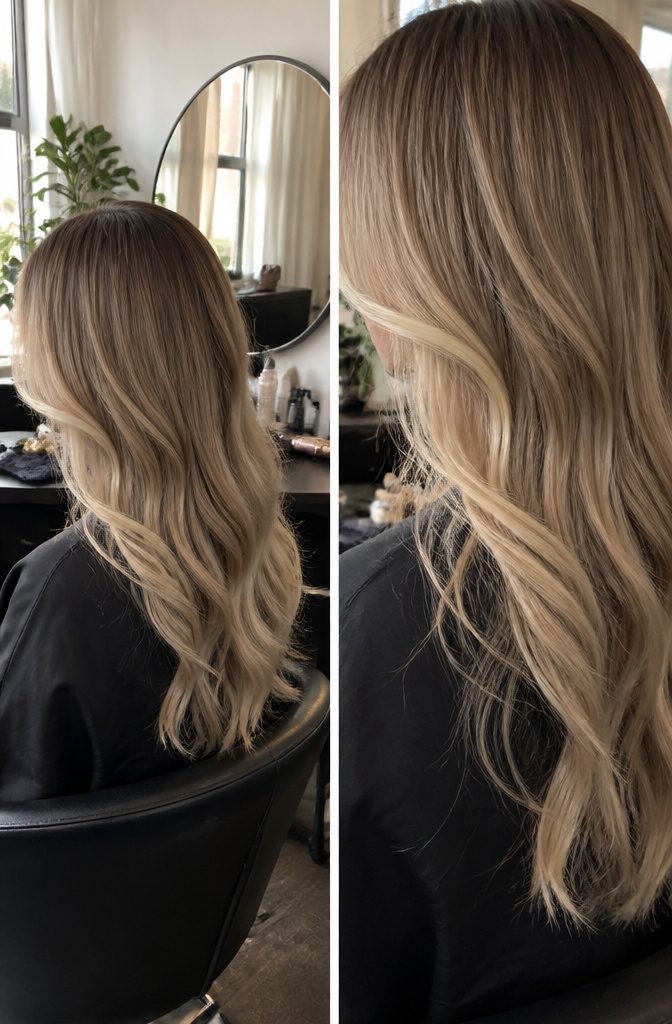
Soft layers on long beige blonde waves add movement and dimension without costing length, and they control bulk on medium to thick hair.
Finish with a heat protectant and a large-barrel curling iron. On a medium-length lob, face-framing layers flatter oval and heart-shaped faces, and a curling wand gives you the soft waves.
Placement decides how the color reads. Layers cut around the face put the warmest pieces at your cheekbones, so creamy vanilla or butter highlights show up exactly where they brighten you.
They also need less aggressive bleaching than going bright blonde. I’d ask for face-framing layers with the highlights placed to match them, rather than color spread evenly through the length.
27. Texture Shows the Color
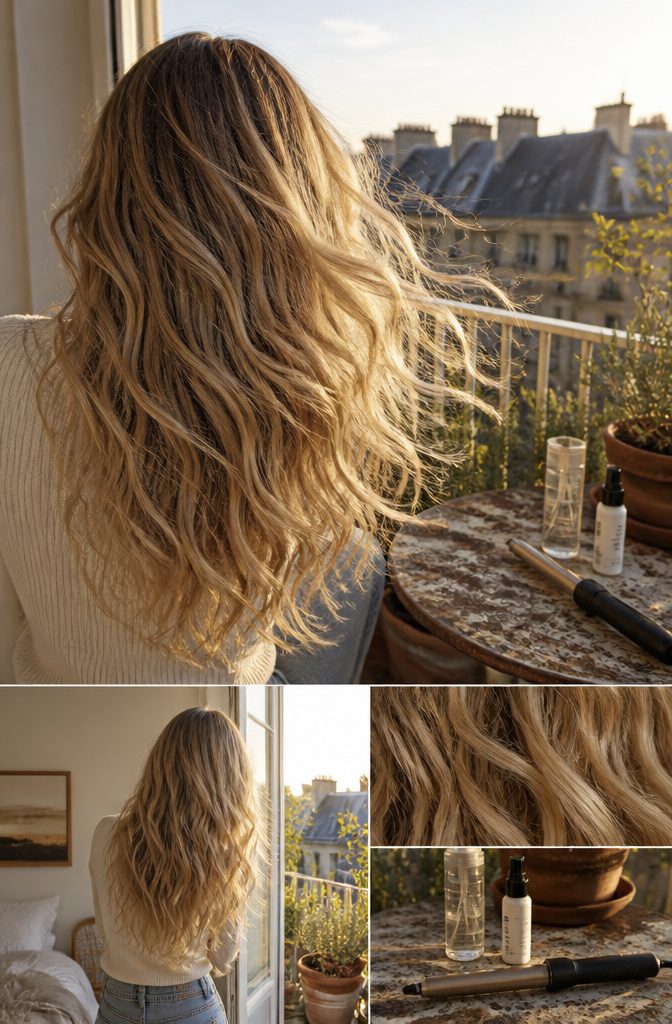
Flat, straight hair stacks the color into one tone.
Add a bend and the lighter and deeper pieces start to separate. A balayage blend shows best in soft waves, where each curve catches light differently and the shift from toasted to golden becomes visible.
Varying intensity and brightness, then adding a slight wave, gives a sun-kissed look without bleaching the whole head.
The daily cost is small: sea salt spray, a curling wand and a heat protectant before any hot tool touches your hair. I’d keep the waves loose, since loose curls flatter this shade.
Fine to medium hair gains volume and movement from the routine, while medium to thick hair holds the waves with more weight. Straight hair still wears the color well, just with less contrast.
28. Cool or Neutral Undertones
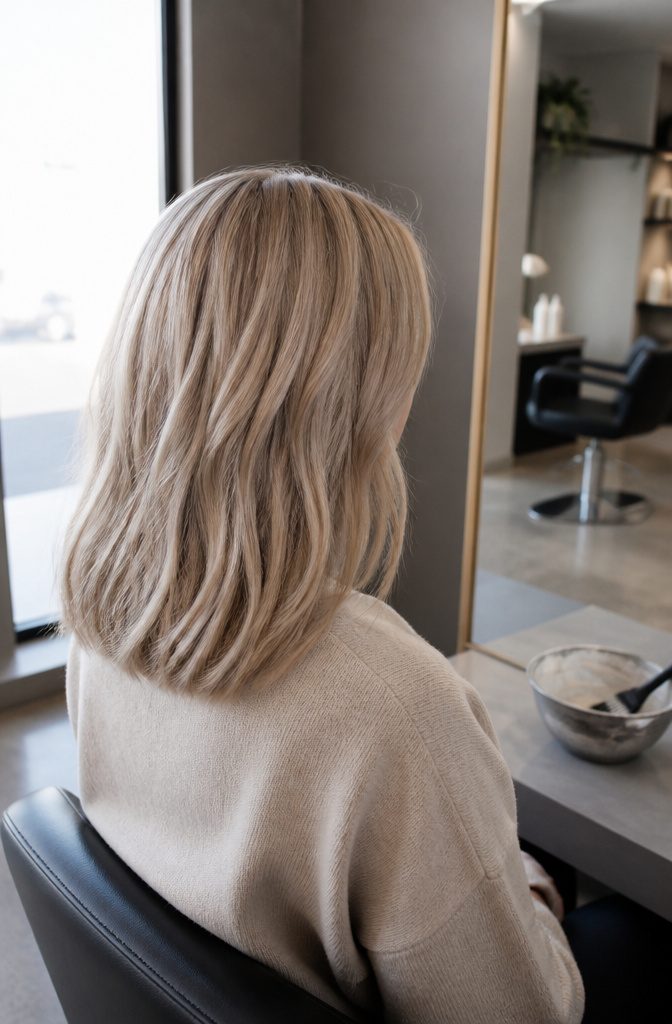
Neutral beige blonde carries slightly cooler undertones than its golden or honey cousins, which is exactly why it flatters cool or neutral skin so well.
If you lean pink, red or blue rather than peach or yellow, this is the beige that balances your coloring without washing you out.
It suits Light Summer, True Summer and Soft Summer color seasons particularly well, all of which favor lighter skin with cool or soft-neutral undertones.
If you’re genuinely unsure where you fall, professional color analysis pins it down. Online services run $49.00 to $144.00 depending on depth, and most deliver a seasonal palette plus shade recommendations you can take straight to a colorist.
That said, other approaches to beige call it broadly flattering across skin tones, so the seasonal fit matters most when you want precision or plan to stay in the blonde family long-term.
29. Warm or Olive Skin
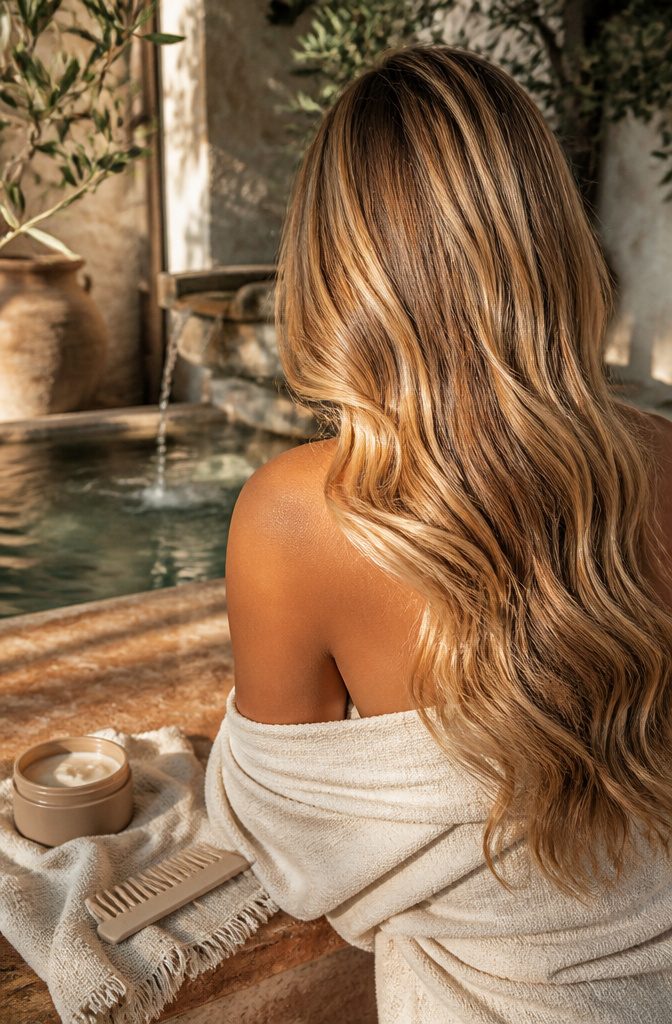
Warmer beige tones—honey, golden, or anything leaning butter blonde rather than ash—keep the color harmonious on warm or olive skin.
The golden tints in these blends echo the natural warmth already in your complexion, so the overall effect reads cohesive rather than fighting your undertone.
I’d stay on the warmer end of the beige spectrum here; a cooler, ashier beige can look washed out or muted on deeper warm skin, pulling the brightness down instead of lifting it.
If you have tan or olive coloring, an ashy beige-blonde mix can work beautifully, particularly when it sits at level 7 or higher to keep enough contrast and dimension.
But if your skin runs deeper and golden, richer warm blondes will flatter more reliably than anything that skews cool or neutral.
30. The Low-Maintenance Pick
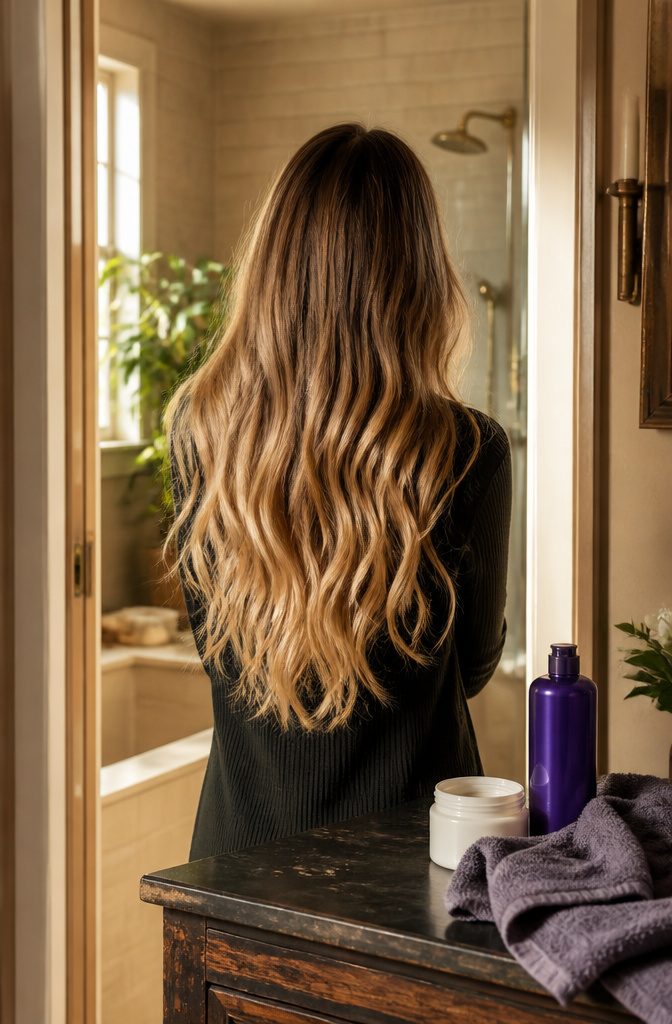
Balayage, lived-in color and shadow roots keep the visible line softer when your natural base grows back in.
The color graduates from darker roots to lighter ends, so regrowth reads as dimension rather than stripe. Touch-ups can stretch to every two months at the salon instead of the six-week clock that comes with all-over color.
That freedom has a ceiling. Purple shampoo still matters if you want to hold the cool beige tone and keep warmth from creeping toward brass.
Conditioning treatments keep the lightened ends from looking dry, and if you skip those the color starts to look dull faster than the roots announce themselves. Lower maintenance than solid blonde, sure, but not zero.
What Beige Blonde Looks Like
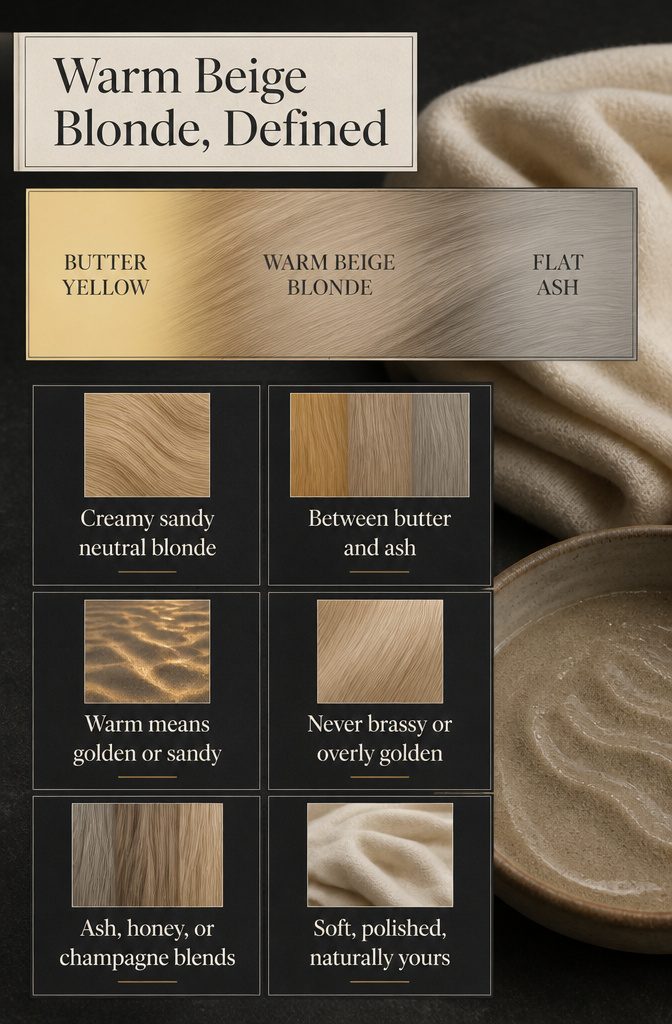
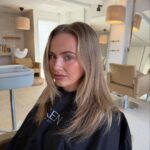
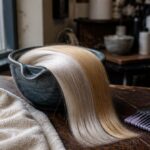
Beige blonde balances creamy, sandy tones with soft ash or golden undertones, landing somewhere between bright butter yellow and flat ash.
What makes it beige is that muted, neutral quality: not too cool, not too warm, and never brassy or overly golden. Think wet sand, vanilla, ivory, or the color of cashmere.
The "warm" in warm beige blonde means it leans toward golden, buttery, or sandy pigments rather than icy ash. It still reads neutral overall, just tilted slightly to the warm side of the spectrum.
Some versions mix beige with ash to keep it soft and subdued, others layer in honey or champagne for a creamier glow. The result looks polished and natural, the kind of blonde that could have always been yours.
Beige Shade Numbers
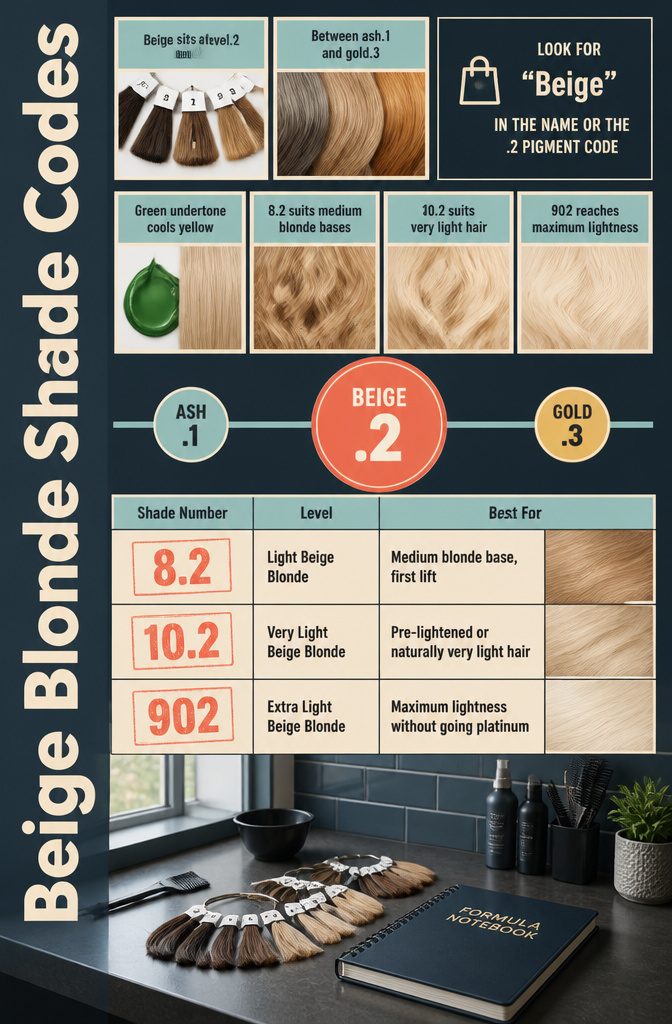
Professional colorists place beige blonde at level .2 on the tonal scale, sitting between ash (.1) and gold (.3). What keeps it from going too warm is a green undertone that cools the yellow just enough to land in that soft, neutral zone.
When you’re shopping for box color or asking for a formula at the salon, look for "Beige" in the name or the .2 pigment code on the tube. Three common levels show up across most permanent lines:
| Shade Number | Level | Best For |
|---|---|---|
| 8.2 | Light Beige Blonde | Medium blonde base, first lift |
| 10.2 | Very Light Beige Blonde | Pre-lightened or naturally very light hair |
| 902 | Extra Light Beige Blonde | Maximum lightness without going platinum |
The .2 keeps the color from pulling brassy on warmer skin or fading into flat yellow after a few washes.
Keep It From Turning Brassy
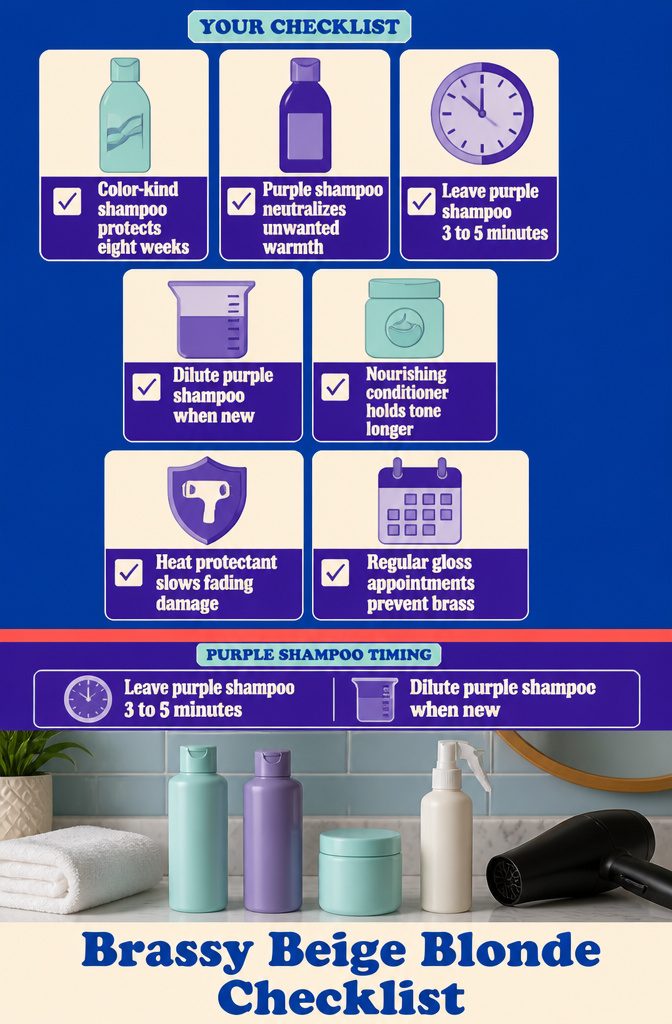
Four products keep warm beige blonde from fading or turning brassy: a color-kind shampoo, a purple shampoo, a nourishing conditioner and a heat protection spray.
- ColorMotion+ Color Protection Shampoo fights pollution-fading free radicals and offers up to eight weeks of color protection between appointments.
- Purple shampoo like INVIGO Cool Blonde Color Refreshing Shampoo neutralizes unwanted warmth. Leave it on 3 to 5 minutes, or dilute it with your regular shampoo to avoid over-pigmentation if you’re new to it.
- A nourishing conditioner keeps hair healthy enough to hold tone longer.
- Heat protection spray before blow-drying or styling prevents the kind of damage that speeds up fading.
Regular toning or gloss appointments keep the neutral, cool base from shifting brassy. Beige blonde is relatively low-maintenance compared to brighter blondes, but skipping the purple shampoo lets brassiness creep back in faster than you’d think.
Frequently Asked Questions
What is beige blonde hair?
Beige blonde is a soft, creamy blonde that balances warm and cool tones, with sandy, ivory or golden qualities and sometimes a trace of ash. The warm versions lean toward honey, golden or butter shades.
What undertones does beige blonde have?
Neutral beige carries slightly cooler undertones than golden or honey blondes, and warm beige adds gold on top of that base. Adding ash cools the shade, while a touch of warmth softens it again.
What is the difference between warm and cool blonde hair?
Warm blondes such as honey, golden and butter lean toward gold and amber.
Cool blondes such as ash lean toward a neutral, clean, minimal tone. Beige sits between the two, which is why it can be pushed in either direction.
What skin tone suits beige blonde hair?
A neutral beige blonde suits cool or neutral undertones best, especially Light, True and Soft Summer color seasons. Warm or olive skin does better with the golden end, such as honey, golden or butter beige.
Will beige blonde hair look dull on darker or warm skin tones?
It can, if the beige runs cool or ashy.
On deeper warm skin, a cooler beige may look muted or washed out. Stay on the warmer side with honey, golden or butter tones for a livelier result.
Does beige blonde hair require a lot of maintenance?
It is relatively low-maintenance next to brighter blondes, but you still need toning and a purple shampoo to hold off brassiness. A champagne blend needs a salon visit every 6–8 weeks, while balayage and lived-in versions stretch much further between appointments.
At home, the routine is a color-safe shampoo, a purple shampoo left on for 3–5 minutes, a nourishing conditioner and a heat protection spray.
Why choose a beige tone instead of yellow or ash blonde?
Beige is a softer middle option.
Yellow blondes turn brassy quickly, and ash tones can leave some skin tones looking washed out. Beige gives a subtle glow without a strong yellow or ash effect.
How do I find the right beige shade?
Look for shades with "Beige" in the name, or for a .2 in the shade number, such as 8.2 Light Beige Blonde or 10.2 Very Light Beige Blonde.
Bring the shade numbers and a photo to your colorist so you both start from the same target.