How much of your hair you’re willing to bleach, and how often you’ll sit in a salon chair, decides which icy blonde is yours.
A money piece or balayage lightens only the front strands or hand-painted pieces and lets the roots grow out softly, while all-over platinum and white blonde lighten every inch and call for regular toning visits.
Whatever the name on the shade, the sequence is identical: bleach the hair to a level 10, then apply a violet-based toner to cancel the leftover pale yellow and turn it cool.
1. Icy Blonde Balayage
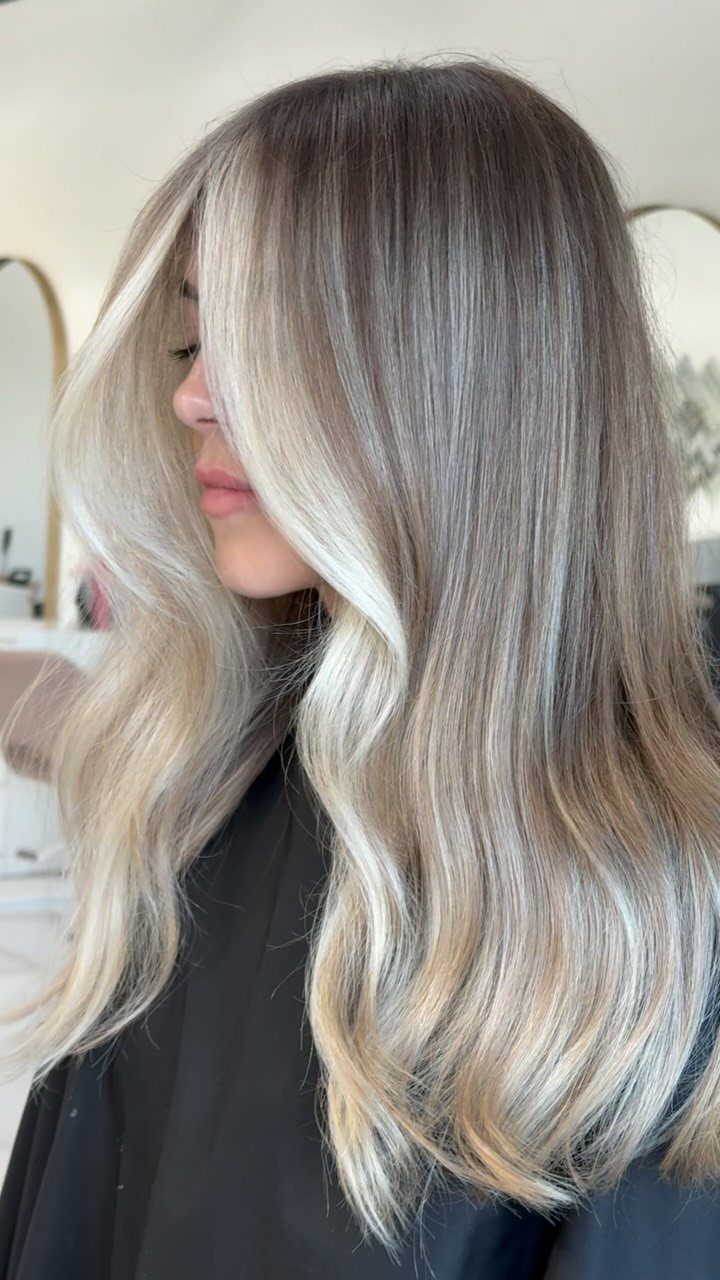
Balayage is the gentlest way into icy blonde, because the brightness is painted on by hand and the root stays dark enough that regrowth never draws a hard line.
That makes it a good fit if you want the look but can’t commit to frequent salon visits.
A short global gloss over the balayage, just a couple of minutes, keeps the lightened pieces extra bright. Ask for that gentle lift if your hair is already lightened.
2. Rooted Icy Blonde
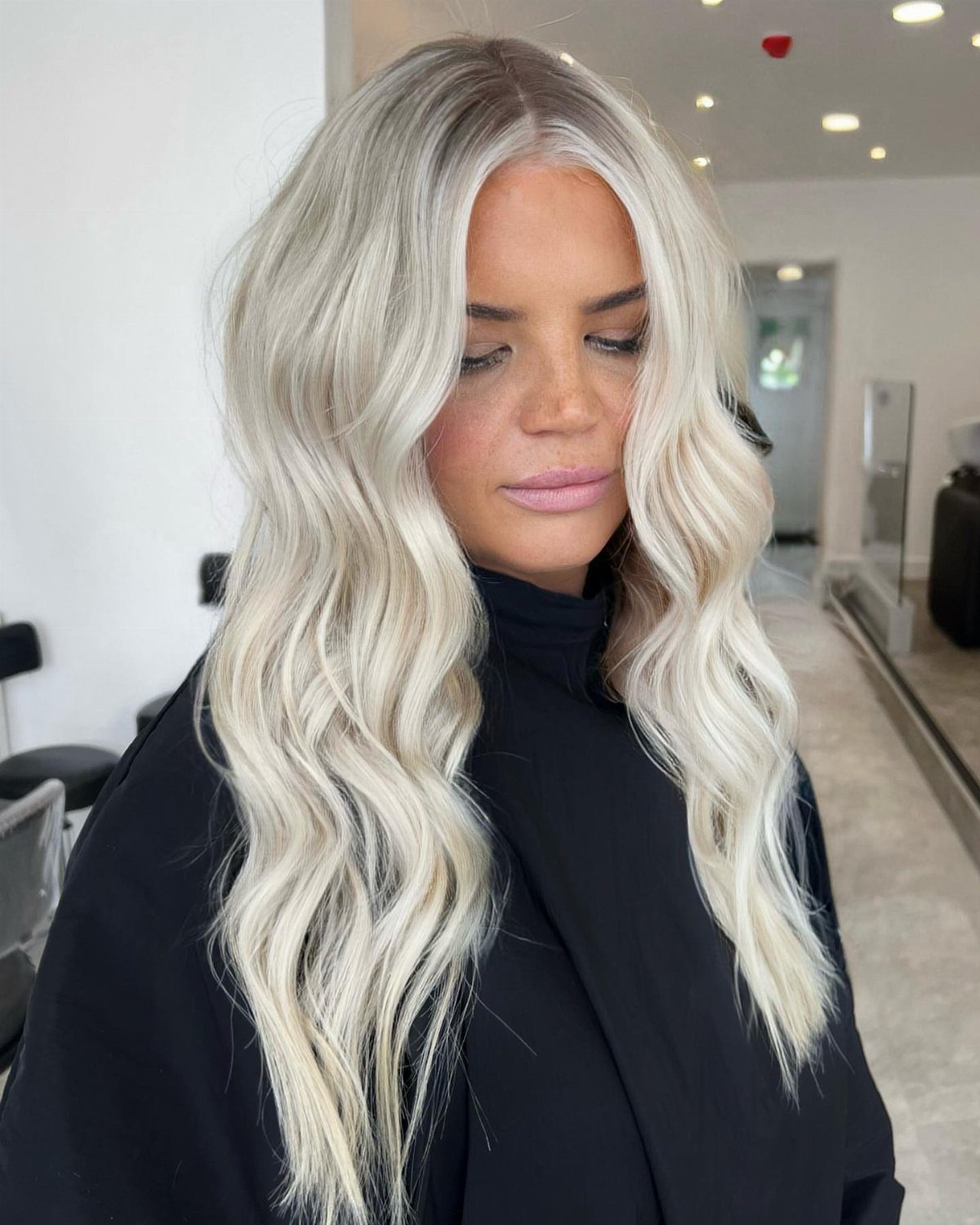
A rooted icy blonde keeps the natural color near the scalp and lets the pale lengths take over from there. I like it for the grow-out: no stripe appears, since the dark is already part of the design.
Ask your stylist to smudge the root so the transition looks soft rather than banded. The darker top also frames the face, which makes the icy tone read as deliberate, not as overdue color.
3. Icy Blonde Highlights
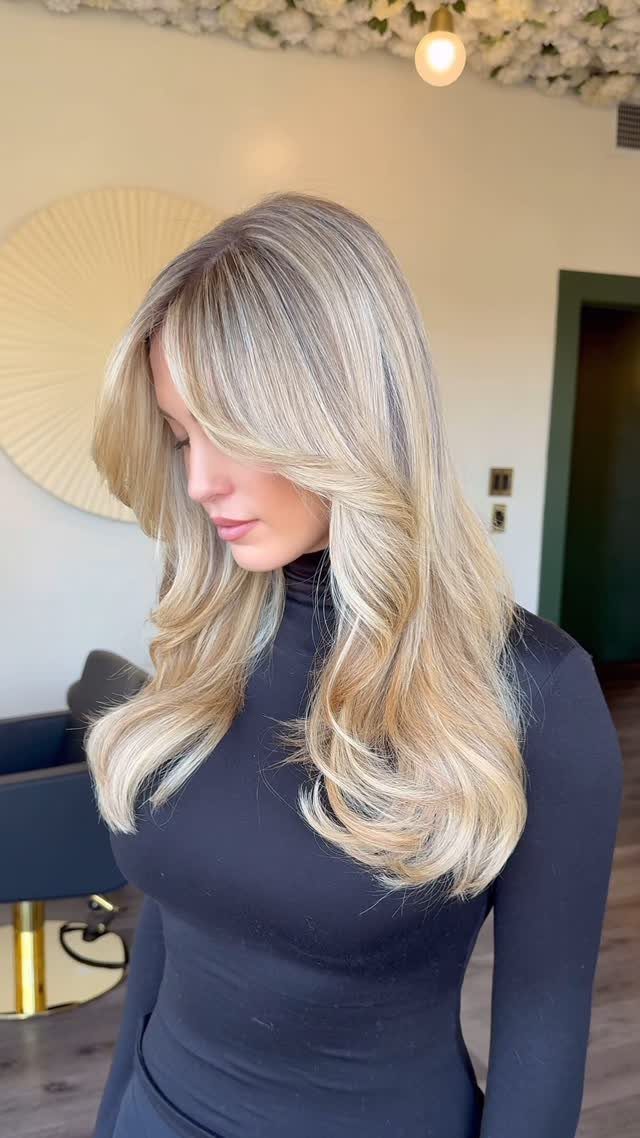
Highlights keep the icy brightness in separate strands, with the base color showing between them. Compared with lightening everything, you bleach less hair, which matters if you’re worried about condition.
I’d bring a photo and ask how fine the weaving will be: thinner pieces blend into the base, while chunkier ones stand out as stripes. On long waves like these, the contrast between dark roots and pale strands adds movement.
4. Silver Blonde
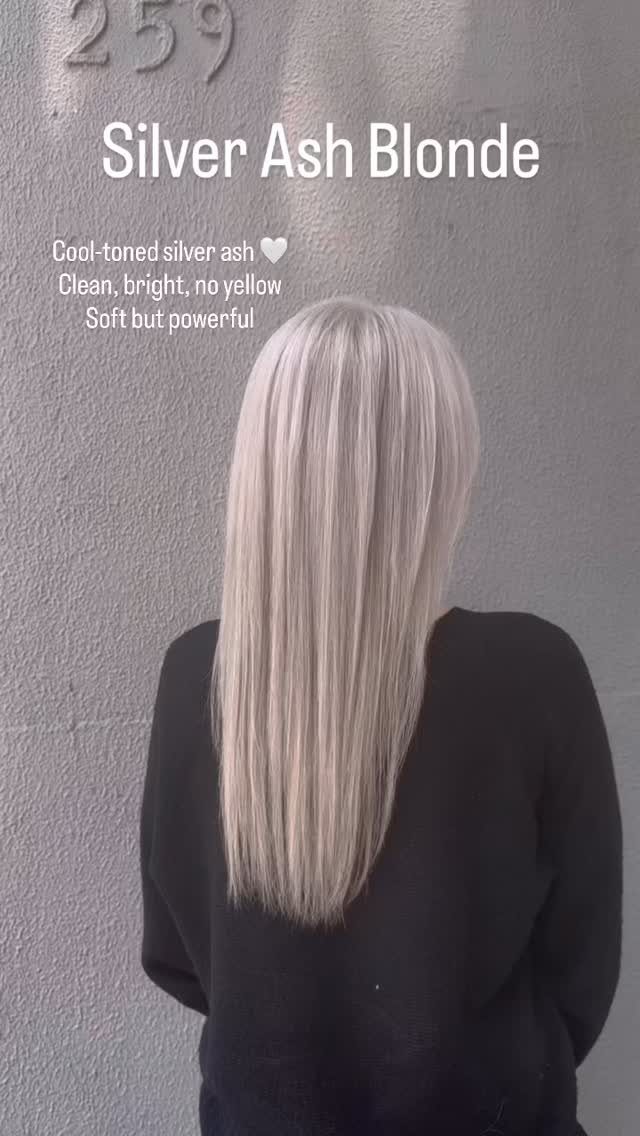
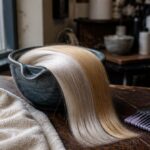
Silver blonde is a pale base with a cool, gray-leaning cast laid over it. Of the icy shades, it’s the one where the tone matters more than the lightness.
Bring a reference photo and say "silver" rather than just "ice," since the two can land differently.
On straight, long hair like this, the silver shows up as one smooth sheet of color, so toner choice does most of the work.
5. White Blonde
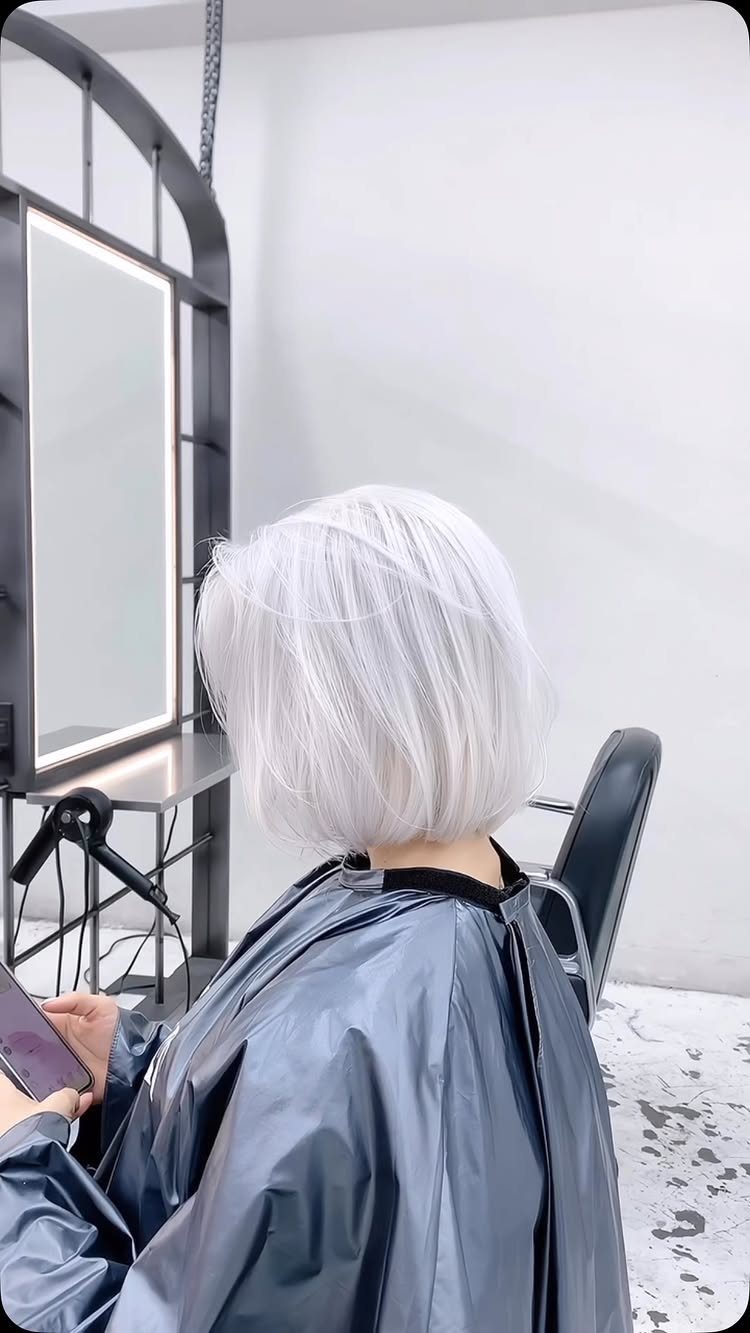
White blonde sits at the palest end of the scale, close to no color at all. On a short bob like this, the shade becomes the whole statement.
Expect a long salon session and a stylist who checks your hair’s condition first, since reaching this level takes serious lightening. I’d ask for a realistic plan before booking, and be ready for regular toning visits to keep it white.
6. Light Ash Blonde
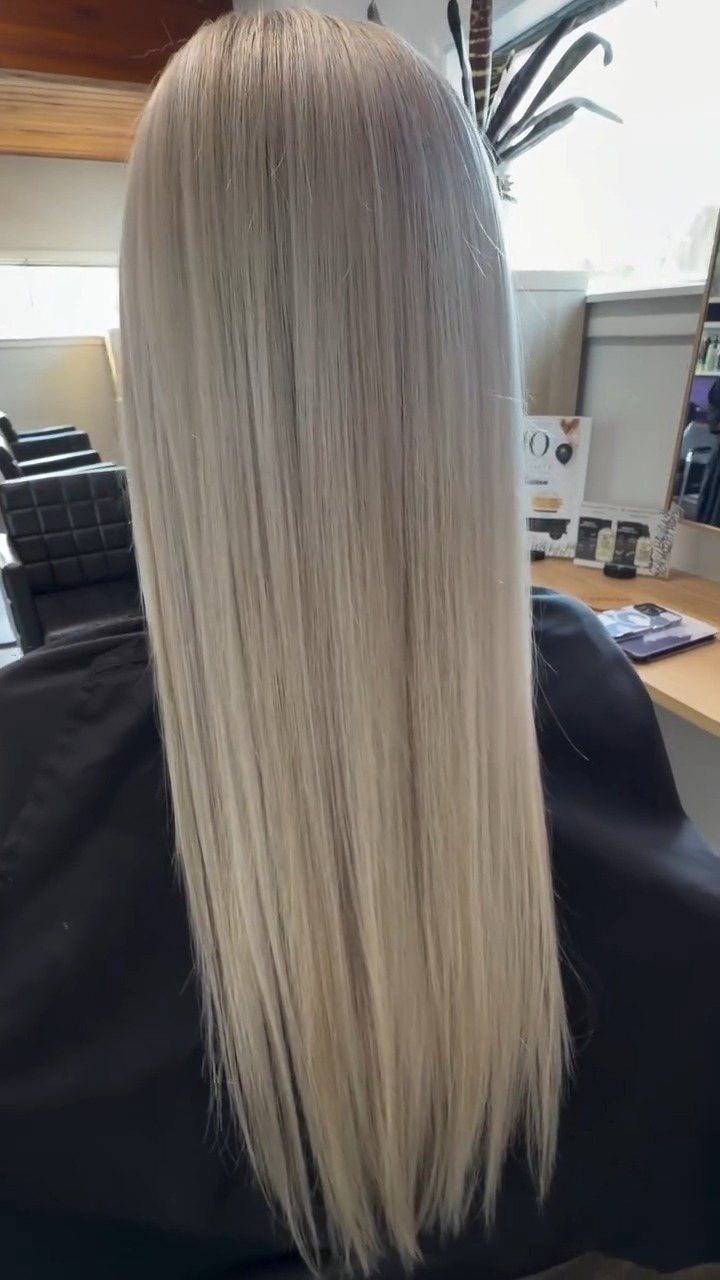
Light ash blonde is the quieter route: pale and cool, but without the stark brightness of platinum. It sits comfortably between a natural dark blonde and a true icy shade.
The subtle darker roots here make it easier to live with, since growth blends in rather than announcing itself. If you want icy blonde without the high-contrast look, this is the shade I’d show your stylist first.
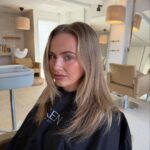
7. Pearl Blonde

Pearl blonde trades the blue-violet chill of ice blonde for a soft, pearly sheen with a little warmth underneath. The result looks creamier and less stark, which flatters a lot of skin tones.
On long waves like these, the color reads as light rolling over the bends in the hair. I’d say "pearl" rather than "ice" when you book, and bring a photo, because the two can land in different places.
8. Ice Blonde Ombré
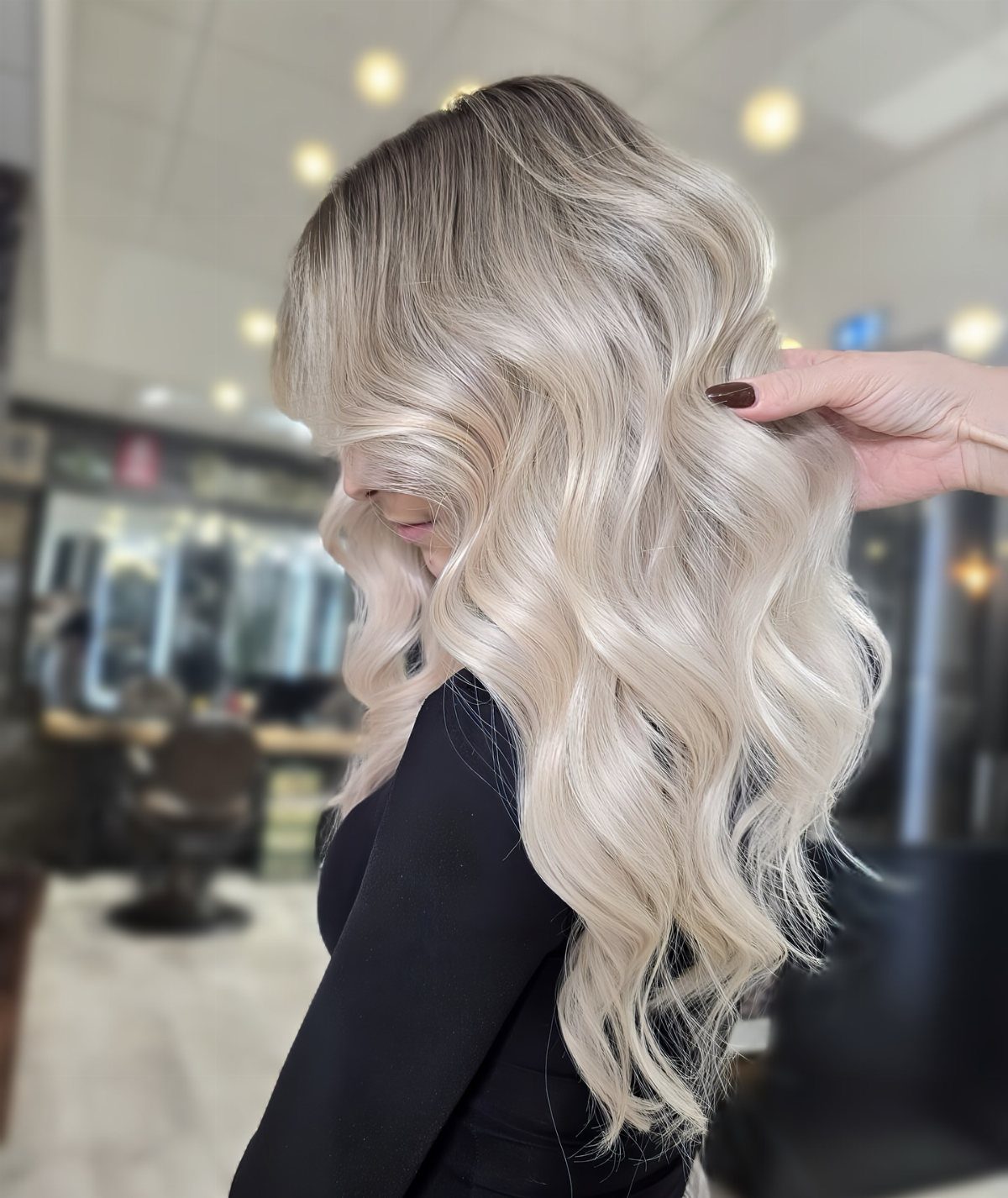
Dark roots melting into platinum ends make ombré the most dramatic of the low-maintenance icy options. The gradient does the work that a regrowth line would otherwise ruin.
Ask for a long, blended fade instead of a sharp midline, so the shift from dark to pale looks gradual.
Loose waves show the transition best, and I’d take ombré over all-over platinum if you want the ends bright without bleaching every inch.
9. Vanilla Latte Blonde
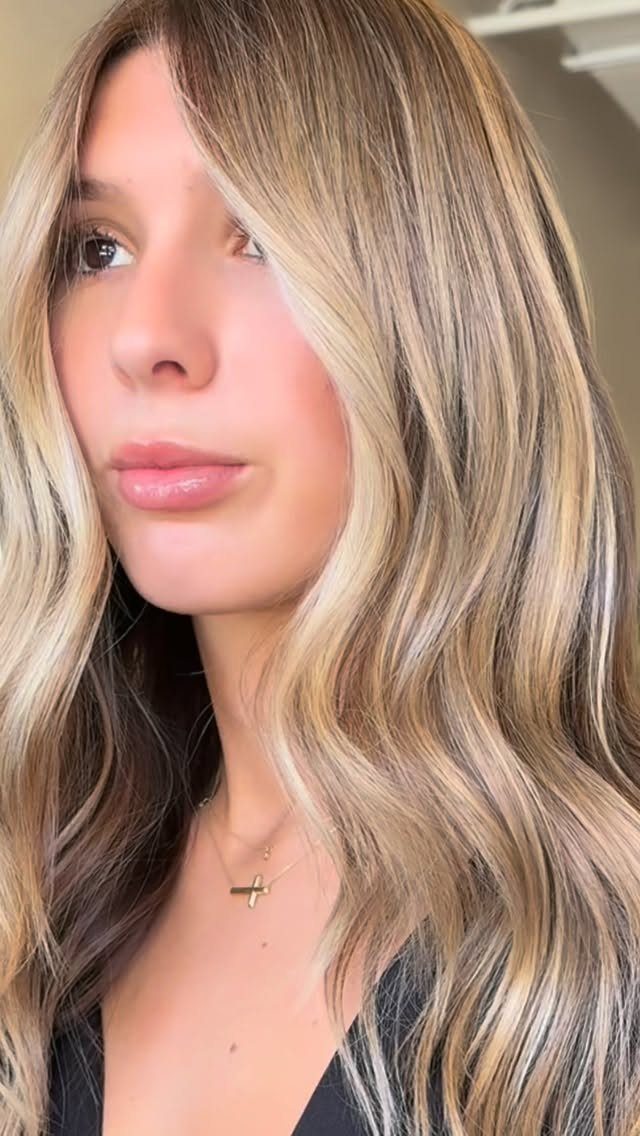
Vanilla latte blonde mixes creamy beige blonde with light brown, so the color looks like milky coffee instead of a stark pale shade. Darker roots stay part of the look.
That softness is its main appeal: vanilla latte sits closer to natural hair than the icier shades, so the grow-out line stays gentle and touch-ups can wait longer.
I’d pick it if platinum feels like too much commitment. Tell your stylist the blend you want, beige over golden, and bring a photo to match the depth.
10. Ash Icy Blonde
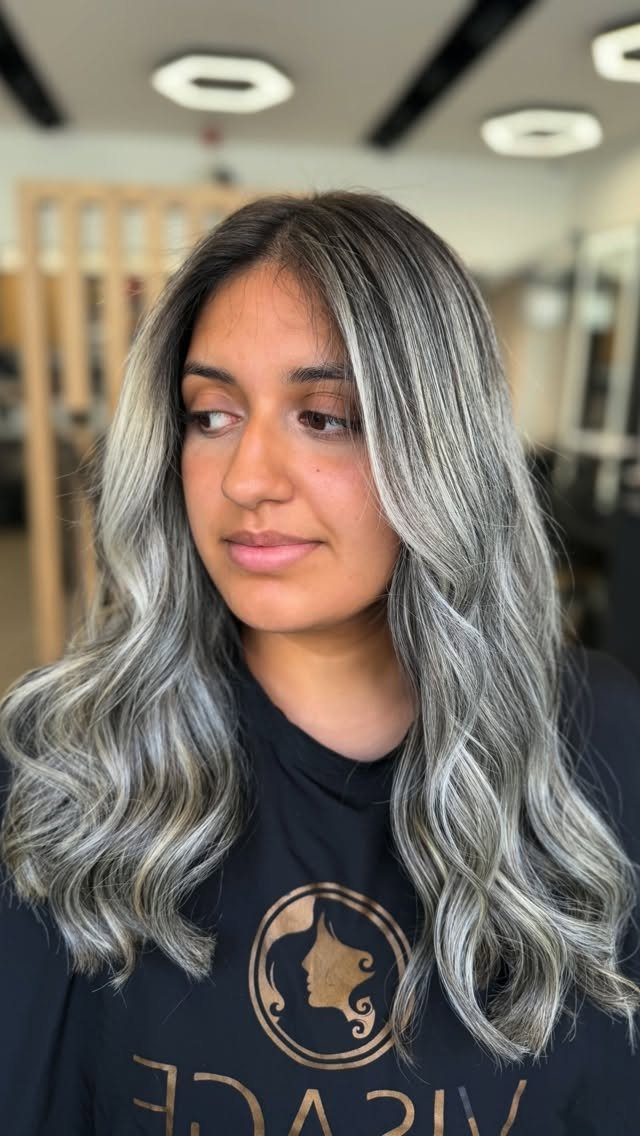
Ash icy blonde pushes toward gray, with darker ash tones that give a smokier silver than the brighter shades nearby. It looks muted on purpose.
Because the darker ash tones do so much of the work, the roots here stay deeper and the color feels lived-in.
I’d ask for "smoky" or "gray-leaning" and show a photo, since "ash" alone can mean several things. It suits anyone who finds bright platinum too loud.
11. Ice Blonde Bob
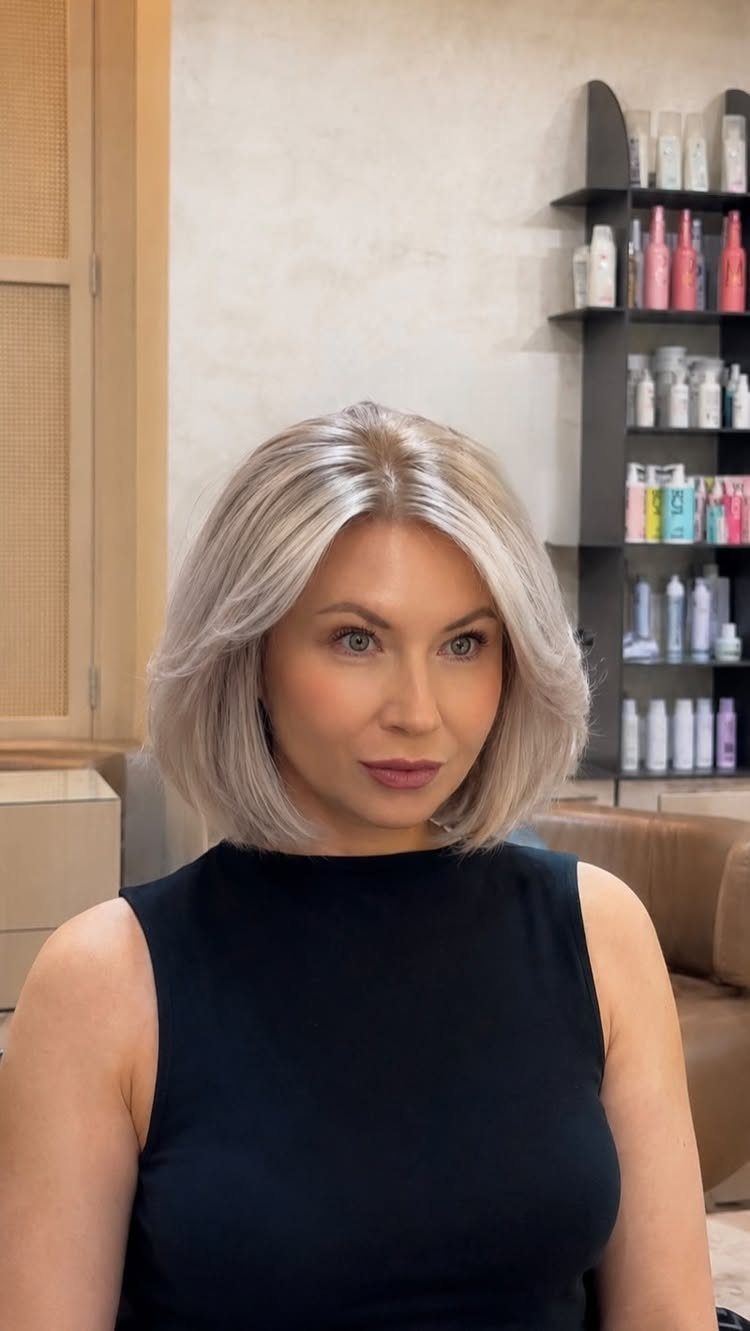
A chin-length cut puts the full weight of the color right at the jaw, so an icy blonde bob shows off every bit of tone and shine. With this little length, the shade and the cut carry the whole look.
I’d book the cut and color together, so the shape frames the face and the pale shade sits evenly from top to bottom.
Short hair also means less bleached length to look after, which is a real point in the bob’s favor.
12. Brown Ice Blonde Money Piece
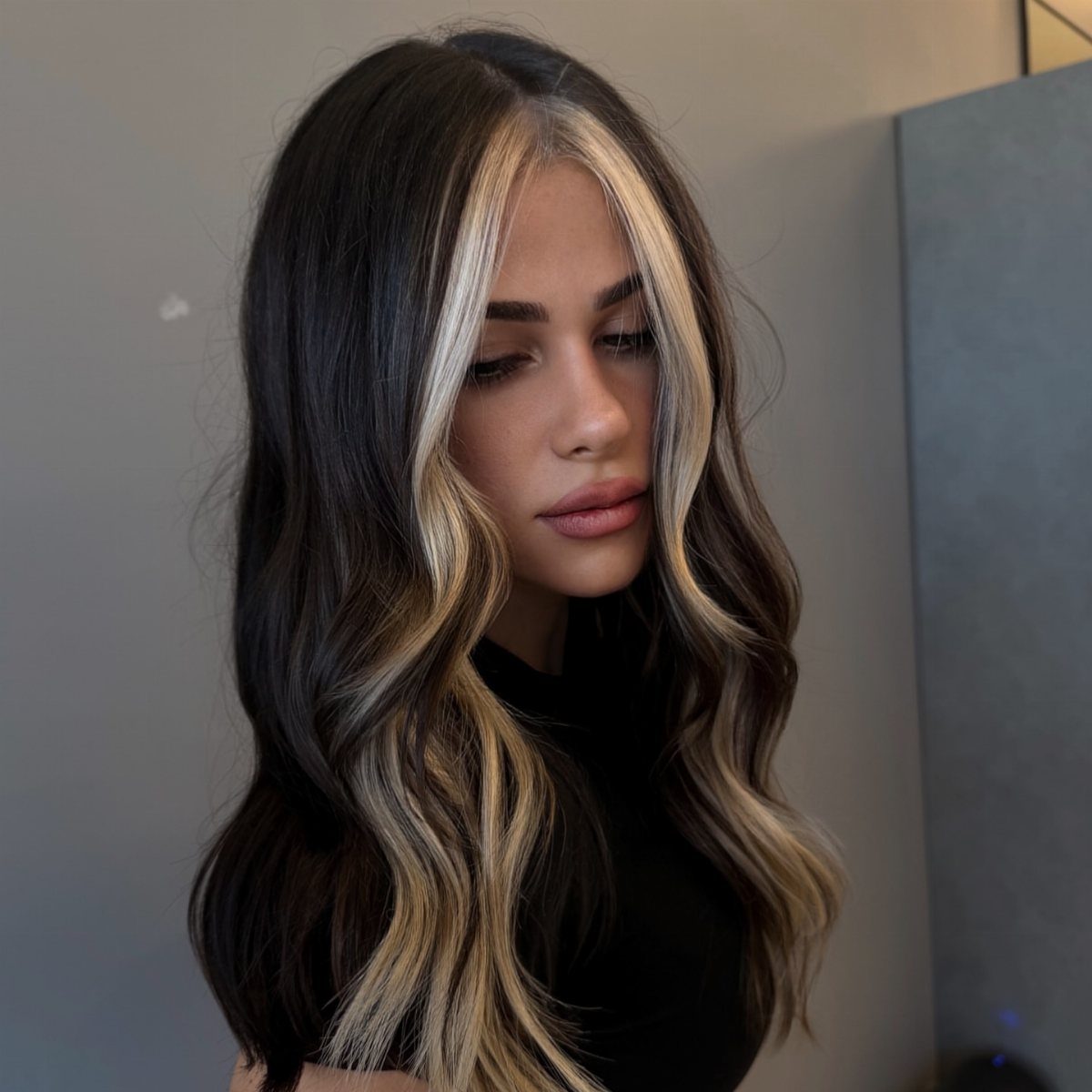
A money piece is a bright pair of face-framing sections, and against brown hair the ice blonde stands out sharply. The contrast is the whole appeal.
This is the option I’d choose if you want icy blonde without lightening everything.
Only the front strands take the bleach, so the rest of your hair stays brown and healthier. Ask for the pieces to start right at the part, so they frame your face as the hair falls.
13. Sandy Platinum Blonde
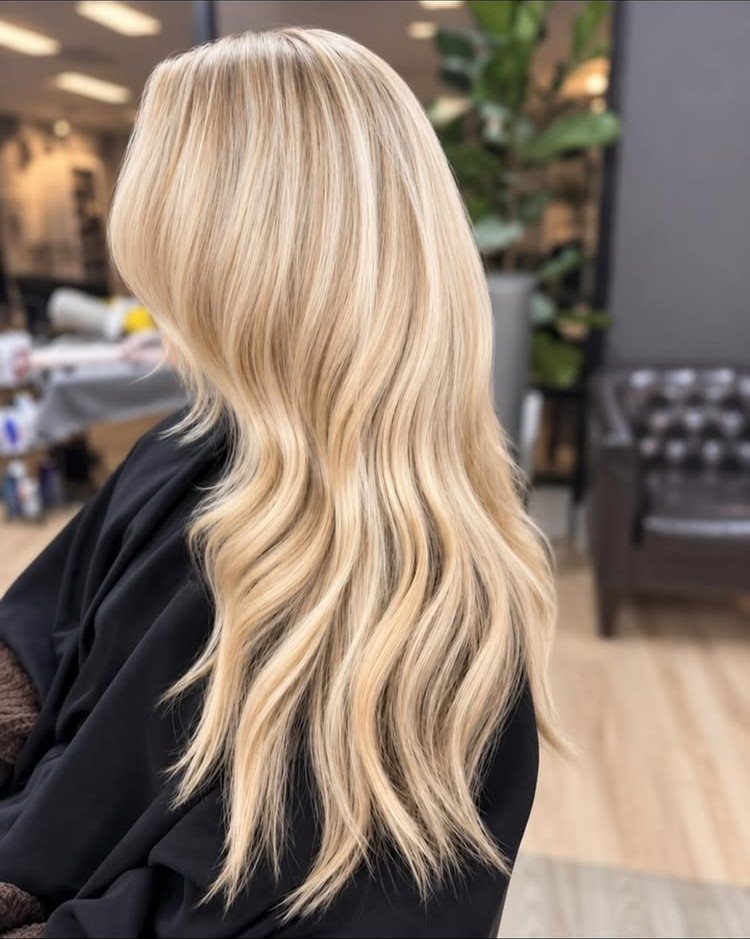
Sandy platinum puts a warm, beige-leaning sand tone inside a pale platinum base, so the blonde looks softer than a stark white-silver. The wavy lengths show it best, with lighter and sandier strands trading places through the bends.
A custom-mixed gloss at the end sets the finish, and the creator behind this look credits it for that polished, expensive-blonde shine.
I’d ask for that step by name. Ask for a sandy base rather than a stark icy one, and show a photo so your stylist places the warmth where you want it.
14. Ice Blonde Babylights
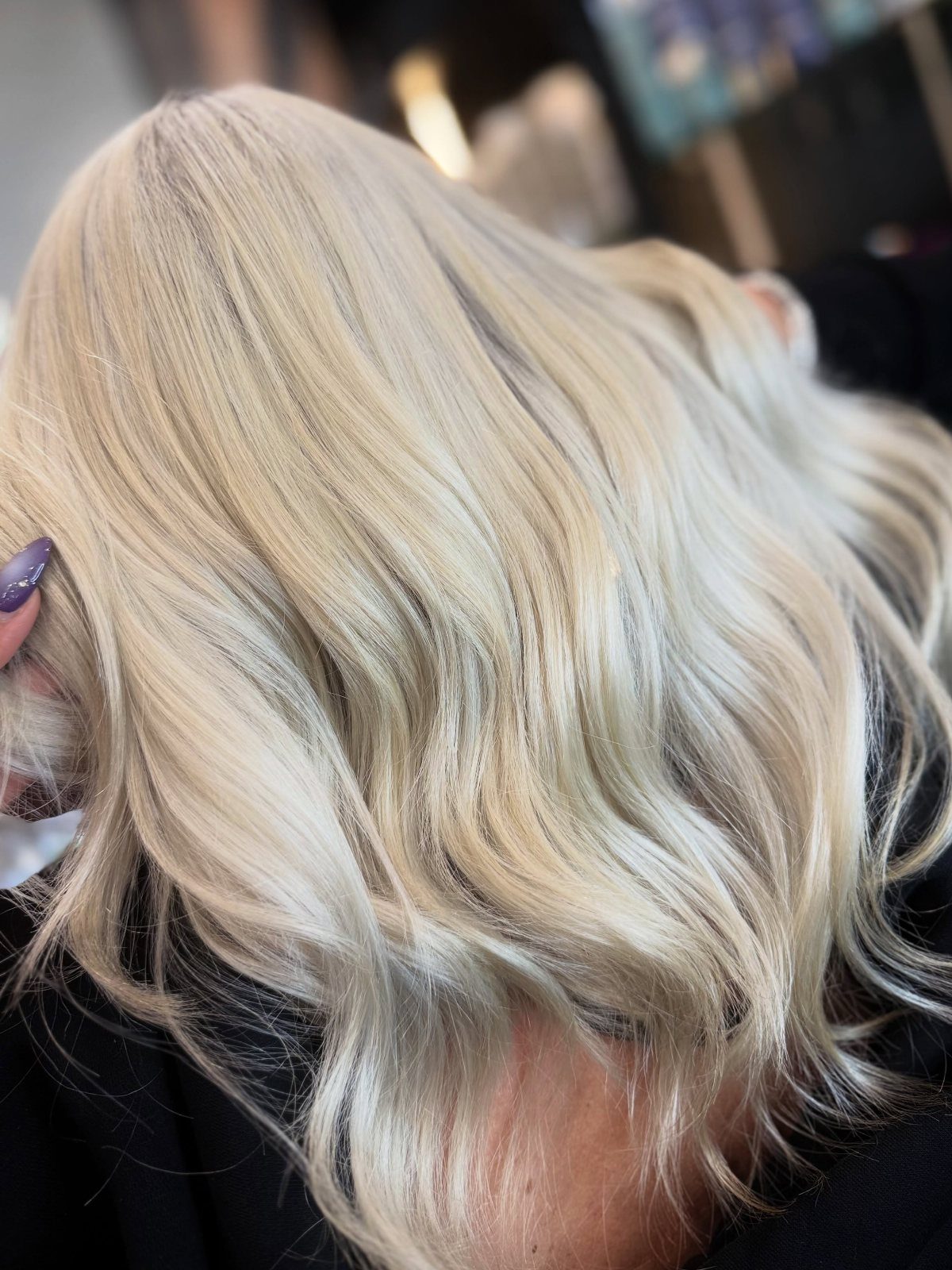
Babylights are very fine, closely spaced highlights, and in an icy blonde they read as soft dimension rather than visible stripes. From a distance the hair just looks lighter and richer in tone.
Ask for "fine" weaving and bring a photo, since the width of each slice decides whether the result looks natural or streaky.
I’d choose babylights over chunkier foils if you want brightness that blends easily into waves. Because they’re so delicate, expect the appointment to run long.
15. Classic Platinum Blonde
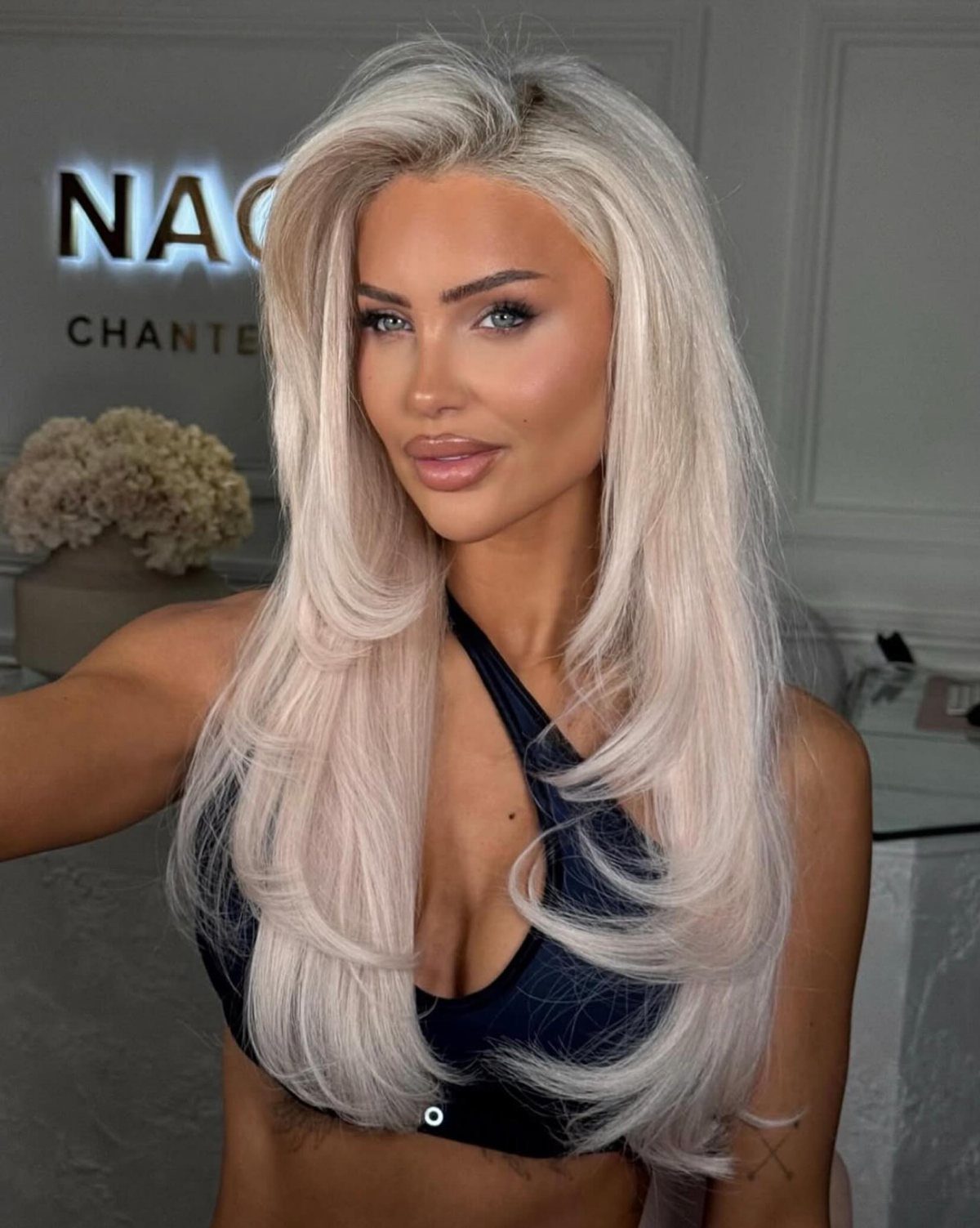
Classic platinum is one even, all-over pale blonde from roots to ends, with no shadow and no gradient. On long lengths, nothing distracts from the shade, so any yellow shows immediately.
That makes it the highest-upkeep entry here: regrowth is obvious, and toning has to stay regular.
I’d only recommend it if you’re ready for frequent salon visits. Ask your stylist to check your hair’s condition before booking, since lightening every inch asks a lot of it.
16. Champagne Blonde
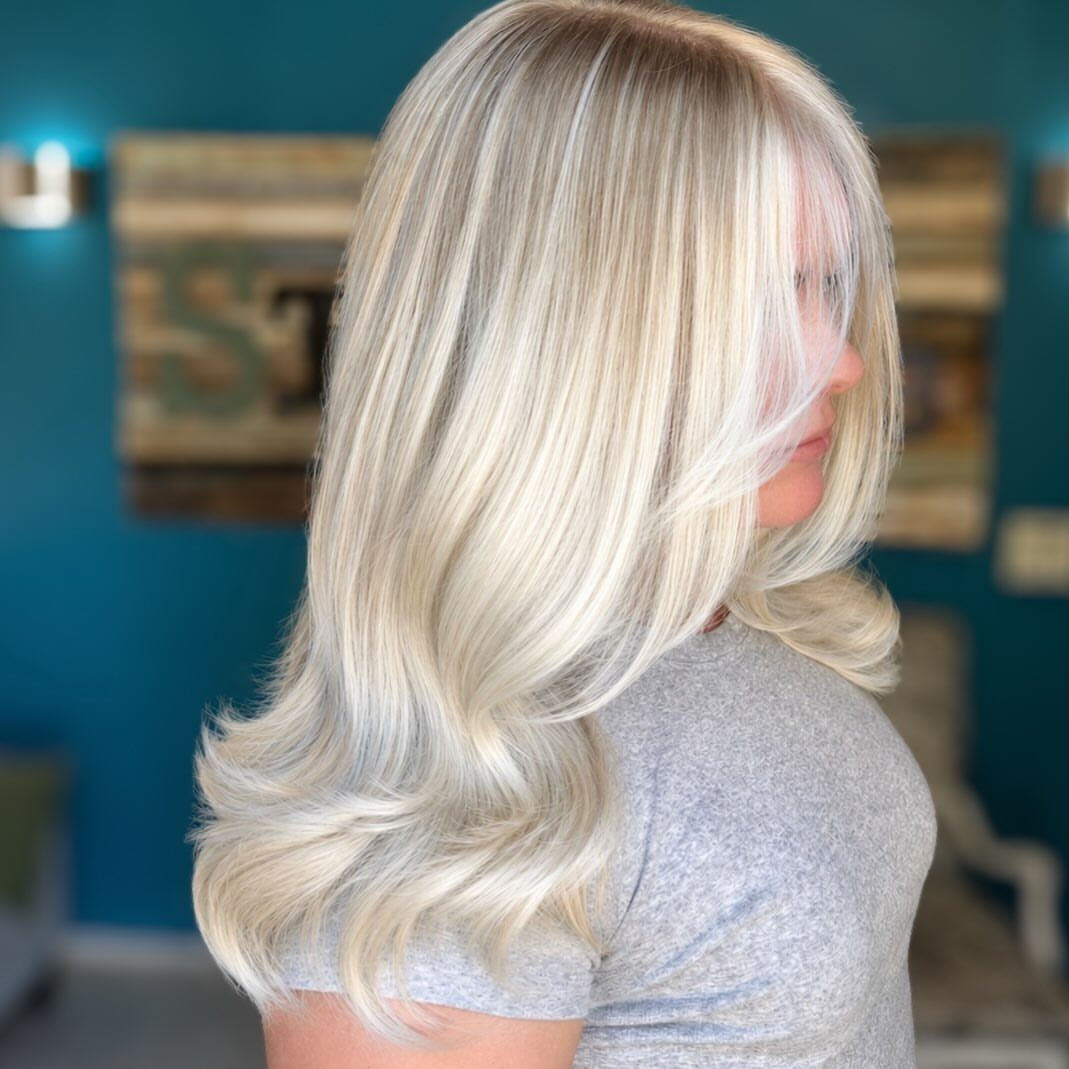
Champagne blonde sits a step warmer than ice: pale and glossy, with a faint golden-beige glow, like the drink.
It flatters more skin tones than the stark cool shades, which is why I reach for it as the friendlier pale option.
Say "champagne" when you book and show a photo, because pale golden blonde and icy blonde can be confused.
Layers with curled ends give a soft champagne tone more surfaces to reflect light, so the color looks dimensional instead of flat.
17. Pale Pink Blonde
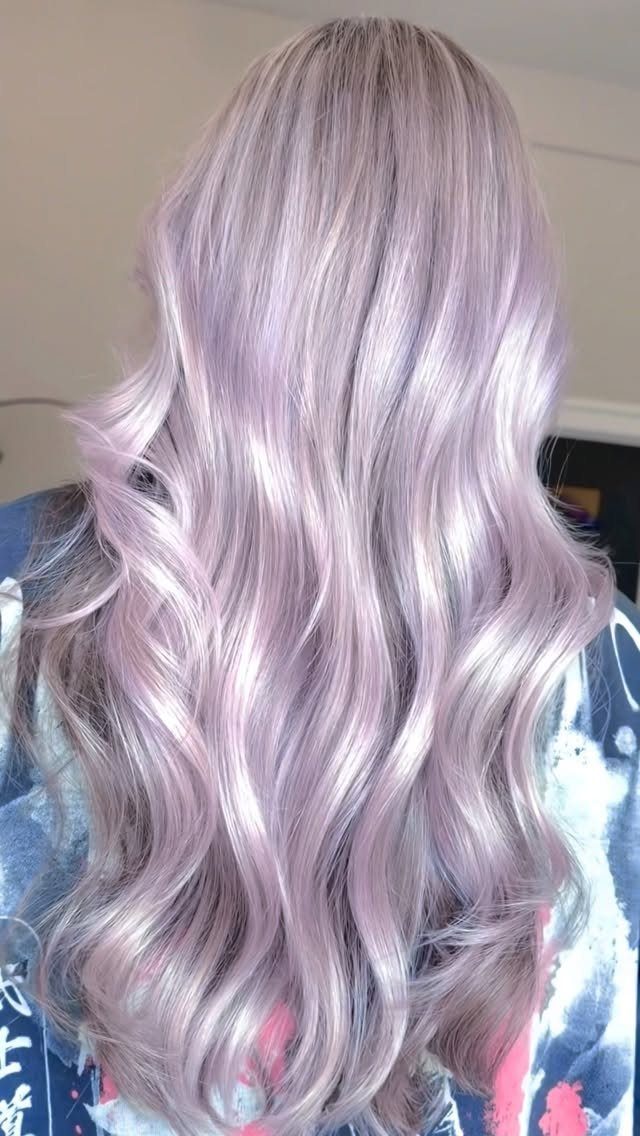
A pale pink cast turns blonde into something rosy and sugary, still light but with a gentle blush in it. In soft waves, the color shifts between pink and lilac depending on the light.
Pastel tones fade faster than neutral ones, so I’d treat this as a shade that needs regular refreshing.
Start from a very light blonde base, since the pink only shows clearly on pale hair. A toner or semi-permanent gloss is the usual route, so ask your stylist which fits your hair.
18. Two-toned Hair
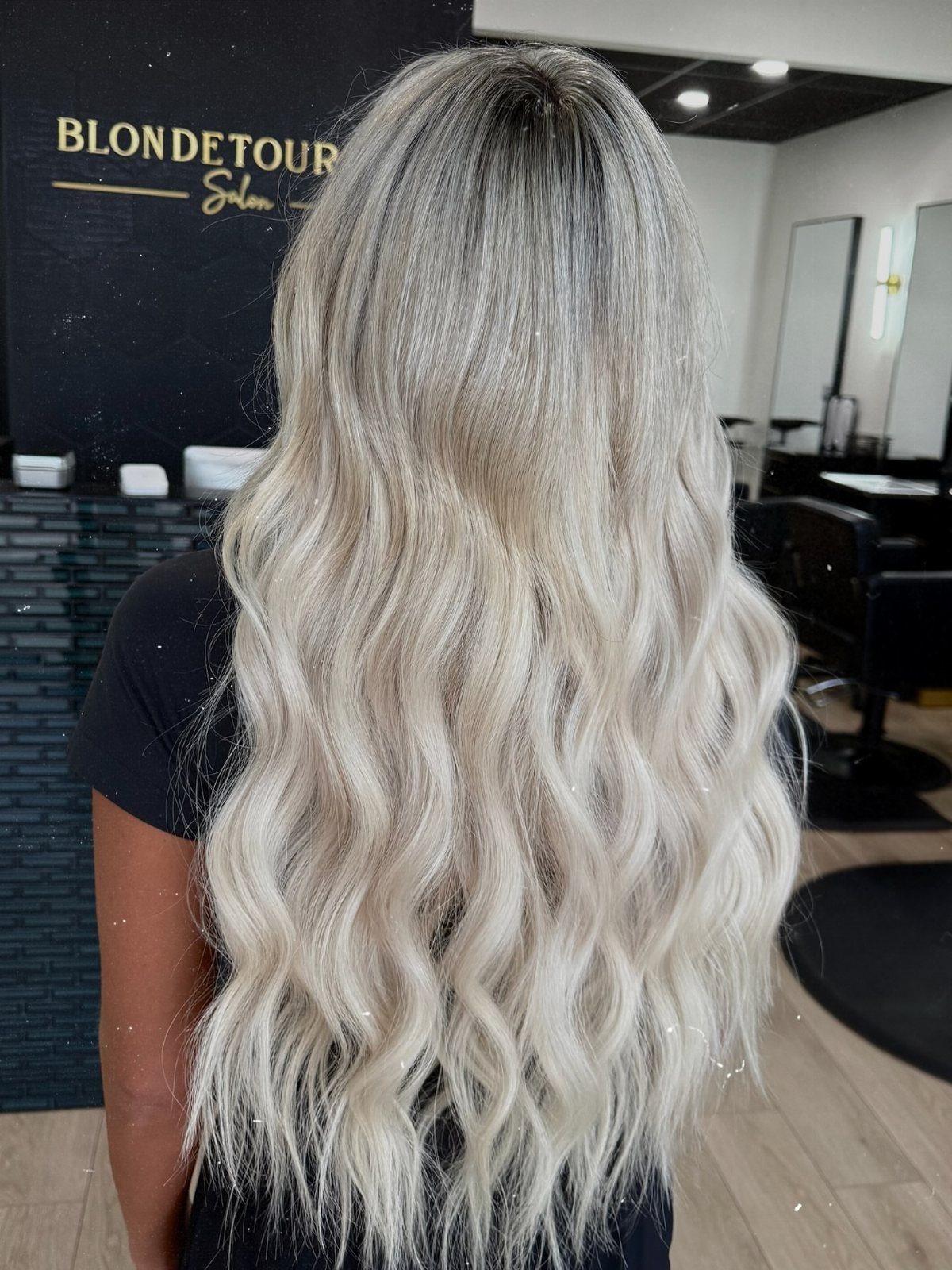
Two-toned hair pairs a dark root area with icy blonde lengths, and the split between them is deliberate rather than a sign of growth. Here the contrast runs along long waves, so both colors stay visible from behind.
Decide how sharp you want the line.
A soft blend grows out kindly, while a crisp divide looks bold but needs more care. I’d bring a photo and ask your stylist where the dark should end, since that placement sets the whole effect.
19. Icy Blue-blonde
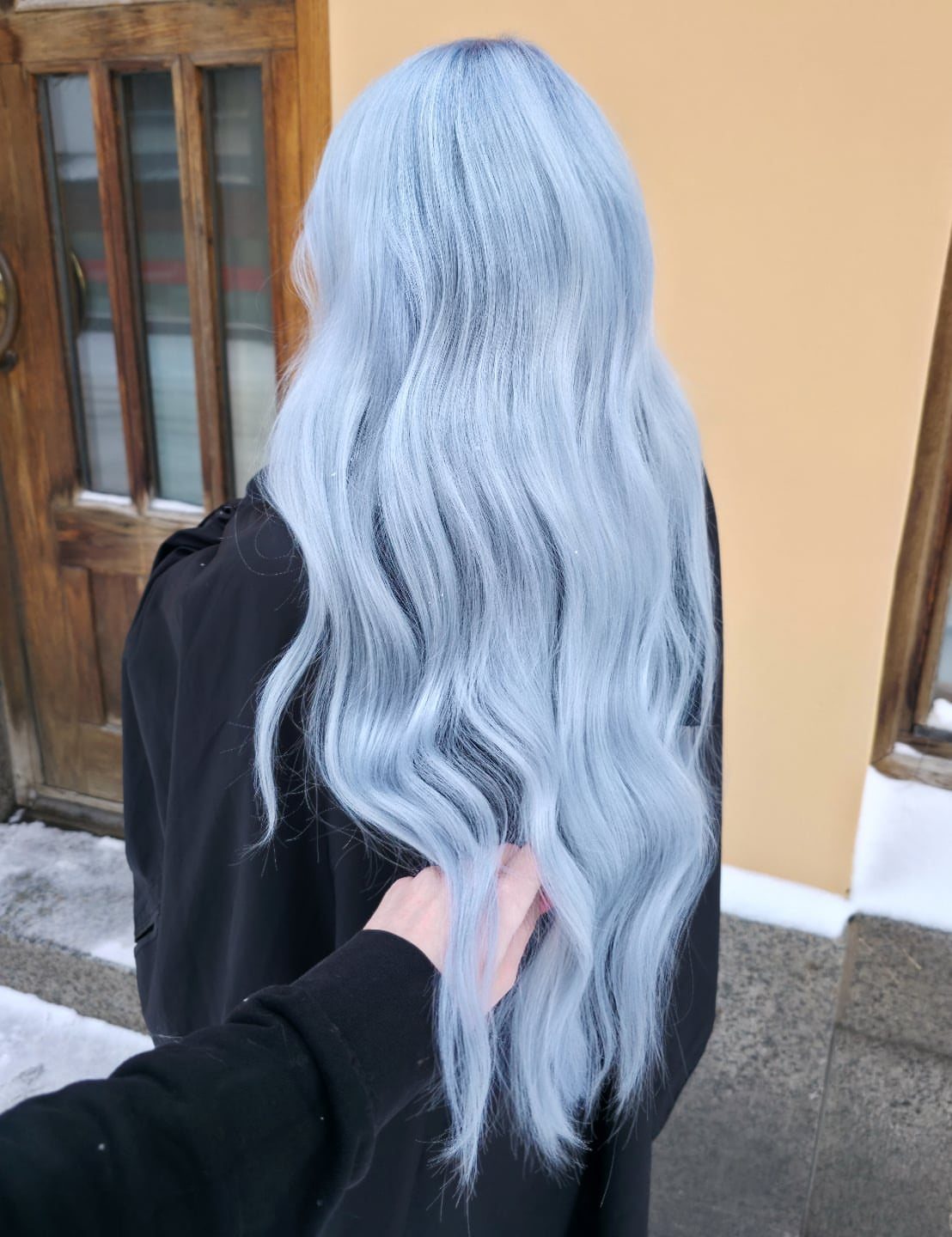
A blue cast turns icy blonde from silvery to cool and slightly steely, a shade you can see most on long waves like these. It reads as blonde first, with the blue only showing as the light moves.
I’d ask for "blue-toned" and bring a photo, since a little blue goes a long way and a heavier hand can drift toward a color.
A blue cast only reads on hair that is already close to white, so lift to a pale yellow, like the inside of a banana peel, before any toner goes on.
20. Icy Silver Purple
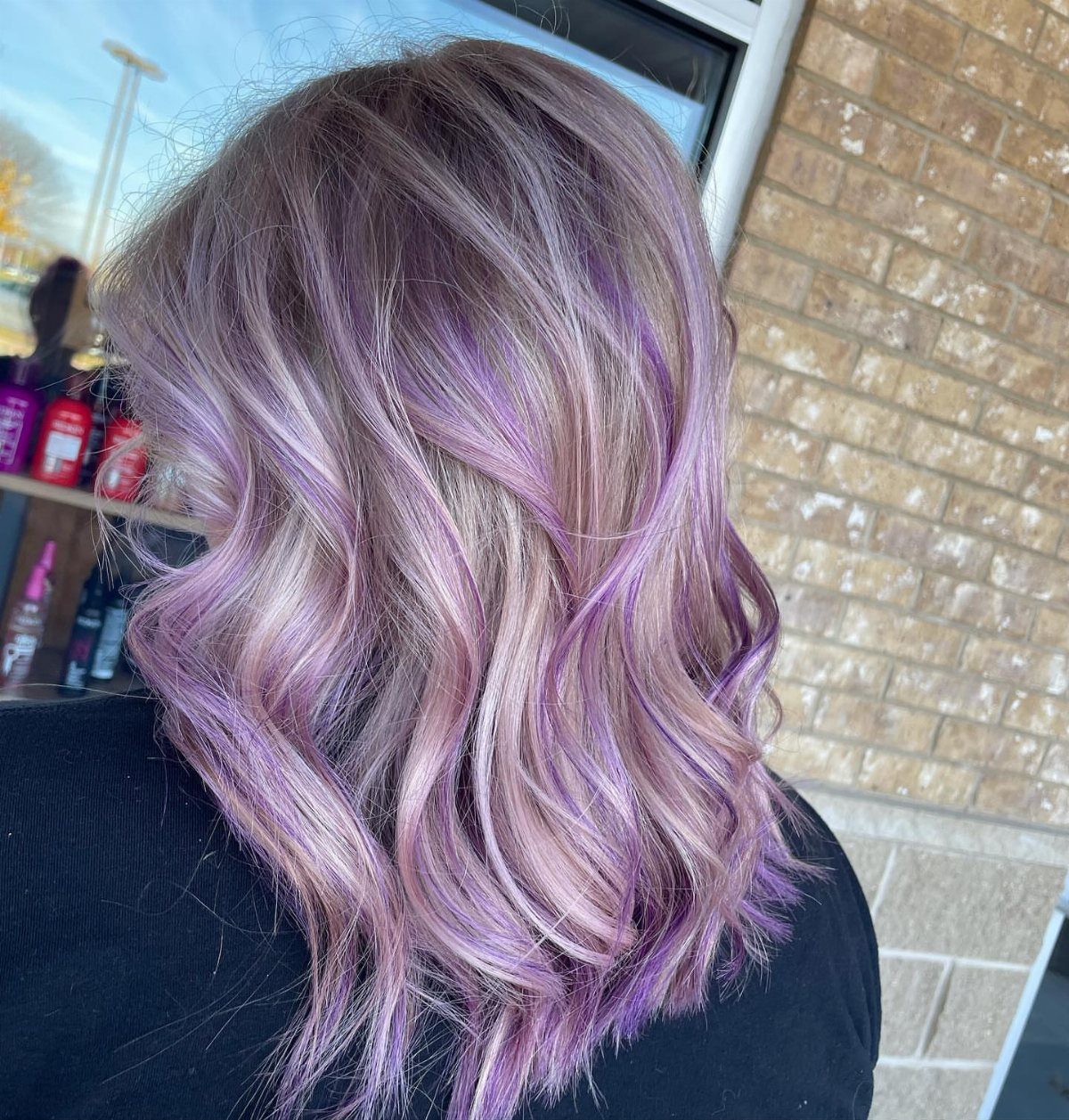
Silver with lavender running through it gives curls 2 tones to play with, and the purple catches in the bends while the silver stays cool around it. The pairing feels softer than plain gray.
Ask your stylist how much purple to place and where, since a few lavender pieces look very different from a wash across the whole head.
Bring a photo to settle the balance. Shoulder-length hair like this keeps the combination easy to see.
21. Ice Blonde Extensions
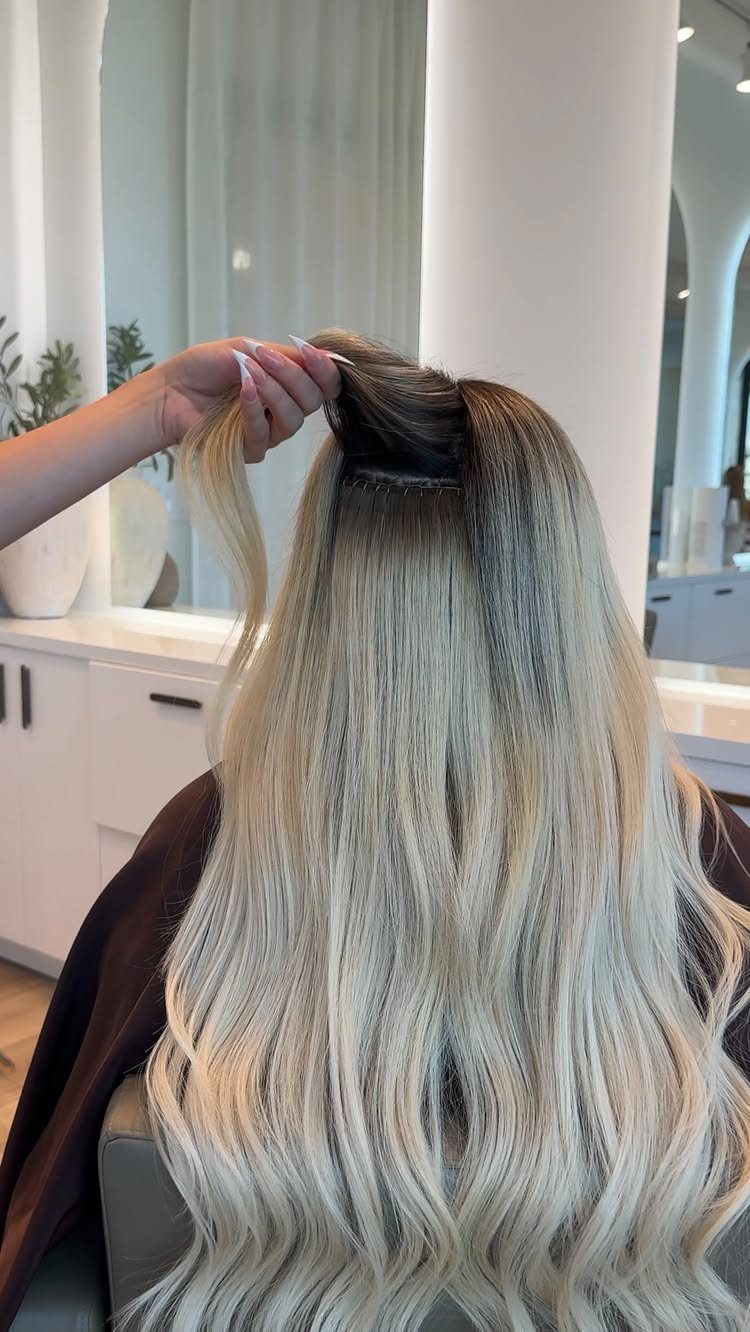
Extensions add length and fullness in one step, and with icy blonde they let you try the pale shade over dark roots without bleaching your own hair from top to bottom.
That is why I’d consider them if you want the look but worry about condition.
Ask the stylist to color-match the extension to your lightest lengths so the join disappears.
Tracks sit right against the roots, so that is where a blend has to be invisible, and a root smudge that matches your natural level hides the join best. Bring a photo of the length you want.
22. All-over Ice Blonde
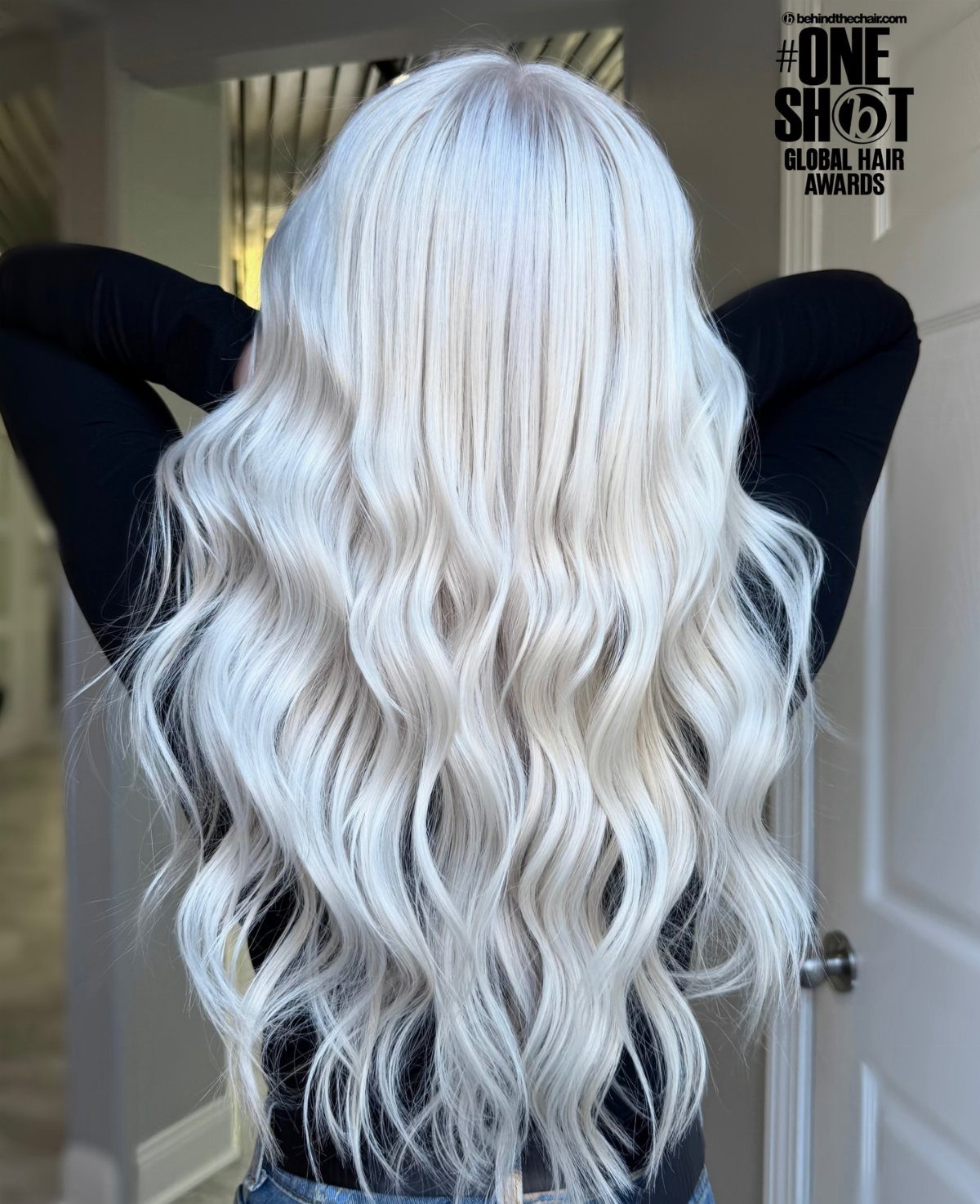
All-over ice blonde means every strand carries the same pale shade, with no gradient and no dark section to break it up. On long waves, the color looks like a single bright sheet moving as the hair does.
It asks for the most lightening of any approach here, so I’d have your stylist check your hair’s condition first. Plan on regular toning visits, because regrowth and any yellow show quickly on a color this even.
23. Ice Blonde Curls
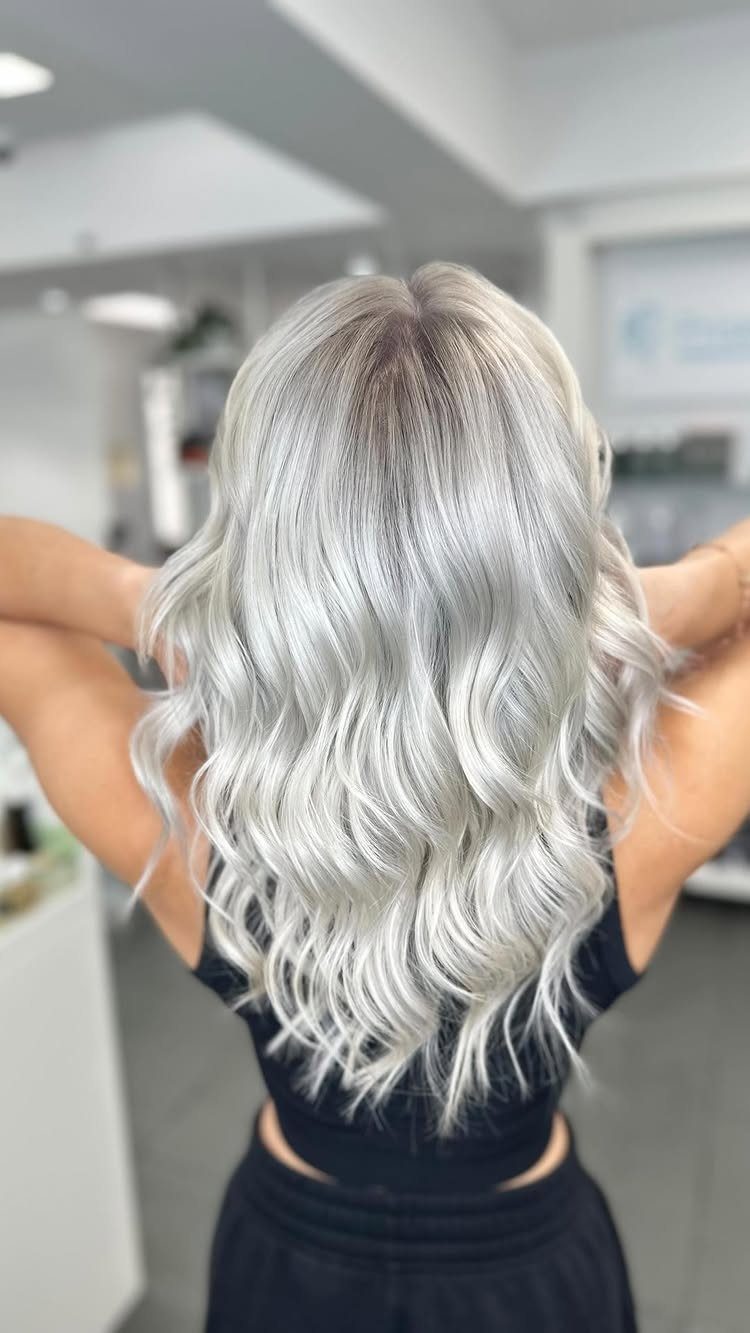
Platinum curls give icy blonde more surface to catch light, so the color looks dimensional even though it is one pale shade. Each curl bounces brightness back, which can make the tone feel fuller.
Curly texture can run dry after heavy lightening, so I’d tell your stylist your curl pattern and ask for a plan that protects it. Bring a photo showing the curl size you want, and expect upkeep to include regular conditioning.
24. Long Icy Blonde Waves
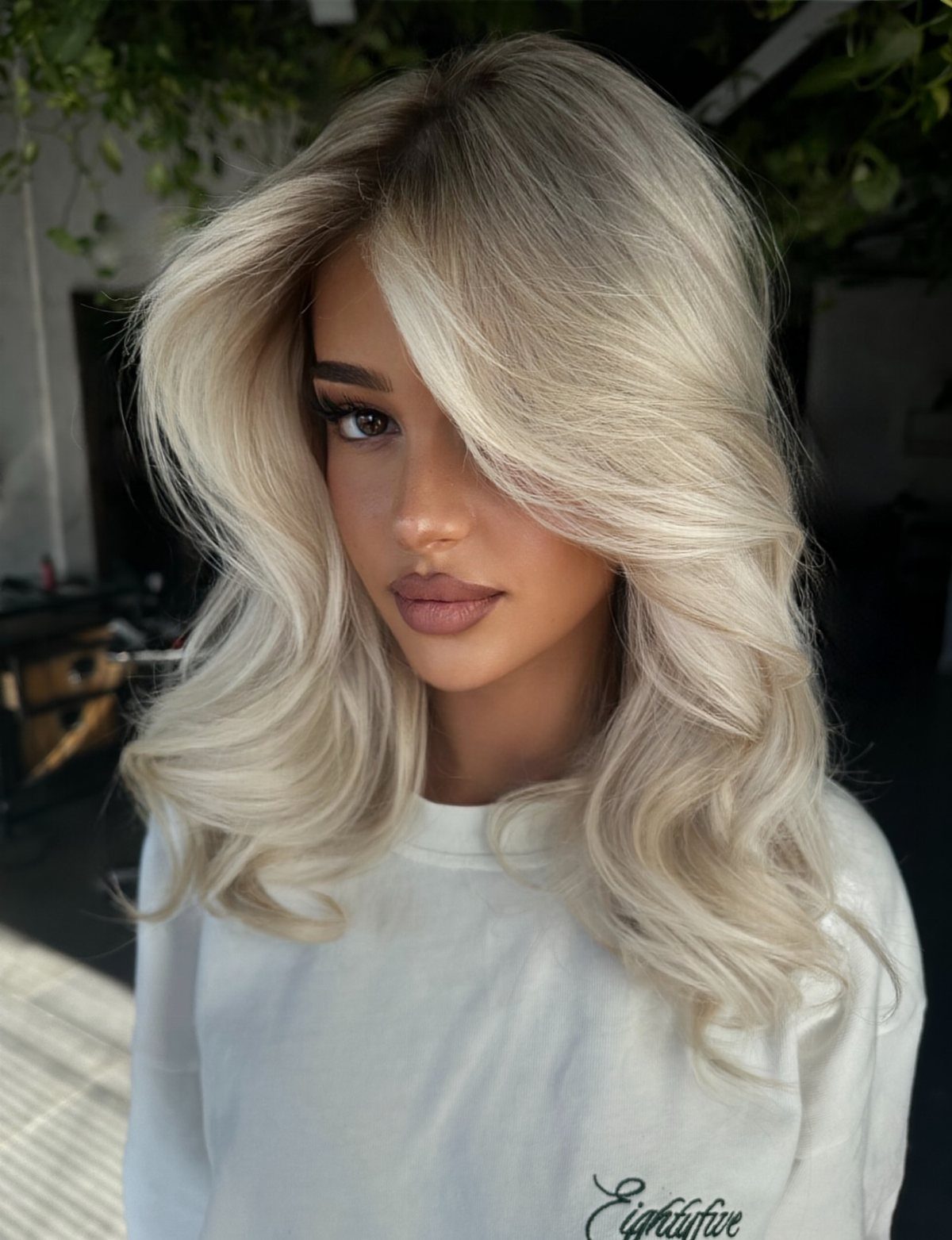
Long, very pale hair in loose waves has a soft, airy volume that straight lengths can’t match. The cool blonde looks lighter where the waves lift, and the movement keeps the color from feeling flat.
For the finish, I’d curl in alternating directions with a large barrel, then brush the waves out gently so they relax into one flowing shape.
Expect the styling to add time each morning, so decide if you’d rather do it daily or save it for special days.
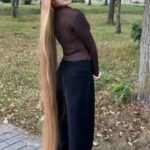
25. Long Straight Icy Blonde
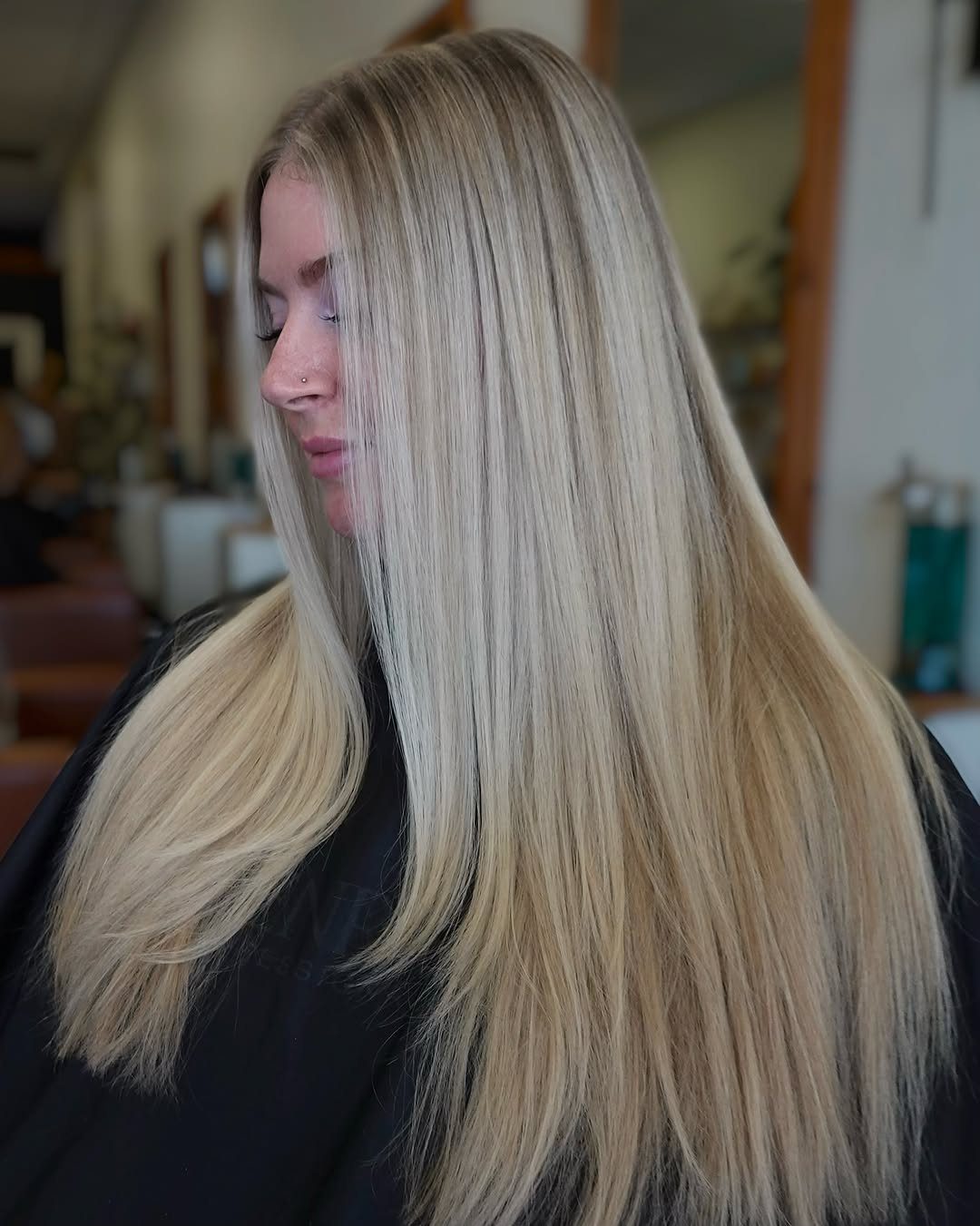
Straight, very pale lengths show the cool tone more plainly than any wave or curl can. With no texture to break up the color, every inch reads as one clean, light sheet.
Sleek hair also shows yellow and uneven toning immediately, so I’d plan on regular toning visits to keep the shade icy.
Before booking, have your stylist look over your hair’s condition, because getting this much length to icy blonde puts real strain on it; a photo helps, but strands that can’t take the lift will decide the plan.
26. Shoulder-length Icy Blonde

Cut at the shoulder and worn straight, icy silver-blonde has a tidy, finished outline that takes no styling skill to keep in view.
The length is short enough to cut down on how much bleached hair you have to look after.
I’d choose this over long platinum if you want the cool color without the upkeep of a full length.
Ask for a blunt line at the shoulder and a silver-leaning tone, and bring a photo so your stylist matches the shade.
Preparation and Bleaching
If your hair is brittle, dry or over-processed, start a moisture-rich treatment at least 2 weeks before bleaching. A leave-in cream on top of that helps hold protein and hydration levels, so the strands go into the lightener stronger.
Your hair’s history changes the plan. Past color, perms and frequent heat styling all affect how hair takes bleach, so tell your stylist everything.
A strand test tells you how far your hair will lift in a single session, and whether it needs extra protection before you commit the whole head.
Dark or previously colored hair may need several sessions spaced weeks apart, so book with a professional and leave time to reach the shade rather than forcing it in one day.
Toning and Color Upkeep
Bleach alone rarely gets you to icy; once hair lifts to a level 10, a toner is what pushes the pale yellow toward cool. Bleach exposes the warm pigment underneath, and that shows up as yellow or brassy.
A blue or violet toner cancels that warmth, and a purple mask does the same job between visits. At home, a purple shampoo and conditioner once a week keeps the yellow from creeping back.
A gloss can bring back shine and tint between salon appointments. It won’t replace lightening and toning, though, so if the base has gone yellow, the fix is a proper toner, not another gloss.
Once you’ve reached a level 10 blonde, you’ll likely need to tone your hair to achieve that cool, icy finish.
Bleached Hair Care
Skip heat styling, tight hairstyles and frequent washing while it recovers, and lean on leave-ins and nourishing treatments for hydration and repair.
Swap your regular shampoo for a sulfate-free one, since sulfates strip toner and moisture fast.
It protects color better and helps keep the cuticle smooth and sealed. A bond-repairing shampoo and conditioner pair is worth the swap for strengthening color-treated hair.
Washing 2–3 times a week in lukewarm water is an easy rhythm to keep. When you do use heat, apply a protectant first and keep the setting low.
Frequently Asked Questions
What color is icy blonde hair?
Icy blonde is a very pale, cool blonde built from white and silver with touches of blue or violet.
It reads like snow or frost instead of gold. The warmth has been lifted and toned out, so the shade looks cool all the way through.
Is icy blonde the same as platinum blonde?
No. Icy blonde is cool through and through, leaning on white, silver, violet and blue, while platinum can stay more neutral and keep a hint of warm beige or yellow.
Classic platinum is one even, all-over pale shade, which is why any yellow shows up fast. If you want the colder result, I’d say "icy" to your stylist and bring a photo.
What’s the difference between ash blonde and icy blonde?
Icy blonde is the brighter one, close to white with a silver sheen. Ash blonde uses darker ash tones, so it looks grayer and smokier, and the roots usually stay deeper for a lived-in feel.
Stylists hear "ash" in different ways, so a reference photo paired with words like "smoky" or "gray-leaning" gets you closer to the shade you picture.
How do I prep my hair for bleaching to icy blonde?
Hair that feels dry, brittle or already over-processed needs about 2 weeks of rich conditioning before bleach touches it, with a leave-in cream between washes.
Be upfront with your stylist about old box dye, perms and how often you use hot tools; each one changes how your hair lifts.
How often should I see a professional for icy blonde?
Every 6–8 weeks is a common recommendation, for toning, trimming damaged ends and root touch-ups.
The lightening itself belongs in a salon too, especially if your hair is dark or previously colored. Rooted and ombré versions hide regrowth better, so those visits can feel less urgent.