White blonde spans dark rooted waves that grow out invisibly to platinum pixies that need a purple shampoo every few days.
The choice turns on how often you can sit in the chair: dark roots or a white blonde balayage grow out softly between visits, while an icy white blonde shows brassiness fast and needs frequent touch-ups.
A shaggy bob in white blonde is the cut people tie to Taylor Swift, and thin silver lowlights threaded through waves add shadow without hiding the pale base.
1. Dark Roots
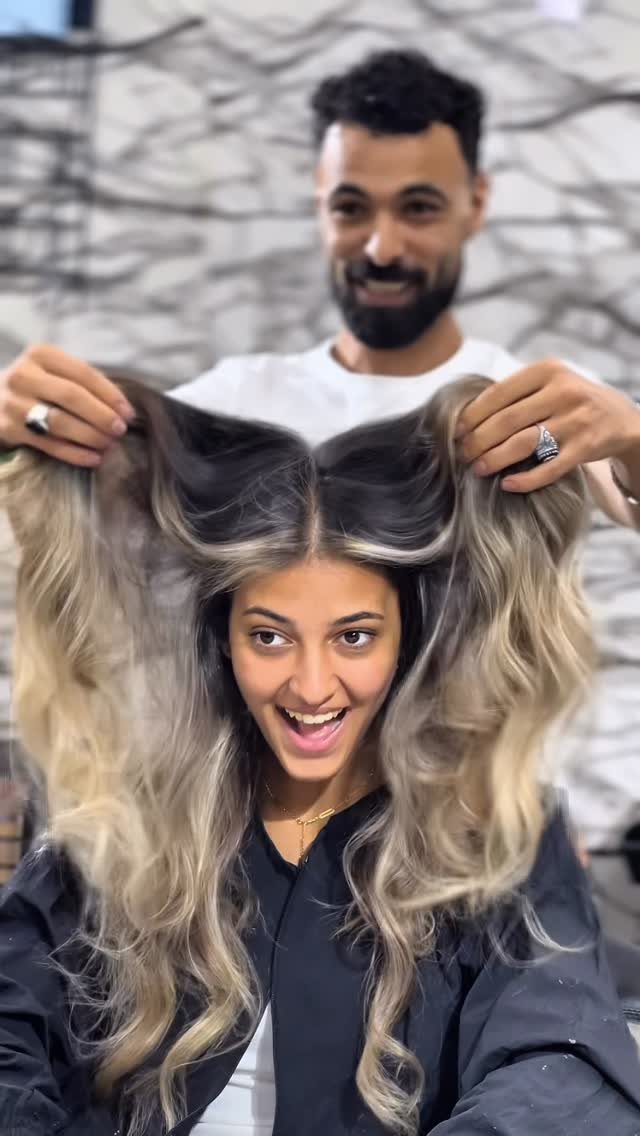
Pale blonde lengths look sharper when the root stays dark, because the contrast gives the color a frame. On long, loose waves the effect is soft and lived-in rather than stark.
I like this version for anyone who dreads the regrowth line.
A dark root simply becomes the design, so there’s no panic when new growth appears. Point out exactly where the dark should stop and the pale should begin.
2. Layered White Blonde
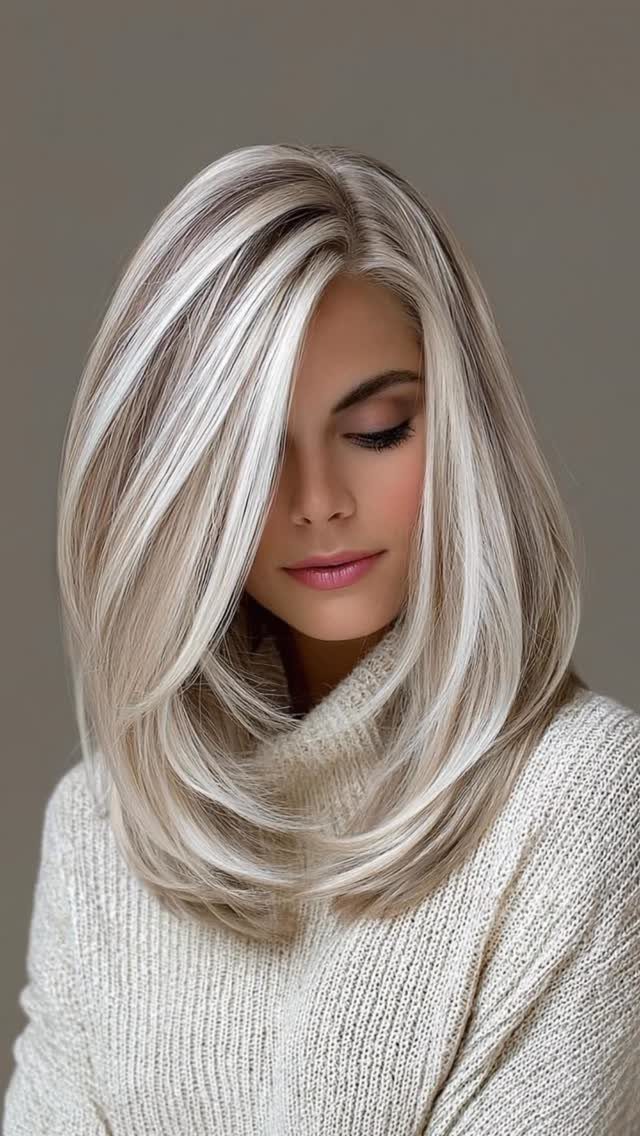
Soft layers do a lot of work on long white blonde hair, since pale color can look flat when it all falls at one length. Cut around the face, they add movement and keep the icy tone from looking heavy.
I’d ask for layers that start near the cheekbones and blend gradually, not choppy steps. Save a photo to your phone before the appointment so the stylist can see how much face-framing you want.
3. Side-swept Blonde Bangs

Heavy bangs swept over one eye give long white blonde hair a moody, slightly dramatic edge. They hide part of the face, so this is a look for someone comfortable with a bit of mystery.
Ask for the bangs cut long enough to sweep to one side instead of sitting straight across.
Expect to push them back now and then, because they will drift into your eye. Trimming them in the weeks when you’re not at the salon keeps them from getting unmanageable.
4. Blonde with Curled Ends
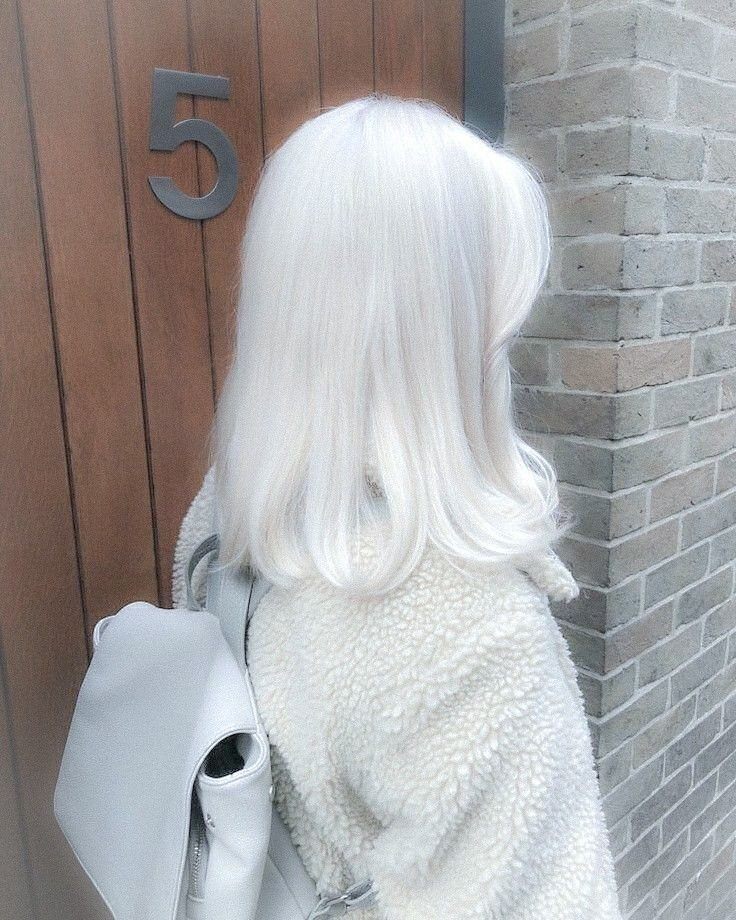
Straight, smooth pale blonde with the ends turned under looks tidy without much fuss. At shoulder length, the curl at the bottom gives a finished edge that a flat-ironed look lacks.
I prefer this to a full curl set because the shape stays simple and the color gets all the attention.
A round brush or a flat iron turned inward at the ends does the job. Ask for the ends to bend inward.
5. White Blonde Shaggy Bob

A tousled shaggy bob in white blonde is the cut people tie to Taylor Swift, and the logic holds up: the choppy texture keeps pale hair from looking stiff. Messy ends make it forgiving on a bad hair day.
Ask for a bob with lots of internal texture and uneven, feathered ends.
Name the cut and bring a photo so there’s no confusion about how shaggy you want it. Style with your fingers and a texturizing spray.
6. Icy White Blonde
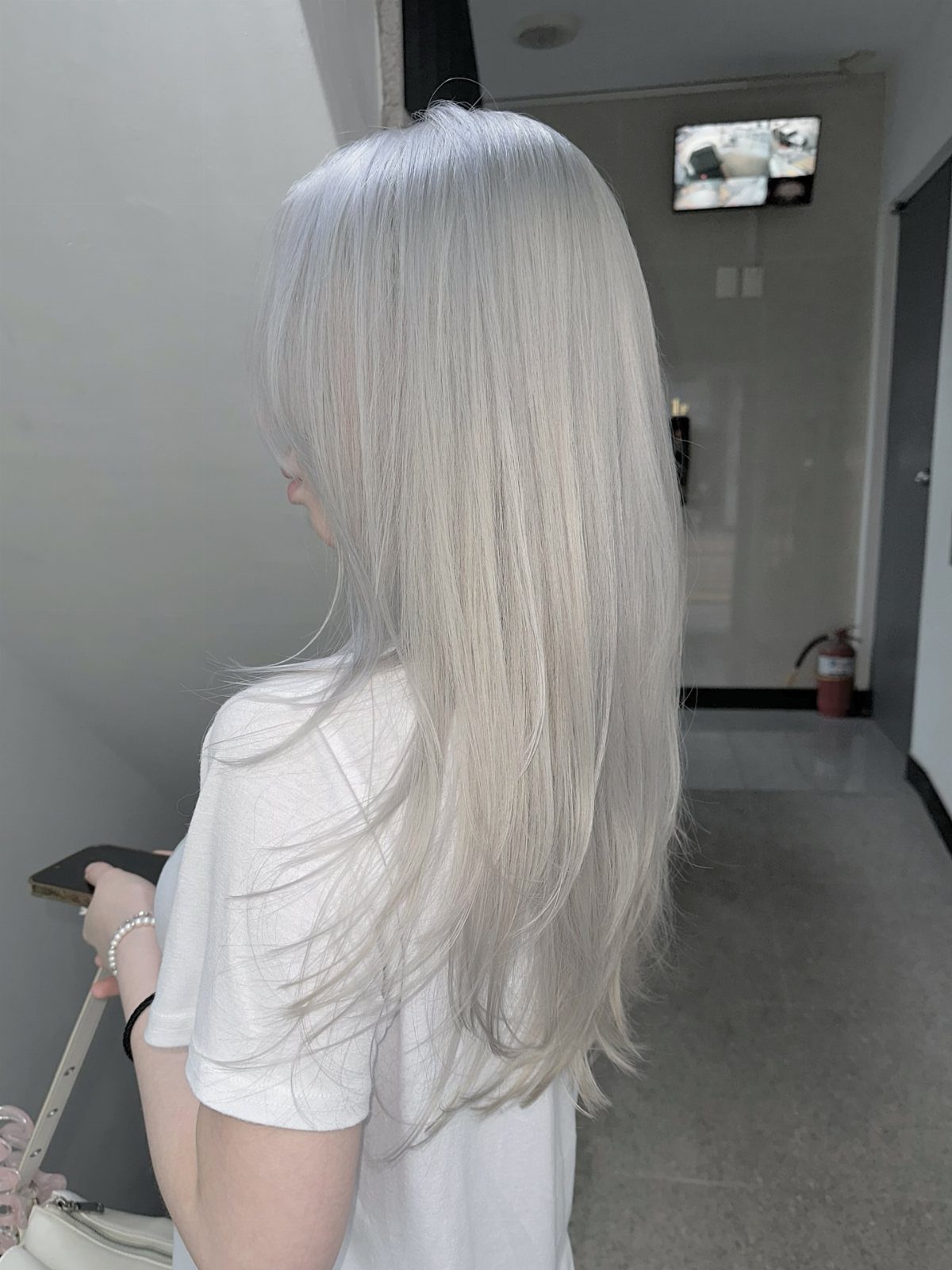
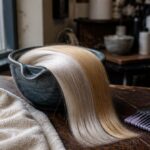
Cool, very pale blonde looks its best when it hangs long and sleek, because a smooth surface reflects light and makes the icy tone read cleaner. Frizz or rough texture would dull that effect.
If you plan to wear this straight, a flat iron is your daily tool, so budget a few extra minutes each morning.
Ask your stylist for a cool, icy finish rather than a warm one. Pale hair this cool is also the kind that shows brassiness fast, so a purple shampoo is worth owning.
7. Long White Blonde Waves
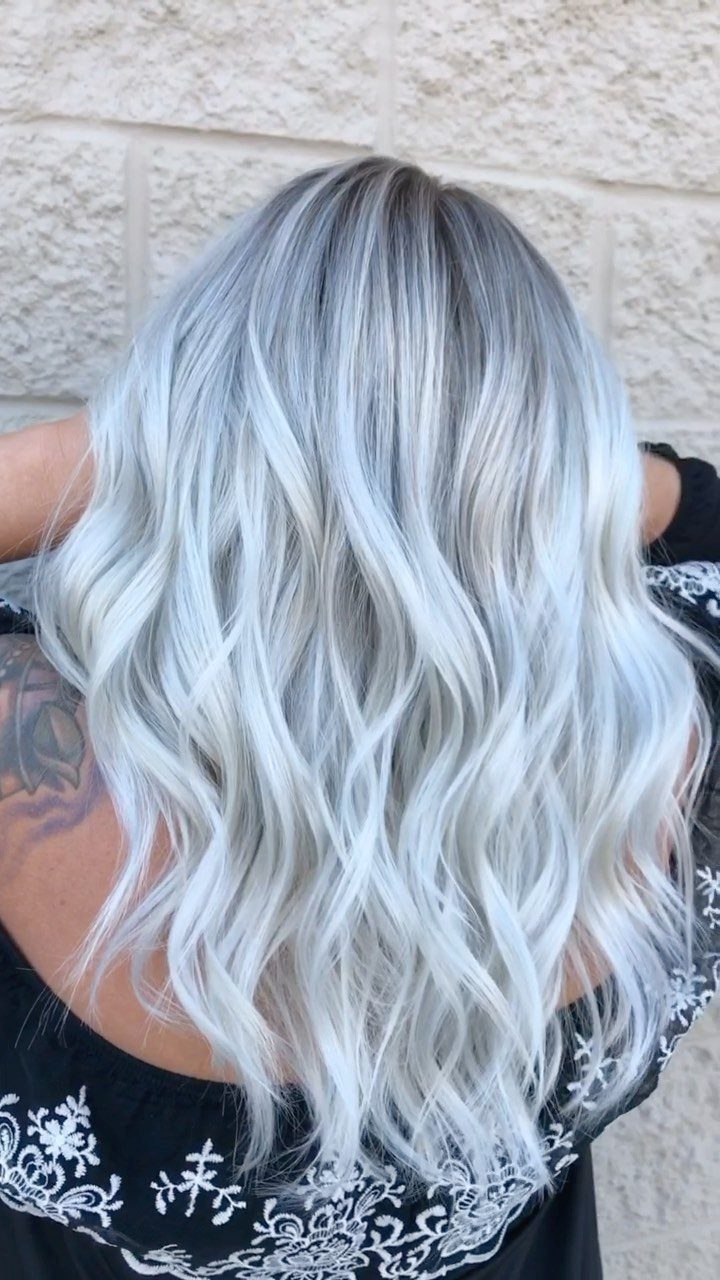
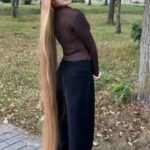
From behind, long loose waves show off length better than any front view can. The darker root under the pale color gives the hair some depth, and the waves stay relaxed enough that the shade does the talking.
I’d pick waves this soft over tight curls. Bring a back-view photo to the salon as well as a front one, so your stylist can see the wave size and the root depth you want.
8. Platinum White Hair

Platinum white with a faint silvery cast looks brighter than most blondes, and volume swept across the forehead keeps all that pale color from lying flat. A wavy bob is a good shape for it.
Say "platinum white with silver undertones" when you book, and skip the word "yellow-free," which means different things to different stylists. A photo of the exact shade settles it.
9. White Blonde Bob
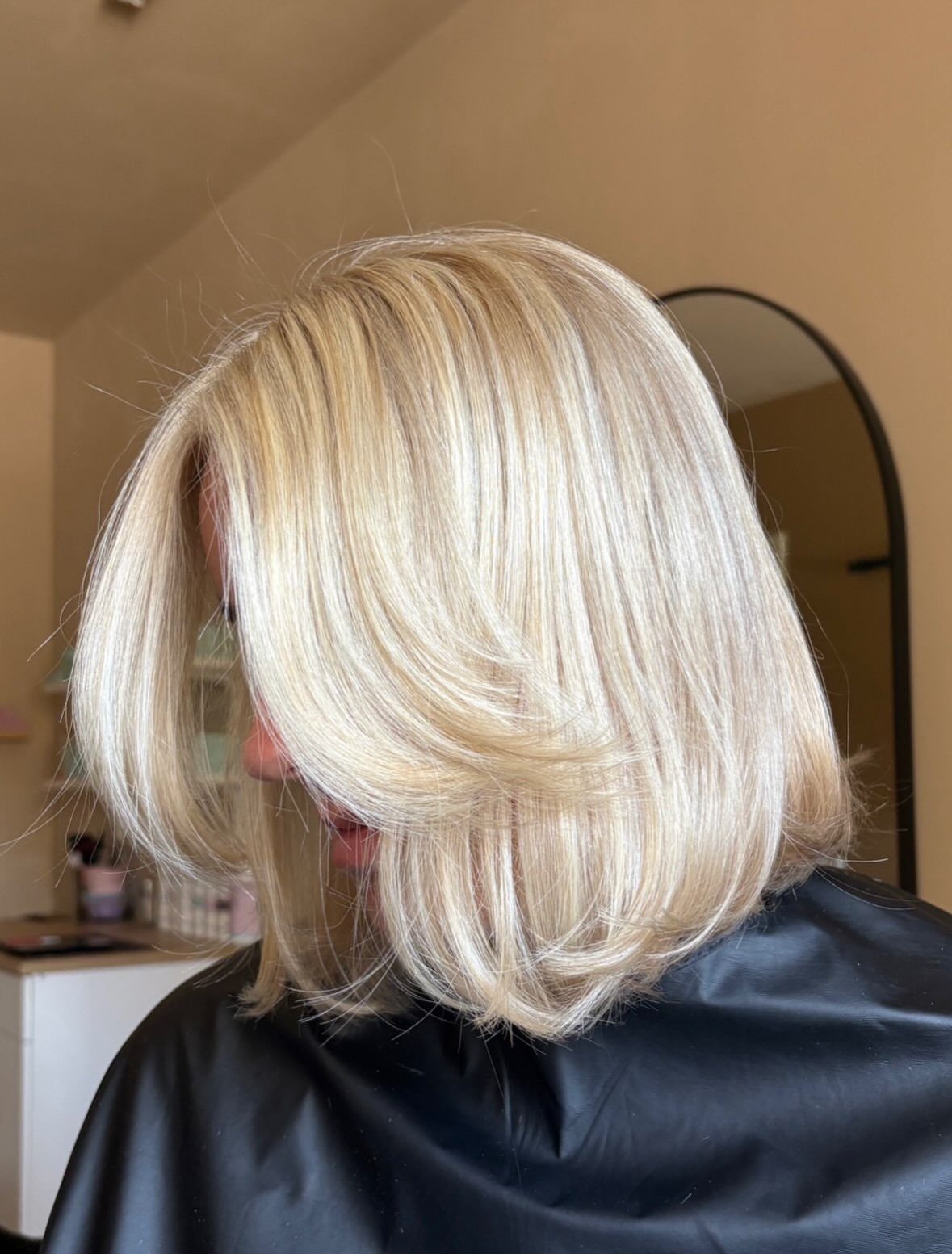
A white blonde bob cut right at the jaw gives the cleanest, most striking line, since the pale color shows every edge of the cut.
Cut sleek, with a side part and the ends curving gently under, it reads polished and keeps the attention on the shade.
I like it for anyone who wants a big color change in a small, simple shape. Ask for an icy or platinum-white tone, and tell your stylist exactly where the length should land on your jaw.
10. Silver-white Ends
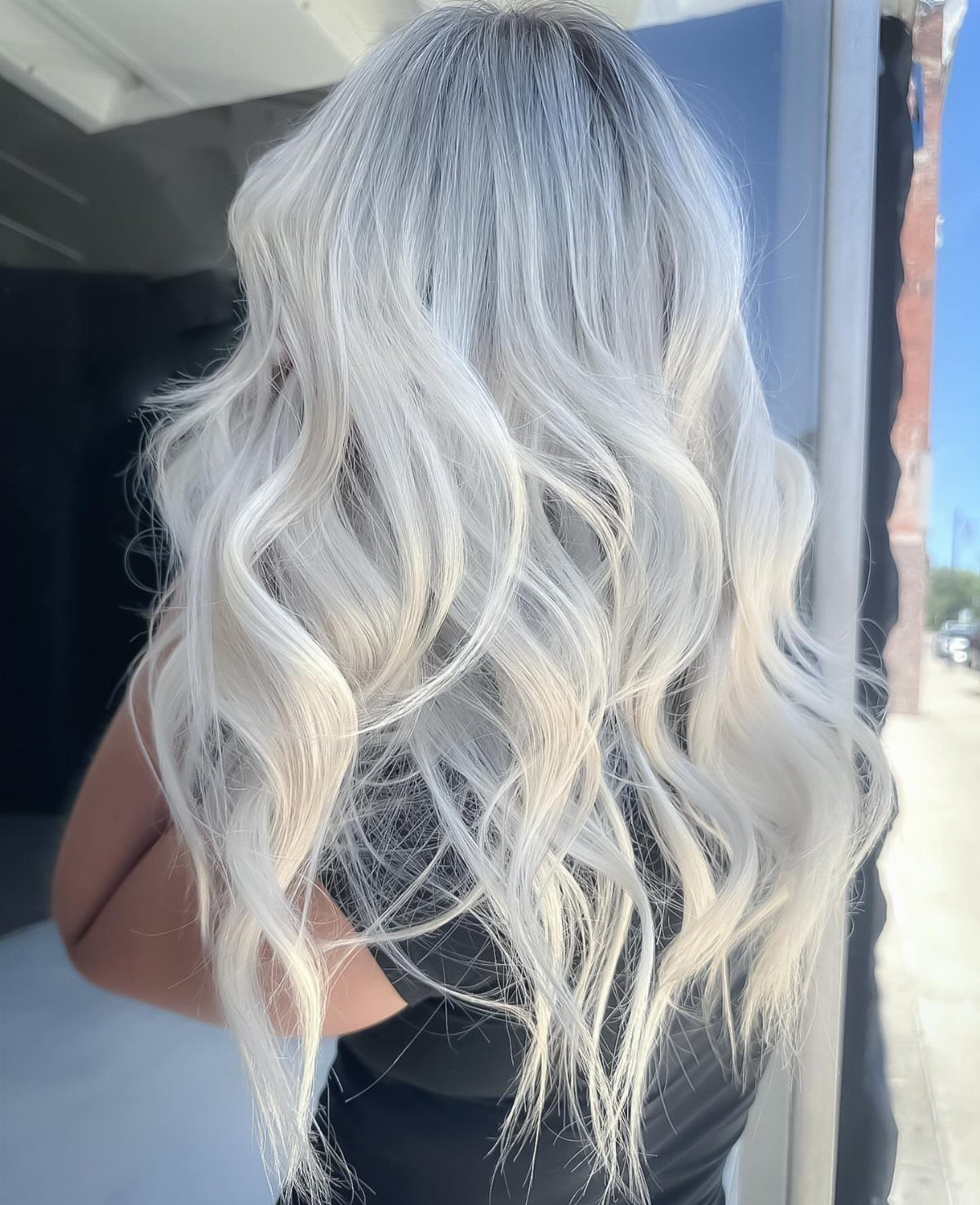
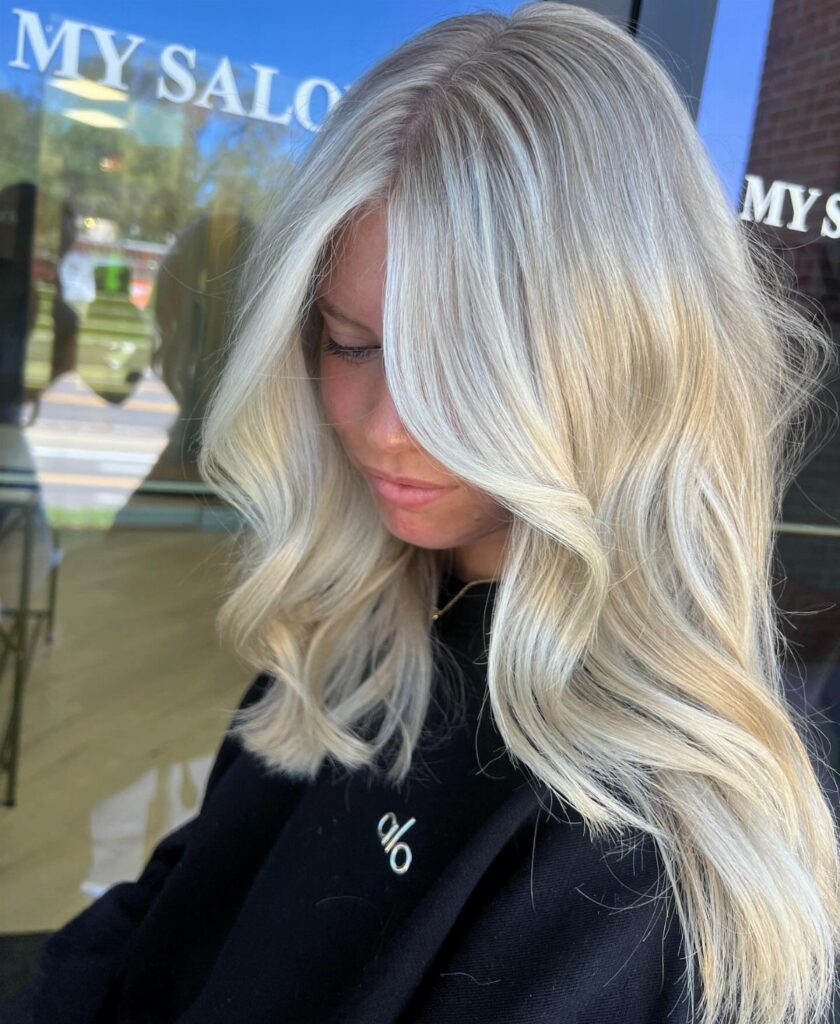
Gray roots melting into silver-white ends make a softer choice than a bright, all-over white. The color deepens toward the scalp, so the line where new growth appears stops mattering.
The word to use at the salon is "fade."
Ask for a gradual blend from gray into silver-white, with no visible band where one meets the other. I’d keep the cut long and wavy, as here, so the gradient has room to show.
11. Silver Lowlights
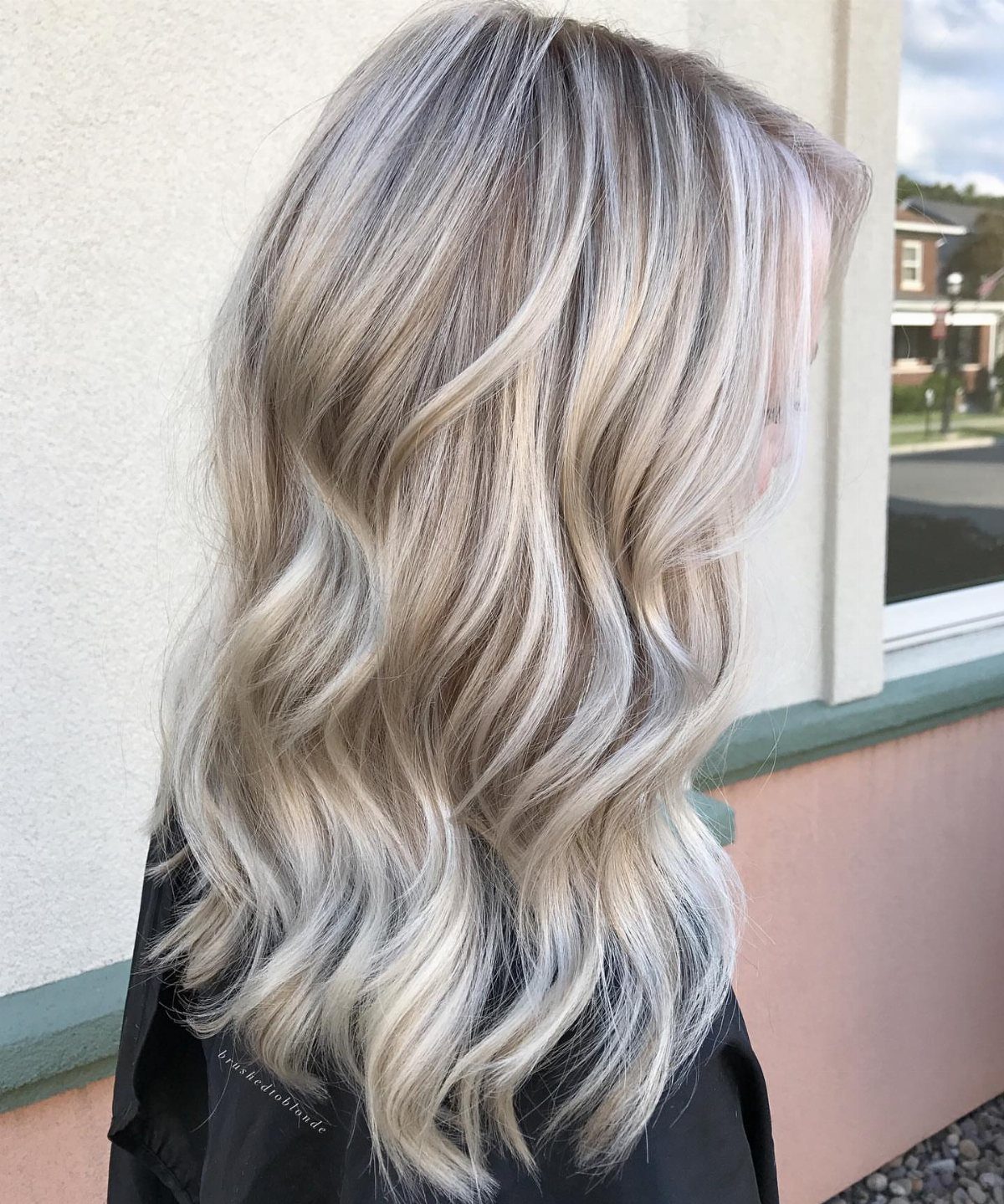
Thin, soft silver lowlights break up a solid sheet of icy white blonde and give the waves more shadow between the curves. The effect is subtle from a distance and rich up close.
Ask for fine silver pieces scattered through the hair, not bold stripes. Wavy styling shows them off best, and I’d bring a photo so your stylist can judge how dark you want them to read.
12. Textured Platinum Pixie
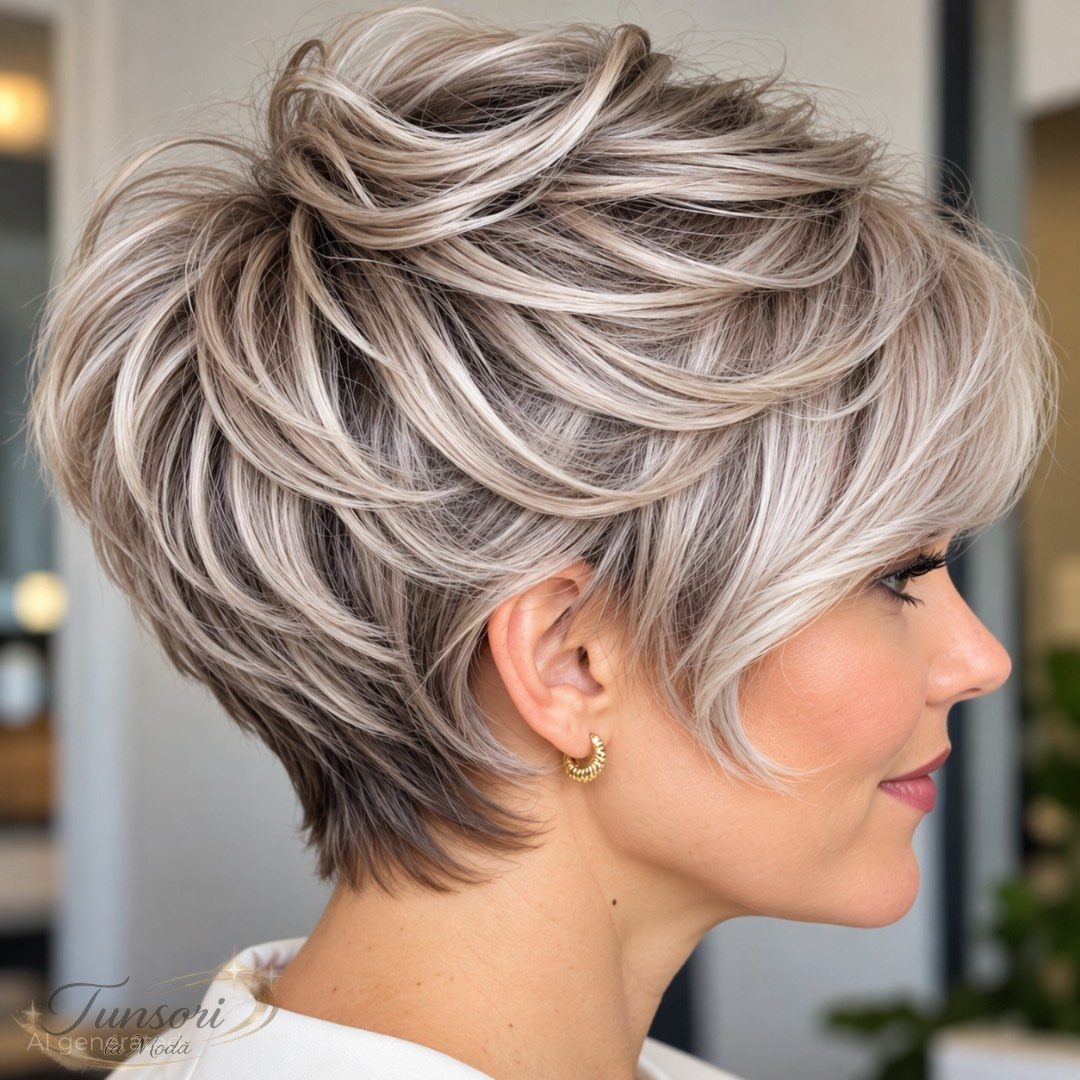
Short platinum hair can still have movement. On a pixie, a tapered nape keeps the back neat while the longer top is left to wave.
Tell your stylist you want texture on top and a close, tapered finish at the nape.
I’d choose this over a blunt pixie if your pale color is the main attraction, because the waves catch the light and keep the shade from looking flat.
13. Nordic Silver Blonde
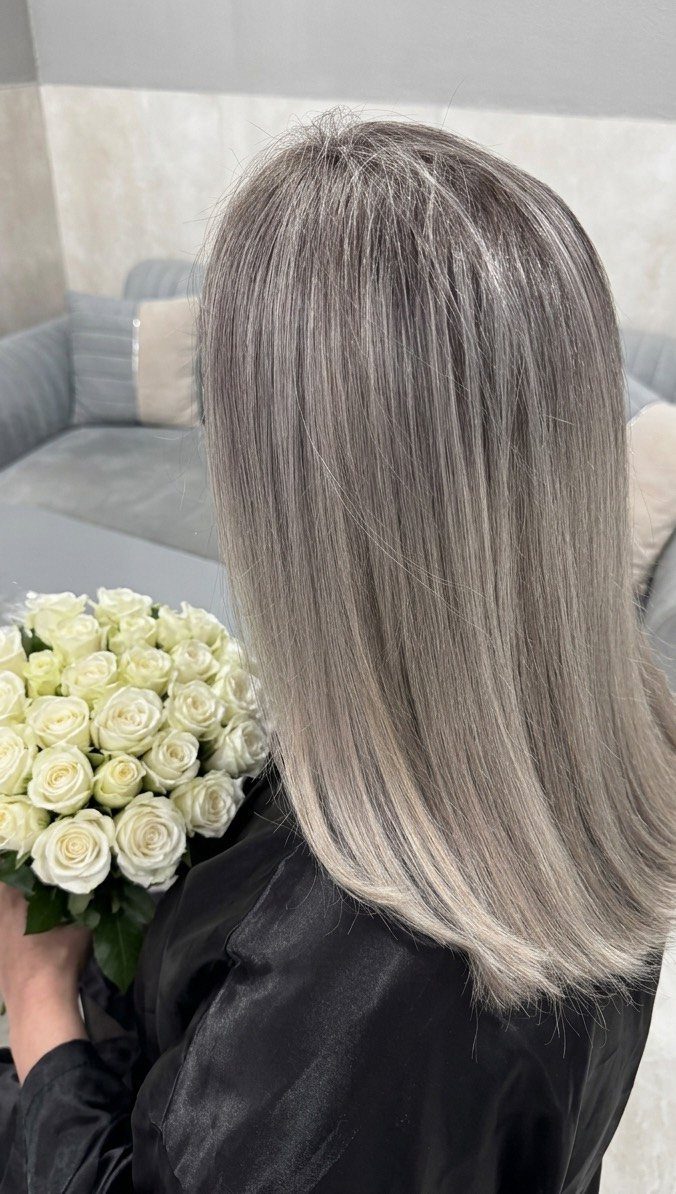
Silver with a Nordic cast looks cooler and quieter than a stark white. Worn long and straight, it hangs like a sheet of pale metal, and the darker roots keep it from looking flat.
I’d say "Nordic silver" at the salon and bring a photo of the exact tone. Straight hair shows the shade best, so a flat iron earns its place in the morning.
14. Center-parted Platinum
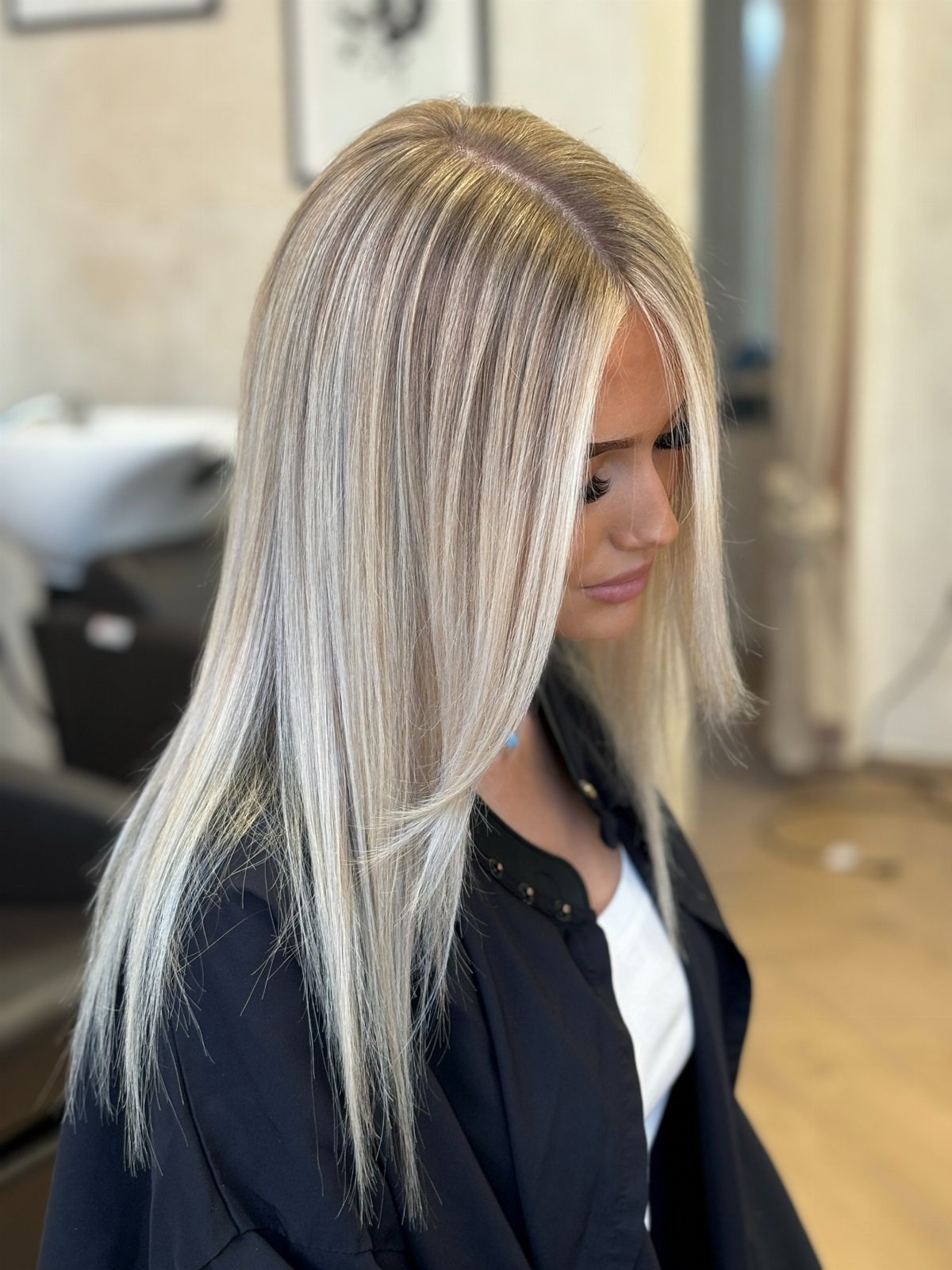
A sleek center part is the detail that makes long platinum look deliberate. Parted dead center, the hair frames both sides of the face evenly, and straight lengths past the shoulders let the pale color read as one clean line.
A sharp center part and a glassy, smooth finish are what make this platinum look read as polished, so say both to your stylist by name.
I’d pick this over a side part if your features are fairly symmetrical, since a center part leaves nothing to hide behind.
15. Icy Blonde Highlights
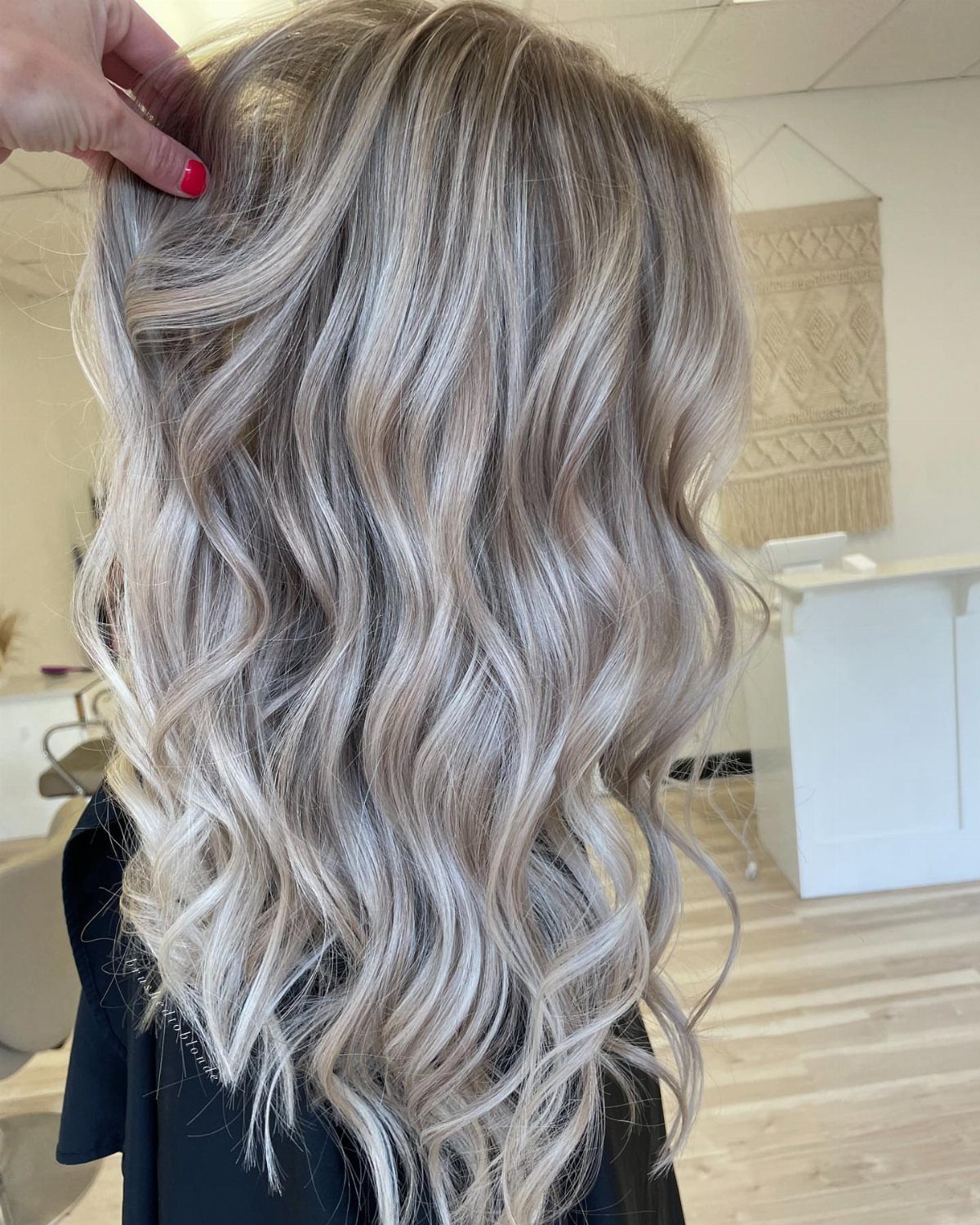
Icy white-blonde highlights against darker roots give shoulder-length waves more contrast than a single all-over shade would. The dark base keeps the look grounded, and the bright pieces catch the light wherever a wave turns.
Ask for icy highlights placed through the waves with the roots left darker.
This suits anyone who wants a lighter look without committing to full white. Bring a photo to settle how bright you want it.
16. Peachy Roots
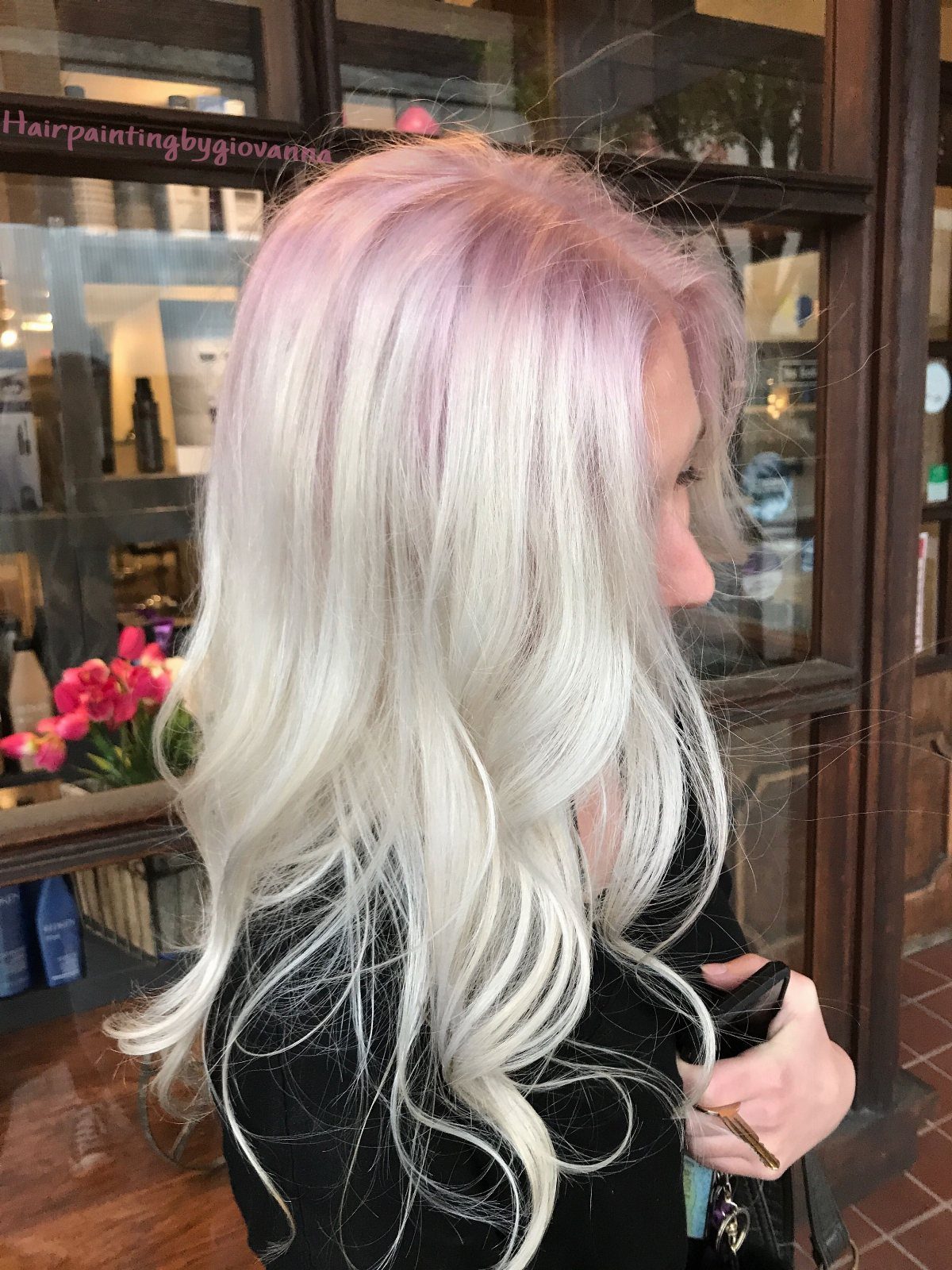
Soft peach at the root changes how cool white-blonde reads: the pale lengths look icier beside a warm blush. It’s a playful twist on the usual dark-root look.
Since the color sits at the top, I’d ask your stylist to blend it softly into the white so no hard line shows.
A photo of the exact peach matters here, because pink-peach shades vary widely from one person’s idea to the next.
17. Charcoal Lowlights
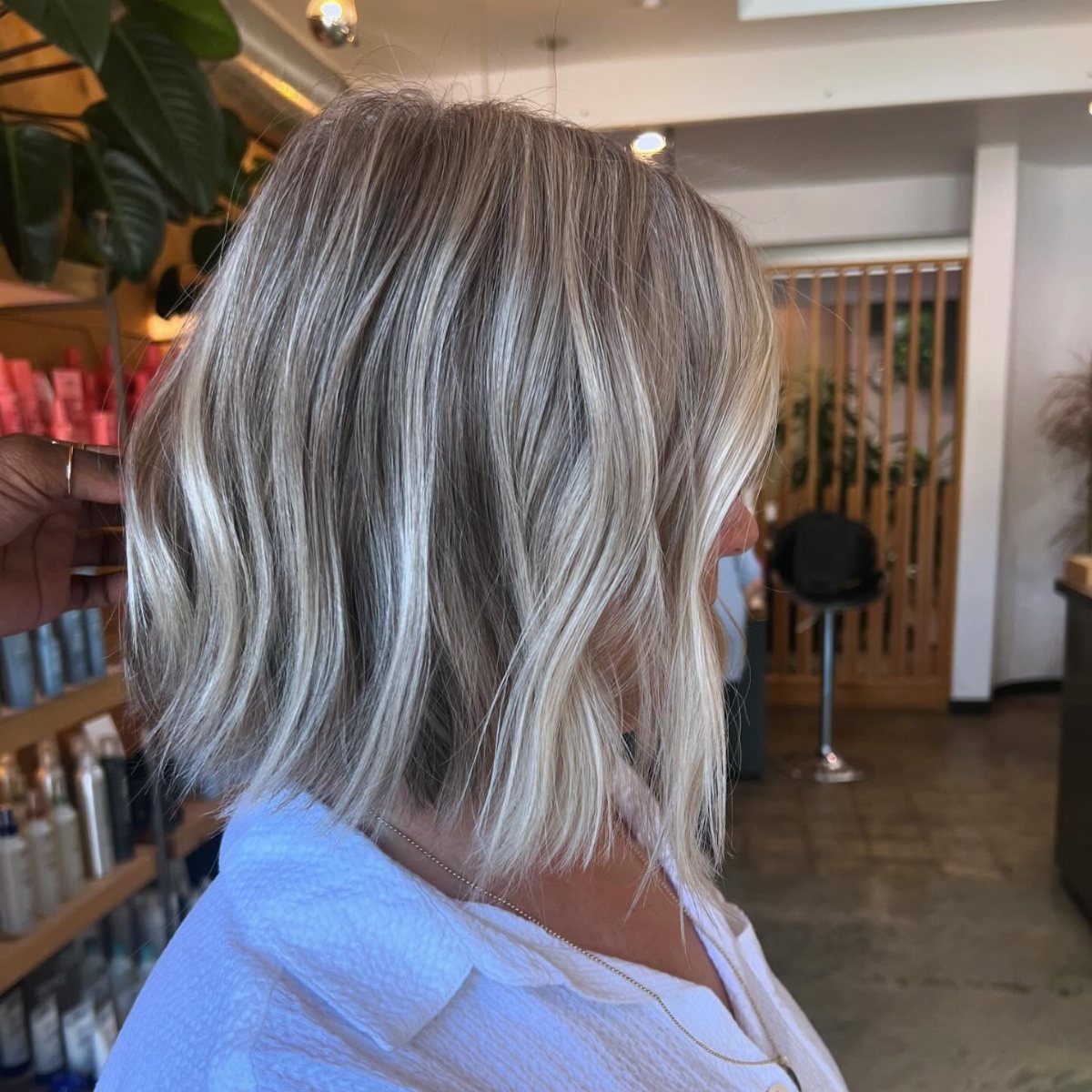
Fine charcoal lowlights threaded through white-blonde lengths add shadow and depth, so straight hair stops looking like a single flat sheet. On a smooth bob, the dark strands read as a delicate pattern.
Ask for thin charcoal pieces, not wide stripes, and tell your stylist how dark you want them. I like this for anyone who finds solid white a little severe but wants to keep the cool tone.
18. White Blonde Balayage
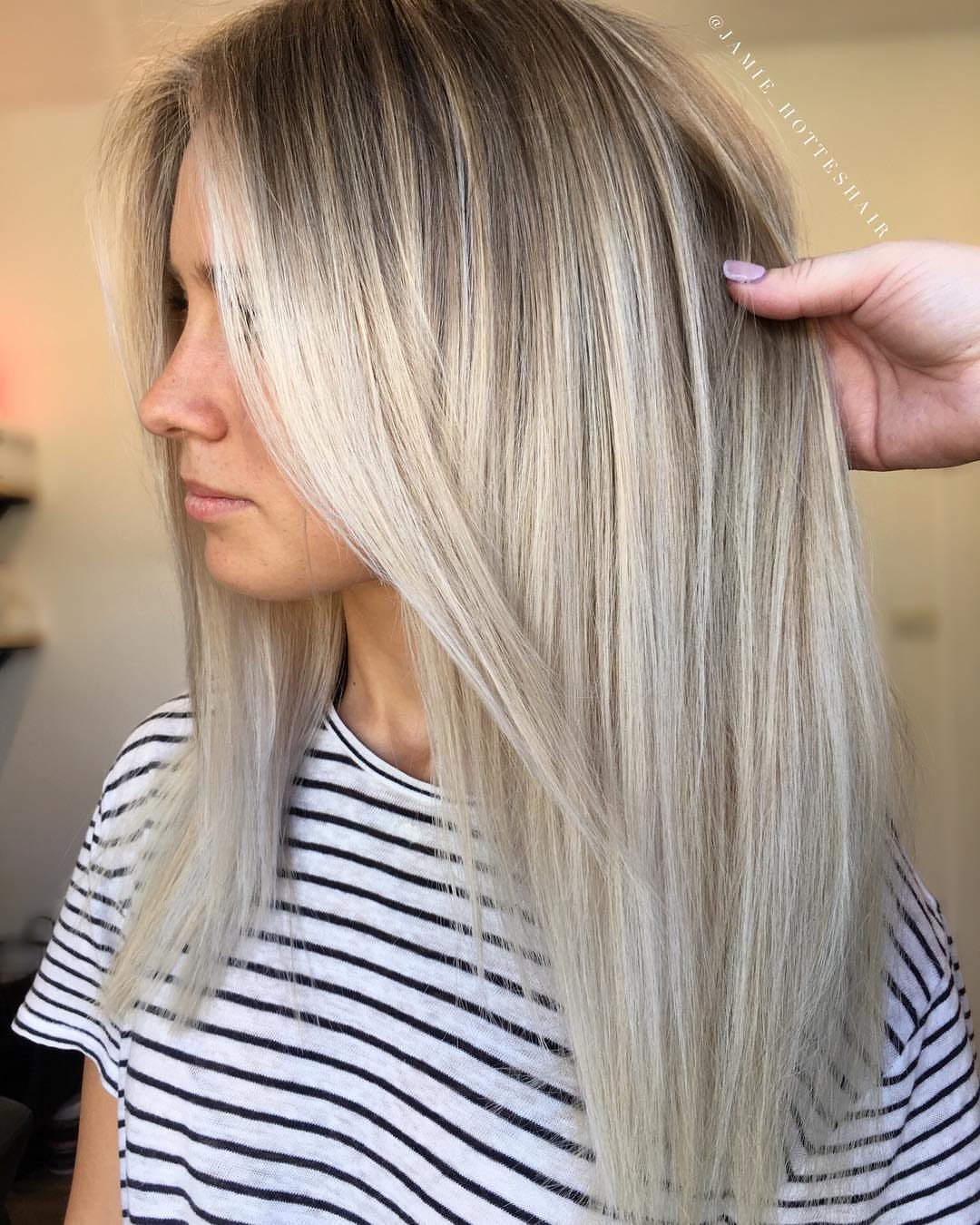
Balayage turns a dark ash root into cool platinum without any harsh line, so the hair grows out gracefully. Long, straight lengths show that gradient best, since nothing breaks up the fade.
Ask for hand-painted balayage that ends in a cool platinum white.
Bring a photo showing how high the dark should sit at the root. Of the white blondes, this is one of the easier ones to live with between salon visits.
19. Wispy Blonde Bangs

Wispy bangs soften a short, layered white-blonde cut, and the feathery fringe lets the pale color frame the eyes instead of sitting heavy over them. Layers on top give the bob some lift.
Ask for thin, see-through bangs, not a solid block, and bring a photo so the stylist knows how sheer you mean. I’d choose this over blunt bangs if you want the face to stay visible.
20. Feathered Blonde Ends
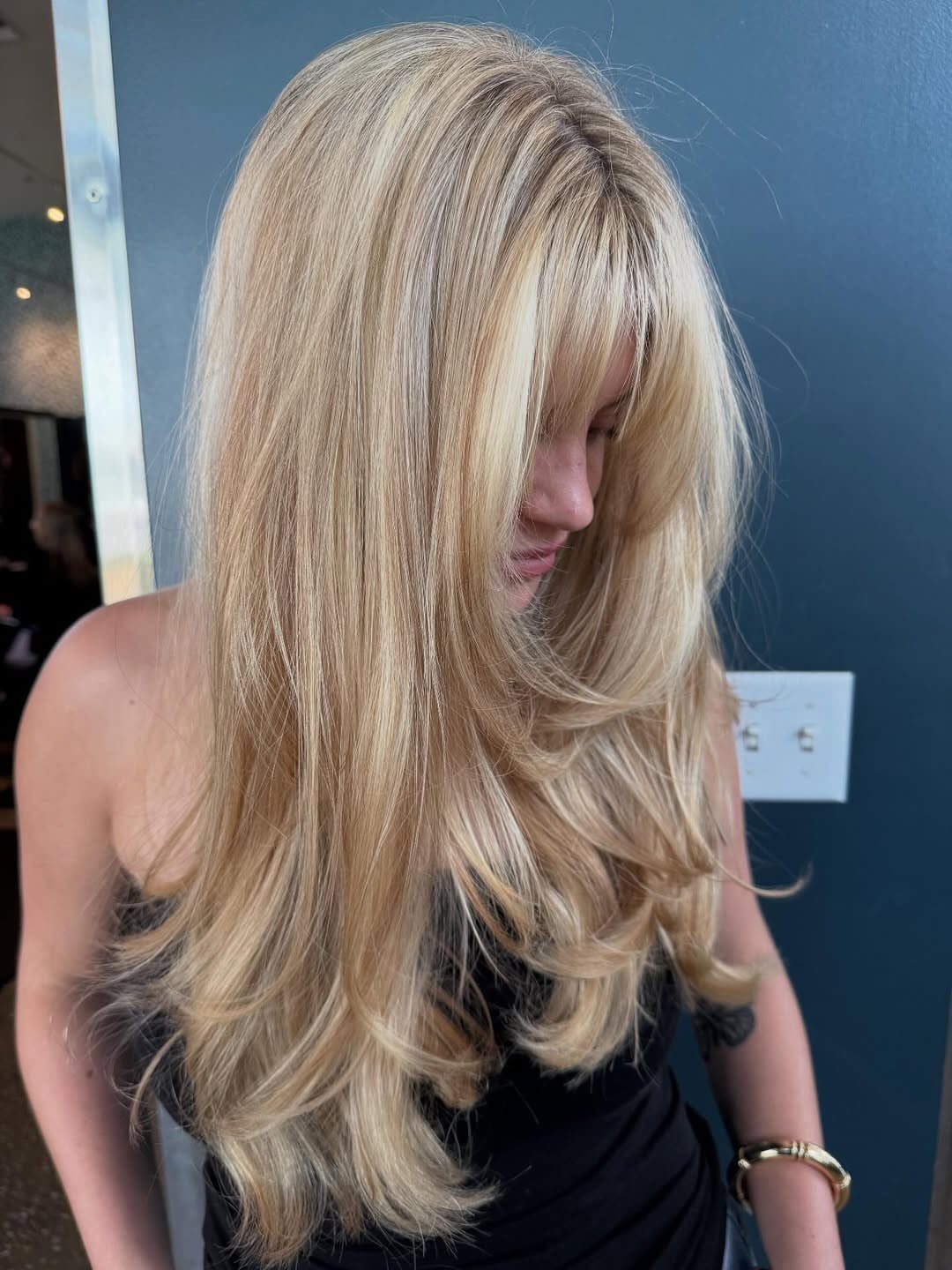
Long icy-white hair with feathered, curled ends reads light and airy, since the ends flick softly instead of hanging in a blunt line. Face-framing bangs on top keep the length from feeling like a curtain.
Ask for feathered layers through the ends and a loose curl, and say you want movement, not tight ringlets.
A curling iron or a round brush does the job. I prefer this to a razor-straight finish when the color is this pale.
21. White Blonde Braids
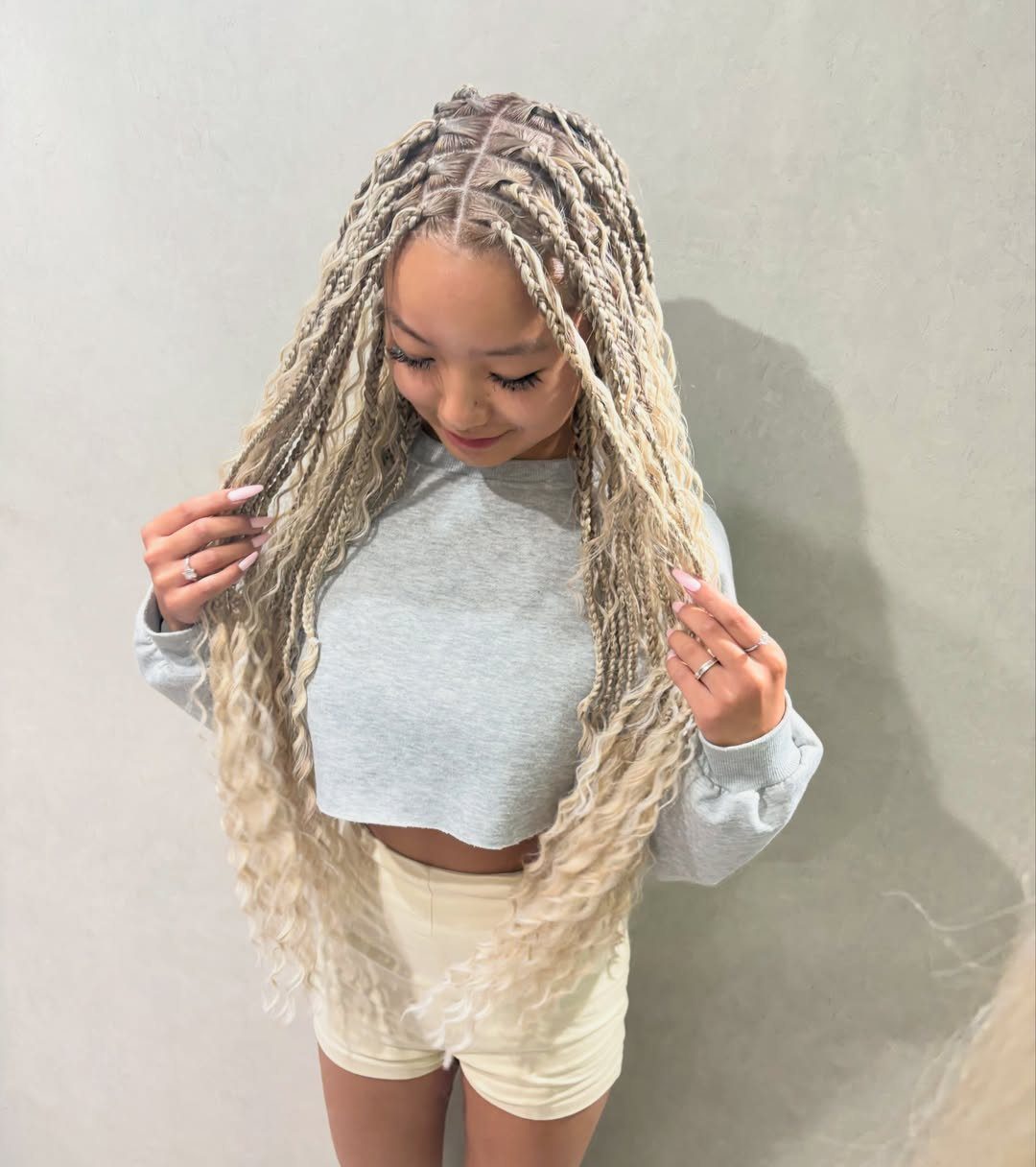
Extra-long braids in bleached blonde turn length into the whole statement, and the loose wavy ends keep them from looking stiff. Pale braids also show every strand of the pattern.
Plan on a long appointment: braids this length take real time to install, so ask the braider how many hours to block out before you book.
I’d pick a shade that matches your own bleach level so the braids and your roots blend.
22. White Blonde Ponytail
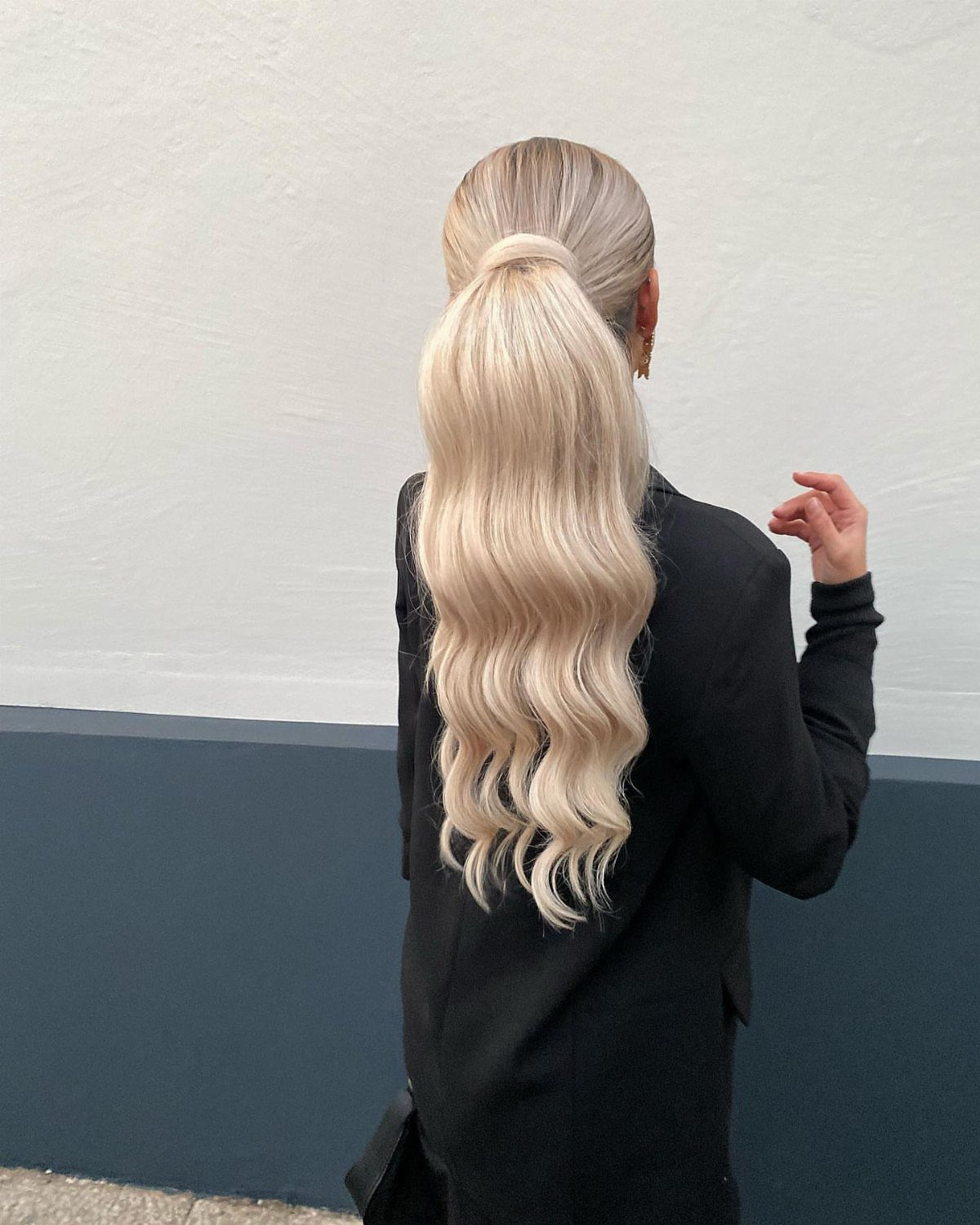
A high ponytail shows off long white-blonde hair from behind, and softly waved ends give the tail some swing. It’s the easiest way I know to wear this color when you have no time in the morning.
Tie it at the crown for the lift seen here, and curl just the last few inches so the tail doesn’t hang limp. Skip a tight elastic if you can; a snug band presses a crease into pale hair.
23. Ocean Blue Sections
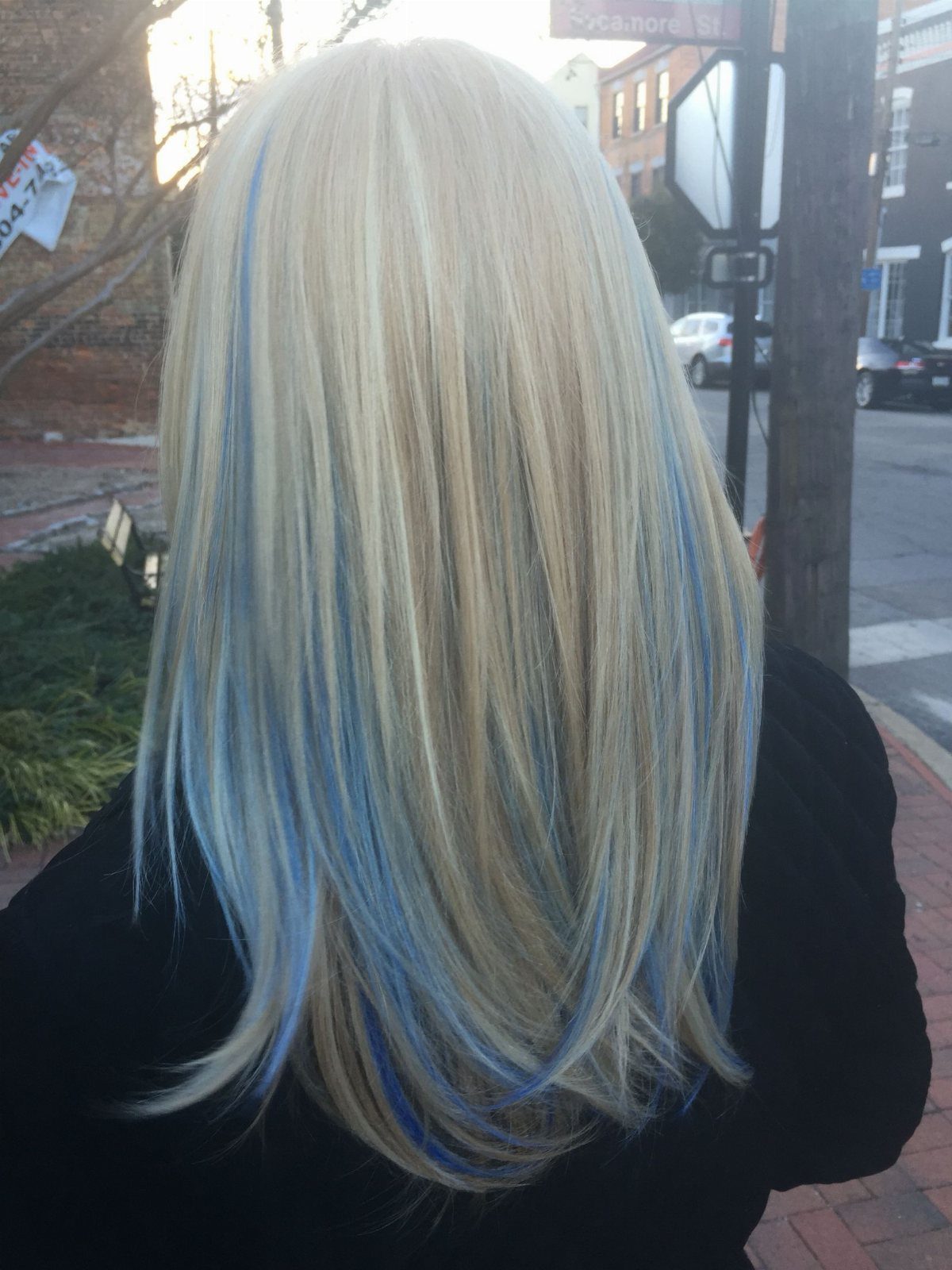
Thin turquoise sections against long, straight icy blonde give a quiet hit of color without covering the white. Because the blue sits in narrow streaks, the hair still reads mostly pale.
Ask for a few fine sections placed underneath or at the sides, and tell your stylist how many you want.
I like this as a small risk, since a handful of streaks is easier to live with than an all-over fantasy color. Straight hair shows the contrast best.
24. Pearl Blonde
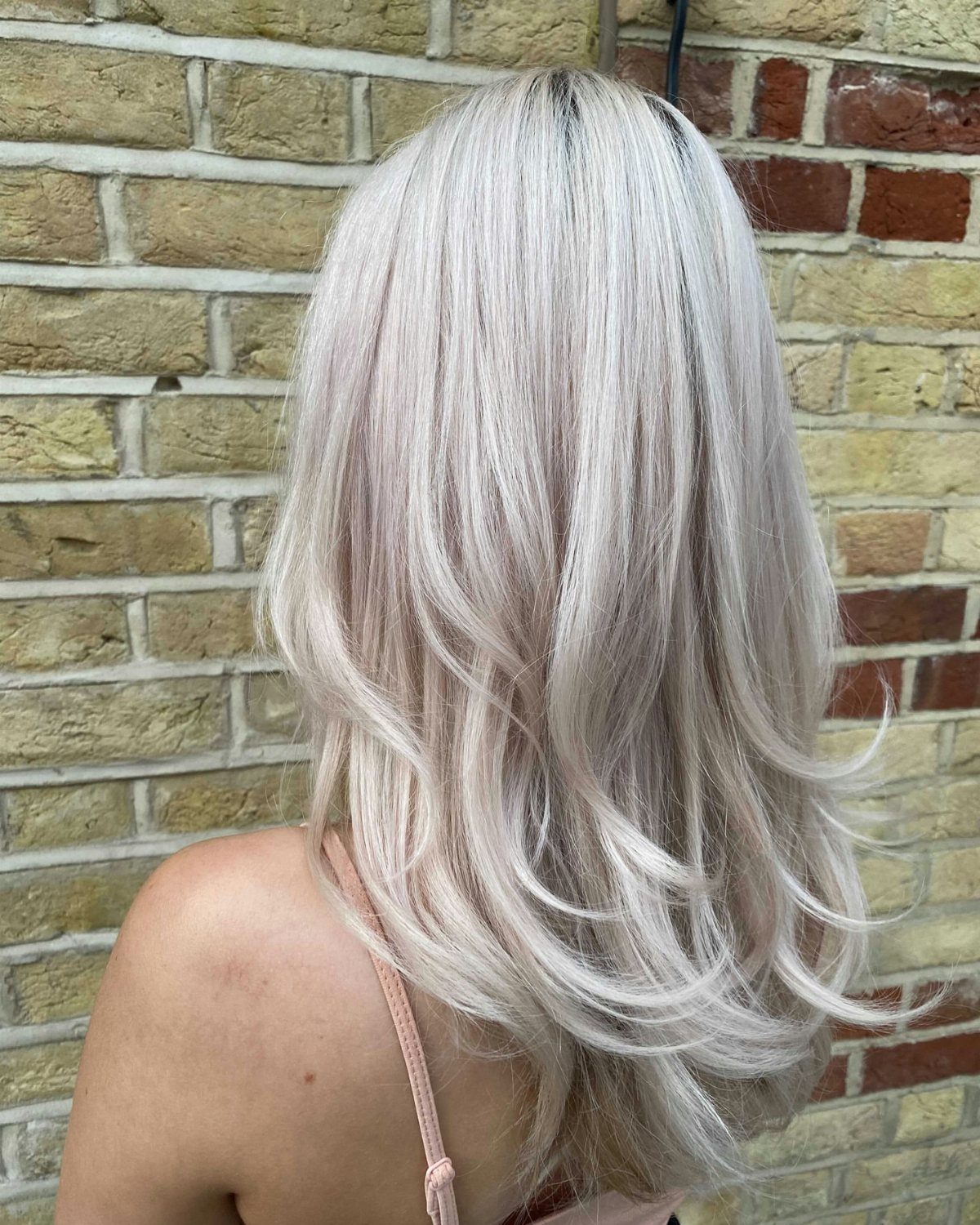
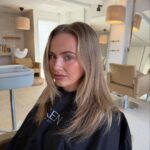
Pearl blonde sits between white and silver, with a soft sheen that looks fresh from the bleach. Long layers falling in loose waves let that glow show without any extra color.
Bring a photo and use the word "pearl" at the salon, since stylists vary on where pearl ends and plain platinum begins.
I’d keep the layers long and smooth, because the shade looks richest when light slides down an even surface.
25. Champagne Blonde
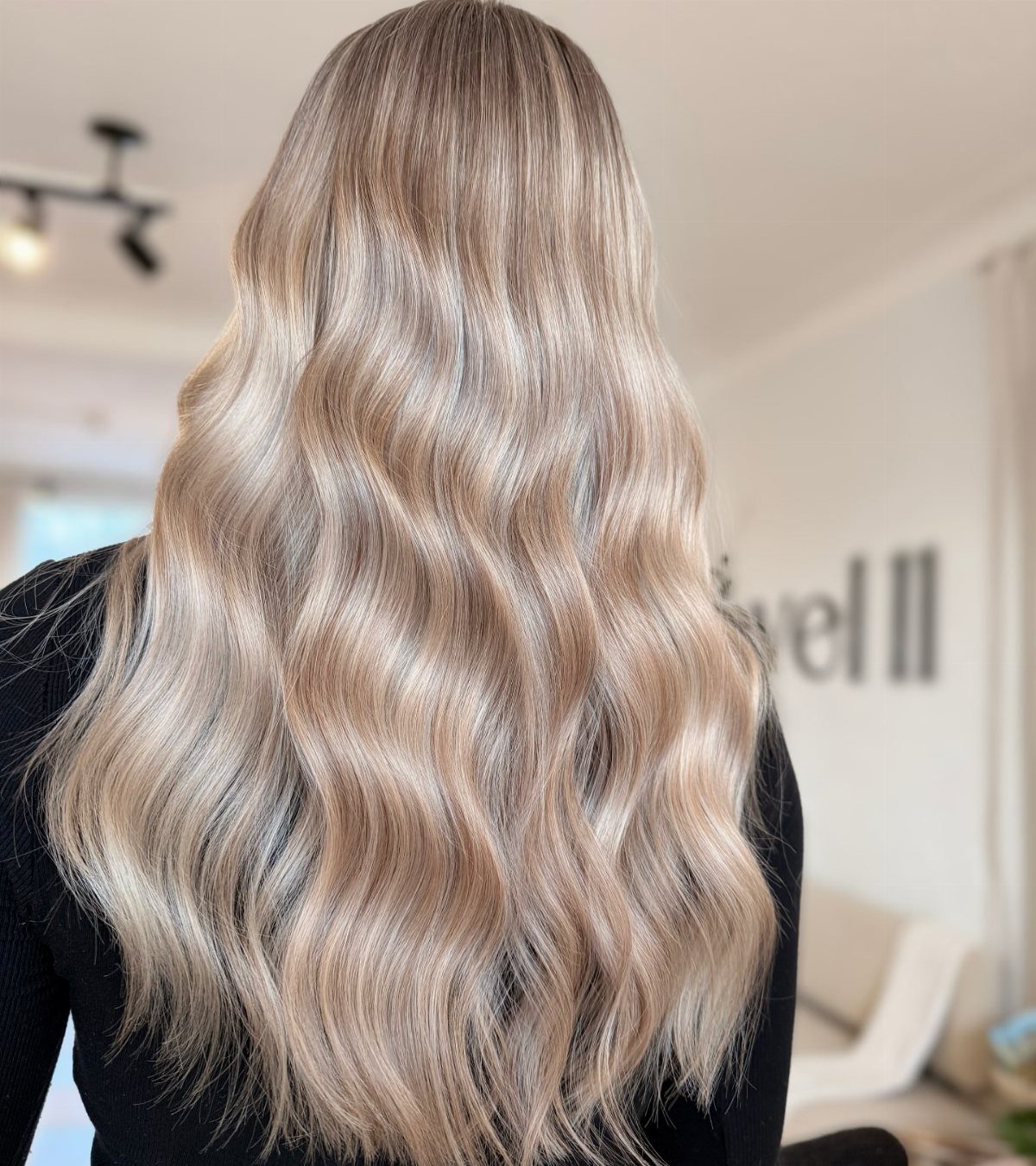
Champagne blonde brings warmth into pale hair without turning it brassy. The tone sits between white and butter, and on long waves the color catches softer, richer light than stark platinum would.
I’d ask for champagne rather than icy platinum if your skin has warm undertones.
Champagne means something different to every stylist, so a photo of the exact shade saves a lot of guessing. Long layers show it off best.
26. Sand Blonde
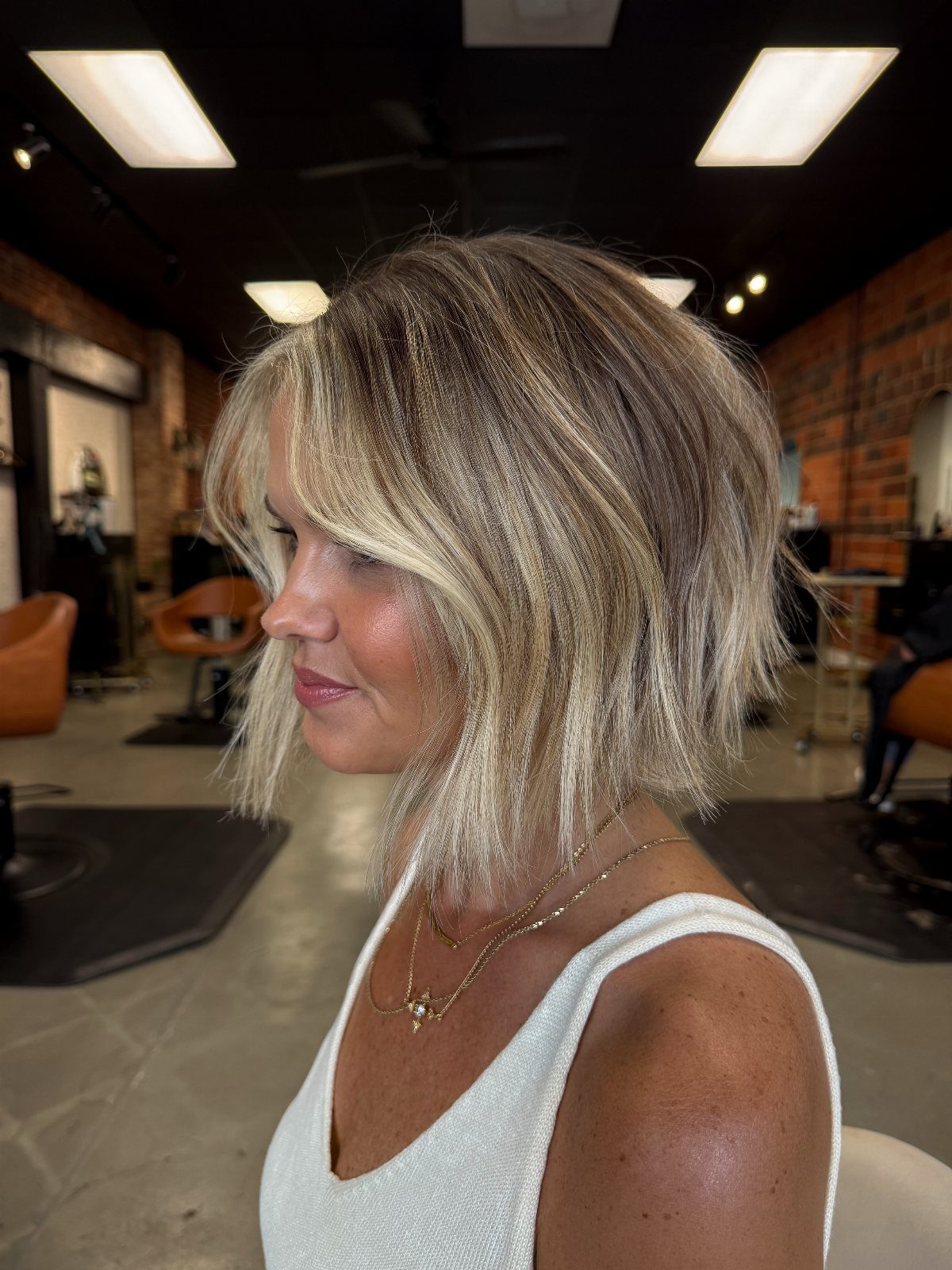
Sand blonde reads warmer and quieter than an ice-white finish.
The color sits closer to beige than silver, and darker roots keep it from looking flat. Worn in a shoulder-length bob with loose waves, the tone feels softer than most bleached blondes.
Texture is the word to use in the chair: a warm, sandy blonde that looks lived-in rather than sleek. I’d choose this over platinum if you want pale hair without the cool edge.
27. Periwinkle Blonde
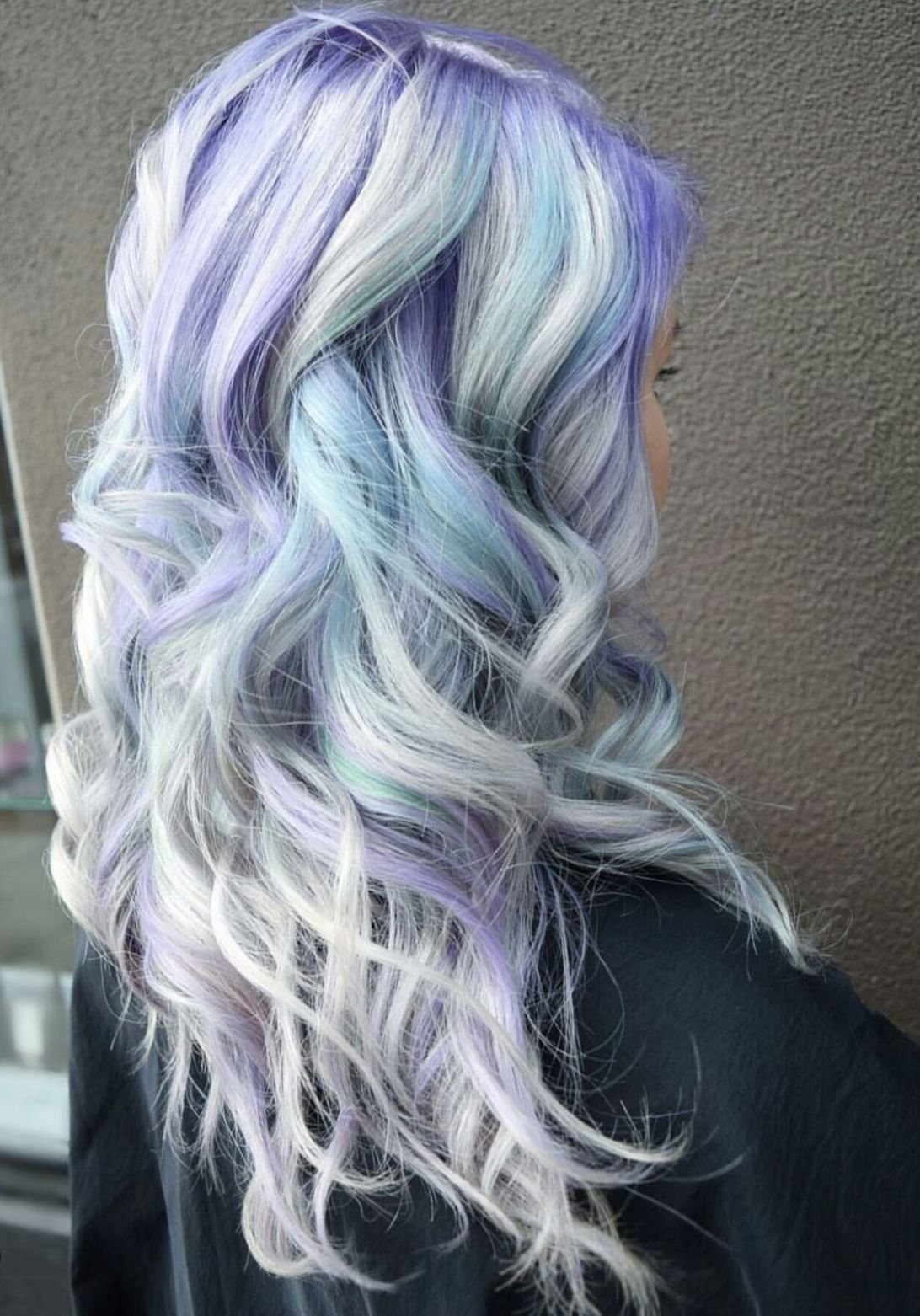
A soft periwinkle tint over white blonde gives the color a faint lavender cast, subtle enough that it still reads mostly pale. On long waves the purple tone shifts in different light, and the curls keep it from looking artificial.
Ask for a pastel periwinkle toner over very pale blonde.
The color fades quickly, so plan to refresh it every few weeks. For a hint of color without a full fantasy shade, this is the one I’d pick.
28. Blush Pink Blonde
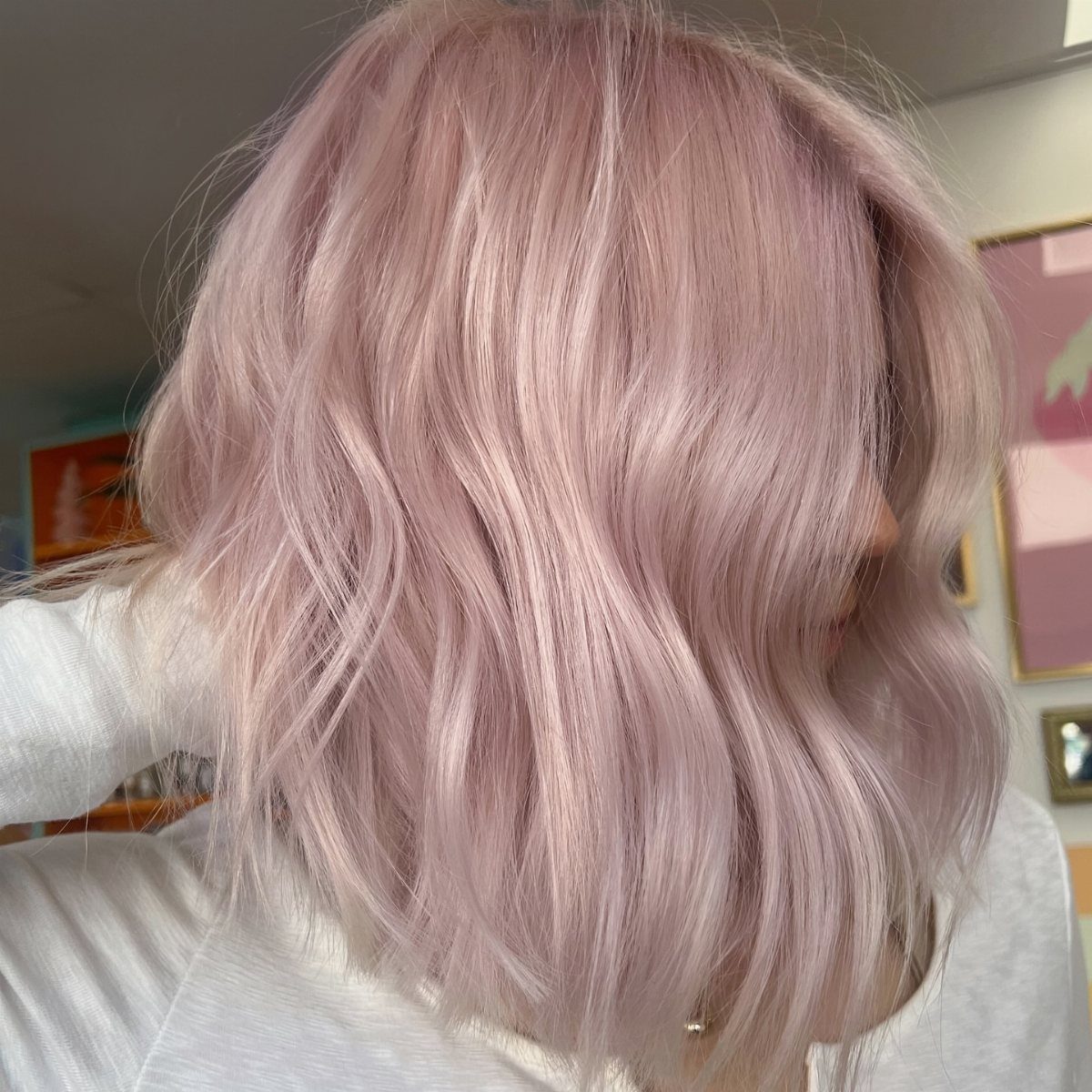
Blush pink over white blonde turns pale hair rosy for a few weeks, then fades back to white as it washes out. The color sits soft enough to look natural in daylight, and loose waves soften the pastel effect.
Ask for a temporary blush-pink toner, not permanent dye, so the color lifts cleanly when you’re ready.
Bring a photo showing how pink you want it to read. I’d pick this as a low-risk way to try color.
29. White Blonde with Lowlights
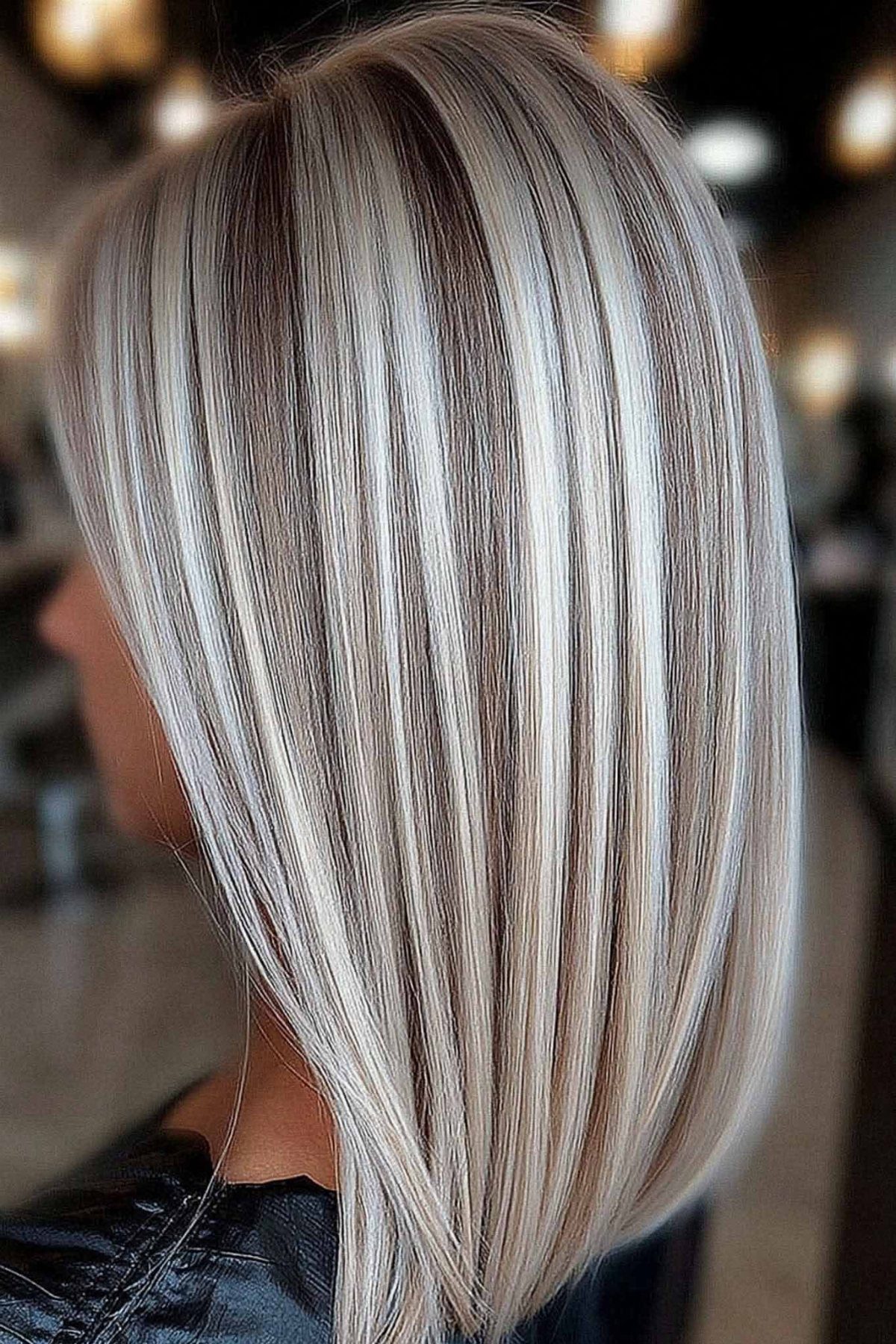
Fine gray or beige lowlights break up a flat sheet of white blonde and give straight hair some dimension. The pale base stays bright, and the darker pieces add shadow wherever the hair parts or moves.
Thin lowlights woven through the white are the request to make, along with how dark you want them to read.
Contrast shows up best on a straight bob, where nothing breaks up the line. My vote goes to this over solid white if you want depth and still want the color to read pale.
30. White Blonde with Barrette
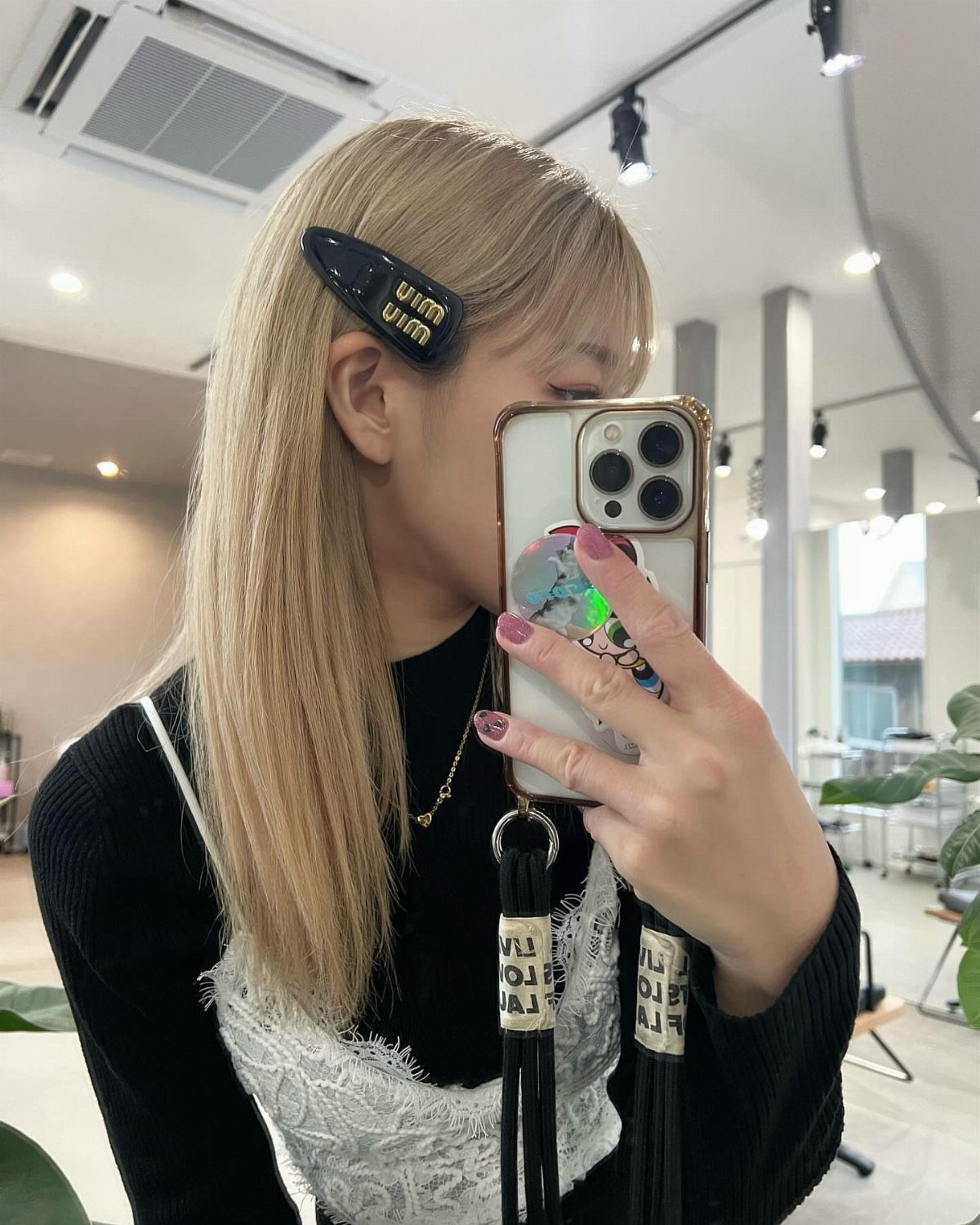
A small barrette pinned above the ear keeps straight white-blonde hair out of your face without hiding the length. The clip sits simple and functional, and the pale color makes any dark accessory stand out.
Pin one side back if the hair is long enough to tuck behind the ear.
A plain black or tortoiseshell clip does the job. I like this for mornings when you want the hair off your face but a full updo feels like too much work.
31. White Blonde Updo
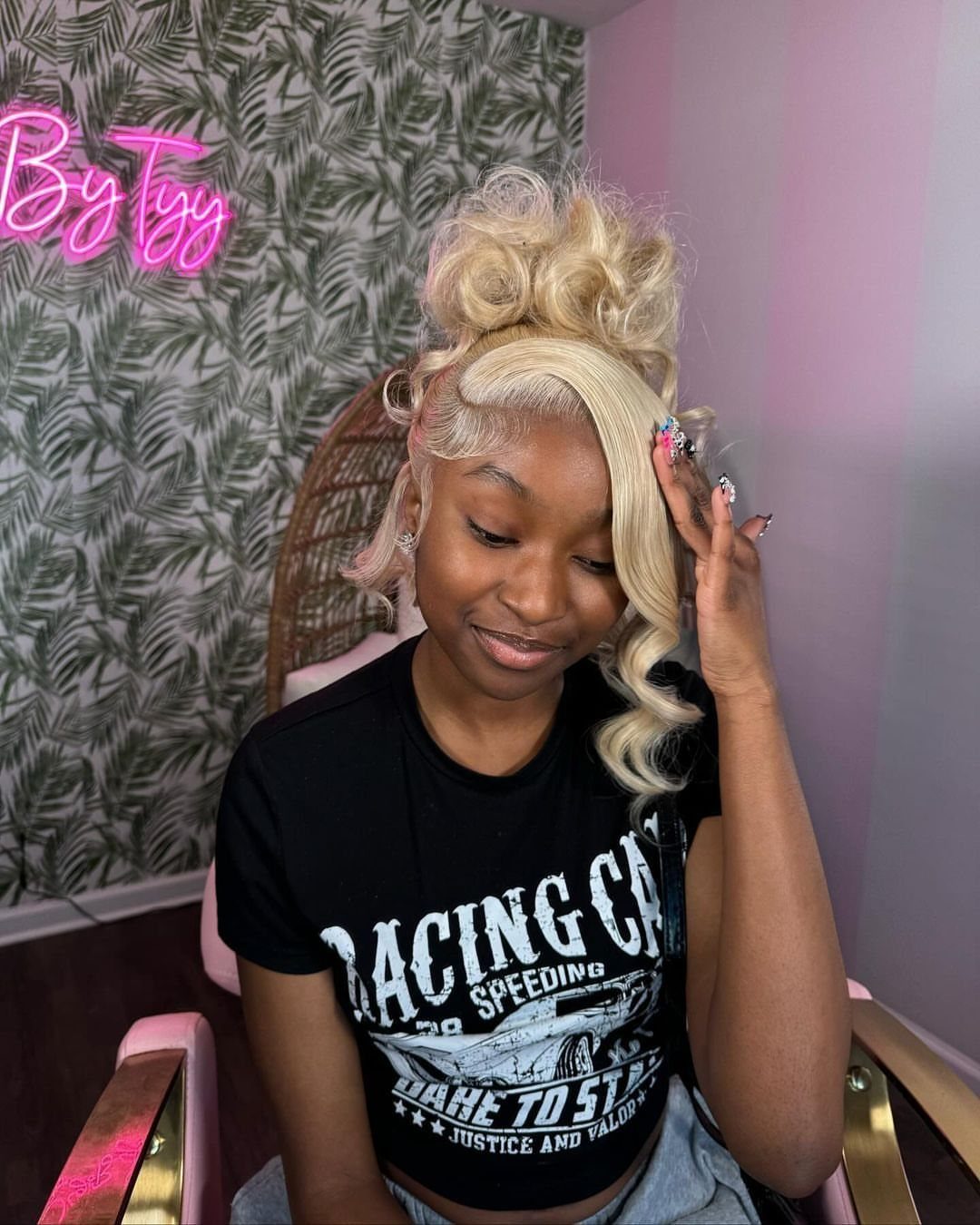
An updo puts all the length up and lets the pale platinum color sit high and visible, with one long section curled and brought forward over the shoulder.
The updo itself stays off the neck, and that loose curled piece softens the look.
If your hair is long enough to pin up, ask your stylist to leave one section out at the front to curl separately.
A curling iron on the loose piece finishes it. I’d pick this for a night out when you want the color to read from every angle.
32. White Blonde Lob
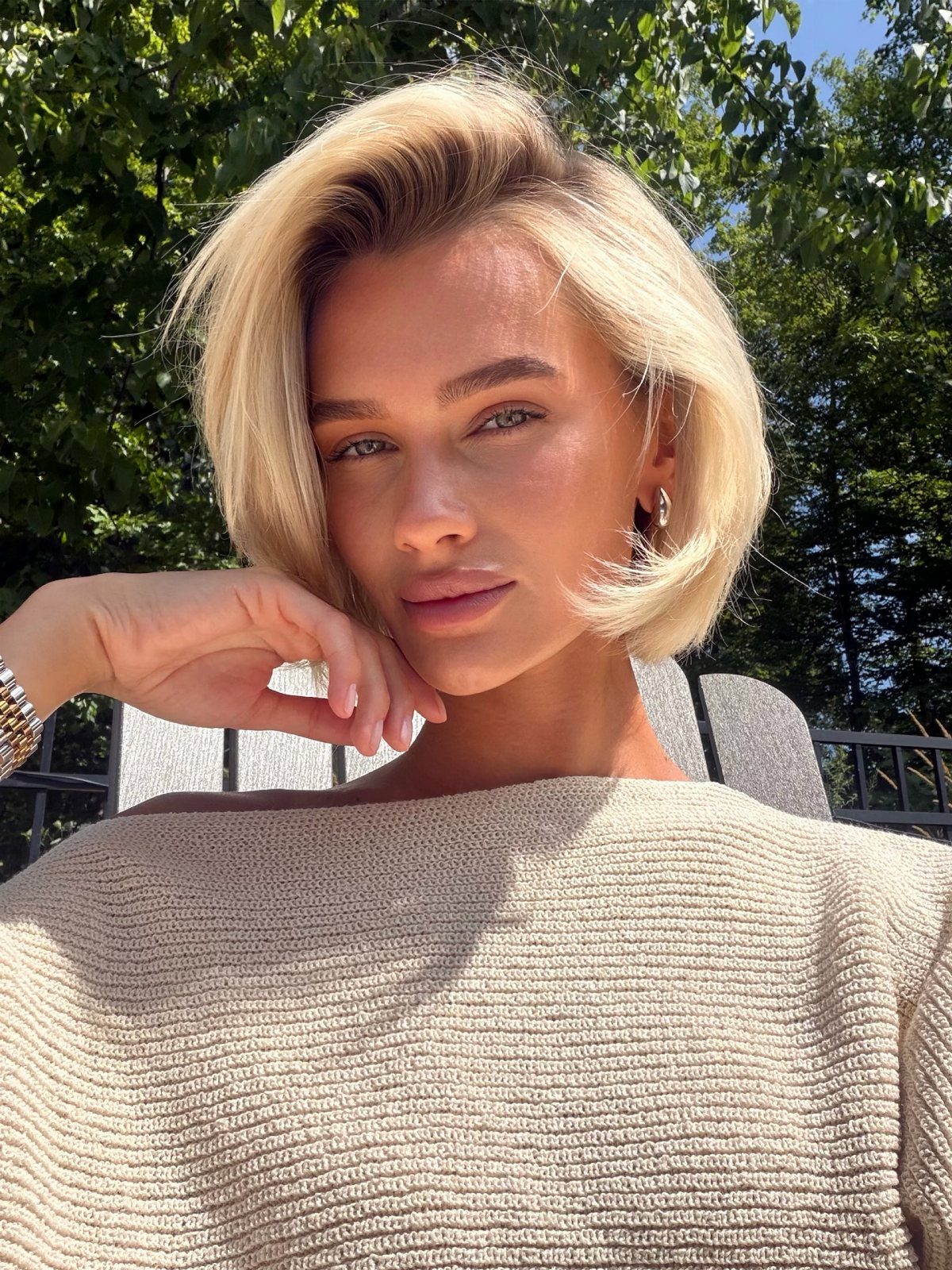
A side-parted lob in white blonde falls just below the chin and frames the face unevenly, with more hair swept to one side.
A lob sits right at the collarbone or just above it, which is short enough to dry in minutes and still long enough to pin back or tuck behind one ear.
Ask for a lob cut to collarbone length and part it deep on one side.
I like this over a center part when your face is asymmetrical or you want the hair to sit heavier on one side. Straight or slightly wavy styling both work.
33. White Blonde with Waves
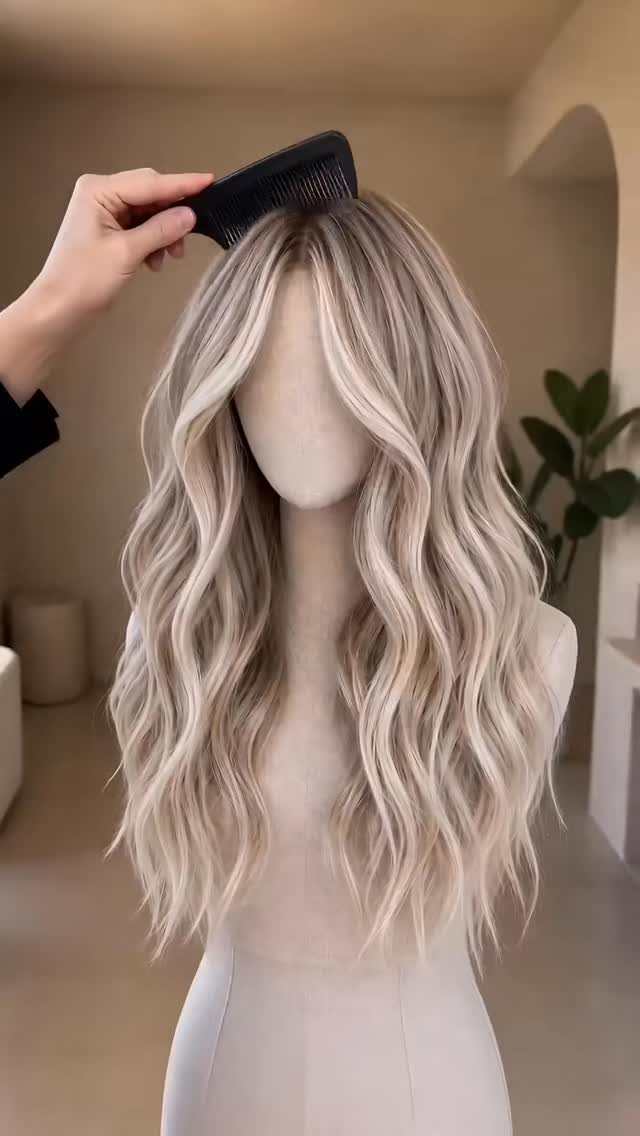
Long white-blonde hair styled in loose, voluminous waves gives the pale color real body, so the hair reads full rather than flat. The waves start a few inches down from the root and roll through to the ends.
A large-barrel curling iron or hot rollers are the tools that build this kind of wave.
Work in sections, curl away from the face, and shake the waves loose with your fingers once they cool. If your white blonde sits limp and straight, this styling adds the lift the color alone can’t give.
34. White Blonde with a Side Part
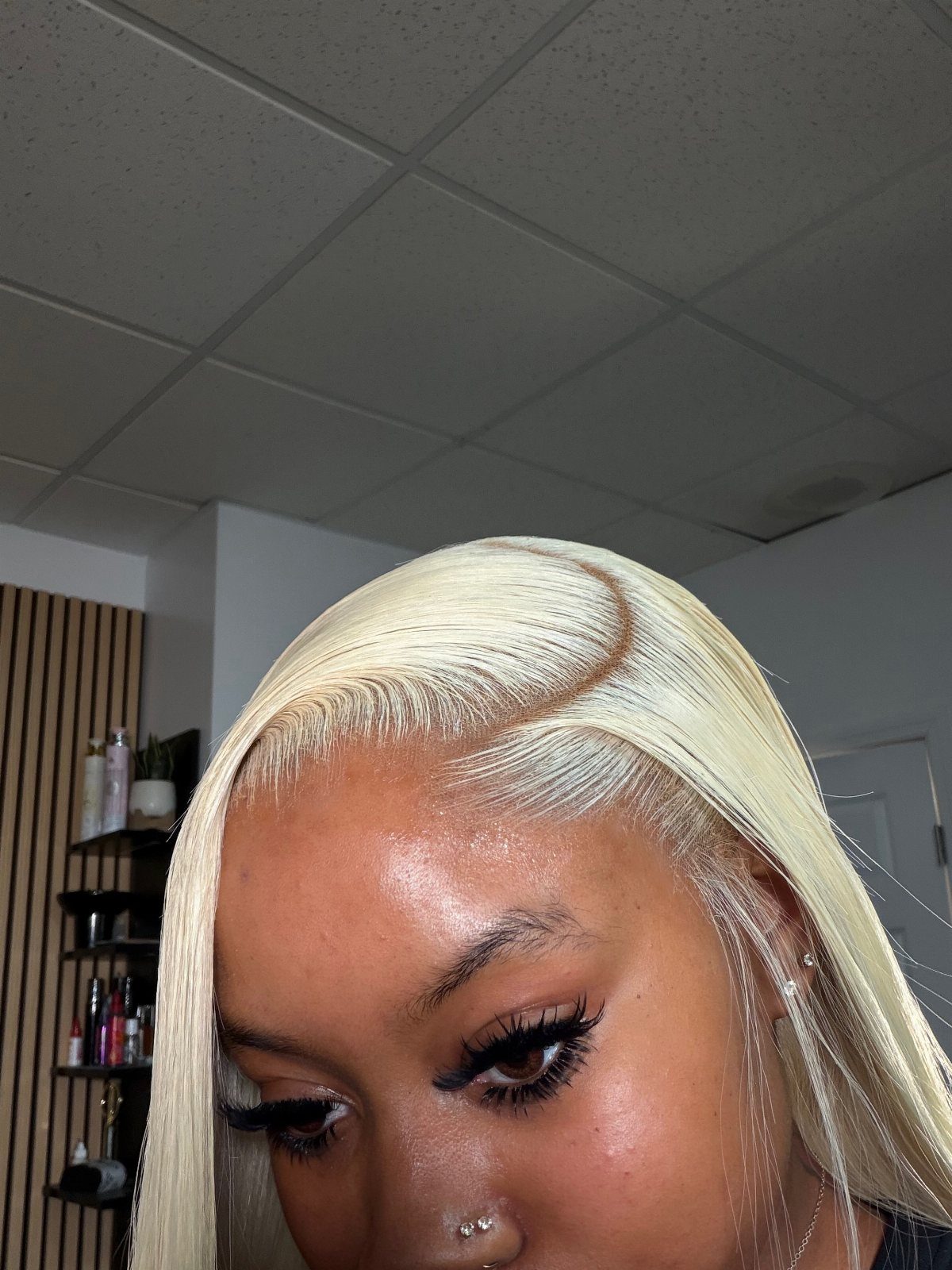
A side part on long, straight platinum hair shifts the weight to one side and frames the face in an uneven line. The part itself can sit deep or soft, and the longer side falls forward over one shoulder.
Part the hair where it naturally wants to fall, or move it slightly off center for a subtler shift.
Pale color looks sharpest on smooth, straight hair, so a quick pass with a flat iron before you leave the house keeps the finish crisp.
I’d choose this over a center part if you want one side of your face more visible than the other.
Frequently Asked Questions
How can I dye my hair white blonde?
Book with a professional colorist and ask for icy or platinum-white blonde, then bring a photo of the exact shade you want.
White blonde means bleaching your hair very pale and toning out any warmth, which takes skill to avoid damage. Plan on regular toning and purple shampoo at home, since pale hair shows brassiness fast.
What do you call a white blonde?
Platinum, icy blonde, pearl, and Nordic silver all describe very pale blonde shades.
Each name signals a slightly different tone: platinum reads bright, icy means cool and almost silver, pearl has a soft sheen, and Nordic silver looks quieter and more metallic.
Use the exact name when you book so your stylist knows which white you mean.
So who does bleached blonde hair suit?
White blonde suits anyone willing to maintain it, since the shade itself can be adjusted with toning to match your skin.
Champagne blonde brings warmth for warm undertones, while icy platinum reads cooler and suits cooler skin. The bigger commitment is upkeep: pale hair needs regular toning, purple shampoo, and careful styling to stay smooth and bright.