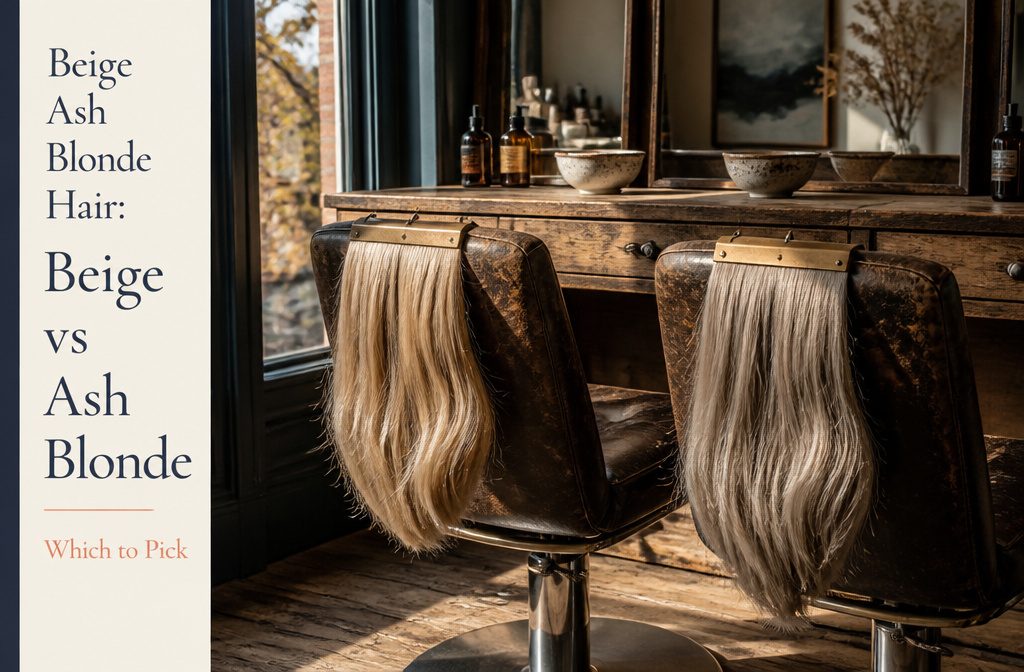
Beige wins for most people: it flatters nearly every skin tone, fades to a sandy blonde instead of brassy yellow, and still looks good after 8 weeks.
Ash only wins if you have cool undertones and will tone weekly with purple shampoo. On warm skin, ash can turn your complexion slightly green or dull.
Undertones and Overall Appearance
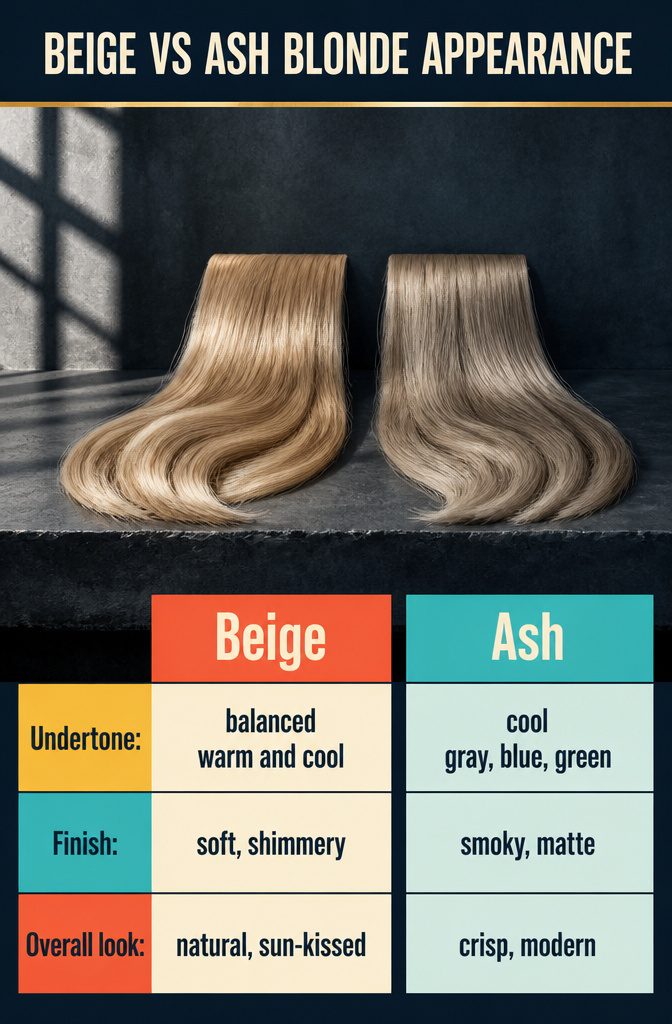
Beige balances warm and cool undertones, so it is never overly yellow and never icy.
Ash goes fully cool, leaning gray, blue, green, or violet. Beige reads softer and shinier; ash reads smoky and matte.
Wella draws the line well:
Beige blonde may scatter in a few ashy ribbons, but these are blended with sandy, gold, and vanilla pieces for an overall softer, more natural-looking hue.
— Wella
A few ashy ribbons don’t make beige ash.
Side by side:
| Attribute | Beige | Ash |
|---|---|---|
| Undertone | Balanced warm and cool | Cool: gray, blue, green |
| Finish | Soft, shimmery | Smoky, matte |
| Overall look | Natural, sun-kissed | Crisp, modern |
Which Shade Suits Your Skin Tone and Eye Color
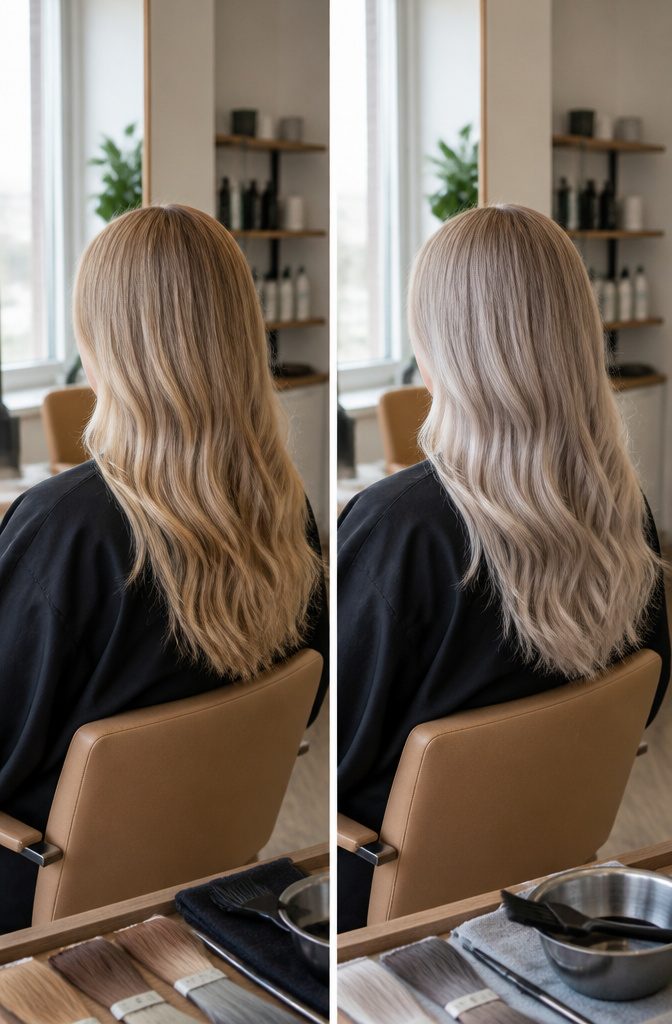
Cool undertones with pink or blue tints pair beautifully with ash blonde, because the icy, silver tones create balance rather than fighting your natural coloring.
Fair porcelain skin looks especially striking. Olive complexions get one of the most modern contrasts from ash, the warmth of the skin playing against cool tones without competing.
If you have warm undertones, ash blonde can turn your complexion slightly green or dull, though a root melt with warmer tones near the scalp or face-framing highlights in subtle gold can bridge that gap.
Beige blonde is gentler and more forgiving.
The mix of warm and cool undertones means it flatters nearly every skin tone with the right adjustments. Golden or olive skin gets a soft, natural glow from the sandy, neutral notes.
Tan skin avoids looking sallow. For cooler skin, a colorist might lean into more champagne or ash in the mix; warmer skin gets a touch more honey to add depth.
Eye color plays a role too.
Blue, green, or gray eyes pop with ash blonde, since the cool tones make the color in them look brighter and sharper. Brown, hazel, or amber eyes look richer next to beige.
Maintenance and How Each Shade Fades
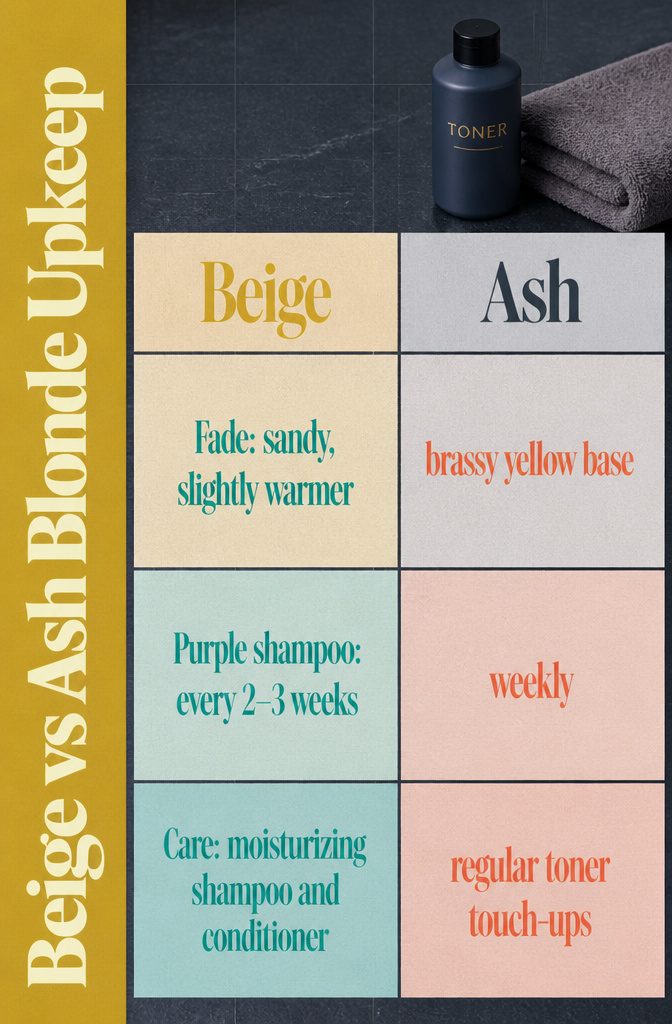
Both shades fade within three to four weeks, but ash turns a problem color while beige just gets quieter. Ash starts cool and blue-toned, so when that toner washes out you’re left with the brassy yellow base underneath.
Beige fades toward sandy blonde instead, lighter and slightly warmer but still close enough to what you started with that the shift doesn’t look like neglect.
Purple shampoo keeps the yellow in check, but ash needs it weekly and beige can go two to three weeks between uses.
I lean toward beige if weekly toning sounds like too much calendar space, and ash only when the cooler edge matters enough to justify the routine.
One source flips that maintenance comparison and calls beige higher-upkeep than ash, though most of what ranks says the opposite.
Beyond purple shampoo, ash wants regular toner touch-ups to stay icy, while beige gets by on moisturizing shampoo and conditioner. The grow-out is easier with beige too, since it already sits closer to a natural sandy base.
How I Choose Between Beige and Ash
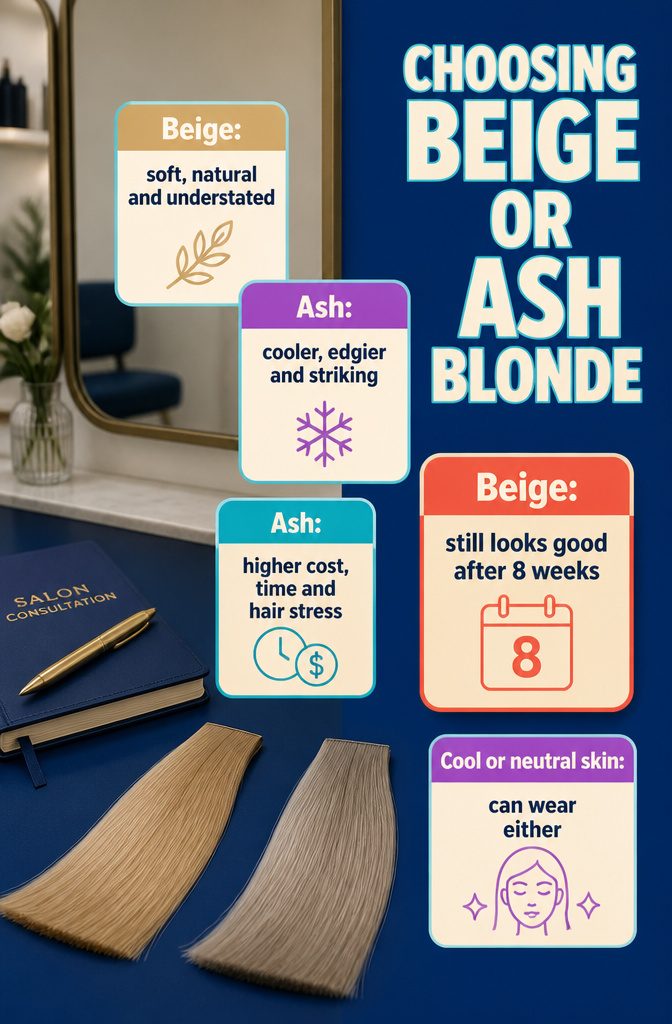
Beige reads soft, natural and understated; ash reads cooler, edgier and more striking.
If the photo on your board makes you think "polished and a little dramatic," that’s ash. If it makes you think "my hair, only better," that’s beige.
Budget and hair condition break most ties. Ash asks for more money and more time, and it is harder on hair, so strands that are already stressed point me toward beige.
Beige is the better pick if you want a blonde that still looks good after 8 weeks, which matters when salon visits are hard to fit in.
Cool or neutral skin can wear either, so let the look decide.
Mixing Beige and Ash as Greige
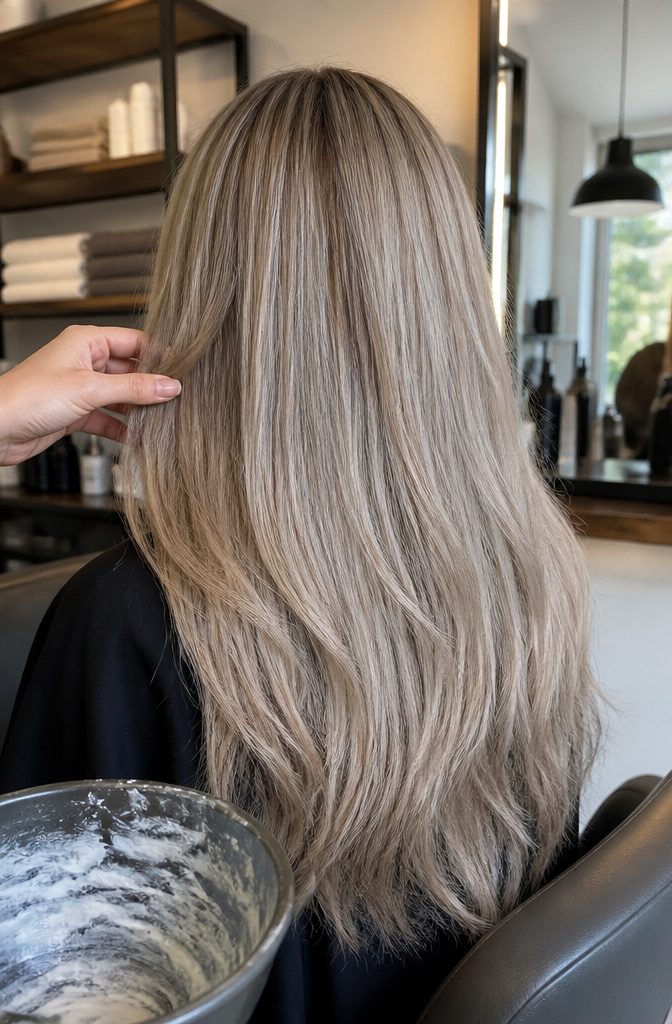
Greige, short for grey plus beige, sits between the two shades.
Ash supplies the cool, modern tone, and beige adds the healthy, light-reflecting shine that ash alone can lack. That balance makes it the shade I’d point an undecided reader to first.
Direction matters when you’re changing color.
Going from ash to beige is the simpler move, while going from beige to ash is harder. If you’re ash now and curious about warmer, softer shine, a greige blend is the natural first stop.
If you’re beige and want the cooler look, I’d still step through greige rather than jump straight to full ash, because you can stop there if you like it.
Beige and Ash Look Ideas
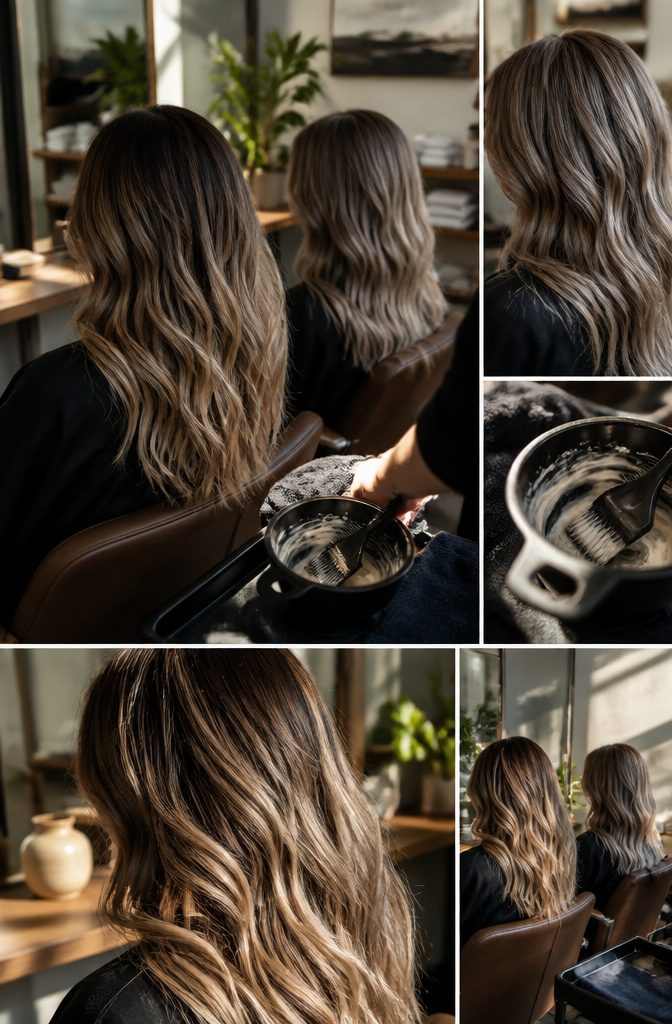
Here are the looks I’d save to a Pinterest board first.
- Beige balayage: hand-painted for a sun-kissed finish that stays soft and neutral.
- Beige babylights or highlights: fine strands catch light and make thin hair look thicker, so they suit anyone still weighing beige against ash.
- Bronde: a darker base with beige toner, and my pick for brunettes who want lighter hair without heavy bleaching.
- Rooted beige: Wella suggests it for dark hair, with easier touch-ups.
- Mushroom blonde (level 7–8): gray-brown undertones that blend into shadow roots.
- Smoky ash (level 8) and graphite blonde (level 7): gray pigment adds depth, and these darker ash shades need touch-ups every 8–10 weeks instead of monthly.
Frequently Asked Questions
What is the difference between ash blonde and beige blonde?
Ash blonde is fully cool with gray, blue, or violet undertones and a smoky, matte finish, while beige blonde balances warm and cool tones for a softer, shinier look.
Ash reads modern and crisp; beige reads natural and sun-kissed. Beige fades to sandy blonde and needs purple shampoo every 2–3 weeks, while ash fades to brassy yellow and needs weekly toning.
Is there beige in ashy hair?
No.
Ash blonde is fully cool with no warm tones, while beige mixes warm and cool undertones together. A few ashy ribbons blended into beige don’t turn beige into ash.
What skin tone does beige blonde look good on?
Beige blonde flatters nearly every skin tone because it mixes warm and cool undertones.
Cooler skin can lean into more champagne or ash in the blend, while warmer skin gets a touch more honey for depth. Golden, olive, and tan skin all get a soft, natural glow from the sandy, neutral notes.
Can I mix beige and ash blonde?
Yes, the blend is called greige (grey plus beige).
Ash supplies the cool, modern tone while beige adds healthy, light-reflecting shine. It sits between the two shades and works well as a first stop if you’re switching from one to the other.
Which shade is better for hiding grey hair?
Beige blonde blends better with natural silver roots. The mix of warm and cool tones sits closer to grey without the contrast ash creates.
Do I really need to bleach my hair for beige or ash blonde?
Yes, in almost every case.
Dark hair needs lifting to pale yellow, described as Level 9 or 10, to get a true beige or ash result. Without that lift, the base won’t hold the cool or neutral tones.
Is it easy to switch between beige and ash blonde?
Going from ash to beige is simpler, while beige to ash is harder because it requires removing gold pigments. If you’re switching from beige to ash, step through greige first rather than jumping straight to full ash.
Does beige blonde need purple shampoo?
Yes, but sparingly.
Beige needs purple shampoo every 2–3 weeks to keep yellow in check, compared with weekly use for ash. Use it to maintain brightness without losing the creamy warmth.