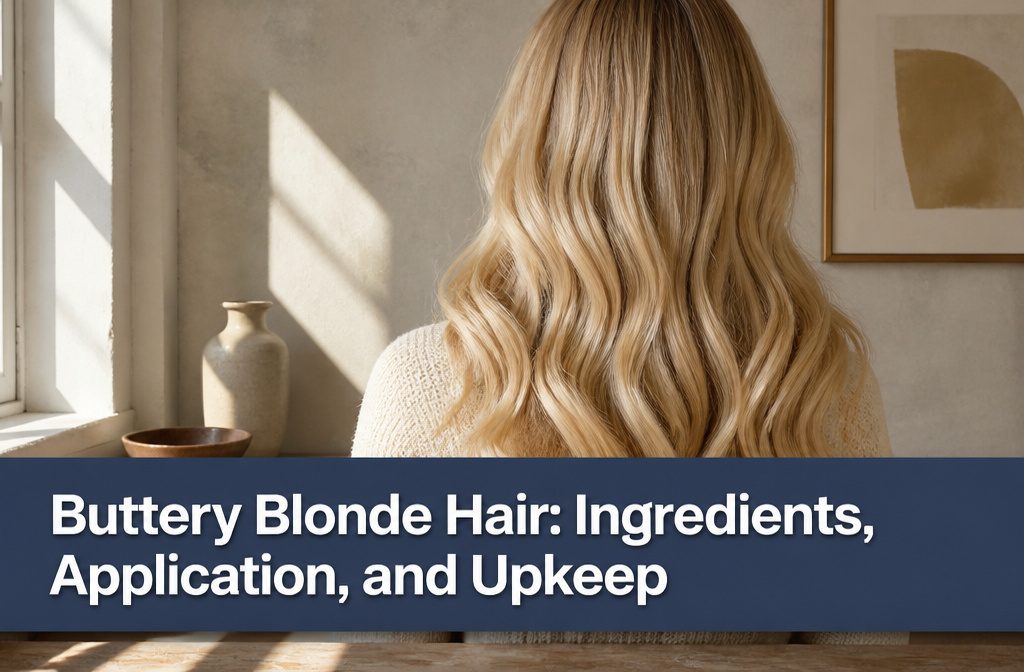
Buttery blonde is a warm, golden-honey shade that sits between icy platinum and brassy yellow, built from bright golden highlights, a golden base break, and a light golden gloss for shine.
The catch: darker natural hair needs a salon developer to lift it first, while light or previously lightened hair gets there faster.
Celebrity colorist Cherise Wilson describes it as a yellow golden honey blonde that resembles lemon meringue, warm enough to brighten many complexions.
Buttery Blonde Ingredients
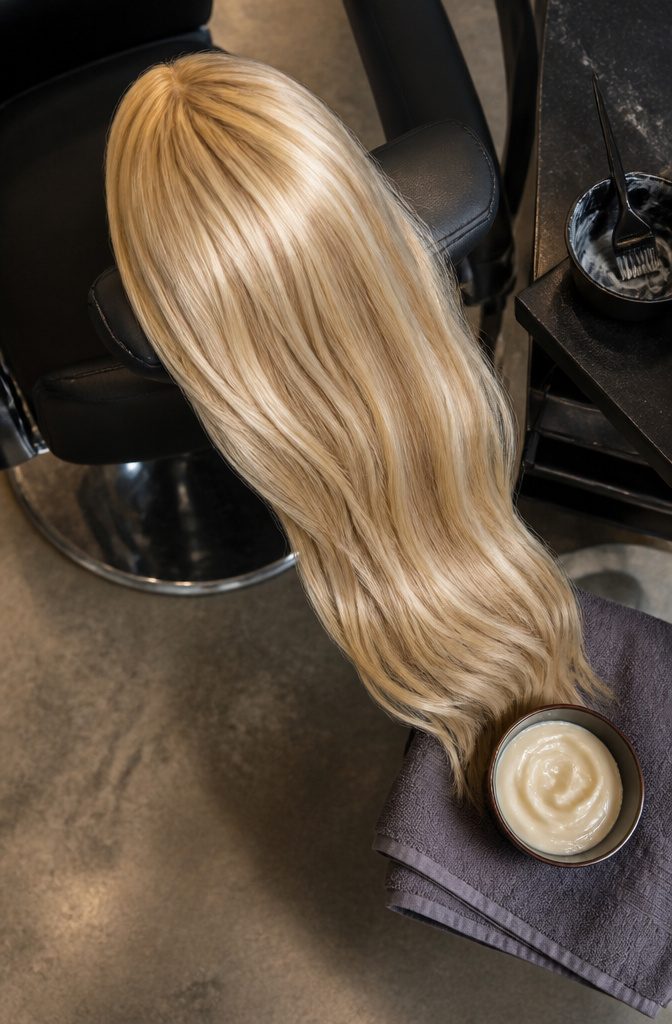
The recipe has seven parts, and the first depends on your starting color:
- Lightened base: quicker on light or previously lightened hair; darker hair needs a salon developer first.
- Toner: applied after lightening, to set the all-over blonde.
- Highlights: bright and golden.
- Golden base break: lifts and warms the rest of the hair.
- Light golden gloss: adds the shine.
- Weekly mask: a deep conditioner worked into the ends.
- Purple shampoo: only when brassy, on wet hair, for five minutes at most.
Wilson’s wording for the colorist is worth saving:
Bright highlights that are still golden, not too white. … Give it a light golden gloss to give it that meringue shine!
Ask for it in those words.
How to Get Buttery Blonde
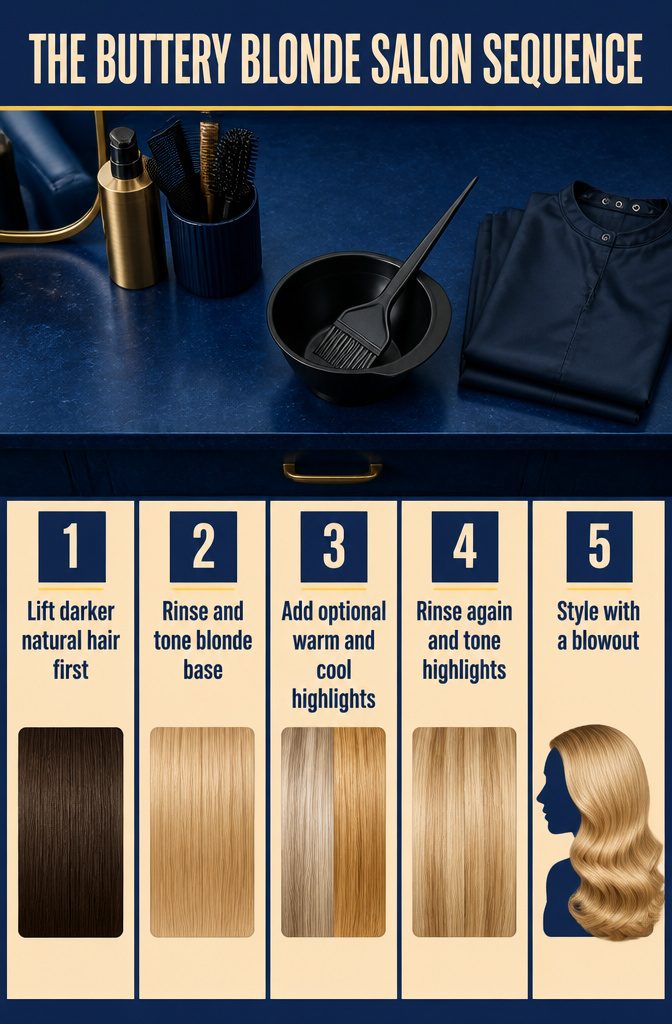
The route depends on where your hair starts: light or previously lightened hair gets there faster, and darker hair takes more work.
- Lighten the base color. Darker natural hair needs a salon developer to lift it first.
- Rinse and tone to the all-over blonde you want. Toning at this stage sets the buttery base.
- Add highlights, which are optional. Buttery blonde looks good without them, but I’d add both cool and warm highlights in professional color if you want dimension.
- Rinse again once the highlights have processed, then tone them.
- Style with a blowout. A blowout shows off the finished color.
What Buttery Blonde Looks Like
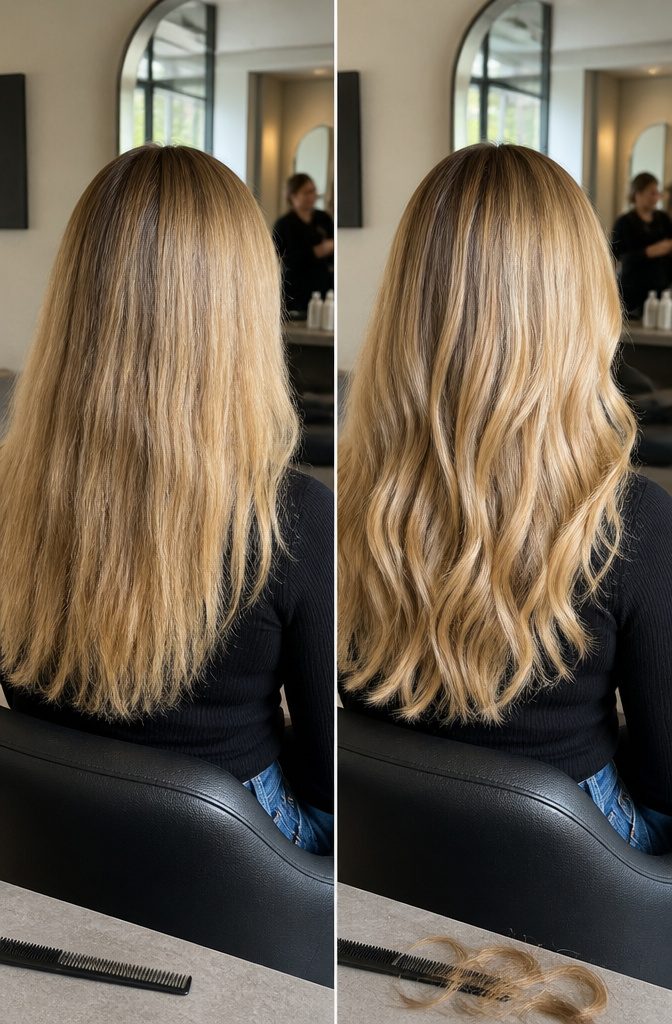
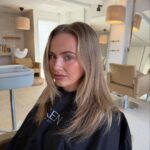
Buttery blonde sits in that creamy, golden-honey range where the base is light but not icy, and the tone leans distinctly warm.
Celebrity colorist Cherise Wilson describes it as a yellow golden honey blonde that resembles lemon meringue, and I think that comparison nails the soft, edible warmth of it.
There’s a creaminess built into the shade that keeps it from reading brassy or orange.
The look mixes buttery and golden tones blended throughout, balancing delicate warmth rather than swinging hard into cool ash or platinum territory. Where icy blonde strips out yellow entirely, buttery blonde keeps it and makes it work.
Dimension comes from layering warm and cool highlights together, so the color shifts slightly as you move but stays anchored in that golden range. It reflects light without the mirror finish of platinum, giving you glow instead of glare.
Matching Your Complexion
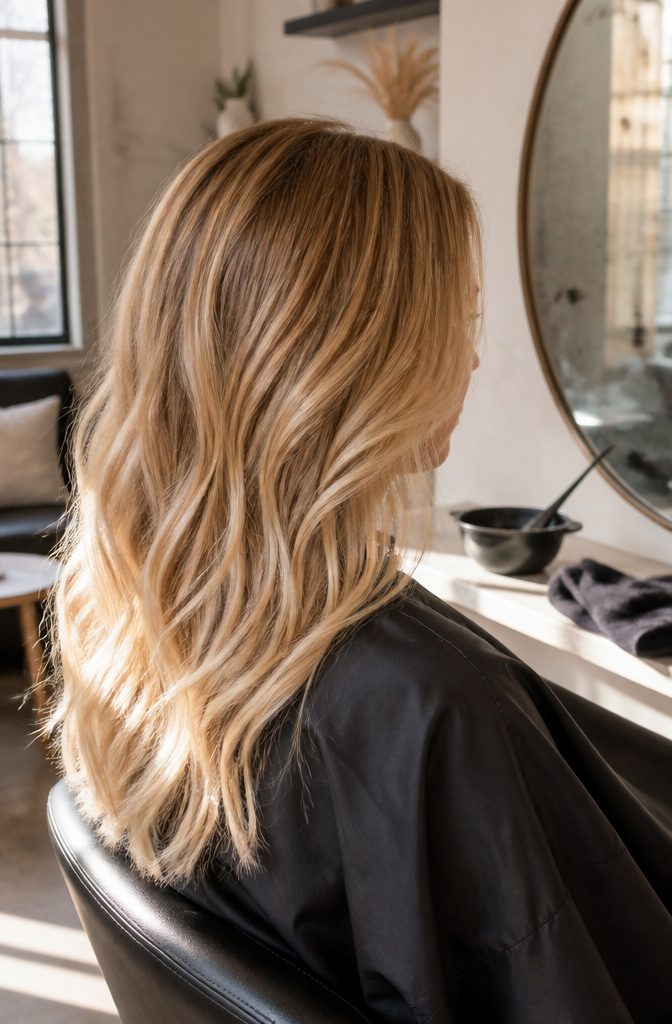
Golden tones do more than warm; they brighten. Celebrity colorist Cherise Wilson describes the yellow golden honey look as something that will warm up and brighten many complexions, and the reflective quality matters.
Warm and neutral skin tones wear buttery blonde most comfortably, since the gold echoes what is already present rather than fighting it.
The shade can be adjusted to fit.
Honey butter, for instance, sits on the warmer end and flatters medium skin tones particularly well. If your complexion leans cool, you can still wear buttery blonde by dialing back the honey and leaning into creamier, less saturated gold.
Buttery blonde works best when the warmth is tuned to the person, adjusted until it flatters instead of clashing, rather than copied from one formula.
Each starting hair color and undertone calls for its own formula, so treat any single recipe as a starting point rather than a rule.
What they do confirm is that buttery blonde suits more people than icy versions do, and that golden light makes hair look shinier and thicker than cool blondes at the same level.
What to Ask the Stylist
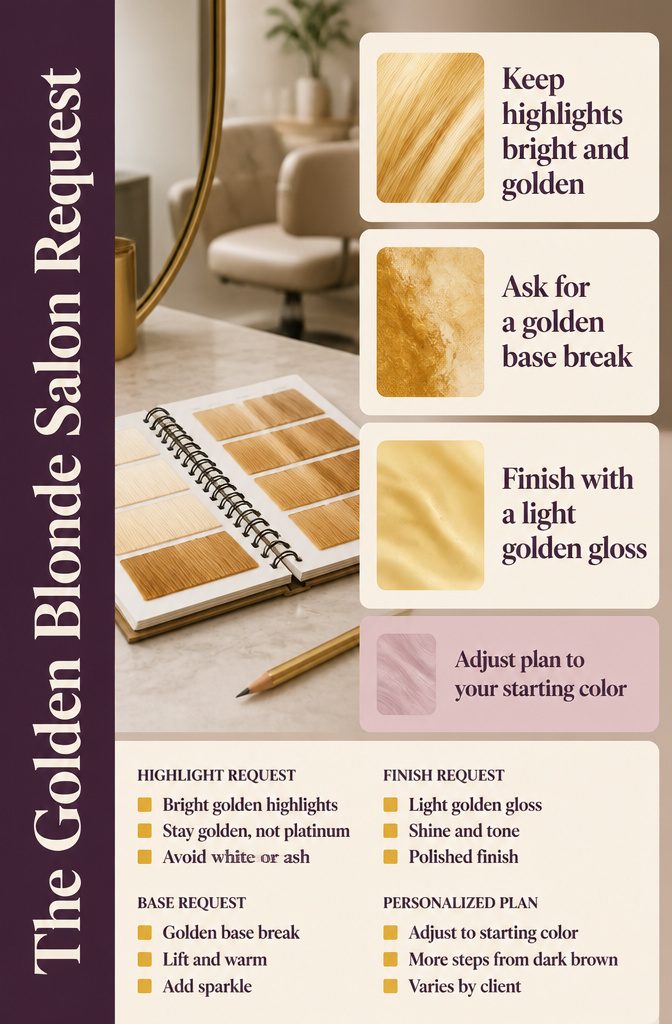
The salon request breaks into three parts: bright golden highlights that stay golden rather than turning white, a golden base break to warm and lift the rest, and a light golden gloss for shine.
Your colorist will adjust the plan depending on where you’re starting.
What to bring up:
- Bright highlights that hold onto their gold instead of going platinum or ash
- A golden base break to lift the rest of the hair and give it warmth and sparkle
- A light golden gloss at the end for shine and tone
The exact process changes with your starting color. Lifting from dark brown takes more steps than warming up existing blonde, so the formula varies by client rather than following one fixed recipe.
Wearing It by Season
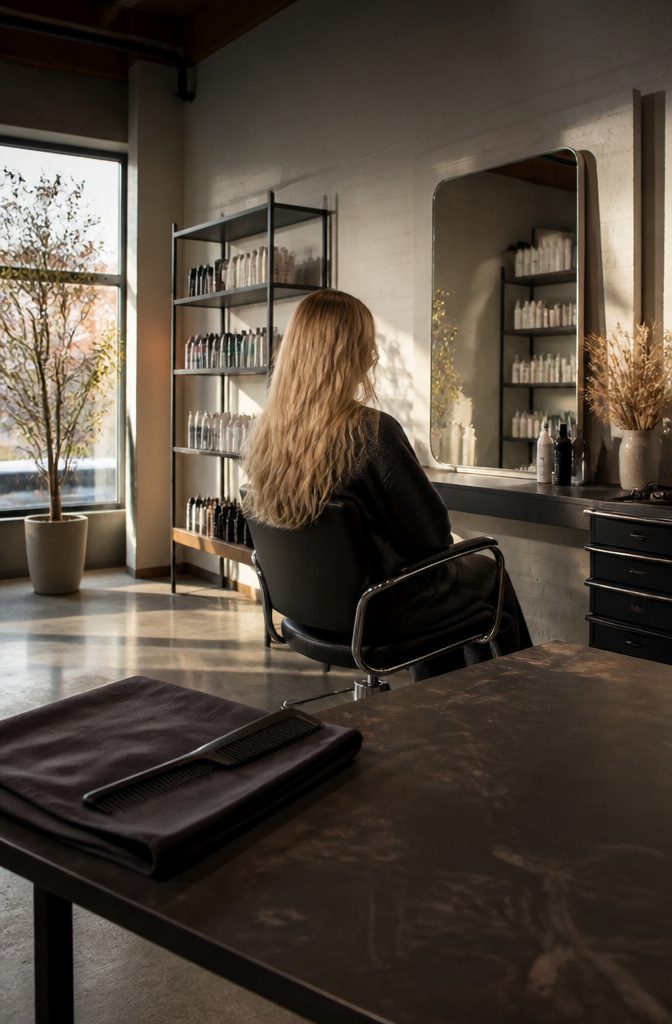
Buttery blonde works year-round, but its warmth reads differently depending on the light you’re standing in.
The shade that looked sun-bleached in July takes on a richer, more golden cast once fall arrives, which is exactly why butter blonde becomes the go-to transitional shade when summer ends.
You’re not abandoning blonde entirely; you’re leaning into the warmth instead of fighting it.
For deeper contrast through the cooler months, butterscotch melt delivers that: deep butterscotch roots that fade into buttery blonde ends. It’s assigned specifically to fall and winter, when the richness doesn’t feel out of step with the season.
The melt gives dimension without requiring a full overhaul, and the darker root means you can stretch time between appointments without looking grown-out in a bad way.
Weekly Upkeep at Home
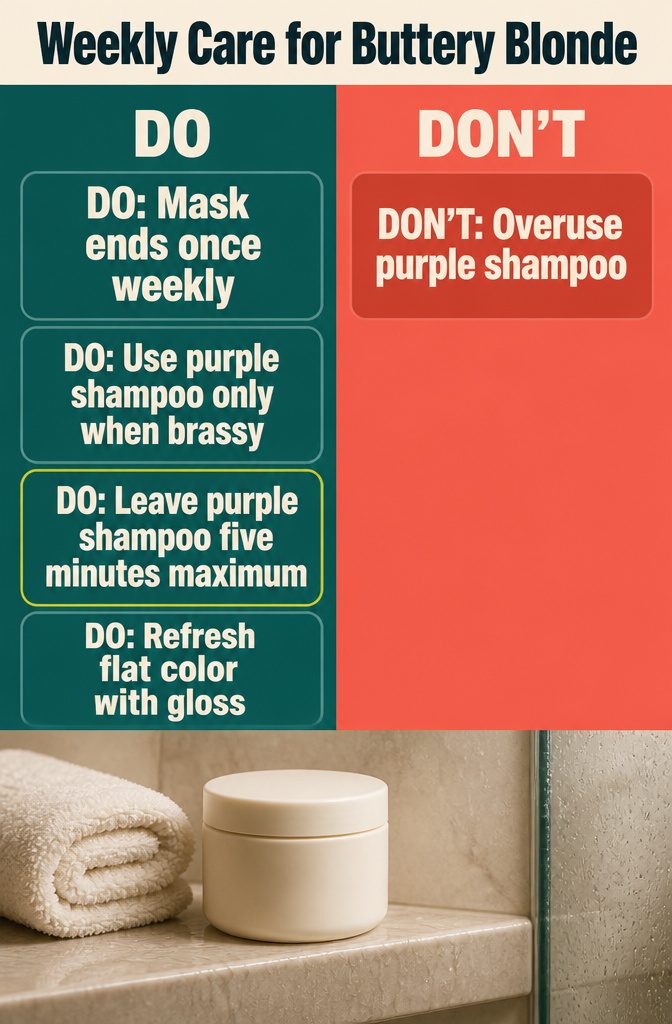
Blonde runs more brittle than untouched hair, so a deep-conditioning mask goes on the ends once a week. Pick one you like using, because you’ll reach for it every week.
Purple shampoo is the product I’d ration. Buttery blonde is a warm color, so a little warmth is the look, and purple only earns a turn when hair turns brassy or needs brightening.
Apply it to wet hair and leave it on no longer than 5 minutes. Heavy use can transfer purple pigment onto the blonde.
When the color looks flat, a gloss is the fix. It adds color and shine, and you can buy one at a store or have your stylist apply it.
Variations and Their Upkeep
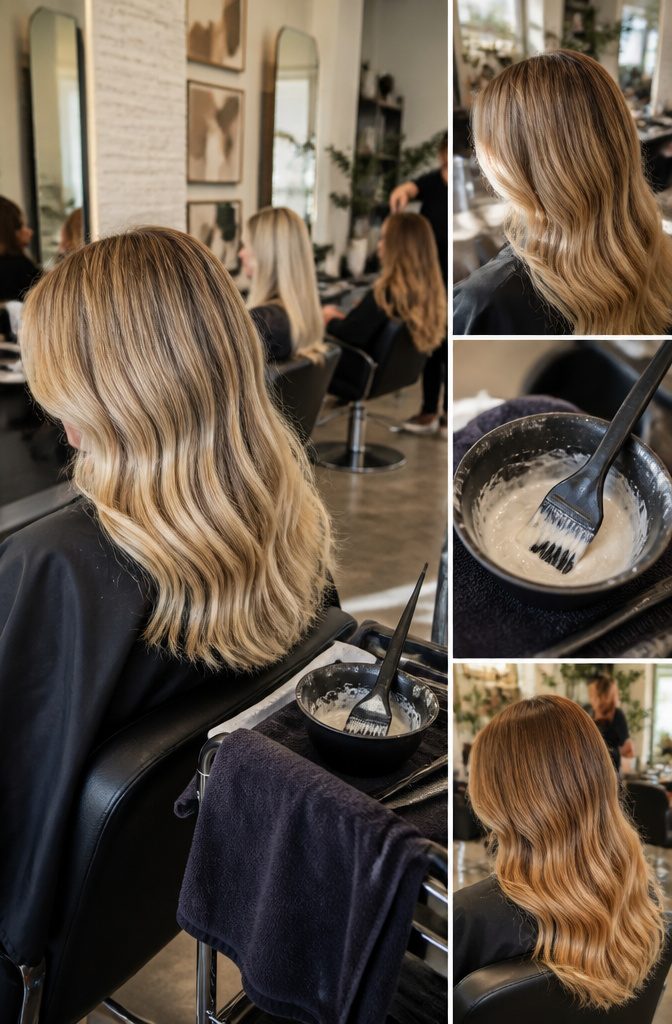
Each variation of buttery blonde carries its own balance of warmth and contrast, and the gap between salon visits depends on how much root you accept.
- Golden Buttery Blonde: full, even coverage with no root shadow. Plan on appointments every 6 to 8 weeks. About 10 minutes of styling.
- Buttery Balayage: hand-painted, lived-in ribbons of butter. Appointments pushed to 4 months with a gloss between.
- Honey Butter: deeper gold at the root, lightening through the ends.
- Creamy Butter Blonde: the softest version, almost vanilla.
- Buttery Bob: chin-length cut showing off the tone’s dimension.
- Warm Butter Foils: traditional foil placement for even, controlled lift.
- Buttery Lob: longer bob, mid-collar, suits finer hair.
- Butterscotch Melt: caramel meeting butter at the midlengths.
- Butter Blonde Pixie: crop that reads gold in direct light.
- Golden Butter Money Piece: face-framing streaks only, rest left natural or darker.
- Buttery Dimensional Blonde: layered tones, no single flat color.
- Vanilla Butter: the coolest side of butter, less gold.
- Buttery Rooted Blonde: shadow left at the scalp for contrast and stretch.
- Sun-Melted Butter: the most natural warm blonde. A clear gloss every 8 weeks keeps it looking freshly done.
- Champagne Butter: pale gold with a hint of fizz.
Celebrities and Colorists
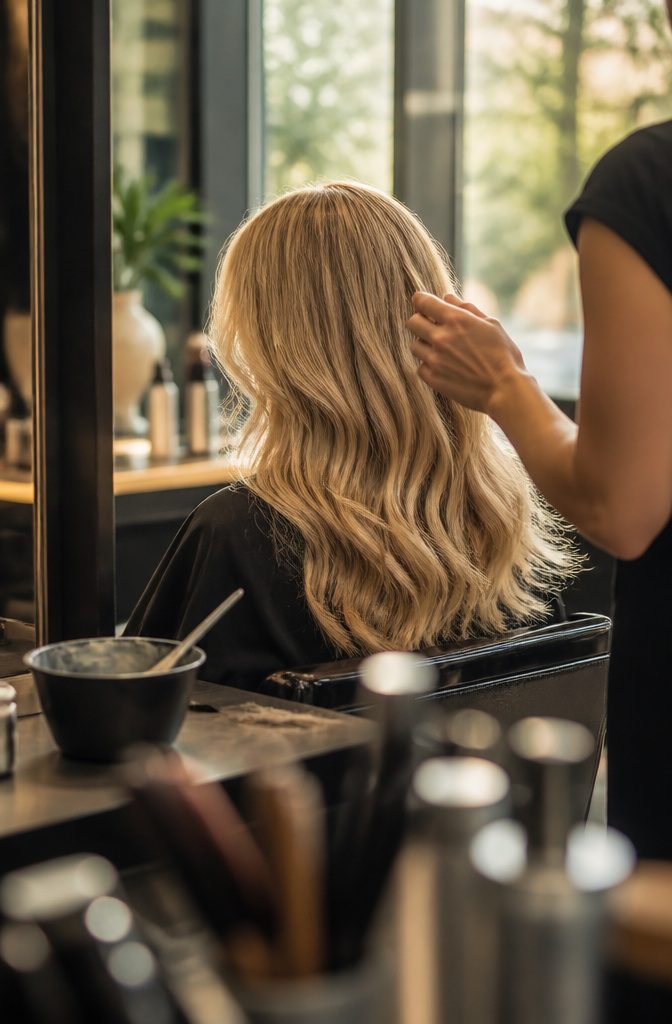
Sophie Turner, Diane Kruger and Reneé Rapp have all worn versions of the look, which tells you the range buttery blonde actually covers.
Turner’s tends lighter and cooler, Kruger’s sits in the middle with more gold, and Rapp’s leans warmer and deeper. All three read as buttery blonde because they share that creamy, golden quality rather than icy white or brassy yellow.
Lauren Mildice of Maxine Salon in Chicago describes the shade as having a creaminess that sets it apart from sharper blondes.
Celebrity colorist Cherise Wilson calls it a yellow golden honey blonde that resembles lemon meringue, warm enough to brighten many complexions and reflective enough to sparkle on camera.
Richy Kandasamy of R+COLOR defines it as a light blonde with buttery, golden tones blended throughout, balancing delicate warmth.
Chase Kusero, co-founder of IGK Hair Care, points to its value as a transitional color that keeps a sun-kissed glow all year, particularly as weather cools.
Frequently Asked Questions
What is buttery blonde hair?
Buttery blonde is a warm, creamy blonde with golden tones that sits in the honey range without turning icy or brassy.
The shade balances yellow-gold warmth with a soft, reflective finish, and dimension comes from layering warm and cool highlights together. It flatters warm and neutral skin tones particularly well because the gold echoes what’s already present in the complexion.
How do you get buttery blonde hair?
Lighten the base color first (darker hair needs a salon developer to lift it), rinse and tone to set the all-over blonde, add highlights if you want dimension, then rinse and tone again.
The exact process depends on your starting color: light or previously lightened hair gets there faster, while darker hair takes more steps.
What should I ask for at the salon to get buttery blonde?
Ask for bright highlights that stay golden rather than turning white, a golden base break to lift and warm the rest of the hair, and a light golden gloss for shine.
Your colorist will adjust the formula depending on your starting color.
What does soft honey blonde look like?
Soft honey blonde sits on the warmer end of buttery blonde and flatters medium skin tones particularly well. It’s a golden-honey shade with warmth that doesn’t tip into brassy, and the reflective quality brightens the complexion.