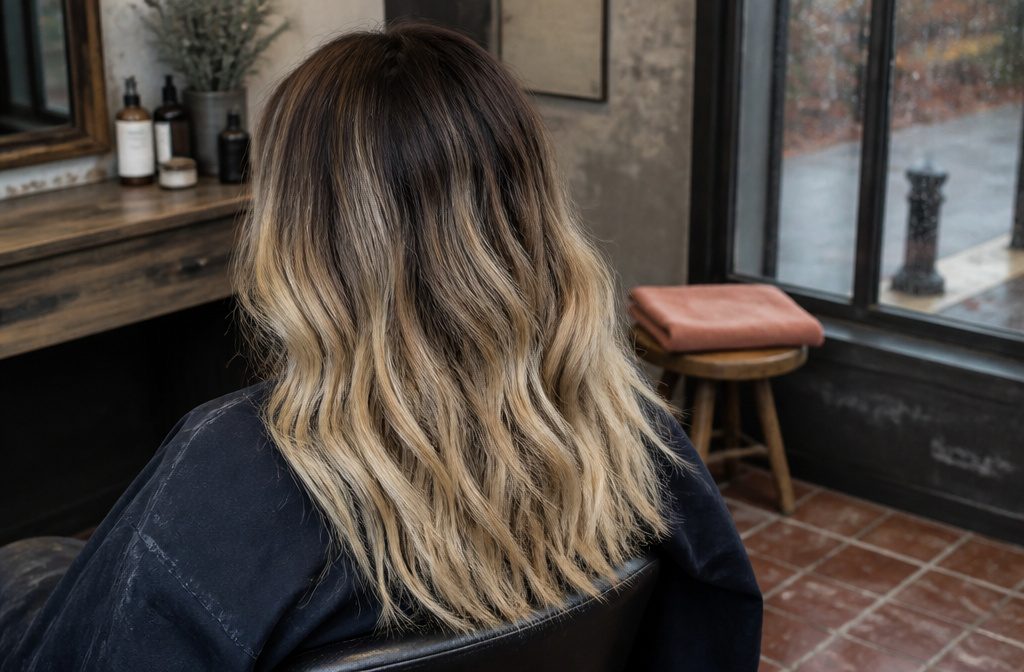
Coconut blonde hair is a brown-to-blonde color melt with dark roots that fade into lighter ends.
The ends need both cool and warm blonde tones to get the look right: cool strands read as coconut flakes, warm ones supply the toasted effect, and all-cool or all-warm ends drift away from the shade.
The name comes from colorist Kahluh Stewart, who passed over "burnt marshmallow" and "crispy snowflake" before landing on toasted coconut.
What Toasted Coconut Hair Is
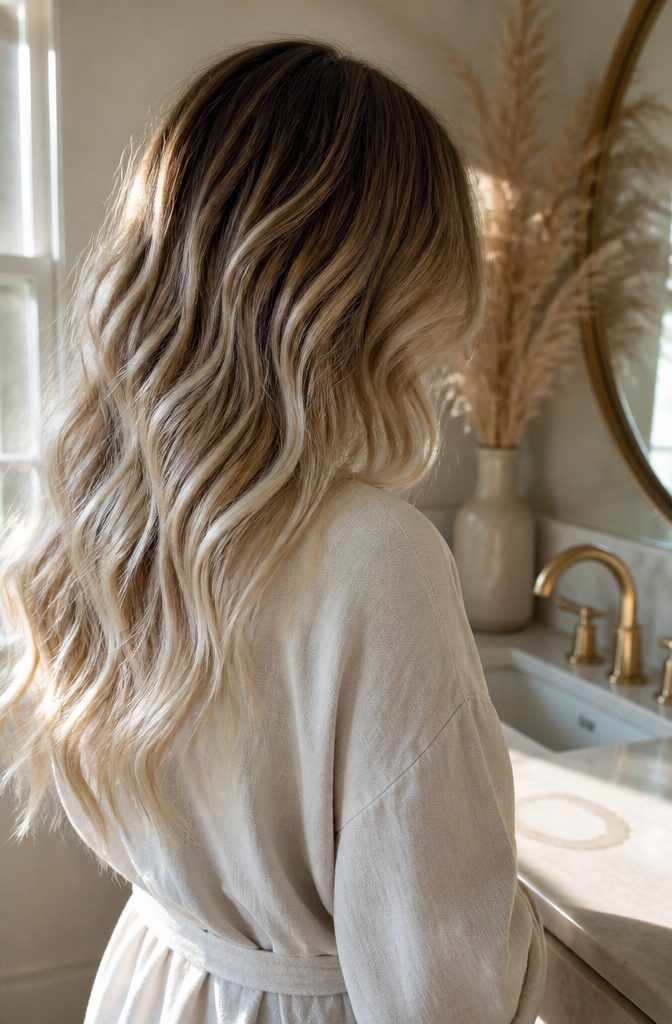
Toasted coconut hair, also called coconut blonde, is a brown-to-blonde color melt: dark roots that blend down into lighter ends. The ends can run cool, ashy or even platinum, or they can combine cool and warm blonde tones.
I prefer the combination, because it is what the name describes. The cool strands read as coconut flakes, the warm ones give the toasted look, and the roots add depth.
The formula depends on "the perfect balance of dark roots fading to both cool- and warm-toned blonde ends, not just one or the other."
Ends that are all cool or all warm drift away from this color, so ask your stylist for both.
Why the Root-to-Tip Melt Defines the Look
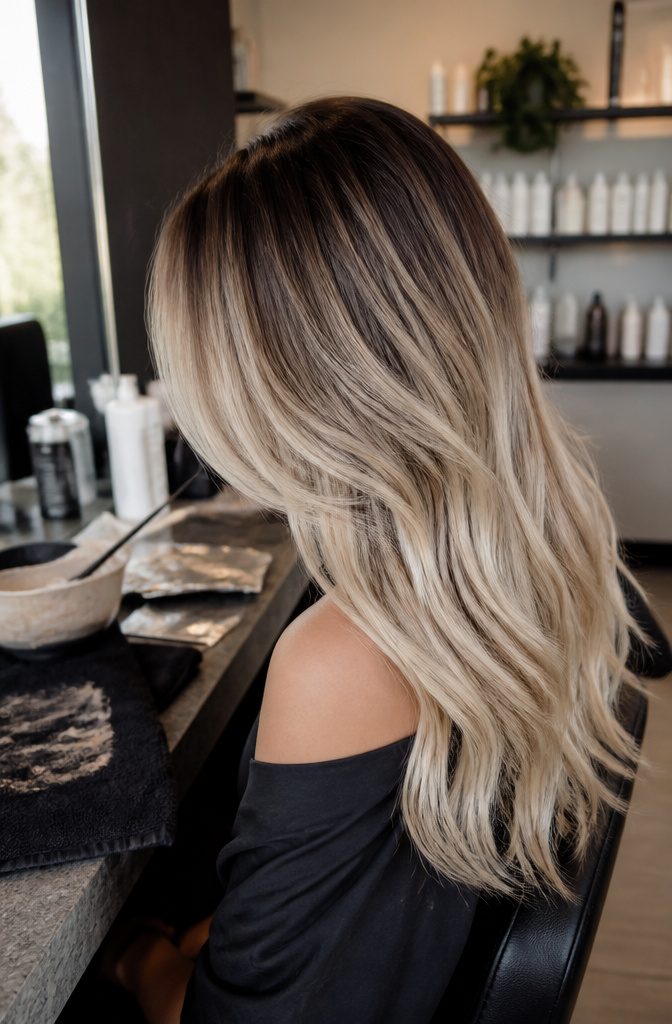
Coconut blonde hair gets its look from direction: dark at the root, light at the ends, and a smooth melt between them.
Brown and blonde scattered evenly through the hair reads flatter, more like standard highlights. Here the root keeps its depth and the color is dragged down into the blonde, which adds definition while the hair moves from brown to blonde.
The ends carry two tones. Cool strands mimic coconut flakes, warm ones supply the toasted look, and you want both in the ends, not just one.
Stylist Michelle Gonzalez describes warm brown at the root melting into cool blonde. I’d skip any version where the root stops in a hard band, since that kills the depth.
Which Starting Hair Color Works Best
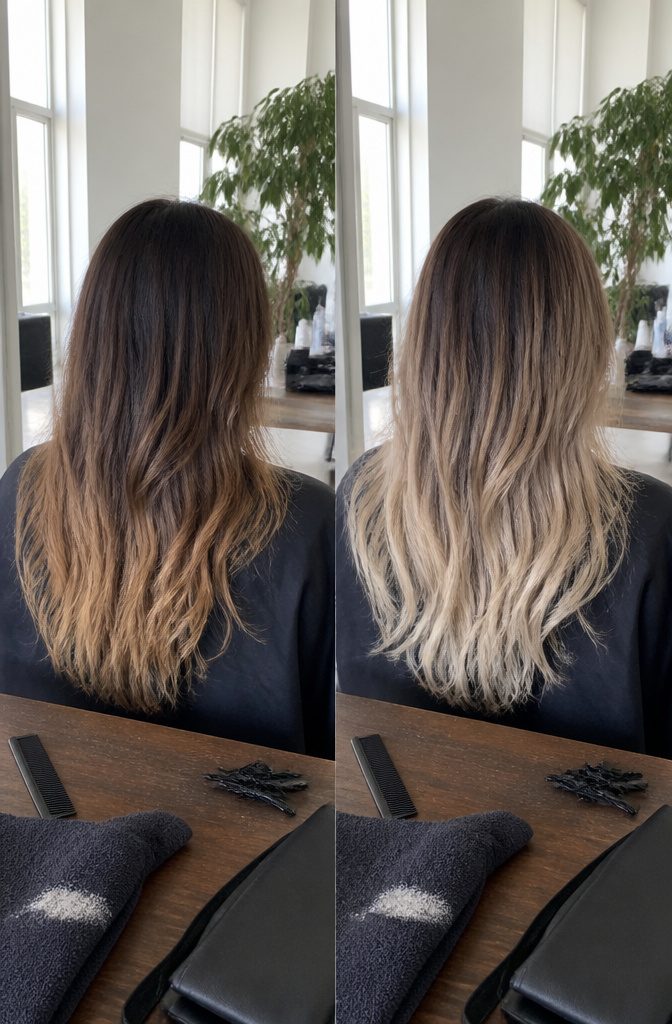
Brunettes start with half the look already on their head, and the HELLO! coverage says as much:
This look is a good option if your natural hair colour is brunette because you already own the dark roots – natural blondes may struggle to recreate this.
— HELLO!
The ends are the slow part. Getting dark hair to a super blonde takes time and patience, and can mean multiple appointments.
Hair that is already blonde or bronde is the easier start, because you only darken the root and drag it down into the blonde. I’d go brunette if you can wait, and blonde if you want it quickly.
How to Customize the Shade
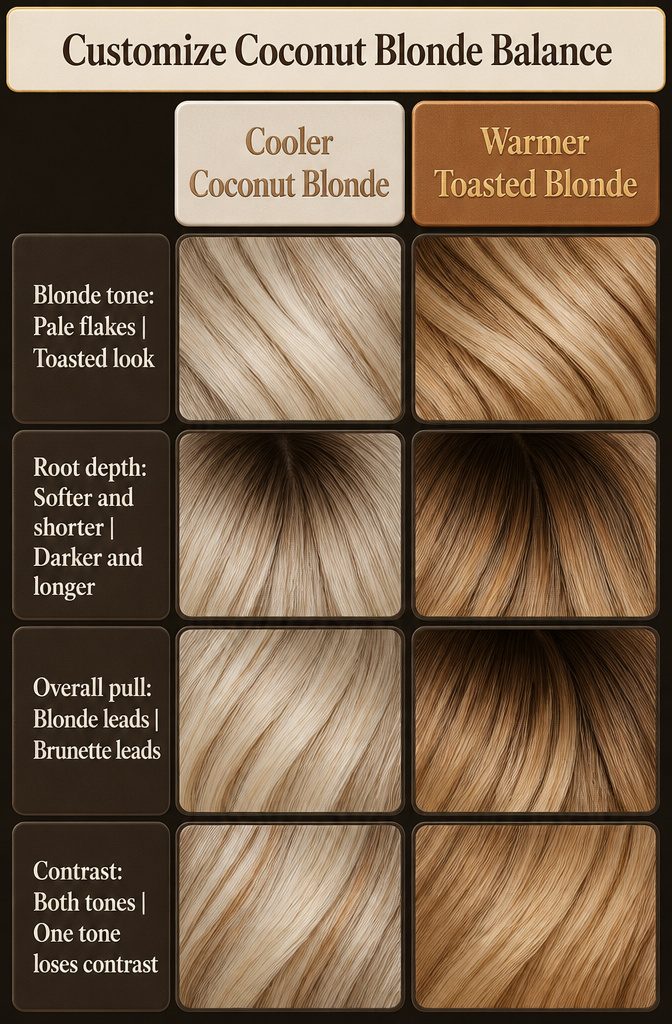
Two dials shape this color: the cool-to-warm balance in the blonde, and the depth of the brown root. Lean the blonde cooler and the ends read like pale coconut flakes; lean it warmer and the toasted look takes over.
I’d keep some of both in the mix, because going fully one way loses the contrast that defines the shade, and warm-blonde fans often worry ash will look flat while ash fans find warm hair too yellow.
The root settles the rest.
A darker, longer brown root pulls the whole head toward brunette, while a softer, shorter one lets the blonde lead. I’d choose the root depth first and set the tones around it.
Keeping the Blonde Clear and Pale
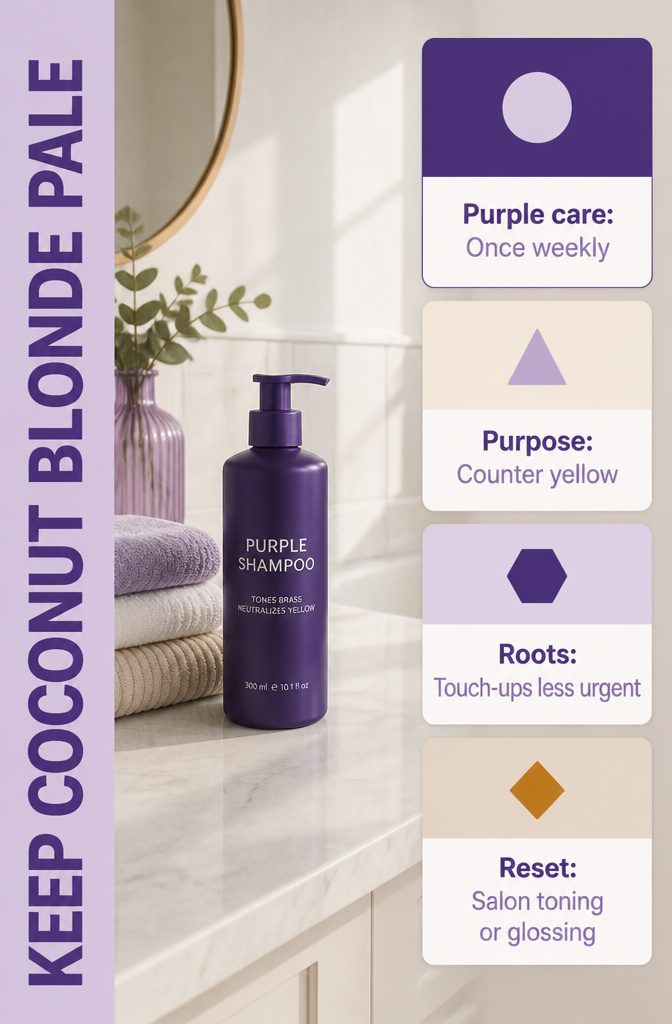
The blonde needs to stay clear and pale, which means fighting yellow and brass from the first wash. Purple-toned shampoos and treatments are the direct route: colorist Zoe Irwin recommends using them regularly to erase any warmth that creeps in.
The purple deposits counter yellow on a color wheel, so a once-a-week wash keeps the ends looking fresh without a salon visit.
Regrowth is less of a concern here because dark roots are built into the style. Coconut blonde is built around that visible root line, so you’re not scrambling to book a touch-up every four weeks.
When the blonde does start to look dull or the tone shifts too warm, a salon toning or glossing appointment will reset it.
I’d rather save maintenance time for the purple shampoo routine and let the roots do what they’re supposed to.
Using It as a Seasonal Transition
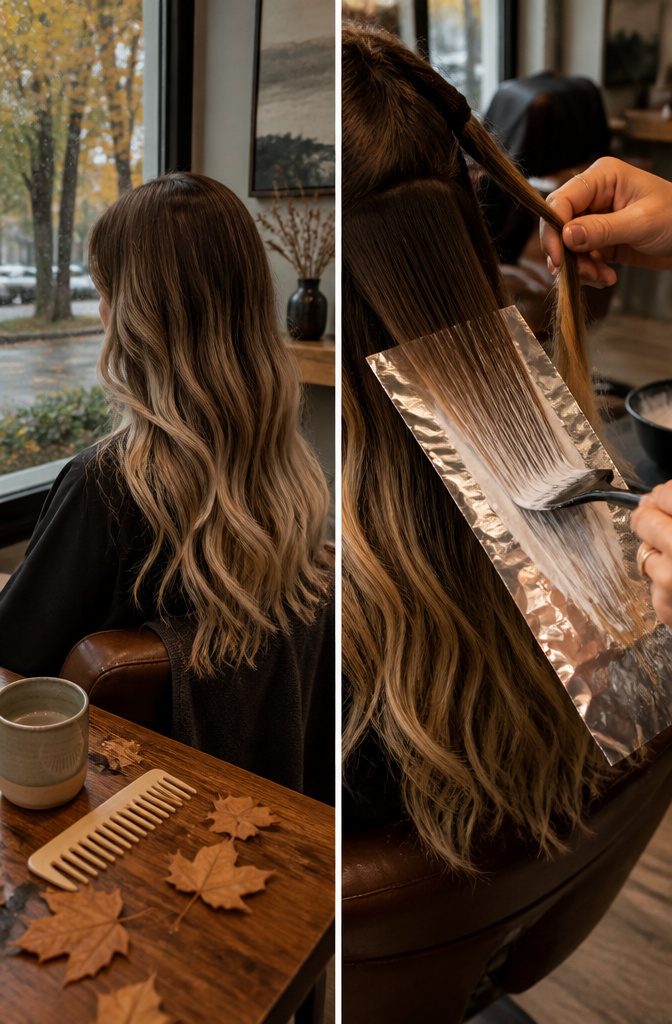
Toasted coconut keeps your summer blonde lengths while giving the roots a fall-ready depth.
Stylist Michelle Gonzalez of Mimi’s Salon in Belmar, New Jersey, puts the technique simply: instead of going fully dark, "start by darkening just your root and dragging it down into your blonde."
Warm brown at the crown melts into cool blonde ends, which settles the warm-versus-cool debate many people bring to the chair at the end of summer.
This works best as a summer balayage-to-fall move, not a dark-to-blonde one. Already-dark hair takes patience and multiple appointments to lighten the ends, so I’d start from blonde or bronde.
Where the Name Came From
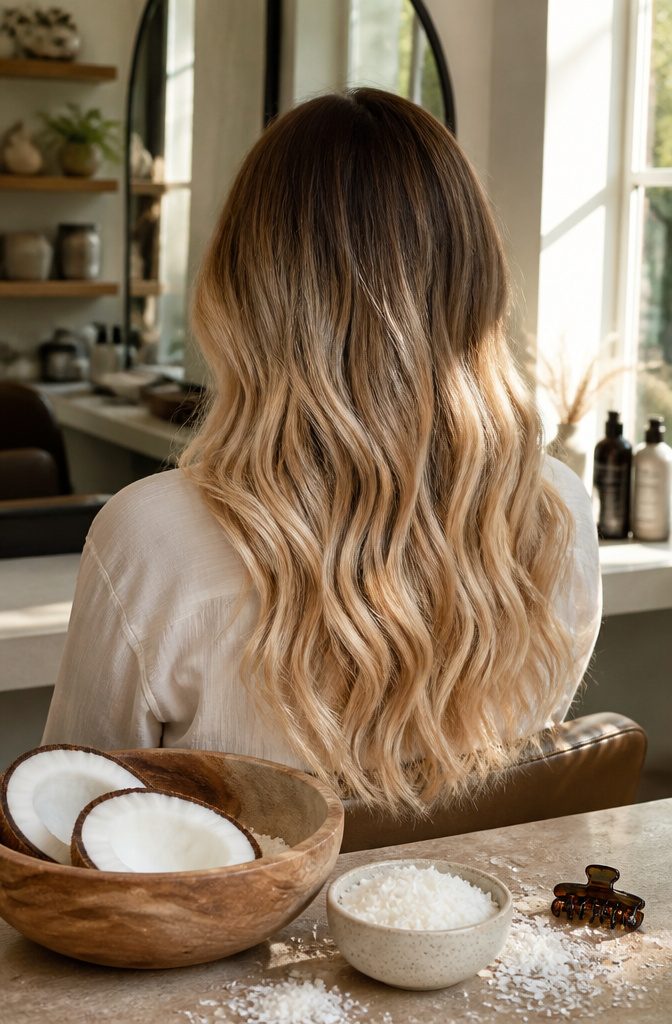
The name comes from Kahluh Stewart, owner of Elysian Studio in Georgia. She considered a few other labels first, including "burnt marshmallow" and "crispy snowflake," before settling on "toasted coconut."
I think she chose well.
"Burnt marshmallow" sounds scorched, which is the last thing anyone wants to hear before a color appointment. "Crispy snowflake" points toward icy white, which is a different direction from a soft, warm blonde.
"Toasted coconut" is easy to picture and easy to say out loud to a stylist, and that matters for a color people save on Pinterest and then have to ask for by name.
How It Differs From Other Bronde Shades
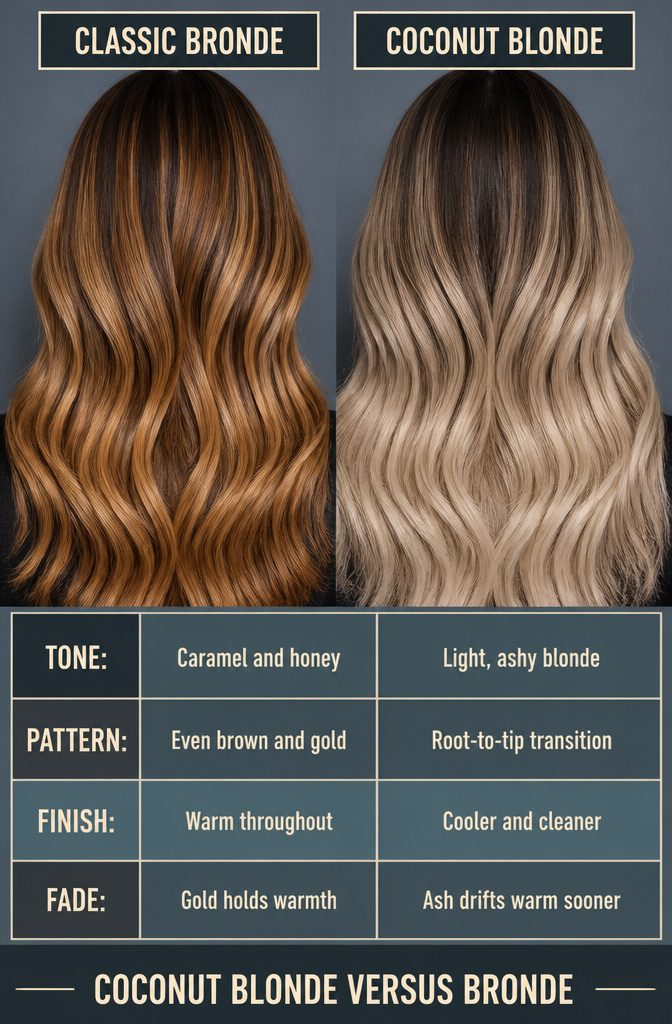
Coconut blonde belongs to the bronde family, but it departs from the classic version in tone.
Traditional bronde builds on caramel, honey and golden brown, so the whole head reads warm. Coconut blonde is "less about warm, caramel tones and more about light, ashy blondes and highlights."
The second difference is how the color moves. Classic bronde often weaves brown and gold evenly through the hair, while this shade relies on a root-to-tip transition, with a deeper base easing into pale ends.
If you want a cooler, cleaner finish, I’d pick coconut over caramel bronde. Ashy tones tend to drift warm as they fade, and you’ll see it sooner than you would with gold.
Hair Lengths That Work With It
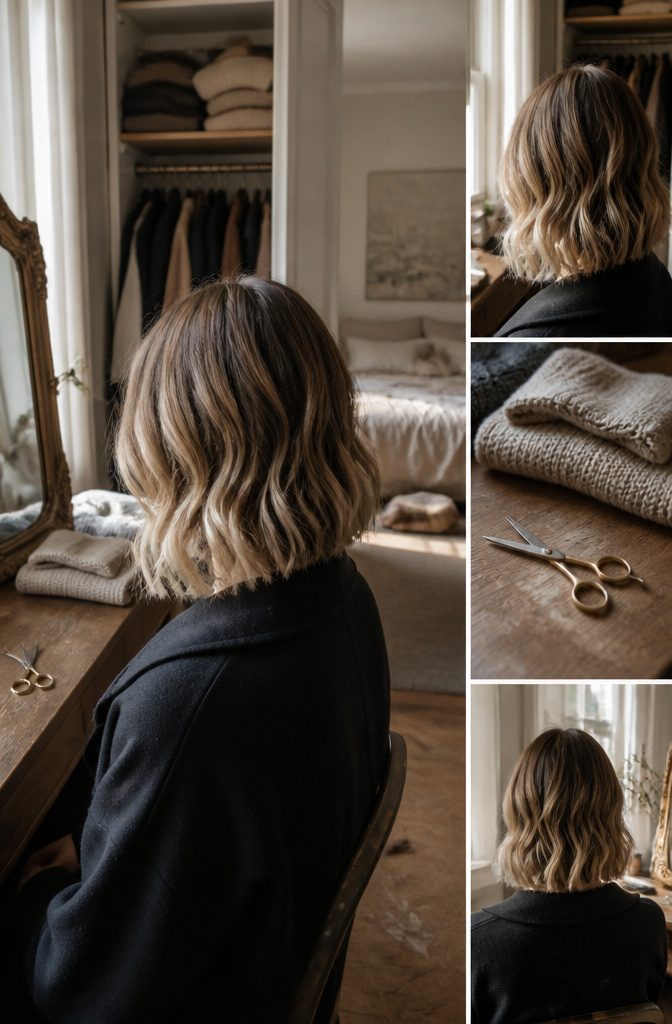
The shade adapts to any length you start with, and your colorist can blend the progression whether you wear your hair past your shoulders or cropped short.
Hair.com makes the point plainly: whether your hair is long, short, or something in between, toasted coconut hair is bound to look stunning on you. That flexibility comes from the way the color is painted rather than blocked.
A gradual melt from root to ends translates across a pixie cut, a lob that skims the collarbone, or waist-length waves without losing the definition that makes the shade recognizable.
I think that versatility matters most if you like changing your cut seasonally but want a color that travels with you.
Frequently Asked Questions
What is coconut blonde hair?
Coconut blonde hair is a brown-to-blonde color melt with dark roots that blend smoothly into lighter ends. The ends combine both cool and warm blonde tones: cool strands read as coconut flakes while warm ones give the toasted look.
The dark roots add depth, and the whole style relies on a gradual root-to-tip transition rather than brown and blonde scattered evenly through the hair.
What kind of maintenance does coconut blonde hair require?
The blonde ends need to stay clear and pale, so use purple-toned shampoos and treatments once a week to counter any yellow or brass that creeps in.
Regrowth is less of a concern because dark roots are built into the style. When the blonde starts to look dull or shifts too warm, book a salon toning or glossing appointment to reset it.
Does coconut blonde hair work on short hair?
Yes, coconut blonde adapts to any length you start with. A gradual melt from root to ends translates across a pixie cut, a lob, or waist-length waves without losing the definition that makes the shade recognizable.
Your colorist can blend the progression whether your hair is long, short, or something in between.
What does coconut hair do to your hair?
Coconut blonde adds dimension through a root-to-tip color transition, with dark roots melting into pale blonde ends.
It keeps your hair from reading flat by building contrast between the deeper base and the lighter lengths. The style works best as a seasonal shift from summer blonde into fall, giving roots depth while keeping the blonde intact.