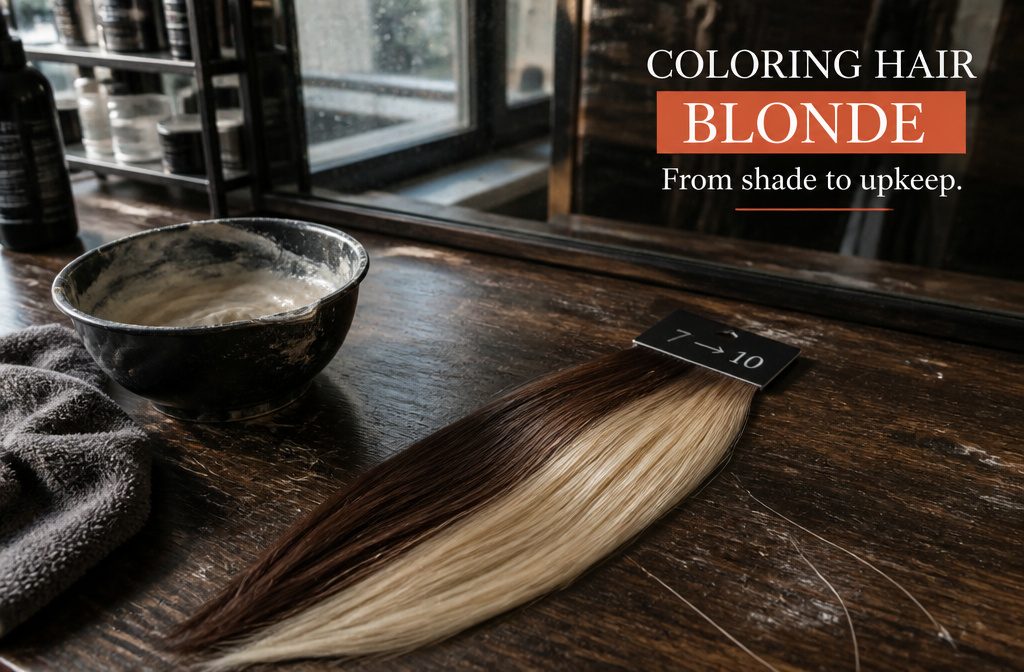
Count the levels between your current shade and your target: 1 or 2 levels can be done with high-lift color or dye, but at 3 or more, bleach comes first, then toner.
Going from level 7 to level 10 is exactly that jump. Naturally dark hair usually needs several visits, since a one-session jump costs hair health.
1. Assess Your Starting Hair and Choose Your Blonde
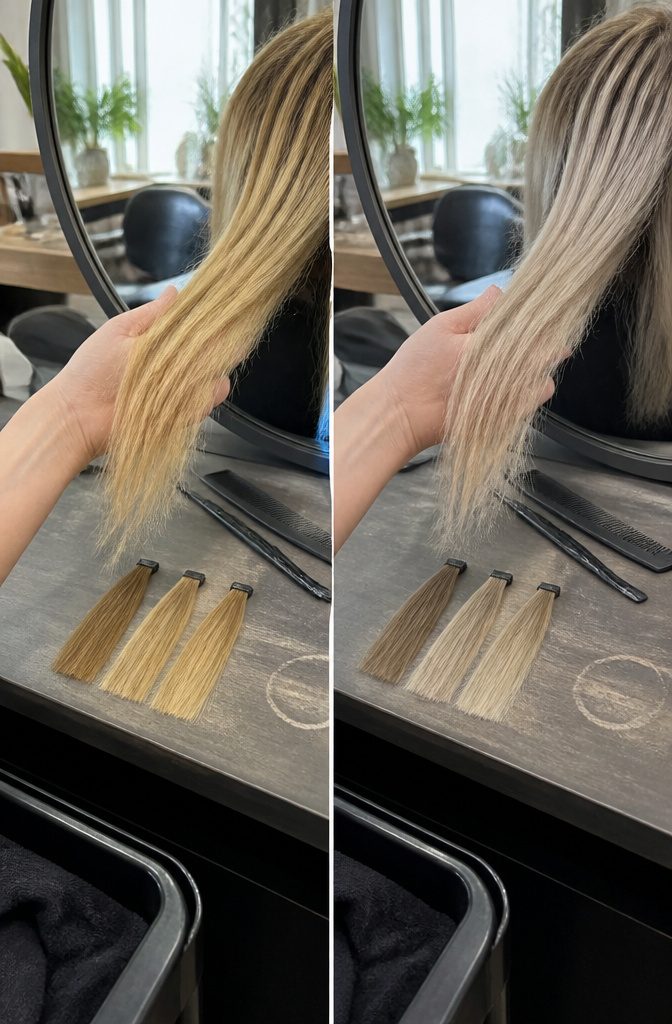
Assess Your Starting Hair and Choose Your Blonde
I start by figuring out what level the hair is right now. The industry uses a numbered scale where level 7 is blonde, level 10 is extra light blonde, and anything darker sits below that.
If someone wants to move from level 7 to level 10, that’s three levels of lift, and the number determines whether standard dye will get there or whether bleach becomes necessary.
Previous coloring, bleaching, perming, damage, breakage, and split ends all change how far hair can safely go in one session.
The desired blonde needs to align with skin tone and undertones.
Warm skin tones suit golden or caramel blondes, cool skin tones pull off ash and platinum, and neutral blondes work across the board. The vein test helps: blue veins signal cool undertones, green veins warm.
Eye color factors in too. Ash blonde fits darker natural hair, skin, and eyes, while natural blonde stays multidimensional and mimics the lightness or depth already present in the complexion.
The mistake I see repeated is choosing a shade based on a model photo without accounting for starting condition or undertone, then wondering why it looks wrong.
2. Pick Your Blonde Shade and Coloring Method
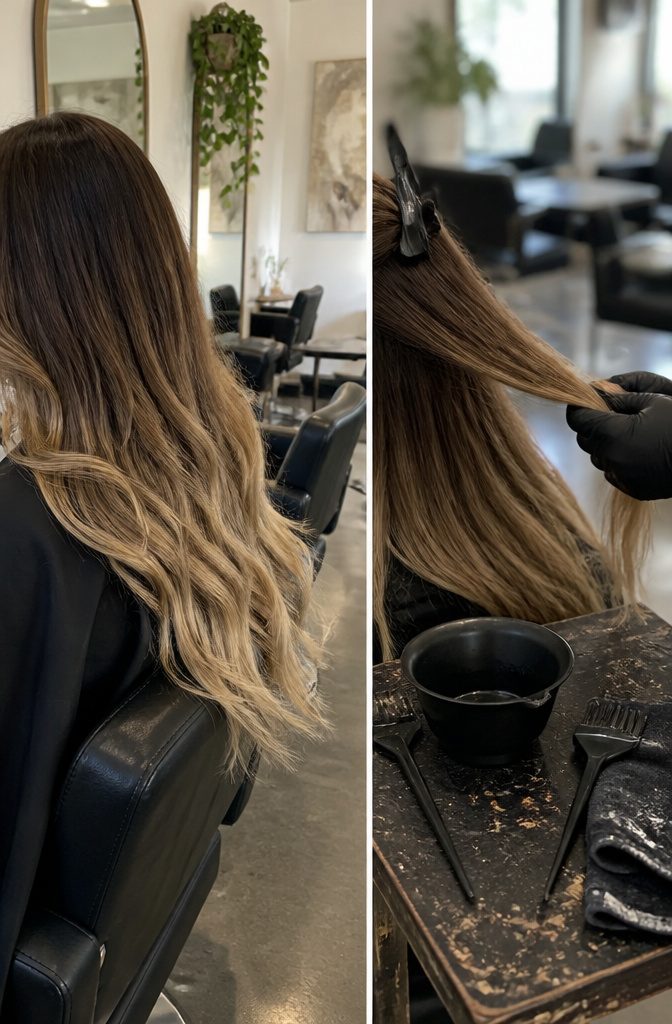
High-lift color gives controlled, natural-looking highlights, lifting and toning in one step without bleach.
Bleach plus toner is the heavier route. Balayage, highlights, ombré and shadow roots keep some of your own root, so regrowth stays quiet, and a neutral ombré is the easiest first try for a brunette.
Permanent dye suits a straight shade change, and Schwarzkopf puts its staying power plainly:
"…reliable pigmentation that is sustained over 6 weeks of washes."
I’d treat 6 weeks as your refresh window.
Naturally dark hair needs several visits or a transitional color.
Going dark to blonde in one session is possible but costs hair health, and a big jump alone is the classic mistake. Lightening is hard to reverse; darkening is easy.
3. Prepare Hair, Skin, and Supplies
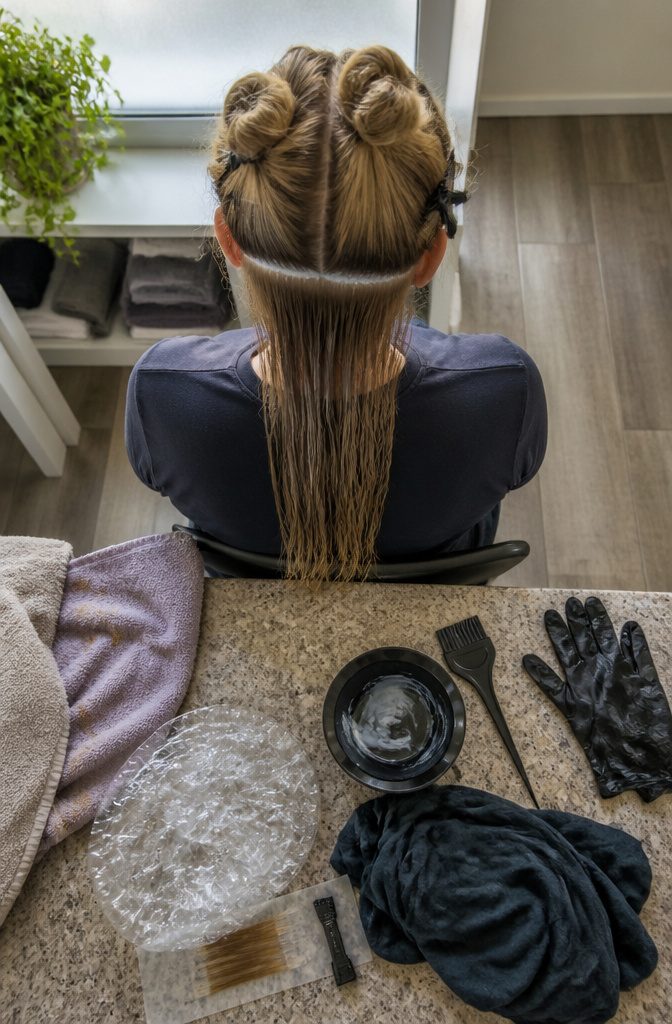
Skip the shampoo. Color grips best on dry hair that has gone a couple of days unwashed, because the oil your scalp makes protects it.
Comb through gently, split the hair into large sections, and clip each one up. Leave only the lower back section down, since that’s where application starts.
Set out your supplies before mixing: strand test materials, petroleum jelly for the hairline, old towels, an old t-shirt, gloves, an applicator brush, and a shower cap for the wait. Never skip the strand test.
Skin reacts differently from person to person, and the test shows whether the shade suits you. Skipping the jelly or wearing a favorite top is how stains happen.
4. Match Developer Strength and Mixing Ratio to Your Lift
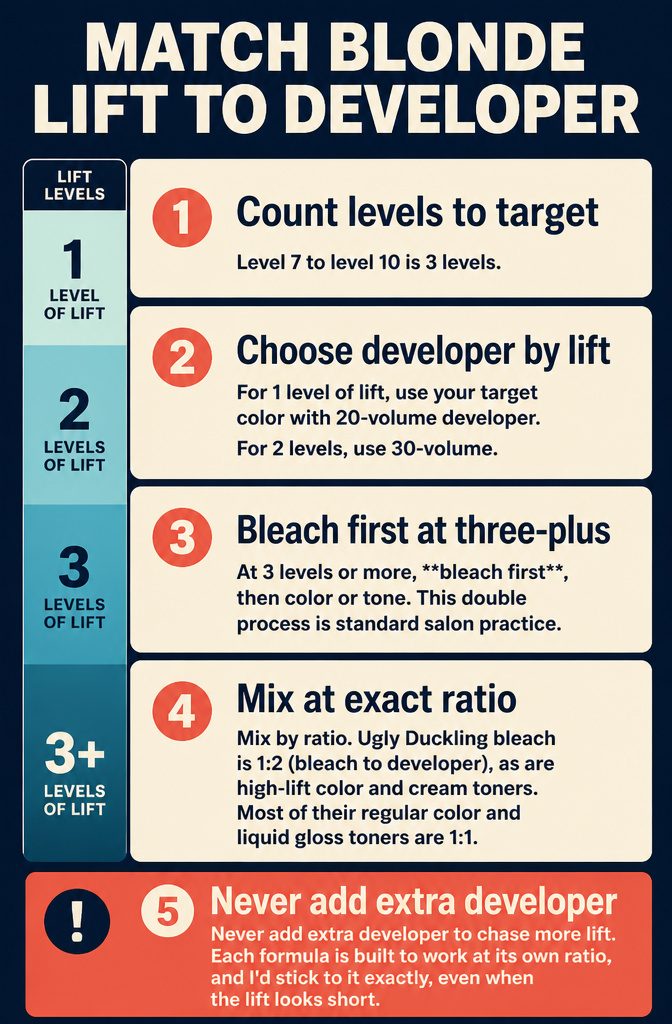
- Count the levels between your current level and your target. Level 7 to level 10 is 3 levels.
- For 1 level of lift, use your target color with 20-volume developer. For 2 levels, use 30-volume.
- At 3 levels or more, bleach first, then color or tone. This double process is standard salon practice.
- Mix by ratio. Ugly Duckling bleach is 1:2 (bleach to developer), as are high-lift color and cream toners. Most of their regular color and liquid gloss toners are 1:1.
- Never add extra developer to chase more lift. Each formula is built to work at its own ratio, and I’d stick to it exactly, even when the lift looks short.
5. Section and Apply Product to Roots, Lengths, and Ends
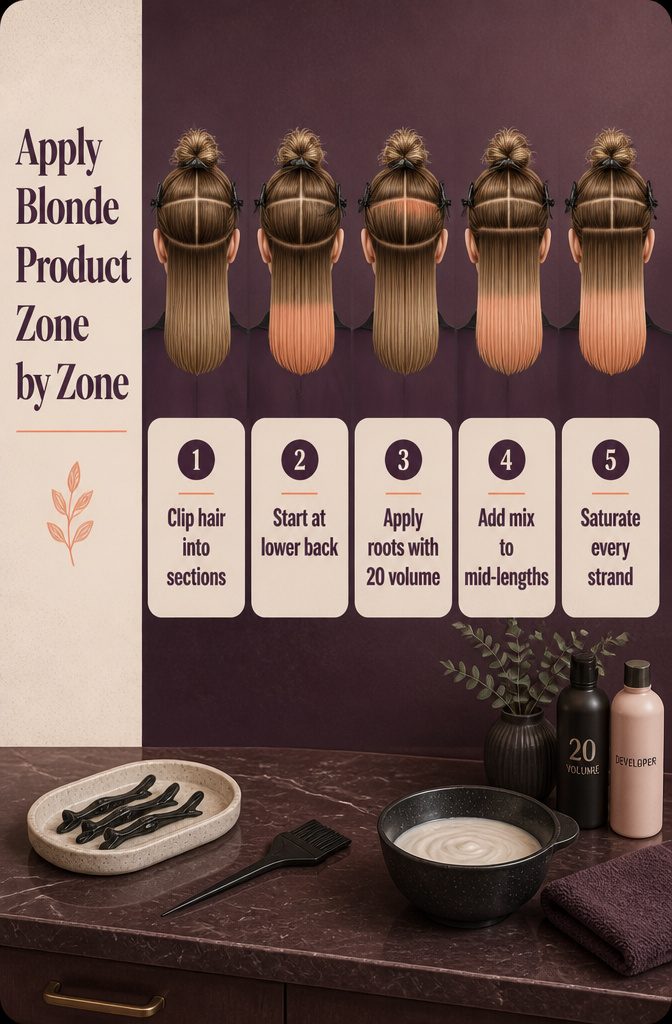
Split the hair into big sections and clip each one up, leaving only the lower back section down. That section gets the first stroke of product, and nothing sits waiting while you wrestle with clips.
Hair that is darker at the root and lighter at the ends needs a different plan for each zone.
A common case is regrowth at level 7 above old bleached ends at level 9/10, with level 10 as the goal. Apply bleach with 20 volume to the roots only, first, since scalp heat helps them lift quickly.
Then add fresh mix to the mid-lengths and rinse the whole head. Ends are thinner, so they shouldn’t get the root’s full soak.
Saturate every strand completely. Patchy coverage leaves uneven lift, and giving previously treated hair the same process from root to tip is the mistake I’d work hardest to avoid.
6. Process, Check, Emulsify, and Rinse
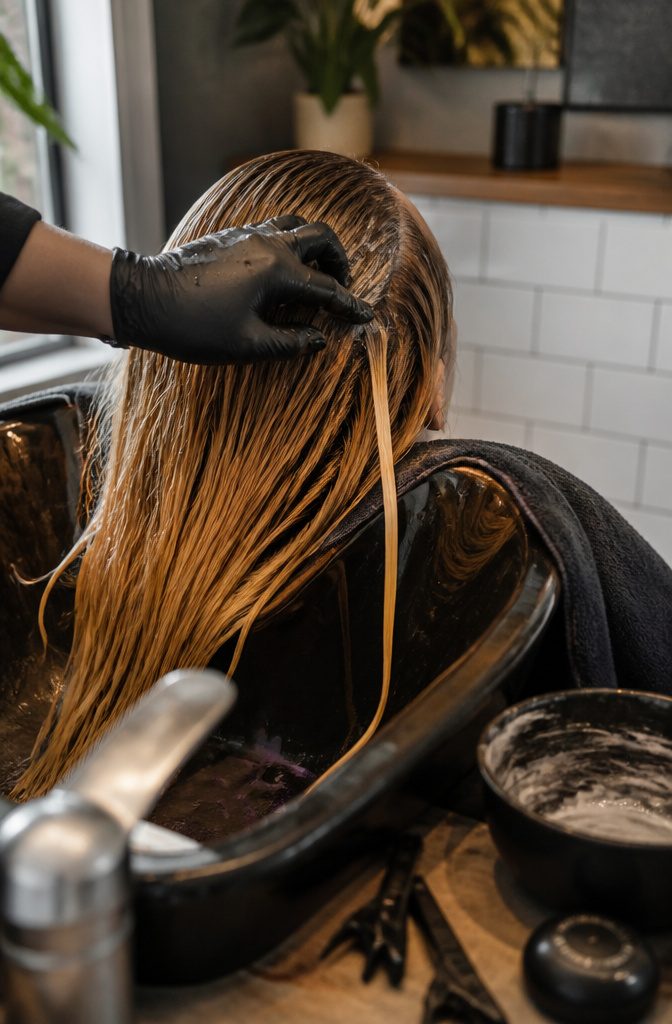
Most colors need 30 minutes. Toners move faster, usually 10–15 minutes, and you rinse when the right shade appears rather than when a timer rings.
High-lift colors can run up to 40 minutes. Heat from the scalp speeds processing, so the roots finish ahead of the lengths, and I’d rather rinse early than wait out the clock.
With bleach, check a strand after 15 minutes and rinse at a very pale yellow. Overprocessing is the classic mistake, and it usually starts at roots nobody was watching.
Before you rinse, work a few drops of water into the color and rub at the scalp, then the hairline, middle and nape. This emulsifying step helps the color last and leaves hair feeling fuller.
7. Tone After Bleach and Finish
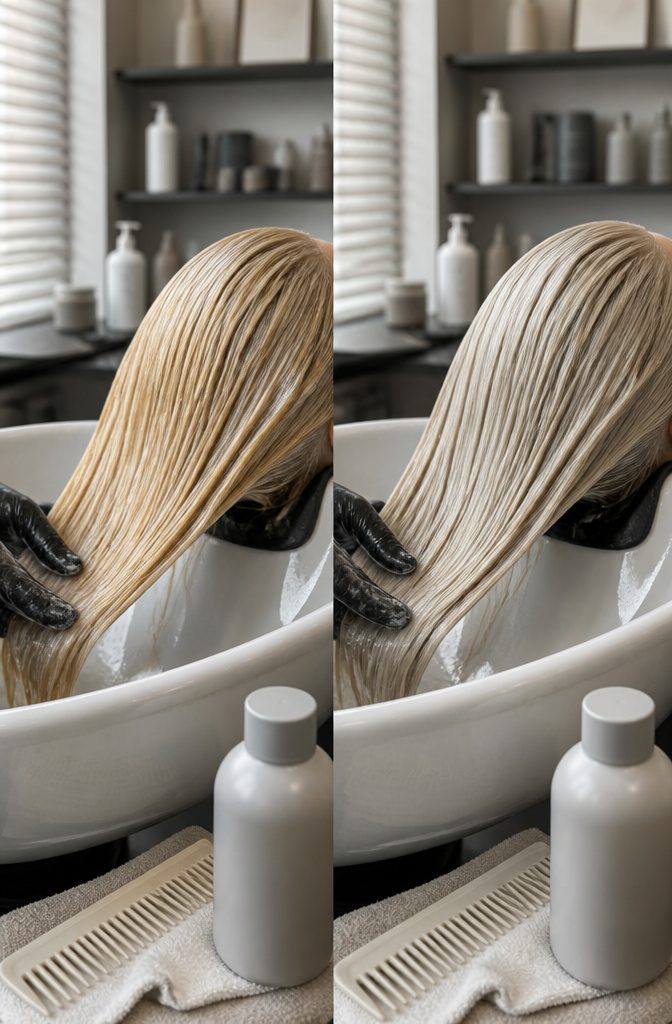
Toner refines tone; it does not lighten anything.
Bleach lifts the pigment, and toner then settles the leftover yellow or orange into the shade you actually asked for. I tone after every bleach session, since freshly lifted hair rarely matches the saved photo.
The common mistake is expecting toner to lift a few more levels. A zero-lift glaze deposits color and shine only, so if the hair is still too dark, it needs more lightening first, not more toner.
Afterward, wash with an acidic, low-pH shampoo.
It closes the cuticle, locks in the color and returns hair to its natural pH. Check the label, since not every professional shampoo is acidic.
8. Maintain Color and Manage Regrowth
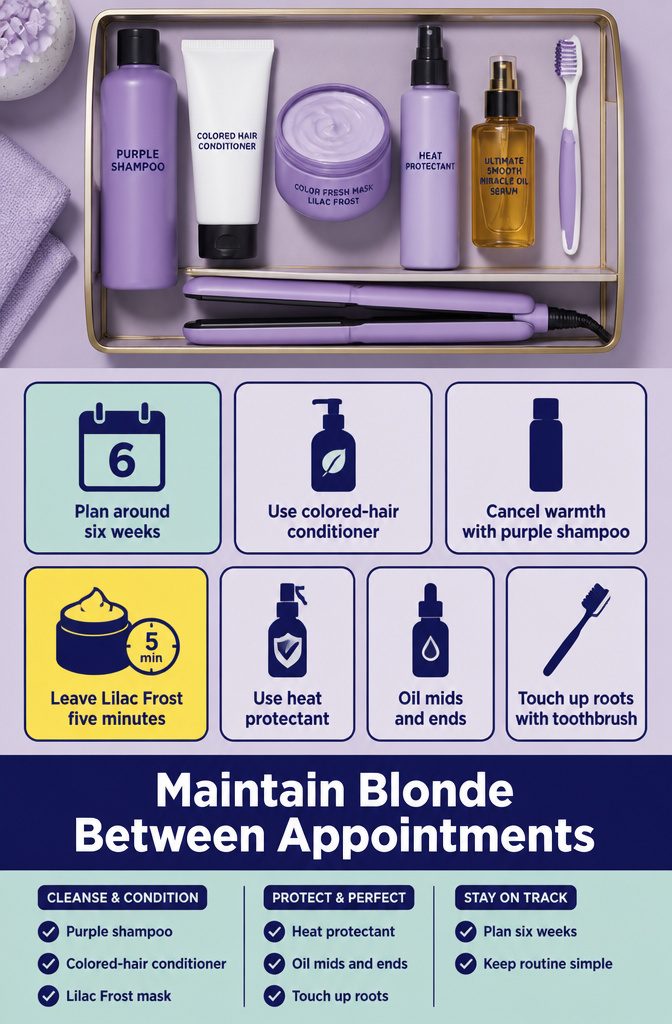
Permanent blonde lasts around 6 weeks, so build your upkeep around that window:
- After coloring, use conditioners made for colored hair. They seal the cuticle and hold pigment.
- Purple shampoo cancels yellow warmth between salon visits.
- Color Fresh Mask in Lilac Frost is the conditioning alternative: leave it on 5 minutes, not the usual 10, so brassiness fades without the shade going too cool.
- Apply heat protectant before any hot tool.
- Work a few drops of ULTIMATE SMOOTH Miracle Oil Serum through mid-lengths and ends. The smoothness lasts up to 3 days if you don’t wash.
- Touch up roots with a little dye on a toothbrush instead of recoloring your whole head.
Warm, Cool, and Neutral Blonde Tones
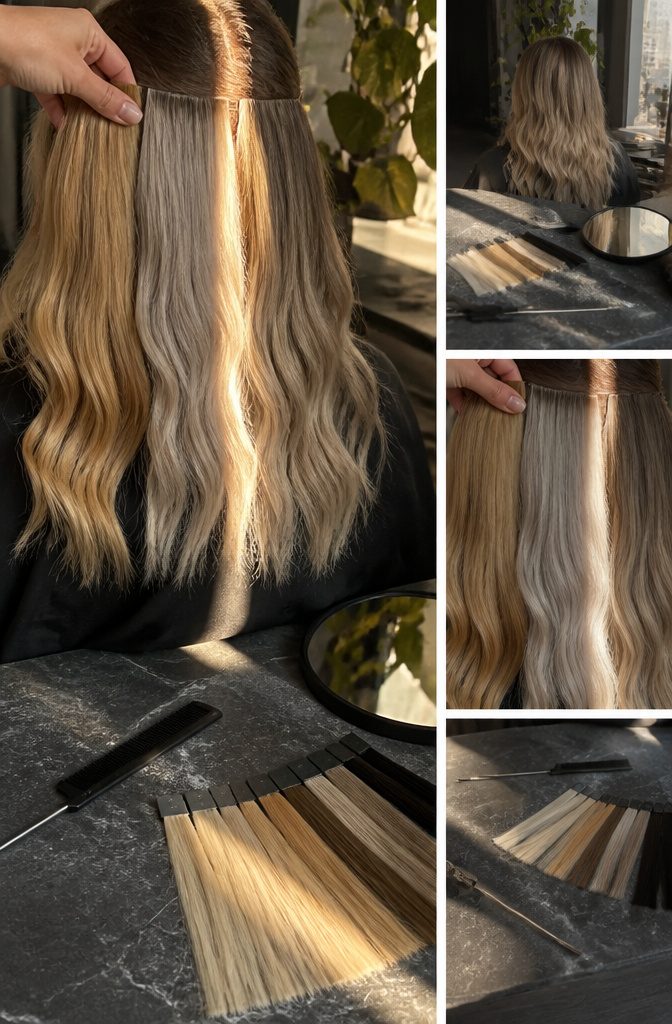
Blonde splits into warm, cool, and neutral tones, and getting this right comes down to what sits under your skin and what feeling you want the color to carry. Warm blondes pull golden, honey, or caramel.
They suit skin with warm undertones—check your wrists, and if the veins read green rather than blue, that’s you. Cool blondes lean ashy, platinum, or pearl.
They work on skin with cool undertones, where veins look blue. Neutral blondes sit between the two and dodge strong undertones entirely, which makes them wearable on nearly everyone.
Schwarzkopf offers 7.5 Caramel Blonde for warm skin and 11.4 Pearl Blonde for cool.
Honey blonde works well on medium skin with darker eyes; sandy blonde pairs with fair skin and light eyes like blue or hazel. Bronde keeps darker roots and adds lighter mid-lengths.
Balayage and highlights let you layer tones rather than committing to one flat shade. If you want something sun-lit and natural, neutral blonde adds dimension without tipping warm or icy.
How Starting Hair Affects Lift and Processing
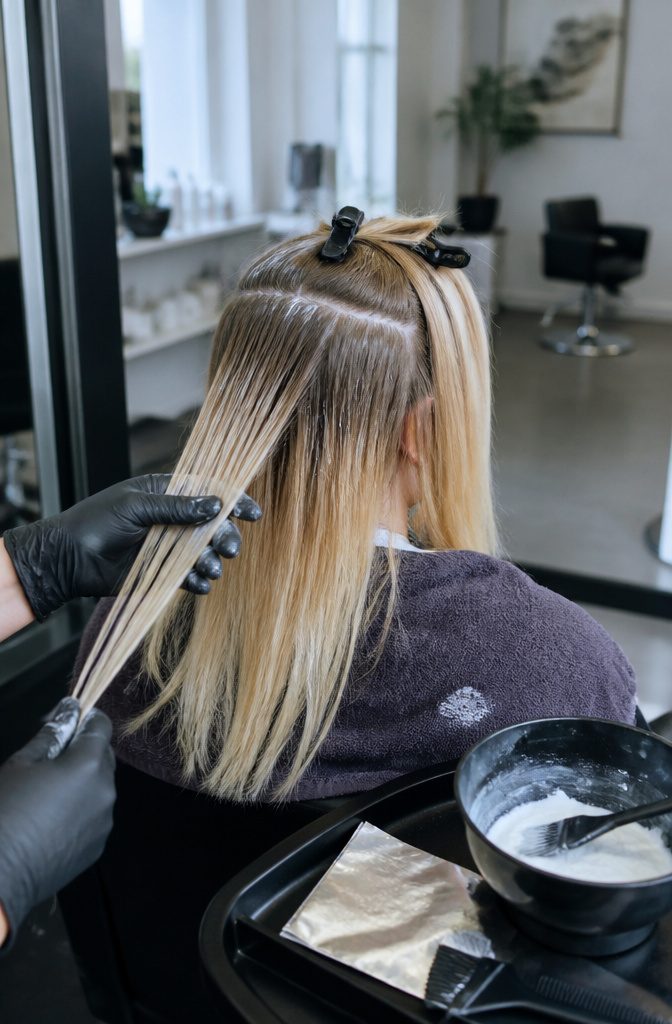
Matrix recommends staying within two levels of your natural color, and past two levels, expect more than one session. Naturally black hair is the clearest case.
A stylist will likely suggest a transitional shade first, because going dark to blonde in one visit is possible but rarely kind to the hair. I’d take the extra appointment.
Previously colored hair adds another wrinkle, since roots, mid-lengths and ends are often different levels. Take regrowth at level 7 above ends bleached to level 9/10.
Those ends are thinner, so they stay out of the first round. Bleach with 20 Vol goes on the roots, where scalp heat speeds lift.
Fresh mix then goes through the mid-lengths. Rinse, then tone.
When to See a Stylist Instead
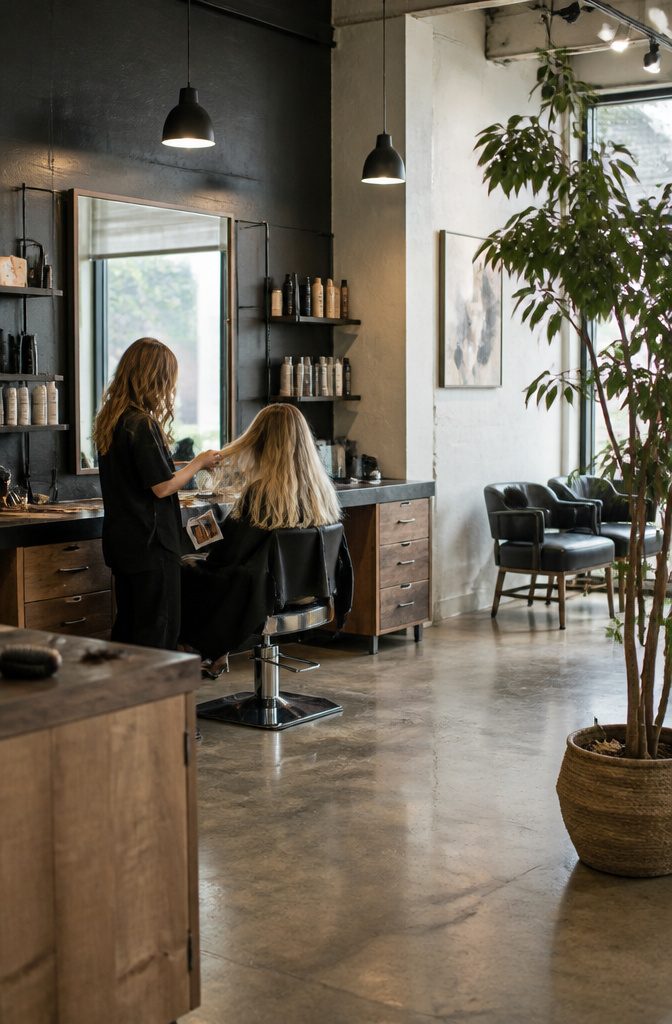
A first-time blonde is the one color job I’d hand to a stylist, and a dramatic change or a silver or platinum goal makes that even firmer.
The salon visit starts with a hair diagnosis: the stylist brushes your hair out, checks it from root to ends for breakage and split ends, and asks how many times it has been colored, bleached or permed and which chemical treatments came before.
A box can’t ask you any of that.
If you’re particular about the outcome, don’t dye your hair blonde for the first time yourself. Bring your photo, say what you expect, and let the stylist work from salon-grade color instead of guessing at shelf shades.
Purple and Blue Products That Control Warmth
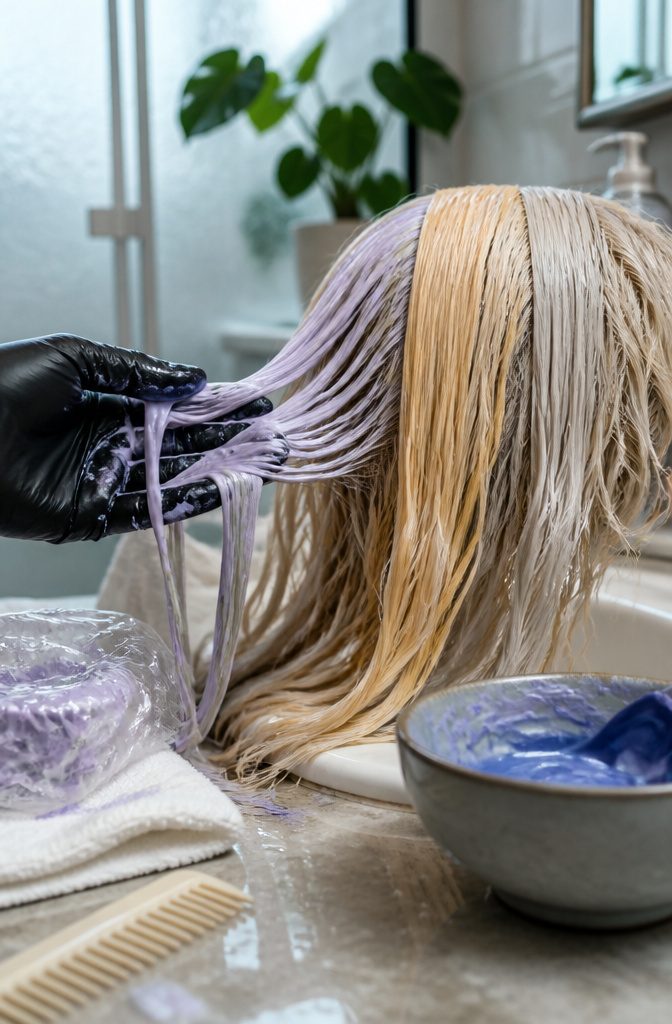
Toner does not lighten hair. It deposits pigment over bleached or lifted hair to refine the tone, so it comes after lightening, never instead of it.
Yellow calls for violet: 010V Natural Violet Blonde targets pure yellow, while 010A Natural Ash Blonde handles yellow-orange brassiness. Blondify gloss toners are ammonia-free, mix with 10 or 20 Vol developer, and process in 10 minutes, so a darker base underneath stays put.
Between toning sessions, purple shampoo holds yellow back. Orange on lightened dark hair needs a blue-pigmented shampoo instead.
On warm blondes I’d reach for a purple mask first, because the timing gives you control: leave a mask like Wella’s Lilac Frost on for 5 minutes, not the usual 10, or the blonde drifts too cool.
Condition, Protect, and Repair Blonde Hair
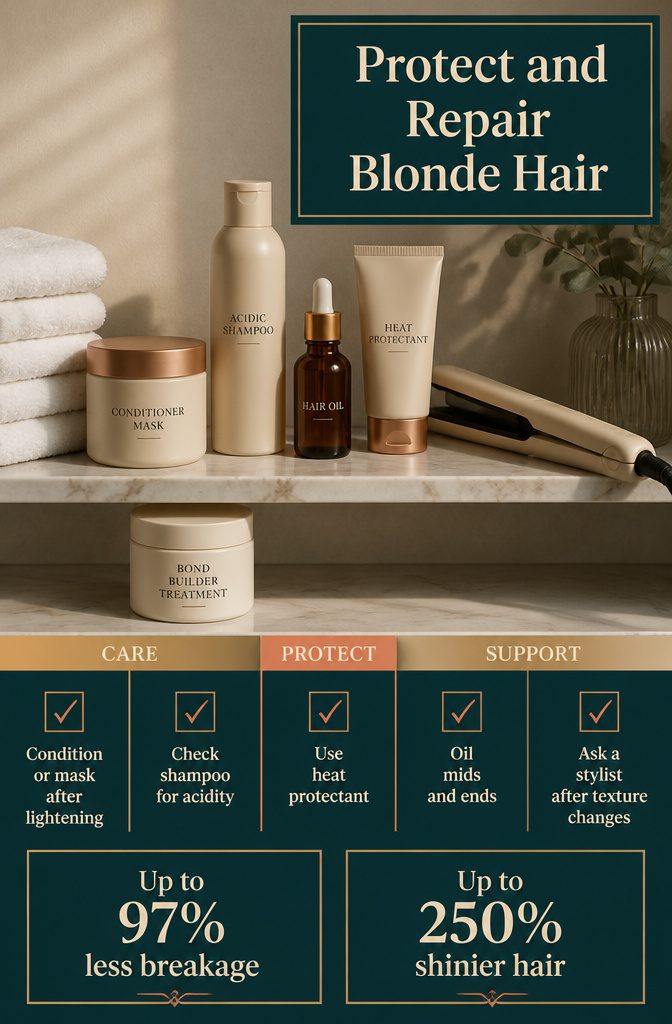
Bleach strips natural oils, so freshly lightened hair can feel dry, snap more easily, or settle into a different texture.
Curls often loosen after a big lift, and they usually return in time. In the days after coloring, use a conditioner or mask made for colored hair, then switch to an acidic shampoo to close the cuticle.
Check the label, because not every professional shampoo is acidic. Apply heat protectant before any hot tool, and smooth a few drops of oil through the mids and ends for shine.
Bond builders earn the extra step. BlondorPlex with Wellaplex N°2 claims up to 97% less breakage than BlondorPlex alone, and SHINEFINITY claims up to 250% shinier hair.
I’d treat both as best-case numbers. If your texture changes drastically, a stylist can advise.
Frequently Asked Questions
What should I do to my hair before coloring it blonde?
Color it dry after a couple of days without washing, and skip shampoo, masks, and coconut oil beforehand. The oil your scalp makes protects it during processing.
Comb gently, split the hair into large sections, and clip them up. Run a strand test and put petroleum jelly along the hairline before you mix.
How do I figure out my hair level and the level I want?
Match your current color to the numbered level chart, where level 7 is blonde and level 10 is extra light blonde.
Pick your target level the same way, then count the gap: 7 to 10 is 3 levels of lift. A reference photo helps with the exact tone, but check it against your starting condition and undertone.
Which developer strength do I need for coloring hair blonde?
Use 20-volume developer for 1 level of lift and 30-volume for 2 levels.
At 3 levels or more, bleach first, then color or tone. Naturally dark hair often needs several visits or a transitional shade to get there.
How much developer do I mix with my color or bleach?
Follow the ratio printed for your product.
Ugly Duckling bleach, high-lift color, and cream toners mix 1:2 with developer, while most of their regular colors and liquid gloss toners mix 1:1. Adding extra developer won’t give more lift, because each formula is built to work at its own ratio.
Do I apply color to the roots or the ends first?
It depends on the hair’s history. When regrowth at level 7 sits above ends already bleached to level 9/10, bleach with 20 volume goes on the roots first because scalp heat speeds their lift.
Fresh mix goes through the mid-lengths next, and the thinner ends stay out of the first round.
How can I go lighter without bleach?
High-lift color lifts and tones in one step with no bleach.
Regular permanent dye with 20-volume developer gets 1 level and 30-volume gets 2, so anything past that calls for bleach. Balayage, highlights, and ombré are gentler routes because they keep some of your own root.
How do I dye blonde hair white?
Lighten the hair to a very pale base first, then tone it with a silver or ash toner. Toner only deposits pigment and can’t lift, so the base has to be light already.
Ugly Duckling’s Silver Grey is one toner applied on pre-lightened hair. A silver or platinum goal is a job I’d hand to a stylist.
How does neutral blonde compare to ash blonde?
Ash blonde is cool, with a smoky, silvery edge, while neutral blonde has no clear undertone.
That’s why neutral suits nearly everyone. If you want a hint of smokiness, ashy highlights can be added to a neutral blonde.
Is neutral blonde good for covering grey hair?
Yes.
Blending greys with neutral blonde highlights adds dimension against the silver. For hiding them, Wella’s demi-permanent Color Touch gives up to 70% grey coverage, and permanent formulas like Illumina and Koleston Perfect give up to 100%.
Which Ugly Duckling toners sell best for blonde hair?
The best-selling blonding colors and toners are Intense Pearl Blonde Toner 100V, Pearl Blonde Toner 10V, Silver Grey, and Extra Cold Ash Blonde 10.1b. All are shown on pre-lightened hair, since toner refines tone and doesn’t lighten.