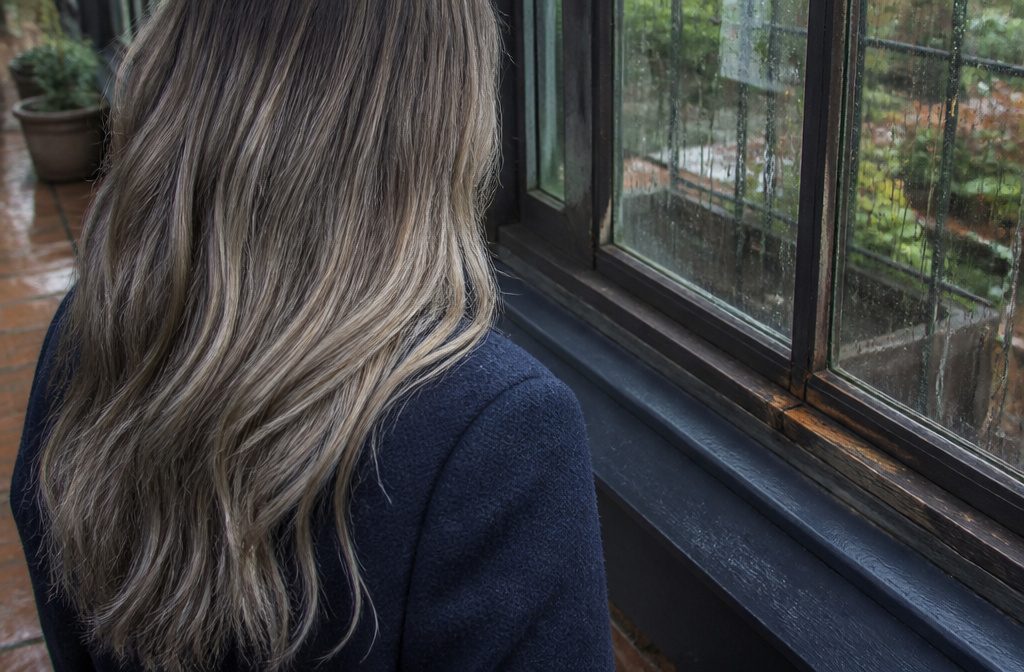
The result is a smoky, silvery dark ash blonde that fades in 6–8 weeks, so book a toner around week 6.
Most people get the lift wrong: a toner cancels mild orange but won’t fix hair that’s still orange. Starting from levels 2–4, expect 2 or 3 bleach sessions, 2–3 weeks apart.
What Dark Ash Blonde Looks Like
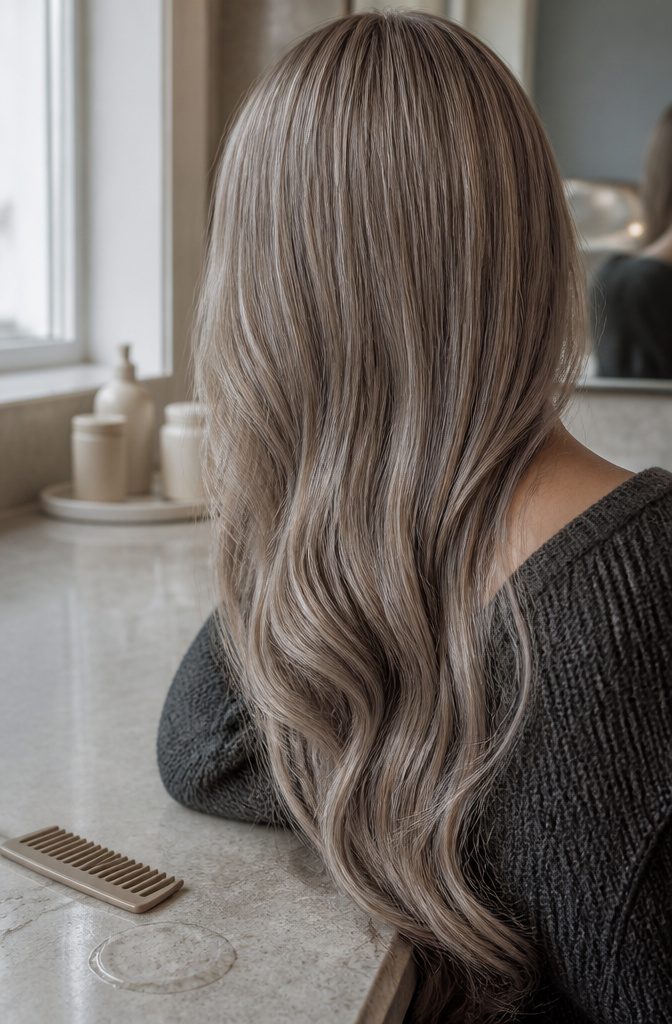
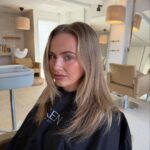
Dark ash blonde is a deeper blonde with a cool, silvery finish and none of the golden warmth you see in honey or butter tones.
It sits on the cusp of blonde and brown, so it gets mistaken for its neighbors. Mushroom blonde starts lighter, with a sandy or taupe overtone.
Light ash brown starts from a brown base and shows no obvious blonde. Dark ash blonde is a dark blonde base with a silvery overtone and no noticeable brunette pigment.
Despite the smoky undertones, it doesn’t have to look gray.
The gray, violet or blue cast is a soft overtone over blonde, so I read it as muted rather than dull. It’s a cooler take on bronde, and level 7 sits at the deeper, smokier end of ash formulas.
1. Classic All-Over Dark Ash Blonde
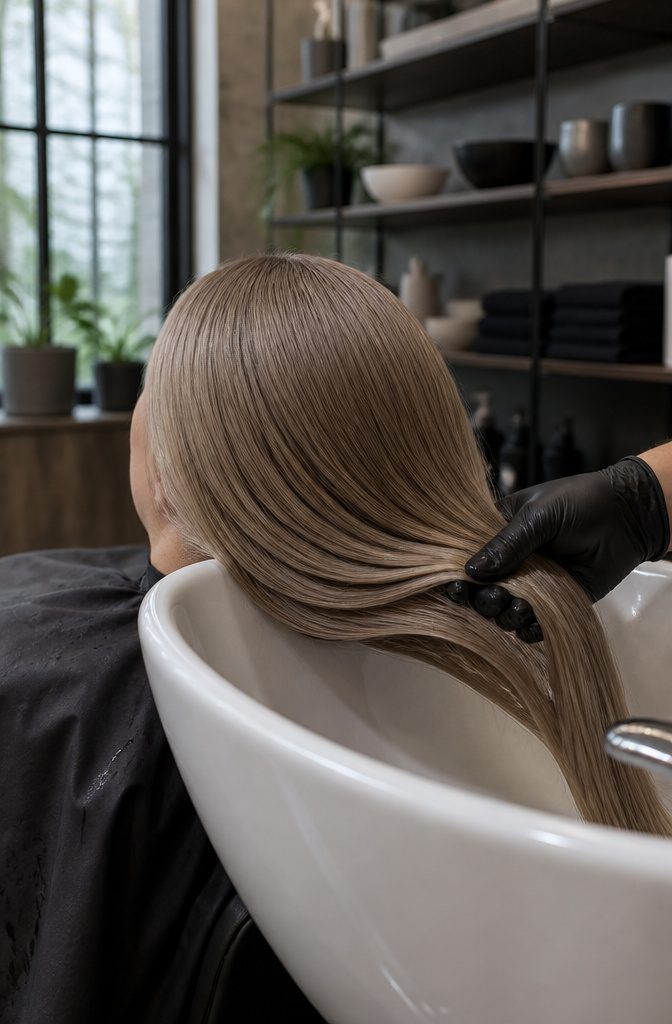
Dark silvery blonde is the classic version: one all-over color with ash undertones and a muted finish that looks fresh in any season.
It stays firmly blonde instead of sliding toward brown. If your hair is healthy, L’Oréal Paris Superior Preference in Dark Ash Blonde puts the look within reach at home.
Plan around the fade, because permanent color lasts six to eight weeks.
Permanent dark ash blonde color typically lasts six to eight weeks before it begins to fade, though longevity varies based on your hair type and care routine.
I’d book a toner or gloss around week six, before the warmth creeps back in.
2. Smoky or Deep Ash Blonde
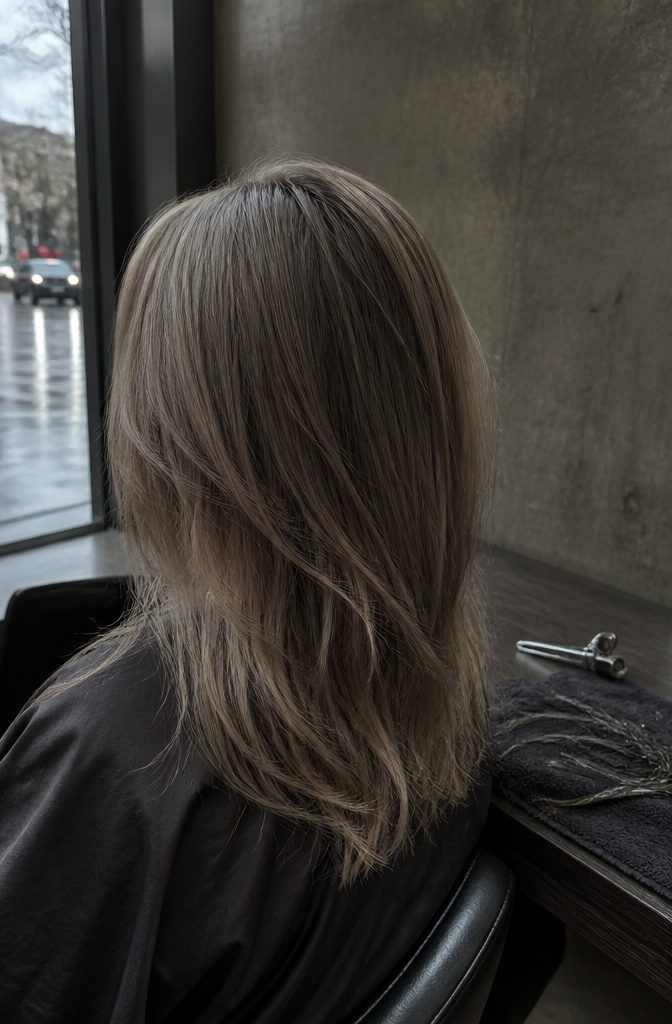
Smoky ash blonde leans harder into gray than classic dark ash does, with prominent silver and gunmetal tones that put it between blonde and gray.
Classic ash still reads as a cool blonde. This one reads closer to steel, and I’d choose it over classic ash if you want edge more than softness.
The gray and green undertones in ash formulas create the smoky effect.
Professional ash formulas run from level 7 to level 10, and level 7 gives the deeper, moodier version, while level 10 goes icy and almost silver. For gunmetal, ask for the low end of that range.
It also works as a bridge if you’re growing out grays: the visible gray tones make that in-between stage look chosen rather than overdue.
3. Ash Blonde Highlights
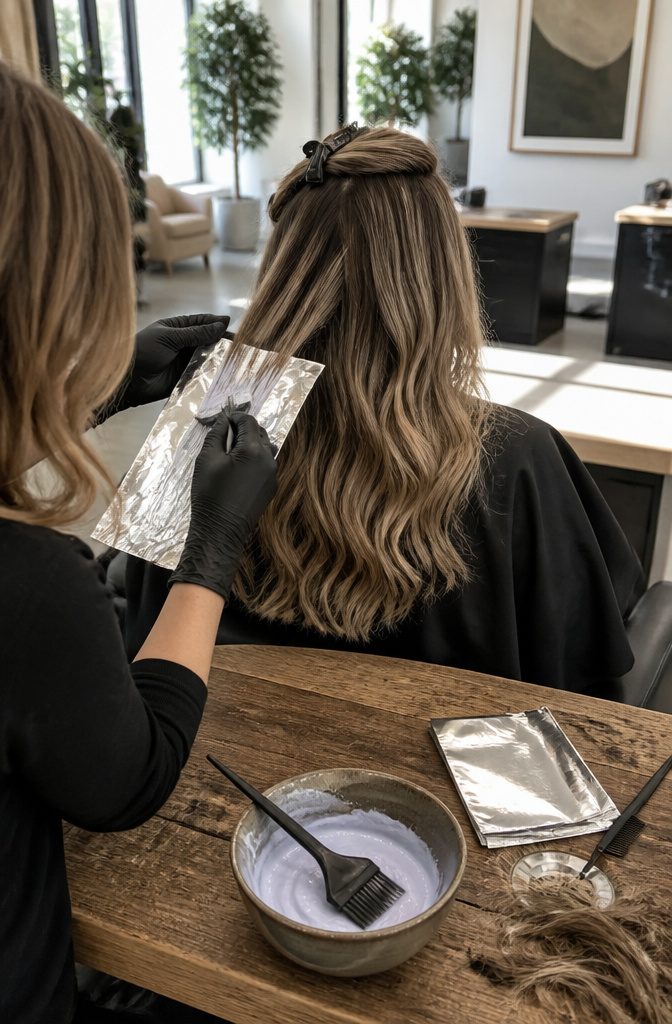
Highlights are the lower-commitment route to dark ash blonde. Lighter, cool pieces woven through a cool light brown base add depth and a silvery finish, and because they’re placed strategically, you skip bleaching every strand.
On hair that isn’t naturally blonde, the pieces still need pre-lightening before toning, and the lift should match the first number in your formula. A 5/81 light pearl ash brown, for example, wants hair lifted to a level 5.
I like this approach for anyone who wants brightness without a full overhaul. The cost is upkeep: plan on a refresh every six to eight weeks, sooner than balayage, which grows out more quietly.
4. Dark Ash Blonde Balayage
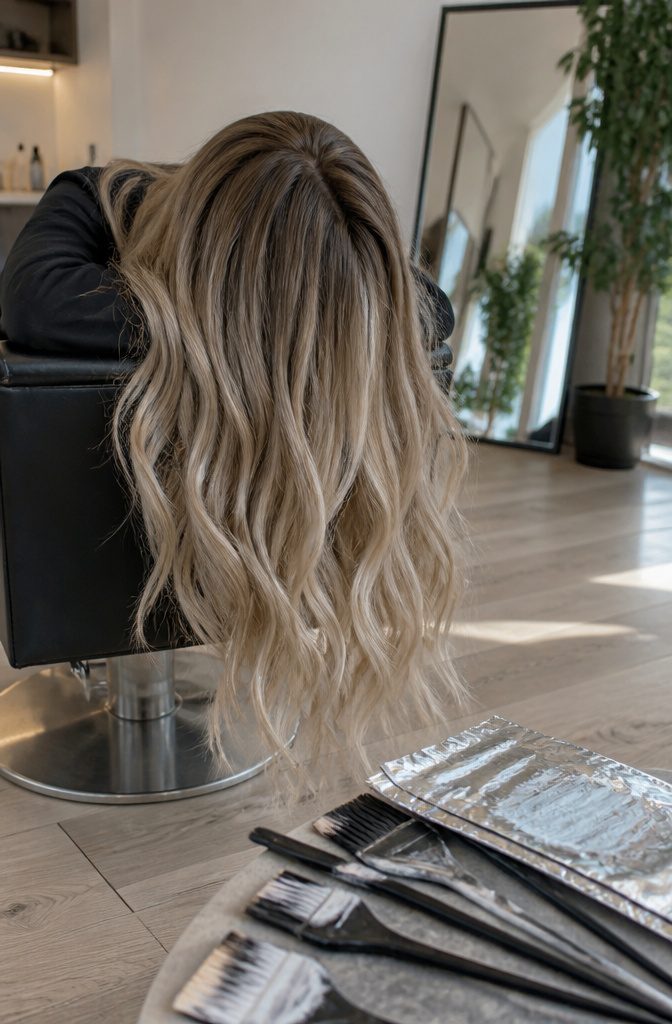
Balayage is my pick for a first dark ash blonde. The lighter pieces are hand-painted and blended into a darker base, so the color stays deep at the root.
Brightness gathers around the face and through the mid-lengths and ends, with cool, ashy platinum pieces against the dark blonde for contrast and no stark line between shades.
If your hair isn’t naturally blonde, it gets pre-lightened before toning. Blondor Freelights is the lightener made for balayage, so it’s worth naming if you bring a photo to your stylist.
All-over color needs root touch-ups every 6–8 weeks. Balayage stretches that to a refresh every 3–4 months, and it grows out softly because there’s no solid regrowth line to hide.
5. Dark Ash Blonde Ombré
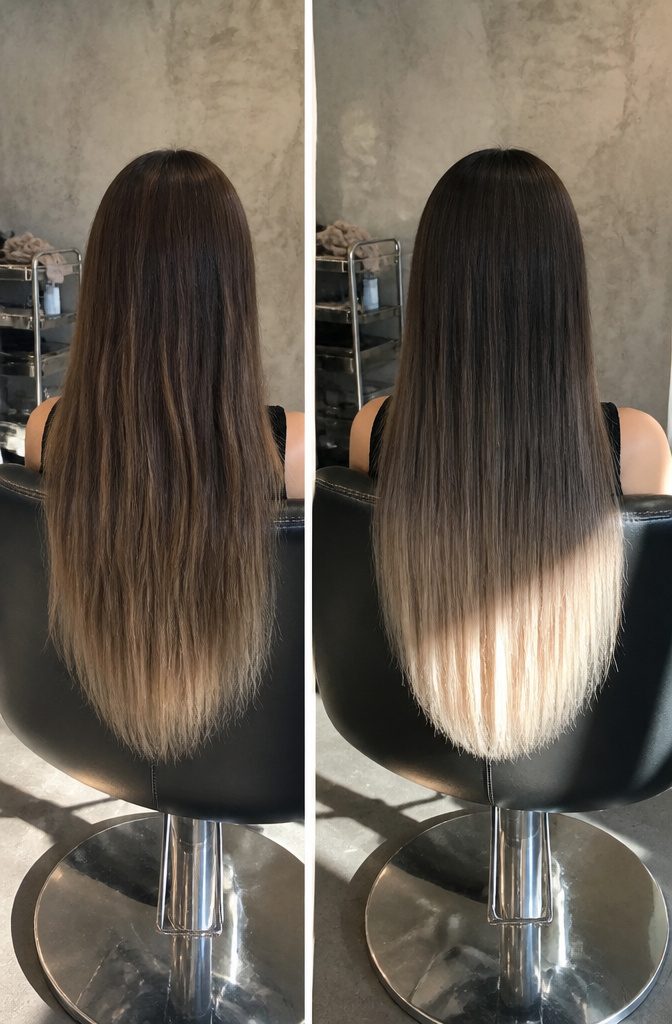
Ombré is the louder cousin of balayage. Balayage places highlights strategically for a soft, blended finish.
Ombré keeps the roots and mid-lengths dark, then moves to lighter ends in one noticeable, defined gradient. The contrast runs higher, and the dark and light zones stay visibly separate instead of melting together.
For a brighter, more dramatic look, I’d pick it over balayage every time. Dark ash through the top and middle with pale ash ends reads as a deliberate two-tone shape.
One limit: the separation is the look, so skip ombré if you want a blend nobody can trace. Bring a photo that shows the exact line you want.
6. Milk Tea Blonde
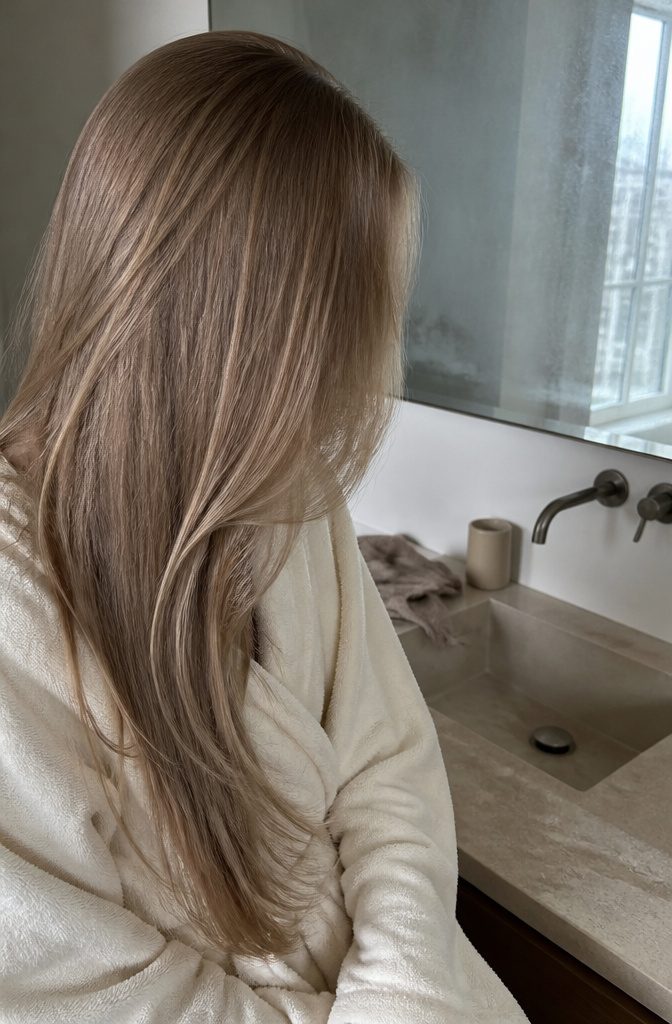
I reach for milk tea blonde when a true ash feels too severe. It’s a sandy, taupe-leaning shade with slightly warmer undertones than a typical ash, so it sits between cool and warm and leans toward neither.
That balance flatters neutral skin tones best. The small amount of warmth also keeps the color from looking overly gray or stark, which is the risk with a cooler dark ash blonde.
If you have neutral skin, or you’ve found icy ash flat against your face, milk tea is the better pick.
If you want the crispest, coolest finish possible, stay with a standard ash. Milk tea trades some of that chill for softness.
7. Rooted or Shadow-Root Ash Blonde
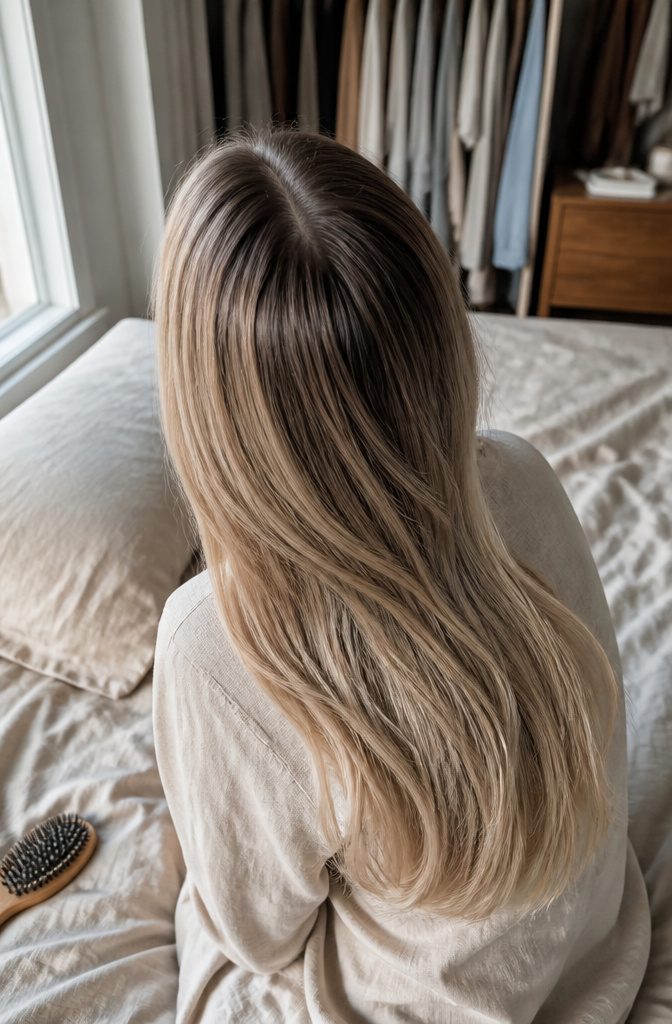
Rooted ash blonde keeps your natural color at the scalp and blends it into lighter ash lengths, so there’s no hard line where regrowth starts.
A shadow root does the same job with a deliberately darker root area. All-over color and highlights usually need a refresh every 6–8 weeks, but rooted color can usually go longer between appointments because the grow-out is far less noticeable.
For anyone who dreads the mirror check at week five, I think this is the smartest way into dark ash blonde.
A shadow root leaves the crown darker than the ends, so skip it if you want bright color right up to the part.
8. Ash Blonde Lowlights
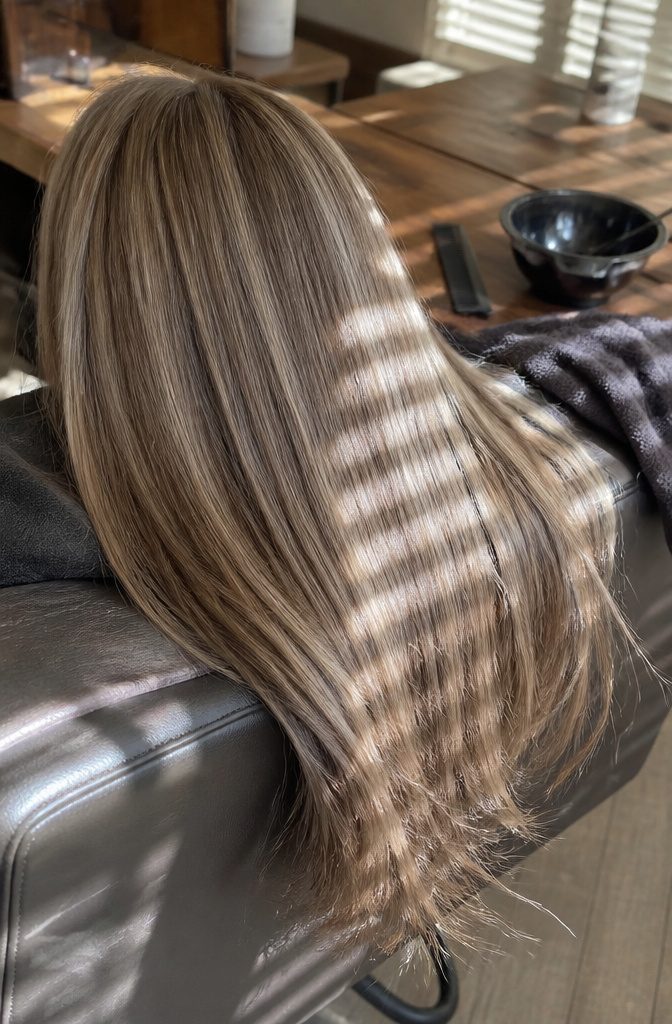
Lowlights only work if you already have ash blonde to build on.
A scattering of darker, ashy ribbons between the lighter highlights gives you a multi-tonal result that reads as natural, and it’s the gentlest way for a bright blonde to drift toward a deeper shade.
If your skin runs cool, I’d push those ribbons toward a richer dark blonde.
For a first try, go demi-permanent. Wella’s Color Touch gives high-shine ashy ribbons that gradually fade, so you can test the deeper shade without a long commitment.
If you like it, permanent color lasts longer: Illumina Color gives sheer, full coverage, while Koleston Perfect is more saturated.
9. Glossed Dark Ash Blonde
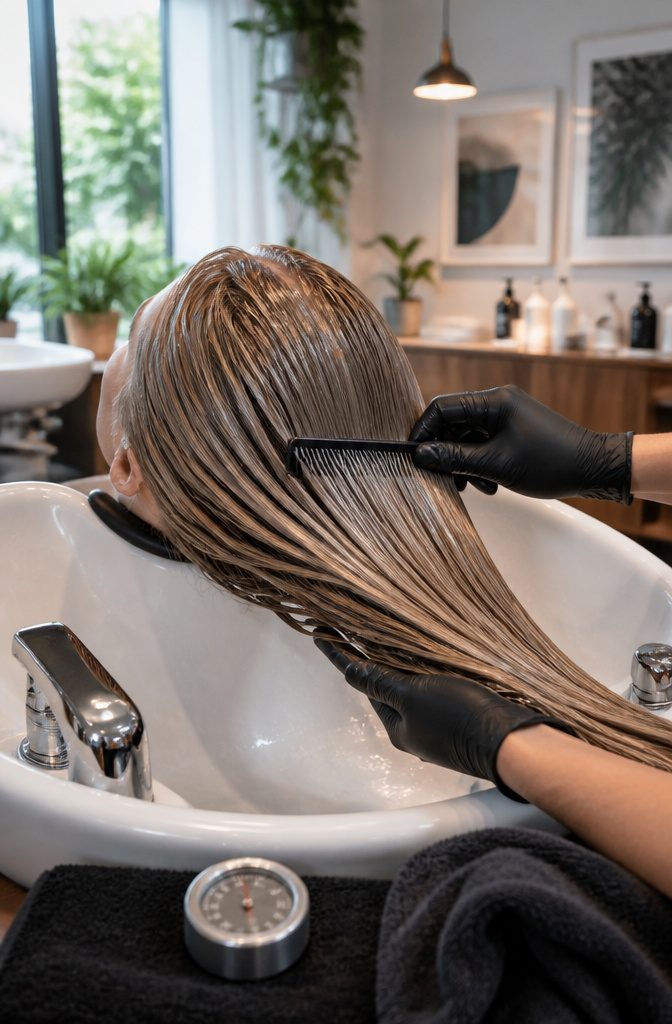
Glossing is the gentlest route to dark ash blonde, and it suits hair that is already blonde. It neutralizes brassy tones and nudges the color deeper, leaving a finish that is subtle, glossy and quick enough for a lunch break.
The formula is your target Koleston Perfect shade, Welloxon Perfect 1.9% developer and INVIGO Color Service Post Hair Color Treatment, mixed at a 1:1:1 ratio. Apply the blend, comb it through, and leave it for no more than 10 minutes.
The result is the softest dark ash blonde tint, and the whole appeal is that softness, so I’d watch the clock rather than let it sit. If you want a visibly deeper, smokier shade, this isn’t the service for it.
Salon or At-Home Color
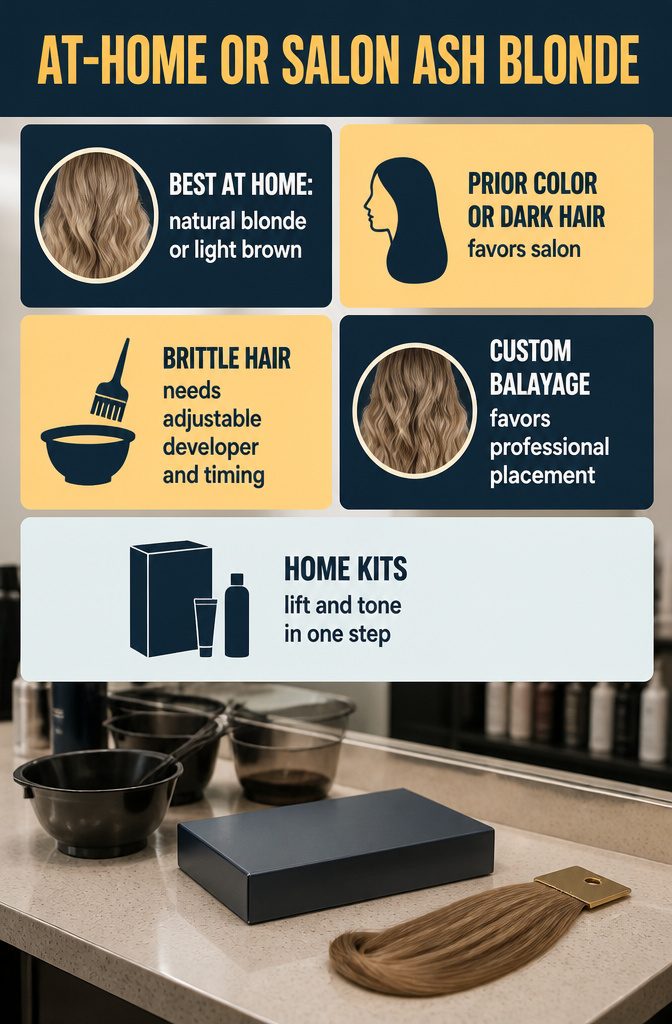
At-home color works if you start light, have healthy hair, and want simple all-over coverage.
That means natural blonde or light brown bases with no prior color work. If your hair is dark, red, or previously colored, the lift required to reach dark ash blonde makes a salon appointment the better bet.
The same goes for damage: brittle or chemically stressed hair benefits from a colorist who can adjust developer strength and timing to avoid further breakage.
Custom color—balayage, highlights, or rooted finishes—also tilts the decision toward professional work.
Application matters more than the product itself when you’re placing tone rather than painting it everywhere. DIY experienced colorists manage it, but precision is the difference between intentional dimension and muddy streaks.
If you do go the at-home route, L’Oréal Paris carries ash blonde kits formulated for home use. The formulas lift and tone in one step, which keeps things simple but leaves little room for correction if warmth shows through.
That trade-off is fine on lighter bases; less so when you’re lifting from dark brown and need to neutralize stubborn orange undertones along the way.
Why Cool Ash Pigments Neutralize Brass
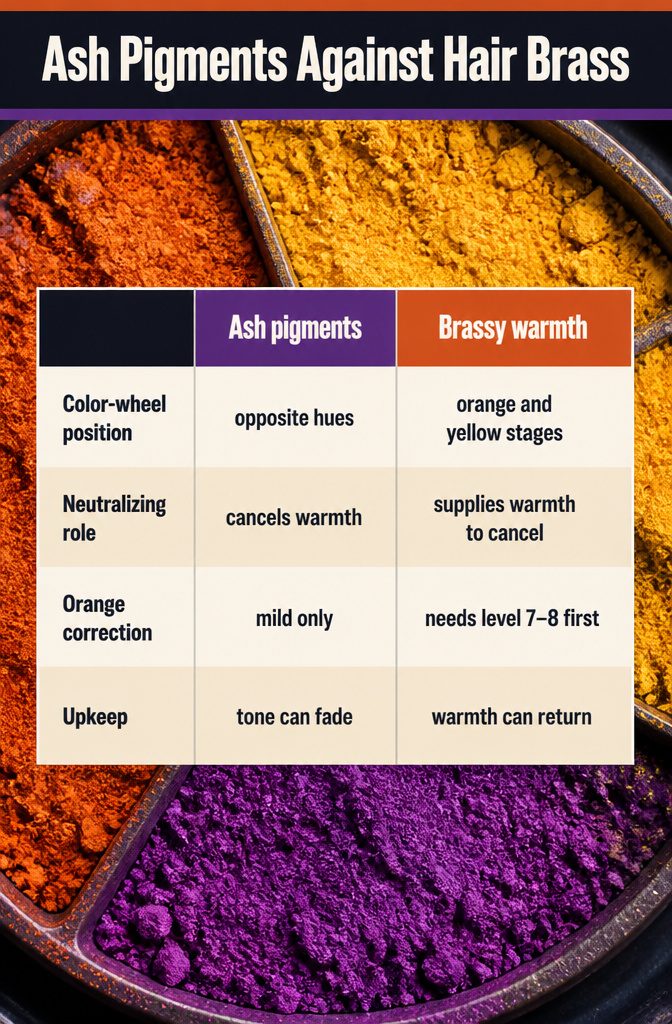
Dark hair lifts through red, red-orange, orange, yellow-orange and finally yellow, so the stage where you stop decides how much warmth your toner has to fight.
Ash pigments sit opposite those colors on the color wheel: violet cancels yellow, and a little blue cancels orange. If your hair leans orange, I’d pick a violet/blue-based ash toner over a plain gray one.
Can dark ash blonde cancel brassy orange? Yes, but it neutralizes warmth rather than covering it.
A toner can cancel mild orange or red, but it won’t fix hair that is still orange, which needs more lightening first (level 7–8 before toning). The warmth also creeps back, so plan on upkeep.
Skin Undertones That Work With This Shade
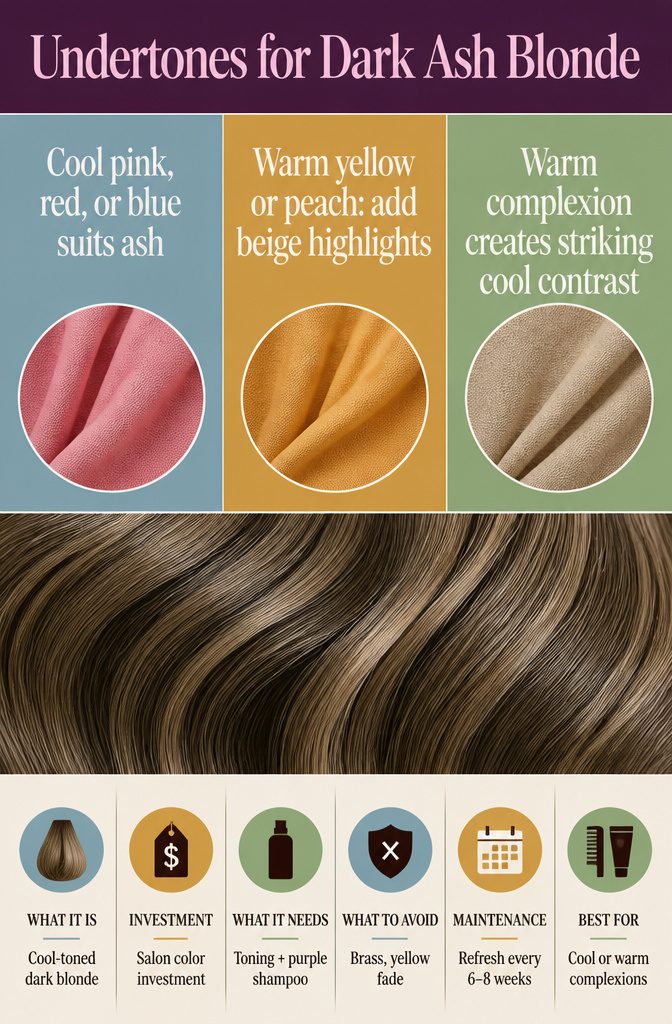
The shade tends to complement cool undertones best, but personal choice still plays a role. If you have pink, red or blue undertones in your skin, traditional dark ash blonde will likely look striking on you without any adjustment.
Warm undertones do not rule you out. If your skin leans yellow, peach or golden, I would consider customized ash tones or add beige face-framing highlights to soften the contrast.
That keeps the cool blonde from washing you out while still giving you the ashy tone you are after.
Neutral or warm undertones can actually be especially flattering with this cool shade. The contrast between a warm complexion and cool hair can be striking.
If a cool-toned client is set on dark ash blonde, I have seen colorists weave richer dark blonde ribbons through the mid-lengths and ends to warm up the finished look.
Lifting Dark Hair to Ash Blonde
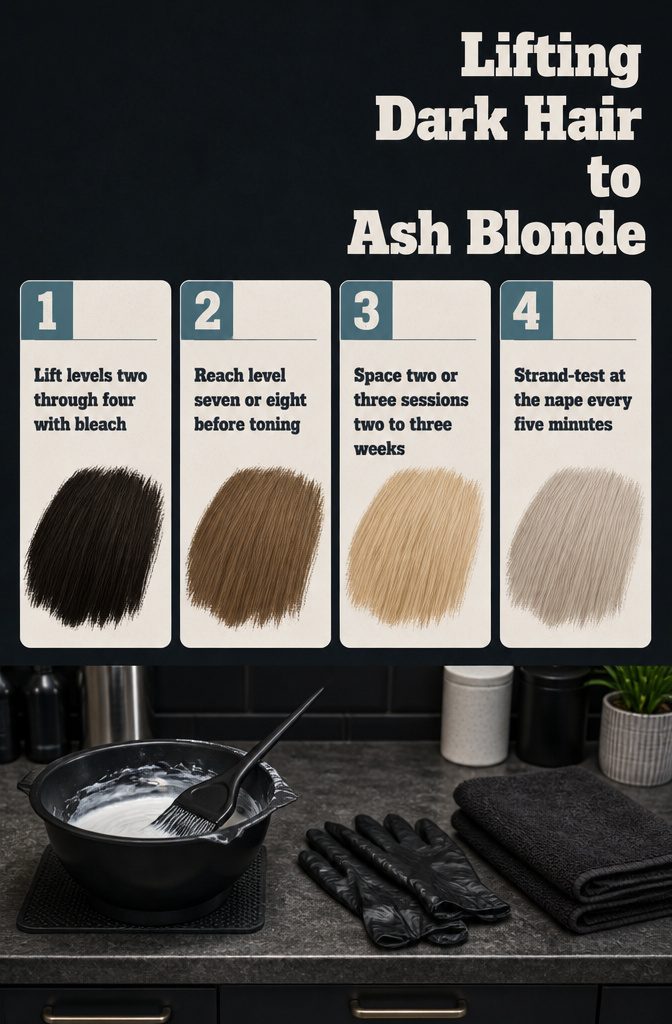
If your natural color sits anywhere between black and dark brown—levels two through four on the standard scale—you will need bleach to reach the pale canvas ash toner requires.
Ash blonde reads cool and clean because it sits at level seven or eight, light enough that violet and blue pigments can lock onto the hair and cancel any lingering gold or orange.
Dark hair holds too much warm pigment for toner alone to shift, so lightening comes first.
Most people starting from very dark hair need two sessions, sometimes three, spaced two to three weeks apart so the hair has time to recover between rounds.
Developers between twenty and thirty volume give enough lift without pushing breakage too far, though hair that has been colored or treated before may protest earlier.
I always recommend a strand test before committing to the full head: clip a small section near the nape, apply your mixture, and check it every five minutes up to thirty.
If the test piece snaps or turns to mush, the formula was too strong or the timing too long, and you have lost a thumbnail of hair rather than all of it.
Products and Formulas for Dark Ash Blonde
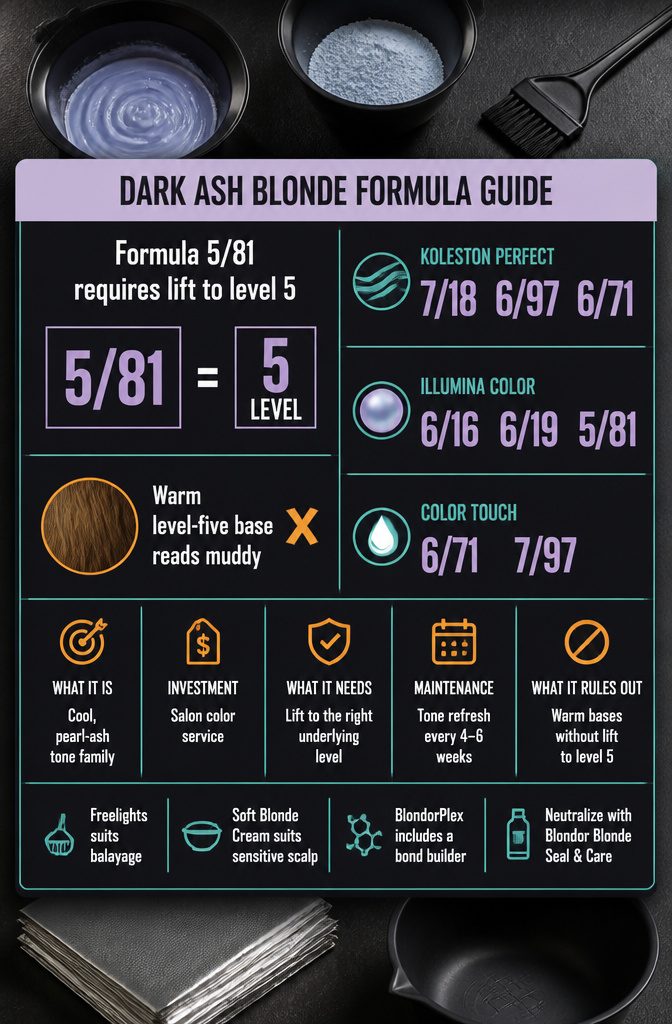
Getting dark ash blonde right starts with lifting hair to the underlying pigment that matches the first number in your color formula.
If you want to use Illumina Color in 5/81, a light pearl ash brown, you lift to a level 5 first. The match matters because the base pigment shows through the toner, and a warm five under a cool five reads muddy.
I reach for Blondor lighteners to start. Freelights works for balayage, Soft Blonde Cream when the scalp is sensitive, and BlondorPlex when you want the bond builder built in.
After neutralizing with Blondor Blonde Seal & Care, the color goes on. Koleston Perfect in 7/18, 6/97 or 6/71 gives you a predictable ash at different depths.
Illumina Color offers 6/16, 6/19 or 5/81 for a cooler finish with some pearl. Color Touch in 6/71 or 7/97 is what I use when the job calls for demi-permanent.
Keeping the Shade From Fading or Going Warm
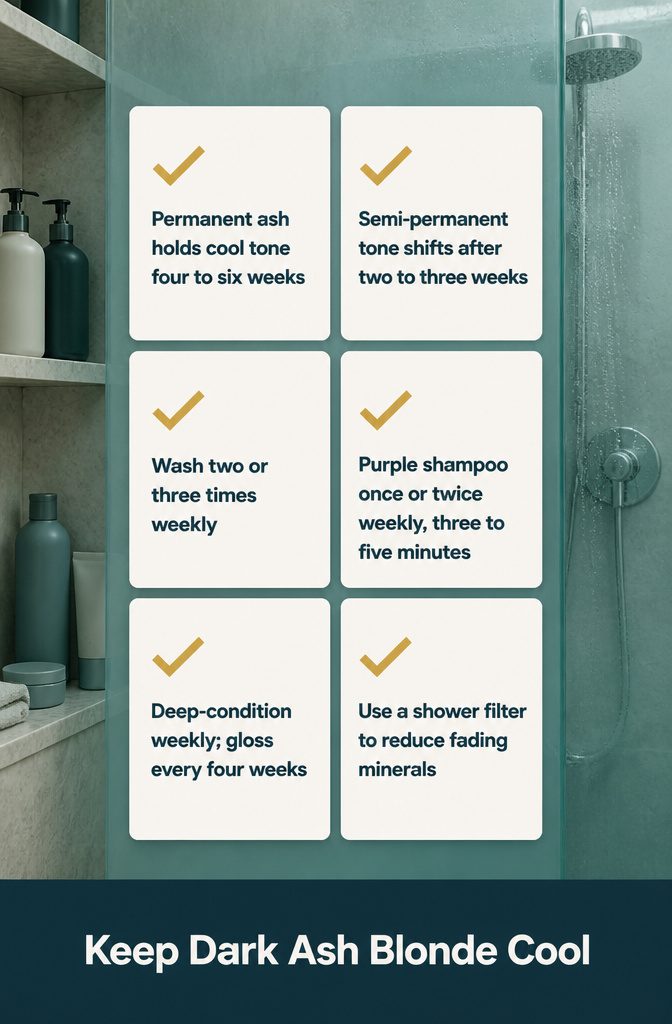
Dark ash blonde fades faster than warmer shades because the cool pigments that give it that smoky tone are larger molecules and wash out more easily.
Permanent ash blonde holds its cool tone for 4 to 6 weeks, while semi-permanent formulas start shifting after 2 to 3 weeks.
That matters most in how you wash: every-other-day washing pushes color out the door faster than washing two or three times a week will.
Purple shampoo keeps brass at bay, but I use it just once or twice a week for three to five minutes. More than that and the hair can turn actually purple.
The INVIGO Blonde Recharge Cool Blonde Shampoo works for quick brightening, followed by Color Recharge Cool Brunette Conditioner, both left on for three to five minutes. Between those sessions I alternate with Color-Motion+ Color Protection Shampoo to fight fading.
Weekly deep conditioning is not optional when the hair has been lightened this much.
The EverPure Bond Repair system helps strengthen from the inside. A shower filter cuts down on minerals that speed fading, and gloss treatments every four weeks bring the tone back.
Frequently Asked Questions
What is dark ash blonde hair, and how is it different from dark blonde?
Dark ash blonde is a deeper blonde with a cool, silvery overtone, no golden warmth and no noticeable brown pigment. Regular dark blonde can lean honey or golden, while the ash version stays smoky and muted.
It also differs from its neighbors: mushroom blonde starts lighter with a sandy or taupe cast, and light ash brown has a brown base with no obvious blonde.
How do I get dark ash blonde hair?
Color it at home only if you start with natural blonde or light brown hair that is healthy, has no prior color, and you want simple all-over coverage.
See a salon if your hair is dark, red, previously colored or damaged. Salon work is also the better choice for balayage, highlights or rooted finishes, where tone placement matters more than the product.
How long does dark ash blonde hair last?
Permanent dark ash blonde lasts about 6–8 weeks before it starts to fade, though the cool tone looks freshest in roughly the first 4–6 weeks.
Semi-permanent formulas begin shifting after 2–3 weeks. A toner or gloss around week 6 keeps warmth from creeping back.
Can dark ash blonde cancel out brassy orange tones?
It neutralizes warmth rather than covering it.
A violet/blue-based ash toner can cancel mild orange or red, but hair that is still orange needs more lightening first, to about level 7–8 before toning. Expect regular upkeep, because the warmth tends to return.
Does dark ash blonde look gray?
Not necessarily.
Its cool, silvery undertones give a muted, smoky finish, but the color stays blonde with only a soft gray, violet or blue cast. If you want something closer to gray, smoky ash blonde leans into silver and gunmetal tones.
What skin tone looks best with dark ash blonde hair?
Cool undertones (pink, red or blue) suit it best, since the cool hair harmonizes with the skin.
Warm undertones (yellow, peach or golden) aren’t ruled out: a colorist can adjust the ash tones or add beige face-framing highlights to soften the contrast. There are no hard rules, so personal preference counts.
Do I need to bleach black hair to get dark ash blonde?
Yes. Hair at levels 2–4, from black to dark brown, holds too much warm pigment for toner alone, so it must be lightened to about level 7–8 first.
Plan on 2 bleaching sessions, sometimes 3, spaced 2–3 weeks apart so the hair can recover. Run a strand test before committing to your whole head.