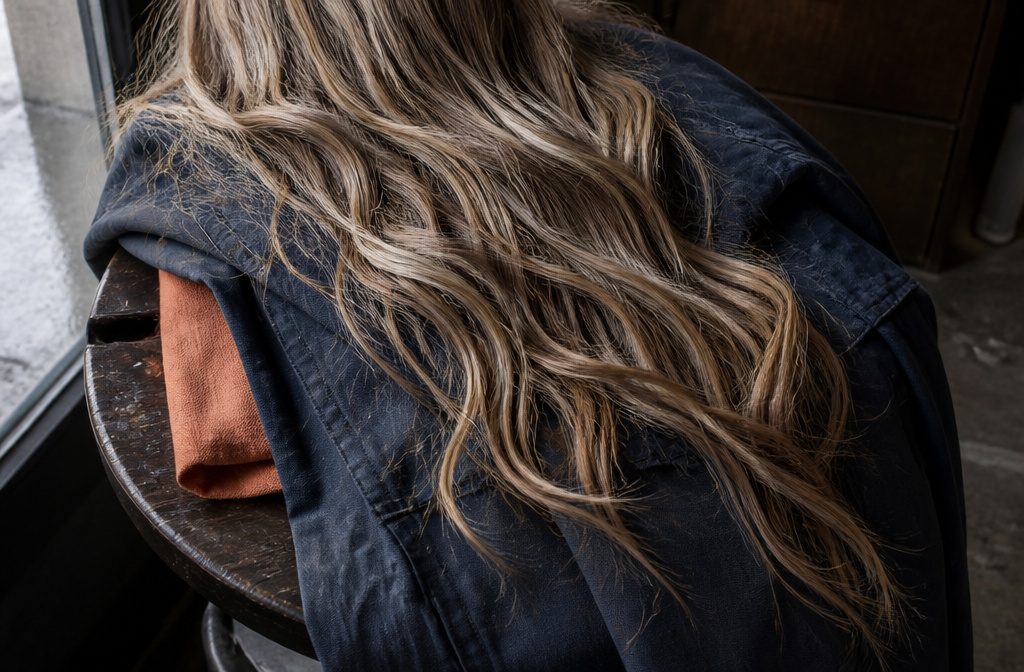
Shades run from smoky ash and mushroom to caramel and level 5–6 bronde, and your complexion picks: fair, cool skin takes ash, medium to dark skin takes honey or caramel.
Brunettes need several lightening sessions, and since no agreed line separates dirty blonde from light brown, bring a photo, not a level number.
1. Ashy Dirty Blonde
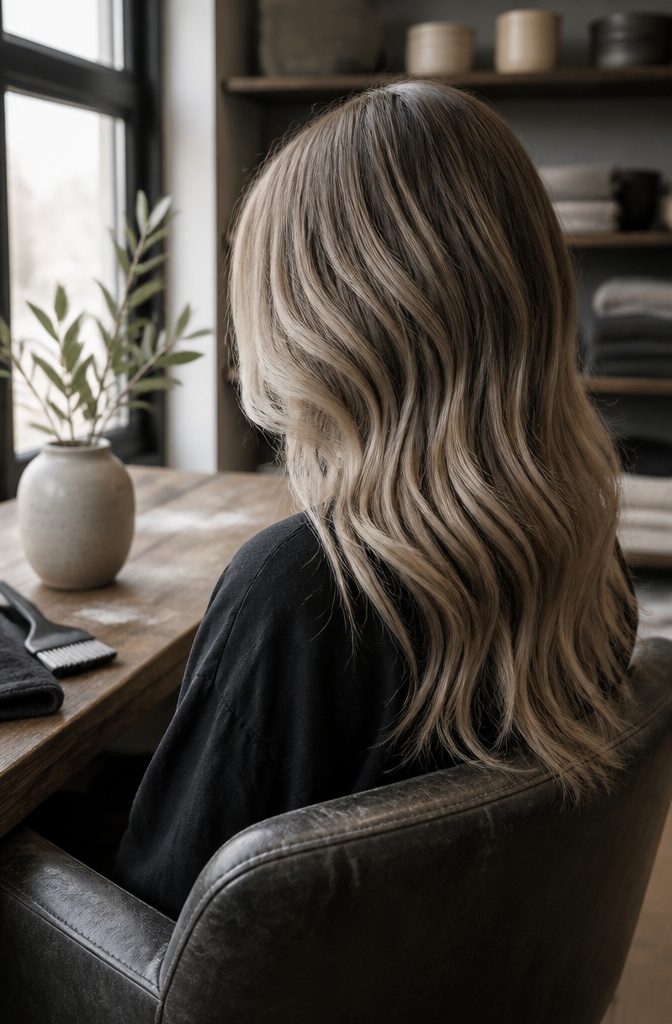
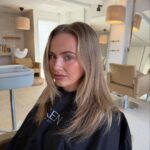
Ashy dirty blonde sits on a dark blonde or light brown base, with soft balayage pieces in ash and mushroom laid over it.
The smoky finish looks muted rather than flat, and I’d choose it over a brighter blonde if you want color that reads as natural. It flatters fair and cooler complexions most.
On fair skin, the ash tones add brightness, and pink or olive undertones also carry the smokiness well. True ash blonde is a different animal: it is strictly cool, with blue undertones.
Dirty blonde can blend warm and cool, so the ashy version still keeps some beige and light brown in the mix, which softens it next to a stark ash.
2. Honey and Caramel Warmth
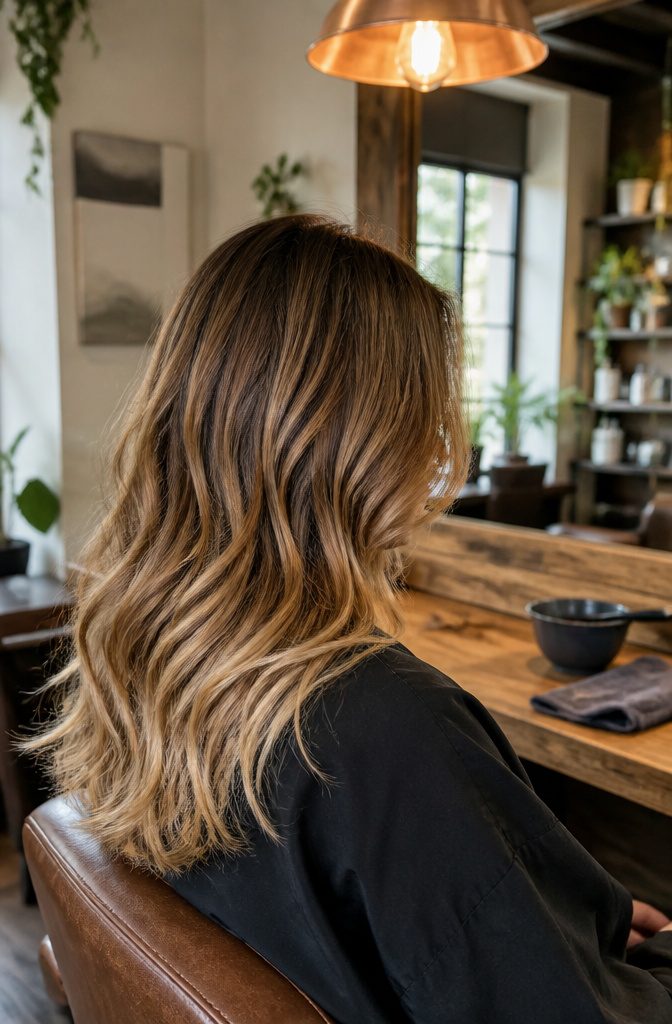
Warm dirty blonde keeps the darker depth at the root and lets gold, honey or caramel carry the length. Medium and olive complexions look best in buttery tones, and butter is also a good base for added highlights.
On dark skin I’d go for caramel with a darker root: the rich warmth flatters, and blue, green and hazel eyes stand out against it.
Natural brunettes should look at golden pearl, a blend of gold and pearlescent blonde that shows more on the ends. It reads as dimensional, not streaky.
Ask for a multi-tonal foil highlight with balayaged ends. Book highlights about every 10 weeks, with a gloss around week 5 if the glow fades.
3. Beachy Sun-Kissed Blonde
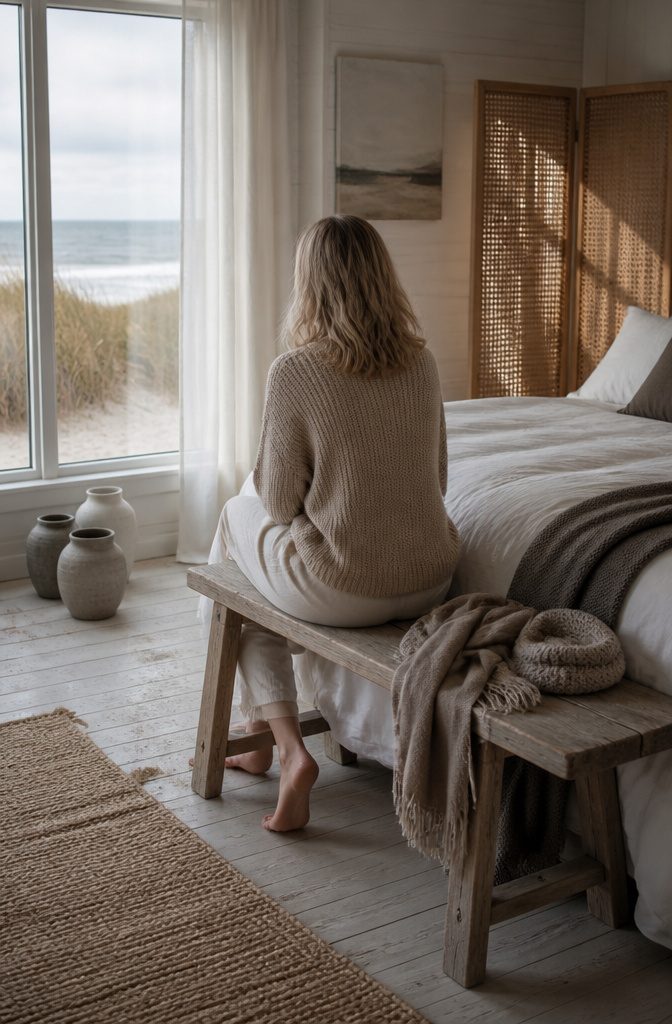
Beachy dirty blonde copies how hair lightens in the sun: golden beige, buttery tones close to your natural roots, with the brightest pieces gathered around the face.
Keep the contrast low so the color blends into your roots instead of stopping at them.
Loose waves add the texture, and a cut that grazes the collarbone, like a lob, lets those face-framing pieces swing forward. It suits light brown or existing blonde hair best and grows out gently, so salon visits can space out.
Summer is the obvious season, but I’d wear it in winter too, where it looks chic peeking out from a scarf and hat.
4. Shadow Root Blonde
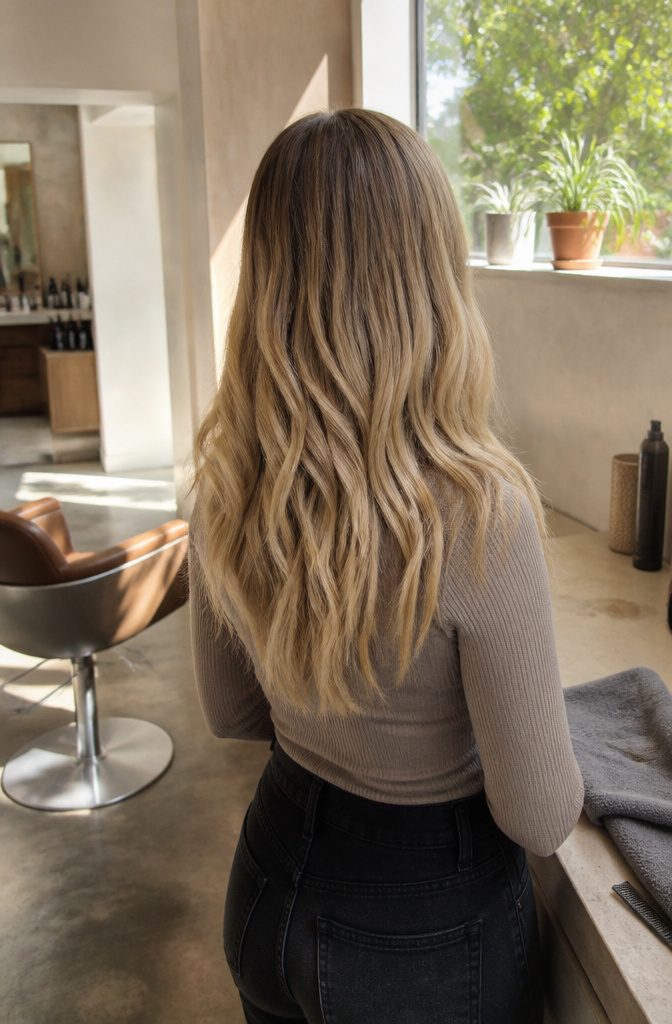
Roots stay darker, or simply natural, and the blonde melts into them, so regrowth reads as part of the design instead of a stripe.
That makes shadow root the lowest-effort way I know to wear dirty blonde hair: this shade can go about 4 months before fresh highlights or a touch-up.
Set one limit, though: don’t let the darker root grow past 2 inches. Beyond that the soft blend turns into a band.
If your hair is already light, the shadow is easy to place. Darker hair has to be lightened first, and balayage focused on the mid-lengths and ends does that without pushing you too blonde.
5. Dirty Blonde Balayage
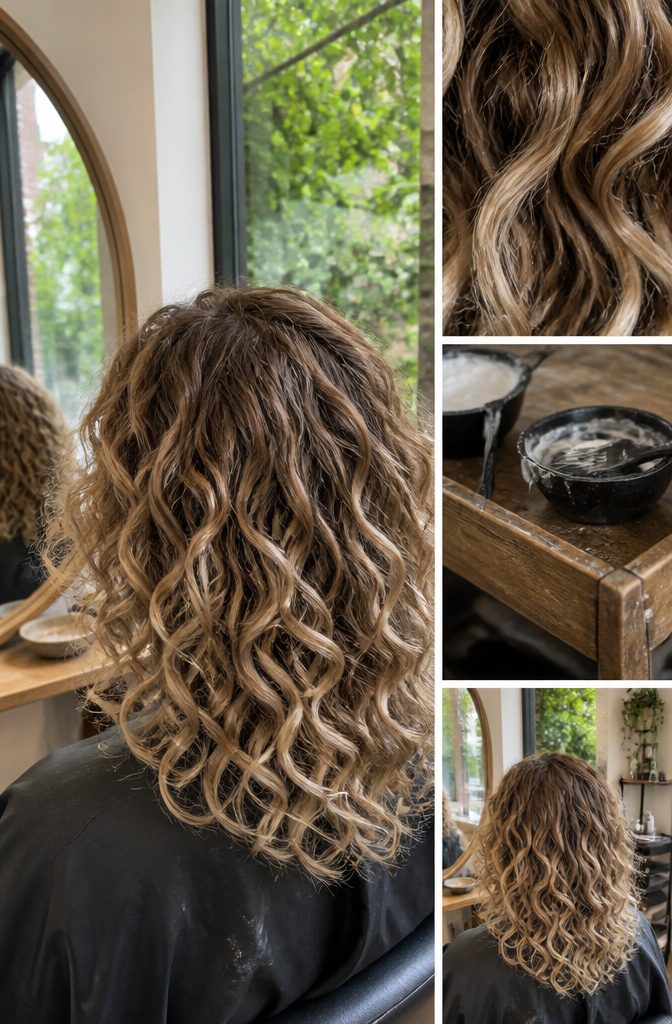
Freehand balayage paints lightener through the mid-lengths and ends by hand, leaving the roots darker so the color brightens the way hair does in the sun.
It works on any base color, and I’d choose it over foils for a first dirty blonde.
Curls show it best: the contrast between blond and brunette tones makes each curl stand out.
Waves, bobs and lobs pick up the same soft movement, and on fine hair a mix of lighter and deeper pieces reads as more volume.
Ask about bond protection. Wella BlondorPlex gives up to 9 levels of lift with up to 97% less breakage under the brand’s stated test, which matters most if you start dark.
6. Face-Framing Highlights
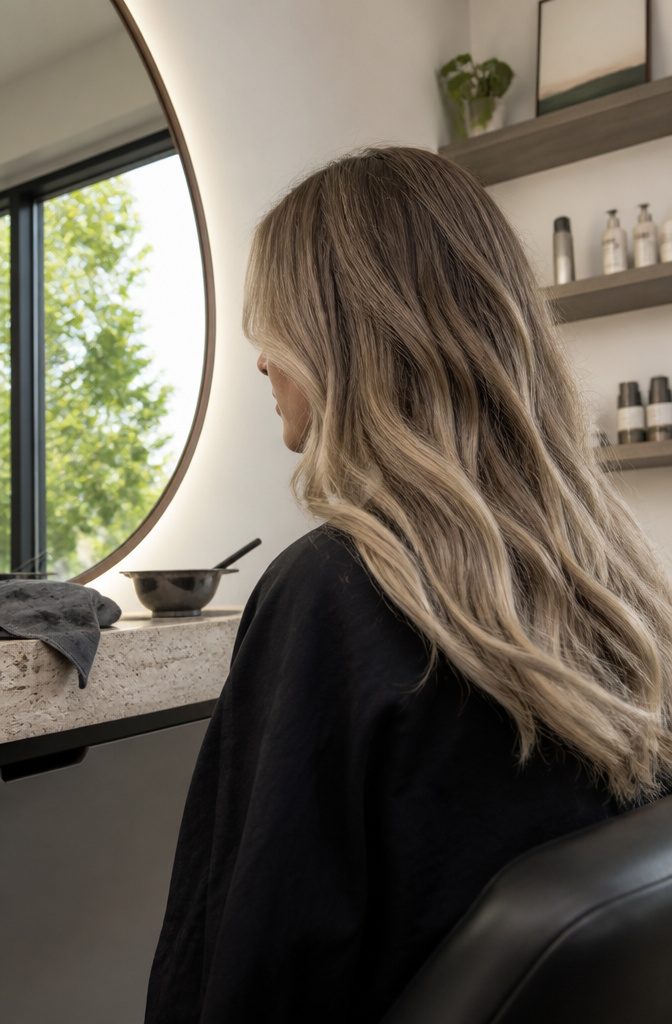
Highlights placed only around the face and ends brighten dirty blonde hair without the upkeep of a full head of color.
Your natural base stays put, so roots grow in without a hard line, and I’d point anyone starting from light brown or darker here first.
The darker base makes the front pieces read lighter, and blue and green eyes tend to stand out against them. If the contrast looks stripy, ask for mid-lights, an in-between shade that connects the highlights to the base.
Biscuit blonde, a creamy mix of warm and cool, needs highlights every 3 months to keep its dimension. A neutralizing toner or gloss in between keeps the brightness from drifting brassy.
7. Lowlights for Depth
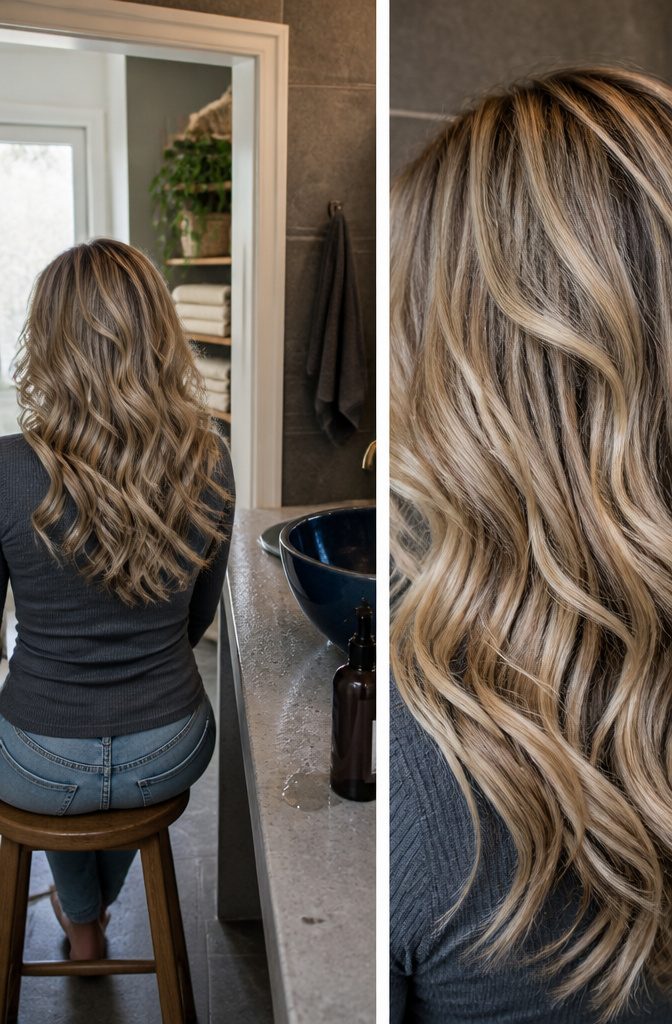
Dirty blonde gets its depth from contrast: lighter and darker strands woven together so the color moves instead of sitting flat.
If you’re already blonde, ask your colorist for lowlights, a root smudge, or a gloss in an ash, beige or mushroom tone.
Each one softens brightness without a full recolor, and I’d start with the gloss because it’s the gentlest. Lowlights also flatter curls, since the blond-and-brunette mix makes the pattern stand out.
Khaki bronde, the muted, ashy version, is more work than it looks because ash fades fast. Rinse with cool water, and book a gloss every 4 to 6 weeks once it starts looking washed out.
8. Bronde Dirty Blonde
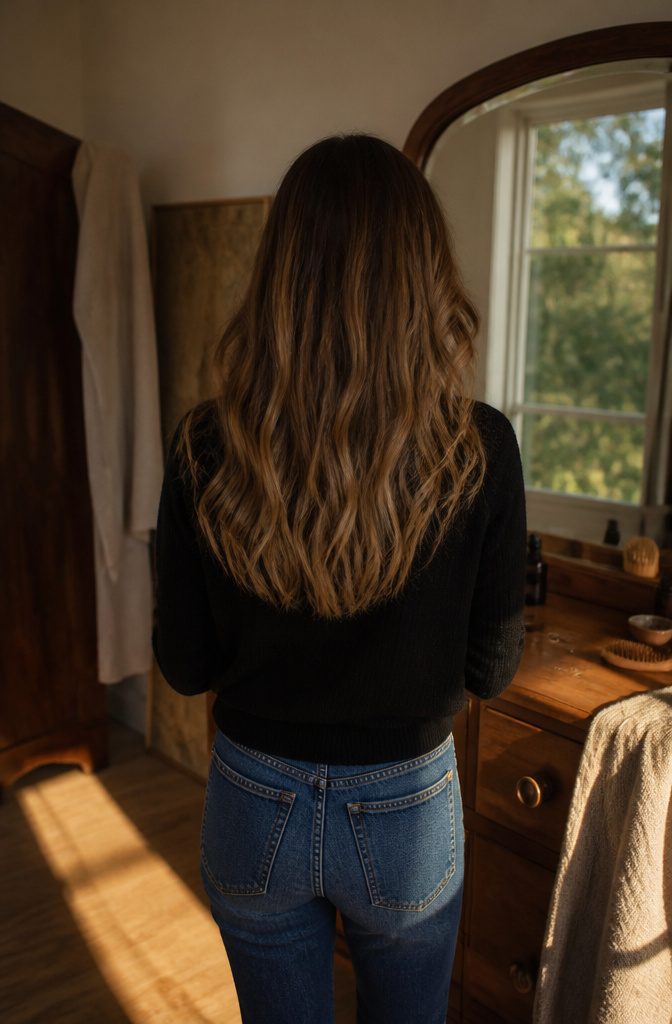
Bronde sits at the darker end of the dirty blonde range, around level 5 or 6, where light brown and blonde meet without committing fully to either.
The base stays close to brunette territory while strands of blonde, beige, gold or ash lift just enough to catch the light. It reads warmer and more grounded than cooler ash versions, and the contrast stays soft rather than sharp.
Brunettes wanting a gradual shift find this the easiest move.
You stay anchored in familiar territory while adding dimension, and if you decide blonde isn’t your thing, the grow-out is forgiving. The look works whether you go root-to-tip or keep a darker root shadow with lighter ends.
What Dirty Blonde Looks Like
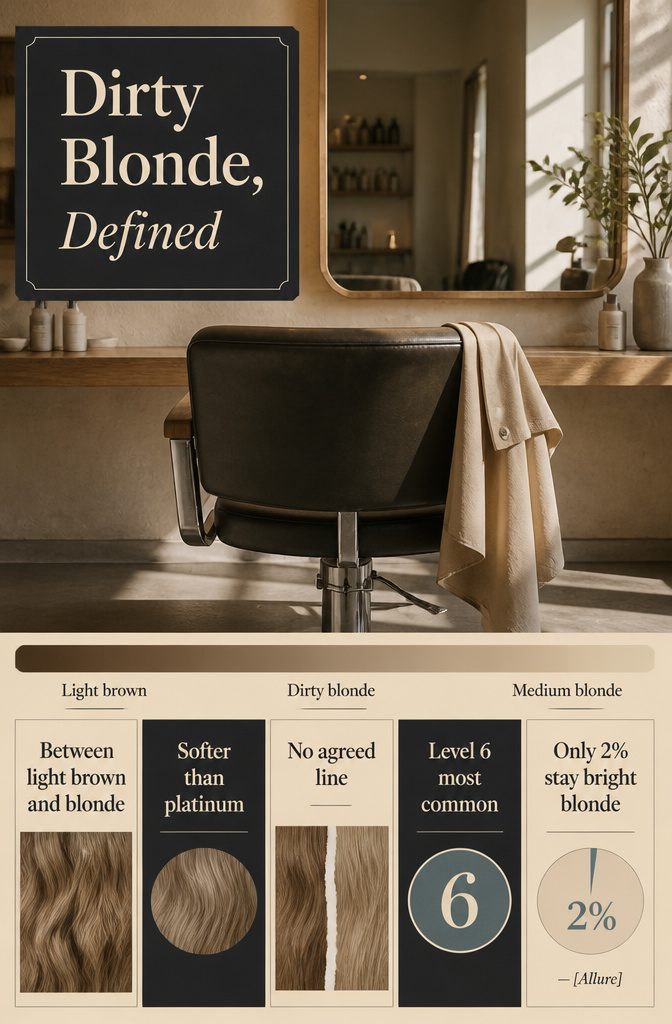
Dirty blonde sits between light brown and medium blonde: muted, multidimensional, and much softer than platinum. Dark blonde is commonly level 5, 6 or 7, with level 6 the usual label and level 5 often called light brown.
No agreed line separates dirty blonde from light brown, so a photo works better than a level number when you talk to a stylist.
Hormone-driven darkening explains why this shade is so common:
Only 2% of people stay bright blonde into adulthood.
— Allure
Rising eumelanin, the brown-black pigment, mutes childhood highlights, so many former blondes already have this shade growing in.
Getting the Color
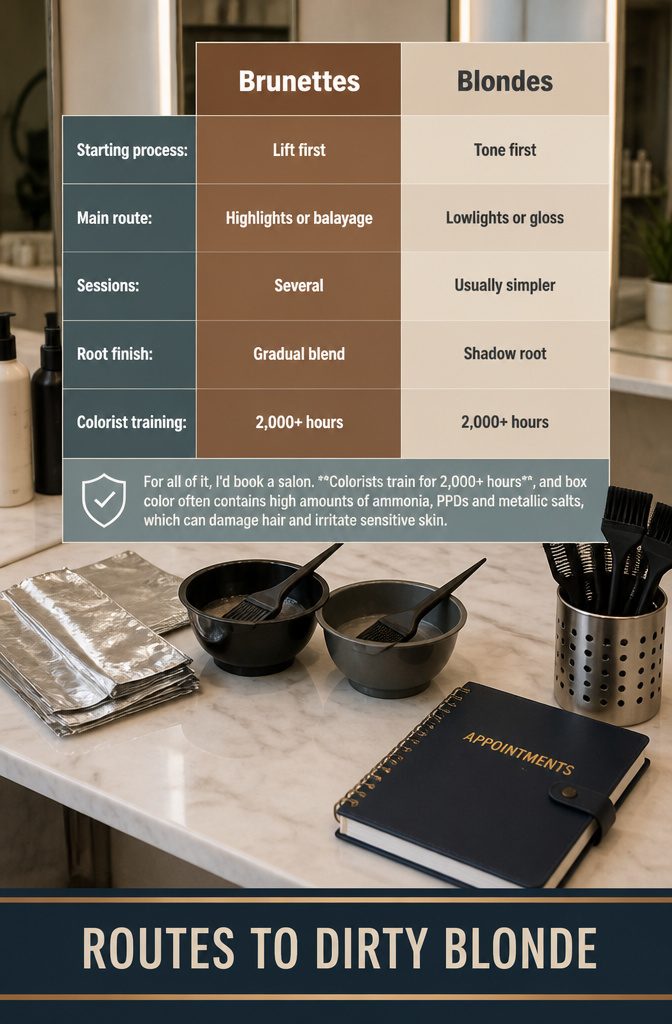
Brunettes get to dirty blonde by lifting first and toning second, usually through highlights, balayage or babylights. Plan on several sessions rather than one; moving in stages keeps the finish natural and spares the hair.
Blondes have it easier.
Lowlights add contrast to platinum, and a gloss or toner in ash, beige or mushroom calms strands that read too bright. A root smudge or shadow root leaves your natural base darker, so growth looks intentional.
For all of it, I’d book a salon. Colorists train for 2,000+ hours, and box color often contains high amounts of ammonia, PPDs and metallic salts, which can damage hair and irritate sensitive skin.
Upkeep and Brass Control
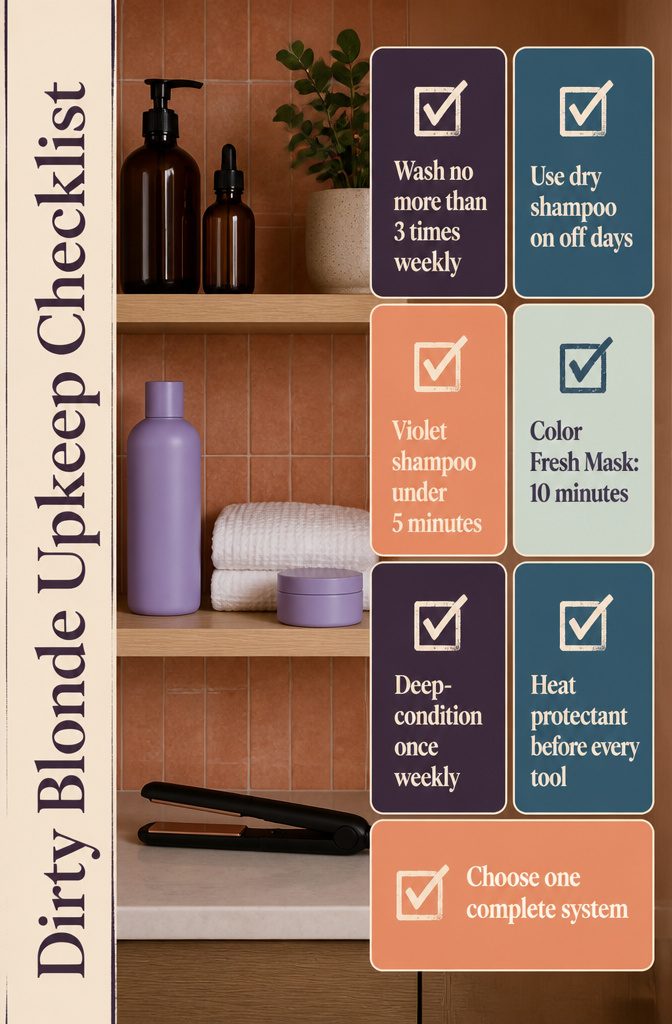
Dirty blonde is a low-maintenance blonde and needs far less toning than platinum, but warmth still creeps back in. These habits keep the tone in place:
- Wash colored strands no more than 3 times a week, with dry shampoo on off days.
- Reach for INVIGO Blonde Recharge Cool Blonde Shampoo only when hair looks warm. Its violet pigments neutralize brassiness in under 5 minutes.
- Keep a Color Fresh Mask around; it revives tone at home in 10 minutes.
- Deep-condition with a color-safe mask once a week, because lightened hair needs the hydration.
- Spray heat protectant before every hot tool, since heat fades color and damages strands.
- For a full routine, pick one system: Davines Heart of Glass (five parts, including a thermal-protective fluid) or John Frieda Blonde+ Repair System (three bond-building steps).
Frequently Asked Questions
What is dirty blonde hair?
Dirty blonde is a muted, multidimensional shade that sits between light brown and medium blonde, far softer than platinum. It usually blends beige, ash, gold, honey or caramel tones over a darker base, so it looks natural and slightly sun-faded.
Is dirty blonde the same as dark blonde?
Not exactly: dirty blonde is one type of dark blonde, usually cooler and built on a light brown base with ashy, sandy or earthy highlights.
Dark blonde as a whole mixes light brown and rich blonde tones and commonly falls at level 5, 6 or 7.
What is the difference between dirty blonde and ash blonde?
Ash blonde is strictly cool, with blue undertones.
Dirty blonde can mix warm and cool undertones, so even an ashy version keeps some beige and light brown in it. A dirty blonde can be ashy, but an ash blonde isn’t necessarily dirty.
Are dirty blonde and light brown the same?
Sometimes, because no agreed line separates the two.
Level 5 is often called light brown and level 6 is the usual label for dark blonde, but individual hair varies. Showing your stylist a photo works better than quoting a level number.
What skin tone looks best with dirty blonde hair?
Dirty blonde can suit every skin tone because it can be tuned warm, cool or mixed.
Ashy versions flatter fair and cooler complexions, buttery tones suit medium and olive skin, and caramel with a darker root works well on dark skin.
Is dirty blonde hair rare?
No, it’s one of the most common shades.
Only 2% of people stay bright blonde into adulthood, because rising eumelanin darkens childhood blonde. Many former blondes already have dirty blonde growing in.
How attractive is dirty blonde hair?
Attractiveness is subjective, but dirty blonde is among the most popular blondes because it looks natural and flatters all skin tones. Its muted, dimensional finish is easier to wear than a bright blonde like platinum.
How often should you touch up dirty blonde hair?
A darker, rootier version such as shadow root blonde can go about 4 months before fresh highlights or a touch-up.
Brighter styles need more frequent visits: honey and caramel highlights about every 10 weeks, and biscuit blonde about every 3 months. Dirty blonde is still one of the lowest-maintenance blondes.
Can you get dirty blonde hair at home, or should you go to a salon?
A salon is the better choice.
Colorists train for 2,000+ hours, and salon formulas use higher quality ingredients. Box color often contains high amounts of ammonia, PPDs and metallic salts, which can damage hair and irritate sensitive skin.