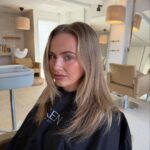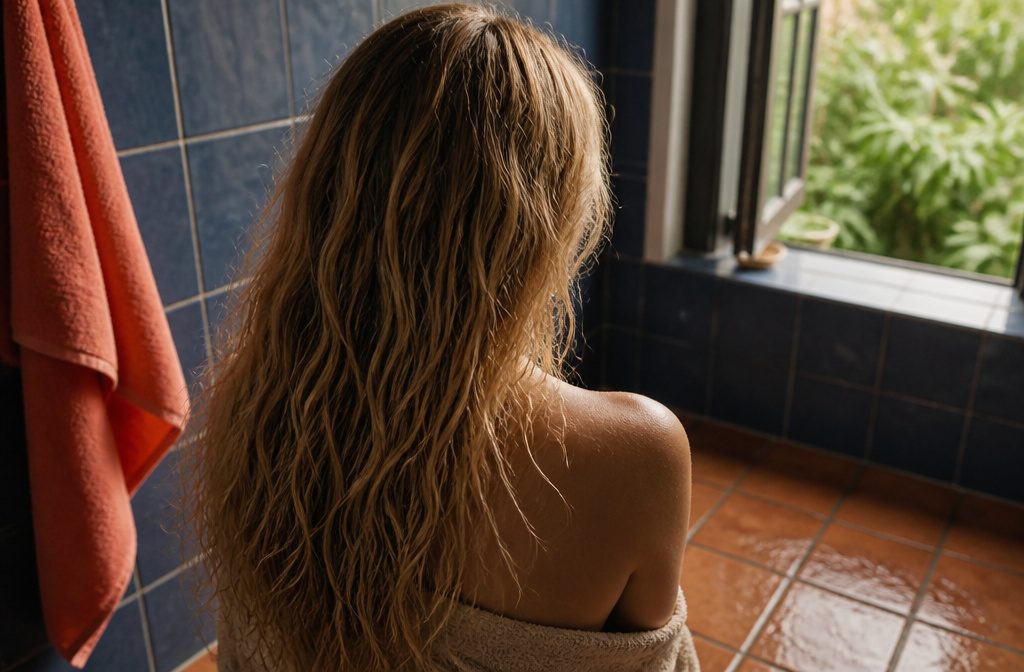
Honey blonde hair dye produces a warm blonde shade built from golden and amber tones, softer and more natural than cool ash or platinum.
The warmth suits some complexions and clashes with others: very cool or pink-toned skin needs a pearl honey toner over neutral beige-gold, not strong gold.
Dark hair usually takes multiple lightening sessions to reach level 8 or 9 before the honey tone shows accurately.
1. What Honey Blonde Is
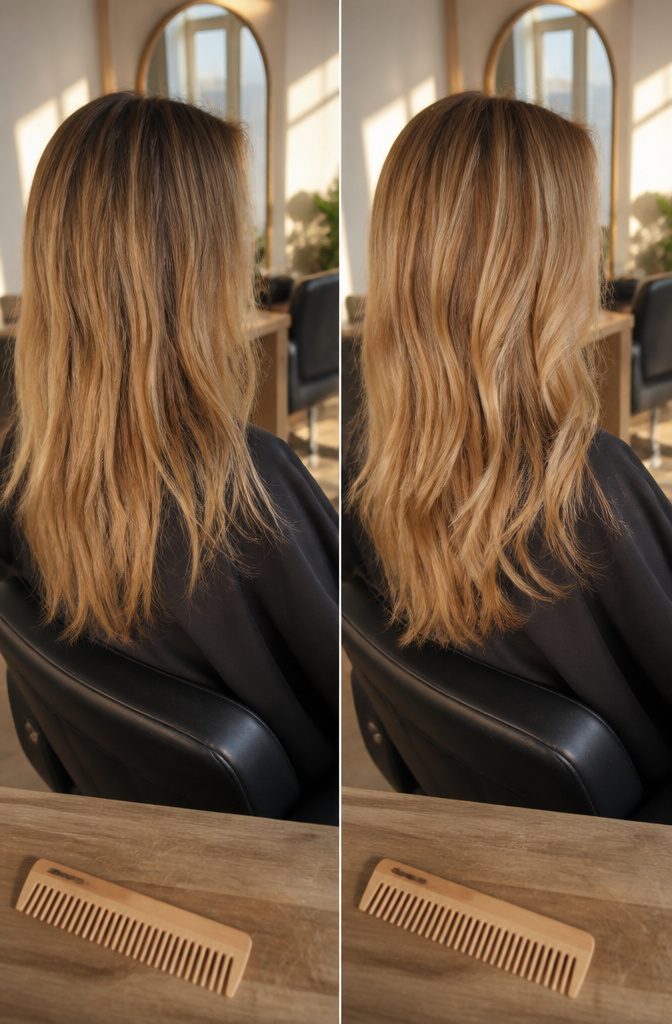
Honey blonde is a warm blonde built from golden and amber tones, named for fresh honey. Ash and platinum sit on the cool side; honey reads softer and more natural beside them because the warmth never drops out.
Its nearest neighbor is golden blonde, but golden is brighter and more yellow, while honey is slightly deeper and softer. If golden looks too loud on you, I’d start with honey.
The range is wide: buttery light blonde with a hint of gold at one end, a deeper golden shade at the other.
It works as an all-over color, foil highlights, or balayage, and it can be toned slightly neutral for cooler undertones.
2. Matching the Shade to Your Skin
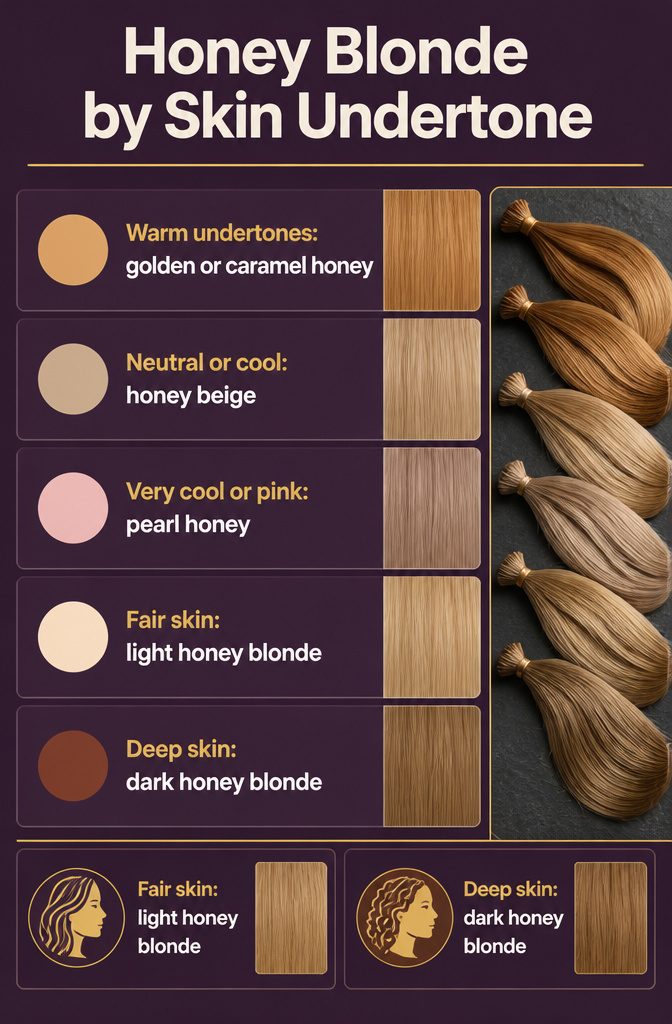
Warm undertones are the easy match.
Golden and caramel honey shades pick up the peach, golden or olive in the skin and make it glow. Neutral and cool complexions do better with honey beige, which keeps some warmth without turning yellow.
If your skin runs very cool or pink, skip strong gold and try a pearl honey: a muted shade built from violet or pearl toners over a neutral beige-gold. I’d keep cool-toned readers away from anything very yellow.
Depth follows skin tone too.
Fair skin looks best in a light honey blonde, and deep skin suits a dark honey blonde. Your natural base color should set how far you take either one.
3. Placement Choices: All-Over, Highlights, or Balayage
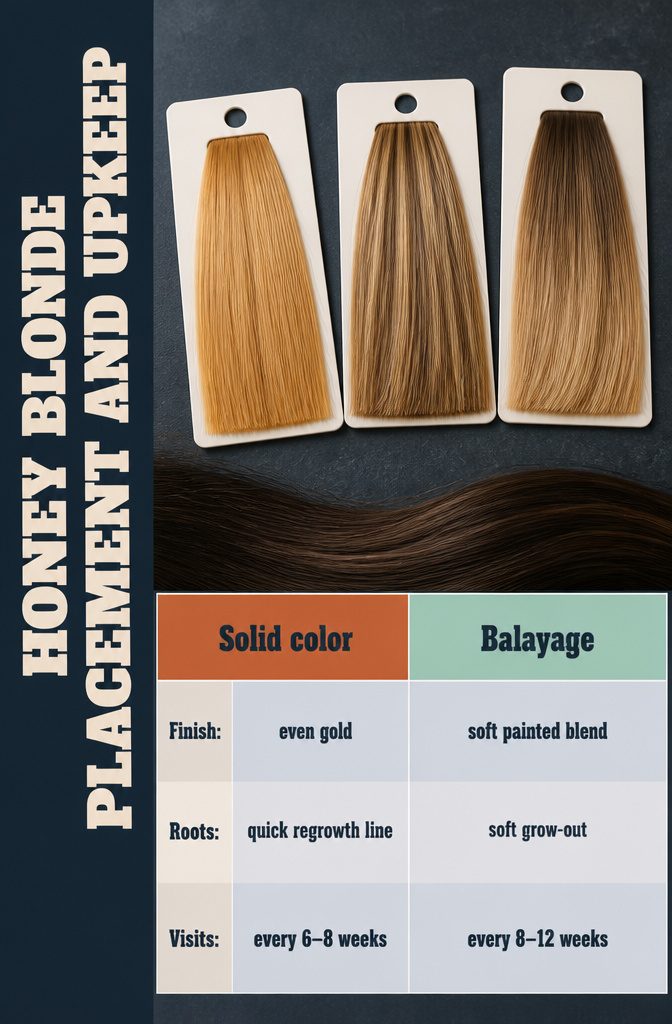
Solid honey blonde gives the most even, golden finish, but the regrowth line shows quickly, so full color needs root touch-ups every 6 to 8 weeks.
Highlights weave lighter strands through your natural color, which reads as honey ribbons on a dark blonde base. Balayage is hand-painted, so roots stay close to your natural shade and grow out softly, and 8 to 12 weeks between visits is realistic.
In one video walkthrough, a stylist skipped solid color for a client who wouldn’t rebook every six weeks.
She used a full foil of fine baby lights, which looked like an all-over lighter shade with no hard root line. For most readers, I’d choose balayage.
4. Starting From Your Current Color
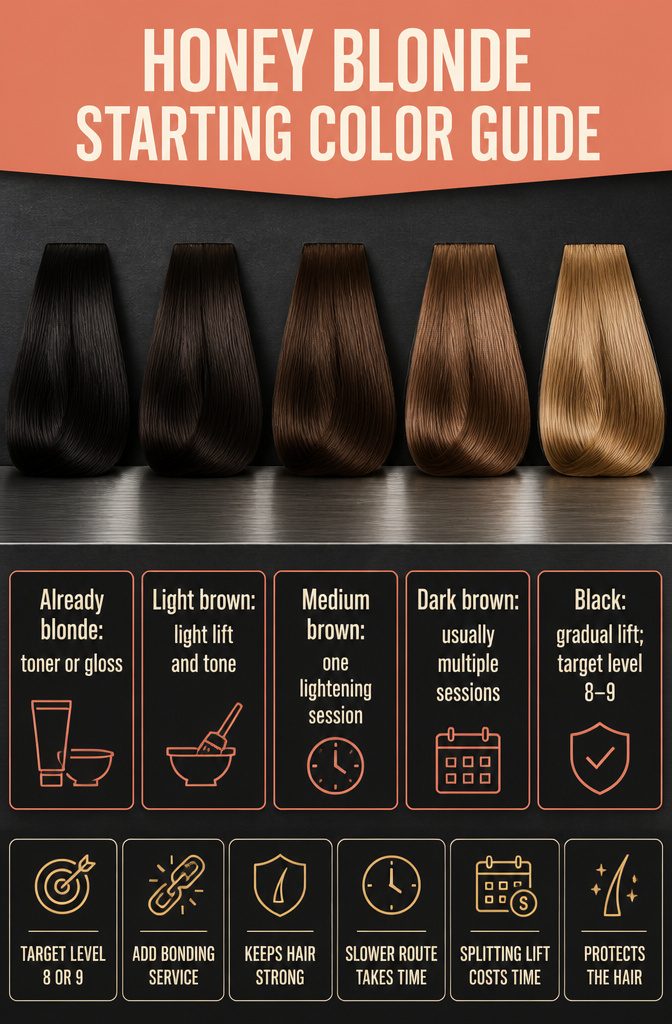
Already-blonde hair only needs a toner or gloss to move toward honey.
Light brown needs a light lift and tone, medium brown a lightening session, and dark brown usually takes multiple sessions. Black hair calls for a gradual lift plan.
Whatever the starting point, the lightening should land at level 8 or 9 so the honey tones reflect accurately. Add a bonding service to keep the hair strong before the formula goes on.
On dark hair, I’d take the slow route. Splitting the lift across more than one visit costs time, but it protects the hair.
5. How the Color Gets Applied
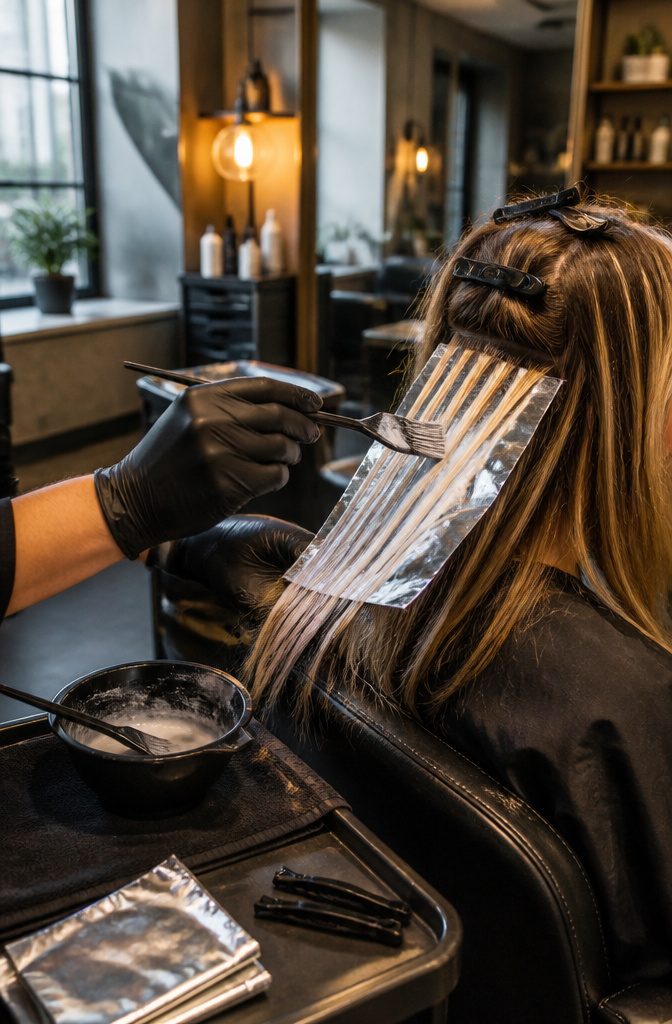
Bring your photo to a consultation and ask which of four honey formulas matches it. Warm honey is balayage with teasylights and Whitener with 6%, no toner.
Golden honey uses fine weaves and slices with Whitener with 6% + 11.2 with 12%, then toner 9.2 with 1.5%. Caramel honey takes Whitener with 6% at 1:2, toned with 40g 8.0 + 10g 9.07 + 10g 9.2 with 3% at 1:2.
Dark honey needs only Whitener with 3%, toned with 20g 8.0 + 30g 8.07 + 10g 8.3 + Balance Sparkling Shine with 1.5% for 10 min. Toner is where gold gets pulled toward neutral or beige, so ask about it before choosing permanent or demi-permanent.
6. Keeping the Color From Fading or Turning Brassy
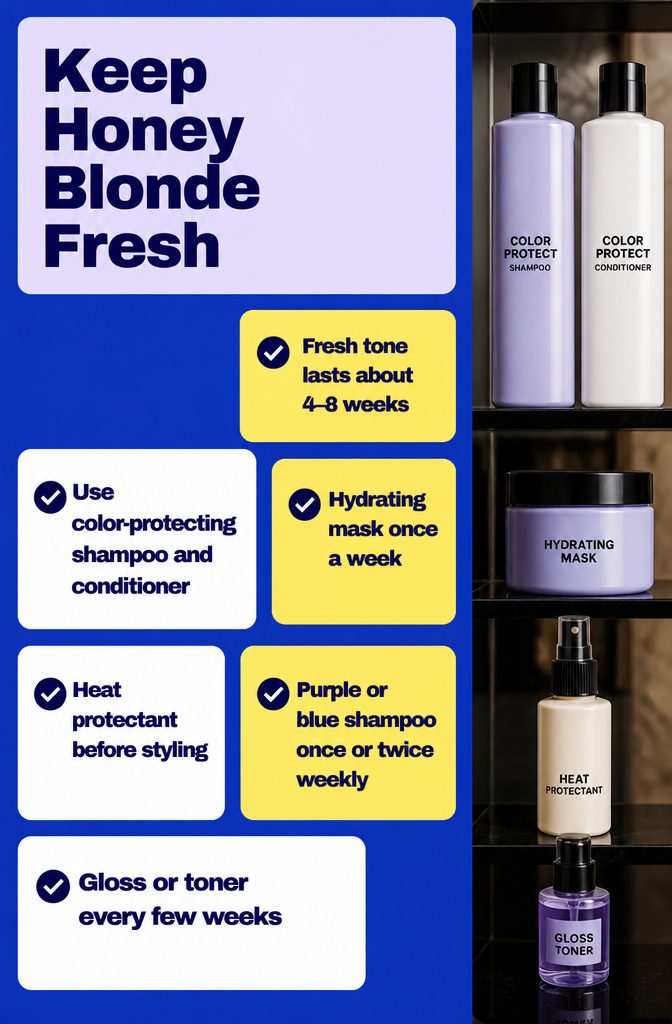
Honey blonde tone usually stays fresh for about 4 to 8 weeks, and washing gently stretches that window. A color-protecting shampoo and conditioner slow fading between appointments.
A hydrating mask once a week keeps lightened hair from drying out. Heat is the other drain, so I never style without a heat protectant.
A soft purple or blue shampoo once or twice a week keeps brassiness in check, but don’t overuse it.
A gloss or toner every few weeks is the step I’d add first, because it rebalances the tone and brings back shine in one go.
7. What to Expect Before You Commit
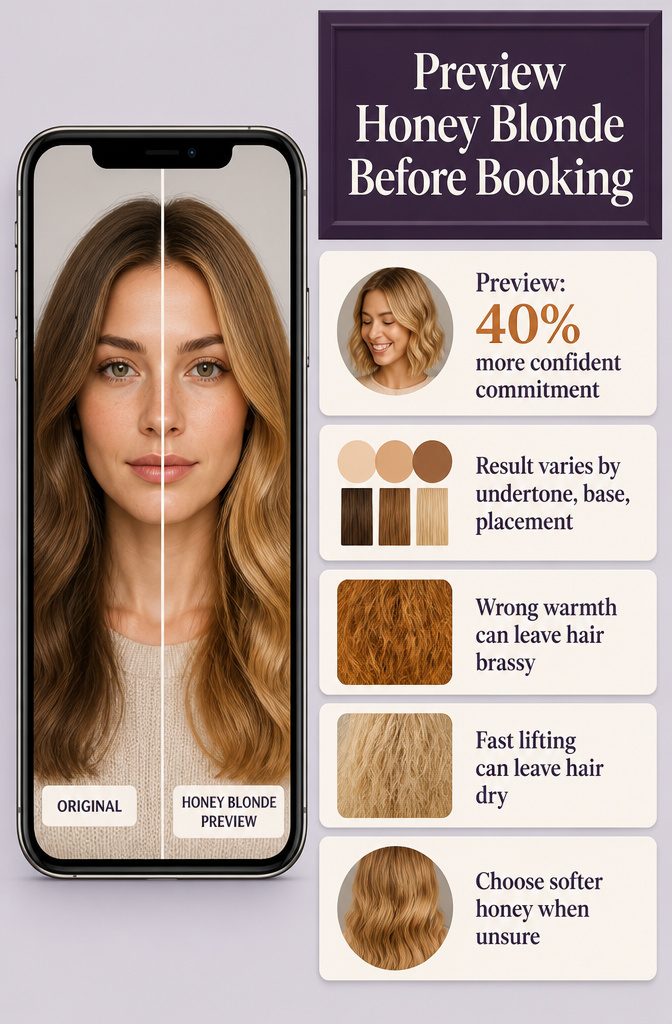
Honey blonde is a spectrum, not one shade, and the same formula lands differently depending on your undertone, your starting color and where the color is placed. A Pinterest photo shows only one of those outcomes.
A visual preview closes some of that gap. Perfect Corp. puts the benefit plainly:
By seeing the result before the dye is applied, clients feel 40% more confident in committing to a major color change.
I’d run a preview on your own photo before booking anything. Regret usually traces back to two moves: choosing a warmth your skin doesn’t want, and lifting too fast.
Either one leaves hair brassy and dry, and neither is quick to fix. When in doubt, ask for a softer honey than your first instinct.
At-Home Application With LIVE B16 Honey Blonde
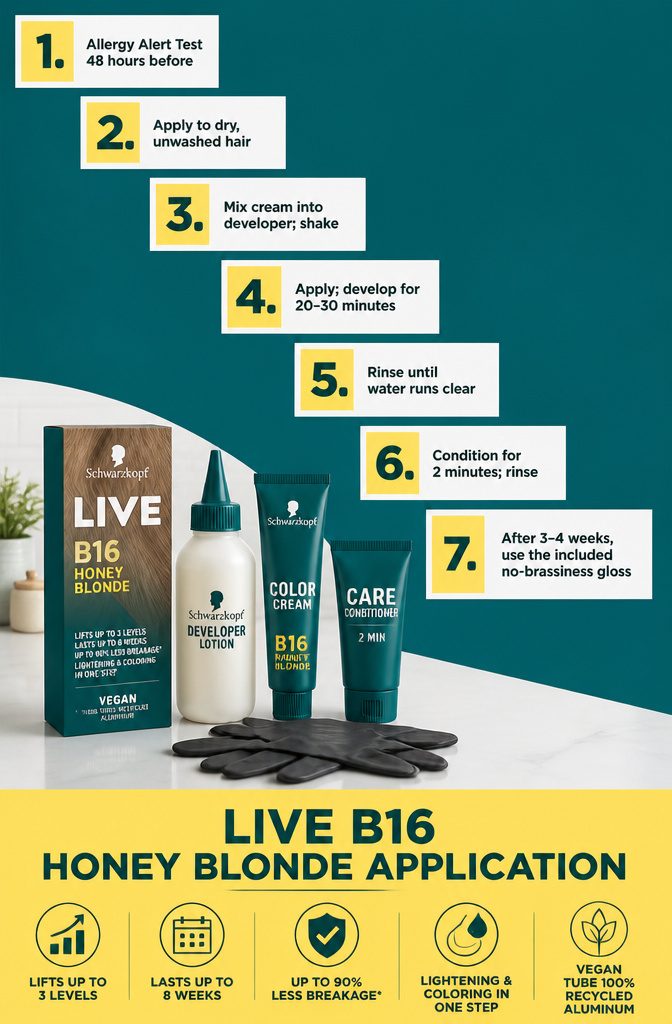
LIVE B16 Honey Blonde lifts up to 3 levels and lasts up to 8 weeks, and its anti-damage system claims up to 90% less breakage. Lightening and coloring happen in one step, which is why I’d pick it over a two-box routine.
- Do the Allergy Alert Test 48 hours before each coloring, not just the first time.
- Apply to dry, unwashed hair.
- Mix the color cream into the developer and shake thoroughly.
- Apply the mix and let it develop for 20–30 minutes.
- Rinse with warm water until it runs clear.
- Leave the Care Conditioner on for 2 minutes, then rinse thoroughly.
- After 3–4 weeks, use the included no-brassiness gloss.
The formula is vegan, and the tube is 100% recycled aluminum.
Salon Cost and Appointment Length
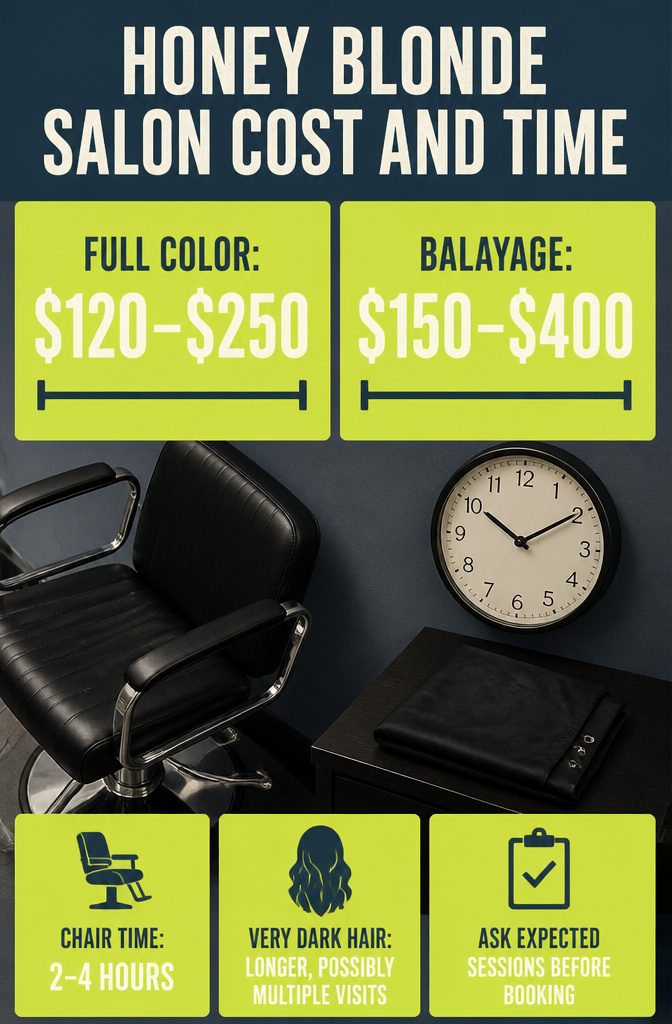
A full color in honey blonde usually runs $120 to $250, and balayage runs $150 to $400. Location and stylist move those numbers more than the shade does, so I’d get a quote before booking.
Plan on 2 to 4 hours in the chair. Very dark hair takes longer and may need more than one visit, and every extra visit adds to the bill.
If you’re starting from deep brown or black, I’d budget toward the top of the range and ask the stylist up front how many sessions they expect. That one question prevents most of the sticker shock.
Frequently Asked Questions
What color is honey blonde?
Honey blonde is a warm blonde built from golden and amber tones, named for fresh honey.
It sits on the warm side, though some versions can be toned slightly neutral for cooler undertones. Beside ash or platinum, it looks softer and more natural.
What is the difference between honey blonde and golden blonde?
Golden blonde is brighter and more yellow, while honey blonde is slightly deeper and softer, with amber warmth. If golden looks too loud on you, honey blonde is the easier shade to wear.
What skin tone suits honey blonde best?
Warm undertones suit it best, especially golden and caramel honey shades.
Neutral and cool skin does better in honey beige, and very cool or pink skin looks better in a pearl honey than in strong gold. Fair skin pairs with a light honey, and deep skin with a dark honey.
Do I have to bleach my hair to get honey blonde?
Not if your hair is already blonde, since a toner or gloss is enough to move it toward honey.
Light brown hair needs a light lift, medium brown a lightening session, and dark brown usually several sessions, with black hair needing a gradual plan.
Lighten to level 8 or 9 so the honey tones show accurately, and splitting the lift across visits protects dark hair.
How much does honey blonde hair dye cost?
At a US salon, a full color in honey blonde usually runs $120–$250, and balayage runs $150–$400.
Your location and stylist change the price more than the shade does. Starting from deep brown or black hair can push you toward the top of that range because it takes more time and sometimes more than one visit.
How often do I need to touch up honey blonde hair?
Full honey blonde color needs root touch-ups every 6 to 8 weeks, because the regrowth line shows quickly. Balayage is hand-painted and keeps roots close to your natural shade, so 8 to 12 weeks between visits is realistic.
How long does honey blonde hair color last?
The tone usually stays fresh for about 4 to 8 weeks. Washing gently, using a color-protecting shampoo and conditioner, and keeping heat styling low all help it last toward the longer end.
How do I stop honey blonde from turning brassy?
Use a soft purple or blue shampoo once or twice a week, but don’t overdo it.
A gloss or toner every few weeks rebalances the tone and brings back shine. Heat protectant before styling and a weekly hydrating mask also help keep lightened hair from drying out and fading.
Can I dye my hair honey blonde at home?
Yes, with a one-step kit such as LIVE B16 Honey Blonde, which lifts up to 3 levels and lasts up to 8 weeks.
That limited lift makes it a better fit for hair that is already fairly light. Do the allergy test 48 hours before each coloring, and see a salon if you’re starting from dark brown or black hair.