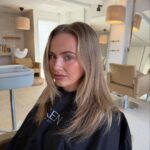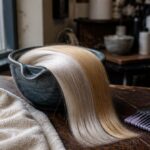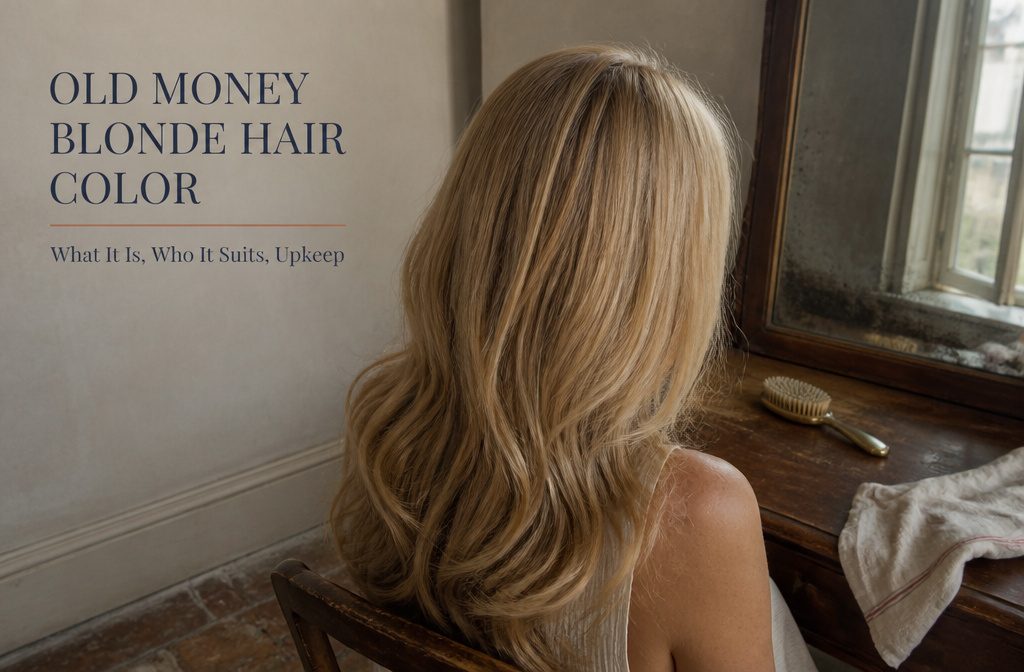
Old money blonde hair color is a soft, naturally dimensional blonde that sits between levels 6 and 9, blending beige, honey and sometimes ash tones for a sun-kissed effect rather than anything high-contrast or processed.
The shade works best on cooler to neutral skin tones, though it adapts when pushed warmer with honey or caramel highlights. On TikTok, #oldmoneyblonde has passed 83 million views since the trend took off in 2023.
What Old Money Blonde Looks Like
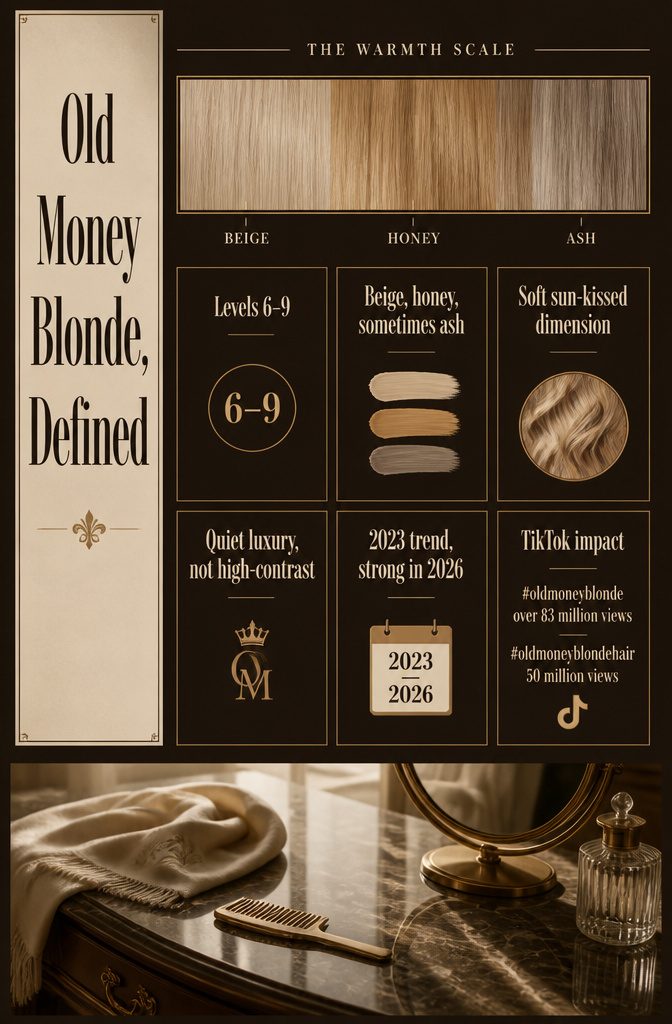
Old money blonde sits between levels 6 and 9 and blends beige, honey and sometimes ash tones for a soft, natural look that doesn’t announce itself.
The name ties to the quiet luxury aesthetic, the kind of polished restraint associated with generational wealth rather than anything newly minted or high-contrast. What the shade actually looks like on the warmth scale depends on who mixed it.
One source calls it a cool medium blonde, while three others describe it as warm with golden or honey undertones balanced by ash. The effect either way is blended dimension that reads as sun-kissed rather than processed.
The trend took off in 2023 and is still running strong in 2026. On TikTok, #oldmoneyblonde has hit over 83 million views and #oldmoneyblondehair sits at 50 million, with creators showing their transformations in the chair.
How It Differs From Other Blondes
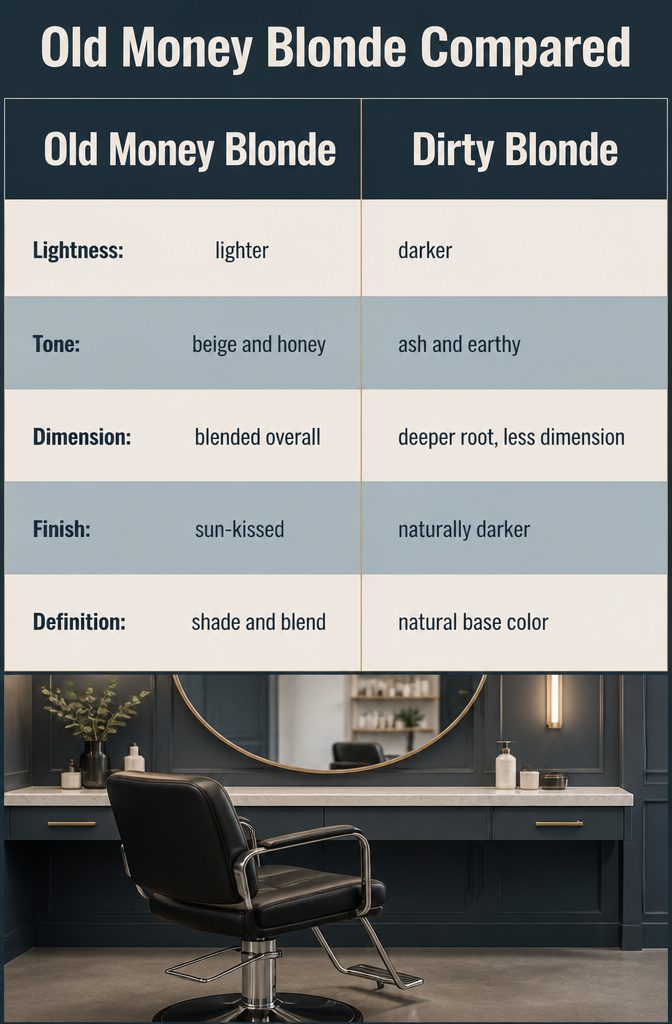
Old money blonde is lighter and softer than dirty blonde, which skews darker with ashier, earthier tones.
Dirty blonde holds more depth at the root and less dimension overall. Old money blonde sits a shade or two lighter than your natural base, blended with warmer beige and honey tones that read as naturally sun-kissed rather than dyed.
Platinum and bleach blonde rely on high contrast and cooler, brighter lifts.
Old money blonde avoids that stark jump. The colors melt into one another instead of standing out as separate pieces, and the warmth keeps it from reading icy or overly processed.
Balayage comes up often, but it’s a technique, not the shade itself. You can use balayage to place the color, but old money blonde is defined by its tone and blend, not by how it’s painted on.
The shade focuses on blended, uniform lightness rather than the streaky highlights balayage is known for.
Who It Suits
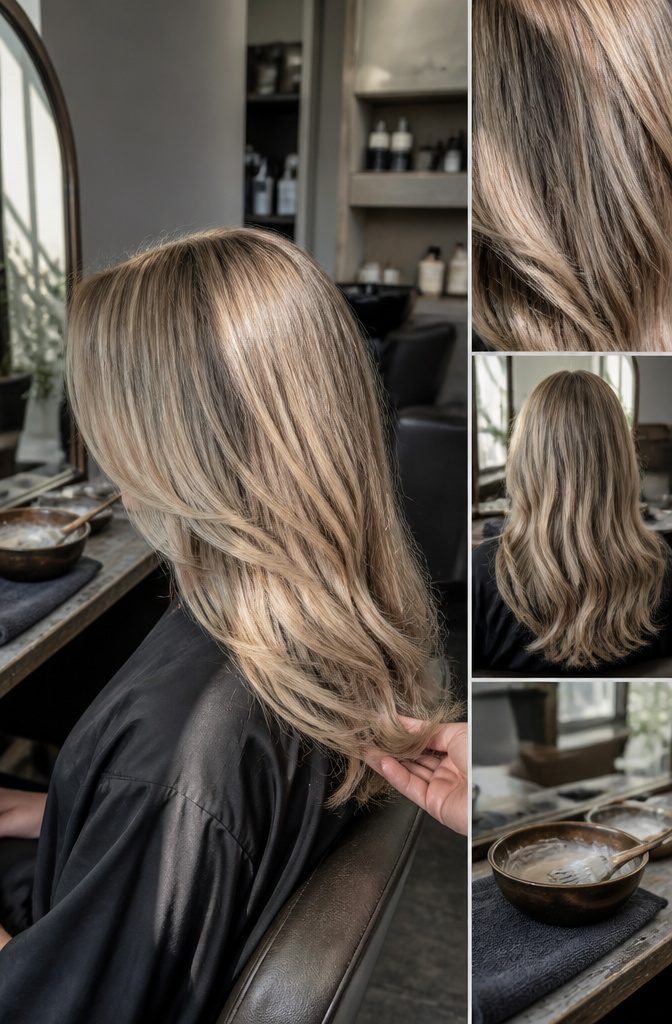
The color adapts to a range of skin tones, but cooler to neutral complexions get the most natural match.
The creamy, muted base complements fair skin especially well when you lean toward beige or soft ash rather than strong gold, which can wash out paler tones.
Medium and olive skin tones look best with the color pushed warmer:
- Honey or wheat highlights brighten without losing the understated quality
- Caramel or toffee tones layered into a darker base give depth on deeper skin
- Golden or peachy undertones in the skin pull the warmth through naturally
If you’re starting from brunette, level 5 or darker, the transition is smoother than lifting from very light hair. You get dimension without needing heavy bleach.
One caution: this isn’t the shade for anyone wanting a bright, noticeable lift.
Subtlety is what makes it work, and if you’re after something that perks you up or reads as freshly lightened, a warmer honey blonde or a cooler ash will give you more contrast.
Asking for It at the Salon
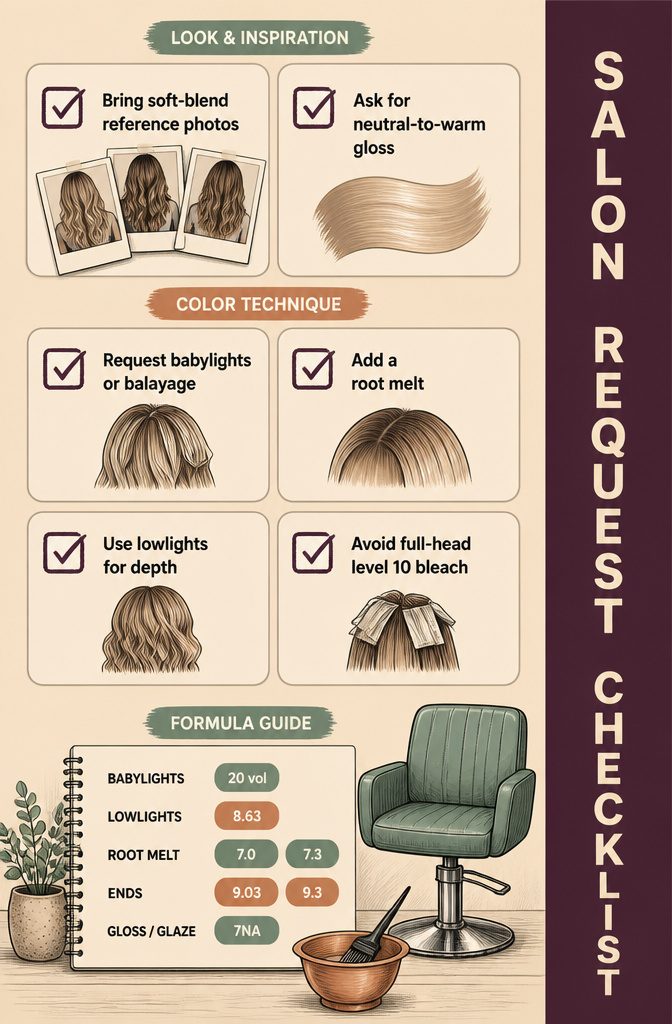
Bring reference photos that show the soft blend and gentle warmth you’re after, and tell your stylist you want a color that mimics sun-lightened hair rather than anything platinum or stripey.
Many professionals know old money blonde by name now, but the detail that matters is asking for fine highlights with an all-over gloss that leans neutral to warm.
Request balayage or babylights for soft, blended pieces, a root melt to blend the base into the highlights, and lowlights if your natural color needs more depth.
One formula that hit TikTok used babylights at 20 vol, lowlights in 8.63, a root melt with 7.0 and 7.3, and 9.03 and 9.3 on the ends.
Some salons finish with a 7NA glaze for shine and neutral tone. This is not the route where they bleach your whole head to level 10; that’s platinum, and it’s a different process entirely.
Upkeep and Gloss Timing
The maintenance schedule is forgiving, but sources disagree on what forgiving means.
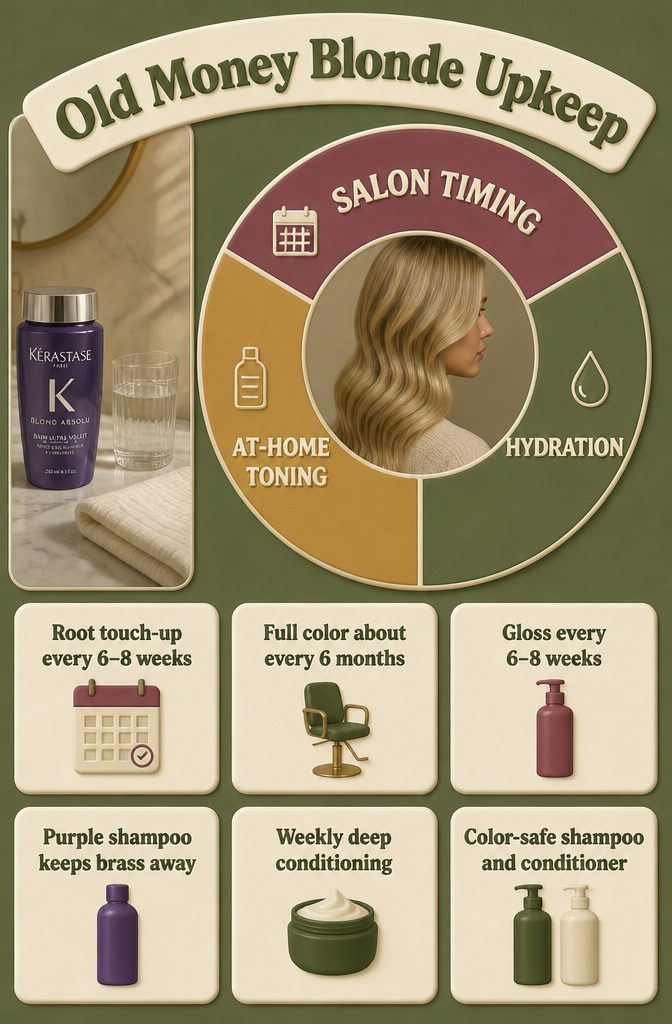
POPSUGAR reports that you’ll need root touch-ups every six to eight weeks and a full color about once every six months, which makes it manageable compared to brighter blondes but still regular salon time.
What’s great about this hair trend is that it’s low maintenance, so you don’t have to spend too much time in the salon chair.
— POPSUGAR
Country and Town House goes further, saying the color could last six months to a year without much work. ID Hair Pro splits the difference and recommends a gloss treatment every 6 to 8 weeks to keep the tone fresh.
The range reflects reality: your natural base, how fast your hair grows, and how much warmth creeps in all shift the clock.
Color-safe shampoo and conditioner are baseline. Purple shampoo keeps brass away, and a purple mask like Kérastase Blond Absolu ($68) tones between salon visits.
Madison Reed ColorWonder in It’s Giving Golden ($30) works at home if you want to refresh warmth without booking an appointment. Deep conditioning weekly keeps the hair soft, since even low-lift color needs hydration.
Color Variations to Save
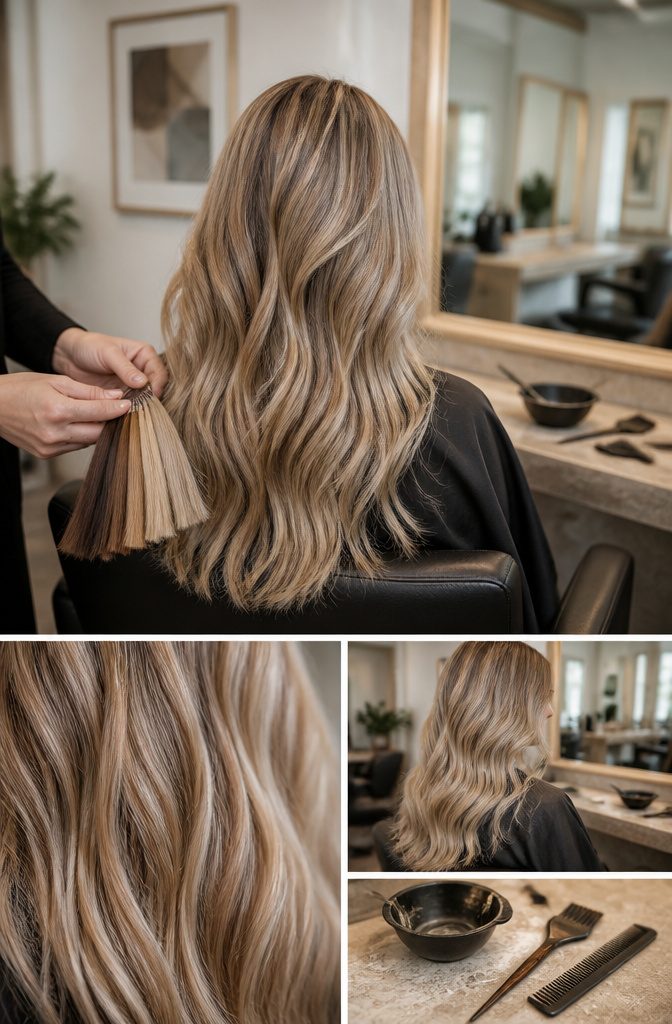
Honey blonde with caramel ribbons works when the base is warm gold and the highlights sit a full level lighter, bright enough to catch light but still soft.
The beige tones lean cooler, closer to wheat or biscuit, and pair well with ash through the mid-lengths to keep the overall effect muted rather than sunny.
Bronde sits right at the line where blonde stops and brunette starts, usually a level seven or eight base with blonde pieces concentrated around the face and crown.
The lived-in variations blend three or four tones in narrow sections so the grow-out is gradual and intentional, not a hard root line three weeks in.
I save anything that shows dimension rather than one flat shade, because that depth is what reads as natural and expensive.
Ash blonde old money looks stay cool all over, no gold or copper, and need violet toning every few washes to hold that temperature.
Styling the Finished Color
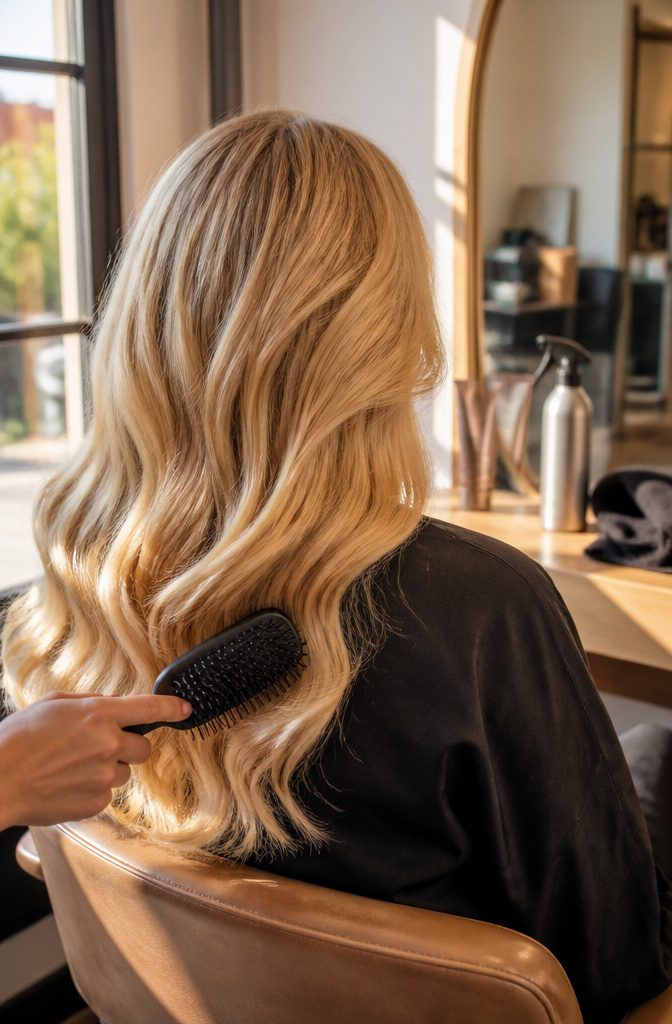
The finished color looks best when the styling stays understated and polished. A few clear moves keep the look refined:
- Bristle brush and grooming cream — smooth the hair rather than adding volume, and keep it hydrated so the blend stays soft.
- Classical waves or a soft blow-dry — skip anything too beachy or blown-out. The color itself is the statement, and big volume reads as fussy rather than elegant.
- Loose waves, low buns, braids and bobs all work well, especially paired with a ’90s-inspired cut that shows off the golden tones around the face.
- Use a heat protectant; Oribe Dry Heat Protectant Spray ($46) is one option if you blow-dry regularly.
The idea is that the color should look effortless, not showy.
Extensions and Wigs
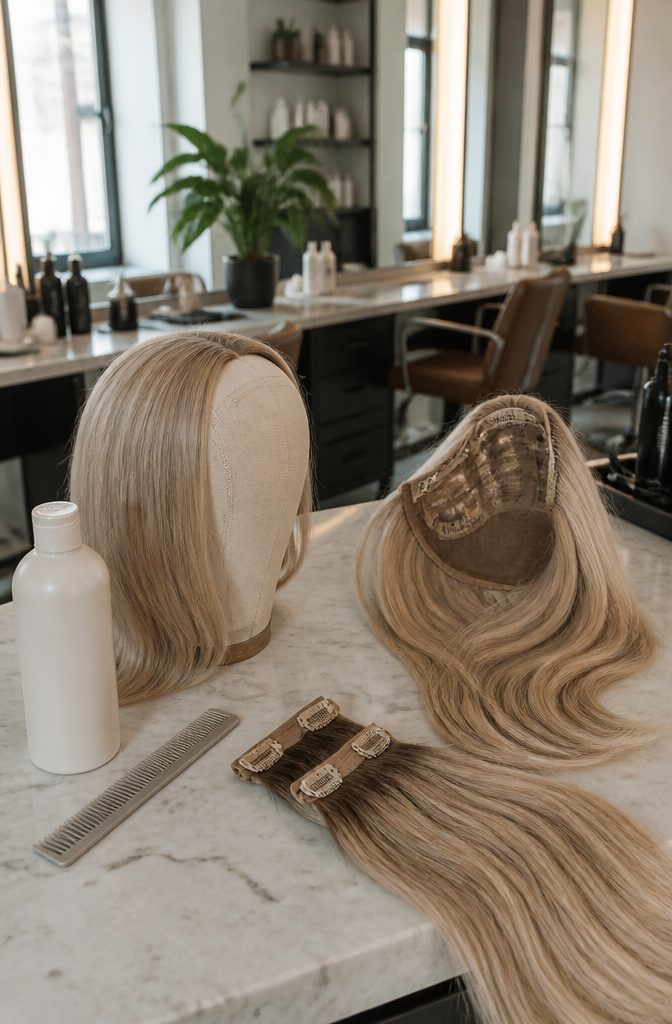
Human-hair extensions and wigs can carry old money blonde better than synthetic fiber, which tends to read flat under indoor light.
Clip-in wefts give the most control over placement; tape-ins lie flatter but need professional removal every six to eight weeks.
Halo extensions sit on a single wire and come off each night, which makes them easier to maintain but limits how you can part your hair.
One manufacturer claims extensions hold their brightness for eight to twelve weeks with sulfate-free shampoo and weekly toning, compared to the six to eight weeks quoted for natural hair.
That longer window makes sense given that the hair is not growing and you are not exposing new undertone, but it assumes you are not using heat daily or swimming in chlorinated water.
The piece still yellows, it just does so more slowly than your roots would.
Celebrity Examples
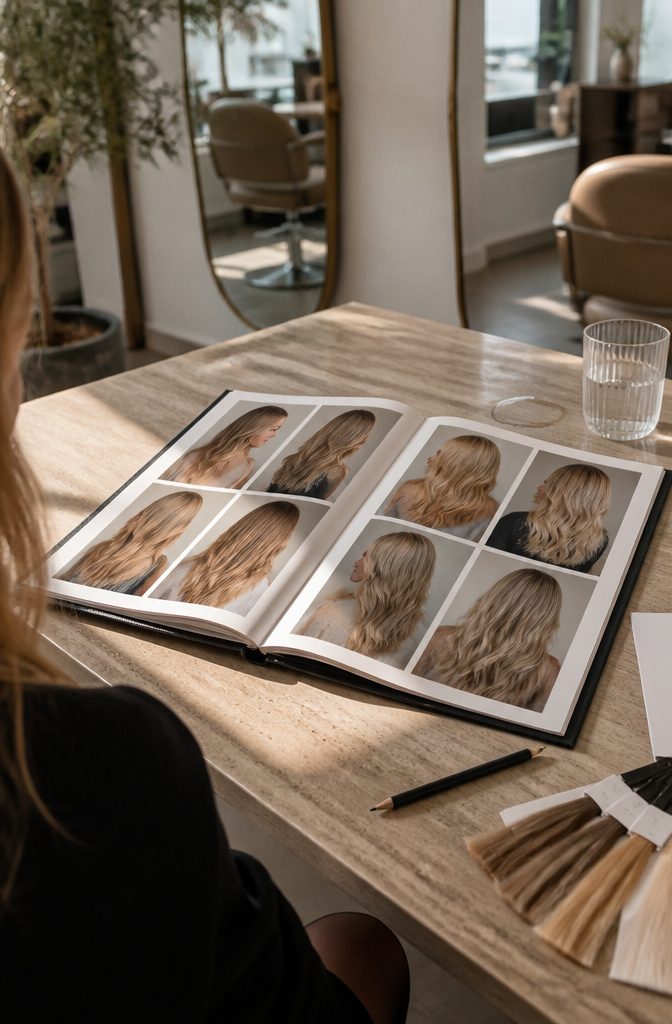
The list changes depending on where you look. Margot Robbie, Sofia Richie, Blake Lively, Brie Larson, Jennifer Aniston and Beyoncé all turn up as examples, and a few sources add Taylor Swift and Zendaya.
No single name appears across all of them, which tells you the look is less about one signature reference and more about a shared palette.
What makes them useful:
- Sofia Richie shows the front-frame approach: blended rooted color with two brighter pieces at the front that catch light around the face.
- Margot Robbie, Blake Lively and Jennifer Aniston lean into the classic honey-to-butter range with soft dimension.
- Beyoncé proves the palette works on deeper natural bases when the blend stays warm and lived-in.
- Brie Larson sits closer to the cooler end, where ash and gold meet without going icy.
Save a few and bring them to your colorist. The look reads consistently enough that different reference photos will land you in the same neighborhood.
Less Processing Than Platinum
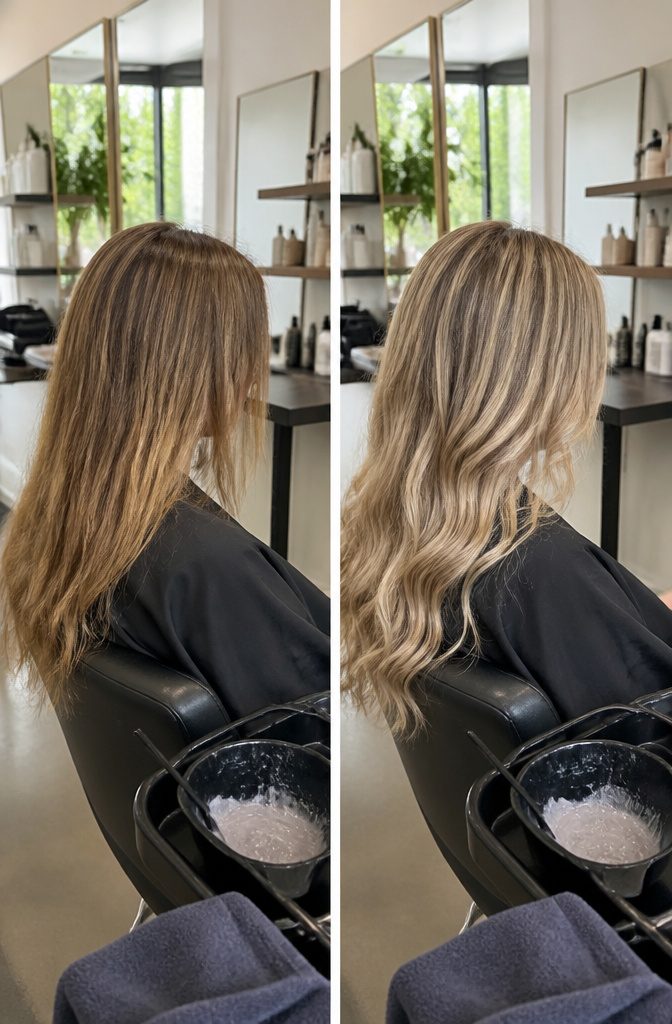
Several sources suggest that old money blonde can involve less processing than platinum, which may make it gentler on your hair. The look typically lives between levels 6 and 9, so you’re not pushing all the way to a level 10 bleach lift.
Stylists often use balayage, babylights, or a hi-lift color with toner rather than full-head bleaching, and that lighter chemical load can mean less damage over time.
There’s also a maintenance angle. One source stresses that the color requires less salon time, and another highlights that you can go longer between major work.
Those aren’t universal guarantees, though. How much processing you actually need depends entirely on your starting level.
If you’re beginning from dark brown, you’ll still need significant lifting to reach a believable old money blonde. If you’re already a light base, the jump is smaller and the upkeep genuinely easier.
Frequently Asked Questions
What is old money blonde hair color?
Old money blonde is a natural-looking shade that sits between levels 6 and 9, blending beige, honey, and sometimes ash tones for soft dimension.
The effect is sun-kissed rather than processed, with colors that melt into one another instead of standing out as separate highlights. It ties to the quiet luxury aesthetic, polished and understated rather than bright or high-contrast.
What is the difference between old money blonde and dirty blonde?
Old money blonde is lighter and softer than dirty blonde, which skews darker with ashier, earthier tones.
Dirty blonde holds more depth at the root and less dimension overall, while old money blonde sits a shade or two lighter than your natural base with warmer beige and honey tones.
The blend reads as naturally sun-kissed rather than flat or ashy.
Is old money blonde the same as balayage?
No. Balayage is a technique for placing color, while old money blonde describes the shade itself.
You can use balayage to paint on the color, but the look is defined by its tone and blend, not by how it’s applied. The shade focuses on blended, uniform lightness rather than the streaky highlights balayage is known for.
What celebrities have old money blonde hair?
Margot Robbie, Sofia Richie, Blake Lively, Brie Larson, Jennifer Aniston, and Beyoncé all appear as examples of old money blonde.
Sofia Richie shows the front-frame approach with blended rooted color and two brighter pieces around the face, while Margot Robbie, Blake Lively, and Jennifer Aniston lean into the classic honey-to-butter range.
Beyoncé proves the palette works on deeper natural bases when the blend stays warm and lived-in.
Who does old money blonde suit?
The color adapts to a range of skin tones, but cooler to neutral complexions get the most natural match.
Fair skin pairs best with soft beige or ash, medium and olive skin tones look best with honey or wheat highlights, and deeper skin tones benefit from caramel or toffee layered into a darker base.
If your skin has warm undertones, the color should lean toward honey and gold; if you have cool undertones, stick with ash and beige.
How do you ask for old money blonde at the salon?
Bring reference photos that show the soft blend and gentle warmth, and tell your stylist you want color that mimics sun-lightened hair rather than anything platinum or stripey.
Ask for fine highlights with an all-over gloss that leans neutral to warm, balayage or babylights for soft pieces, a root melt to blend the base into the highlights, and lowlights if your natural color needs depth.
This is not the process where they bleach your whole head to level 10.
How do you maintain old money blonde?
Sources disagree on the schedule, but the range is root touch-ups every 6 to 8 weeks and a full color about once every 6 months, or as long as 6 months to a year without much work depending on your natural base and how fast your hair grows.
A gloss treatment every 6 to 8 weeks keeps the tone fresh. Color-safe shampoo and conditioner are baseline, purple shampoo keeps brass away, and deep conditioning weekly keeps the hair soft.
How do you style old money blonde hair?
The finished color looks best when the styling stays understated and polished. Smooth the hair with a bristle brush and grooming cream rather than adding volume, and keep waves classical or the blow-dry soft.
Loose waves, low buns, braids, and bobs all work well, especially paired with a cut that shows off the golden tones around the face. The color itself is the statement, so big volume reads as fussy rather than elegant.
Is old money blonde less damaging than platinum?
Old money blonde can involve less processing than platinum because the look typically lives between levels 6 and 9 rather than pushing all the way to a level 10 bleach lift.
Stylists often use balayage, babylights, or hi-lift color with toner rather than full-head bleaching, and that lighter chemical load can mean less damage over time.
However, how much processing you actually need depends on your starting level; if you begin from dark brown, you’ll still need significant lifting.