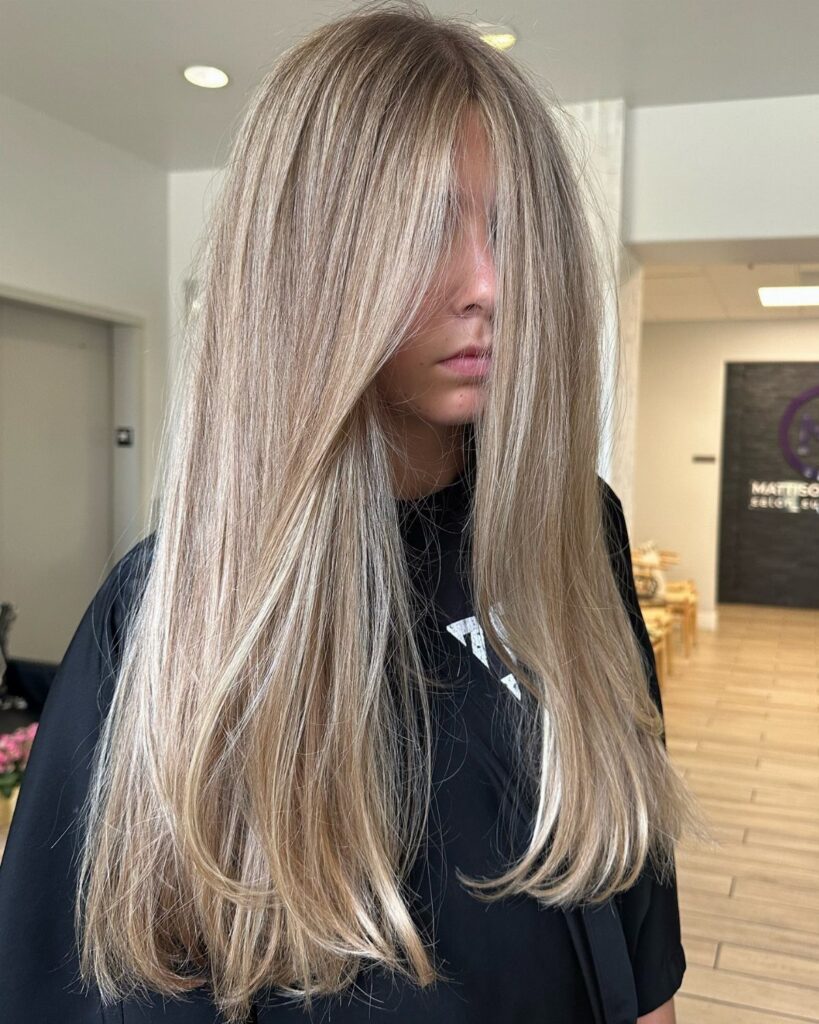
Your complexion and how much lightening your hair needs will point you to the right sandy blonde on this list.
A dark base needs a lot of lightening and a toner planned to finish the shade, and previously colored hair may take more than one appointment.
The range runs from dark sandy blonde, which sits close to light brown, to sandy platinum with a shadow root that softens regrowth.
1. Sandy Blonde Balayage
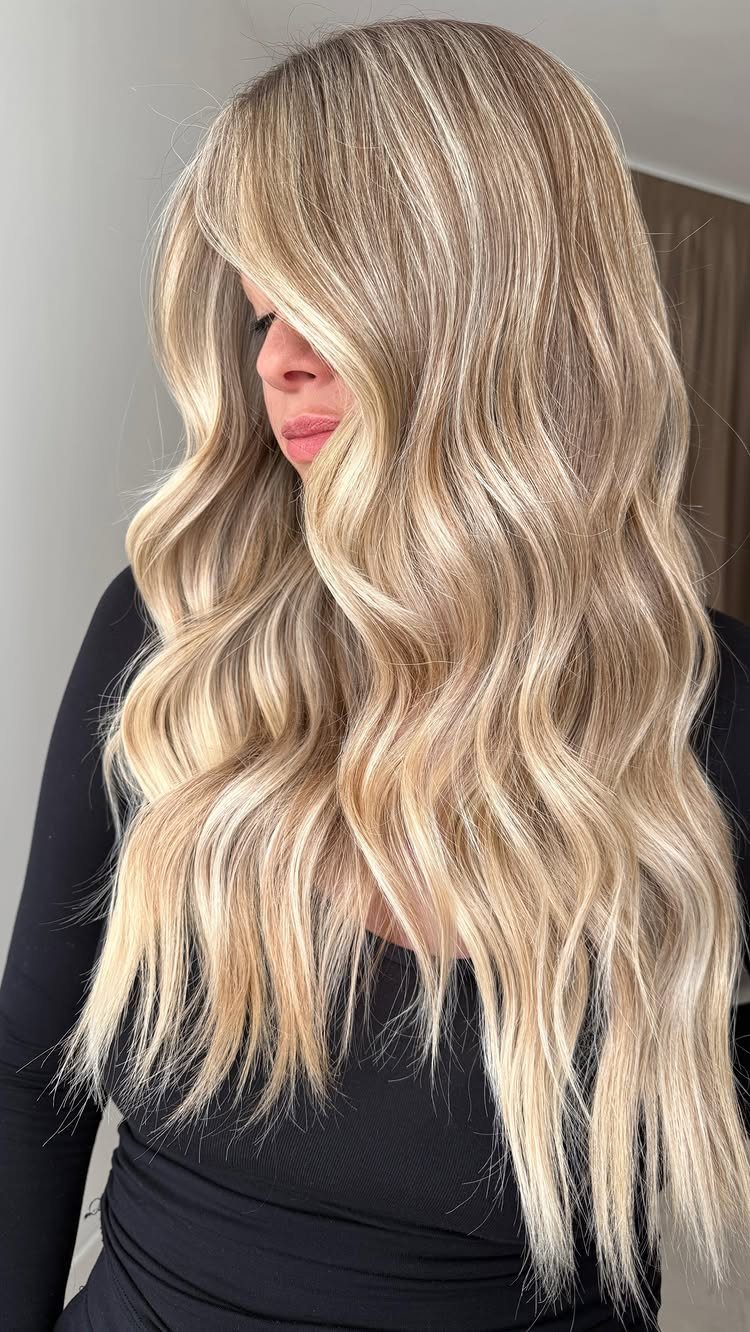
Balayage suits anyone who wants sandy blonde without a harsh line at the root. The color is painted by hand, so the stylist controls exactly where it starts and how soft the blend looks.
Ask for the roots to stay darker and for the lightness to build toward the ends. That is what gives the shade its lived-in feel on waves like these.
2. Sandy Blonde Highlights
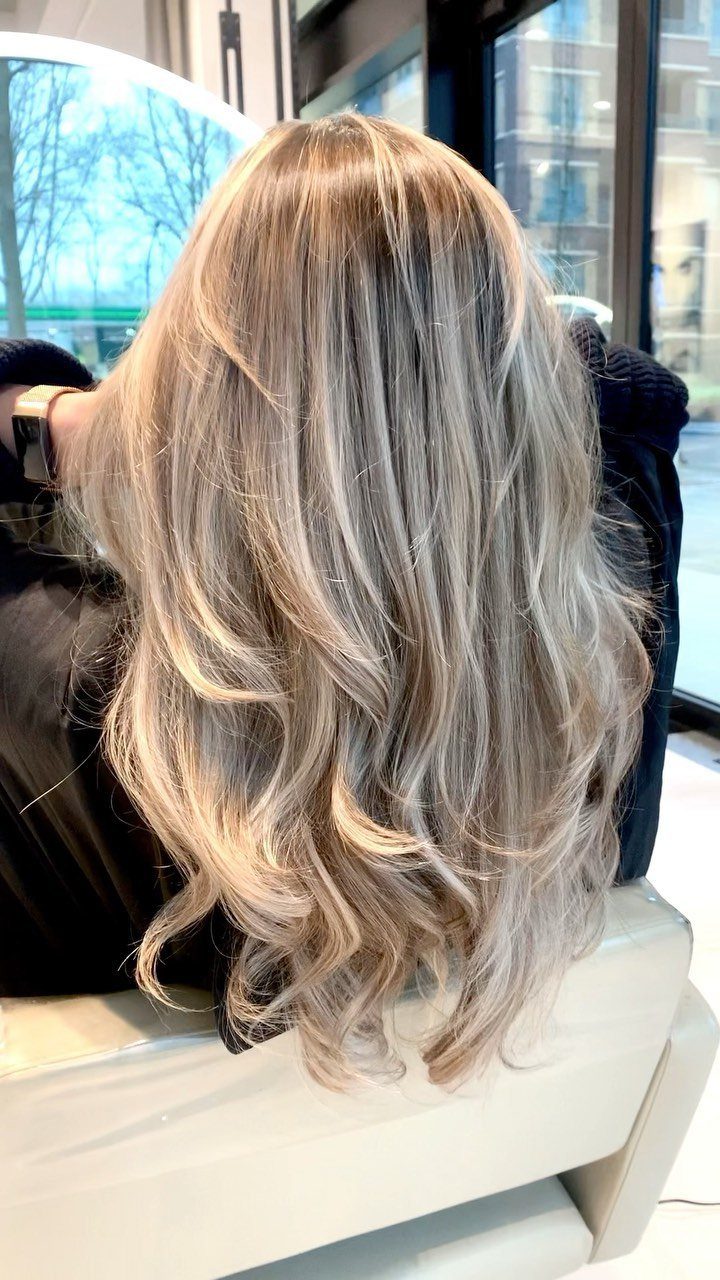
Highlights keep the base visible, and that contrast is what separates them from a fully blended look. Lighter sections sit against the darker strands, so the hair reads brighter and more dimensional at once.
I like this for anyone who wants the sandy shade to show some pattern. Bring a photo to the appointment and point to how much base you want left showing between the lighter pieces.
3. Dark Sandy Blonde Hair
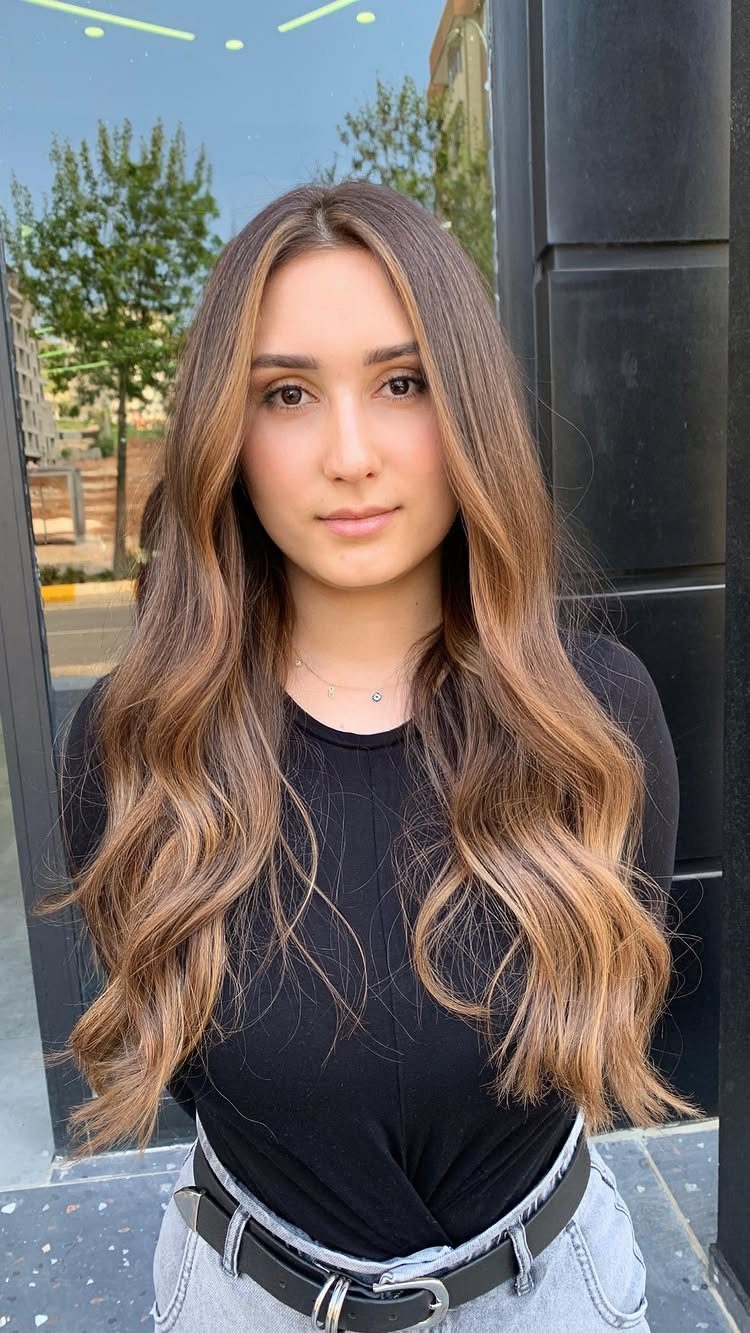
Dark sandy blonde earns its place through depth: the deeper base keeps the color from looking flat and makes the lighter pieces read as natural dimension.
It stays soft the way sandy blonde does, but the color sits closer to light brown, so it feels less stark against the skin.
For anyone nervous about going properly blonde, I think this is the gentlest way in. Ask your stylist for a sandy tone at a deeper level rather than a lighter one.
4. Rooted Sandy Blonde
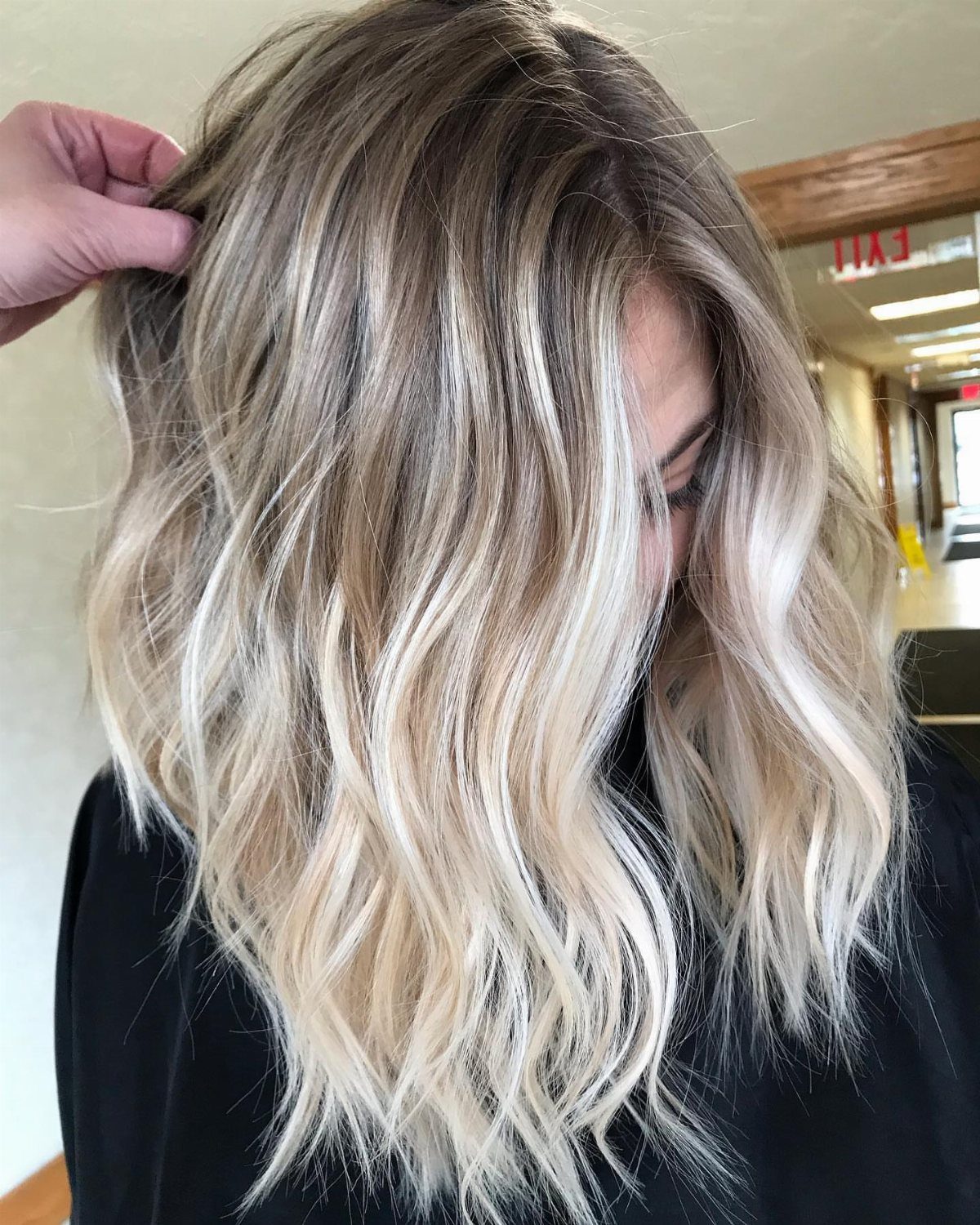
Regrowth is the reason to choose a rooted sandy blonde. A deeper root melts into lighter lengths, so new growth never shows a stripe.
That makes it a smart pick if you would rather space out salon visits than book every few weeks. Tell your stylist you want the root left darker on purpose, not just missed.
5. Warm Sandy Blonde
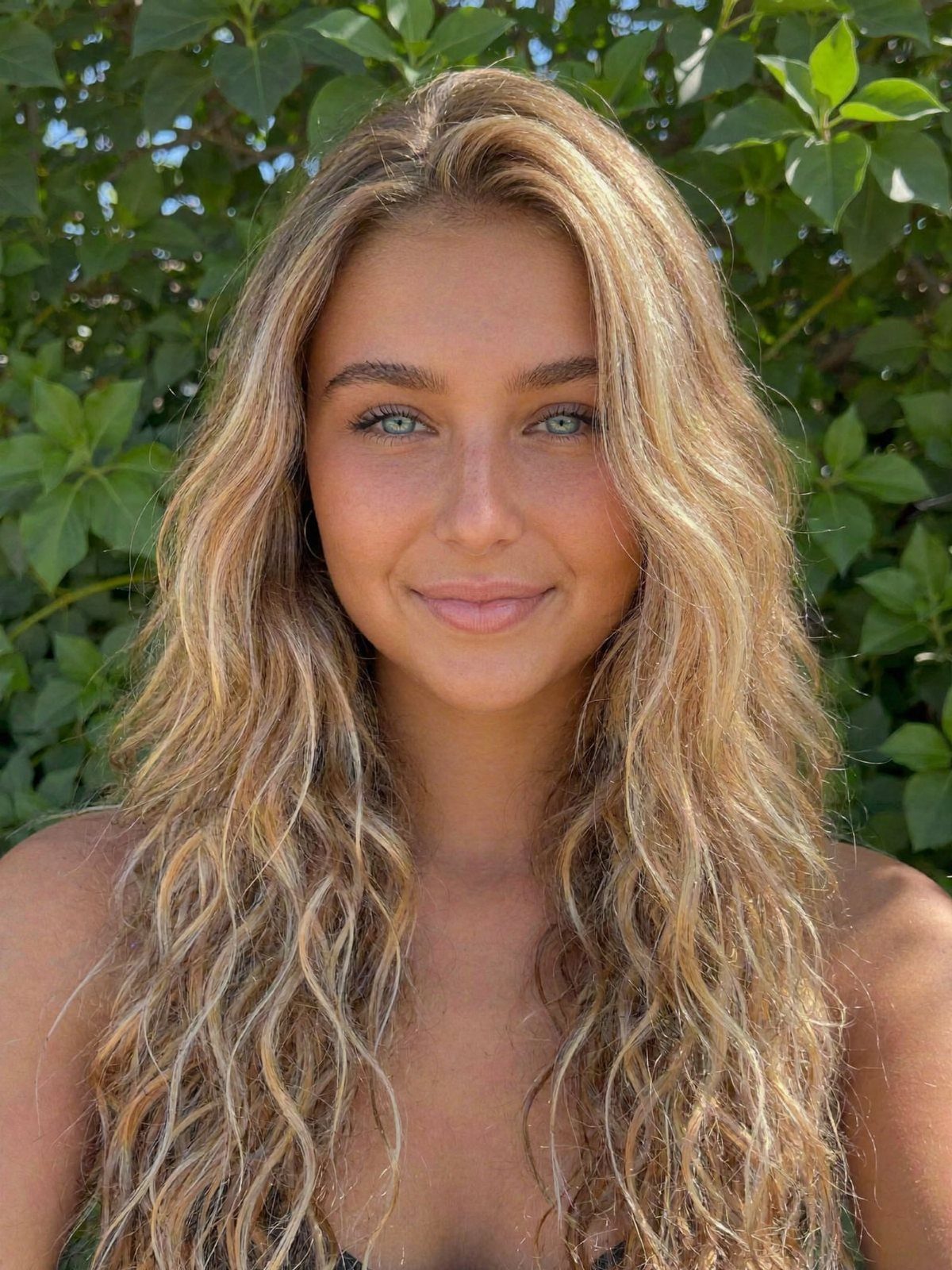
Golden, honey, bronze and wheat tones are what warm up a sandy blonde, and the best versions keep it balanced instead of pushing it into yellow. Think of it as sandy blonde with sunlight in it.
I would pick this if gold jewelry flatters you more than silver. Ask for one of those warm notes by name, so your stylist knows which direction you mean.
6. Cool Sandy Blonde
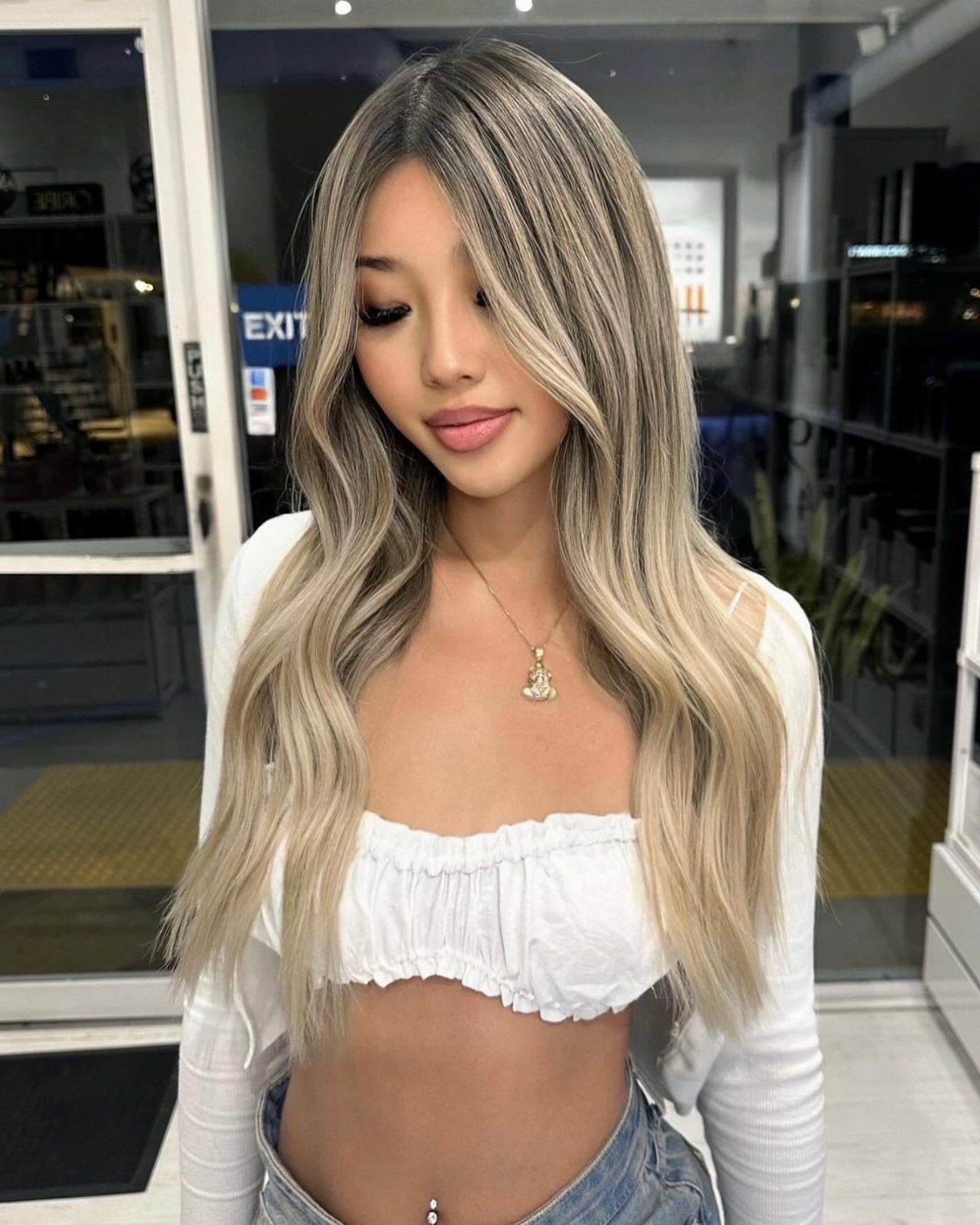
Cool sandy blonde drops the gold and leans on muted beige, ash or mushroom tones. The result is quieter and less golden, and it pairs well with darker roots.
Cooler undertones in your skin tend to pair well with this one, and a quick check is whether silver beside your face looks cleaner than gold.
Use those 3 words, beige, ash and mushroom, when you talk to your stylist, since each pulls the shade a slightly different way.
7. Dimensional Sandy Blonde
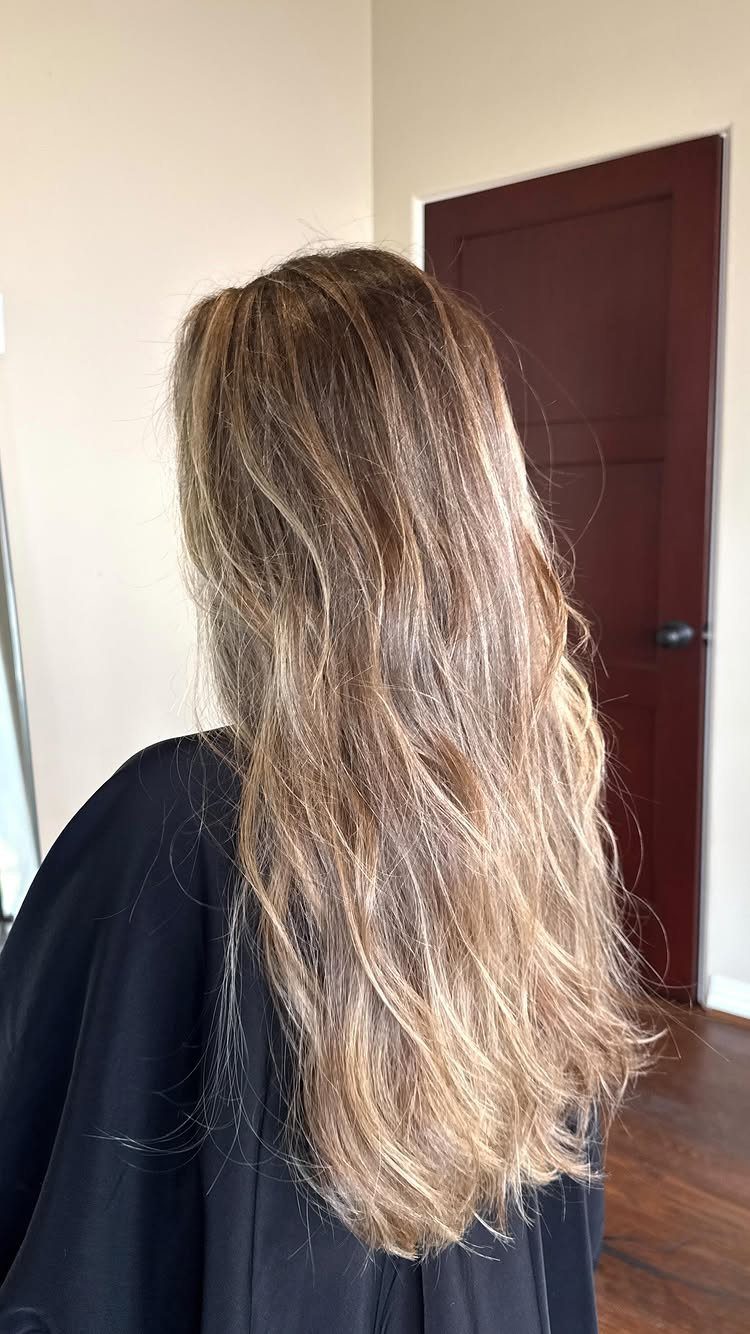
Several tones woven through one head of hair is what makes dimensional sandy blonde look expensive: blended brown and sandy pieces catch light at different angles, so long waves keep moving instead of reading as one flat block of color.
I prefer this over a single all-over shade for anyone with length, because the extra depth shows up in every wave.
Ask your stylist for complementary tones in the same family, not one color repeated, and say you want the blend soft.
8. Sandy Platinum Waves
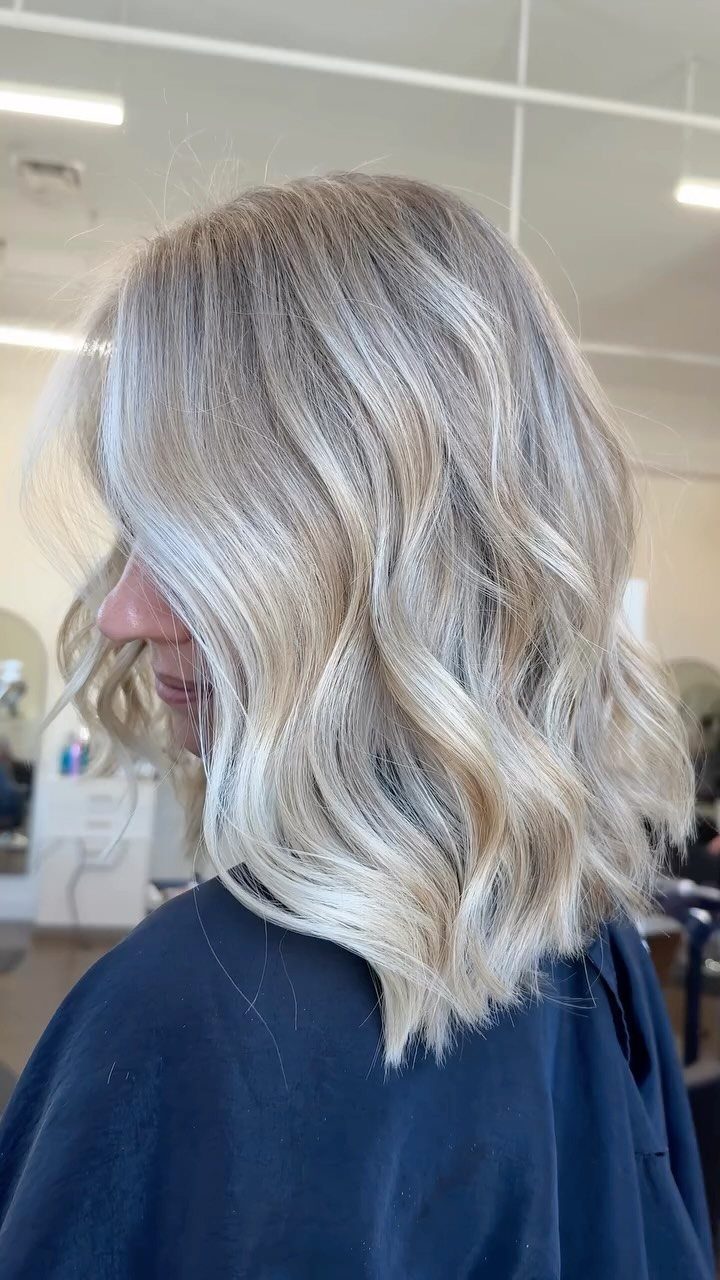
Pale sandy platinum with a darker root shadow is a bolder pick than most sandy blondes, and defined waves show off the cool, pale strands against the deeper roots.
The shadow root is the practical part.
It softens regrowth, so the lift doesn’t have to be redone at the scalp as often. Ask for it by name.
One tip from the stylist behind this look: the all-over tone used Igora Vibrance in 10-4, 9-1 and 9.5-1. Bring those numbers to your appointment as a starting point.
9. Sunkissed Sandy Blonde
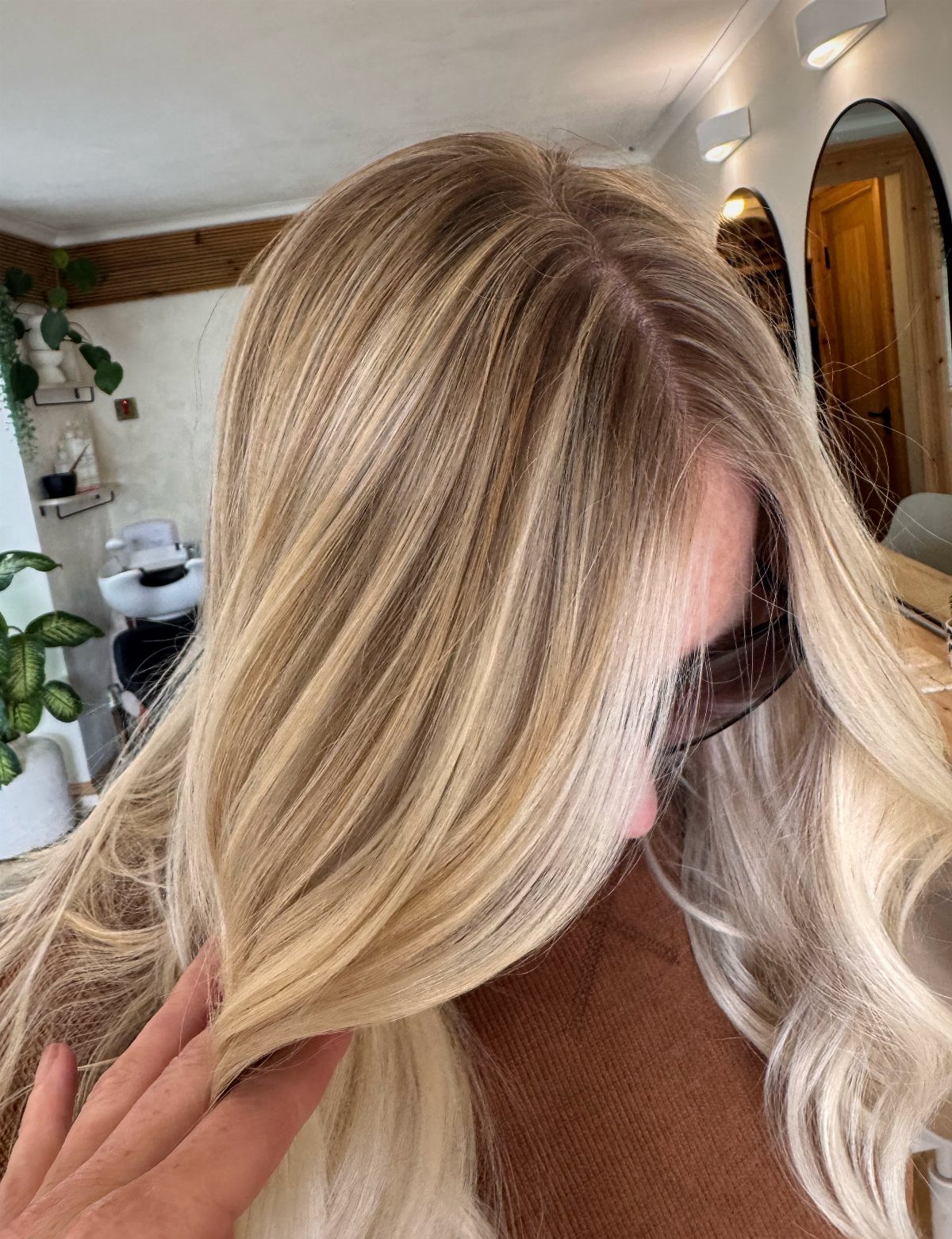
Sun-lightened hair never lifts evenly, which is why a sunkissed sandy blonde works: soft golden brightness blends into the base, with no hard edges between the lighter and deeper areas.
I would choose this if you want warmth without committing to a obvious highlight pattern. Ask your stylist for a blended, golden-leaning sandy blonde, and say you want it to look naturally lightened rather than striped.
10. True Sandy Blonde
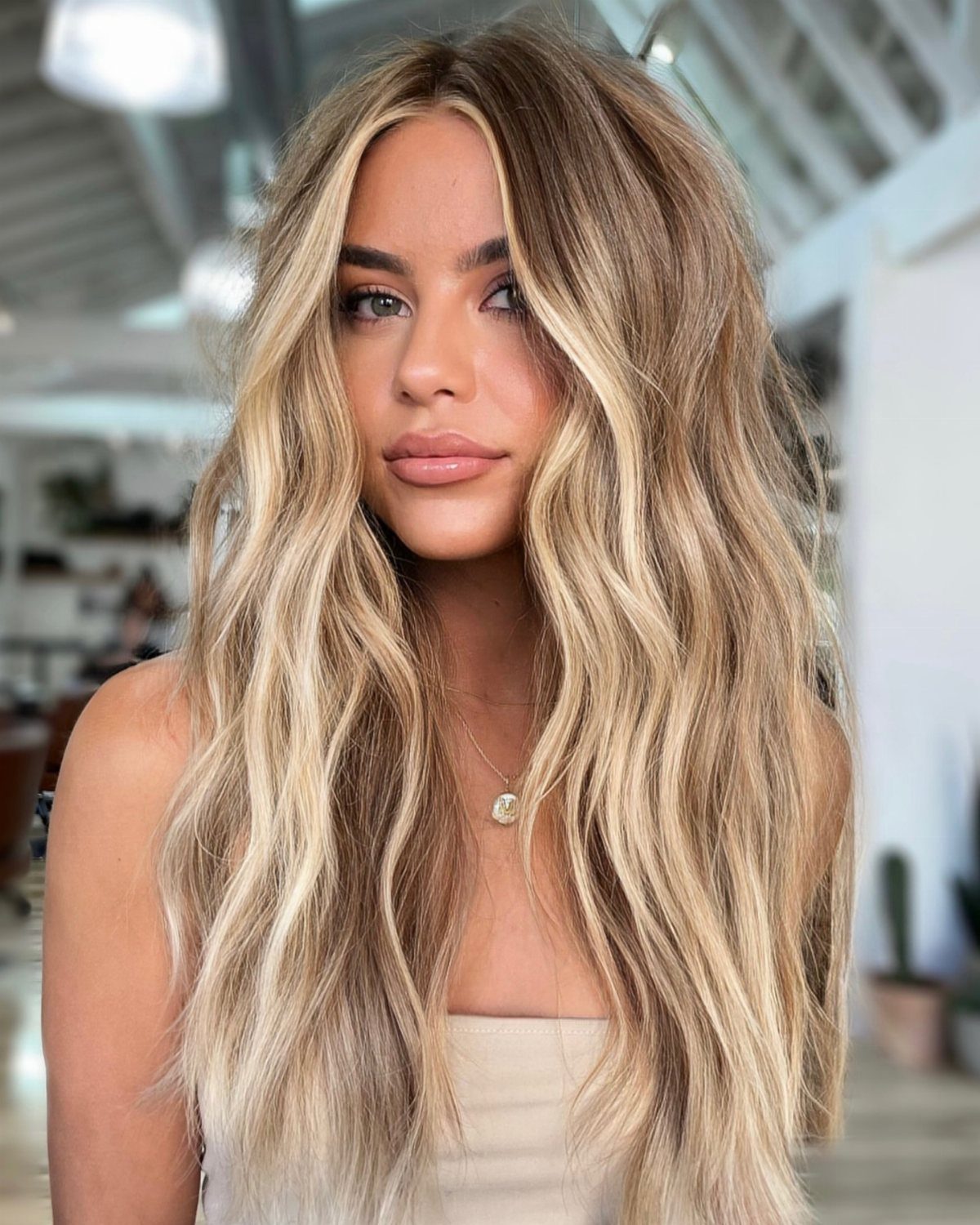
Powdery is the best word for true sandy blonde. It sits between warm beige and cooler tones, so it never tips fully golden or fully ash.
Sandy blonde sits between warm and cool, with beige and a touch of gold in balance, so it flatters most skin tones, and a root one level darker keeps the shade grounded and the grow-out soft.
When you book, ask for a balanced sandy blonde and show a photo, since "sandy" means different things to different stylists.
11. Sandy Blonde Babylights
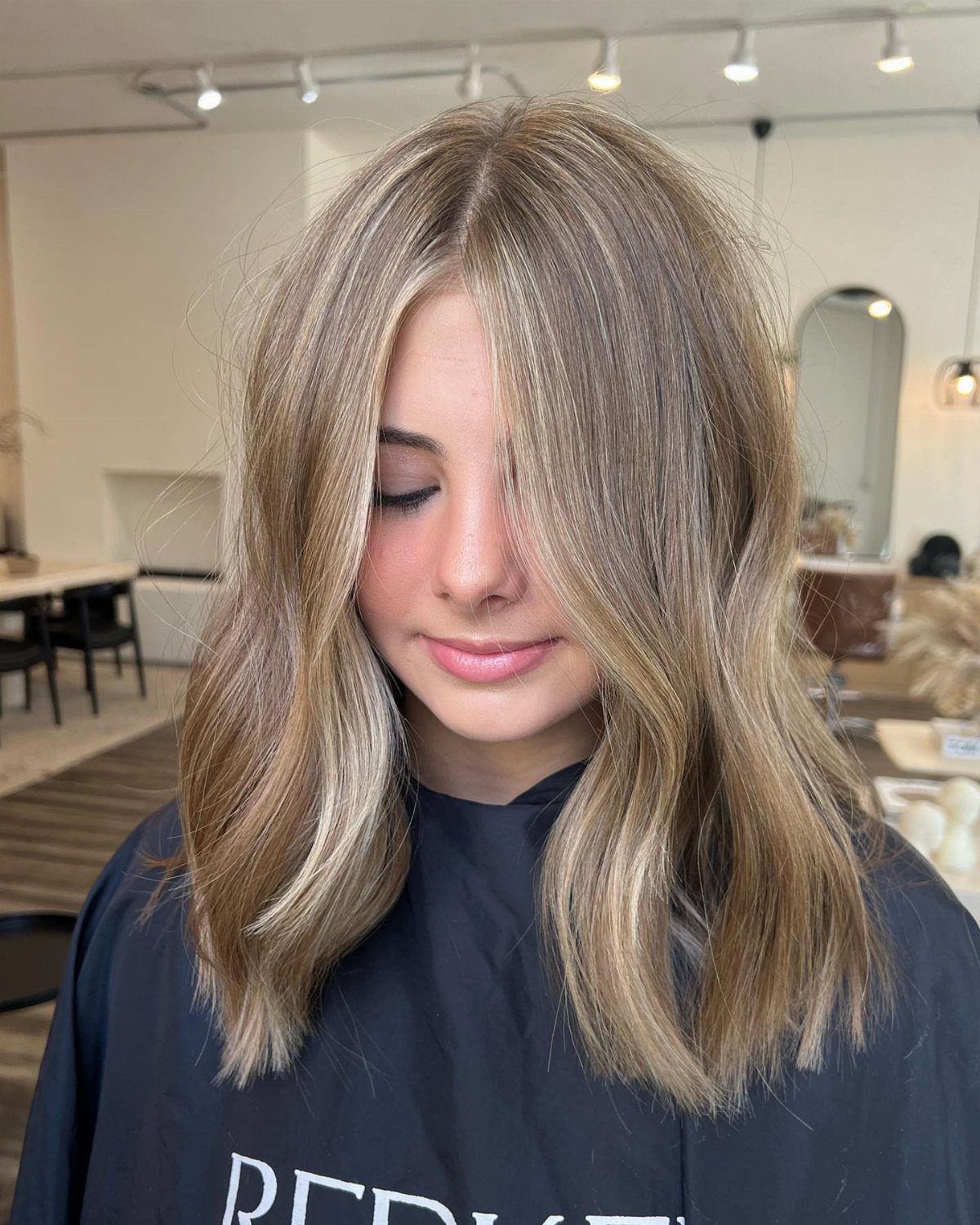
Babylights are ultra-fine highlights, so the brightness spreads across the whole head with very little contrast between strands. Nobody sees individual pieces; they see hair that looks a little lighter and softer.
That makes them my pick for anyone who finds standard highlights too stripy. Ask for fine, subtle babylights in a sandy shade, and say you want brightness, not pattern.
12. Sandy Blonde Lowlights
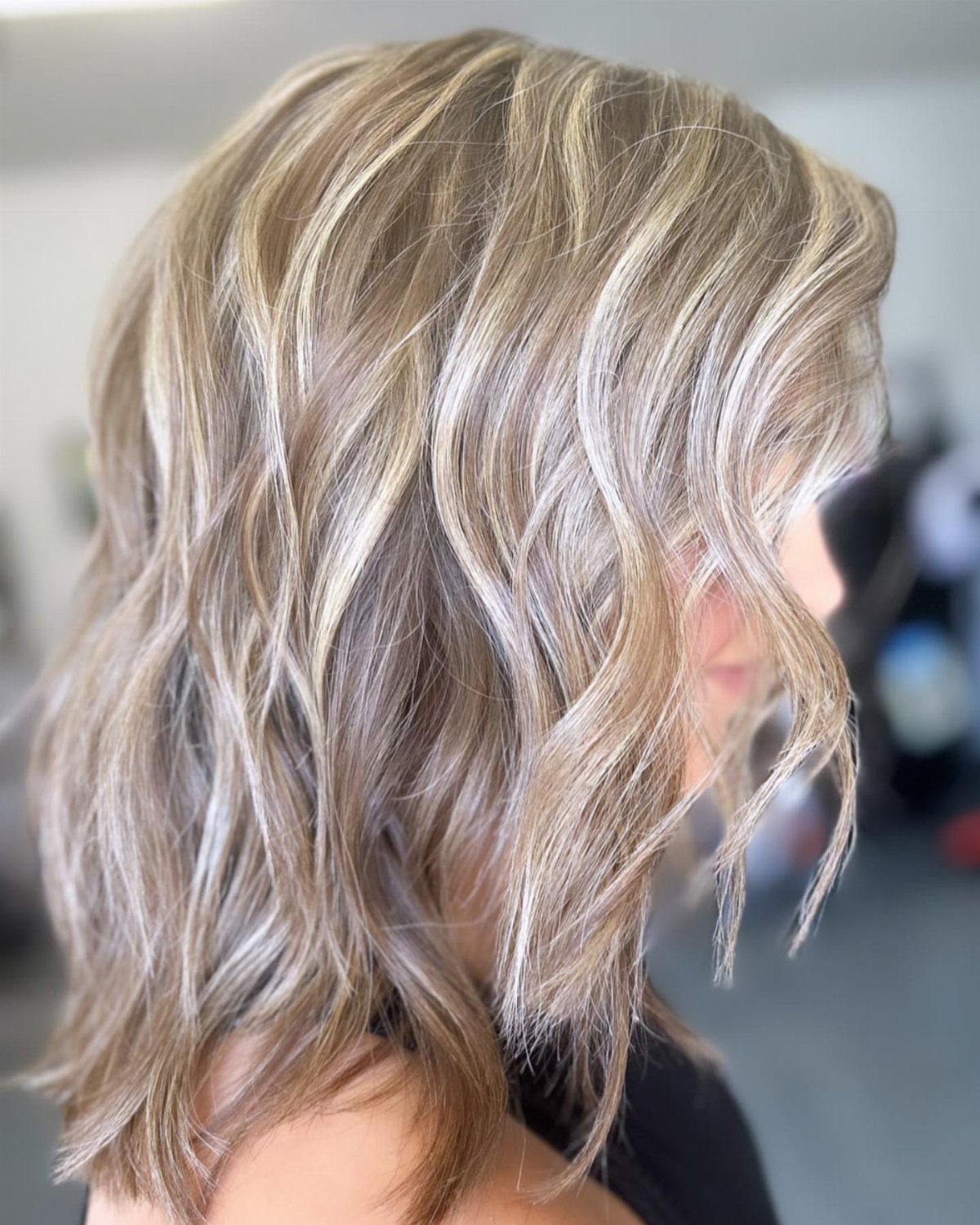
Lowlights work in reverse: slightly darker strands go into sandy blonde hair that has gone a bit too light or flat. The depth makes the lighter pieces stand out more, without adding more bleach.
I like them for wavy hair, where the darker strands read as shadow between the curves. Ask your stylist to place them throughout, and to keep them only a shade or two deeper than the base.
13. Face-framing Sandy Blonde
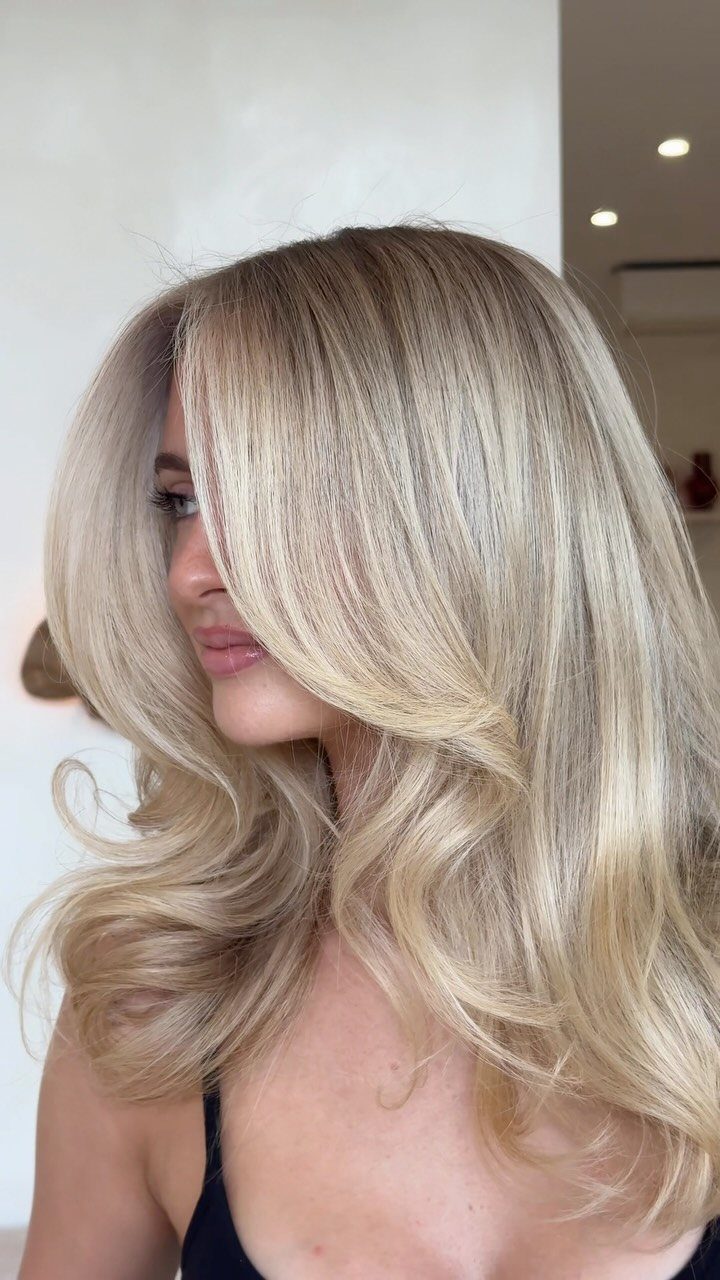
Lighter pieces around the face brighten the whole look while the rest of the sandy blonde stays as it is. The strands sit right where light hits first, so a small amount of color does a lot of the work.
I like this for anyone who wants a change without recoloring everything. Ask your stylist for brighter sandy pieces at the front only, and say you want them to blend into the length behind.
14. Layered Sandy Blonde
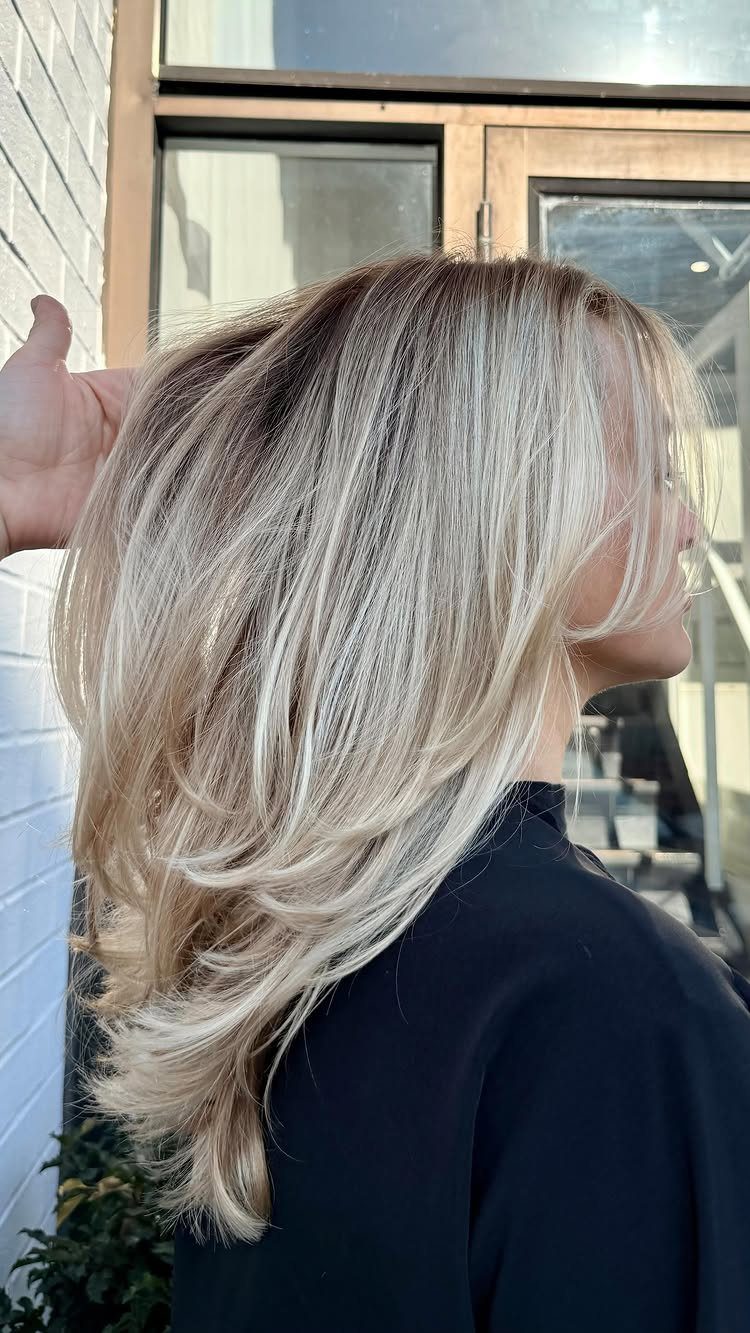
Layers and color do different jobs here: the cut gives the hair movement, and the sandy blonde tones show that movement off.
Ask for feathered layers through the ends and a root one or two shades deeper; the lighter pieces stand out against that base, and the color gains depth instead of lying flat.
I would choose this if your hair feels heavy or one-length. Ask for soft, feathered layers and tell your stylist the color should stay dimensional through the ends.
15. Glossy Sandy Blonde
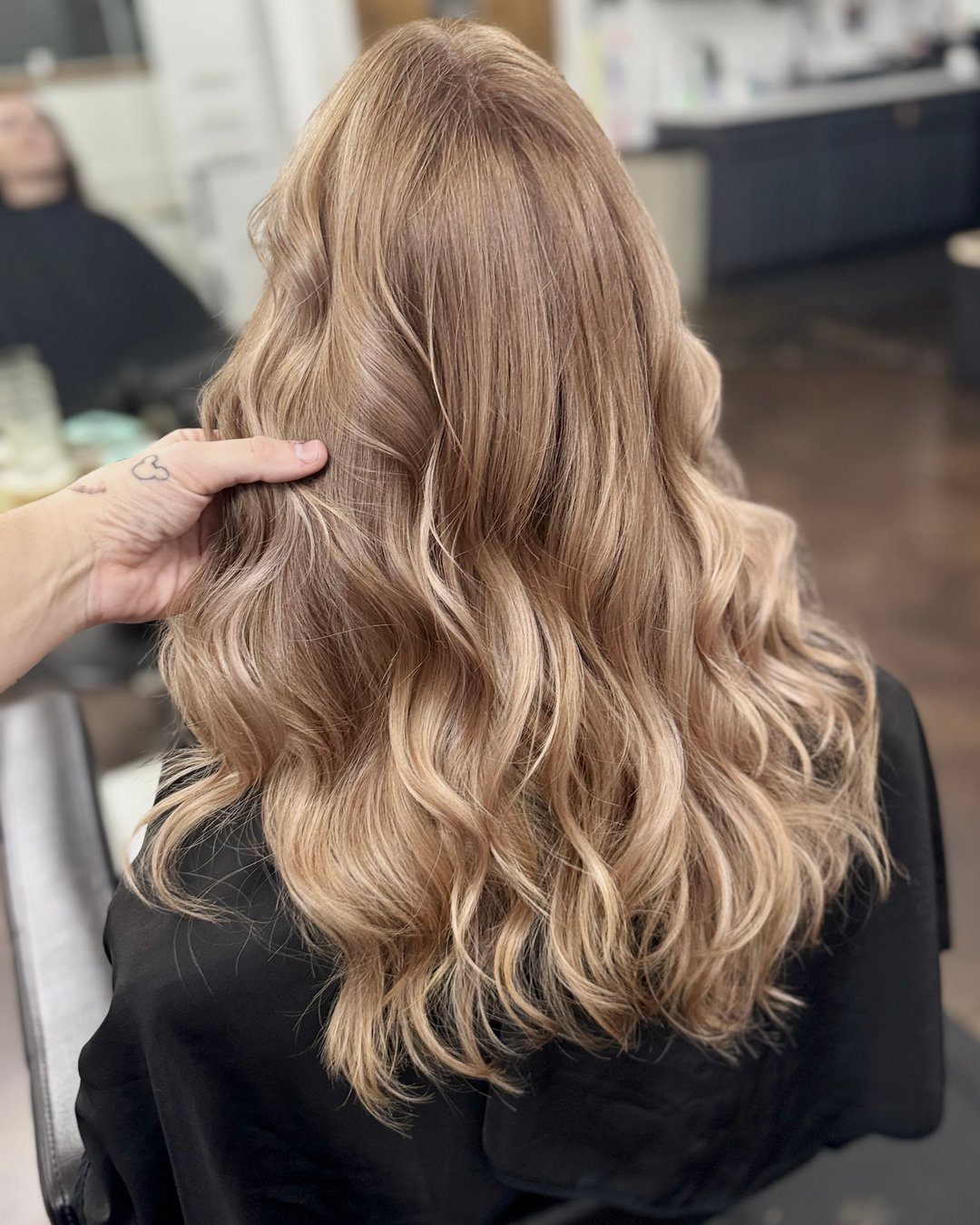
Shine is what makes this version work. A glossy finish gives sandy blonde a polished, reflective surface, so the color looks smoother and richer than the same shade left matte.
Gloss is a finish, not a different color, so ask for it as the last step of your appointment. I think it suits long waves best, since every curve reflects light.
16. Beige Blonde Vs. Sandy Blonde
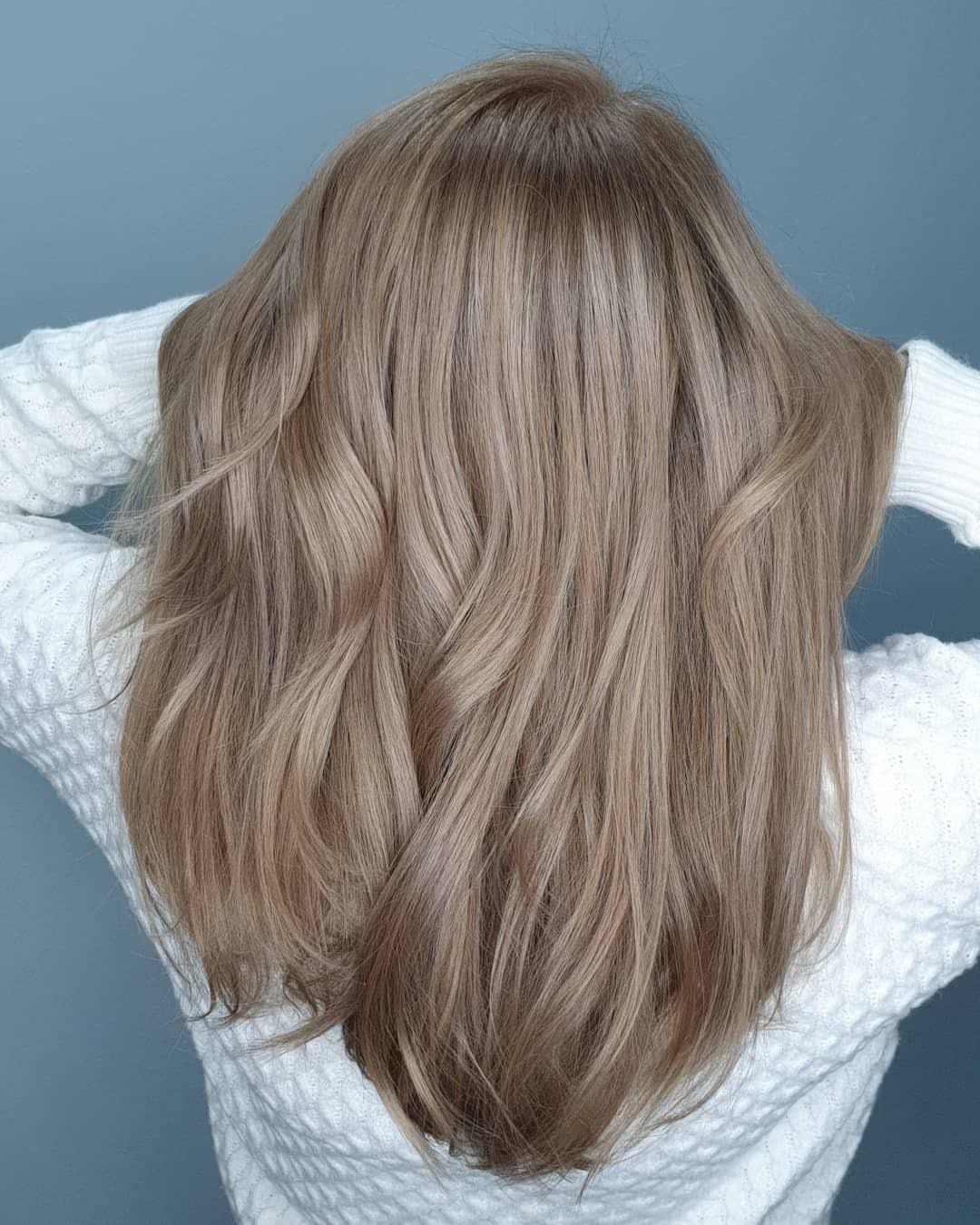
Next to most sandy blondes, beige sits cooler and more neutral, with less gold showing through. It leans muted and taupe, while sandy blonde usually keeps a touch of warmth.
If gold tends to look yellow on you, I would go beige.
If you want something softer and warmer, stay with sandy. Salons use these 2 names loosely, so a saved photo with the amount of warmth you want pointed out will get you closer than either label.
17. Sandy Beige Blonde
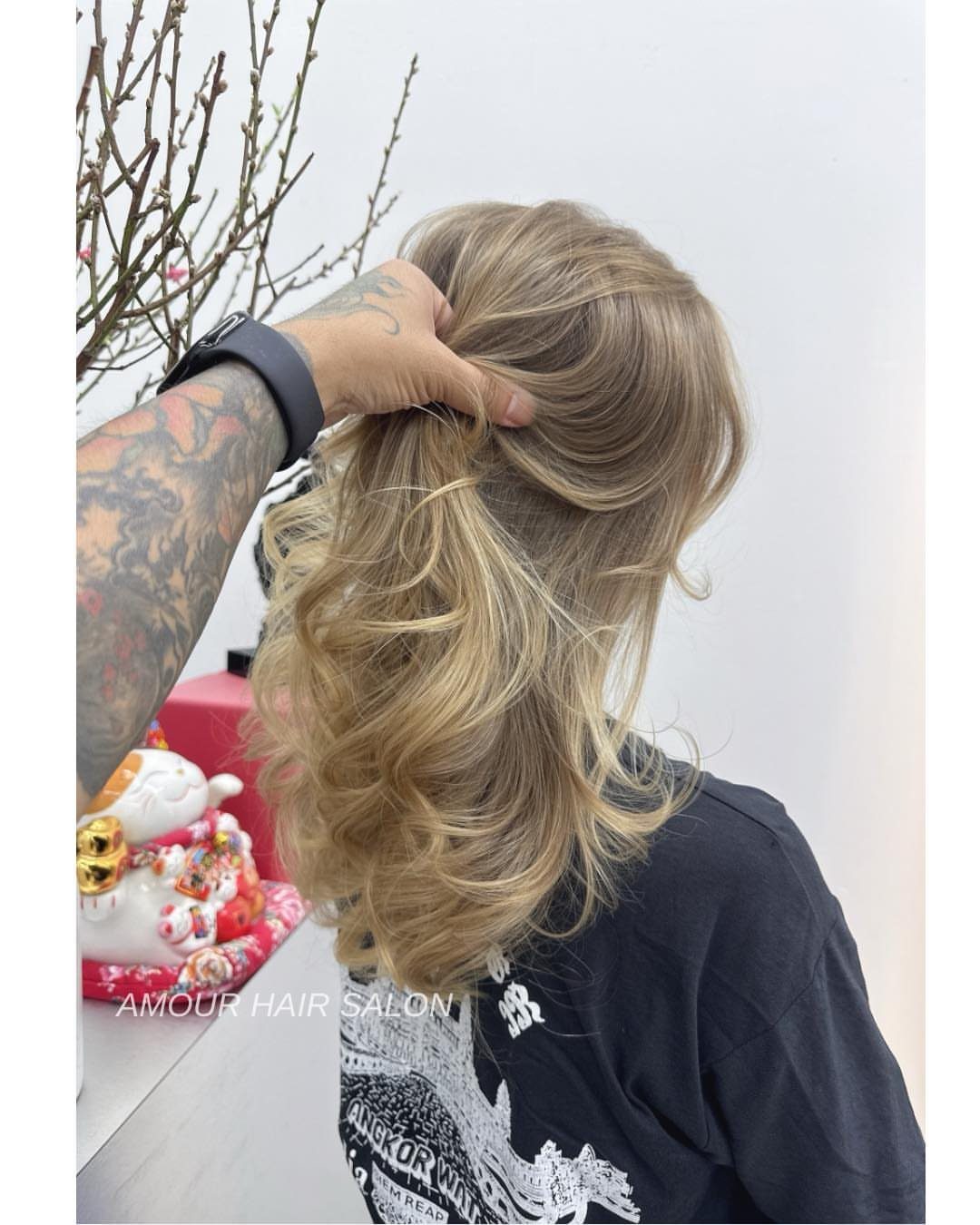
Soft beige mixed into sandy tones gives a muted, neutral blonde that never looks loud. It sits quietly between the 2 shades, so it reads calm rather than bright.
I like it for anyone who wants blonde that looks understated. Ask your stylist for a sandy beige blonde and show a photo, since the balance of beige to sand is what you are really choosing.
18. Sandy Blonde Bronde
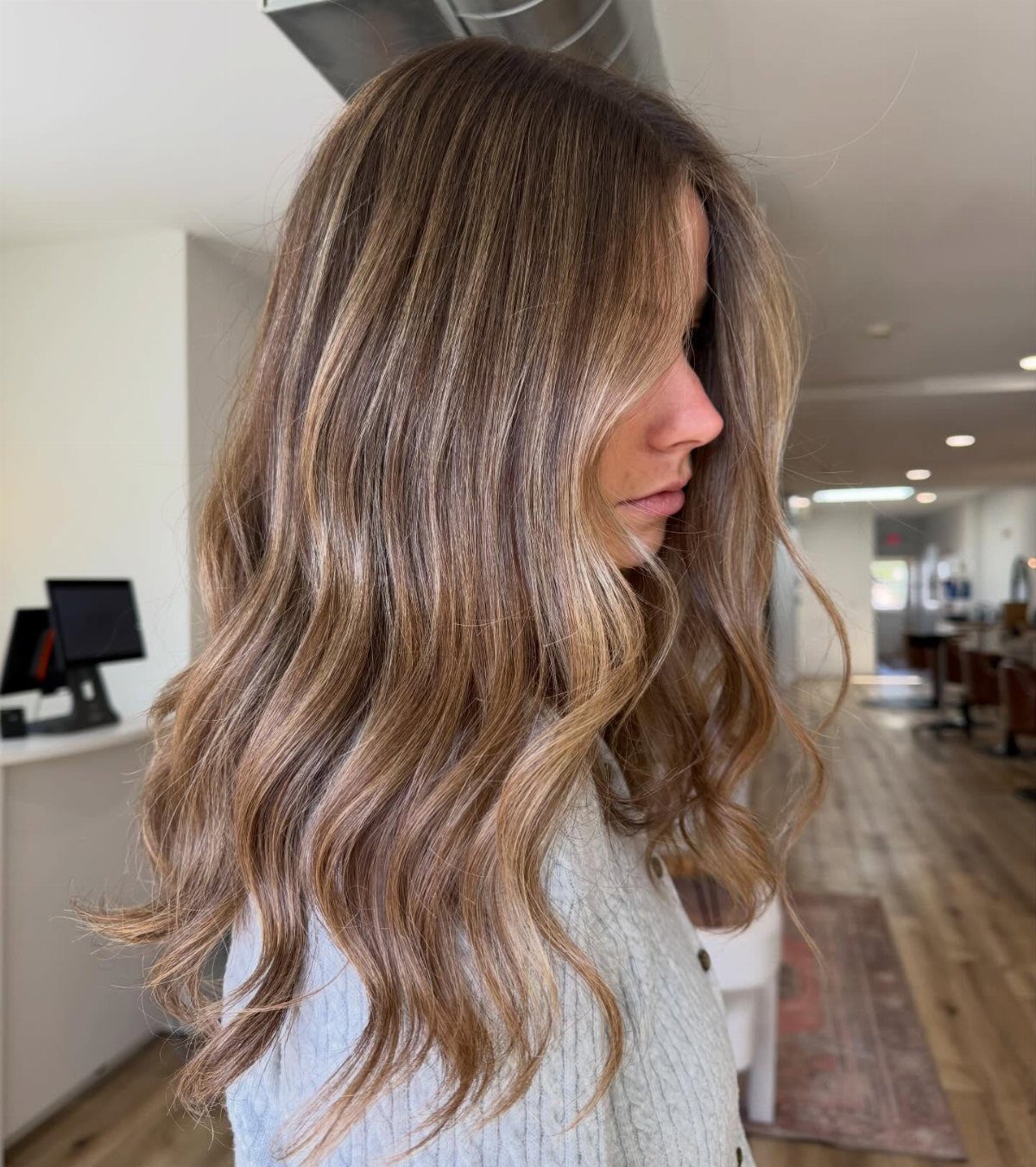
Brown depth stays in the hair while sandy blonde sits on top, which is the whole idea of bronde. The mix reads softer than full blonde and brighter than plain brown.
I would pick this if you want blonde without giving up your darker base. Ask for a bronde-leaning sandy shade, with lighter highlights blended into the brown so the two never split into stripes.
19. Sandy Champagne Blonde
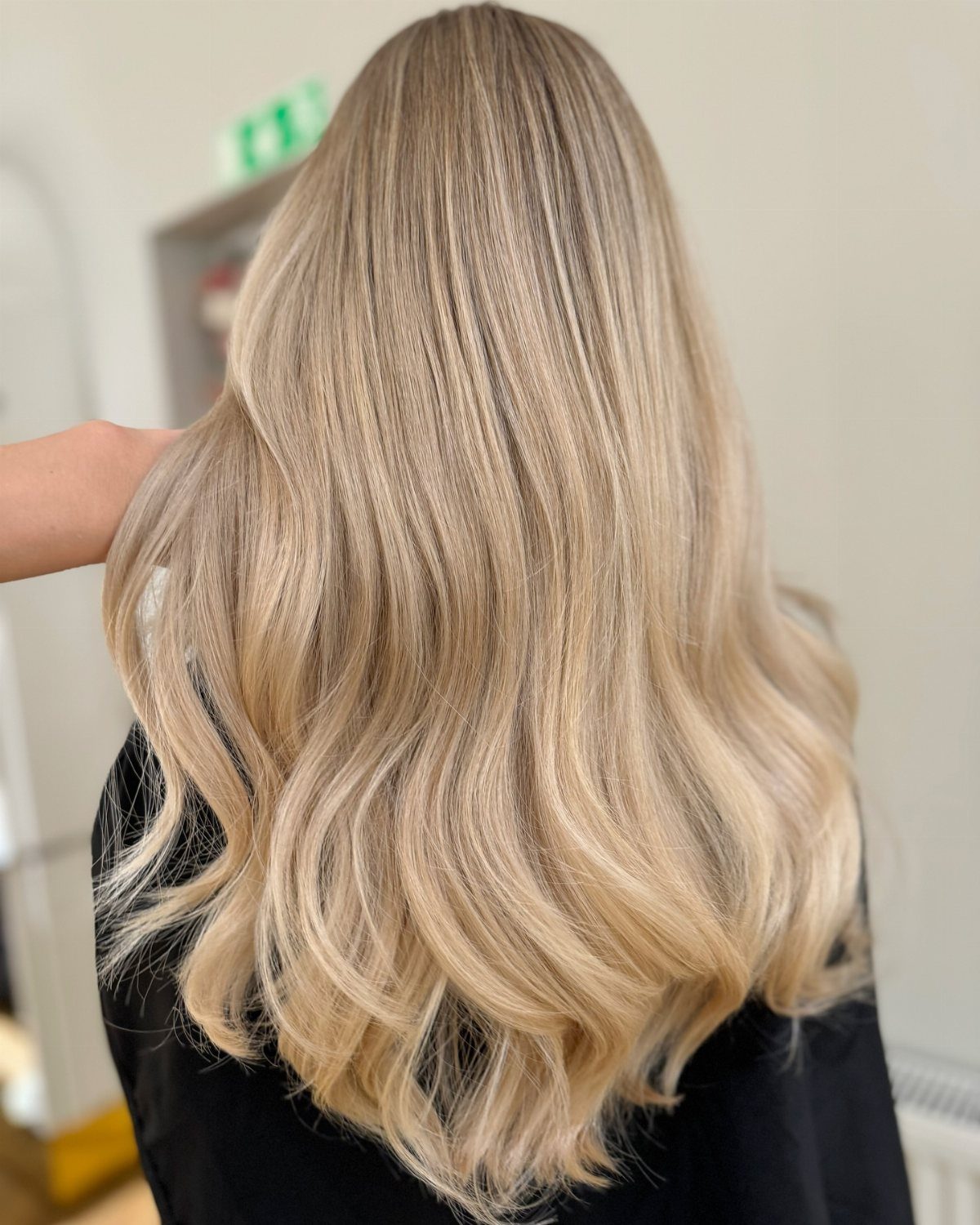
Champagne is sandy blonde with a pale, golden glow laid over beige roots. It lands between warm and neutral, so it looks soft instead of buttery.
I like it on long waves, where the gold gathers in the curves and the beige keeps the roots grounded.
Ask your stylist for sandy champagne and show a photo, since "champagne" can drift yellow or icy depending on who is mixing.
20. Sandy Copper Blonde
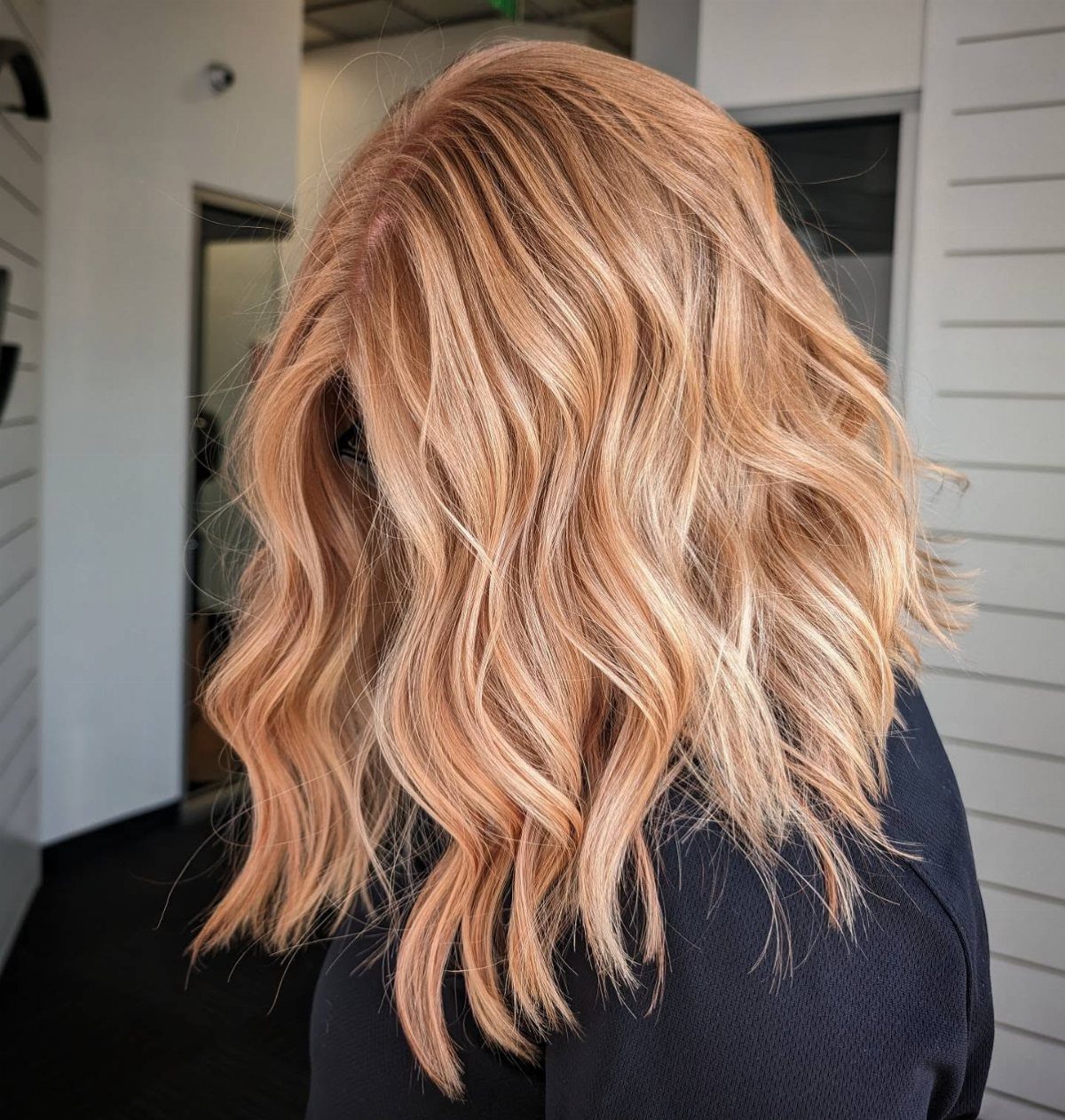
Copper warms sandy blonde the way late-afternoon sun warms wood. The sandy undertone keeps it from turning orange, so the blend reads sun-warmed rather than red.
Loose waves at shoulder length suit this shade best, since the copper highlights catch the light at every bend and a flat blowout hides them.
I would ask for copper and blonde blended softly, and say you want a sandy base underneath.
21. Sandy Grey
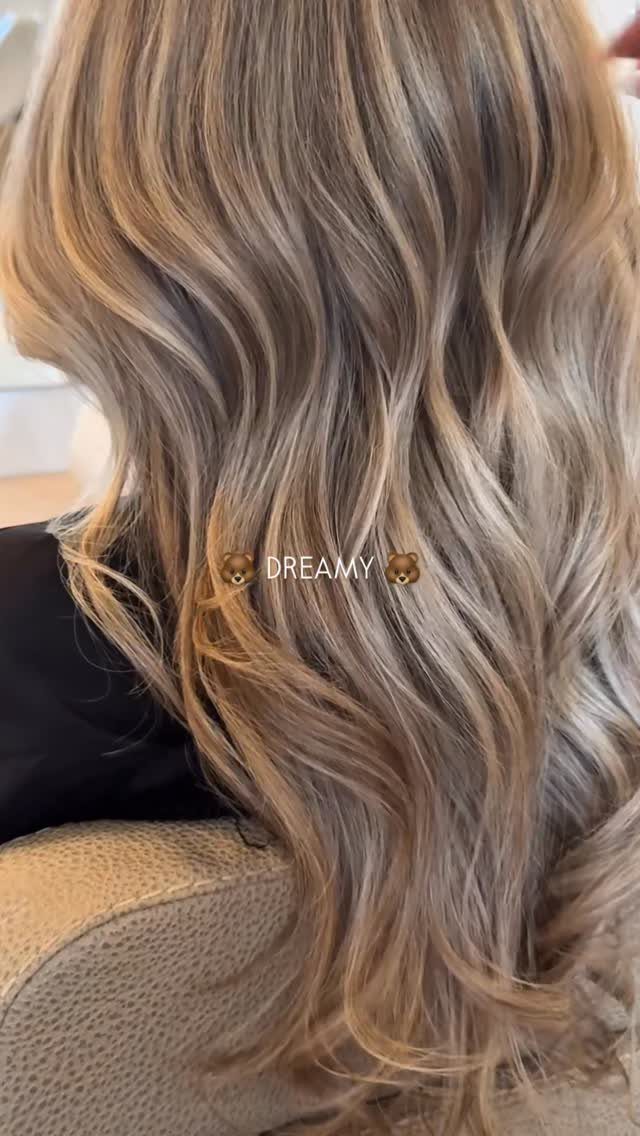
Gray hair often looks harsh or flat on its own, and a hint of beige softens it into something warmer and easier on the face. The result is a sandy gray that blends beige and blonde instead of fighting them.
I like this for anyone growing out gray who wants it to look chosen. Bring a photo and ask for a beige-leaning sandy gray with soft blonde woven through.
22. Sandy Blonde Curtain Fringe
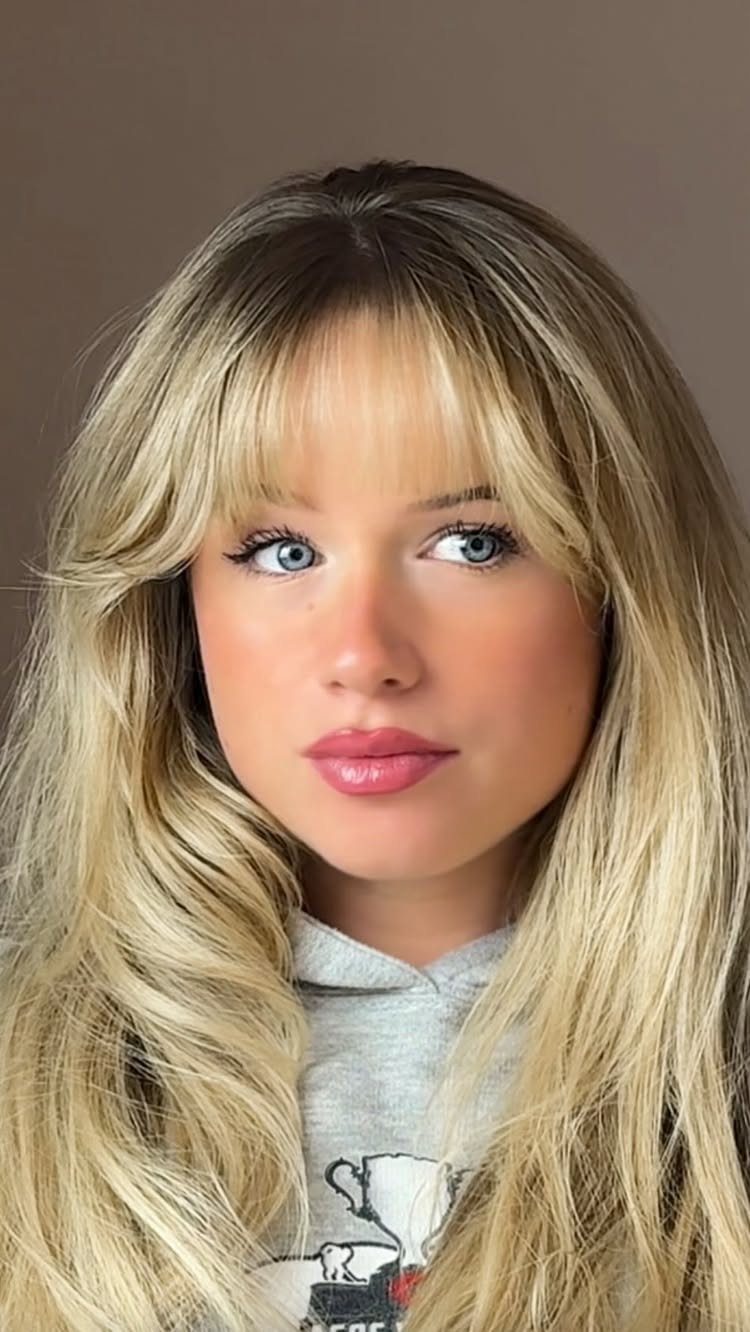
A curtain fringe parts in the middle and sweeps to each side, and feathered, airy ends keep it light against cool sandy blonde. Together they look relaxed rather than sharp.
I would choose this if you want a fringe that frames the face and still blends into long waves. Ask for it wispy and feathered, and say you want the cool sandy tone kept through the front pieces too.
23. Sandy Blonde Wispy Fringe
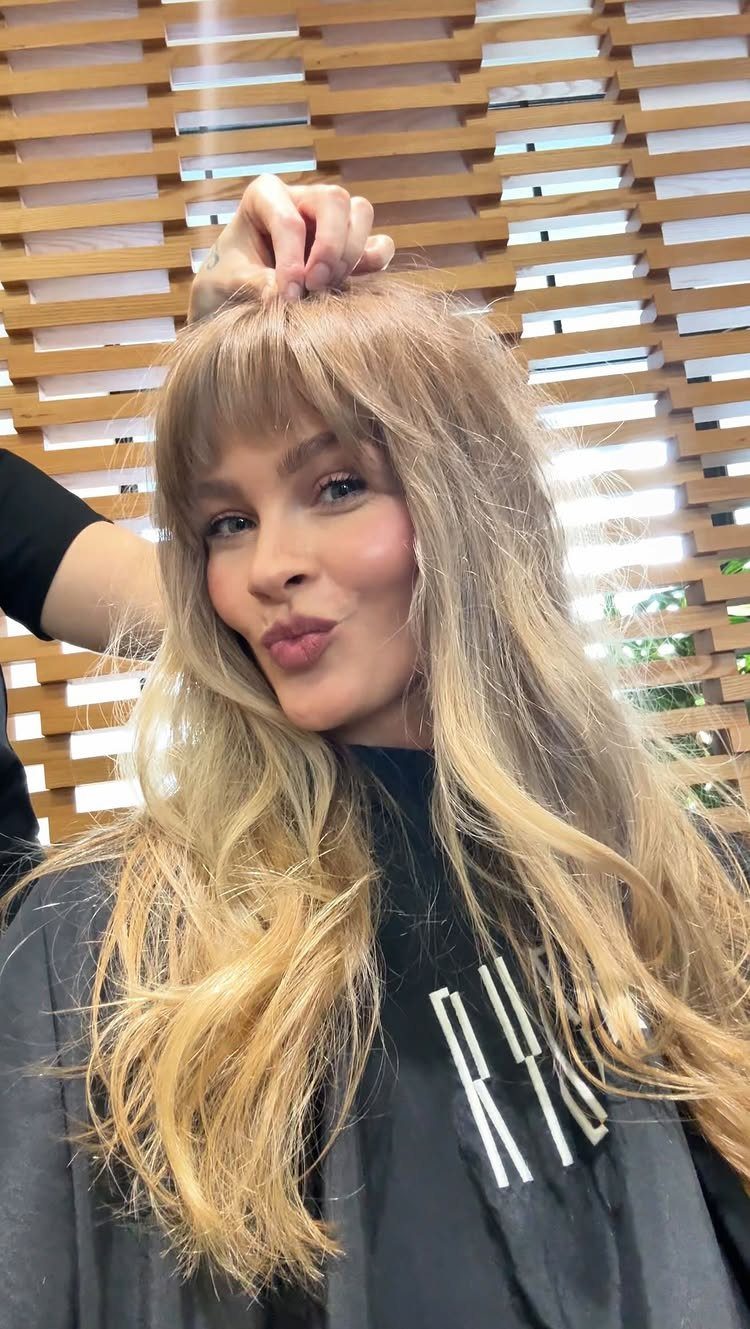
Dimensional sandy balayage gives a wispy fringe something to show off: the lighter and deeper tones run right through the bangs, so they don’t look like a separate patch of hair.
I like the pairing on long waves, where the fringe echoes the color below. Ask your stylist for wispy, see-through bangs and say the balayage should carry into them, blended rather than stopped at the hairline.
Choosing Tones for Complexion
Sandy blonde is the shade I point people toward when they can’t tell whether warm or cool blondes suit them.
On warm skin, it picks up golden or peach undertones without turning brassy. Neutral skin gets the easiest ride here, since the shade melts into the complexion and looks like hair you were born with.
Cool skin is where you face a real choice. If cooler blondes leave you looking washed out, a little gentle warmth in the blend puts color back in your face.
Lightening and Salon Planning
Going light from a dark base takes significant lightening, and as the hair lifts, the warm pigments underneath show.
A good colorist starts by judging how much lift your strands can take, then plans the toner that finishes the shade. Previously colored hair changes that math, and more than one appointment may be the sensible plan.
Ask how long to wait between lightening and toning. Hair that has just been bleached is porous, so it grabs toner fast and can go cooler or greyer than the swatch promised.
Before you commit, hold the swatch or the photo up by a window and look at it in daylight, because indoor bulbs flatter a lot of shades. Direct sun pushes the golden notes and highlights.
Lighter shades also ask for more upkeep, so budget time and money for that before the first appointment.
Frequently Asked Questions
What are the differences between sandy blonde and beige blonde?
Beige blonde runs cooler and more neutral with little gold peeking through, whereas sandy blonde tends to hold onto a bit of warmth. Gold that reads yellow on your skin is my cue to steer you toward beige.
What does sandy blonde hair look like?
Sandy blonde is a soft, natural-looking blonde that blends beige with a touch of gold, like sun-washed beach sand.
Think powdery and muted rather than bright, sitting between golden and ash without tipping into either. Natural versions sit close to the line between blonde and light brown.
What is the prettiest shade of blonde?
Undertone decides the final answer, but when someone can’t tell whether warm or cool blondes flatter them, sandy blonde is where I send them first.
Beige and a hint of gold are balanced in it, which is why it works on most skin tones.
A fast test: if gold jewelry looks better on you than silver, lean warm; if silver looks crisper next to your face, lean cool.
Is sandy blonde warm or cool?
Neutral describes classic sandy blonde, with beige and a hint of gold in even balance, so it doesn’t read as clearly warm or cool.
A colorist can push it either way, with golden, honey, bronze or wheat notes for warmth, or muted beige, ash or mushroom for a cooler finish. Name the direction you want when you book.
Can sandy blonde be created with balayage?
Balayage is one of the simplest ways to get this color. Request roots that stay darker with the lightness building toward the ends; grow-out is gentler that way than with all-over color.
Does sandy blonde require bleach?
It depends on where your hair starts. Hair that is already light may only need toning, but medium or dark hair needs lightening to reach a noticeably lighter sandy blonde, and warm pigments show as it lifts.
Can brunettes get sandy blonde hair in one session?
Brunettes can reach sandy blonde with highlights or balayage that leave some depth in place, or with heavier lightening.
Whether one appointment covers it comes down to your starting shade, the condition of your hair and any color you’ve had before.
Hair that has been colored before complicates things, and planning for more than 1 visit is often the smarter call.
Can sandy blonde have darker roots?
Yes.
You can stretch the time between salon visits rather than rebooking every few weeks. Tell your stylist you want the root left darker on purpose, and a shadow root is the name to ask for.
Will sandy blonde turn yellow or brassy?
It can.
Toner fades and blonde drifts warmer; mineral buildup, sun and wind exposure, and styling products can push it further. Color-safe products and limited heat help hold the shade, and lighter versions need more upkeep overall than deeper, bronde-leaning ones.
Does purple shampoo work for sandy blonde?
Purple shampoo can cancel some unwanted yellow, but sandy blonde isn’t an icy shade, so too much purple pigment can leave it duller or cooler than you intended.
If you use one, apply it to damp hair once or twice a week, leave it on for 1–2 minutes and rinse well, because daily use can add a purple tint.
A toning shampoo may or may not suit your shade, so your stylist is the right person to check with.