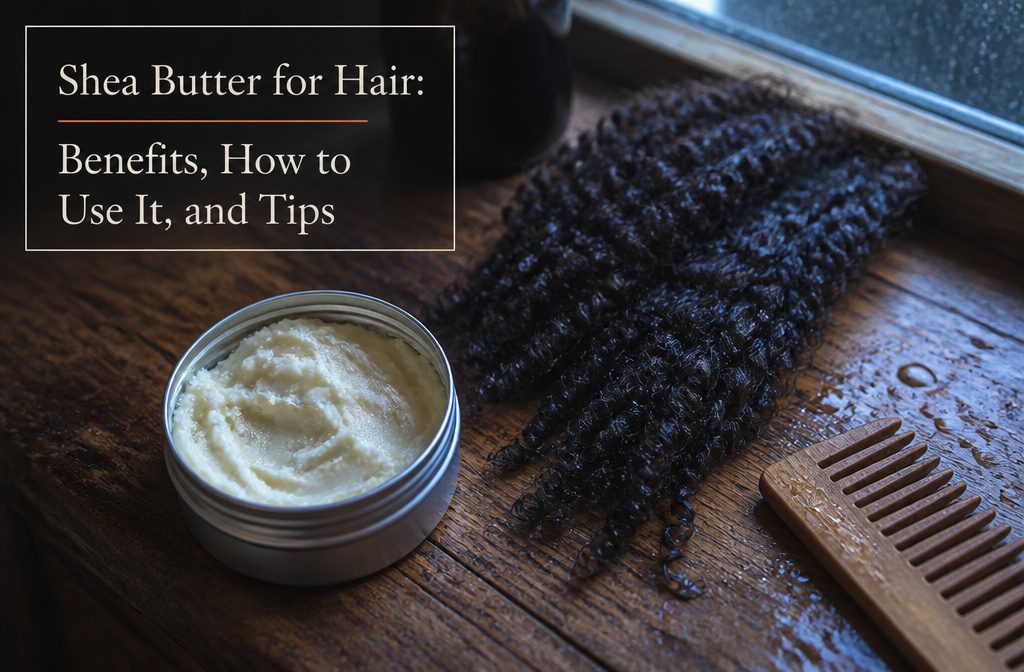
Shea butter seals moisture into hair rather than adding any, which is why it works for dry or coily textures but can leave fine hair greasy and limp.
Its fatty acids reduce moisture loss by up to 80 percent when applied over damp strands, and linoleic acid helps nutrients move through the shaft while vitamin E calms an irritated scalp.
What Shea Butter Is and Why Hair Responds to It
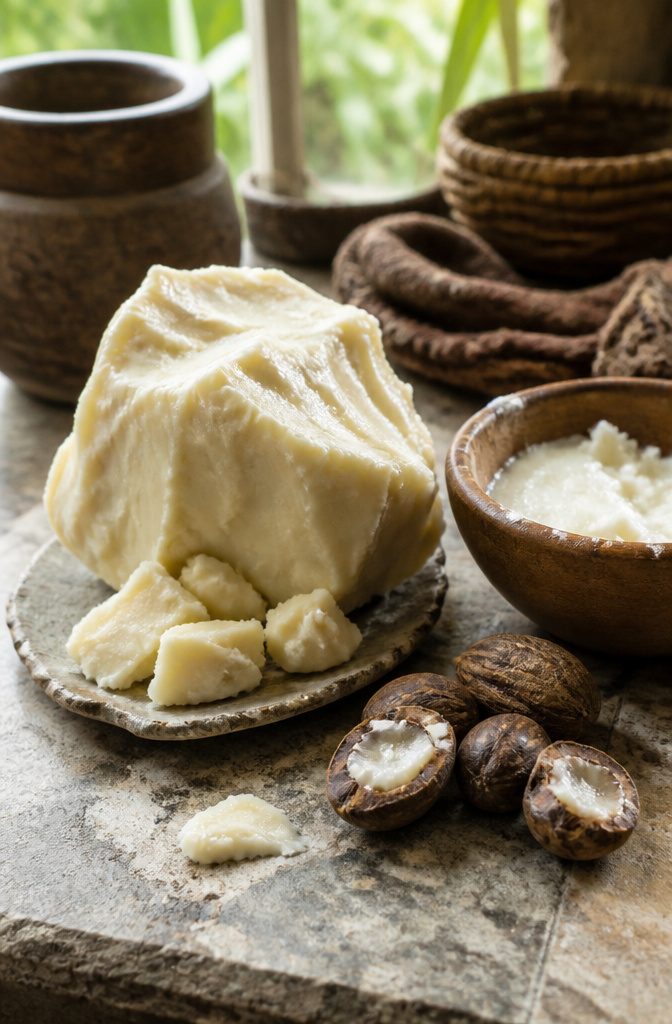
Shea butter is fat extracted from the nuts of the shea tree, which grows native to West Africa and has been a staple in traditional hair care for over a thousand years.
It shows up solid at room temperature because of its stearic acid content, with a consistency somewhere between coconut oil and cocoa butter that softens when warmed between your hands. The smell is subtle and nutty, never overpowering.
What makes it work for hair comes down to what it contains. The fatty acids include stearic, oleic, linoleic, and palmitic acids, which give shea butter its thick, emollient texture.
Vitamins A, D, and E sit alongside triglycerides and allantoin, all of which hair responds to. Linoleic acid in particular holds moisture and delivers nutrients to the scalp, while oleic acid helps those nutrients move quickly through the hair shaft.
Vitamin A prompts sebum production, which protects the strand naturally, and vitamin E fights oxidative stress at the scalp level, keeping the environment healthier overall.
How It Moisturizes and Seals the Strand
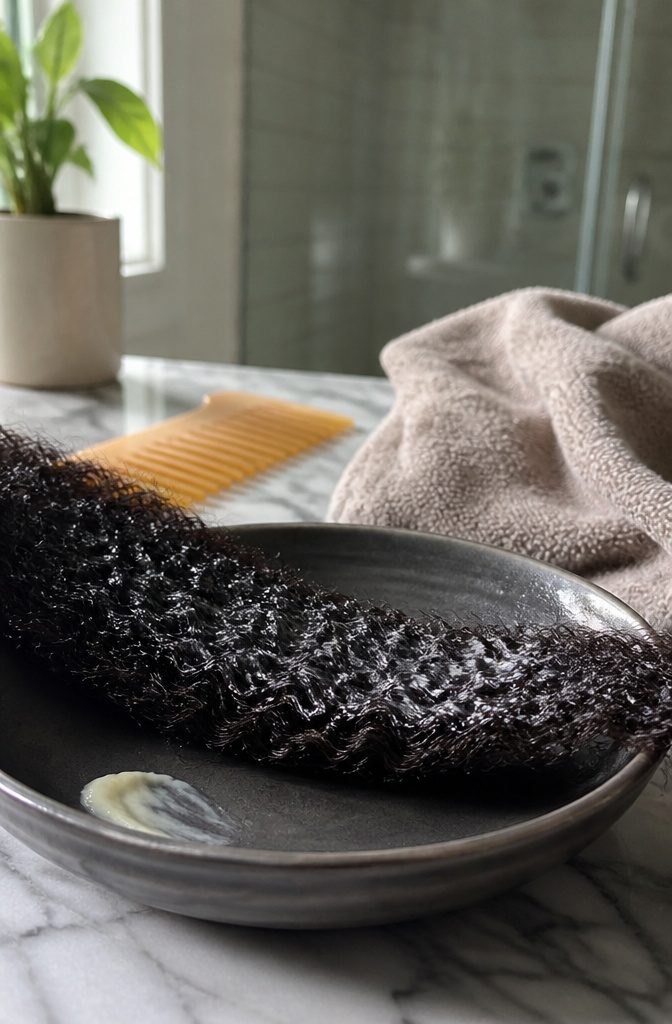
Shea butter works on the outside of the strand. Its high fat content can reduce moisture loss by up to 80 percent, because it lays an occlusive coat over the cuticle rather than adding water.
Oils split into two jobs, and this is the sealing one:
A sealing oil … can only coat the surface of your strand to seal in existing hydration and prevent it from escaping.
So shea butter holds in water your hair already has but doesn’t supply any.
Think of it as a sealant, not a hydrator. The smoothed cuticle is also what calms frizz and adds shine.
What It May Do for the Scalp
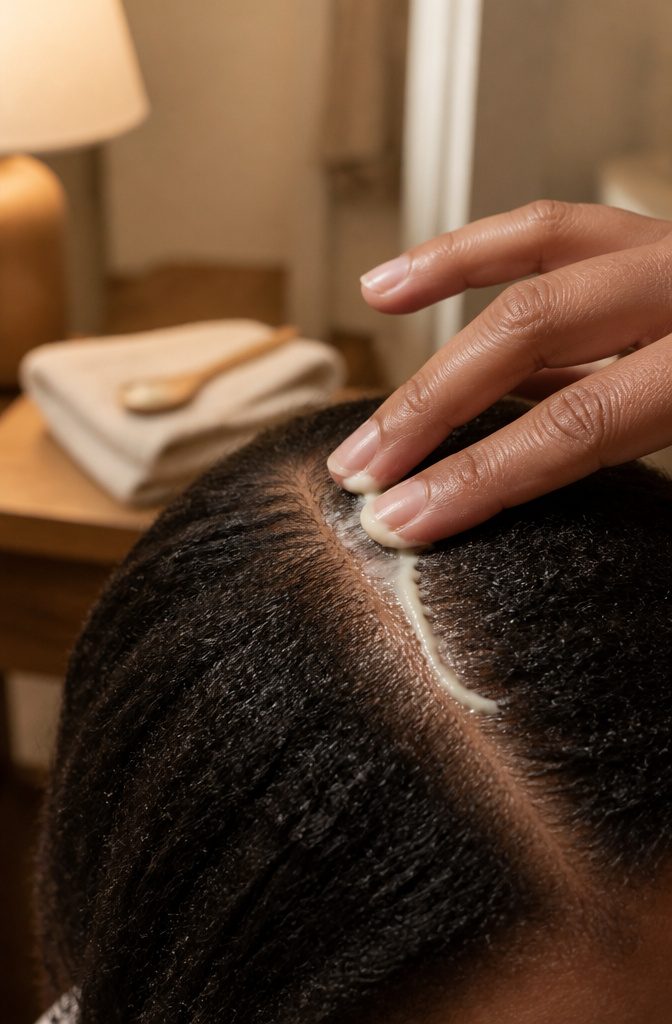
Dryness and itch are where shea butter earns its place on the scalp.
Its fatty acids and vitamin E soften flaky, tight skin, and its anti-inflammatory properties calm irritation, so a dry scalp or mild dandruff often feels better after regular use.
The fat absorbs without a greasy feel or clogged pores, which is why I lean on it for an itchy scalp.
The hair benefit is indirect. A calmer scalp gives hair better conditions to be retained and to grow, but there is no direct clinical evidence that shea butter speeds up growth, and it won’t help hair loss tied to genetics.
A 2024 safety assessment considered topical use well-established and safe.
Does Shea Butter Help Hair Growth
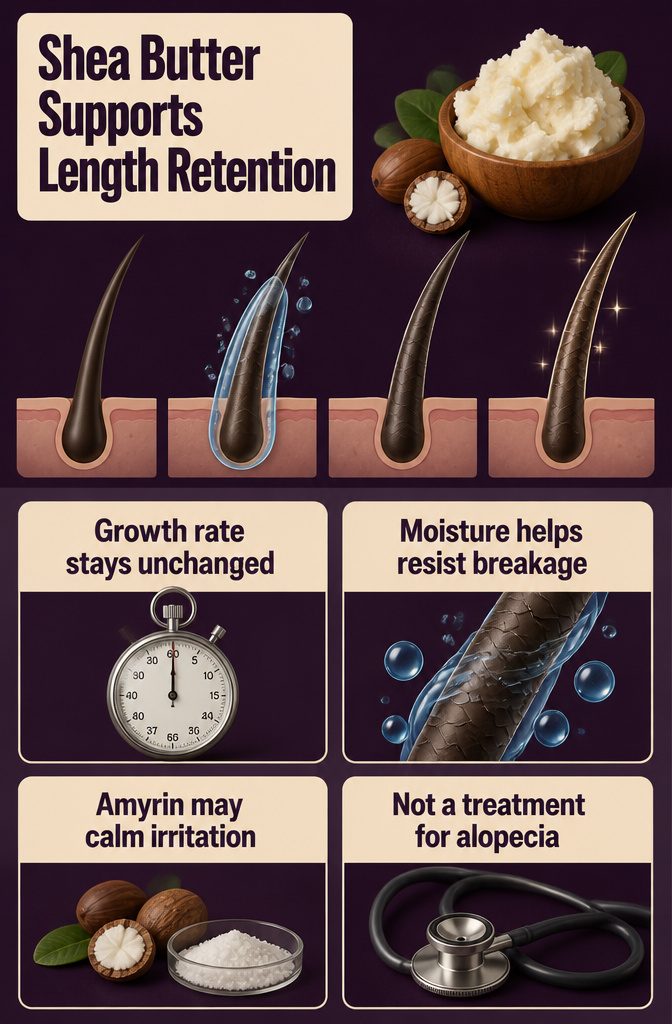
Shea butter does not speed up growth at the follicle; hair leaves the scalp at the same rate with or without it.
What changes is how much of that hair you keep. A 2019 study on shea oil, which shares the core fatty acid profile of the butter, found that shea-based products helped hair hold moisture and resist breakage.
Less snapping at the ends means length builds up, and that can look like faster growth. I’d call it length retention, not growth, and that is the honest claim.
Shea also contains amyrin, which has anti-inflammatory properties, so it may calm an irritated scalp that is contributing to shedding.
It is not a treatment for androgenetic alopecia, though. If you’re losing a lot of hair, see a dermatologist.
Which Hair Types Benefit and Which May Struggle
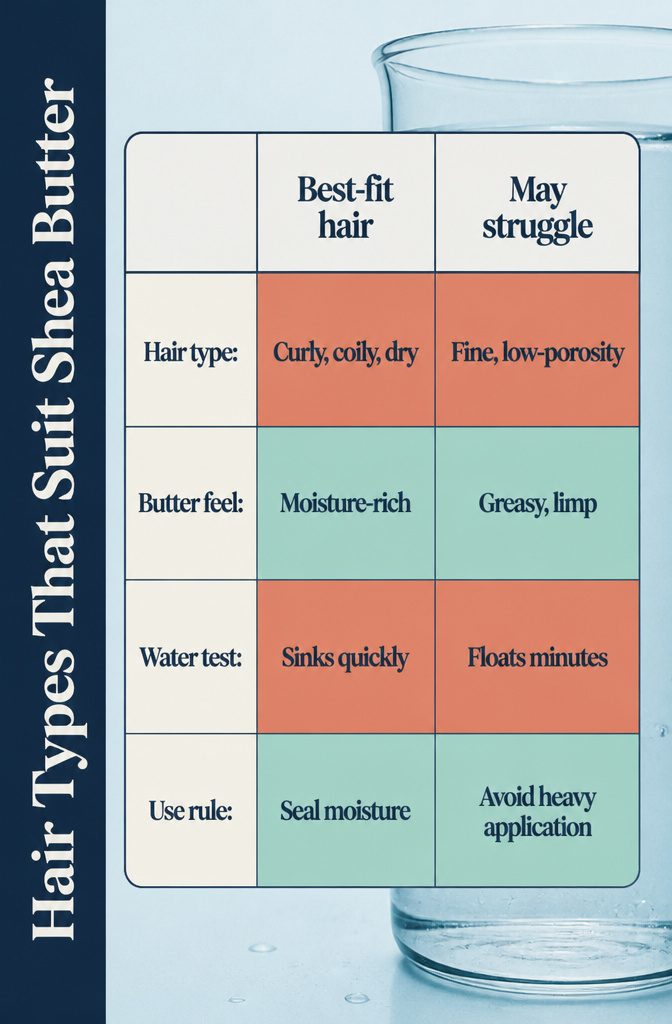
Curly, coily, coarse, dry, damaged and high-porosity hair are the best matches, because open cuticles lose moisture fast and a rich butter holds it in.
Fine or low-porosity hair is where I’d be cautious: the same richness can leave strands greasy, limp and weighed down.
Not sure which camp you’re in?
Drop a clean strand into a glass of water. Hair that sinks quickly is high porosity, and hair that floats for several minutes is low porosity.
Even good-fit hair has a limit.
Applied heavily, shea butter can block water from entering the shaft, which leaves strands dry and brittle over time. I’d treat it as a sealant over moisture, never a replacement for it.
How to Apply It Without Greasiness or Buildup
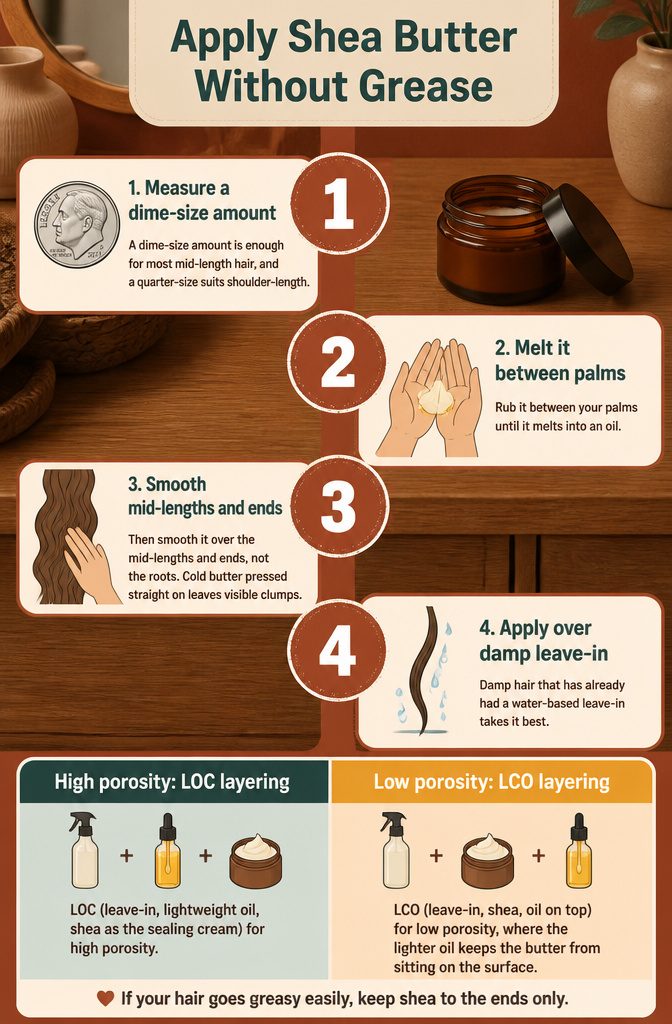
A dime-size amount is enough for most mid-length hair, and a quarter-size suits shoulder-length.
Rub it between your palms until it melts into an oil, then smooth it over the mid-lengths and ends, not the roots. Cold butter pressed straight on leaves visible clumps.
Damp hair that has already had a water-based leave-in takes it best.
I pick the layering order by porosity: LOC (leave-in, lightweight oil, shea as the sealing cream) for high porosity, LCO (leave-in, shea, oil on top) for low porosity, where the lighter oil keeps the butter from sitting on the surface.
If your hair goes greasy easily, keep shea to the ends only.
How Often to Use It
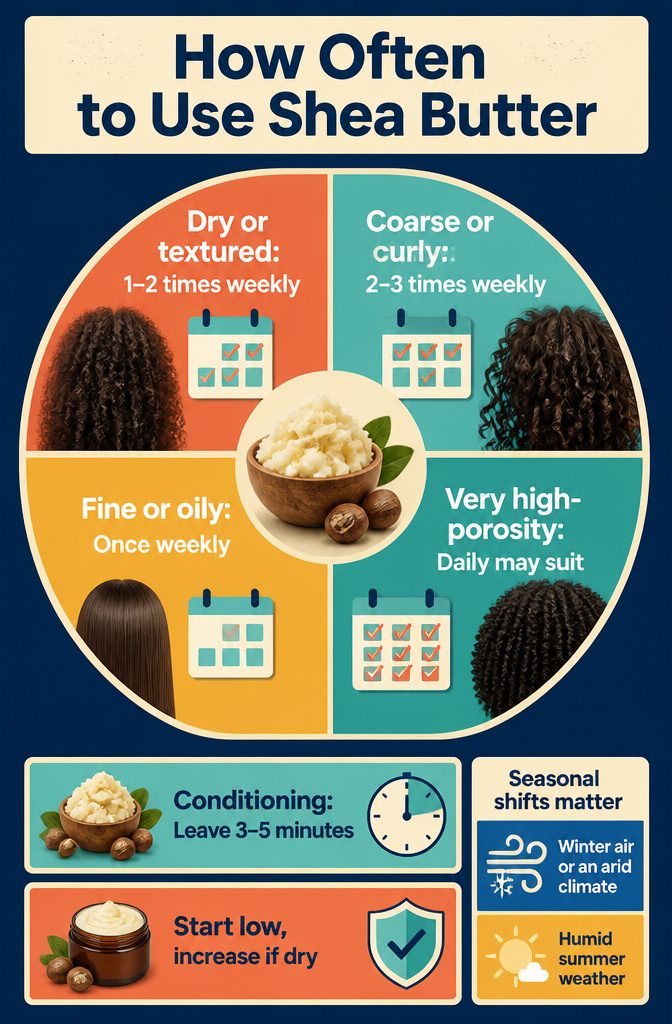
Recommendations vary by hair type. For dry or textured hair, once or twice weekly usually does it.
Coarse or curly hair often takes well to two or three times each week, whilst fine or oily hair is better served by a single weekly application or by treating just the ends.
Very high-porosity or coily hair may suit daily use if the strand drinks up moisture fast enough that buildup never gets a chance to form.
For general conditioning, leaving shea butter on three to five minutes after washing and doing that once or twice a week tends to cover most people.
Over-moisturising can leave hair looking greasy, so I lean toward starting conservative and adding frequency only if the hair still feels dry or frizzy between washes.
Seasonal shifts matter too: winter air or an arid climate may call for an extra session, whilst humid summer weather often means you can scale back without consequence.
Managing Buildup and Clarifying When Needed
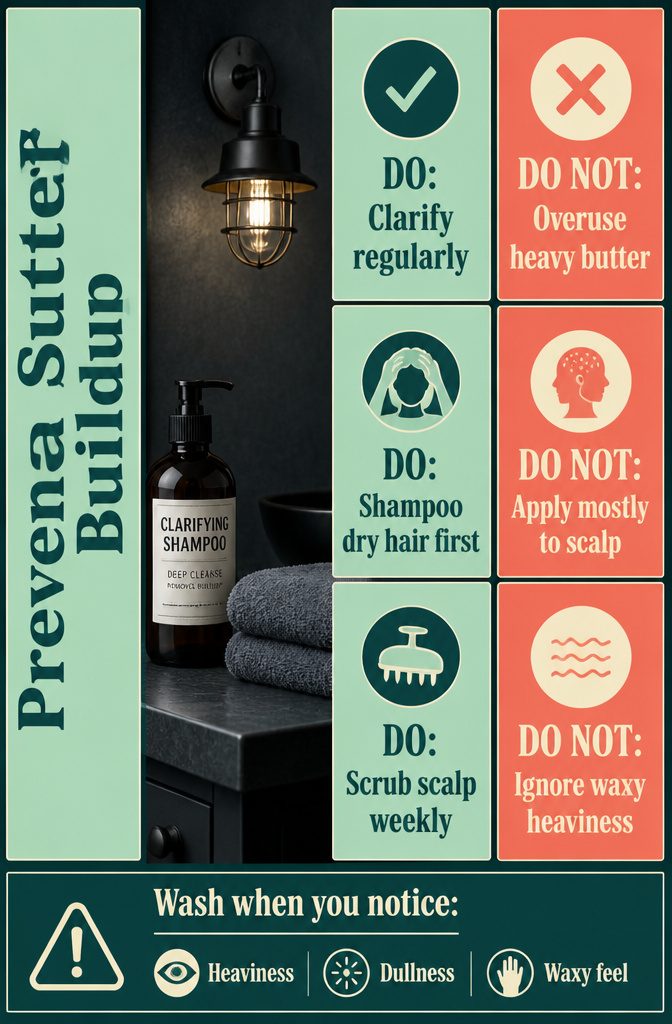
Excess shea butter can leave residue on the hair shaft or weigh strands down, particularly on fine or low-porosity hair. Regular use of a clarifying shampoo removes buildup and keeps hydration balanced without the greasy feeling that comes from overuse.
If your usual cleansing routine does not lift the residue, I massage shampoo through dry hair before turning on the water.
The friction on dry strands helps break down the butter, and rinsing afterward carries it away more completely than applying shampoo to already-wet hair. A weekly scalp scrub also prevents clogged follicles when you use heavy butters frequently.
Wash when you notice heaviness, dullness or a waxy feel. Keeping the majority of shea butter on mid-lengths and ends instead of the scalp cuts down on buildup before it starts.
Raw Against Refined: Which to Choose
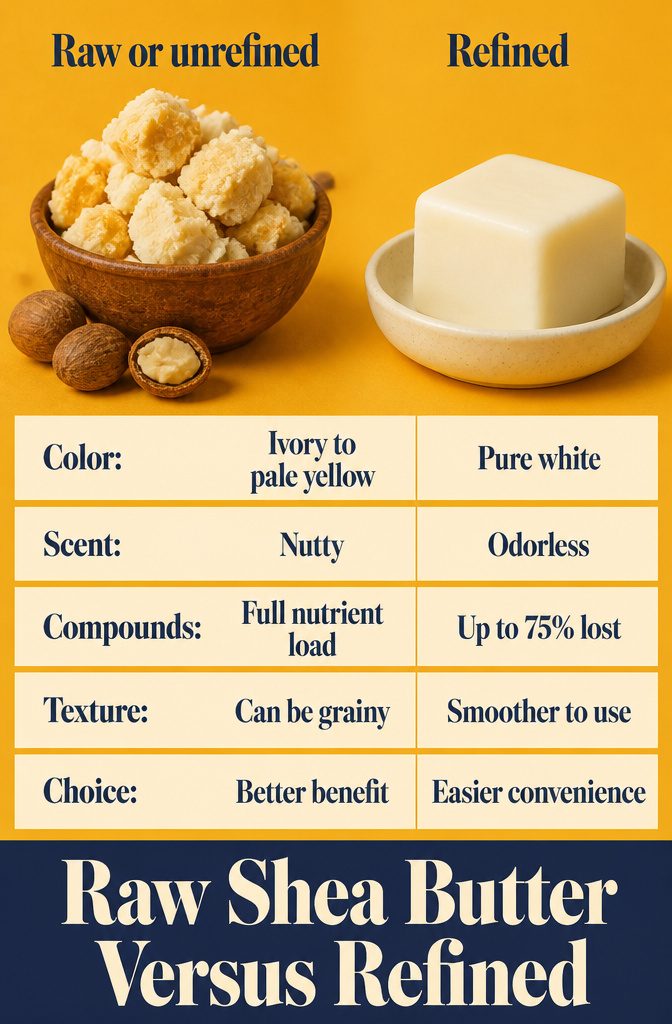
Raw or unrefined is the better pick.
Unrefined shea butter keeps the full nutrient load because it hasn’t been bleached or deodorized. You can tell by the color—ivory to pale yellow instead of pure white—and by the nutty scent.
Refined versions lose up to 75% of the bioactive compounds that make shea butter worth using in the first place, including the anti-inflammatory agents that help the scalp.
Refined shea butter is white, odorless, and smoother in texture.
That smoothness makes it easier to work with if you find raw shea butter too grainy or if the scent bothers you, but you give up most of the benefit for the convenience.
One note from Wellnesse: non-organic or bleached products can carry toxins, so source matters.
And though shea comes from a nut, allergies are rare—Regirl still recommends a patch test on your skin before putting it on your scalp, just to be sure.
How to Store It and How Long It Lasts
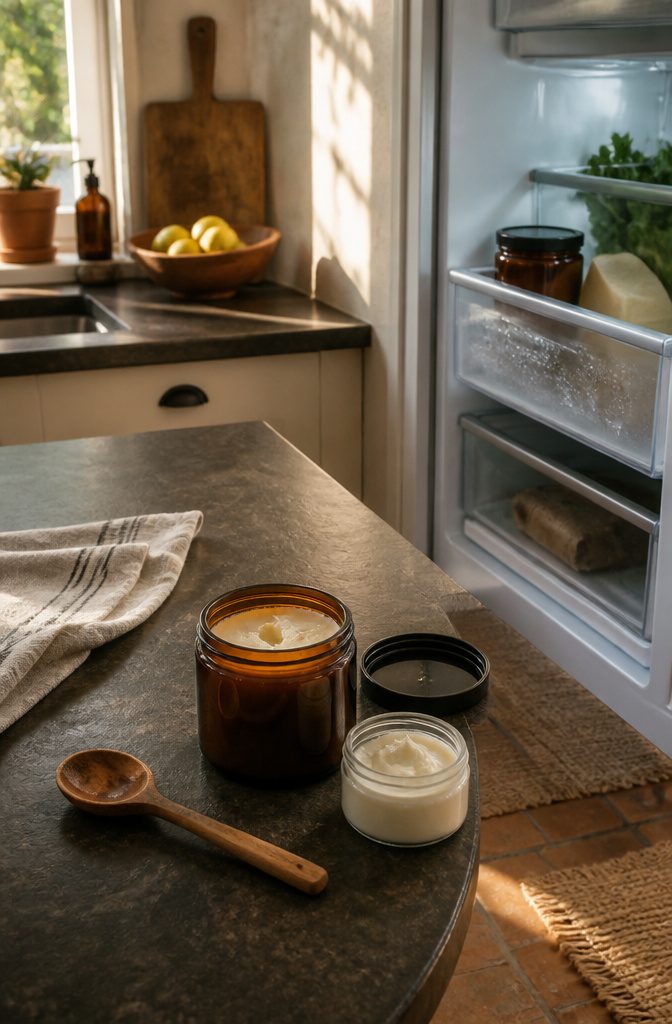
Store shea butter in an airtight container, somewhere cool and dry, away from heat that would melt it back into liquid.
Unrefined shea butter should go in the refrigerator if your house runs warm most of the year. Shelf life is usually up to two years, though an acidic smell means the batch has turned and needs to be thrown out.
Whipped mixtures behave differently. If you blend shea butter with oils or other ingredients, I recommend using or giving away the batch within six months to a year rather than banking on the full two-year window.
The added ingredients shorten stability, and a smaller batch you actually finish beats a year-old jar collecting dust in the cabinet.
Sun and Heat Protection Claims
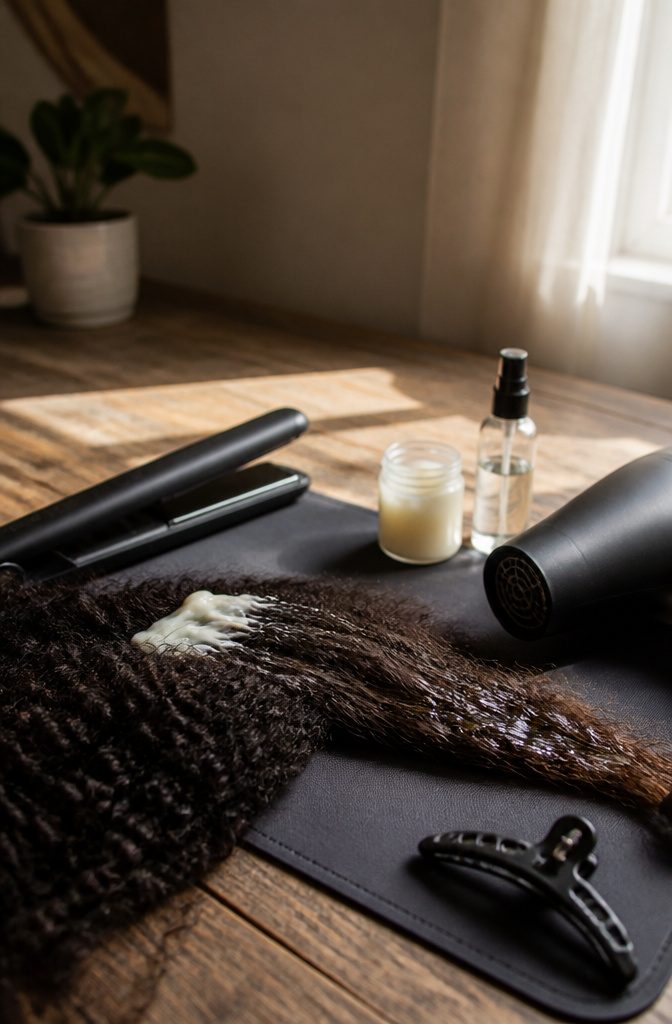
Some sources claim shea butter offers a degree of UV protection, with figures ranging from "a small amount of SPF" to "sufficient SPF." Others suggest it provides a mild barrier against heat styling tools.
The SPF claim sits somewhere between optimistic and unproven, and I would not trust shea butter to protect your scalp or strands the way a dedicated sunscreen or heat protectant does.
Shea butter is not a substitute for a heat protectant spray or serum if you regularly use a flat iron, curling wand, or blow dryer on high heat.
The protective benefit here is possible rather than established, and treating it as a bonus rather than a guarantee keeps expectations realistic. If you apply shea butter before heat styling, layer a proper heat protectant over it.
Using Shea Butter for Styling
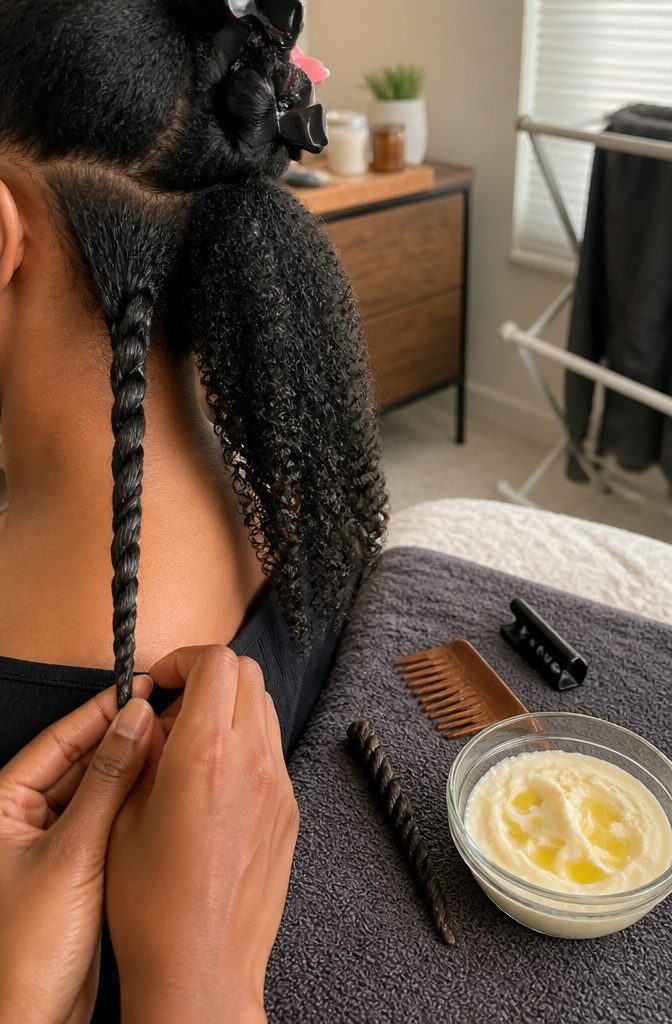
Shea butter gives a soft hold that keeps curl definition without the crunch of a gel, which makes it useful for braid-outs and twist-outs when you want texture that still moves.
It weighs hair down just enough to control flyaways and reduce shrinkage, especially if you apply it to damp sections and let them dry in a loose braid or twist before unraveling.
I find it works best when hair is still wet enough to distribute the butter evenly but not so saturated that it dilutes the hold.
The texture turns to oil when warmed, so some people whip it first for easier application and storage. You can also mix it with a carrier oil like olive or coconut if you want a thinner consistency that spreads faster.
It is not a major styling product across most guides, but for anyone working with natural texture who wants definition without stiffness, it does the job without requiring a separate product afterward.
Frequently Asked Questions
Does shea butter help hair growth?
Shea butter does not speed up growth at the follicle, so hair leaves the scalp at the same rate with or without it.
What changes is length retention: by sealing moisture and reducing breakage, you keep more of the hair you grow, which can make it appear to grow faster.
A calmer scalp from shea’s anti-inflammatory properties may also reduce shedding, but it is not a treatment for genetic hair loss.
Which hair type does shea butter work best on?
Curly, coily, coarse, dry, damaged and high-porosity hair benefit most because open cuticles lose moisture fast and a rich butter holds it in. Fine or low-porosity hair can end up greasy, limp and weighed down from the same richness.
Drop a clean strand into water: hair that sinks quickly is high porosity and suits shea butter well, while hair that floats for several minutes is low porosity and may struggle with it.
How often should I use shea butter on my hair?
For dry or textured hair, once or twice weekly usually does it.
Coarse or curly hair often takes well to 2 or 3 times each week, while fine or oily hair is better served by a single weekly application or by treating just the ends.
Very high-porosity or coily hair may suit daily use if the strand drinks up moisture fast enough that buildup never forms.
How do I apply shea butter for the best results?
Rub a dime-size amount between your palms until it melts into an oil, then smooth it over the mid-lengths and ends, not the roots. Cold butter pressed straight on leaves visible clumps.
Damp hair that has already had a water-based leave-in takes it best, and you can layer by porosity: LOC (leave-in, lightweight oil, shea as the sealing cream) for high porosity, LCO (leave-in, shea, oil on top) for low porosity.
Can shea butter cause hair buildup?
Yes. Excess shea butter can leave residue on the hair shaft or weigh strands down, particularly on fine or low-porosity hair.
Regular use of a clarifying shampoo removes buildup and keeps hydration balanced. If your usual cleansing routine does not lift the residue, massage shampoo through dry hair before turning on the water so the friction helps break down the butter.
What kind of shea butter should you use?
Raw or unrefined is the better pick. Unrefined shea butter keeps the full nutrient load because it has not been bleached or deodorized, and you can tell by the ivory to pale yellow color and the nutty scent.
Refined versions lose up to 75% of the bioactive compounds that make shea butter worth using, including the anti-inflammatory agents that help the scalp.
Does shea butter moisturize or seal?
Shea butter seals. Its high fat content can reduce moisture loss by up to 80% because it lays an occlusive coat over the cuticle, but it does not add water.
Think of it as a sealant that holds in water your hair already has, not a hydrator, so apply it after a water-based leave-in on damp hair for the best result.