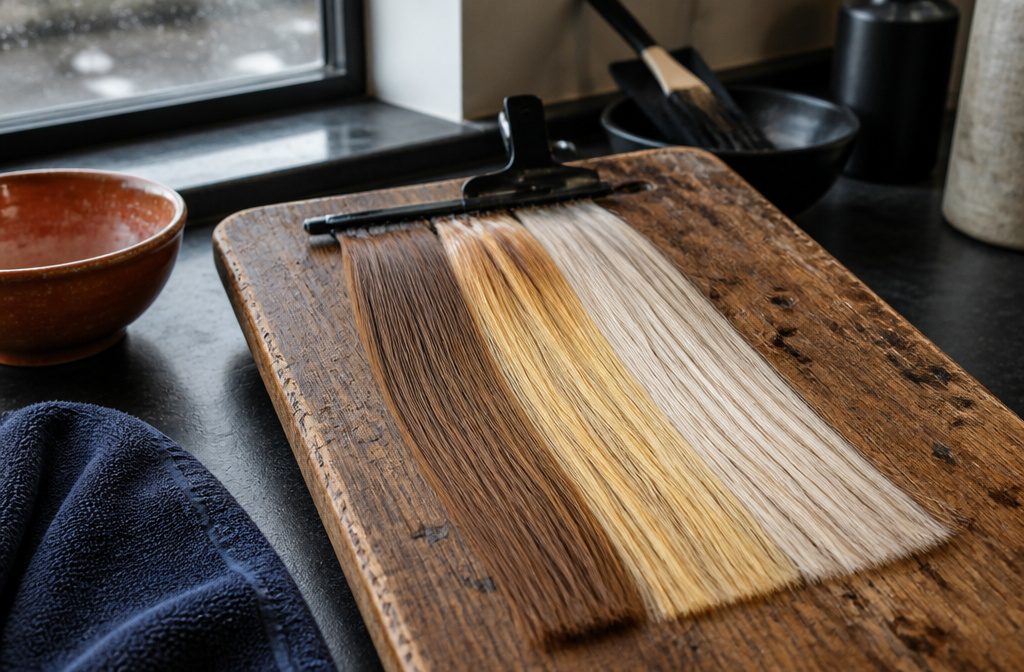
Going from level 7 to level 10 blonde is a 3-level lift, and it takes bleach, not ordinary dye.
High-lift color still relies on bleach to do the lifting, and it tends to land brassy. For a pale result, use 20 volume developer with an on-scalp bleach, then a toner, and strand test first.
What Level 10 Blonde Is
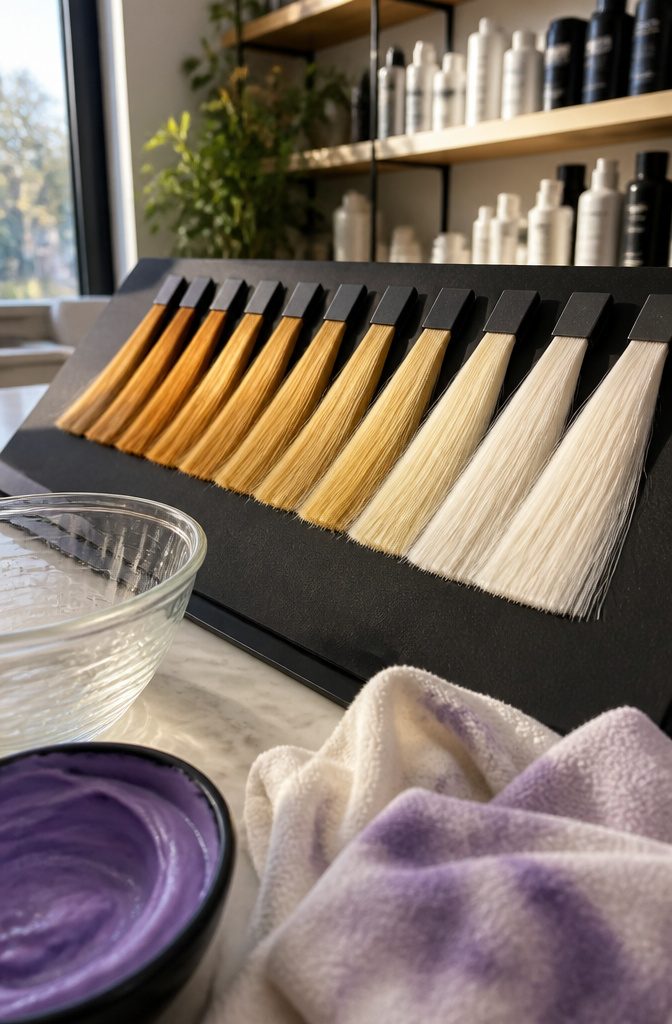
Level 10 is extra light blonde with a pale yellow underlying pigment, and getting there from level 7 means a 3-level lift that requires bleach or lightener, not ordinary dye.
The level system runs from 1, which is black, to 10, which is extra light blonde. Level 10 sits at the top of the chart, making it the lightest level you can reach before you hit white.
Blonde levels run from 7 to 10.
Each level reveals a different underlying pigment when you lighten. Level 7 carries orange-yellow, level 8 is yellow, level 9 is light yellow, and level 10 is pale yellow.
That pale yellow is what I find most people picture when they ask for platinum or icy blonde, but the warmth is still there underneath until you tone it out with pale violet.
Level Versus Tone
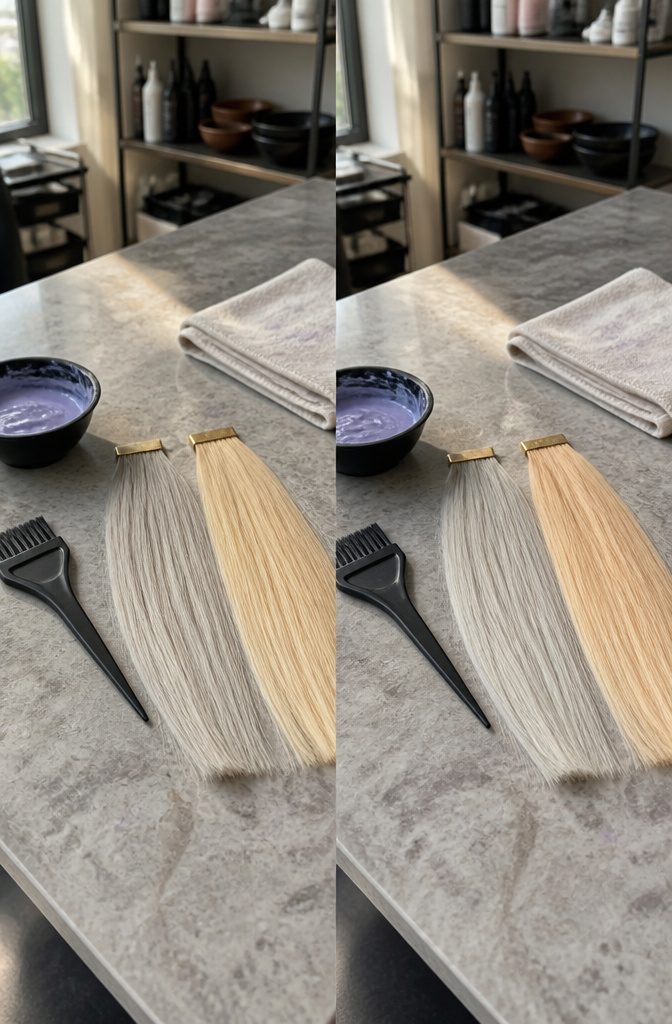
Level measures how light the hair is on a scale from one to ten, with ten sitting at the palest end.
Tone is the color you see once you’re at that level—the warmth, the coolness, the tint that shifts the look even when the lightness stays put.
Two level 10 blondes can sit side by side and read completely differently: one icy and silver, the other buttery or even faintly peachy.
The families that show up most often at level 10 are ash, natural and golden, with violet turning up for toning work and matte or copper appearing far less.
Ash pulls cool and slightly gray, natural reads as pale blonde without much added color, and golden leans warm without going orange.
That range means level 10 isn’t a single shade you either hit or miss. It’s a brightness with dozens of possible faces, and the one you pick depends on what you want reflected back.
Pale Yellow Underneath
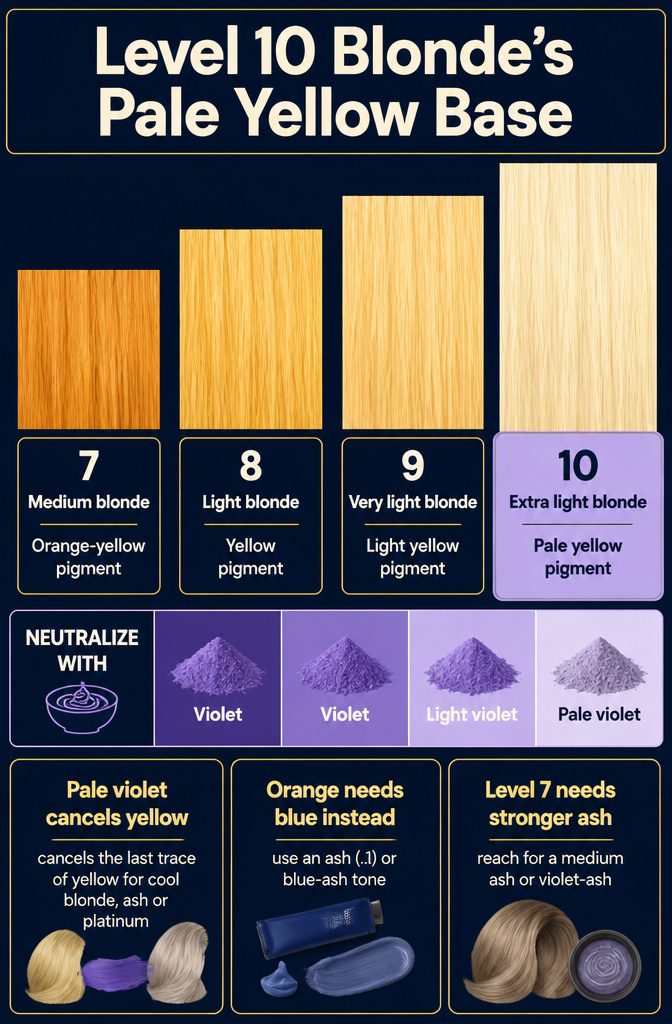
Every blonde level hides a warm pigment that shows as hair lightens, and the pigment gets paler as the number climbs. Level 10 is pale yellow underneath, so it needs the gentlest correction of the four.
| Level | Name | Underlying pigment | Neutralize with |
|---|---|---|---|
| 7 | Medium blonde | Orange-yellow | Violet |
| 8 | Light blonde | Yellow | Violet |
| 9 | Very light blonde | Light yellow | Light violet |
| 10 | Extra light blonde | Pale yellow | Pale violet |
Pale violet cancels the last trace of yellow, which is what lets level 10 read as cool blonde, ash or platinum.
Orange needs blue instead: an ash (.1) or blue-ash tone. At level 7, I’d reach for a medium ash or violet-ash, since the orange is mixed with yellow.
Level 7 to 10 Needs Bleach
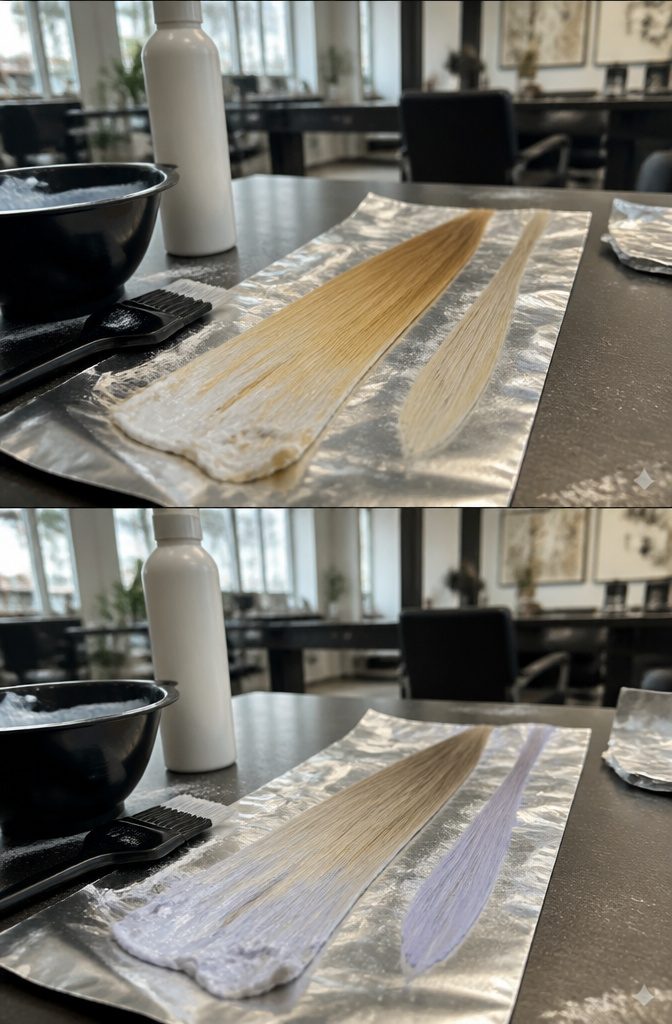
Going from level 7 to 10 is 3 levels, and it can’t be done without bleach.
High-lift color, which Clairol and L’Oreal both make, lifts and deposits in one step, but the lifting action comes from bleach, so a gentler name on the box changes nothing. It also tends to land brassy rather than pale.
For a pale level 10, I’d go with 20 volume developer and an on-scalp bleach, followed by a toner.
From a level 7 it gets there rather easily, and the toner is where you pick the exact shade. Run a strand test before you commit the whole head.
Strand Test First
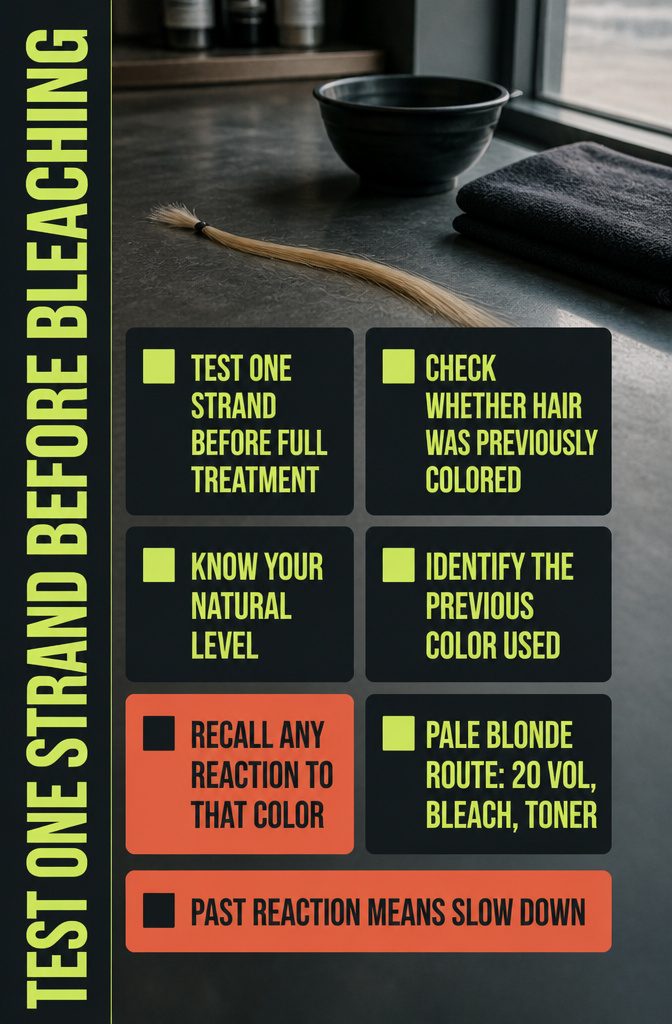
Going from level 7 to 10 is 3 levels, so I would test one strand before treating the whole head.
For a pale blonde, the route is 20 vol with an on-scalp bleach, then a toner. Before you mix anything, answer these four questions:
- Is your hair previously colored?
- What is your natural level?
- If you have colored it before, which color did you use?
- Did you have any reaction to that color?
The last one matters most to me. A past reaction is a reason to slow down, and the strand is the cheapest place to find out.
Dye, High-Lift, or Bleach
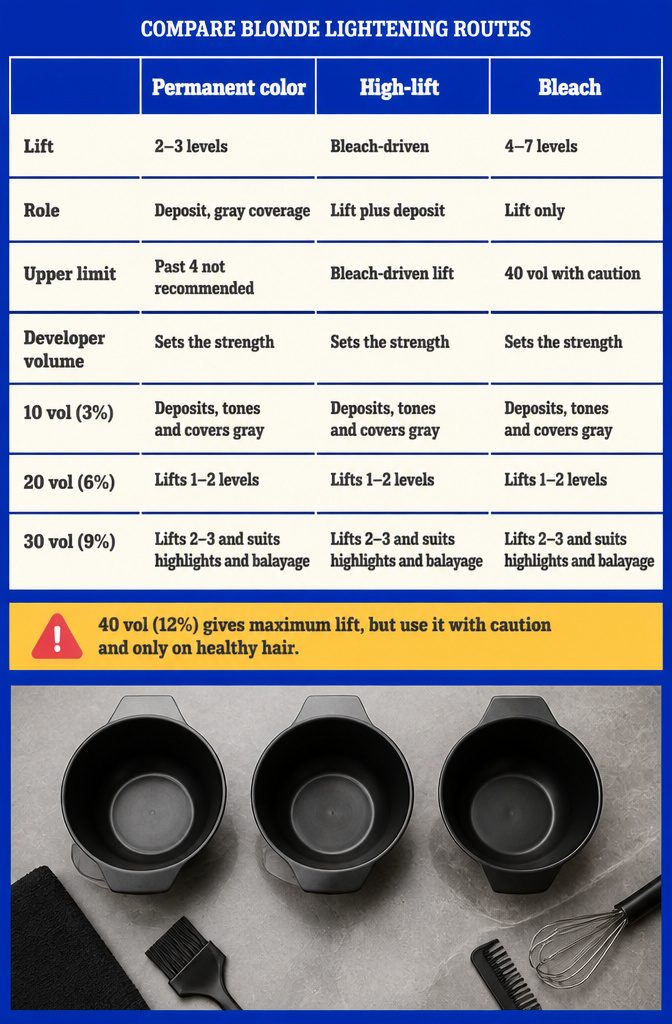
Permanent color lifts 2–3 levels, and going past 4 isn’t recommended.
Bleach lifts 4–7 levels depending on the product and your hair’s condition. High-lift combines lift and deposit, with bleach doing the lifting.
| Route | Lift | Role |
|---|---|---|
| Permanent color | 2–3 levels | Deposit, gray coverage |
| High-lift | Bleach-driven | Lift plus deposit |
| Bleach | 4–7 levels | Lift only |
Developer volume sets the strength.
10 vol (3%) deposits, tones and covers gray; 20 vol (6%) lifts 1–2 levels; 30 vol (9%) lifts 2–3 and suits highlights and balayage. 40 vol (12%) gives maximum lift, but use it with caution and only on healthy hair.
Find Your Starting Level
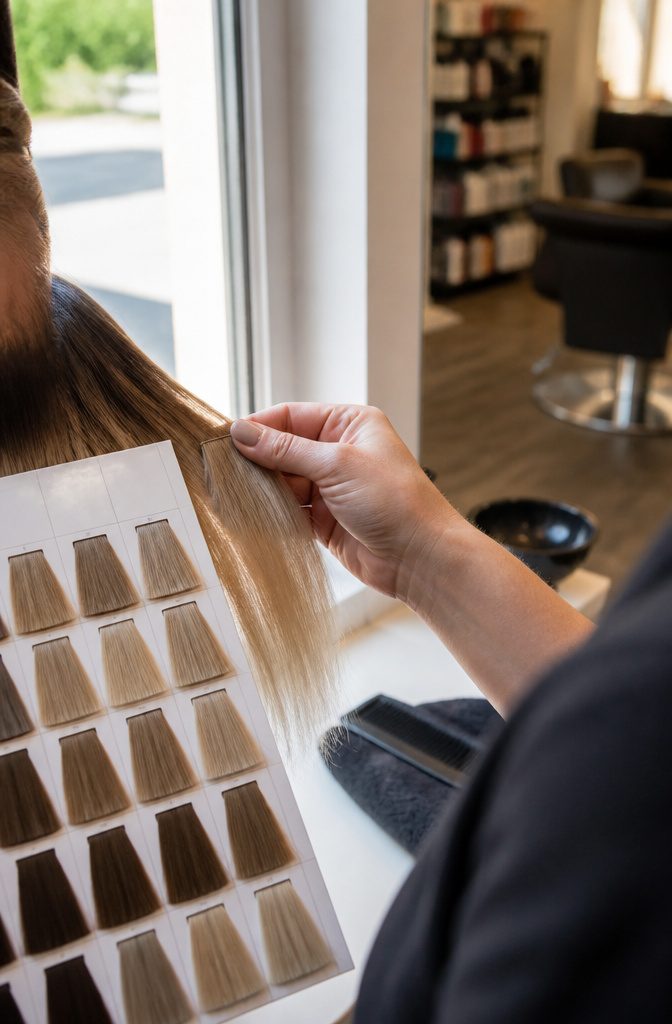
Hold a section of your hair against a professional color chart beside a window in daylight.
Indoor bulbs warm everything up and make hair read yellower than it is. Judge the mid-lengths, not the roots, which usually sit darker, and not the ends, which sun and heat often lighten or dry out.
The swatch that matches best is your starting level, but it only tells half the story. The result depends on the natural level and on whether the hair has been colored before, so dyed lengths can read differently from regrowth.
If two swatches look equally close, I’d book a quick consult with a colorist rather than guess. A misread level throws off the whole plan.
Reading Brand Numbers
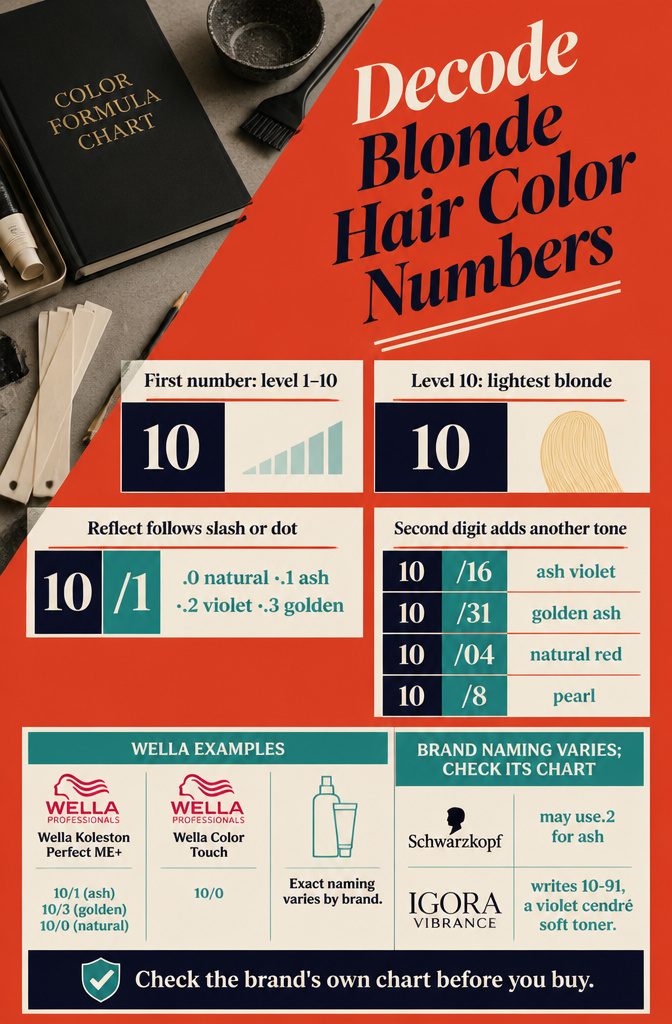
Read a shade code left to right: lightness first, then tone.
- The first number is the level. The 1–10 base scale is the same across brands, and 10 is the lightest blonde on it.
- The number after the slash or dot is the reflect: .0 natural, .1 ash, .2 violet, .3 golden.
- Wella Koleston Perfect ME+ lists 10/1 (ash), 10/3 (golden) and 10/0 (natural). Wella Color Touch also has a 10/0.
- A second digit adds a tone: 10/16 is ash violet, 10/31 golden ash, 10/04 natural red, 10/8 pearl.
- Exact naming varies by brand. Schwarzkopf may use .2 for ash, and Igora Vibrance writes 10-91, a violet cendré soft toner. Check the brand’s own chart before you buy.
Frequently Asked Questions
What do the numbers on hair dye mean, and what is a 10 in hair color?
The first number is the level, on a scale from 1 (black) to 10 (extra light blonde), so a 10 is the lightest blonde on the chart.
The number after the slash or dot is the reflect, such as .1 for ash or .3 for golden. A code like 10/1 reads as level 10 with an ash tone.
What are the levels of blonde?
Blonde covers levels 7 through 10: 7 is medium blonde, 8 is light blonde, 9 is very light blonde, and 10 is extra light blonde. The warm pigment underneath gets paler as the number rises, from orange-yellow at 7 to pale yellow at 10.
What is the difference between hair level and tone?
Level is how light or dark the hair is on the 1–10 scale.
Tone is the color you see at that level, such as ash, natural, or golden. Two people can both be level 10 and look different, one icy and silver, the other buttery.
What is the underlying pigment in hair?
It is the warm color that shows up as hair lightens, and it changes with each level.
Levels 1–4 show red and levels 5–6 show orange. Among the blondes, 7 is orange-yellow, 8 is yellow, 9 is light yellow, and 10 is pale yellow, which pale violet cancels out.
How do I know my hair level?
Hold a section of hair against a professional color chart beside a window in daylight, and match the mid-lengths rather than the roots or ends.
Indoor light makes hair look yellower than it is. If two swatches look equally close, a colorist can tell you for certain.
How many levels can you lighten hair at once?
Permanent color lifts 2–3 levels, and going past 4 isn’t recommended.
Bleach lifts 4–7 levels depending on the product and the condition of your hair. Going from level 7 to 10 is a 3-level lift, so it calls for bleach.
What developer volume do I need, and is a 10 or 20 developer better?
For lifting, 20 volume is the better choice, because 10 volume only deposits color, tones, and covers gray. 20 vol lifts 1–2 levels, 30 vol lifts 2–3, and 40 vol gives maximum lift but should go only on healthy hair.
Is the hair color numbering system the same for all brands?
The 1–10 level scale is the same across brands, but the numbers after the slash or dot are not.
Schwarzkopf may use .2 for ash, while other lines use .1, and Igora Vibrance writes 10-91 for a violet cendré soft toner. Check the brand’s own chart before you buy.
How do I neutralize orange after bleaching?
Use blue, which means an ash (.1) or blue-ash tone.
Violet is for yellow, not orange. At level 7, where orange is mixed with yellow, a medium ash or violet-ash tone is the better pick.