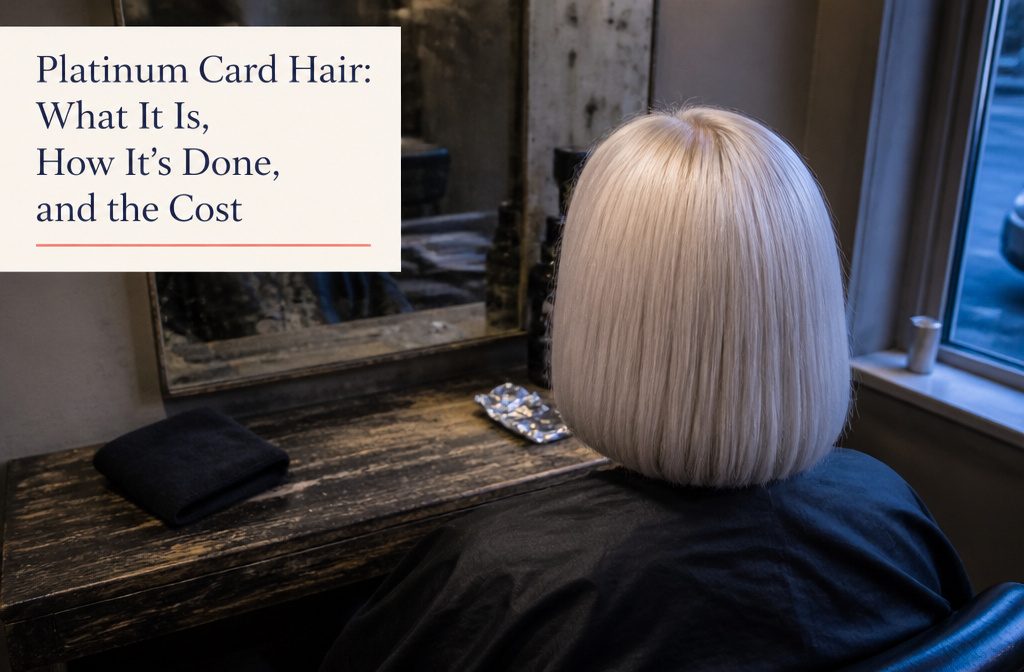
Platinum card hair is a full-coverage foil technique that lifts nearly every section of the head to level 10 or 11, then tones it to one uniform icy, silver, ash, or white blonde.
It differs from highlights and balayage because it leaves no dimension. Colorists work in 1/8-inch slices, foiling back-to-back sections and staggering developer volumes from 5 to 20 as they move from ends to scalp.
What Platinum Card Hair Is
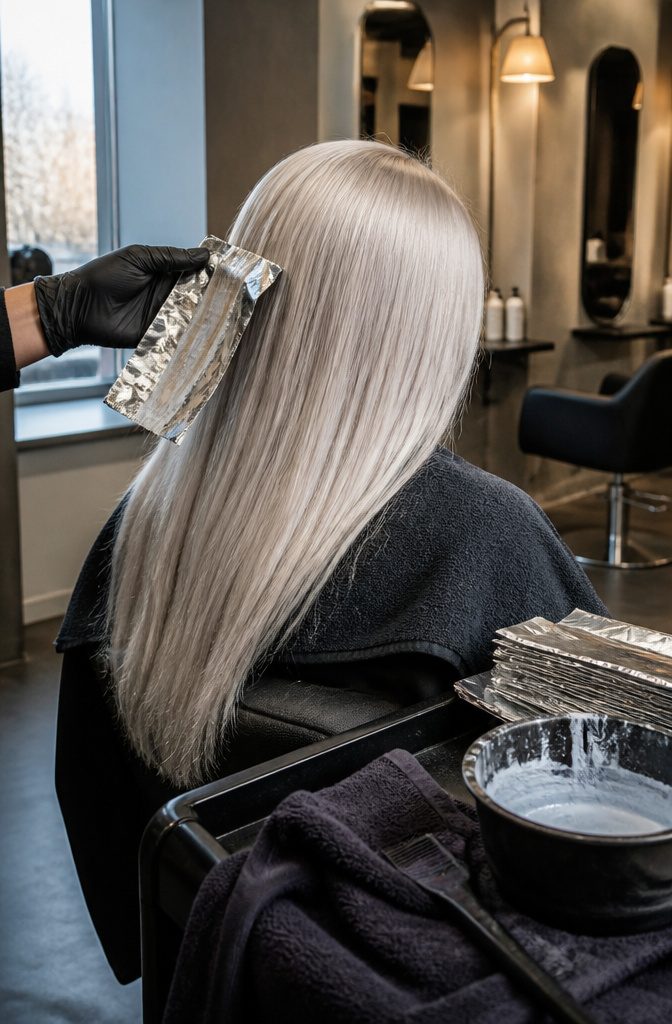
Platinum card is a full-coverage foil service.
Nearly every section of the head is lightened, then toned, to reach one even icy, silver, pearl, ash, or white blonde. The target is Level 10 to 11 lift, so each section is carefully saturated and watched as it processes.
Full highlights foil most of the head for a bright, dimensional blonde, and freehand balayage paints a graduated, sun-kissed result. Neither gives the uniformity of a card.
I’d book it only when you want genuine platinum across the whole head. If a natural look is the goal, balayage wins.
Who Should Book Platinum Card and When Another Service Works Better
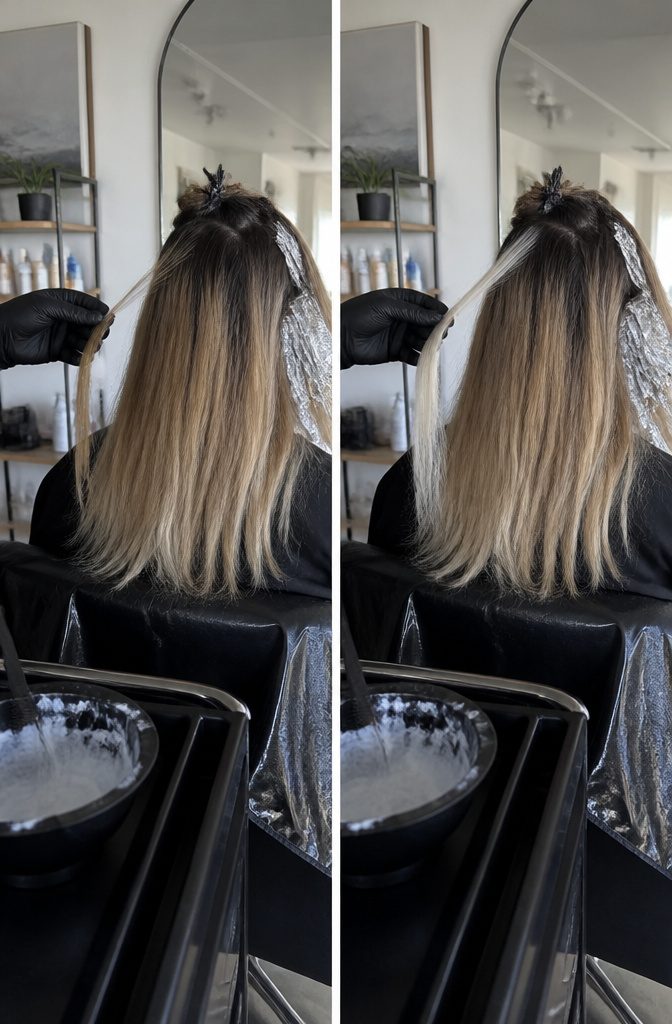
Platinum card suits anyone chasing one even, ultra-light color: dark brunettes, banded blonde, uneven sections, and darker roots that highlights can’t cover.
Colorist Hannah Menor draws the line at regrowth:
"If the hair is grown out more than 3 inches, I’ll most likely turn to a Platinum Card, taking into consideration their natural base."
With grown-out balayage, I’d stop patching and book it once regrowth passes 3 inches.
Full bleach and tone can suit very dark or heavily dyed hair needing a big jump. Natural, sun-kissed blonde belongs with balayage or partial highlights; a platinum card leaves no dimension.
Expect a consultation and a strand test first, and possibly more than one appointment to protect hair integrity.
How the Service Is Performed
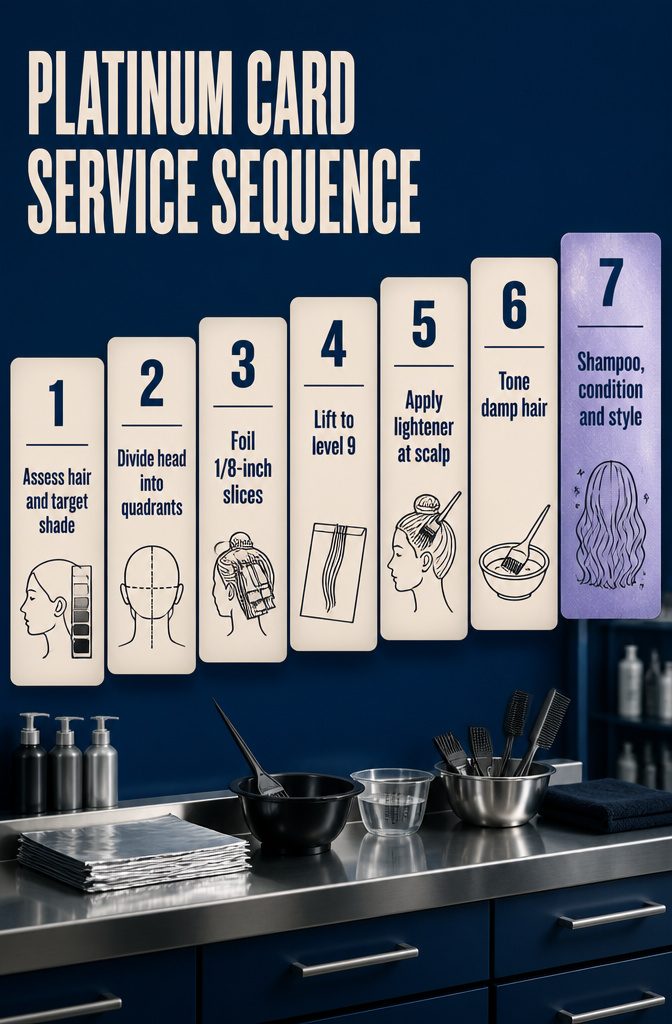
- Consultation and hair analysis come first. The colorist assesses your starting level, any previous color, and the target platinum shade to map out how many passes the lift will require.
- Sectioning begins with the head divided into quadrants. From there, the colorist works in 1/8-inch slices—back-to-back sections thin enough that nearly every piece of hair goes into its own foil.
- Lightener is applied from mid-lengths to ends first, starting in the back. Developer choice changes as the colorist moves: 5-volume or 10-volume where the service begins, stepping up to 20-volume as foils move toward the front and scalp. Each section is saturated completely. Foils are placed ¼ inch to ½ inch off the scalp to manage heat buildup.
- The first pass processes until the hair reaches at least level 9. The colorist checks individual foils throughout, opening them to monitor lift and pulling them at the precise moment each section is ready.
- Once the first pass is complete, foils are removed and lightener is applied directly at the scalp using the starting developer. Roots lift faster due to body heat, so they catch up quickly to the hair that was foiled first.
- After rinsing, toning begins. In one method, equal parts Kenra Color Demi-Permanent 10V, 10SM, and 9VM are mixed at a 1:2 ratio with 9-volume activator and applied to damp hair. Processing runs up to 25 minutes.
- A final shampoo and condition with restorative formulas (Kenra Platinum Restorative Shampoo and Conditioner) follow, then styling to finish.
Platinum Card Against Full Bleach, Highlights, and Balayage
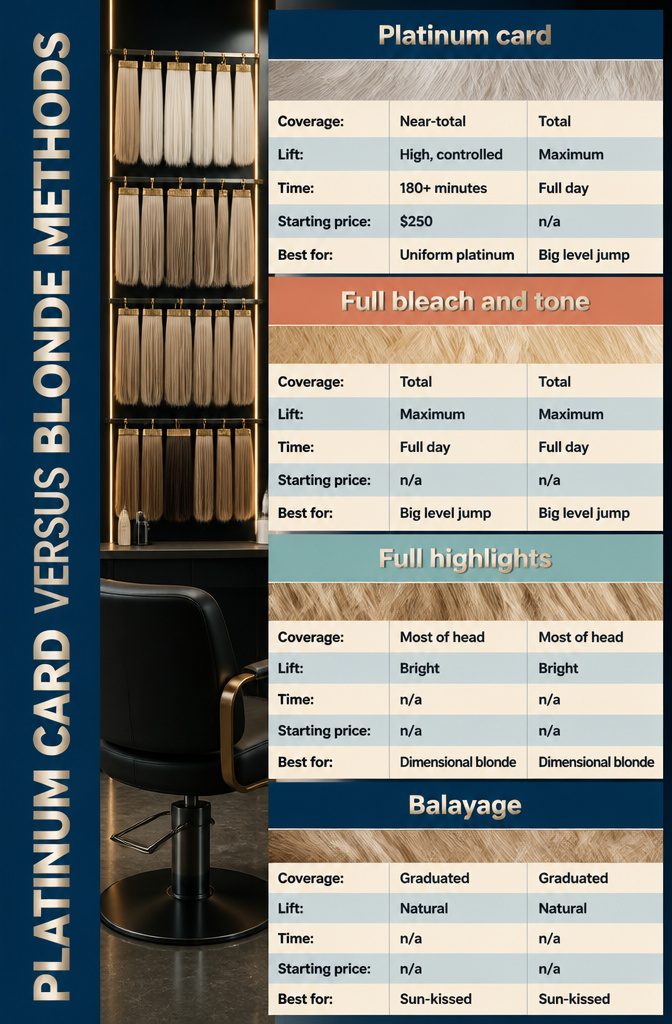
The platinum card delivers uniform platinum lift across the full head, using back-to-back foils on 1/8-inch sections so no strand is left darker. Full bleach and tone does the same job less methodically, applying lightener more broadly for maximum lift.
Highlights weave selected sections for dimension, leaving darker hair visible between. Balayage paints lightener freehand for a graduated, sun-kissed result.
| Approach | Coverage | Lift | Time | Starting Price | Best For |
|---|---|---|---|---|---|
| Platinum card | Near-total | High, controlled | 180+ minutes | $250 | Uniform platinum or icy blonde; even canvas for pastels and fashion colors |
| Full bleach and tone | Total | Maximum | Full day | n/a | Dark or heavily dyed hair needing a big level jump |
| Full highlights | Most of head | Bright | n/a | n/a | Dimensional blonde, lighter than balayage |
| Balayage | Graduated | Natural | n/a | n/a | Sun-kissed, low-commitment blonde |
Platinum card uses staggered developer volumes and built-in repair treatment, so the finish feels less rough than full bleach.
Full bleach asks more afterward: tighter toning schedule, more treatment. Highlights and balayage need touch-ups as regrowth shows, but platinum card demands the most frequent maintenance of the four.
Hair Condition, Previous Color, and What Can Be Done Safely
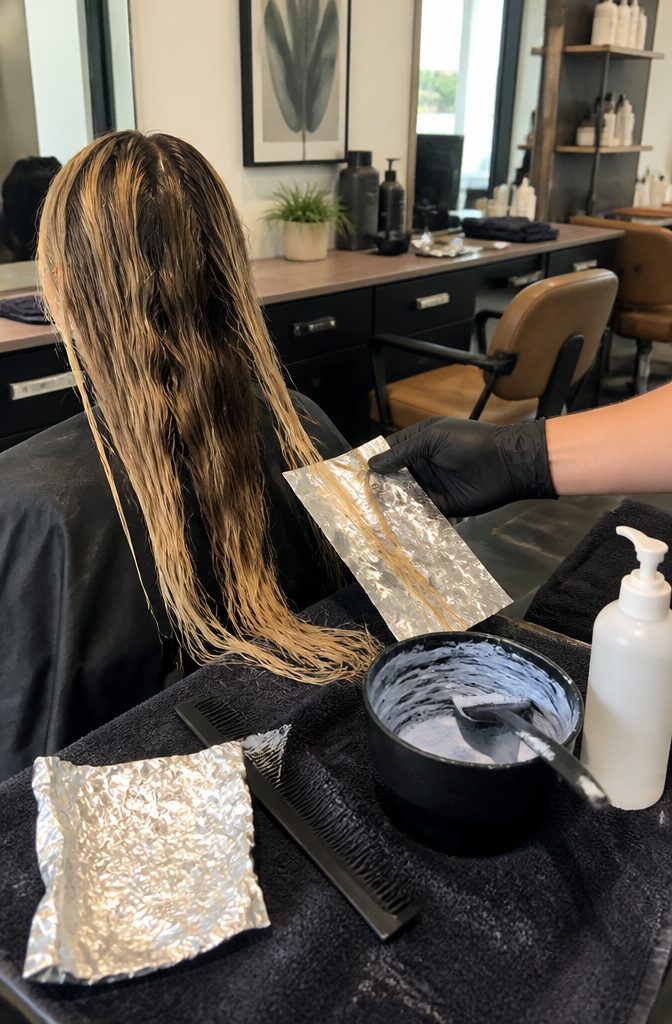
Hair Condition, Previous Color, and What Can Be Done Safely
Hair in good condition can typically handle a single-session platinum card. Previously damaged or over-processed hair may need a staged approach over multiple appointments.
The chemistry required to lift hair to Level 10 to 11 breaks down the hair’s disulfide bonds, and a colorist who tells you what’s safely achievable in one visit, rather than promising any result you ask for, is the right colorist to trust with this service.
Previous color matters. Owners on Reddit mention being turned away by multiple stylists for a platinum transformation, only to find one who could do it gradually over sessions.
Box dye, dark permanent color, and uneven banding from past highlights all affect how much lift the hair can handle.
A skilled colorist conducts a thorough consultation and strand test before the full service, mixing a bond-builder like Olaplex No.1 directly into the lightener during processing and selecting a high-quality lightener formulated to minimize damage.
Hair history, condition, porosity, and texture all come into play.
How Long Platinum Card Takes and What It Costs
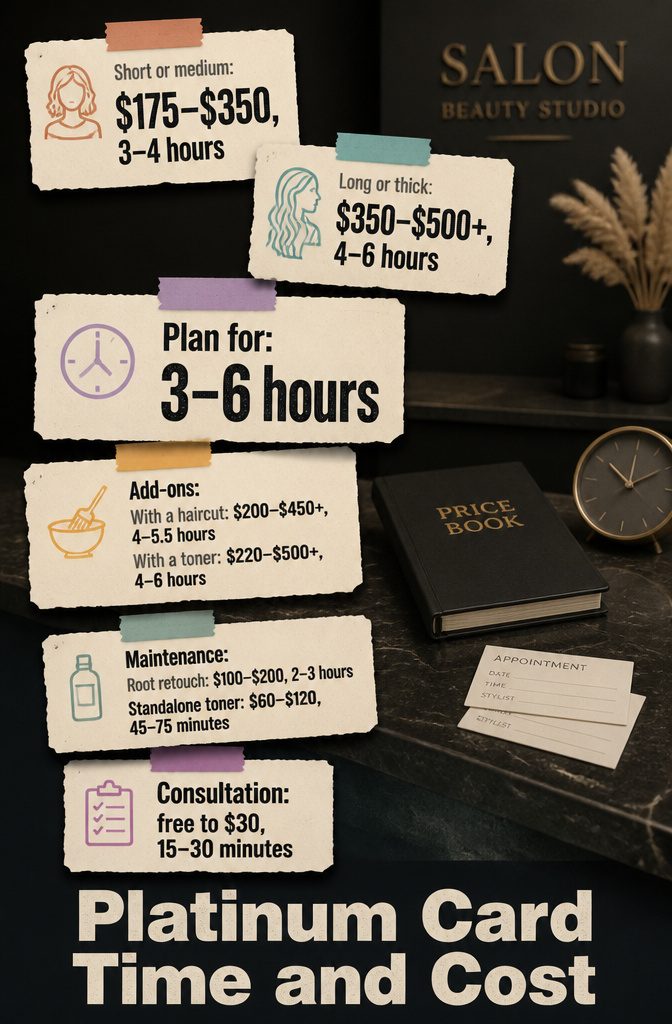
Price and time both climb with hair length, density, and how dark your starting color is. Typical US ranges:
- Short or medium hair: $175 to $350, 3 to 4 hours
- Long or thick hair: $350 to $500+, 4 to 6 hours
- With a haircut: $200 to $450+, 4 to 5.5 hours
- With a toner: $220 to $500+, 4 to 6 hours
- Root retouch: $100 to $200, 2 to 3 hours
- Standalone toner: $60 to $120, 45 to 75 minutes
- Consultation: free to $30, 15 to 30 minutes
Salons vary widely.
One books it as a 180-minute service starting at $250, while another blocks 8–12+ hours. I’d plan for 3 to 6 hours and treat the consultation as the real quote, since it’s the cheapest way to confirm your final price.
Maintenance and Aftercare to Keep Platinum From Turning Brassy
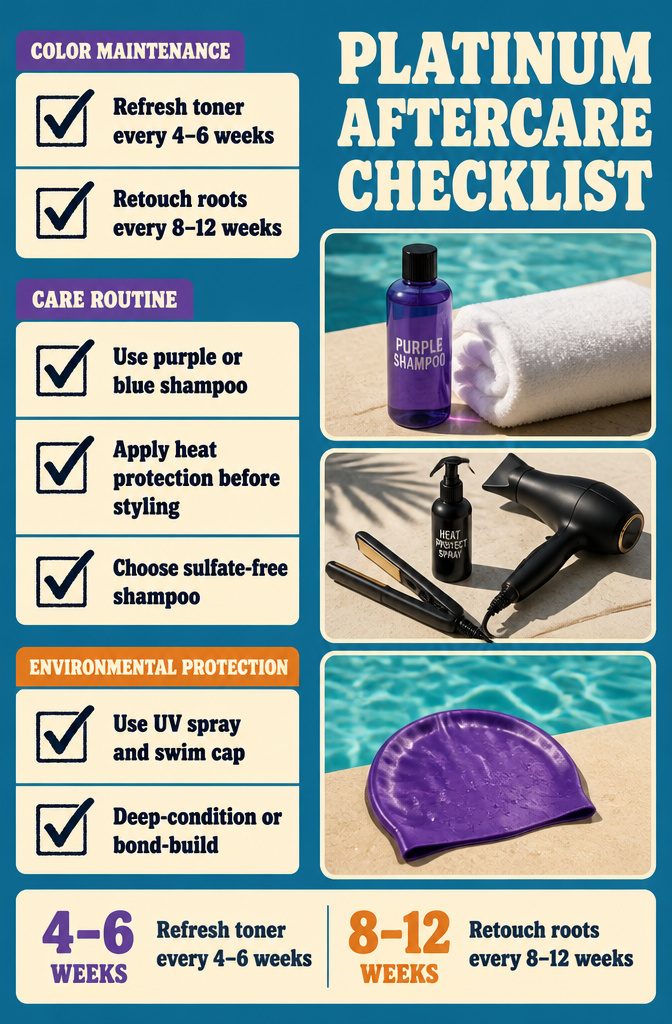
Platinum lasts several weeks before the tone starts shifting, but how long depends on how fast your roots grow, how light the lift was, how much heat styling you do, and whether you spent August in the pool.
I book a toner refresh every 4 to 6 weeks to keep the cool tone from drifting yellow, and a root retouch or full platinum card service every 8 to 12 weeks depending on how much contrast I can tolerate at the scalp.
Purple or blue shampoo extends the toner between appointments, though not daily for most people.
Heat protection before styling is non-negotiable. Summer sun and chlorine push platinum warm fast, so UV spray and a swim cap matter if you’re spending weekends at the pool.
Winter indoor heating dries the ends out and makes lightened hair feel crunchy if moisture isn’t part of the routine. Sulfate-free shampoo slows the toner fade, and deep conditioning or bond-building treatments keep the structure intact after that much lift.
Is Platinum Card Less Damaging Than Full Bleach and Tone
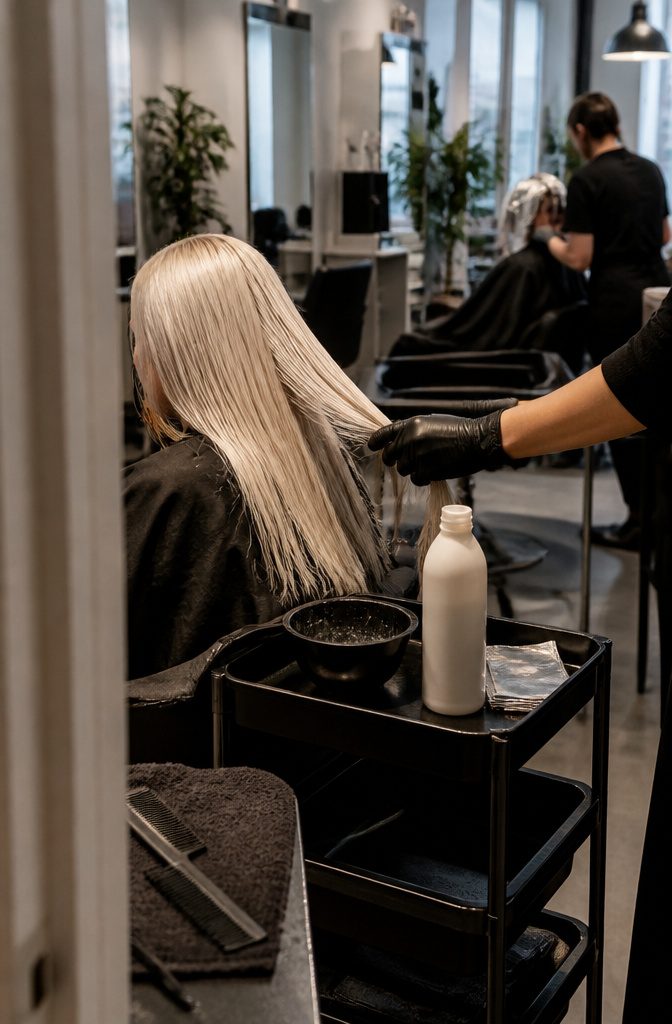
Platinum card often does less damage than a traditional full bleach and tone because it is designed to be efficient and includes a repair treatment built into the appointment.
Full bleach usually involves more aggressive lifting, and many salons stop there without adding structured aftercare into the session itself.
Platinum card services typically run 180 minutes and include a treatment and style before you leave, so the hair is not left rough or unfinished.
That said, both services involve significant lightening. Any process that takes hair to level 10 or 11 breaks down disulfide bonds, and platinum card is no exception.
Colorists manage this by mixing bond-builders like Olaplex directly into the lightener and selecting the appropriate developer volumes. Hair in good condition can usually handle platinum card in one visit.
Previously damaged or over-processed hair may need a staged approach over multiple appointments, and a skilled colorist will assess that honestly during consultation. Proper application and product choice reduce the damage, but the chemistry itself is not gentle.
Frequently Asked Questions
How much does platinum card hair cost?
Short to medium hair runs $175 to $350, while long or thick hair costs $350 to $500 or more.
Adding a haircut or toner increases the total, and the final price depends on your starting color, hair density, and how many hours the service takes. A consultation gives you the accurate quote before you book.
What is a platinum card at a salon?
Platinum card is a full-coverage foil service that lifts nearly every section of your head to level 10 or 11, then tones it to an even icy, silver, ash, or white blonde.
The colorist works in 1/8-inch slices so no strand is left darker, which sets it apart from highlights or balayage. It’s the service to book when you want uniform platinum across the whole head.
How long does a platinum card take?
Plan for 3 to 6 hours depending on your hair length, density, and starting color level.
Short or medium hair typically takes 3 to 4 hours, while long or thick hair can run 4 to 6 hours or longer. The consultation gives you a more accurate time estimate based on what your hair needs.
How long does a platinum card last on platinum blonde hair?
The look stays fresh for several weeks, but the exact timeline depends on how fast your roots grow, how much sun and swimming you’re doing, and how often you heat style.
Roots show first, and tone can shift warmer without the right home care. Most people book a toner refresh every 4 to 6 weeks and a root retouch or full service every 8 to 12 weeks.
Is a platinum card less damaging than a full bleach and tone?
It often can be because platinum card is designed to be efficient and includes a repair treatment built into the appointment. Full bleach usually involves more aggressive lifting and many salons stop there without structured aftercare in the session itself.
Both services involve significant lightening, but platinum card manages the process with bond-builders, staggered developer volumes, and a treatment before you leave.
Can I get a platinum card if my hair has previous color or highlights?
Often yes, especially if your hair has been lightened before.
Box dye, dark permanent color, or uneven banding may require a different plan or a staged approach over 2 visits. A skilled colorist assesses your hair history during consultation and tells you upfront what’s safely achievable in 1 session.
Is platinum card damaging to hair?
Any process that lifts hair to level 10 or 11 breaks down disulfide bonds, and platinum card is no exception.
Colorists manage this by mixing bond-builders like Olaplex directly into the lightener and selecting appropriate developer volumes. Hair in good condition can usually handle it in 1 visit, while previously damaged or over-processed hair may need multiple appointments.
What aftercare should I follow in summer to keep platinum from going brassy?
Use purple shampoo on a schedule that makes sense for your hair, not daily for most people.
Rinse after swimming, add moisture and repair on pool days, and protect from UV with spray or hats since sun exposure warms platinum fast.
Keep heat styling in check since platinum stays cooler longer when your ends aren’t getting heat every morning.