Settle the undertone before you book: platinum keeps a trace of warm beige, while ice blonde runs blue or violet.
Your starting color sets the timeline. Light brown or blonde hair can hit level 10 in one visit, but darker or previously colored hair takes several appointments, a few weeks apart.
What Icy Platinum Blonde Hair Actually Looks Like
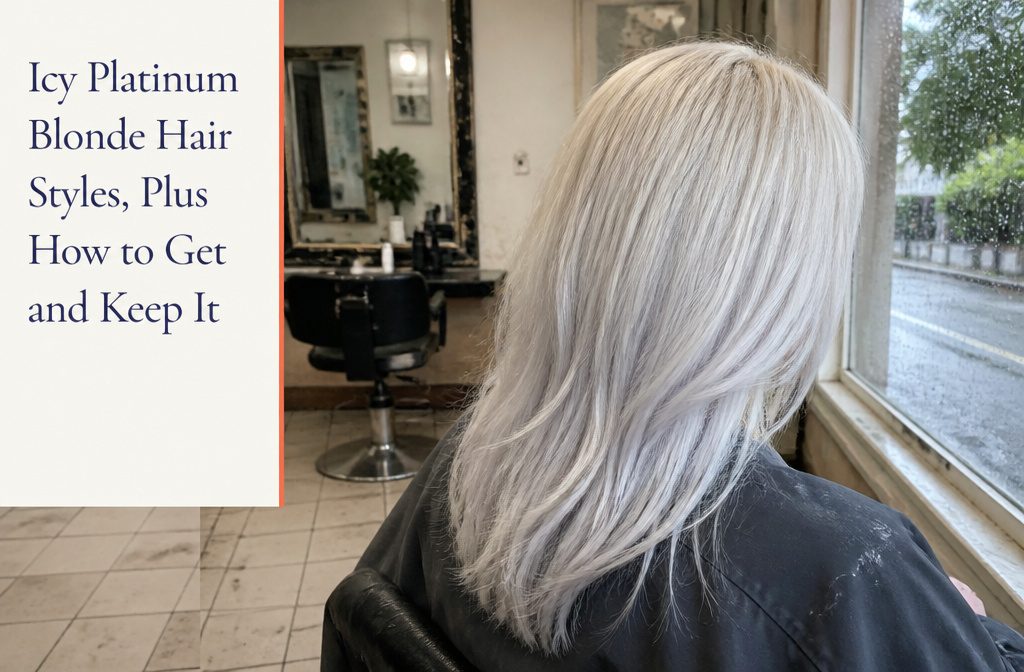
Icy platinum blonde sits at the palest end of the blonde range, cooled with silver, white, blue or violet so it reads like frost rather than butter. The two names for it are not interchangeable.
Platinum is pale and cool but often keeps a hint of warm beige underneath. Ice blonde goes as white as it can, with blue or violet undertones, sometimes a touch of silver, and a shimmer under light.
When I sort saved photos, the undertone is the test: warm beige means platinum, blue or violet means ice blonde. Name the one you want when you book.
1. All-Over Platinum or Ice Blonde
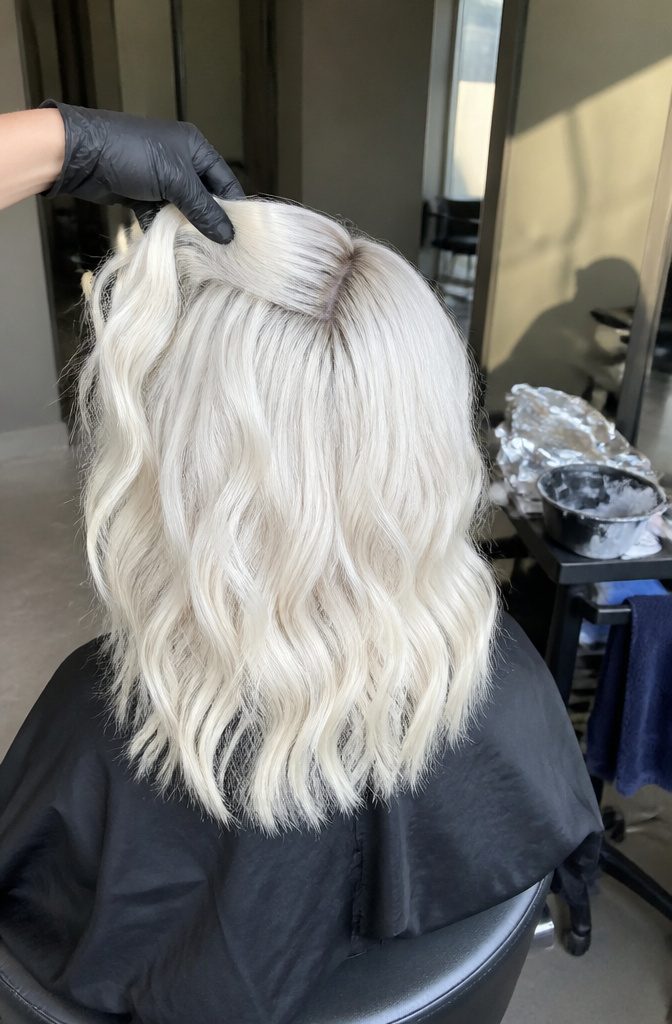
All-Over Platinum or Ice Blonde
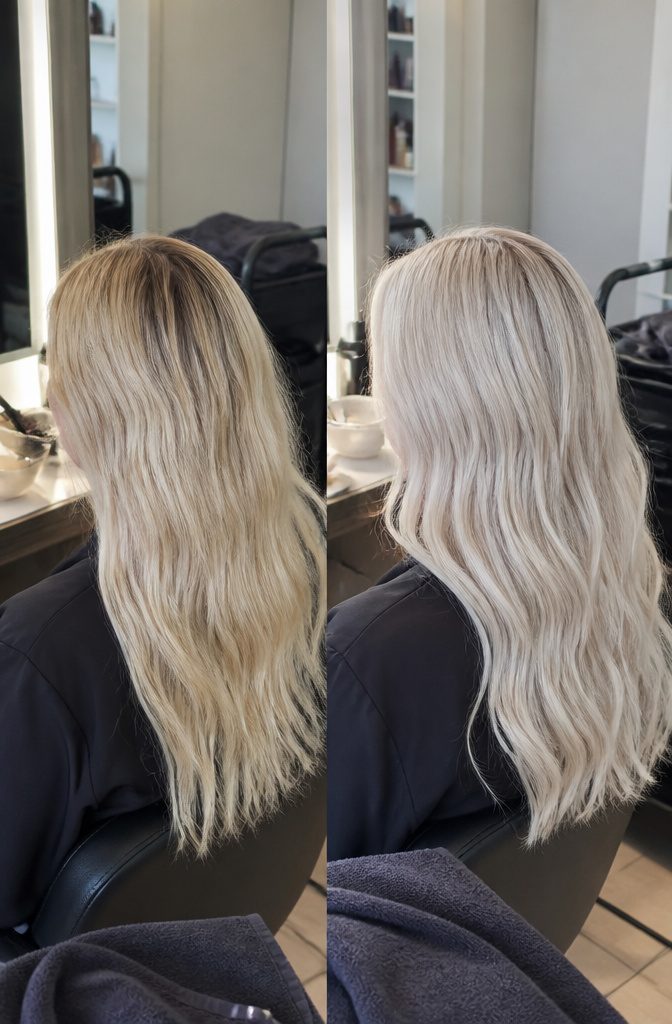
This is the full commitment: every strand lightened to the palest possible level, then toned to remove any trace of warmth.
The result is a freezing, almost white finish that works across all hair types, textures and lengths. Short crops carry it as boldly as long waves, and fine hair reads just as icy as thick.
This approach makes regrowth very visible. Regrowth shows up the moment it emerges, which makes this the highest-maintenance version of platinum you can choose.
If your natural color sits anywhere darker than pale blonde, you’ll notice the line within days. That means frequent root touch-ups or a willingness to let a shadow develop before your next appointment.
I’d call this the most dramatic option for a reason: it refuses to blend or fade quietly. You’re either maintaining it every few weeks or deliberately shifting toward a look with visible roots.
2. Silver or White Blonde
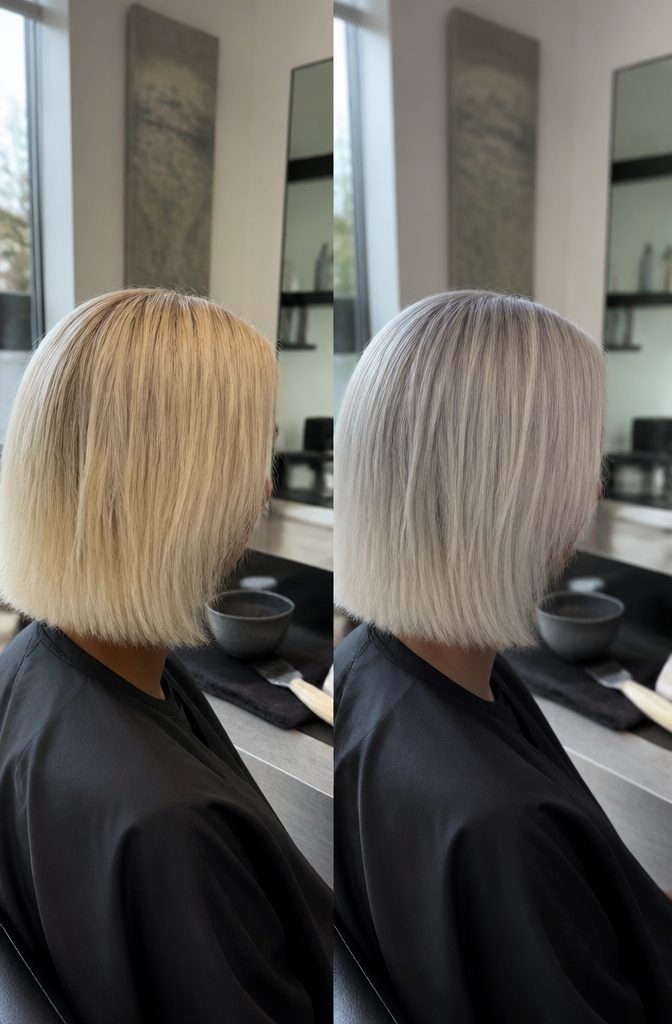
Silver blonde leans gray rather than yellow, which gives it an edgy, high-shine finish and makes it especially flattering on cooler undertones.
The formula is Koleston Perfect 10/8 with Welloxon Perfect Pastel at 1:2. Gray tones fade quickly, so expect to tone often to hold the cool, icy finish.
White blonde is as light as blonde gets, leaning toward ivory or pure white, with a crisp, almost translucent look.
It stands out most against deeper skin tones. Roots get Color Touch 7/1 with 1.9%, and the lengths get equal parts 8/81 and 10/81 with 1.9%.
With cool undertones, I’d go silver. For the loudest result, white wins.
3. Highlights and Babylights
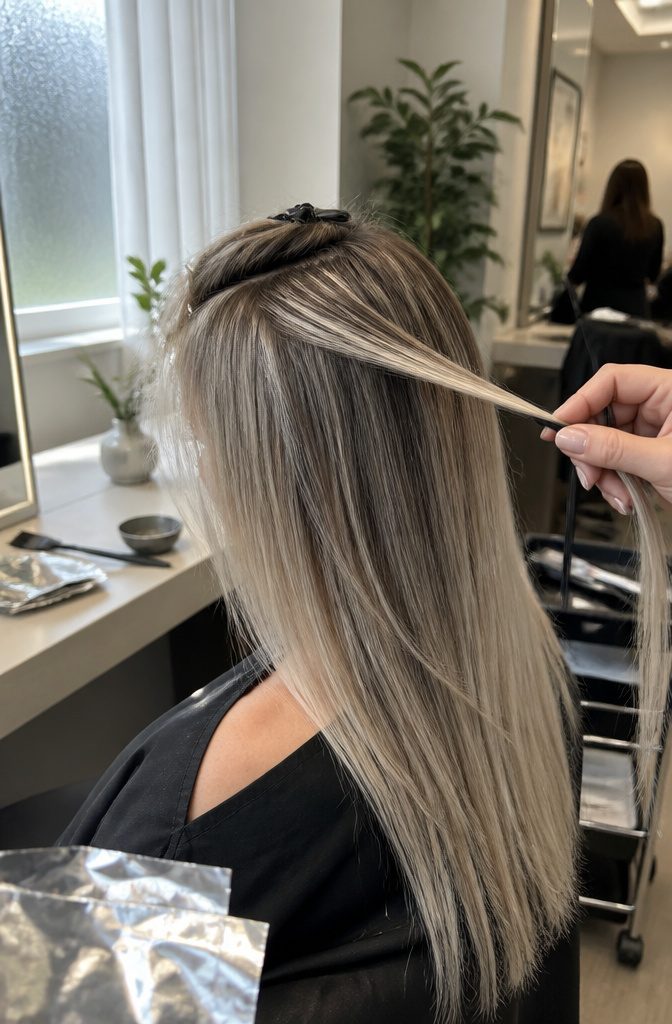
Highlights and babylights bring icy platinum in through fine, woven strands instead of covering the whole head, so your natural base color stays visible between the lightened pieces.
Babylights are the finer of the two and give soft dimension that reads as natural brightness rather than stripes. Placing them around the face, where light hits first, brightens the whole look without a dramatic shift.
For anyone unsure about full platinum, this is the version I’d start with. Regrowth blends in instead of showing a hard line, so the grow-out is far gentler than with an all-over lightener.
4. Balayage
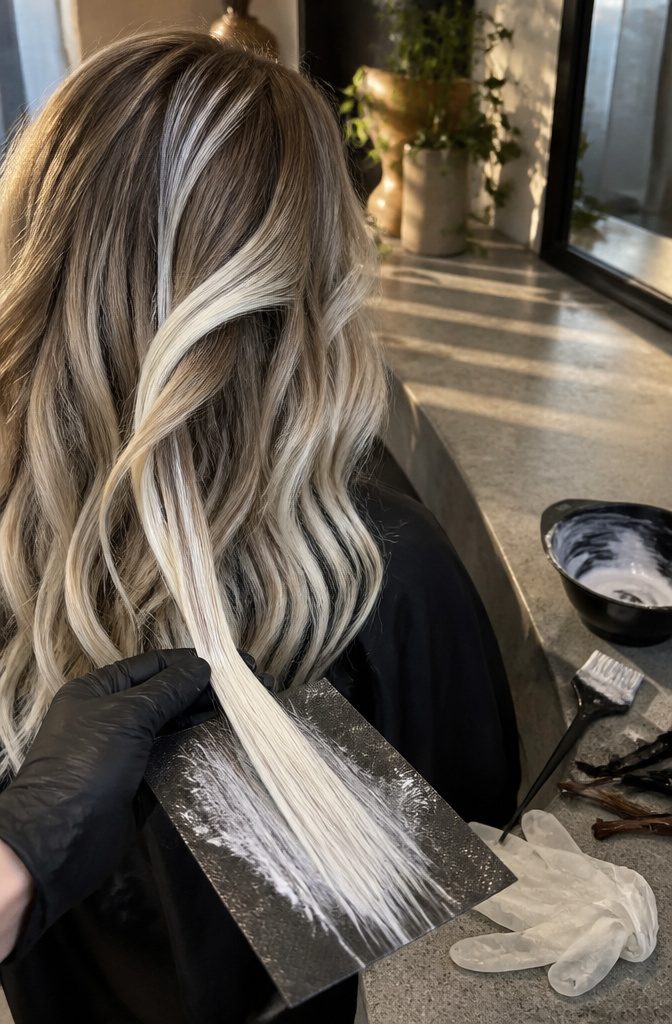
Balayage means the colorist paints the lightener on by hand, so the icy platinum lands on your mid-lengths and ends while the roots stay darker.
The result is soft and lived-in, closer to sun-kissed than to a solid sheet of white.
Because there is no hard line at the scalp, it grows out far more gracefully than all-over color, and you skip the constant root touch-ups that full platinum demands.
Painted pieces woven through a natural blonde base look less uniform than all-over platinum but still bright. If you want contrast, I like a bronde base with ribbons of platinum, since warm and cool tones together add movement.
5. Ombré
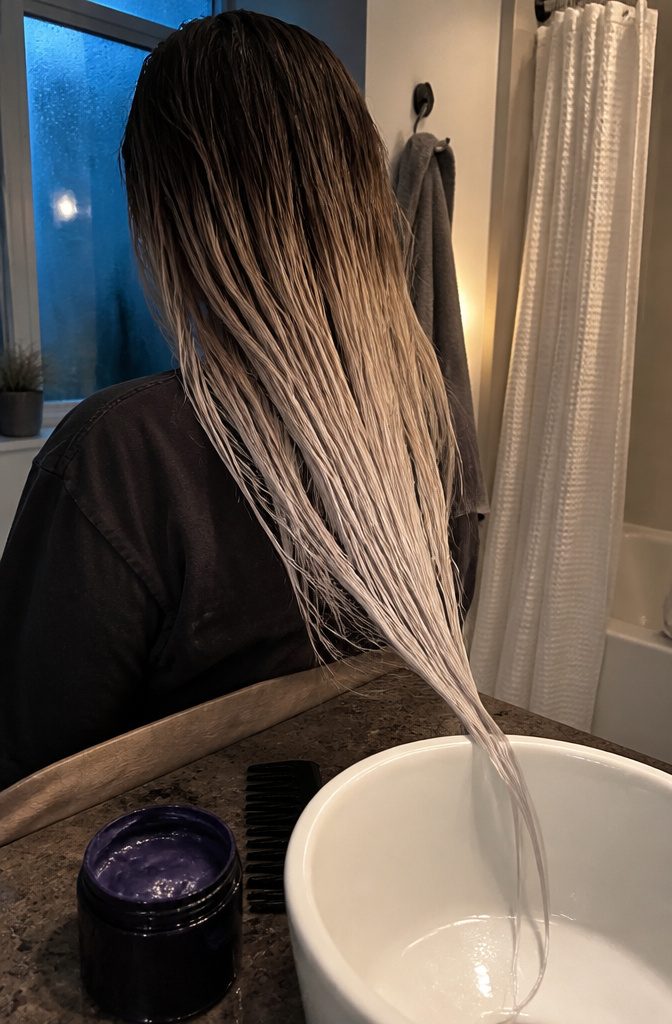
Ombré keeps your roots dark on purpose and saves the lightest, coolest icy platinum for the tips, with a visible line where one meets the other.
That line is the look. Since the roots stay untouched, you skip the monthly root touch-ups that all-over platinum demands, and I think that makes ombré the easiest entry point for anyone who doesn’t want a standing salon appointment.
Growing it out is also easier than with an all-over color, because new growth just looks like part of the design. The ends still need regular toning to keep brassiness away, so low maintenance doesn’t mean no maintenance.
For a bolder, edgier contrast against a natural or darker base, ask for a dip-dye effect, with the platinum concentrated only on the ends.
6. Darker Roots or Root Smudging
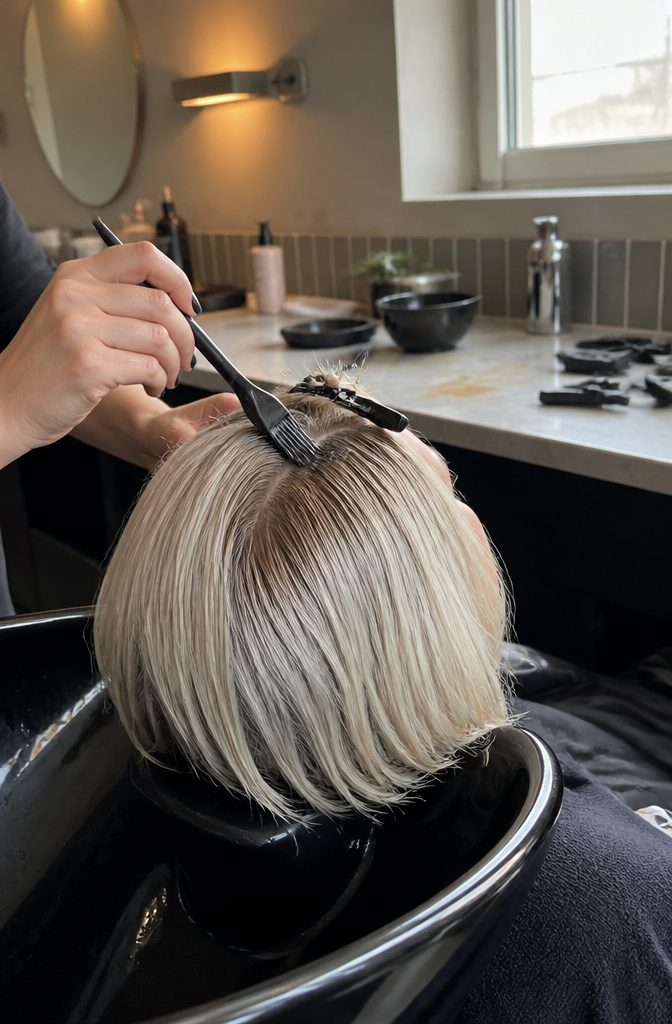
Darker Roots or Root Smudging
If your natural color is dark, keeping roots slightly darker or blending them with a shadow buys you weeks between salon visits.
Root smudging or a root tap softens the line where regrowth meets platinum, so new growth looks intentional rather than overdue.
The technique adds depth at the scalp and lets you stretch touch-ups without looking like you’ve let the color go.
The approach works especially well if your roots grow in fast. A soft, powdery shadow at the base still reads as icy blonde overall, but the contrast makes upkeep manageable.
It feels more lived-in and edgy than a perfect all-over lift, and the blend means you’re not racing back to correct a visible line every few weeks.
For anyone chasing that icy freshness without the constant maintenance, a rooted version delivers both.
Whether Icy Platinum Suits Your Skin and Eyes
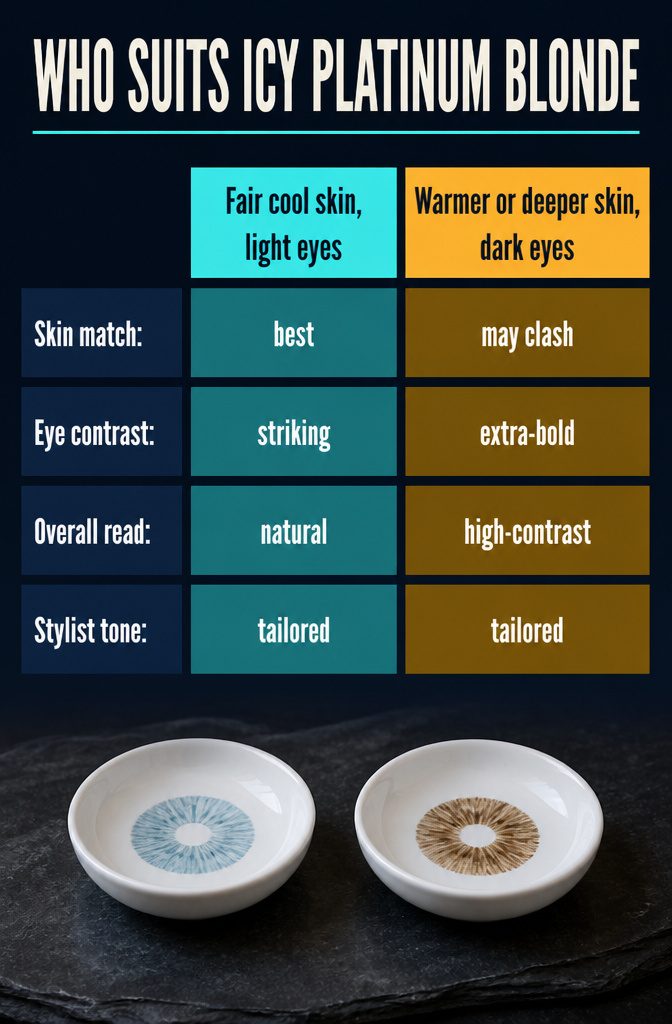
Ice blonde is ultra-cool, which is why it plays favorites.
Fair, cool skin is where it looks best. With warmer or deeper skin, I’d steer you toward a neutral or warm blonde, since the icy tone can clash with your undertone instead of flattering it.
Eyes change the read too. Light blue or green eyes look striking against platinum.
Dark brown or hazel can look a bit unnatural beside it, but dark eyes don’t rule the shade out. You just get an extra-bold, high-contrast look, and that suits some faces more than others.
A stylist mixes the final tone to flatter your skin and eye color, so ask for it to be adjusted to you.
What Your Starting Hair Color Means for the Process
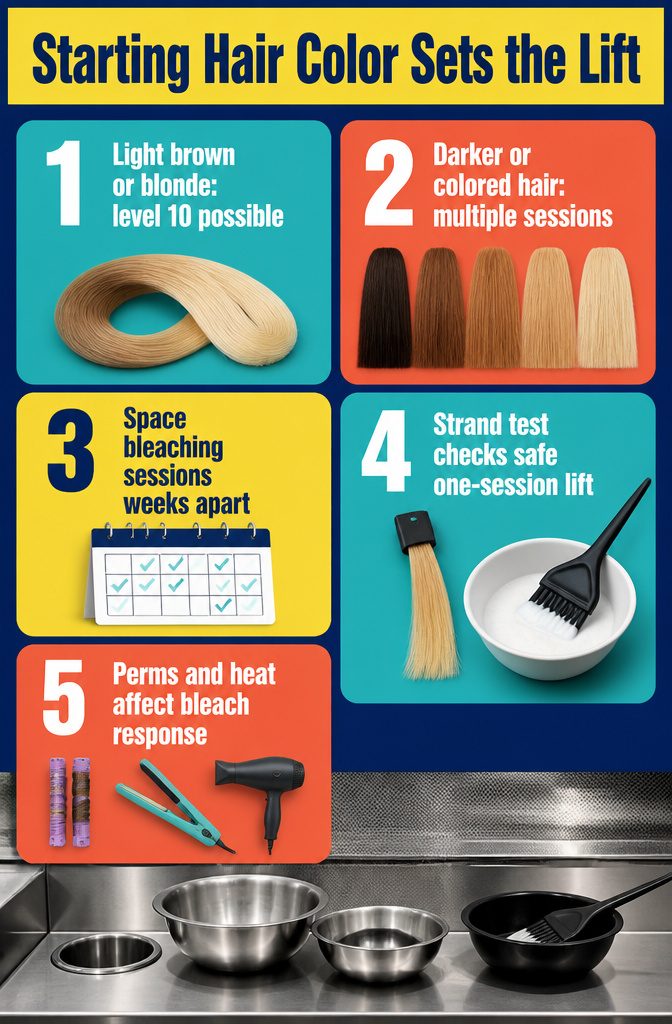
Light brown or blonde hair may reach level 10, the lightest blonde, in a single bleaching session. Darker or previously colored hair is a different job, and L’Oréal Paris USA says so directly:
If you’re starting with darker or previously-colored strands, be aware that you likely won’t achieve your dream platinum icy blonde hair color in a single session.
Plan on multiple sessions, spaced a few weeks apart, to lift safely.
Past color, perms and other chemical treatments, and frequent heat styling all change how hair takes bleach, so I’d run a strand test first. It shows how much lift your hair can handle in one sitting.
Preparing Hair Before You Bleach
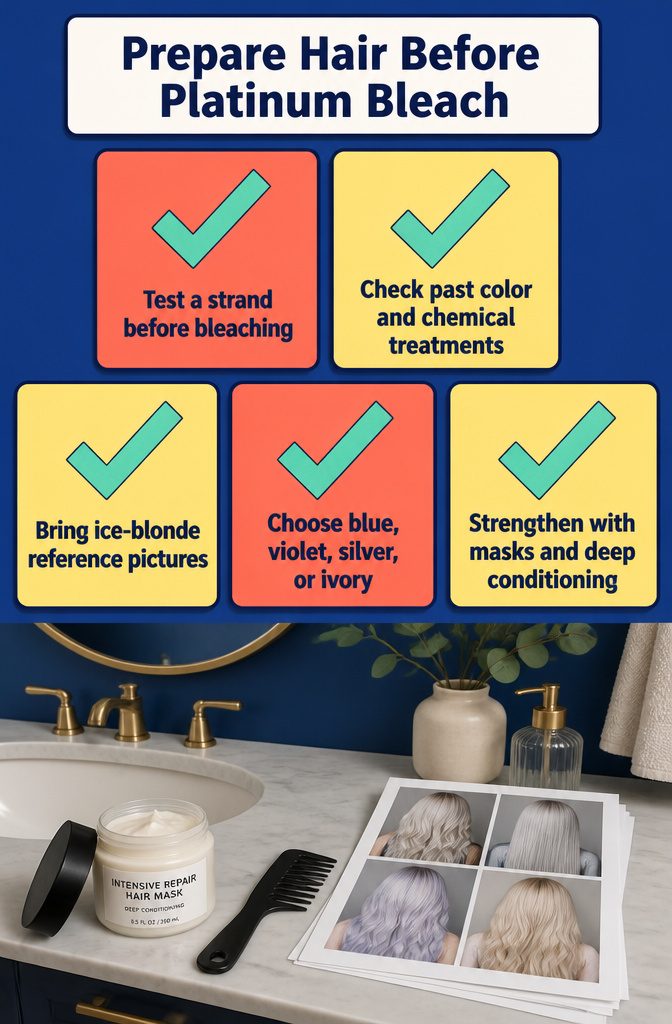
Before you bleach, the minutes spent checking what your hair can handle decide whether you get there in one session or need to go slow. Three moves worth the time:
- Do a strand test. Lift your natural pigment too far in one go and you’ll know before committing the whole head. Previous color, perms, frequent heat styling—all of it affects how hair processes bleach. A test strand shows how much lift you can get in one session and flags what precautions you need.
- Bring reference pictures to your colorist. Ice blonde can range from blue or violet to silver or ivory white. A picture pins down exactly which version you’re after, so your colorist builds the right formula instead of guessing.
- Strengthen hair first. Bleach lifts pigment and leaves strands fragile. If your hair is already compromised, prep work—deep conditioning treatments, protein masks—buys you healthier lift and less breakage during processing.
How the Color Is Achieved
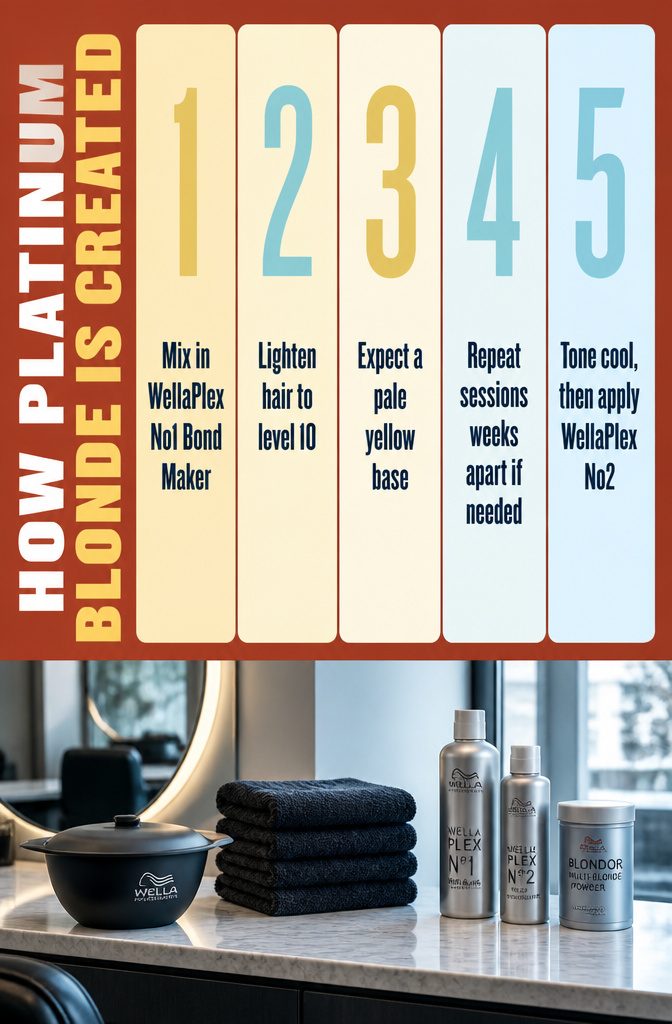
- Start with WellaPlex No1 Bond Maker mixed into the lightener, which helps the lift penetrate evenly.
- Lighten to level 10. Blondor Multi-Blonde Powder lifts up to 7 levels, and L’Oréal Paris Féria Hyper Platinum lifts up to 8 in one session. I’d stop at 10, because going paler risks stripping the keratin the strand depends on.
- Expect pale yellow at this stage. That is the right base for the toner, not a failed lift.
- Dark or previously colored hair rarely gets there in one visit. Plan on repeat sessions spaced a few weeks apart.
- Tone the yellow to the cool shade, then finish with WellaPlex No2 Bond Stabilizer to rebalance pH and strengthen the hair.
Keeping the Shade Cool and the Hair Strong
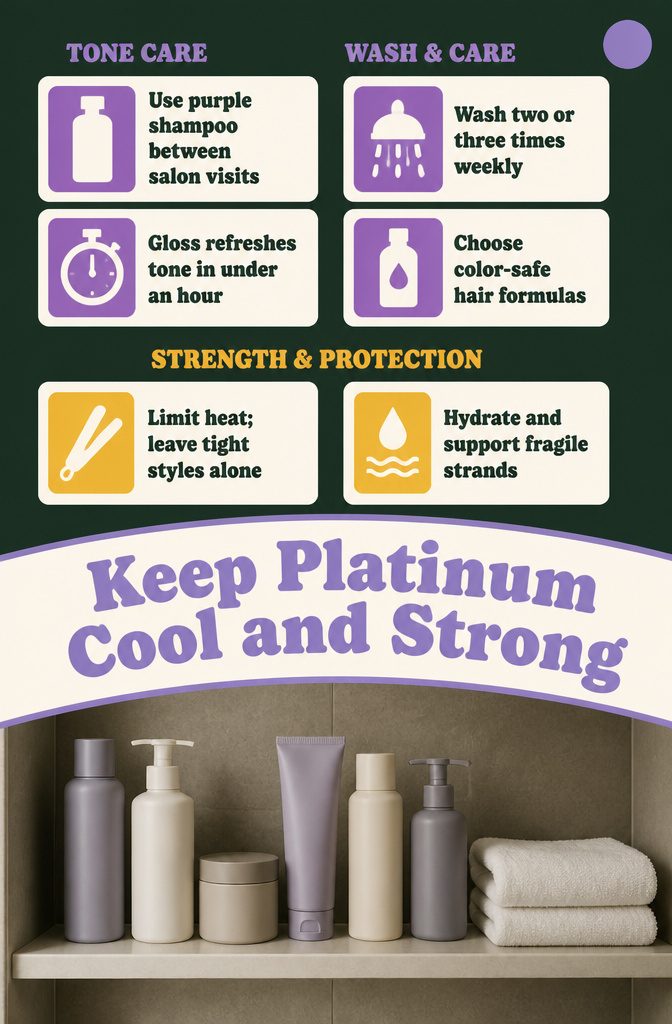
Purple shampoo is the simplest way to keep icy platinum from turning brassy. The violet pigment neutralizes warm tones between salon visits; INVIGO Cool Blonde Color Refreshing Shampoo is one product that delivers it.
If the shade starts to fade, a glossing service refreshes tone and shine in less than an hour without a full lighten-and-tone appointment.
Washing platinum less often helps the color and the hair itself.
Twice or three times a week with lukewarm water keeps color from stripping too fast, and swapping to color-safe formulas makes the difference clear. A few things worth keeping in rotation:
- L’Oréal Paris Elvive Total Repair 5 Damage-Erasing Mask (17% repair concentrate with protein)
- L’Oréal Paris EverPure Sulfate-Free Moisture 21-in-1 Leave-In Conditioner (450-degree heat protection)
- Elvive Dream Lengths Heat Slayer Leave-In (also rated to 450 degrees)
- Féria Strength Repair Ultra Care Conditioner (citric acid for repair)
- EverPure Sulfate-Free Glossing 5-Min Lamination Hair Mask
Less heat styling, more hydration, and leaving tight styles alone while the hair recovers from bleaching will get you further than expecting product to carry all the weight.
Frequently Asked Questions
How do you get icy platinum blonde hair?
Lighten the hair to level 10, which looks pale yellow, then apply a toner to turn that yellow into a cool icy shade.
Light brown or blonde hair may get there in one bleaching session. Darker or previously colored hair usually takes several sessions a few weeks apart, and a strand test beforehand shows how much lift your hair can take.
What is the difference between platinum blonde and icy blonde?
The difference is undertone.
Platinum is pale and cool but often keeps a hint of warm beige, while icy blonde goes as white as possible with blue or violet undertones, sometimes a touch of silver, and a shimmer in the light.
Tell your colorist which one you want, since the formulas differ.
What color is icy platinum?
Icy platinum is the palest end of the blonde range, cooled with silver, white, blue or violet.
It reads as near-white and frosty instead of yellow or golden. The exact look shifts with the toner, from a violet or blue cast to a silvery or ivory white.