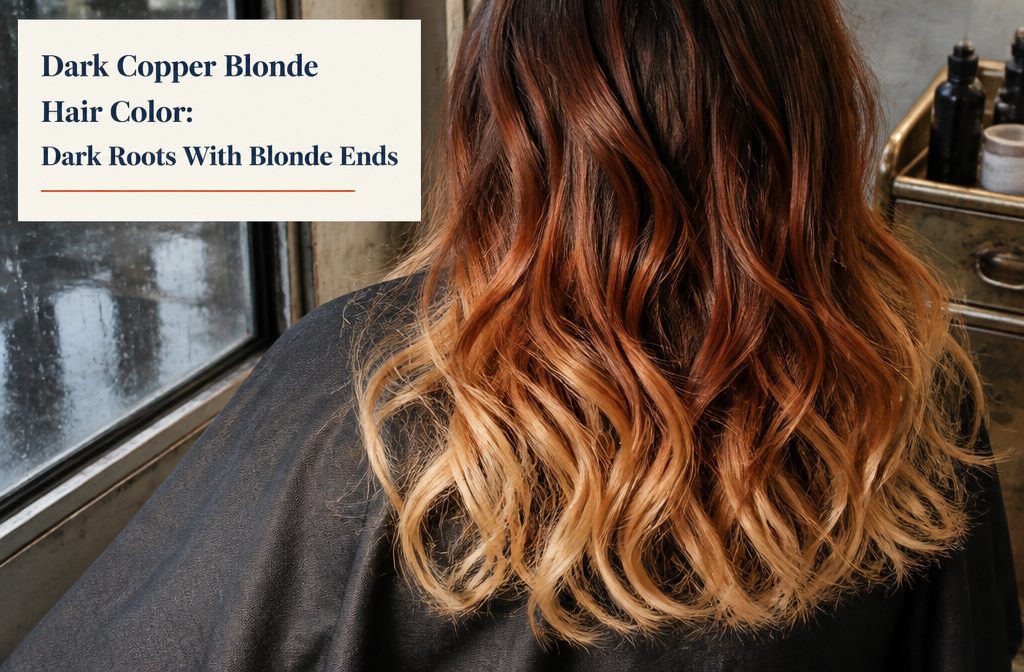
Dark copper blonde hair color is a balayage that keeps dark copper or dark roots and lightens only the ends, so the color climbs in stages instead of switching at one line.
The catch: blonde depends on your base, so a natural redhead and fresh copper call for different shades. Mai’s long, wavy example at Plaza Hair Salon shows it.
A Gradual Move to Lighter Hair
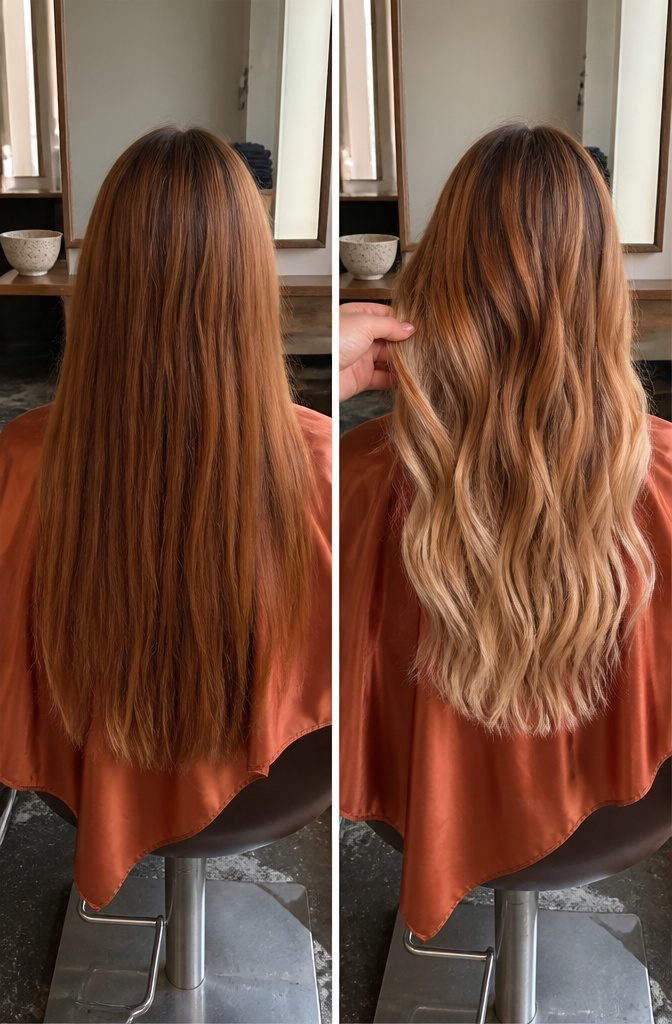
Balayage is not a drastic change. It carries dark copper or dark roots toward lighter ends in stages, so the color climbs gradually instead of switching at a single line.
It’s best described as the perfect transition from darker to lighter hair, and I’d say the same. Strands of your darker base run through the lighter pieces, which keeps depth in the hair and softens the shift.
If going fully blonde in one sitting makes you nervous, this is the version I’d point you toward. You keep a foothold in the color you already know, and the roots stay yours while the ends do the lightening.
Dark Roots With Blonde Ends
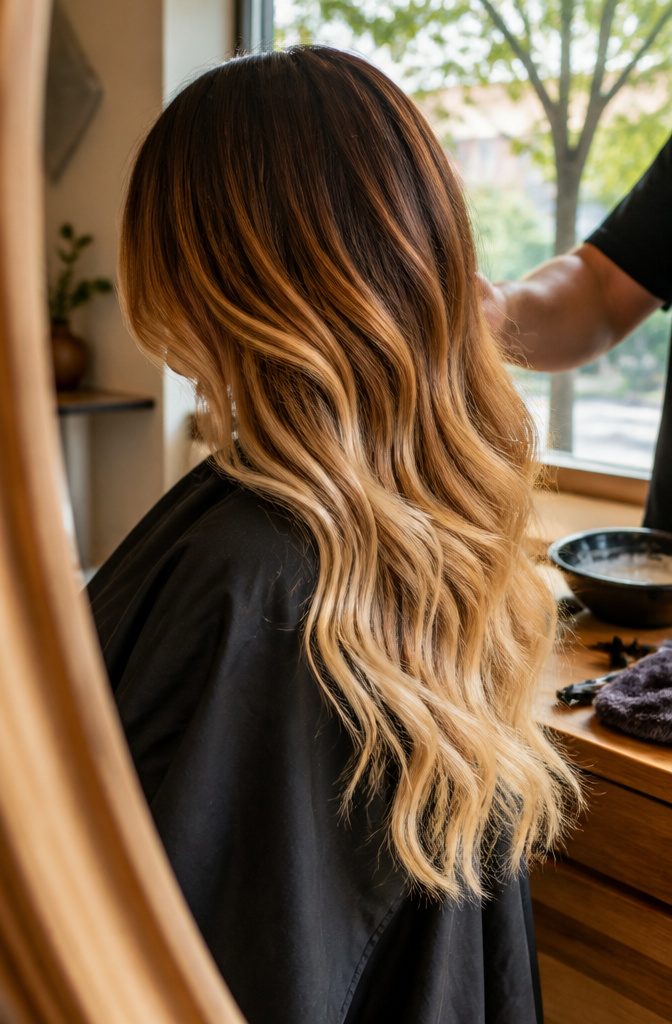
Dark roots with light blonde locks below is the contrast that defines this look. In a photo it reads at once: a deep band at the scalp, then a clear step up in brightness through the lengths.
That visible line between dark and light is what makes the color look intentional rather than just grown out.
For the salon, ask for a blonde balayage with dark roots. Balayage is painted by hand, so the stylist can place the brightness where you point instead of following a fixed pattern.
I’d bring a photo and show exactly where the light should begin, because "blonde" alone covers too many shades to leave to guesswork.
Face-Framing and End Brightness
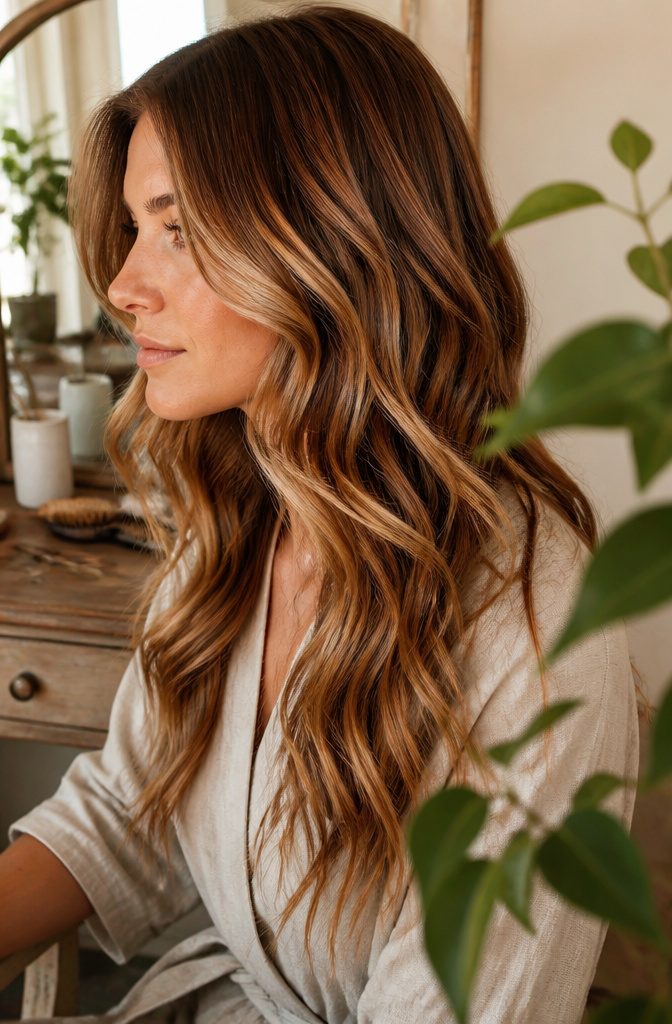
Put the brightest pieces around the face and at the ends, and let the rest of the hair stay with the dark base.
Light strands at the face frame catch light right where the eye lands, so the face looks brighter without blonde weighing down the whole head. Bright ends make the lightest tone read as growing outward from the roots.
Flatness is what you get when every strand goes the same pale shade. Strands of the dark base running throughout break that up and add dimension and depth, especially in long wavy hair, where each wave shows the contrast.
For a dark copper blonde hair color, I’d ask for this placement every time. It looks sun-kissed rather than painted on.
A Sun-Kissed Finish
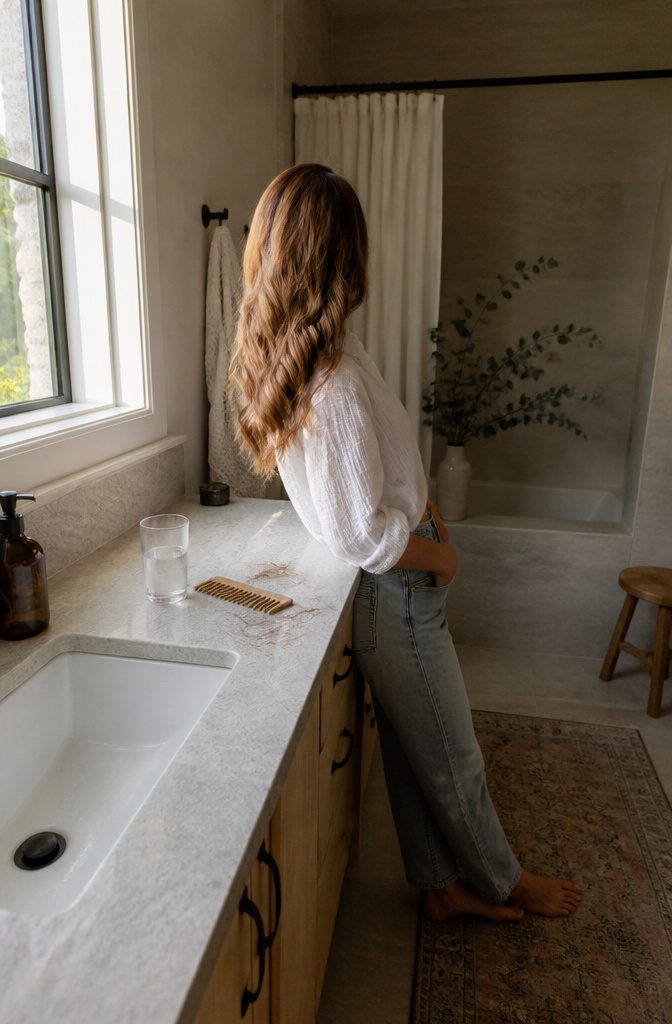
Sun-kissed is the right word, because the color looks lit by daylight rather than applied.
Strands of the dark base run through the blonde and give it depth, so the lighter pieces read as natural reflections instead of a flat coat.
A solid, uniform blonde draws a hard line at the part once roots show.
Hand-placed color has no such line: new growth melts into the lighter pieces around it, so dark copper blonde hair color stays soft, a little sexy and effortlessly elegant between salon visits. I’d take it over all-over blonde every time.
Fits Any Hair Type and Cut
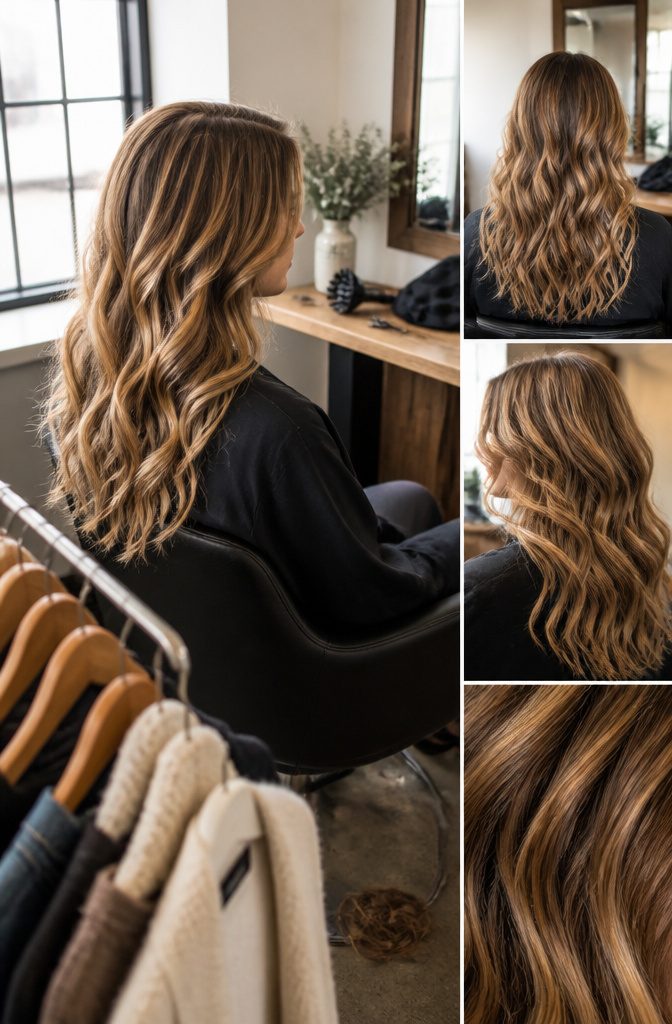
Short, long, straight, wavy or curly: dark copper blonde works on every one of them, and blonde highlights suit any cut.
What changes is placement. The featured color was set to match long, wavy hair, with the brightest pieces on the face frame and the ends and strands of the dark base running through for depth.
That placement shows how to adapt the look. On a shorter or curlier cut, I’d keep the same logic: brighten the ends and the hair nearest the face, and let the dark base show through the rest.
Bring a photo to your stylist, but tell them your length and texture so the blonde is placed for your hair, not copied from someone else’s.
Fewer Touch-Ups

Dark roots are part of the design here, so new growth blends in instead of announcing itself. That makes this look a smart pick if you can’t get to the salon every couple of weeks.
A solid color works the opposite way: once your natural shade grows in, a hard line shows at the part, and the only fix is another appointment.
I’d choose this over an all-over shade for that reason alone, since regrowth just looks like the dark root you already have.
I can’t give you a touch-up schedule or product routine, since those depend on your hair and starting color. Ask your stylist what upkeep fits.
Shade Choice Depends on Your Base
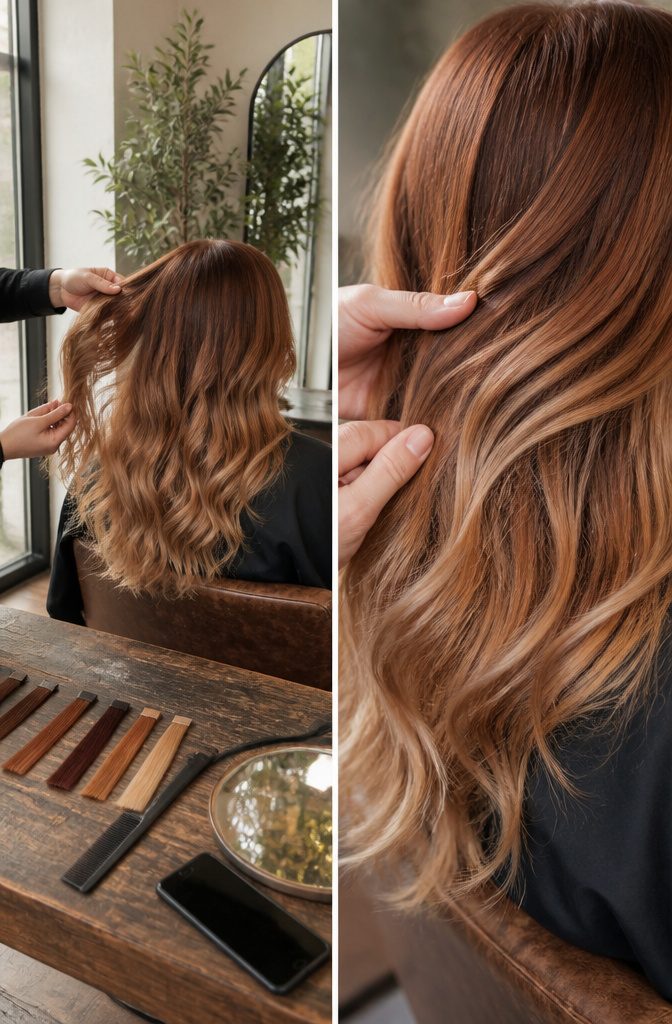
Your natural base color sets the range of blondes a stylist can offer, which is why the same Pinterest photo can look quite different on two heads.
A good salon builds the color around your hair type, listens to what you want, and suggests options based on your features. Treat the photo as a starting point, not an order.
Bring several saved looks to the consultation, plus a few you dislike.
The ones you dislike often tell a stylist more than the ones you love. A clear photo of your hair in daylight helps, along with an honest account of past color, box dye included.
Say how much time you’ll give styling each morning and how often you’ll come back. I’d also ask the stylist to explain why they’re steering you toward or away from a shade.
Starting From Copper or Natural Red
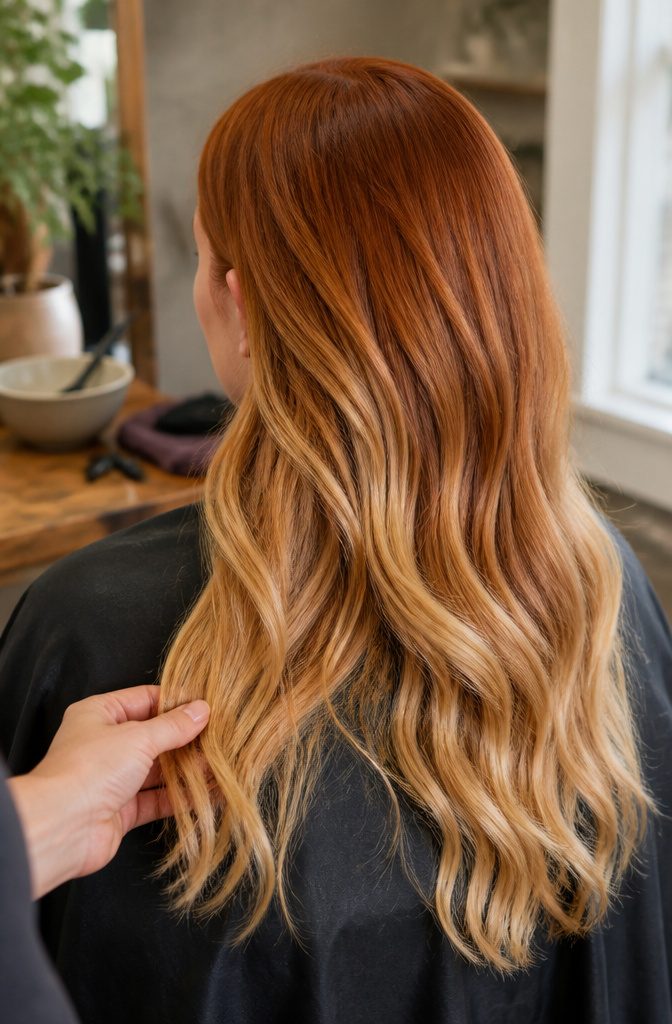
Two people can reach this look from different starting points. A natural redhead already has a red base, and that base limits which blondes make sense, because balayage shades depend on the color underneath.
Someone with freshly painted copper is starting from a color she chose herself, so the blonde highlights go onto copper that is brand new.
I’d plan the two differently. If you’re a natural redhead, let your own base choose the blonde, and show your stylist the photo as a mood rather than an exact match.
If your copper is fresh, treat it as the anchor and let the light blonde lengths supply the contrast against dark roots.
The Plaza Hair Salon Example
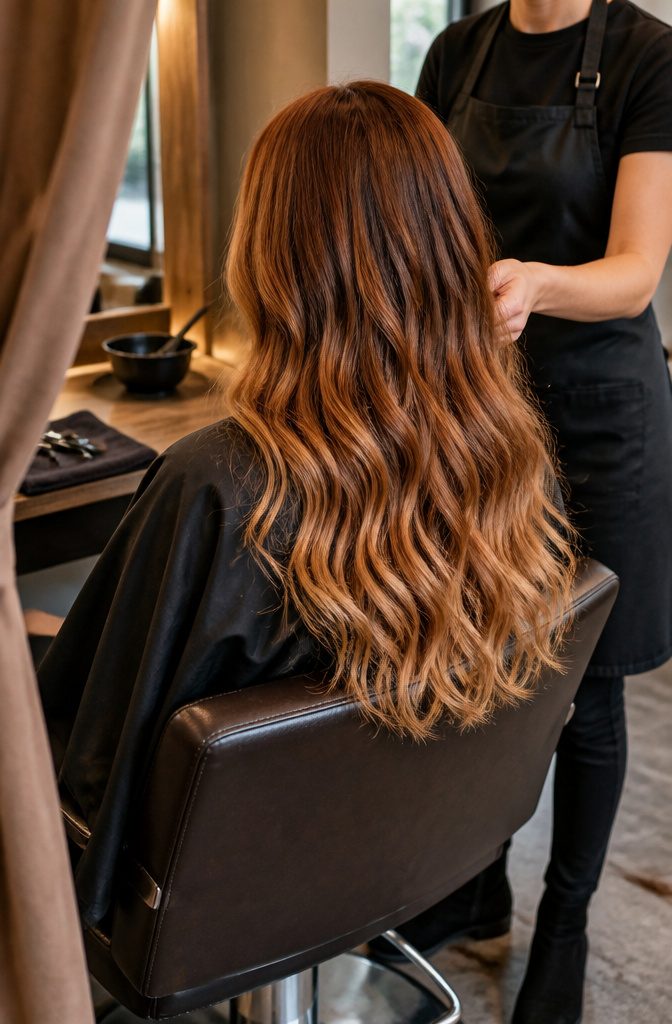
Take "Dark Copper to Blonde Balayage" by Mai at Plaza Hair Salon in Rancho Bernardo, CA, to your stylist as the reference photo.
The client had worn long dark copper hair for years, and Mai chose the blondes to match her long, wavy hair.
The salon’s advice for copper hair is short:
If you have a dark copper hair, switch it up by having lighter ends. Shine bright with dark roots and blonde highlights.
Show that photo and ask for lighter ends over a kept dark base, with the blondes matched to your own length and wave, as Mai did.
Frequently Asked Questions
Can copper hair be dyed blonde?
Yes. A stylist can hand-paint blonde balayage over copper hair, keeping the dark roots and lightening the ends, and you choose how much blonde goes in.
The shades that work depend on the color underneath, whether that’s a natural red base or fresh copper, so bring a photo and ask the stylist to match the blonde to your hair.