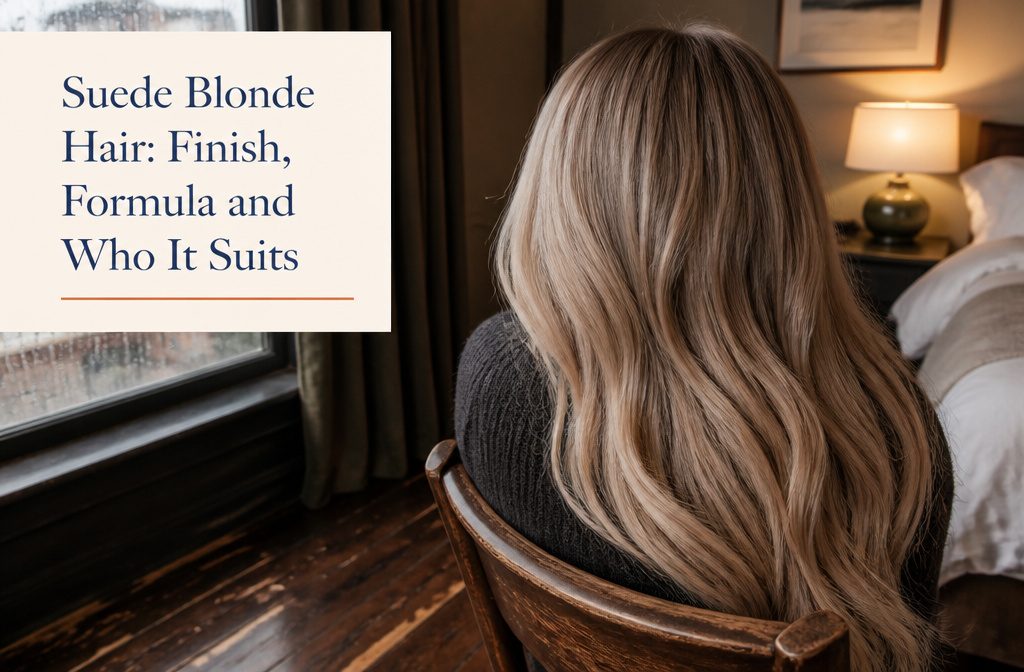
Suede blonde is a dimensional blonde with a neutral beige base that blends gold, ash, and soft taupe without committing hard to warm or cool.
The blended root is what makes it low-maintenance: regrowth doesn’t announce itself with a harsh line, so you can stretch salon visits without looking overdue.
Jacob Schwartz created Sydney Sweeney’s viral version, calling it a rich taupe with soft tan depth and her darkest blonde yet.
What Suede Blonde Looks Like
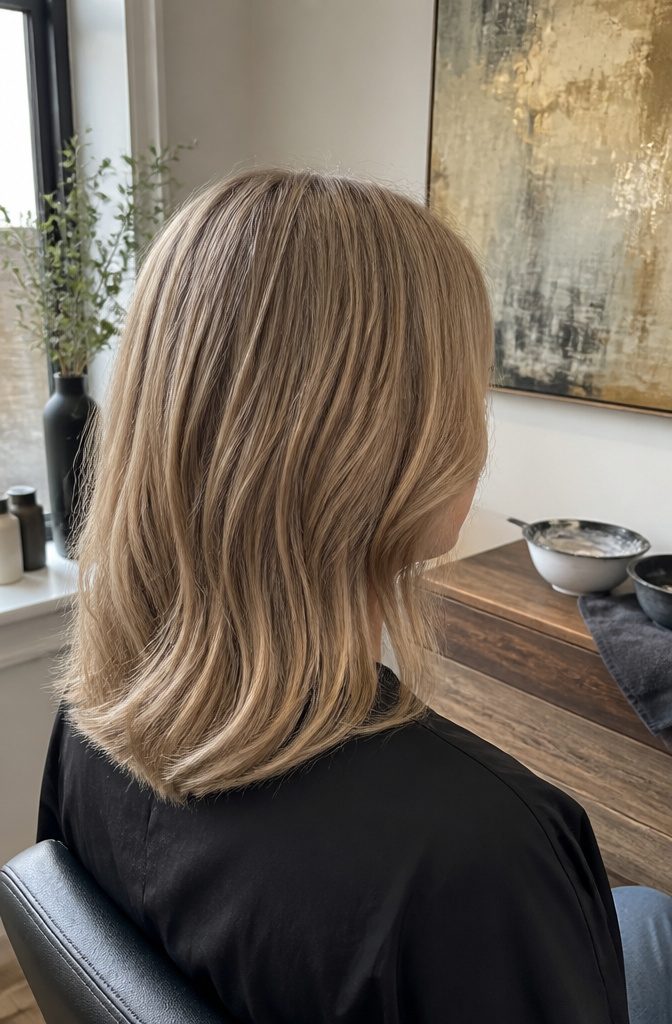
Suede blonde sits in the middle ground between icy platinum and strongly golden tones. The finish is dimensional blonde with a neutral or beige base, blending gold, beige, and ash rather than committing hard to warm or cool.
Jacob Schwartz, who created Sydney Sweeney’s viral version, calls it a rich taupe with a neutral undertone and soft tan depth—her darkest blonde yet, but still recognizably blonde rather than brunette.
The shade pulls from both sides without landing fully on either. You get warm soft blondes woven through with ashy undertones, producing a color that reads as natural rather than processed.
The base leans neutral, almost beige, then warms through the lengths. That balance is what gives suede blonde its wearability: no single tone dominates, so the finish stays soft and lived-in rather than graphic or high-contrast.
How the Finish Looks Natural and Blended
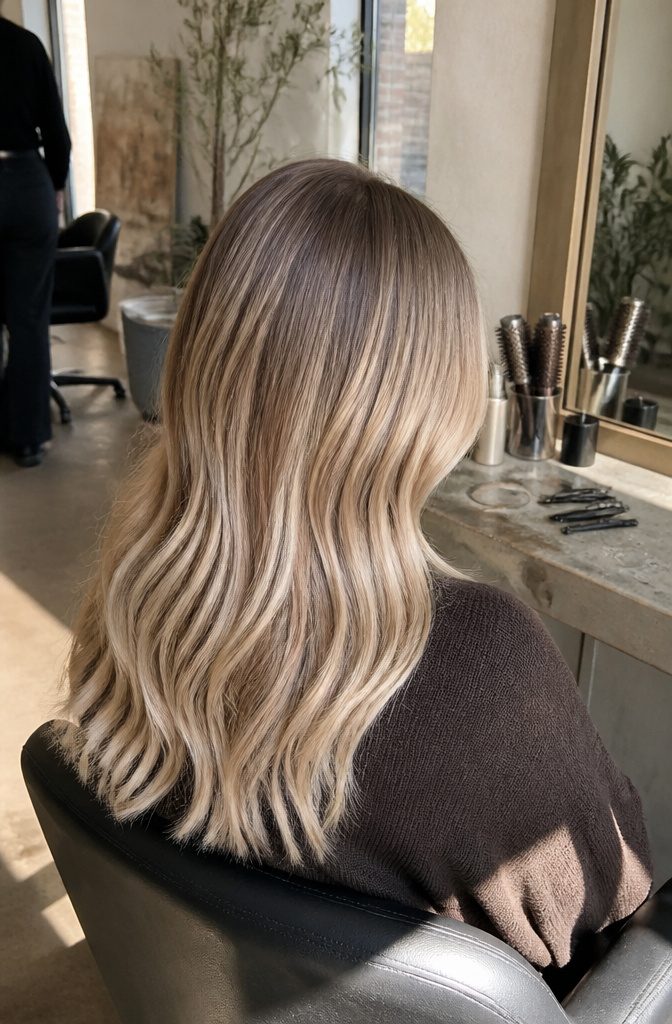
The finish reads as natural because the root is blended rather than masked. Colorists soften the base into the lighter lengths so there’s no hard line where one tone stops and another starts.
That controlled transition keeps the look lived-in, the way hair lightens gradually in summer rather than jumping from dark to bright in a single inch.
The contrast still does work. Keeping a deeper root and lifting the mid-lengths and ends creates an impression of volume, because the eye reads variation as depth.
Bright pieces around the face add dimension without looking like foil highlights placed on a grid. The root stays close to natural, the framing pieces catch light, and the overall effect is soft rather than graphic.
Shine matters here too. The layered toner that builds the beige keeps the surface smooth, so light moves across the hair instead of scattering.
That’s what separates suede blonde from a flat, one-note lift. The dimension is subtle, the blend is tight, and the result looks like better hair rather than obviously colored hair.
How Colourists Build the Shade
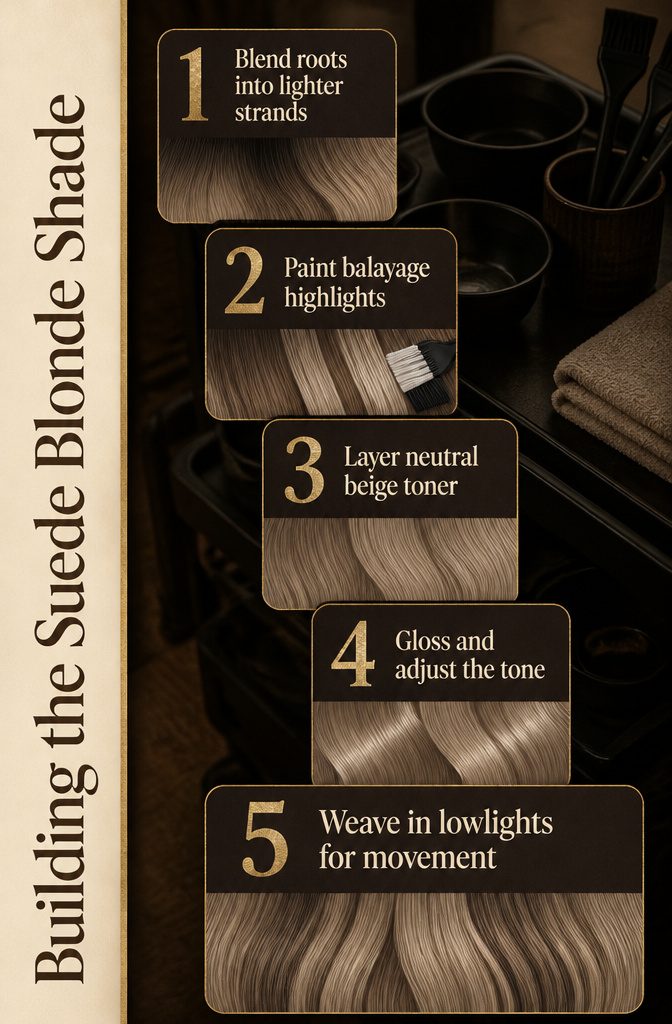
The shade starts with blending the roots into lighter strands, so the base colour melts into the highlights without a hard line. That softening is what keeps suede blonde from reading as foiled highlights or an obvious two-tone.
Colourists layer toner near the roots to hit that neutral beige, neither too warm nor too cool, and the balance between the root and the lift is what makes the finish look like winter sun rather than summer brass.
One process uses Schwarzkopf Professional Igora Royal at the base, Igora Vario Blond Super Plus Lightener for balayage highlights, then Igora Vibrance to gloss and adjust the tone.
The multi-tonal formula gives depth without flat colour, and the lowlights woven through the lighter pieces add movement. It’s technique over a single shade, and that’s what you should ask for when you book.
Who It Suits and Why People Choose It
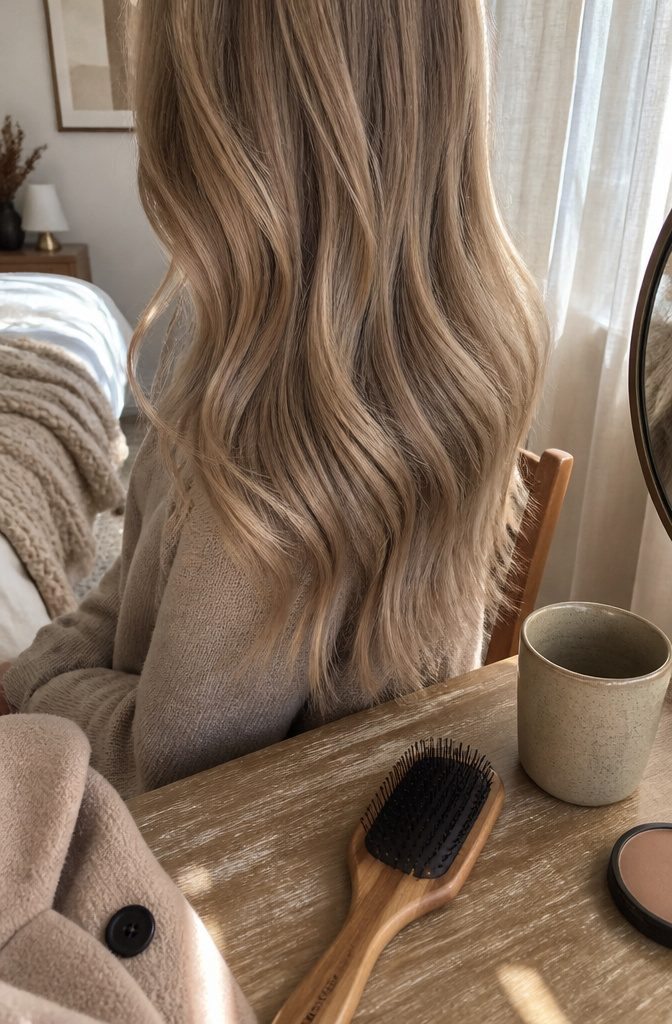
The neutral undertone is what makes suede blonde flattering across a wide range of complexions, according to stylists who work with the shade.
One source names rosy, golden, matte, and olive undertones as a good match, while another points to fair, olive, and deeper-toned skin.
The muted taupe base sits between warm and cool, so it doesn’t pull too ashy on warm skin or too brassy on cool.
If you’re looking to update your bright blonde to a maintenance shade that will endure the length of party season effortlessly, this is the sophisticated tint we’d recommend.
The lower upkeep is a real draw for people switching from platinum or high-contrast highlights. Blended roots mean regrowth doesn’t announce itself the way a harsh line does, so you can stretch salon visits without looking overdue.
It’s a darker blonde that keeps its depth instead of fading fast, which makes it easier to hold through winter without constant toning appointments.
Brightness Variations and How to Adapt the Shade
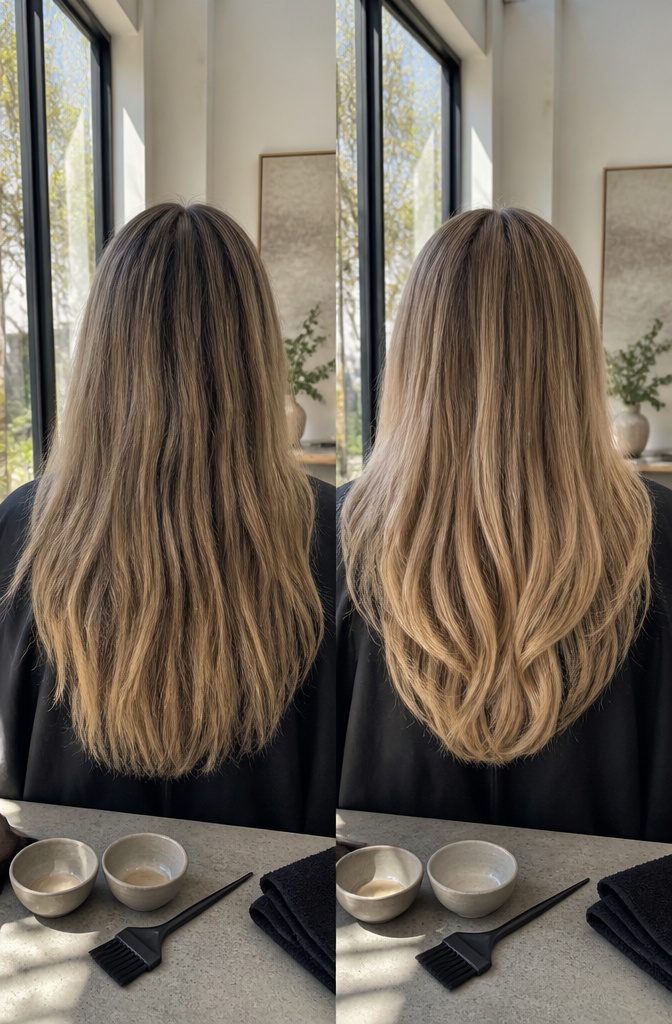
The shade runs from pale beige to deep taupe depending on how far you want to lighten or darken the base.
Jacob Schwartz coined "dark suede blonde" for Sydney Sweeney’s winter version, a rich neutral tone with soft tan depth that reads as her darkest blonde yet.
When spring arrived, he lifted it to "bleached suede blonde", a brighter update with soft golden undertones that still feels natural and dimensional.
The formula can be tailored from brighter beige to muted taupe or deeper honey, so you can shift the look with the season or just match how much upkeep you want to commit to.
A darker version grows out more gracefully and buys you time between appointments; a lighter one gives you more contrast and pop but asks for glossing every 6–8 weeks to keep it from losing that creamy finish.
Working With Different Starting Hair Colours
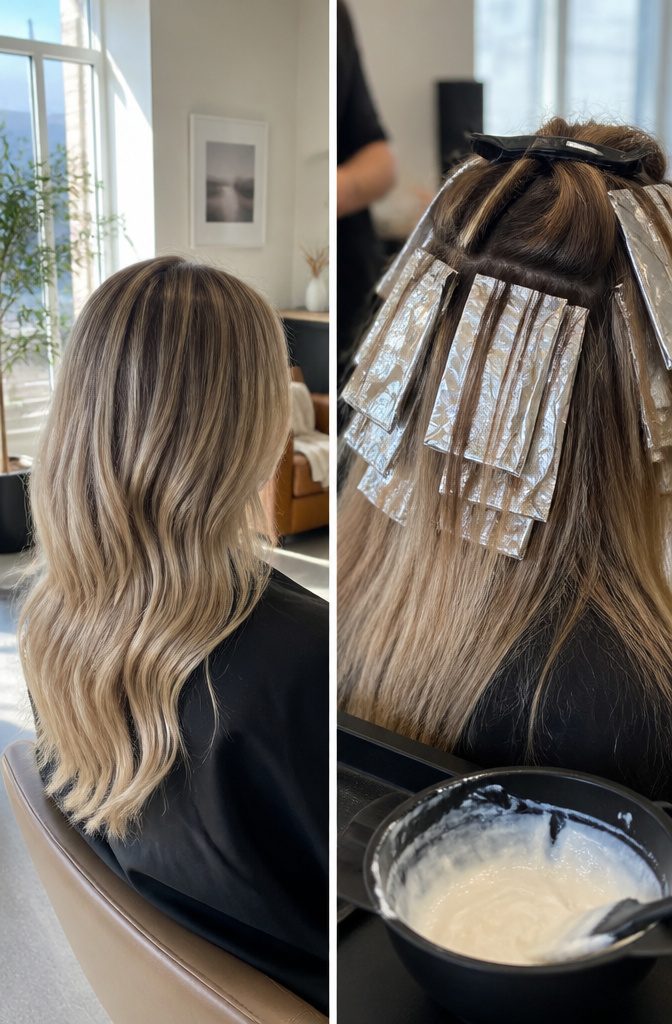
Natural blondes have the easiest route to suede blonde hair.
Root shadowing blends the regrowth line into the length, and babylights (very fine highlights) add soft variation without stripes. I’d choose this pairing over a full-head bleach, since it leaves the base healthier and grows out gently.
Brunettes start further back.
A gentle pre-lighten comes first, then suede-toned highlights go over it, so the result reads soft and muted rather than orange or stark. I’d rather see that lift done slowly than rushed.
Hair with a history of heavy highlighting often looks flat and over-bright. Lowlights and face-framing strands bring dimension back, and I’d ask for both before adding any more lightener.
How to Maintain the Colour
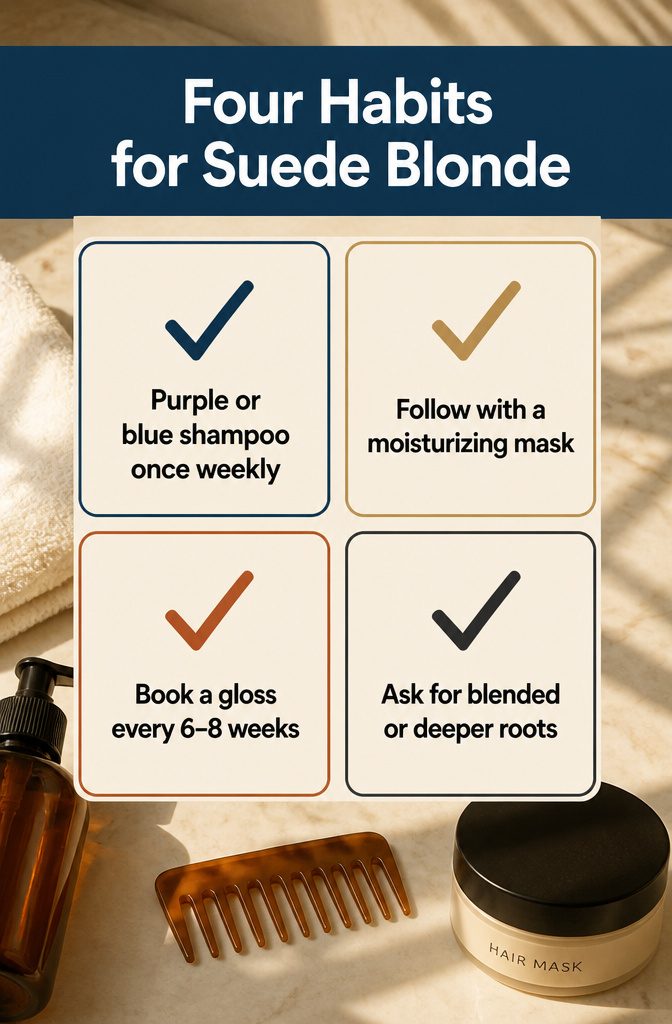
Suede blonde needs less salon time than a bright, all-over blonde, and four habits keep it looking soft:
- Use a purple or blue shampoo once a week. I’d stop there, because heavier use risks flattening the warmth that gives the shade its suede look.
- Follow with a moisturizing mask. Dry ends look rough instead of velvety, so the mask protects the finish as much as the hair.
- Book a gloss every 6–8 weeks to refresh tone and shine between color appointments.
- Ask for blended or deeper roots. They grow out without a hard line, so touch-ups come far less often, and this saves more money than any product on the list.
Frequently Asked Questions
What does ashy blonde mean?
Ashy blonde is a cool-toned blonde with gray or silver undertones that neutralize warmth and avoid any golden, brassy, or yellow tones.
It sits on the cooler end of the blonde spectrum, opposite honey or butter shades. Suede blonde blends ash with beige and soft gold for a more neutral, dimensional finish rather than committing fully to cool.
What is Sydney Sweeney’s natural hair color?
Sydney Sweeney’s natural hair color has not been publicly confirmed by her or her stylist.
Her suede blonde, created by Jacob Schwartz, is a dimensional taupe-toned blonde with blended roots that read as natural. The shade was designed to look like her darkest blonde yet while still staying recognizably blonde rather than brunette.