Your starting color decides how much work honey brown takes: very dark hair may need lightening before the gold can show, though bleach isn’t always required.
The list runs from Honey Babylights and Honey Midlights, which look barely there, to Copper Honey Brown, Rich Auburn Honey Brown and Honey Brown Ombré, which are meant to be noticed, so the upkeep you’ll realistically keep up narrows the choice fast.
1. Honey Highlights
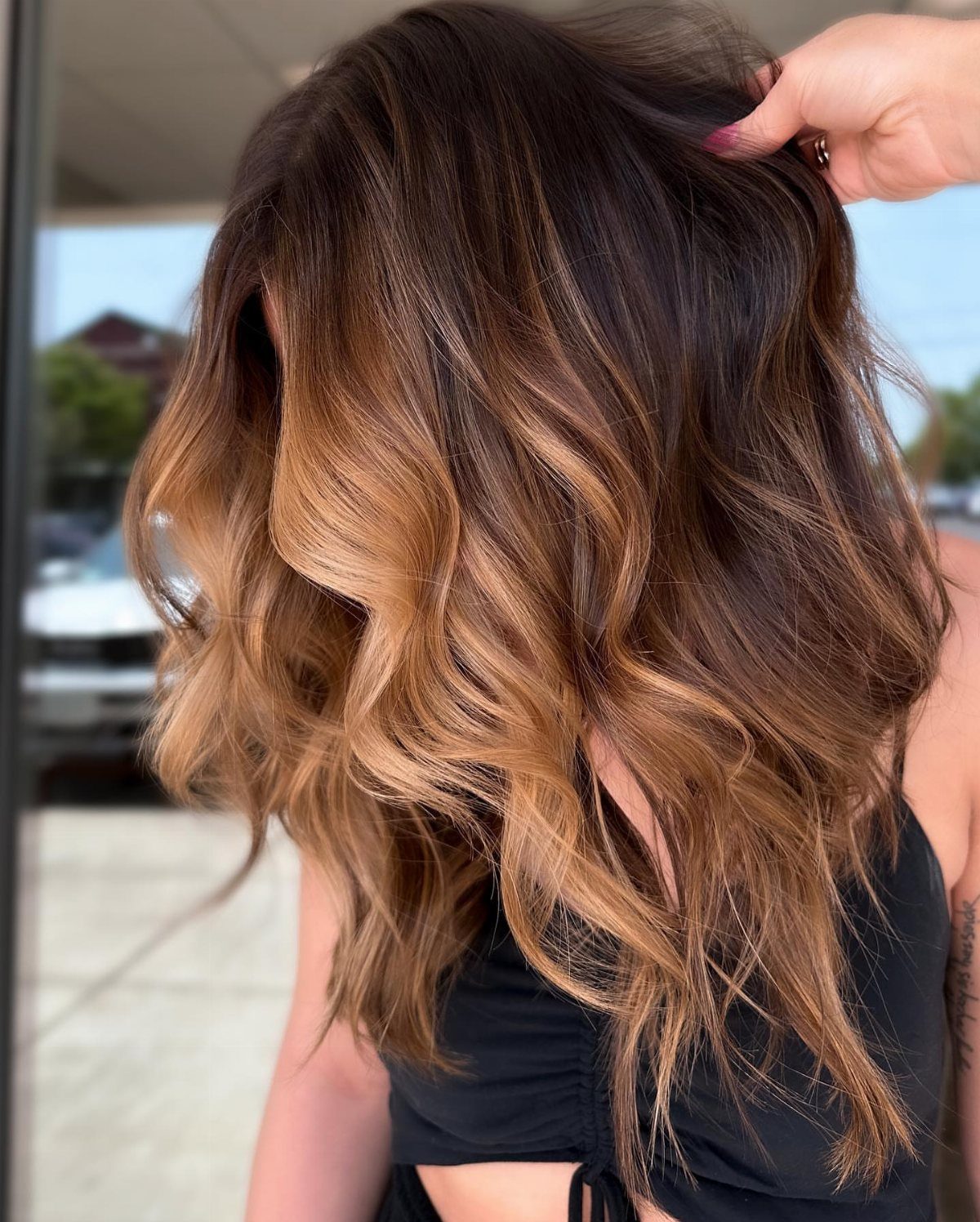
Darker roots are part of what makes honey highlights easy to live with. Honey strands woven through darker brown hair make regrowth read as depth rather than a line, and even a few warm pieces add a lot of dimension.
If you’re new to color, this is a gentle place to start. Ask for honey tones by name, with a photo in hand so your stylist can see how bright you want them.
2. Honey Brown Balayage
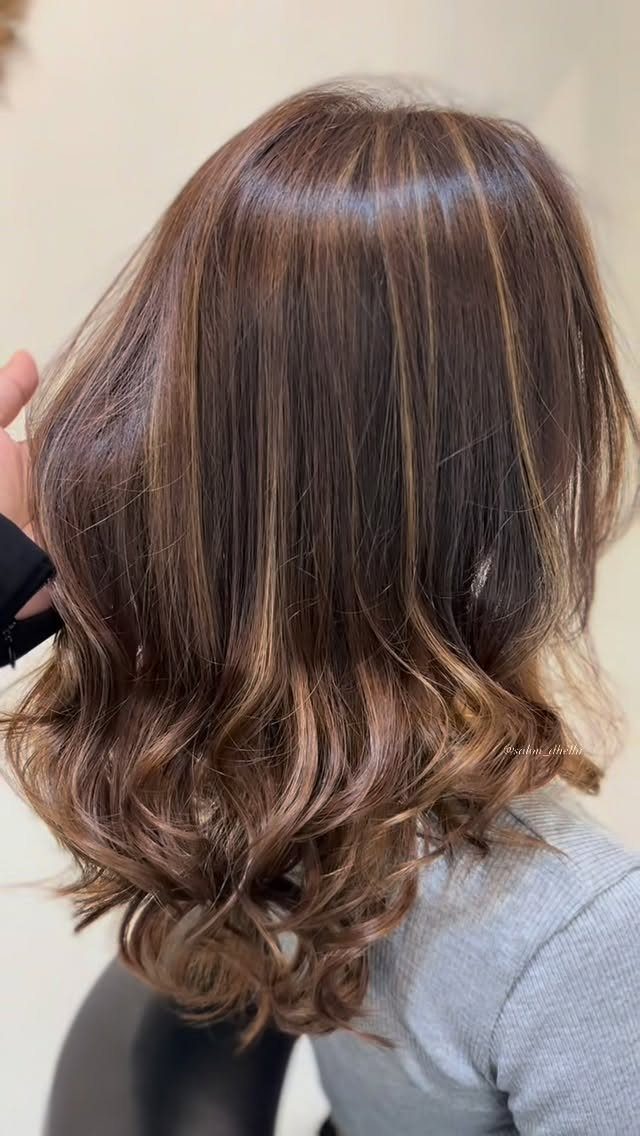
Balayage means the color is painted on by hand, so it blends softly into brown. Honey-brown balayage gives that sun-kissed look without a harsh start or stop line, and curled ends make the gradient easier to see.
Ask for a blended, soft finish and say how warm you want it. I’d pick this over foils if you want a grown-out look that doesn’t announce itself.
3. Dark Honey Brown
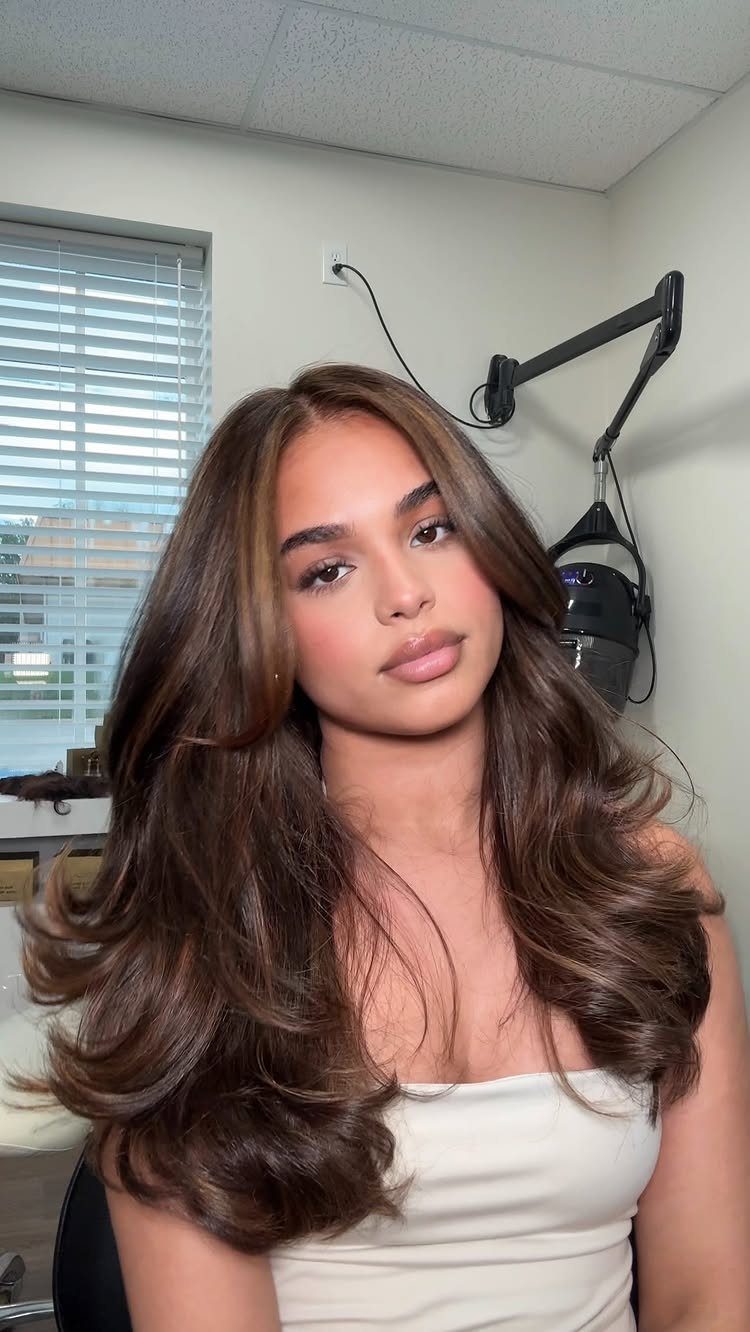
Long, loose waves in dark honey brown prove that warmth doesn’t need to be bright. On a deep brunette base the honey stays quiet, more of a glow than a color, and it shows most when light hits the waves.
If you like brunette but find it flat, this is the shade I’d suggest. Ask for rich and subtle, not golden.
4. Medium Honey Brown
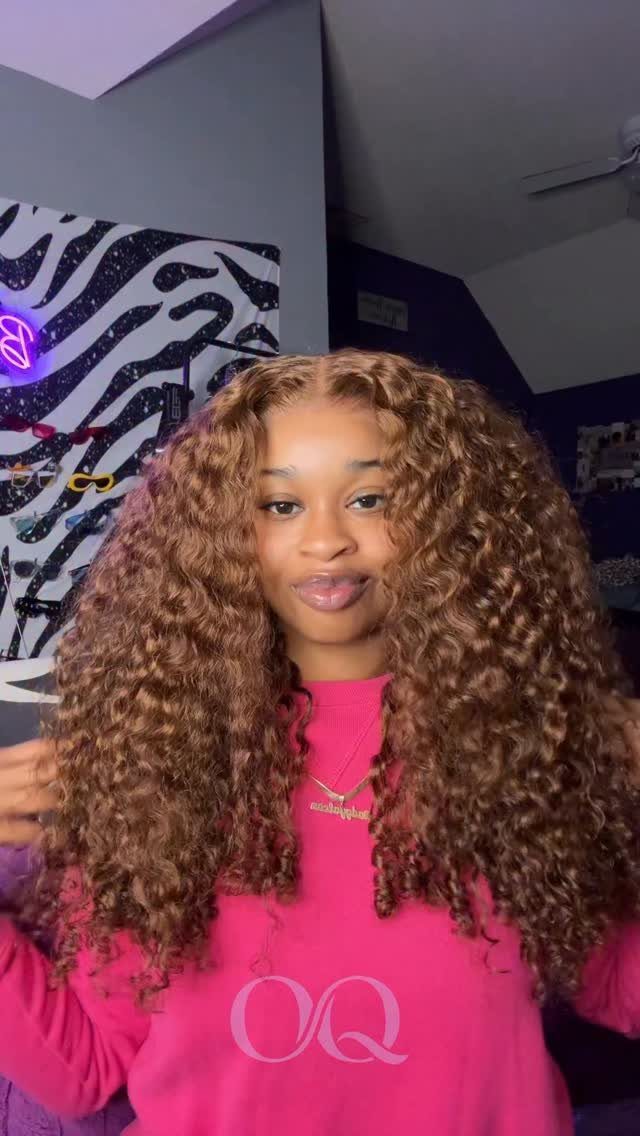
Medium honey brown sits right in the middle: lighter than a deep brunette, darker than a blonde-leaning mix.
That balance gives you golden tones and still keeps enough depth to look natural, and it holds up well on curls, where the warmth shows through each ringlet.
For the most flattering result, ask for a single warm medium shade rather than stacked highlights. It’s an easy request to explain.
5. Honey Brown Money Piece
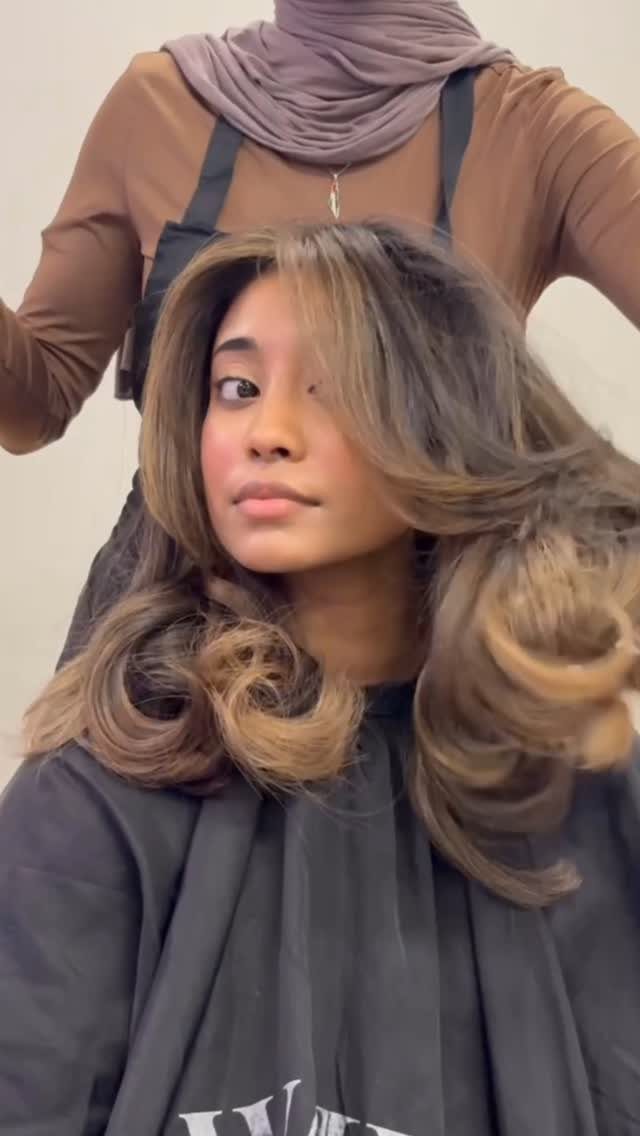
Color placed only in the front sections does the most work for the least commitment. A honey money piece brightens the sections that frame your features, and the rest of your brown stays as it is.
It suits anyone who wants a change but isn’t ready to color all over. Ask for the brightness to stay at the front, with a photo in hand so you and your stylist agree on how light is too light.
6. Ambery Honey Brown
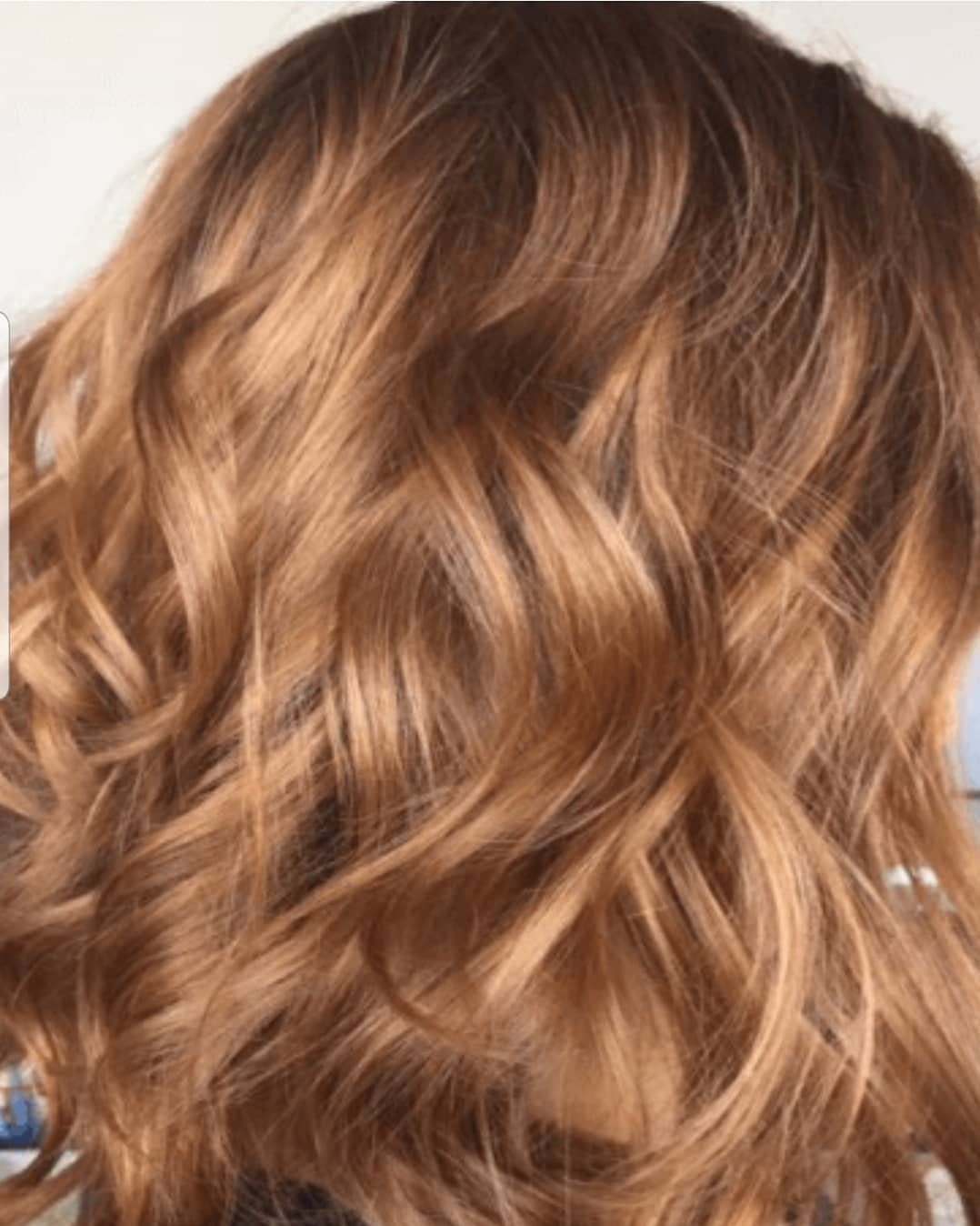
Amber and copper-red threaded through honey brown give it a glow that looks lit from within. This version leans warmer and richer than a plain honey, and it catches light in waves especially well.
I like it for anyone who finds standard honey a little too sweet. Ask your stylist for amber or copper-red tones layered into honey brown, and be clear that you want warmth over brightness.
As far as hair color trends go, honey brown hair is a timeless and versatile favorite. The warm, golden brown hue commands attention with its radiant glow, reminiscent of the sweet, ambery syrup it’s named after.
7. Honey Brown Ombré
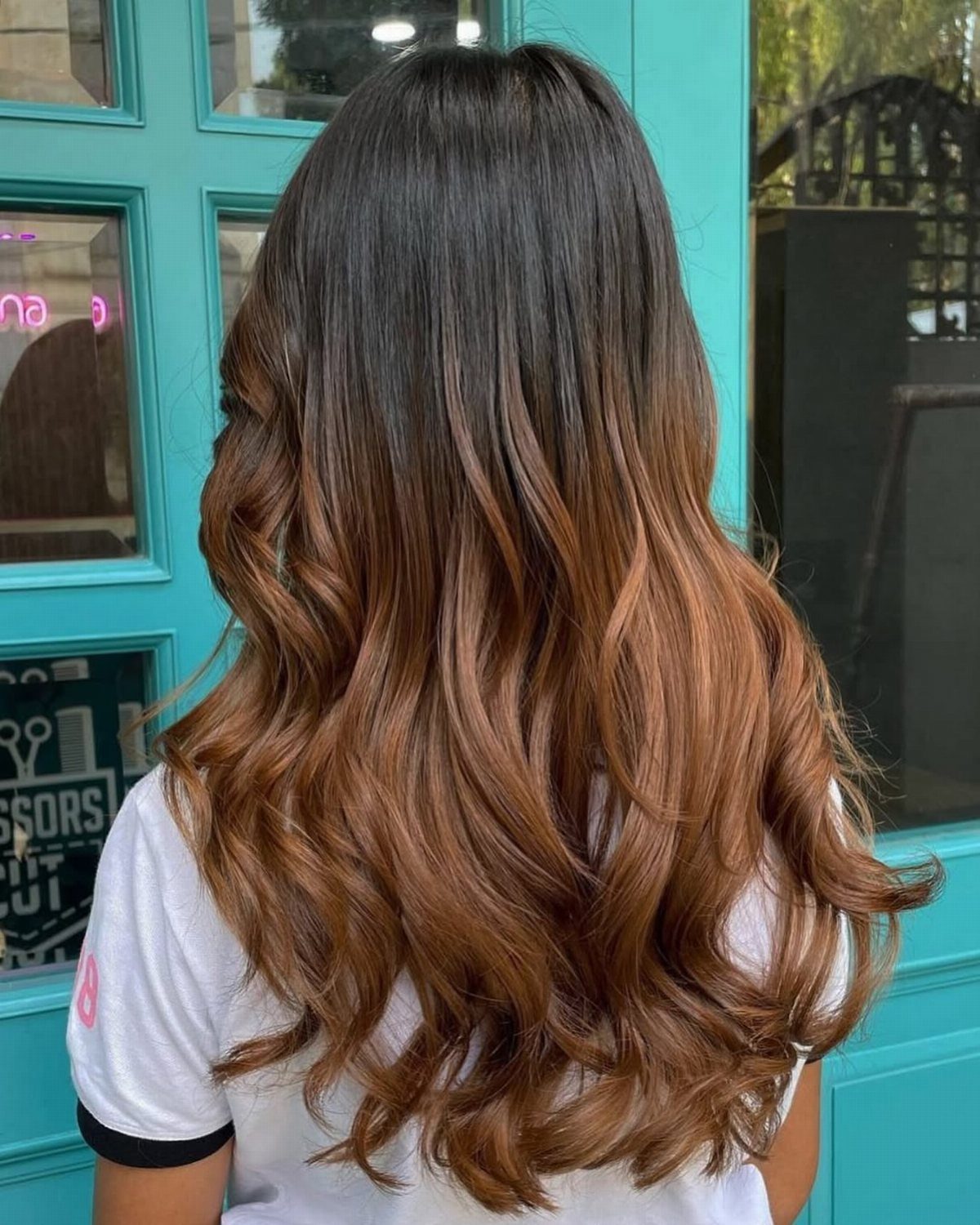
Ombré gives you more contrast than balayage, because the color moves from dark brown at the top to honey at the ends in one clear gradient.
Long, loose waves show that shift best, since the bend of each wave catches the lighter ends.
I’d choose it if you want the change to be obvious, not subtle.
Ask for dark brown to stay at the roots and honey brown to build toward the ends, and bring a photo so your stylist knows how far up the honey should climb.
8. Shag in Medium Honey Brown
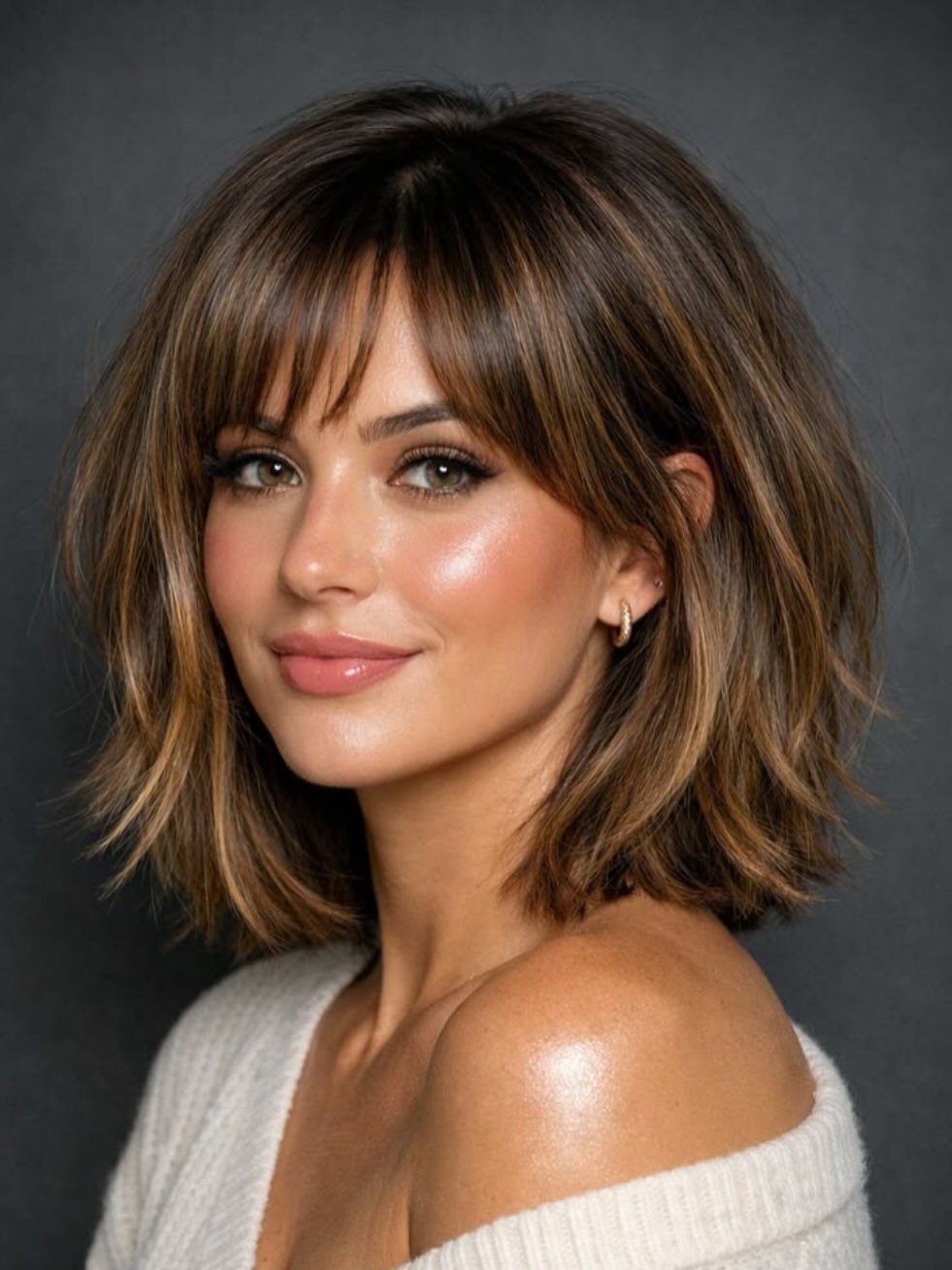
A toned-down honey brown suits a shag better than a bright one. Layers already create plenty of movement, so a calmer shade keeps the cut from looking busy, and it sits well with cool undertones.
Ask for a soft, muted honey, not a golden one, and pair it with curtain bangs and layered ends. If you have cool undertones, I’d go quieter than you think you need.
9. Light Honey Fox
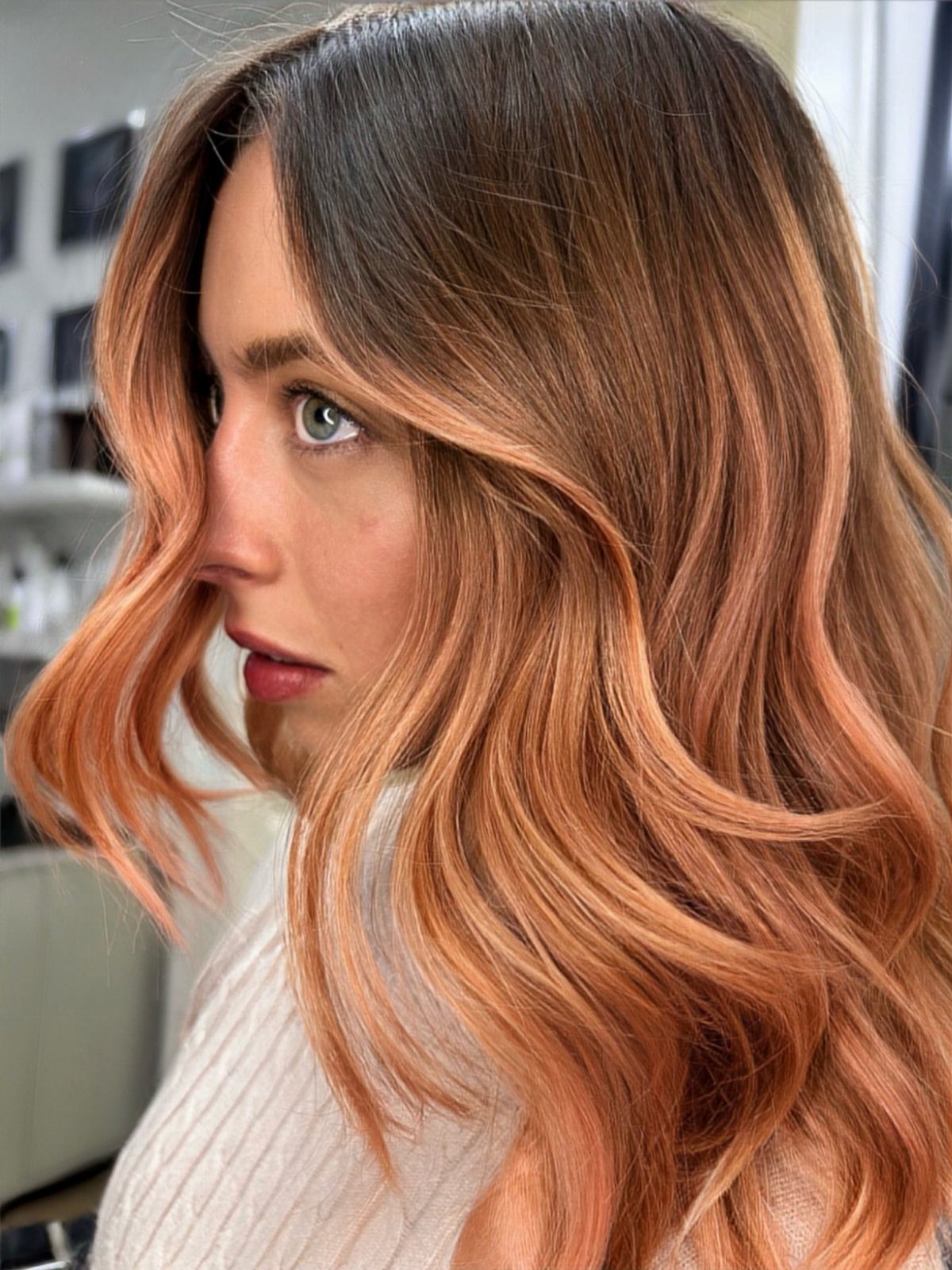
Peachy honey-blonde over darker roots sits at the lightest end of the honey range, and I like it most on pale complexions. The peach cast keeps the blonde warm and soft, where a flat gold can wash out fair skin.
Ask for a gradient from dark roots into peachy honey blonde, and bring a photo so you agree on how peach it should read. Long waves show the blend best.
10. Honey Brown on Black Hair
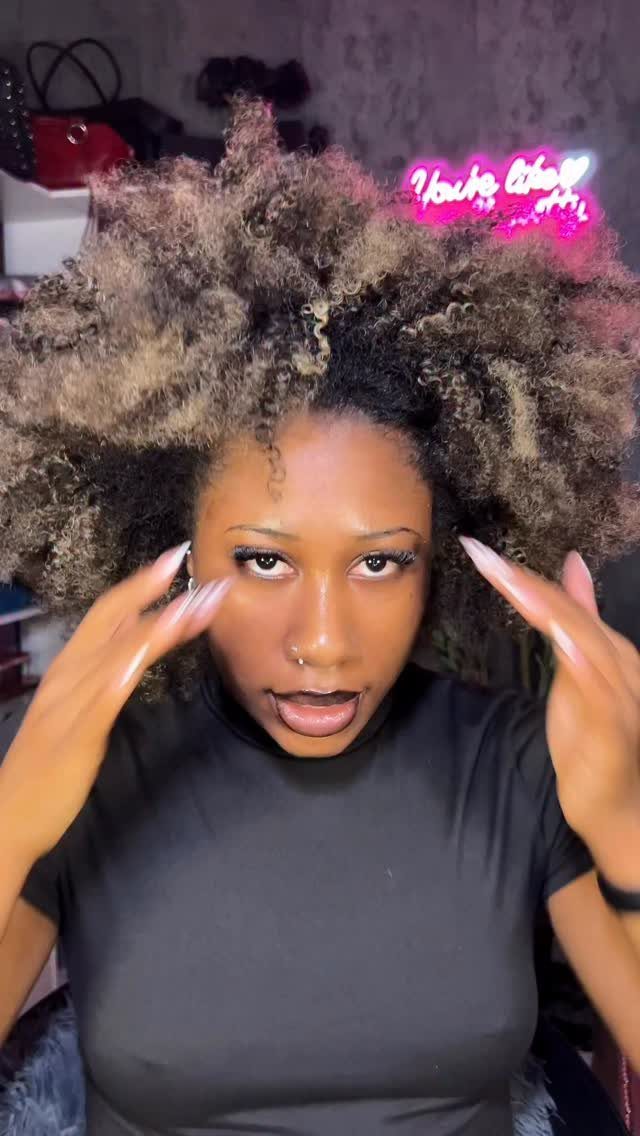
Honey brown stands out on an espresso base because the contrast is clear without needing a bright shade. Muted warm tones threaded through black hair read as dimension, and on voluminous natural texture they show up in every curl.
Ask for muted honey highlights, not a stark gold, so they stay in the brown family. Show your stylist a photo of the exact warmth you want.
11. Honey Brown with Blonde
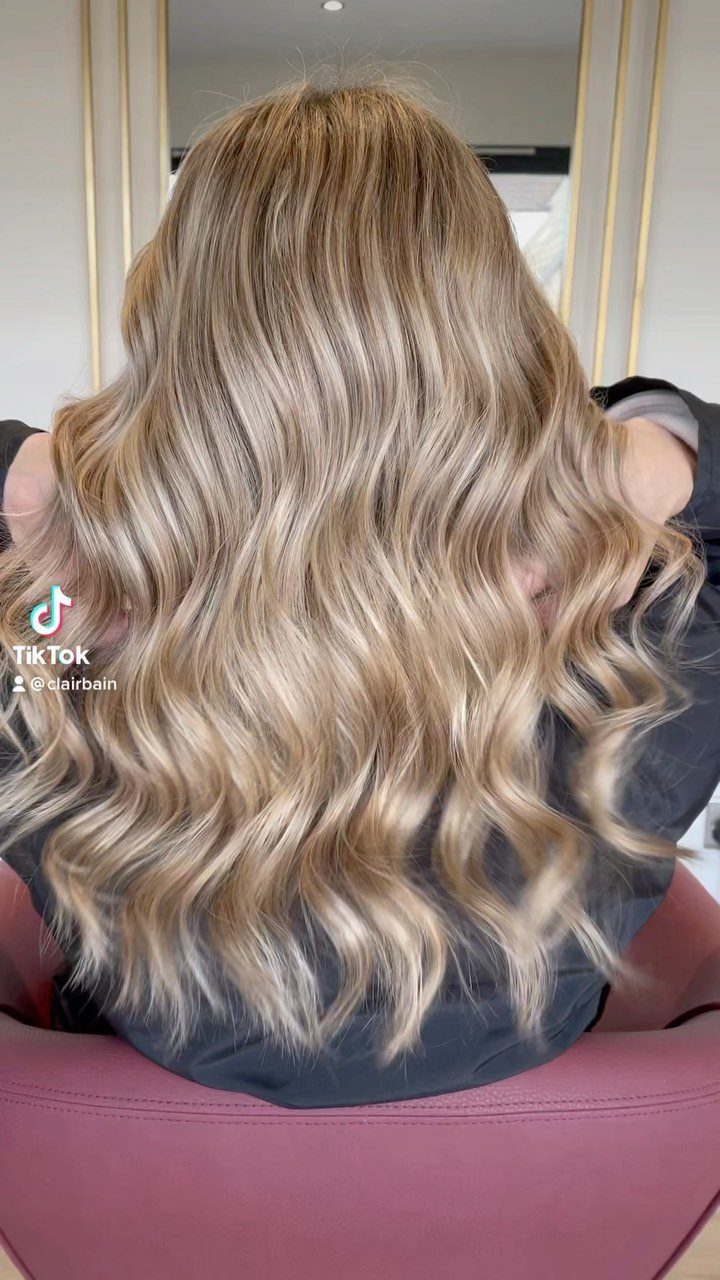
Blonde highlights laid over honey brown make the darker shade look lit up. The blonde catches light and gives long waves a shimmer that a single-tone brown can’t.
I’d choose this over plain honey brown if you like a bit of sparkle. Ask for blonde pieces placed through a honey brown base, and say clearly how bright you want them so they don’t overtake the brown.
12. Warmed-up Brunette Mix
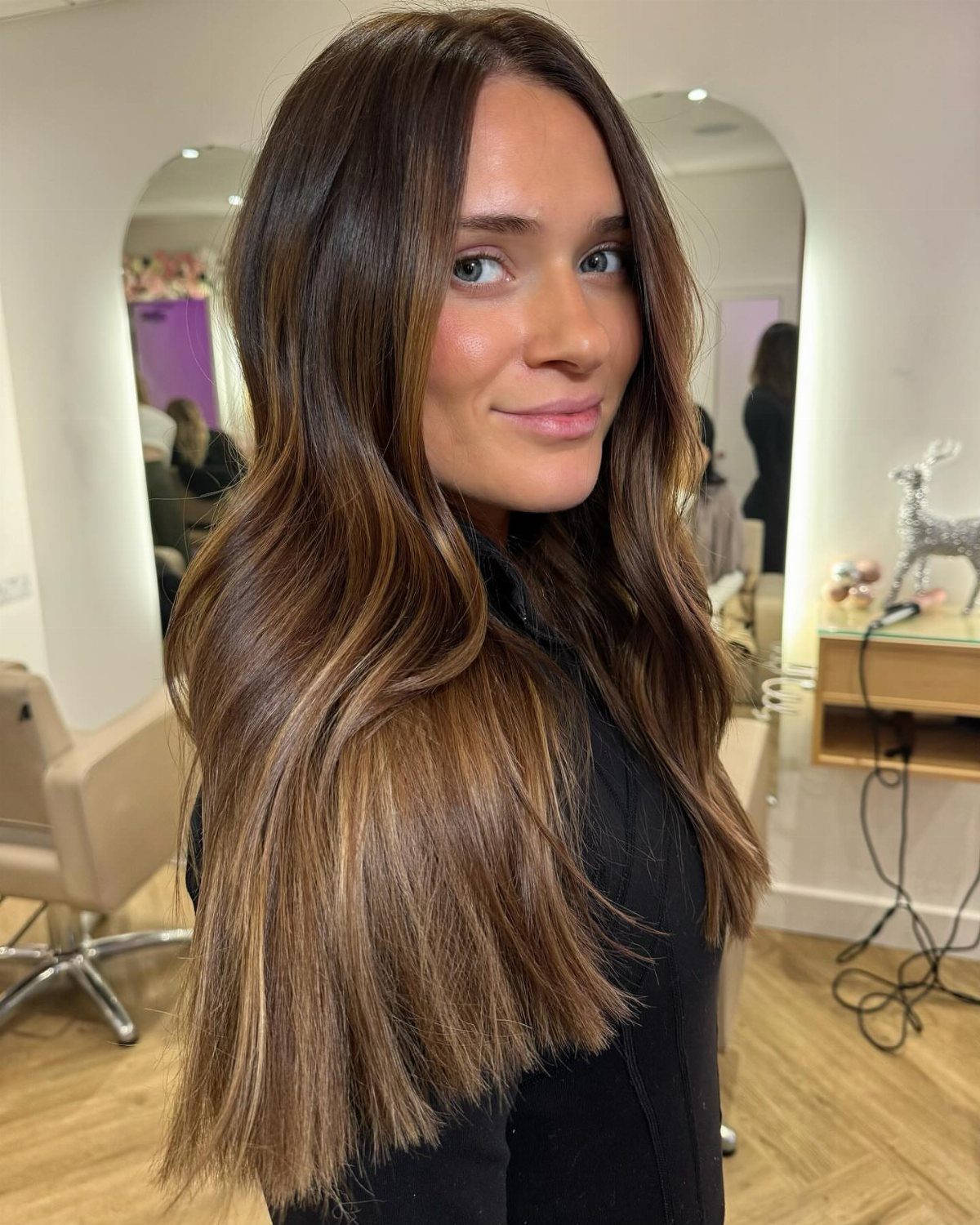
A root melt blends the darker natural base into the honey highlights, so the top of the hair deposits tone and richens the brunette instead of stopping at a line.
The result is a warmed-up brunette that still looks like yours.
Ask for a root melt with honey brown highlights through the lengths. It’s the version I’d suggest if you want warmth without a high-contrast look.
13. Honey Brown with Curls
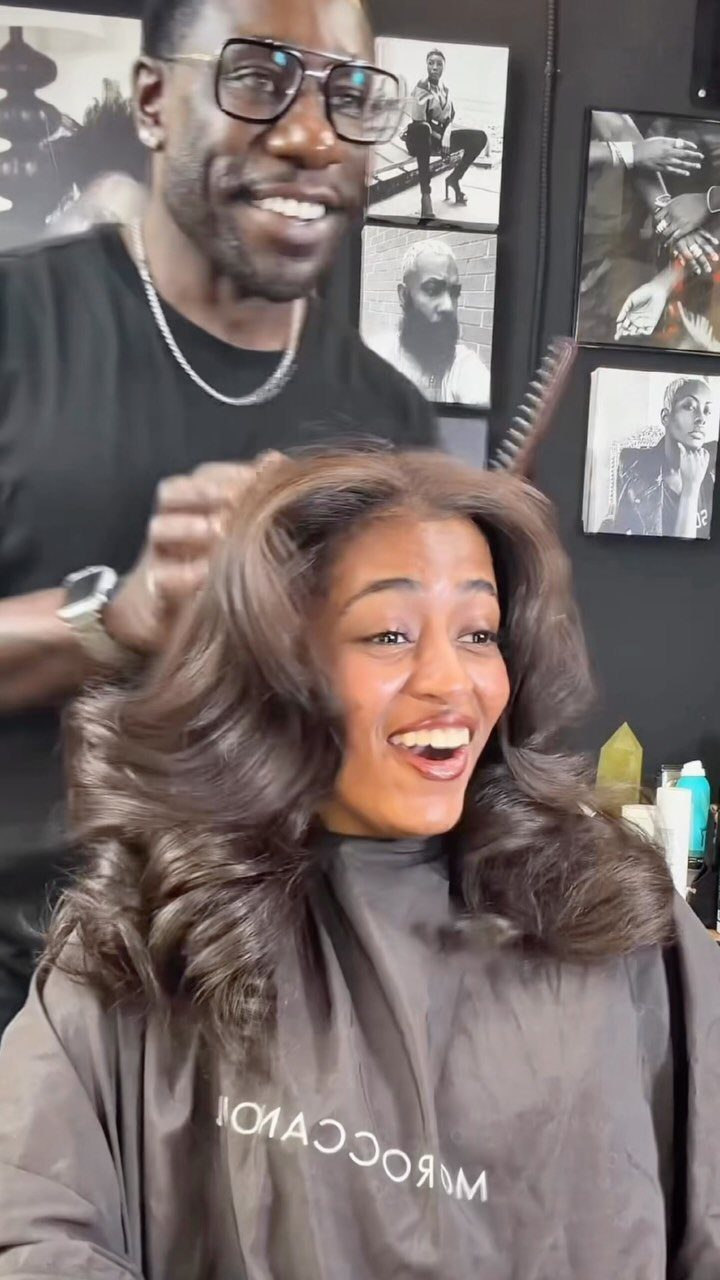
Curls give honey brown more to do than straight hair can. Every ringlet turns, so the warm tones flash in and out, and the shade reads as several tones instead of one flat color.
Ask for a single medium honey brown with a little variation through it, then let the curls show it off. I’d skip anything too bright here, since curls already add plenty of dimension on their own.
14. Honey Brown Half-Up, Half-Down Styles
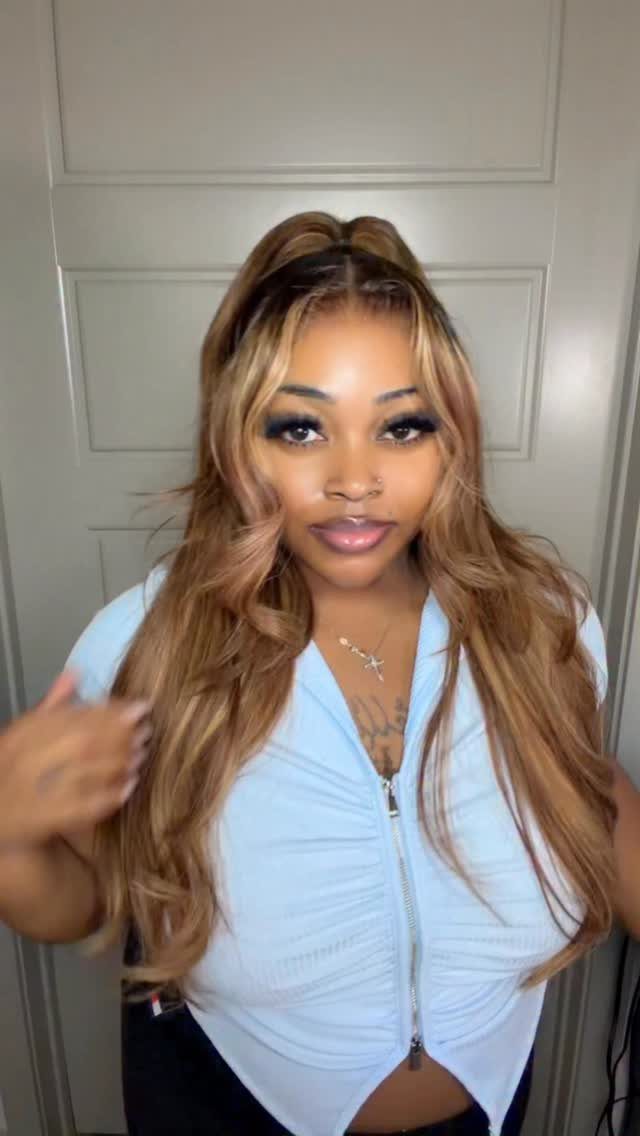
Pulling the top half back keeps the lighter strands around the face on display, and that is why this style works so well on honey brown.
The pinned section shows off the long length, while the loose half carries the color down.
When you pin the top section back, pull a few strands loose at the front so the honey tones frame your face.
If you’re asking a stylist for color, mention that placement so the brightest strands land where the style shows them.
15. Honey Bronde
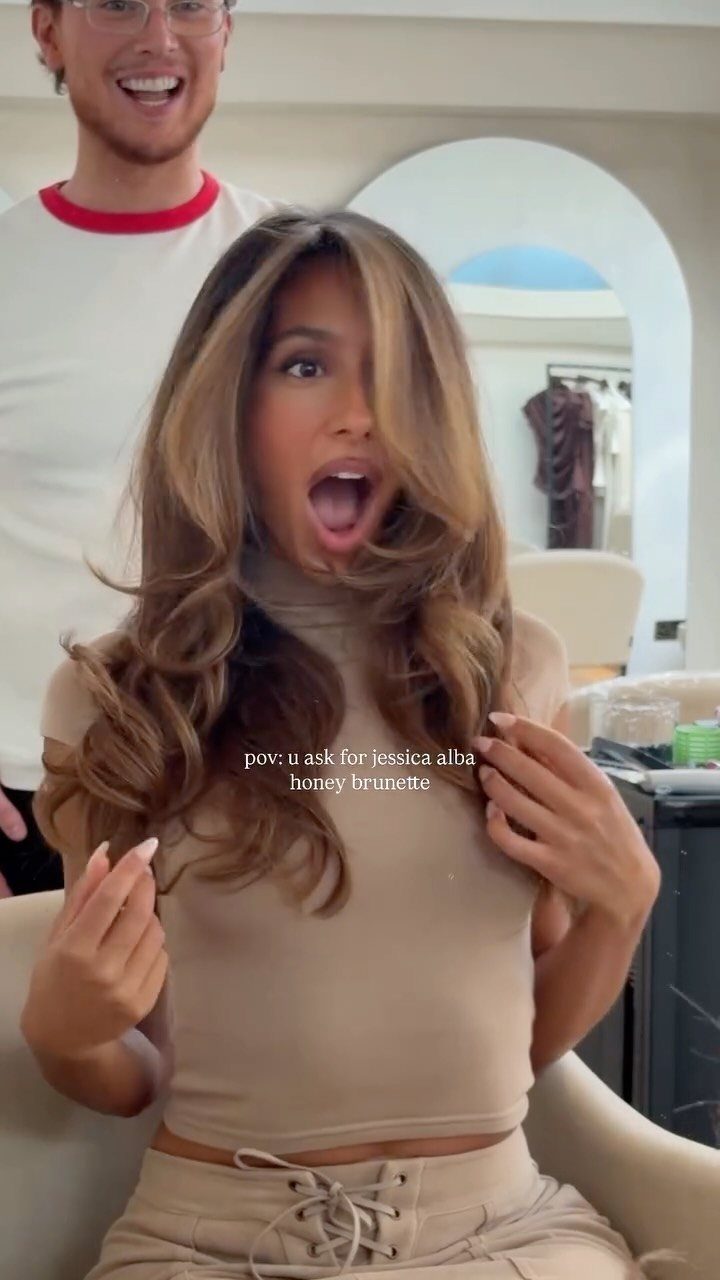
Bronde is the shade to pick when you can’t choose between blonde and brunette. The brown and blonde blend into each other, and brighter pieces around the face keep it from looking heavy.
Ask for honey bronde by name, and bring a photo, since "blonde-brown" can mean very different things to different stylists. I’d say how light you want the face-framing pieces before anything else.
16. Honey Brown Lowlights
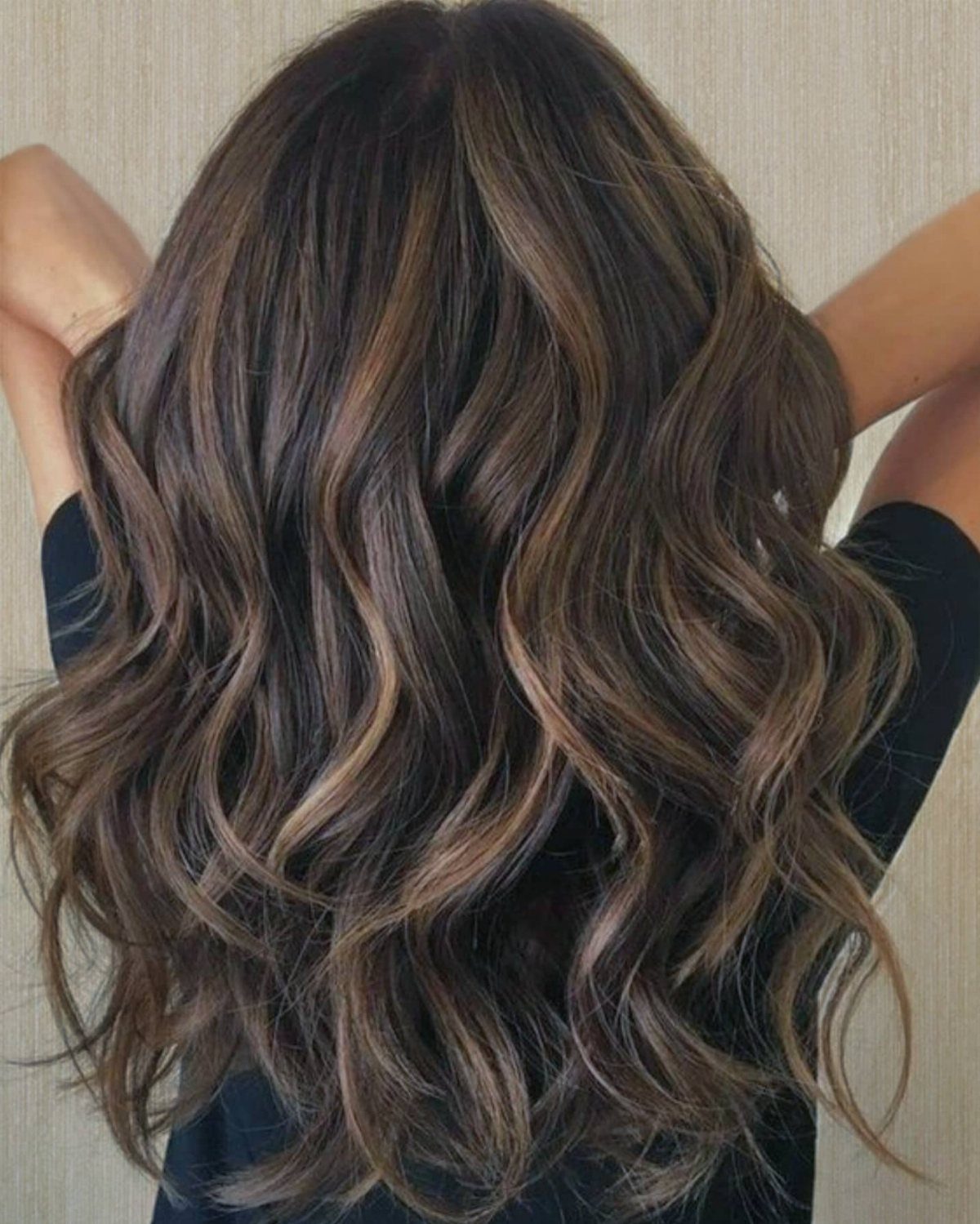
Lowlights are the reverse of highlights: darker honey tones go in to add depth. They suit hair that has gone too light or flat, because the deeper strands break up the brightness and bring back shadow.
Ask for honey-toned lowlights a shade or two deeper than your base, and keep them soft so the result stays natural. On long waves, I like how they make the lighter pieces stand out.
17. Chestnut Honey Brown
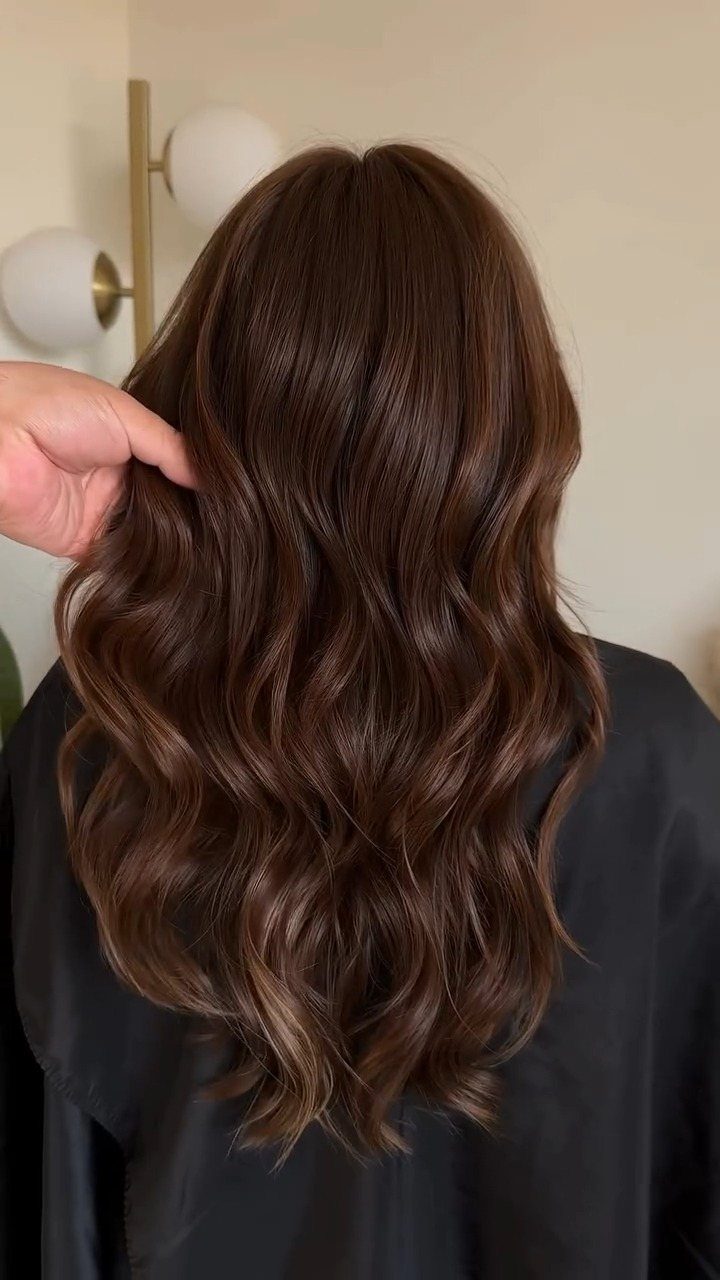
Chestnut honey brown is a rich, warm brunette with a hint of sunshine in it. That small touch of gold is what brings out waves and curls, since the lighter notes sit in the bends.
Ask for a chestnut base with honey woven through, and say you want depth over brightness. The stylist behind this example worked with iNOA color, which is one product you could ask about.
18. Caramel Butterscotch Blend
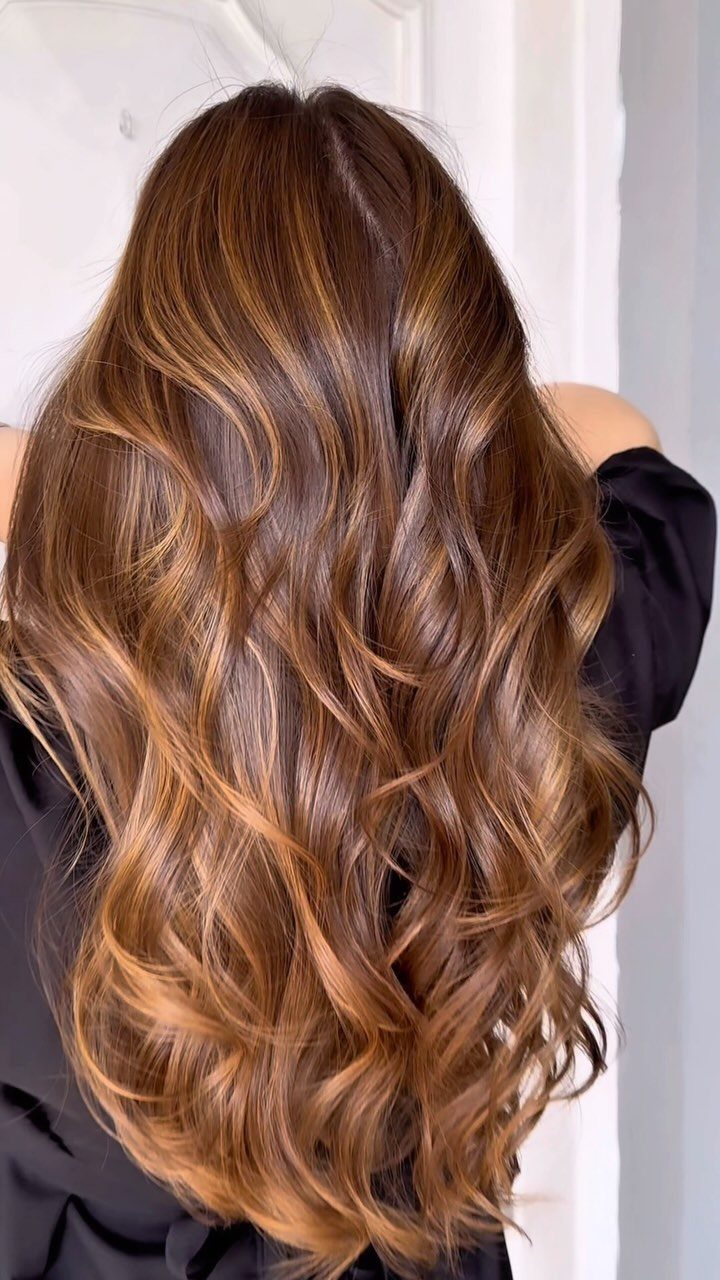
Reddish tones in several depths, blended with no hard contrast, are what make caramel butterscotch look so smooth. Nothing stops abruptly, so the color reads as one warm brunette with shifting light in it.
I’d choose this if you want warmth without a stark highlight. Ask for caramel and butterscotch tones blended at close depths, and bring a photo so your stylist can match how red you want them to lean.
19. Honey Caramel Light Brown
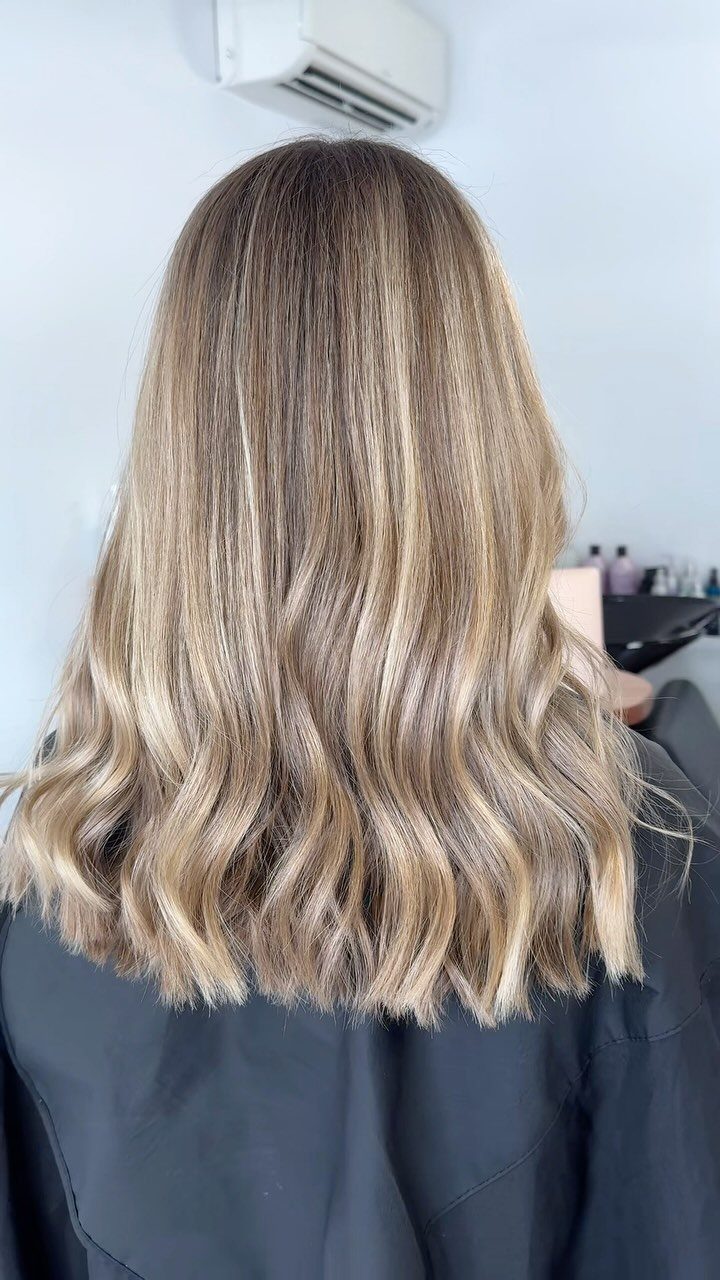
Warm amber with lighter gold flecks scattered through light brown hair gives this shade its glow. Because the highlights are fine and close together, the eye blends them into a single caramel shade that shifts a little as you move.
I’d keep them fine and few if you prefer an easy grow-out.
20. Golden Honey Waves
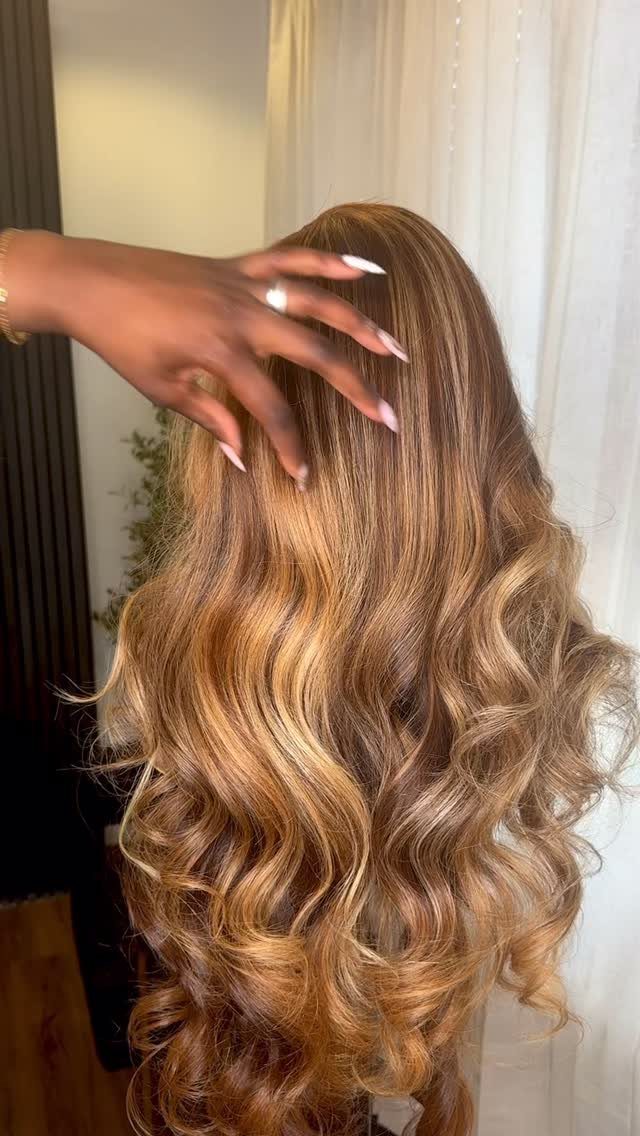
Honey brown and golden blonde melt into each other here with no seam to point to, and the gold gives the whole length a glow. Glossy waves help, since a smooth surface reflects that warmth back.
I’d choose this if you can’t decide how blonde to go. Ask for golden tones blended through honey brown, and say whether you want the gold to lean bright or soft.
21. Copper Honey Brown
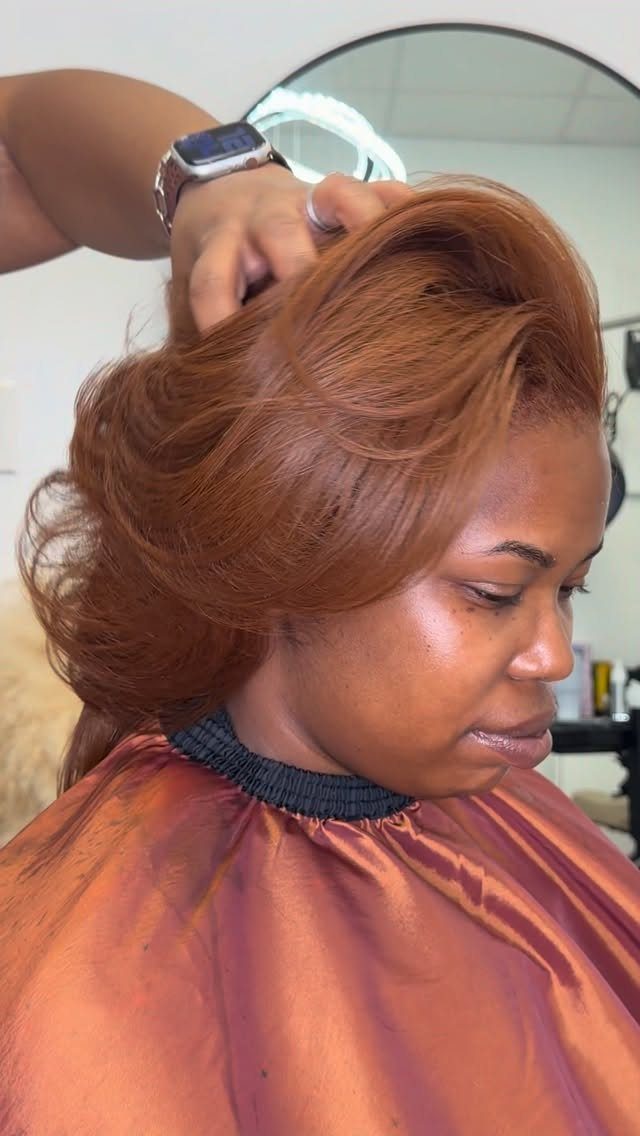
Copper over light brown adds shine you can see from across a room, and a bob with plenty of volume gives that shine a lot of surface to catch light. It’s warmer and bolder than plain honey brown.
For this one, a photo matters more than the name: copper can land anywhere from penny orange to a deep brown, so show your stylist where on that range you want to be.
I’d go copper only if you want people to notice.
22. Honey Brown with Red
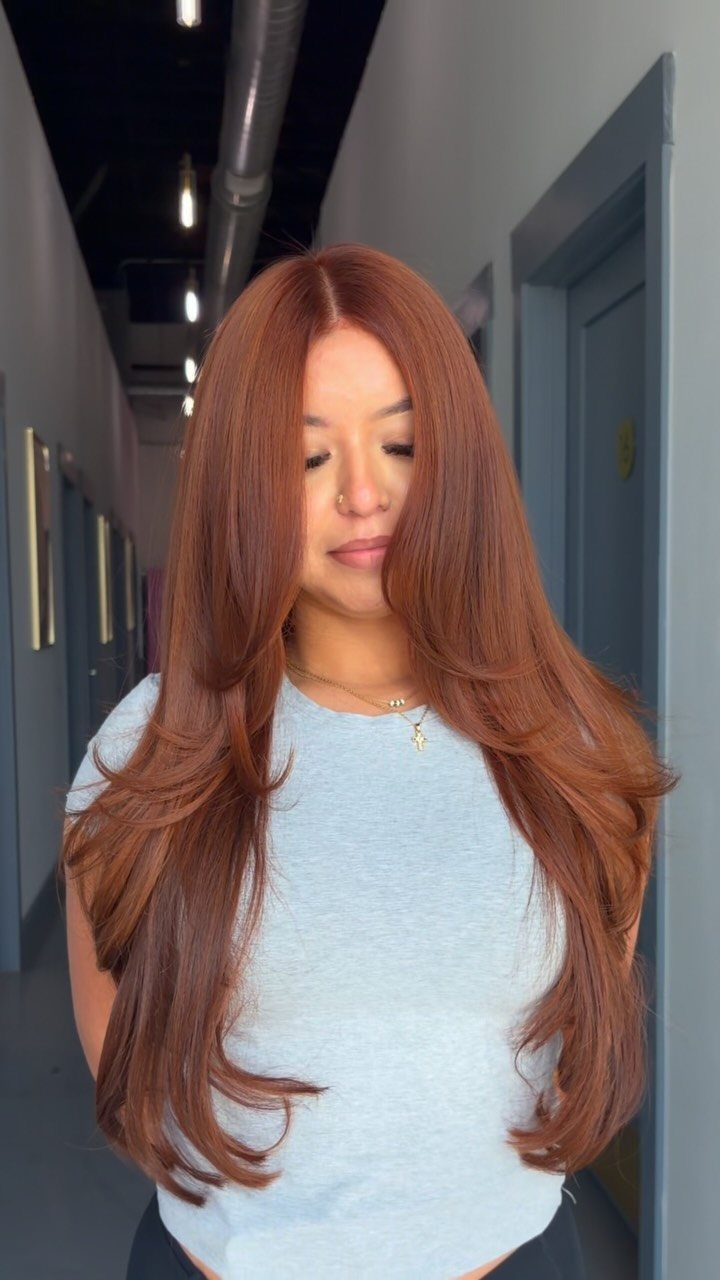
Honey and cinnamon together push brown toward red without losing the warmth, and the result looks saturated rather than flat. Long layers and a center part show the shift from honey to cinnamon along the length.
Ask for honey brown with cinnamon-red tones, and bring a photo to settle how red you want it. I’d keep the red on the spiced side, not fiery, so it stays in the honey family.
23. Rooty Honey Bronde
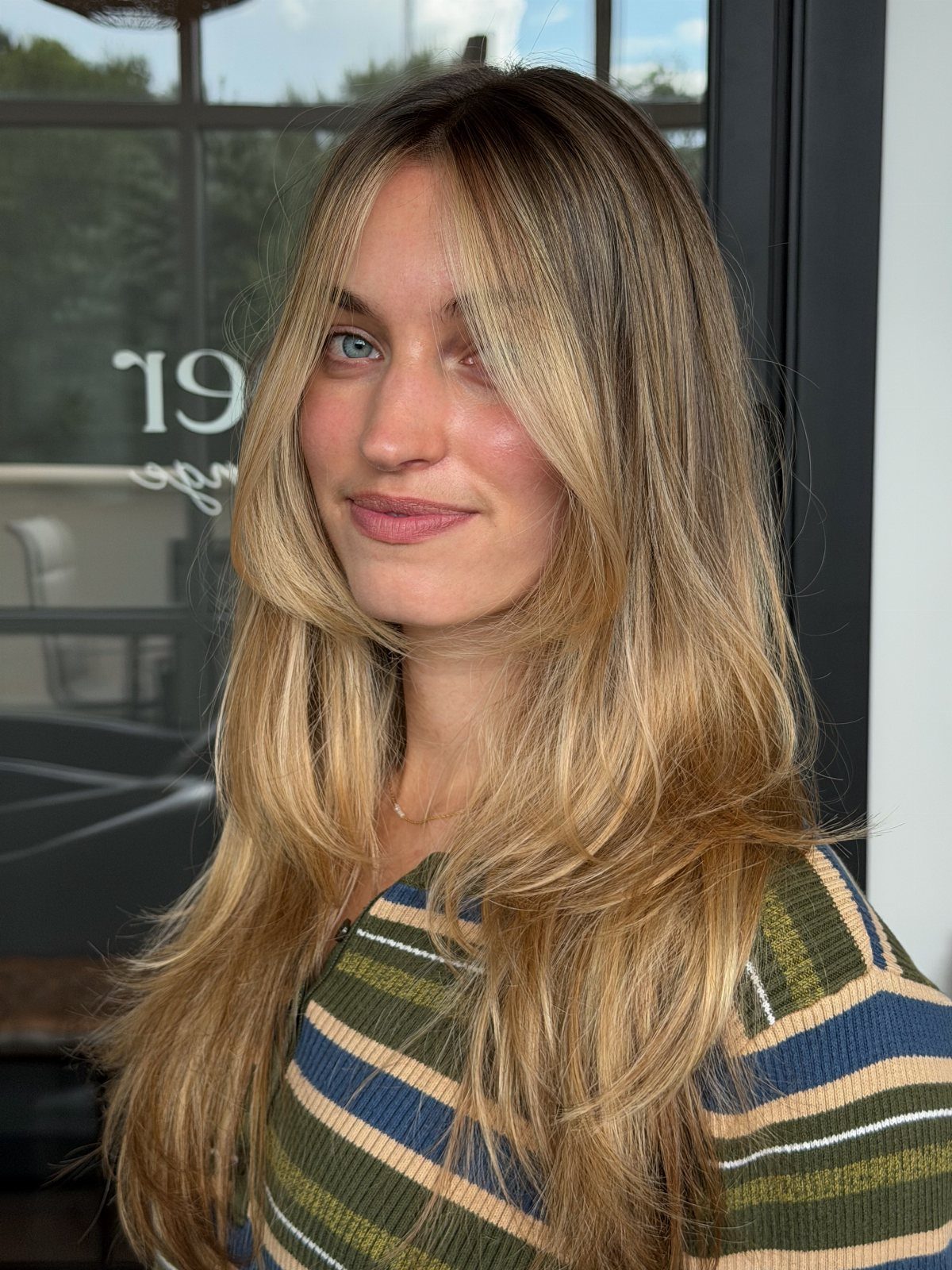
A root melt softens the line where your natural color ends, and on honey bronde it adds a toasted depth at the top. Loose waves let that darker root slide into the lighter lengths without a visible break.
I like it best for anyone who wants blonde-leaning hair without a bright start at the scalp.
24. Honey Brown Bob
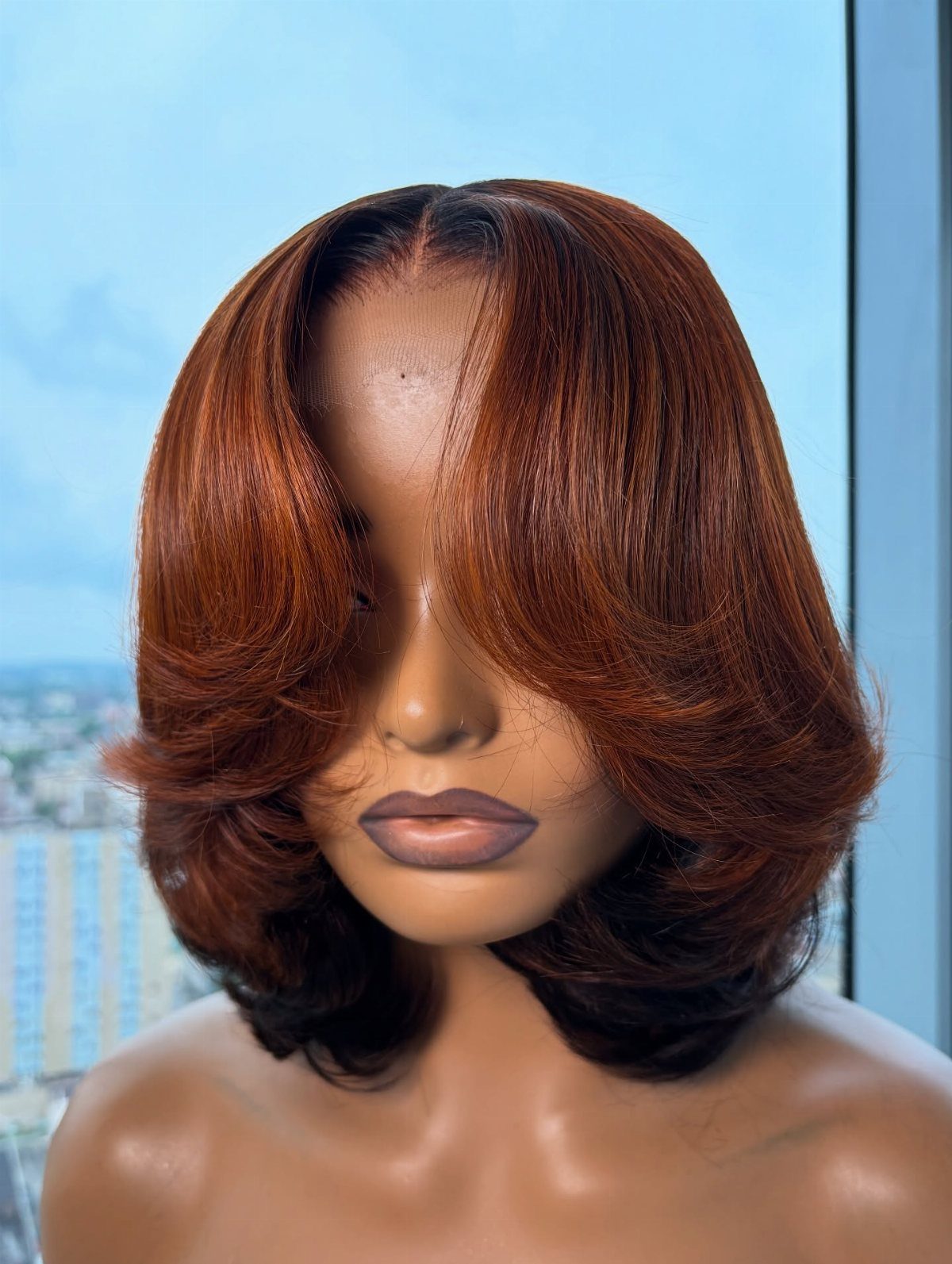
A bob puts all the honey in one place, since there’s no length to spread it across.
Curled ends with volume make the warm tones sit right at the edge of the cut, and dark roots keep the shade from looking flat.
Ask for honey brown with dark roots, and style the ends with a curl so the color shows. I’d pick this cut if you want the shade to be the first thing people see.
25. Honey Midlights
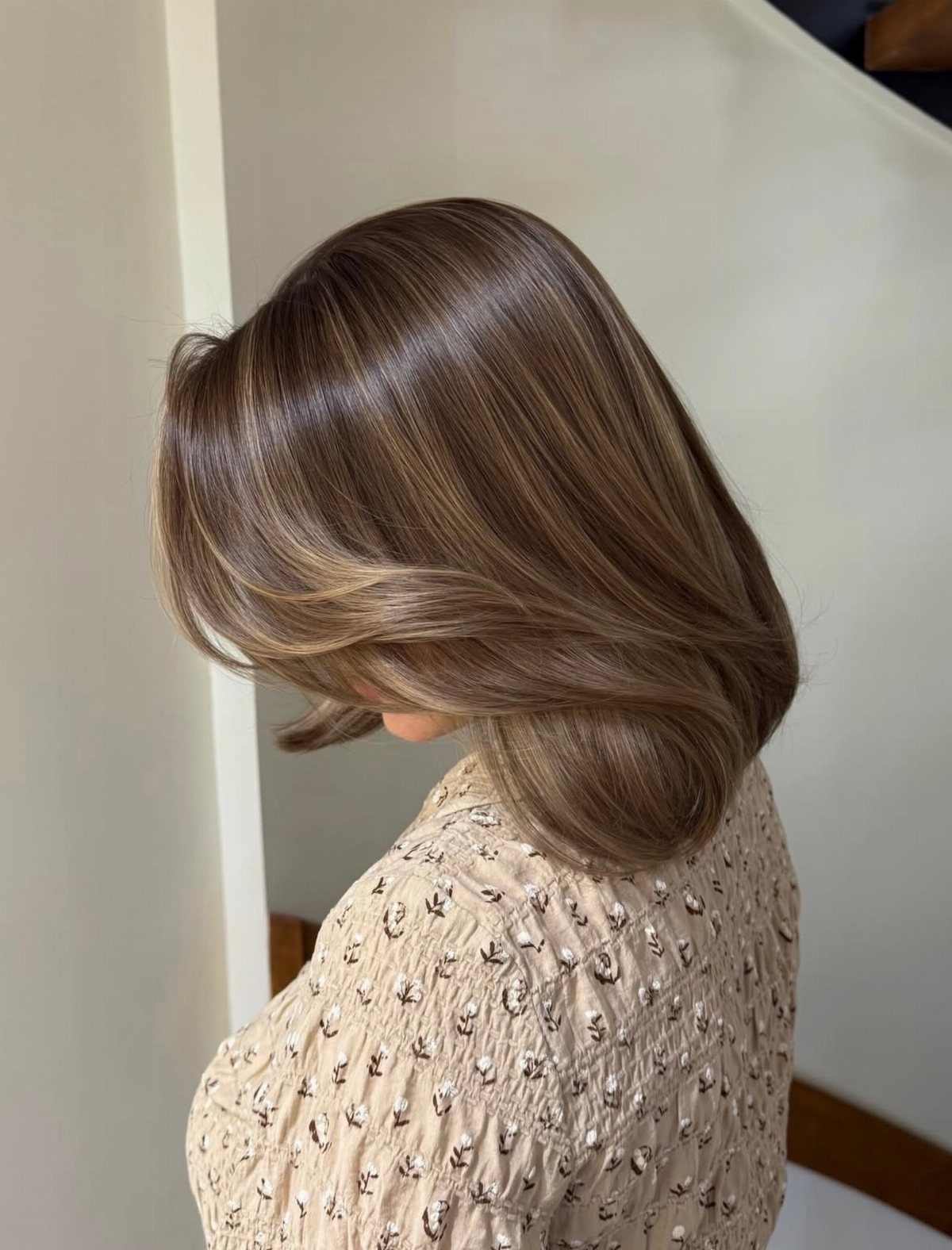
Midlights melt highlights into the base, so the honey reads as a soft glow through the brown instead of a set of stripes. On a shoulder-length blowout, that blend is what keeps the color looking smooth and natural.
Midlights should melt into your natural base, so tell your stylist you want soft dimension with no stripes showing. I’d pick this if you’ve had stripy highlights before and don’t want a repeat.
26. Honey Babylights
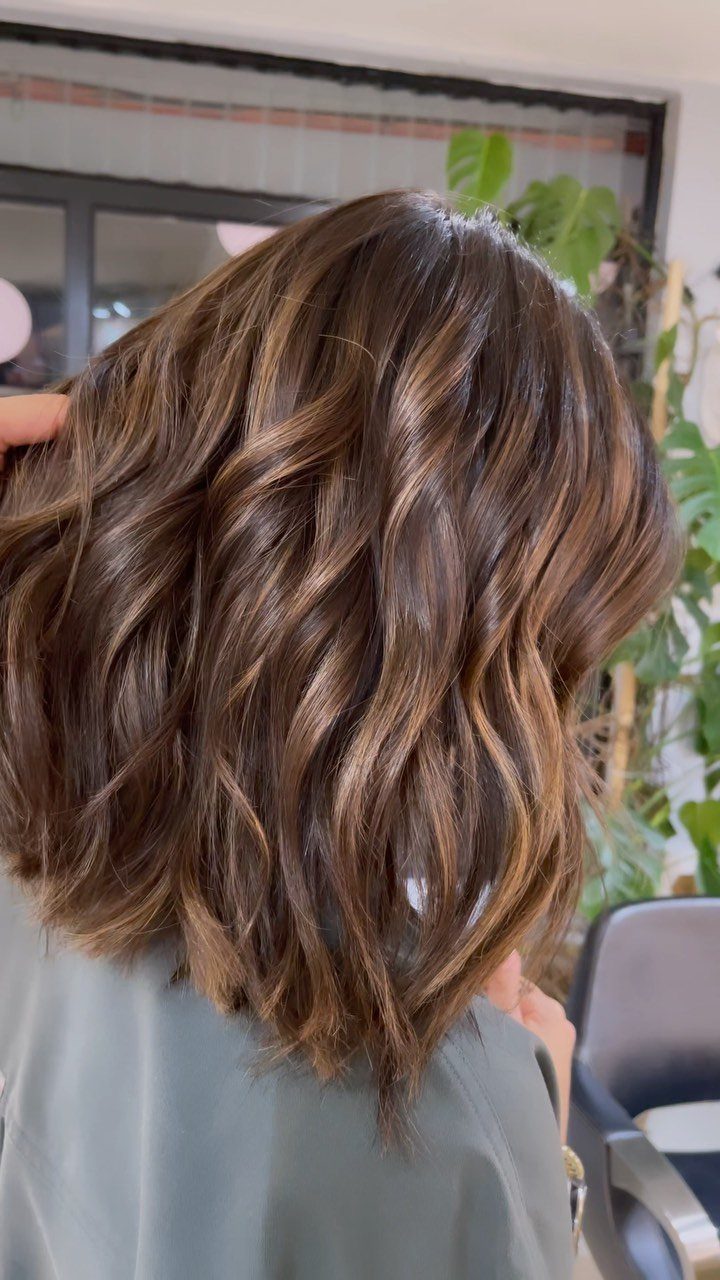
Babylights are so fine that the honey looks like hair lightened by sun rather than by a salon. Wavy brown hair shows them well, since each wave lifts a few of the thin strands into view.
Ask for babylights in honey, and tell your stylist you want them barely there. I’d choose them for a first color change, because the shift is gentle and easy to judge.
27. Rich Auburn Honey Brown
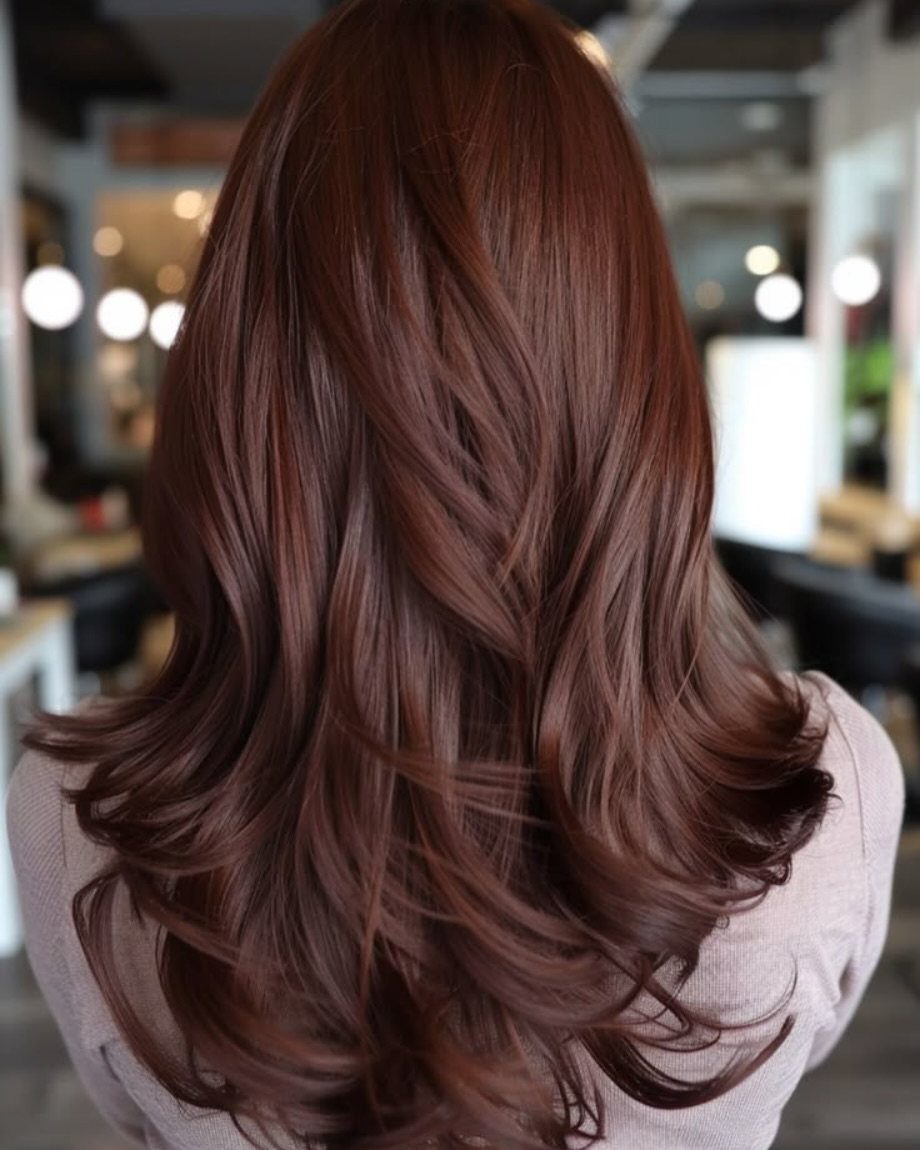
Red warmth folded into honey brown gives auburn its depth, and glossy waves with curled ends let that richness shine. It’s deeper and more saturated than plain honey brown.
For the auburn version, a reference photo does the heavy lifting, since "a little red" means something different to everyone. I’d keep the red rich rather than bright, so the honey still comes through.
28. Honey Caramel Brown
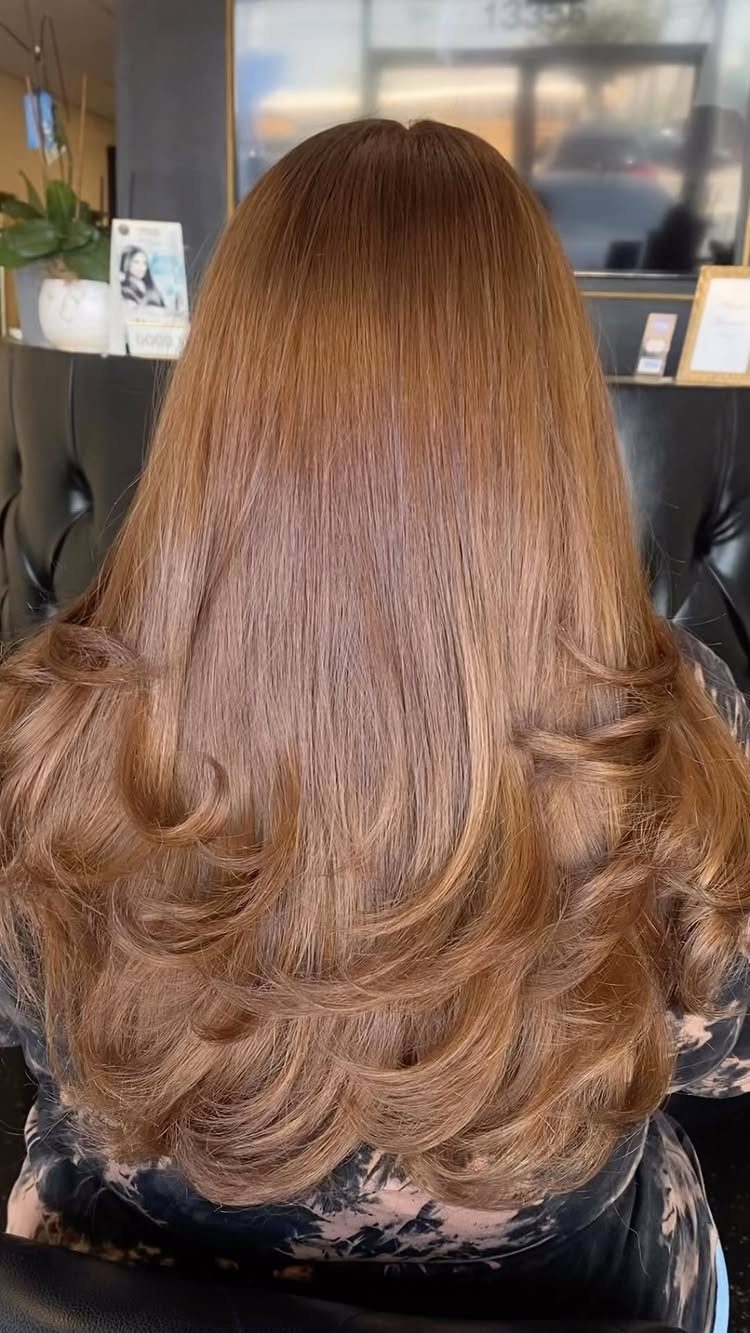
Caramel tones turn honey brown a little deeper and sweeter, and the shade reads as one warm brunette instead of a bright highlight. Voluminous curls at the ends give that warmth movement.
Caramel threaded through honey brown only works if the depth matches, so a photo of the exact level you want beats any description. If you find honey too yellow, I’d choose this version.
29. Straight Honey Brown
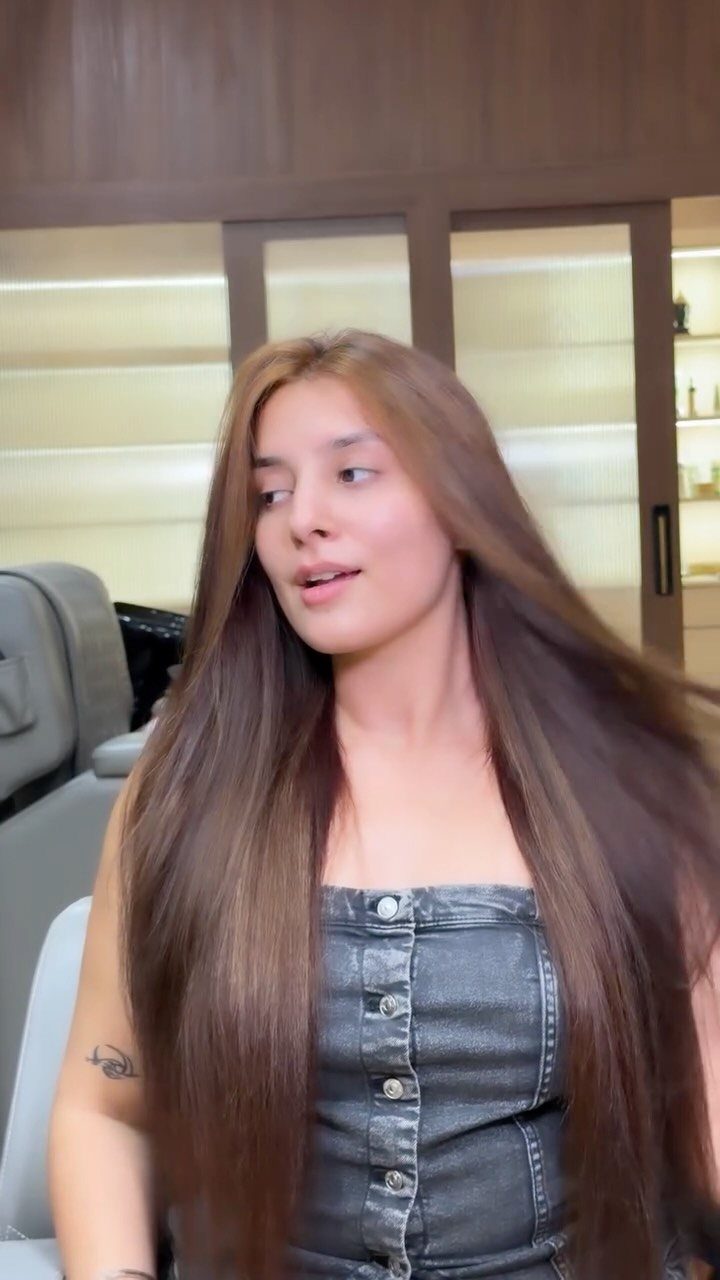
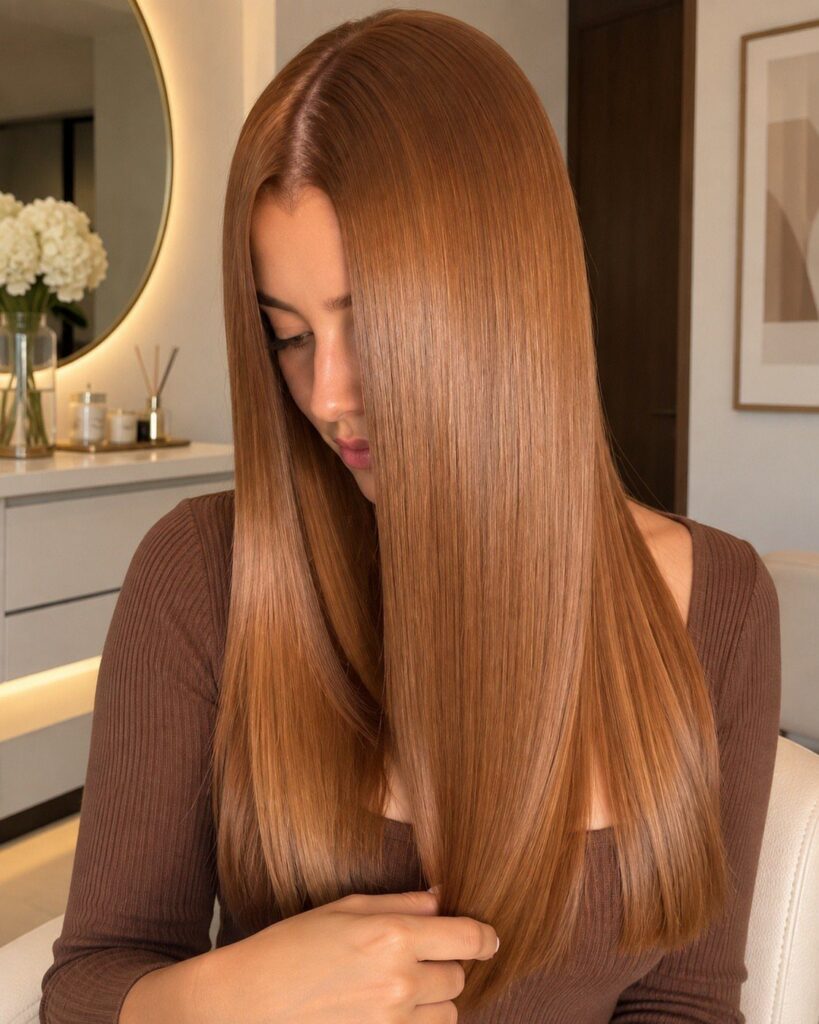
Smooth, straight hair shows off honey brown better than almost any texture, because nothing breaks up the color. Subtle lighter highlights add just enough dimension to keep the length from looking flat.
Ask for a warm honey brown with soft, light pieces through it. I’d keep the highlights quiet, since straight hair shows every line of color clearly.
30. Honey Brown with Side Bangs
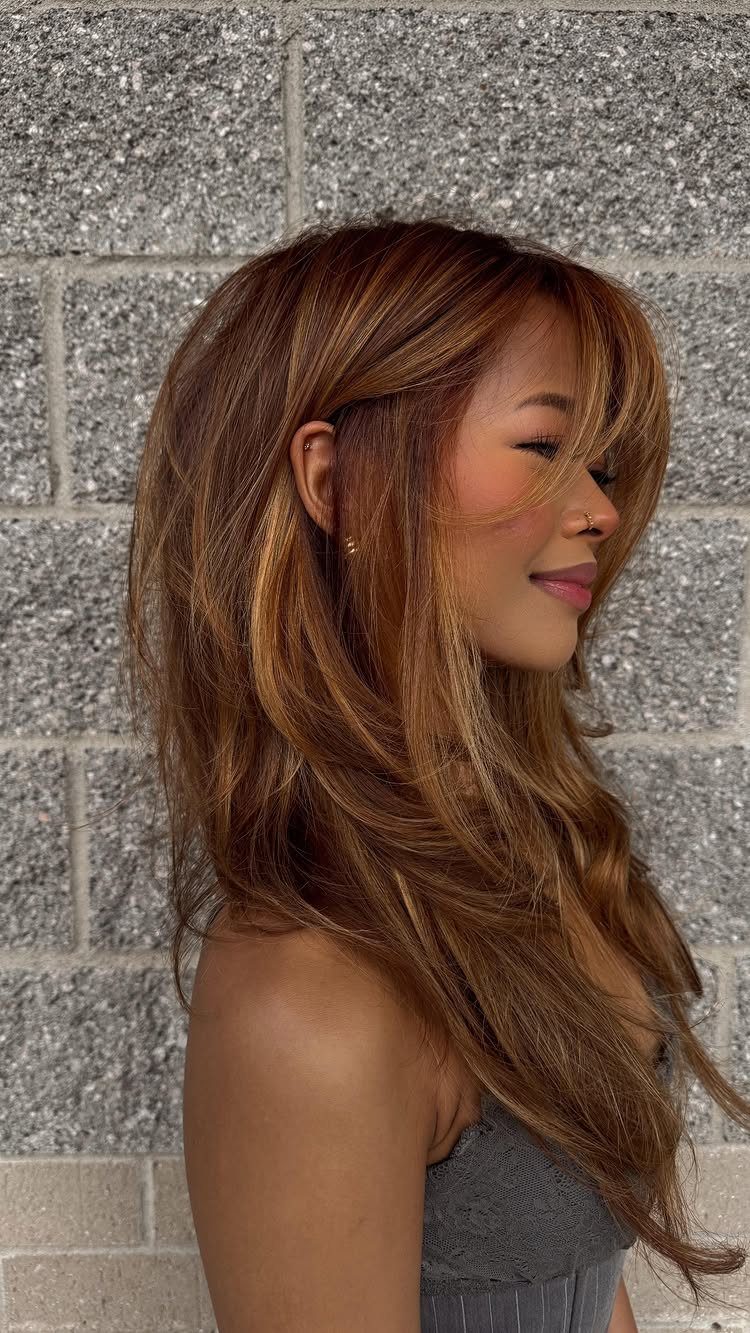
Side-swept bangs on long, layered honey brown hair let the color do the framing. The sweep of the fringe lands the lighter tones beside your face, and the layers carry the shade down the length.
Ask for side bangs with long layers, and mention where you want the honey placed so the brightest pieces sit near the front. I’d pick this over blunt bangs if you want a softer look.
Color Care and Upkeep
Start with a color-safe, sulfate-free shampoo and conditioner. Redken’s Color Extend Magnetics Sulfate-Free pair is one example: the acidic formula helps balance your hair’s pH, which keeps color shiny between salon visits.
Skip the daily wash, because each one can release color. Stretch the time between shampoos as far as your scalp allows.
Deep condition once a week, or use a moisturizing mask, to keep dryness in check. Honey tones look dull fast on parched hair.
Spray a heat protectant before any hot tool, since heat fades color. I run a toning gloss through it every 3 to 4 weeks to keep the color from slipping.
Blue shampoo is for one problem only: color that has drifted too orange or red. It neutralizes that brassiness, so if your honey still looks golden, leave it on the shelf.
Starting Color and Bleach
Your starting color decides how much work honey tones take. Very dark hair may need lightening before the gold can show, but bleach isn’t always required, so ask your colorist about alternatives before agreeing to it.
Bleach will damage your hair no matter what, but a colorist who knows what they’re doing can adjust the strength and timing based on what your hair can handle.
Expect the consultation to cover 4 things: your starting color, your hair texture, your skin tone, and how much upkeep you’ll realistically do. Answer that last one honestly, because it shapes every other choice.
Choosing a Color Technique
Match the technique to the upkeep you’ll tolerate. Single-process color coats every strand the same shade and is the most straightforward option if you’re working at home.
Highlights are softer. Partial highlights stay around the face for a soft, natural lift, while full highlights brighten the whole head.
Balayage asks the least of you between salon visits. The color gets painted on starting a few inches down, so your roots can grow without a visible line and you can stretch appointments out longer.
Leave major lifting, corrective color, precision balayage and bold money pieces to a professional. Those are the jobs where a small mistake is hard to undo at home.
Frequently Asked Questions
What hair color is honey brown?
Honey brown is a warm, golden brown that sits between dark blonde and golden brunette.
Honey brown sits between brown and blonde: the base stays deep, but a golden cast runs through it, anywhere from a light, bronde-leaning gold to a darker, bronzed chestnut. Golden to red undertones can show up depending on the version.
Is honey brown warm or cool-toned?
Honey brown leans warm, because it blends golden, bronze and amber tones, so it flatters warm skin tones most.
Cool or neutral skin can still carry honey brown if the shade is chosen carefully; an ash-leaning brown with a few fine honey pieces works well, and a lighter touch than you expect usually looks best.
A deeper caramel-honey brown is the most forgiving version, since it mixes warm and cool pigment and sits well on several undertones.
What is the difference between honey brown and honey blonde?
Honey brown is deeper and more brunette, while honey blonde is lighter and brighter.
Both carry the same golden warmth, so the real split is the base depth. If you can’t choose between the two, honey bronde blends brown and blonde into one shade.
How do you get honey brown hair?
A colorist can match the technique to your starting color and hair texture, whether that means balayage, soft highlights or one all-over shade.
For honey highlights on brown hair, the colorist lightens select strands, then tones them to the honey you want.
Does honey brown hair need bleach?
Very dark hair may need lightening before the golden tones can show, so going from dark brown or black to honey brown usually takes more effort.
Lightening does stress the hair, though a skilled colorist can adjust the developer strength and processing time to what your strands can take.