The blonde underneath has to be pale enough for the toner to shift it, which means lifting dark hair first and then cooling it down.
That stretches the range from ash bronde and root-shadow looks, where the brown stays in, to platinum and solid all-over ash, which can take several sessions on dark or previously colored hair.
Skin undertone narrows it further, since olive or warm complexions often look better with warmer highlights or a darker root.
1. Platinum Ash
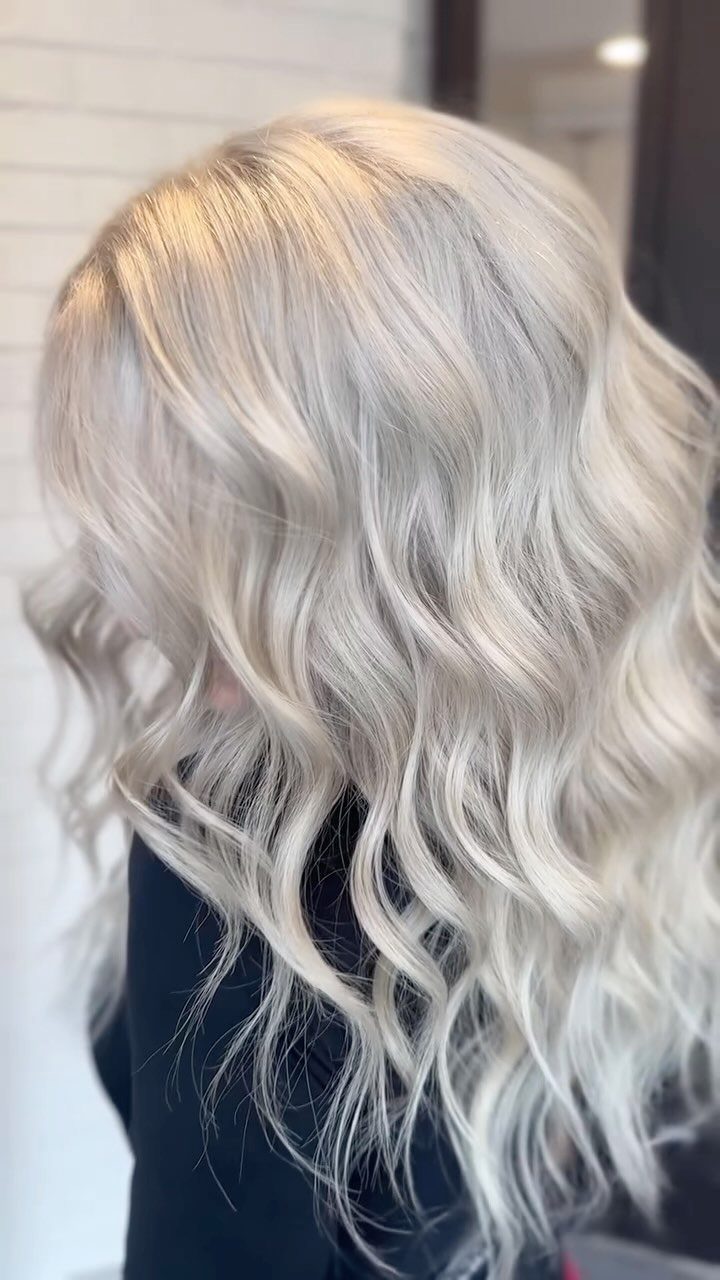
Gray is what separates this from plain platinum. The base is lifted to an ultra-light blonde, then toned with cool ash pigments so the finish reads silvery instead of yellow or gold.
Long waves suit it, and I’d pick them over a flat blowout. Each bend catches the light differently, so the gray shows up in flashes.
Book it as "platinum with an ash toner" and take a photo along, because "platinum" alone can mean a much brighter, whiter result.
2. Pearly White Blonde
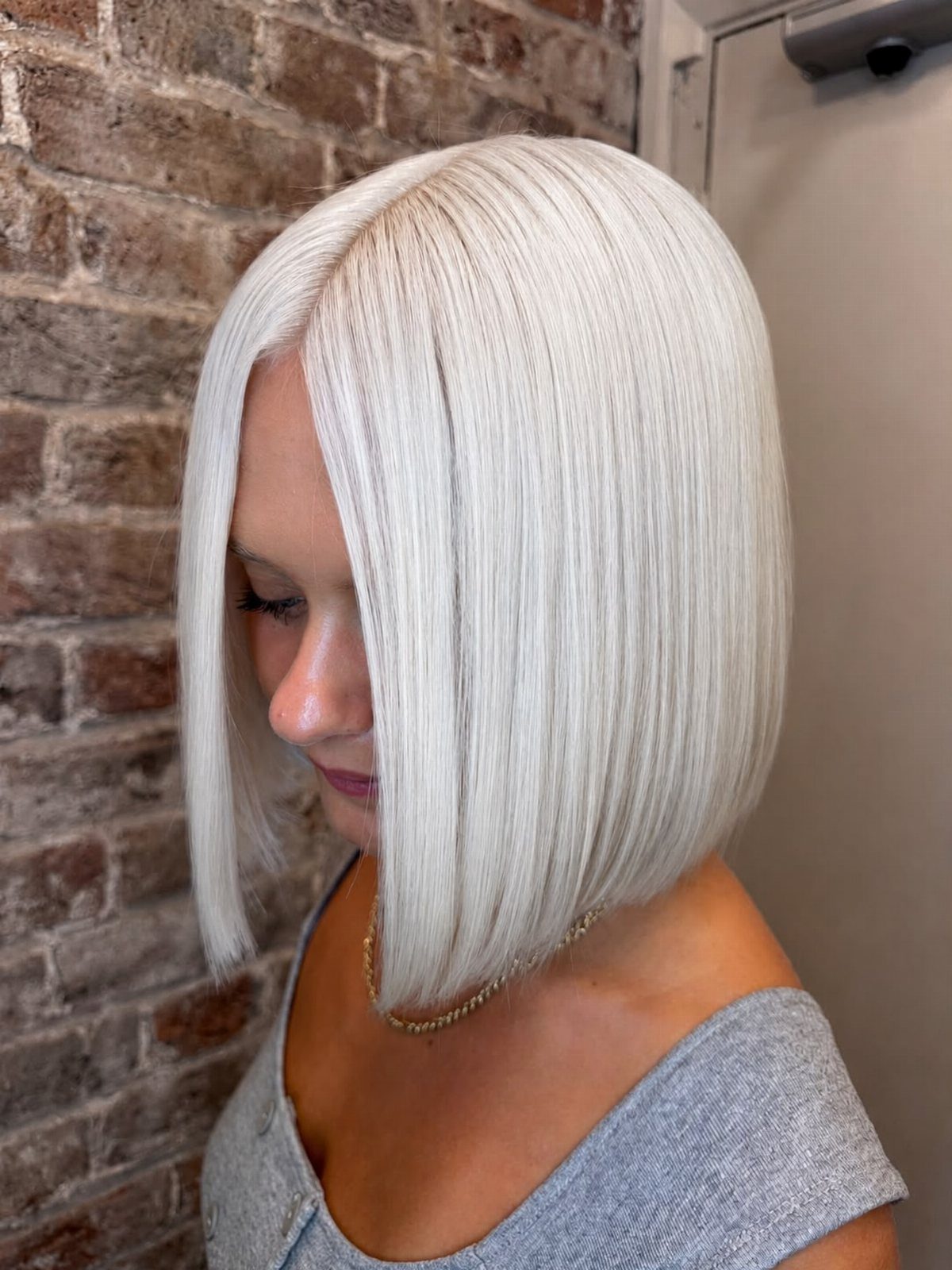
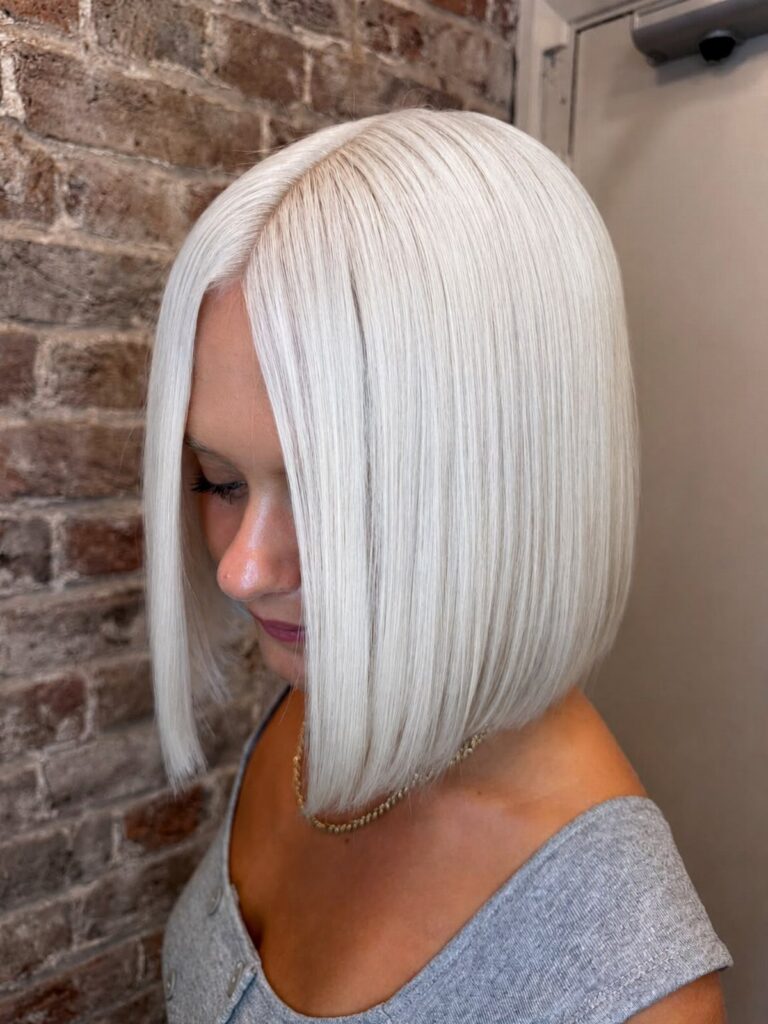
White blonde with a little softness: that’s how I’d describe pearly. It lands between stark white and bright blonde, which makes it the easier version to live with day to day.
At the consult, say "pearly white" and point to your photo. Without a reference, "white blonde" can mean anything from soft to icy.
3. Buttery Ash
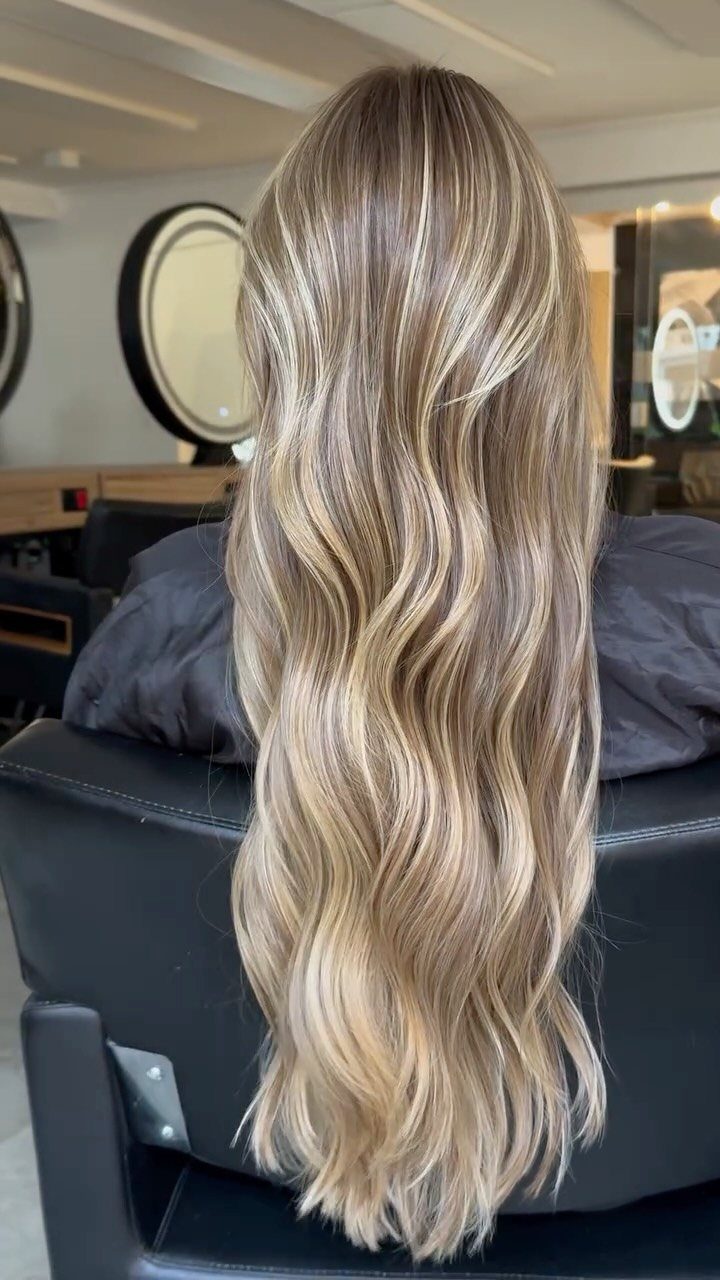
Two temperatures share one head here. Warm buttery or golden blonde sits next to cool ash highlights, so the color never lands fully cold.
Anyone who loves the idea of ash but hesitates at all that cool will find this a good fit. The gold keeps the overall look warmer, and the ash strands stop it from tipping into yellow.
Long, loose waves let both tones show and move. Request "buttery blonde with ash highlights" by name so the stylist knows you want both.
4. Ash Blonde Highlights
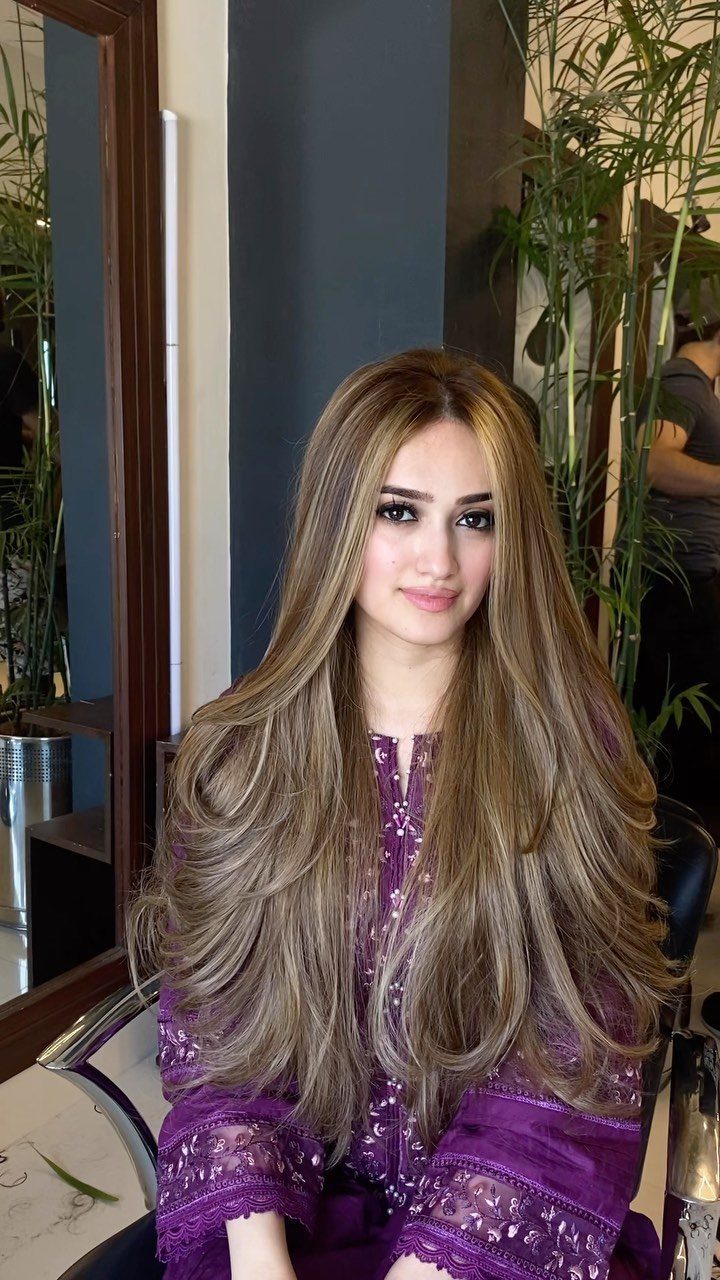
Highlights let ash blonde stay in strands instead of taking over every inch of your hair. Pale, cool strands are woven through while the base color stays put, so the light brown shows between them.
That makes it a gentler way to try the shade than going all over. It works well as a test run for seeing how ash looks on you before committing to more.
Ask for "ash blonde highlights" by name, and show your stylist a photo of your natural base so you agree on how much of it stays visible.
5. Ashy Highlights
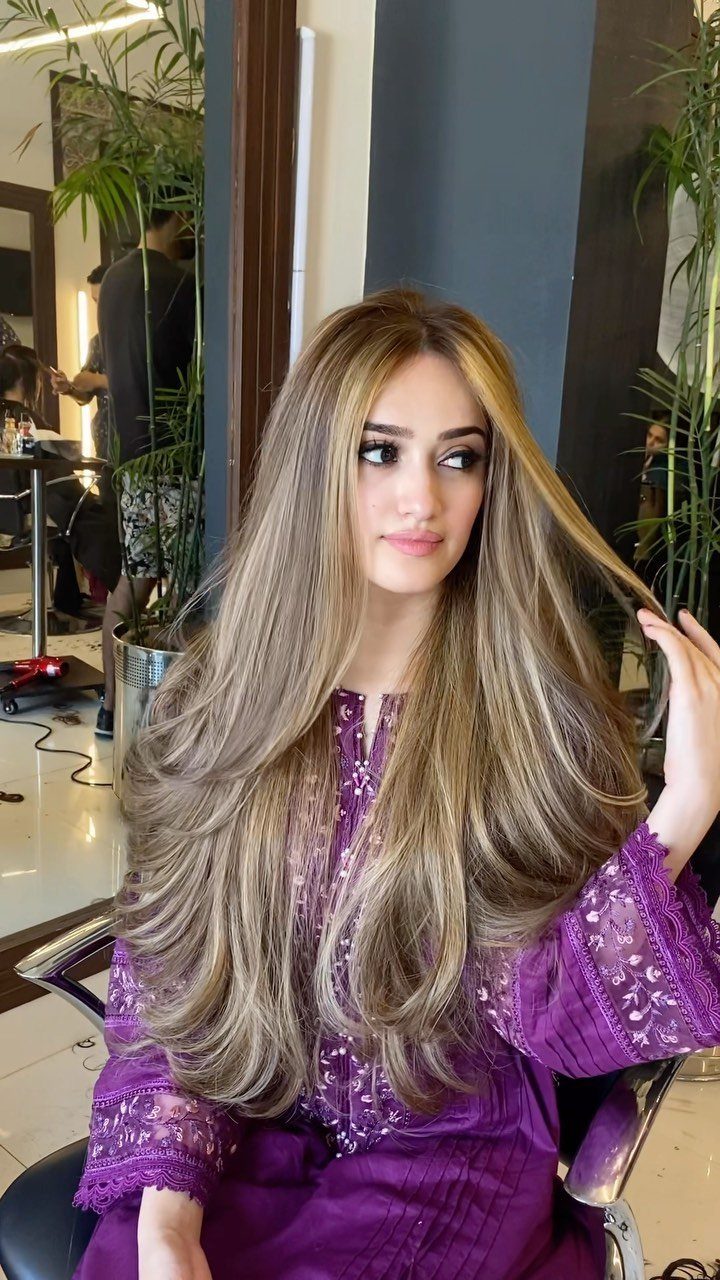
Naturally dark hair picks up its cool tones through highlights, and that contrast makes the look. Ash-blonde strands run through a darker base, with the roots left deep.
I prefer leaving those roots visible. They give the color depth and make the blonde read as intentional instead of flat.
For the consult, bring a photo that matches your own base depth, not just the finished blonde. Dark hair and pale ash strands sit far apart, so your stylist needs to see where you start.
6. Silver Ash Blonde
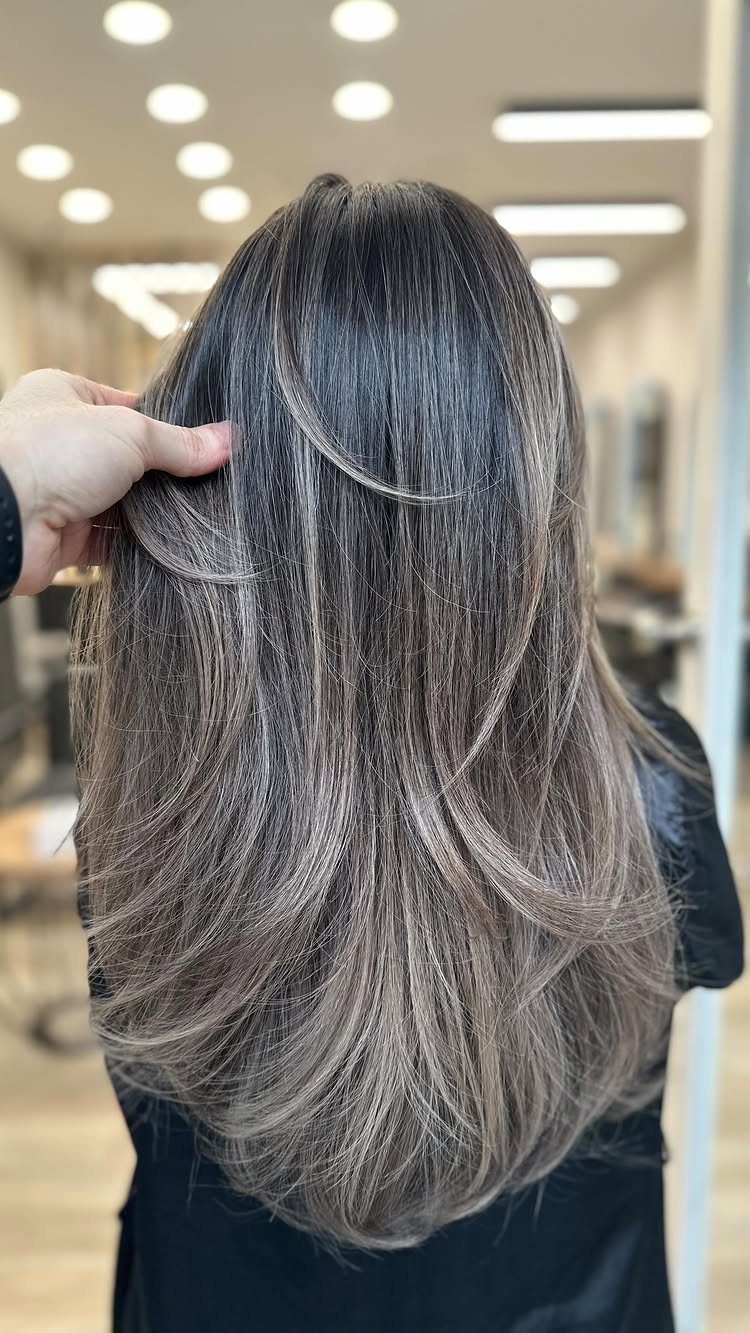
Silver ash goes past soft cool blonde into a metallic, reflective finish. Think gray with shine, not a muted beige.
Long layers suit it. Each layer is a new surface for light to bounce off, and a lifted section shows the silver better than a flat curtain of hair does.
Dark roots give a grown-in contrast that I find striking, and they mean fewer salon visits to keep the color looking intentional. For a soft, gradual blend instead, say so at the consult.
7. Smoky Ash Blonde
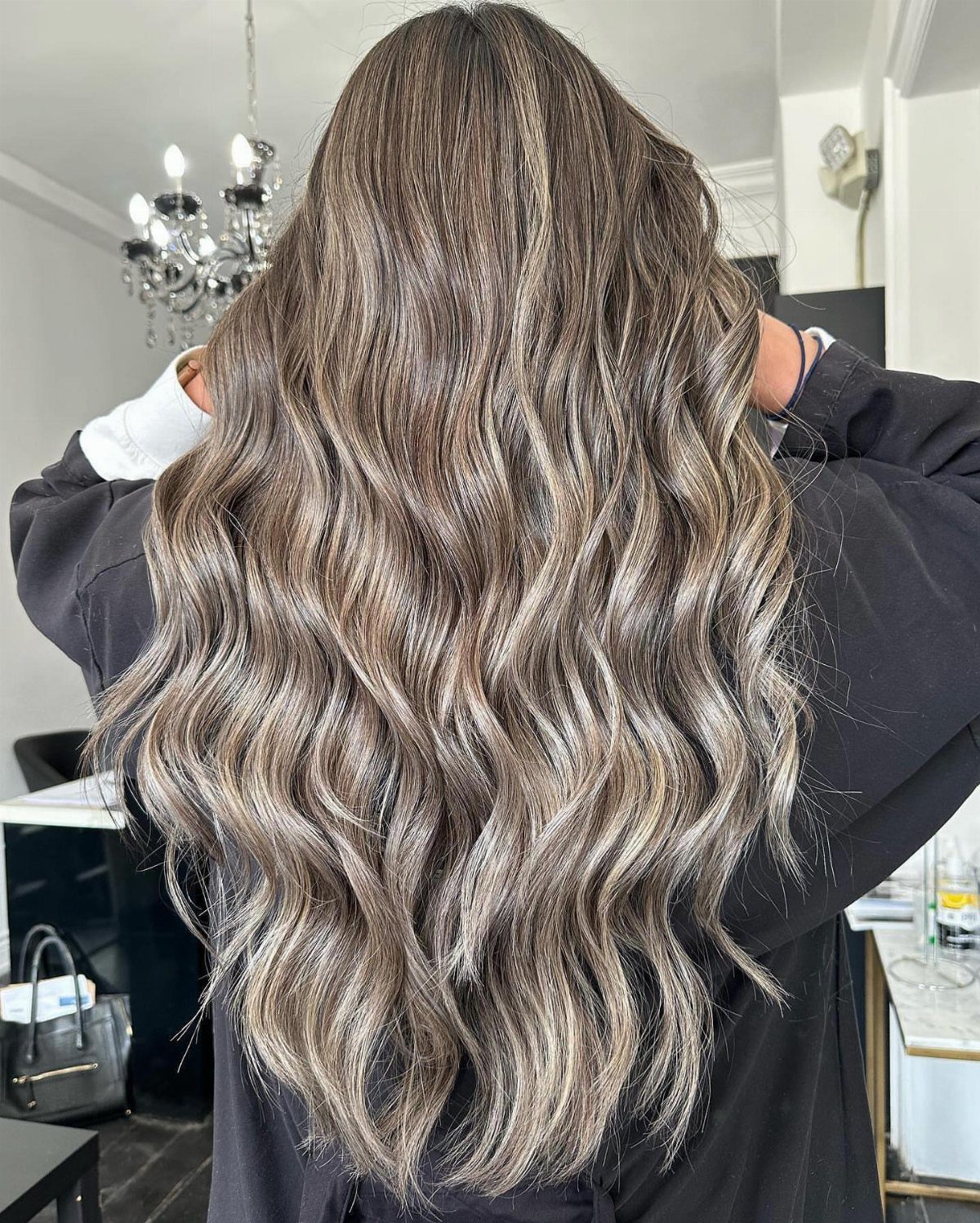
Dark roots give the color its smokiness. The roots stay in, the lengths are lifted and toned with ash, and the blend between them keeps that gradient soft.
Waves show the transition better than a straight finish. Each curve shifts where the light hits, so the smoky effect moves with you.
I’d ask for "smoky ash blonde with a root shadow" and bring this photo. The phrase tells your stylist you want the dark base visible, not hidden.
8. Natural Ash
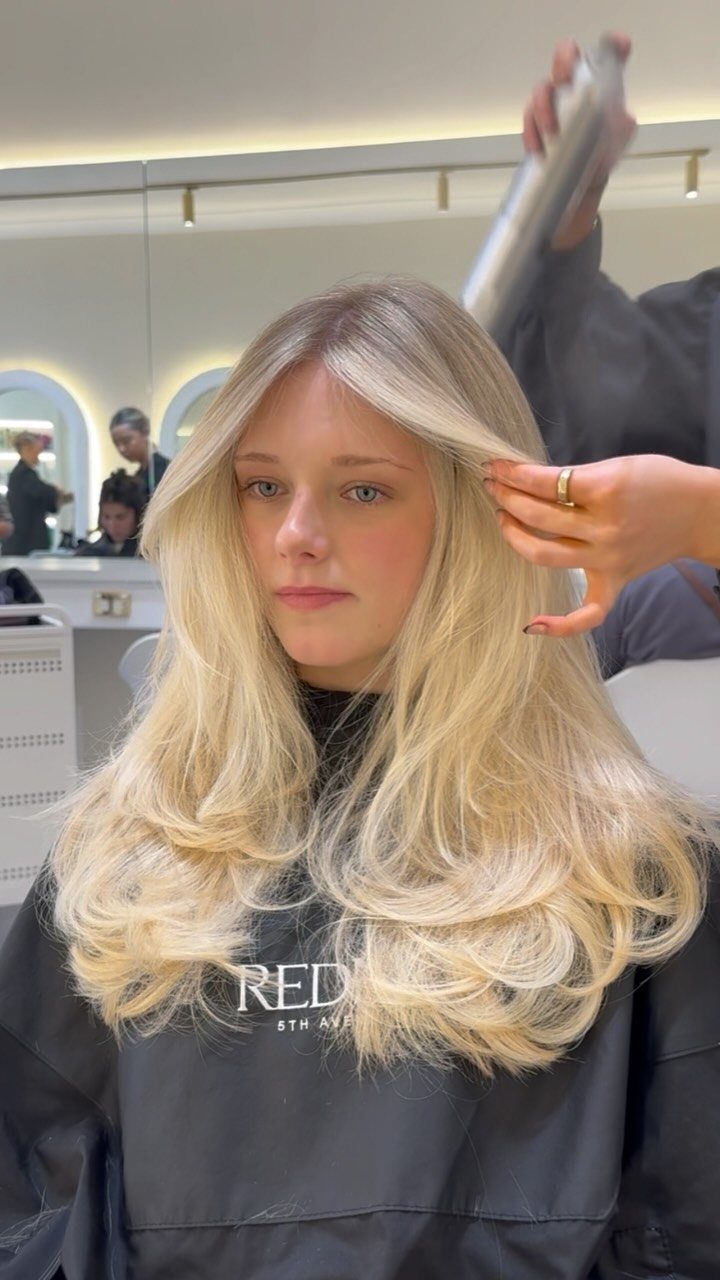
Cool without looking severe: that’s where natural ash sits. It stays pale but reads soft, and you can blend in a little warmth if you want to avoid a fully neutral finish.
Layers cut long through the length keep the ash moving, so that’s what I’d ask for. They give the color movement and keep it from reading flat.
Say "natural ash blonde" at the consult, and if you want warmth mixed in, say that too. "Natural" alone can mean anything.
9. Ash Blonde Balayage
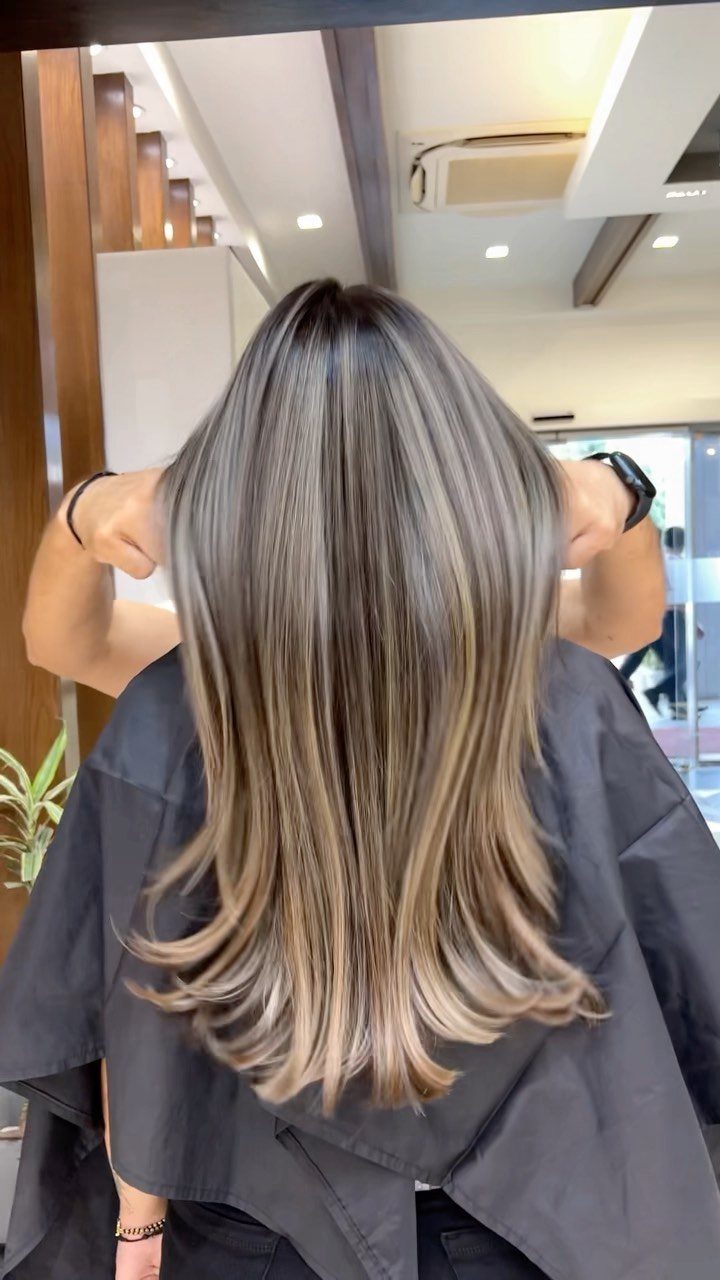
Balayage puts the color where you want it instead of covering every strand. Ash tones are painted through in a way that looks blended, not striped.
Dark roots stay visible, which gives depth and cuts down on how often you need to go back. The painted sections catch light differently than foil highlights do, so the finish looks softer.
Bring a photo and ask for "ash blonde balayage." Say balayage and your stylist hears hand-painted blending rather than a flat, even coat.
10. Caramel Ash
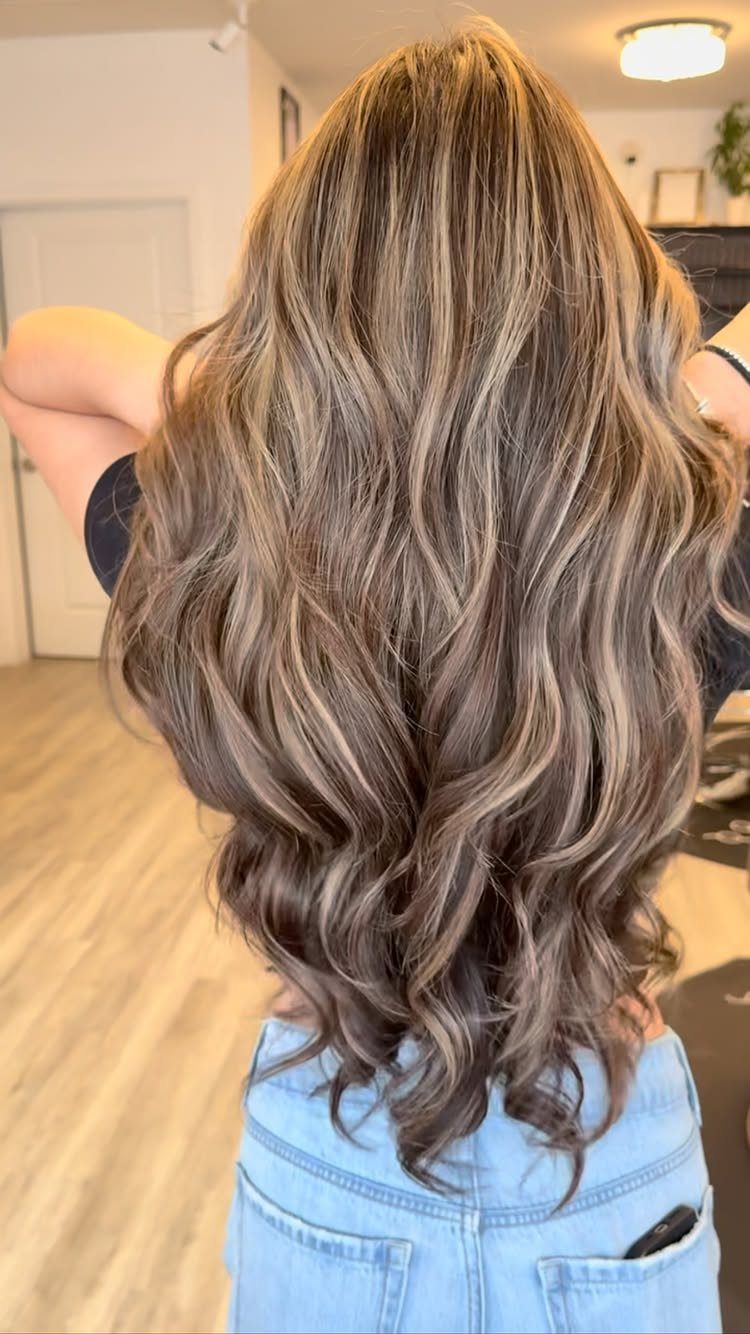
Caramel warms up the cool side of ash, so the overall color sits somewhere between the two. Cool beige strands run next to warm caramel ones, and neither temperature takes over.
Anyone hesitant about going fully cool will find this easier to wear. Caramel’s warmth softens the chill, while the ash cuts any brassy gold, so the color lands between the two.
Ask for "caramel and ash blonde highlights" and hand over your photo, so your stylist knows both tones should run through the strands.
11. Pearl Ash Blonde
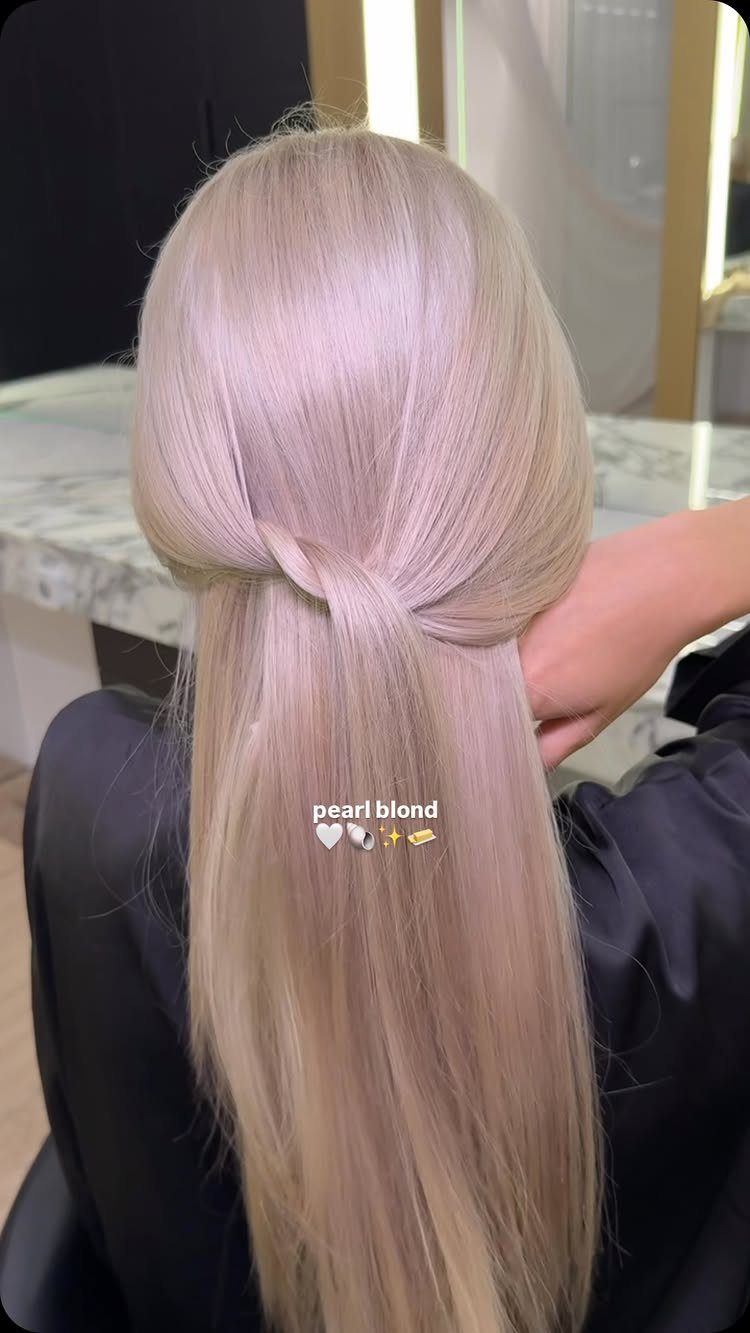
Pearl ash sits between ash and white, with a creamy, reflective quality that keeps it from looking stark. The iridescence shows best in natural light.
Smooth, sleek styles suit it. A flat surface bounces light back more cleanly than textured waves, so the pearly finish reads stronger.
Ask for "pearl ash blonde" and take a photo along. Without one, "pearl" can mean a warmer, more golden result than you’re after.
12. Gray Ash Blonde Balayage
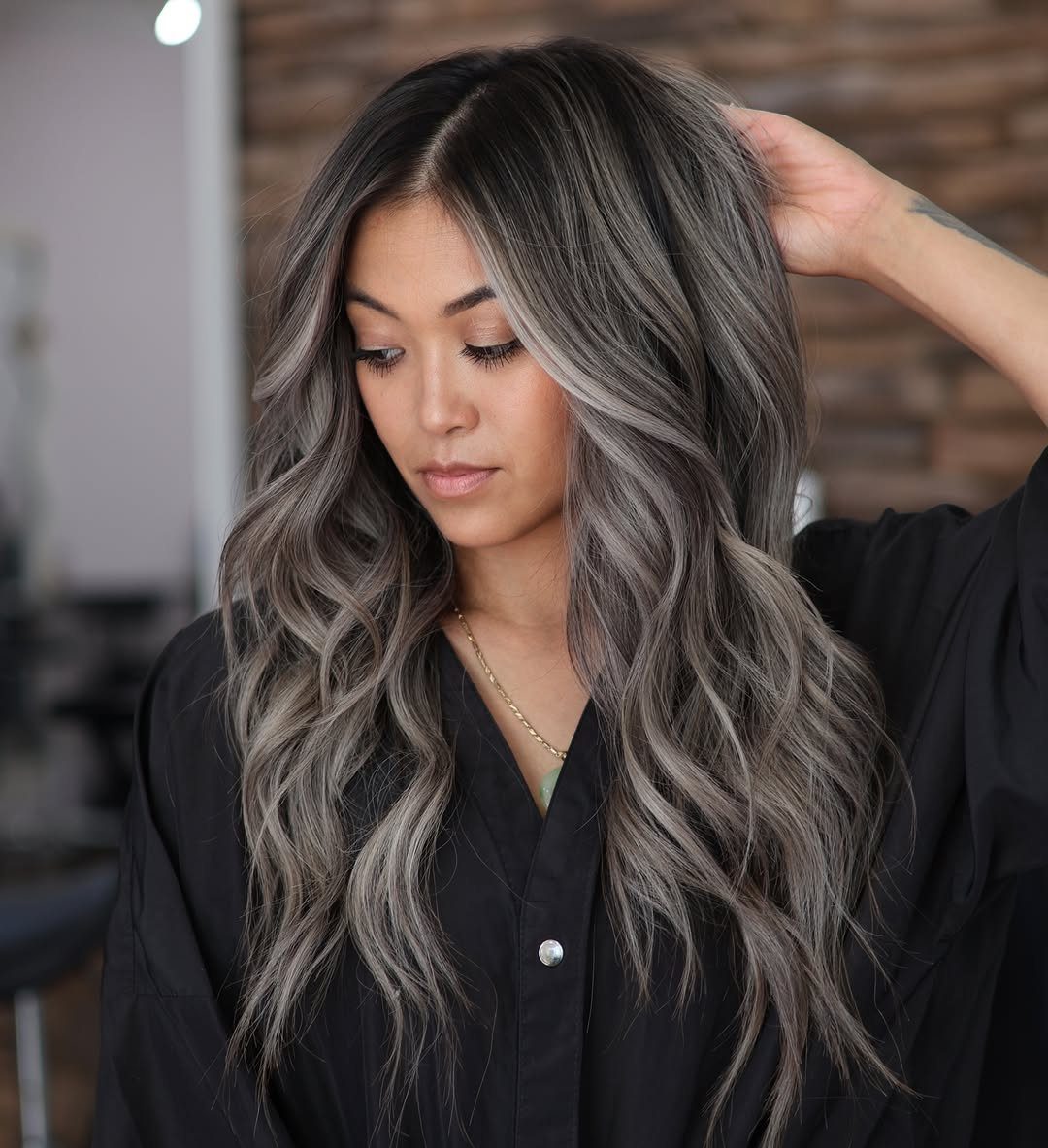
Gray is painted over an ash-blonde base, so the color builds in layers instead of covering the whole head. The darker roots stay in, which gives contrast and makes the gray strands stand out.
Loose waves worn past the shoulders give the painted ends room to show. Each section of color moves on its own, and the layered effect is clearer when the hair has texture.
Use that exact phrase and your stylist knows the gray tones are painted in strands, not laid on as one ash shade.
13. Ash Blonde Gradient
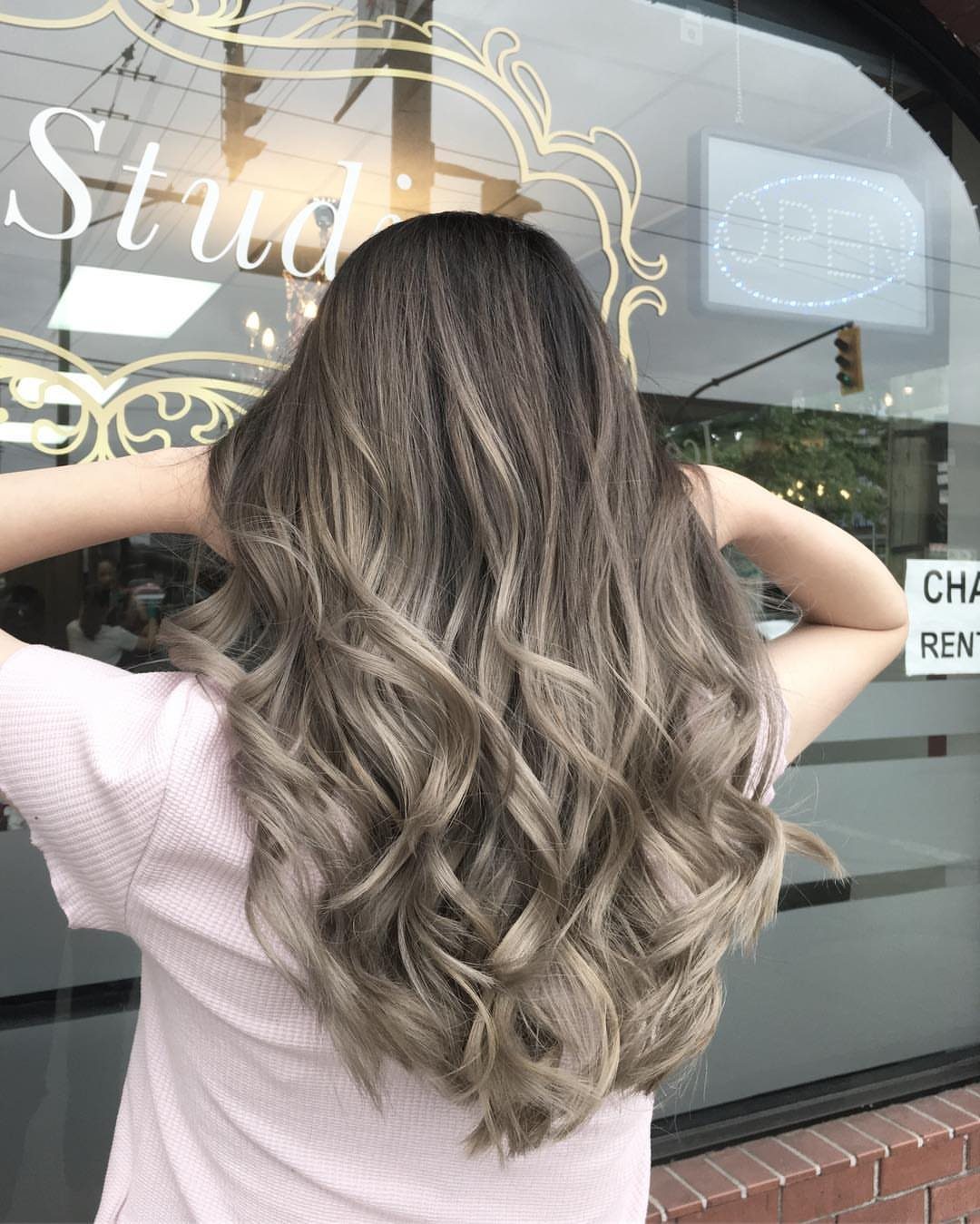
Dark roots melt into cool ash-blonde ends, and the shift happens slowly enough that no line shows where one color stops.
Length is what makes it work, so I’d keep it long and let the fade stretch down the whole back.
Ask for an "ash blonde gradient" and bring a photo, so your stylist knows you want a gradual blend and not a sharp break.
14. Let There Be Light Ash
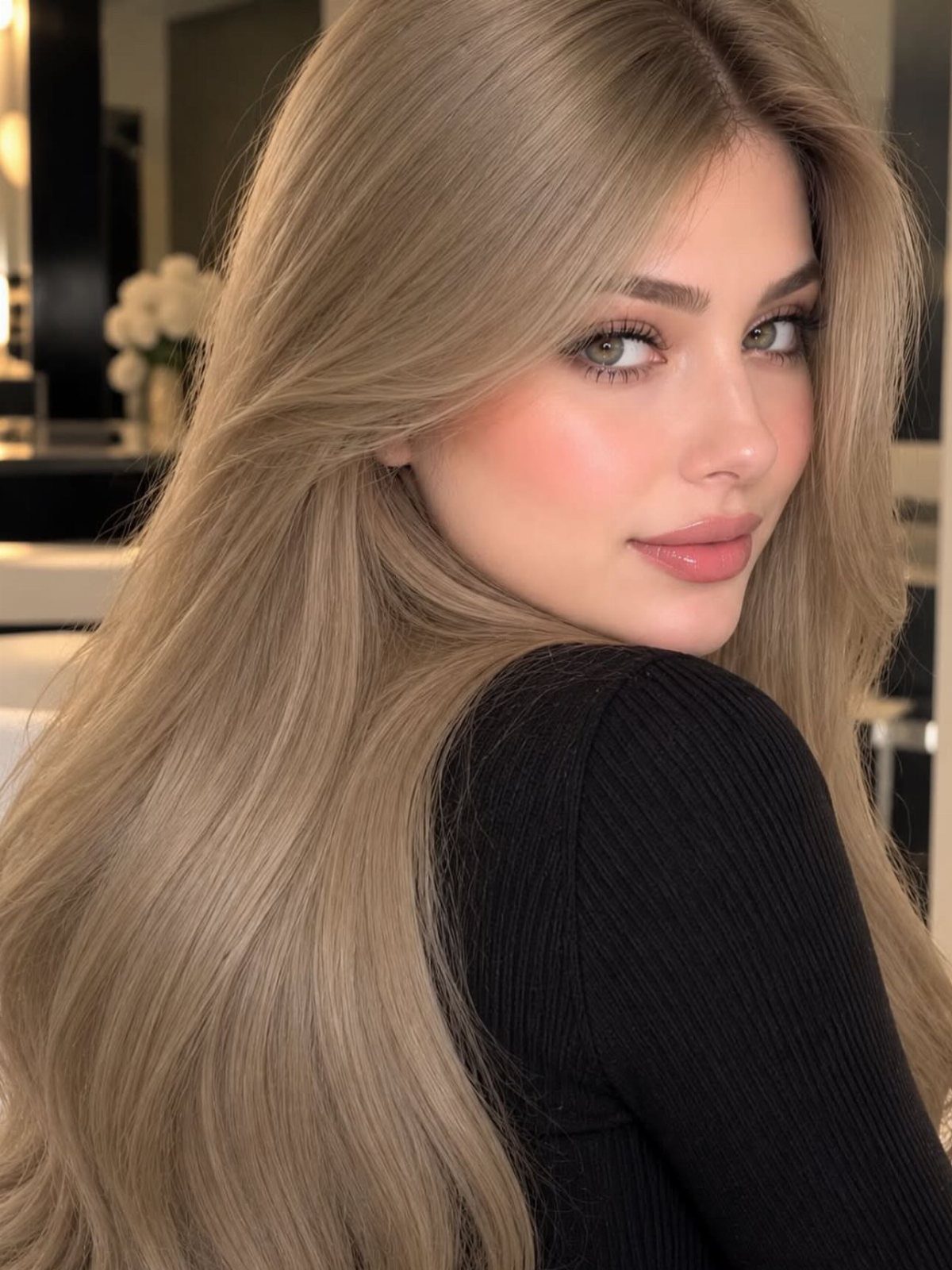
Bright, light ash is the lifted end of the family: pale enough to catch every bit of light, still cool enough to stay clear of yellow.
Long hair worn loose shows that brightness best, and I’d choose it over an updo.
Ask for "light ash blonde" and take a photo, since "light" alone could land warmer or brighter than you want.
15. Ash Blonde Ombre
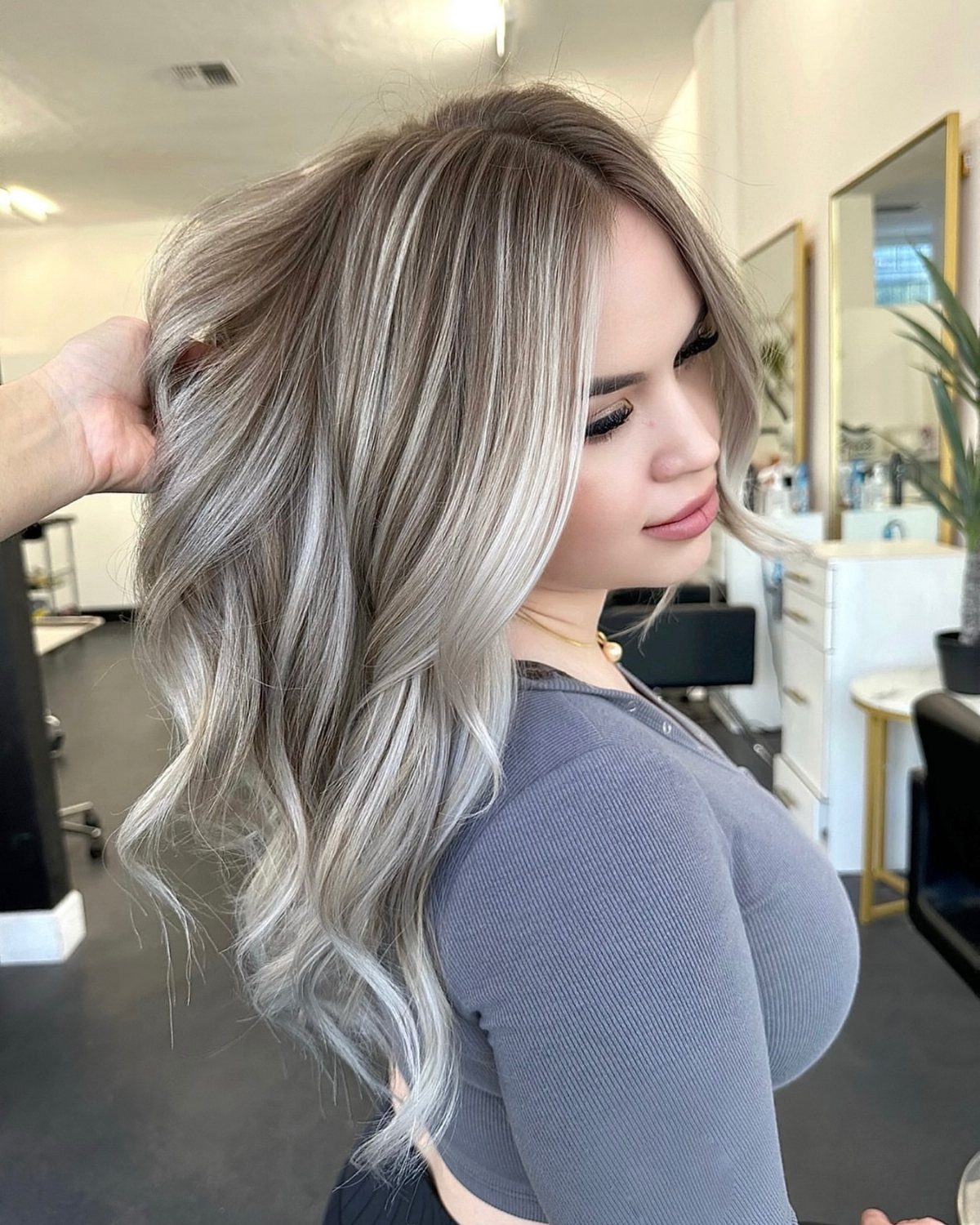
Ombre is the bolder cousin of balayage. Dark roots hold for the first stretch of the hair, then the color moves into cool ash-blonde ends, and curling those ends shows off the pale tone.
I like it on wavy lengths, where the curls give the lightest part some shape. Say "ash blonde ombre" at the consult and mention the dark roots, so your stylist doesn’t blend them out.
16. Champagne Ash Blonde
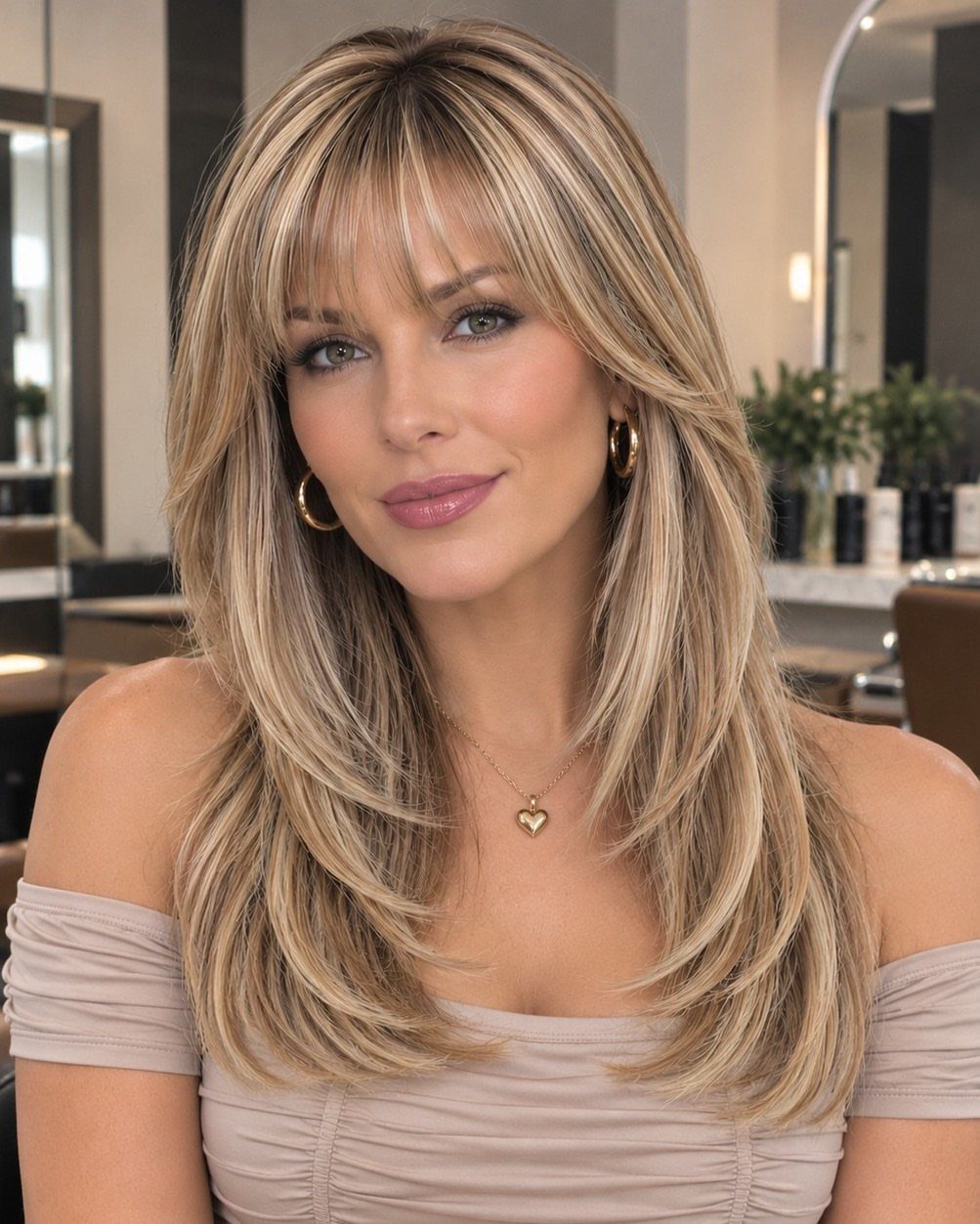
Champagne ash trades some of the chill for a soft golden tint. The result is bright without going icy, which makes it a kinder choice if stark cool blonde feels like too much.
Layers and bangs frame it well, and I’d go with both. Ask for "champagne ash blonde" and hand over a photo, because the amount of gold is what you want to settle before the color goes on.
17. Mushroom Ash Blonde
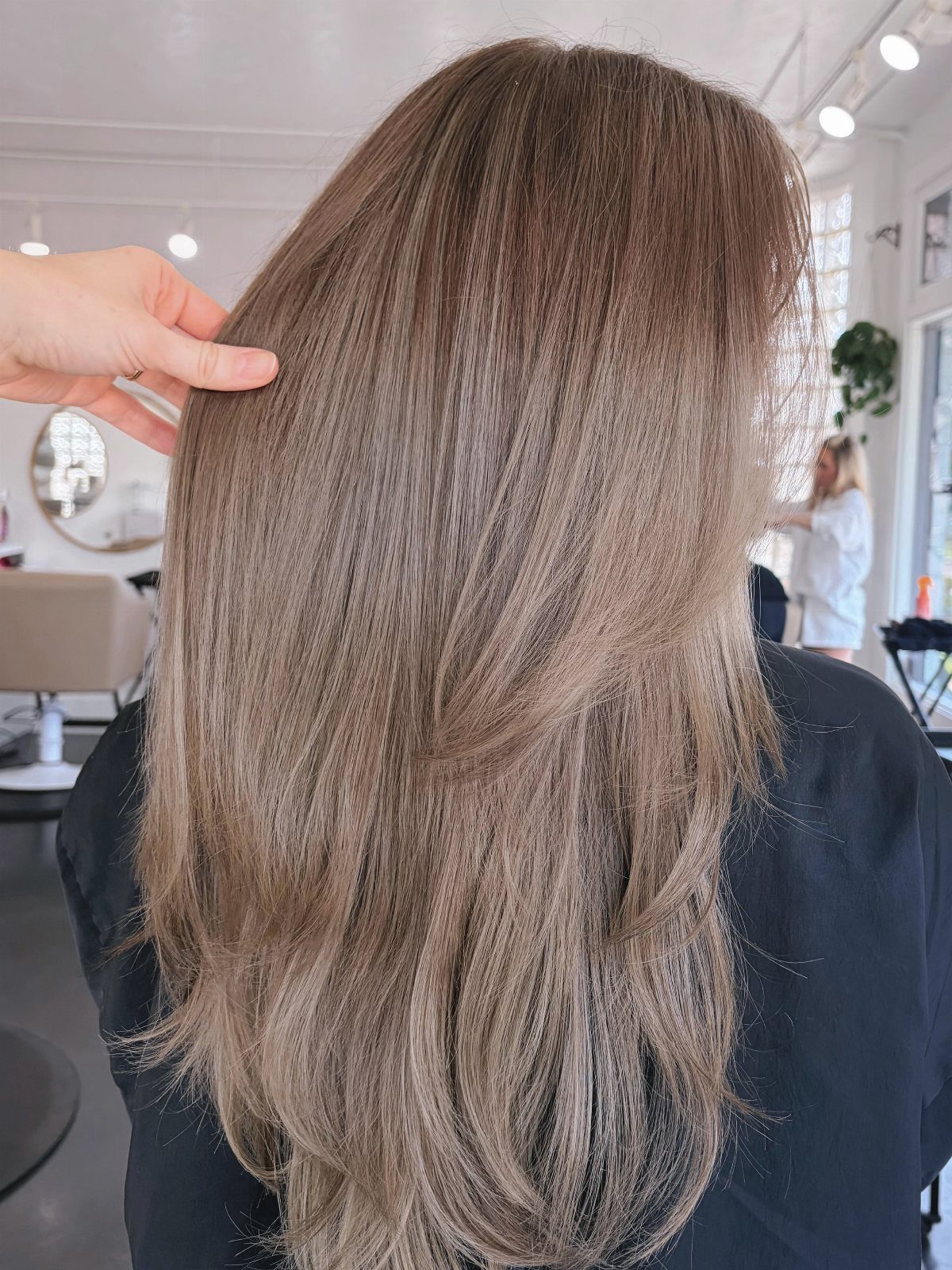
Mushroom blonde is earthy and muted: cool ash blended with beige, with none of the brightness of platinum. Mushroom ash blonde is the understated one, a soft gray-brown blonde that never shouts, and I like that restraint.
Long, straight or softly smoothed hair shows the muted tone best. Ask for "mushroom ash blonde" and take a photo along, since "mushroom" can read more brown or more gray depending on who hears it.
18. Iced Latte Ash Blonde
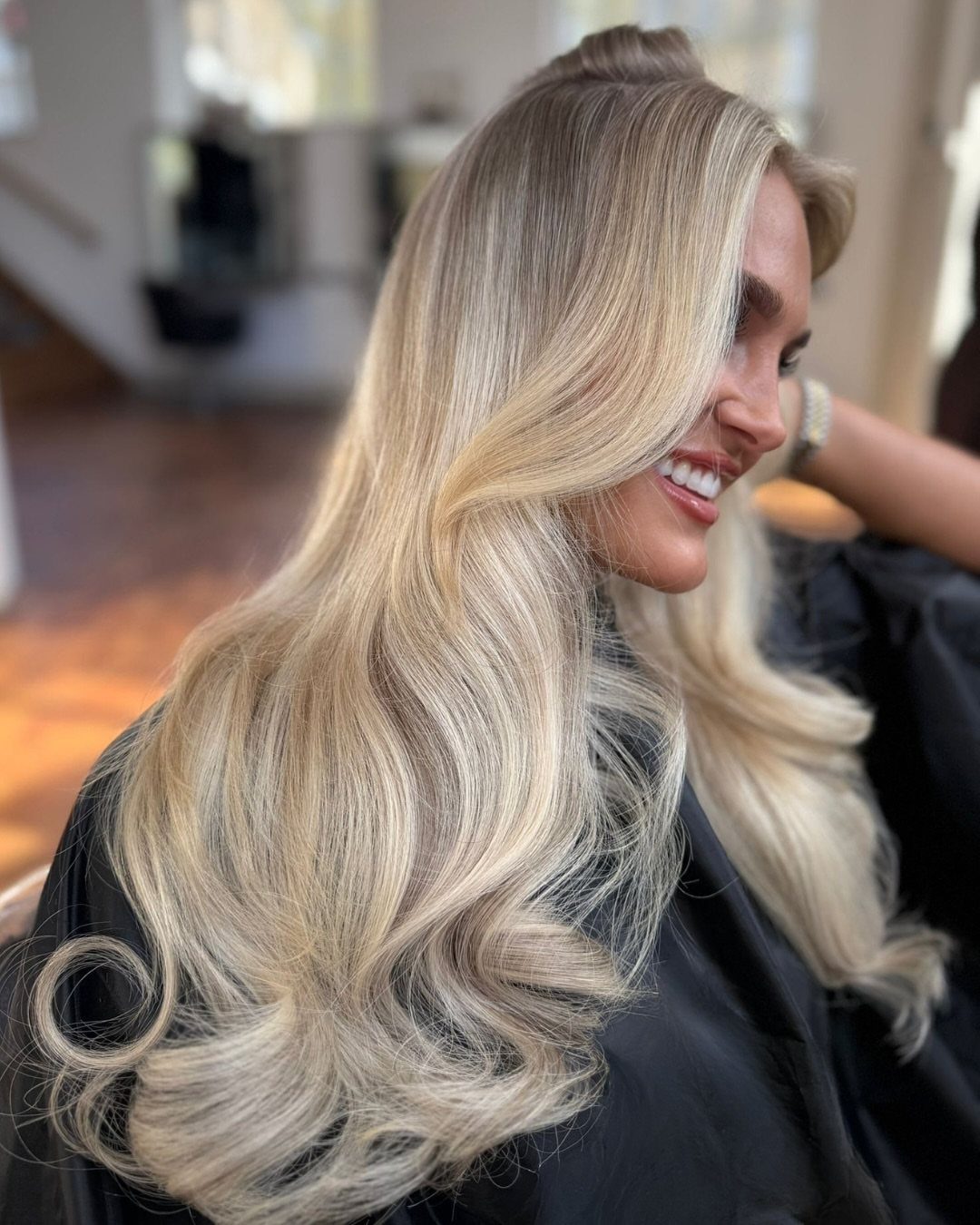
Think of a cool, creamy blonde with a slight milky softness, the shade the name suggests. Voluminous, loose curls suit it, because the movement keeps a soft color from looking flat.
A saved photo and the name "iced latte" will get your stylist to the right depth faster than "ash blonde" alone. The name is more of a nickname than a standard term, so the picture does the real work.
19. Solid Ash Blonde
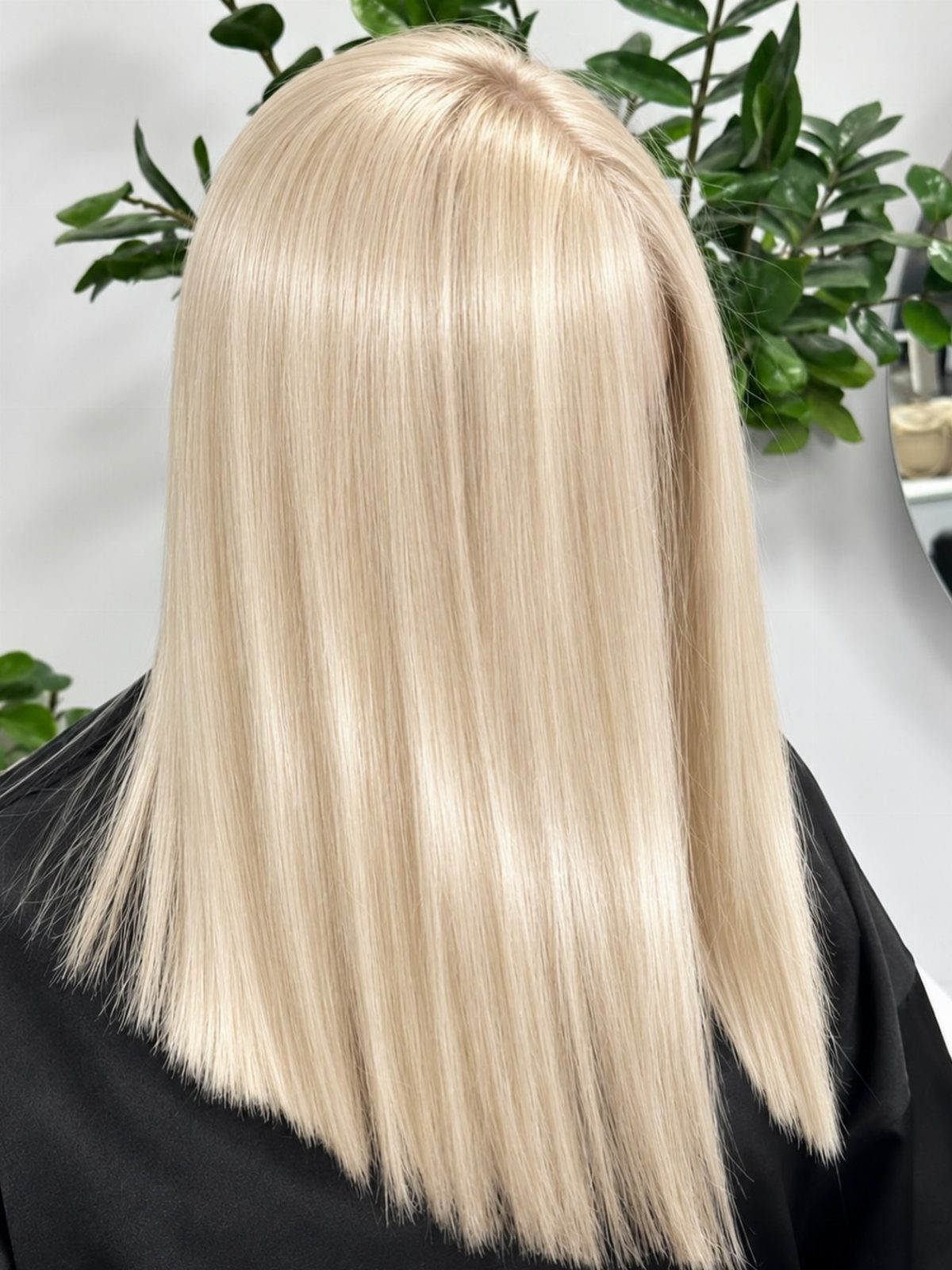
An even, all-over ash shade means no root shadow and no painted contrast, just one cool tone from scalp to ends. On long, straight hair like this, the color reads as a single polished sheet.
Straight length is where I’d wear it. A smooth surface shows off the evenness, and any patchiness would be easy to spot there.
A photo helps, but the wording does the heavy lifting: say "solid ash blonde, all over" so your stylist hears one flat shade from root to tip with no dimension.
20. Sunkissed Ash Blonde
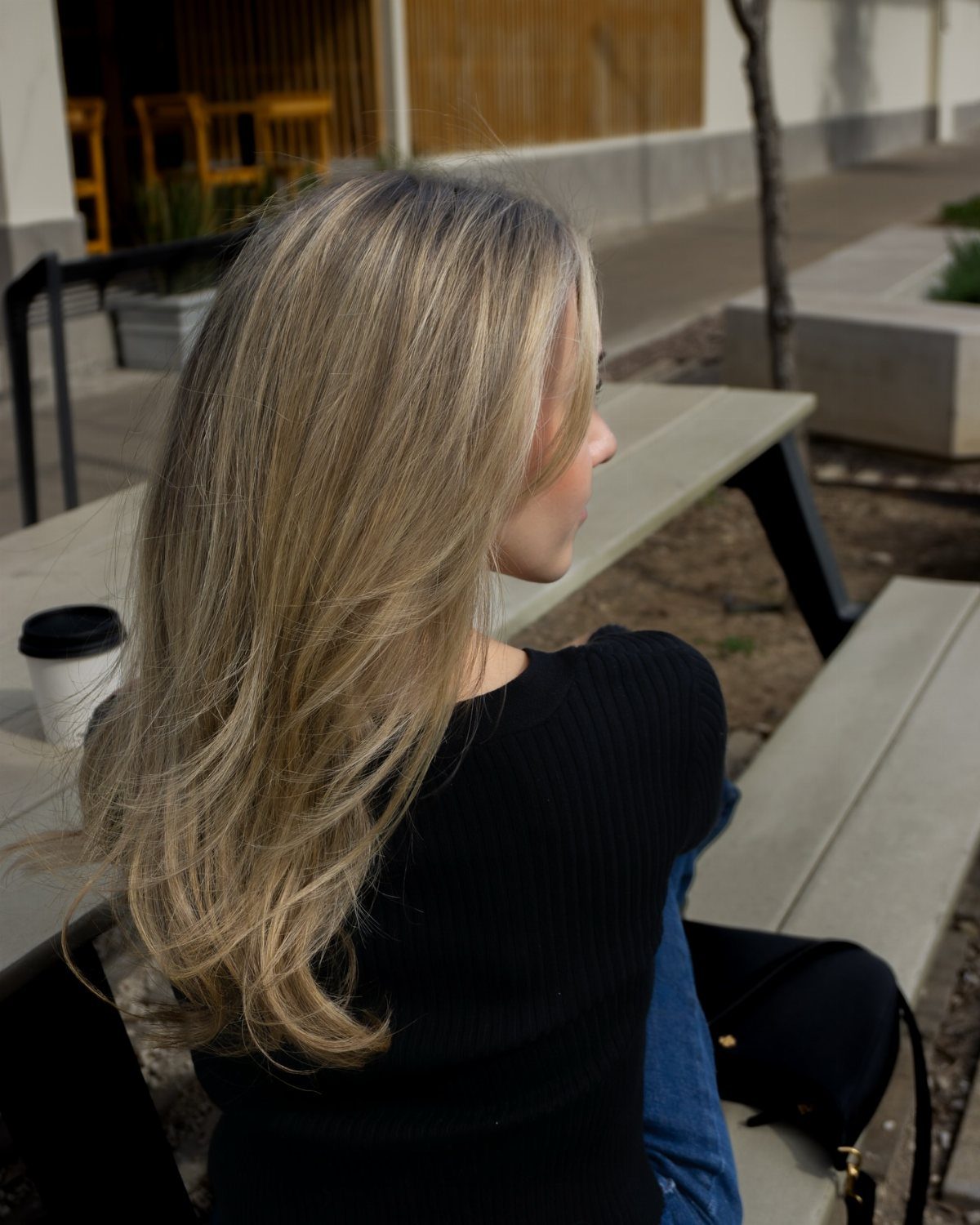
Sunlight softens ash, and this version is built around that. The cool tone stays, but it reads lighter and a little warmer where the light hits, instead of staying flat and gray.
I’d keep it long and loose, since that gives the light more hair to move across.
Ask for a "soft, sunlit ash blonde" and take a photo outdoors if you have one. Ash looks different in daylight than under salon bulbs, so a daylight reference tells your stylist more.
21. Golden Ash Blonde
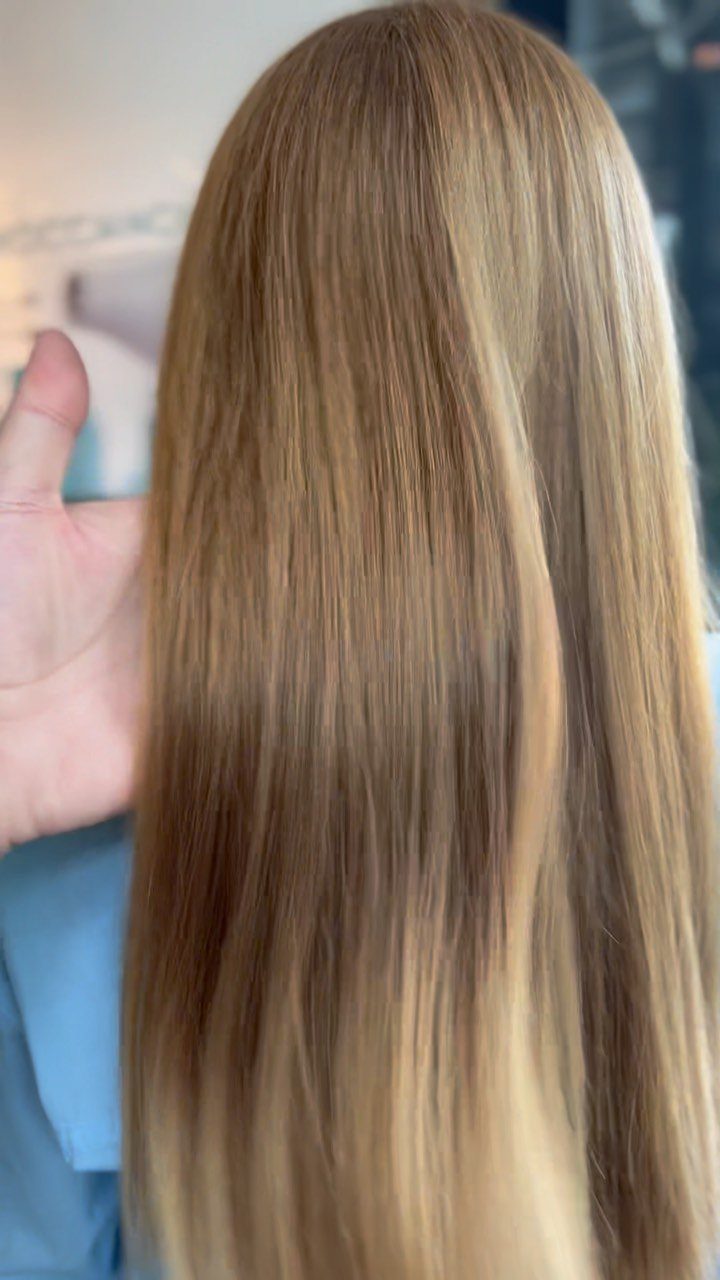
Gold takes the edge off ash here. Cool brown and blonde tones sit together, with enough warmth that the color never looks icy.
Long, straight hair shows that mix cleanly, and I’d choose it over curls for this one. Smooth lengths let the 2 temperatures read side by side.
Say "golden ash blonde" and bring a photo. How much gold you want is the main thing to settle before the color goes on.
22. Ash Bronde
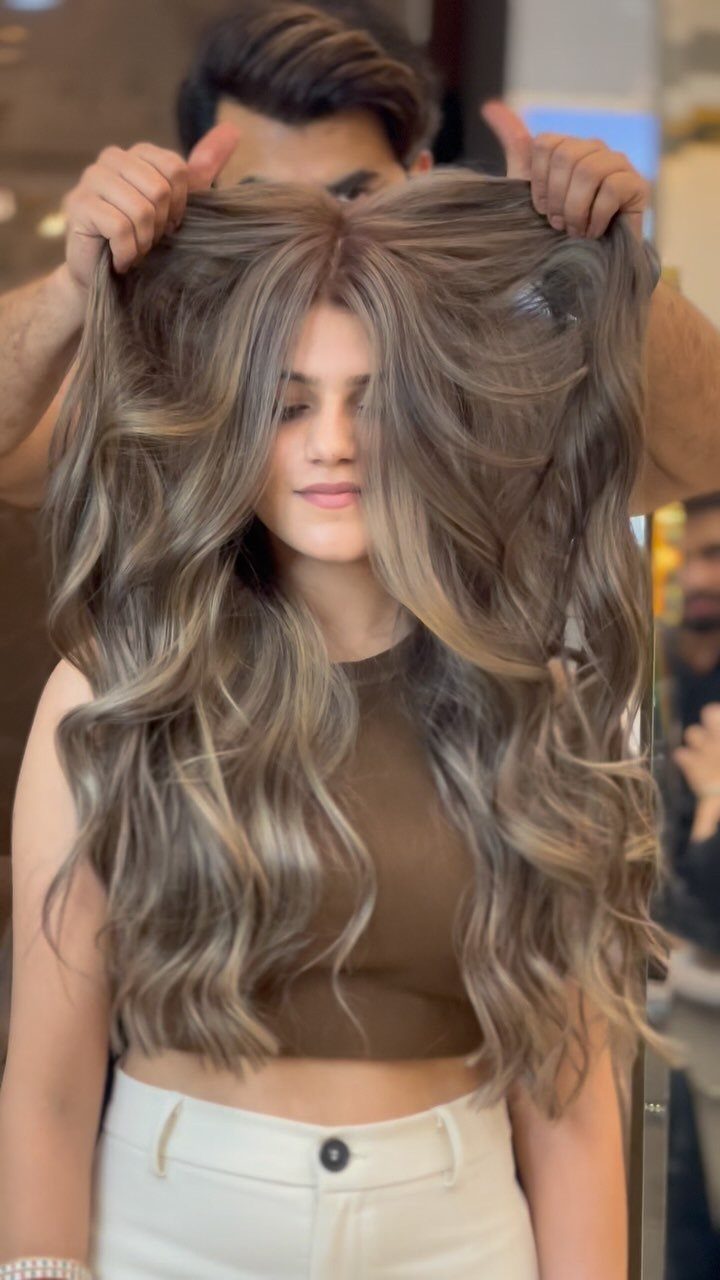
Bronde sits where blonde and brunette meet, and the ash tone keeps it cool instead of reddish or golden. Blonde highlights run through an ash-brown base, so the hair looks brown at first glance and blonde in the light.
Long, loose waves suit it. The curves move the highlights in and out of view.
For this one, "ash bronde" is the name to use, and a photo of your own base color tells the stylist where your starting point sits. That tells them how much brown stays and how much blonde goes in.
Choosing a Shade for Complexion
Cool by nature, ash blonde blends gray, violet, silver and blue undertones, and those pigments neutralize red, copper and yellow before they show. That is why it flatters bluish or pinkish undertones most easily.
Fair skin with a peachy undertone can wear it without looking washed out. Lighter ash suits fair skin, while medium and deeper skin looks better in deeper or beige-toned ash than in a pale, icy one.
A pale or warm complexion can go flat under a fully cool shade.
Olive skin can too, so I’d ask for warmer highlights, lowlights or a darker root to bring some warmth back near the face. The ash still cools the hair, and your skin keeps its color.
Lightening and Hair Condition
Ash is a toning job on top of a lightening job, and the lightening is where hair takes the damage.
A toner can only cancel the color the hair lifted to, so the base has to reach pale yellow first, and violet is what cancels that yellow.
Dark or previously colored hair may need several sessions to get there.
Tell your stylist your color history, and ask for a strand test and a realistic timeline based on your natural level and how much stretch the hair still has.
Ask for bond-repair additive in the lightener and a moisture or protein mask afterward. If the hair isn’t ready for another round, I’d split the lightening across visits rather than risk over-processing.
One more detail: an all-cool toner can leave ash dull. Adding a touch of gold to the toner gives the color more brightness and shine, so it doesn’t go flat.
Maintaining Cool Blonde Tones
Cool tones are the first thing to fade, and heat styling and sun exposure make it happen faster.
Use a sulfate-free purple shampoo once or twice a week, and wash with cool water, since hot water opens the cuticle and lets the toner rinse out faster.
Deep condition weekly and add a leave-in bond builder to repair what lightening damaged. Apply heat protectant before every blow-dry or hot tool, and use a UV-blocking spray when you’ll be outside for long stretches.
For salon visits, 6–8 weeks keeps the shade at its coolest. I wouldn’t stretch a touch-up past 3 months.
Frequently Asked Questions
What is ash blonde hair?
Ash blonde is a cool-toned blonde with gray, blue, violet or silver undertones that cancel out yellow, orange and red warmth.
It ranges from pale silvery shades to deeper smoky beige, and the muted finish reads softer than bright or golden blonde. The cool pigments are what give it that clean, understated look.
Is ash blonde the same as grey?
Ash blonde carries gray in the mix, but the color itself stays blonde. The color stays blonde at its base, while gray tones cool it down and cancel yellow.
Silver ash and platinum ash lean closer to gray, but they still read as blonde with a metallic or smoky quality rather than full gray.
Is ash blonde hair color a good choice for all skin tones?
Ash blonde flatters cool undertones most easily, but the right depth can work on different skin tones.
What happens if you put ash blonde on brown hair?
Ash blonde on brown hair needs lightening first before the cool toner goes on.
Dark hair has to lift to pale yellow before the ash pigments can cancel that warmth, and that may take several sessions depending on your starting level.
Without enough lift, the ash won’t show, and you’ll end up with a muddy or brassy result instead of cool blonde.
What is a neutral blonde hair color?
Neutral blonde sits between warm and cool, with no strong gold or ash dominance.