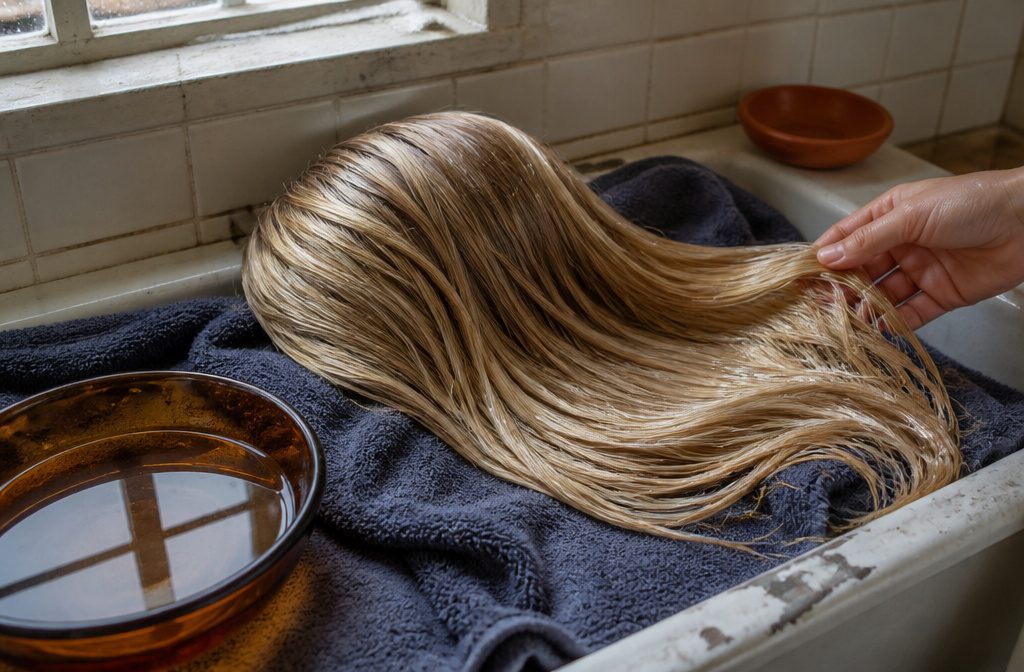
Glaze is a surface coat that smooths and tints blonde hair without opening the cuticle, so it rinses out in 1–2 weeks, while gloss is demi-permanent and lasts 12–24 shampoos.
Read the label first on recently lightened hair: one copper glaze bottle said not to use it within 12 months of bleaching.
How Glaze and Gloss Work
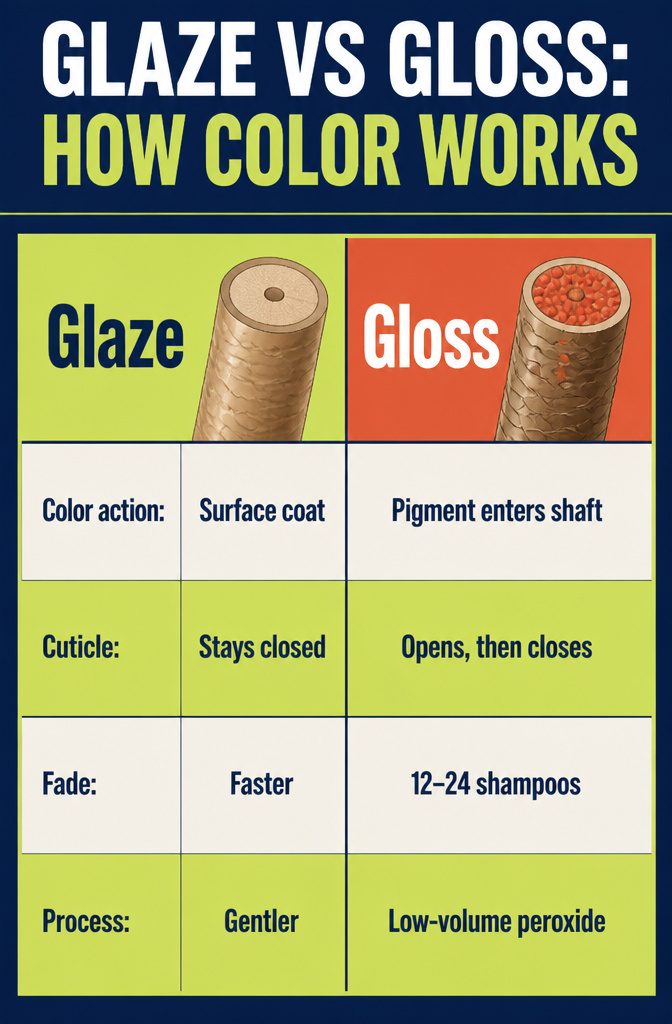
Gloss penetrates the hair shaft using a developer or low-volume peroxide to deposit color, while glaze sits on the surface and coats what’s already there.
That’s the core split. A gloss is demi-permanent, meaning it opens the cuticle just enough to let pigment in, then closes back down.
The result lasts anywhere from 12 to 24 shampoos. Glaze leaves the cuticle closed, which means faster fading but a gentler process overall.
Super Gloss lands somewhere in between.
It’s described as a semi-permanent, color-depositing mask, like tinted moisturizer for your hair. It shifts tone and adds shine without the commitment of a full gloss.
Neither one lifts color the way bleach does.
Gloss formulas are usually acidic, which smooths the cuticle as they deposit pigment. That’s where the shine comes from, not just the color itself.
What Each Does for Blonde Hair
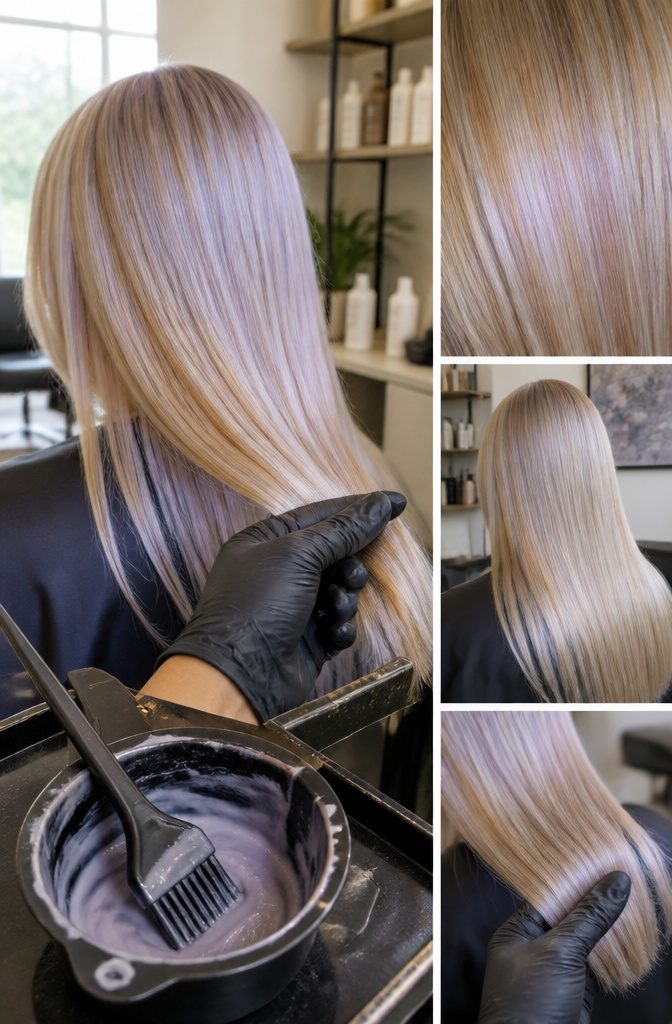
Both add shine and refresh color, but glaze does more for frizz control because its formula coats the cuticle and smooths the surface. That matters if your blonde is porous from lightening and tends to look dry between salon visits.
For blonde-specific work, purple gloss cuts brassy yellow undertones in light to medium blonde without depositing much pigment. Gold tones work if you want to lean into warmth or brighten strawberry blonde.
One stylist on hair.com used a small amount of Redken Shades EQ 010VV Lavender Ice mixed with Crystal Clear to neutralize brassiness and leave a mirror-like shine. The violet cuts the yellow, the clear keeps it sheer.
Owners on Reddit mention checking whether a glaze is safe for recently bleached hair.
One user with balayage done two months prior found her copper glaze bottle said not to use on hair bleached within twelve months, so if you lifted your blonde recently, read the bottle before you put it on.
How Long Each Lasts
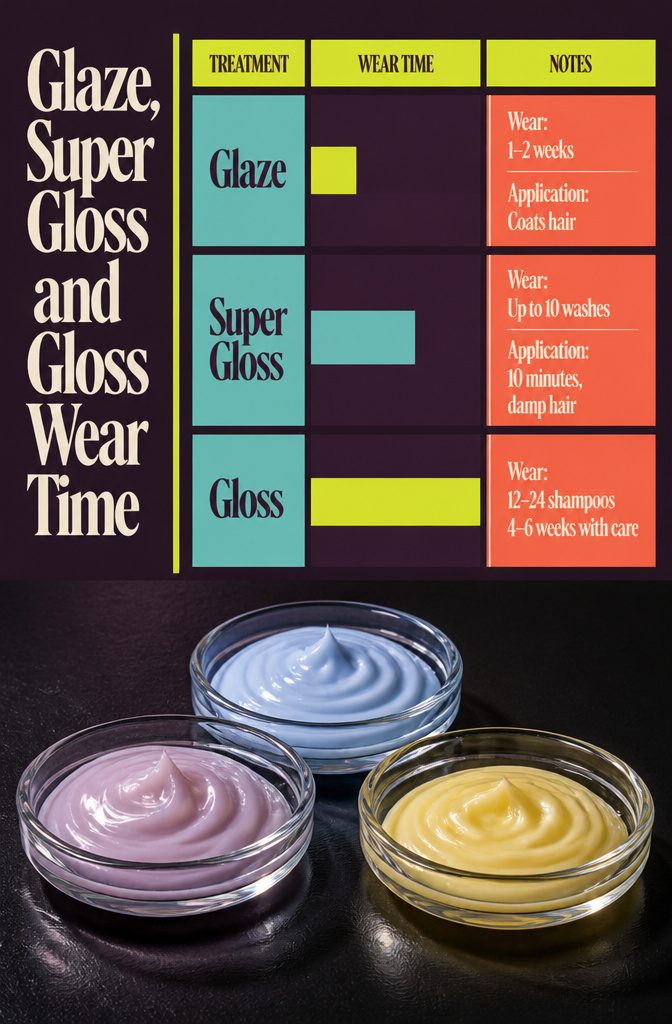
The gap is wide, and one line spells it out:
Results of some hair gloss formulas, like Shades EQ, last between 12 to 24 washes, while the benefits of a hair glaze will likely wash out after one to two weeks.
— Hair.com
Glaze means touching up every week or two. Side by side:
| Treatment | Wear time | Notes |
|---|---|---|
| Glaze | 1–2 weeks | Coats the hair |
| Super Gloss | Up to 10 washes | 10 minutes on damp hair |
| Gloss | 12–24 shampoos, or 4–6 weeks with care | Demi-permanent color |
I’d book a salon gloss every 4–6 weeks, as Redken colorist Tracey Cunningham recommends, and let a glaze or Super Gloss cover the gaps.
At Home or in the Salon
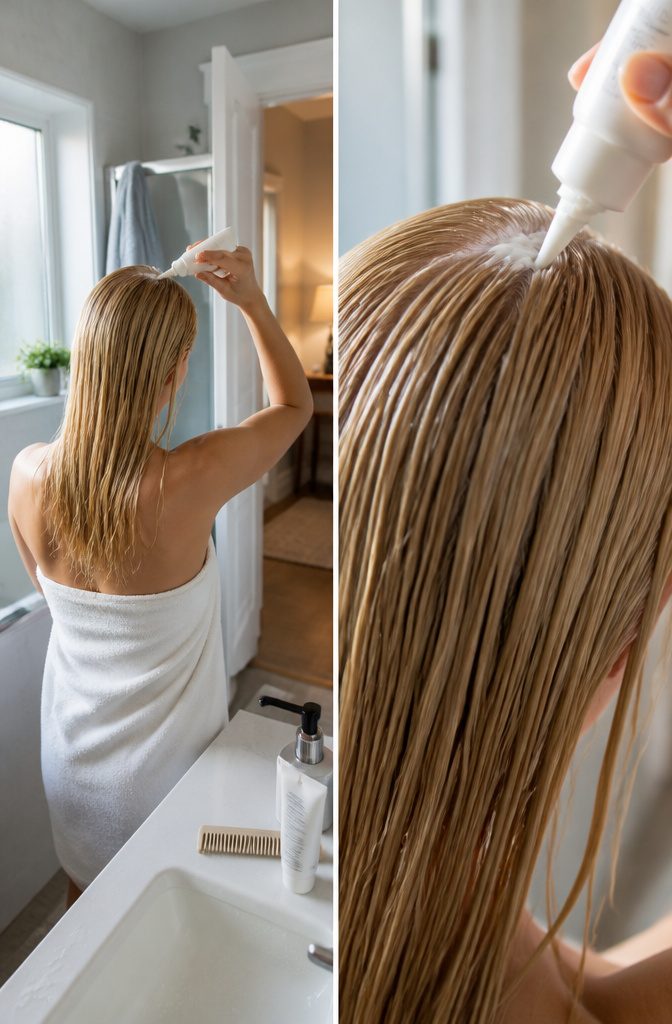
Home routines vary by product, so read the label before setting a timer.
Super Gloss goes on clean, damp hair after shampoo, sits 10 minutes, then rinses out. A glaze applies like a mask and needs only a few minutes.
Pureology’s Color Fanatic Top Coat is the fastest of the three at 5 minutes, and its precision nozzle spreads the formula evenly. I’d pick it for quick touch-ups between salon visits.
The other route is the professional in-salon gloss. It means booking an appointment instead of adding a step to your shower, but it’s the better choice when you’d rather have a stylist handle the back of your head.
Choosing a Shade for Blonde Hair
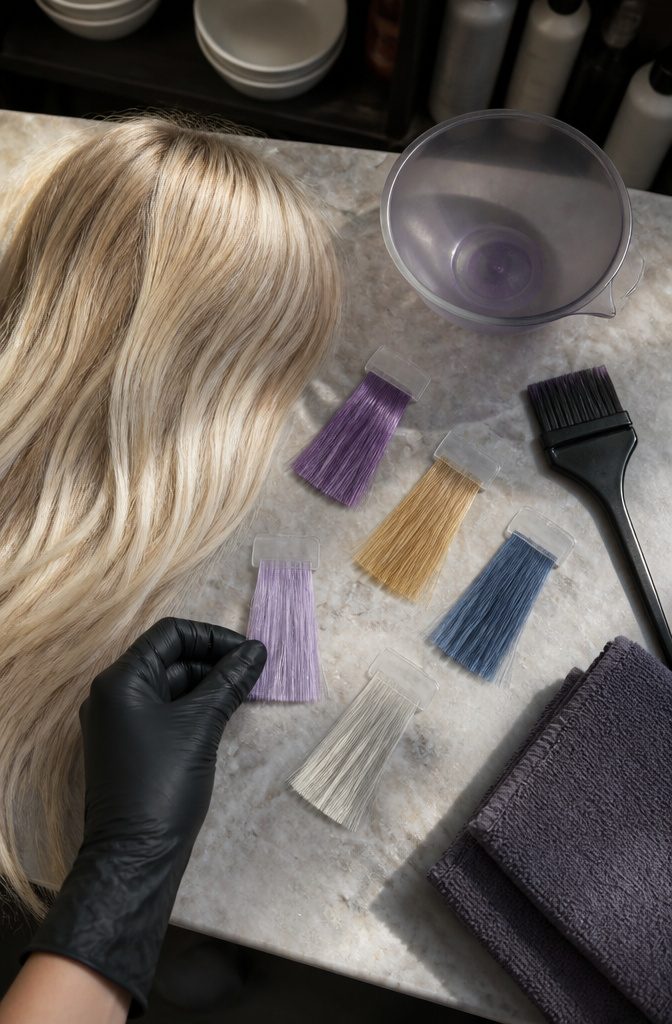
Match the shade to the lightest tones in your hair, then pick by the problem:
- Purple (Color Fanatic Top Coat + Tone Purple): brassy yellow on light to medium blondes.
- Gold: strawberry blondes, or natural blondes wanting golden tones.
- Blue: dark blondes and brunettes with orange undertones.
- Lavender mixed with clear gloss: unwanted warmth.
- Unsure: Sheer Glow, or the 30-second Shade Selector Quiz.
Super Gloss offers 10 shades, 3 highlight hues and 1 Sheer Glow.
Skip shades made for brunettes, redheads or black hair. If bleached hair has been dyed darker, I’d go straight to Sheer Glow, since a color shade can react with the lightened hair underneath.
Drawbacks and Formula Cautions
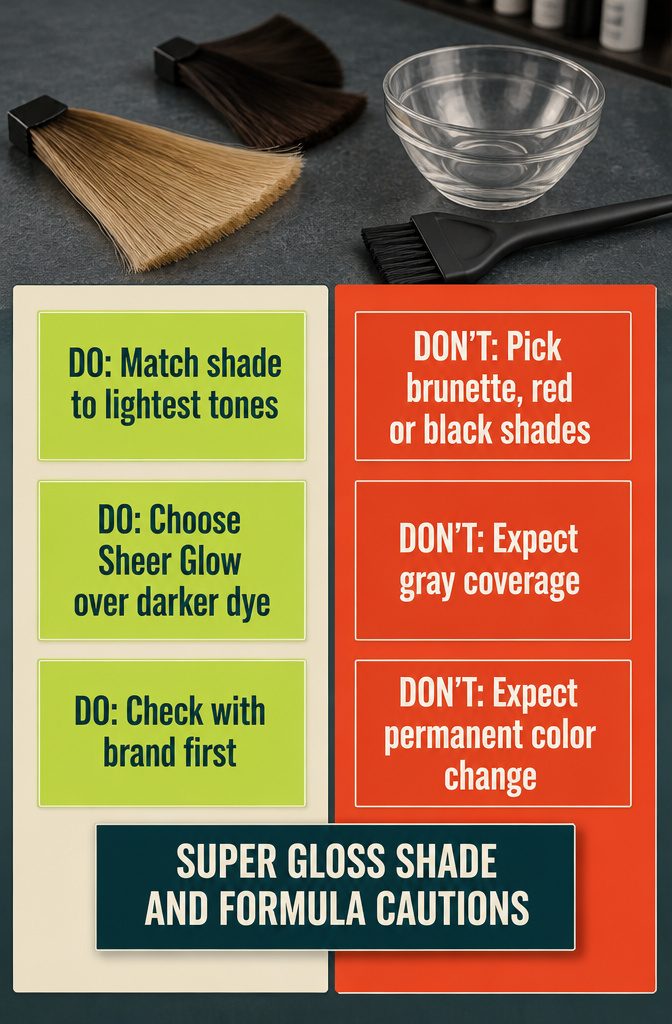
Glaze washes out with shampoo, and it will not cover grays. Super Gloss is a gloss treatment, not permanent dye, and it is not designed to change your color.
Blondes and anyone with highlights should skip shades made for brunettes, redheads or black hair. Match a color shade to the lightest tones in your hair.
Hair that was bleached and then dyed over with a darker color needs extra care, because Super Gloss can interact with the lightened hair under the dye.
I’d reach for Sheer Glow there, or contact the brand first. On the formula side, Super Gloss is free of silicones, PPD, ammonia and parabens.
Frequently Asked Questions
What is the difference between hair gloss and hair glaze?
A gloss is demi-permanent and opens the cuticle to deposit color, while a glaze only coats the surface of the hair. That shows in wear time: a gloss lasts 12–24 shampoos, and a glaze lasts about 1–2 weeks.
What is hair gloss and what does it do?
Gloss is a demi-permanent color treatment that deposits a wash of color through the cuticle.
It can tone or enhance your shade, blend roots, cover grays, and add shine and softness. It does not lift color the way bleach does.
What does a glaze on blonde hair do?
A glaze is a clear or tinted coating that adds shine, smooths frizz and refreshes color without opening the cuticle.
That helps porous, lightened blonde that looks dry between salon visits. If you bleached recently, read the bottle first, since one copper glaze warned against use on hair lightened within 12 months.
How do you get glossy blonde hair?
Get a salon gloss every 4–6 weeks, and ask for a purple shade if your light to medium blonde turns brassy yellow.
Gold tones work for strawberry blonde or for leaning into warmth. A glaze or Super Gloss between appointments keeps the shine going.
Is gloss damaging to hair?
Gloss is kinder than permanent color or lightening, and it does not lift hair.
Most formulas are acidic, which smooths the cuticle rather than roughing it up. Super Gloss is also free of silicones, PPD, ammonia and parabens.
Can I gloss my hair at home?
Yes. Super Gloss goes on clean, damp hair for 10 minutes before rinsing, and Pureology’s Color Fanatic Top Coat takes about 5 minutes.
A salon gloss is the better pick if you want a stylist to handle the back of your head. If your bleached hair was dyed over with a darker color, use Sheer Glow or contact the brand first.
Do you wash out hair glaze?
Yes.
A glaze goes on like a mask, sits for a few minutes, and rinses out. Shampooing then wears it down, so expect it to be gone within 1–2 weeks.
What are the cons of hair glaze?
A glaze fades with shampoo, so you need a touch-up every 1–2 weeks. It also will not cover grays, because it coats the hair rather than changing the color underneath.
How often should I gloss my hair?
A salon gloss every 4–6 weeks is the schedule Redken colorist Tracey Cunningham recommends. A glaze, which lasts 1–2 weeks, or a Super Gloss, which lasts up to 10 washes, can cover the gaps between appointments.