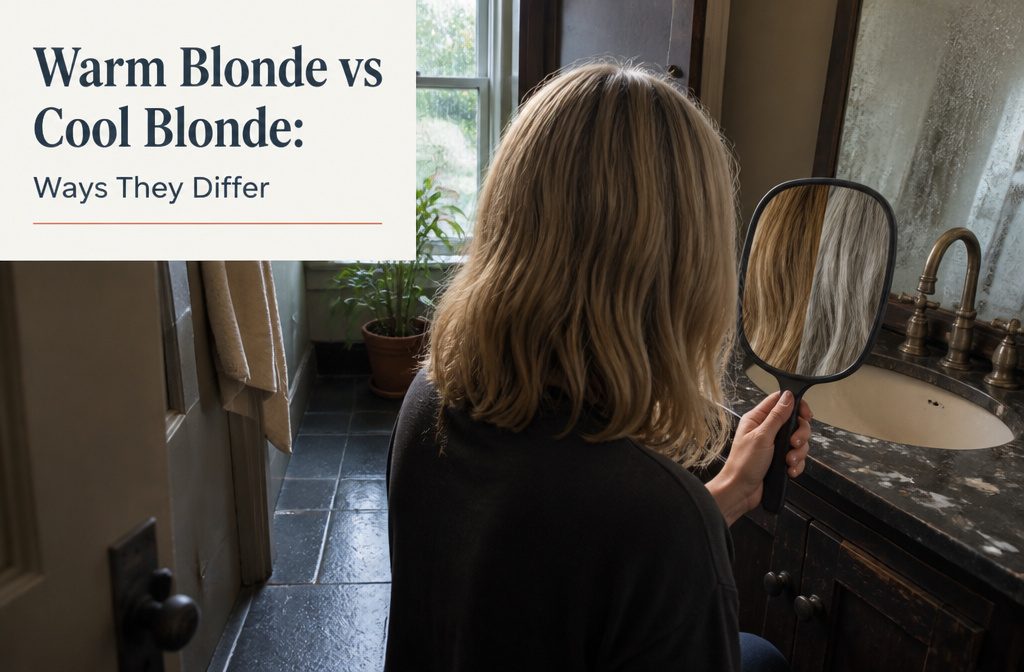
Cool blonde suits cool or pink undertones, warm blonde suits golden skin, and neutral blonde works for both.
But a deliberate mismatch can shift how your complexion reads: ash or platinum tones down warmth, while honey or caramel adds glow to cooler skin.
Cool blonde also fades faster, turning yellowish in 2–4 weeks against warm blonde’s 4–6, so upkeep decides as much as skin tone.
1. What Warm and Cool Blonde Actually Look Like
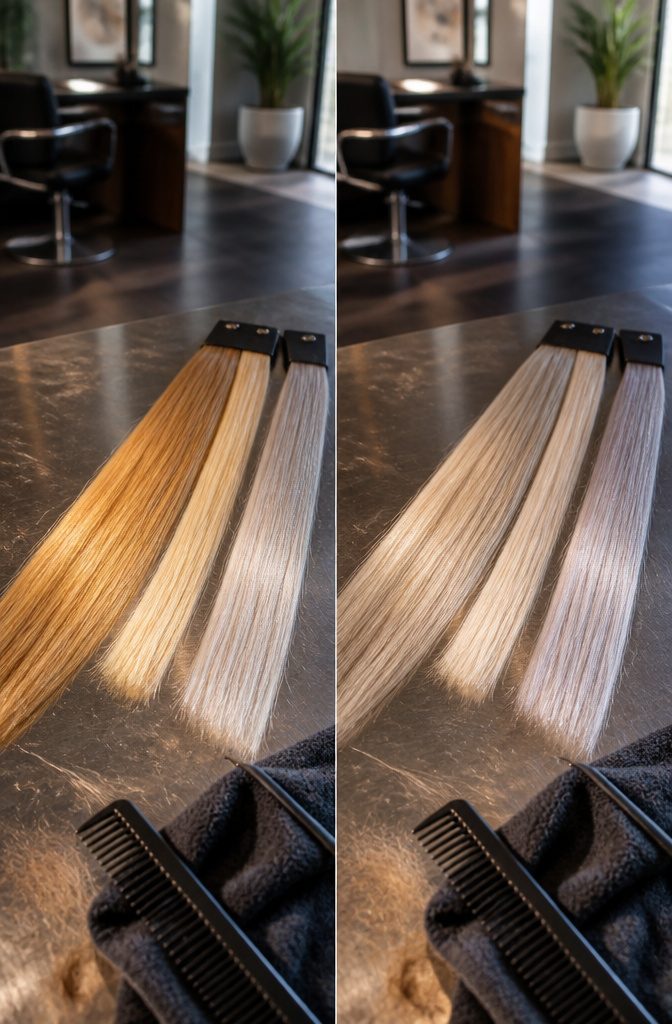
Warm blonde carries gold, yellow, orange or red pigment, which is why honey, butter, caramel and strawberry shades look like sun on hair. Cool blonde swaps that for ash, violet and blue, and the result reads icy, silver or pearl.
Platinum, champagne and ash all live here. Side by side, warm looks golden and glowing while cool looks crisp and almost metallic.
From about 5 feet away the two can be hard to tell apart. The difference shows up closer in, and in flash photos, where warm turns amber and cool can look nearly white.
Beige, sand and mushroom blondes sit in the middle. If you can’t decide, I’d start with neutral, since it leans neither way and suits a wider range of skin tones.
2. How Skin Undertone Matches Blonde Tone
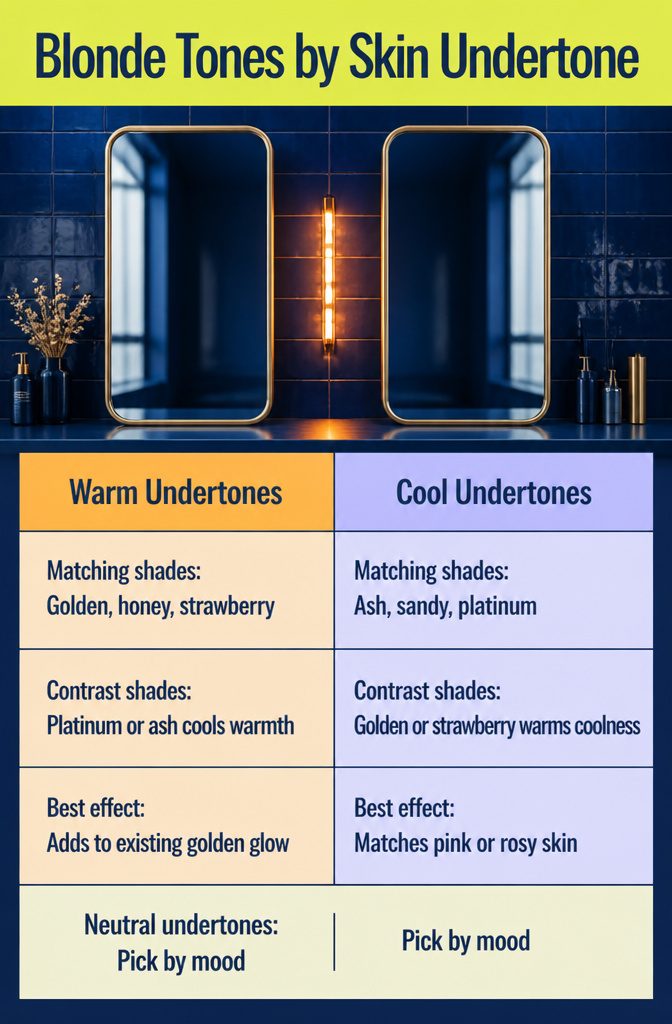
Golden, honey and strawberry blondes sit best on warm, golden skin, where they add to the glow already there.
Ash, sandy and platinum suit cool, pink or rosy undertones, since the cooler tone matches the skin instead of fighting it. Neutral undertones get the widest choice, and I’d say that group can pick on mood alone.
Matching is the safe route, but it isn’t the only one. A contrasting shade can warm up or balance your complexion: golden or strawberry blonde adds color to a cool undertone, while platinum or ash tones down a warm one.
I lean toward contrast for anyone bored with their reflection, ideally paired with a new cut.
Which Tests Tell You Your Undertone
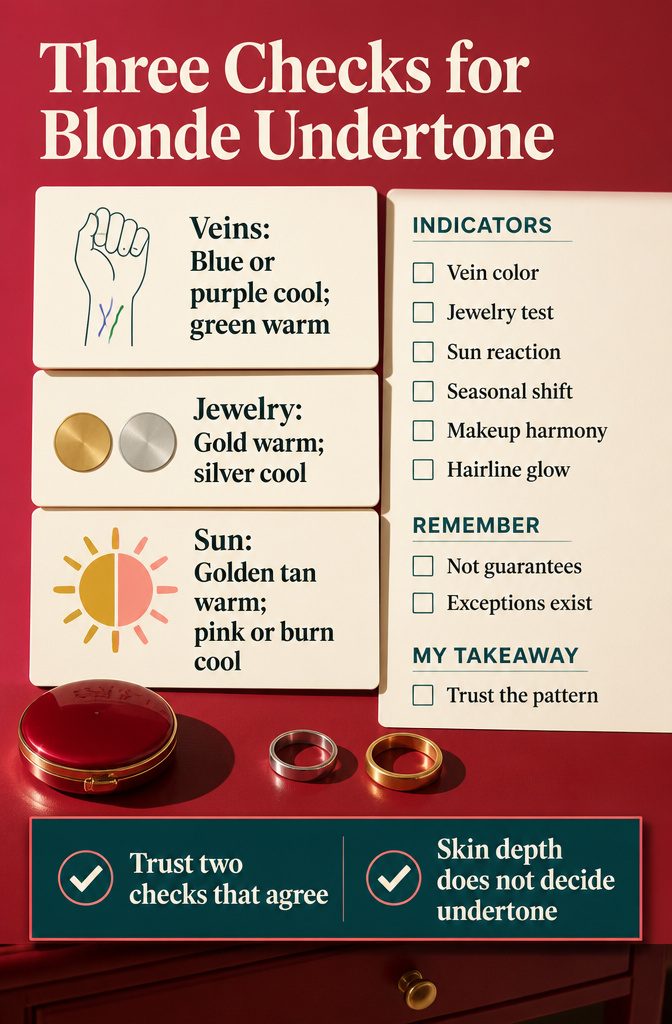
Three checks tell you most of what you need before you choose a blonde:
- Veins: Look at the inside of your wrist. Blue or purple points cool, green points warm, and a mix points neutral.
- Jewelry: Hold gold, then silver, near your face. Gold flatters warm undertones, silver flatters cool, and if both look good you’re probably neutral.
- Sun: Skin that tans easily with a golden glow leans warm. Skin that burns first, or tans pink or reddish, leans cool.
These are indicators, not guarantees, and sun reactions have exceptions.
Across all three, I trust the answer at least two checks agree on. Skin depth doesn’t decide it: very fair skin can be warm, and deep skin can be cool.
3. How Bright Each Shade Appears and What Lightening It Takes
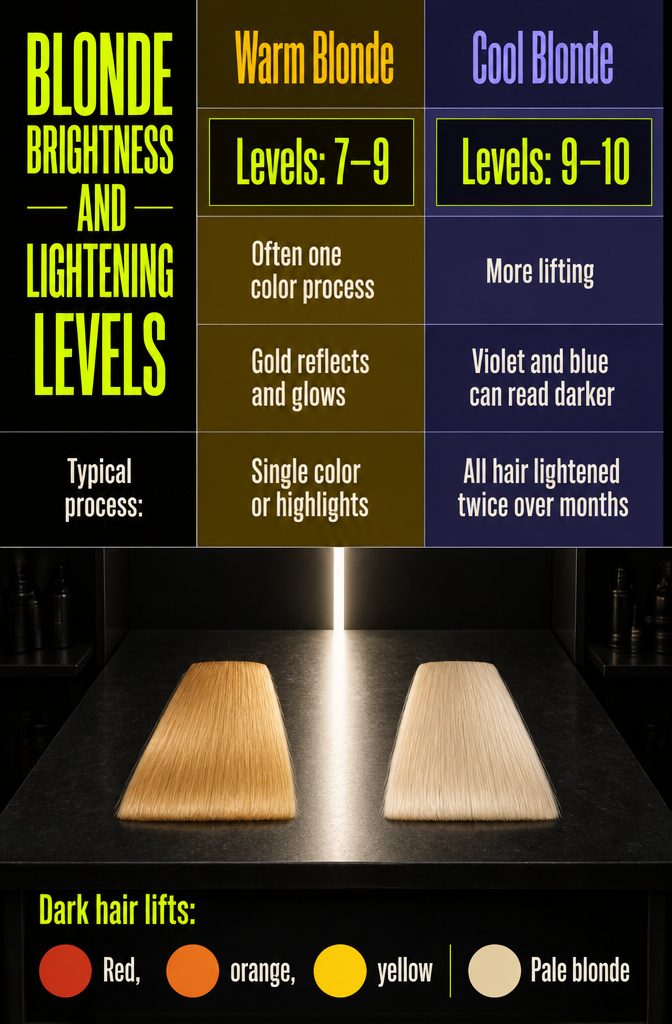
Cool blonde sits higher on the lightness scale. Warm blonde runs around levels 7–9, while cool blonde lands at levels 9–10, so cool blonde takes more lifting.
Dark hair has to pass through red, orange and yellow before it reaches pale blonde, and an ash toner only works once that warm stage is gone. Warm shades can often be done with a single color process or highlights.
One natural blonde went icier by having all her hair lightened twice over a few months, with deep treatments after. I’d call that pace the safe one.
Level isn’t the same as brightness, though. Gold tones catch light and glow, while violet and blue tones can absorb it and read darker than their level suggests.
4. Named Warm and Cool Shades and Where to Use Them
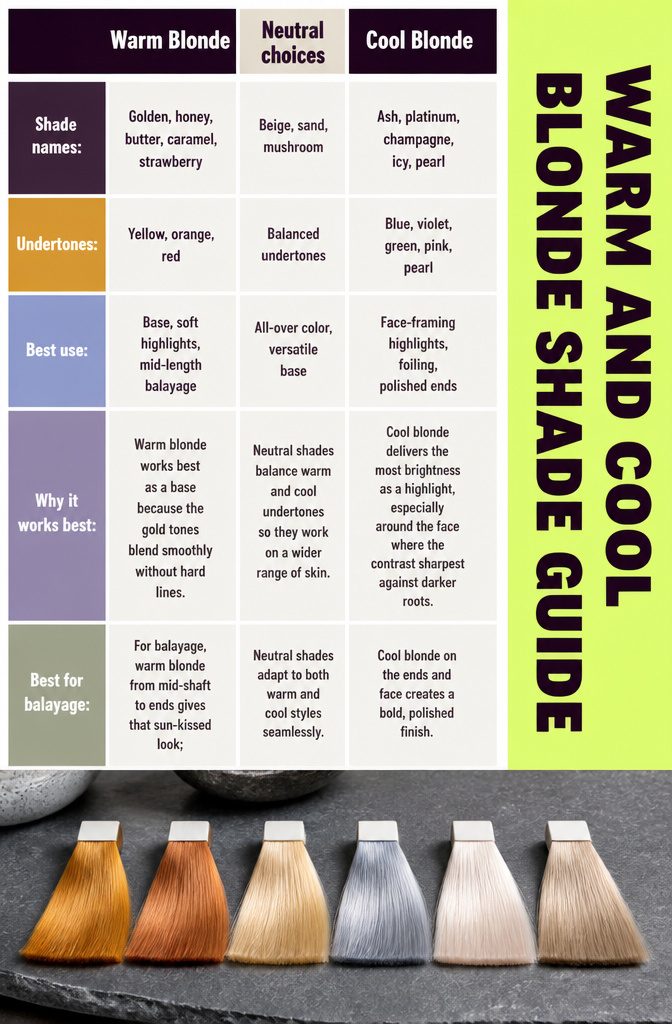
Golden, honey, butter, caramel, and strawberry blonde sit on the warm side.
Ash, platinum, champagne, icy, and pearl blonde run cool. Between them are the neutral options: beige blonde, sand blonde, and mushroom blonde, each balancing warm and cool undertones so they work on a wider range of skin.
| Shade | Undertone | Best Use |
|---|---|---|
| Golden, honey | Yellow, orange | Base color, soft highlights |
| Caramel, strawberry | Yellow, red | Balayage mid-length to ends |
| Ash, platinum | Blue, violet, green | Face-framing highlights, high contrast |
| Champagne, icy | Pink, pearl | Foiling, polished balayage |
| Beige, sand, mushroom | Balanced | All-over color, versatile base |
Warm blonde works best as a base because the gold tones blend smoothly without hard lines. Cool blonde delivers the most brightness as a highlight, especially around the face where the contrast sharpest against darker roots.
For balayage, warm blonde from mid-shaft to ends gives that sun-kissed look; cool blonde on the ends and face creates a bold, polished finish.
5. How the Shades Fade and What Keeps Each Tone
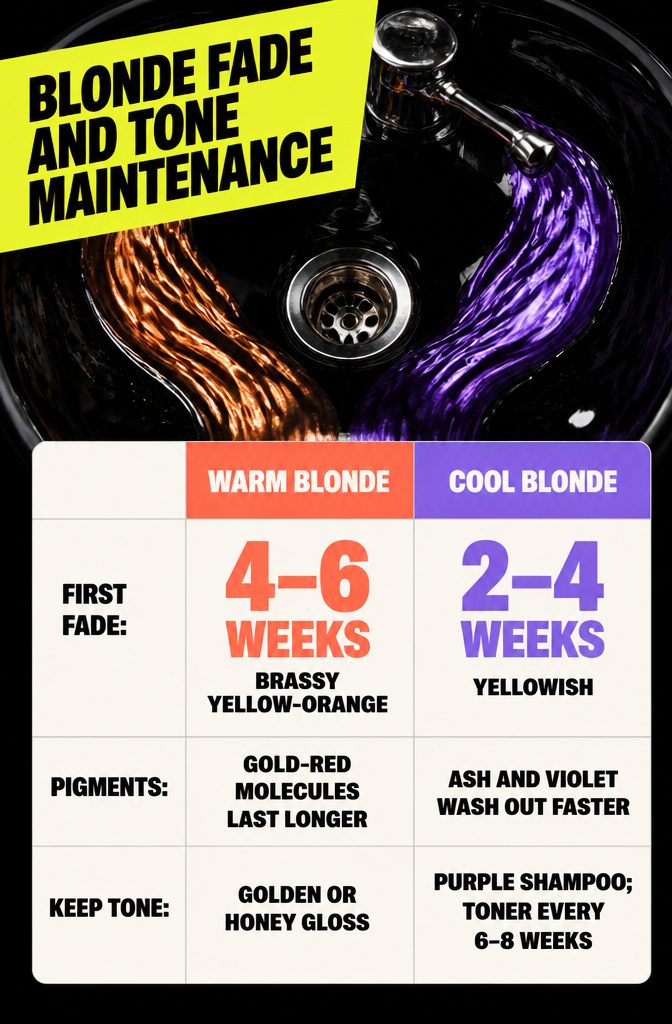
Warm blonde holds its tone longer, fading into brassy yellow-orange after 4–6 weeks, while cool blonde starts turning yellowish in just 2–4 weeks. The difference comes down to molecule size.
The ash and violet pigments that make cool blonde icy wash out faster than the gold-red molecules anchoring warm tones, which means cool blonde asks for more frequent attention if you want to keep it from looking straw-like.
If warm blonde starts slipping brassy, a golden or honey gloss brings the warmth back without more bleach.
Cool blonde needs a different toolkit. Purple shampoo once or twice a week helps cancel the yellow that creeps in between washes.
Purple Mask, Hydrate Shampoo, Hydrate Conditioner, and Hydrate Leave-In-Conditioner keep the color from drying out after treatment. Toner refreshes at the salon every 6–8 weeks maintain the cool shade, with violet, blue, or ash toner canceling any warmth that surfaces.
6. How Personal Style, Eye Color, and Lifestyle Influence the Choice
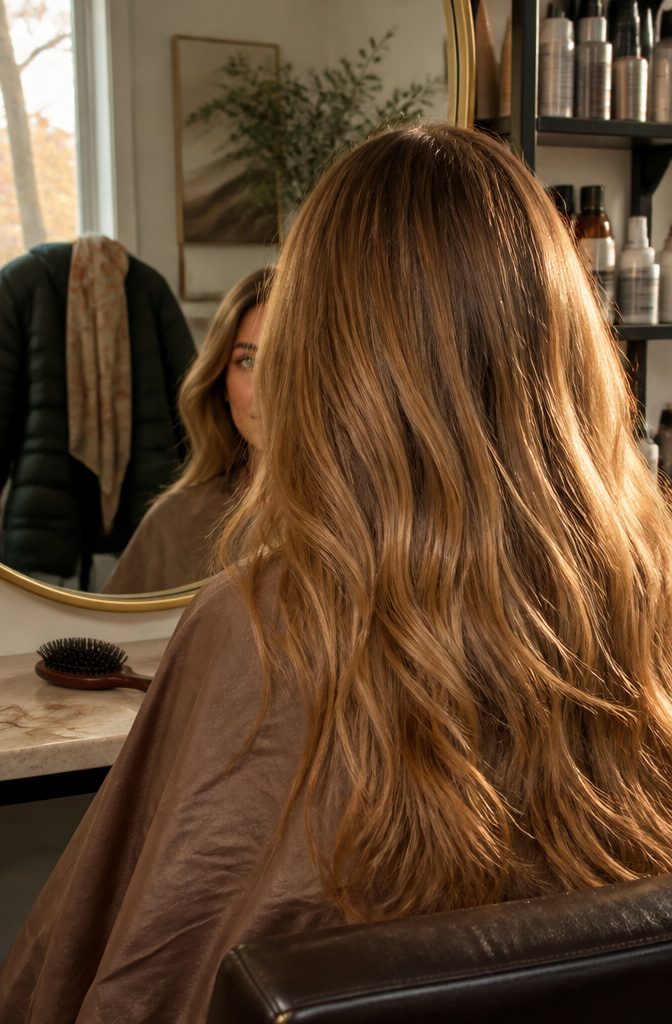
Skin undertone does the first pass of the work, but personal preference, eye color, and how willing you are to keep up with appointments all pull the decision one way or the other.
Eye color can inform shade choice: blue or grey eyes tend to look sharper against ashy or icy tones, while green or hazel eyes come forward with golden or copper blonde.
Brown eyes work well with both neutral and warm shades. That said, a client with warm undertones might prefer a cooler, edgier shade anyway, and someone with cool undertones might be drawn to honey or caramel for a seasonal shift.
Lifestyle matters too. Cooler tones need more upkeep to stay from going brassy, while warm blondes fade differently over time.
Some people keep a warmer or cooler look year-round; others switch their hair, makeup, and clothing colors with the seasons, going cooler in winter and warmer when tanned in summer.
How to Move From Warm to Cool Blonde
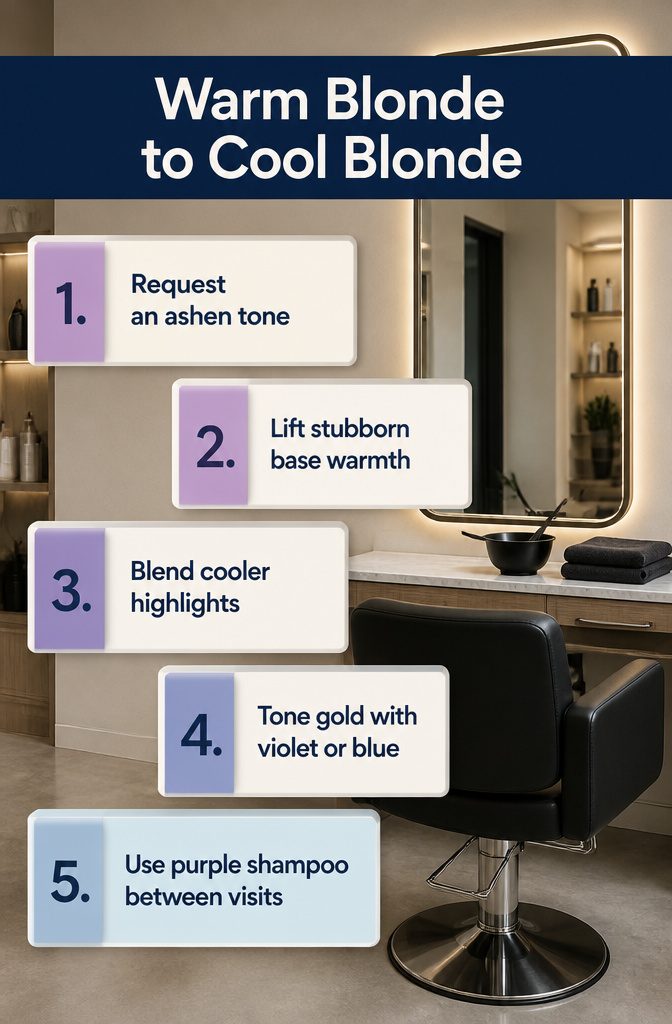
Moving from warm to cool blonde is rarely one appointment. If you start with minimal warmth, a toner can shift you in a single session, neutralizing gold with violet or blue undertones.
But darker golden blondes need more: lifting the hair further to eliminate the base warmth, sometimes across multiple visits, especially if you want an icy or ashy result without damage.
I recommend telling your stylist you prefer a more ashen tone.
That framing helps, because even starting blonde, pulling out all the warmth takes time. Some transitions involve dimensional lowlights or highlights to ease the shift, blending cooler pieces through warmer lengths rather than stripping everything at once.
At-home care matters too: purple shampoo between visits keeps warm tones from creeping back while you finish the process.
When a Mismatch Affects How Skin Looks
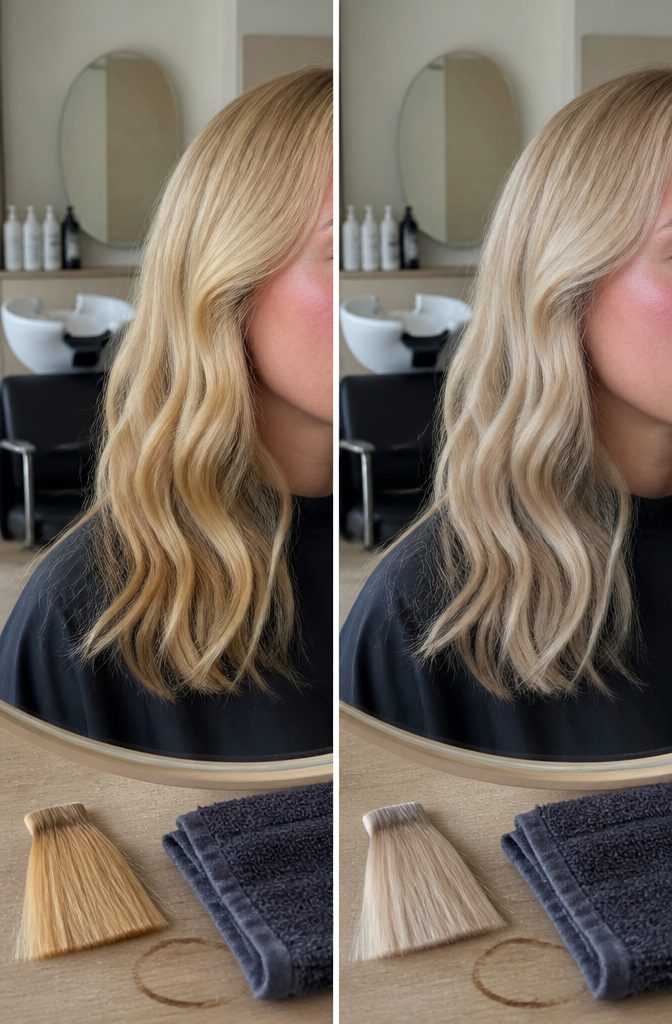
A mismatch between blonde tone and skin undertone can make skin look worse in ways that have nothing to do with whether blonde itself suits you.
A very warm, golden blonde on cool pink undertones can make skin appear ruddy and flushed.
A very cool, ash blonde on warm golden undertones can make skin look sallow and drained. These reactions are why some women try blonde once, decide it does not work, and rule out the whole category.
Really it was the wrong shade of blonde rather than blonde being unsuitable altogether. The distinction matters because it means the fix is not abandoning blonde but choosing a tone that matches your undertone instead of fighting it.
Frequently Asked Questions
What is an undertone?
Undertone is the color beneath your skin’s surface, separate from how light or dark your skin appears.
Fair skin can have warm undertones, and deep skin can have cool undertones. Surface color tells you depth, undertone tells you which shades will flatter you.
What undertone am I?
Check your wrist veins: blue or purple means cool, green means warm, and a mix means neutral.
Hold gold and silver jewelry near your face to see which looks better, or think about whether you tan golden (warm) or burn first (cool). Trust the answer at least 2 checks agree on.
What color blonde for my skin undertone?
Golden, honey and strawberry blonde suit warm undertones, while ash, platinum and champagne suit cool undertones.
Neutral undertones can choose any shade. Contrasting instead of matching can also work: golden blonde warms up cool skin, and ash blonde tones down warm skin.
Should I go warm blonde or cool blonde?
Start with your skin undertone, then factor in eye color, lifestyle and how often you can maintain it.
Cool blonde needs more frequent toning to avoid turning yellow, while warm blonde holds tone longer and fades more gradually. Blue or grey eyes pop against cool blonde, while green or hazel eyes come forward with warm blonde.
What color blonde makes you look younger?
The shade that matches your undertone will make your skin look clearer and healthier, which reads younger.
A mismatch can make warm skin look sallow or cool skin look ruddy. Dimensional blending with 2 or 3 complementary tones also softens the overall look.