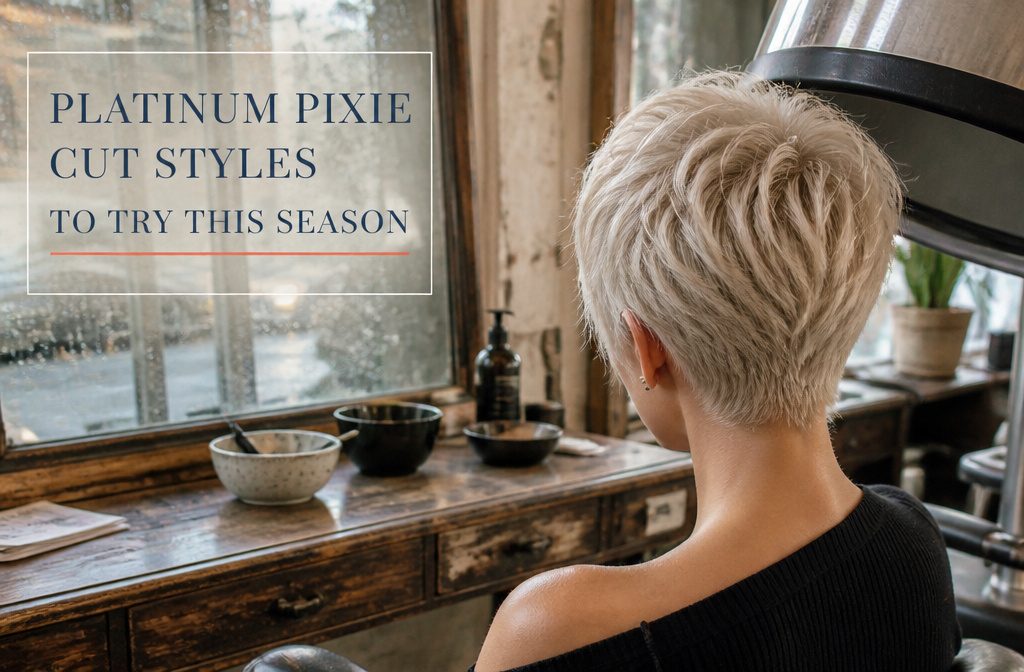
Platinum pixie cuts range from ultra-cropped buzz styles to longer bixie hybrids, and the right one depends on your hair texture and how much salon time you can commit to.
The shape needs a trim every four to six weeks to stay sharp, and the color fades faster than mid-level blonde.
Micro bangs work best on straight, fine hair, while textured layers suit fine to medium textures that need visible movement.
1. Platinum Pixie with Micro Bangs
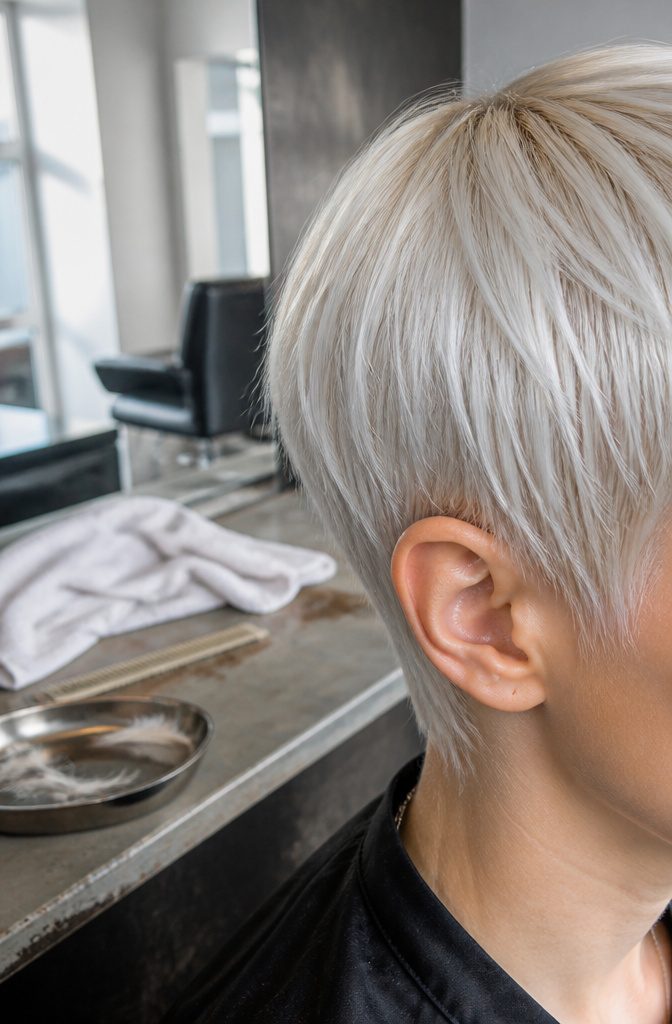
The length sits just above the ears with micro bangs skimming the eyebrows, short enough that styling takes under two minutes most mornings.
This cut works best on straight, fine hair where the cropped length creates volume rather than exposing gaps or flyaways.
On thicker or wavy textures, the micro bangs can push forward instead of lying flat, and you’ll spend more time with a flat iron than the cut is worth.
Angular faces gain the most from this style. The blunt micro fringe softens a strong jawline, and the ear-grazing length keeps attention at cheekbone level rather than widening a square face further.
Round or heart-shaped faces lose definition here; the horizontal line of the bangs cuts width where you don’t want it.
I style with a lightweight cream smoothed through damp hair, focusing on the bangs to keep them flat and separated rather than clumped.
A pea-sized amount is enough; more than that weighs fine hair down and the pixie looks greasy by midday.
Skip mousse or spray on the bangs themselves. They sit too close to the forehead, and anything with hold turns sticky under skin oil within hours.
2. Platinum Pixie with Textured Layers
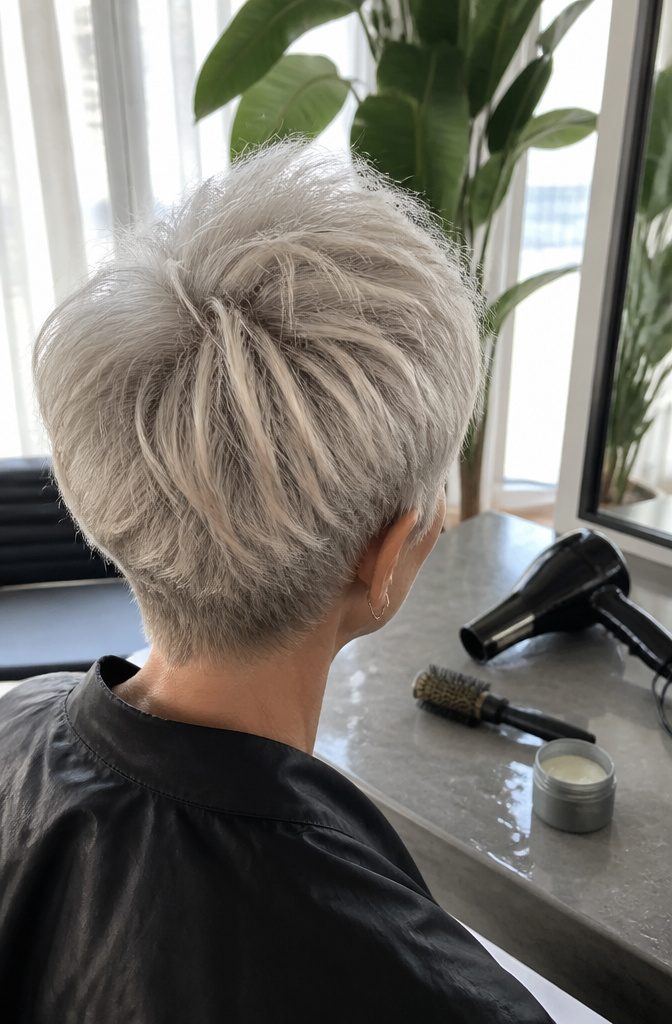
Cropped textured layers read modern because they give fine hair something it usually lacks: visible movement. The cut sits close to the head but the layers refuse to lie flat, which creates dimension without needing much density to work with.
Fine to medium hair shows the texture best; anything thicker risks looking choppy rather than tousled unless the stylist thins it deliberately.
The style suits oval and heart-shaped faces particularly well. The cropped length draws attention up toward the cheekbones and temples, and the textured crown adds just enough height to balance a narrower chin.
A round face can wear it too, but the proportions shift: you’ll want slightly more length through the sides to avoid widening the face further.
Styling takes almost nothing. A bit of texturizing paste or light mousse worked through damp hair gives the layers definition, and the platinum keeps the eye moving so the cut never looks flat.
I’d keep a blow-dryer handy if you want more lift at the root, but most mornings it air-dries into shape on its own.
3. Playful Textured-Layer Pixie
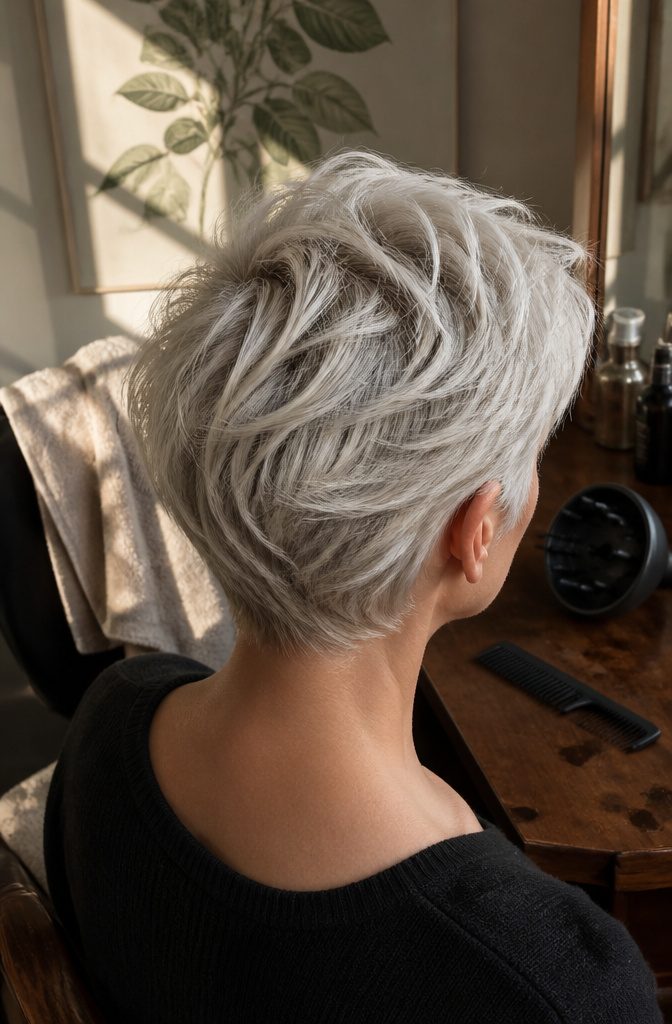
Short tousled layers do what stacked or blunt pixies can’t: they give fine to medium hair actual volume and movement instead of lying flat.
The textured cut breaks up the surface, so each layer catches light differently and the whole thing reads as fuller than it is.
A light mousse is all the styling this needs.
Work it through damp hair, scrunch while it dries, and the layers hold that tousled shape without looking overworked. The platinum shade amplifies the effect because the brightness picks up every angle the layers create.
This cut suits oval and heart-shaped faces especially well.
The movement at the crown draws attention upward, and the textured perimeter softens the jawline rather than chopping straight across it. If your hair tends toward limp, this is the pixie structure that fights back.
4. Androgynous Pixie
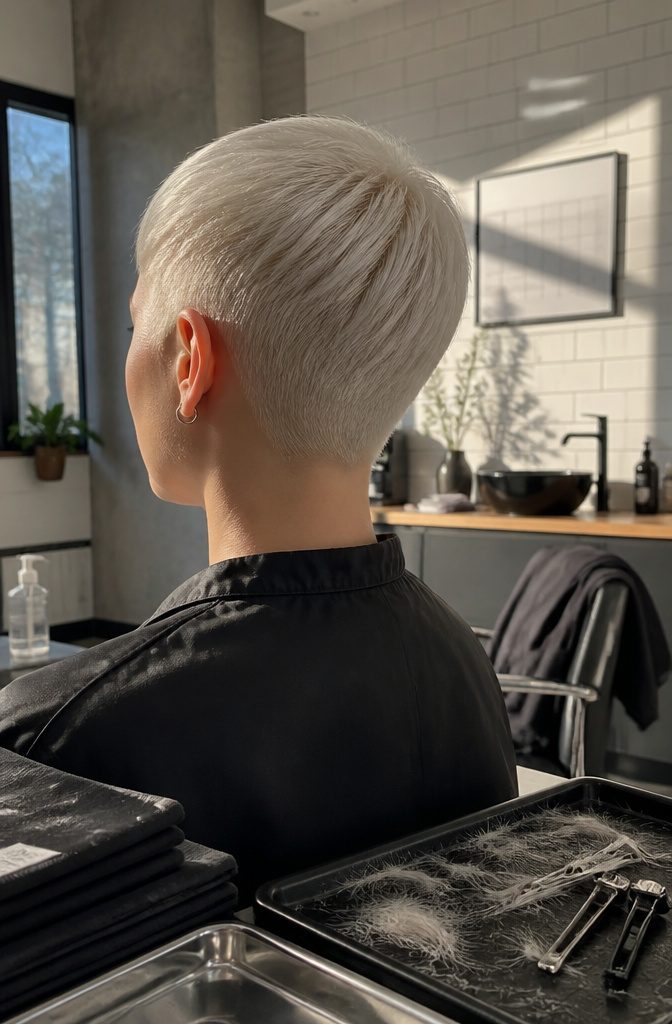
This cut blurs the line between masculine and feminine structure, and both the shape and the platinum color need salon upkeep every four to six weeks to hold the look.
Let the edges grow soft or the tone drift brassy and the precision disappears with them.
The crop sits close to the head with little volume at the crown, which makes it read clean and modern rather than soft.
Platinum sharpens that effect further, turning the silhouette into something you notice across a room. If you prefer styles that soften or hide as they grow, this one moves the other direction.
I like this cut for anyone who wants a high-commitment look and can match the maintenance rhythm it asks for.
The color alone can stretch eight weeks between toning appointments if you use purple shampoo at home, but the shape loses its edge faster.
Letting the gaps run long turns fashion-forward into unintentional grow-out, so calendar the next trim before you leave the chair.
5. Platinum Pixie Bob with Dark Roots
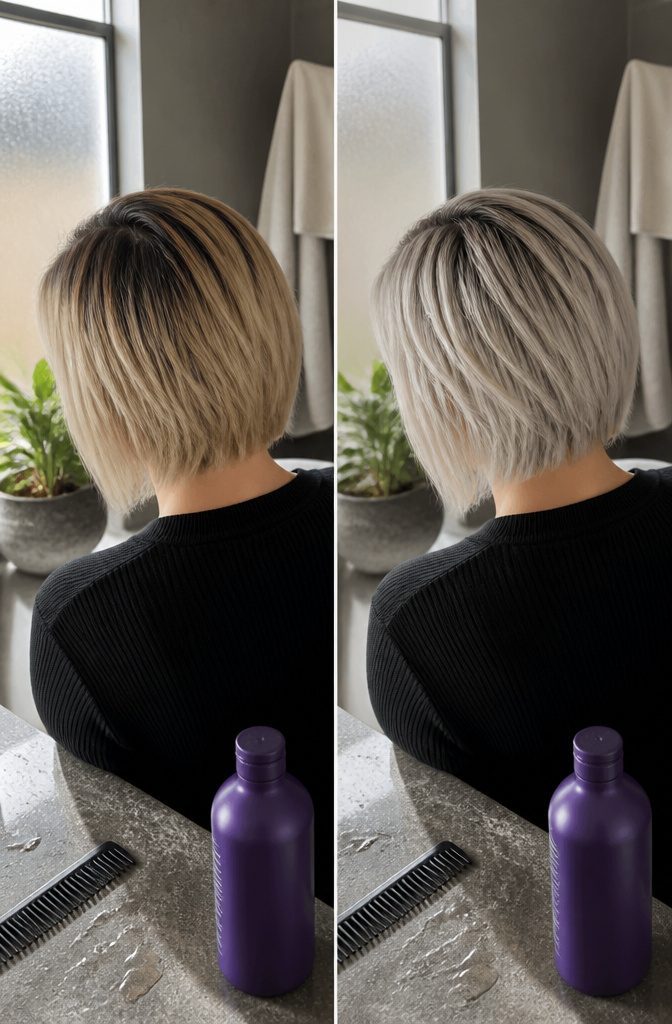
A pixie bob runs longer than the shortest platinum crops, which means fewer trips to the colorist and a little more breathing room between root touch-ups.
By keeping a darker or shadow root, you stretch maintenance windows even further. The contrast between dark base and platinum ends reads intentional rather than grown-out, so three or four weeks of regrowth still looks like the plan.
A shadow root also helps if you’re working with salt-and-pepper gray.
The blended transition from darker roots to pale ends softens the line where natural silver meets lifted platinum, so each shade eases into the next rather than sitting in blocks.
If your natural hair is already showing a mix of tones, this cut lets you keep some of that variation instead of fighting it every few weeks.
6. Platinum Pixie with a Long Spiky Top
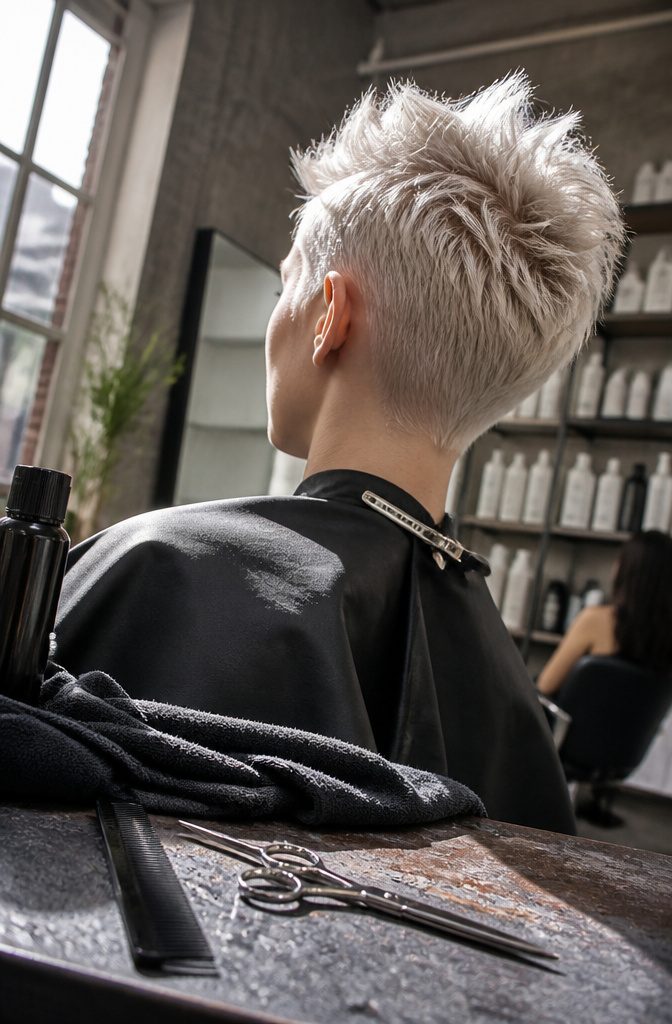
A longer top with spiky styling turns platinum into something architectural.
The extra length on top gives you enough to work with for texture that stands rather than lies flat, and the contrast between close-clipped sides and a deliberately messy crown keeps the look from reading too soft.
I think this cut works best when the spikes are irregular rather than uniform, which gives you a more lived-in finish than something that looks overly styled.
The platinum will need a touch-up every 4–6 weeks to keep the color from sliding yellow and to maintain the shape.
Pixies grow fast, and once the sides lose their taper or the top starts to flatten, the whole silhouette falls apart.
A stylist who knows short cuts can adjust the tone during the touch-up to match your skin, which matters more on platinum than on any other blonde.
The color shows everything, so keeping it fresh is not optional if you want the cut to look intentional.
7. Signature Platinum
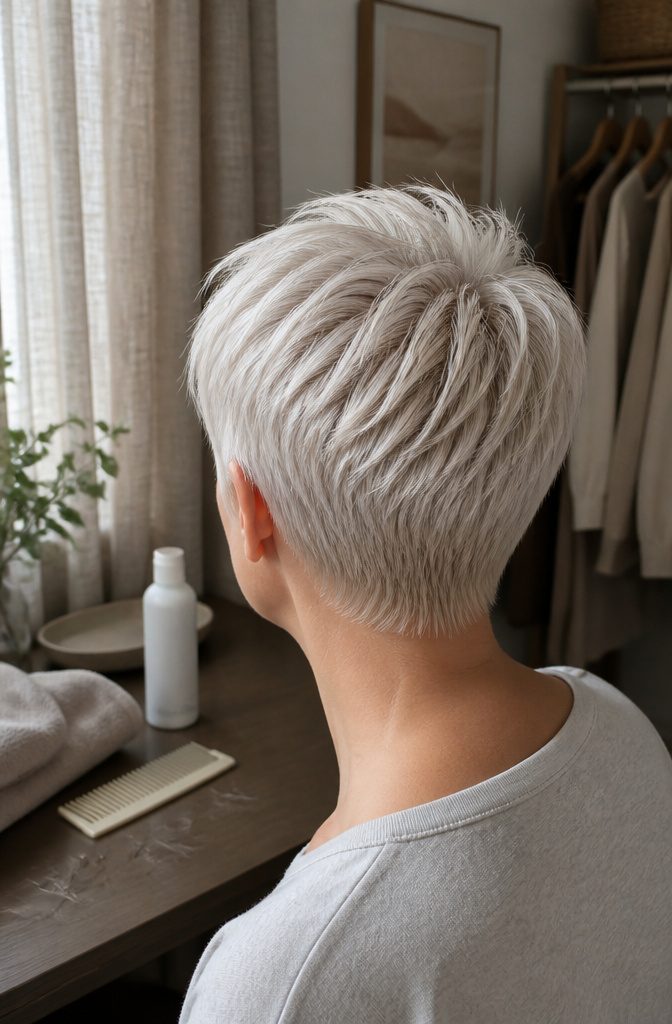
This cut sits on the short, ashy end of platinum and makes thin or fine hair look thicker on sight.
The combination does two things at once: short length cuts the weight that pulls fine strands flat, and the cool, near-white color reflects more light than darker shades, which adds visual density without adding actual volume products or teasing.
I’d ask for this by name if texture has always been the missing piece.
The ashiness matters more than you might expect. Warmer platinum tones can read golden under certain light and lose that crisp, reflective quality that makes the cut pop.
Ask your colorist for a quality color shampoo before you leave the chair, because ashy platinum fades fast and can pick up brass from hard water, heat tools, and even some shampoos.
Maintaining it at home keeps you from booking a toner appointment every three weeks.
8. Platinum Pixie with Short Layers and Undercut
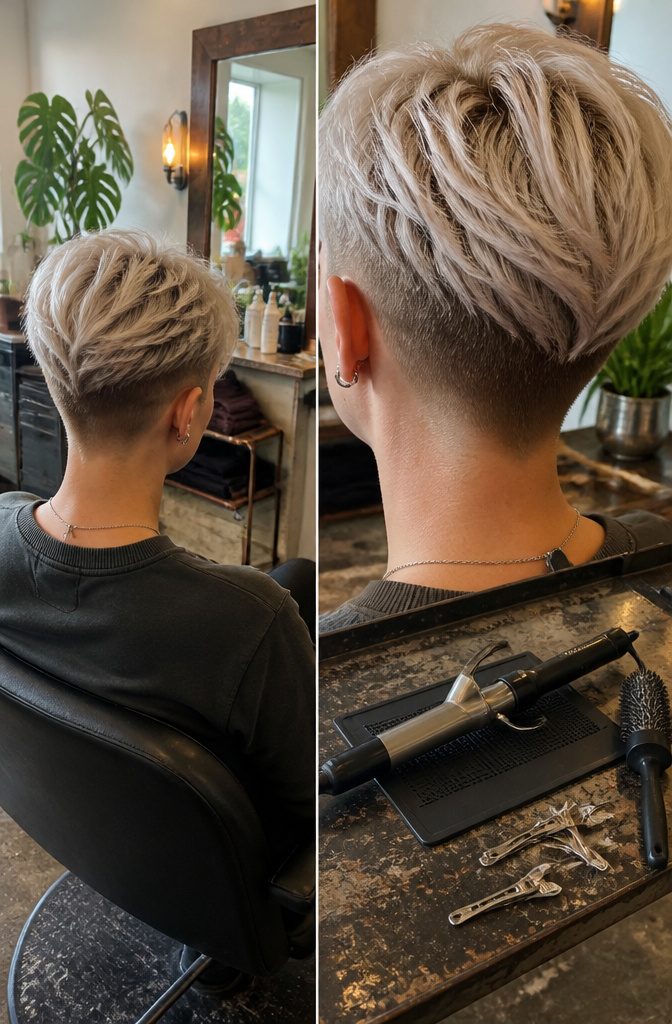
The #1-guard taper on the sides keeps the silhouette clean without the weight that builds up when an undercut grows out.
The short layers stacked at the crown give you lift where platinum can otherwise sit flat, and the contrast between the close sides and the textured top reads deliberate rather than halfway to needing a trim.
I reach for a 1-inch curling iron to put a soft bend through the crown layers, or a round brush if I want volume without visible curl.
Either way, the style finishes in under ten minutes, which matters when you’re maintaining this color and can’t afford a complicated morning routine.
The undercut pixie works best on fine to medium hair; thick hair needs more thinning through the top layers or the volume tips into bulk.
9. Platinum-White Pixie on Thin Hair
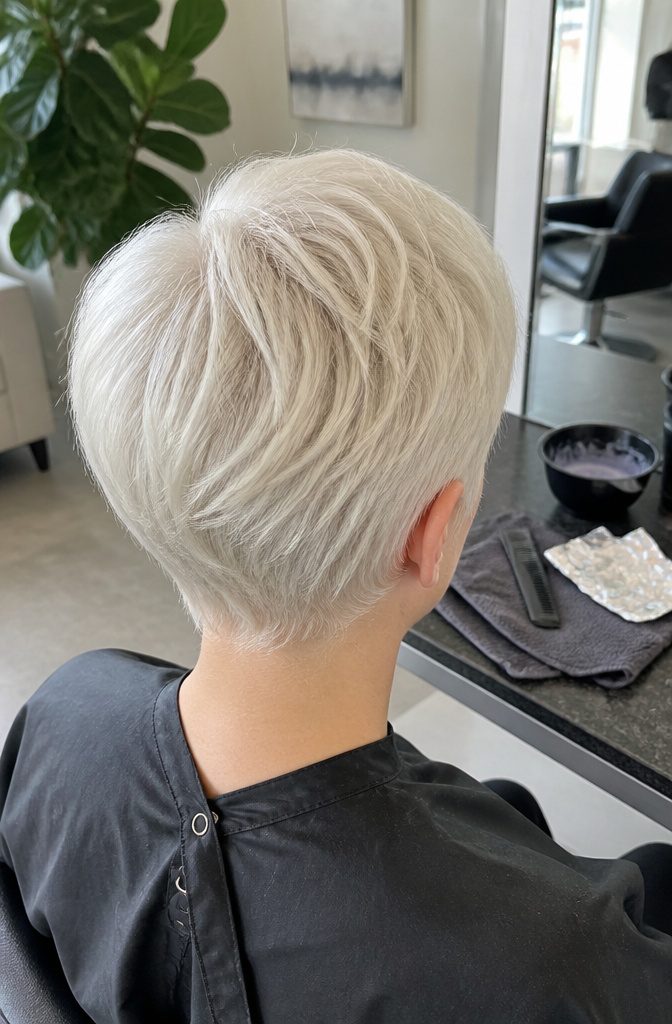
A cropped white-blonde pixie works beautifully on thin hair because the ultra-pale tone catches light without needing volume to make an impression.
The cut reads feminine and modern at the same time, which is harder to pull off than it sounds.
This only makes sense if your hair is already at level 7 or higher.
Lifting finer hair from a darker base to platinum white takes multiple sessions and causes more damage than the result justifies. Ask your stylist straight out whether your starting level and texture can handle the lift before you commit.
Not every head of thin hair is a good candidate for super blonde, and finding out halfway through is the expensive way to learn that.
Maintenance sits at a salon visit every 4 to 6 weeks on average, because regrowth shows fast against white and the toner fades quicker than it does on mid-level blonde. Budget for that before the first appointment.
10. Layered Pixie with Full Platinum Highlights
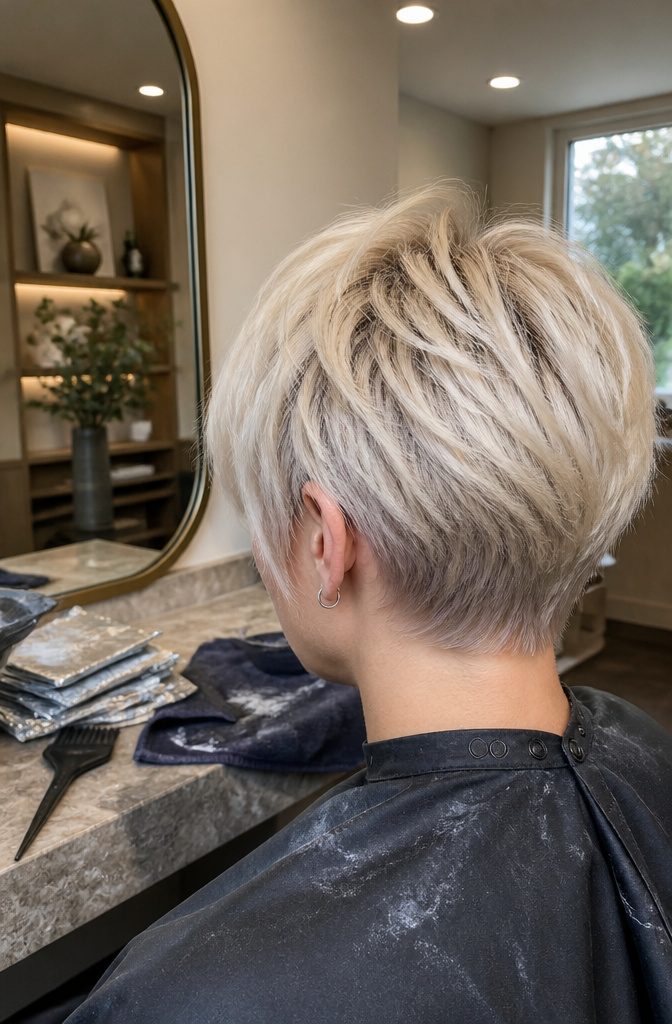
The layered pixie works where most platinum cuts won’t because your stylist can adjust the layers to balance your bone structure. Round face shapes do well with height at the crown and shorter sides.
Longer faces gain width through layers that sweep across the temples. A strong jawline gets softened with wispy perimeter layers that break the line rather than echo it.
Full platinum highlights mean every section lifts to that near-white level, so you see the layering more clearly than you would in a darker blonde.
The dimension comes from a root smudge: your colorist applies a slightly deeper tone at the scalp and melts it into the platinum an inch or two down.
That softens regrowth and keeps the cut from reading flat under indoor light.
Without it, platinum can look one-note. With it, the layers catch differently depending on how you move your head.
11. Platinum Bixie
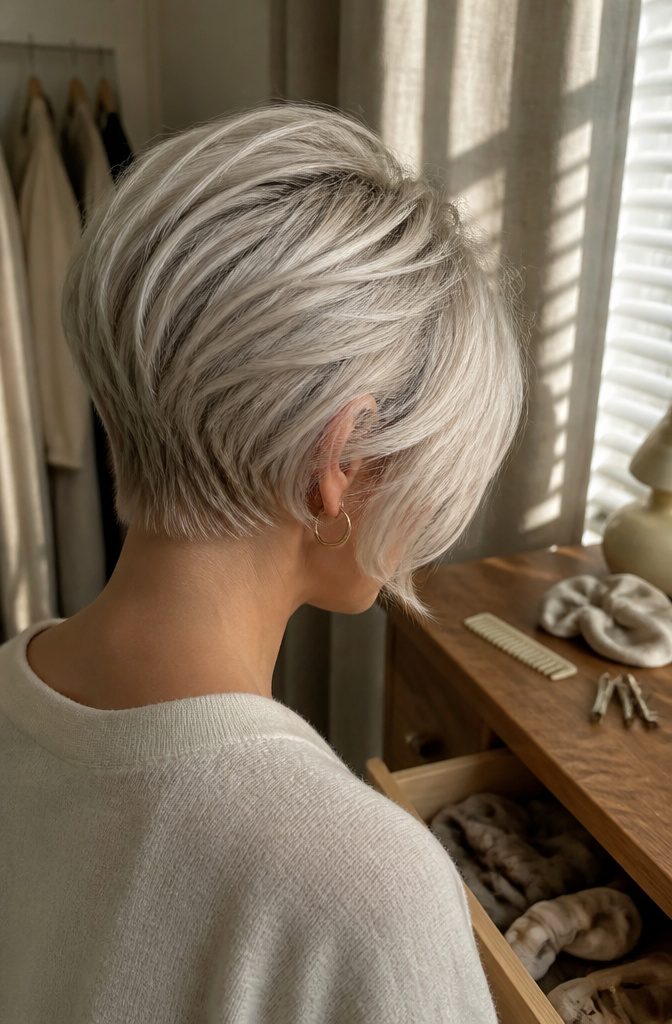
A bixie lands between a classic pixie and a bob, and in platinum it gives you more length through the crown and bangs without losing the short-back structure that makes a pixie easy.
The extra length at the front means you can swing a curtain bang or sweep everything to one side, and the cut reads softer than a cropped pixie while still clearing your neck.
The real win is transition. If you’ve had a pixie for a while and want to grow it out without suffering through awkward in-between stages, a platinum bixie is the bridge.
You keep the flair of short hair but add enough length that the next few months of growth look intentional rather than neglected.
12. Textured Platinum Pixie for Thick Hair
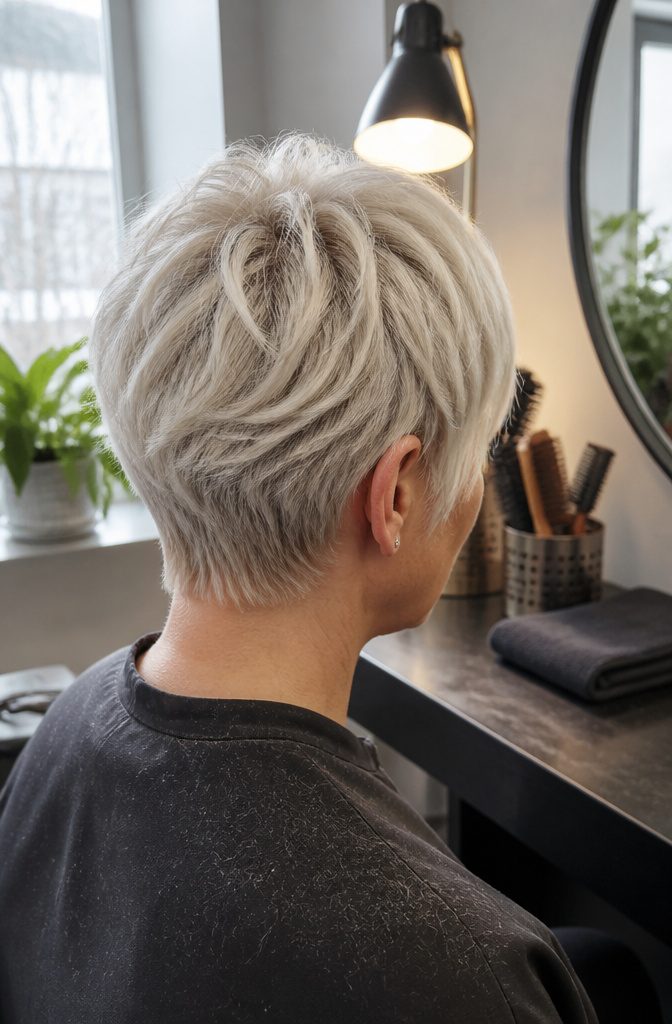
Texture cuts weight and stops thick hair from looking heavy. The platinum tone helps too: icy blonde cools down any warmth in the hair, provided it’s lifted high enough during the colour process.
Sides can run short around the ears and neck, or you can leave a few soft pieces behind the ear for a less cropped look. That second option breaks up the shape without adding bulk back in.
I’d go for the softer pieces if your hair is very thick at the sides, since it gives you something to work with when styling rather than fighting the density every morning.
The textured layers on top make the cut easier to handle day to day, and the platinum finish gives it a modern edge without looking too sharp.
13. Straight Pixie with Platinum-Gray Hue
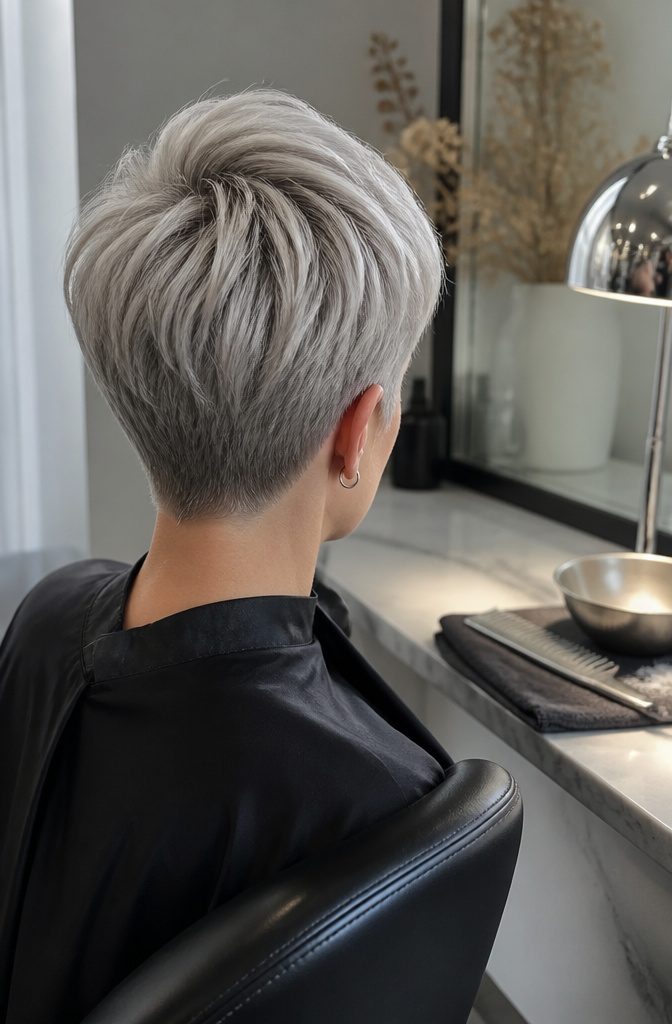
A cropped pixie with more body through the crown and top balances a round face by adding visual length where the face naturally widens.
The volume shifts attention upward and keeps the cut from sitting too close to the sides. Straight texture holds the shape cleanly without breaking up the silhouette the way choppy layers would.
The platinum-gray hue works because titanium brings depth without overpowering the tone.
Pure platinum can read flat under certain light, but titanium adds dimension that catches differently as you move. The shade still registers as platinum, just with more interest than a single-note white-blonde delivers.
Round faces benefit from any color technique that adds contrast or shadow near the crown, and titanium does that without needing a second color or root fade.
14. Platinum-Gray Pixie Bob with Violet Undertones
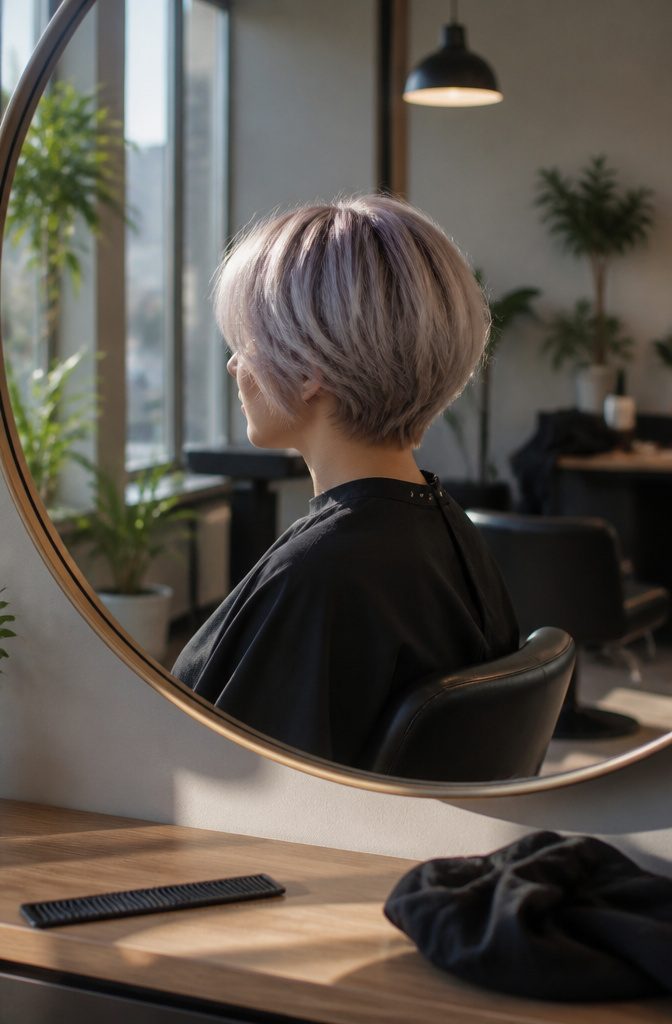
Violet undertones do real color-theory work here. They sit opposite yellow on the wheel, which means they cancel out the brassy warmth that platinum tends to pick up between salon visits.
A platinum-gray base toned with violet keeps the ash crisp without that straw cast creeping in after week two.
The bob length makes this forgiving if you want something modern but not quite as cropped. Side bangs, face-framing pieces, or curtain bangs all leave enough length to soften the edges and give you something to tuck or sweep.
I’d lean toward curtain bangs if your face is longer, side-swept if it’s rounder, but you’re not committed to the full pixie bare-forehead look while still getting the platinum contrast.
15. Platinum Long Pixie with Side Part
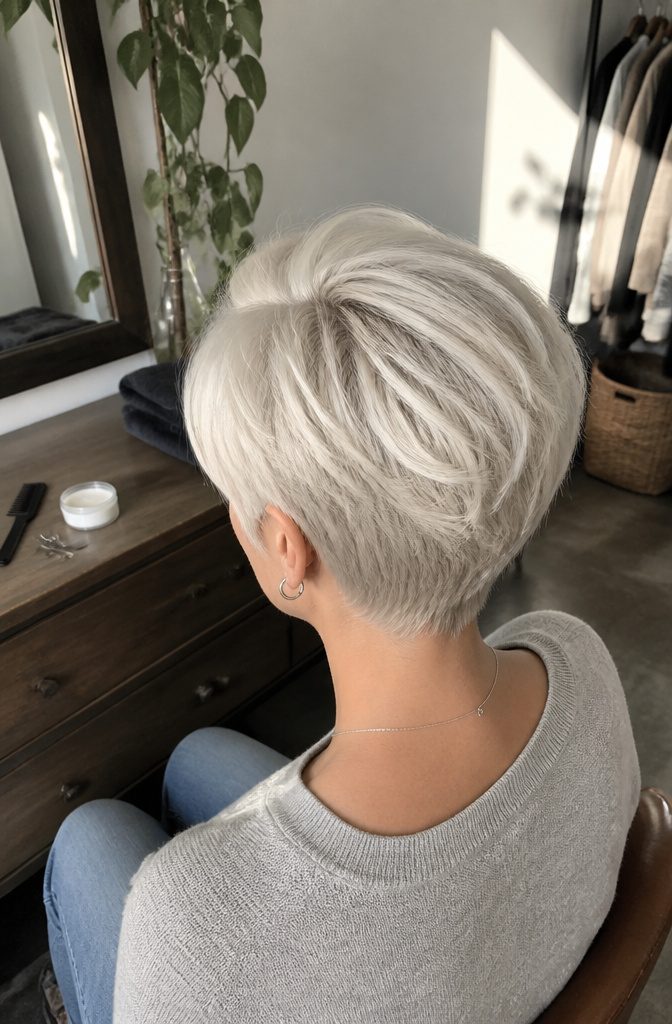
The side part pushes the length over to one side and lets the cut move with your bone structure instead of sitting evenly across it.
That adaptability makes this one work across hair textures and face shapes, fine through coarse, oval through square.
The longer length on top gives enough weight to hold the part in place, and a stylist can adjust where the volume sits to balance a jawline or soften a forehead.
The platinum keeps this from reading sweet.
A honey blonde with a side part skews retro; the white-metal tone pulls it back into something sharper and more intentional. I like how much control you get from such a small shift in where the hair falls.
Expect salon visits every four to six weeks to keep the platinum from drifting yellow and the shape from growing out past where the part holds.
16. Bleached-Blonde Pixie Undercut for Women Over 50
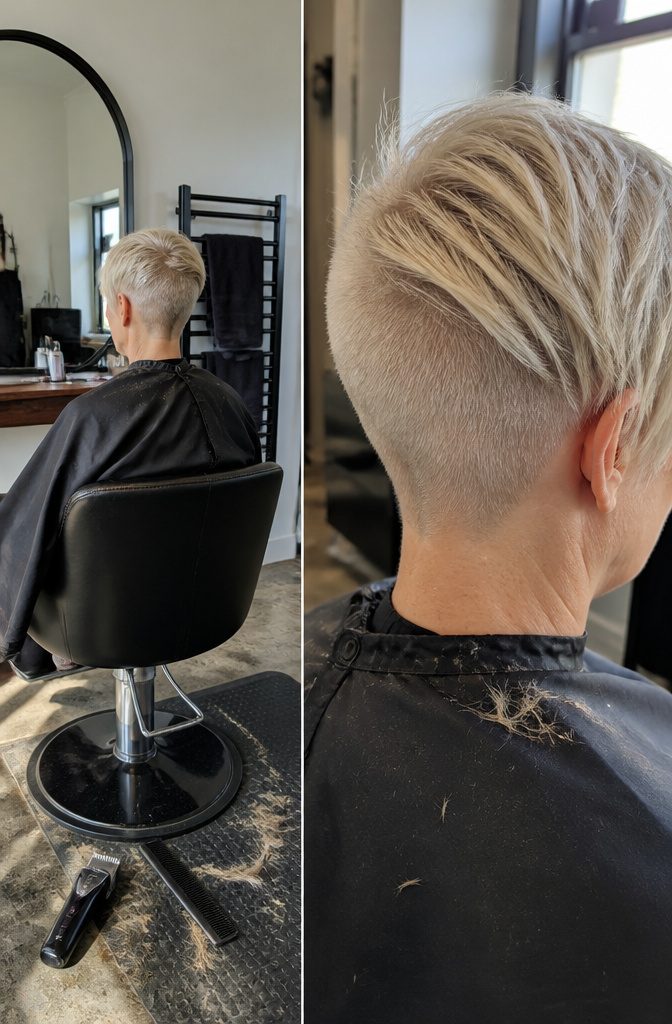
Gray regrowth is the best reason to go bleached. Against pale blonde, silver at the roots reads as part of the color instead of a stripe, so a platinum pixie cut tolerates grow-out better than a dark shade would.
The undercut is where I’d push anyone with thick hair.
Having the underside shaved removes the bulk that makes a short cut puff out at the sides, and the longer top then lies flatter. It also helps if your hairline won’t behave.
A stubborn nape or front edge is hard to disguise at pixie length, but easy to take down to the skin, and a stylist can blend it into the top. I’d choose this over thinning the hair with shears.
17. Edgy Short Pixie Crop
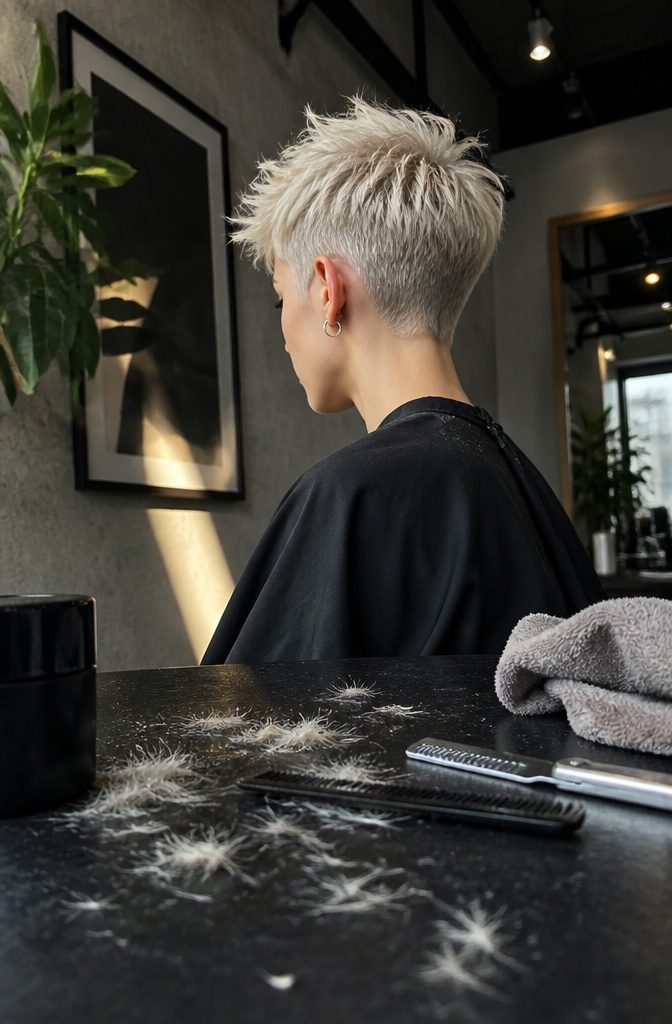
The crop gives you enough length on top to spike, curl, or shape into a pompadour, while the sides stay clean and close.
That range means the same cut reads different depending on how you style it in the morning: textured and piecey one day, slicked back the next, or lifted into volume if you want height.
The platinum tone sharpens the edges further, which is part of why this one skews edgy rather than soft.
If you want to soften the look without losing the drama, ask your stylist to razor the hairline instead of leaving it clipper-sharp.
The razor blurs the perimeter just enough to keep the cut from reading too severe, and it grows out more forgivingly than a hard line.
The platinum still does most of the heavy lifting, but the finish at the hairline changes how approachable the whole thing feels.
18. Sleek Wavy Blonde Pixie for African-American Women
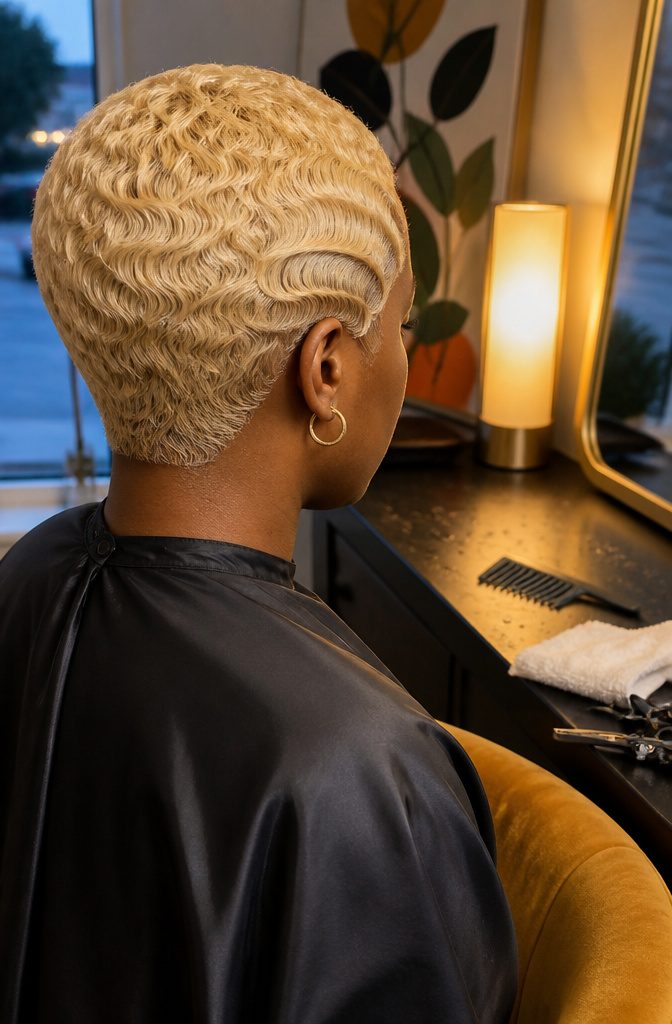
Natural texture is the low-effort way to wear a wavy blonde pixie: the curl pattern you already have does the shaping, and the cut still reads polished.
A finger wave is the dressier route, with sculpted ridges that make short platinum look deliberate. A finger wave lasts about a week before it needs restyling, so I’d save it for a stretch with events on the calendar.
For daily wear, especially in a professional setting, I lean toward natural texture. It asks the least of you and still looks put together.
19. Titanium-Blonde Messy Pixie
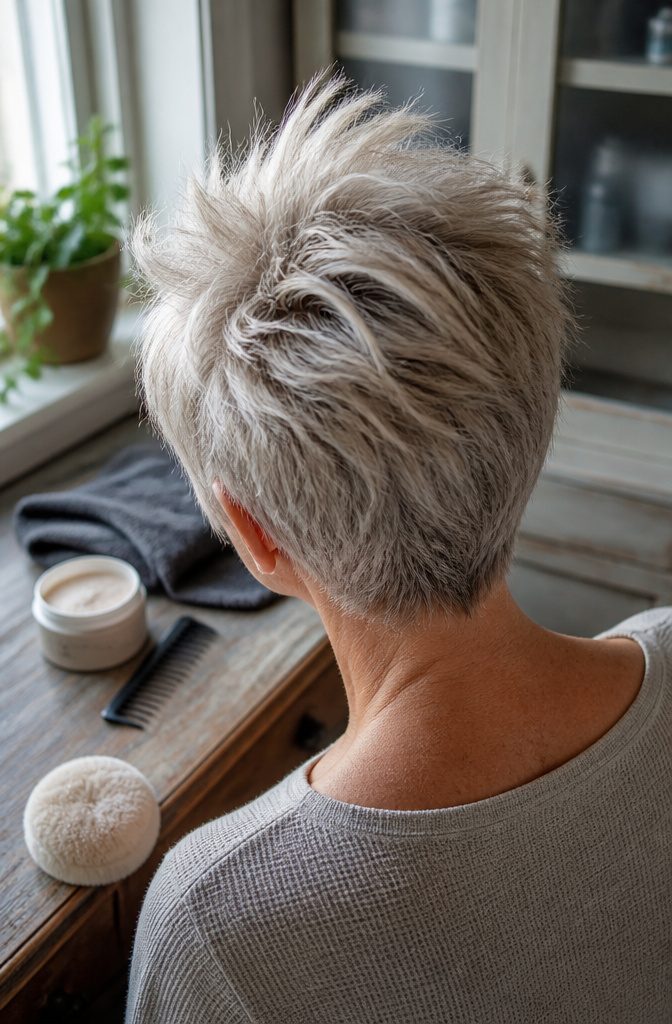
Titanium blonde sits a half step cooler than true platinum, picking up more steel than ice.
For older women after a low-maintenance style, short cuts build body and texture without hot tools, and the colour reads finished even when the cut is deliberately roughed up.
Volume powder at the root on dry hair does most of the work.
Dust it where the scalp shows, fluff with fingertips, and walk out. The powder grips better on second-day hair, which means you can skip the morning wash and still get lift.
20. Very Short Pixie
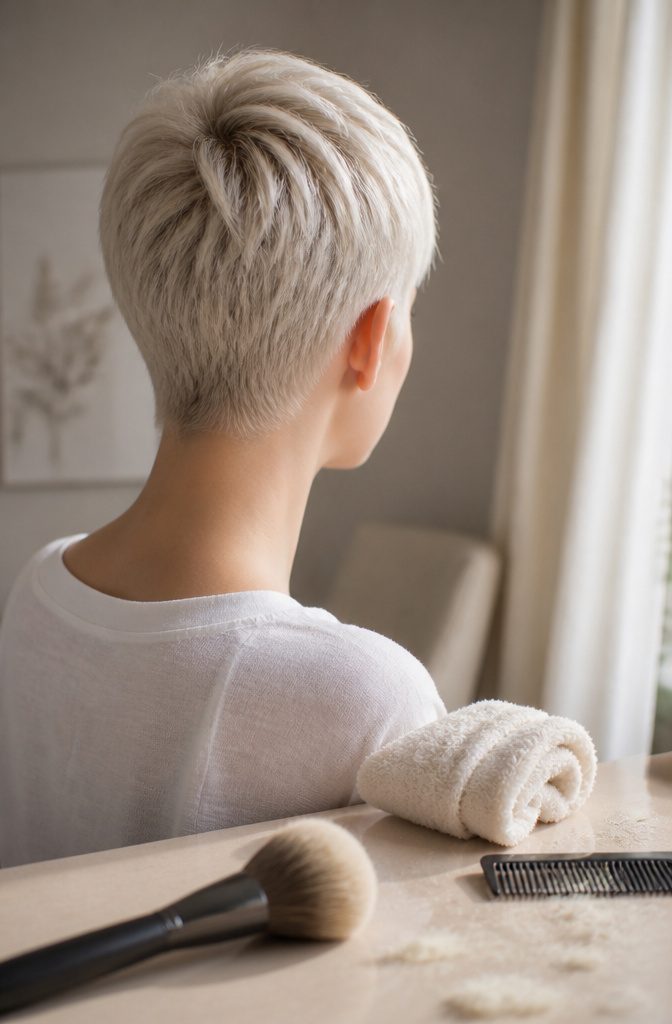
Fine, straight hair is where a very short pixie works best, since the cut adds the texture and body that length tends to flatten. Softened edges, rather than blunt, sharp ones, keep the shape modern instead of severe.
The cost shows up at the salon.
Very short hair needs regular haircutting, and platinum adds coloring on top, so this is one of the higher-maintenance options. Mornings are fast: wash and go, or work in a little texture powder for volume and a piecey finish.
I’d reach for the powder if your hair goes flat by lunchtime. If it already has some lift, skip it.
21. Choppy Platinum Pixie for Women Over 70
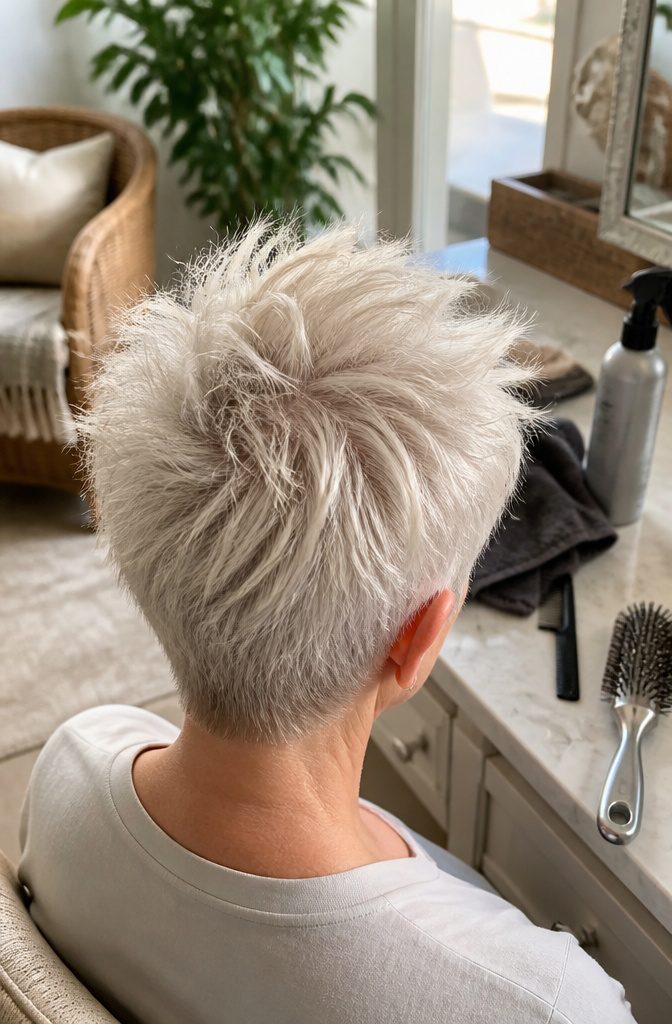
A choppy pixie is the cut I’d steer a woman over 70 with fine hair toward.
Root spray goes in first, worked in at the roots, and it gives thin strands the body they lack on their own. Then a little texture cream on the ends separates the top into spiky pieces.
Keep the cream to a small amount. Fine hair collapses under a heavy hand, and spiky turns limp and greasy fast.
The texture also adds softness.
Broken-up ends keep platinum from reading as one solid, severe shape, so the cut looks modern and feminine instead of harsh. Aim for spiky but never stiff.
22. Icy-Blonde Pixie with Side-Swept Bangs
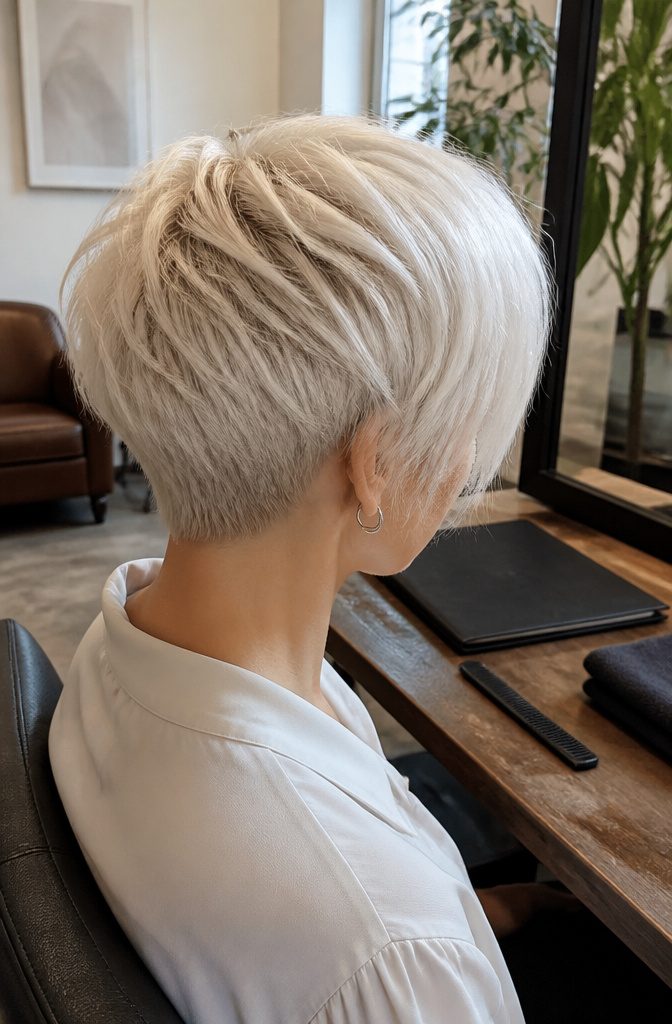
Side-swept bangs give a fine-haired icy blonde pixie a diagonal line that carries the eye across the forehead instead of straight down it.
They work best on long and square face shapes, where the sweep softens a strong jaw and breaks up the length of the face.
For fine hair, I’d choose this over blunt, straight-across bangs. A sweep can be cut light and wispy, so it doesn’t need much density to look finished.
When you book, bring the photo and tell your stylist your hair is fine and your face is long or square. That one sentence helps them decide how heavy to leave the front.
23. Platinum Buzzed Pixie for Black Women
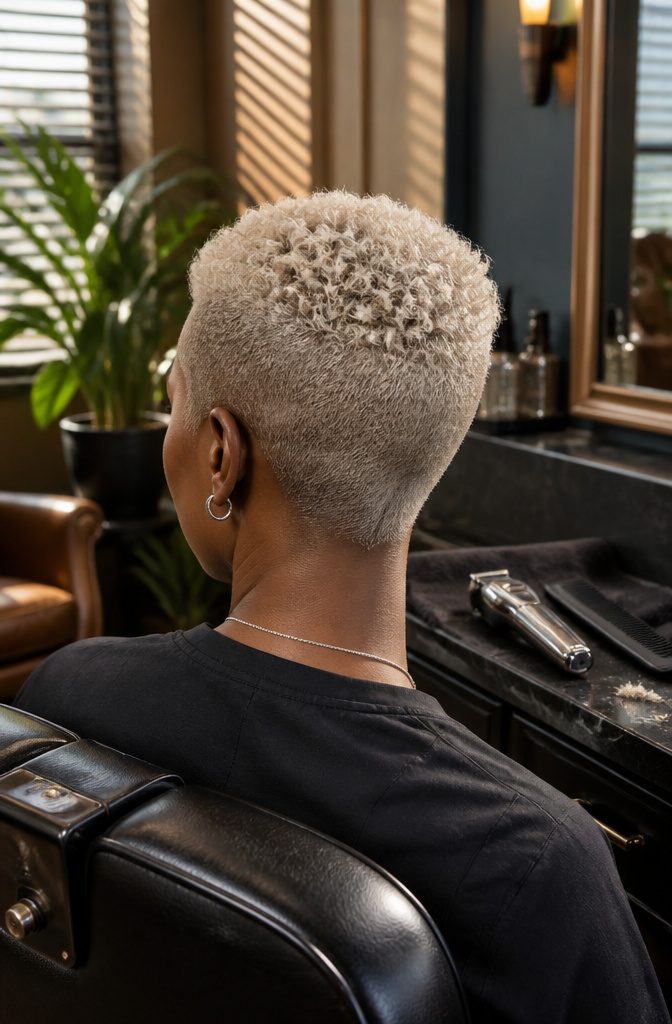
Short relaxed curls are what set this cut apart from a plain buzz.
The curl pattern gives the platinum color texture and movement, so the top looks soft instead of flat. This cut suits round and inverted-triangle face shapes, and I’d choose it for either.
Keeping the sides close while the curls sit on top adds height and lets a fuller cheek line or a wider forehead and narrower chin look balanced.
Bring a photo to the salon, because curl size changes the whole look.
Ask for relaxed curls rather than tight coils if you want the softer finish. Platinum this short shows regrowth quickly, so plan on regular root touch-ups.
24. Platinum Tapered Pixie for Women Over 60
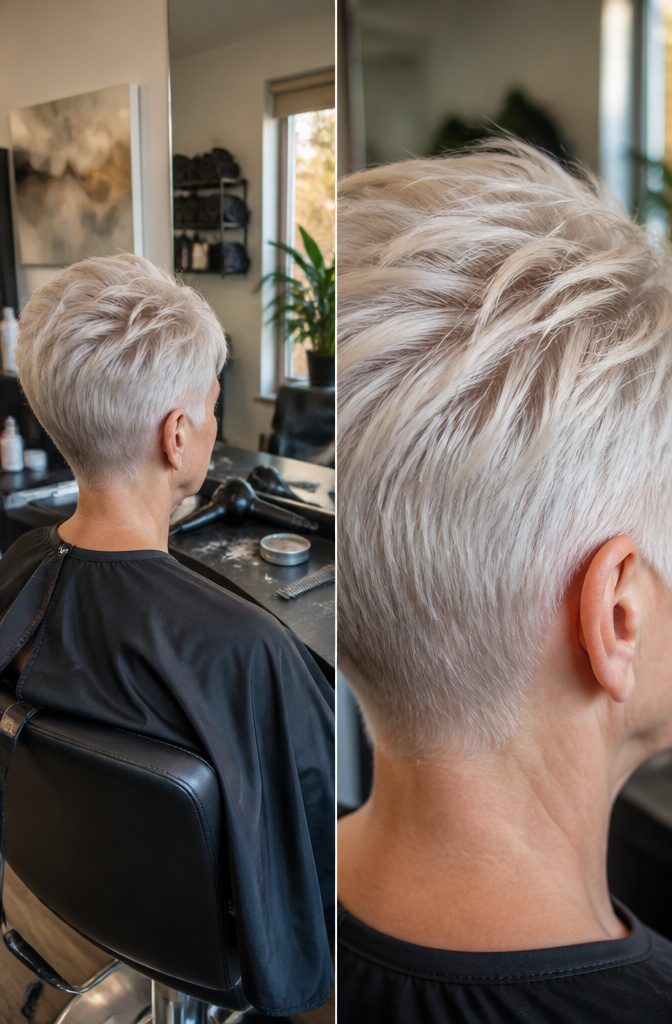
A platinum tapered pixie works particularly well if you have finer hair, because texture built into the cut gives the appearance of fullness without needing product or heat every morning.
The taper keeps the sides and back close while leaving enough length on top to add dimension, and that contrast makes thin hair look denser than a blunt cut would.
Styling time drops considerably. You can blow-dry it in a couple of minutes or let it air-dry and still look finished, then work a small amount of texture paste through the ends to separate and define them.
That quick routine is the tradeoff for more frequent salon visits: the shape needs a trim every four to six weeks to keep the taper clean and the proportions balanced.
Miss an appointment and the sides start to bush out, which undoes the precision of the cut.
25. Feminine Platinum-Silver Bowl Cut
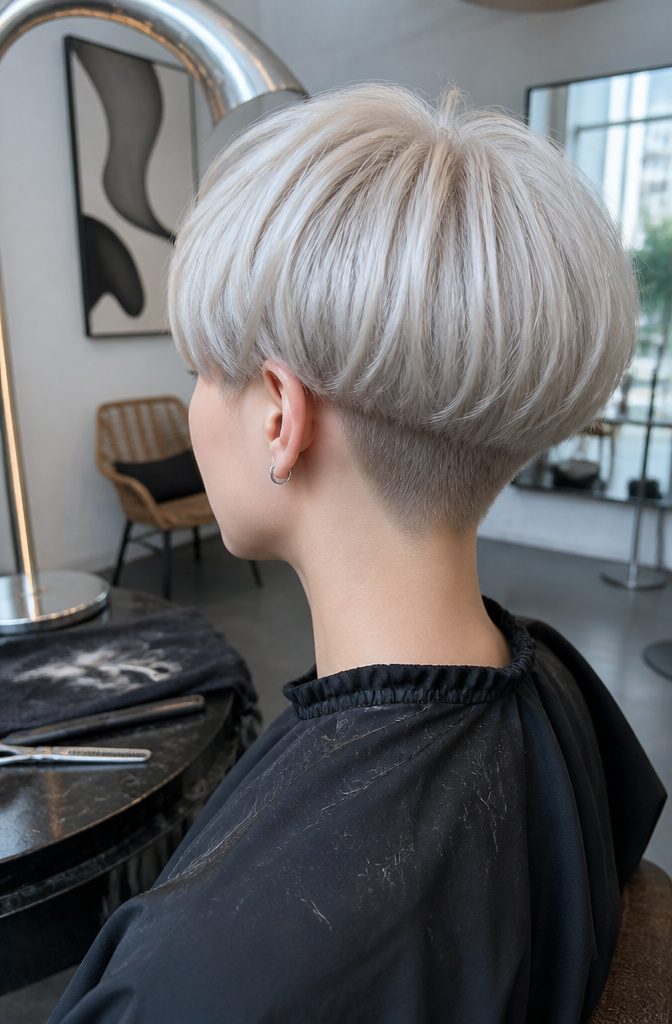
The platinum-silver bowl cut softens the classic shape without losing its clean geometry, and texture from razor or slide cutting removes bulk while keeping the volume you want.
The razor work breaks up what would otherwise read as a heavy line, and slide cutting thins the interior without shortening the perimeter. Both techniques give movement that makes platinum look less helmet-like and more lived-in.
Different platinum tones suit different skin tones, so I’d talk through whether you want pure silver or something that leans more violet or champagne before the colorist mixes.
The cut itself reads feminine because the texture keeps it from looking severe, but the bowl structure still frames the face in a way that a fully layered pixie would not.
If you like the idea of a bowl cut but worry it will feel too graphic, this is the version that keeps some softness.
26. White-Blonde Pixie Bob with Bangs
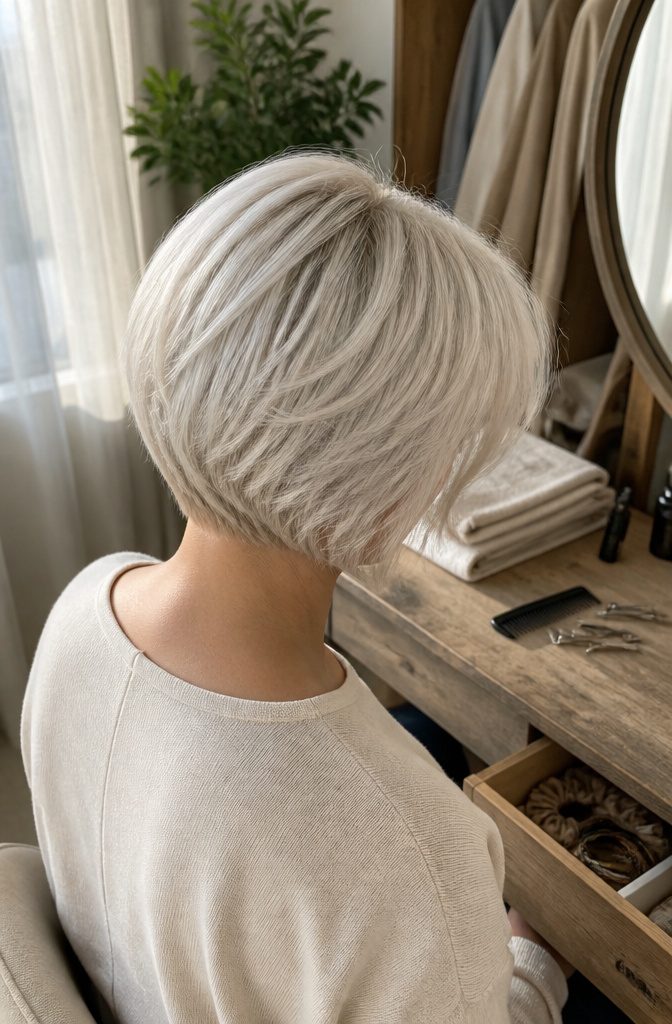
A whitish blonde sits close to the color of incoming gray, so the regrowth line blends instead of showing as a stripe. For anyone getting a lot of silver, that makes this one of the more forgiving platinum choices.
The bob shape is what makes it adaptable. Bangs, length and part are the three adjustments that fit it to most face shapes.
Add bangs or skip them, cut the sides shorter or longer, and flip the part to the other side to change how the face is framed.
I’d test the part first, since it costs nothing and you can try it at home before you commit to a cut.
Bangs are the bigger decision, so bring a photo to your stylist and talk through where they should land.
Why Platinum Reads Edgy and Metallic
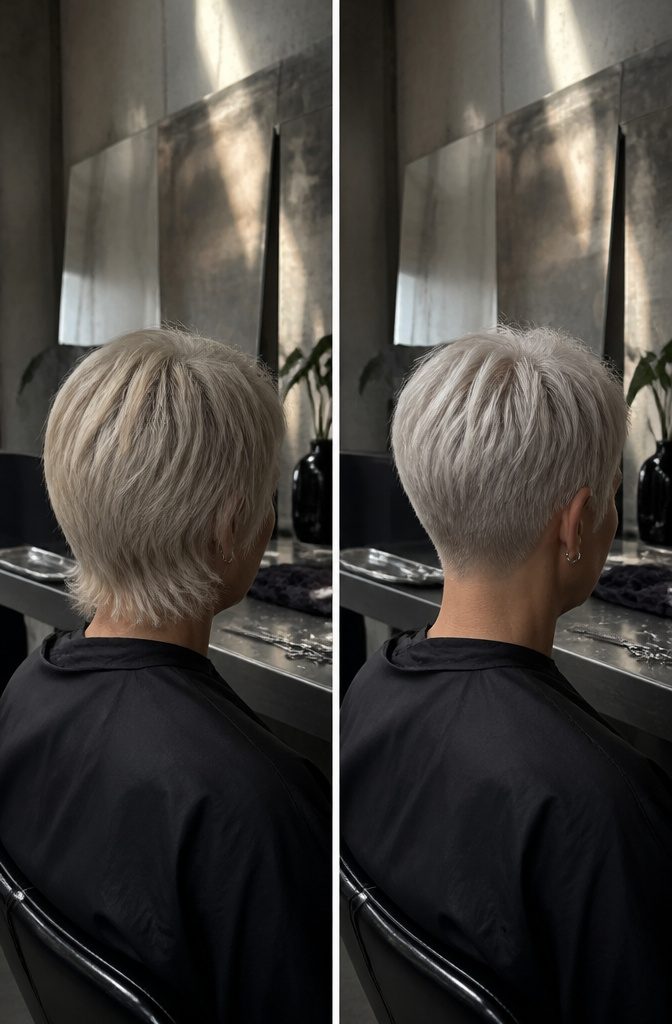
Platinum turns a short cut into a graphic shape. The color reads as metallic, almost like brushed silver, and against a cropped outline it looks sharper than the same shade does on long hair.
I rate it the edgiest of the blondes: the cut supplies the attitude, the color supplies the shine.
Expect the first look in the mirror to feel exposed. Short hair has a "naked" feeling at first, but it settles into something chic, polished and liberating.
A platinum crop also looks thicker than it is, because lightener opens the cuticle and the shorter length adds to the illusion. That’s a real advantage if your hair is fine.
Matching the Cut to Your Face Shape and Hair Type
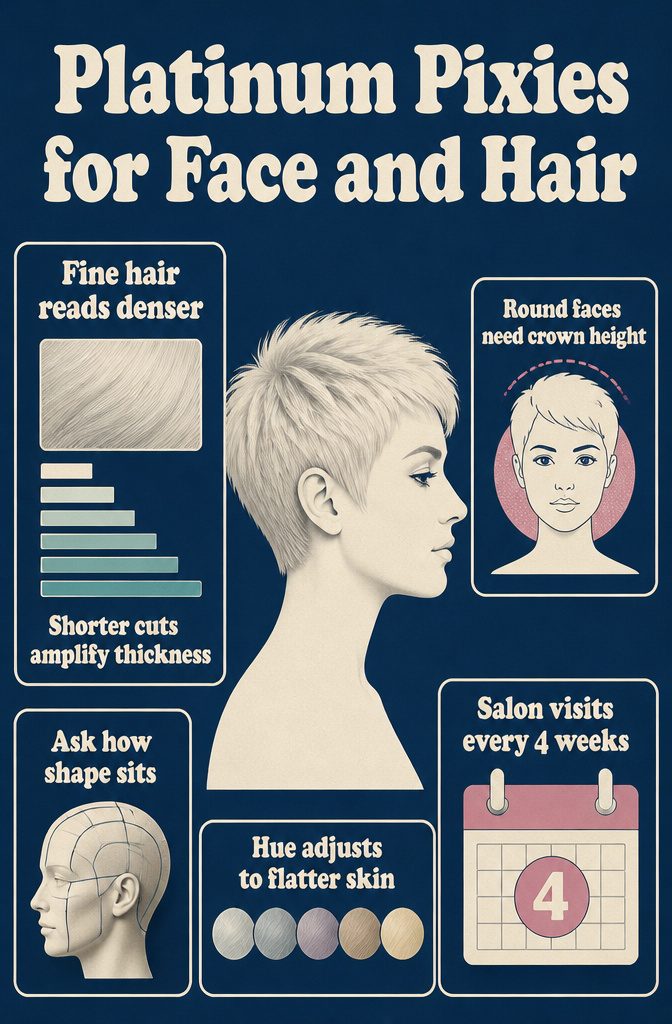
Fine hair gets the most from this cut.
Lightener lifts the cuticle layer, which makes strands look thicker, and the shorter the cut, the stronger that effect. On fine hair, platinum plus a pixie reads as more density, not less.
For a round face, I’d pick a straight pixie with extra body through the crown and top.
The height balances the width, and a platinum-gray tone adds depth without overpowering the color. Head structure counts as much as face outline, so ask your stylist how the shape will sit on your head before you commit.
Complexion is the flexible part, because the hue can be adjusted to flatter your skin. Plan on a salon visit every 4 weeks whatever you choose.
Keeping Platinum from Turning Brassy
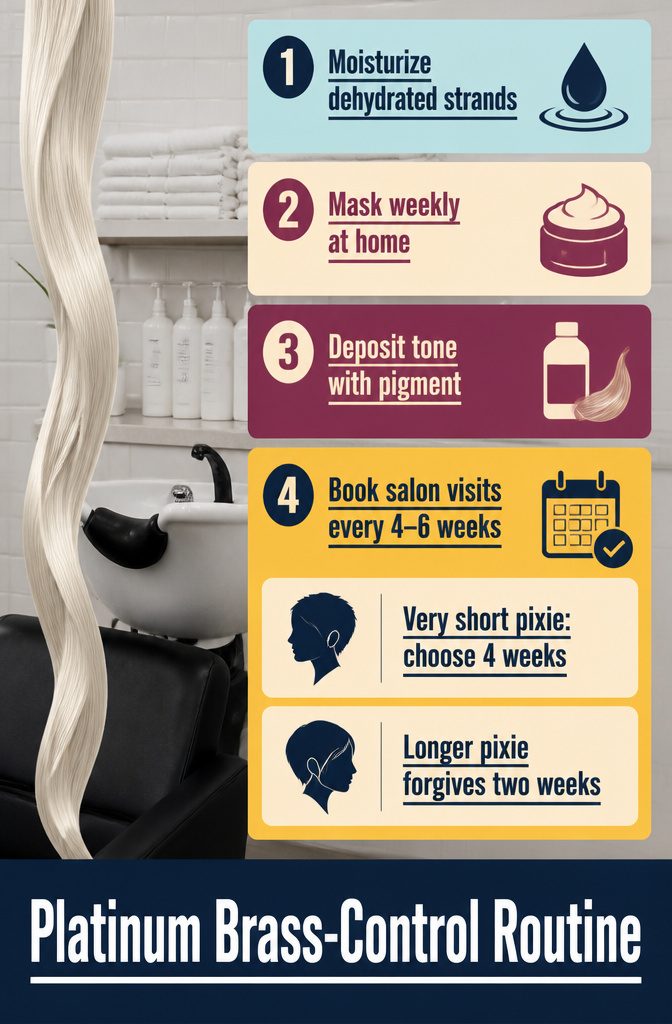
Lightening dehydrates the strand, so platinum hair dries out faster than most colors.
A weekly moisturizing mask at home keeps a short cut from going brittle at the ends. For brassiness, I’d use a pigmented shampoo or mask, because it deposits tone back into the hair rather than only cleaning it.
The cut and the color both need a trim and a touch-up on a schedule. Plan on a salon visit every 4–6 weeks; stylists often want you back closer to every 4 weeks to keep the color even and the shape sharp.
I’d book the 4-week slot for a very short pixie, since the line goes soft first there. A longer pixie forgives the extra two weeks.
Frequently Asked Questions
What face shape is best for a pixie cut?
Pixies adapt to most face shapes when the cut is adjusted correctly.
Oval and heart-shaped faces suit textured or layered pixies that add height at the crown. Angular faces look good with micro bangs or softened edges that reduce sharpness at the jawline.
Round faces need volume on top and shorter sides to add length, while square faces benefit from wispy perimeter layers that break up strong lines.
How often should I get a platinum pixie cut touched up?
Plan on salon visits every 4 to 6 weeks for both color and shape. The platinum tone fades and can turn brassy between appointments, and pixie cuts grow out quickly enough that the silhouette loses its intended proportions.
Skipping a trim means the sides bush out and the top flattens, which undoes the structure of the cut.
How do you maintain platinum blonde hair?
Moisturize at home regularly, since the lightener used to reach platinum dehydrates strands.
Use a pigmented shampoo or mask to keep the tone from shifting yellow or brassy between salon visits. Purple shampoo can extend toning appointments to 8 weeks if you stay consistent with it.
Do pixie cuts make you look older or younger?
A well-cut pixie typically reads younger because it adds volume and texture that fine or thinning hair loses with age.
The short length lifts hair away from the scalp, which creates the appearance of fullness. Platinum amplifies that effect by reflecting light and adding dimension, but the cut needs regular maintenance to stay sharp rather than grown-out.
What skin tone does platinum hair look best on?
Platinum can be adjusted to flatter most skin tones by shifting the undertone cooler or warmer during the coloring process. Cooler platinum with violet or steel undertones suits fair to medium skin, while slightly warmer platinum works on deeper complexions.
Your colorist should match the exact shade to your skin during the appointment, since platinum shows everything and needs precision to look intentional.