A blunt bob that hits the chin asks for regular trims to hold its line, while a fluffy pixie can go weeks before it loses shape.
The cut that fits depends on how much time you have for maintenance and whether you prefer a polished edge or something that looks good a little undone.
Ash Blonde Feathered Layers keep the color cool, the Rose Gold Side Part adds warmth without going brassy, and the Platinum Bob sits close to white.
1. Layered Bob
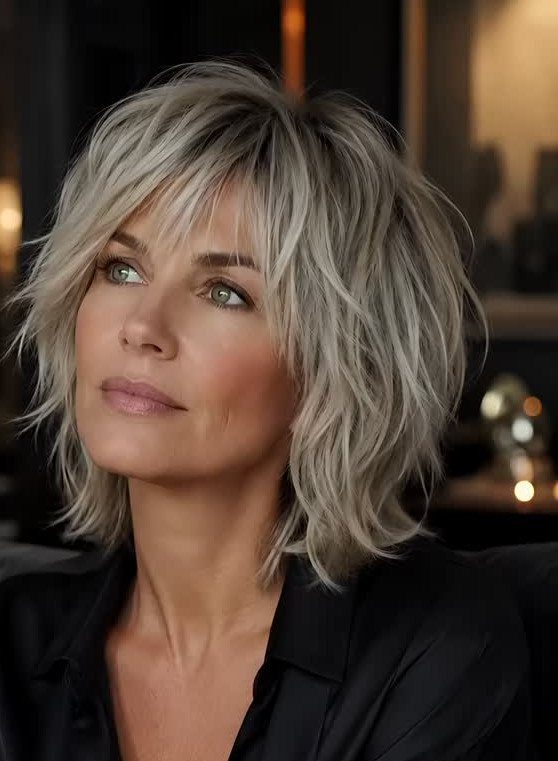
Layers are what keep a bob from sitting flat, and on ash blonde they also show off the tonal shifts between the shorter and longer pieces.
Wispy bangs that blend into the sides frame the face without a heavy fringe to manage.
I would pick this if your ends feel thin, since layered ends read fuller than one blunt line.
Ask for the layers to be cut soft rather than choppy, and bring the photo so your stylist can see how much movement you want.
2. Wavy Lob
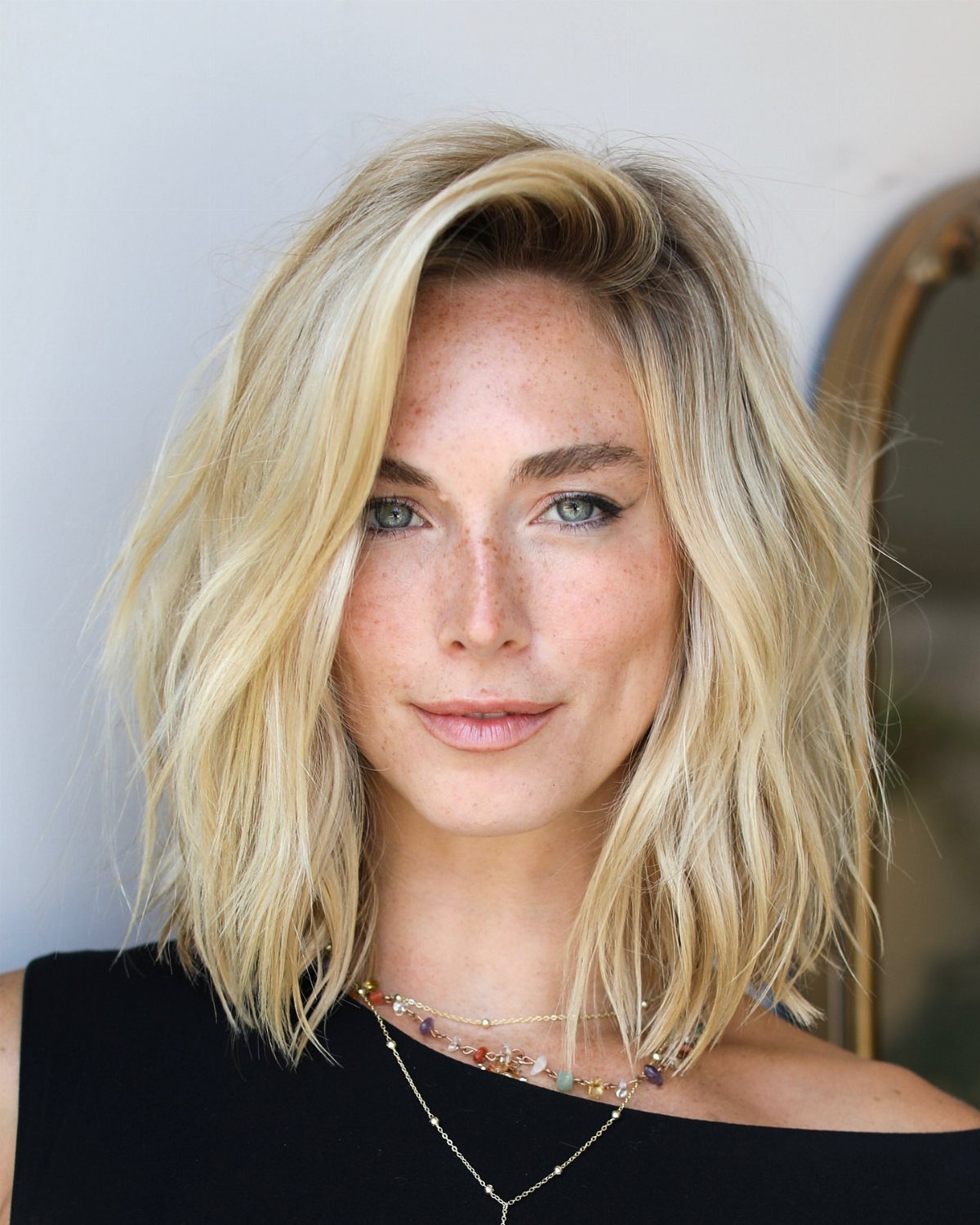
Shoulder-skimming length plus loose waves gives a bob more room to move than a chin-length cut allows. A wavy lob is forgiving too: if the bend in the hair is slightly uneven, it still looks intentional.
This is a good fit for anyone growing out a shorter cut who is not ready to commit to a sharp line.
Waves can come from natural texture or a curling iron; ask your stylist to cut with that wave pattern in mind, so the length sits where you want it once the hair bounces up.
3. Shaggy Bob
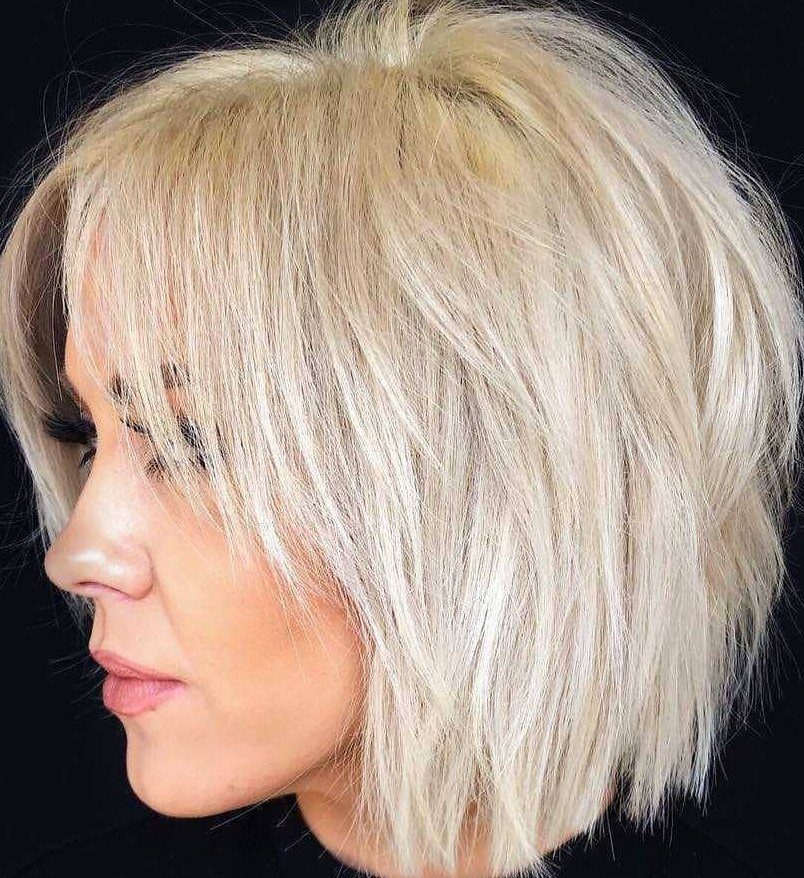
Choppy, piecey layers are what make a shaggy bob look lived-in instead of tidy. Blonde helps here, because the lighter strands catch the texture and make each layer easier to see.
Ask for a cut with plenty of internal texture and ends that are not blunt.
Then finish with a texturizing spray or a little sea salt mist, and rough-dry it with your fingers. I would choose this over a smooth bob if you hate fussing with a brush each morning.
4. Blonde Balayage
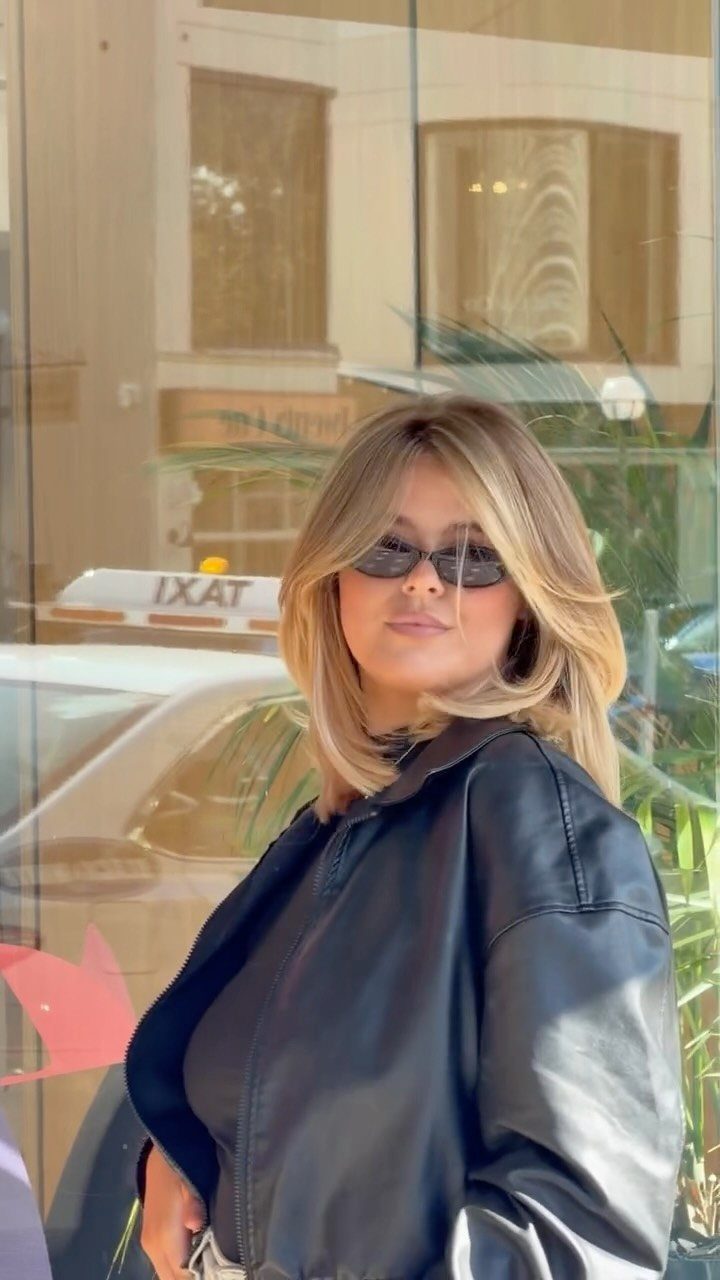
A balayage bob keeps the roots darker and lets the blonde build toward the ends, so regrowth shows as a soft gradient rather than a hard line.
That is the main reason I favor it over all-over color on short hair.
Because the lightening is hand-painted, ask your stylist to place brighter strands near the face and keep the back more subtle. Color and cut are separate steps, so expect this look to take more than one service.
5. Faux Hawk
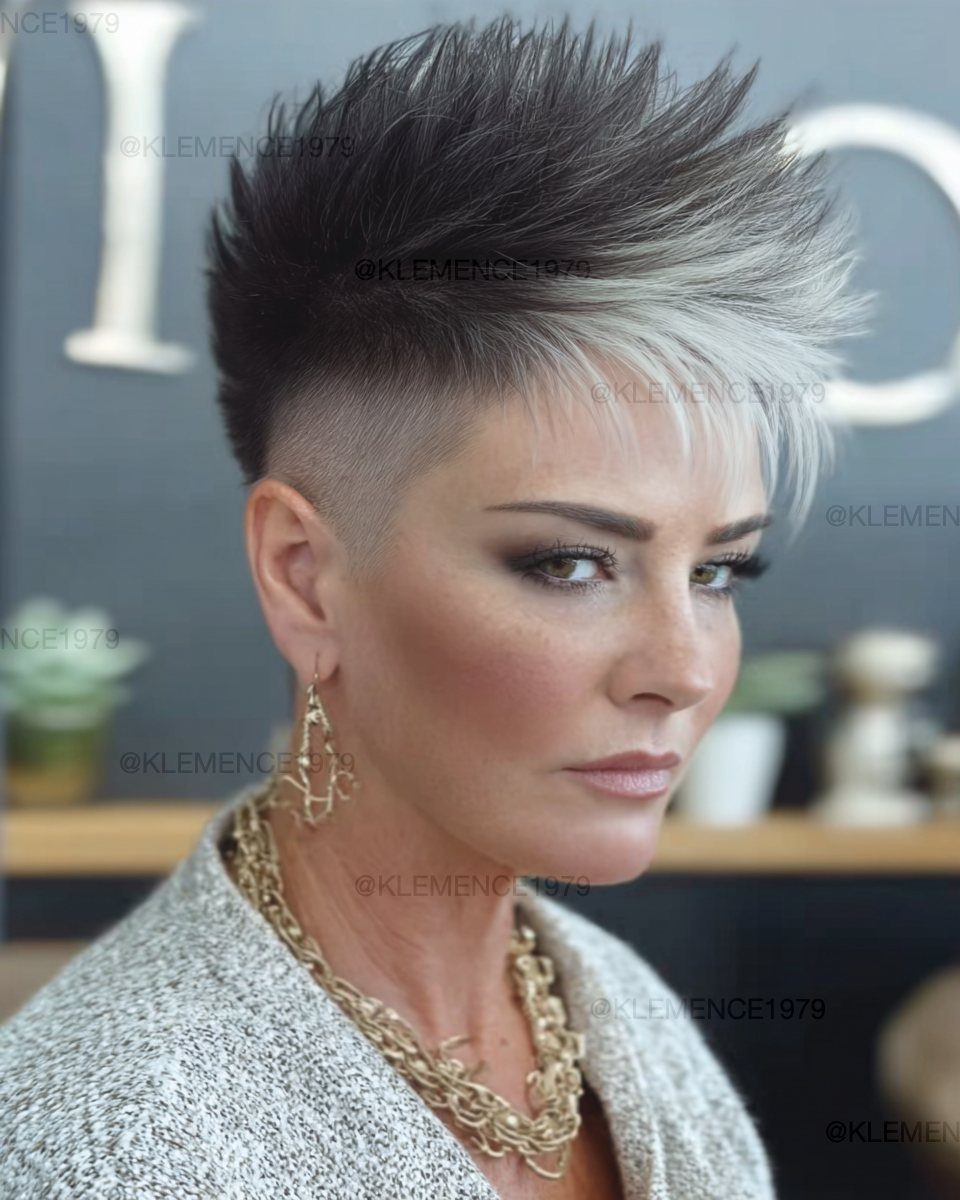
Here the blonde works as an accent: strands lifted into a faux hawk contrast sharply with darker hair, so the streaks do the talking.
It is a bolder pick than most short blonde styles, and I would say that is its appeal.
Keep the sides tidy and leave length on top, then push the hair upward with a strong-hold paste or pomade.
Placing the blonde on the top section makes sure it shows when the style is up. If a full commitment feels like a lot, start with a few streaks.
6. Full Bangs Blunt Cut
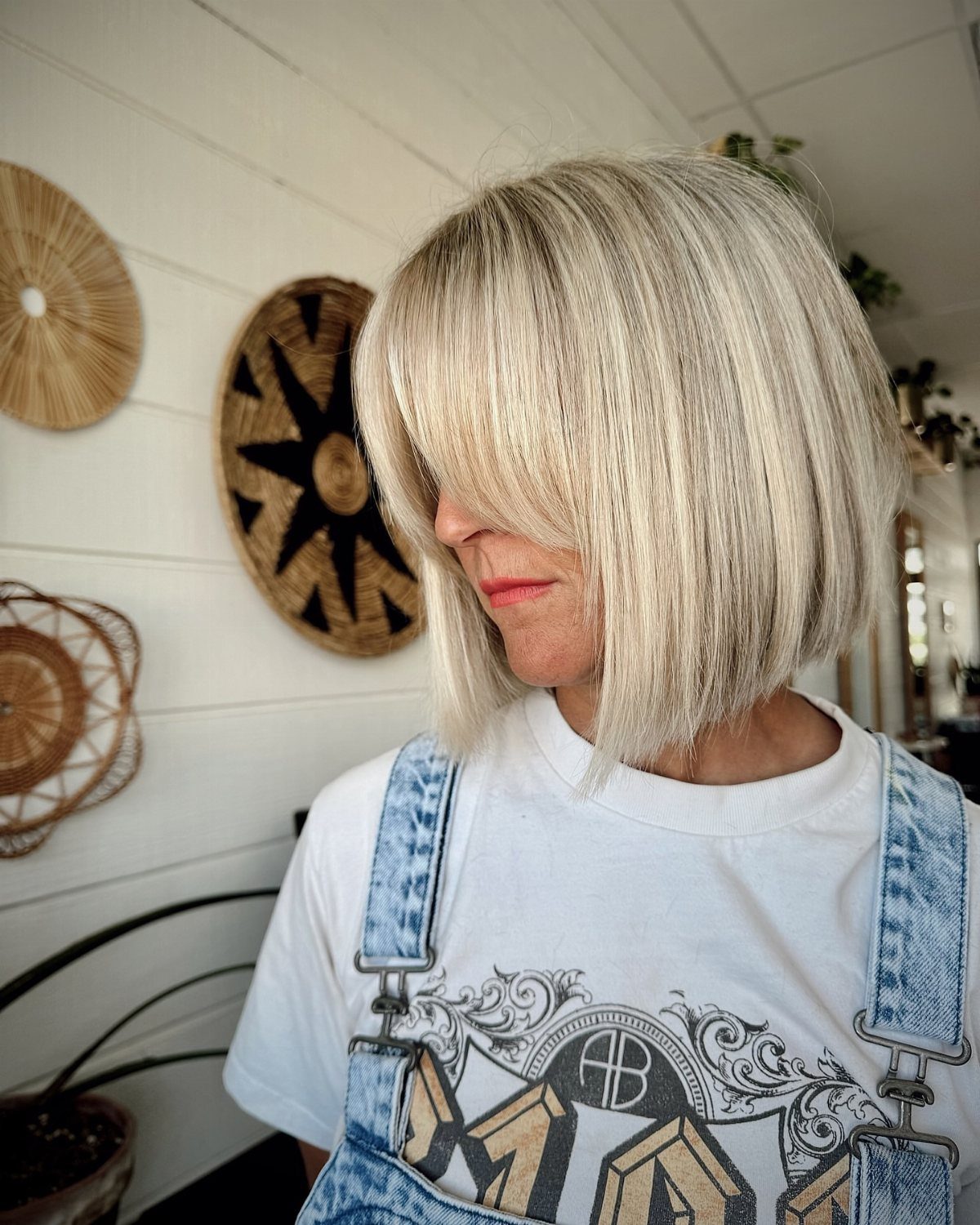
Full bangs and a blunt chin-length line make one solid shape, and that is exactly the appeal: a clean edge with nothing wispy to soften it. On blonde hair, the sharp lines read crisply and the shade looks even.
This cut works best on straight, smooth hair, since waves or frizz will interrupt the edge.
Expect regular trims, because bangs that reach the eyes lose the effect fast. I would only choose it if you are happy to maintain a precise shape.
7. Classic Lob
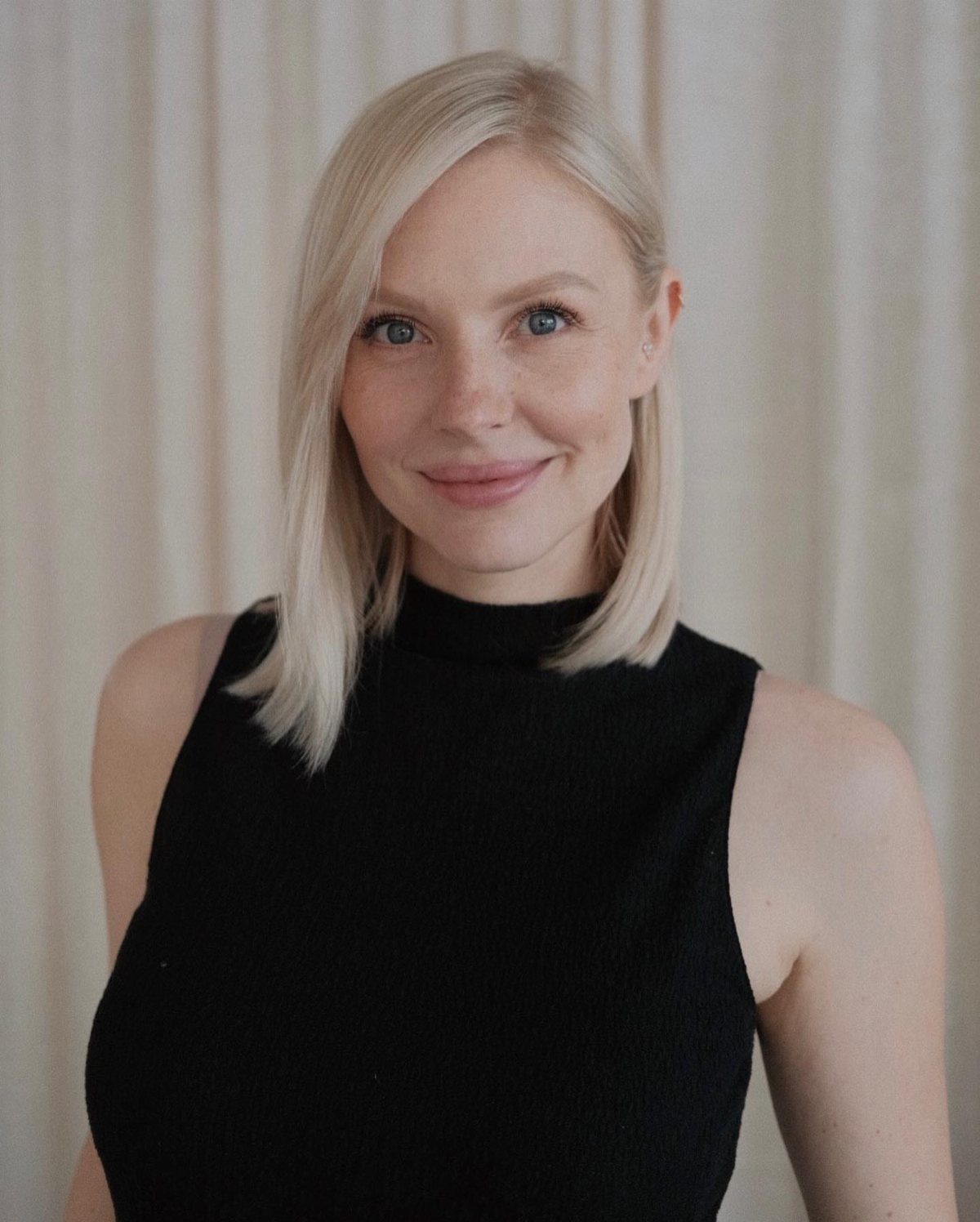
A side part is about the only styling decision a classic lob asks of you. The hair falls straight to the shoulders in one smooth line, and the shade does the rest.
I like this cut for its plainness. Ask for a single length that grazes the shoulders, choose which side your part sits on, and the shape holds itself together without extra products or tools.
8. Side Bangs Bob
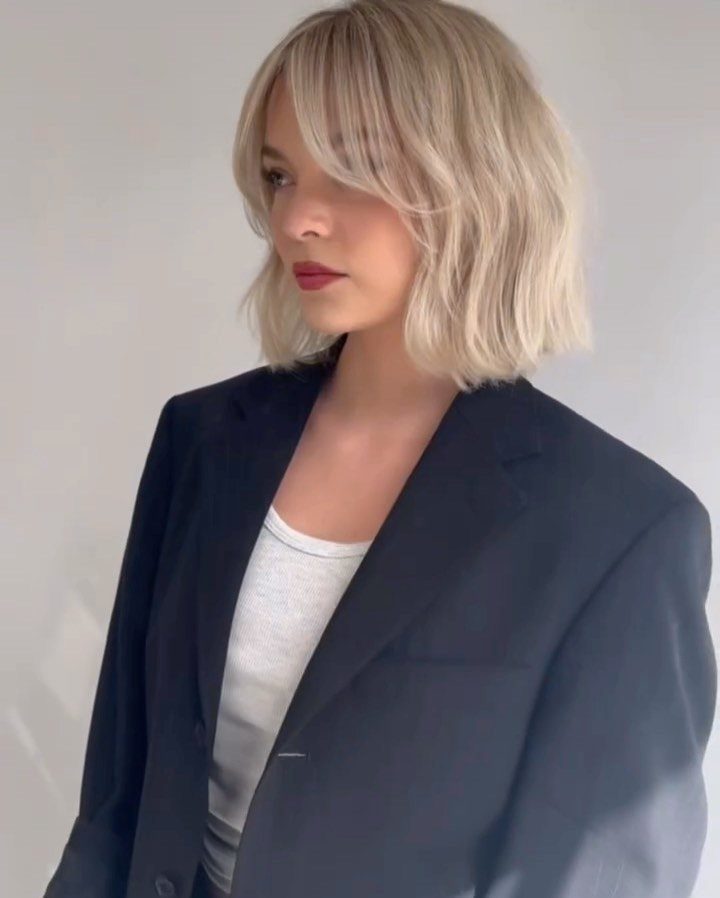
Bangs swept across to one side give a shaggy long bob a built-in direction. The waves stay loose and a little uneven, and the fringe falls over the forehead instead of sitting straight.
Ask for the bangs to be cut long enough to sweep, since short ones will stand up instead of crossing. I would leave the texture undone here; a very neat finish works against what makes the cut appealing.
9. Blonde Pixie
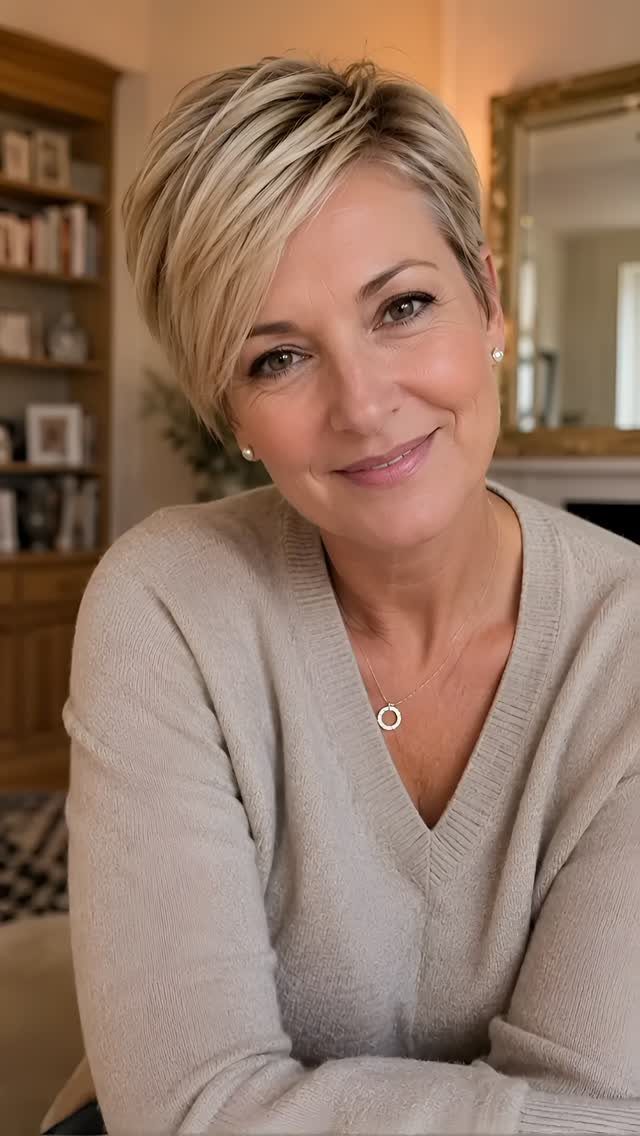
Length left in the fringe is what separates this pixie from a plain crop. The blonde sits close to the head, and the side-swept front gives the cut a soft finish.
Tell your stylist to keep the fringe longer than the sides and top so it can sweep in one direction.
I would choose this over a tighter cut if you want a short style that still has a little movement around the face.
10. Angled Bob
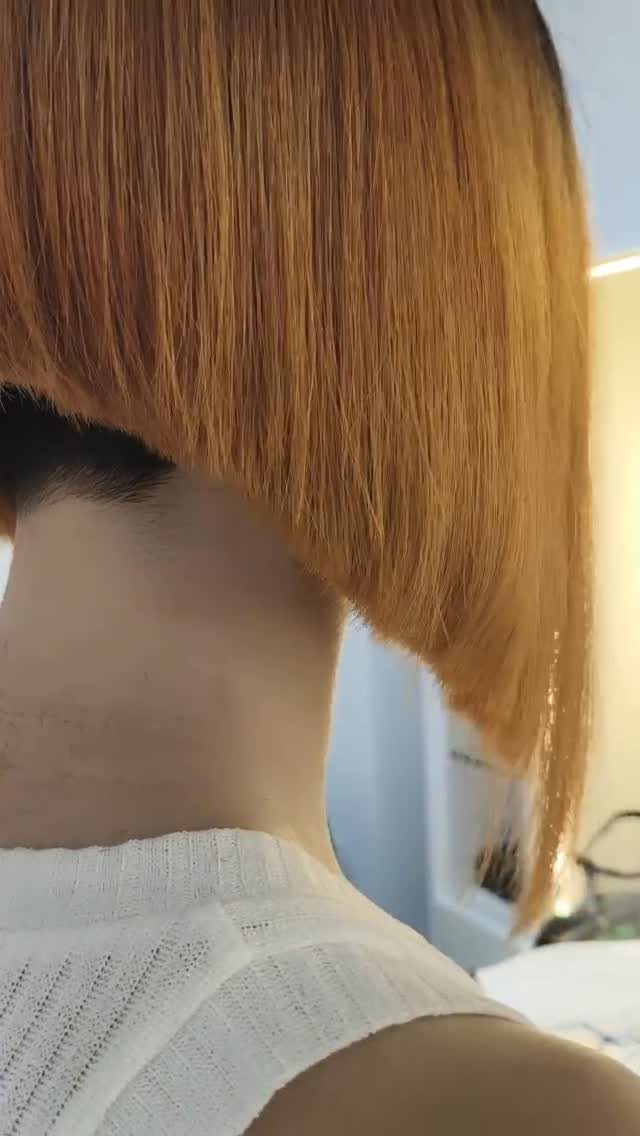
Shorter at the back and longer at the front: that slant is the whole cut. On straight, golden-blonde hair the angle reads as one clean diagonal, with nothing to distract from it.
Bring the photo and point to how steep you want the line to be, because a slight slope and a dramatic one are very different requests.
I would keep the hair smooth, since this shape depends on the edge staying visible.
11. Curly Pixie
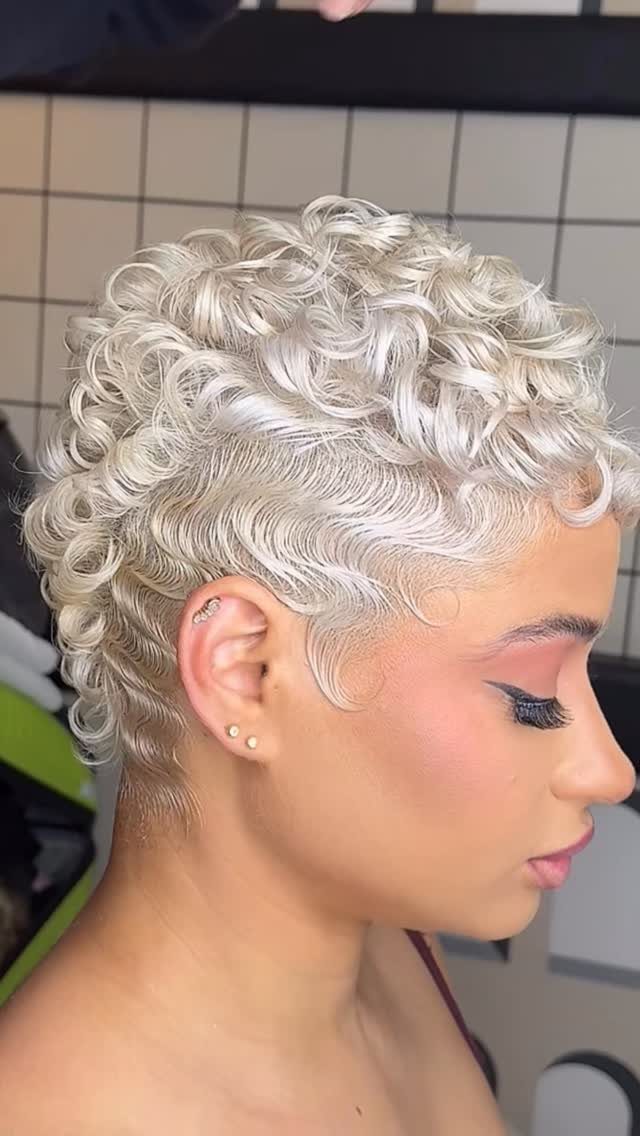
Close-cropped sides with curls piled on top make this pixie all about the contrast between the two. Platinum blonde adds to it, because pale curls catch light and show each coil.
Ask your stylist to leave enough length on top for the curls to form and keep the sides short. I would pick this over a straight pixie if you like texture doing the styling for you.
12. Platinum Bob
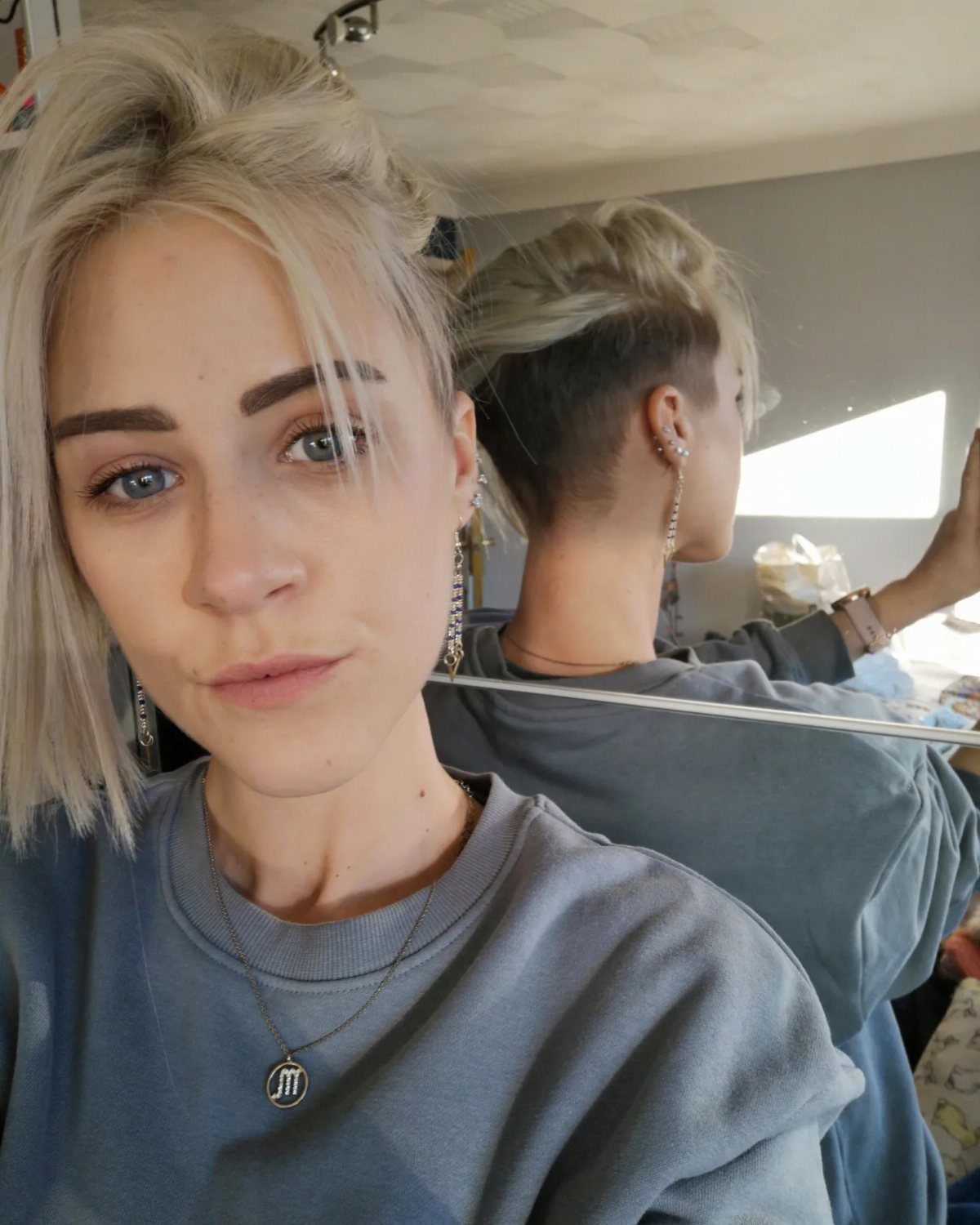
One side longer than the other, plus extra length in the front pieces, gives a platinum bob its attitude. The pale shade makes the asymmetry easy to see, so the shape reads from across a room.
When you book, show which side should be longer and by how much, since "asymmetrical" can mean a subtle step or a bold swing. I would go bolder here; a barely uneven line can look like a mistake.
13. Ash Blonde Feathered Layers
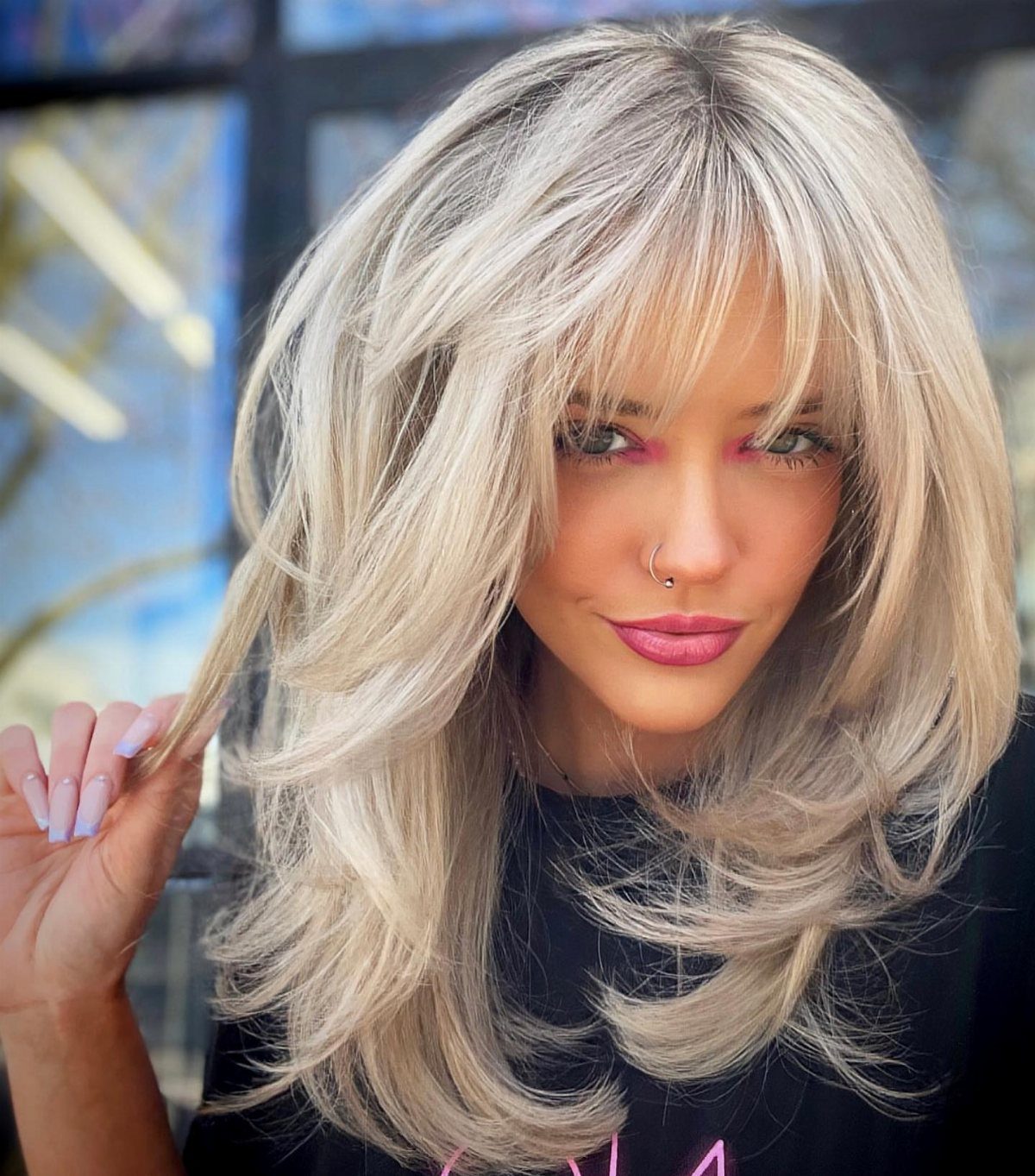
Feathered layers in cool ash blonde give short hair a soft, wispy outline, with bangs that blend into the sides instead of ending in a hard line.
The ash tone keeps the color from looking warm or yellow, so the shape stays the focus.
Tell your stylist the layers should be light and feathered, and hand over the photo so the amount of lift is clear from the start.
I would choose this if your hair is fine and you want it to look fuller without a blunt edge.
14. Jagged Lob
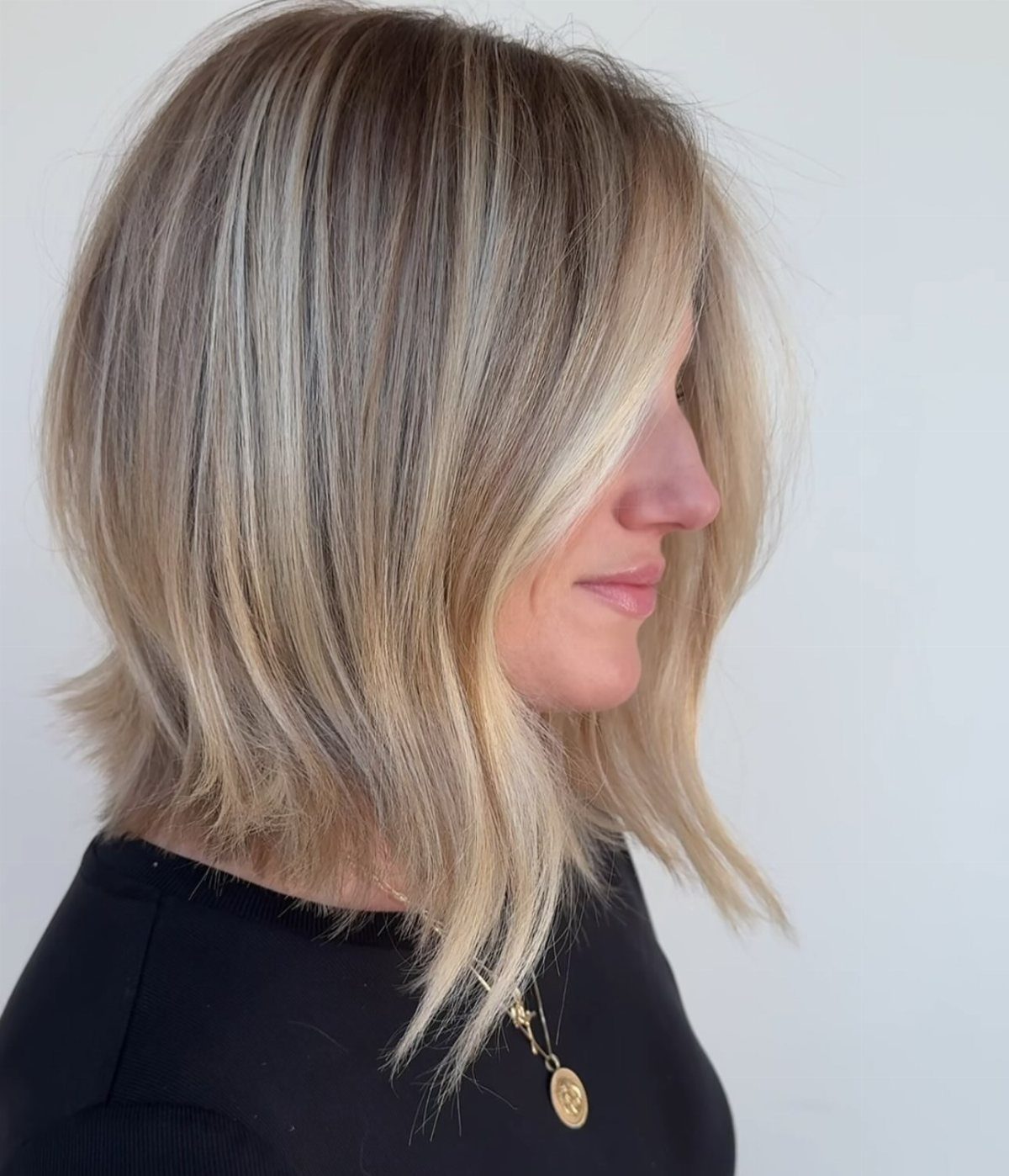
Short, slightly uneven layers are what separate a jagged lob from a standard one. The ends land at different points instead of in one clean line, which gives straight blonde hair some quiet movement.
I like this on hair with darker roots, since the grown-in color reads as part of the look.
Ask for the uneven ends to be subtle and point to where you want the shortest pieces. A trim every so often keeps the layers from blurring into one length.
15. Ombre Bob
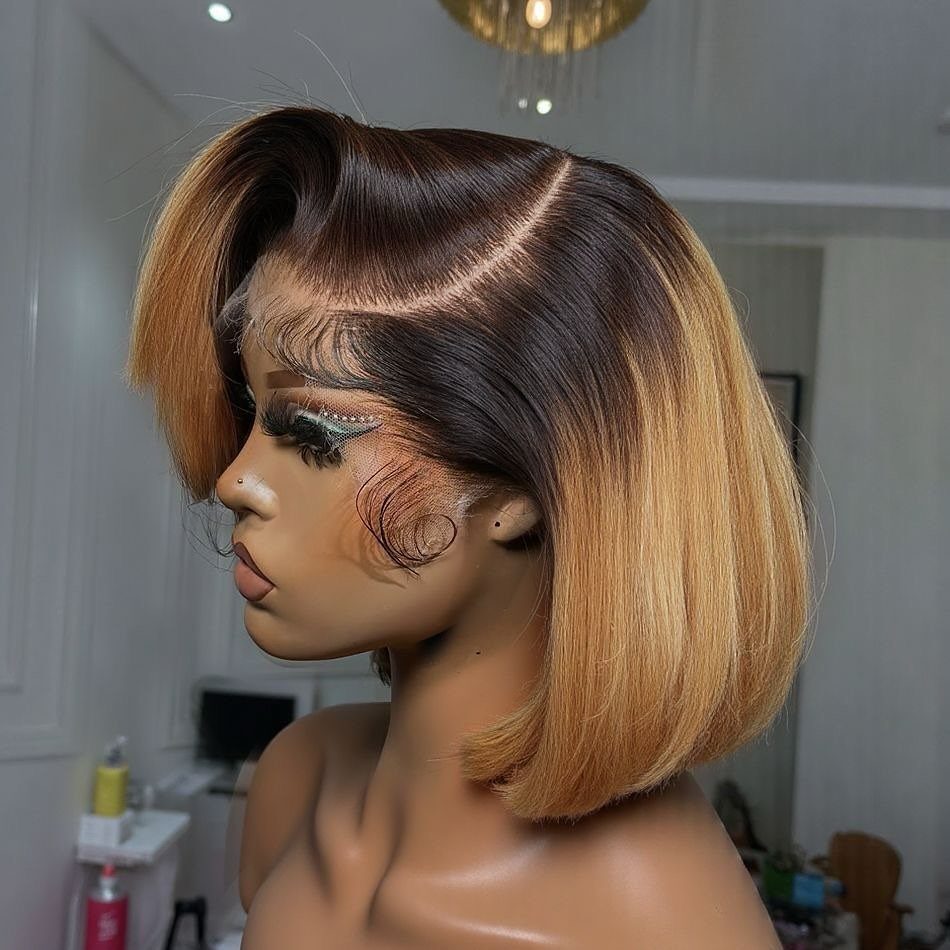
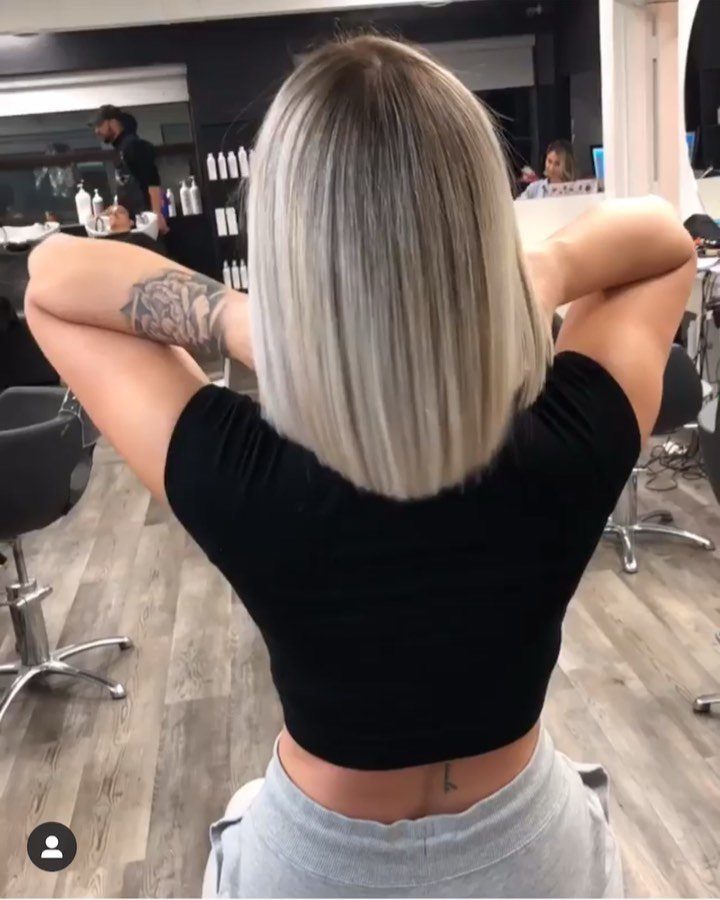
Dark roots that melt into blonde ends are the whole idea of an ombre bob, and a smooth, sleek cut lets the gradient be seen without competition.
Because the roots stay dark, the color is built to grow out without a harsh line.
When you book, say how high the blonde should begin; a fade that starts near the chin looks different from one that starts at the crown. Keep the bob straight and polished, and the color blend becomes the star.
16. Fluffy Pixie
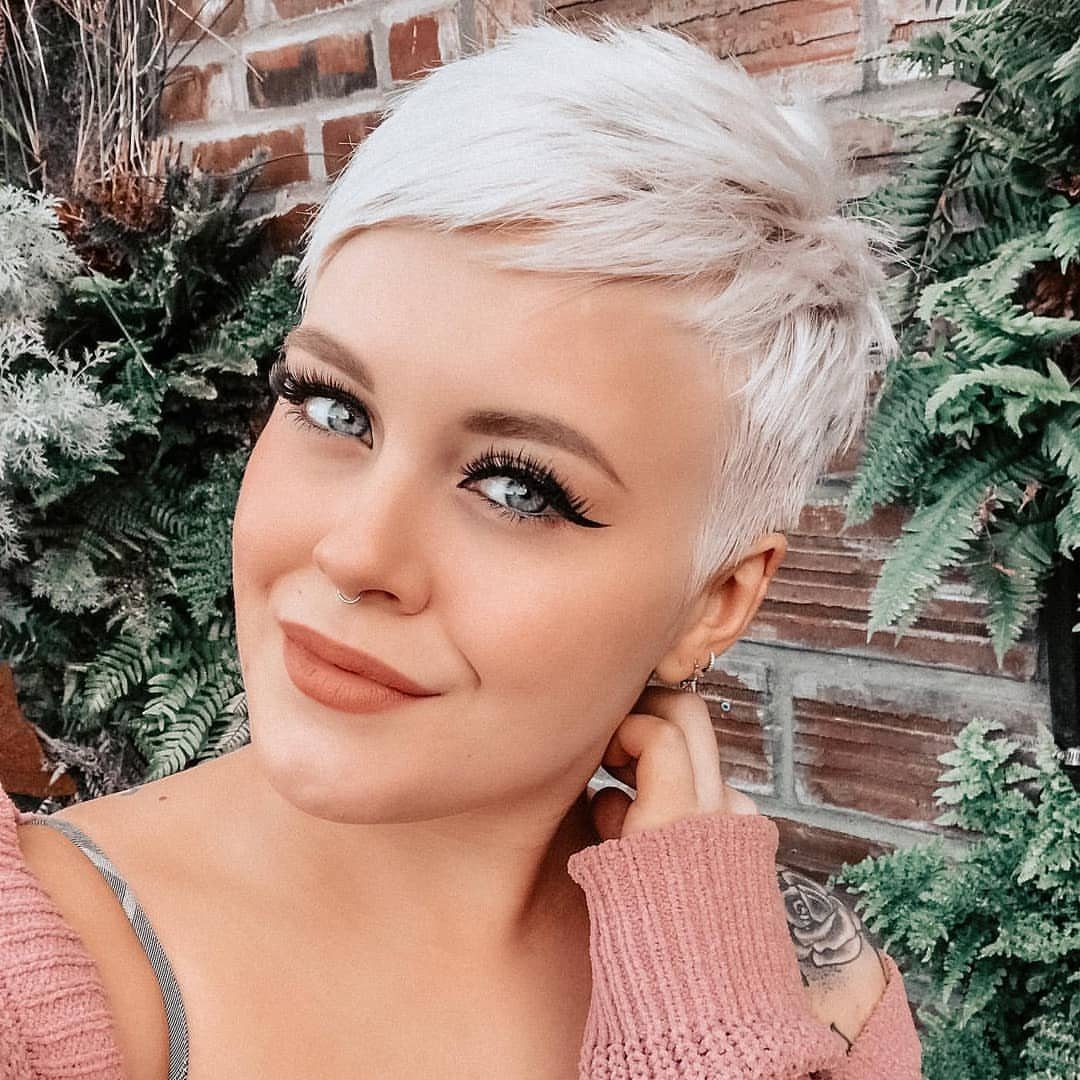
Fluffy is the right word for this pixie: the top is tousled and airy, and the front sweeps across the forehead instead of lying flat. White-blonde hair makes that softness easier to see.
Ask your stylist to leave the top longer and cut it with plenty of texture.
Then rough-dry with your fingers and skip the brush. For a short cut that takes almost no effort on a weekday, I would pick this over a sleek crop.
17. Rose Gold Side Part
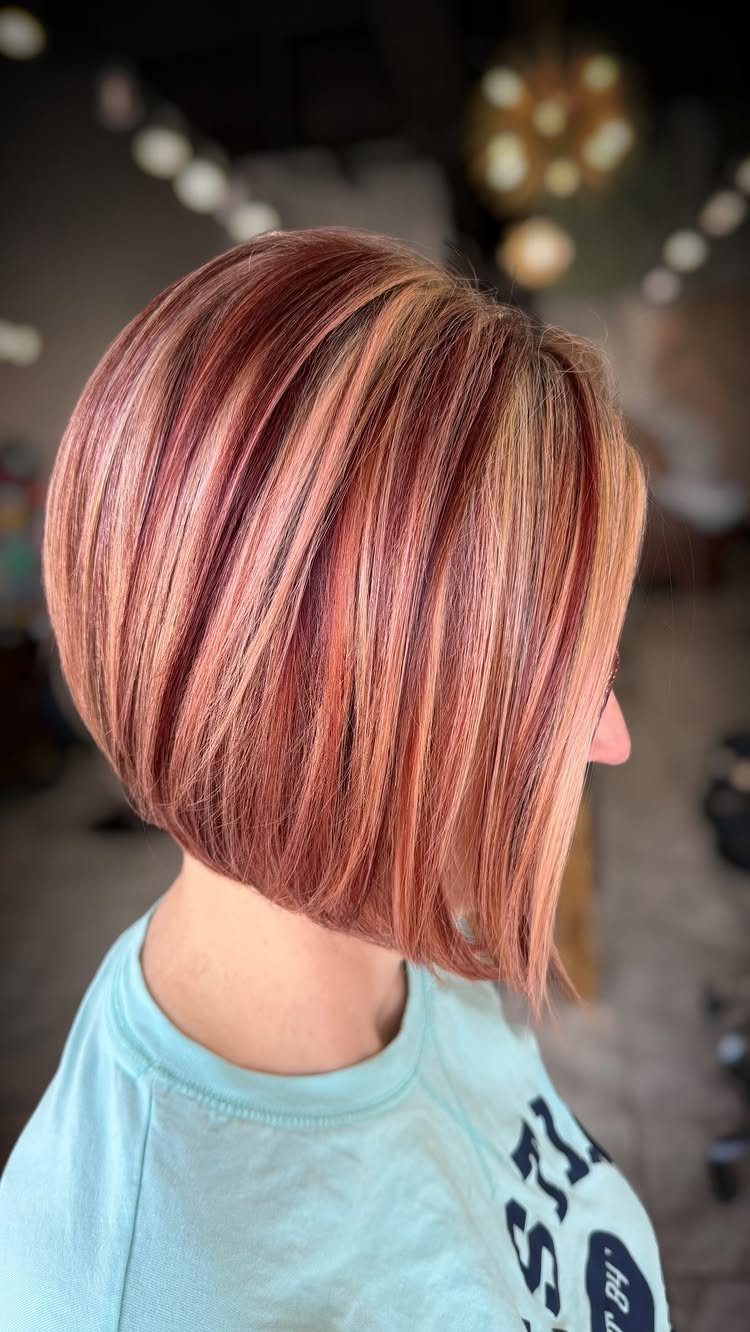
A deep side part does more work in this rose gold bob than any product could. It throws the layers across the face and gives the short cut an easy, asymmetrical sweep.
Part your hair deeper than feels natural, then let the layers fall on their own.
Tell your stylist you want the layers visible, because the pinkish tone is subtle and the cut is what shows off the color. I would pick this if you want something softer than a platinum shade.
18. Cool-Toned Bob
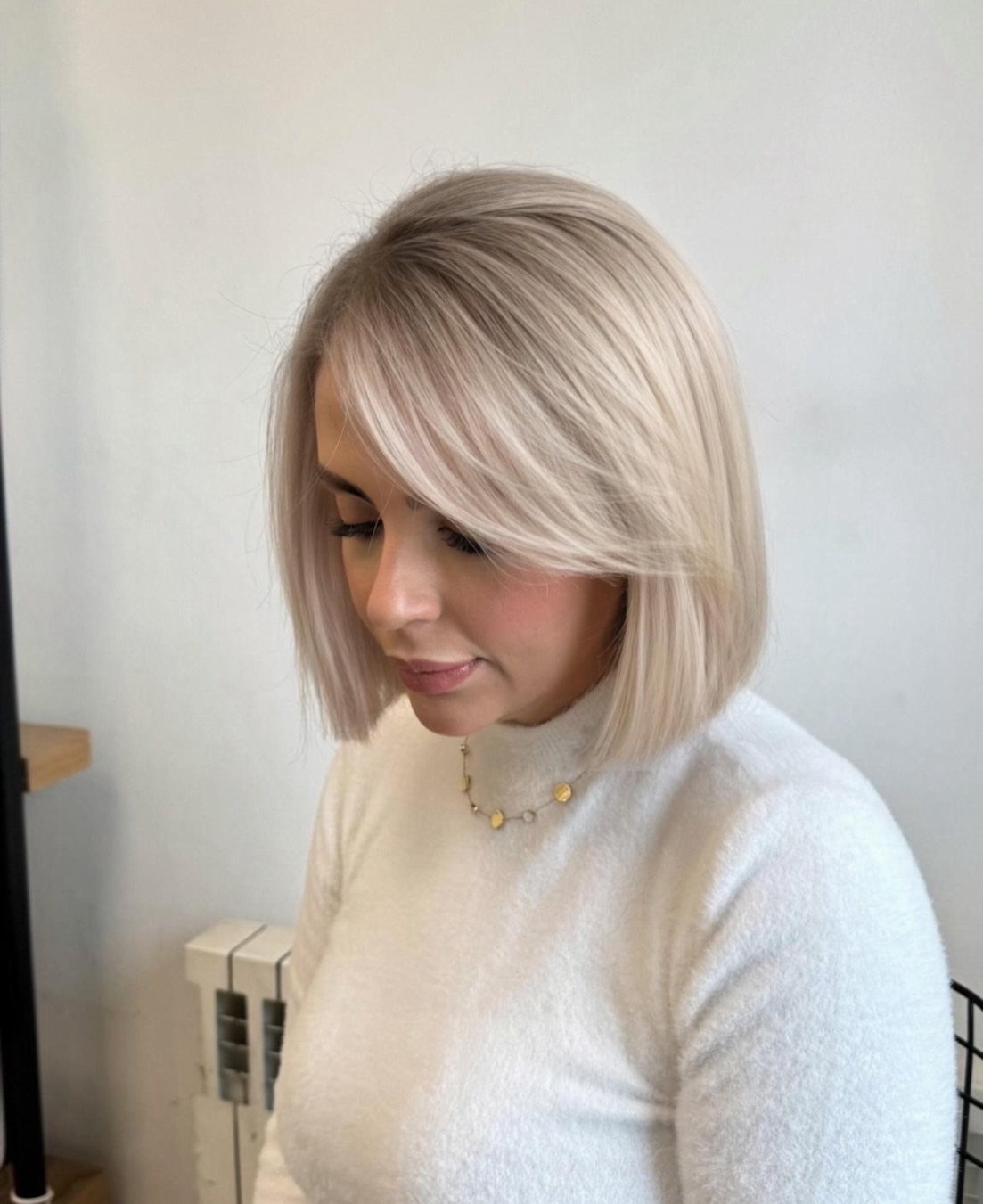
Platinum highlights woven through a bob keep the shade cool and give the color depth that a single flat tone lacks. Subtle layers and a side part finish it without any fuss.
Ask for the highlights to be fine so the effect stays soft, and for light layering rather than visible steps.
I would choose this over all-over platinum if you want brightness with a little dimension. Cool blondes can drift warm, so plan on keeping the tone in check.
19. Curtain Bangs Bob
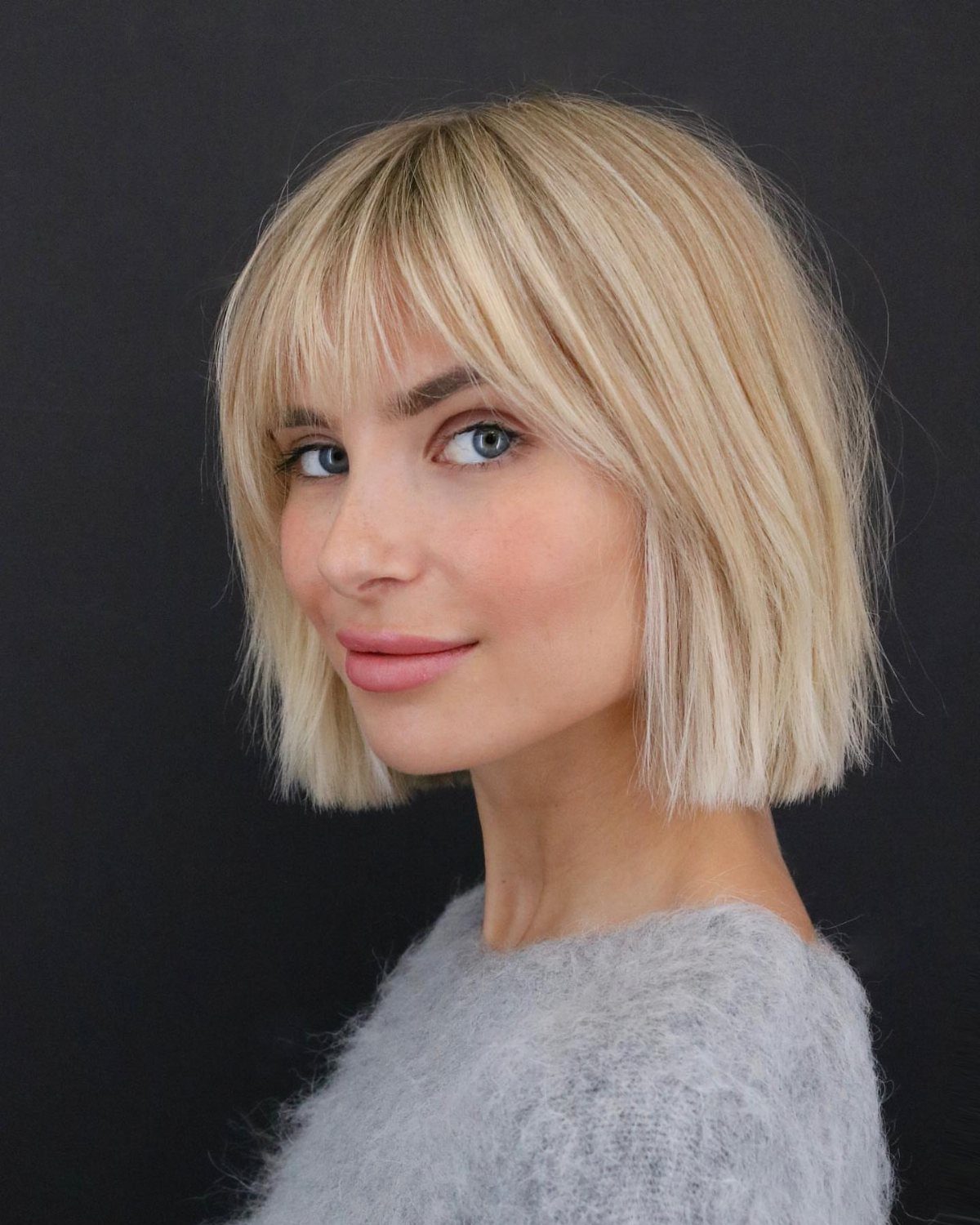
A center part with soft curtain bangs opening to each side gives a blonde bob its frame. The fringe stays subtle, so it works as a detail rather than a statement.
Ask your stylist to cut the bangs long enough to part and fall away from the middle, then blend them into the bob.
I would pick this if you want a fringe without committing to a heavy one, and the center part keeps the whole look balanced.
20. Buzz Cut
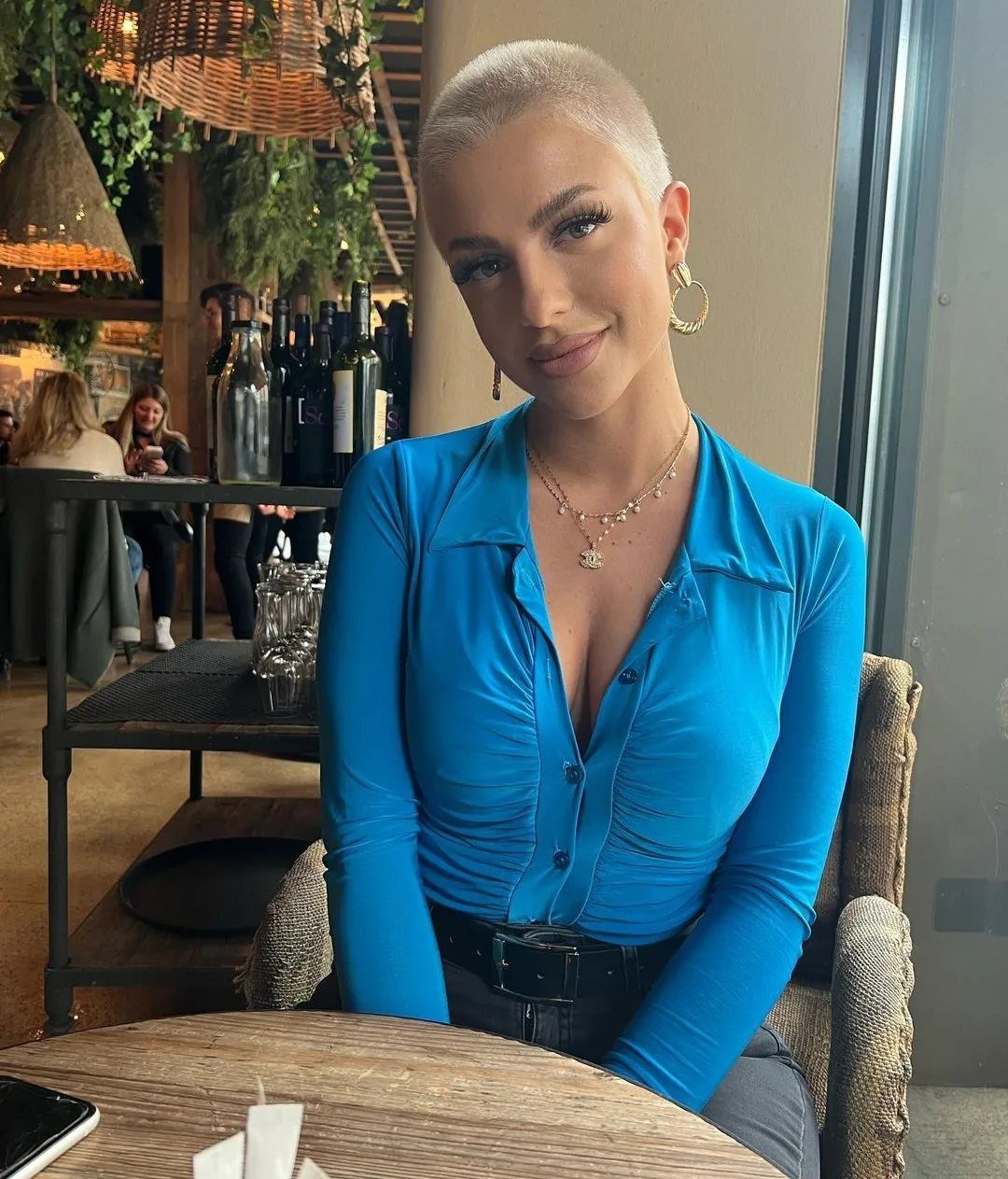
Nothing is left to style on a blonde buzz cut, which is both its risk and its relief. The hair sits close to the scalp in one even length, so the shade and your face shape carry everything.
Ask for a single clipper guard and say plainly how short you want it. I would choose this if mornings are the problem you are trying to solve, since there is no routine to speak of.
21. Tapered Pixie
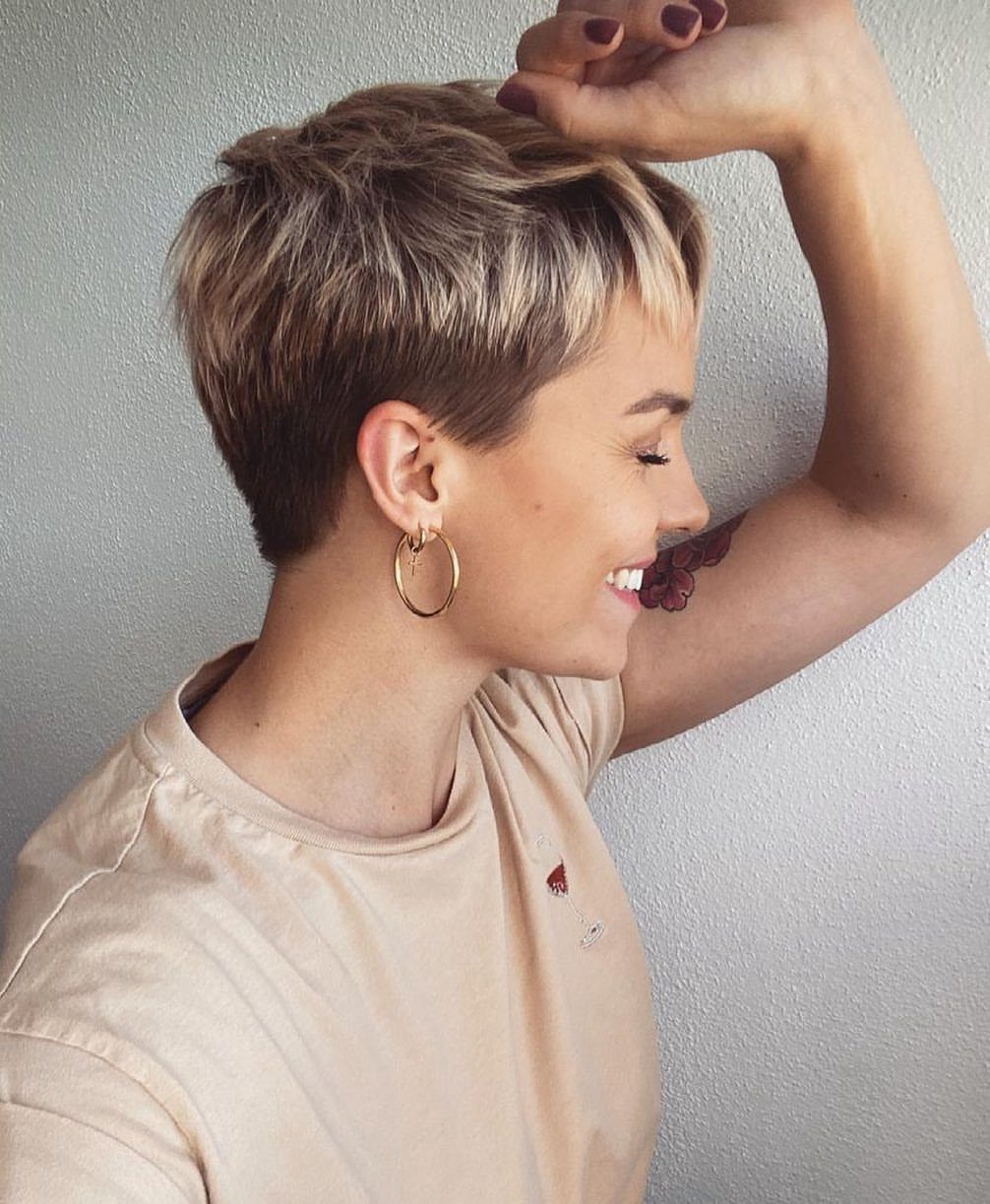
Closely trimmed sides with more length on top give a tapered pixie its lift. The top can be textured and full while the sides stay neat, so the shape looks bigger than the amount of hair involved.
Tell your stylist you want the sides tapered short and the top cut with texture, not left in one blunt layer.
A little styling paste worked through the top keeps the volume in place. I like this on fine hair that needs help looking fuller.
22. Side-Swept Pixie
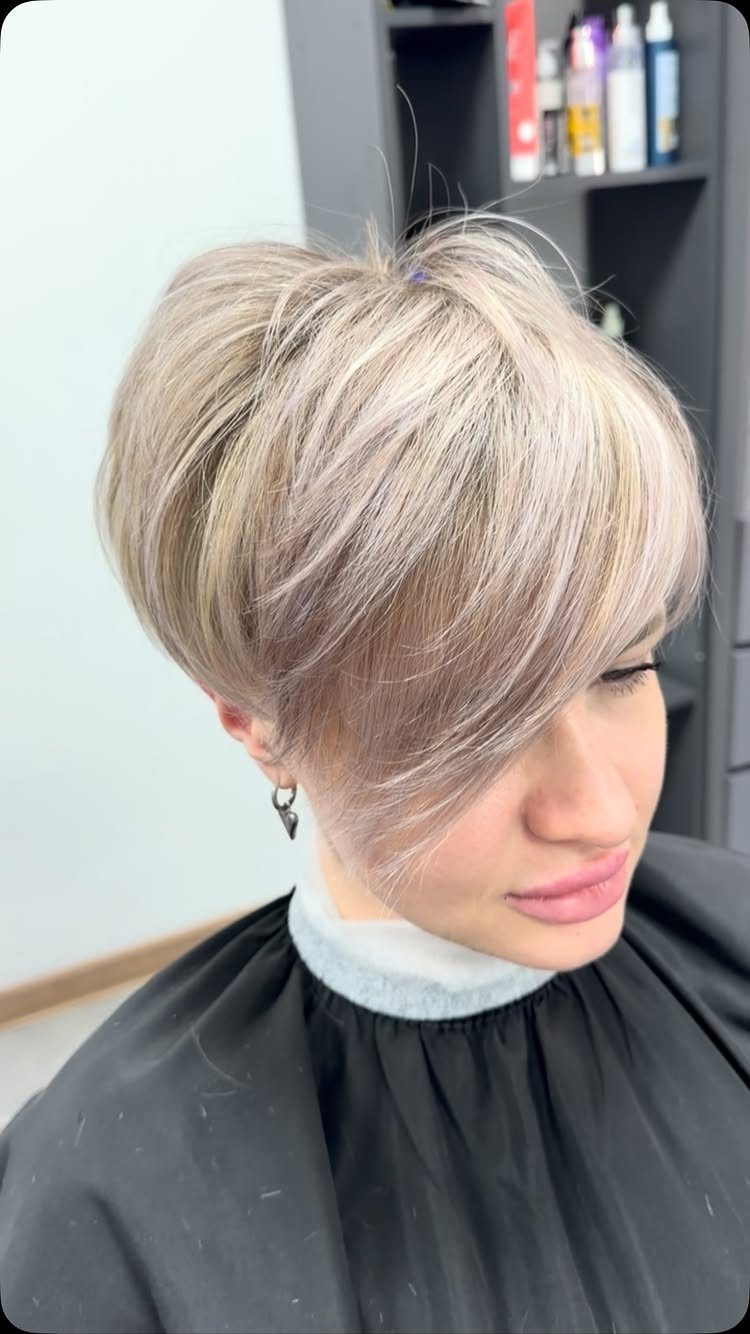
A long swoop of bang over textured layers turns a pixie into something closer to a pixie-bob. The front is the longest part of the cut, and it sweeps to one side.
Keep the layers choppy through the top and ask for the bangs to be cut long enough to cross the forehead.
A side-swept pixie keeps a little length on top, so you get a fringe to push around and a shape that doesn’t lock into one look the way a razor-sharp crop does. Blow-dry the fringe sideways to train its direction.
23. Face-Framing Curly Lob
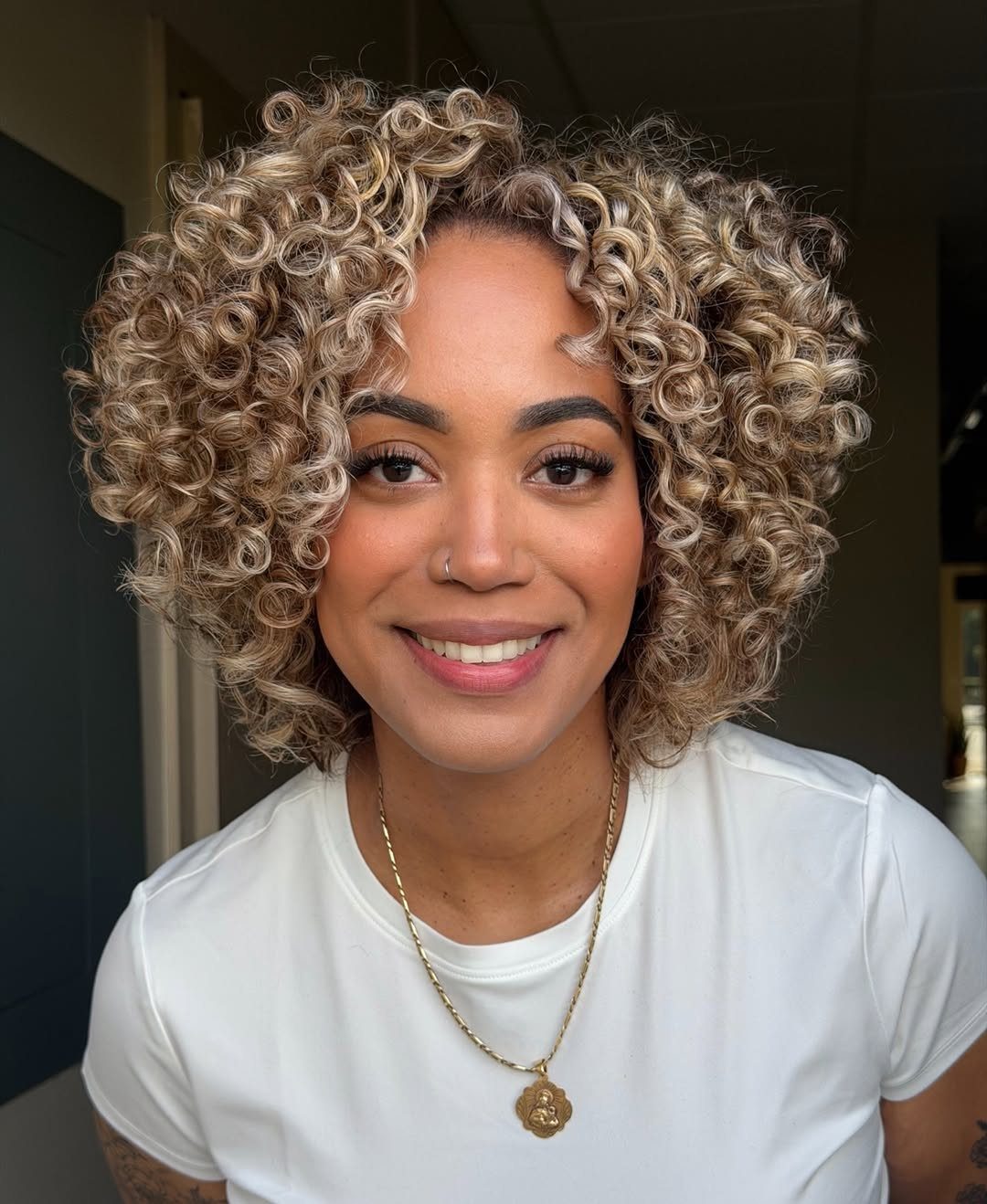
Curls cut to hang beside the cheeks do the framing here, which makes a shoulder-length lob feel shaped rather than just long. Pale blonde makes each curl easy to see.
Ask your stylist to cut the front pieces while the hair is dry, so they can judge where each curl actually lands once it springs up.
I would leave the curls loose and defined, with a curl cream and no brushing. Brushed-out curls lose the framing quickly.
24. Curled Short Blonde
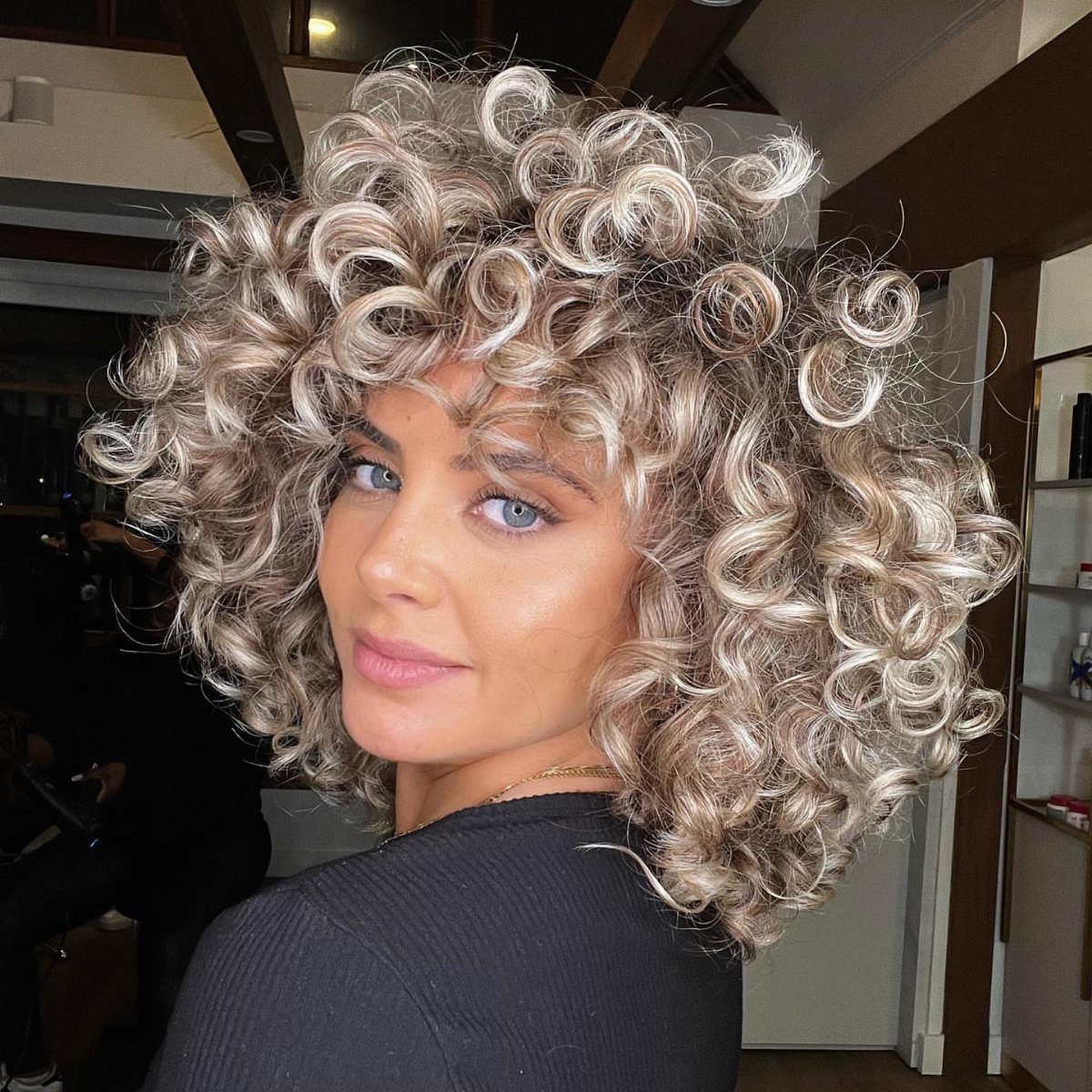
Tight, spiral curls that look almost twisted are what set this short blonde apart from a soft, wavy finish. The curls pile up around the face, and the pale shade makes every coil show.
Wrap small sections around a narrow curling iron and let them cool before you touch them.
Then separate the curls gently with your fingers. I would pick this if you want volume that reads as deliberate, but expect it to take more time than a wave.
25. Pulled Back Hair
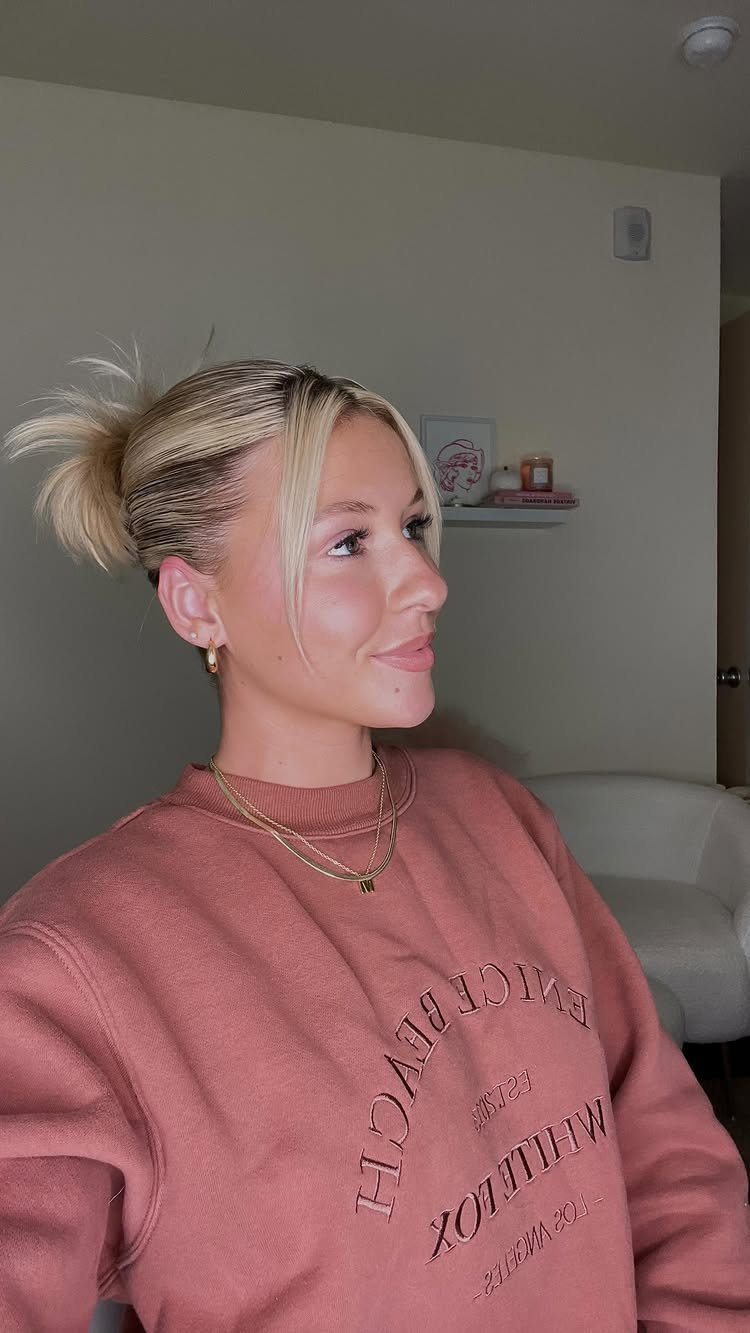
Pulling short hair back only works if a few pieces stay out, and the long strands along the face are what make this version look soft instead of strict. The rest is brushed away from the forehead and gathered up.
Leave those face-framing pieces free before you tie or pin the rest. I would pick this for days when you want hair off your face without a full restyle, and for growing out a cut.
26. Spiky Pixie
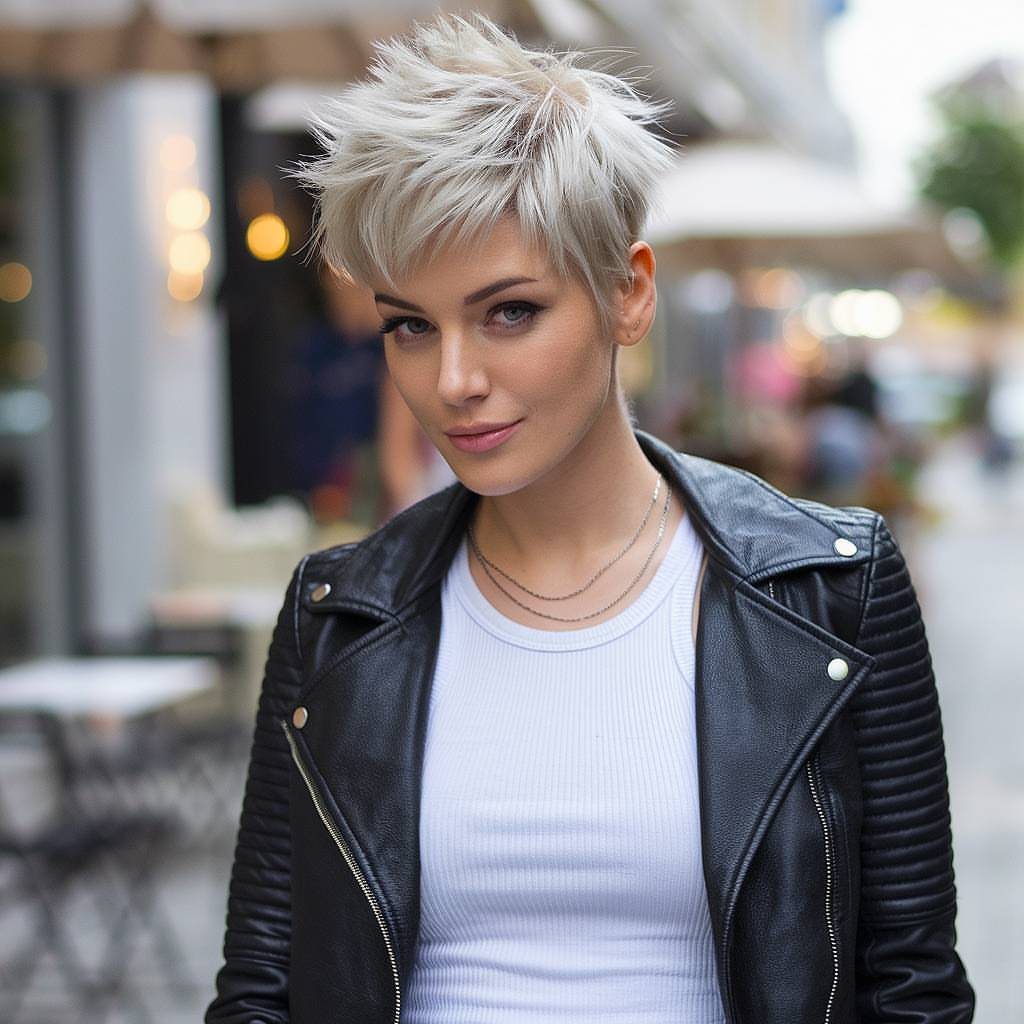
Spikes need a short cut with enough texture to stand on its own, and platinum blonde makes each point easy to read. The leather-jacket edge of the look comes from the hair, not the outfit.
Ask your stylist for choppy layers on top, then work a small amount of paste through with your fingertips and push the hair upward. I like it for anyone who wants a pixie with attitude rather than a soft one.
27. Curly Mohawk
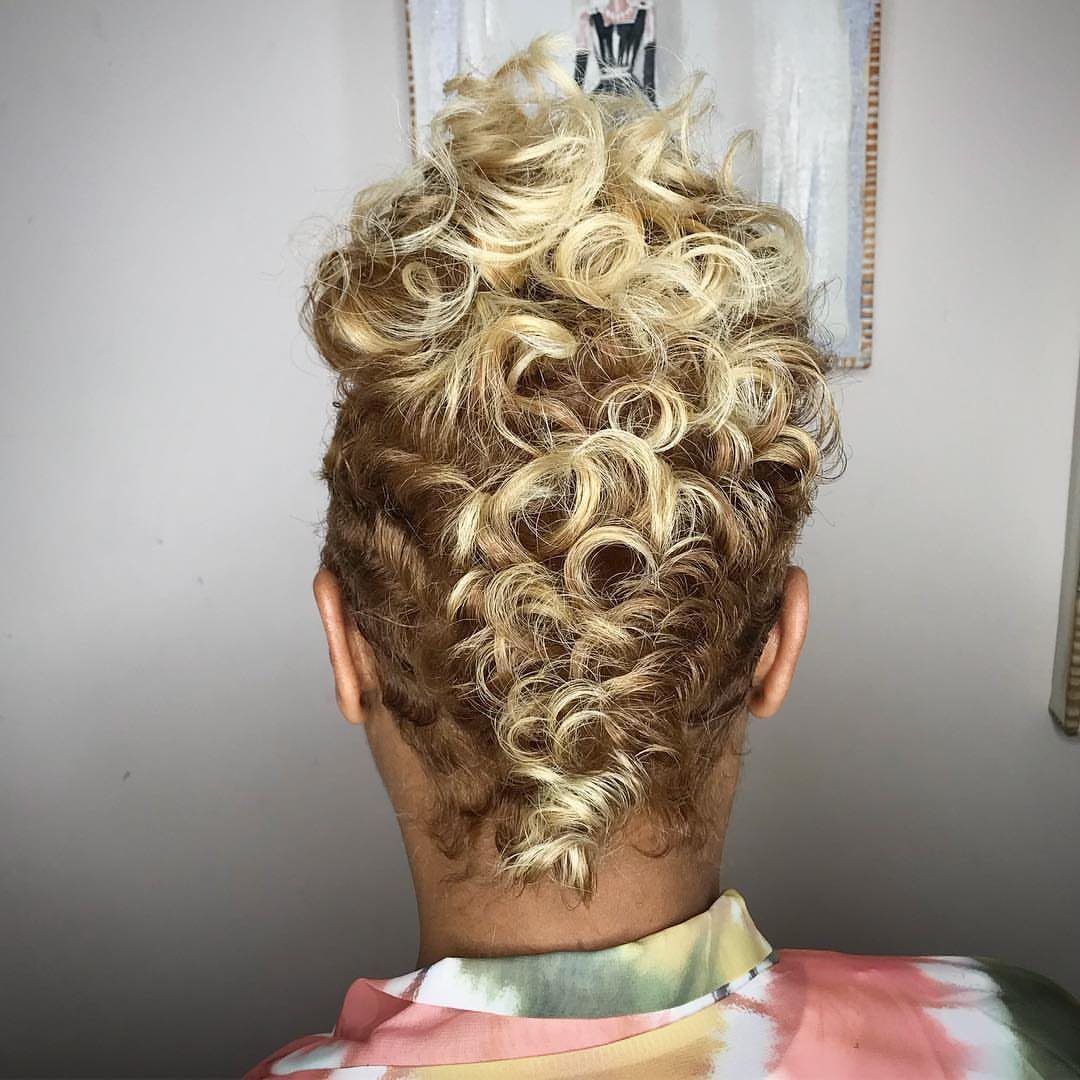
From behind, a curly mohawk is a strip of blonde coils running down the center with the sides trimmed close.
Closely trimmed sides in a darker shade make the pale curls on top look taller, so ask for that contrast when you book.
Tell your stylist to keep the sides short and leave real length along the middle so the curls have room to form.
I would choose this over a straight mohawk if your natural texture is already curly, since it asks you to work with it.
28. Shadow Rooted Bob
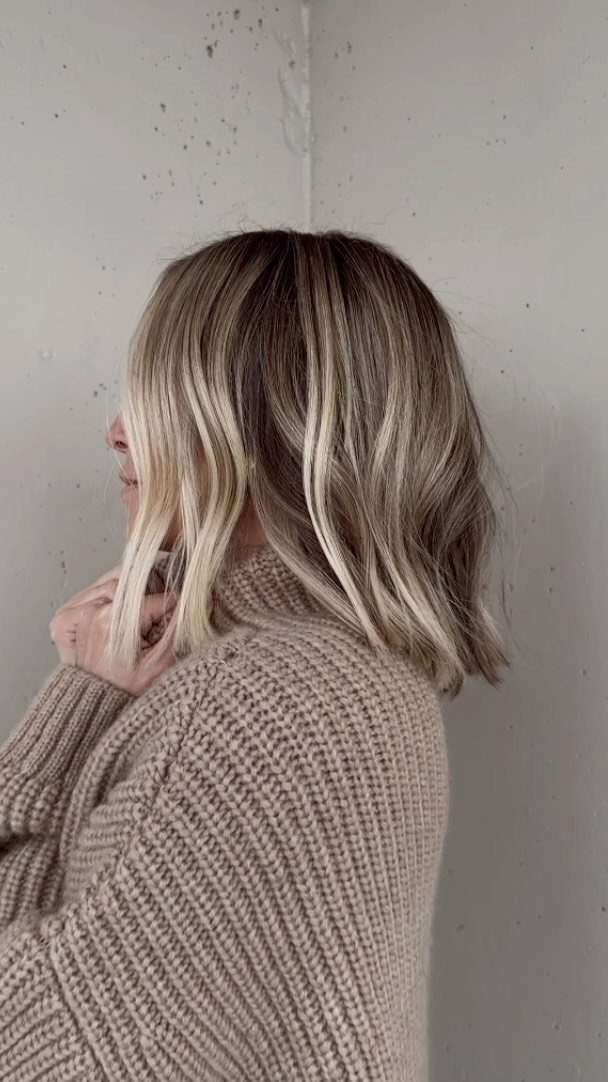
Color that starts deep at the scalp and lightens toward the ends gives a shoulder-length bob its dimension. The darker root reads as part of the design, not as regrowth.
Ask for a shadow root blended softly into the blonde, so no line shows where the two meet.
I would keep the cut simple and let the color do the work. Because the root is already dark, grow-out is easy to live with.
29. Copper Blonde Shaved Side
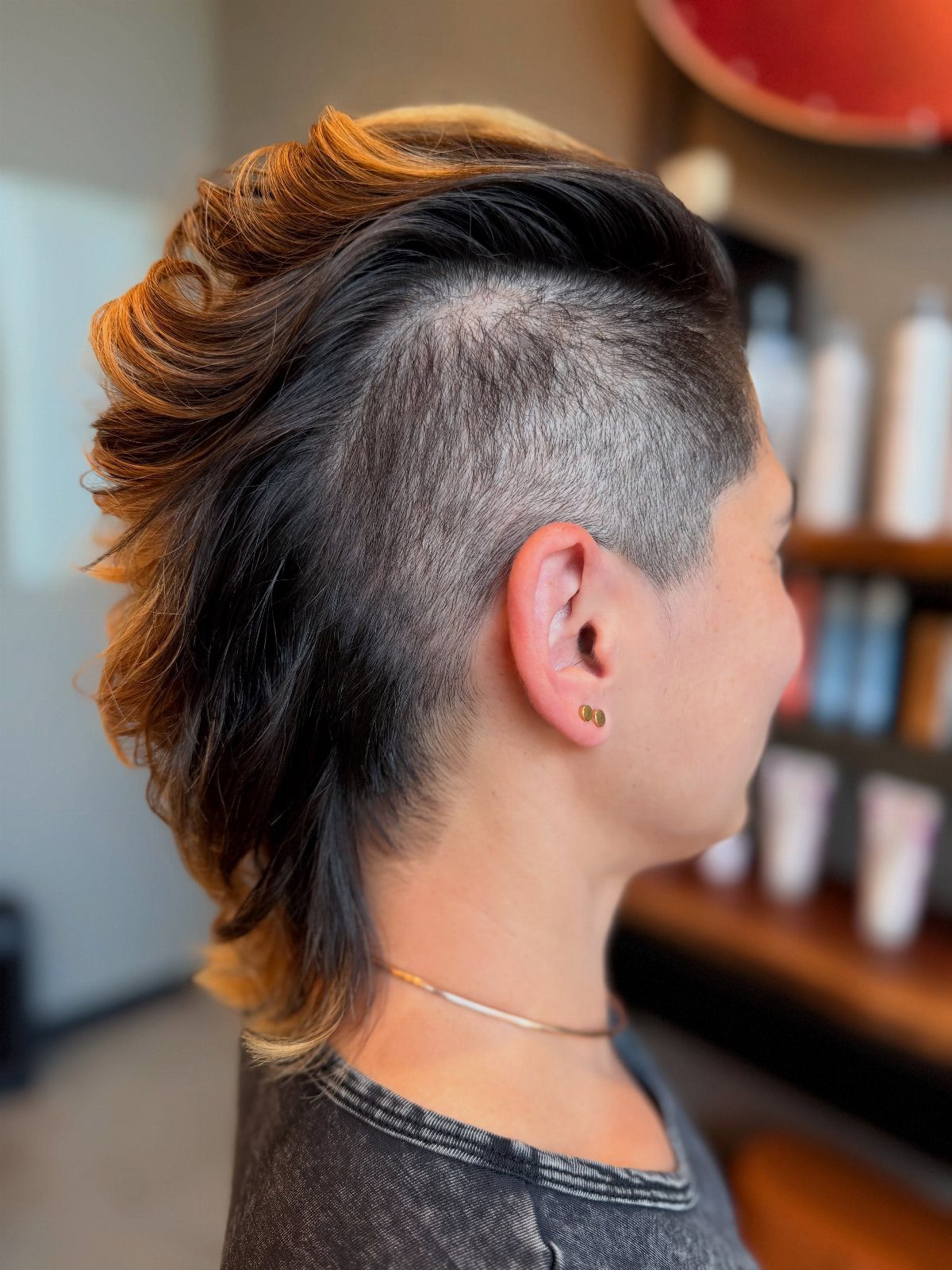
Copper blonde against dark shaved sides is a bold contrast, and the longer section left at the nape keeps the cut from looking too severe. The top sweeps up and back, so the color gets the spotlight.
Show your stylist exactly where the shaved area should stop and how long the nape piece should hang. I would choose this if you want a short cut that looks styled even on a quick morning.
30. Platinum Curly Undercut
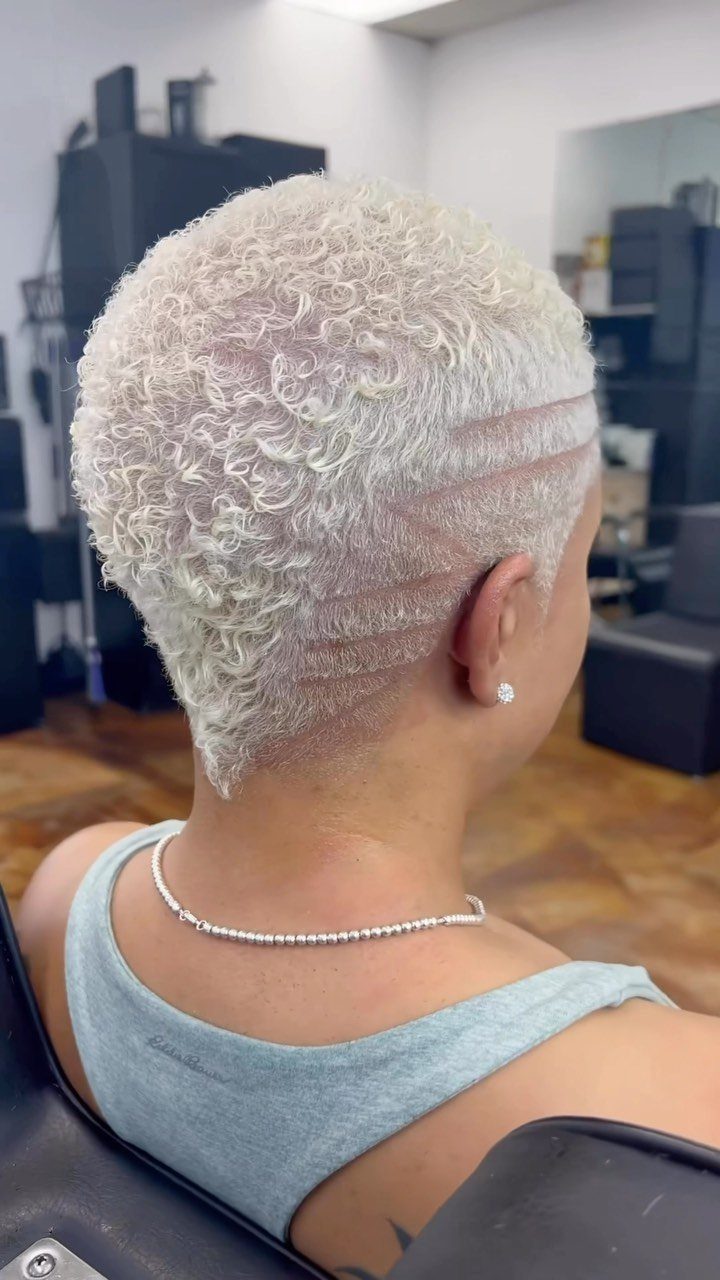
Horizontal lines shaved above the nape give tight platinum curls a graphic finish. The curls stay soft and rounded on top while the lines add a sharp detail underneath.
Bring the photo and point to where the lines should sit and how many you want.
Keep the curls cropped close so the pattern stays visible. I would pick this if you like a small, deliberate detail that only shows from behind.
31. Tapered Blonde Bob
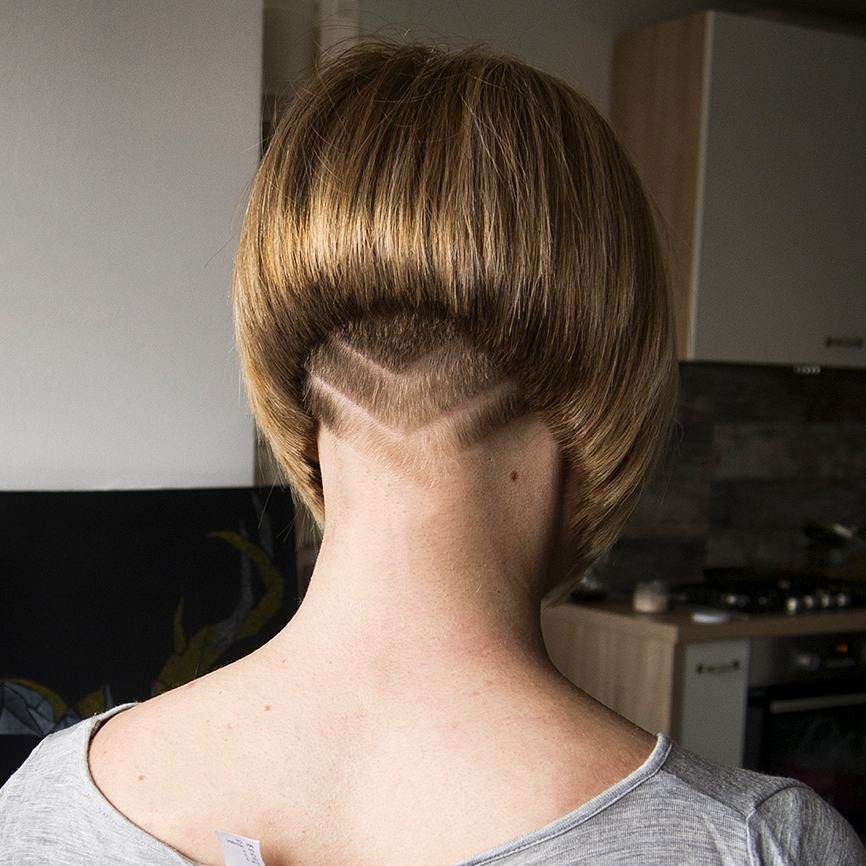
A close taper at the nape is what keeps a rounded blonde bob from looking heavy at the back. The V-shaped undercut sits low and tight against the neck, while the hair above it keeps its soft curve.
Tell your stylist where the taper should end and how closely to clip it. I would choose this if you want a bob with a little edge that only shows from behind.
32. Wispy Blonde Bangs Bob
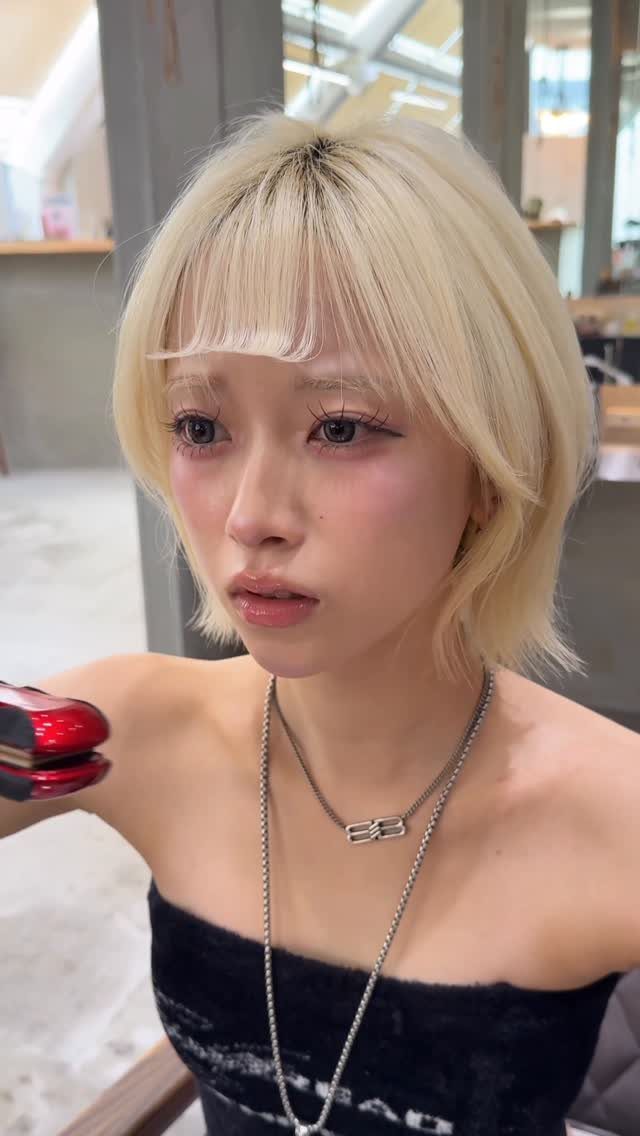
Wispy, blunt bangs over a pale blonde bob at jaw length make the face the focus. The ends of the bob are feathery too, so the whole cut looks light rather than heavy.
Ask for the bangs to be cut blunt but thinned out, and for the layers to stay soft around the jaw. I like this on fine hair, where a thick, solid fringe can look weighty.
33. Blue Underlayer Bob
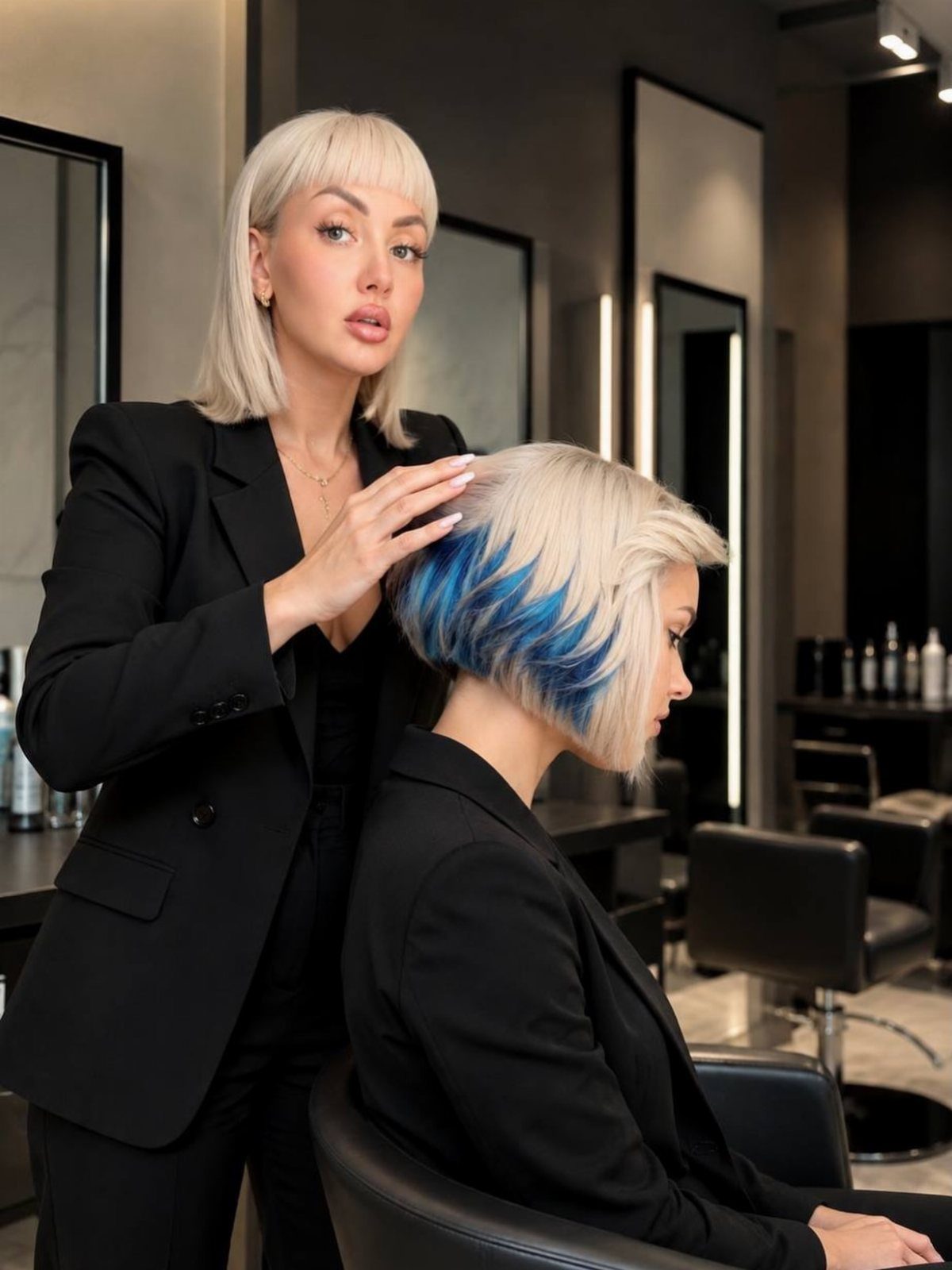
Vivid blue hidden beneath pale blonde is the whole trick of this bob. The top layer stays quiet, and the color flashes whenever the hair moves or gets tucked behind an ear.
Ask your stylist to place the blue in the underlayers only, so it shows in motion rather than all the time.
I would pick this if you want bold color you can hide on a work day. Pale blonde is the right base, because the blue stays clear against it.
34. Blunt Blonde Bob
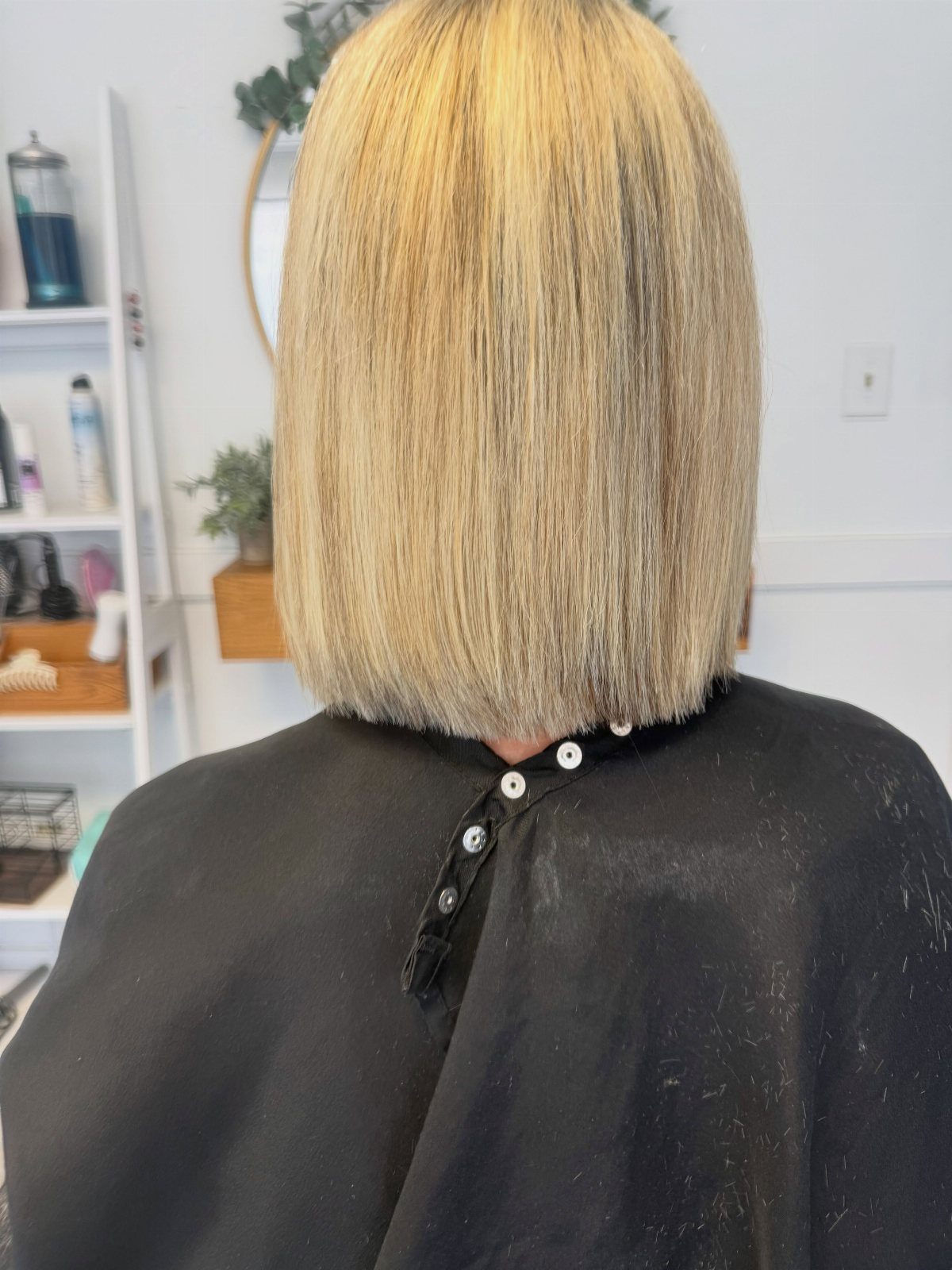
A blunt bob cut in one clean line at the chin is the simplest shape in short blonde, and straight light blonde hair shows that line best. With no layers to hide behind, the cut has to be precise.
Ask for a single length with a sharp edge, and book regular trims, since the line softens as it grows. I would choose this if you like a polished look that needs little more than a blow-dry.
35. Shaved Side Blonde Bob
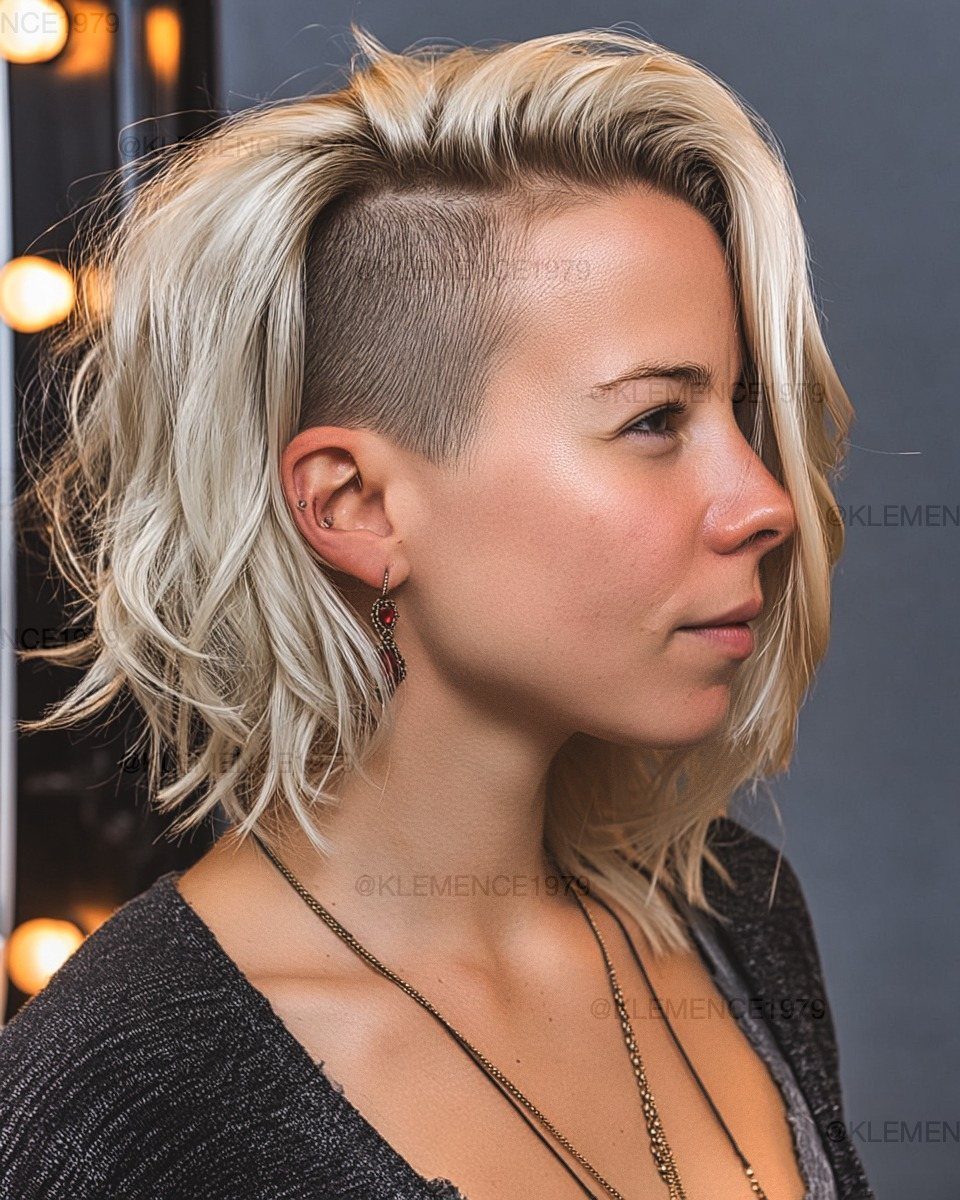
One side shaved close against a tousled platinum bob gives the cut its edge. The longer side stays loose and messy, so the contrast between rough and clean does the work.
Point to exactly where the shaved section should start and stop when you book. I would keep the top textured and a little undone, since a perfectly smooth finish would work against the attitude of the cut.
36. Closely Cropped Blonde Cut
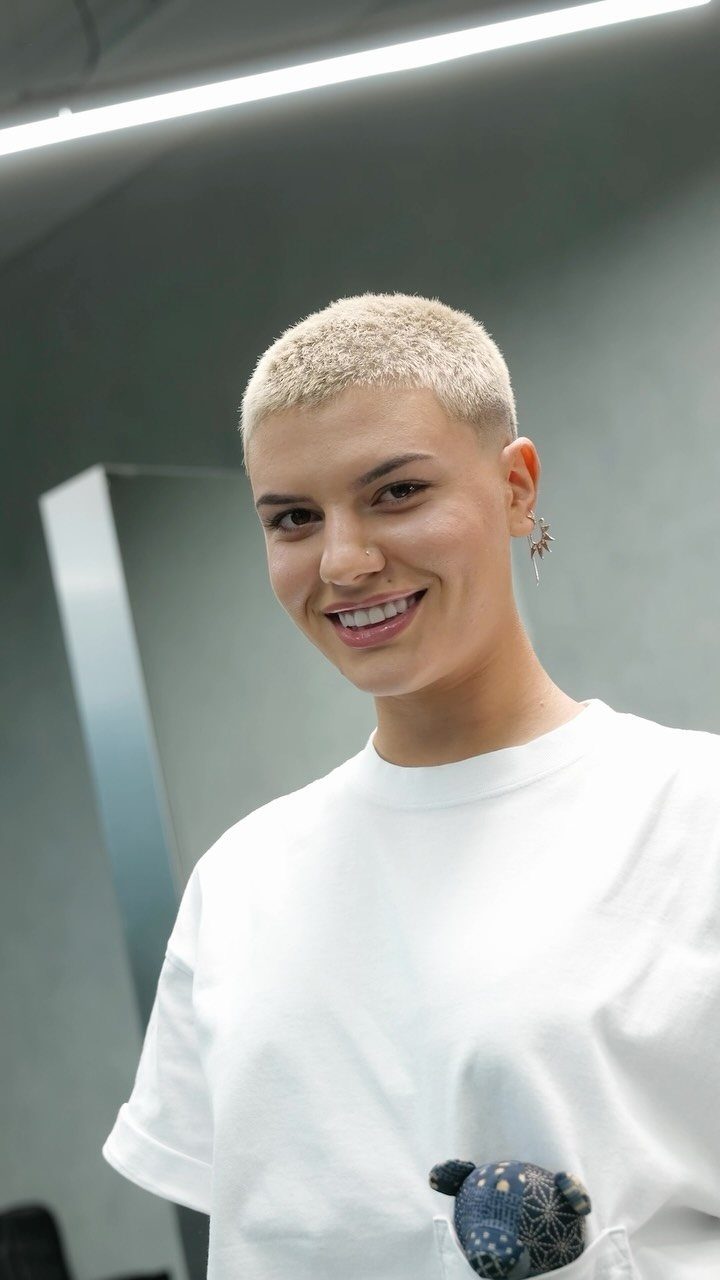
Cropped close to the head in light blonde, this cut asks almost nothing of a morning. There is little to style, so the shade and the shape of your head carry the look.
Tell your stylist how short you want it and whether the length should stay even all over.
I would choose this for a low-effort routine, but expect to return to the salon often, because a crop this short loses its shape quickly.
37. Rounded Blonde Bob
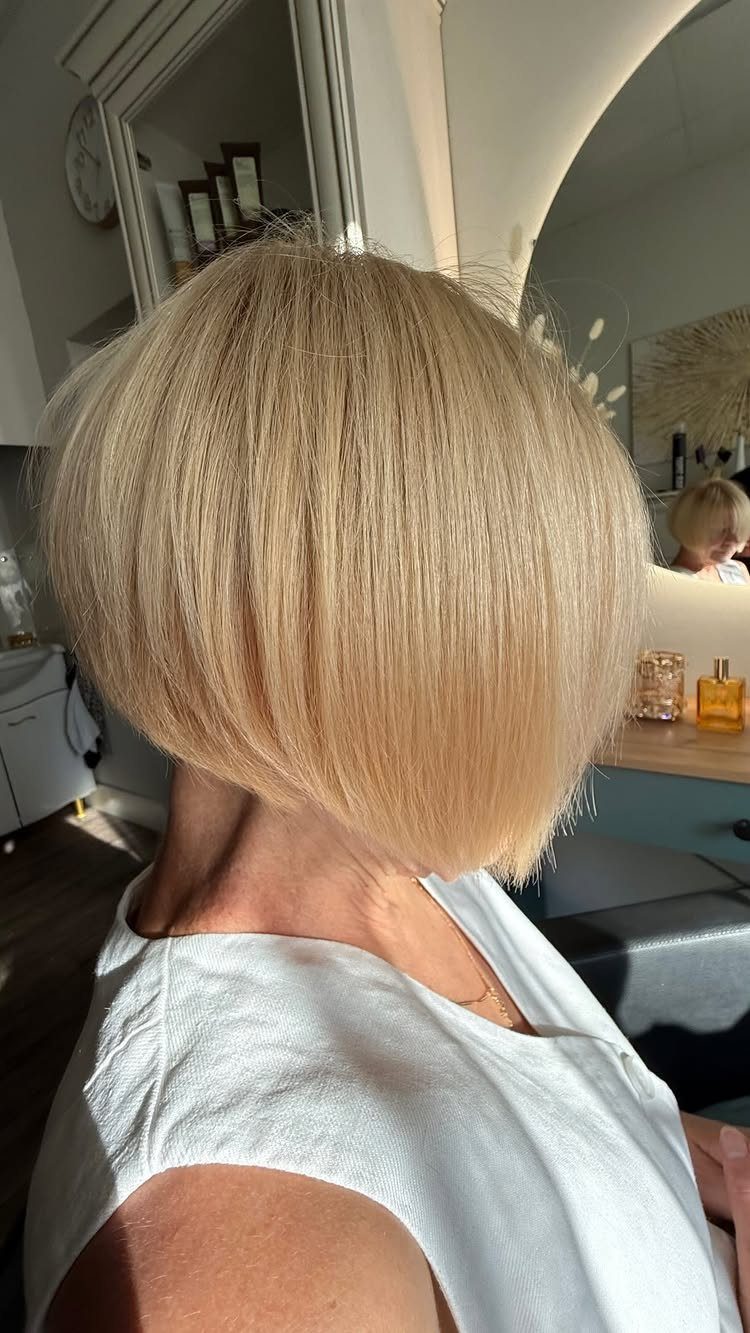
Rounded ends are what separate this bob from a blunt one: the hair curves under toward the jaw instead of stopping in a hard line.
At chin length, the smooth, softly domed shape looks finished from every angle, including the back.
Ask your stylist for a rounded perimeter and a gentle curve through the crown, and say you want the ends turned under.
A round brush and a blow-dry will keep that shape at home. I would choose this over a razor-sharp bob if you want polish without severity.
Choosing Blonde Color and Cut
Face shape is the fastest filter for a pixie. Oval faces can wear nearly any pixie, but for a round face I’d go with a longer pixie that stacks height at the crown and finishes with uneven, side-swept bangs.
A triangular face works with a pixie that has bangs. A square jaw looks softer with a pixie left a little longer, paired with bangs that fall long across the forehead.
Color needs the same screening. Weigh your skin’s surface tone and undertone, your natural root color, your hair texture, and the makeup and clothes you wear most, because the blonde has to sit well with all of them.
I would book a consultation with a stylist before settling on a shade. They can read your undertone and roots in person, which a photo can’t do.
Bleach and Color Upkeep
Dark hair may need more than one bleaching session to reach blonde, and bleaching can damage hair.
A stylist can tell you which shampoo and conditioner fit your hair after lightening, and formulas made for color-treated hair are the ones to buy.
Purple shampoo is the one product I’d call close to mandatory. It keeps blonde or gray shades in line and neutralizes brassy, yellow tones.
Wash less often, since frequent washing fades color, and use cold water instead of hot when you do.
A rich conditioner after every wash, a leave-in on damp hair, and a protein mask now and then put back what bleach and color take out.
Sun fades blonde and pulls it warm, so I’d keep a hat on whenever you’ll be outside for a while.
If your hair is curly, protect it at night, and right after coloring keep it loose instead of pulled into tight styles.
Frequently Asked Questions
What is the best haircut style for thin, fine hair?
Soft layers are the safest bet, because layered ends look fuller than one blunt line.
Fine hair looks fuller with soft, feathered ash-blonde layers or a tapered pixie, where short sides and a textured top make the crown read thicker than it is.
If you want bangs, a wispy, thinned-out fringe suits fine hair better than a thick, solid one, which can look weighty.
How do you do blonde on short hair?
Check your undertone before anything else: gold jewelry flatters warm skin and points to honey or caramel, silver flatters cool skin and points to ash or platinum, and a colorist can settle it if you land in between.
Naturally dark hair generally needs bleaching first, so plan for that. Short hair grows out fast, so a deeper root melting into lighter ends (balayage, shadow root or ombre) lets regrowth look like a soft gradient instead of a stripe.
Bring a photo to the appointment so the stylist can see where you want the brightest pieces.