Ash blonde runs from dark, smoky shades that sit right where blonde tips into brown to icy white ash and holographic finishes on very pale hair.
Permanent color lifts natural hair only about 2 levels, so icy and white ashes need bleach plus a toner, while the deeper shades on this list ask for much less lightening.
Start with your own base color, from Dark Ash Blonde at the gentle end to White Ash Blonde at the most demanding, then choose how cool you want the tone.
1. Ash Blonde Balayage
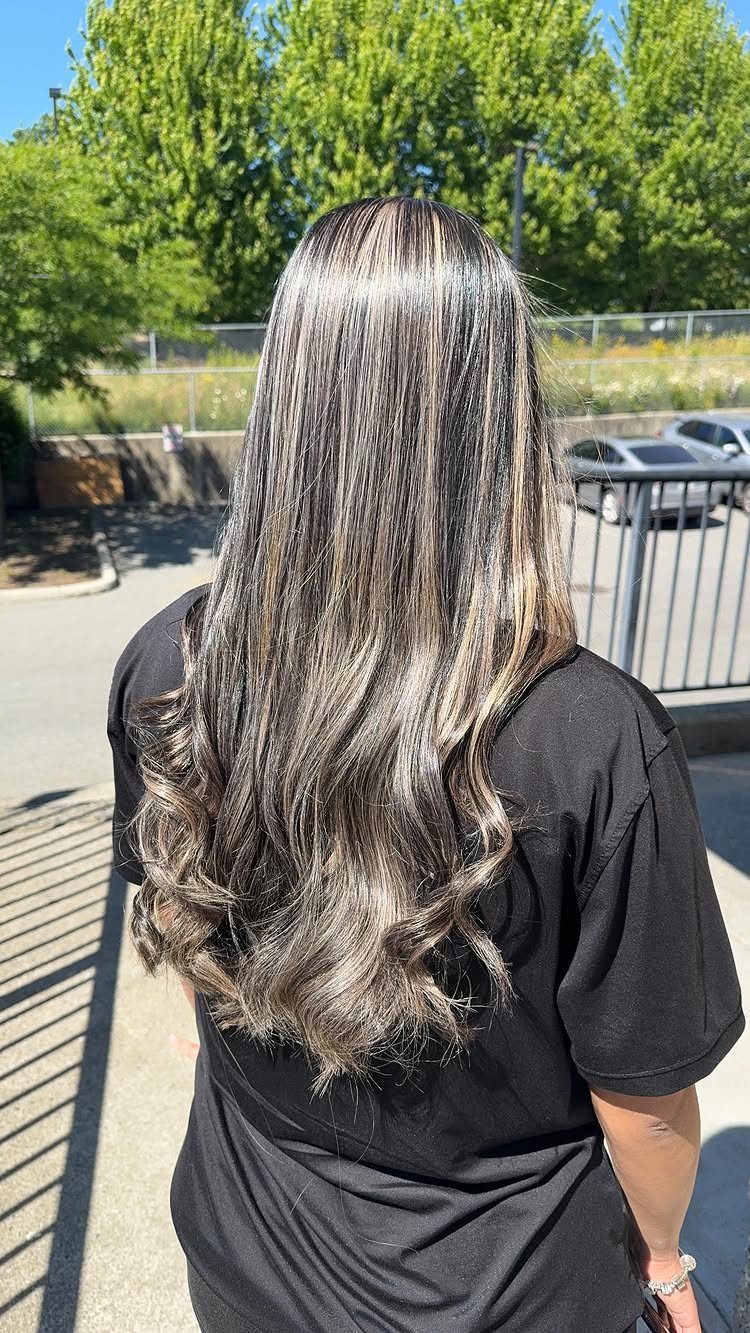
Hand-painted lightness is what makes this balayage read as soft rather than striped. The ash blonde fades up from a deeper root, so no harsh line shows as the color grows.
Wavy, long hair shows it off best, since the movement scatters light and dark through the length. I would ask for the root to stay a little deeper and let the painting do the blending.
2. Dark Ash Blonde
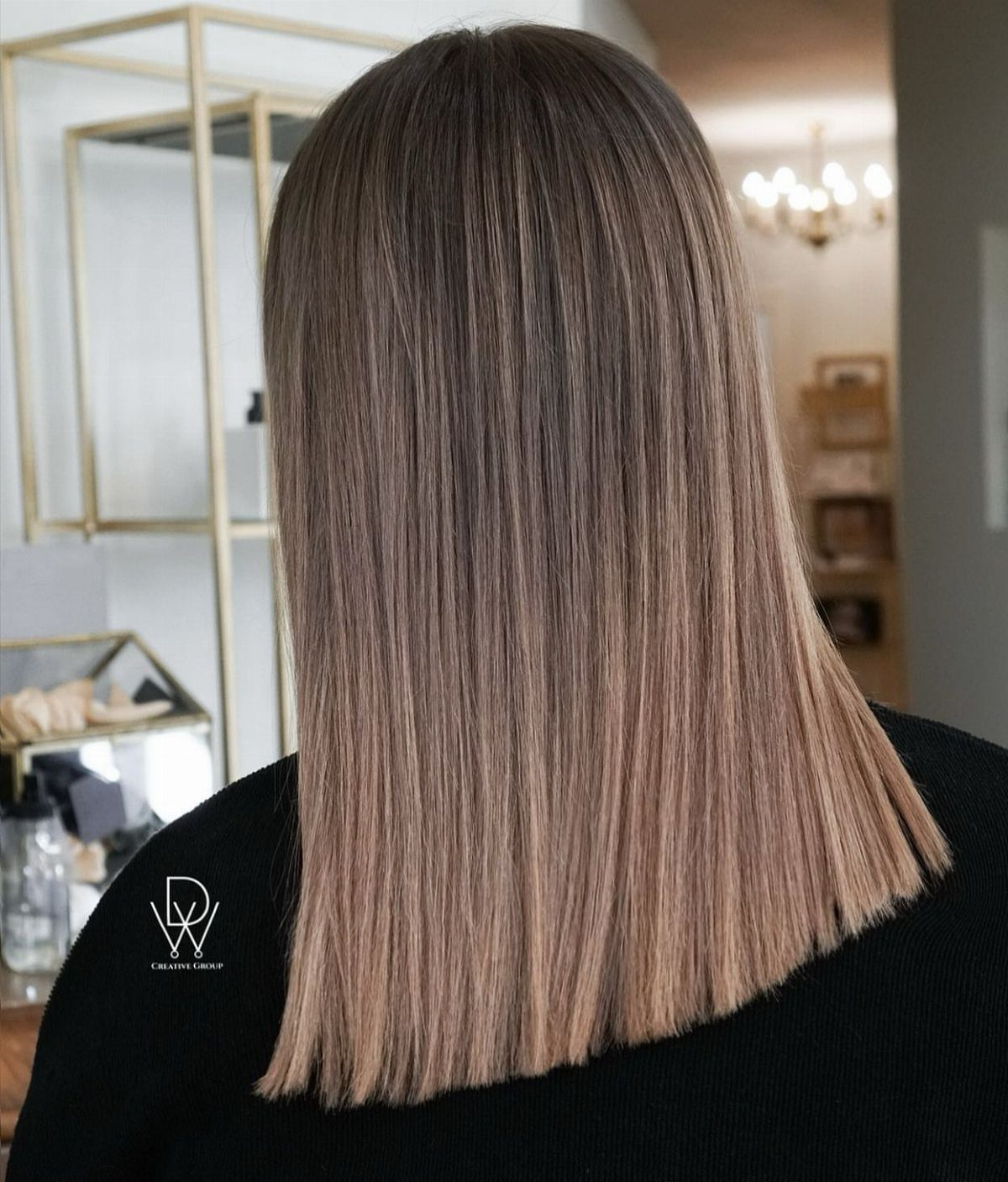
Smoky and subdued, this shade sits right where blonde starts to tip into brown. Straight, shoulder-length hair shows it cleanly, because nothing breaks up the cool, deep tone.
If you want ash without a big jump in brightness, this is the one I would pick.
Bring a photo to the stylist and ask for "dark ash blonde" by name, so the result stays cool and does not drift toward gold.
3. Dark Ash Blonde Balayage
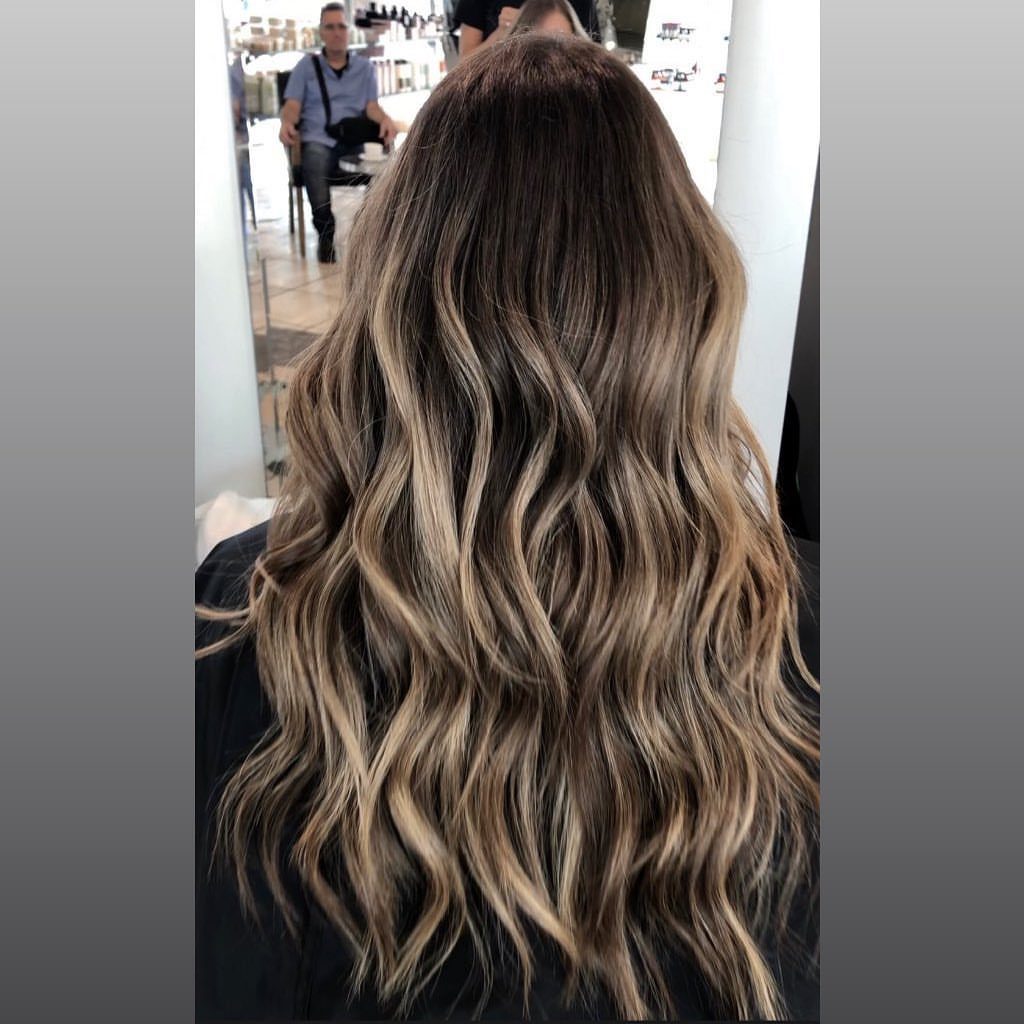
A dark blonde base with ashy platinum pieces painted through gives this look its contrast. Long waves suit it, since the light strands catch the curve of each wave against the deeper tone beneath.
I like it for anyone who wants a bright effect without going fully light. The darker base keeps the color grounded, while the pale highlights do the showing off.
4. Ash Blonde Highlights
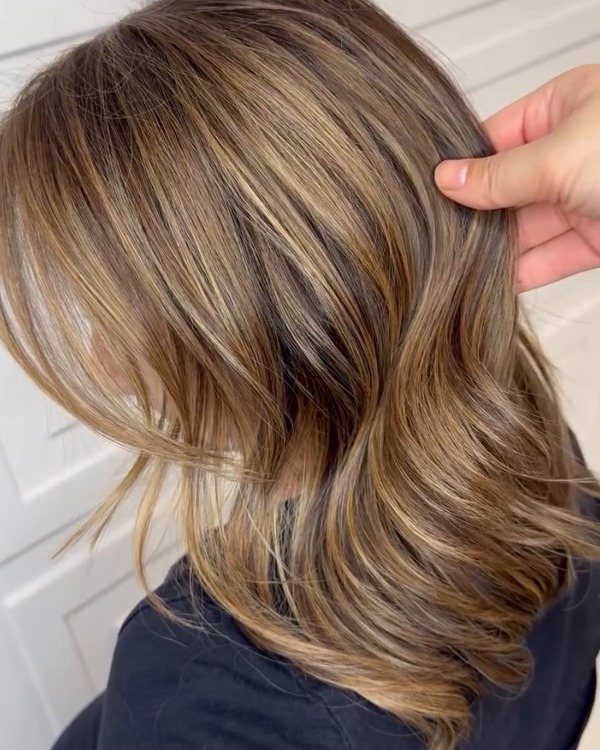
Highlights keep the brightness in the face-framing pieces and leave the rest of the head alone. Cool ash tones threaded through light brown, with the roots left darker, add dimension without a full blonde commitment.
Layers help here, because each cut line gives the highlights another place to catch light. For a first step toward ash, I would choose this over an all-over color.
5. Rooted Ash Blonde
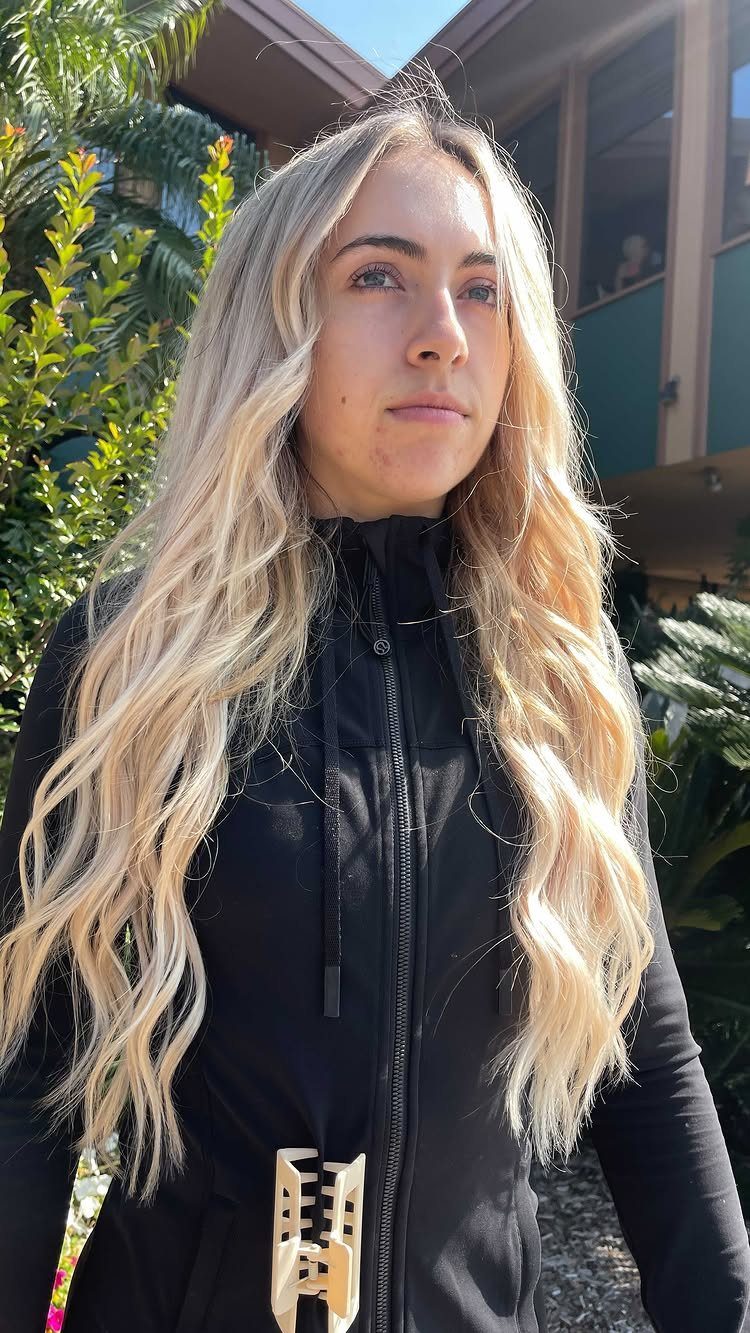
Rooted ash blonde keeps your natural or darker root and melts it into lighter lengths. A rooted blend works because new growth reads as part of the design instead of a flaw.
Long waves make the gradient look easy. For a softer grow-out and fewer salon visits, I would choose this over a solid, root-to-tip blonde.
6. Platinum Ash Blonde
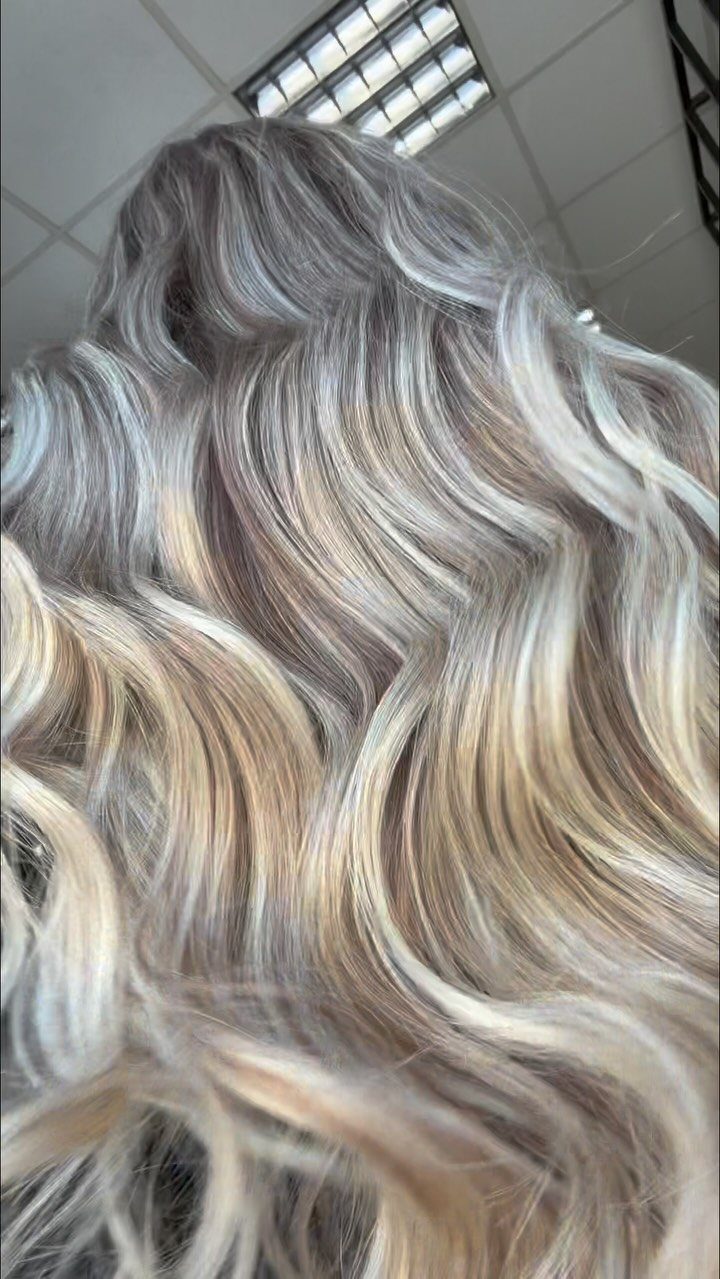
Very light, very cool, and clean: platinum ash blonde pushes the pale end of the ash family. Silver undertones keep it from looking yellow, and the slightly darker root adds depth so the brightness has something to stand against.
Wavy texture shows the tone well. Expect this to be the most demanding shade in the group, since pale blonde shows brassiness fastest, so I would plan on purple shampoo to keep it cool.
Ash blonde hair can range from platinum white to dark blonde, but it always has those cool undertones.
— Hair.com
7. Dark Brown Ash Highlights
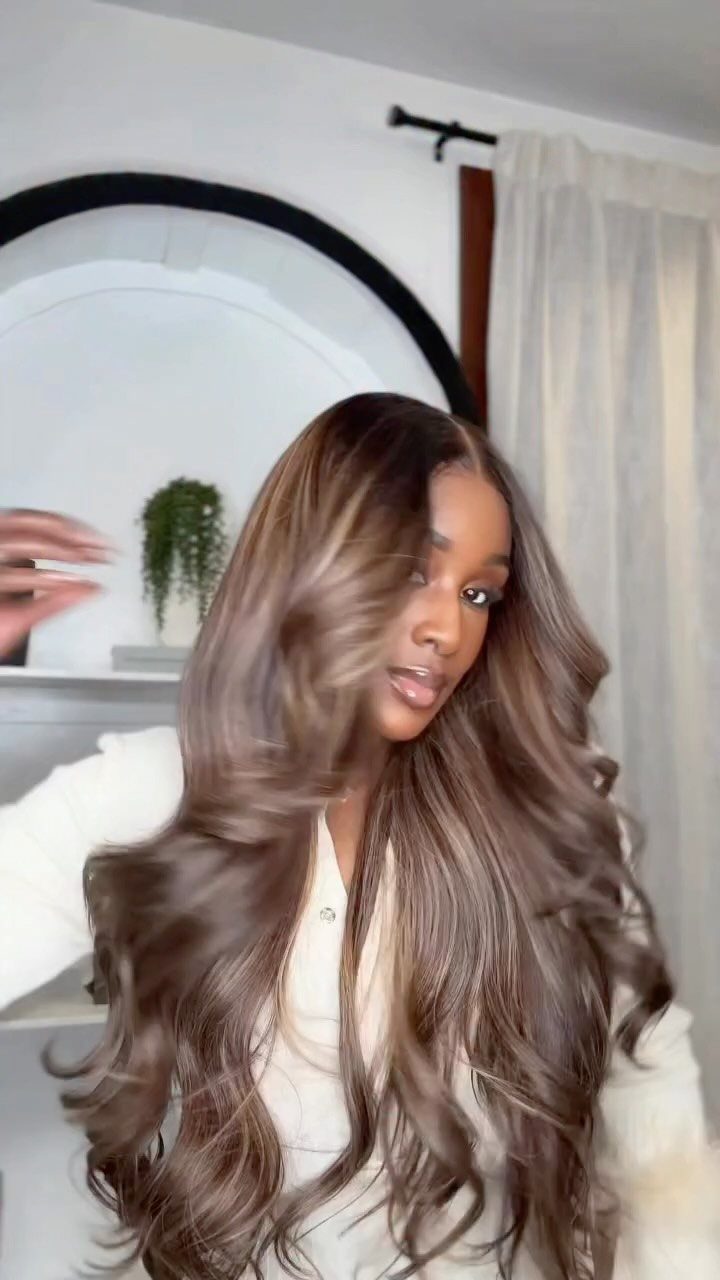
Dark brown stays dominant here, with fine ash blonde pieces running through the length like a cool shimmer. Long waves help, since each curve turns the light strands toward the light and back into shadow.
For anyone nervous about lightening, I would pick this over a full blonde. Ask for ash tones by name so the highlights stay cool against the brown.
8. Ash Blonde with Platinum Highlights
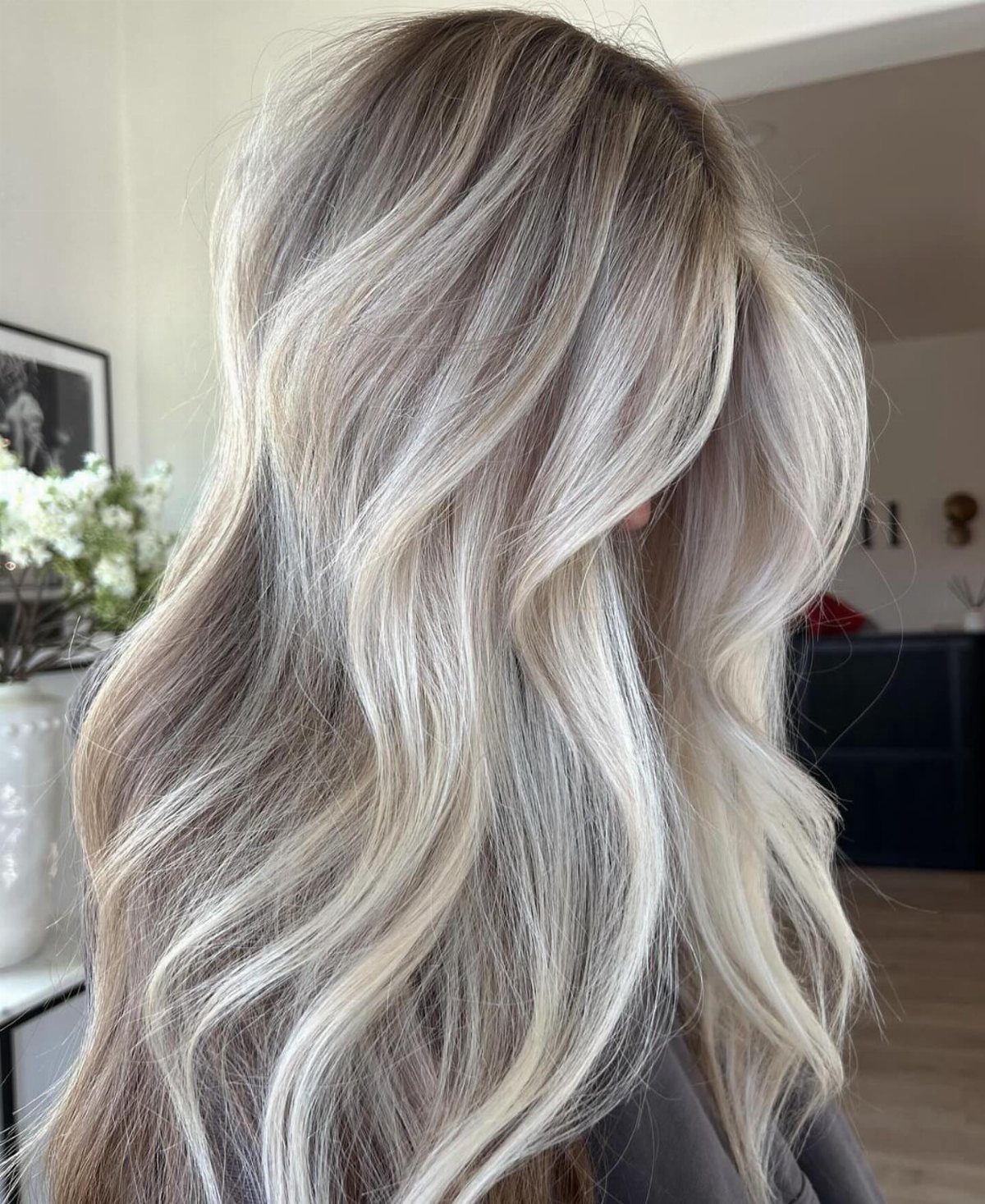
Bright platinum ribbons laid over ash blonde give this color its contrast. The darker roots keep the brightness from looking flat, and loose waves let the 2 tones trade places along the length.
Between this and a single-shade platinum, I prefer this one: the ash base softens the lightest pieces. Pale strands show brassiness first, so plan on toning.
9. Platinum Ash on Darker Complexions
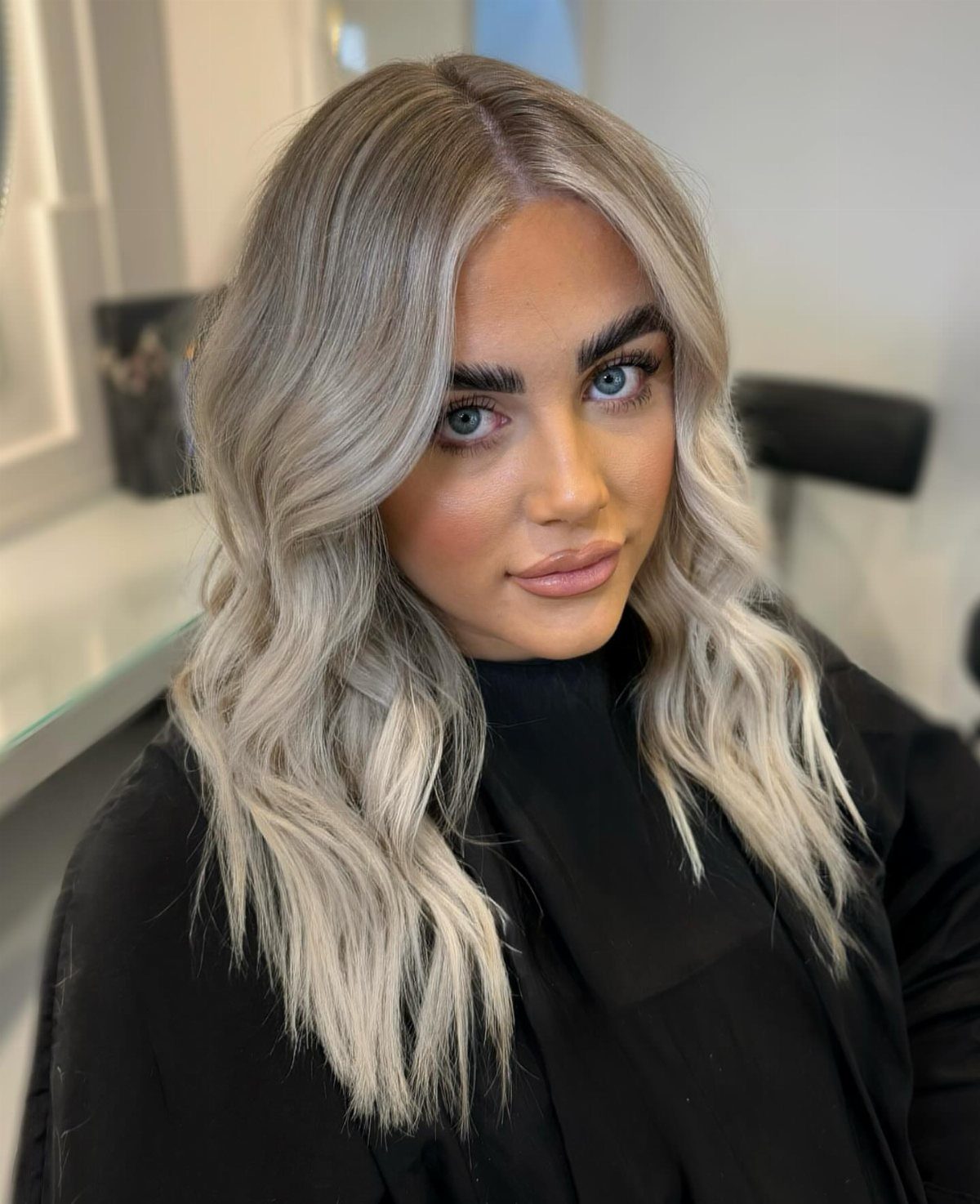
Platinum ash against a deeper complexion is a high-contrast pairing, and the dark roots help by tying the pale length back to the face. Dark eyebrows frame it well too.
Ask for the root to stay dark and the lengths to go cool rather than yellow. I like this as a bold choice, though going this pale takes lightening, so expect it to need more care than a mid-depth shade.
10. Medium Ash Blonde
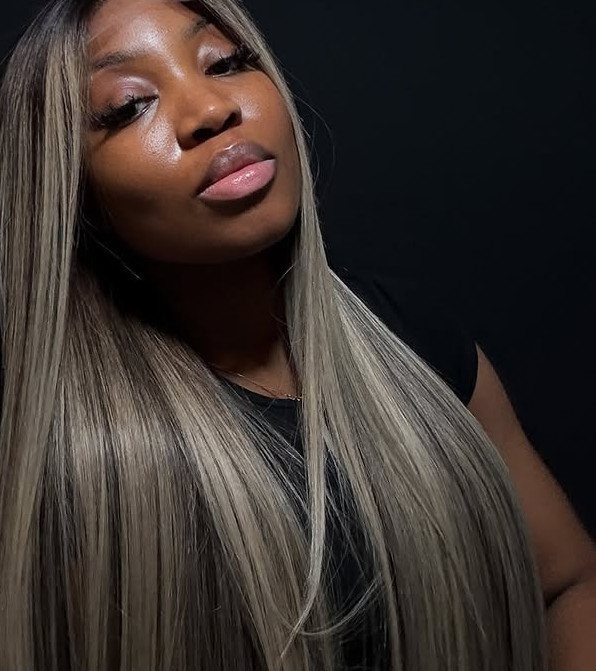
Sitting between dark and platinum, medium ash blonde keeps the cool tone without the extreme lightness. With straight hair, nothing interrupts the color, so any warmth shows quickly.
For a shade you can wear every day, I would choose this one. A slightly deeper root makes the grow-out gentler, and the middle depth is easier to live with than the palest tones.
11. Light Ash Blonde Hair
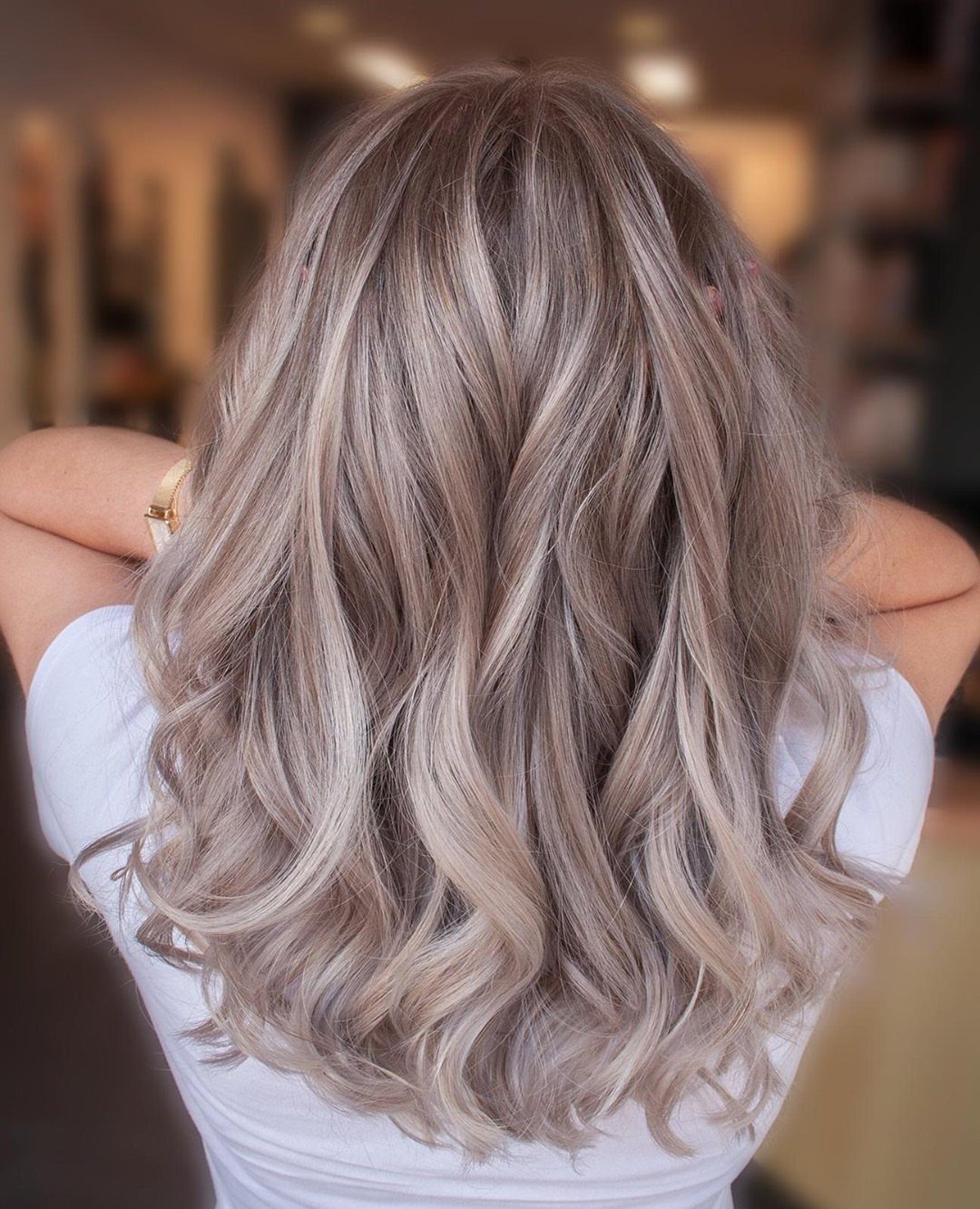
Pale and cool, light ash blonde works best when the hair is already very light, because less lifting means less stress on the strands.
Light ash blonde looks best in loose waves, because each bend catches the light and brings out the silvery tone with very little styling.
If your starting point is darker, expect a longer path to get here. I would not rush it; ask for the shade by name and let your stylist judge how many sessions it takes.
12. Ashy Blonde Lob
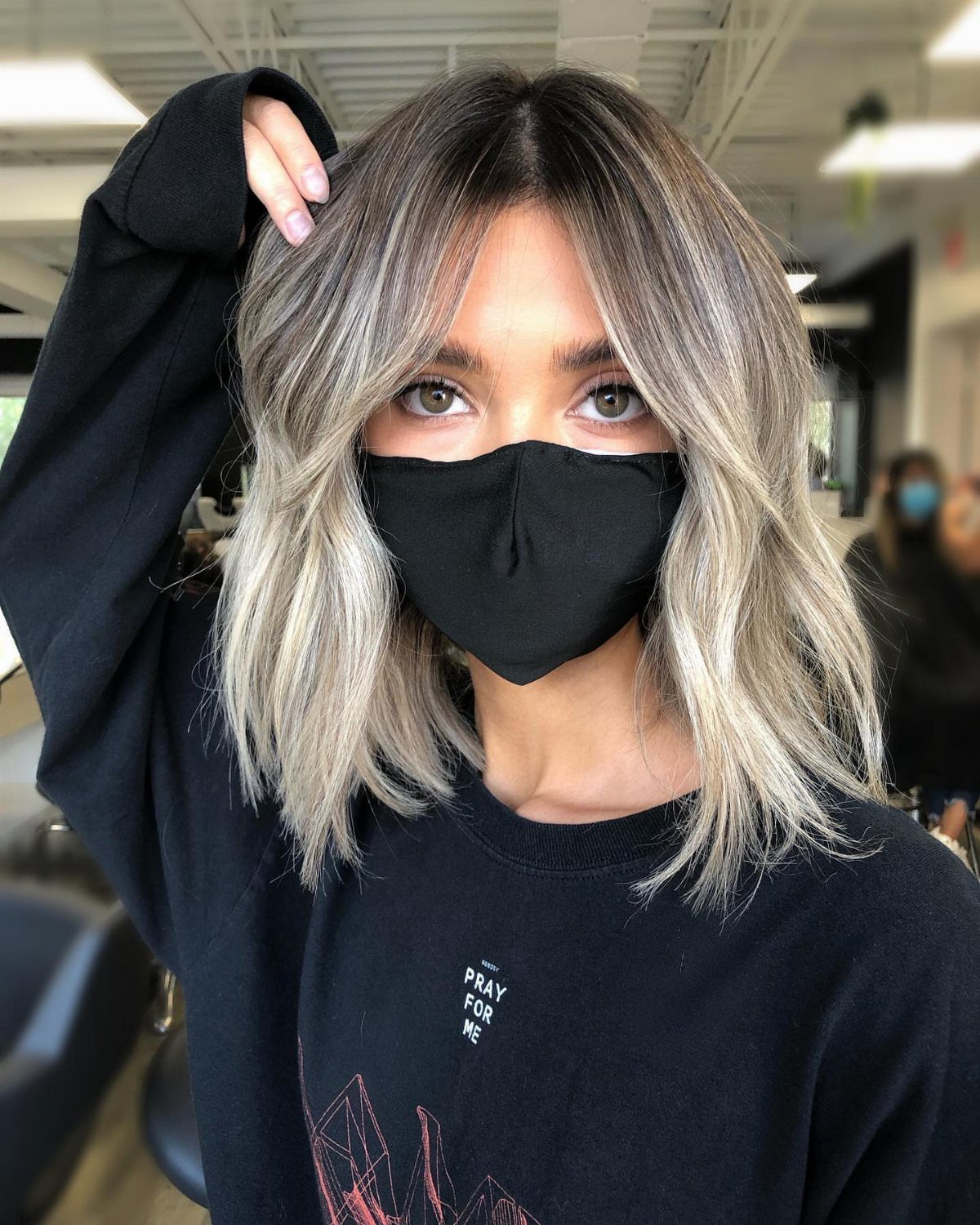
A long bob with a center part and softly layered ends gives ash blonde a clean, modern frame. The dark roots add depth, and the shorter length means less hair to tone and fewer inches to keep cool.
I would choose a lob for anyone who wants ash without much upkeep. Ask for light layering at the ends so the color catches movement instead of lying flat.
13. Ash Blonde on Tan Skin
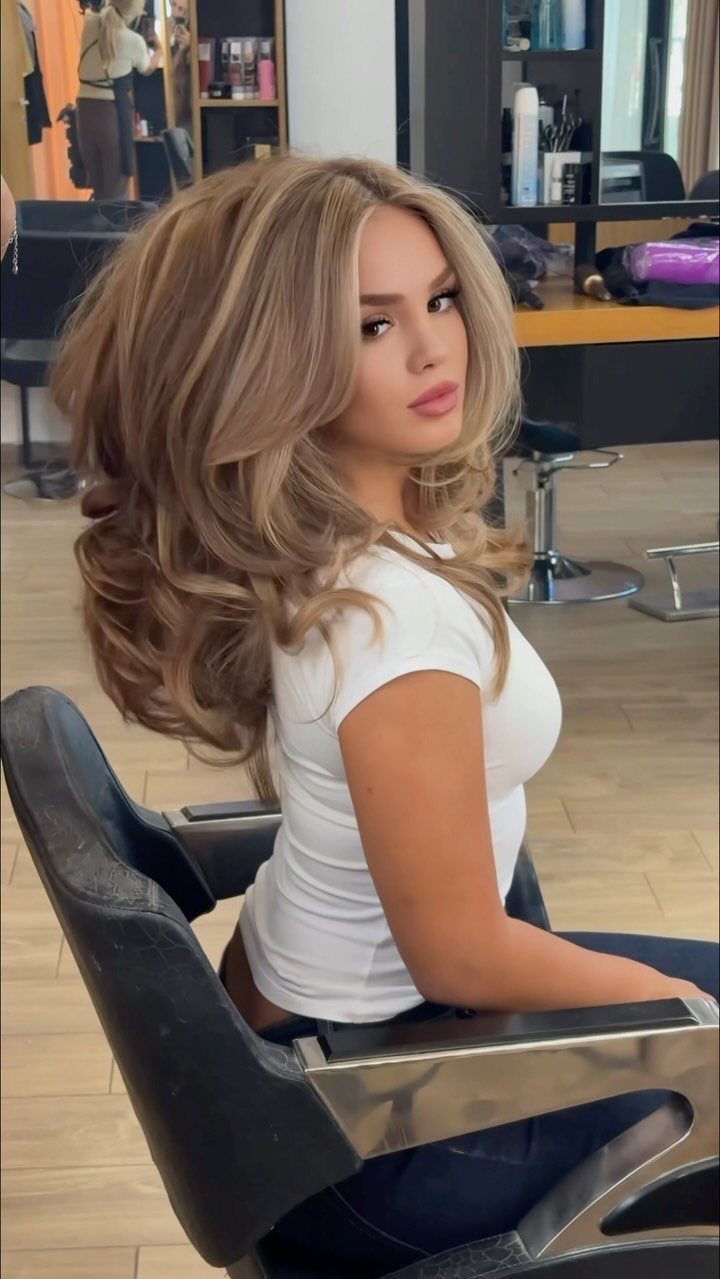
Ash blonde on tan skin works because the cool tone sets up a clear contrast with the warmth of the complexion. Soft, voluminous layers keep that contrast from looking flat or heavy.
I would go for a light-to-medium depth here rather than the palest end. Say "ash" out loud at the consult; a stylist who hears only "blonde" may default to something warmer.
14. Ash Blonde Ombre
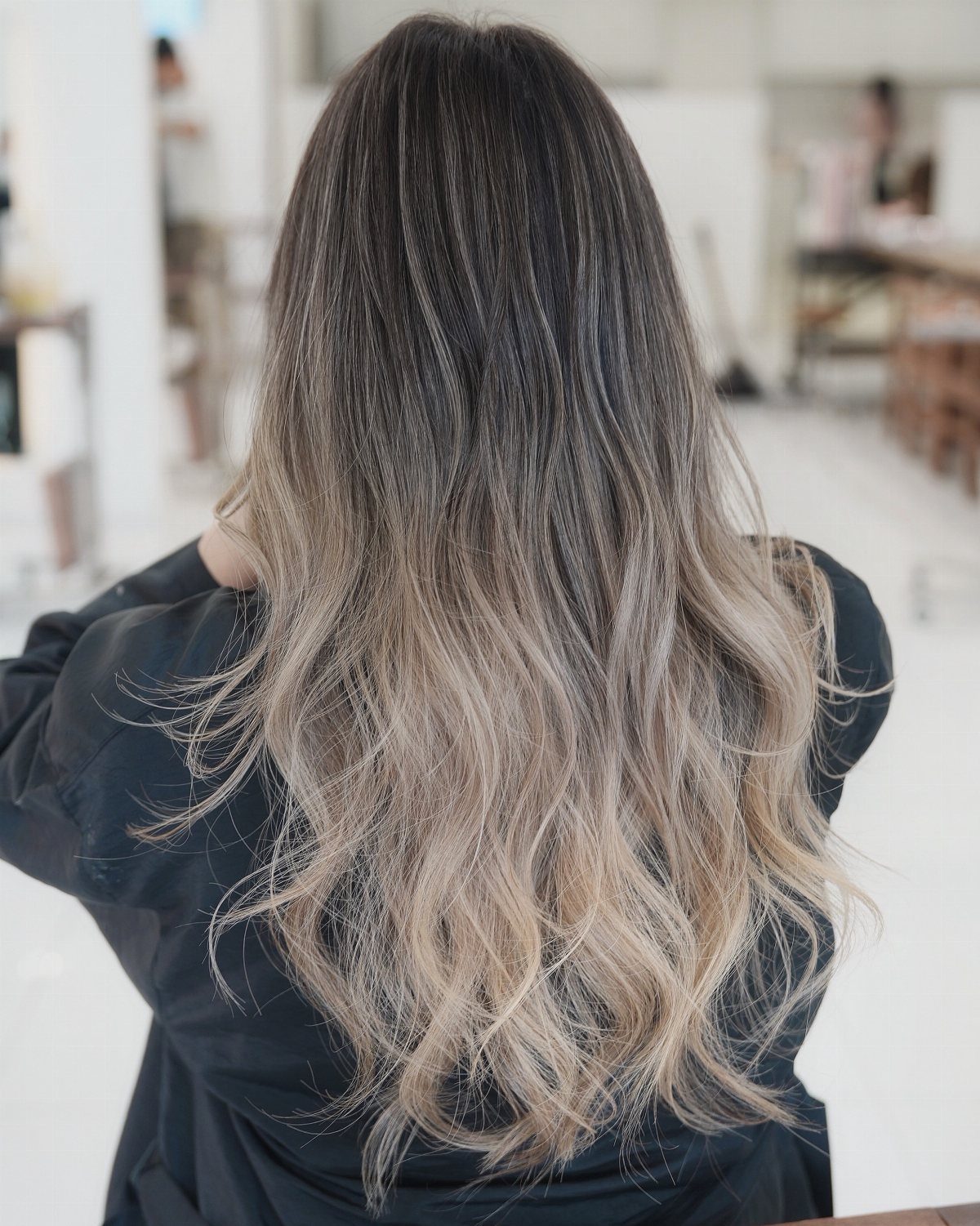
Dark roots that melt into cool ash ends make ombre one of the easiest ways to wear this color. The gradient is more defined than a balayage, with the deeper shade holding through the mid-lengths before it lightens.
Long waves show the fade best. I would pick this if you want a low-maintenance grow-out, since the darker top means no hard line appears as your roots come in.
15. Silver Ash Blonde
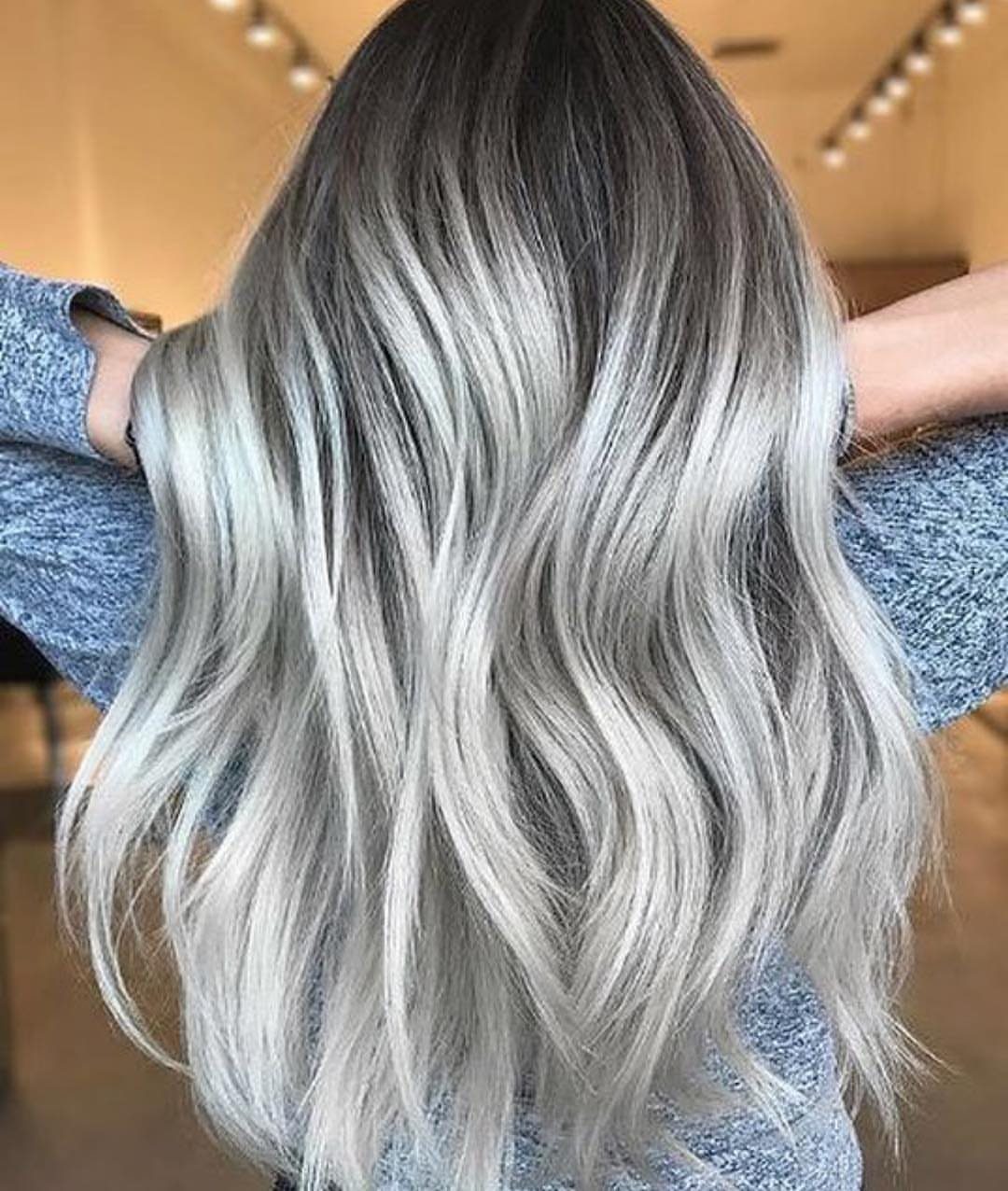
Smoky lowlights under a silver surface give this shade its metallic, almost steel-like finish. It is a statement color, and the dark roots keep it from reading as gray.
Long, wavy hair lets the silver and the shadow trade places along the length.
Ask for "silver ash" and bring a photo, because silver can go flat or yellow if the tone is off. I like it best with the dark root left in.
16. Ash Bronde
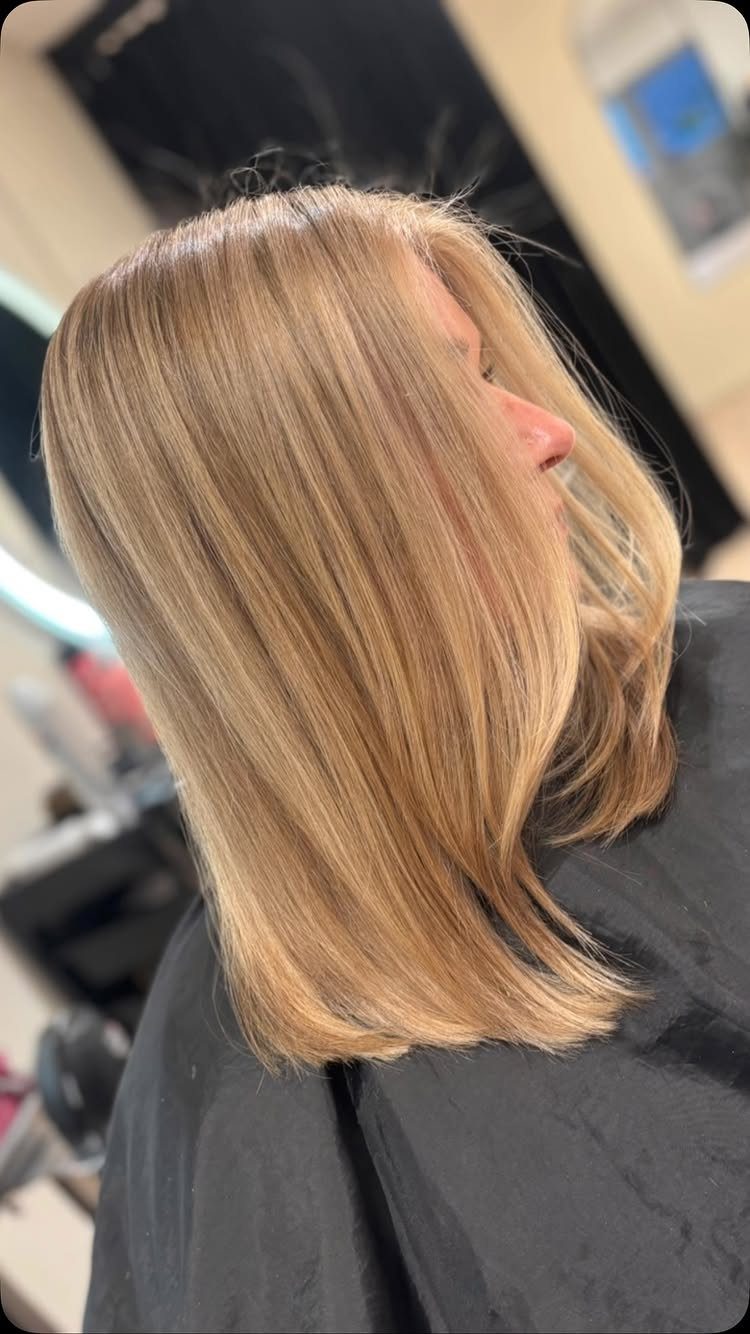
Brown and blonde woven together, with an ash cast over both, is what makes bronde read as dimensional rather than flat. The blend runs through the lengths and ends, so no single band of color stands out.
For anyone stuck between brunette and blonde, I would choose this over a full lift.
17. Classic Dark Ash Blonde
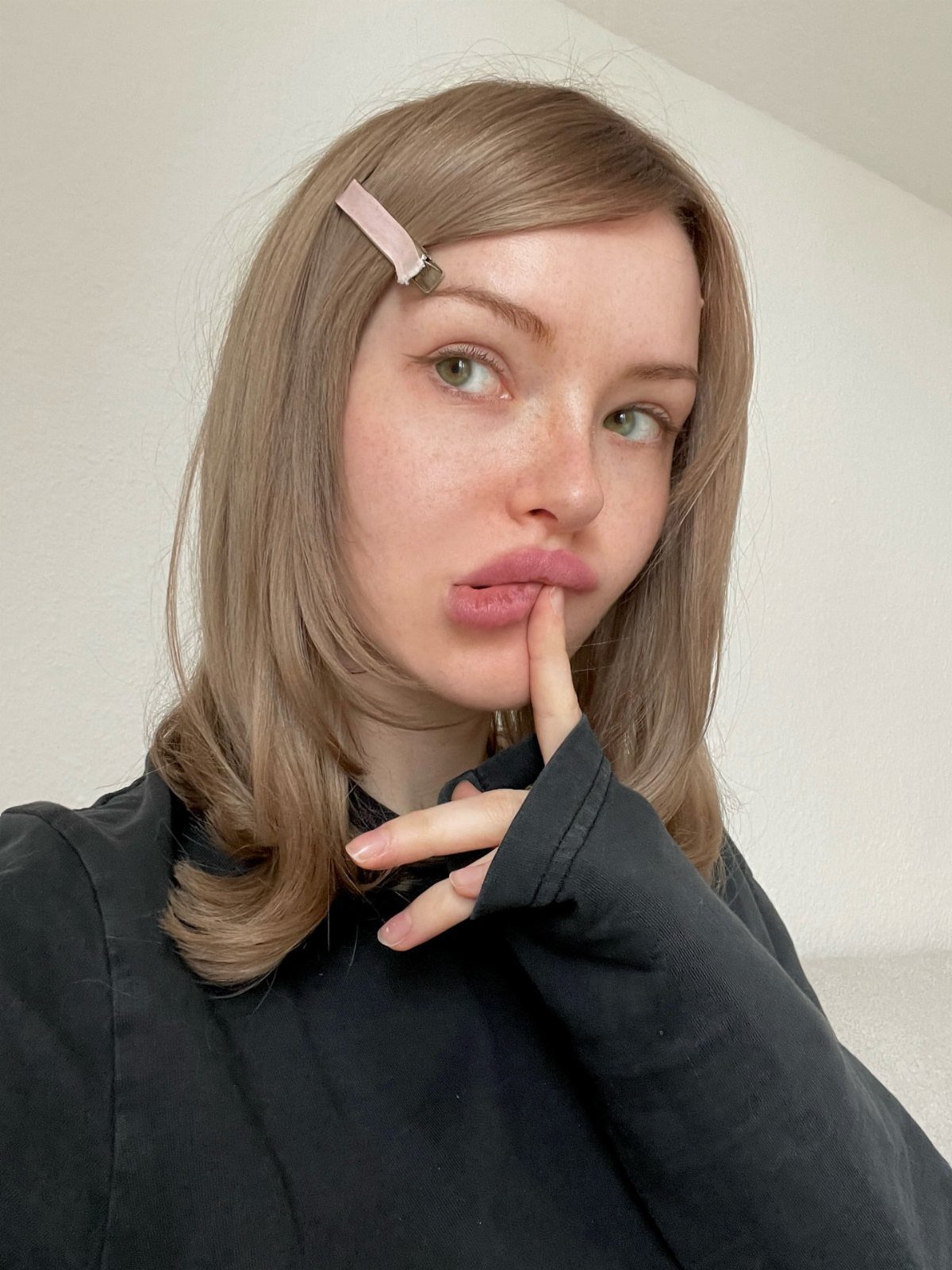
Muted and silvery, this dark blonde stays in blonde territory even though the depth is close to light brown. The dullness is the appeal: nothing shiny or golden, just a quiet cool tone.
Shoulder-length hair keeps it simple. I would ask for "dark ash blonde" with a silvery finish, and show your stylist a photo so the result lands on blonde and not mousy brown.
18. Milk Tea Blonde
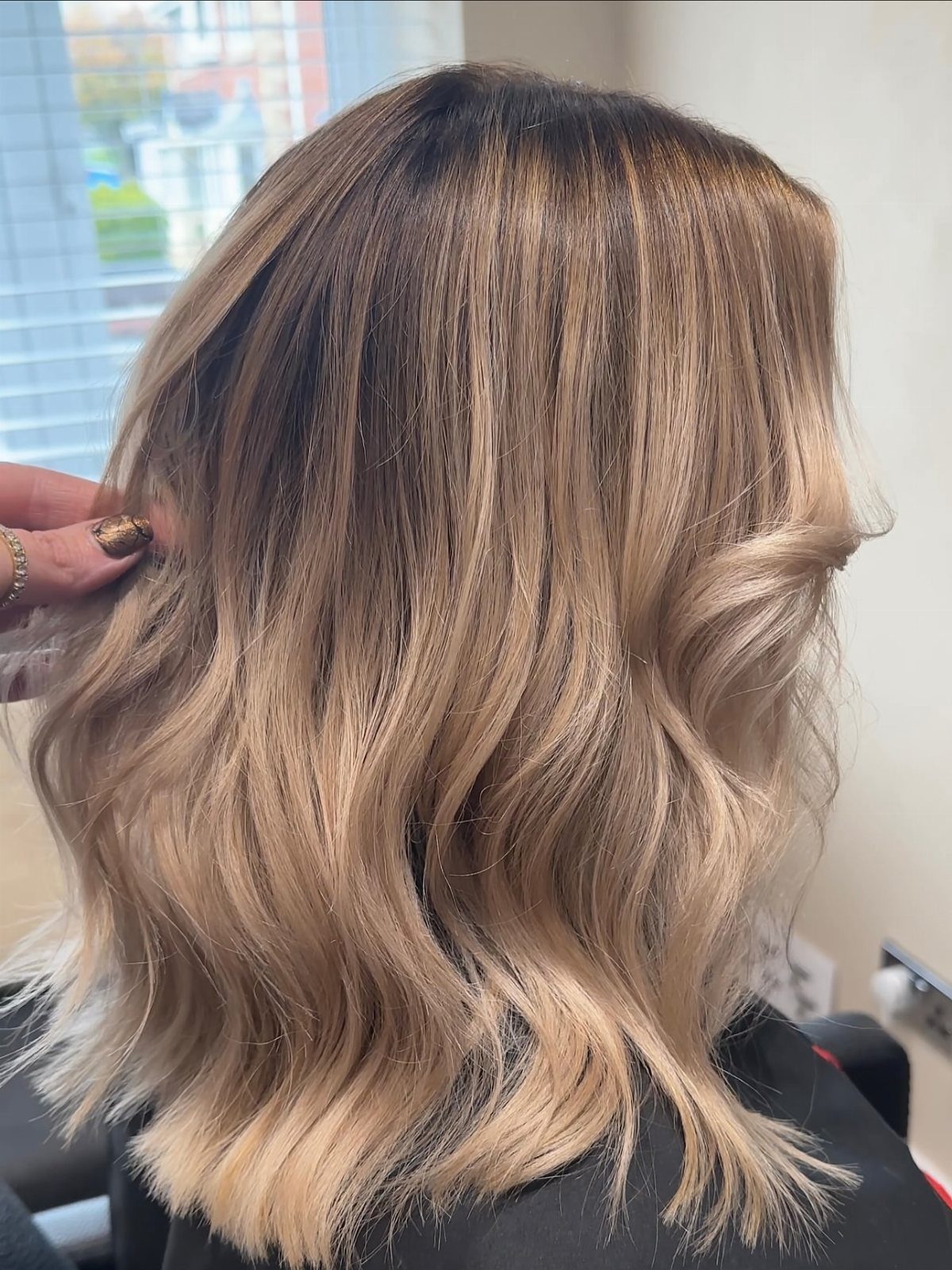
Milk tea blonde is a sandy, taupe-leaning shade, a little warmer and more neutral than a true ash.
Ask for a root smudge that sits a shade or two deeper than the lengths, with the ends lifted a touch lighter, so regrowth looks planned instead of stark.
Wavy texture suits it, since the movement blends the 2 depths. I would choose this over a strict ash if icy tones wash you out, because the softer warmth is easier to wear.
19. Icy Ash Blonde
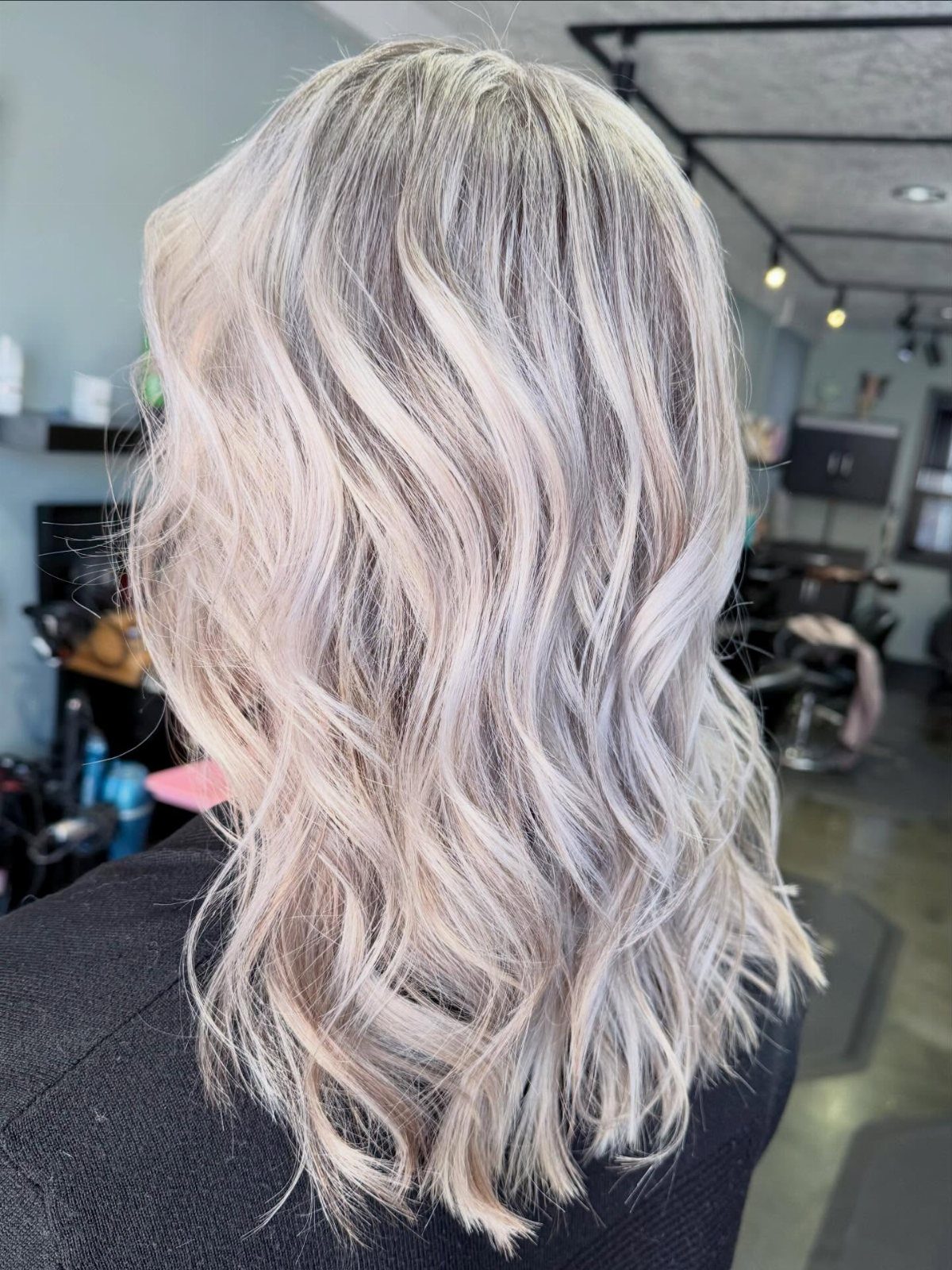
Icy ash blonde sits at the lightest, coolest end of the family, with a pale, frosted finish that leaves no room for gold. Long waves show it off well, since the bends pick up the cool tone along the length.
Expect this one to be high-effort, because shades this pale show brassiness first. I would ask for "icy ash" by name and plan on purple shampoo between visits.
20. White Ash Blonde
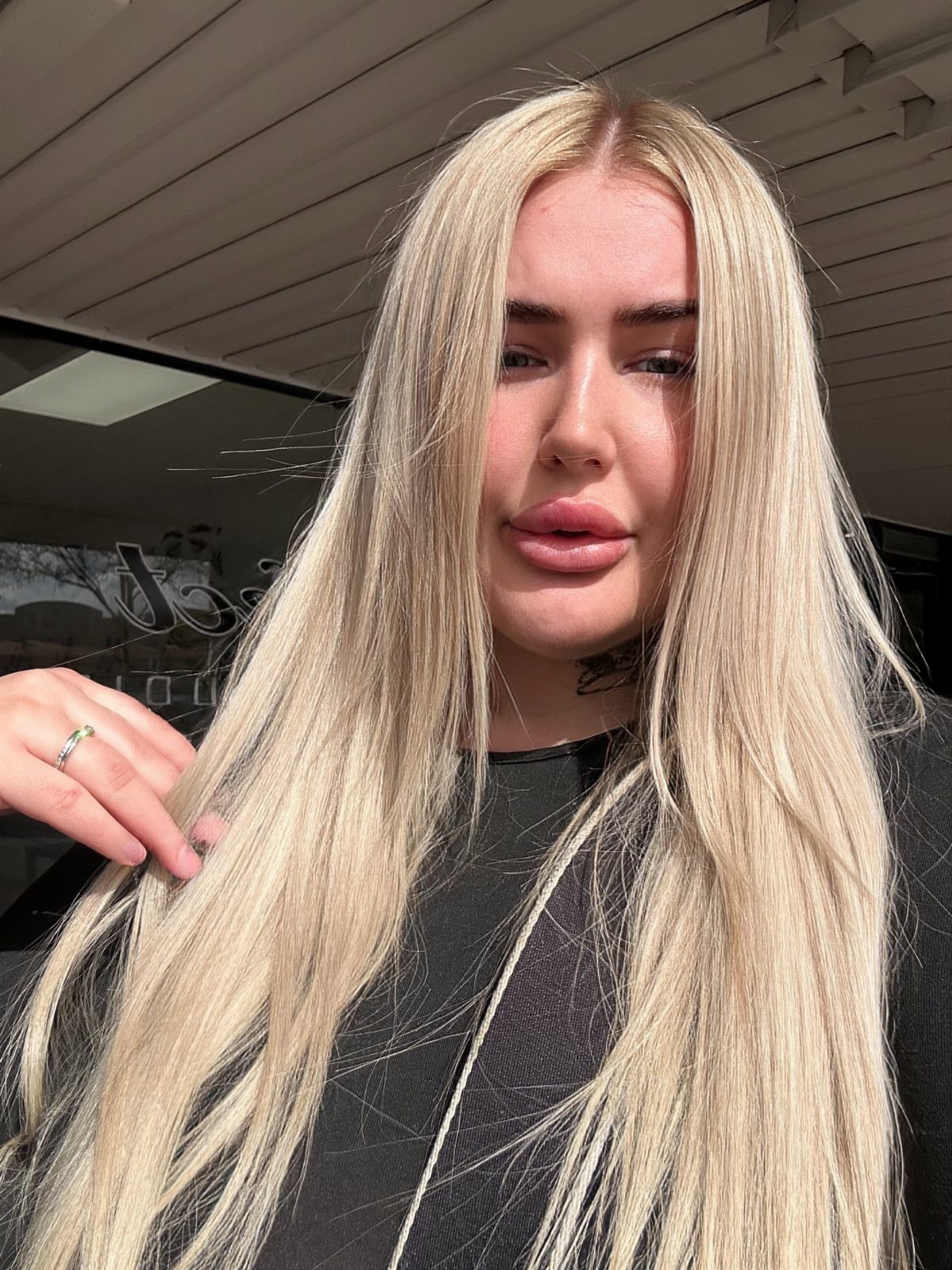
Near-white ash can go 2 ways: worn as highlights over a darker ash base, or as an all-over color with the roots left visible. With long, straight hair, the second version looks clean and deliberate.
I prefer the visible root.
Darker roots give the white something to stand against, and regrowth reads as part of the design. Bring a photo and use the exact name "white ash" so the stylist aims for icy and not yellow.
21. Holographic Ash Blonde
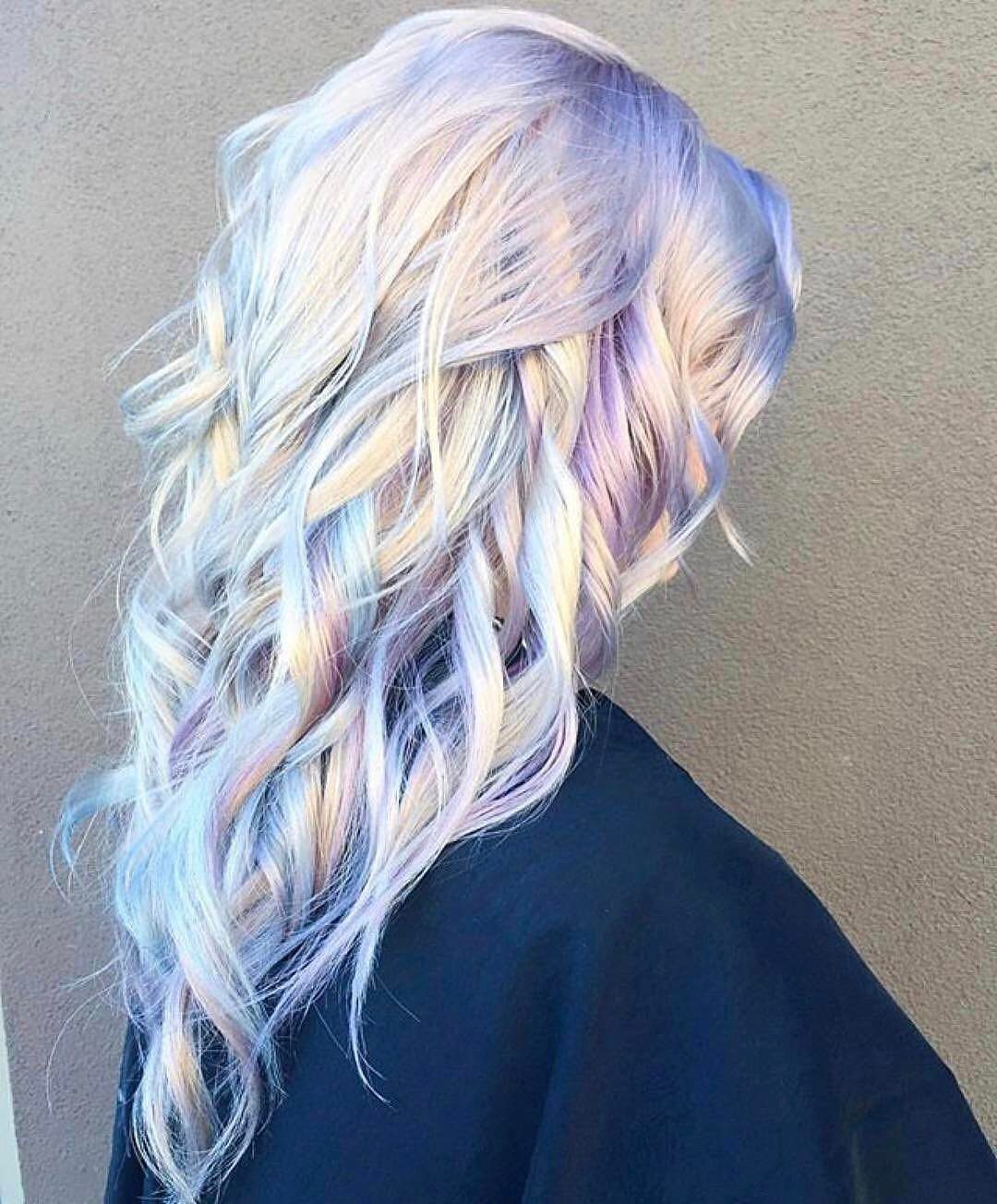
Reflective lavender, blue and pink shifts over an ashy white base give this color its holographic effect. Long waves work well here, since each curve catches the light at a different angle and reads as a slightly different shade.
This is a fantasy finish layered on very pale blonde, so it asks for a stylist who does both. For me, this shade makes sense only when the color is meant to be the whole look.
22. Beachy Ash Blonde
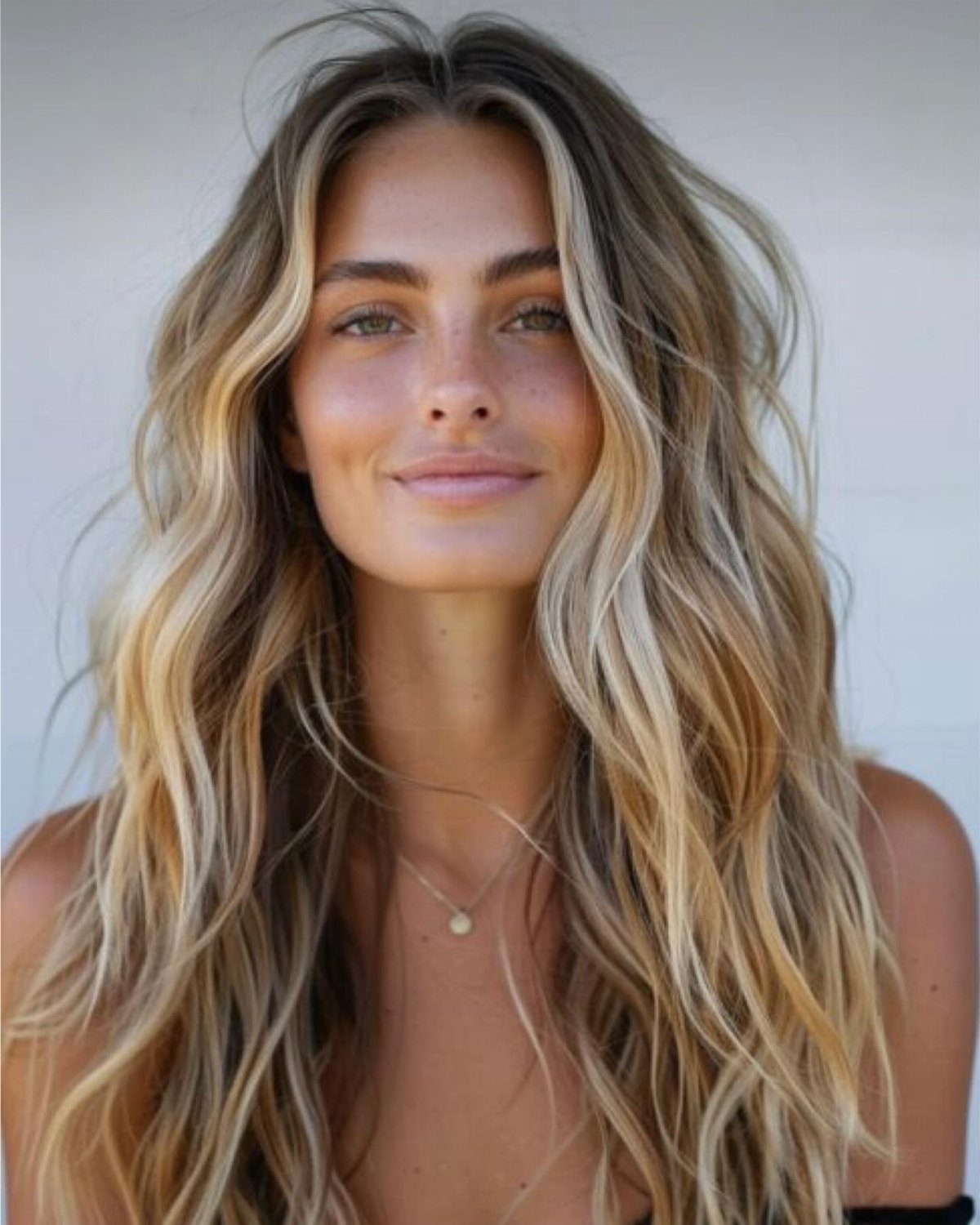
Loose, lived-in waves are what turn ash blonde from polished to beachy. Roots left darker add depth down the length, so the hair doesn’t look flat, and the cool tone fades in slowly instead of starting abruptly.
For a relaxed finish, I would choose soft texture over tight curls and let the waves fall unevenly. It styles quickly, and the root keeps the grow-out forgiving.
23. White Ash Bob
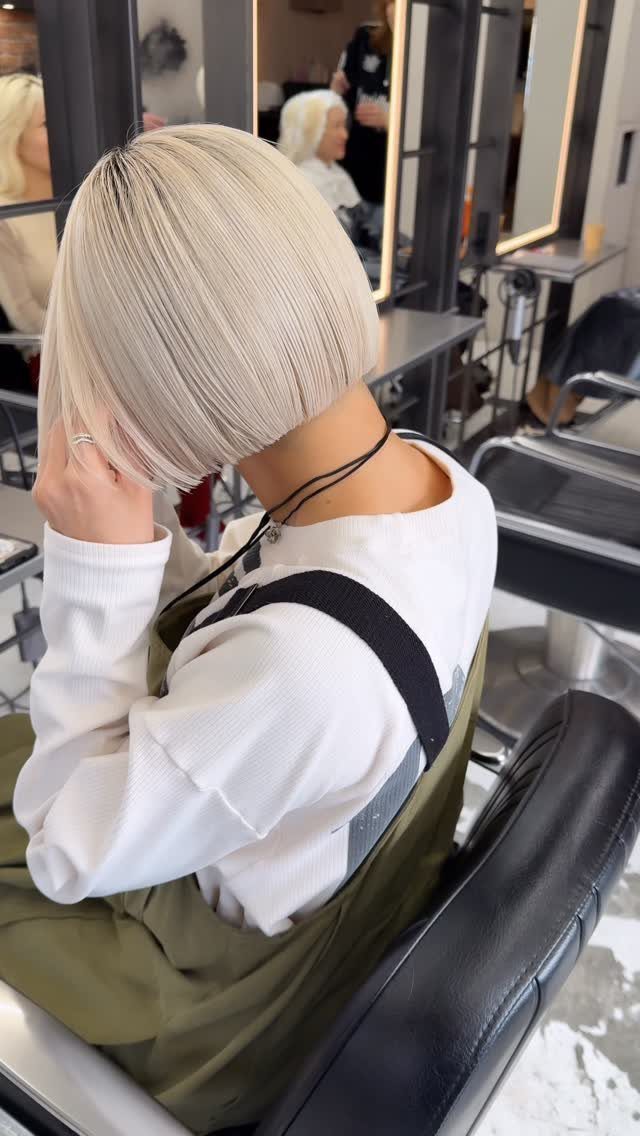
A white ash bob puts a very pale shade into a short, sharp shape. The sleek side-swept fringe keeps the color the focus, since nothing competes with the smooth, light surface.
Short length means less hair to lighten and tone, which I like. Ask for "white ash" by name, and expect to keep up the cool tone, because pale strands go brassy fastest.
24. Cool Ash Blonde
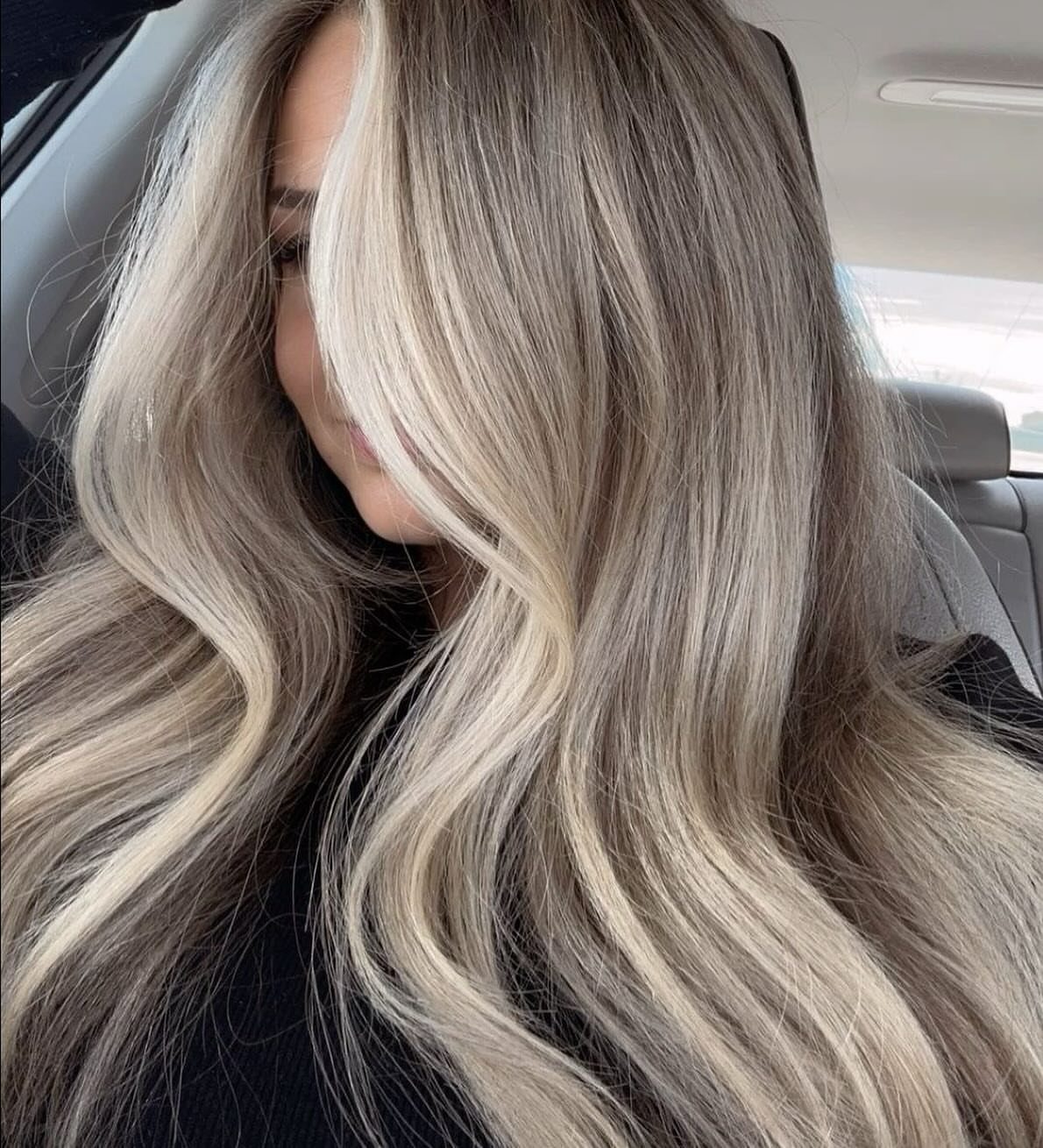
Cool ash blonde is the plain, everyday version of the family: a clear blonde with no gold in it and a slightly deeper root. Long waves give the tone room to show without any extra styling.
If you are unsure which ash to request, I would start here. At the consult, name "cool ash blonde" outright; a vaguer request can drift warmer in the stylist’s hands.
25. Honey Ash Blonde
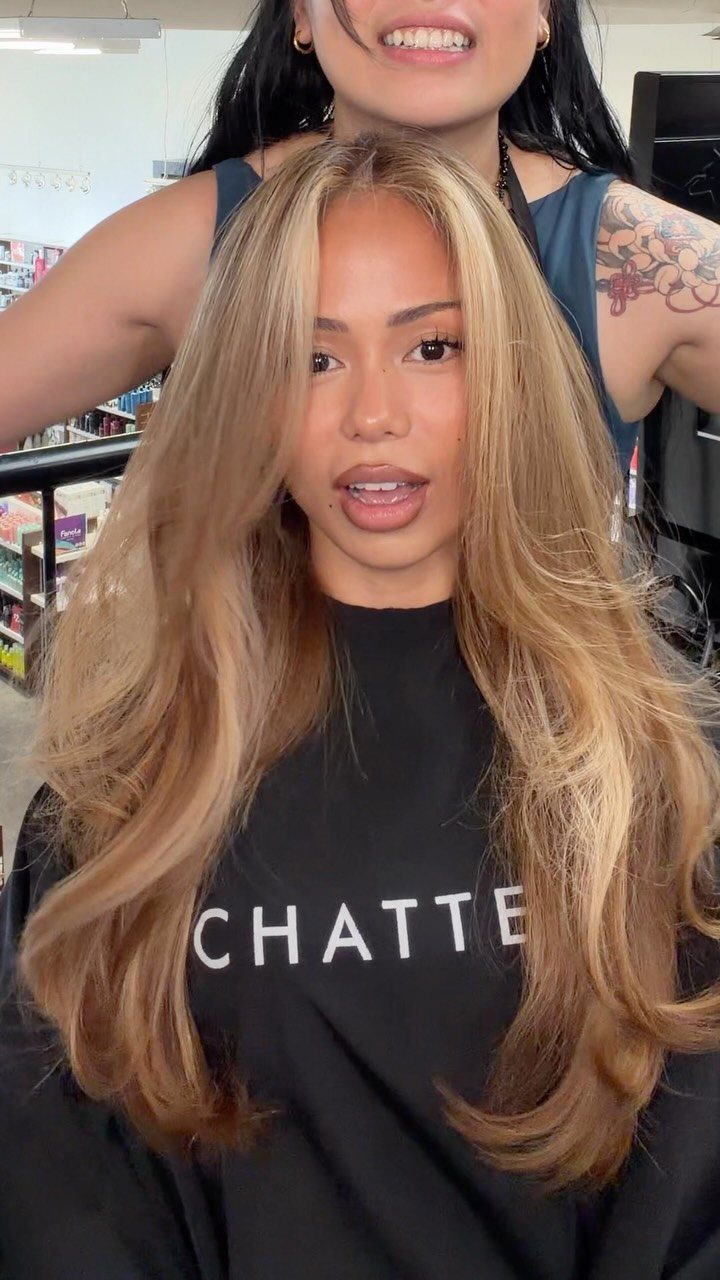
Golden warmth laid over a cool ash base gives honey ash blonde its soft, buttery depth. Long layers keep it moving, and the darker root stops the length from reading as one flat sheet.
Ask for "honey ash" by name, not just "honey," so the stylist keeps the gray-leaning undertone and doesn’t swing fully golden.
If icy shades wash you out, honey ash is the better pick for you: it keeps the cool cast but leaves some warmth near the face.
26. Crystal Ash Blonde
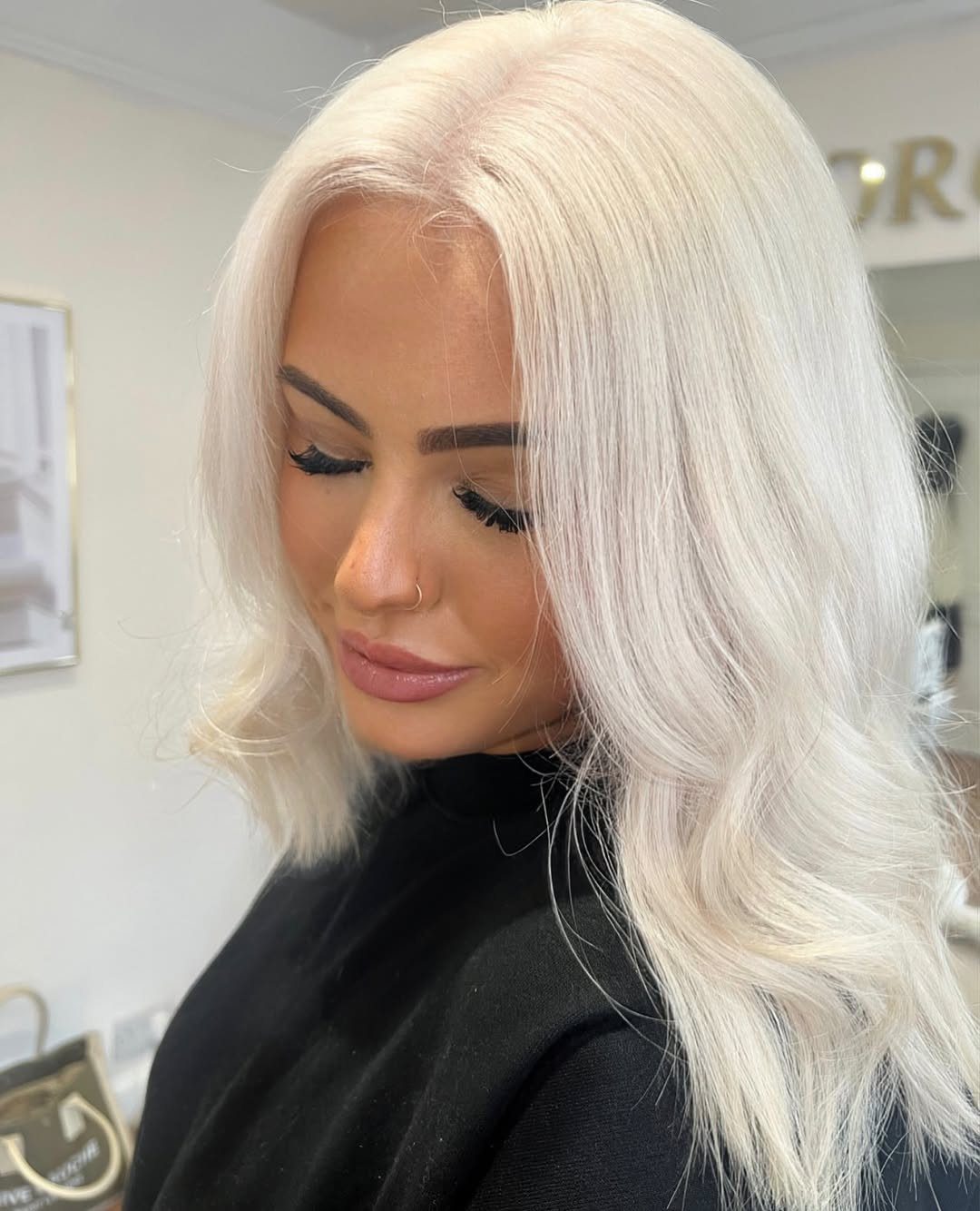
Pale, silvery and clear, crystal ash blonde sits close to the icy end of the family but reads softer, more glassy than stark.
Soft, loose waves work well here because each bend catches the light and spreads it down the length.
Very light blondes turn yellow fast, and I would keep purple shampoo in the shower between salon visits.
At the consult, show a photo and say "crystal" out loud, which points the stylist toward a clear, cool finish instead of a yellow one.
27. Pearl Ash Blonde
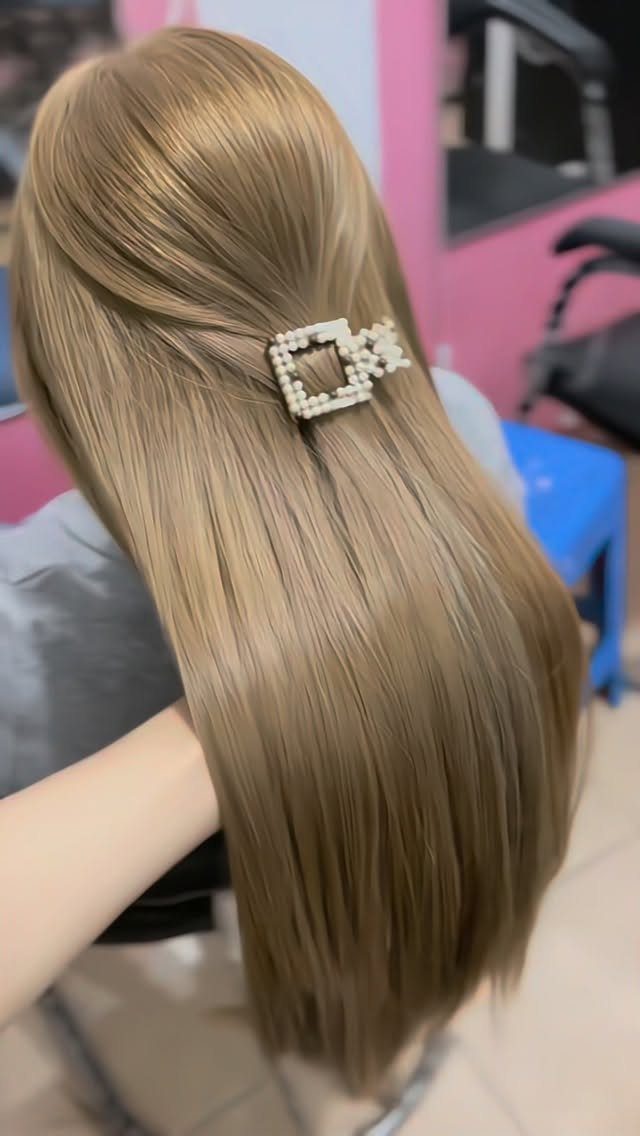
Smooth, straight lengths in a creamy, cool blonde, with a faint pearly sheen instead of a stark white. Straight hair shows the tone evenly from root to end, so any warmth will be easy to spot.
A pearl clip is a simple add-on that suits the shade without competing with it. I would ask for "pearl ash" and bring a photo, because the name can mean different things from one stylist to the next.
28. Dirty Ash Blonde
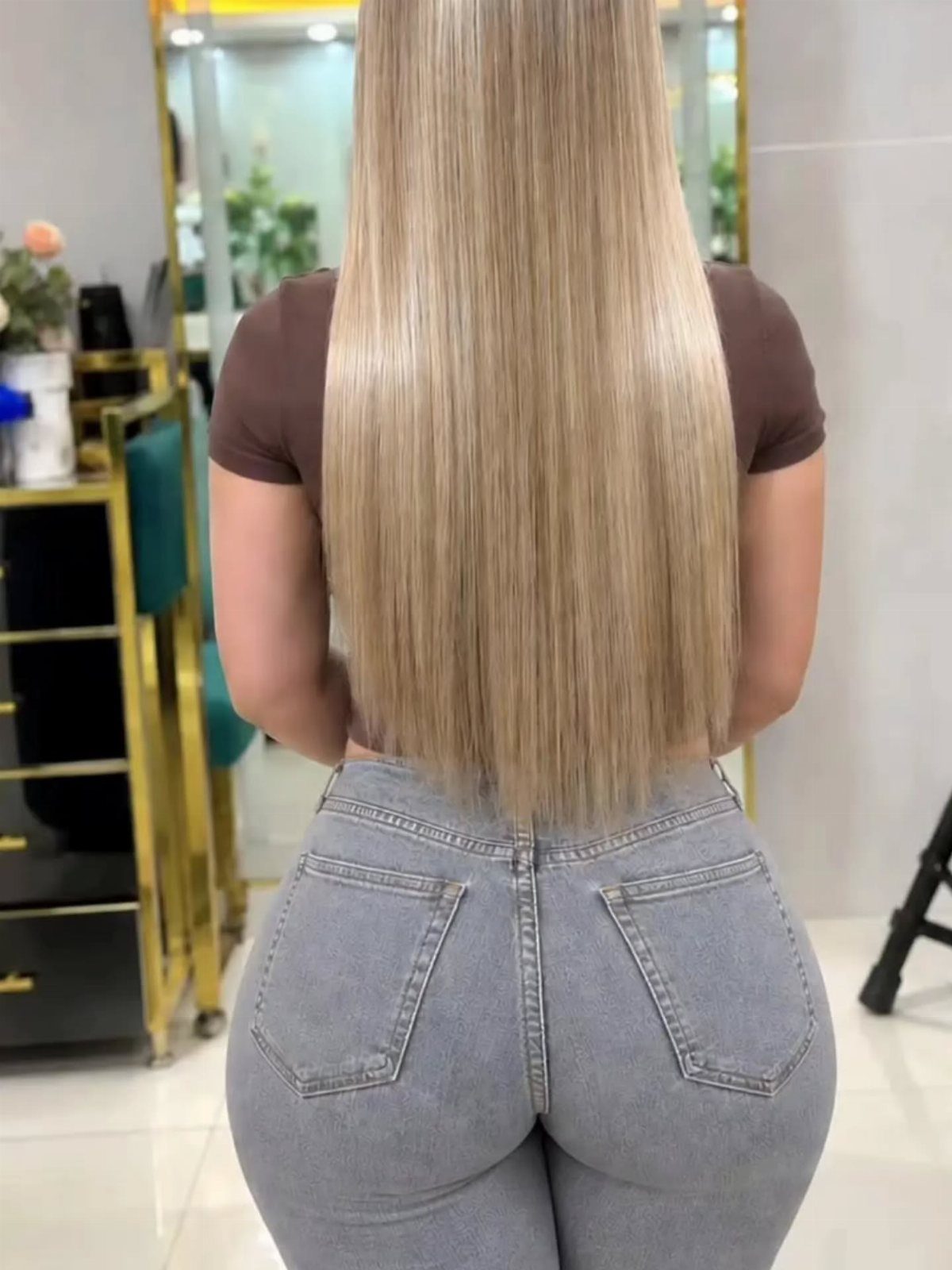
Muted and beige-leaning, dirty ash blonde is a dark blonde with the shine and gold turned down. The appeal is how natural it looks; straight, long hair keeps the color the whole story.
This is a good pick if you want blonde without a big lift, and I like how forgiving the grow-out is. A photo plus the exact phrase "dirty ash blonde" keeps your stylist aiming at cool blonde, not flat brown.
29. Ash Blonde with Honey Highlight
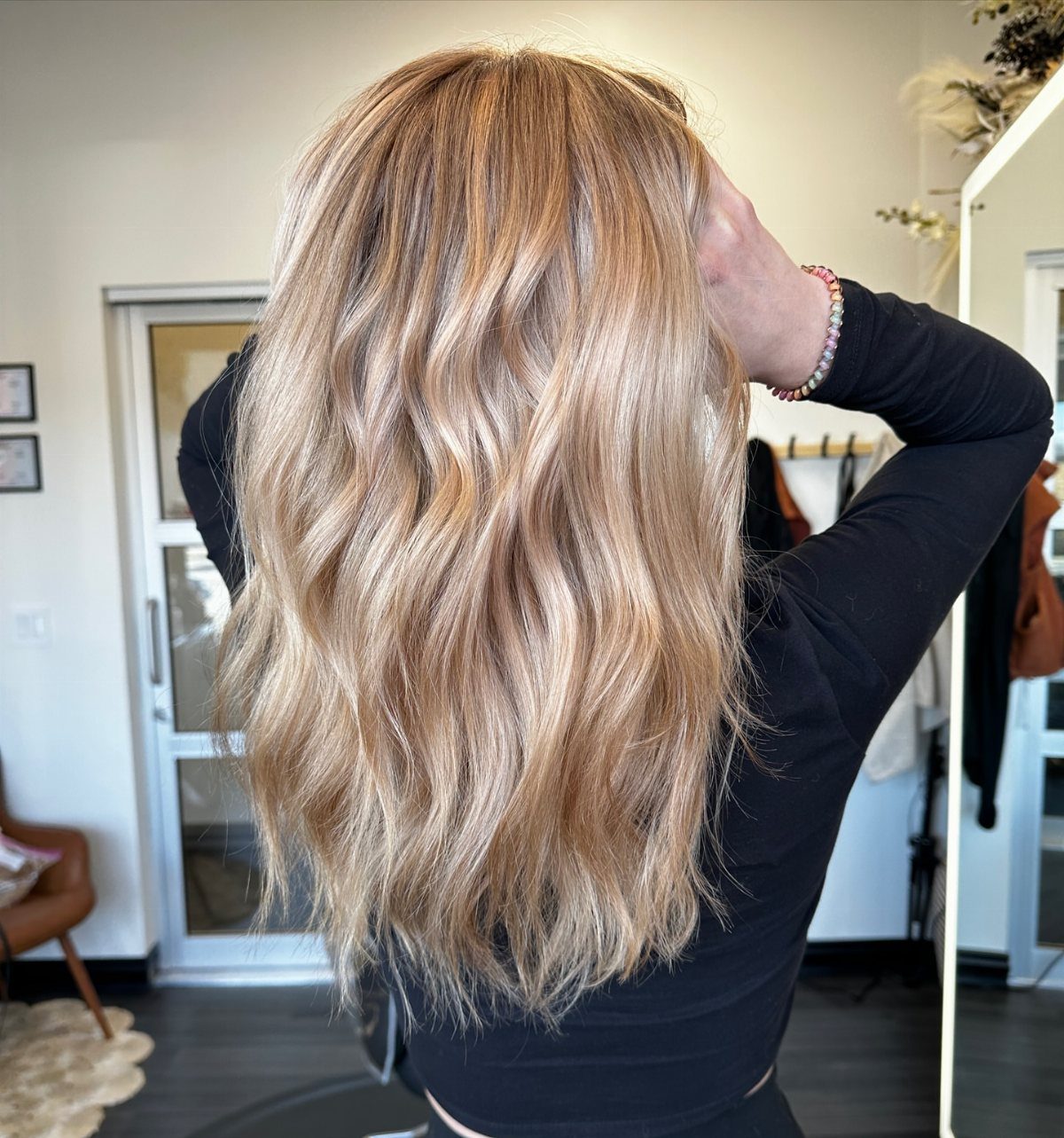
Warm honey pieces threaded through cool ash waves add a second tone, so the color shifts as the hair moves. The darker roots anchor it, and the honey keeps an all-ash head from looking too flat or severe.
I prefer this to a solid ash when skin runs warm. Ask for the honey in fine highlights, not thick ones, so the ash stays the main color.
Color Fading and Maintenance
Plan your refresh by service. Plan on a salon visit every 6–8 weeks for all-over color or traditional highlights; a balayage or a shadowed root can stretch longer, since the regrowth line is blurred instead of sharp.
If the tone slips before the color does, a glaze every 4–6 weeks brings the ash back without redoing everything. Heavier services, such as a balayage refresh or a highlight touch-up, tend to be spaced 8–12 weeks apart.
Daily care counts as much as the calendar.
Use a sulfate-free, color-safe shampoo and cut back on rinsing, since water itself contributes to fading. Add purple shampoo once brassiness shows.
Seasons matter too. Strong summer sun can warm up an ash shade, and dry winter air changes how well strands hold pigment, so I’d ask your stylist to tweak your routine with each season.
Ash Tones and Starting Hair Color
Ash works by correction. Lightened hair pulls yellow and orange, and blue and violet pigments sit opposite those tones on the color wheel and neutralize them, which is why ash is the usual shade after bleaching.
Your starting color decides how it lands. One toner formula might read as soft beige on you and nearly silver on someone else, because your starting level, your skin tone and the amount of toner applied all shift the result.
Permanent color typically lifts natural hair up to 2 levels. Anything lighter than that may need highlights, and darker hair takes more bleach to reach a cool, ashy result.
Expect the route to be bleach followed by a professional dye or toner. Light hair needs less processing, so I would judge your starting point honestly before choosing a shade from a photo.
Choosing Salon or At-home Color
Your starting hair decides this more than your budget does. Natural blonde or light brown hair in good health is a fair candidate for a box kit, especially for simple all-over color, since little to no pre-lightening is needed.
Go to a salon if your hair is dark, red or previously colored, because those starts may need heavy lightening or color correction.
Brittle or damaged hair also belongs in the salon chair, where a colorist can look over its condition first and change the plan to hold further harm down.
Highlights, balayage and custom blends need precise application. Experienced colorists can manage them at home, but I would leave them to a pro.
At-home color is cheaper and quicker, and that advantage holds only when your starting point is easy.
Frequently Asked Questions
What color is ash blonde?
Ash blonde is a cool-toned blonde with muted gray, silver, blue or violet undertones and no golden warmth.
Blue and violet pigments cancel the yellow and orange that show up when hair is lightened, which is what gives the shade its ashy cast.
What is the difference between ash blonde and beige blonde?
Beige blonde sits near neutral, softened with champagne or antique gold, while ash leans on gray, olive-green and blue to stay cool.
Check the shade by a window, since warm indoor bulbs can push a cool ash toward beige and daylight brings back its gray-violet base.
Can I put ash blonde hair dye on bleached yellow hair?
Ash formulas carry blue and violet pigment that cancels out yellow, so they work on bleached hair that has pulled yellow.
The hair has to be light enough first, typically level 8 or lighter, or the result can turn muddy or even greenish.
Plan on a lightening session first, then a salon color or toner, and let your colorist decide whether toner alone is enough.