This is a Karin Slaughter short story that sets up Pretty Girls through Julia Carroll, a 19-year-old journalism student who researches missing women and realizes she fits their description.
It stops just as her danger becomes real, so read standalone it feels unfinished. Expect roughly 60–76 pages, not the 119 listed.
What Blonde Hair, Blue Eyes Is About
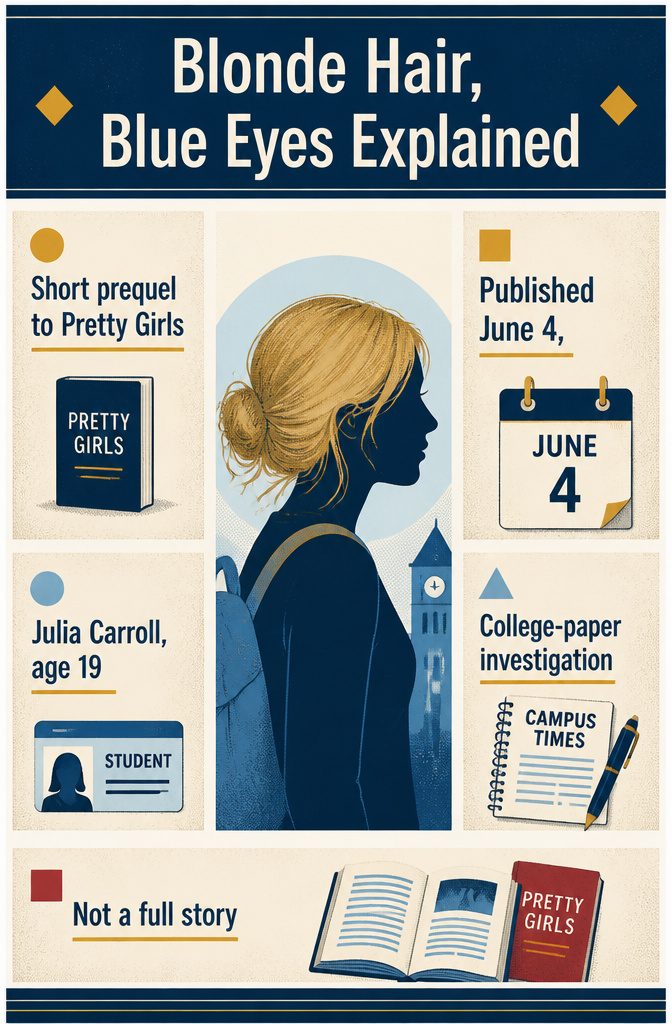
Karin Slaughter’s Blonde Hair, Blue Eyes is a short prequel to her novel Pretty Girls, first published June 4, 2015.
It reads as a prelude rather than a full story, and the release includes an extract from Pretty Girls, so it also works as a sample of the book it leads into.
The setup is simple. Julia Carroll, a 19-year-old college student, sees a news story about a missing girl and recognizes herself in the description: blonde hair, blue eyes.
She starts digging into the disappearances of young women for an article in her college paper. The more absorbed she becomes, the less she notices how close the danger has moved to her.
Julia Carroll: The 19-Year-Old Journalist at the Center
Julia Carroll is 19, a college freshman studying journalism, and a feature writer for the campus newspaper. She is also beautiful, blonde and blue-eyed, which is the description the title points straight at.
Julia is the oldest of three sisters, and that role shapes her as much as her byline does.
She lives in a dorm, but her childhood home is only minutes away, so she never fully leaves the family behind. She stays close to her parents and is protective of her younger siblings.
I read that as the detail that makes her more than a target: the same instinct that makes her want a front-page story about missing young women is the one that makes her watch over her sisters.
The Missing Women Julia Investigates
Julia’s research centers on two women: Beatrice Oliver, a student, and Mona-No-Name (Mona Sin Apellido), a young homeless woman.
Putting them side by side is what makes the premise work for me. One case could be dismissed as a campus story and the other as a street story, but together they look like a pattern.
What starts Julia’s digging is a missing girl in the news who reminds her of herself: nineteen, blonde hair, blue eyes.
From there she plans an article for her college paper. She also believes that understanding these disappearances might help stop another abduction, and that belief is what turns a class-style assignment into something she can’t put down.
How Julia’s Danger Builds Throughout the Story
Julia begins as an observer, a young reporter working a story about other women.
As the investigation moves forward, that distance closes. Reviews describe her as increasingly frightened, and the fear reads as earned, because she starts to see she may be vulnerable herself.
That shift is where the book’s themes land hardest. Sexual assault, harassment and the right to feel safe stop being subjects Julia reports on and become conditions she lives in.
I’d argue the dread comes from her growing awareness, not from any single shock, and that is why it sticks.
Why the Ending Stops Where the Action Begins
The story stops at the moment Julia’s danger turns immediate, right where the main action should begin.
Readers reach the last page expecting a confrontation and get none. The frustration is fair: the threat closes in for the whole story, and then nothing resolves it.
Some readers take the cut-off as a deliberate hook into Pretty Girls, and I lean that way, but only if you already have Pretty Girls within reach.
Treated as a standalone, the ending feels like missing pages and the story lacks a satisfying close. Start it only if you plan to keep going.
How This Book Connects to Pretty Girls
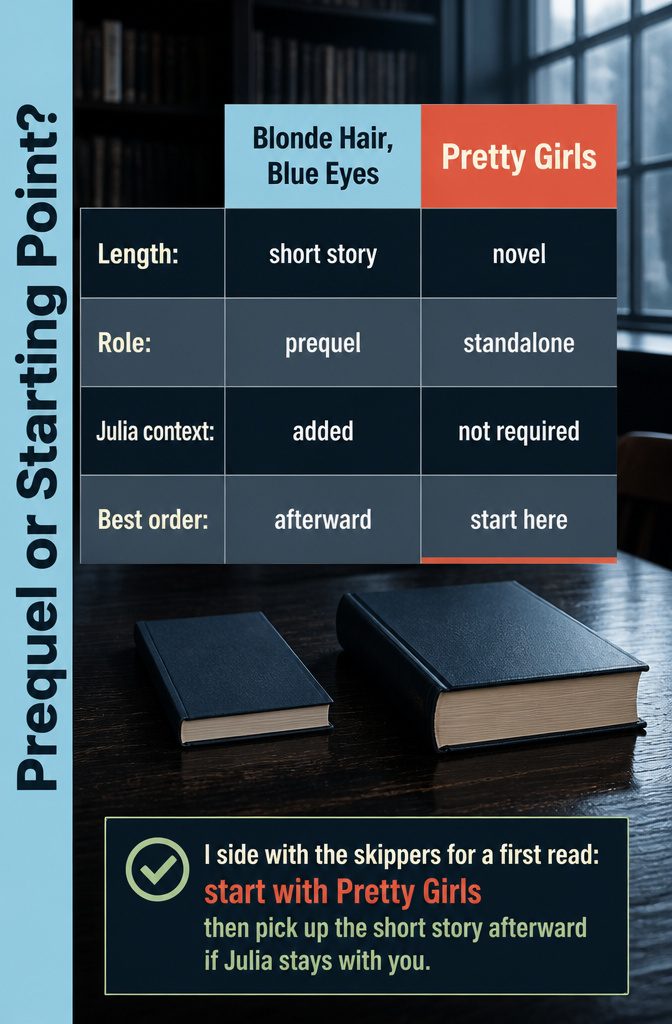
Blonde Hair, Blue Eyes is a short story released in 2015, the same year as Pretty Girls, and it works as a prequel that gives Julia Carroll’s backstory before the novel opens.
Pretty Girls is marketed as a standalone, which shapes the choice. Some readers say the story adds family background that gives Julia more weight in the novel, especially her place as the eldest sister who feels responsible for the others.
Others call it skippable and say you lose nothing important by going straight to the book.
I side with the skippers for a first read: start with Pretty Girls, then pick up the short story afterward if Julia stays with you.
The Page Count and Format
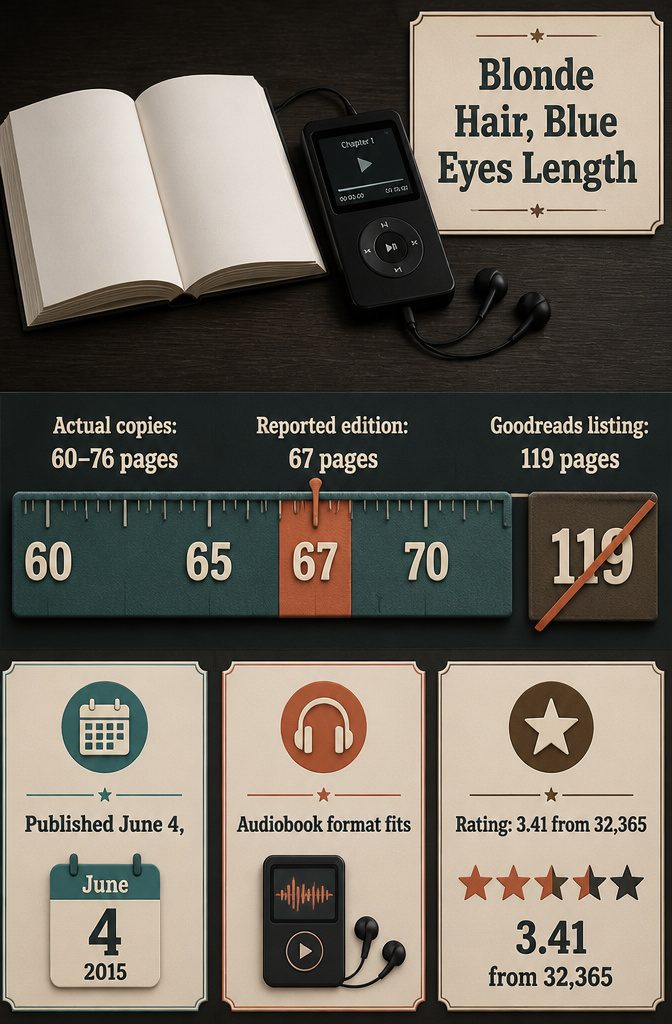
Goodreads lists Blonde Hair, Blue Eyes at 119 pages in Unknown Binding, but readers holding actual copies describe editions of 60-some, 67, and 76 pages.
The listing description mentions an extract from Pretty Girls, which probably accounts for the extra length. Plan on a short story of roughly 60–76 pages, not a 119-page novella.
It was first published June 4, 2015.
Goodreads shelves it under audiobook, thriller, mystery, fiction, short stories, crime, and mystery thriller, with a 3.41 rating from 32,365 ratings. That score is modest, yet at this length I’d call it a low-risk read, and the audiobook format fits it well.
Frequently Asked Questions
What is Blonde Hair, Blue Eyes about?
It follows Julia Carroll, a 19-year-old college journalist who researches missing young women for a campus-paper article and realizes she matches their description.
Her research centers on a student and a homeless young woman, and her fear grows as the story goes on. It ends just as her danger becomes immediate.
Is Blonde Hair, Blue Eyes a prequel to Pretty Girls?
Yes.
It’s a short prequel to Karin Slaughter’s novel Pretty Girls, and both came out in 2015. It gives Julia Carroll’s backstory before the novel opens, and the release includes an extract from Pretty Girls.
Do I need to read Blonde Hair, Blue Eyes before Pretty Girls?
No. Pretty Girls is marketed as a standalone, and some readers say you lose nothing important by skipping the short story.
Others find it adds useful family background for Julia. For a first read, go straight to the novel and come back to the story afterward if Julia stays with you.
How many pages is Blonde Hair Blue Eyes?
Plan on roughly 60–76 pages.
Goodreads lists 119 pages, but readers with actual copies describe editions of 60-some, 67 and 76 pages. The longer listing probably counts the Pretty Girls extract.
Who is Julia Carroll?
Julia Carroll is a 19-year-old journalism freshman who writes features for her college newspaper.
She is the oldest of 3 sisters and lives in a dorm minutes from her family’s home. She has blonde hair and blue eyes, which is what the title points to.
When was Blonde Hair, Blue Eyes published?
It was first published on June 4, 2015, according to Goodreads. Reviews also place it in 2015, the same year as Pretty Girls.