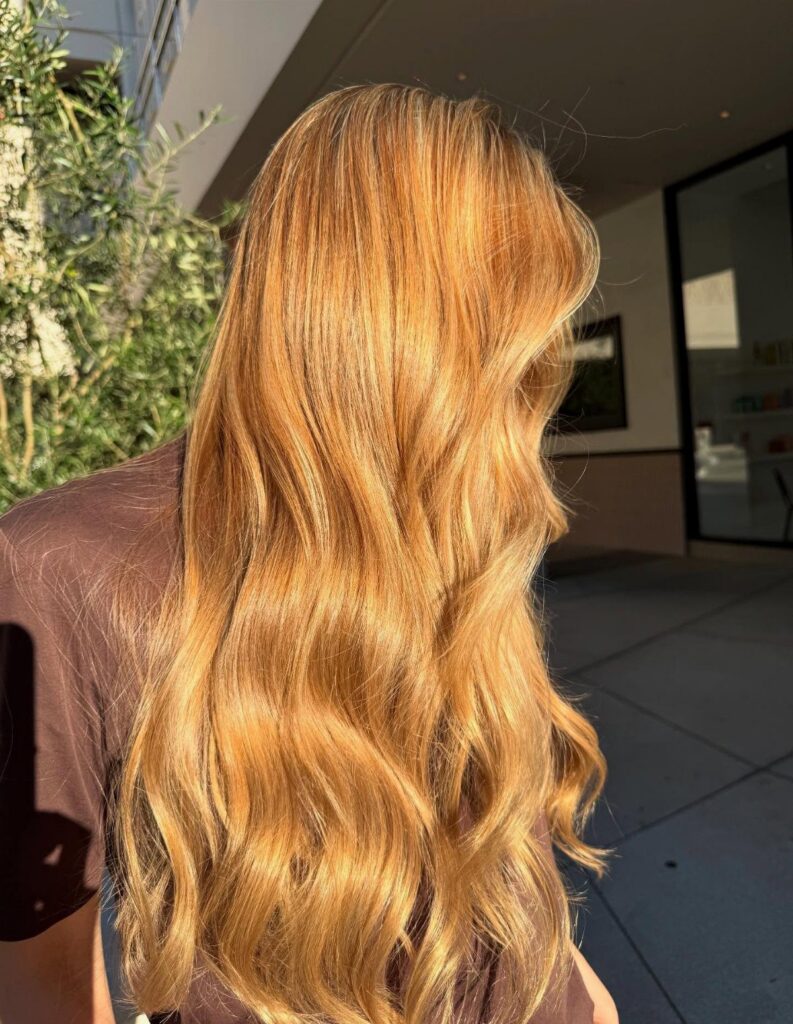
The range here runs from fine babylights and beach blonde money pieces to chunky golden highlights, balayage, high-contrast ombre and golden platinum, and your skin’s undertone decides which of them suits you.
Warm skin takes honey, caramel and buttery gold without a fight, cool skin does better with champagne or wheat-gold, and the gold-versus-silver jewelry test shows which side you’re on.
Plan on the glow lasting about 4–6 weeks; after that the gold flattens out and starts drifting toward yellow.
1. Golden Bronde
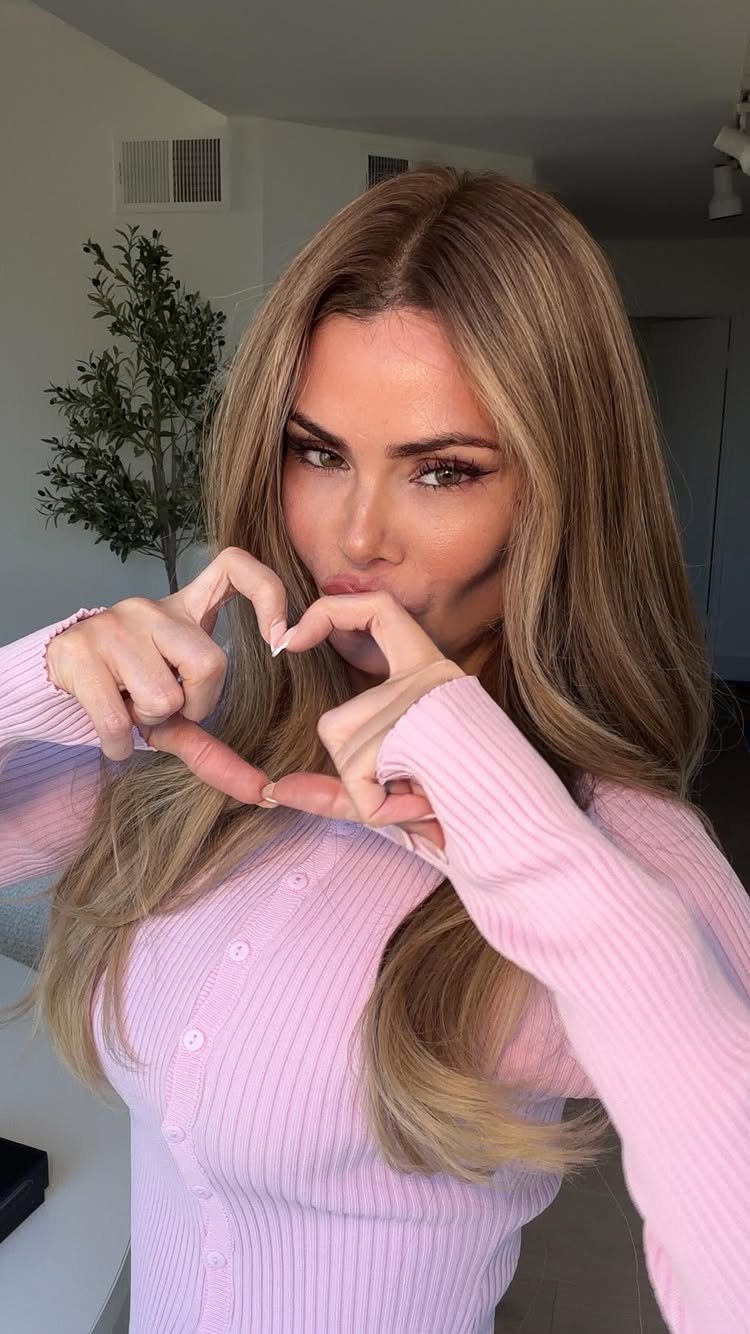
Brunette roots that melt into golden blonde ends are what bronde means, and here the blend runs soft enough that no single streak stands out. It suits anyone who wants lighter hair without a hard line when roots grow in.
Ask your stylist for golden tones specifically, since "bronde" alone can drift cool or ashy. Bring the photo and point to where the brown should end and the gold begin.
2. Golden Blonde Balayage
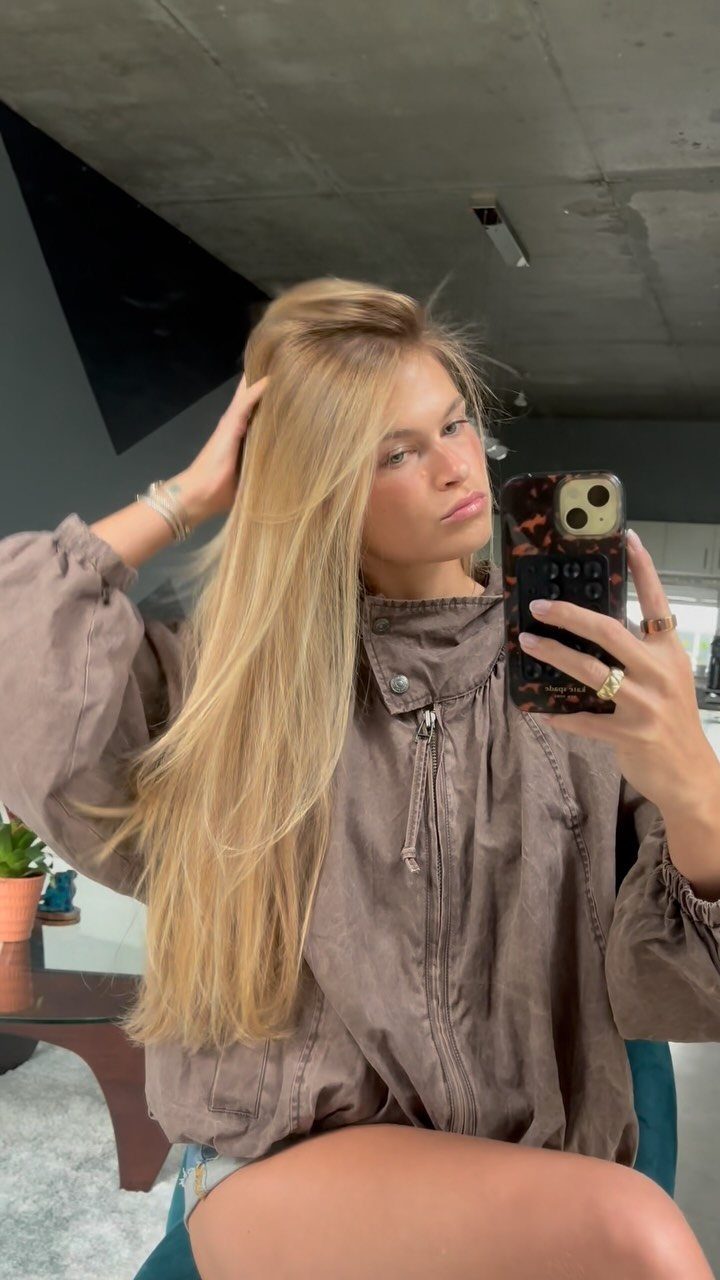
Hand-painted highlights are what separate balayage from foil work: the stylist sweeps lightener across the hair freehand, so the golden pieces fall where they look natural instead of in a pattern.
On long hair like this, the gold brightens as it nears the tips and melts into the base color.
Request a freehand application, and specify golden rather than beige. I like this one for anyone who wants a lived-in look that doesn’t demand a salon visit every few weeks.
3. Caramel Golden Blonde
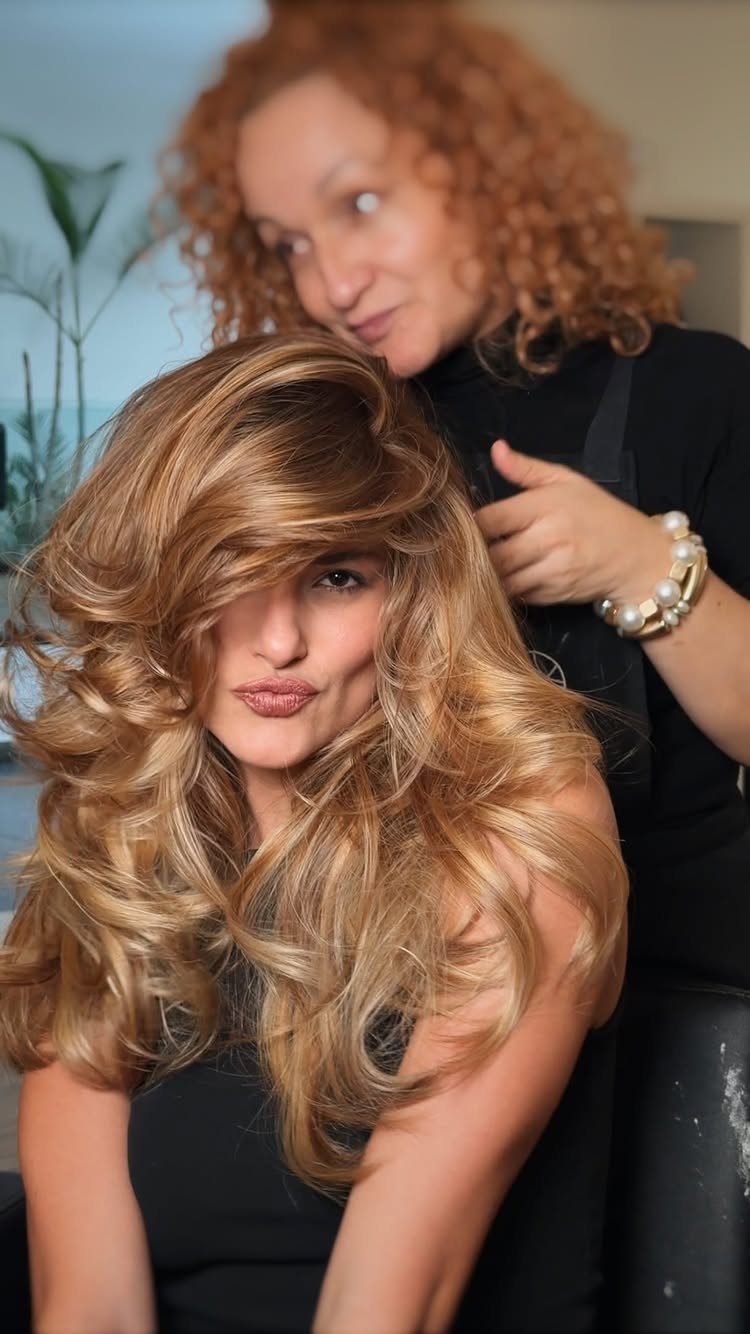
Caramel supplies the warmth that stops golden blonde from going flat.
Worked into the shade, it adds depth and a slightly toasted note, which reads richer than a straight yellow-gold, especially on long waves where the tones flash at different points.
I’d choose this over a pure golden blonde if your skin runs warm or neutral. At the appointment, ask for golden blonde with caramel woven through, and take a photo along so the balance is clear.
4. Caramel Highlights
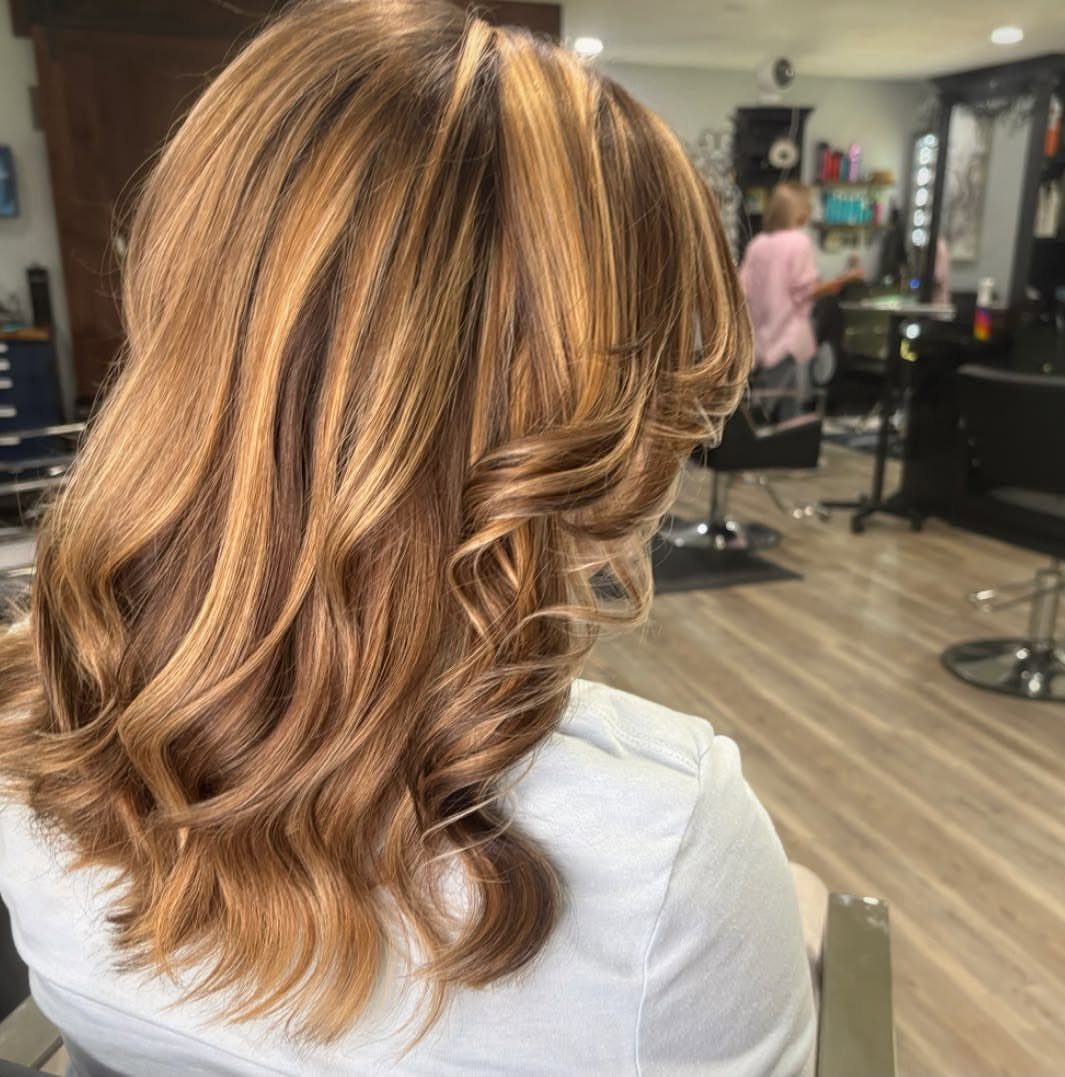
Caramel and honey highlights are flexible: a stylist can keep them thin and close to your base for a subtle lift, or go wide and bold for obvious contrast.
On brown hair like this, they lift the overall brightness without a full color change.
Decide up front which end of that range you want, and say it plainly in the consultation. For a first-time highlight, I’d start subtle; you can always add more.
5. Chunky Golden Highlights
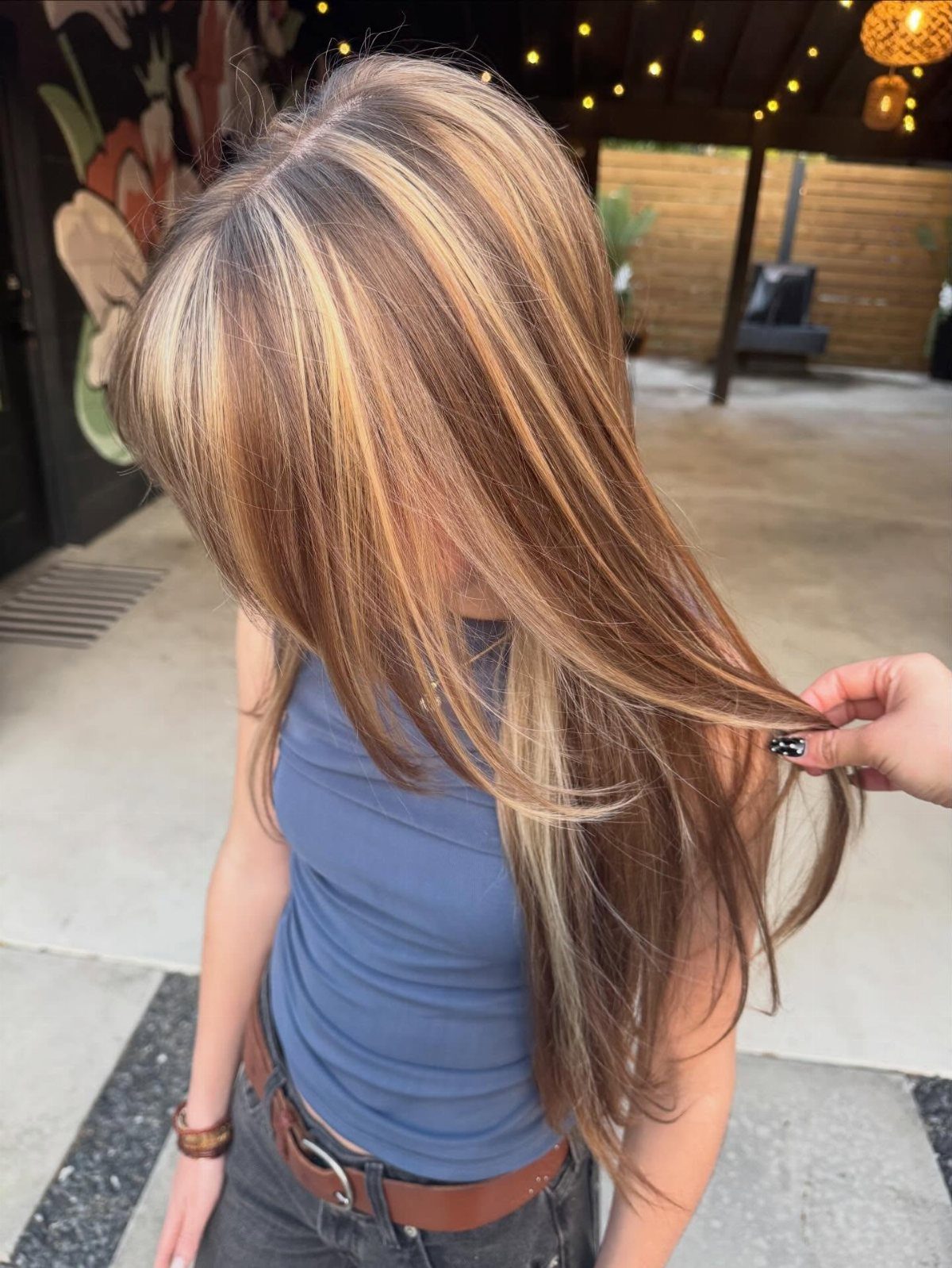
Broad golden streaks against a dark brown base make a deliberate statement. The contrast is the point, so this look works best when you want the highlights to read clearly instead of blending away.
Thick sections show up strongly, which makes the placement matter.
Ask your stylist where the gold will sit around your face, since that’s where the eye lands first. I’d pick this if you like a bold, graphic effect and don’t mind it looking styled.
6. Medium Brown Subtle Balayage
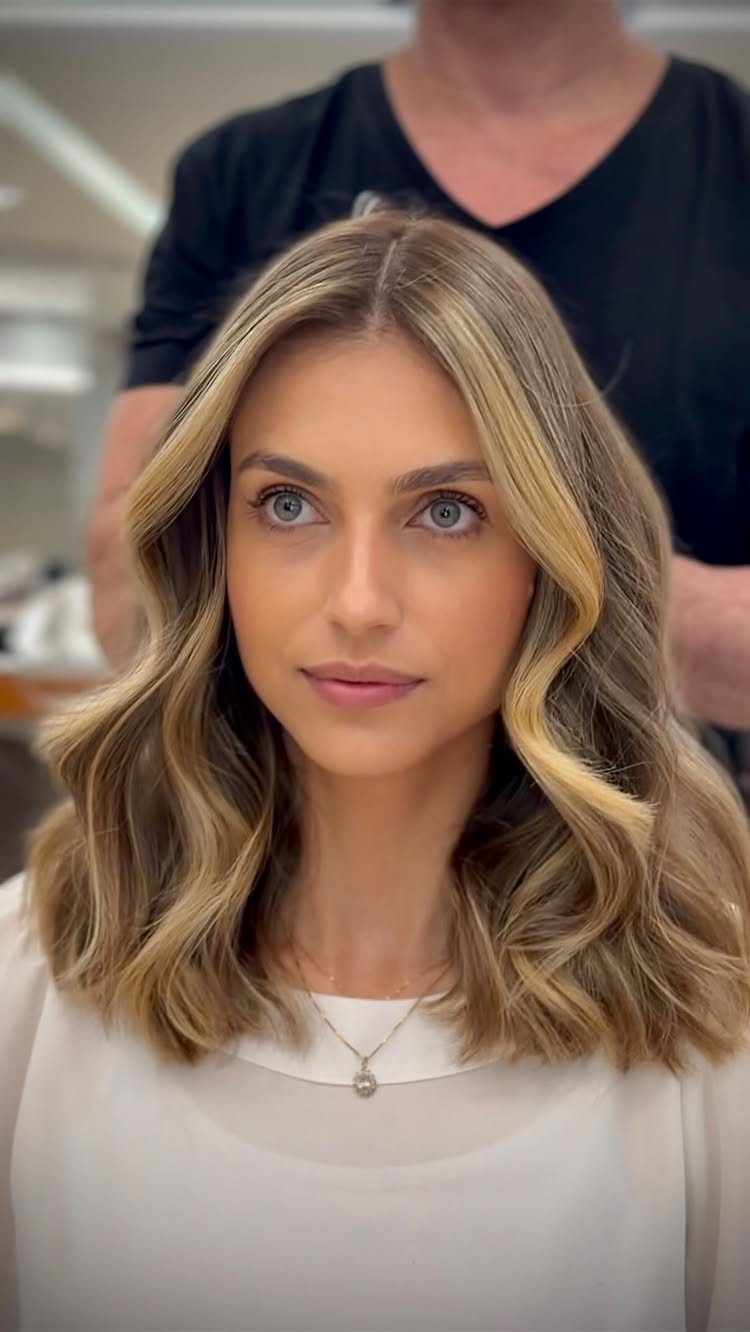
Subtle balayage on medium brown hair is the gentlest way into golden blonde. Brown remains the dominant color, with a few softly blended golden pieces adding dimension from the mid-lengths down.
For this reason, it suits anyone nervous about going too light.
Ask for a subtle, golden-leaning balayage and tell your stylist you want the base to stay brown. I’d choose it as a first color change.
7. Golden Blonde Babylights
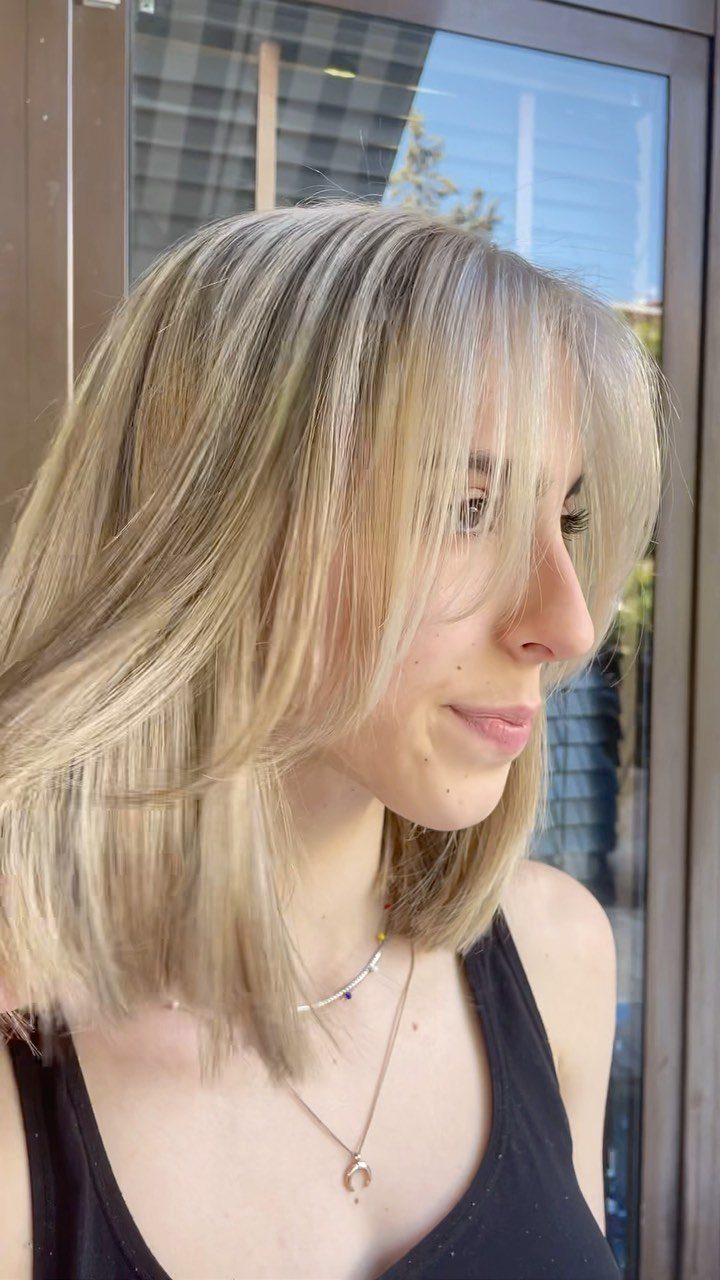
Babylights are fine highlights applied close together, meant to mimic the soft lift that sun gives to a child’s hair. On golden blonde, the thinness keeps them subtle, so the overall shade brightens without obvious streaks.
Babylights cost you chair time, since the finer sections take longer to paint and process than standard highlights.
Ask for babylights in a golden tone rather than ash, and specify how much brightness you want. I like them on anyone who wants a natural lift that doesn’t announce itself as salon work.
8. Glossy Honey Glass Hair
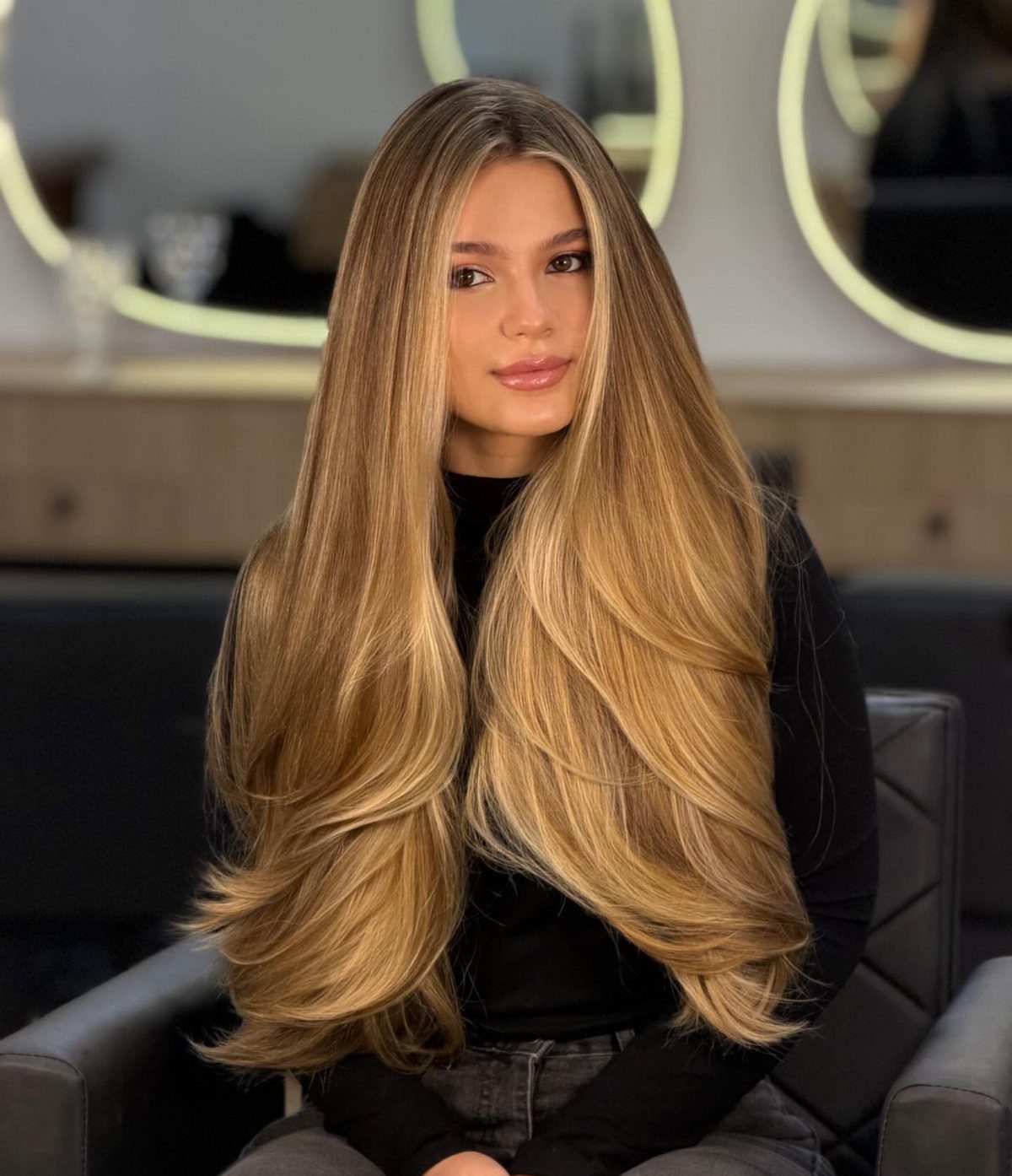
Glass hair means a reflective, high-shine finish, and when the base is honey-toned golden blonde, the glow reads warm instead of icy. The length matters here: longer hair shows off the shine better than shorter cuts.
Getting it glossy takes a gloss treatment after the color, plus a smoothing routine at home.
Ask for a honey-toned golden blonde with a clear gloss layered on top. I’d choose this if your hair holds shine well already, since coarse or porous hair fights the glass effect.
9. Golden Platinum Hair
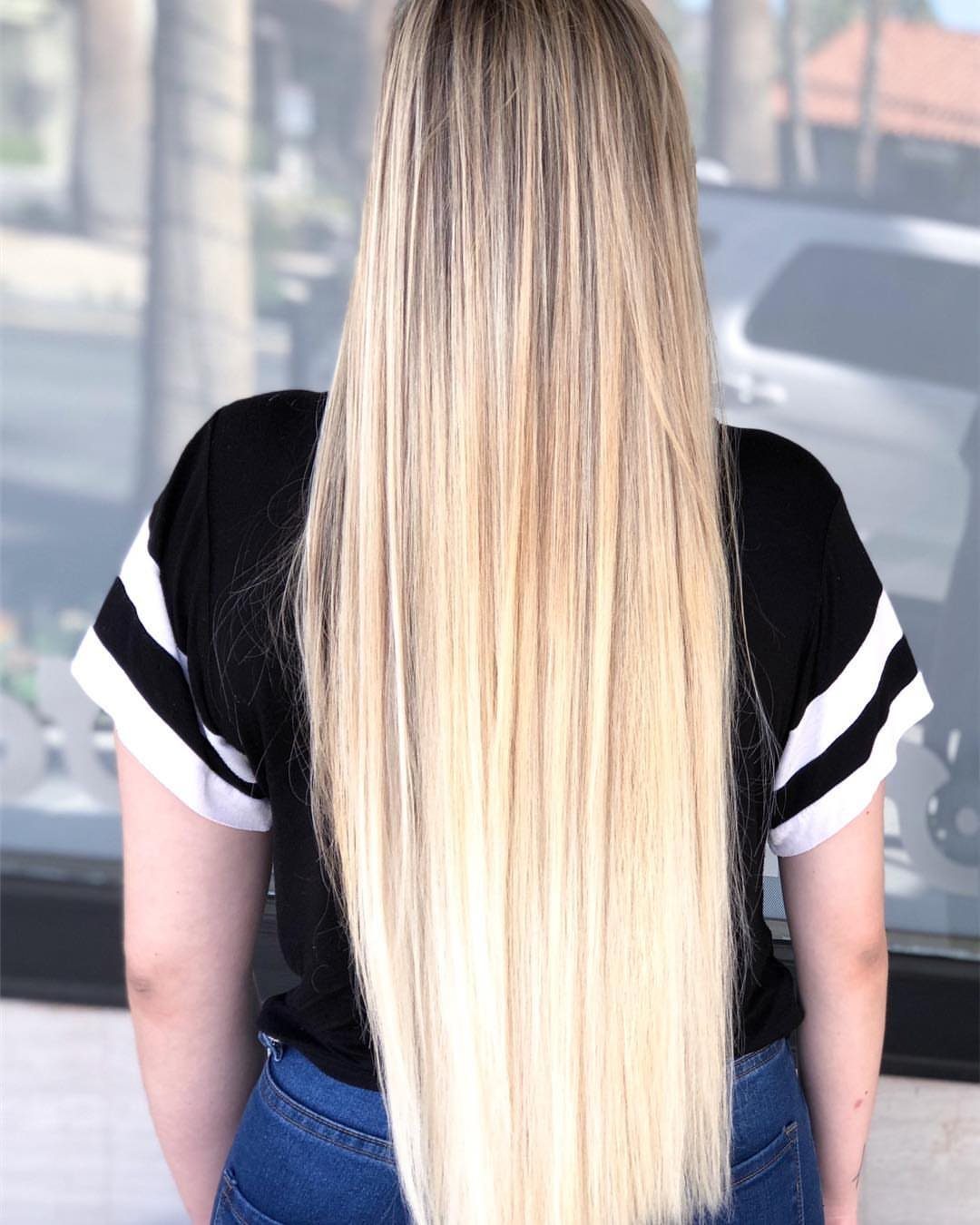
Platinum blonde usually leans cool, but a touch of gold softens it into something warmer without losing the brightness. The result sits between icy and buttery, which suits more skin tones than straight platinum does.
Expect multiple sessions if you’re starting from dark hair, since lifting to platinum is hard on the hair and safer done gradually.
Ask for platinum with a warm or golden tone mixed in. I’d pick this over pure platinum if cool tones wash you out.
10. Golden Copper Blonde
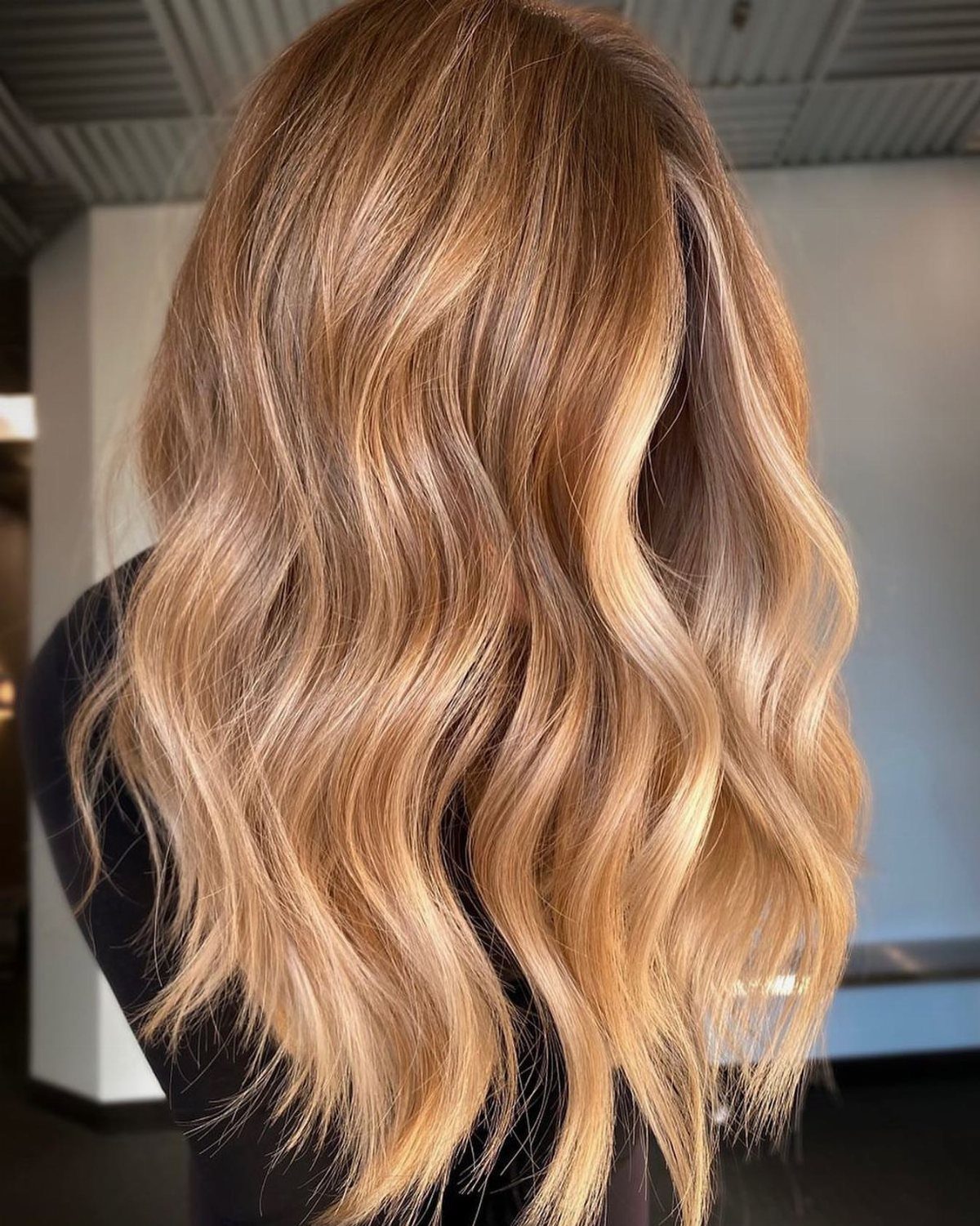
Copper and gold sit next to each other on the warm side of the spectrum, so blending them gives a rich, layered look that flashes different tones depending on the light. On wavy hair, the movement shows off the variation.
Request golden highlights over a copper base, and bring a reference photo so the balance is clear.
I’d choose this if you want warmth without going full red, though it does fade faster than cooler shades and needs a color-safe routine to hold.
11. Golden Vanilla Blonde
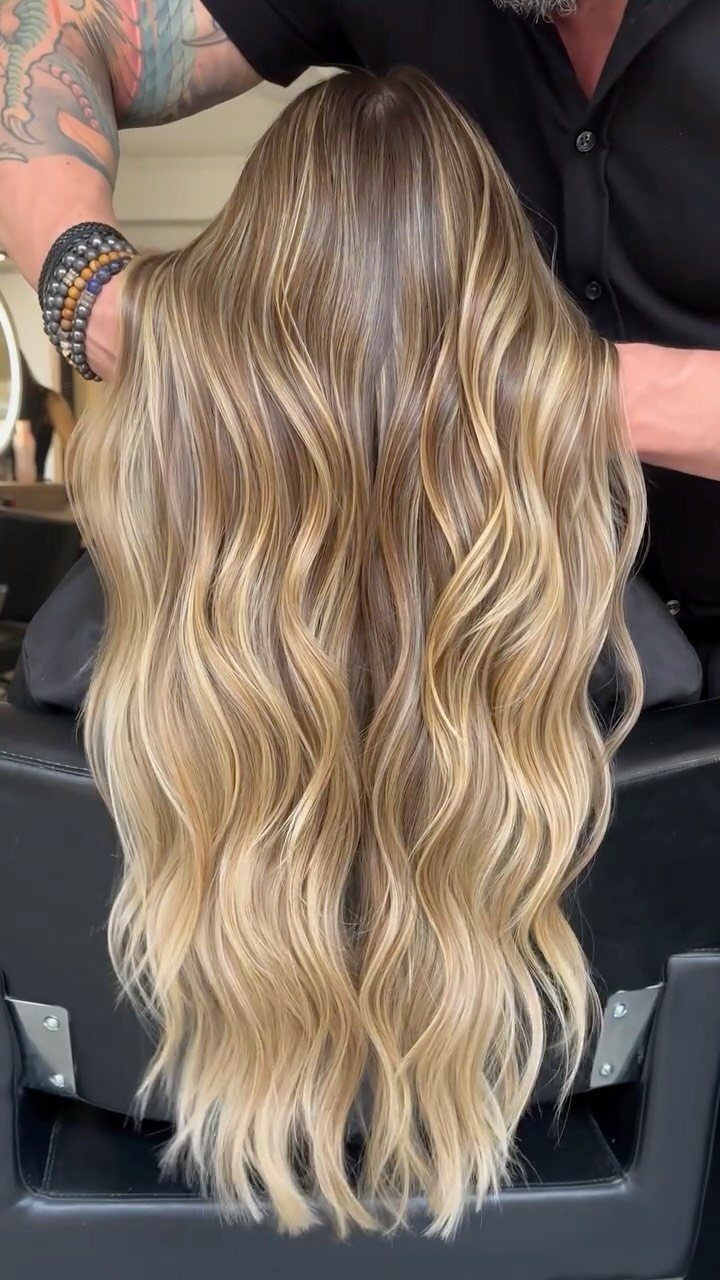
Vanilla blonde is a soft, creamy shade that sits between beige and yellow-gold. Adding golden tones warms it up, so it reads less neutral and more sun-lit, especially on long hair where the color can shift from roots to ends.
Ask for a vanilla blonde with golden highlights or a golden vanilla base, depending on how much warmth you want. I’d go this route if straight golden blonde feels too bold but you still want a warm tone overall.
12. Beach Blonde Money Pieces
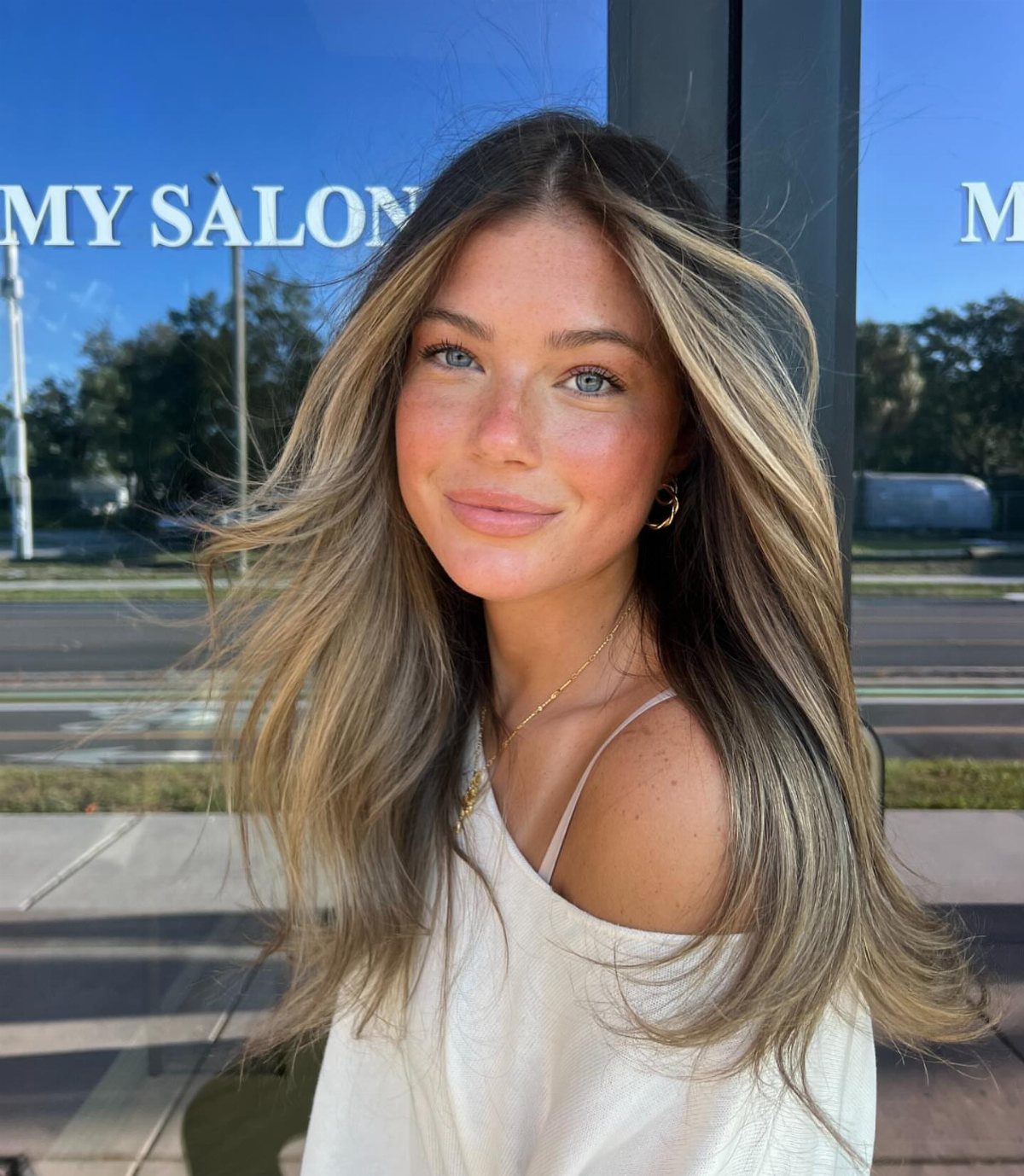
Money pieces are the 2 thick highlights that frame your face, lightened a few shades brighter than the rest. On a warm balayage base, they add instant brightness around your eyes and cheekbones without a full head of highlights.
I like this option for anyone who wants a noticeable lift without the time or cost of full balayage, and it grows out cleanly since the rest stays natural.
13. Muted Dark Golden Blonde Highlights
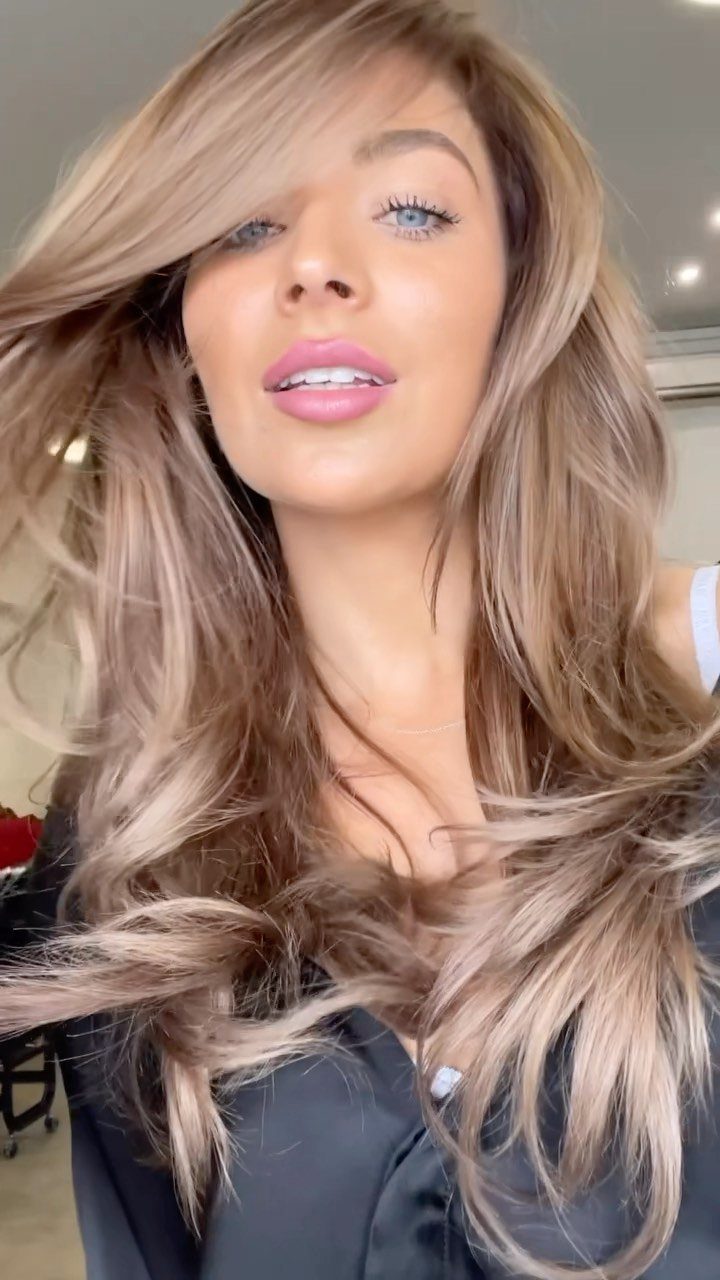
Medium brown with light blonde pieces through it gives a muted golden shade, softer than a bright blonde and easier on the eye.
Keeping the color level from going too light is what lets it fade gradually instead of turning harsh.
The maker of this look chose a level that isn’t too light on purpose, so growing back toward a healthy, bright blonde later stays simple.
Ask your stylist for muted golden highlights and tell them you want room to go brighter next season. I’d pick this for anyone easing out of brunette.
14. Sandy Blonde Babylights
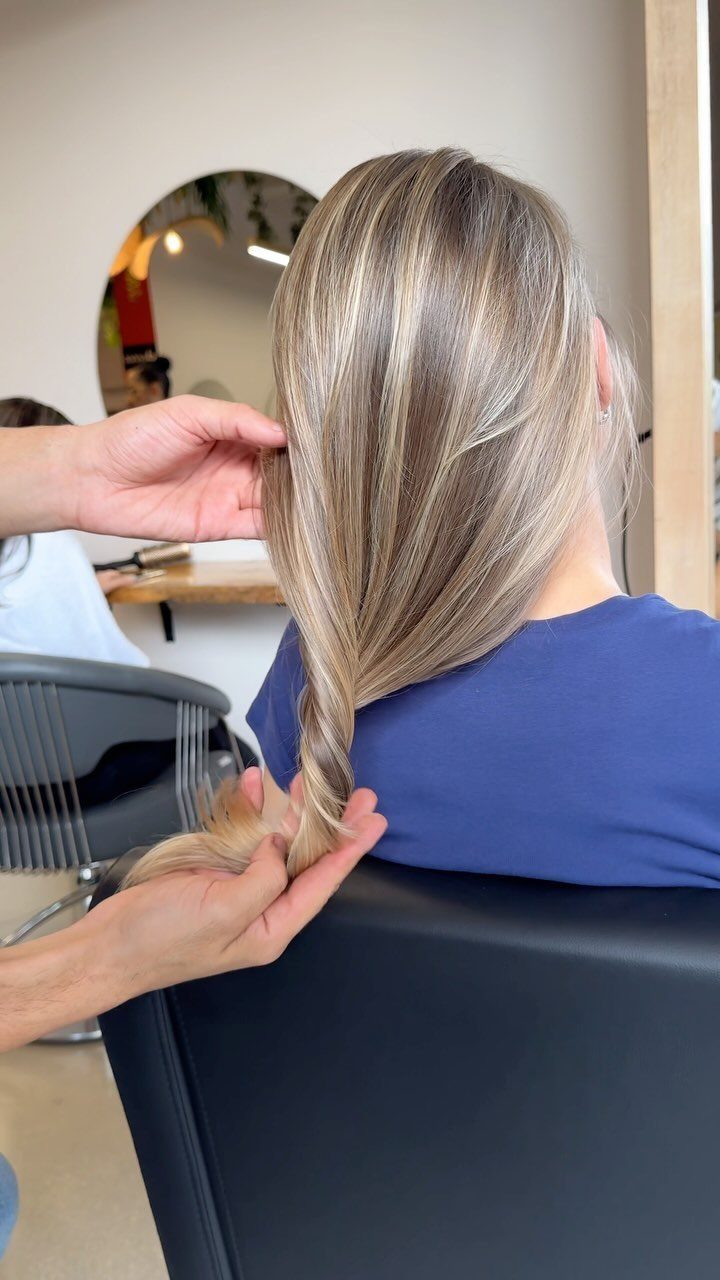
Fine sandy blonde babylights read as natural because the strands are thin enough to blend into each other, with no single streak standing out.
Sandy sits a little darker and less yellow than a bright golden shade, so the effect is a soft, lived-in lightness.
Ask for sandy babylights and say how close to your base you want them.
Fine sections mean a longer appointment, so book with that in mind. I like this for anyone who wants brightness that looks like it came from the sun.
15. Blonde Face-Framing Highlights
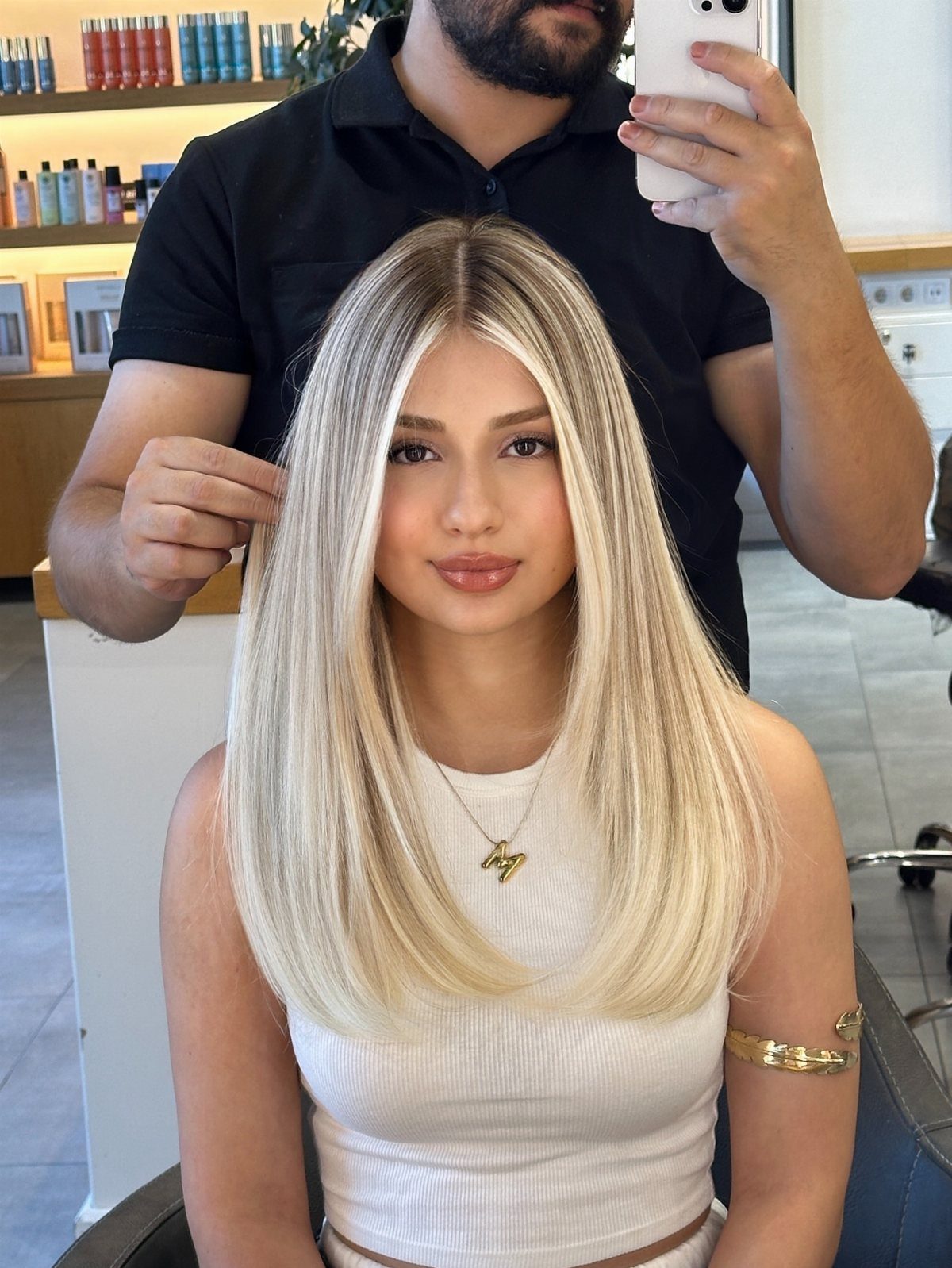
Light blonde and honey strands placed around the face brighten the whole head against warm brown, because the eye goes straight to where the light sits.
The rest of the hair stays dark, so the lift comes from placement instead of from coloring everything.
Point to the exact sections you want lightened when you show the photo, and ask for honey mixed in with the lighter blonde so it stays warm.
Sun-bright strands up front are my pick if full highlights feel like too much.
16. Wheat Blonde Highlights
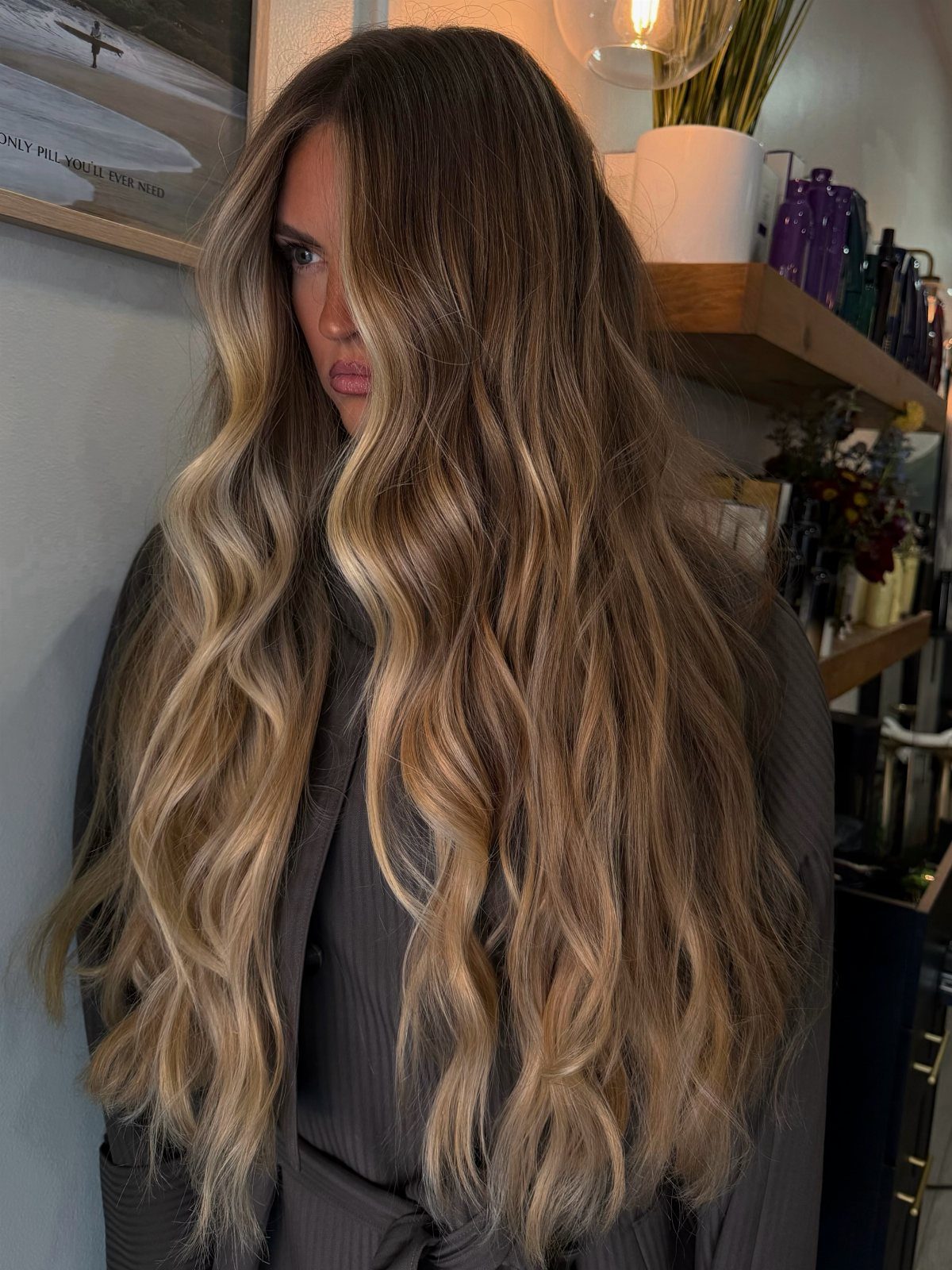
Wheat blonde is a warm, grainy shade, somewhere between golden and beige, and highlights laid over it deepen that warmth instead of fighting it. On long waves the extra tones catch the light in layers.
Ask for wheat blonde highlights with warm tones, and bring a photo so your stylist doesn’t drift toward ash.
If your natural base already leans wheat, I’d choose this over a bolder gold, since it grows out gently and looks like your own hair on a good day.
17. Golden Blonde Highlights
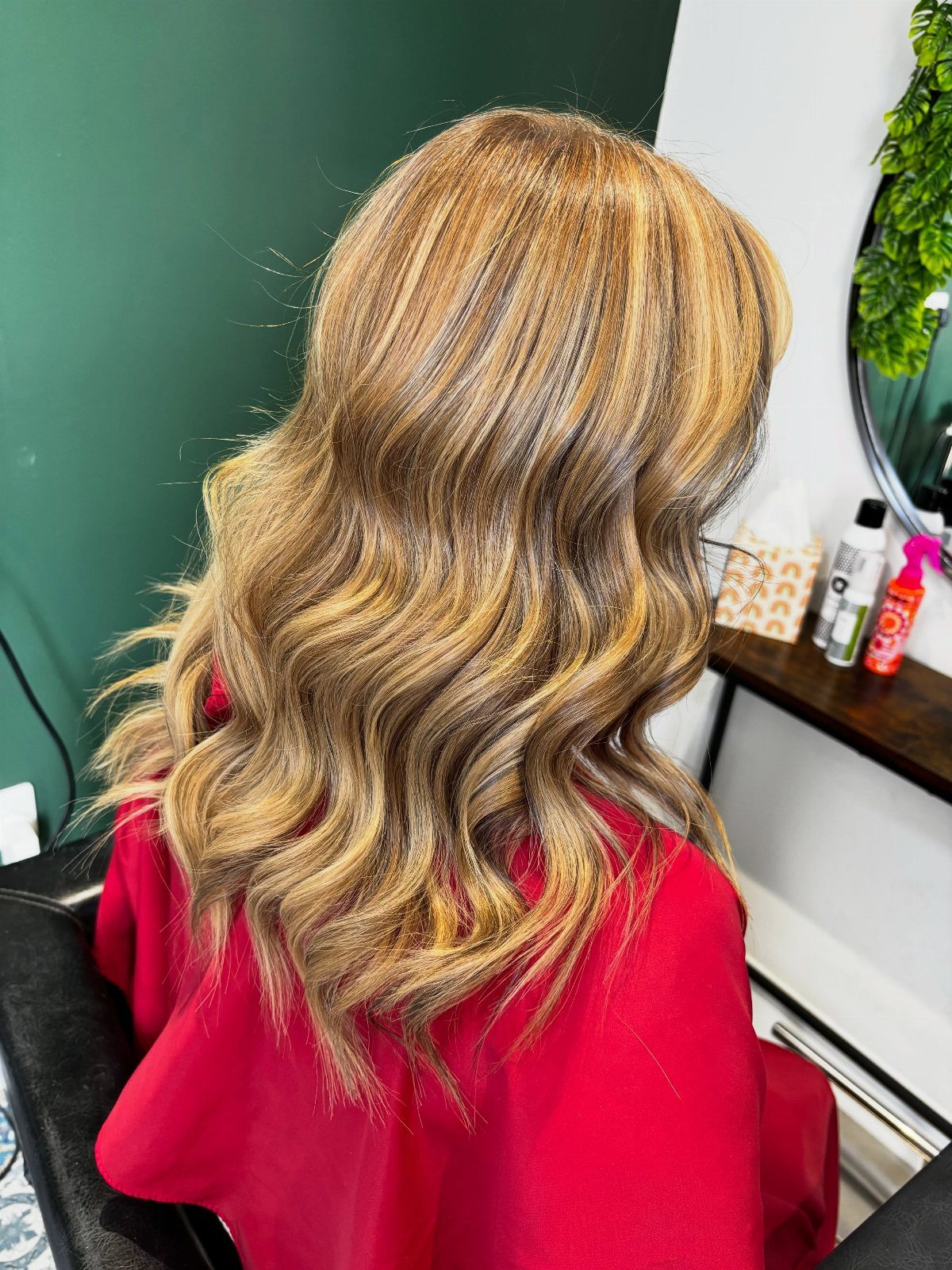
Golden blonde strands woven through a darker or natural base add warmth and dimension without a full color change. Caramel pieces mixed in with the gold keep the result from looking flat or too yellow.
Ask for golden highlights and mention that you want caramel blended in, so the transition from your base looks soft.
I’d start here if you’re new to highlights: the base stays yours, and the gold can be built up at later visits.
18. True Golden Blonde Hair
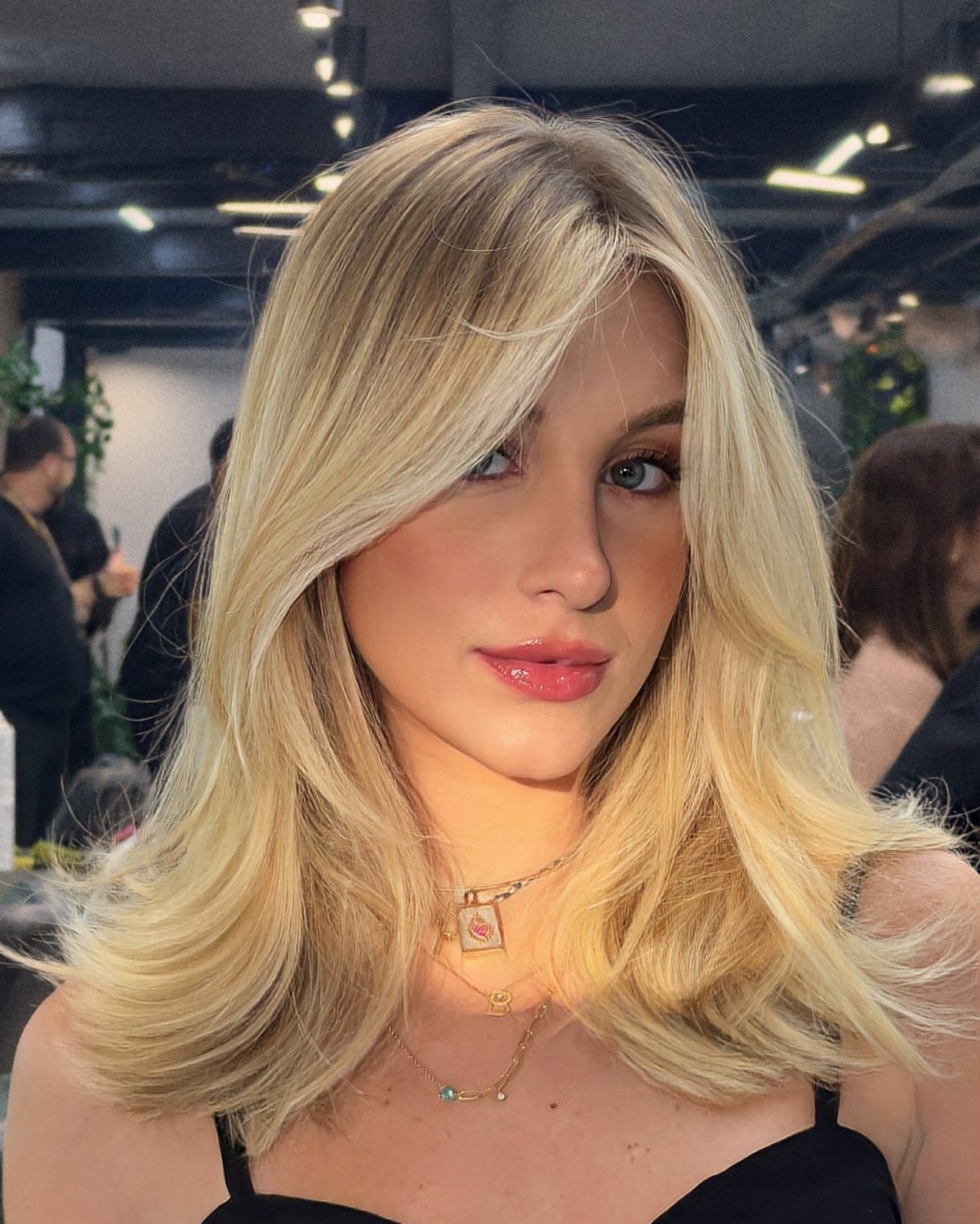
Golden blonde that is truly golden, with warmth running from root to ends, is the simplest version of this color and the hardest to fake with a few highlights.
Long layers and side-swept bangs give true golden blonde movement, so the shade reads as depth instead of one flat block.
Say "true golden" at the consultation, and ask that the tone stay warm instead of drifting beige or ash. A cut with layers is what I’d pair with it; the color does the rest.
19. Beachy Golden Highlights
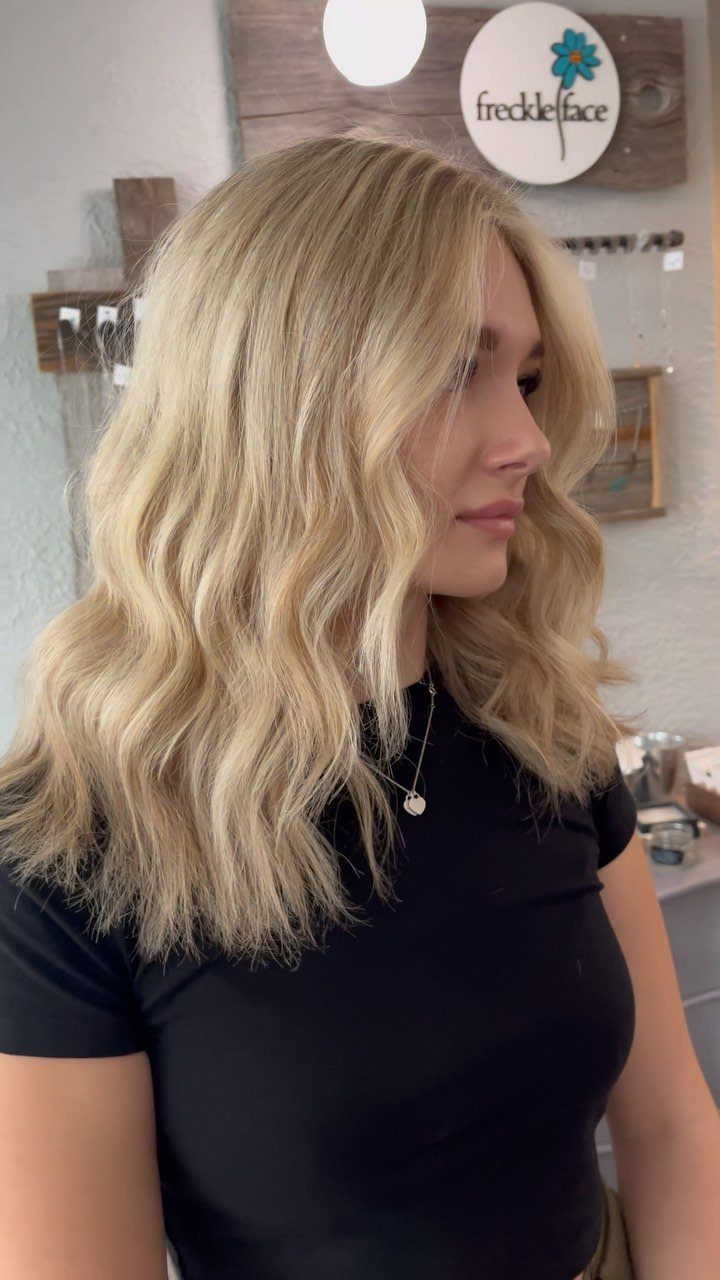
Loose, tousled waves do half the work here: the golden pieces catch light along every bend, so the color reads sun-kissed instead of striped. Flat-ironed straight, the same highlights would look much quieter.
When you book, say the highlights are meant for loose waves or air-dried texture, since that tells the stylist to blend the gold softly instead of placing it in tidy, even stripes.
I’d pick this for anyone who likes a relaxed, undone finish over a polished one.
20. Golden Blonde Twilighting
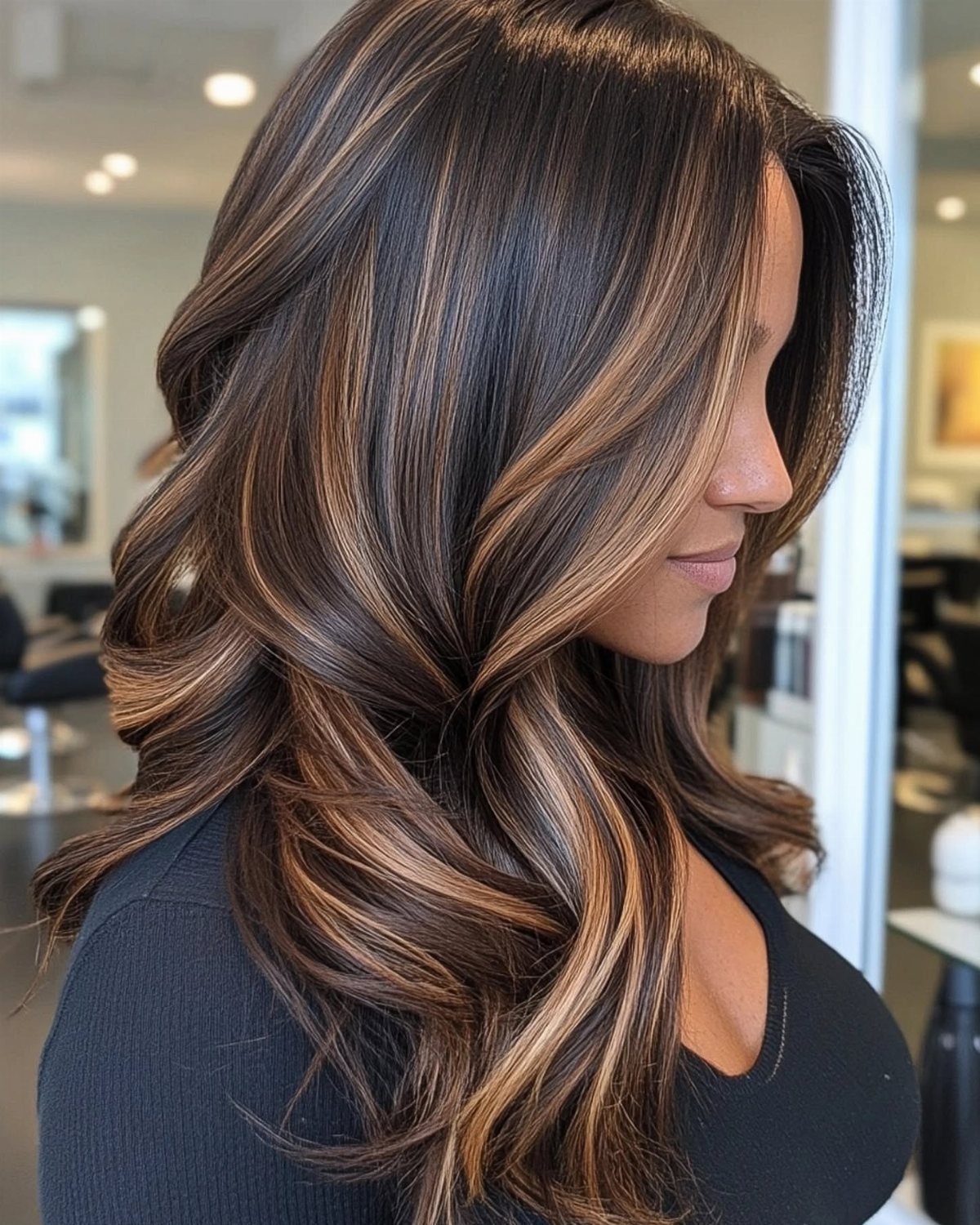
Twilighting pairs a deep brunette base with bright golden blonde pieces, and the gap between the 2 is what makes the gold glow. On curls, the lighter strands spiral through the dark ones and the contrast shifts with every turn.
Bring a photo and ask for golden blonde, not ash, so the highlights stay warm against the brown. I like this for brunettes who want real brightness without giving up their depth.
21. Golden Blonde Ombre Hair
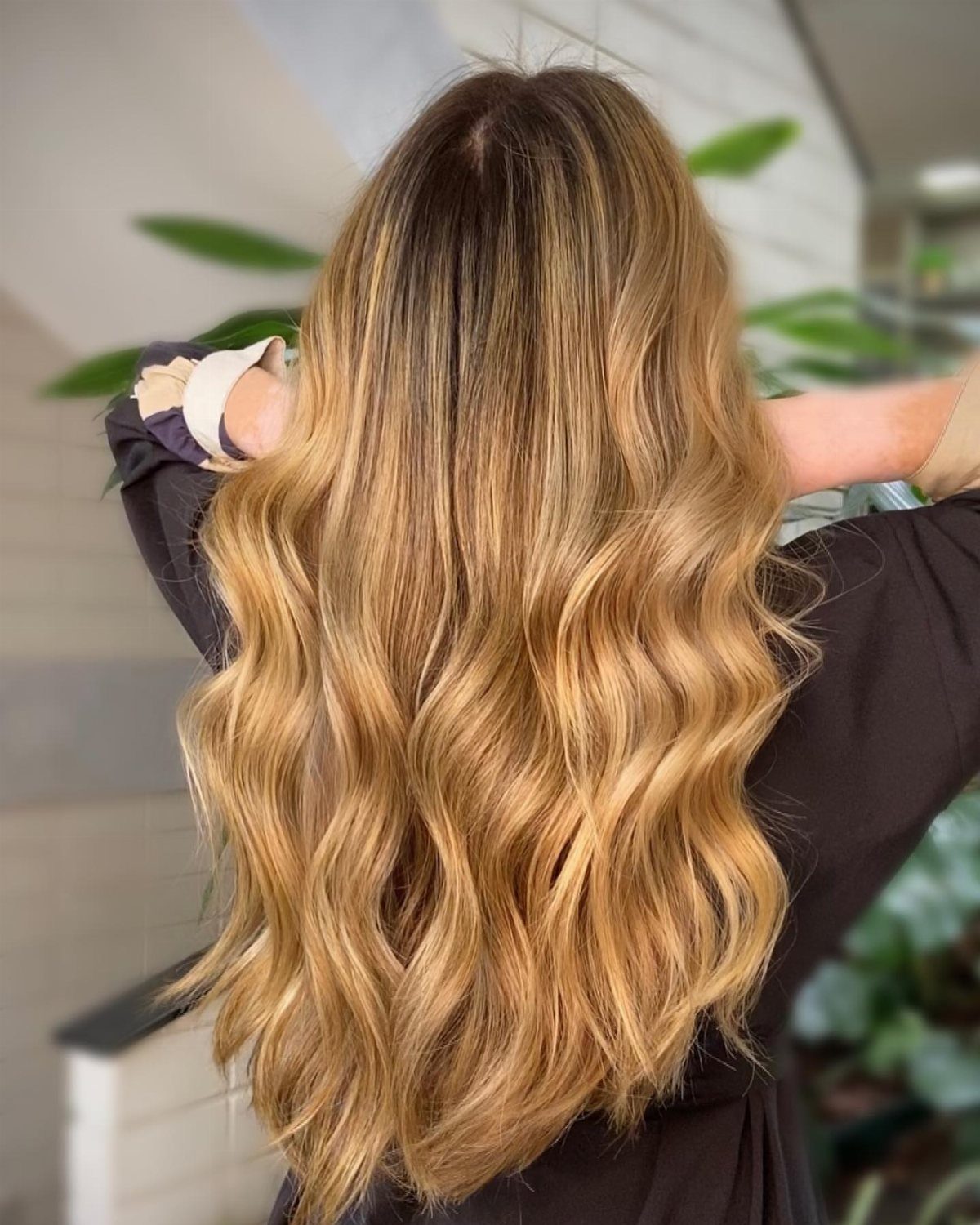
Dark brown roots that fade into golden blonde ends are all ombre means: the color moves from deep to light in one long gradient, with the brightest gold at the tips.
On long, wavy hair the fade stretches out and looks soft.
Ask your stylist where the transition should start, since a lower start keeps more brown. I’d choose it if you want a visible change and a root that never needs a rush appointment.
22. Strawberry Lowlights
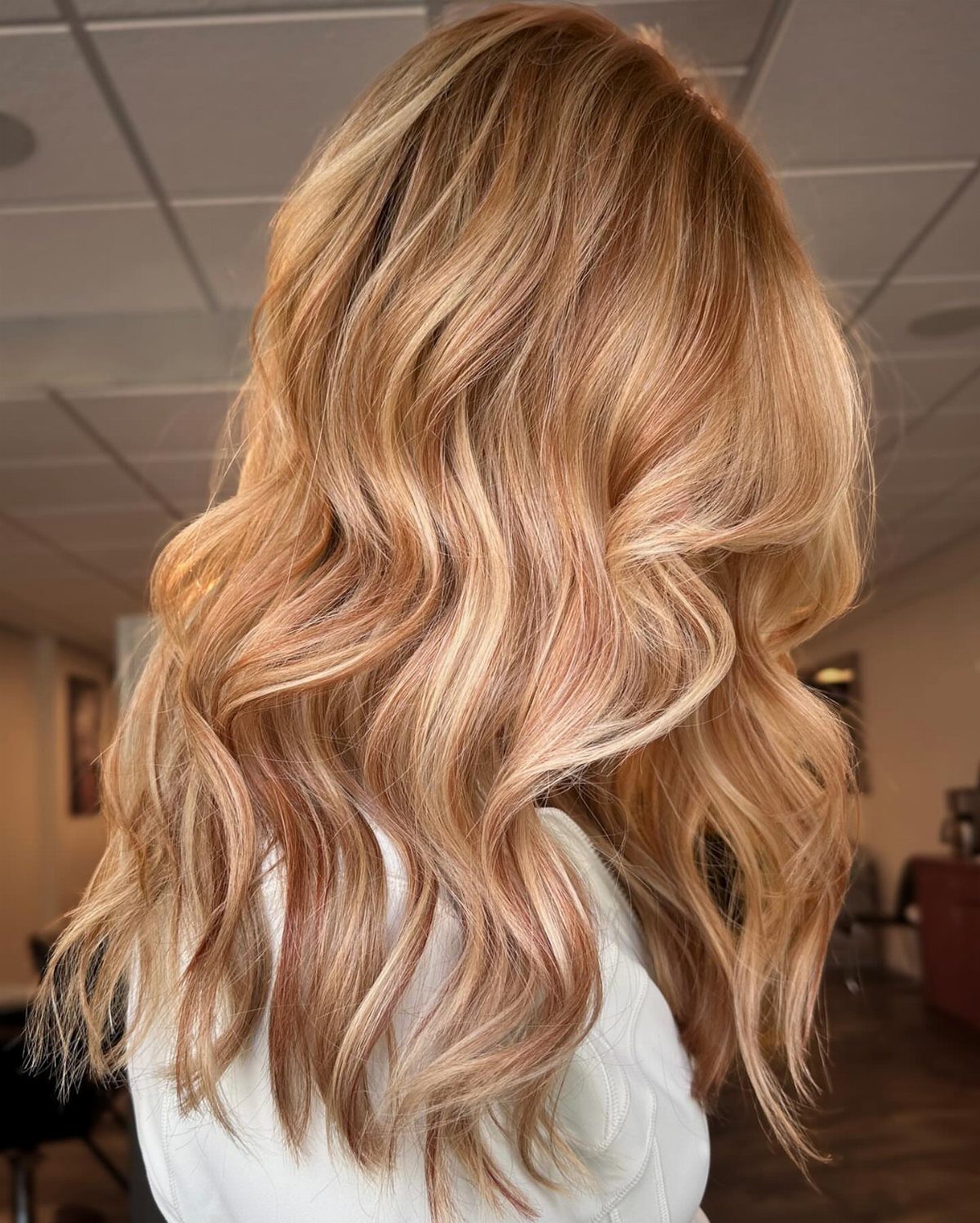
Strawberry lowlights are darker, rosy-warm strands tucked under golden blonde, and they give flat blonde a little shadow and depth. The effect is subtle from a distance and richer up close.
Request strawberry-toned lowlights in a golden blonde base, and ask for them to be thin so they read as dimension, not stripes. I’d go with this if plain blonde looks one-note on you.
23. Warm Beige Balayage
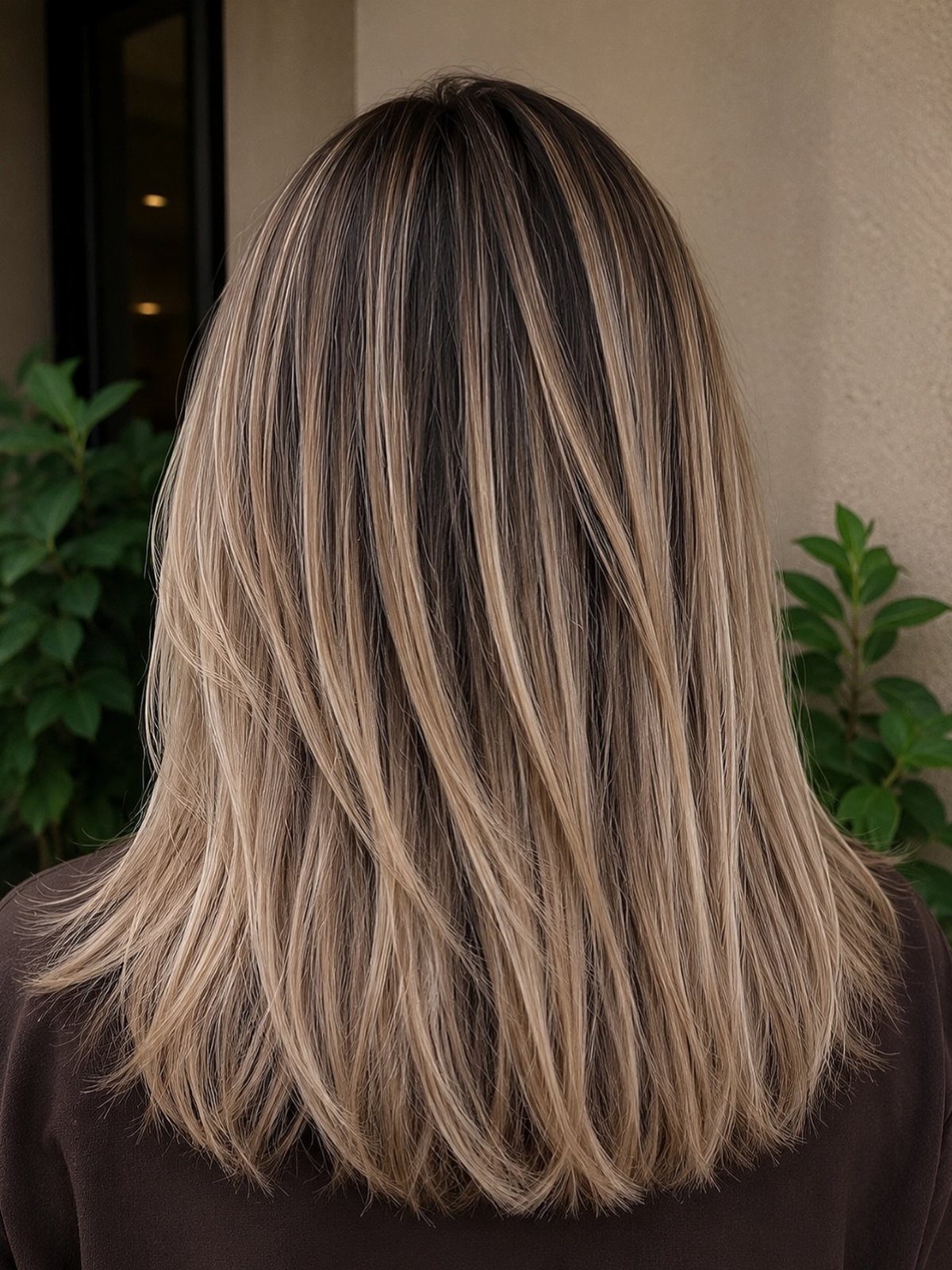
Warm beige balayage softens the line between dark roots and light lengths, with a creamy blonde that sits between gold and neutral.
It can be done through the whole head or only in sections, so the commitment is yours to set.
Ask for a warm beige, not a cool one, and say whether you want it full or partial. I’d start partial; it’s easy to build later.
24. Sun-Kissed Contouring Balayage
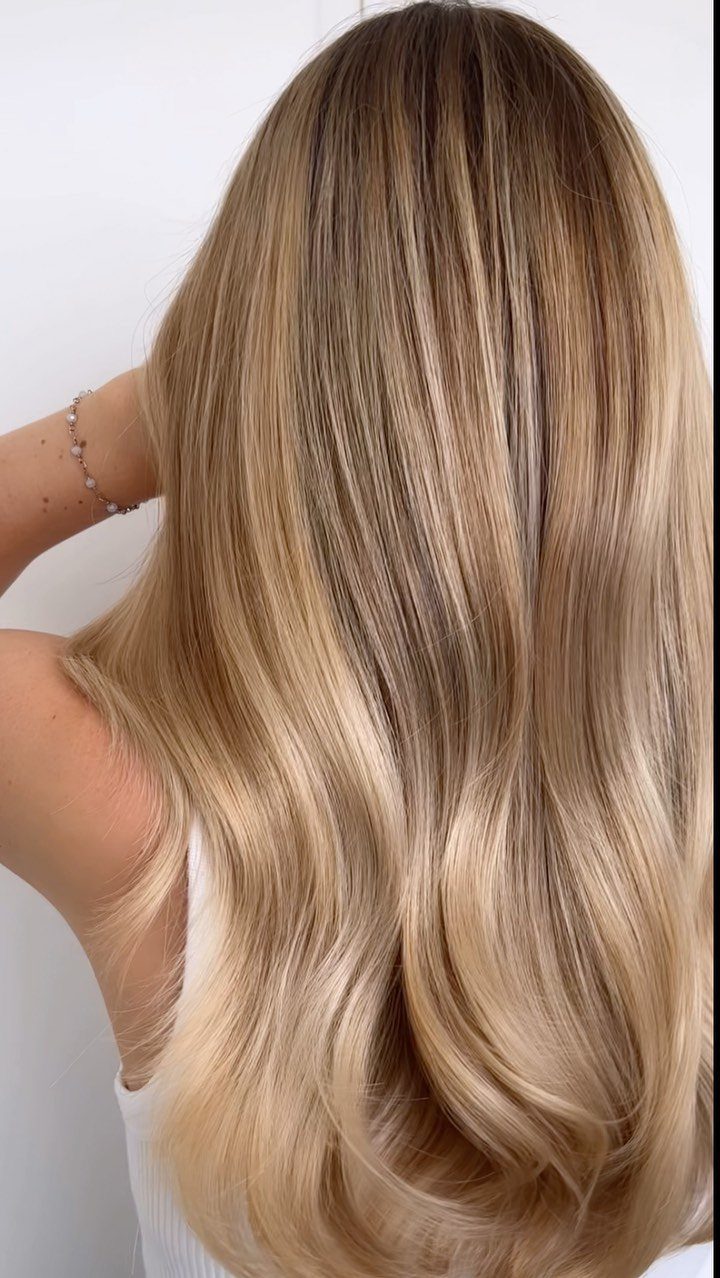
3 blondes work together here: golden, baby and beach tones layered through the lengths so the hair gains shape and definition, and curled ends make that dimension easier to see. Dark roots keep the whole thing grounded.
Name all three tones when you show the photo, so your stylist knows you want a mix and not one flat blonde. Anyone who wants color that shifts with every turn of the head should start here.
25. Light Beige Airtouch
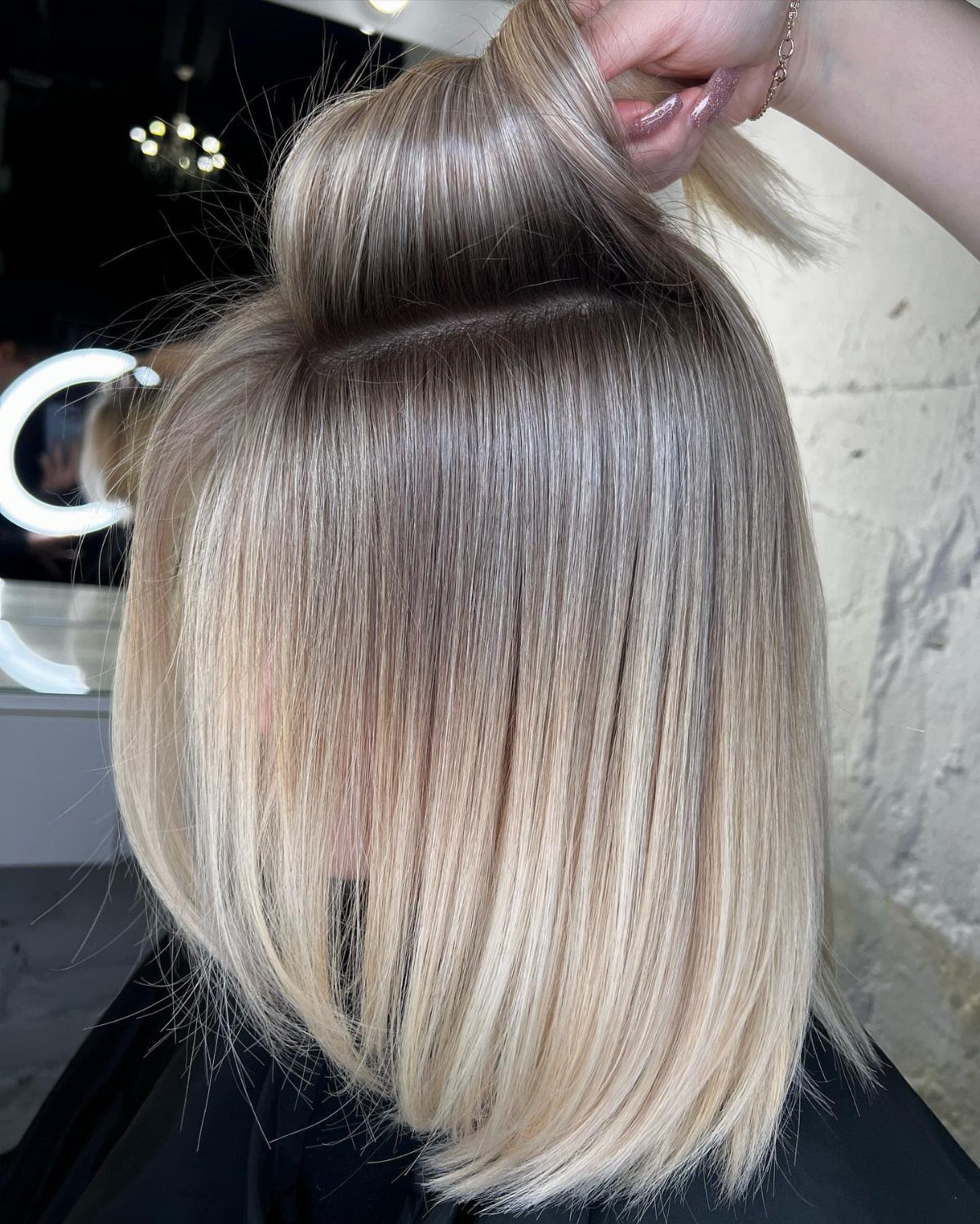
Airtouch blends light beige blonde into dark roots by using air to separate and lift the hair, which leaves a soft, smudged transition instead of a hard line. On a straight bob, that blend stays easy to see.
Name the technique, Airtouch, and the shade, light beige, when you book, and carry a reference photo so the stylist knows how far to steer away from yellow on one side and gray on the other.
I’d choose it if you want the brightness of blonde and don’t want to book touch-ups around a regrowth line.
26. Baby Blonde Highlights
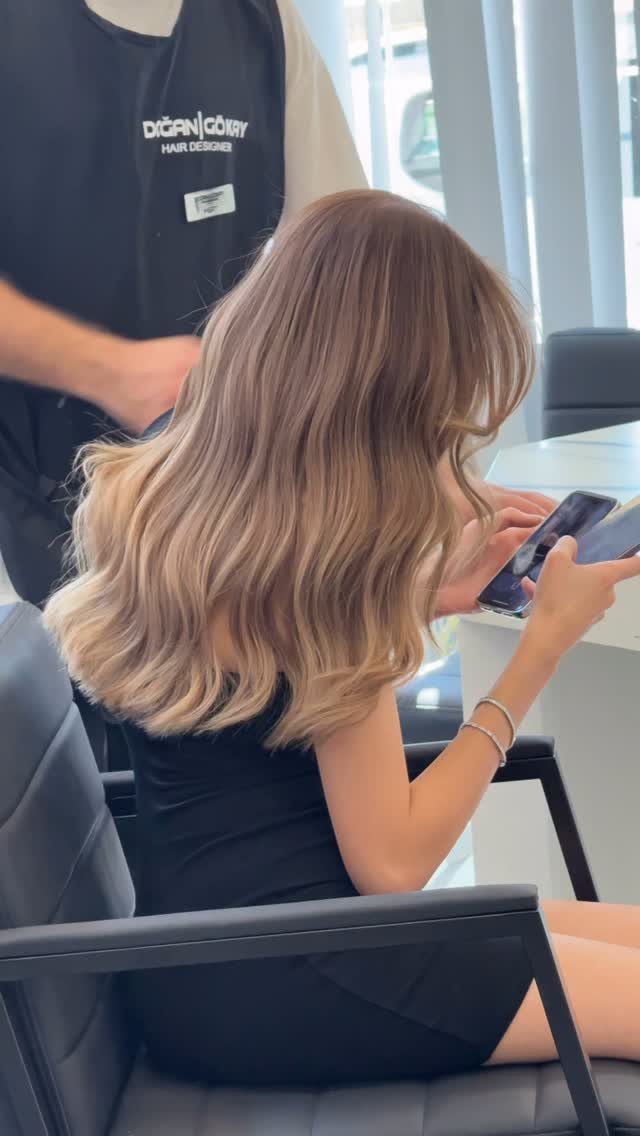
Baby blonde is a pale, soft shade, and the warm version keeps it from looking stark against light brown hair. Wavy texture helps, since the highlights show up in the curves instead of lying flat.
Ask for baby blonde highlights with warm undertones, and say you don’t want them going cool.
Showing a phone photo at the consultation, as the woman here is doing, is the easiest way to make the shade clear. I like this for light brown hair that wants a lift without a big jump.
27. Multitoned Balayage
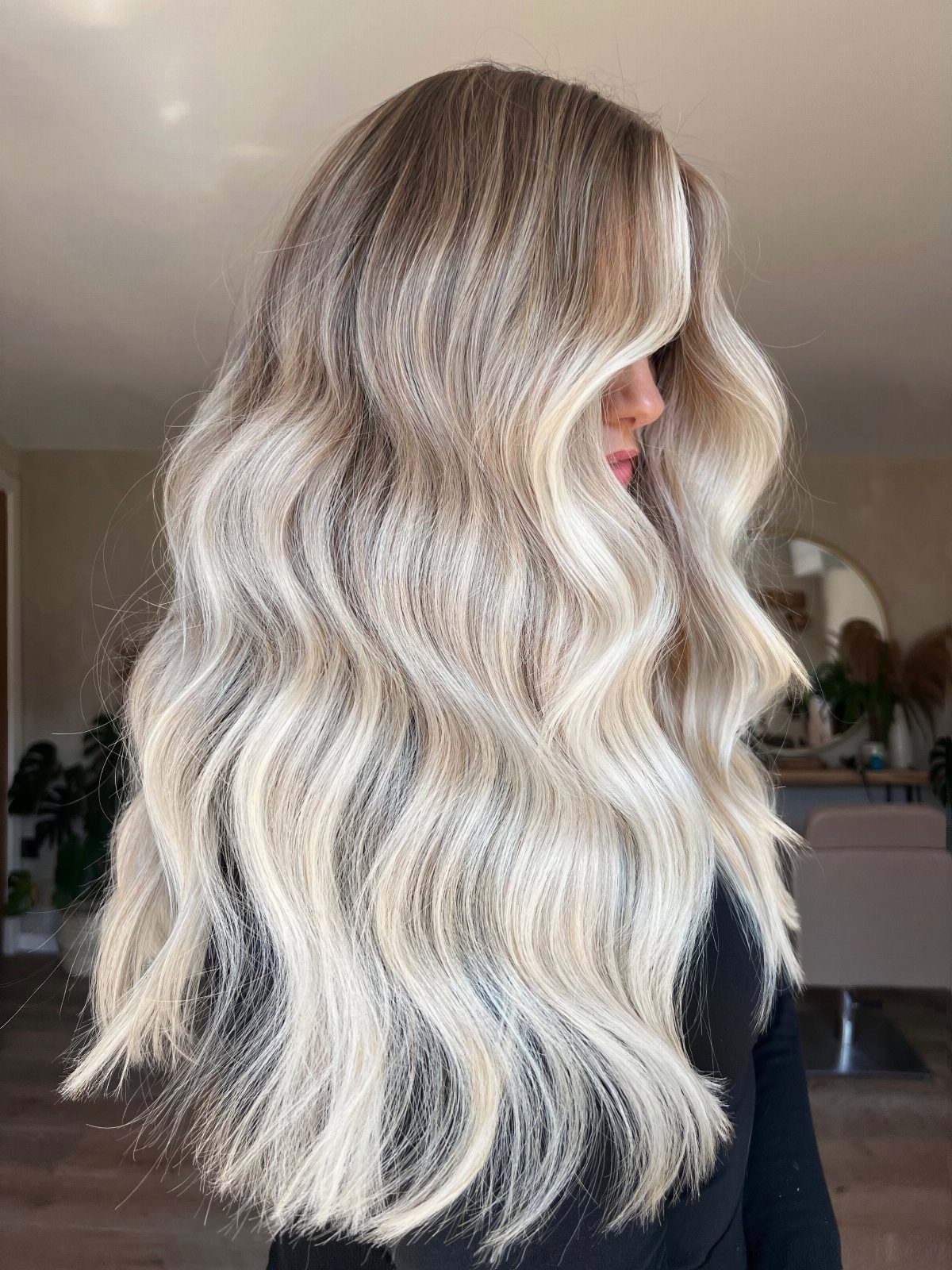
Two or more blondes in one balayage create contrast: pale pieces next to beige ones, all above dark roots. The mix keeps long waves from reading as a single flat color.
Name each shade you want when you book, and say how pale the lightest piece should go.
More tones mean more steps, so expect a longer appointment and a higher bill than a one-shade balayage. I’d pick this if you get bored of plain blonde quickly.
28. Milk Chocolate Highlights
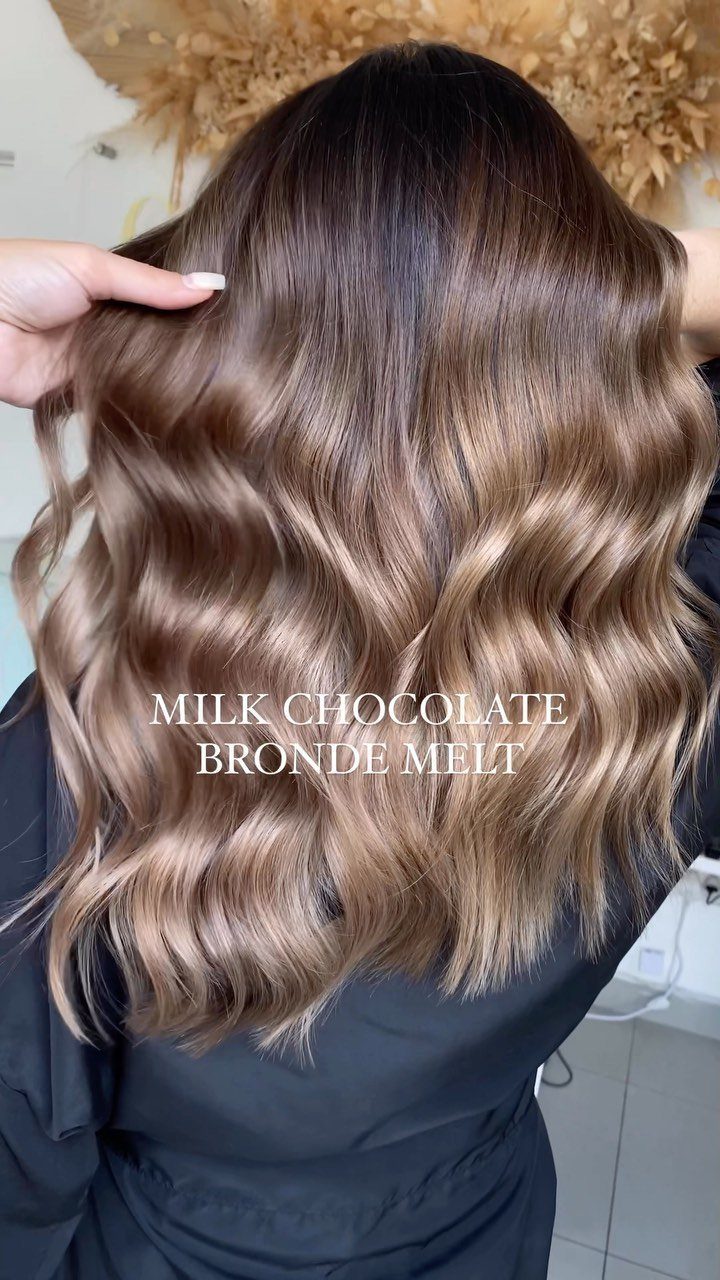
Milk chocolate brown with caramel highlights melts into deep brown roots, so the color reads as rich brunette that catches light instead of a blonde. The wavy texture lets the caramel peek through in ribbons.
Ask for caramel highlights set against deep brown roots, and tell your stylist you want the melt soft, not striped. I’d choose this if you love your brown and only want a little warmth running through it.
29. High-Contrast Golden Ombre
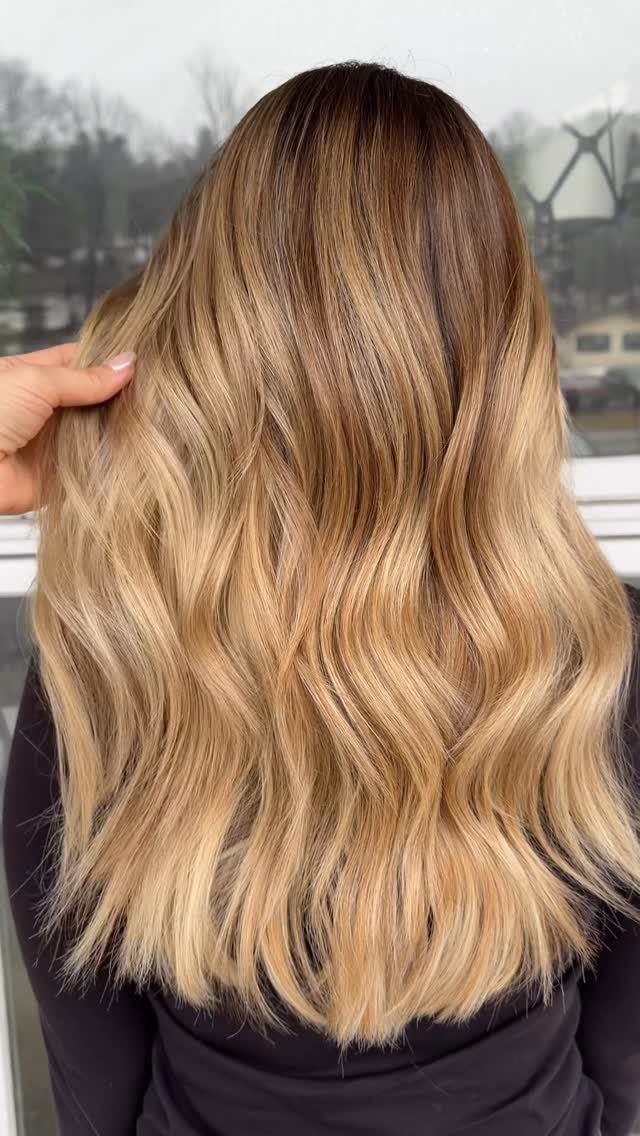
Dark brown roots dropping to golden blonde ends make the strongest contrast in this whole list, and long waves stretch that fade across the full length.
The natural dark base stays dark, so the gold is the only thing doing the changing.
Tell your stylist how high up you want the gold to start; a higher start means more blonde and more upkeep. I’d go for this if you want a bold change that grows out without a visible line.
Choosing Shades for Undertones
Undertone decides which gold works, so settle it before you choose a shade. Warm skin that tans fast and looks better in gold tends to take buttery, honey and caramel tones without a fight.
If you burn easily and silver looks best, you’re cool-toned. Champagne or wheat-gold that sits closer to neutral keeps warmth from clashing.
Pull off silver and gold equally well?
You’re neutral, and most golden shades will work. Just steer clear of anything too yellow or too ashy.
Eye color and your current base matter too.
A good colorist can dial the same golden base up or down to match your depth, from bright honey through to rich caramel. Tell your stylist how the jewelry test came out and let them fine-tune from there.
Color Upkeep and Brassiness
Tone fades faster than color.
Golden blonde holds its best light for 4 to 6 weeks before it dulls, so I’d book a gloss at that mark and a full color refresh every 8 to 12 weeks. Skip the gloss and brassiness is close behind.
Improper toning can cause brassiness too, so ask your stylist how to handle it instead of guessing at home.
For daily care, a color-protecting shampoo is the first purchase. Look for one that neutralizes metals such as copper, which tap water commonly carries and which pull blonde brassy.
Follow with a moisturizing conditioner, and add a mask on days your hair feels dry.
Run heat protectant through before you pick up a tool, and keep a hat or UV spray on hand if you’re outside or near a pool. Between appointments, top up the golden tone so it never drifts far.
Frequently Asked Questions
What color is golden blonde hair?
On the level chart, golden blonde lands around 7–9, and its warm yellow undertone is what gives it that glossy, sun-touched look.
The best versions read as true gold, never flat yellow and never orange. It can lean toward bright honey or deeper caramel, depending on your skin tone and base color.
What color hair is considered blonde?
Blonde is a family of shades rather than one color.
It runs from pale baby blonde and platinum through creamy vanilla and beige to sandy, wheat, honey and golden. The tone, whether icy, neutral or warm, is what separates one from the next.
How do you describe blonde hair in writing?
Name the shade first, then add its tone and how it looks. Wheat blonde, for example, is warm and grainy, somewhere between golden and beige, while vanilla is soft and creamy, between beige and yellow-gold.
Which is lighter, honey blonde or golden blonde?
Of the two, honey blonde usually reads lighter, with a buttery yellow glow.
Golden blonde is the more flexible pick: it holds up over a darker base, and brown lowlights add depth while the shine stays. If you want golden to look richer, caramel woven through it keeps it from going flat.