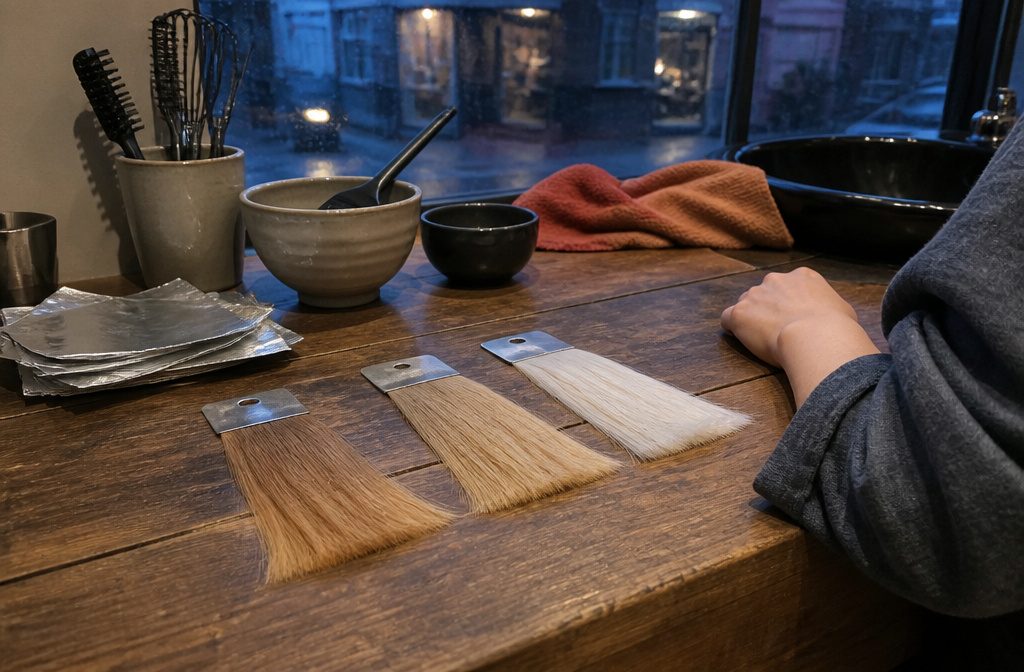
Blonde hair color is any shade from level 6 dark blonde to level 11 platinum, sorted into cool, neutral and warm tone families, and lightness and tone are separate choices.
The condition is your starting hair: dark hair lifts only 2–3 levels per appointment, and icy platinum needs undamaged hair.
Platinum and Icy Blonde
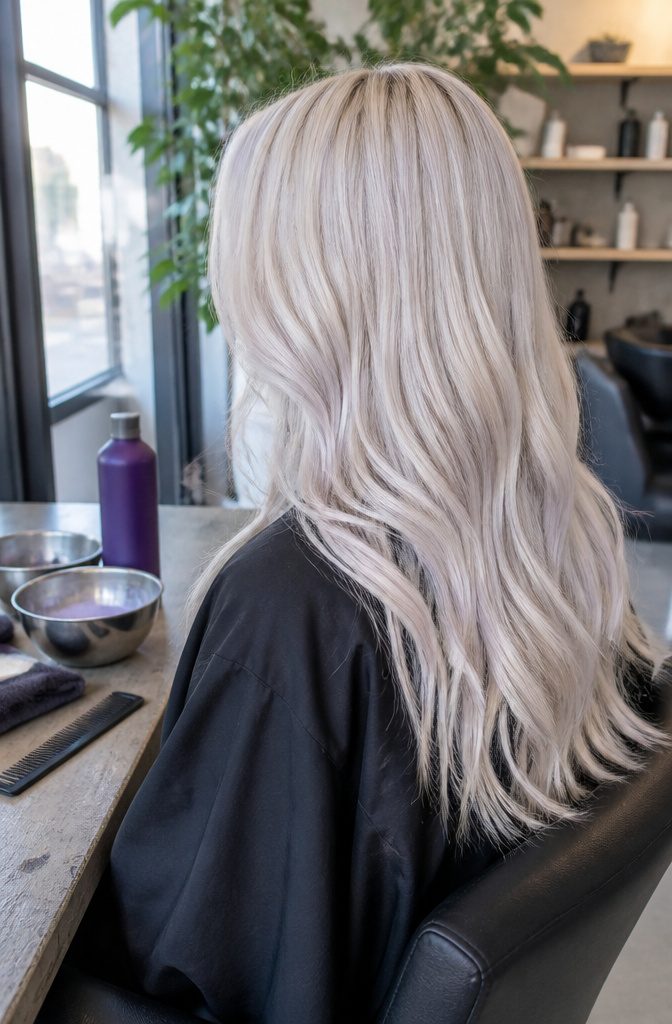
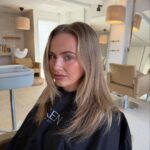
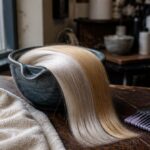
Platinum and icy blonde sit at the top of the professional color scale, level 10 to 11, the palest a colorist can lift hair without bleach alone.
This is white blonde with silver, gray or violet qualities, and it removes enough warmth that the result can read metallic.
The grey and violet undertones make icy blonde suit cool skin tones especially well, since the shade cancels pink rather than adding it.
Getting there takes lifting hair to pale yellow before any toner goes on. That means a few rounds of color if you start darker than level 8, and the process only works when hair is strong enough to take it.
Unfortunately, not everyone can achieve this level of platinum. If there’s a previous color or existing damage, you would need a wig to achieve this.
— Allure
If your hair is naturally light and in good condition, ask for a consult.
If it is not, the damage and breakage are real. Once you reach it, expect upkeep every 4 to 6 weeks and purple shampoo between visits to hold the tone.
Ash and Mushroom Blonde
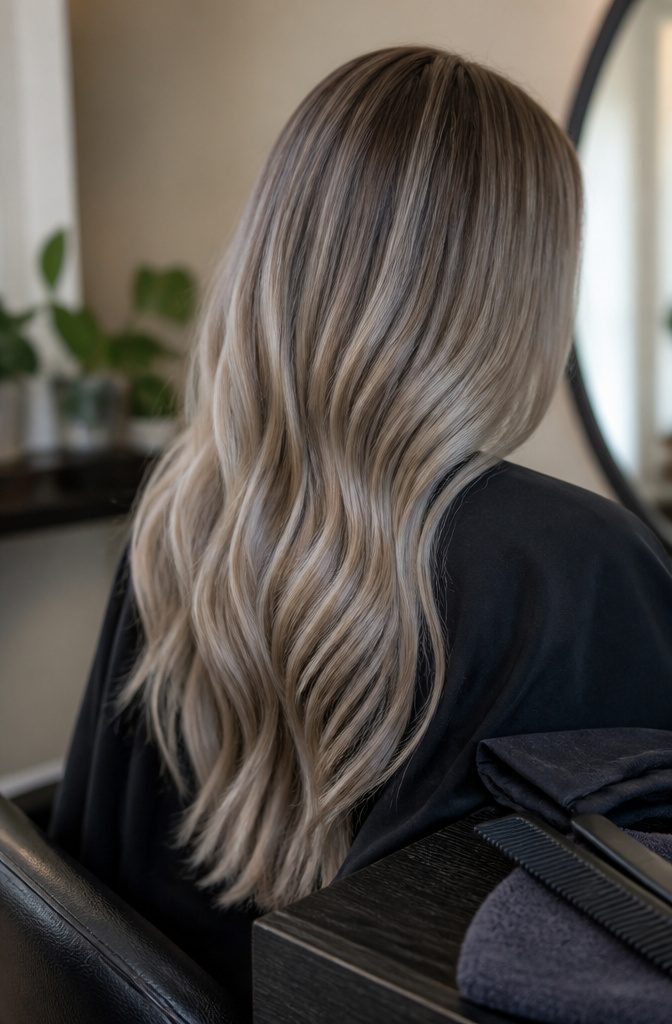
Ash blonde sits squarely in the cool family, reading gray or slightly violet rather than gold.
The smokier names—mushroom, taupe, gunmetal—all point the same way: they mute warmth, often aggressively, which is exactly why they work best on cool and olive skin tones.
Put ash on warm undertones and the contrast can wash you out, though a well-placed root shadow or softer beige version sometimes makes it work anyway.
The distinction between ash and beige matters more than the names suggest.
Ash leans grayer, sometimes with violet pigment added, and it neutralizes brass hard. Beige keeps a touch of warmth and reads softer, closer to taupe than steel.
If your hair pulls warm fast or you have graying hair you want to blend rather than cover, ash becomes a maintenance rhythm rather than a one-time lift.
The cool tone washes out first, so expect a gloss every four to six weeks to hold the gray.
Light ash blonde goes whiter, almost platinum with an ashy tint, and looks best on lighter complexions with lighter eyes.
Darker ash blonde works beautifully on fair-to-medium cool skin and feels more refined than golden blonde, though you pay for that edge in upkeep.
Beige and Champagne Blonde
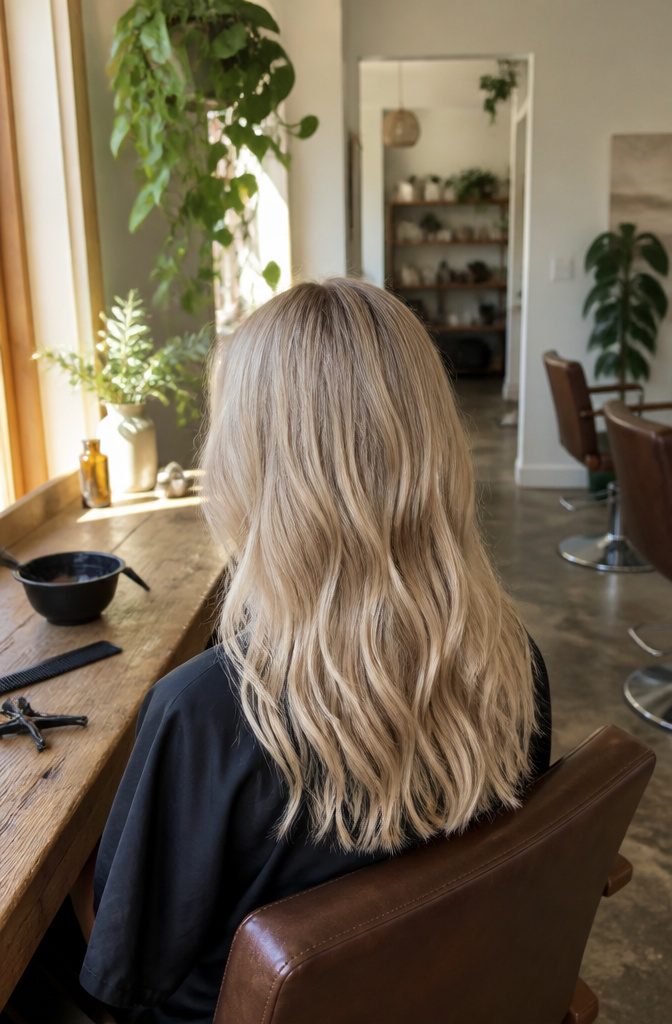
Beige and Champagne Blonde
Beige blonde sits right in the middle of the tone spectrum, blending pale gold with just enough ash to keep it from reading warm or icy.
Champagne blonde does the same thing but leans slightly softer, with a hint of pearl or cream woven through.
Level 9 neutral to beige blonde is the most requested salon shade, and the reason is simple: it flatters nearly every skin tone without fighting your natural coloring the way a fully ash or deeply golden blonde can.
Neutral blondes fade gently.
They don’t turn brassy orange the way honey blonde does, and they don’t wash out as fast as ash. If you have neutral undertones or you’ve never gone blonde before, this family is the safest starting point.
Beige and champagne also layer beautifully over darker natural hair without requiring constant root touch-ups, because the contrast stays soft as it grows.
Sandy and Wheat Blonde
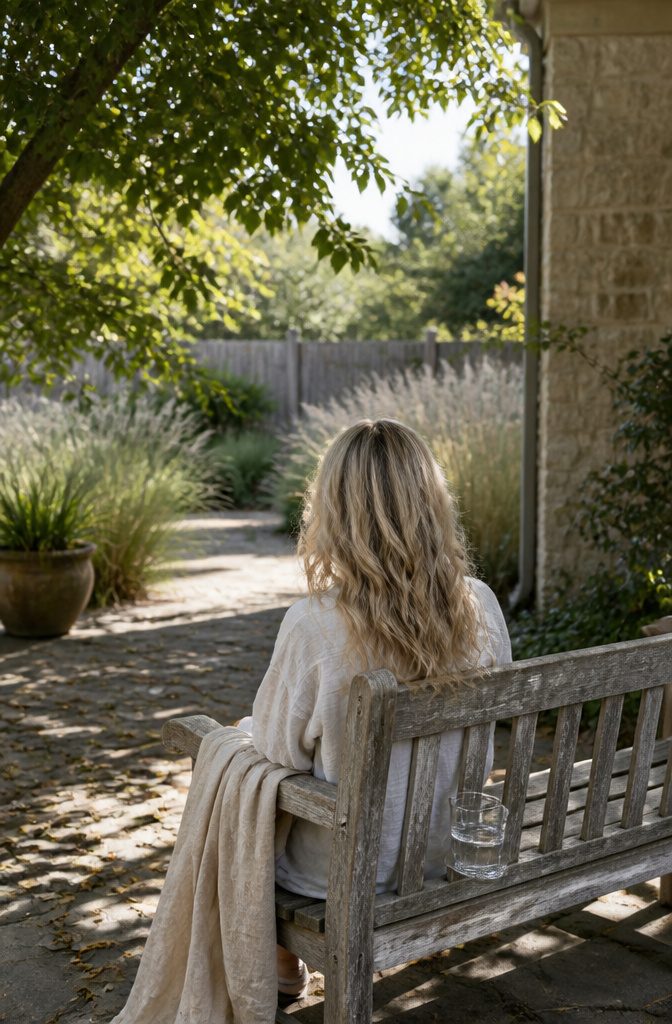
Sandy blonde sits in that beige-and-gold middle ground where the color reads less like a deliberate dye job and more like hair that spent a summer outdoors.
The base is usually a dark or medium blonde with enough neutral beige to keep it from tipping orange, and the warmth comes through as subtle gold rather than brass.
In direct daylight the blend shows up: lighter pieces catch the sun and the cooler undertones keep the whole thing grounded.
Movement matters here because the color is built from variation rather than one flat tone. Tousled or textured styles show off the different shades melting together, which is why this works so well for beach waves or anything with body.
It pairs best with medium or warm skin tones, and the muted quality means it grows out without a hard line.
Dirty and Dark Blonde
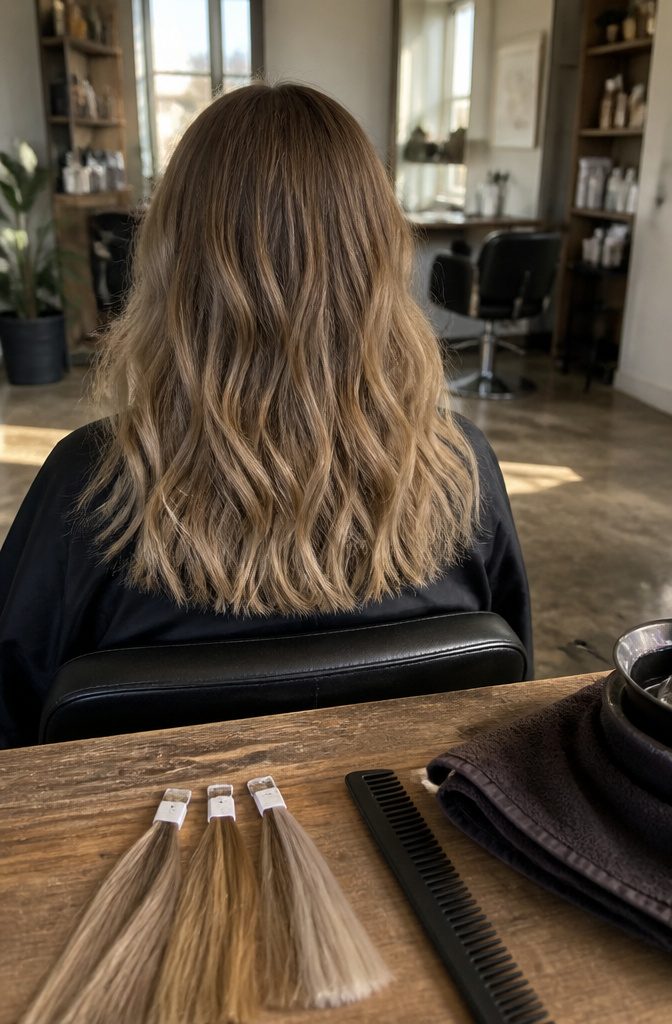
Dirty, dishwater and muted blondes all sit at levels 6 to 7, the dark to medium end of the blonde scale, and L’Oréal names 30 dark-blonde variations.
The shared look is beige, ash or wheat over a brown base, which is why it reads as lived-in rather than styled.
For low upkeep, I’d pick the beige-ash versions, and balayage or ombré highlighting is the usual way to get there. Green or brown eyes with medium-toned skin suit it well.
Dark blonde runs both warm and cool.
Honey and caramel versions flatter warmer skin, while dark ash and mushroom flatter cooler skin. What separates it from light brown is the underlying pigment: dark blonde leans golden or yellow, and light brown leans reddish or bronzy.
Golden Blonde
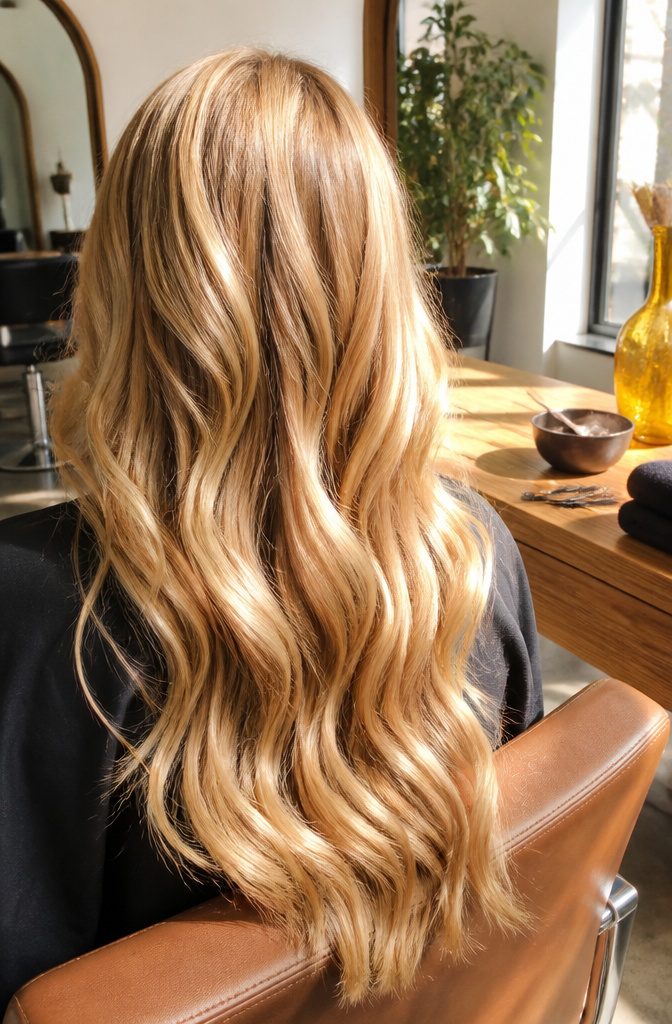
Golden blonde is the brightest member of the warm family, a multidimensional blend of butter, gold and honey. Honey and butter each work as a single note; golden plays them together.
Its undertones carry hints of yellow, red or orange, so it flatters fair, warm complexions and lighter eyes like pale blue or hazel. For the sun-kissed version, I’d ask for balayage.
A solid, glossy gold looks more polished, but it shows every bit of root growth, so book a touch-up around 6 weeks. Once the gold fades, the dimension fades with it, and what’s left reads flatter and less luminous.
Honey Blonde
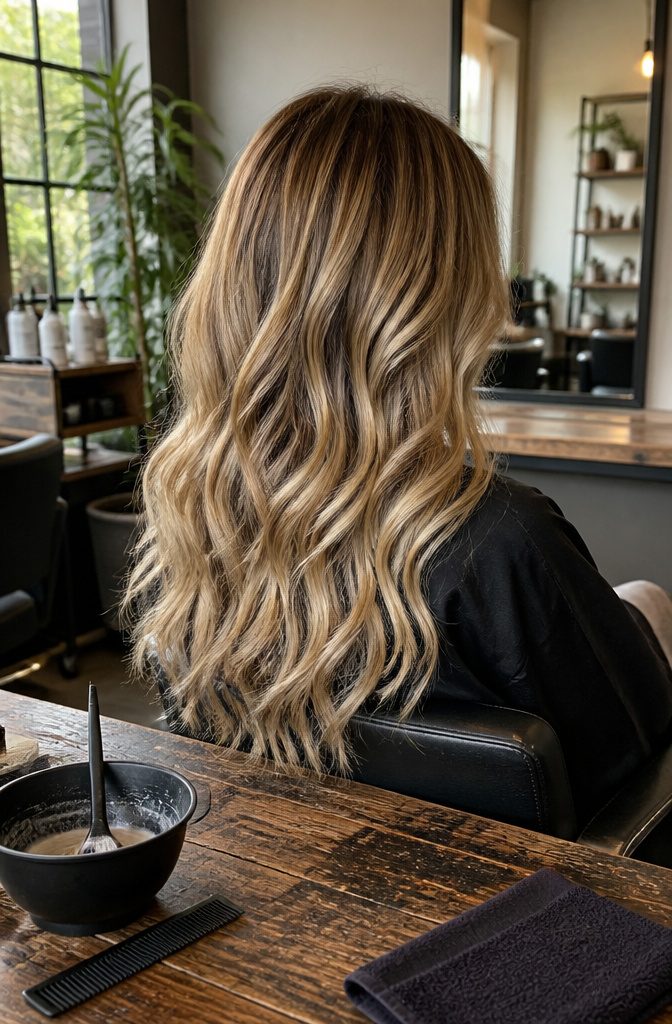
Honey blonde carries warm gold with streaks of beige, honey and brown, and sometimes a trace of red. The darker roots blend the different tones together, so the overall effect reads as dimensional rather than flat.
Sydney Sweeney’s version combines gold, beige and almost-white strands, while Serena Williams wears the warm honey placement on darker roots for contrast that flatters deep skin.
This shade works across a wider range of complexions than most warm blondes.
It suits light to olive to dark skin, though sources split on where to draw the line: warm honey on naturally light skin may bring out unwanted red or olive undertones, but medium skin tones with brown or black eyes are the sweet spot.
The brown lowlights keep it from sliding into orange, and the beige elements cool it just enough to stay balanced.
A gloss between appointments keeps the warmth from shifting brassy. Honey blonde should look radiant without drifting into strawberry territory.
Buttery Blonde
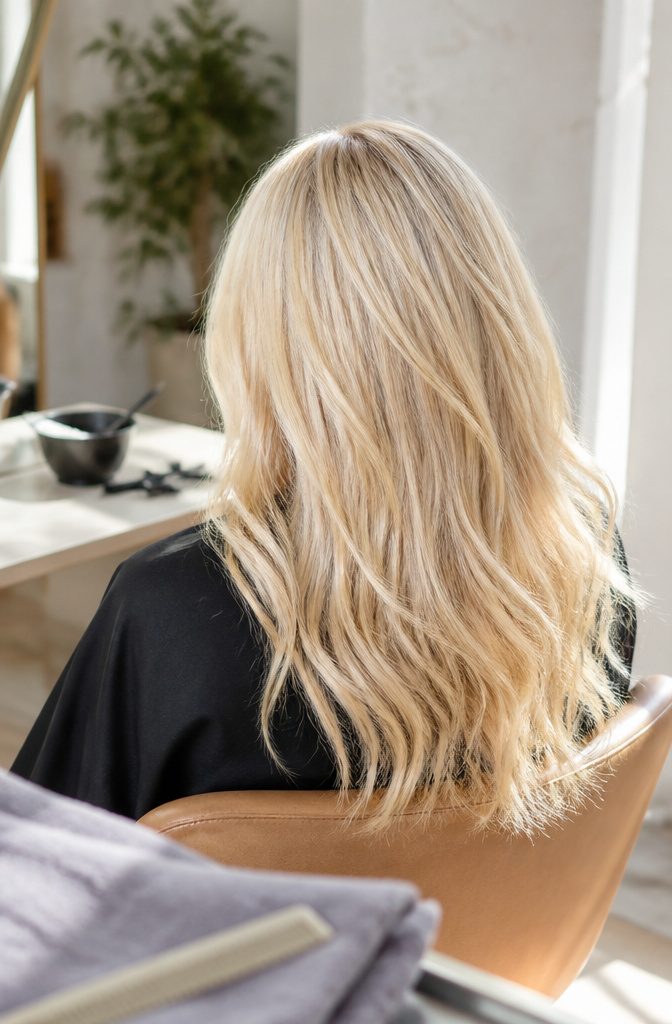
Whipped butter is platinum with a slight yellow cast, warmer than a traditional platinum but still far paler than anything called golden. Buttery and buttercream blondes carry splashes of honey-yellow that stay soft and pale instead of reading as honey.
Whipped cream swings cooler and whiter, and for darker hair it’s the version I’d pick: ask for cream and butter balayage over your roots. It suits medium to dark skin and brown or black eyes.
Buttery shades flatter light to medium, pearly complexions, and whipped butter makes bright eyes stand out on fair skin. Cream tones need regular toning, or they slide from creamy to plain yellow.
Caramel and Butterscotch Blonde
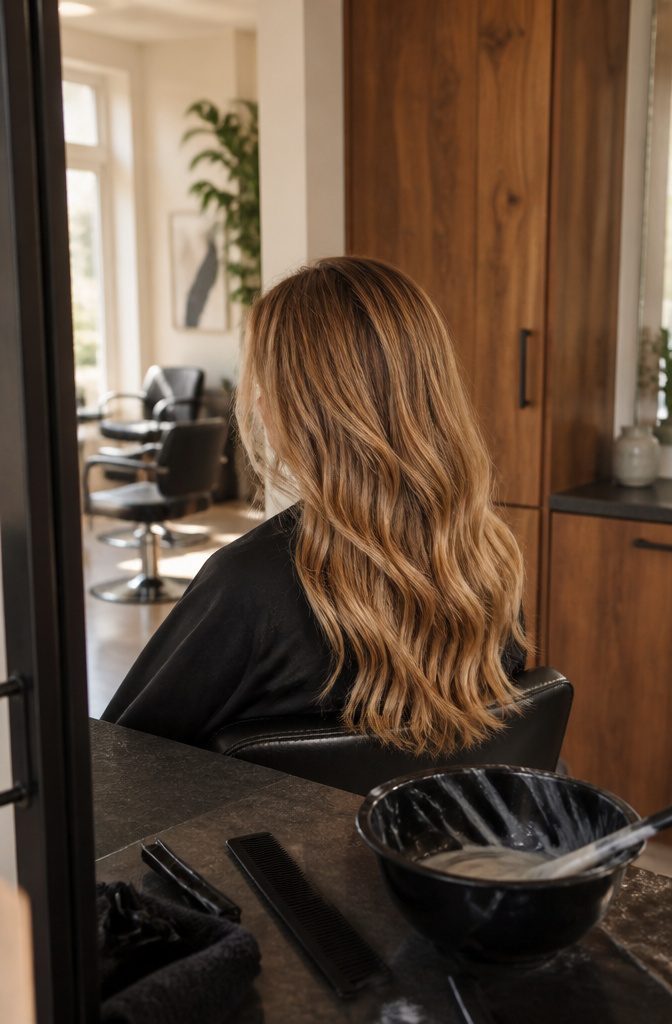
Caramel blonde is a light golden brown, sometimes a dark iridescent blonde, and it sits closer to a brunette’s natural color than any other blonde.
That makes it the gentlest first move: dark hair generally lifts only 2–3 levels safely in one appointment, and caramel stays inside that range. Butterscotch is the same family with a sunnier gold.
For the most natural result, I’d ask for a dark golden blonde base through the mid-lengths and ends, with pale highlights around the face. Darker roots mean no harsh regrowth line.
The shade reads most natural on medium to dark skin tones. On fairer skin, warm tones against dark roots can pull out red or olive undertones, so start softer there.
Bronde and Chocolate Blonde
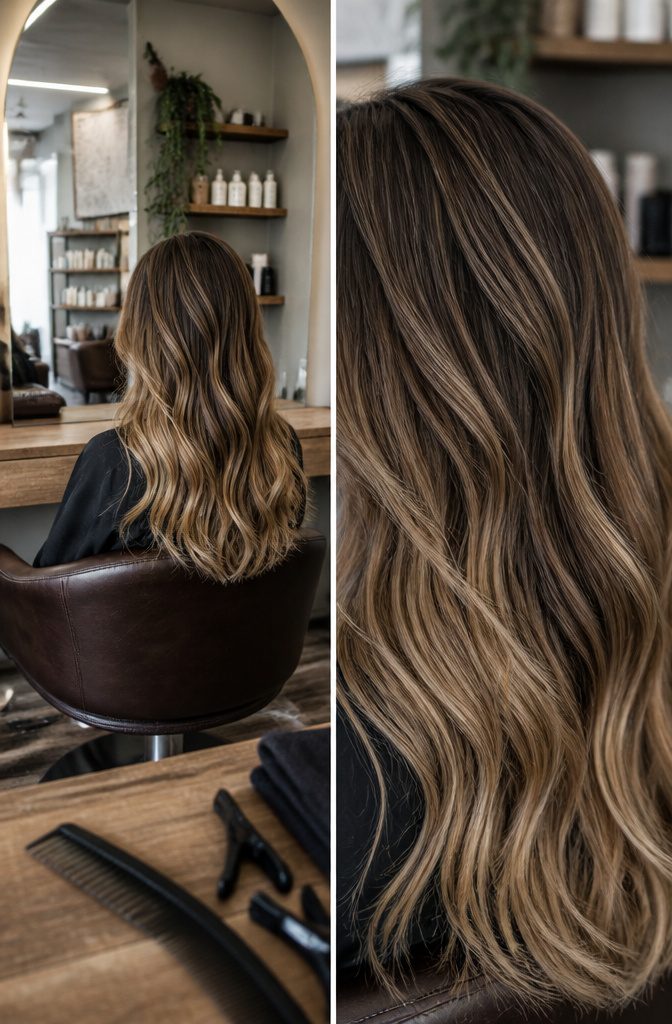
Bronde sits at roughly level 7, with blonde through the mid-lengths and ends over a deeper base. It’s the lowest-commitment way to be blonde, because regrowth is soft and the salon visits stretch out.
Fair and medium complexions with gold, light brown or blue eyes wear it well, and olive skin does best with dark blonde and hints of light brown.
Chocolate blonde is the richer cousin, a darker caramel blonde with golden highlights that flatters deeper skin tones most.
Skip chocolate shades with too much white, platinum or orange, which look unnatural on darker skin. For a safe pick, I’d go sandy bronde, which suits nearly everyone except very cool skin tones.
Strawberry and Copper Blonde
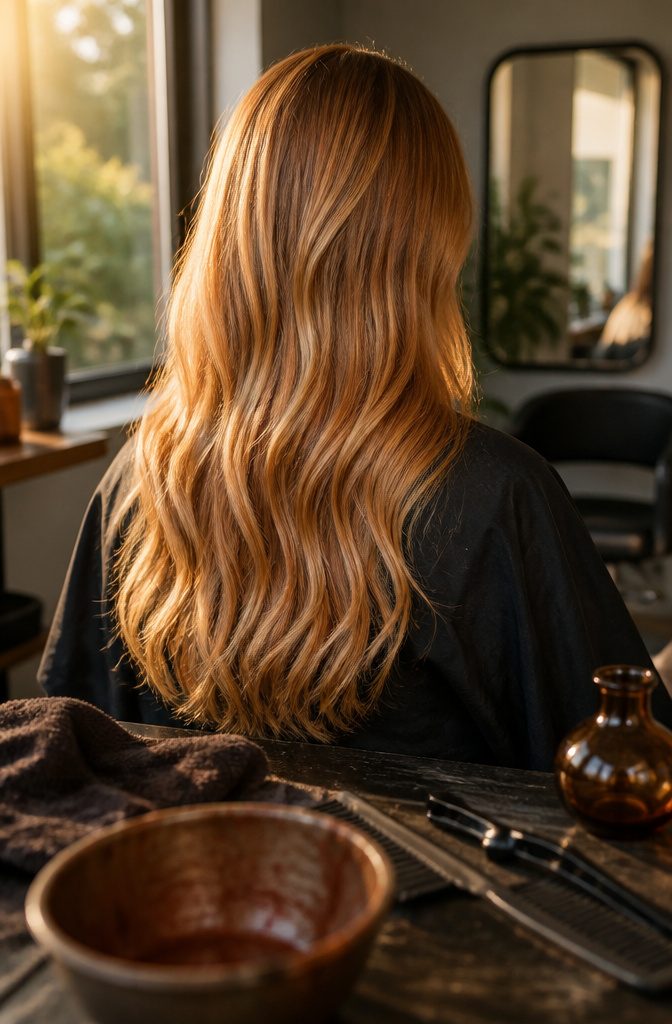
Red is the first pigment hair shows as it lightens, followed by orange, so strawberry, copper, auburn, cherry and apple-cider blondes sit right next to the natural lifting stage.
A level 6 dark blonde already shows red-orange, and level 7 shows orange. That makes these tones a gentler route for brunettes: fine coppery highlights over a neutral dark blonde base read as warm, not brassy.
Copper blonde is a luminous golden shade with amber undertones that suits brown or black eyes and deeper skin. Strawberry works best on fair skin and light eyes, and it’s easiest from a lighter base.
Apple cider, with subtle babylights and a few richer red streaks, flatters blue or green eyes. Red-leaning tones fade faster than other blondes, so I’d plan on more frequent color refreshes.
Silver and Metallic Blonde
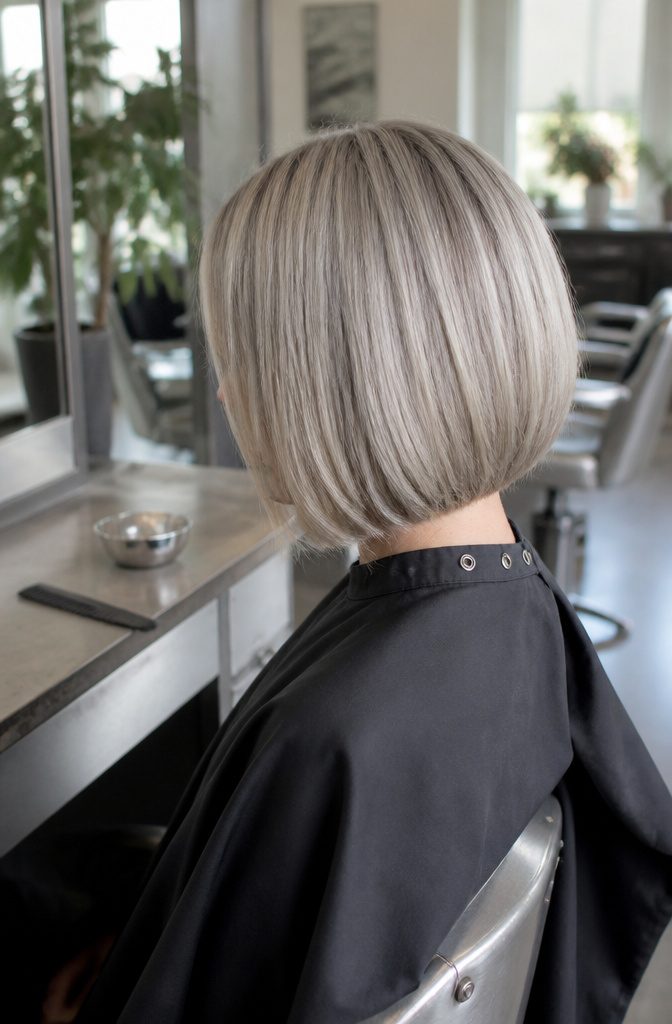
Platinum chases the bombshell look, while silver blonde chases metal.
They overlap because silver blonde is a cool, ashy shade, but the gray in it is what makes it read as sterling. Icy blonde gets a similar metallic look from gray and violet undertones.
Gunmetal goes furthest, laying silvery-gray over dark blonde, and it suits cool undertones best with sleek, straight styling. For a basic bob, a silver-gray tint is the fastest modern update I’d pick.
Complexion decides whether it works. Silver blonde flatters lighter skin and light blue or green eyes most.
On darker complexions or eye colors, ask for some warm honey tones so it doesn’t wash you out. It also blends well with naturally graying hair.
Natural and Light Blonde
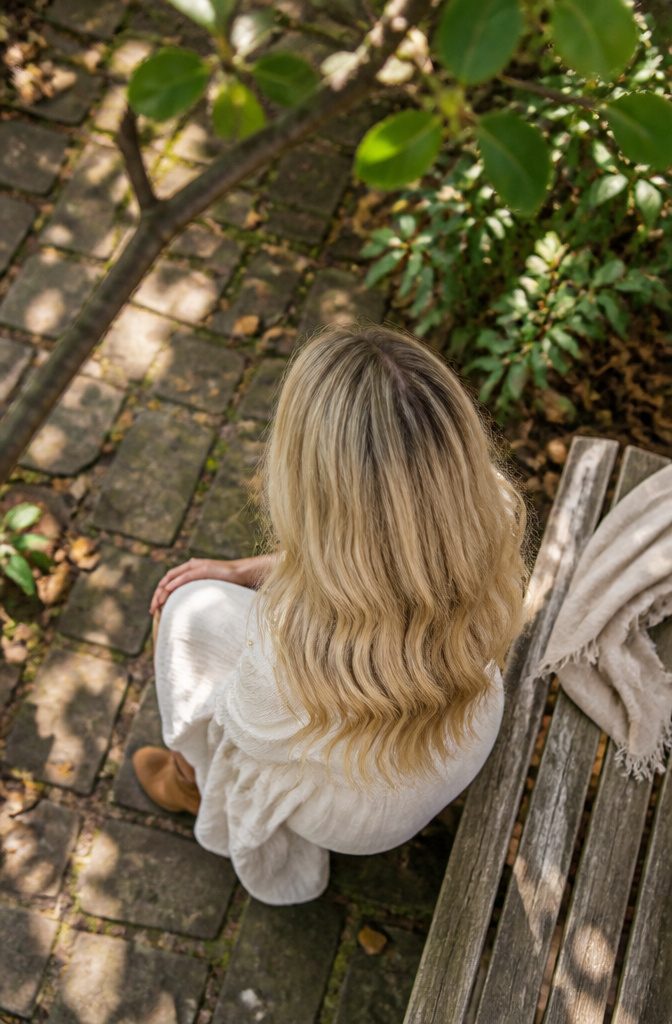
Only about 2% of people are naturally blonde, Allure reports. Natural blonde comes from more pheomelanin and less eumelanin, while artificial blonde relies on hydrogen peroxide or ammonia to break down the pigment already there.
Levels 6 to 7 are dark to medium blonde, and dark blonde carries golden or yellow pigments that can lighten in the sun, unlike light brown, which runs richer and more reddish or bronzy.
Levels 8 to 9 are light to very light blonde, the most requested range in the salon, and where I’d start if you want clearly blonde without the upkeep of levels 10 to 11.
Your starting level and color history decide how many sessions it takes, not the photo.
Balayage and Painted Blonde
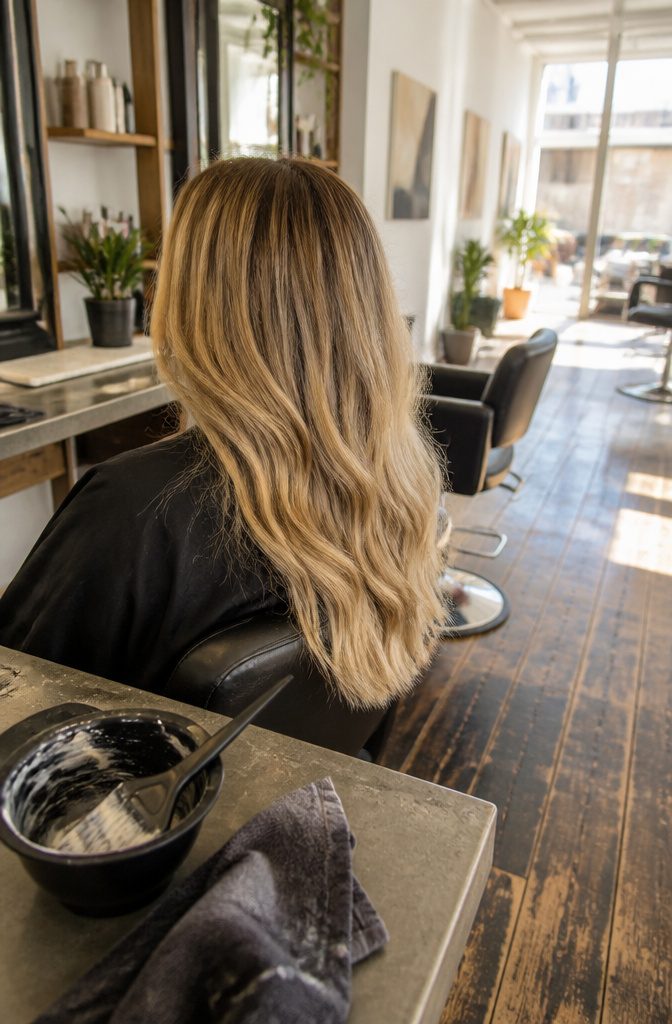
Balayage is lighter color painted on by hand, mostly through the mid-lengths and ends, so the root stays closer to your natural shade and the brightness builds toward the bottom.
A dark blonde base with honey pieces on top is the classic version, and brunettes can push the gradient further by asking for brighter strokes flaring toward the ends and around the face.
Plan on a salon visit every 12 to 16 weeks, the longest gap of any blonde style.
That’s because there is no sharp line at the root. New growth blends into the painted pieces instead of showing a stripe, which is why I’d pick balayage over all-over color for anyone with an unpredictable schedule.
Highlights, Babylights and Money Pieces
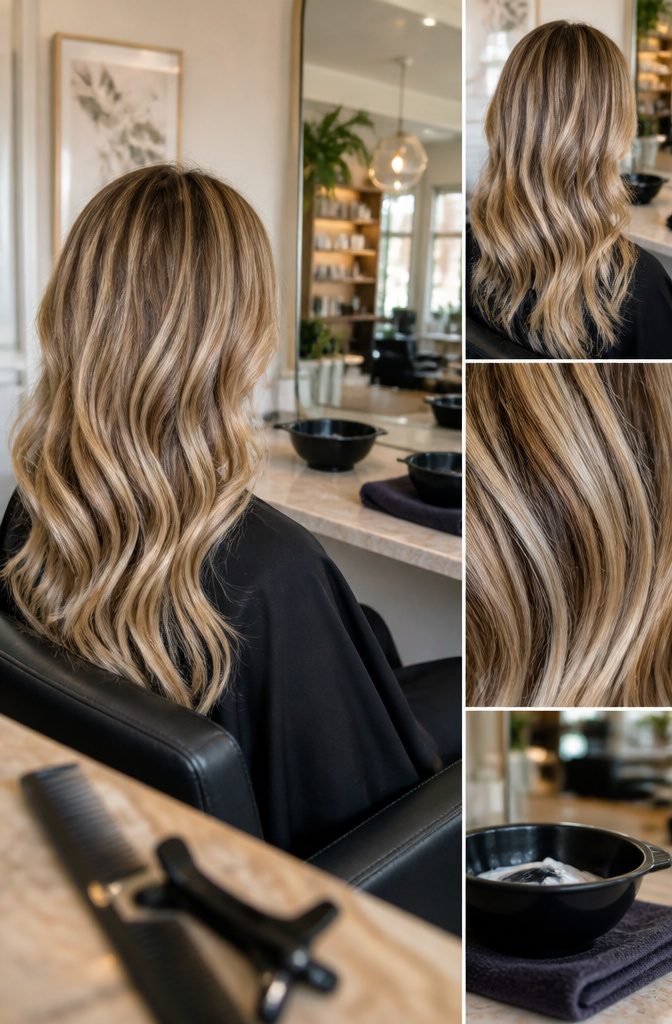
Highlights are the broad category: lighter strands woven through the hair for brightness. Babylights are the same idea at a finer scale, super-fine pieces that mimic sun-kissed strands, and on a dark blonde base they give gentle illumination and texture.
For softness, I’d pick them over standard highlights. Lowlights go the other way, adding darker strands for depth.
A money piece suits anyone who doesn’t want a full head of color: bright, light blonde panels frame the face against a dark blonde base and draw attention to your features.
Any partial highlight service needs a visit every 8 to 10 weeks, with a gloss in between to hold the tone.
Ombré and Color Melt
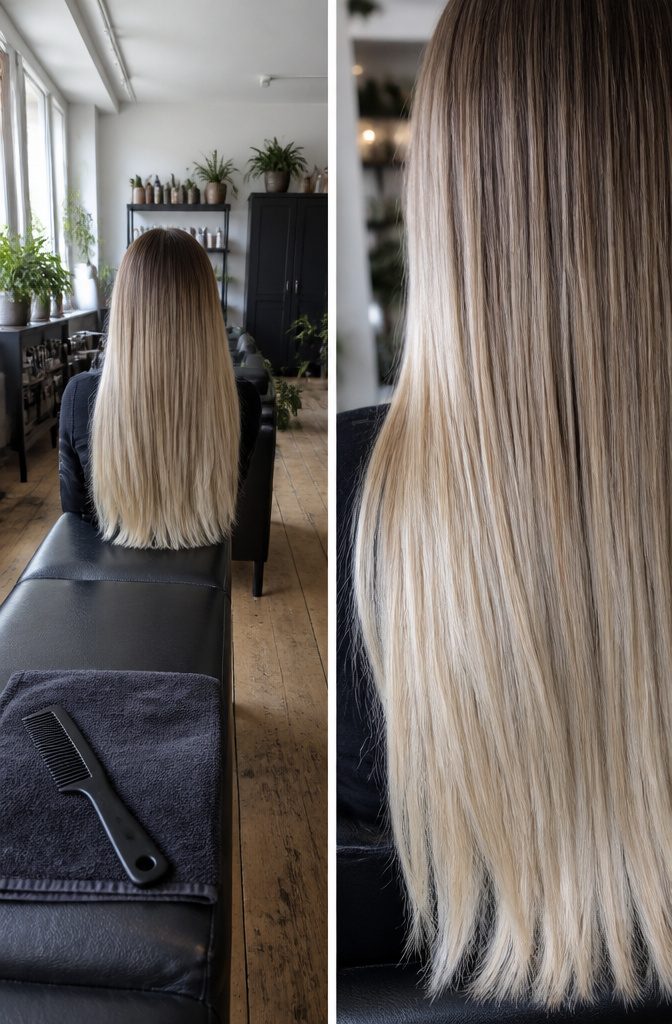
Ombré moves from a deeper root to lighter ends, and the contrast is the part you choose.
Dark blonde at the root fading to pale wheat at the ends looks natural, and because the roots stay dark, there is no regrowth line to chase.
Sombré is the quieter version, with base and lighter tones close together, so the movement is gentle and the transition never turns sharp. A color melt blurs it further: fawn roots slide into oatmeal ends with no visible break.
I’d pick a melt over classic ombré for long hair, since gradual color gives long lengths interest. All three grow out softly, though the sharper the ombré, the more its band shows as it climbs.
Rooted and Lived-In Blonde
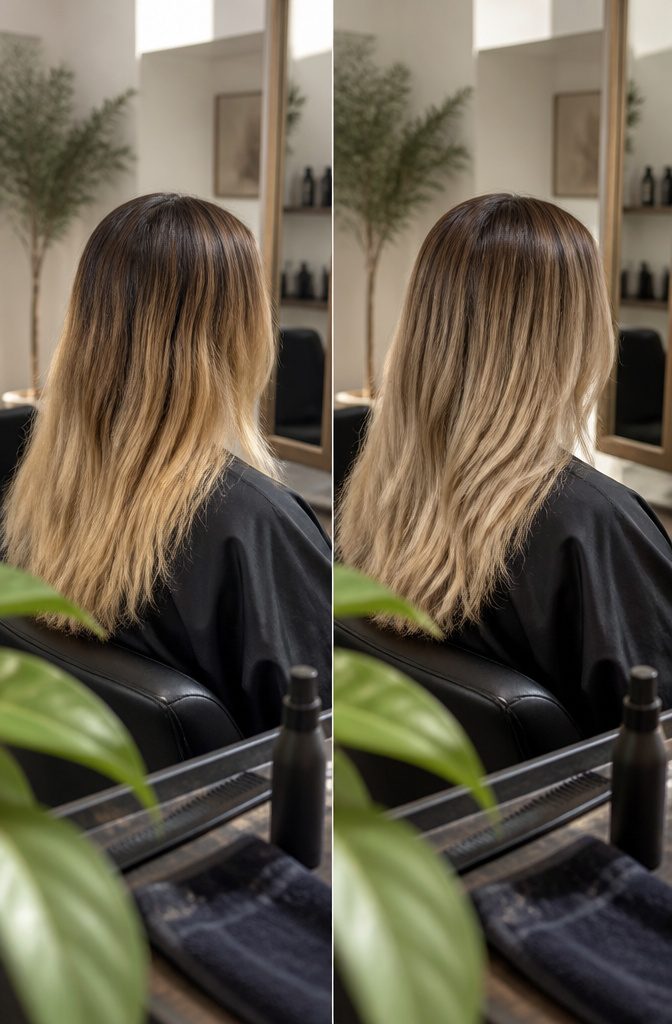
A hard regrowth line shows fast: all-over blonde needs a salon visit every 4 to 6 weeks because the dark band at the part is the first thing anyone sees. A shadowed root works the opposite way.
The color starts deeper at the scalp and lightens down the strand, so new growth extends the shadow instead of drawing a line. That is why root-shadow blonde stretches to every 10 to 12 weeks, and lived-in blonde to 12 to 16.
If your schedule is unpredictable, I’d choose a shadow root over a bright one every time. Ask for lowlights and highlights blended in, then add a toning gloss and UV protection at home to hold the tone.
Dimensional Blonde
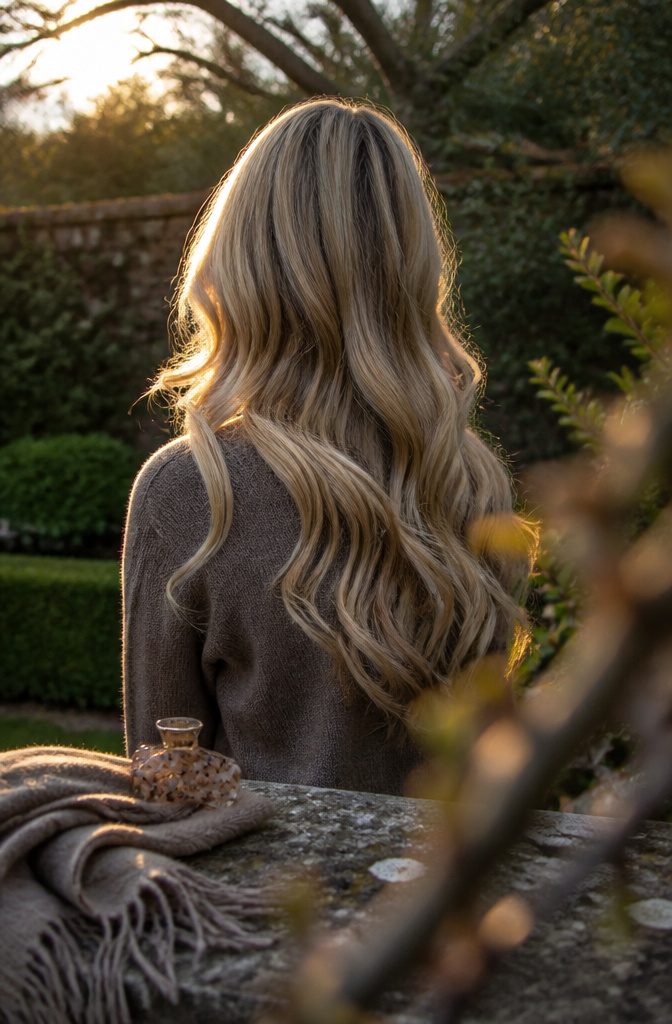
Dimensional blonde is defined by the finished mix: gold, beige and almost-white strands over a darker base, or golden, honey, caramel and maple tones side by side.
Because the shades sit at different depths, the eye reads shadow and light. That’s why I reach for this look on fine or flat hair, since it suggests body a single flat color can’t.
Movement does the rest. Waves and curls make the color pop, because each turn of the strand shows a different tone, and the mix glows most in sunlight.
Solid buttercream can lack dimension on thick, coarse hair, so a blend is the safer pick there.
Black Blonde and Other Accents
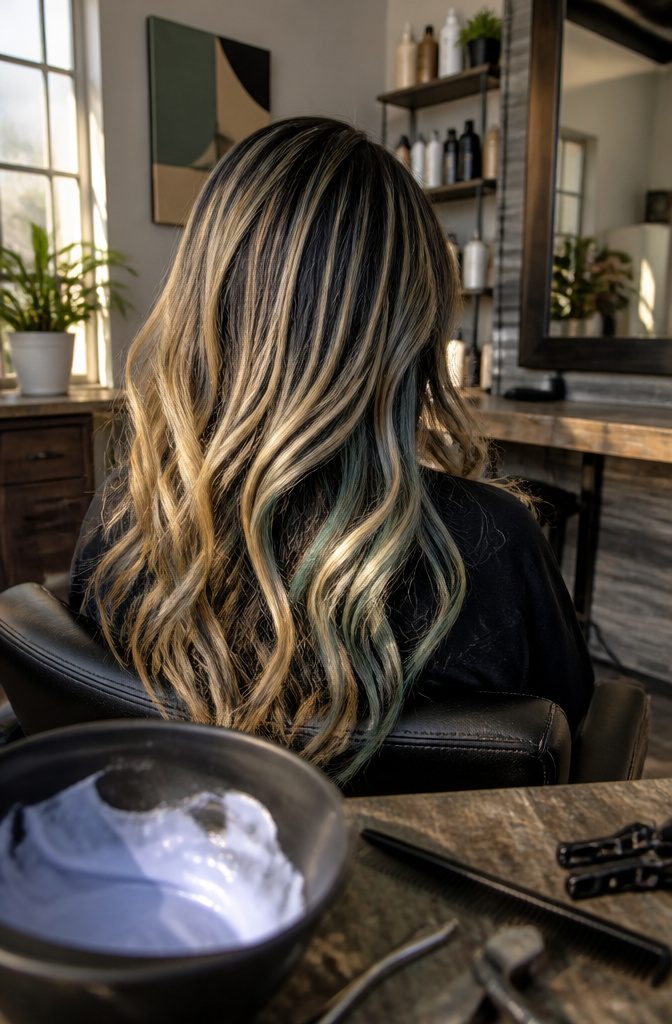
Black blonde puts very dark and very light hair on one head, and the contrast is strong enough that any complexion or eye color can carry it. Ombré is the direct route, with black at the roots fading into blonde.
A black base with blonde highlights laid over it works too, and I’d choose that if you want the blonde to read as accents rather than a half-and-half split.
Mint is gentler. Pastel mint peekaboo highlights tucked into a golden-brown base show mostly when the hair moves, which makes them the lower-commitment way to try an unexpected color.
Both looks are niche, so I’d book a consultation and bring a photo rather than decide on the spot.
Cool, Neutral and Warm Families
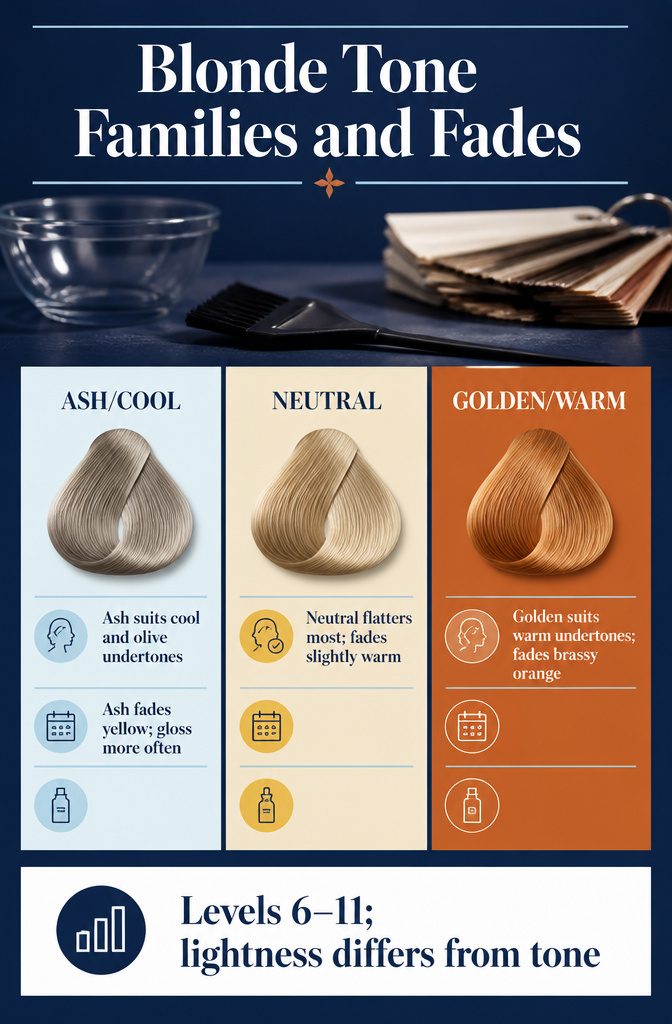
Every blonde name sits in one of three tone families, and the family matters more than the name:
- Ash/cool leans ash, gray, silver or violet. It suits cool and olive undertones. Cool tone washes out first, so I’d plan on glossing more often than with golden shades. It fades toward yellow.
- Neutral covers sand, vanilla and cream. It flatters most people and makes the easiest first blonde. It fades only slightly warm.
- Golden/warm runs honey, caramel, gold and copper. It works on warm undertones and deeper natural levels, and it fades toward brassy orange.
- The level scale runs from 6 (dark blonde) to 11 (platinum). Lightness and tone are separate choices, so a level 8 can be ash or golden. Tell your colorist both.
Matching Blonde to Your Skin
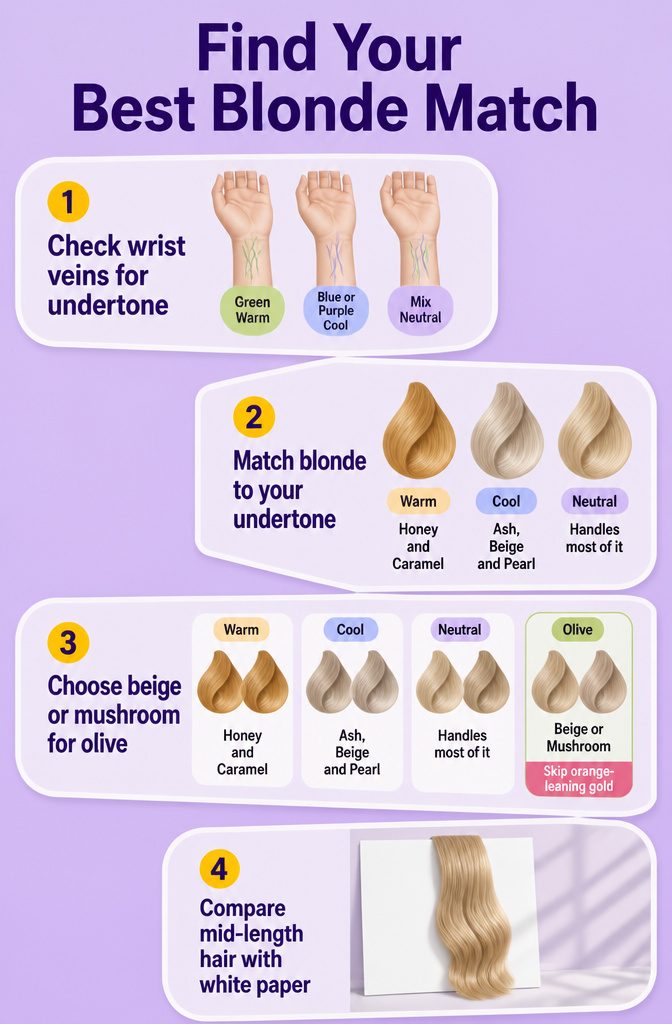
Undertone matters more than depth, because skin tone shifts with a tan and undertone stays put.
Green wrist veins point warm, blue or purple cool, and a mix neutral. Warm skin wears honey and caramel, cool skin wears ash, beige and pearl, and neutral skin handles most of it.
Olive does best in beige or mushroom; skip orange-leaning gold. Fair, medium and deep skin all work once the undertone matches, and a darker root or a money piece can rescue a near miss.
To test your own blonde, stand in indirect daylight, hold a mid-length section (not the root) against white paper, and name the lightness before the tone.
Technique and Dimension
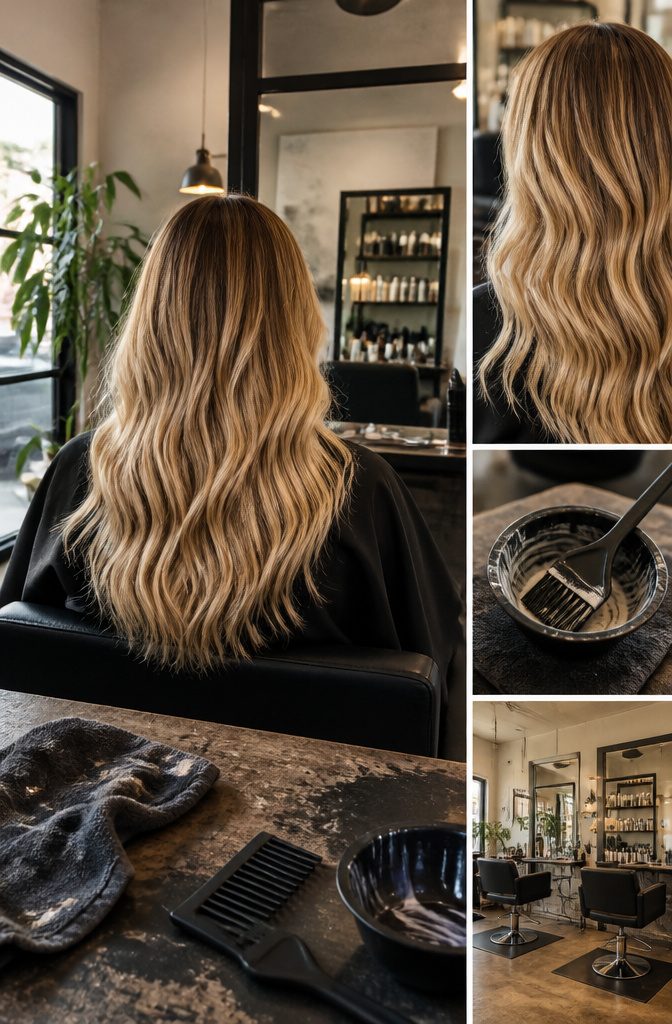
All-over blonde gives the most shine and the least dimension, and even a little regrowth shows at the roots, so plan on a touch-up around the 6-week mark.
| Technique | What it does | Salon visit |
|---|---|---|
| All-over blonde | Solid, glossy, brightest | Every 4–6 weeks |
| Partial highlights | Contrast in pieces | Every 8–10 weeks |
| Root shadow | Softly darker roots | Every 10–12 weeks |
| Balayage | Blended, sunlit brightness | Every 12–16 weeks |
| Lowlights | Depth in a lighter base | n/a |
| Ombré or sombré | Darker top, lighter ends | n/a |
| Face-framing pieces | Brightness at the hairline | n/a |
If your schedule is unpredictable, I’d start with balayage, the lowest-maintenance blonde on the chart, because its grow-out is designed to be soft.
Brass Control and Care
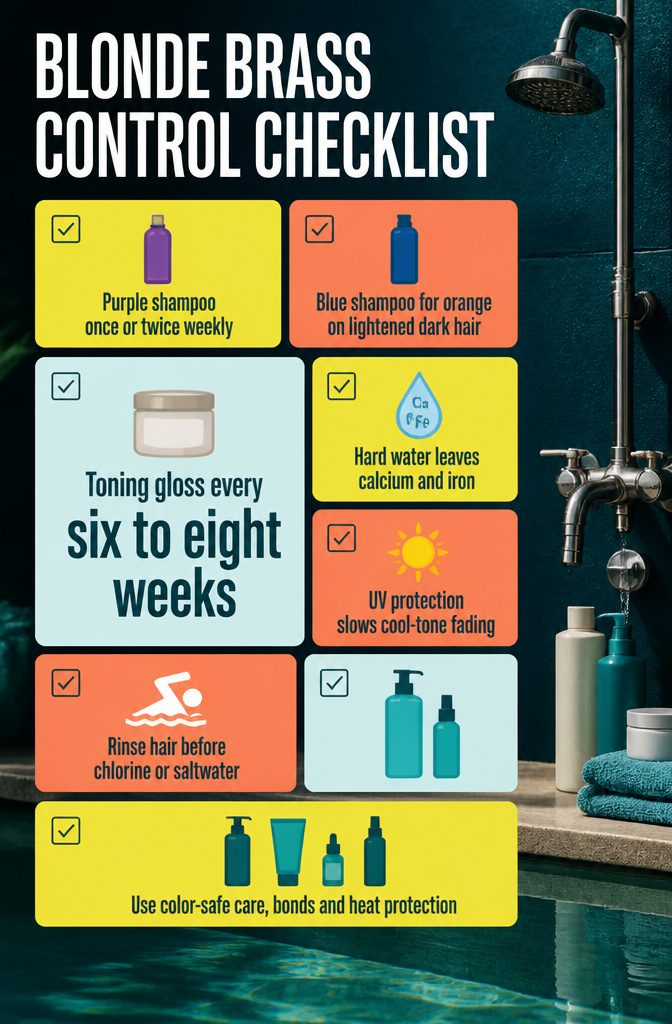
Brass has several causes, and each one has its own fix:
- Purple shampoo once or twice a week neutralizes yellow warmth.
- Orange on lightened dark hair responds better to a blue-pigmented shampoo.
- A toning gloss every six to eight weeks costs a fraction of a full color service and keeps blonde looking freshly done.
- Hard water leaves calcium and iron behind, which reads as dullness and an orange cast toner alone won’t fix.
- UV oxidizes cool tone fastest, so ash blondes fade warm in the sun. Use UV protection.
- Chlorine and salt water strip gloss and can push light blonde green. Rinse with clean water before swimming so the hair is already saturated.
- Color-safe shampoo and conditioner, a bond builder, regular hydration and heat protection keep lightened hair from going dull.
Hair Condition and Your Colorist
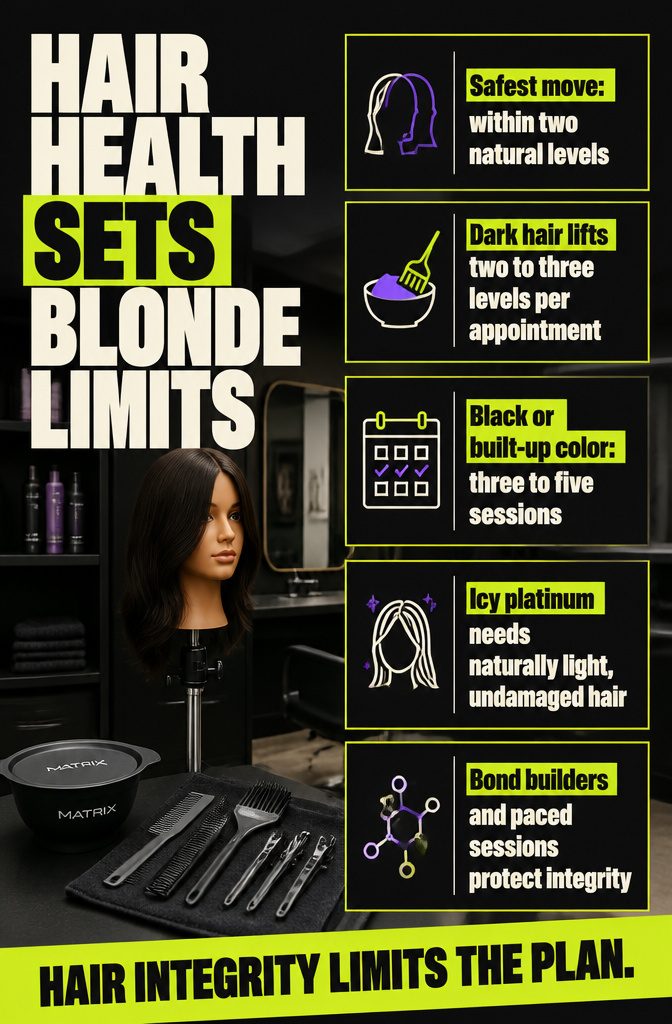
Getting to icy platinum or honey balayage is not usually something that happens in one afternoon, and hair condition decides how fast you can move.
Dramatic shifts depend on your starting level, what color is already there, and whether the hair can still handle lift.
Matrix suggests staying within two levels of your natural color for the safest move, and if you are lifting dark hair, expect two to three levels per appointment.
Black hair or years of built-up color typically need three to five sessions and often require color removal before lightening even starts.
Bond builders, appropriate developer strength and paced sessions keep damage in check. Karissa Schaudt, colorist at Scarlet & Co. in Chicago, points out that white platinum looks incredible but is only achievable on naturally light, undamaged hair.
If previous color or damage exists, you would need a wig to get there. A good colorist will tell you no when integrity is on the line, and that honesty is exactly what protects your hair.
Frequently Asked Questions
What are the different shades of blonde hair?
Blondes fall into three tone families: ash or cool (gray, silver, violet), neutral (sand, vanilla, cream) and golden or warm (honey, caramel, gold, copper).
Lightness runs separately on a scale from level 6 (dark blonde) to level 11 (platinum), so a level 8 can be ash or golden. Tell your colorist both the level and the tone.
Is blonde hair white or yellow?
It depends on the level.
Natural blonde comes from more pheomelanin and less eumelanin, and it usually reads as some form of gold or yellow. Platinum at levels 10–11 only looks white because hair is lifted to pale yellow and then toned.
What is the most popular shade of blonde?
Level 9 neutral to beige blonde is the most requested shade in salons. It looks clearly blonde, flatters nearly every skin tone and fades more gently than ash or deep gold.
What level is platinum blonde?
Platinum is level 10 to 11, the palest end of the scale. Hair has to be lifted to pale yellow before a toner goes on, and the result needs a salon visit every 4 to 6 weeks plus purple shampoo in between.
What is the difference between ash blonde and beige blonde?
Ash leans gray and sometimes violet, and it cancels brass hard.
Beige keeps a little warmth, so it looks softer and closer to taupe than steel. If ash feels too severe on you, beige is the gentler option.
Can dark hair go blonde in one session?
Usually not.
Dark hair generally lifts only 2–3 levels safely per appointment, and black hair or years of built-up color typically need 3–5 sessions, sometimes with color removal first. A caramel or bronde shade is the easiest first step.
Does going blonde damage your hair?
Lightening always changes hair structure, but heavy damage is not a given.
A bond builder, a suitable developer strength, paced sessions and realistic limits keep hair intact. A colorist who tells you to slow down is protecting your hair.
How do I stop my blonde from turning brassy?
Use purple shampoo once or twice a week, or a blue-pigmented one if lightened dark hair is going orange.
Add a toning gloss every 6 to 8 weeks, wear UV protection and wash in cooler water. If hard water is leaving an orange cast, a toner alone will not fix it.
Is dark blonde warm or cool, and what skin tone does it suit?
Dark blonde runs both ways.
Honey and caramel versions flatter warmer skin, while dark ash and mushroom versions flatter cooler skin. Fair, medium and deep complexions can all wear it once the shade matches your undertone.
Is dark blonde the same as light brown hair?
No.
Dark blonde sits at levels 6 to 7 and leans golden or yellow, and it can lighten in the sun. Light brown is richer and leans reddish or bronzy.
What is bronde?
Bronde blends brown and blonde at roughly level 7, with blonde through the mid-lengths and ends over a deeper base. It is the lowest-commitment way to be blonde because regrowth is soft and salon visits can be spaced out.
Is dirty blonde hair cute?
Many people like it because it looks lived-in rather than styled.
It sits at levels 6 to 7 in beige, ash or wheat tones over a brown base, and it suits medium-toned skin with green or brown eyes. The beige-ash versions are the lowest upkeep.