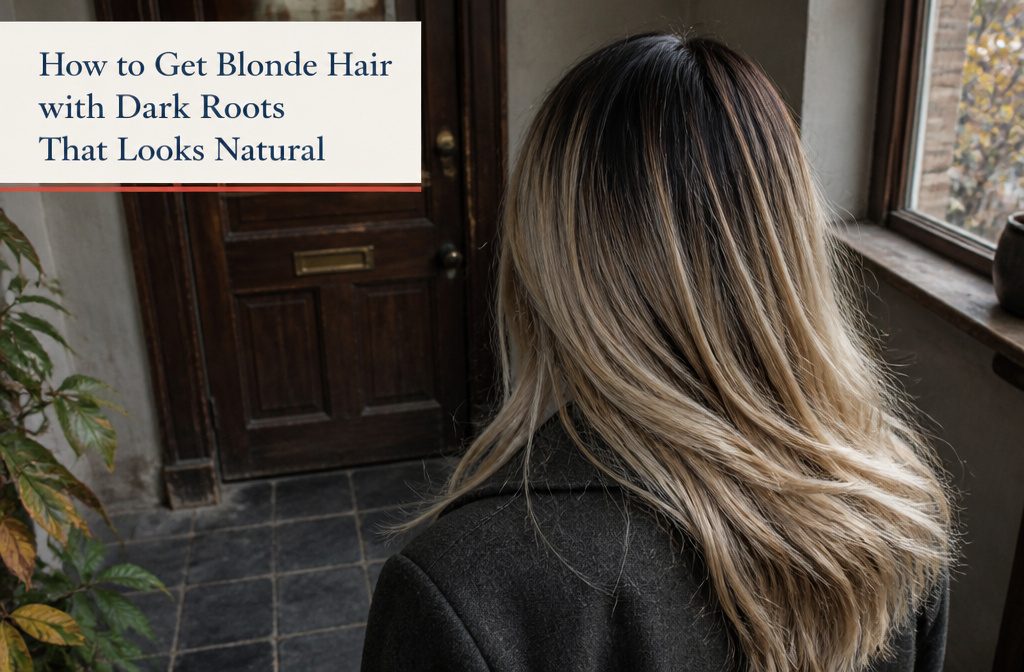
Dark roots melting into blonde cost you a gloss every 6–8 weeks, but full lightening can wait 8–12 weeks.
The stage people get wrong is the blend: jet-black roots against platinum look harsh unless a stylist taps in a shadow root, so bring a photo and say in inches where the dark should end.
1. Shadow Root, Root Smudge and Root Melt
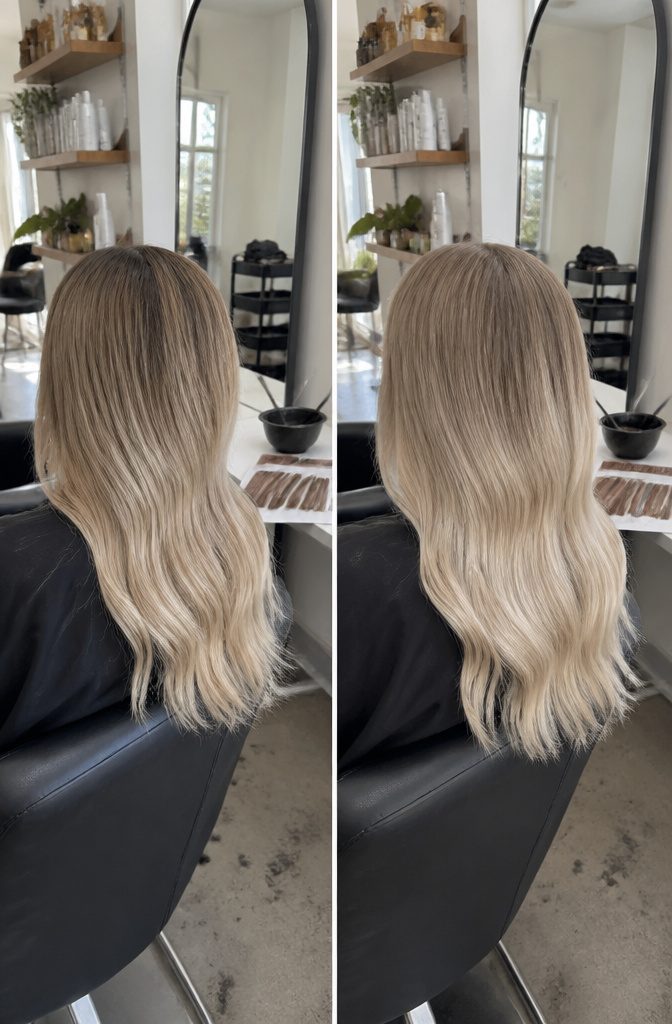
Every version of this look blurs a darker shade at the roots and into the blonde, and the distance of that blur sets the softness.
A short blur reads as a faint veil of depth, while a longer one gives a visible gradient.
The names are slippery.
Some stylists treat them as steps: smudge is the shortest blur, shadow root runs deeper, and root melt stretches furthest, through the mid-lengths. Others use smudge and shadow root for the same technique.
I wouldn’t argue vocabulary. Point to where the dark should end on your photo, in inches if you can.
Plan on 6–8 weeks before a root smudge needs a touch-up.
2. Balayage with Dark Roots
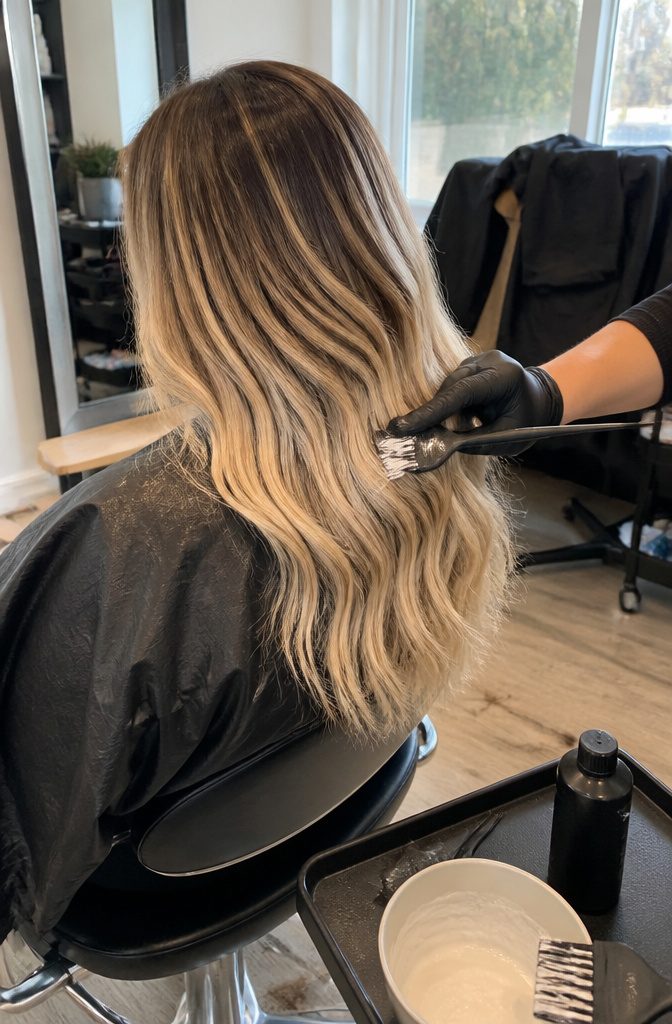
Balayage is hand-painted or freehand-swept lightener, and the highlights start a few inches below the roots, which leaves real depth at the scalp.
The lightest pieces sit around the face and through the lengths, so the color reads as sun-kissed rather than striped.
I think that soft start makes balayage the easiest way to wear blonde hair with dark roots, because there’s no hard line to chase as it grows out.
If you want it subtler, a colorist can mix the lightener with a lower-strength developer for a gentler lift. Schedule a gloss every 6–8 weeks to keep the shine and tone from fading between lightening visits.
3. Foilyage
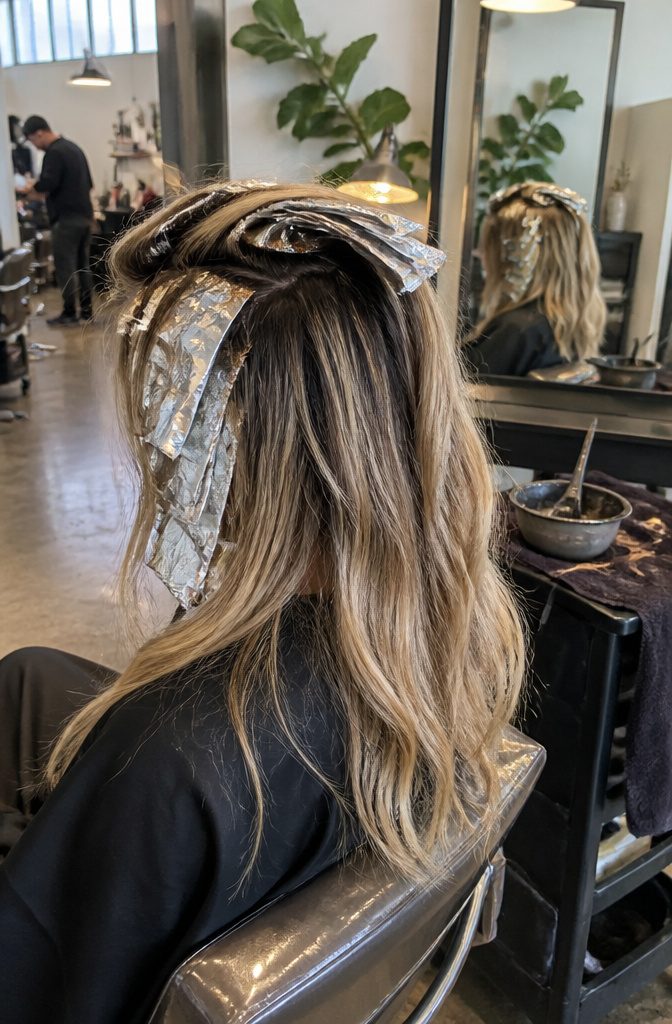
Foilyage is balayage with one change: the lightener is painted on by hand, then developed in foils.
Wella describes the process as identical to balayage otherwise, and the foils are what give more lift and more definition in the lighter pieces.
That matters most on dark hair. Almost-black roots against light, golden blonde ends only look striking if the ends actually get light, and foils help the lightener get there.
I’d pick foilyage over open-air balayage when the contrast is the point.
Foilyage gives a slightly crisper result than a pure hand-painted blend, so ask your stylist to blur the transition if you want it melty. BlondorPlex is the lightener Wella pairs with this look.
4. Babylights
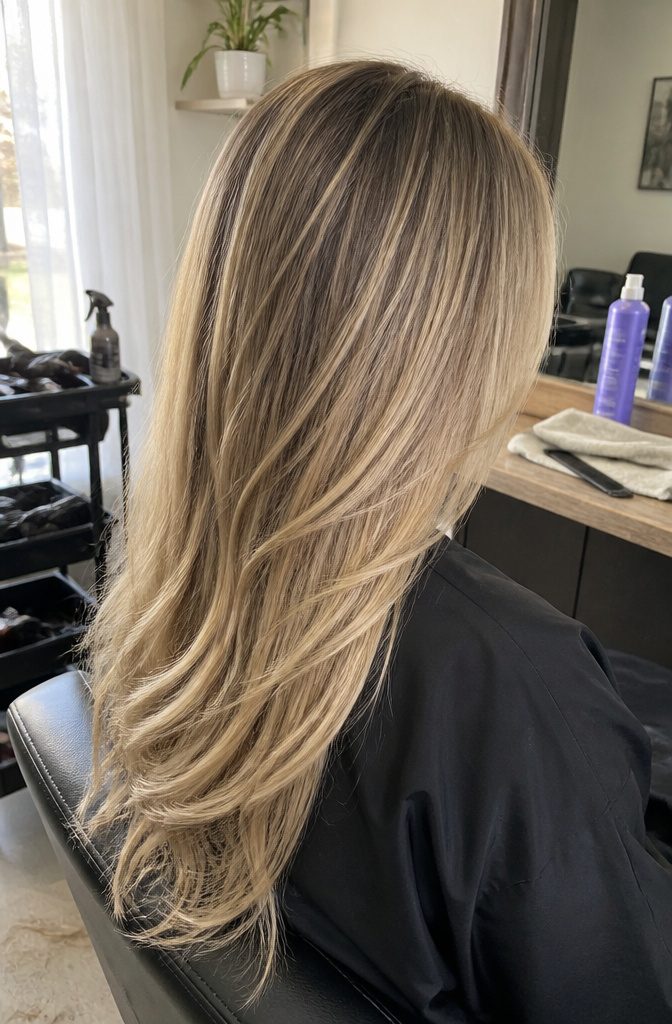
Babylights are ultra-fine highlights that blend dark roots into blonde with no harsh line. The shift looks barely there, and it adds dimension and brightness without a big jump in contrast.
Fine or thin hair is where I’d pick them over bolder highlights.
The tiny strands give the illusion of more volume and movement, so hair looks fuller. They also brighten the face without the commitment of chunkier color, and they let you lighten your roots gradually over time.
Brassiness is the one thing that can undo the soft look. Use a purple shampoo once a week to keep it at bay and keep the blonde soft.
5. Ombré
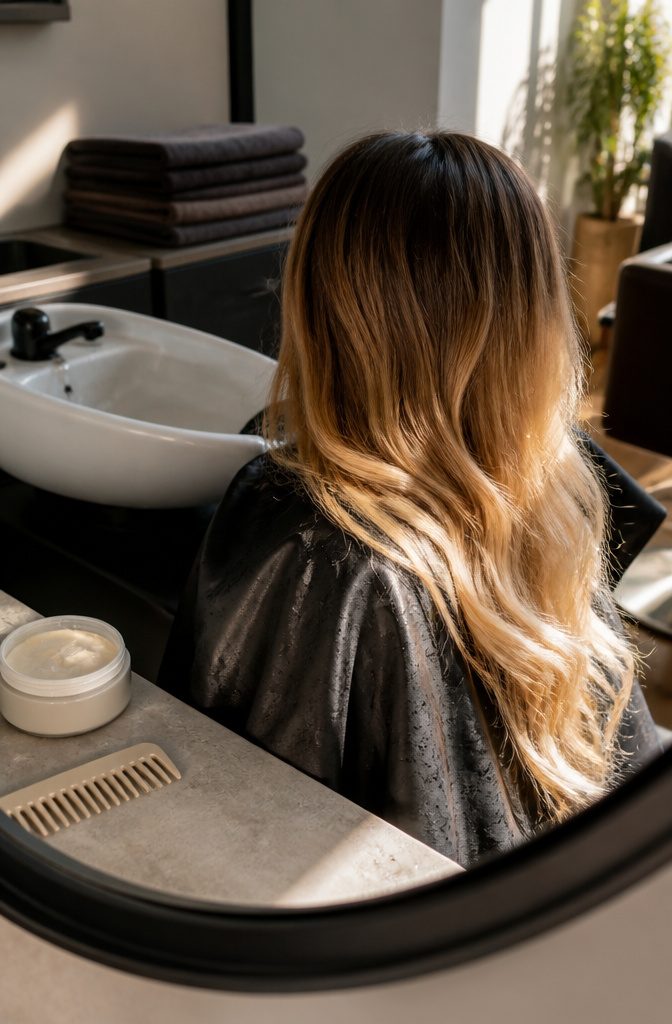
Ombré is the loudest way to wear blonde hair with dark roots.
The color stays dark at the top, then lightens through the mid-lengths until the ends are far brighter. That gives you a gradient anyone can see, which balayage and a root shadow never deliver.
It suits medium to long hair, where the shift has room to look gradual. Keep the toners in one family: golden through the middle with lighter golden ends, or ash blonde over an ashy brown root.
Those bright ends take the wear, so give them a deep conditioning treatment every week to head off dryness and split ends. I’d plan on regular toning too, though upkeep still runs lighter than all-over blonde.
6. Sombré
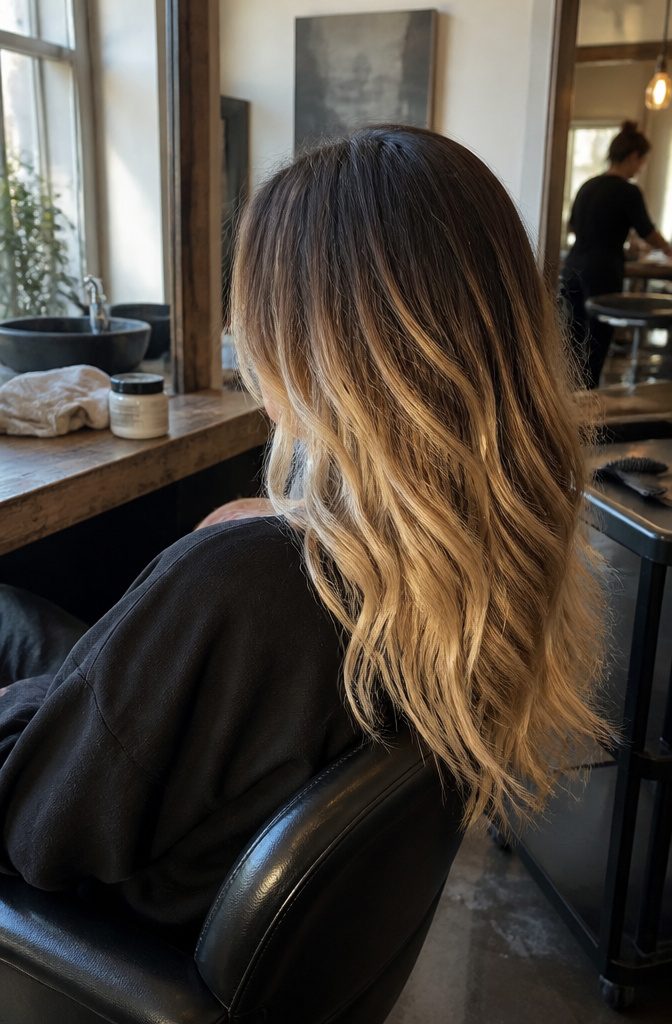
Sombré is short for soft ombré.
The softness comes from stacking several tones between your root color and your lightest ends instead of making one hard jump. The roots stay a dark brunette, and the lighter blonde starts at the mid-shaft and runs to the ends.
I’d steer natural brunettes and medium bases toward this one, since it moves you into blonde without looking washed out.
The gradient is so gradual that you can wear it without frequent touch-ups, which is the main reason it beats a sharper ombré for low-maintenance hair.
Ask your colorist to match the blonde to your undertone: golden, beige and neutral all work. Lightened ends run dry, so plan on a deep conditioning mask after the appointment.
7. Bronde
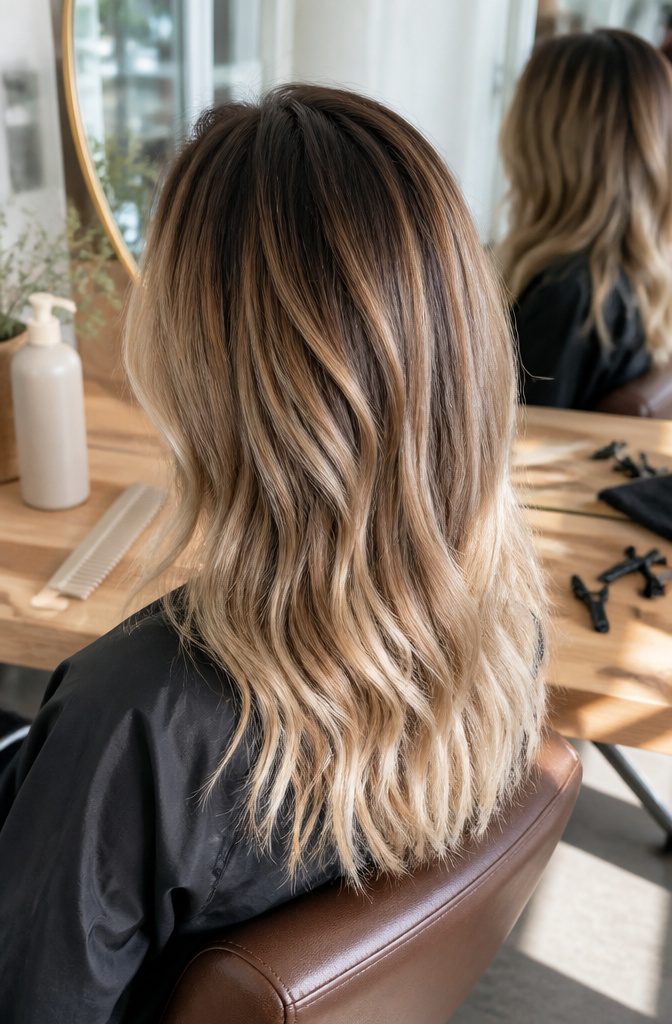
Bronde blends brunette and blonde: the roots are deepened down to eye level, and the rest of the hair stays a light shade of brown or blonde.
Because the dark zone is placed on purpose, grown-out roots look intentional rather than like a missed appointment.
I’d keep the roots only slightly deeper than the mid-lengths, since ultra-dark roots turn a soft blend into a harsh line, while the gentle shift gives the look of added volume.
One salon formula is worth showing a stylist.
The hair was lightened with Blondor + 6%, the roots shaded with Koleston Perfect 7/0 + 7/43 + 8/38 + 1.9%, and the ends toned with 9/0 + 9/73 + 1.9%. At home, a sulfate-free shampoo for color-treated hair keeps the blend from fading.
8. Icy, Platinum or Ash Blonde with Dark Roots
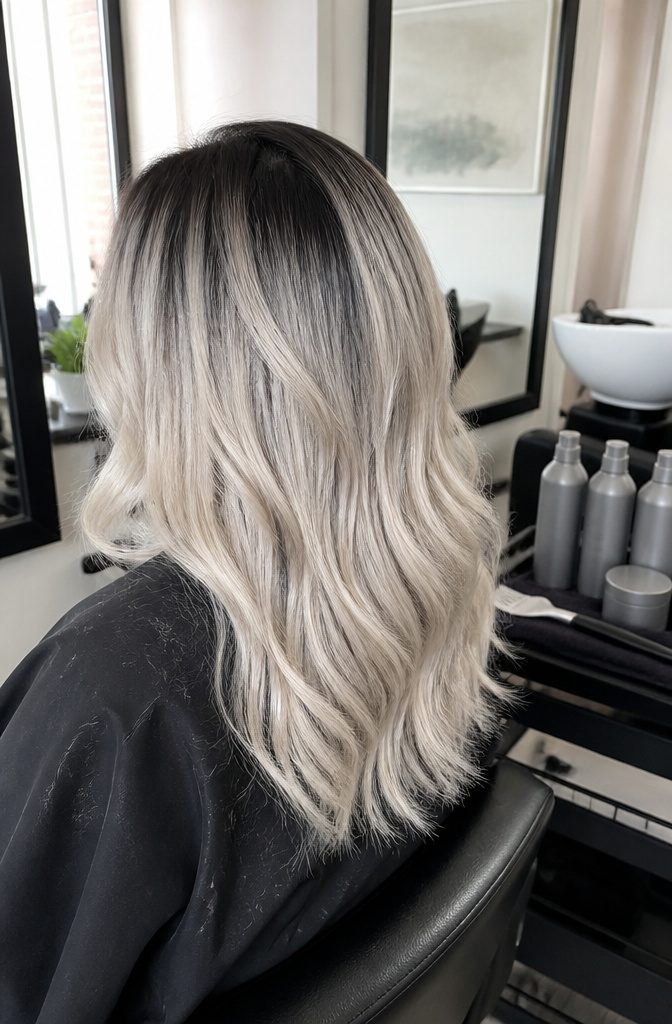
Icy, platinum and ash blondes sit at the cool, light end of the range, so deeper roots read as strong contrast. Jet-black roots against light platinum need blending.
A shadow root does it: the stylist taps a dark formula in with a color brush so the root melts into the length. On ash blonde, I like the shadow drifted down about 2 inches.
Lightening this far is hard on hair, and Redken is specific about aftercare:
When going with blonde hair this light, use a three-step strengthening treatment in the first two weeks after your lightening service.
— Redken
Buy the three-step treatment before your appointment.
9. Beige, Champagne or Creamy Blonde with Dark Roots
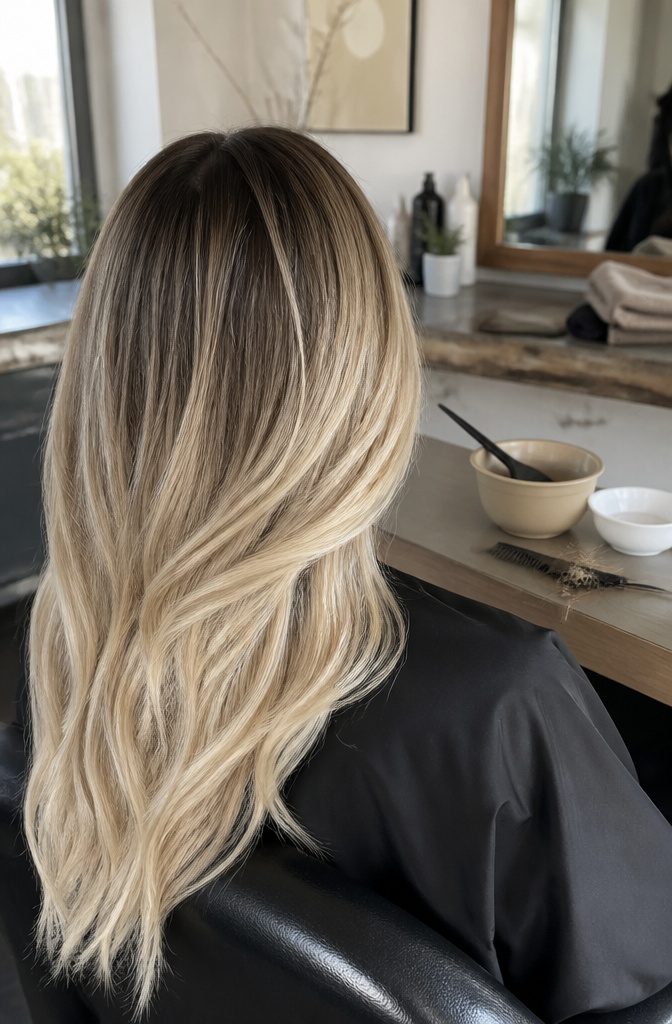
Champagne, beige and creamy blondes sit between icy and golden, so the contrast with dark roots is gentler than what platinum gives you.
The color shimmers out of a shadowy root instead of stopping at a hard line, which is why the look reads as polished and dimensional.
It flatters light to medium skin tones and looks best on long or layered cuts, where the shine has room to move.
Maintenance is medium: the root shadow stretches the time between appointments, but the blonde needs regular glossing to keep its luminosity. If your ends feel dry after the service, add a deep conditioning mask.
10. Honey, Golden or Caramel Blonde with Dark Roots
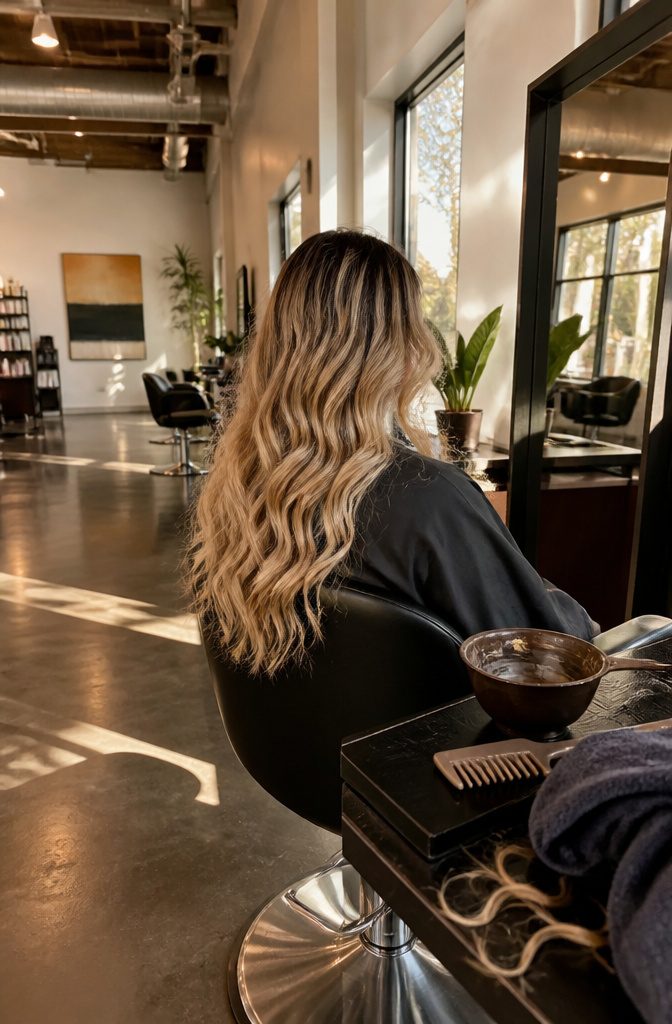
Warm blondes look sunlit against a dark base because the gold sits right next to chocolate or black, and the contrast does the work.
Honey is what I reach for with warm undertones and medium to deep skin, and it looks especially good on curly or textured hair.
Caramel is the more forgiving shade: it flatters every skin tone, olive and warm ones most, and suits round or heart-shaped faces.
Golden, honey and caramel glow on warm skin, while cool or pink undertones usually look better in ash or beige.
On a light brown base, caramel pieces around the face add dimension and movement. Deep roots also keep caramel ends looking rich and warm for longer.
Why Dark Roots Mean Less Time at the Salon
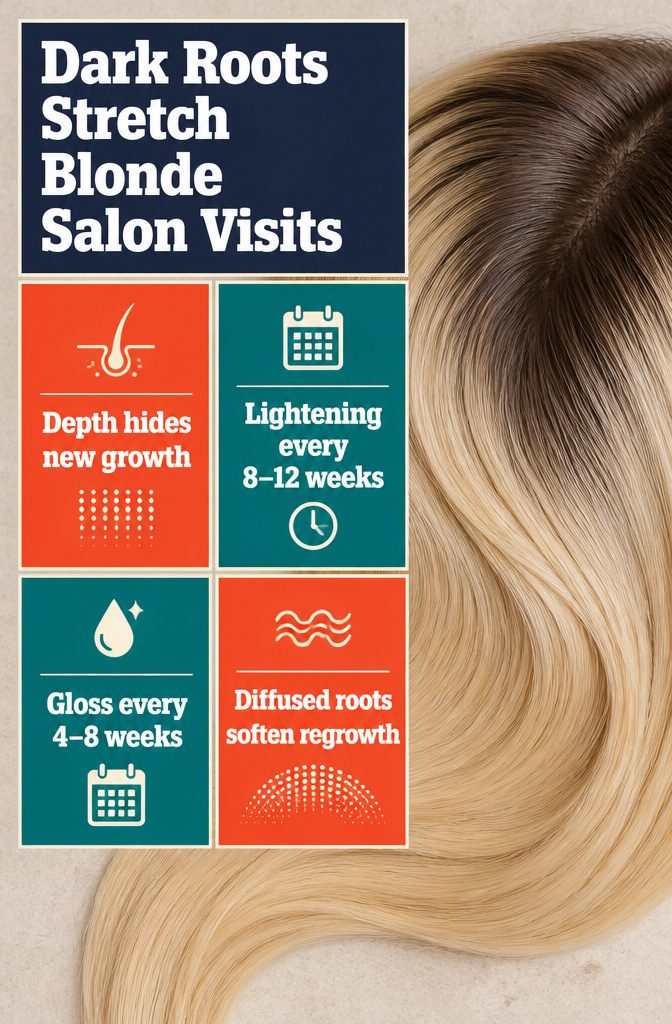
Dark roots are depth built in on purpose, so new growth has nothing to give away.
The regrowth reads as part of the color instead of a stripe. In many cases lightening appointments can sit 8–12 weeks apart, especially with soft shadow roots or sombré work that builds dimension from the start.
The softer the blend, the less obvious the regrowth, so if saving salon time is the goal, I’d ask for a diffused root over a crisp one.
Toner or gloss runs on a shorter clock: every 4–8 weeks keeps the blonde on tone.
Higher-contrast ombré and very bright blondes need toning more often to keep the transition sharp. Even so, you can usually stretch the gap between full lightening sessions compared with traditional highlights.
Choosing the Right Technique and Blonde Shade
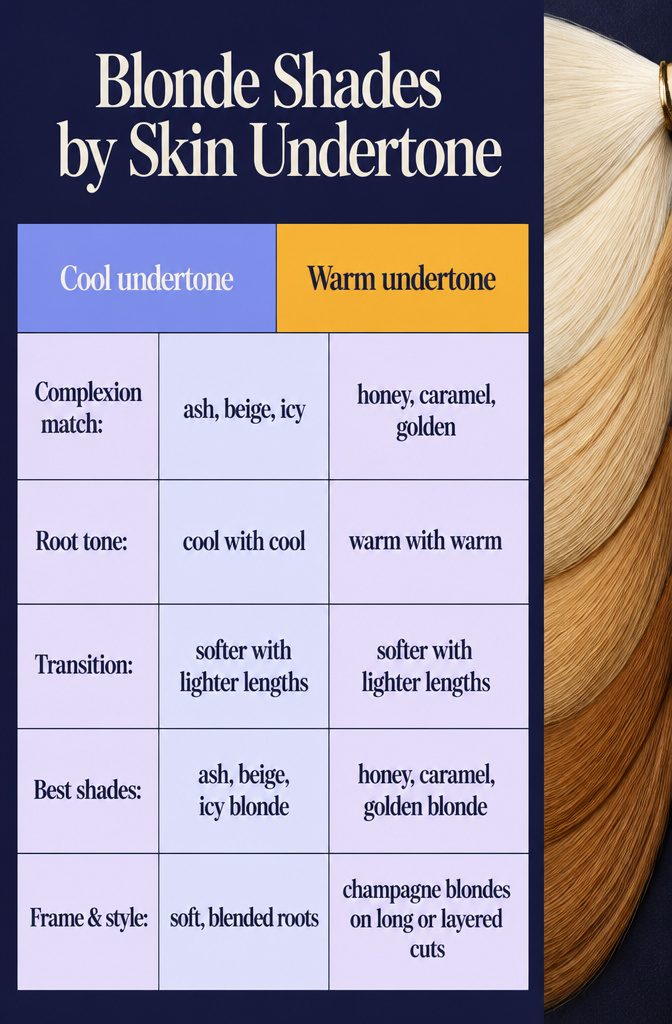
Contrast is the first decision. Jet black roots against light platinum look harsh unless a stylist softens the transition, so the lighter your lengths, the softer your roots should be.
Undertone comes next: cool or pink complexions suit ash, beige and icy blondes, while warm or golden skin glows in honey, caramel and golden shades.
Neutral skin can go either way, and I’d pick a balanced blonde that mixes both. Silver is the least forgiving shade because it has to match your skin tone.
Keep roots and lengths in the same tonal family, cool with cool and warm with warm. Soft, blended roots flatter every face shape, and champagne blondes look best on long or layered cuts.
Keeping the Blonde Tone and Condition

Dark roots mean upkeep goes mostly to the lightened mid-lengths and ends.
- Purple care: L’Oréal Paris EverPure Sulfate Free Purple Shampoo for Toning Blonde Bleached Hair and the matching Purple Conditioner, used one to three times a week, depending on how often you wash and how fast brass returns.
- Brass mask: EverPure Sulfate-Free Anti Brass Purple Mask Treatment goes on evenly over damp hair, sits a few minutes, then rinses out.
- Gloss: Elvive Glycolic Gloss Shine Boosting Shampoo, Conditioner and High Shine Leave-In Serum, several times a week or as often as you shampoo.
- Bond care: EverPure Sulfate Free Bond Repair Shampoo and Conditioner with Citric Acid. I’d rotate these with the purple products so you don’t over-tone.
- Color protection: Wella’s ColorMotion+ Color Protection Shampoo, plus a toning appointment every 6–8 weeks.
Frequently Asked Questions
How do you get blonde hair with dark roots?
Ask a colorist for a technique that keeps the roots deep, and bring a photo showing where the dark should end.
A root smudge or shadow root gives a faint veil of depth, balayage starts the highlights a few inches below the scalp, and ombré or sombré gives a visible gradient. The softer the blend, the less obvious the regrowth.
Can I blend dark roots with blonde hair at home?
Partly. Root touch-up sprays, temporary powders, toning and gloss can soften the contrast at home, but precise blending is best left to a salon.
If you lighten at home, follow the kit directions, do a strand test, and keep lightener off hair that is already lightened.
What’s the difference between root smudge, shadow root and root melt?
They differ by how far the deeper shade reaches into the hair.
Smudge is the shortest blur, shadow root runs deeper, and root melt stretches furthest, through the mid-lengths. Some stylists use smudge and shadow root for the same technique, so describe the result you want in inches.
How long does it take to get blonde hair with dark roots at the salon?
Expect 1.5 to 4 hours, depending on the technique. A root smudge or gloss session is on the quicker end, while balayage or full highlights take longer.
Does blonde with dark roots work on all hair types?
Yes.
A stylist can adjust the technique for fine, thick, curly or straight hair. Babylights suit fine hair because the tiny strands add the look of volume, and honey tones look especially good on curly or textured hair.
Does blonde look good with black or very dark brown roots?
Yes, as long as the transition is blended. Jet-black roots against light platinum look harsh without a technique like a shadow root, so the lighter your lengths, the softer your roots should be.
Keeping some depth through the mid-lengths and saving the brightest blonde for the ends and face-framing pieces also softens the look.
Will blonde hair with dark roots work on warm and cool skin tones?
Yes, if you match the blonde to your undertone.
Cool or pink complexions suit ash, beige and icy blondes, while warm or golden skin glows in honey, caramel and golden shades. Neutral skin can go either way, and a balanced blonde that mixes both is a safe pick.