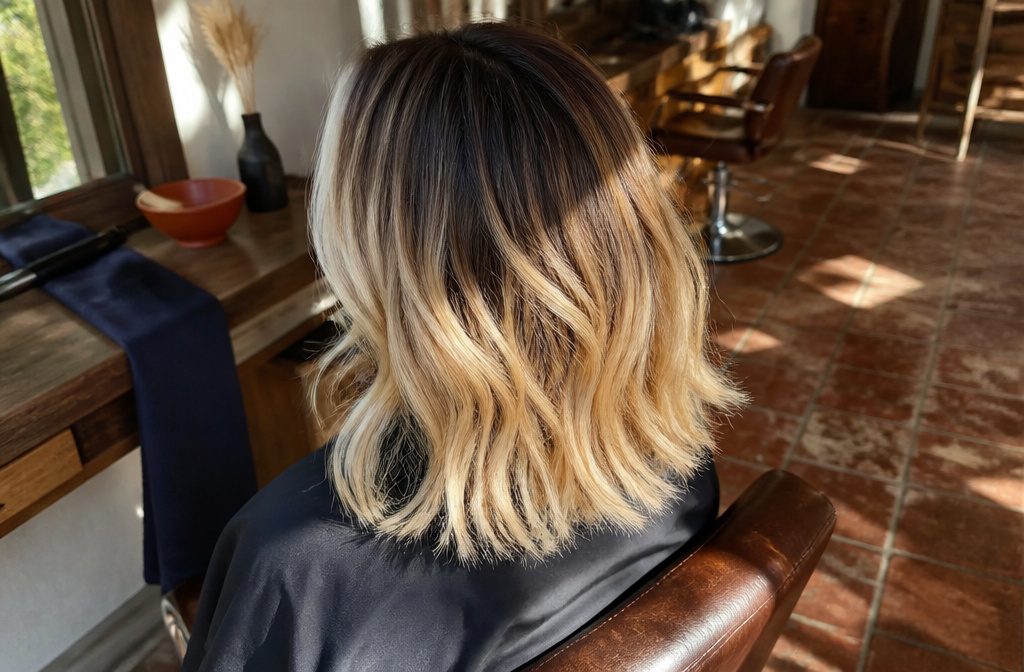
Placement decides how much upkeep your blonde costs you.
Balayage and rooted styles stretch 3–6 months between appointments, while all-over blonde shows roots sooner. Balayage runs $350 to $800 and belongs in a salon, and warm golds fade fastest, so budget for a tint rinse between visits.
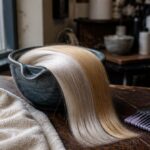
1. Platinum Blonde
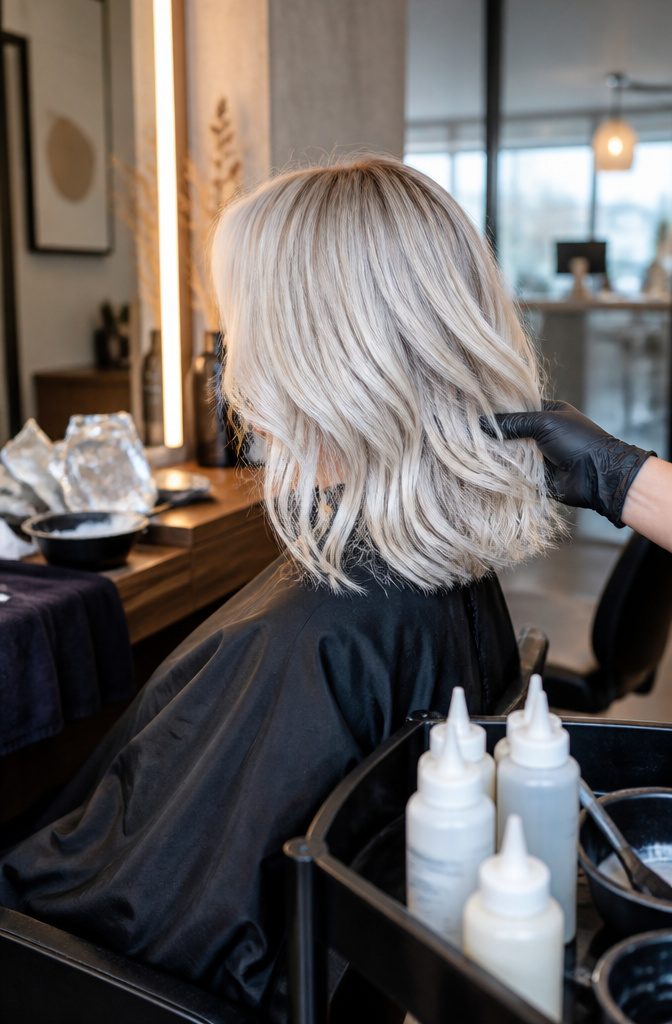
Platinum is an ultra-light, super-bright, almost-white blonde, and it works all over, with a shadow root, balayaged, or paired with pastel tones.
Wella lists 10 versions: Surreal, Golden, Icy, Rooted, Curly, Face-Framing, Vanilla, Pink, Pixie and Nordic. Surreal is the softly rooted, multidimensional one, while Nordic and Icy sit at the cool, frosty end.
BlondorPlex lifts up to 9 levels, and Féria Hyper Platinum lifts up to 8 in a single application. A dark base may need more than one session, and the usual route is pre-lightening followed by toning to cancel leftover warmth.
Platinum is a salon job. A box lightener exists, but for anything near white I’d book a colorist.
2. Golden or Warm Blonde
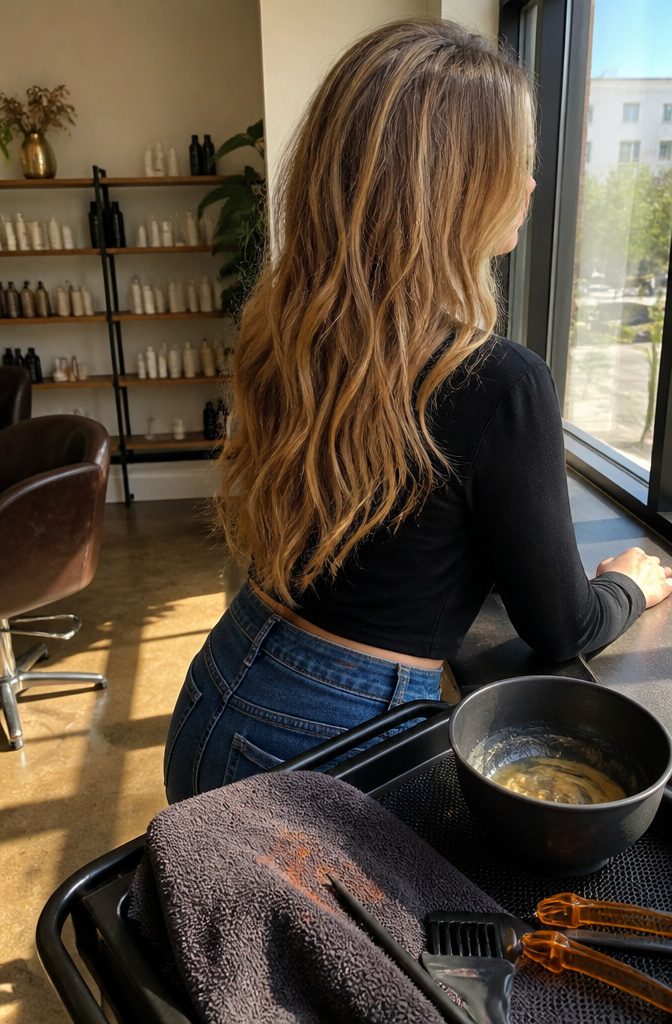
Golden blonde pulls together honey, amber, copper and the sun-kissed warmth you see described as butterscotch or Hollywood blonde.
The family runs warm with golden undertones that pair naturally with warm skin tones, though I have seen it work beautifully on neutral skin as well.
The shade asks your colorist to layer golden tones into the blonde for dimension rather than flat color.
That warmth is also what makes it fade faster than cooler blondes: warm pigment lifts out of the hair more quickly, so expect to refresh it between full color appointments.
A golden or warm beige toning rinse between sessions keeps the shade from sliding into dull or brassy territory, and skipping that step means the color loses its punch within a few weeks.
If you are working at home, a permanent golden blonde dye gets you there in one go.
Face-framing highlights over a darker base give you the sun-kissed look without committing to all-over color, and that approach grows out more gracefully than a single-process blonde.
3. Ash or Cool Blonde
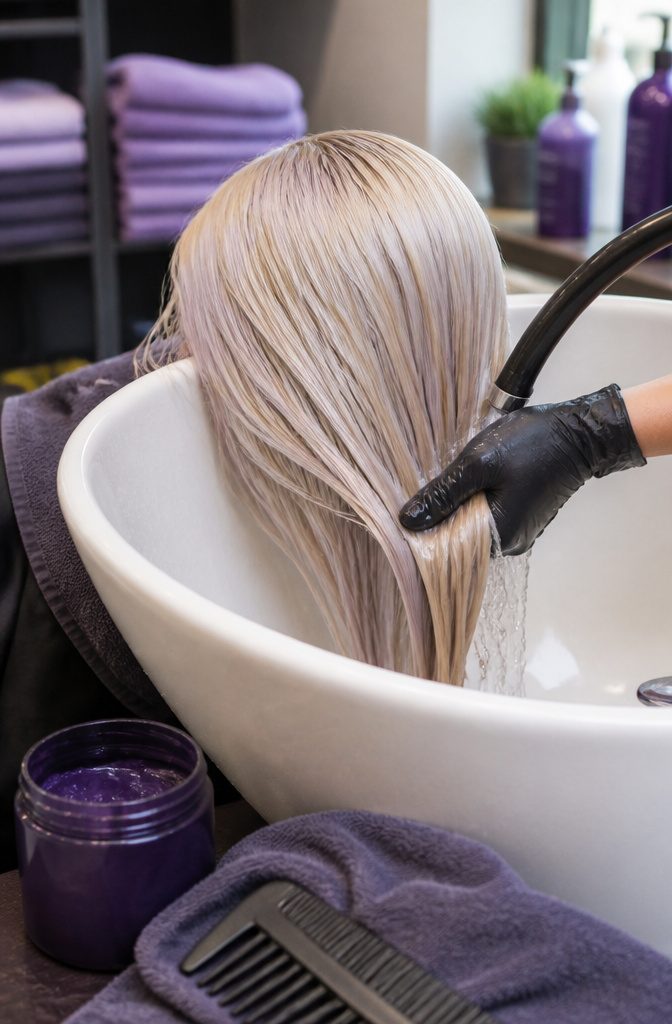
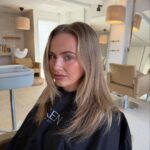
Ash and pearl tones sit on the coldest edge of blonde: think silver, pale violet, blue-tinged champagne that reads almost platinum but holds subtle color rather than stark white.
These shades work by canceling warmth, so they suit cool skin undertones beautifully. Darker or olive complexions can pull off the contrast especially well, since the blue and violet base makes the shade read slightly deeper than golden blonde.
Ash blonde takes longer to get right, because hair has to be lifted past the yellow stage before a cool toner will sit properly.
Cool blonde shows brassiness faster than any other category, and keeping it icy takes consistent upkeep. Purple shampoo neutralizes brassy orange and yellow tones in as little as two minutes, but once a week is usually enough.
For hair that turns brassy aggressively, add a purple mask treatment, though no more than once a week or you risk tinting the hair purple instead of toning it.
4. Neutral or Beige Blonde
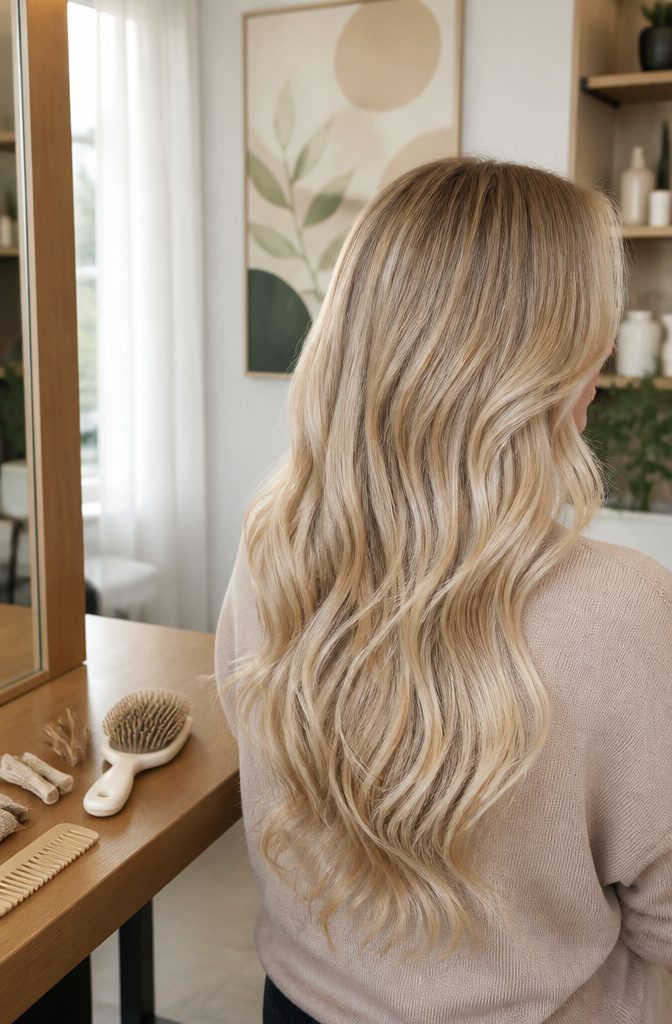
Neutral blonde sits between golden warmth and ash cool, hitting a balanced beige, wheat, or champagne tone that works when you find yellow too bold and ash too flat.
The blend pulls undertones from both sides, which is why it suits the widest range of skin: warm, cool, or neutral all land here without fighting the hair color.
L’Oréal Paris calls out champagne blonde for exactly this reason, bright and neutral enough to flatter both warm and cool complexions. eSalon groups blondes into neutral, warm, and cool categories, and neutral holds the middle as the most versatile pick.
If you’ve tried golden and felt too brassy, or ash left you washed out, neutral blonde gives you the best of both without committing hard to either direction.
5. Sandy or Dark Blonde
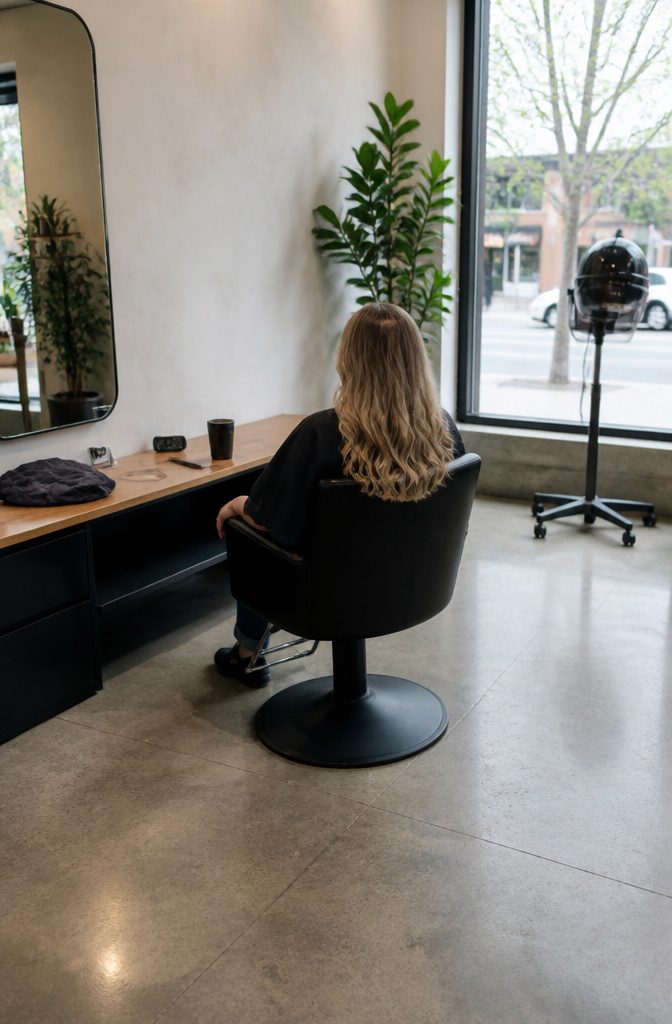
Sandy or dark blonde lives somewhere between natural dishwater and polished old-money blonde.
It keeps warmth and depth at the base while adding controlled brightness, usually through partially rooted balayage or face-framing highlights. The result reads as effortless rather than high-maintenance.
I keep my appointments to four hours and stick to one rule: roots cannot grow out past two inches before I go back. That cadence keeps the colour from looking neglected but avoids the schedule platinum demands.
A frame of highlights around the face brings enough lift that the natural base reads as intentional, not skipped. Mid-lights help too, weaving a shade between your highlights and your base so the contrast does not land too hard.
The technique works particularly well for cool undertones, since the ashier blonde avoids clashing with your skin. It is one of the lower-maintenance blonde paths if you want brightness without committing to full lightness.
6. Honey Blonde
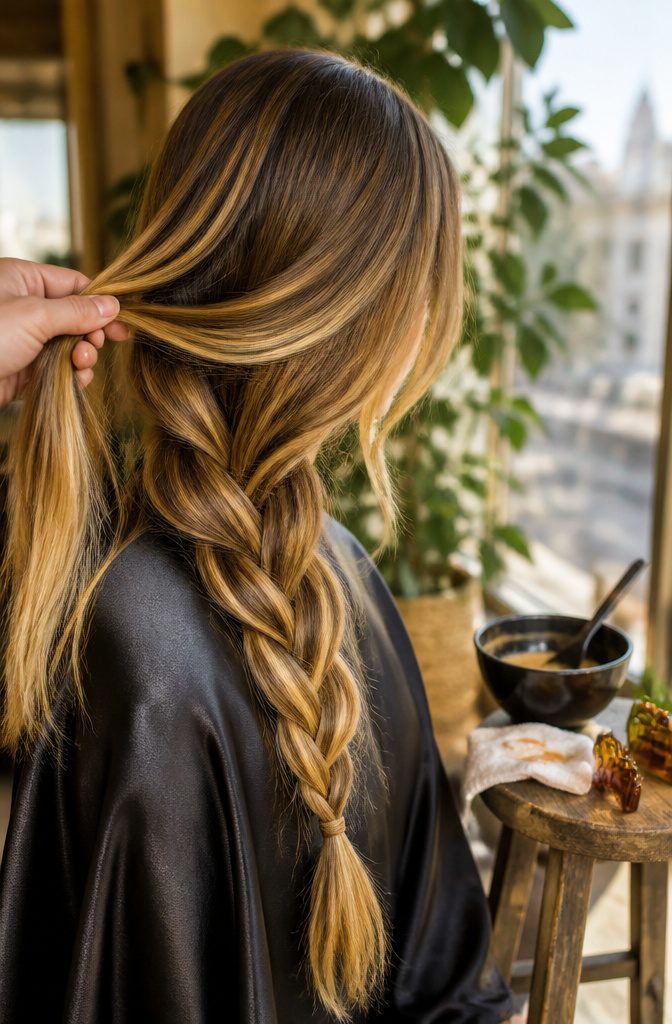
Honey blonde hits that warm, dimensional golden tone that looks like it grew in naturally rather than dropped from a single-process bowl.
The shade pulls golden and amber through a darker base, usually brown or bronde, so you end up with blended depth instead of flat color.
Jennifer Lopez’s hand-painted honey balayage shows the contrast it builds: a dark root that melts into streaks of wheat, caramel and amber woven through the mid-lengths and ends.
The look works best on warm or neutral skin tones, where the golden undertones sit comfortably against the complexion.
Ask your colorist for a dimensional hue with subtle threads of those warmer blonde shades layered in, or use a permanent dye in medium golden blonde if you’re working at home.
Warm tones fade faster than ash, so you’ll need a golden or warm beige tint rinse between color applications to keep the honey from turning brassy or washing out.
7. Caramel Blonde
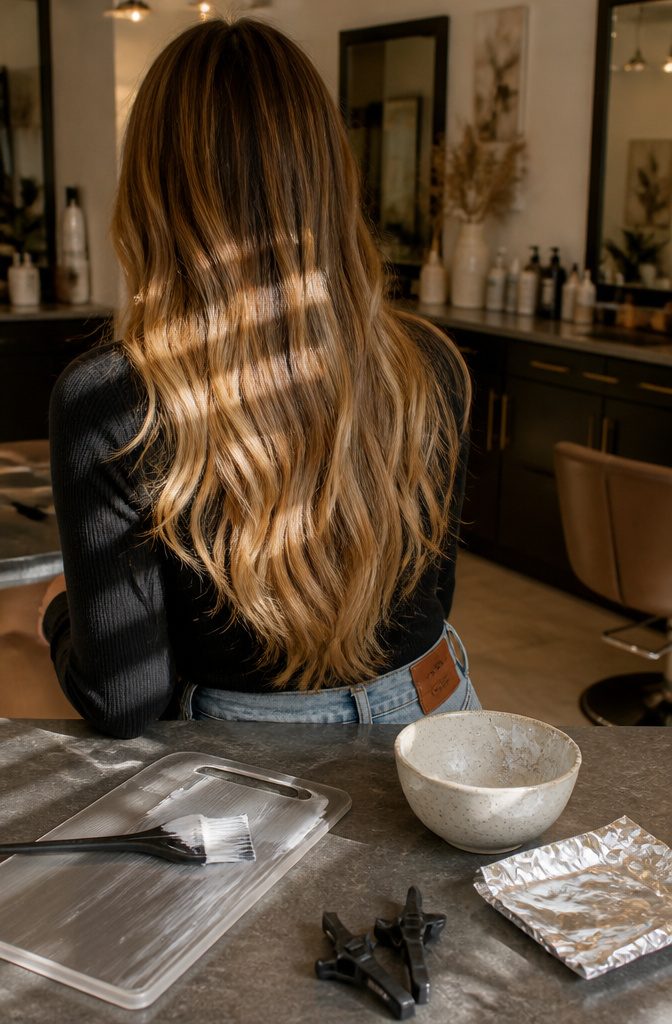
Caramel sits between full brunette and bright blonde, which makes it the least drastic way to move lighter if you’ve never lifted your color before.
The deeper golden tone means less time in the lightener and fewer appointments to get there, so your hair takes less of a beating than it would jumping straight to platinum.
I find it especially flattering on deeper skin tones because it gives contrast without looking stark or overprocessed.
The other upside is grow-out. Because caramel isn’t a huge departure from natural brunette roots, the line softens fast and you can stretch touch-ups longer without a visible stripe forming.
If you want to test blonde without committing to monthly salon visits, this is where I’d start.
The L’Oréal Paris Excellence Creme in Natural Dark Blonde delivers the shade at home, or pick up their balayage kit if you’d rather hand-paint highlights and keep more of your base intact.
8. Bronde
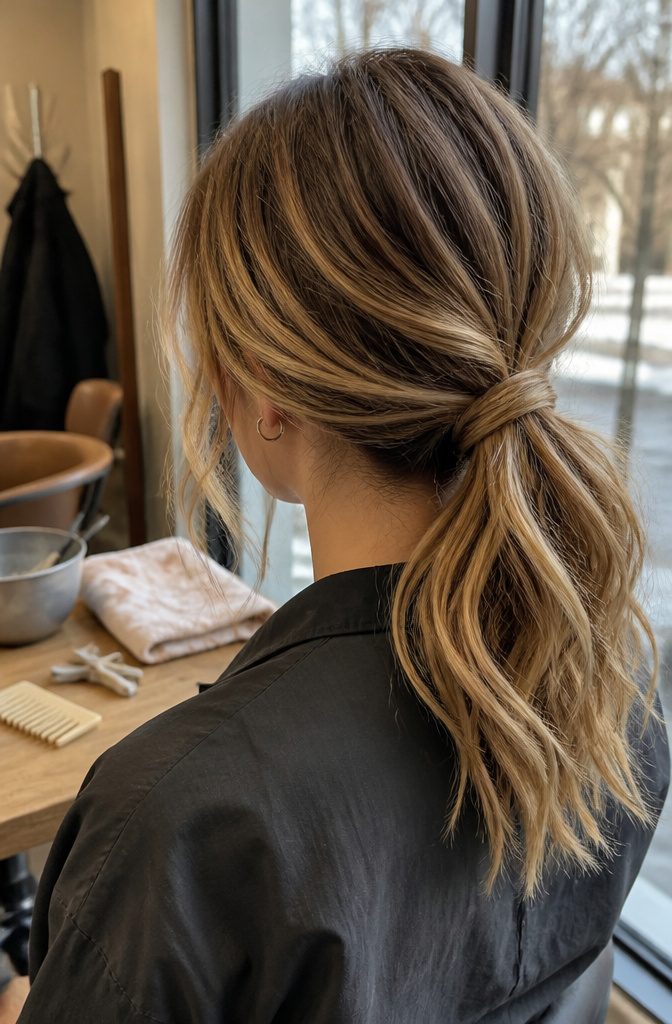
Bronde sits between brown and blonde, close enough to your natural base that regrowth looks intentional rather than overdue.
The blend can be adjusted lighter or darker depending on how much blonde you want showing through, which makes it easier to inch toward brightness without committing to a full head of bleach.
Any skin tone can carry bronde because the ratio of brown to blonde shifts to suit you.
The appeal is obvious if you want blonde brightness but not the maintenance that comes with it.
Fewer appointments, less damage, and roots that fade rather than announce themselves. Bronde softens the line between your roots and your lightest pieces, so you give up some of the bright, high-contrast pop of a full blonde.
Bronde reads softer and more blended than high-lift blonde or sharp highlights, so if you want hair that turns heads across a room, this is not the technique that does it.
But if you want dimension you can live in without planning your calendar around touch-ups, bronde delivers that better than most other options on this list.
9. Strawberry and Rose-Gold Blonde
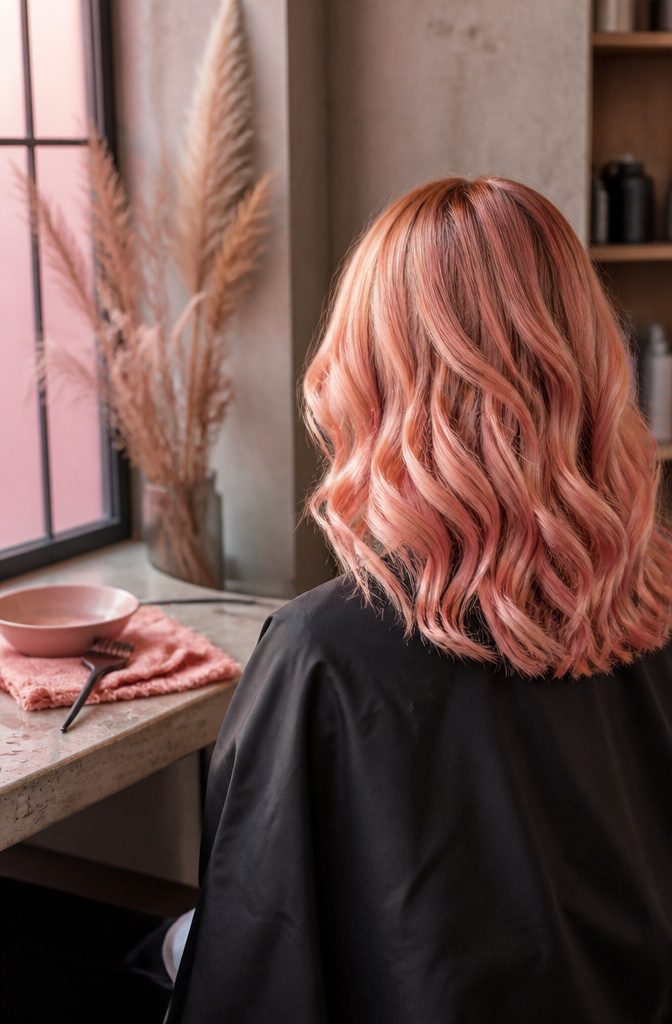
Strawberry and rose-gold blonde pull pink, red, copper or pastel rosy tones into lighter bases, and the range is wider than most people expect. Strawberry blonde sits brightest and warmest, with a pinkish overtone that reads clearly against fair skin.
Rose gold leans metallic and softer, built on a light blonde base with a pastel cast that catches candyfloss tones in certain light. Wella’s palette includes a pink platinum that keeps all the airiness of platinum while reflecting rosy gloss.
These shades ask for more upkeep than natural blonde.
Fashion tones fade faster, and keeping the pink or copper visible means regular toning appointments with a colorist. At home, a color-depositing mask in pink blush can stretch the time between visits, but the pastel versions especially need consistent attention.
If you want to brighten red hair without losing warmth entirely, strawberry blonde bridges the gap. For something cooler and more experimental, rose gold offers a way into lighter color that still feels distinct.
10. Balayage
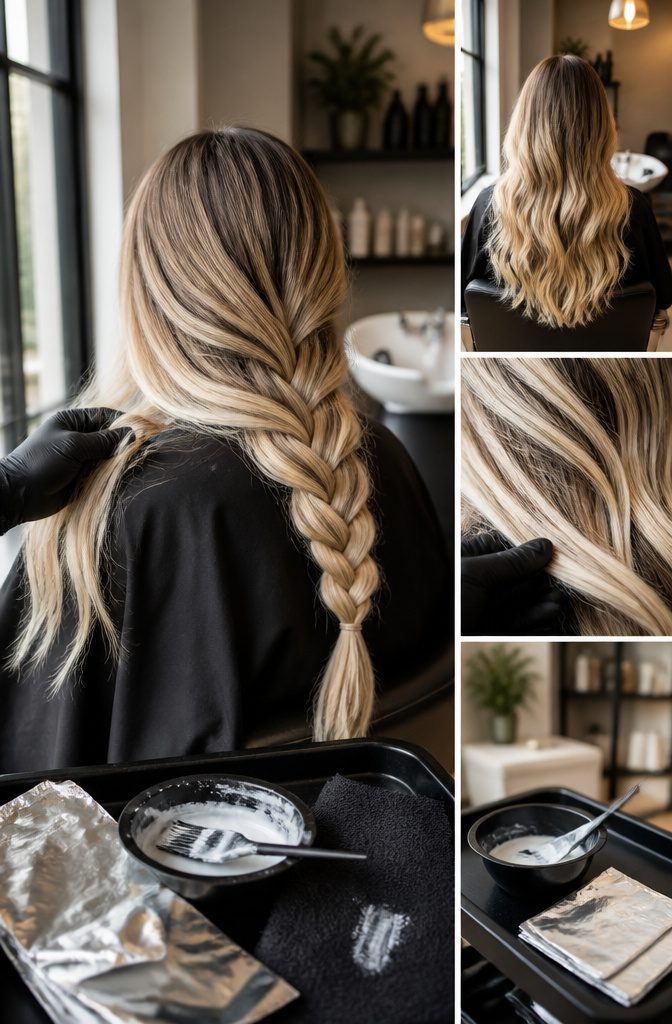
Balayage comes from the French balayer, to sweep. The technique is hand-painted rather than foiled in sections, which gives a softer blend and a less obvious grow-out than traditional highlights.
That makes it lower maintenance: you can stretch appointments three to six months instead of touching up every six weeks. Expect to pay $350 to $800 depending on your starting color and how much lightening the colorist needs to do.
Balayage is not the same as highlights or ombré, though you can combine them. Highlights are more structured and precise, brighter and more defined, but they grow out with a harsher line.
Ombré is a fade from dark roots to light ends, more dramatic and two-toned. Balayage sits in between: natural, blended, lived-in.
I would not attempt blonde balayage at home. The hand-painting matters, and lifting dark hair to clean blonde without turning it orange takes control over heat and lightener placement that a kit does not give you.
11. Ombré or Rooted Blonde
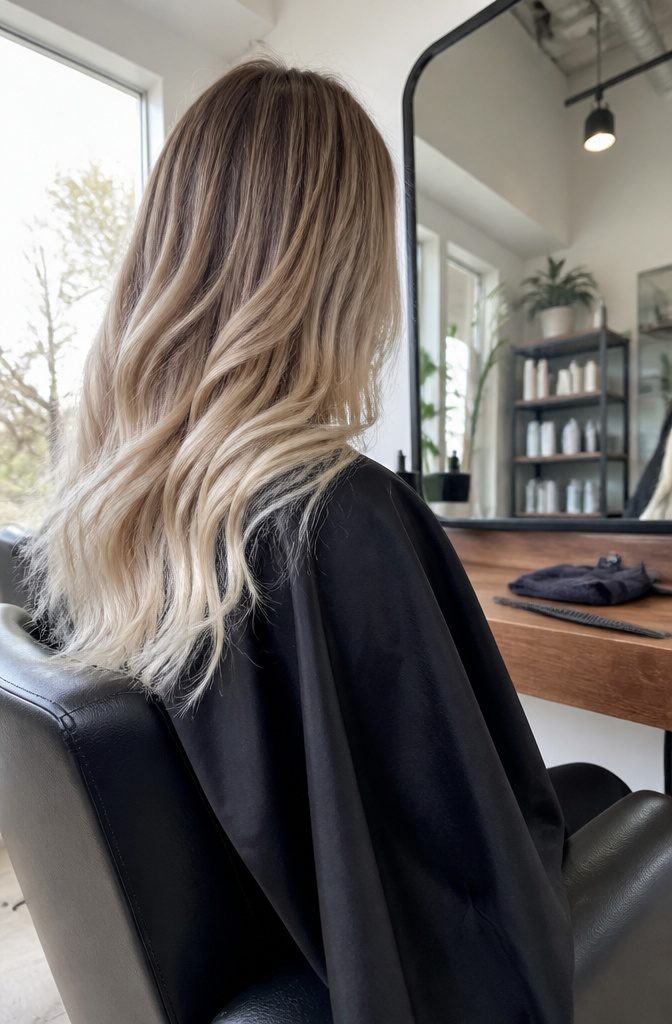
Ombré keeps the lightness in the lower half: a darker root or base, then a gradual shift to lighter mid-lengths and ends.
It reads as a more dramatic take than balayage because the fade is a clear two-tone contrast rather than scattered brightness.
My favorite version is vanilla chai, soft brown roots melting into milky blonde. It runs cool or warm, so it works on any skin tone.
Upkeep is where this look wins. A solid blonde shows regrowth as a stripe at the part, while a darker root is already part of the design.
A shadow root grows out as a longer base, not a visible line, which means fewer pricey salon trips. I’d choose it over solid blonde for anyone who hates touch-ups.
12. Face-Framing Highlights
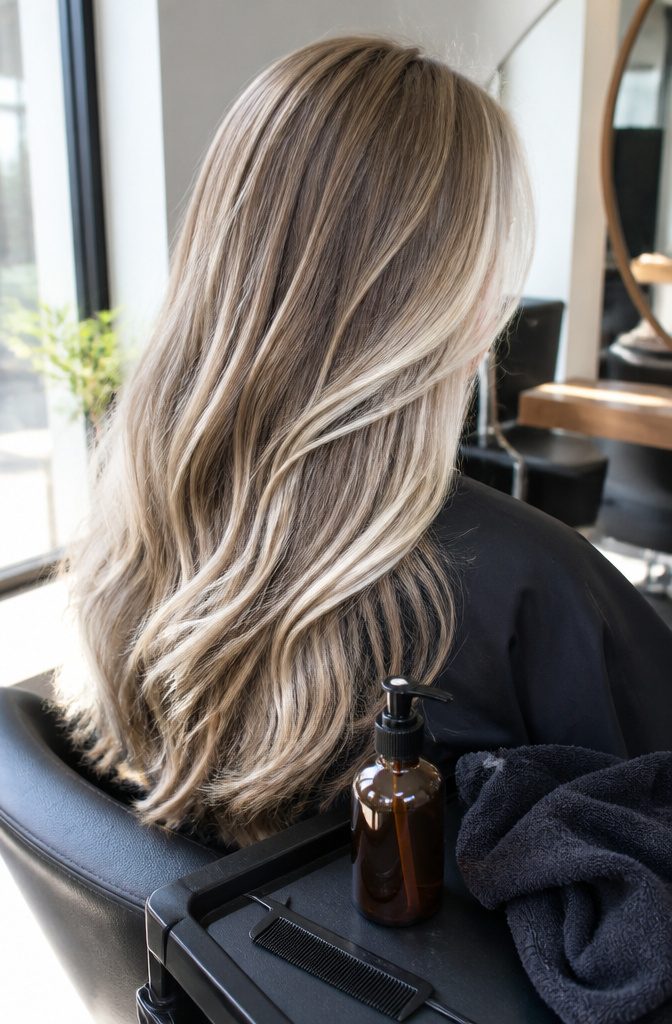
Face-framing highlights put the brightness exactly where it shows: around your face, lifting your complexion without committing to allover color. If you want a pop of radiance without changing your base, this is the technique that delivers it.
The finer hair at the front lifts more gently than the rest, so you get dimension and contrast with less processing time and less grow-out drama.
I like the look best when the frame is noticeably lighter than the lengths.
Platinum face-framing against ash blonde is one version, sharp and modern. Brighter pieces around a muted natural blonde base is another, softer but still effective.
Wella’s Platinum Blonde Face-Framing Highlights take the contrast all the way, giving you that high-lift frame that stands out. Finish with a smoothing oil serum for shine and the look reads polished, not just bright.
13. Babylights or Highlights
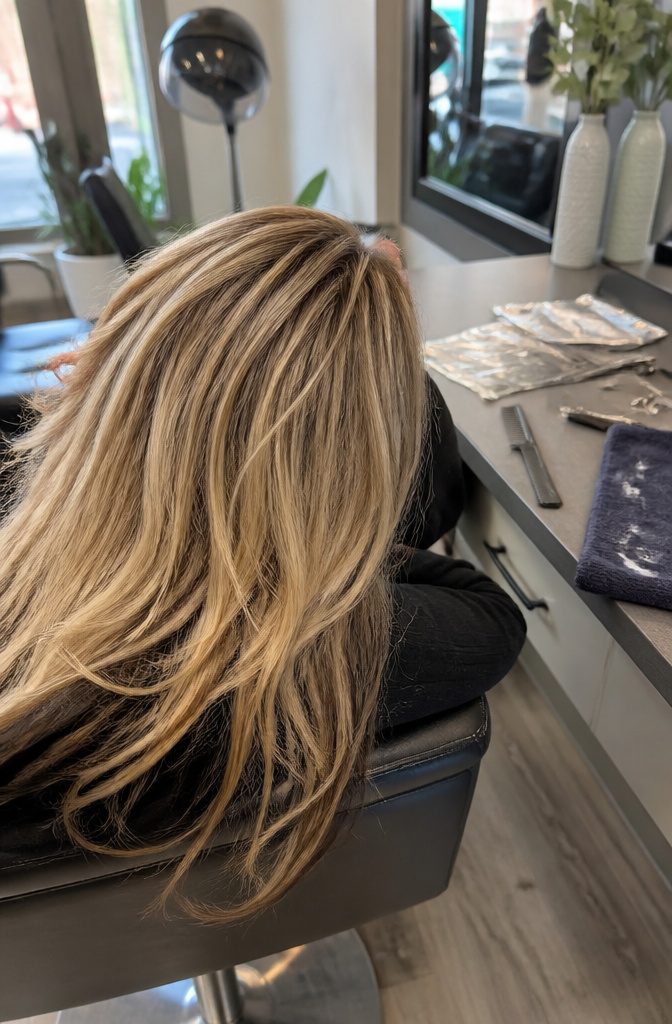
Babylights or Highlights
Babylights are fine, hair-thin ribbons of color painted through the surface to mimic the way sun hits naturally, while highlights are thicker and sit in more defined sections.
Babylights sit close together and tend to read as soft, all-over brightness rather than obvious stripes.
Highlights, by contrast, give you structure and contrast you can actually see as separate pieces, especially around the face and crown where they catch light.
Placement matters more than thickness sometimes. Highlights woven through the top layers lift the whole head visibly, while babylights scattered across every section blend into the base and look dimensional rather than striped.
If you want the result to look intentional and bright in photos, highlights do that work faster.
Babylights take longer to place and cost more per session, but they also grow out softer because there is no heavy line where color stops.
14. Dimensional Blended Blonde
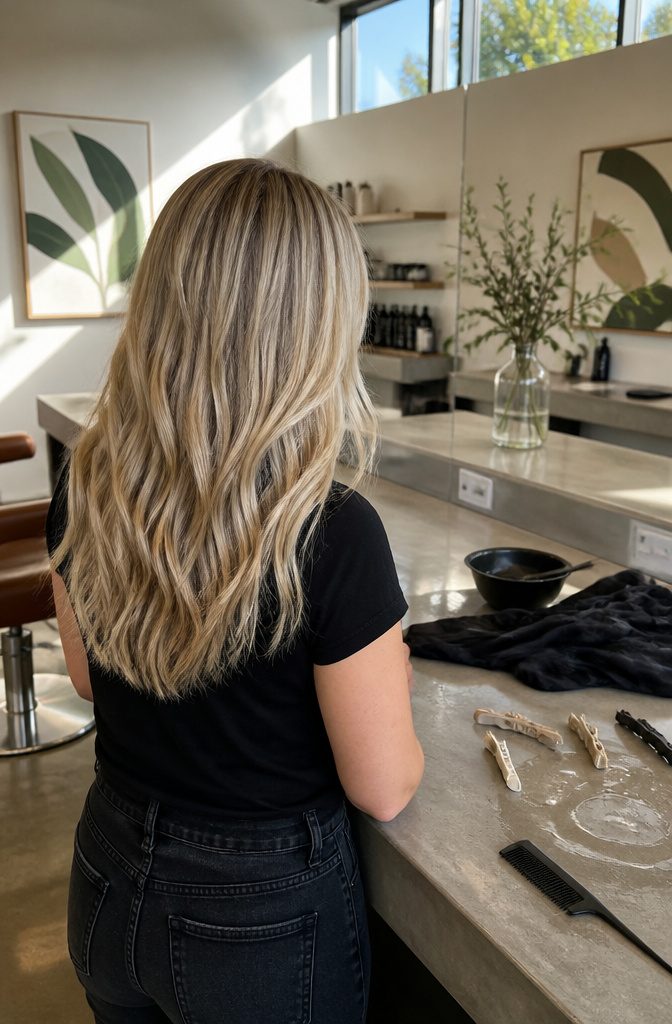
Dimensional blonde replaces one flat shade with highlights, mid-lights and lowlights in several tones, so the eye reads depth instead of a solid block.
I like Dwell’s 2:1 approach for building it: two dominant tones balanced with one contrasting tone. Warm skin and eyes pair with a cooler blonde as the contrast, while cool skin and eyes take a little warmth.
Real blonde hair already works this way, as colorist Jenna Perry puts it:
"A natural blonde always has many nuances."
— Allure
Copying those nuances is what hides grow-out.
Lowlights and mid-lights sit close to your base, so the root has no hard line to give away. In photos, the tonal contrast catches light and looks like depth rather than a flat sheet.
Match Blonde to Undertone
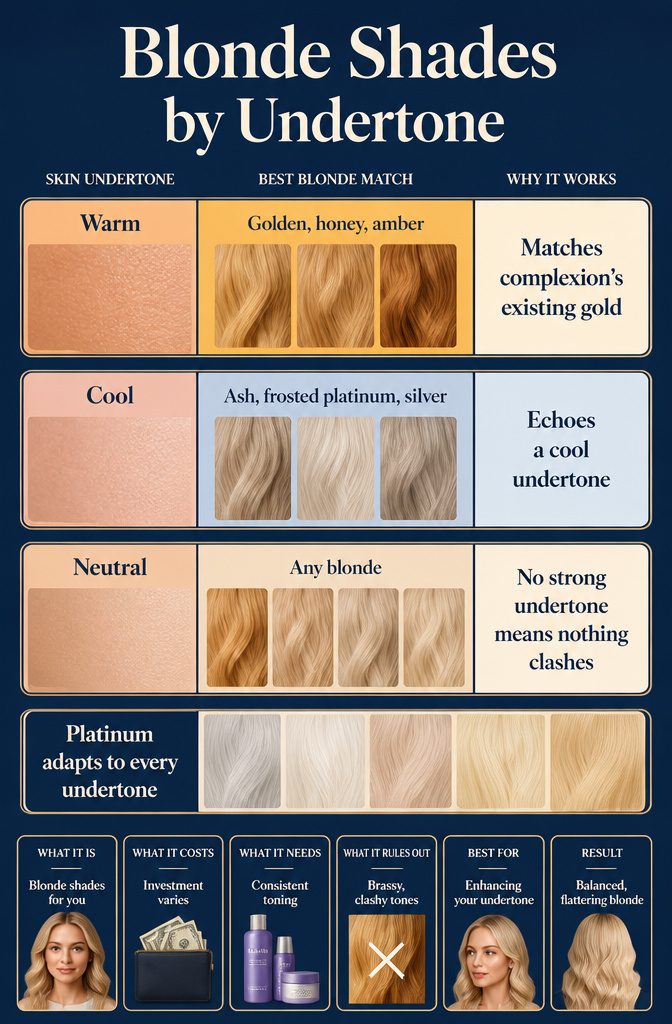
Warm skin pairs naturally with golden or honey tones, while cool undertones suit ash and platinum shades that lean silvery or icy. If you fall somewhere in the middle, you can wear a wider range without clashing.
| Skin undertone | Best blonde match | Why it works |
|---|---|---|
| Warm | Golden, honey, amber | Matches the existing gold in your complexion |
| Cool | Ash, frosted platinum, silver-toned | Echoes the cool base without fighting it |
| Neutral | Any blonde | No strong undertone means nothing clashes |
Platinum is the exception.
It works on any skin tone as long as the undertone inside the blonde is chosen well: warm skin can wear a clean, snowy platinum for contrast or a softer yellow-leaning version that blends; cool skin looks right with frosted or blue-toned platinum, or golden tones if you want warmth.
Neutral skin takes all of them, so the choice comes down to the mood you want rather than what your complexion demands.
Talk to a Colorist
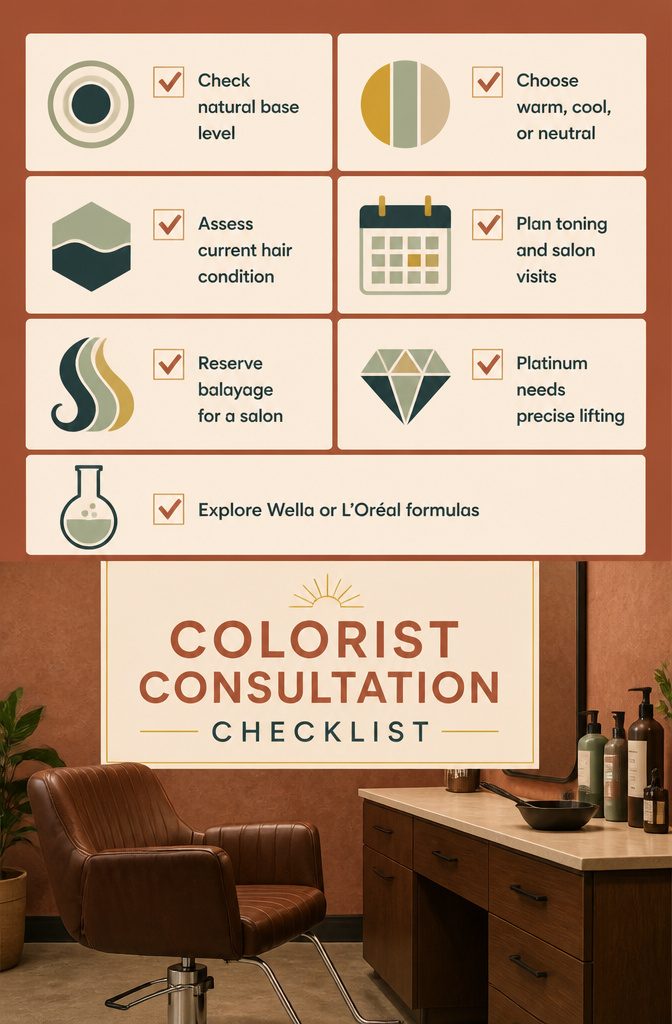
Before you commit to a shade, sit down with a colorist who can weigh what you’re starting with and what will hold up under your routine. They’ll look at:
- Your natural base color and how many levels of lift you need to reach the blonde you want
- Skin undertone, which steers you toward warm gold, cool ash, or neutral beige
- Current condition, because damaged hair struggles with high-lift processes like platinum
- Maintenance commitment — how often you’ll tone, how long between salon visits, whether you’ll handle root touch-ups at home
DIY kits work for subtle shifts or single-process color, but multi-dimensional looks like balayage belong in a salon. Platinum requires serious lifting and precision; one misstep turns patchy or costs more to fix than the original appointment.
Wella and L’Oréal publish formula systems and product lines that many colorists lean on, so if you’re curious about the chemistry behind your color, those brands break it down.
Blonde Upkeep and Grow-Out
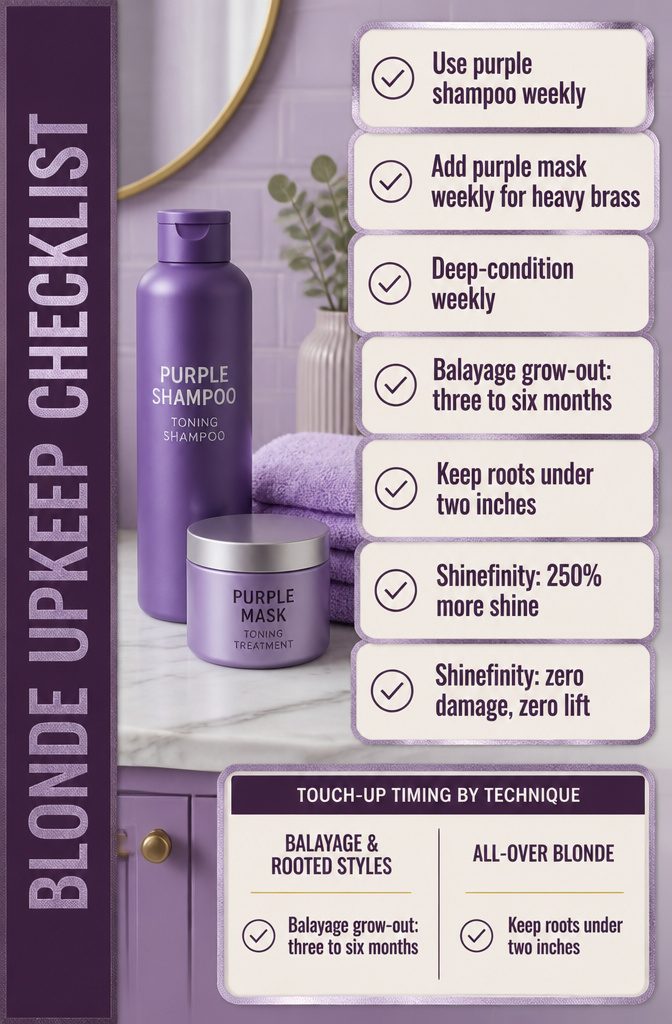
Blonde holds its best only if you stay on top of toning, conditioning and the calendar. How often depends entirely on which technique you chose.
- Purple shampoo weekly neutralizes brassy orange and yellow tones before they take over. If brassiness runs heavy, add a purple mask once a week, but no more; overuse tints hair purple.
- Deep conditioning mask weekly is non-negotiable. Lighter hair reflects less light, so shine takes work. A color-safe formula keeps blonde glossy and easy to detangle.
- Touch-up timing varies by technique. Balayage and rooted styles stretch three to six months between appointments because the grow-out reads soft. All-over blonde shows roots faster and needs more frequent visits. Keep roots under two inches if you want the look to stay polished.
- Toning with Shinefinity delivers 250% shinier hair versus untreated bleached hair, zero damage, zero lift. Ask your colorist for it when blonde needs a refresh without another round of bleach.
Bleach and Breakage
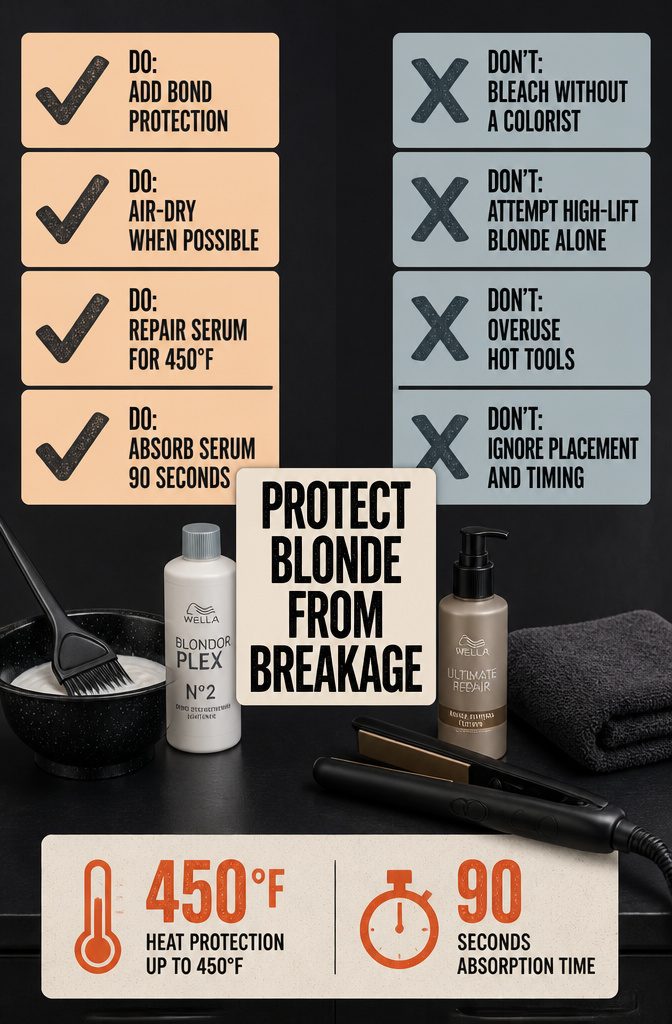
Bleaching lifts pigment fast, but the chemistry that opens the cuticle also pulls moisture and weakens the bonds holding hair together.
BlondorPlex claims up to 97% less breakage thanks to WellaPlex N°2, a bond-strengthening ingredient mixed into the lightener itself, so you get lift and protection in the same step.
After color, a bond-repairing serum protects against temperatures up to 450°F if you do reach for hot tools, though cutting back on heat gives bleached hair the best shot at staying intact.
The repair product absorbs for 90 seconds, then you style as usual.
I’d leave balayage and any high-lift blonde to a colorist.
The difference between sun-kissed and patchy sits in placement and timing, and a corrective appointment costs more than the original would have. At home, bond care and air-drying when possible keep breakage in check.
Mixing Tone and Technique
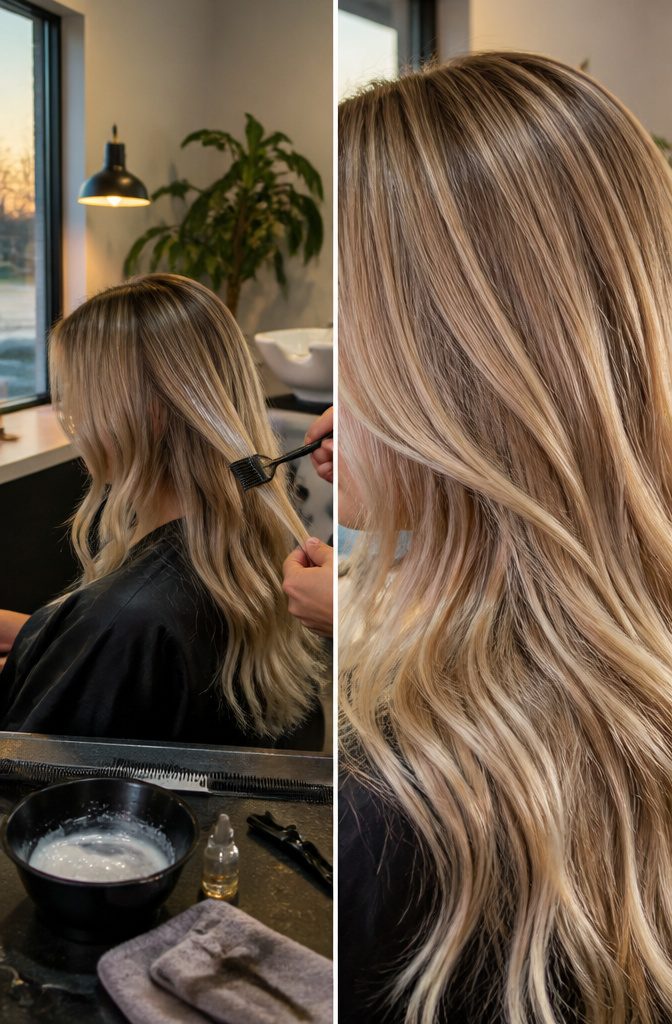
Blonde is four choices stacked: shade, undertone, placement and finish. Take a cool champagne tone.
As balayage, it stays softer at the root and turns bolder and brighter toward the ends. Applied all over, the same tone is uniform, with no darker roots to stretch the time between visits.
Vanilla chai sits in between: soft brown roots melting into lighter ends, and I like that it can run cool or warm to match your skin.
For finish, Illumina Color gives up to 3 levels of lift and 100% gray coverage, while demi-permanent Color Touch leaves a multi-tonal shine.
Placement sets how much upkeep you sign up for, and warm golds fade fastest, so plan on a tint rinse.
Frequently Asked Questions
What skin tone looks good with platinum blonde hair?
Platinum can work on any skin tone if the undertone inside the blonde is chosen well.
Warm skin can take a clean, snowy platinum for contrast or a softer yellow-leaning one that blends in. Cool skin looks right with frosted or blue-toned platinum, and neutral skin can wear any of them.
How do I get platinum blonde hair?
Book a colorist, who will pre-lighten your hair and then tone it to cancel leftover warmth.
A dark base may need more than one session. A box lightener exists, but for anything near white a professional is the safer route.
Will blonde hair dye lighten my hair?
It depends on your starting color and how much lift you want.
A permanent blonde dye can handle a subtle shift or single-process color at home, but going much lighter on dark hair takes lightener and sometimes several sessions. Multi-dimensional looks like balayage belong in a salon.
How do I maintain colored blonde hair?
Use purple shampoo once a week to cancel brassy orange and yellow tones, and add a deep conditioning mask weekly.
A purple mask is fine too, but no more than once a week or it can tint the hair purple. Cutting back on heat styling helps bleached hair stay intact.
What is the difference between balayage, highlights, and ombré?
Balayage is hand-painted for a soft, blended look, highlights are more structured and defined, and ombré fades from a dark root to light ends.
Highlights grow out with a harsher line, while balayage grows out softly. Ombré is the most dramatic of the three because it reads as two clear tones.
How much does blonde balayage cost?
Expect to pay $350 to $800. The final price depends on your starting color and how much lightening the colorist has to do.
How long does balayage last on blonde hair?
Balayage typically lasts 3–6 months between appointments. The grow-out is soft and less noticeable than with foiled highlights, so you don’t see a harsh line as the roots come in.
Can I do blonde balayage at home?
No, it’s best left to a trained colorist. Hand-painting takes control over lightener placement, and lifting dark hair to clean blonde without turning it orange is hard with a kit.
A DIY attempt can end up patchy or brassy and cost more to correct than the salon visit would have.