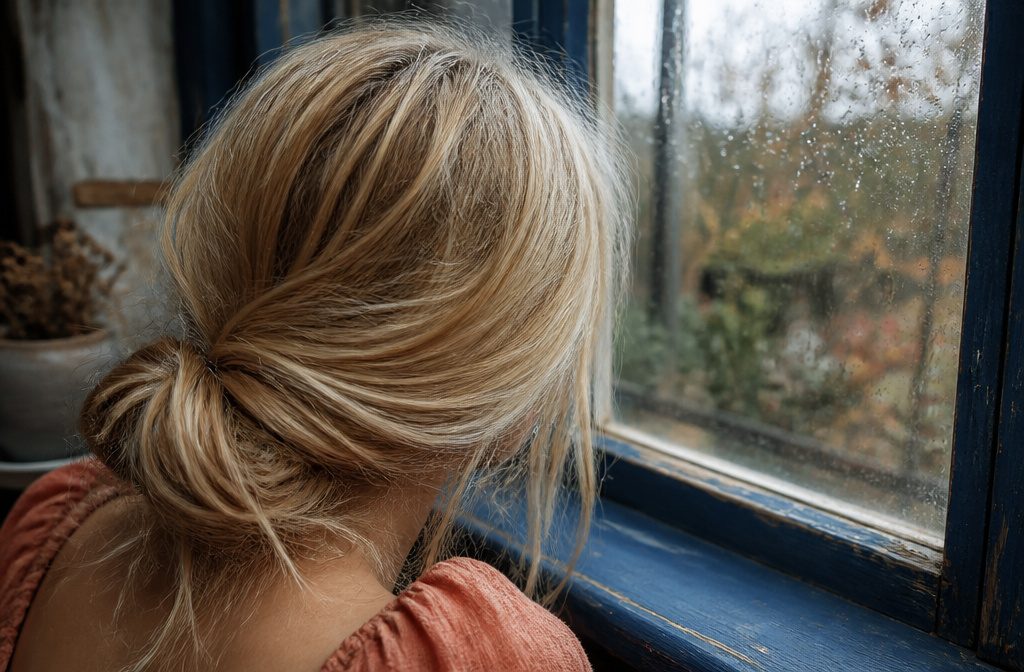
Natural light blonde hair describes hair with low eumelanin pigment that produces pale yellow tones, ranging from whitish-platinum to golden or sandy shades.
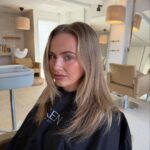
What separates it from bottle blonde is dimensional color: natural blondes show ribbons of warm mid-lights woven through bright highlights, plus slightly deeper roots that ground the overall effect.
Only 2% of people stay bright blonde into adulthood, which is why recreating childhood color proves harder than expected.
What Natural Blonde Hair Actually Means
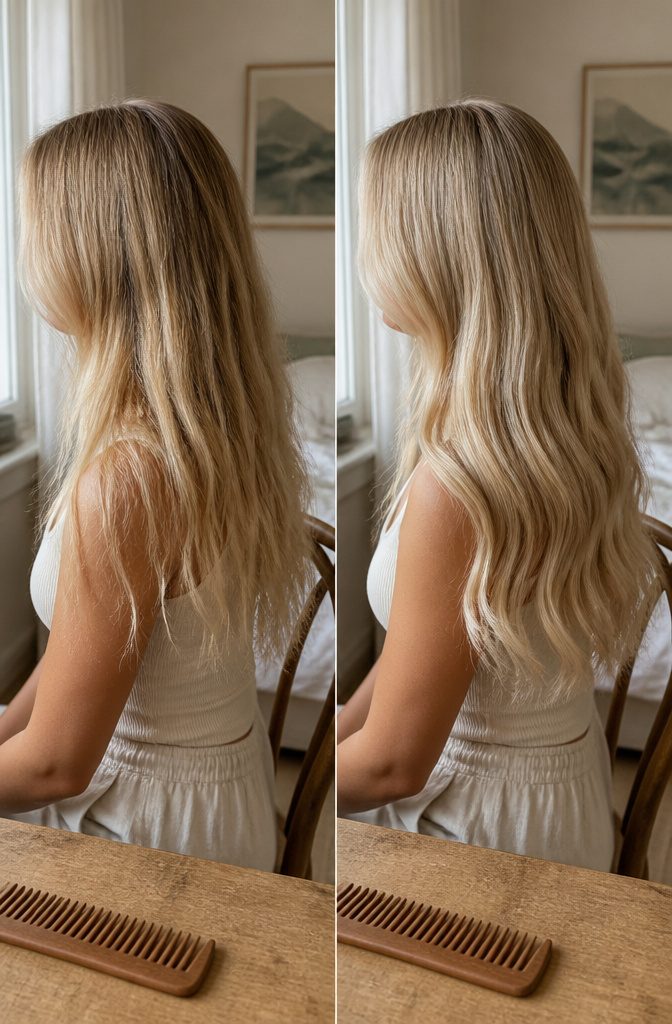
Blond hair gets its pale appearance from low levels of eumelanin, the dark pigment that gives brown and black hair their depth.
Without much eumelanin to darken the strand, what remains is a yellowish base that shifts across a surprisingly wide spectrum.
Natural blondes span everything from very pale, almost whitish tones caused by scarce pigment distribution, to reddish strawberry shades and golden-brown sandy hues that carry more eumelanin.
The key difference between naturally grown blonde and the kind that screams "from a bottle" is dimension. Celebrity colorist Matt Rez puts it plainly:
Children’s hair is not one color blonde. It has the depth of the natural base color — wisps of warm mid-lights that pop the bright blonde highlights. It’s like ribbons of colors melting together perfectly.
— Allure
That blend matters. True natural blonde combines highlights and lowlights in a way that catches light differently as you move, mixing warm, neutral and cool tones across the head.
Many natural blondes also show a slightly deeper root where hair growth begins, which keeps the overall effect grounded rather than artificially uniform.
Why Childhood Blonde Darkens Over Time
Many of us who started out as towheaded kids watched our hair darken somewhere along the way, and the shift is not just perception.
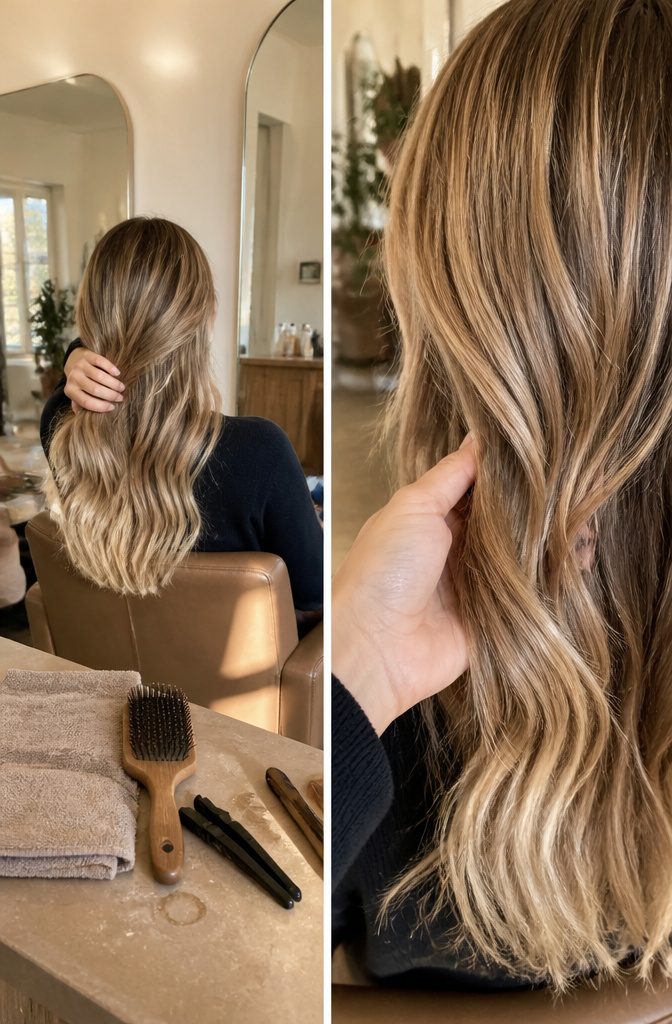
Childhood blonde is rarely one flat color. It runs as ribbons of depth and brightness melting together: the natural base gives dimension, mid-lights add warmth, and bright highlights pop through where the light catches.
That mix fades as eumelanin, the pigment responsible for brown and black tones, increases with age and hormones. Some people lose the bright blonde by puberty, others hold onto it into their twenties before it dulls.
Only 2% of people stay bright blonde into adulthood. The rest of us end up somewhere between muted dark blonde and light brown, and recreating what we had at seven turns out to be trickier than it sounds.
A natural blonde is made of several tones at once, and a single shade can’t match that, so balayage usually works better than all-over color for getting the childhood look back.
The Range of Blonde Shades
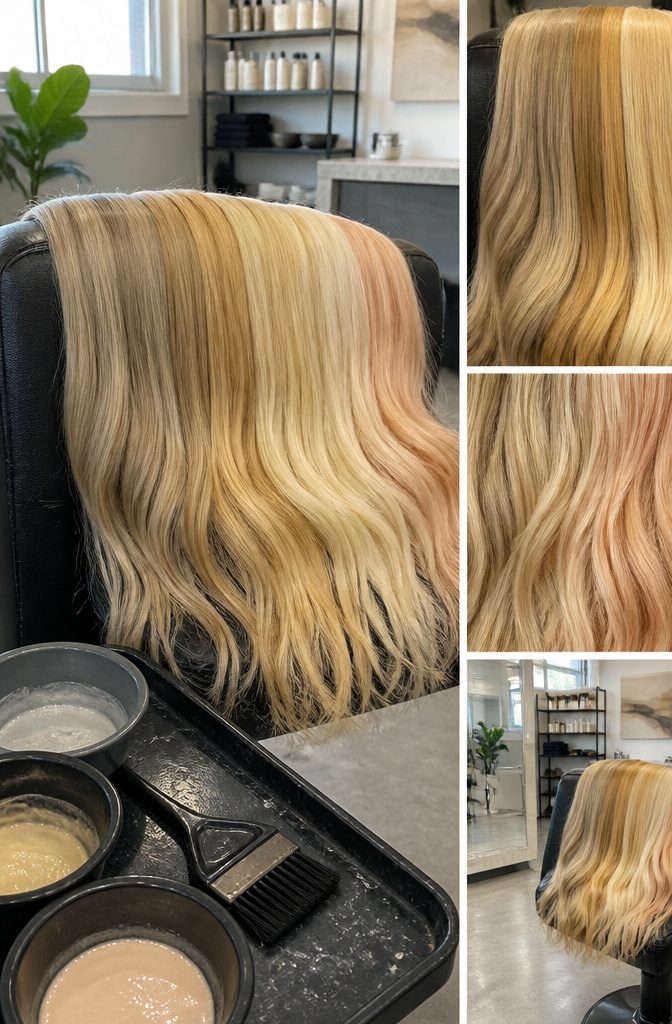
Blonde begins at ash and ends at strawberry, and between them sit dirty blonde, golden, honey, platinum and sandy.
Flaxen blonde describes a light, clean yellow with no red or brown; towheaded or platinum refers to the whitish-blond that catches the most light.
Dirty blonde runs darker, with streaks of gold and brown woven through. Golden blonde skews to a rich yellow, honey blonde goes deeper and more iridescent, and sandy blonde reads as grayish-hazel or cream.
When you’re matching a shade to natural light, honey and golden tones reflect warmth, while ash and beige offer muted, cooler finishes.
Champagne sits neutral between the two. Strawberry blonde, sometimes called Venetian, pulls reddish rather than yellow.
I find the clearest palette descriptions come from the dye boxes themselves: butterscotch for medium blonde, crisp winter day for ash, sandy beach for light ash, and gleaming opal for ultra light.
How to Pick a Shade That Looks Natural on You
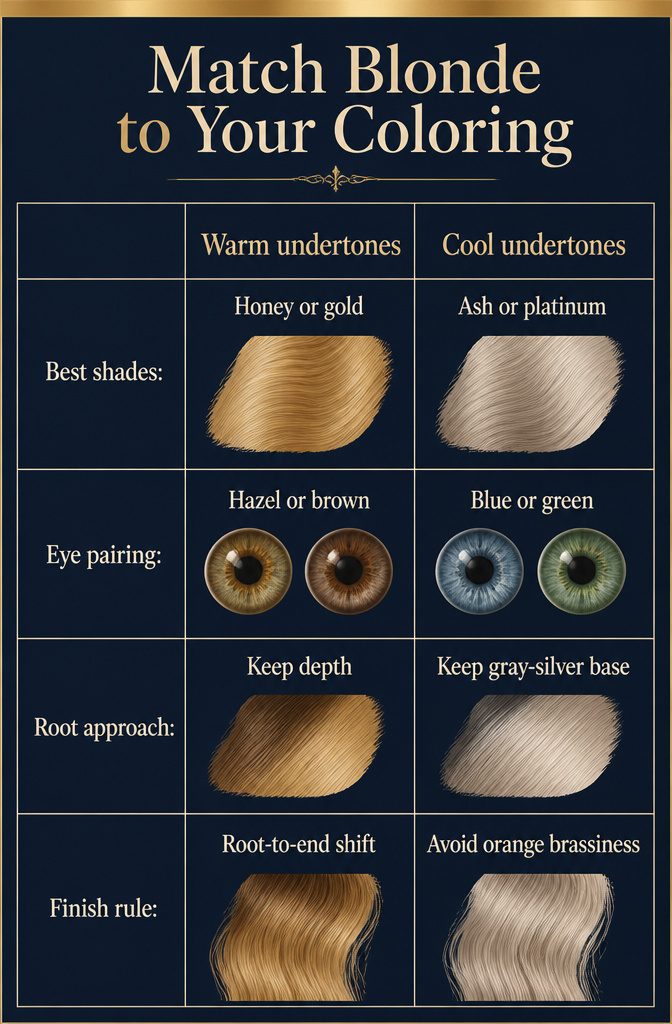
Your skin undertone is where the decision starts.
Warm undertones look best in honey or gold, the kind of blonde that leans toward caramel rather than ice. Cool undertones suit ash or platinum shades, which keep the gray-silver base that prevents the color from reading orange or brassy.
Neutral undertones can cross over and wear either direction comfortably. If you are not sure which camp you fall into, think about whether gold or silver jewelry sits better against your wrist.
Eye color narrows it further. Light eyes like blue and green pair with pale, bright blondes that stay on the cooler or more translucent end of the spectrum.
Hazel and brown eyes look better against warm, golden, or bronzed tones that offer contrast rather than washing out against the iris.
Keep your roots and brows in the frame when you pick a level.
A single flat tone across the whole head reads artificial no matter how expensive the formula. Natural blonde hair shifts by an inch or two from root to end, and brows that disappear entirely pull focus rather than blending in.
Permanent Color, Bleach, or Highlights
Permanent color lifts one or two shades, and a kit is usually enough. Darker starting hair needs bleach to clear the deep pigment, and previously colored hair needs extra care.
Balayage, highlights and mid-lights brighten hair while keeping a darker base.
For a natural finish, one professional video layers shades across at least three depths: deeper tones underneath, lighter ones on top, a level 7 melted into the root and a level 10 around the face for shimmer rather than chunky stripes.
I’d book a salon for heavily damaged hair or a multi-tonal change.
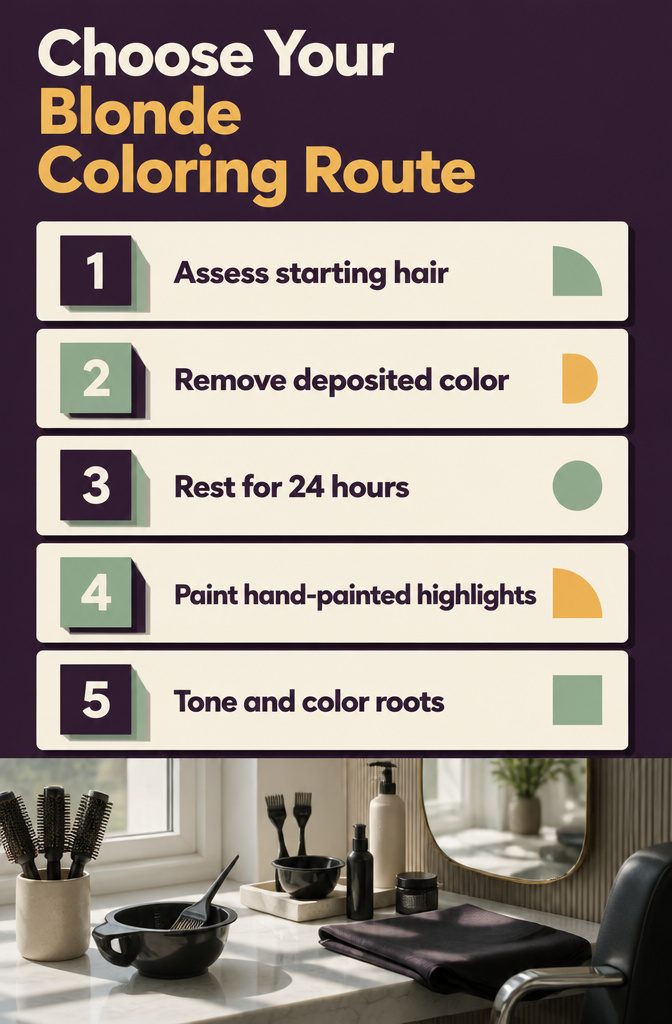
Without bleach at home, the route is color remover, a 24-hour rest, hand-painted highlights, then root color and toner. Recruit a helper for the highlights.
Keeping Blonde Fresh and Bright
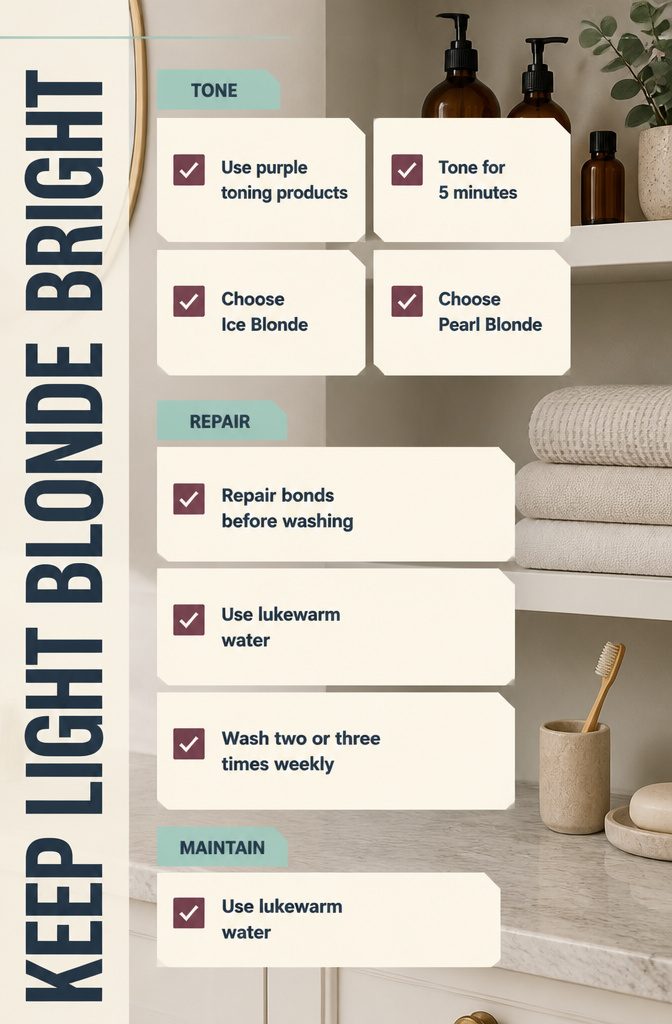
Light blonde needs a maintenance rhythm if you want it to stay that way. A few moves keep brassiness down and strength intact.
Purple toning products neutralize the warm, orange, or yellow tones that show up in bleached or lightened hair.
L’Oréal Paris Fèria Power Toner works in as little as 5 minutes on damp, clean hair right after coloring, with options in Ice Blonde and Pearl Blonde.
Bond-repair care matters more once you’ve lifted color. Lightening processes weaken the internal structure of the hair, so I reach for:
- L’Oréal Paris EverPure Bond Repair+ Pre-Shampoo to reinforce weakened bonds before washing
- EverPure Sulfate-Free Bond Repair+ Shampoo with citric acid to cleanse and repair at once
- EverPure Sulfate-Free Bond Repair+ Conditioner to detangle and smooth color-treated strands
Wash two or three times a week with lukewarm water to protect shine. If you go with partially rooted balayage, you buy more time between appointments.
How Blonde Shades Vary Across Warm and Cool Tones
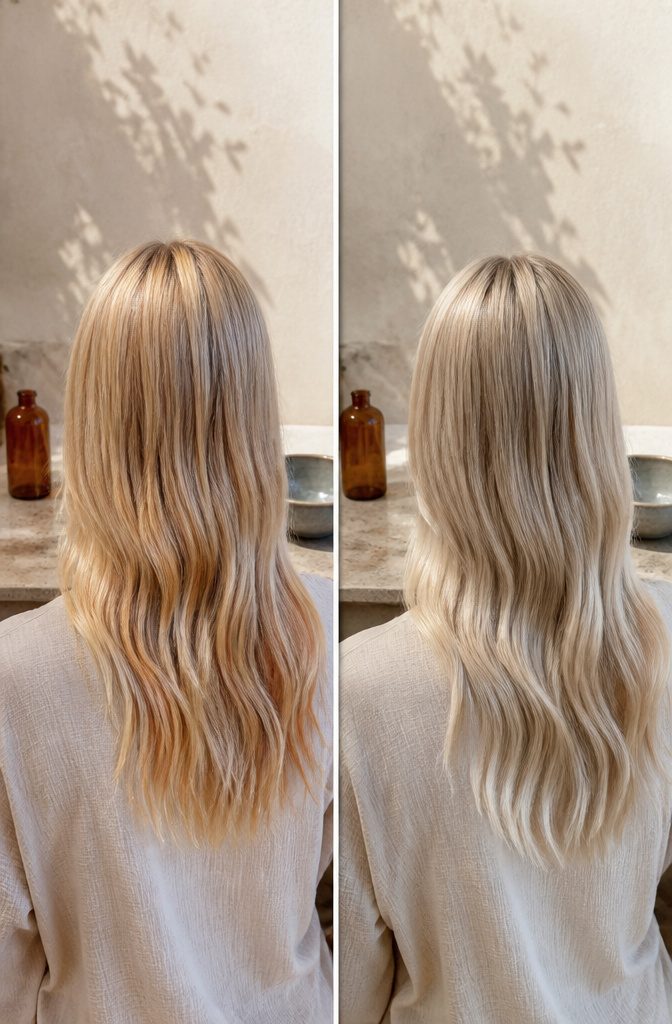
Blonde runs on a warm-to-cool axis, and that axis decides whether a shade reads as honeyed or smoky. Golden blonde sits on the warm end: think honey, caramel, or butter tones that lean yellow or amber.
Ash blonde is the cool opposite, pulling gray or silver without any warmth. Platinum lives at the coldest edge, whitish and nearly metallic.
Between those poles you find sandy blonde, which reads as grayish-cream, and dirty blonde, a darker shade flecked with both gold and brown. Strawberry blonde adds red to the mix, landing somewhere between blonde and auburn.
The warmth or coolness of a shade changes how it pairs with your skin undertone, so a golden blonde that glows on warm skin can look brassy on cool, while an icy ash that complements cool tones may wash out warm complexions.
At-Home Coloring Candidacy and Caution
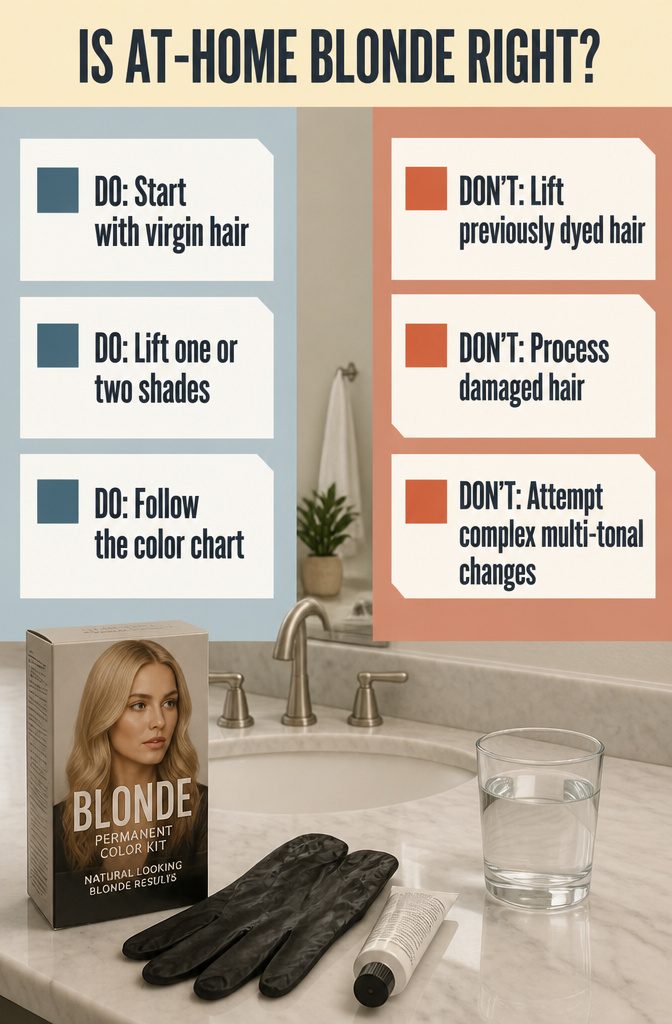
Virgin hair takes color most predictably, which makes it the strongest candidate for an at-home transformation to natural light blonde.
If your hair has never been dyed, you can lift it one or two shades lighter with a permanent color kit and expect the result to match what you see on the color chart.
Previously colored hair requires more caution. Lifting deposited pigment demands stronger developers and more processing time, and the risk of uneven lift or brassiness climbs fast.
If you are starting from a natural level 7 Medium Blonde and want highlights, you can use 20 Volume Developer for subtle dimension or 30 Volume for a bolder lift.
Wait 24 hours between applying color remover and processing highlights, then leave the lightener on for 40 minutes.
Shades like 5.53 Chocolate Brunette lowlight the base, while 902 Extra Light Beige Blonde, 8.2 Light Beige Blonde, and 10.2 Very Light Beige Blonde build the blonde tones across different sections.
Damaged hair or a complex multi-tonal change belongs in a professional chair, not your bathroom.
The Appeal of Darker, Dishwater Blonde
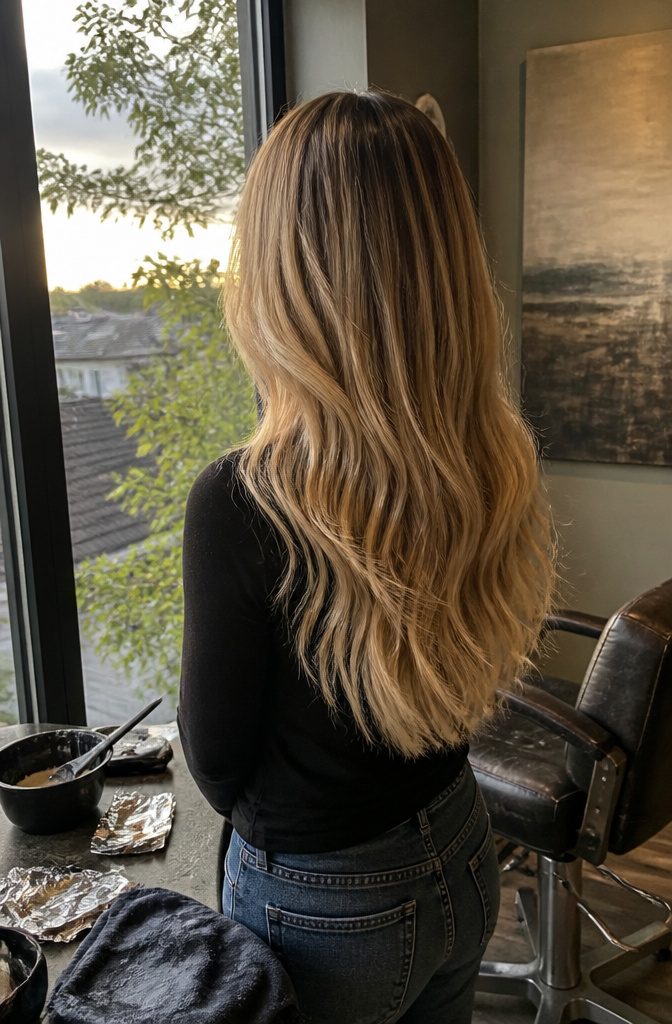
Dark blonde used to be the shade people apologized for. "Dishwater" was an insult, not a goal.
That has flipped. The partly rooted look once dismissed as neglect now reads as intentional, and colorists report clients asking to go darker rather than brighter.
The appeal is practical. Hair grows fast, regrowth shows up on schedule, and a darker base with lighter ends works with that rhythm instead of fighting it.
The root blend stays soft, the grow-out period stretches longer, and the upkeep drops to a few times a year instead of every six weeks.
Brightness comes from placement, not overall lift.
Face-framing highlights bring light where it shows without committing the whole head to maintenance. Mid-lights bridge the gap between highlights and the natural base, weaving in controlled warmth so the lighter pieces stand out instead of floating.
The technique is a cleaner version of ombré, with a soft blend instead of stripes, and it lets natural blondes keep most of their original color while still looking polished.
Frequently Asked Questions
What is considered a natural blonde?
Natural blonde means dimension and variation rather than one flat shade.
It combines highlights and lowlights in warm, neutral and cool tones that catch light differently as you move, with roots that sit slightly deeper than the ends. That blended mix is what keeps the result from reading artificial.
What is a natural, light blonde hair color?
Natural light blonde spans from pale, almost whitish tones to golden and sandy hues, defined by low eumelanin levels that leave a yellowish base.
The lightest versions include flaxen, towhead and platinum, which appear whitish and catch the most light. True natural light blonde shows varied tones across the head rather than a single uniform shade.
What is really light blonde hair called?
Very light blonde goes by platinum or towhead when it reaches a whitish shade that reflects the most light.
Flaxen describes a clean, pale yellow without red or brown tones. These terms all refer to blonde at its brightest end of the spectrum.
Can dark hair become natural-looking blonde?
Yes, dark hair can shift to blonde if you lift the color gradually with bleach and follow with toner to clear orange pigment.
Balayage works better than all-over color because it creates the depth and dimension that natural blonde shows. Starting from a much darker base calls for a professional, since lifting it at home often leaves uneven patches or brassy tones.
Does blonde hair require bleach?
Bleach is necessary when your starting hair is much darker than the blonde you want.
If you’re only lifting 1 or 2 shades, permanent color can handle the shift without separate bleach. Previously colored hair needs stronger developers and more processing time, which raises the risk of damage.
How do I keep blonde hair from turning yellow?
Purple toning products neutralize the warm, orange or yellow tones that show up in bleached hair.
L’Oréal Paris Fèria Power Toner works in 5 minutes on damp, clean hair right after coloring. Use it consistently between coloring sessions to keep blonde cool and bright.
What’s the difference between ash blonde and golden blonde?
Ash blonde pulls gray or silver without warmth, making it the cool end of the spectrum that suits cool skin undertones.
Golden blonde leans yellow or amber with honey and caramel tones, sitting on the warm end and working best with warm undertones. The axis runs from smoky to honeyed, and that difference changes how each shade pairs with your complexion.
What is the rarest natural blonde hair color?
Only 2% of people stay bright blonde into adulthood, making naturally sustained light blonde the rarest form.
Most natural blondes see their hair darken by puberty or their twenties as eumelanin increases with age and hormones. The childhood towhead shade that holds through adulthood without darkening is statistically uncommon.