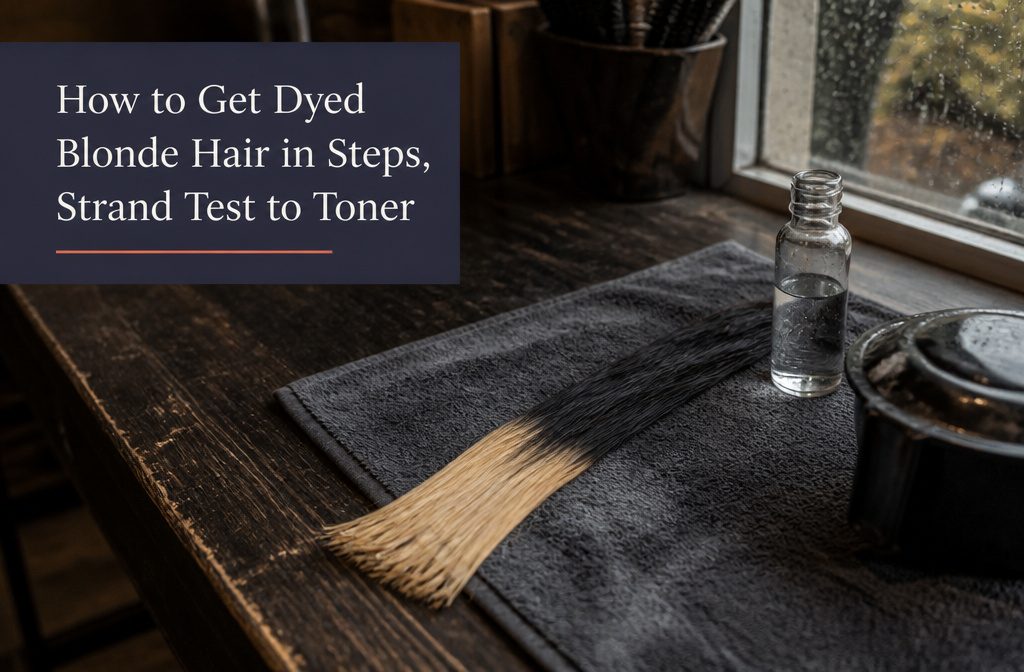
Golden blonde from near-black hair takes at least 8 levels of lift, so bleach comes first, and platinum means multiple sessions spaced a few weeks apart.
The stage that goes wrong is application: roots lift faster than the lengths, so start 1 inch from the scalp and add the roots last.
1. Choose Your Blonde Shade by Undertone
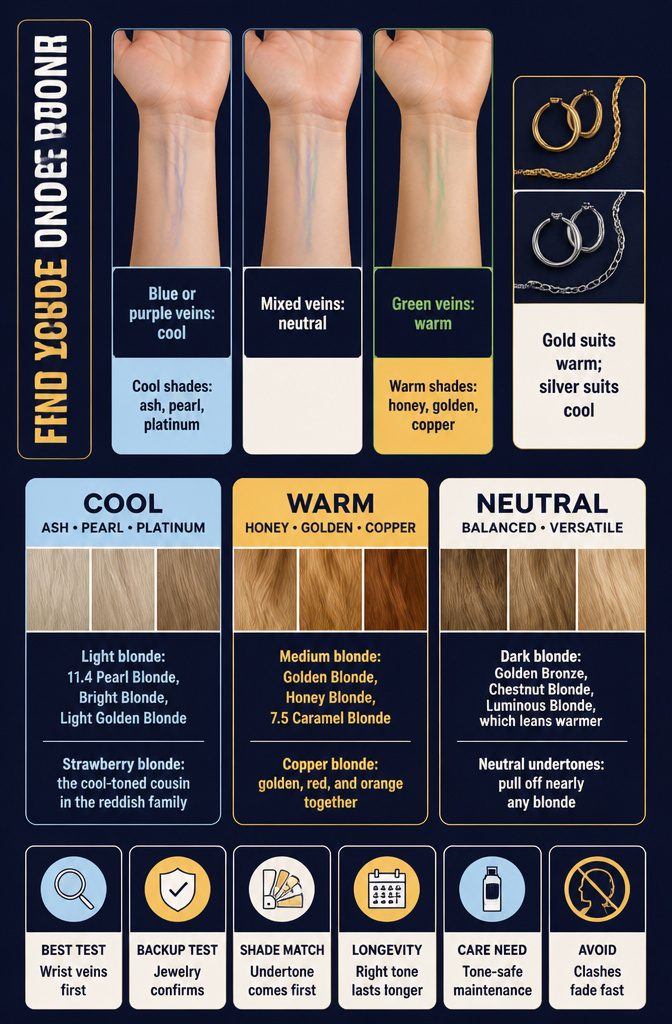
The wrist-vein test settles the undertone question faster than anything else. Blue or purple veins mean cool undertones, and you want ash, pearl, platinum, or silver blonde.
Green veins signal warm undertones, so reach for honey, golden, copper, or strawberry shades. If you see both or can’t decide, neutral undertones let you pull off nearly any blonde.
Light blonde covers shades like 11.4 Pearl Blonde, Bright Blonde, and Light Golden Blonde.
Medium blonde includes Golden Blonde, Honey Blonde, and 7.5 Caramel Blonde. Dark blonde sits closer to brown with shades like Golden Bronze, Chestnut Blonde, and Luminous Blonde, which leans warmer.
Copper blonde brings golden, red, and orange together for something more striking than auburn but brighter than burgundy. Strawberry blonde is the cool-toned cousin in the reddish family.
I think of jewelry as the backup test when veins don’t give a clear answer. Gold looks better on warm skin, silver on cool.
2. Check Your Starting Color and Hair Condition
Your starting shade decides how many steps you face. Dark hair needs bleaching to reach most blonde shades because dye cannot lighten what is already pigmented.
Level one hair, a very dark brown close to black, needs to be lifted at least eight levels to get a golden blonde. Platinum requires even more lift, often across multiple sessions.
Existing blonde hair sometimes skips bleach entirely, particularly if you only want to lighten by a few shades. Some formulas lift up to five levels without bleach, but only if the base color is already fairly light.
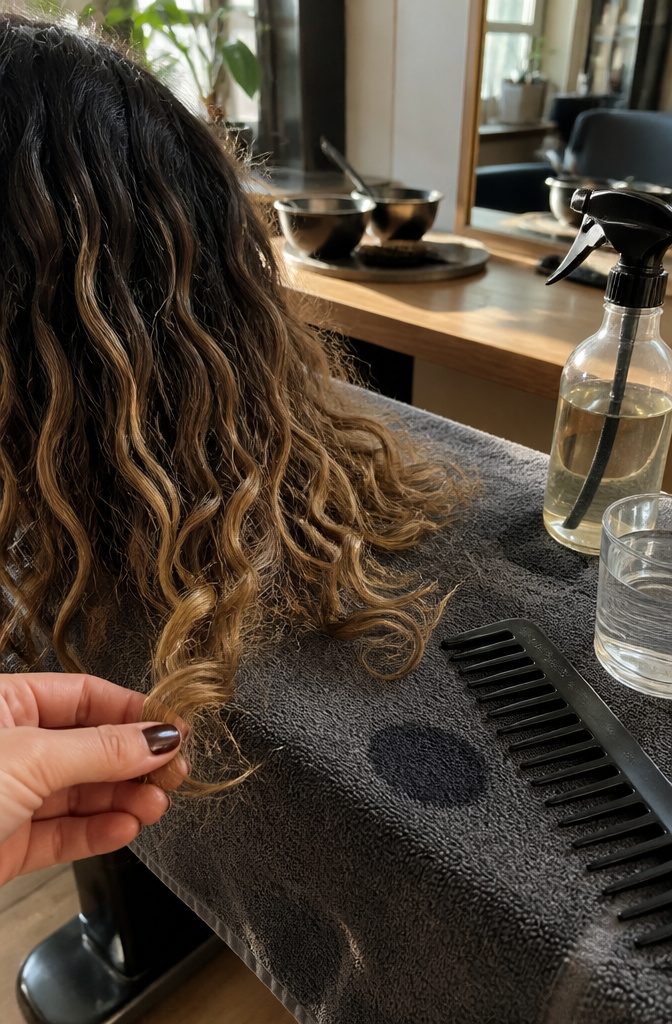
Lightening dries and weakens strands, especially if your hair is already damaged, brittle, or previously color-treated. Curly and coily hair carries extra risk because natural oils struggle to travel the length of the strand, leaving ends prone to breakage.
A realistic look at your hair’s current condition prevents breakage you cannot fix later. If strands feel brittle or show visible damage, hold off on lightening and condition first.
3. Do a Strand Test First
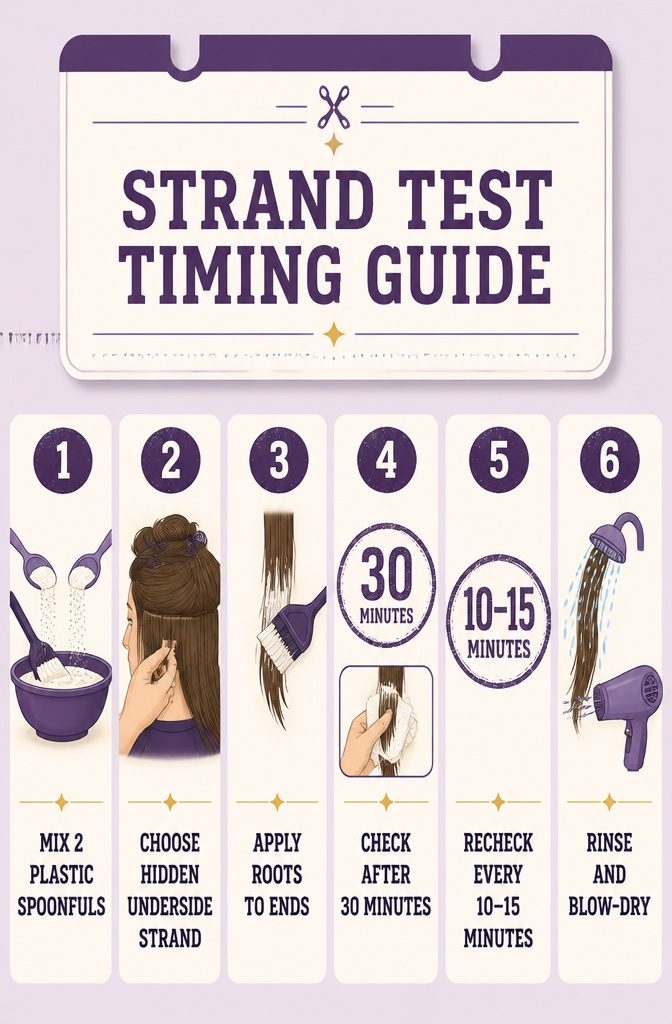
- Mix 2 plastic spoonfuls of lightener and developer in a non-metallic bowl. Metal can react with the chemicals and throw off your results, so stick with plastic or glass.
- Select a test strand from the underside of your hair where it won’t show. This gives you cover if the tone or timing needs adjustment.
- Apply the mixture from roots to ends on that section. Work it through completely so you get an accurate read on how the product behaves.
- Let it process for 30 minutes, then start checking. Wipe a small section clean with a damp paper towel to see the color underneath without rinsing the whole strand.
- Check every 10–15 minutes after that until you reach the shade you want. Skipping this step or pushing past the product’s maximum time is where most home lightening goes wrong.
- Rinse and blow-dry the test strand once you’ve hit your target. This shows you the final tone and exactly how long your full application needs to sit.
4. Prepare Your Hair and Gather Your Tools
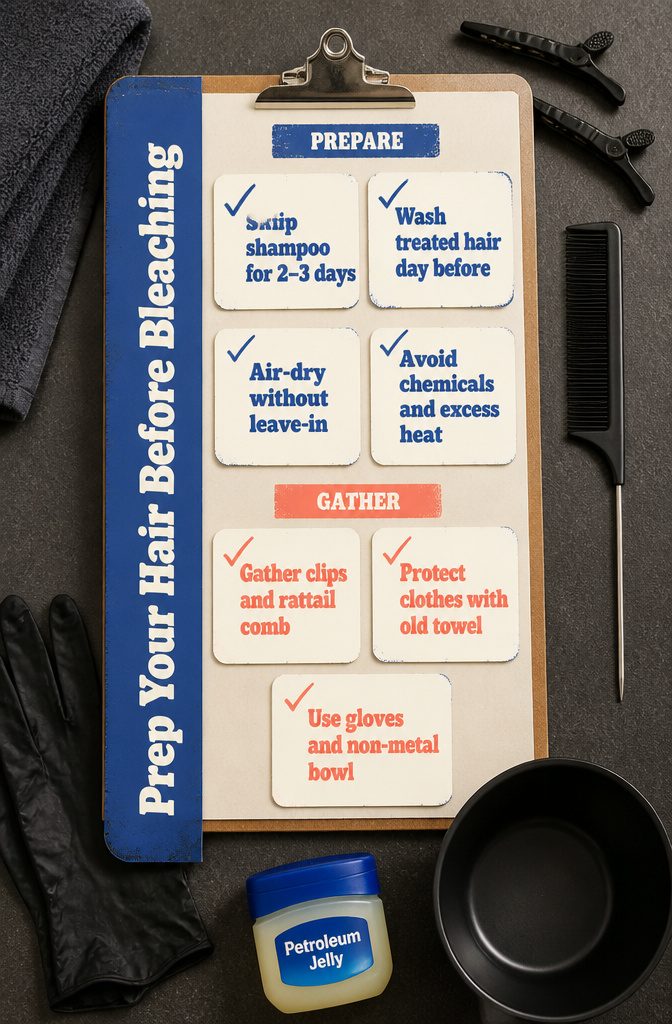
Your hair needs to be in stable condition before you lift it, and you’ll save yourself an uneven result by gathering everything in advance. Here’s what you need to do before you mix anything:
- Skip shampooing for two to three days if you’re working with natural hair. Two- or three-day-old hair carries more scalp oils that protect strands during bleaching. If you have product buildup and need to wash, follow up with coconut oil to replace those natural oils.
- For previously treated hair, wash and condition the day or night before with gentle formulas, then air-dry without leave-in products.
- Avoid chemical treatments and excessive heat styling in the weeks leading up to your dye session. Damage or existing permanent color can throw off your final result.
- Gather your tools: sectioning clips, a rattail comb, an old towel to protect your clothes, gloves, petroleum jelly for your hairline and ears, and a non-metallic bowl for mixing.
5. Bleach If You Need the Lift
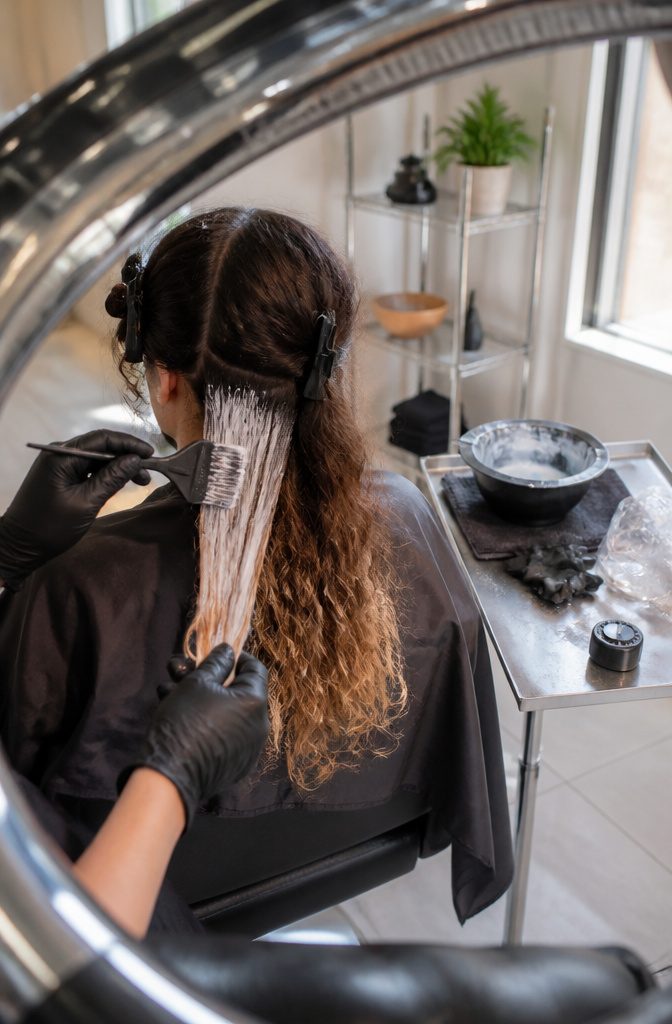
Dark hair usually needs bleach before blonde dye will show. L’Oréal Féria bleach and the Dark & Lovely Uplift Hair Bleach Kit both lift up to 8 levels, and Féria also comes with a purple conditioning treatment for brassiness.
Blonde It Up tops out at 5 levels, so I’d save it for hair that starts lighter.
Wait at least a few days between bleaching and coloring, and allow a few weeks between bleach rounds if you’re going from dark brown to platinum.
Curly and coily hair runs drier, and its ends turn brittle more easily, so go gently there. If your hair has been colored or bleached before, highlights included, I’d book a professional.
6. Apply the Blonde Color
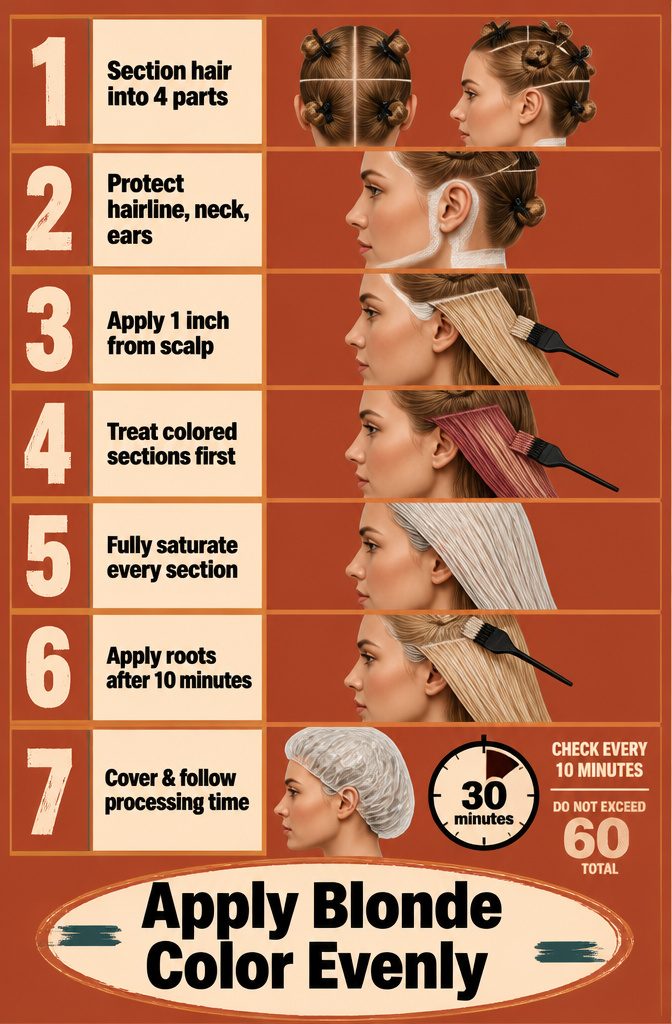
- Section your hair into at least four parts to make application manageable and even.
- Protect your hairline, the back of your neck, and the tops of your ears with a thin layer of petroleum jelly before you start. This stops accidental drips from staining your skin.
- Apply the mixture 1 inch away from the scalp and smooth it through to the ends first, avoiding the root area completely. The mistake that ruins evenness is processing roots first—they lift faster than the rest of your hair and end up lighter than you intended.
- If you have previously colored hair, apply product to those sections first so they get more time to process over any existing color, then move on to the rest of your hair. Virgin hair can be worked in any order.
- Fully saturate every section—sparse coverage means patchy lift.
- Leave the mixture on your roots last, applying it only after the lengths have processed for 10 minutes. Gently smooth any remaining product through.
- Cover with a plastic shower cap to seal in heat and moisture, then follow the package processing time, typically 30 minutes. Check progress every 10 minutes and do not exceed 60 minutes total.
7. Tone Out Brassiness
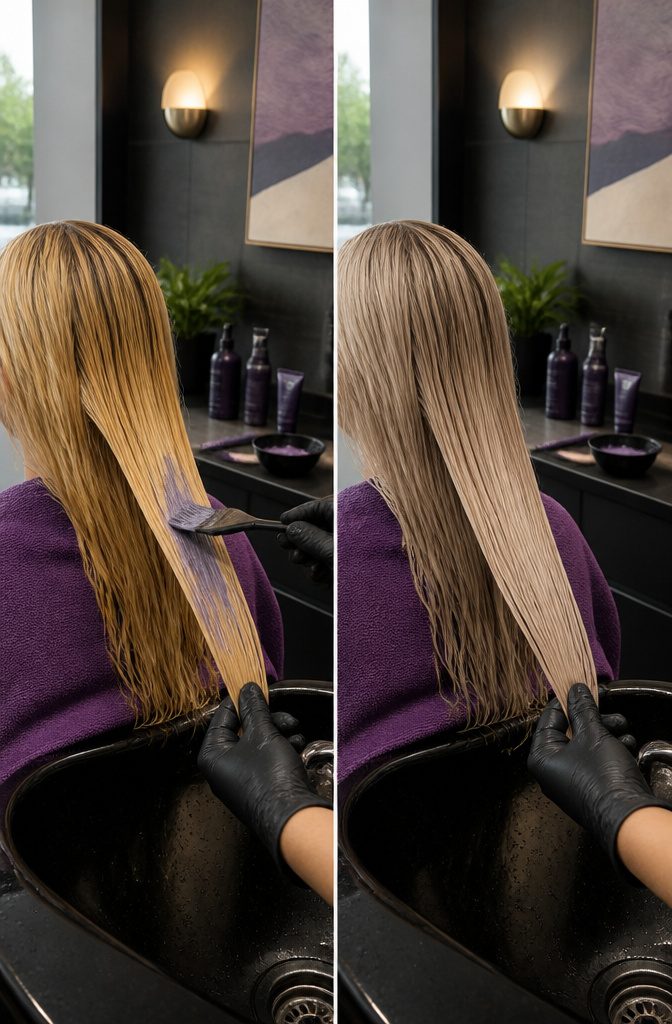
Toner neutralizes the yellow, orange, or brassy warmth that shows up after bleaching, and skipping it leaves your blonde looking more construction-cone than cool.
L’Oréal Féria Power Toner works in as little as 5 minutes and takes the edge off brassiness without ammonia, so if you bleached and the result is too warm or you want an ultra-ashy finish, this step brings it back into line.
Purple shampoo and purple conditioner do the same job more gradually. Swap them in once a week in place of your regular wash to keep yellow tones from creeping back.
Toning conditioners left on for 3 minutes add a violet tint while you condition, and violet masks work faster if brassiness is really pronounced.
I keep a purple shampoo on hand because blonde fades warm, and catching it early beats trying to fix it later.
8. Rinse, Condition, and Style
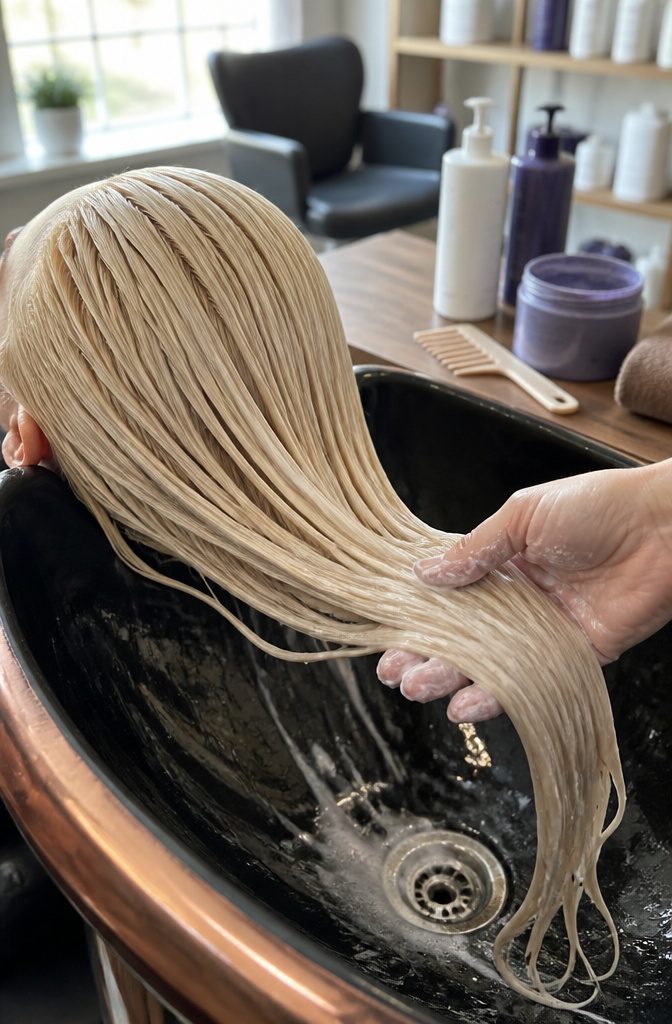
Once the color has fully developed, rinse thoroughly with lukewarm water until it runs clear, then shampoo and condition as usual. If you want to cool down any warmth right away, this is when a violet toning product comes in.
Some kits include a toning mask you can apply immediately after rinsing to neutralize orange or brassy undertones before they settle in. If your blonde looks good as-is, save the toning step for later when warmth starts to creep back.
After you’ve rinsed and conditioned, I recommend working CC ColourSeal Conditioner into your routine once a week. It locks in the pigment and keeps the cuticle sealed, which means your blonde stays truer longer and the hair itself feels smoother.
On the weeks you skip it, stick with a conditioner made for color-treated hair so you’re not stripping out what you just put in.
Style however you like after that, straight or curled. The color is set.
Maintain Your Blonde Between Touch-Ups
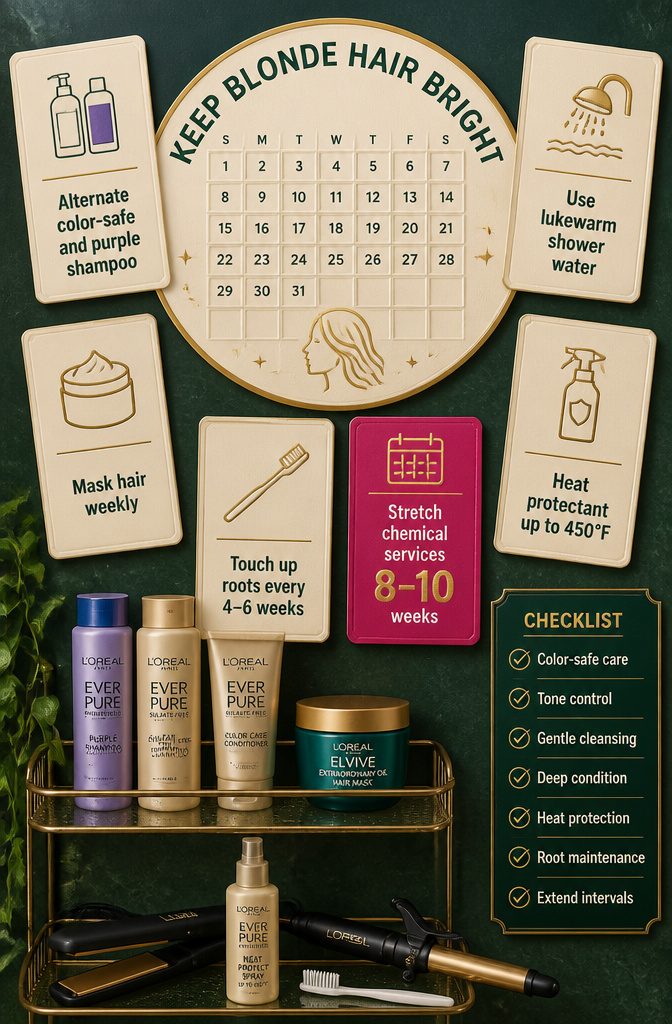
Dyed blonde hair fades and turns brassy more easily than darker shades, so the routine between appointments does a lot of the work.
- Alternate a color-protecting shampoo and conditioner with purple shampoo, which cancels yellow and brassy tones.
- Shower lukewarm. Hot water fades color faster.
- Use a hair mask weekly, or a leave-in conditioner if your ends run dry.
- Apply heat protectant before curling or straightening. L’Oréal’s protects up to 450°F.
- Touch up roots every 4–6 weeks with a little dye on a toothbrush. Permanent blonde lasts around 6 weeks.
- The AAD recommends 8–10 weeks between chemical services, so I’d stretch the gap with L’Oréal Paris Le Color Gloss One Step In-Shower Toning Gloss instead of more dye.
Salon or Home: What the Choice Depends On
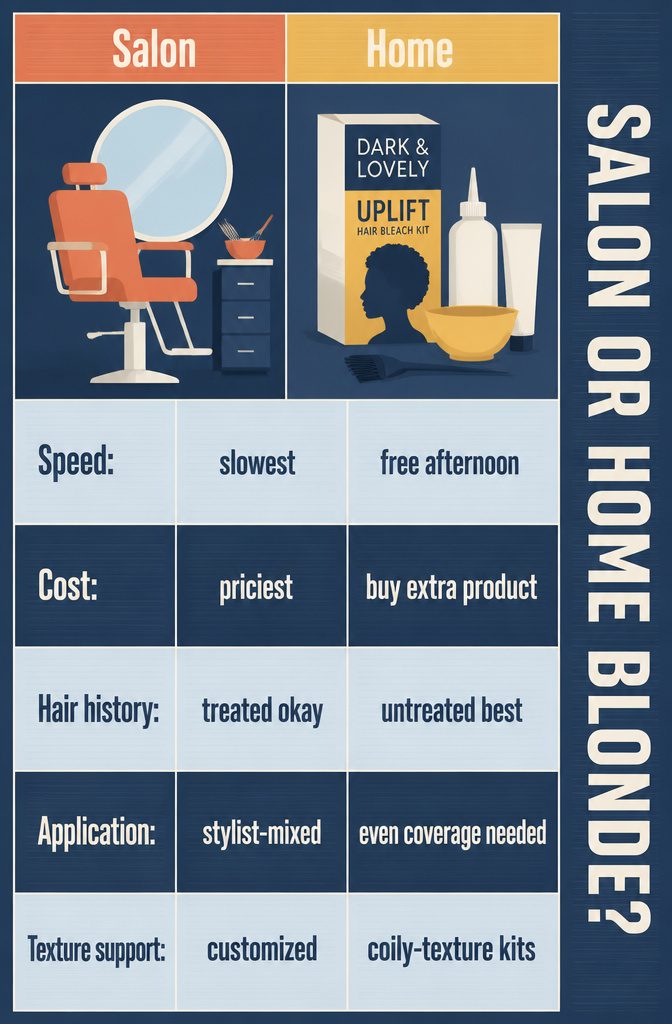
Salon blonde is the slowest and priciest route because it is really two treatments: the stylist bleaches first, then colors to your shade.
The colorist also mixes everything by hand, picking a peroxide strength and a lightener form (powder, cream or liquid) to suit your strands.
If your hair has been colored or bleached before, and highlights count, I’d book the salon. Previously treated hair is where uneven application does the most damage, and a pro can correct for it.
Home works best on untreated hair, with a steady hand and a free afternoon. Bleaching the whole head takes patience, and every section needs even coverage.
With thick or long hair, buy extra product so you don’t run out midway. Kits made for coily textures, like the Dark & Lovely Uplift Hair Bleach Kit, make it easier.
Going from Blonde to Brown
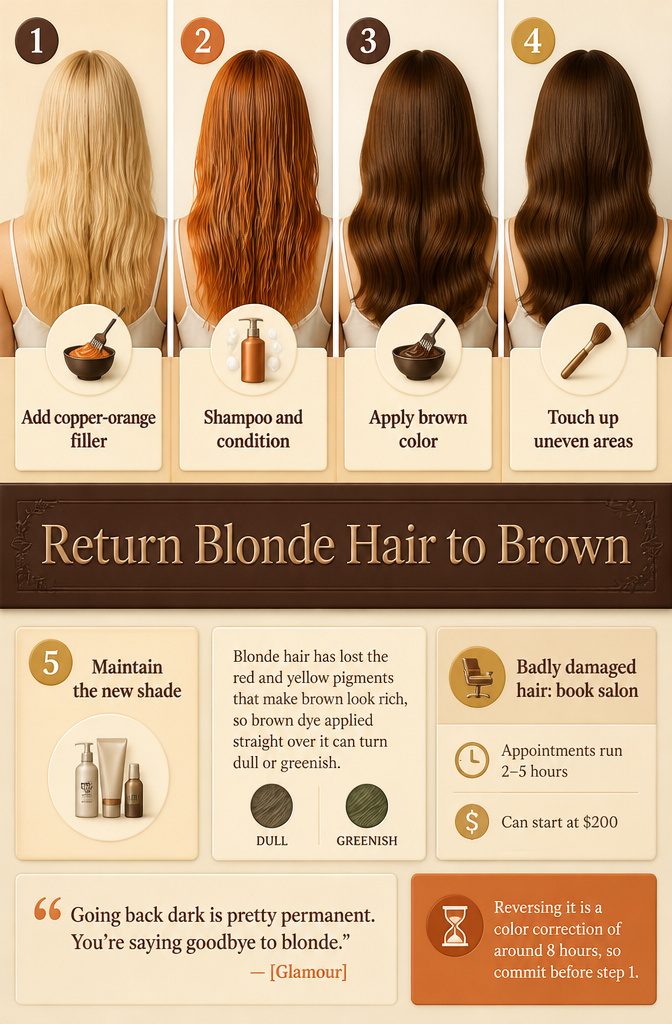
Blonde hair has lost the red and yellow pigments that make brown look rich, so brown dye applied straight over it can turn dull or greenish.
- Add the filler: work a copper with an orange tone into damp hair (Clairol Natural Instinct in Light Auburn is one), process as directed, then shampoo and condition.
- Add the brown color over the filled hair.
- Touch up any uneven areas.
- Maintain the new shade.
Heavily bleached hair takes color unevenly, so book a salon if yours is badly damaged. Appointments run 2–5 hours and can start at $200.
“Going back dark is pretty permanent. You’re saying goodbye to blonde.”
— Glamour
Reversing it is a color correction of around 8 hours, so commit before step 1.
How Much Lift You Need by Starting Level
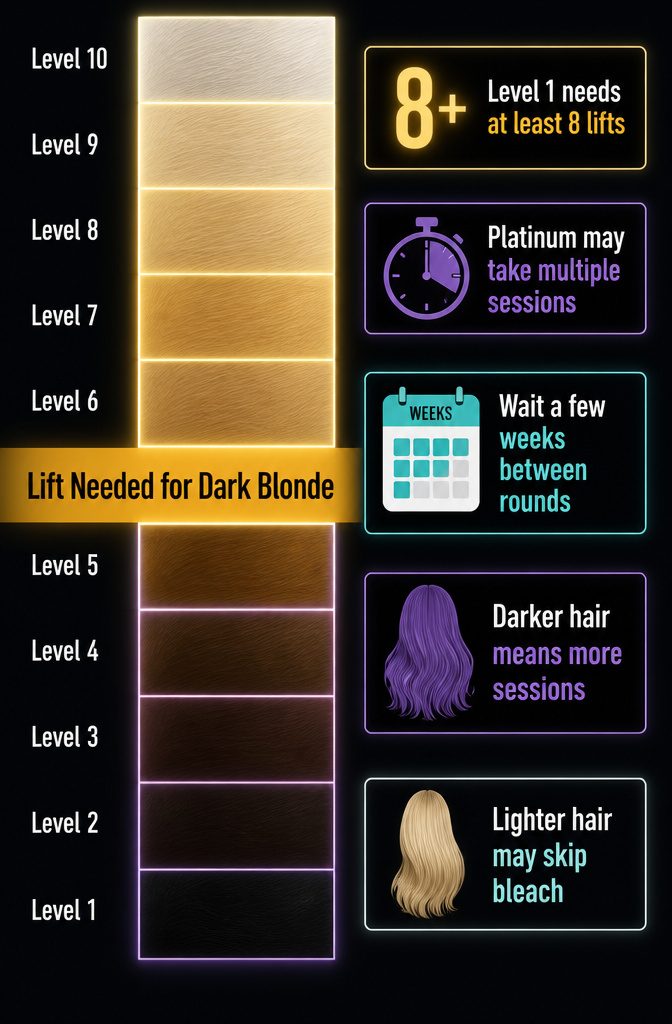
Level 1 hair, the very dark brown that sits close to black, needs at least 8 levels of lift with bleach to reach golden blonde. Platinum, the almost-white shade, takes multiple sessions on hair that dark rather than one long one.
A gap of a few weeks between rounds is the rule I’d hold to, since back-to-back bleaching is how hair gets over-processed. The darker your starting level, the more sessions you book and the longer the whole project runs.
Hair that already starts on the lighter side may skip bleach, though that depends on the dye you choose and the shade you want.
Frequently Asked Questions
How long does dyed blonde hair last?
Permanent blonde color lasts around 6 weeks, so plan root touch-ups every 4–6 weeks. Blonde fades and turns brassy faster than darker shades.
Lukewarm showers and an alternating purple shampoo slow that down. The AAD recommends 8–10 weeks between chemical services, and a toning gloss can bridge the gap.
Is it possible to dye your hair blonde without bleach?
Yes, but only when your starting color is already fairly light.
Some formulas, such as Blonde It Up, lift up to 5 levels without bleach. Dark hair can’t get there that way: very dark brown close to black (level 1) needs at least 8 levels of lift for golden blonde, which takes bleach.
What blonde shade should I choose for my skin tone?
Match the shade to your undertone. Blue or purple wrist veins point to cool undertones, which suit ash, pearl, platinum, and silver blondes.
Green veins point to warm undertones, which suit honey, golden, copper, and strawberry shades. If you see both, you’re neutral and can wear nearly any blonde; gold jewelry looking better on you means warm, silver means cool.
Should I dye my hair blonde at a salon or at home?
Go to a salon if your hair has ever been colored or bleached, highlights included, because a pro can apply product evenly over treated hair.
Home dyeing works best on untreated hair when you have a steady hand and a free afternoon. A salon costs more and takes longer, since the stylist bleaches first and then colors.
How many boxes of dye do I need to go blonde at home?
There is no set box count; buy enough product to cover your whole head.
If your hair is thick or long, get extra so you don’t run out partway through. Patchy or sparse coverage leads to uneven lift.