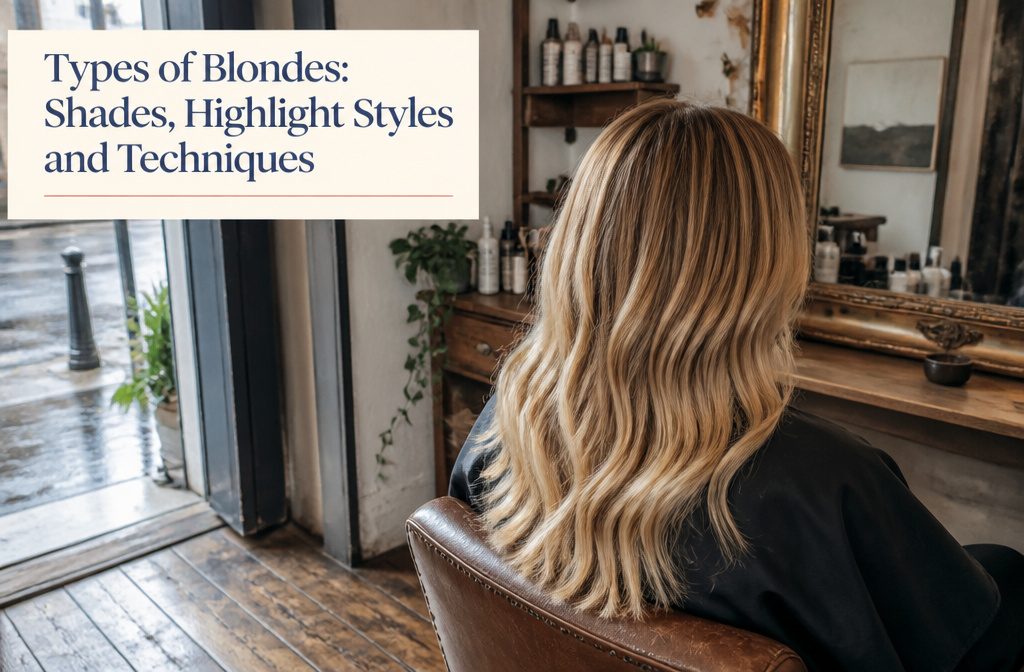
Blondes run from level 7 dark blonde to level 10 platinum, and the right one depends on how far your natural color sits from it.
Stay within 2 levels and the lift is manageable. Go darker to platinum and expect 2 or 3 sessions, a toner that fades in 4 to 6 weeks, and a consult before you pin the photo.
1. Warm Blondes: Golden, Honey, Strawberry, Caramel, Buttery, Copper, and Tawny Gold
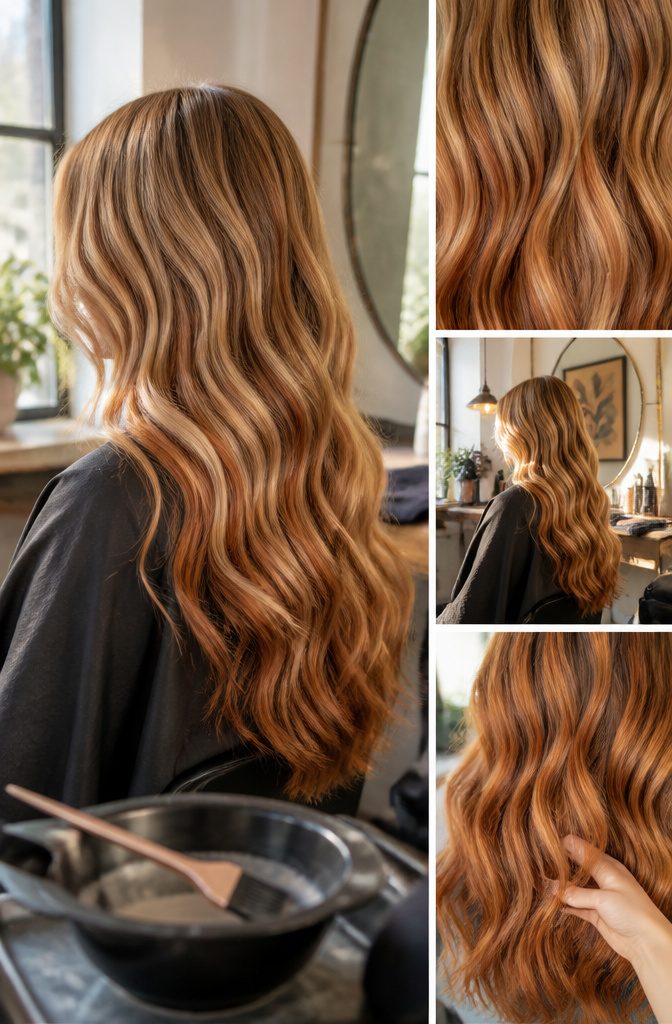
Warm blondes get their color from gold, yellow, red, copper or caramel, and they pair best with warm undertones. Honey is the easiest way in: it looks natural, grows out gently, and a gloss between appointments keeps it fresh.
Golden and caramel add sun-kissed depth, while strawberry leans on a subtle red. Buttery blonde, with its honey-yellow splashes, suits light to medium, pearly complexions.
Copper is a darker golden shade with amber undertones, and it’s my pick for brown or black eyes and for darker natural hair, since it gets you blonde without going brassy.
Tawny gold is the fussiest: it’s one solid, glossy color, so even a little regrowth shows. Plan a touch-up at about 6 weeks.
2. Cool Blondes: Platinum, Ash, Silver, Icy, Pearl, Crystal, and Light Ash
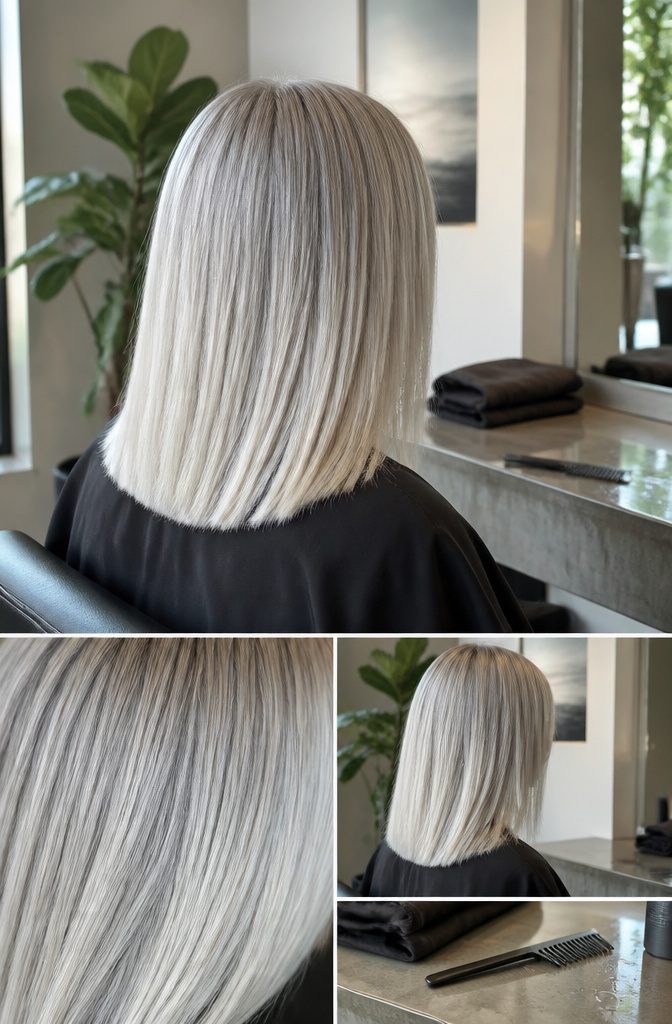
Ash is the cool blonde I’d steer most people toward. Its muted gray tone suits cool skin with low contrast against the eyes, and it loses less shine than bolder blondes, so home care stays easy.
Pearl mixes violet with blue, while ice and crystal run blue. Light ash is the whiter step: a cool platinum for lighter complexions and eyes, reached by balayage on light hair or all-over color on darker.
Platinum is high maintenance, and prior color or damage can rule it out:
"If there’s a previous color or existing damage, you would need a wig to achieve this."
— Allure
Book a consult before you pin the photo.
3. Neutral and Balanced Blondes: Beige, Sandy, Dirty, Mushroom, Natural, Champagne, and Gold-Ash
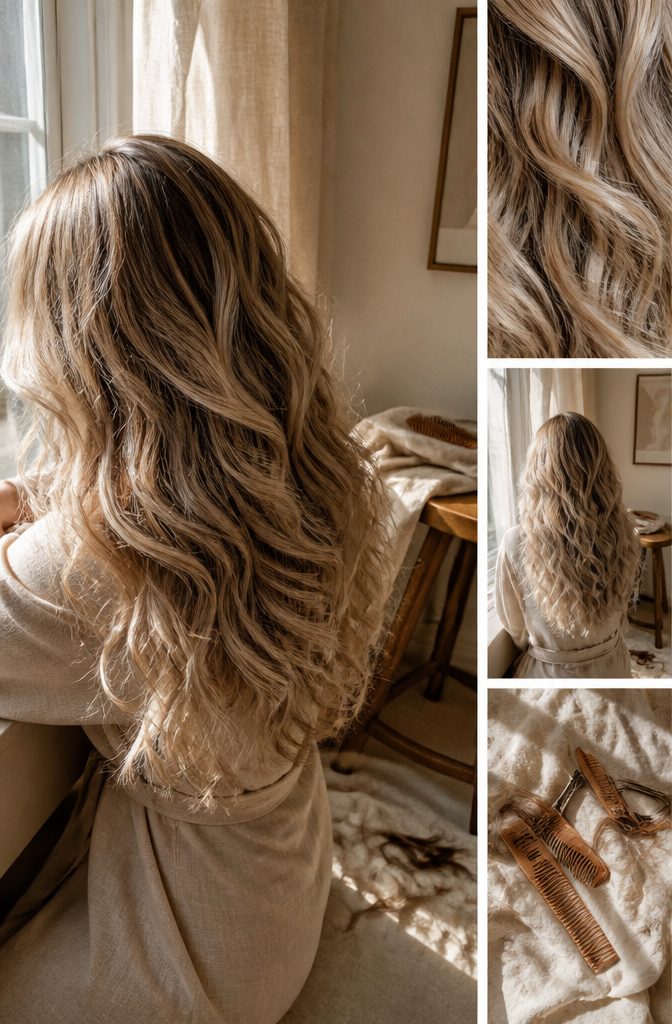
Neutral blondes sit between warm and cool, which is why they flatter the widest range of skin tones.
Beige is the pale yellowish end of the family and looks best on olive and deeper skin, especially on textured or voluminous hair, where movement makes the color pop.
Sandy suits fair skin and light eyes, and I’d ask for a dark blonde base with cool, beige-toned balayage on the mid-lengths and ends.
Dirty blonde, with its wheat tones, fits green or brown eyes and medium skin. Mushroom wins on grow-out: its ashy base blends softly with regrowth and carries a blonde-to-gray transition.
Champagne mixes beige with pale gold. To fine-tune any of them, balance two dominant tones with one contrasting tone, so warm skin and eyes get a cooler blonde.
4. Dark and Transitional Blondes: Bronde, Chocolate, Chestnut, and Black Blonde
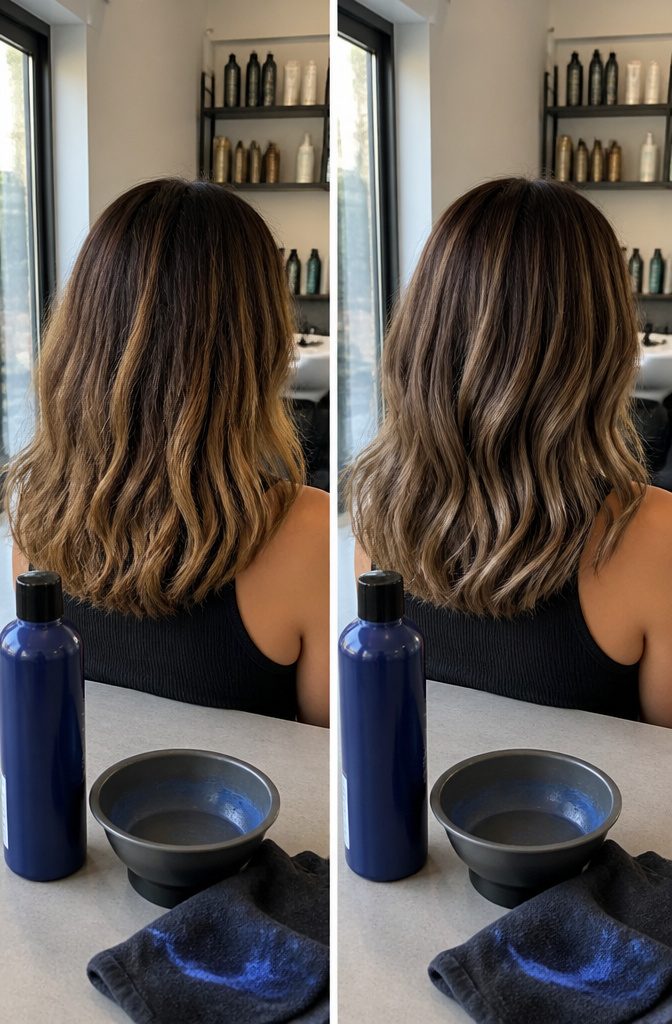
Bronde, a blend of brown and blonde, is the gentlest way into lightness, and the sandy version flatters nearly everyone except very cool skin tones.
Regrowth stays close to your natural shade, so you get a longer grace period between salon visits. I’d leave it to a colorist, since matching the shade to your starting color is harder than the name suggests.
Chocolate blonde is a deeper caramel that suits darker skin and eyes; avoid versions with too much white, platinum or orange.
Chestnut blonde pairs dark hair with golden highlights, and it works on dark complexions or on medium skin with blue eyes. Use a blue-pigmented shampoo between visits to cancel the orange that shows up in lightened dark hair.
5. Red-Blonde Variations: Strawberry, Auburn, Cherry, and Golden Copper
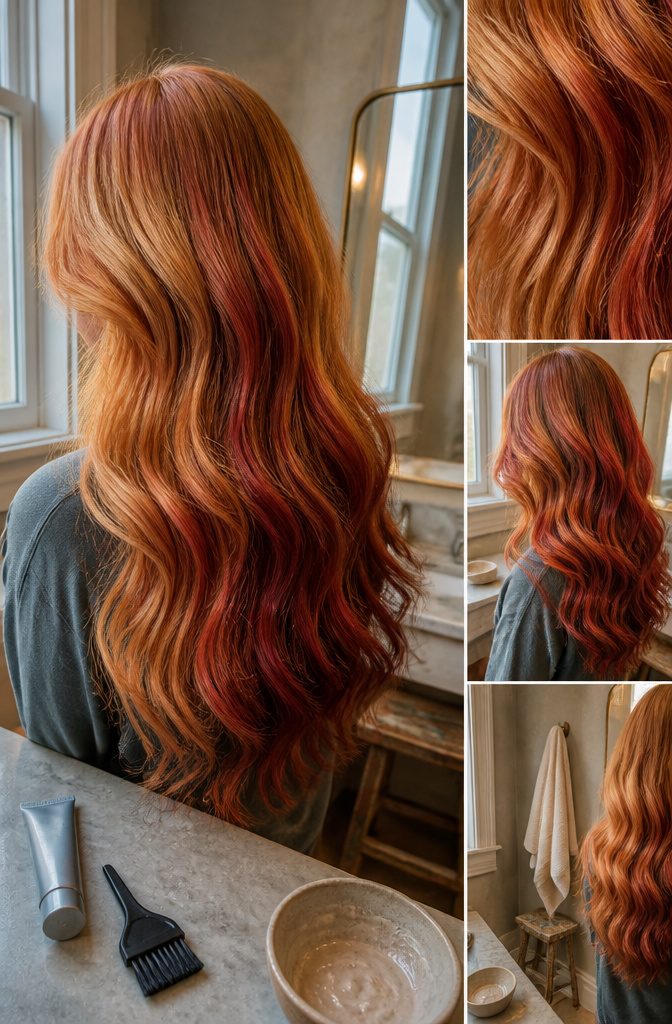
Red-blondes add a second pigment on top of gold, and that’s what separates them from a straight warm blonde.
Strawberry blonde carries subtle red undertones and stops short of full copper, so I’d start there if you’re nervous. Because red blondes read as both blonde and red, they flatter naturally blonde and naturally red hair best.
Copper blonde is a luminous, darker gold with amber undertones. It suits darker skin and brown or black eyes, and on a dark natural base it gets you to blonde without the brass.
Cherry is the boldest: a soft red-copper with a pink undertone, or a fuchsia-toned berry over a darker base.
Bleach to blonde first, then add the cherry over it. To test the water at home, Ion’s Bright White Creme toner in Strawberry Milk adds a hint of strawberry and rose gold.
6. Highlights: Foiled Brightness From the Root
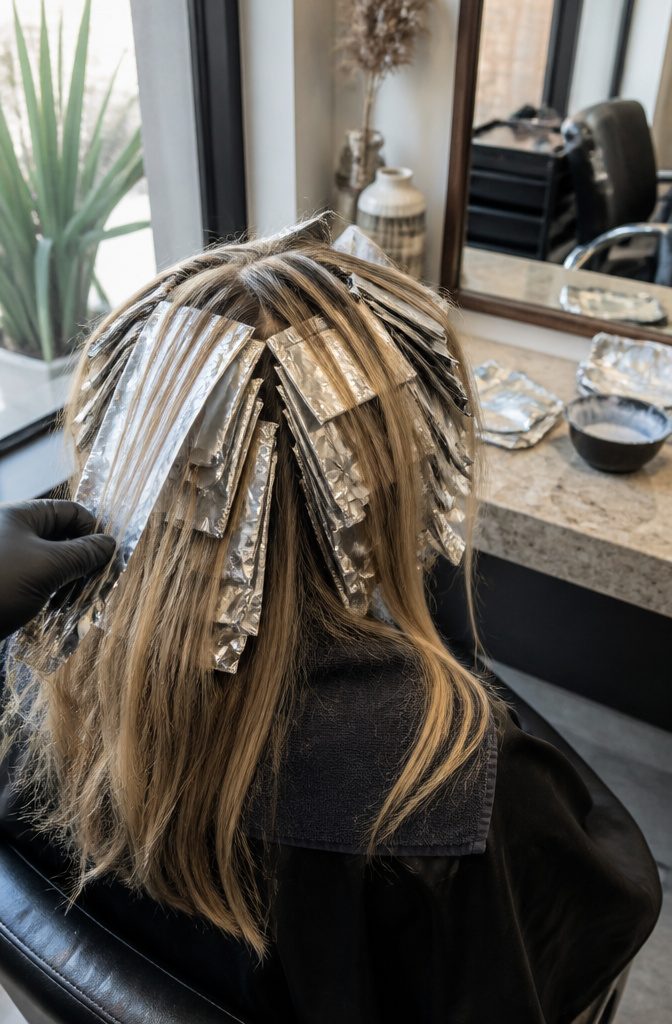
Foils placed from the root give the most even, predictable lift of any blonde service, and that is why full highlights still earn their spot.
On a light base they make the shade brighter and richer, with the sun-streaked look you’d normally need a summer for. They work on warm and cool blondes alike.
Highlights also blend in gray, and they can start a move toward lighter hair, even from brown.
Regrowth shows sooner because the foils start at the scalp, and Hyde lists a return at 6 to 8 weeks for full highlights. I’d pick them if you wear your hair up often, since a ponytail still reads blonde.
7. Partial Highlights: Foils on the Top and Sides Only
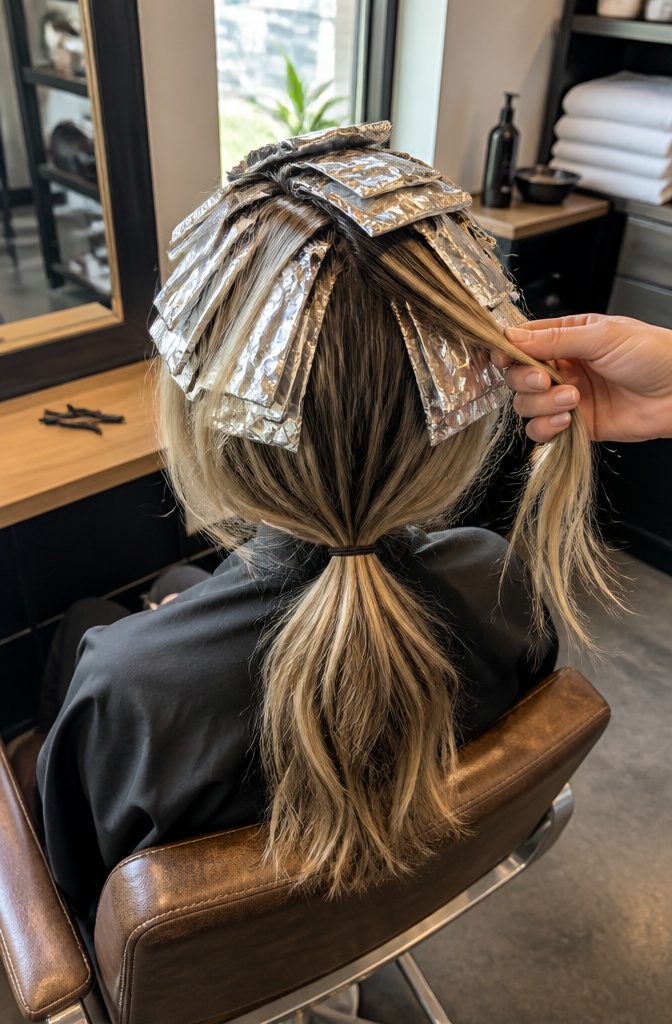
Partial highlights put foils on the top and sides only, the sections where light naturally hits, and leave the rest of the head alone.
Foiling from the root gives even, precise lift, so the brightness around your face and part looks clean rather than smudged.
Partial highlights buy you time, with a return visit at 8 to 10 weeks compared with 6 to 8 for full highlights. I’d choose partial over full for anyone who wants face-framing brightness but can’t keep a six-week schedule.
If you wear your hair up most days, tell your stylist before they start. A ponytail shows the back, and that may change where the light goes.
8. Babylights: Very Fine Foils Placed Close Together
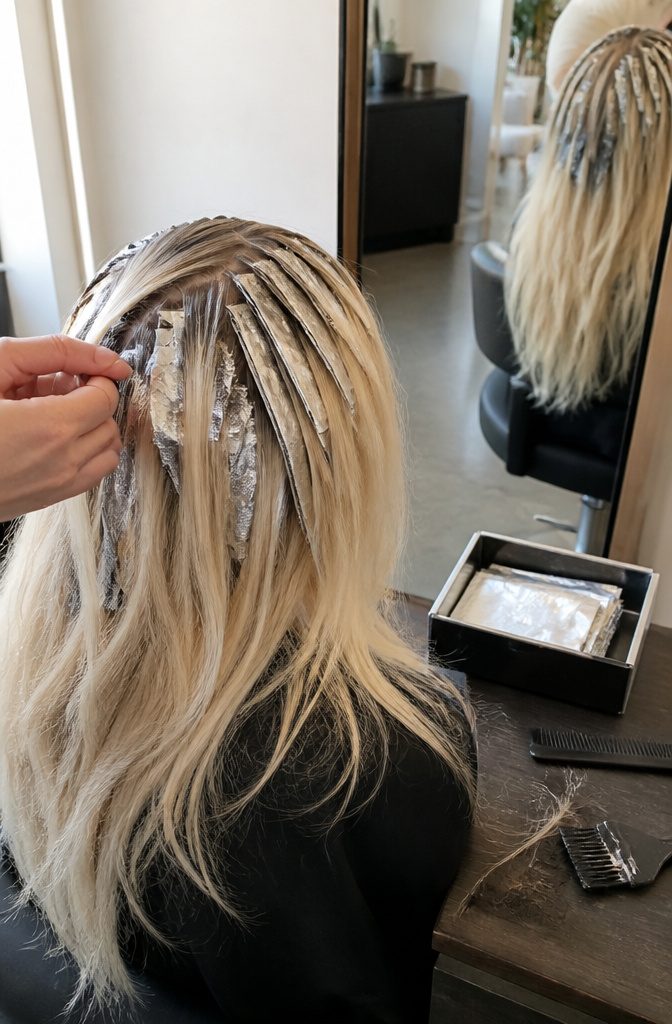
Babylights are very fine foils set close together, so the brightness reads as one soft glow instead of separate stripes.
I’d choose them for fine hair, or for anyone who wants lightness without visible pieces. The cost is chair time: all those small sections take longer than a standard foil job.
Because the foils start at the root, the whole head brightens, and a ponytail still reads blonde, where hand-painted work can look darker pulled back.
Plan on returning every 8 to 10 weeks, the same window as partial highlights and looser than the 6 to 8 weeks full highlights demand. If that schedule is unrealistic, balayage stretches to 10–16 weeks.
9. Balayage: Hand-Painted Lightness Starting Away From the Root
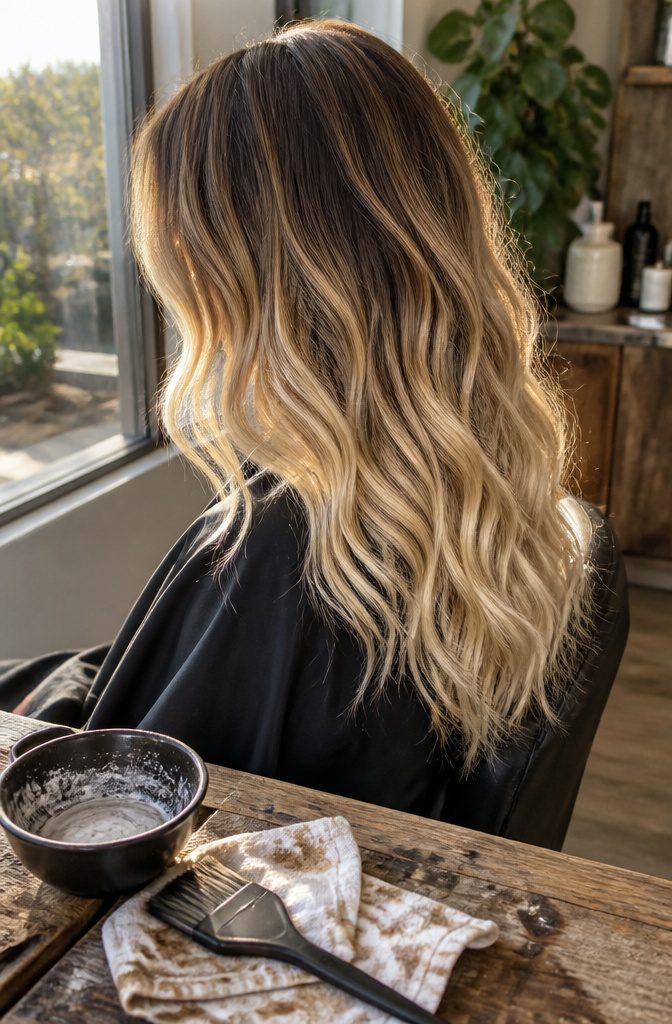
Balayage is painted on by hand, and the color usually starts away from the root instead of at it.
That placement is why the transition looks soft: there’s no hard line where new growth meets lightened hair, so regrowth reads as a gentle shadow rather than a stripe.
The grow-out is longer too. Plan on a return visit at 10 to 16 weeks, which suits anyone who doesn’t want a salon appointment dictating the calendar.
Balayage puts more weight on the colorist’s precision.
Foils sectioned from the root give a more even, predictable result, while hand painting gives up some of that control for softness. I’d choose balayage whenever low maintenance matters more than uniform brightness.
10. Foilyage: Hand-Painted Color Wrapped in Foil for More Lift
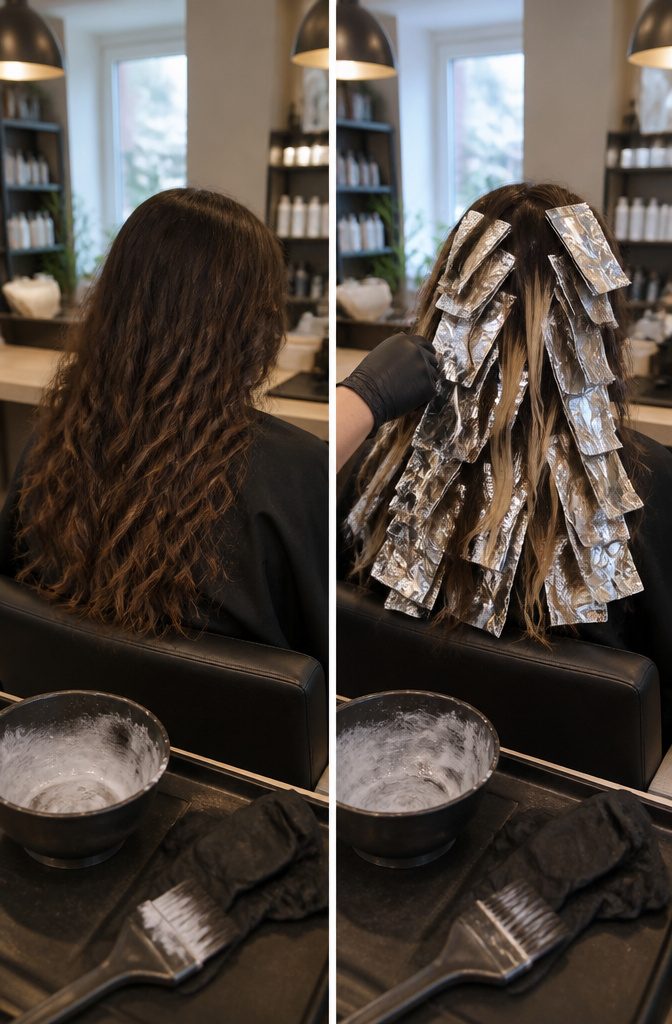
Foilyage is balayage painted by hand, then wrapped in foil to hold the heat in.
You get the soft placement of balayage with more lift than hand painting alone can reach. On darker hair that has a long way to travel, I’d pick it over plain balayage.
Plan on a return visit in 10 to 14 weeks. That falls between full highlights at 6 to 8 weeks and balayage at 10 to 16.
Hand-painted brightness gathers through the mid lengths and ends, so it can look darker when your hair is pulled back. If you wear a ponytail most days, tell your stylist before they start.
11. Lived-In Blonde: Blended Brightness Designed Around Regrowth
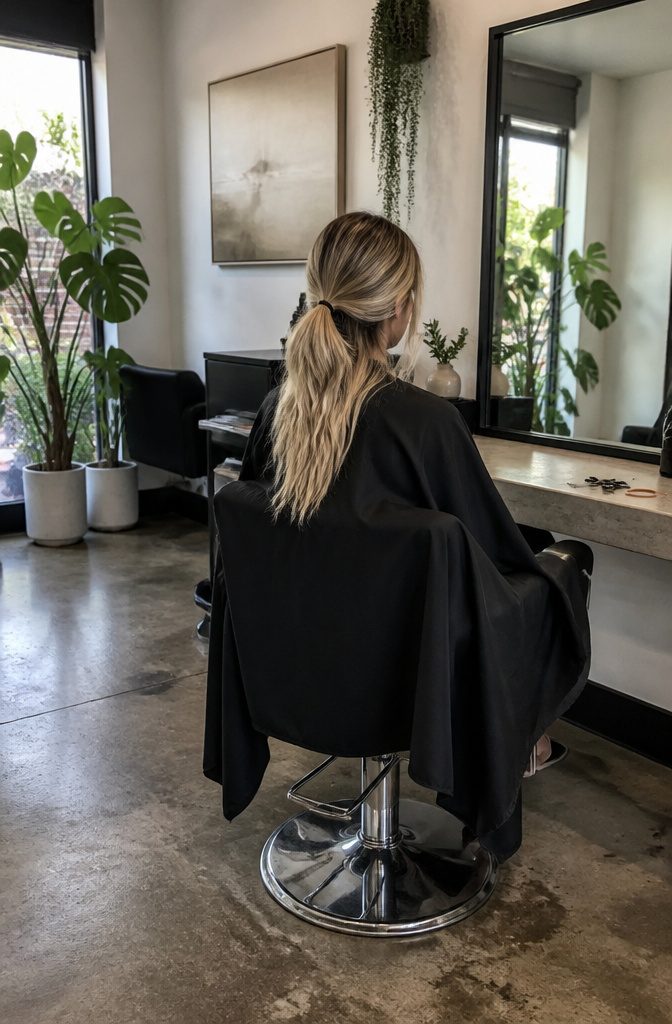
Lived-in blonde keeps the brightness but moves it away from the roots, often with a darker root or a soft root smudge, so new growth never draws a hard line.
That is why the return window is 12 to 16 weeks, compared with 6 to 8 for full highlights.
You can still go properly bright, as long as the blonde stays blended and off the root. I like adding a money piece at the face for a bolder pop around the features.
One limit: hand-painted brightness sits through the mid lengths and ends, so it can look darker in a ponytail. If you wear your hair up most days, tell your colorist.
12. Ombré, Sombré, Degradé, and Color-Melting
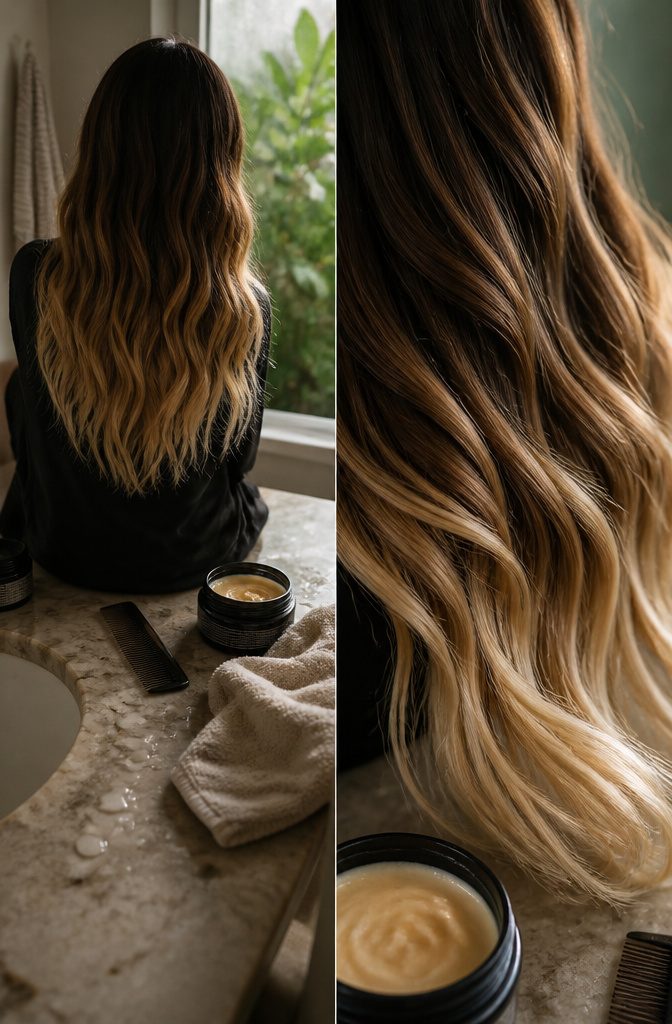
Ombré, sombré and degradé all keep a darker base and let the lengths go lighter; they differ in how sharply that shift happens.
Degradé suits medium or long hair, and because the ends are bleached while the root stays dark, regrowth is easy to manage.
Contrast can run strong or weak. Sombré is the soft version: light brown roots, some dimension through the midshaft, blonde ends, and eight weeks or more before a refresh.
If a visible line bothers you, I’d choose color-melting, which is hand-painted so tones blend with no harsh lines.
It adds brightness and depth and can stretch your time between visits. Bleached ends want a nourishing mask regularly and a rich conditioner every wash.
13. Platinum: All-Over Lift to the Lightest Level
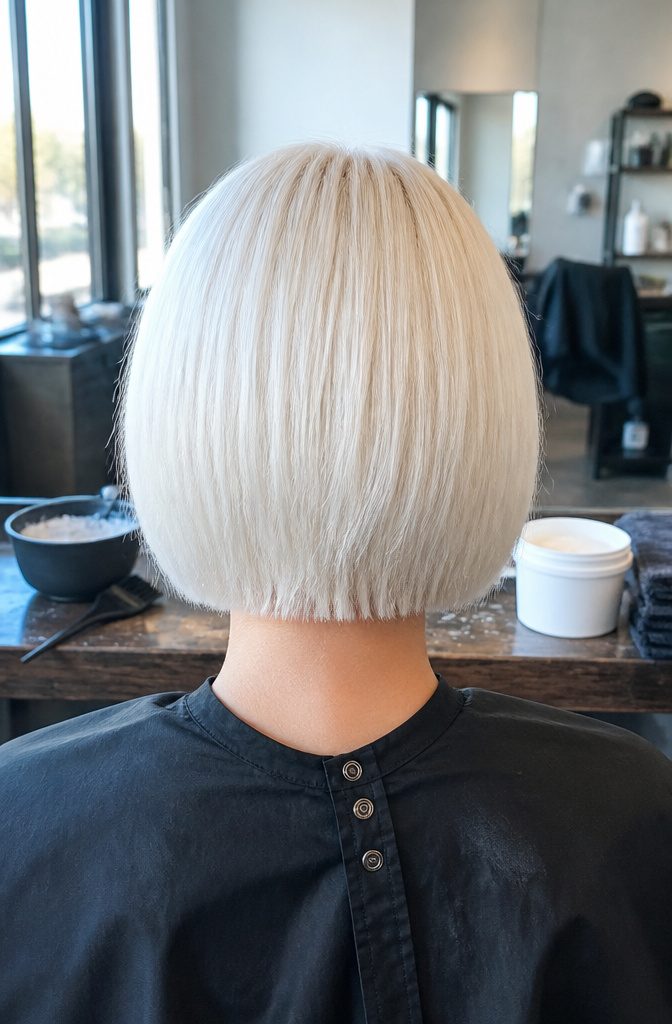
Platinum is level 10, the lightest blonde there is, and it asks the most of your hair. Hair doesn’t jump there in one step.
It passes through red, then orange, then yellow, and a dark base has far more of that warmth to clear. Expect 2 or 3 sessions if you’re starting dark, and doubt anyone who promises it in one.
Existing damage or a previous color can rule platinum out, so book a consult first. Damage is likely, and you’ll probably lose a few inches.
Toner fades and lift always warms, so plan on being back in the chair every 4 to 6 weeks. Without that schedule I’d skip platinum and choose a softer butter blonde, which forgives far more.
Blonde Hair Ranges From Level 7 to Level 10
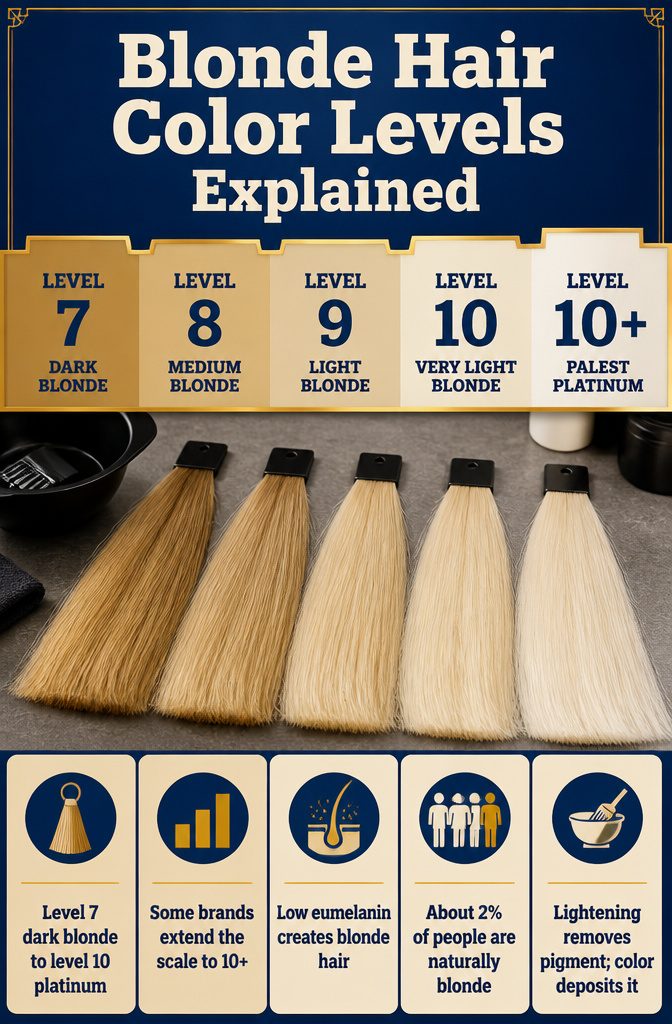
Blonde runs from level 7 (dark blonde) to level 10 (very light or platinum blonde), and some brands stretch the scale to 10+, 11 or 12 for the palest shades.
The color comes from low eumelanin, the pigment that darkens hair as it increases. Only about 2% of people are naturally blonde, so most blondes you see on Pinterest were colored.
Wording matters at the salon. "Lightening" or "lifting" means pigment removal, while "color" or "coverage" means deposit only.
The top of the scale is the hardest to reach, since previous color or existing damage can rule out a true platinum. I’d book a consult before you save a level 10 photo as your goal.
Match Blonde to Your Undertone and Features
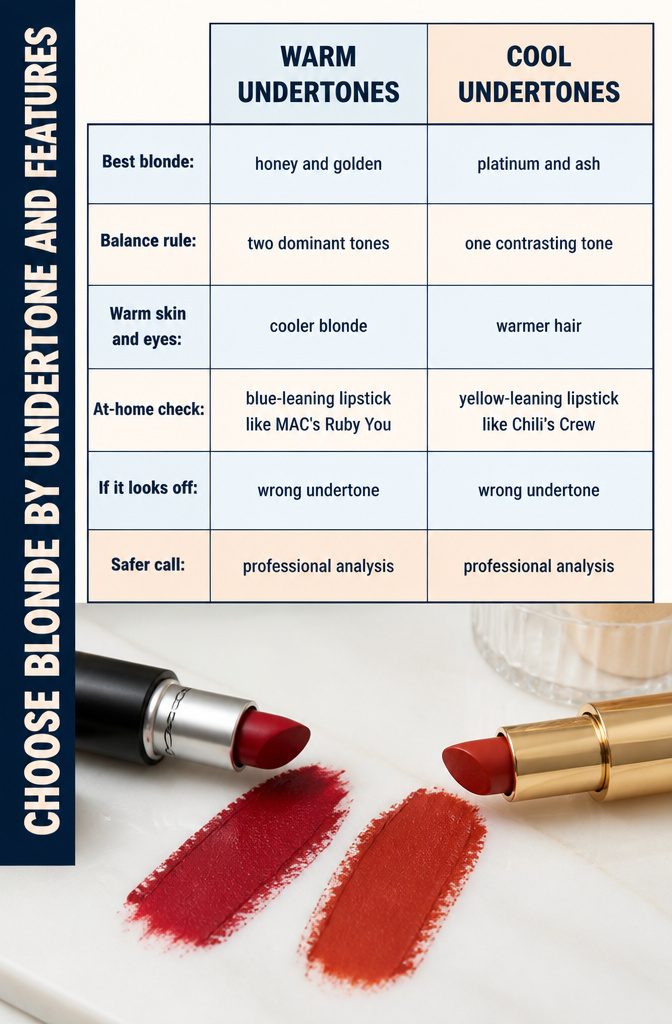
Warm undertones, the yellow, peachy or golden kind, pair with honey and golden blonde. Cool undertones, the pink or blue kind, suit platinum and ash.
To check yours at home, hold a blue-leaning lipstick like MAC’s Ruby You against a yellow-leaning one like Chili’s Crew; the wrong undertone looks off right away. A professional analysis is still the safer call.
Undertone is only the start.
Eye color, natural hair color, contrast and your color history all shift the answer. Dwell uses a 2:1 approach: two dominant tones from your skin, eyes and hair, balanced with one contrasting tone.
Warm skin and eyes often look best with a cooler blonde, while cool coloring gets a little warmth in the hair. I trust that rule more than the warm-versus-cool split alone.
What Blonde Maintenance Actually Requires
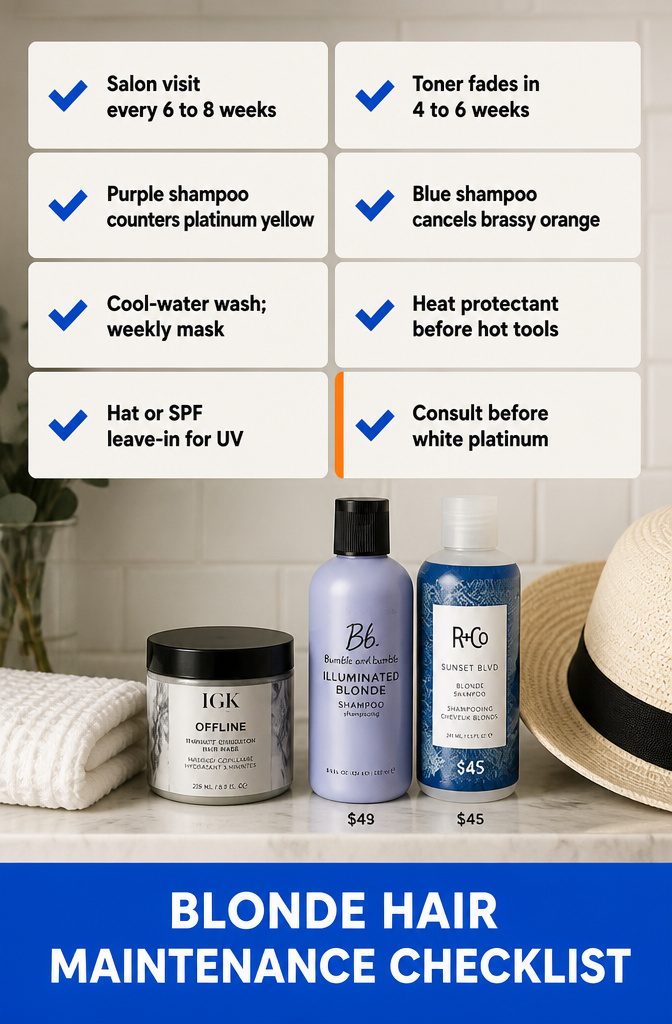
Plan on a salon visit every 6 to 8 weeks for a gloss or touch-up.
Toner sits on the outside of the hair, so it rinses away in 4 to 6 weeks, and faster in humid climates. Between visits, purple shampoo keeps platinum from going yellow, while blue-pigmented shampoo cancels brassy orange.
Wash in cool water, use a mask once a week, and put a heat protectant on before any hot tool. A hat or an SPF leave-in covers UV.
For products, I’d pick Bumble and Bumble Illuminated Blonde ($49), R+Co Sunset Blvd ($45) and IGK Offline mask ($38). If you want white platinum, book a consultation first, because existing color or damage can rule it out.
Stay Within 2 Levels of Your Natural Hair Color
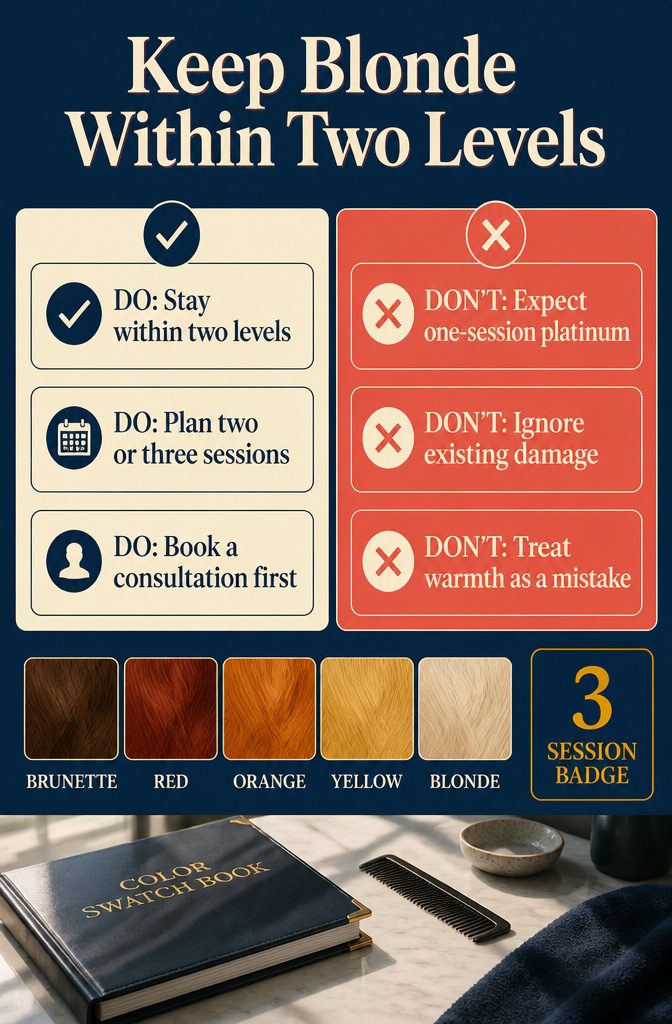
Staying within two levels of your natural color keeps the lift manageable. Dark hair has further to travel: lightening removes pigment, and the hair passes through red, then orange, then yellow on the way to blonde.
That warmth is a stage, not a mistake. A brunette asking for a natural light blonde’s result may need two or three sessions rather than one.
Condition matters just as much. Lightening leaves hair more porous, so it takes in and loses moisture faster and stretches further before it breaks.
Big platinum jumps can mean breakage, damage or intensive aftercare, and existing damage or previous color can rule the look out entirely. I’d book a consult before saving the photo.
The Difference Between Highlights and Balayage
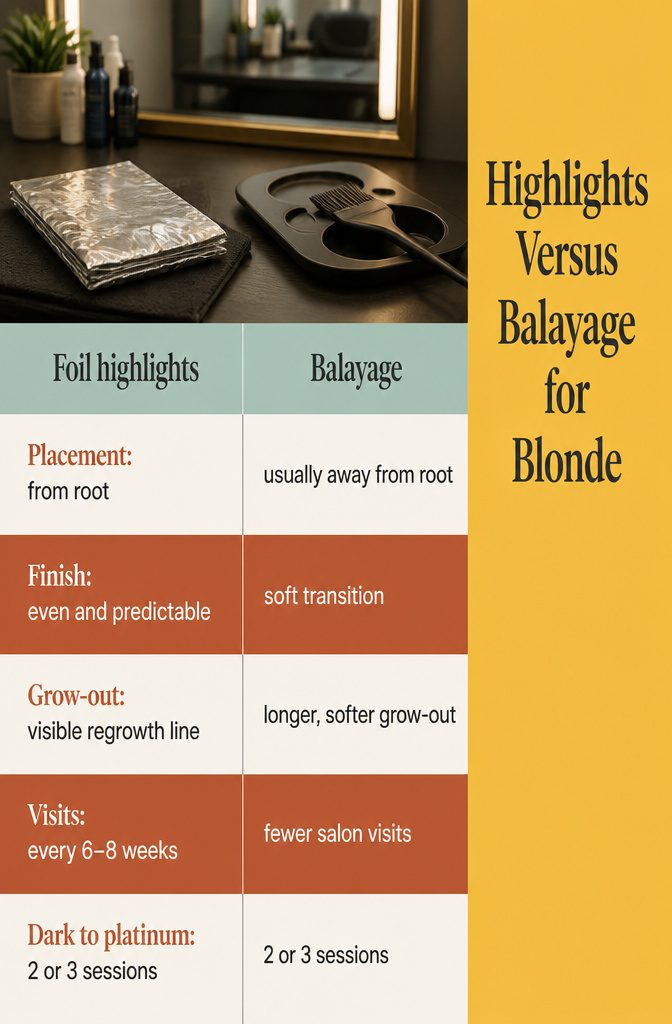
Foil highlights are placed from the root, so the result is even and predictable. Balayage is painted by hand, usually starting away from the root, which gives a softer transition and a longer grow-out.
Both lighten hair. What differs is placement, precision and how the regrowth looks.
For the fewest salon visits, I’d choose balayage or a lived-in blonde.
The lightness starts below the root, so no line shows as your natural color grows in. A full head of highlights or a platinum blonde needs attention every 6–8 weeks.
Dark-to-platinum is a different job. Plan on 2 or 3 sessions, spaced out, rather than one marathon day.
Frequently Asked Questions
What is the difference between highlights and balayage?
Highlights are foiled from the root, which gives an even, predictable result.
Balayage is painted by hand, usually starting away from the root, so it looks softer and grows out longer. Both lighten hair, but full highlights call for a return visit at 6 to 8 weeks, while balayage stretches to 10–16.
What are babylights?
Babylights are very fine foils placed close together, so the brightness reads as one soft glow instead of separate stripes.
They suit fine hair and anyone who wants lightness without visible pieces. Expect longer chair time and a return visit every 8 to 10 weeks.
What is foilyage?
Foilyage is balayage painted by hand and then wrapped in foil, which holds in heat for more lift than hand painting alone.
It works well on darker hair that has a long way to go. Plan on a return visit in 10 to 14 weeks.
Which type of blonde needs the fewest salon appointments?
Balayage and lived-in blonde need the fewest.
The lightness starts below the root, so no line shows as your natural color grows in. Balayage lasts 10–16 weeks and lived-in blonde 12 to 16, versus 6 to 8 for full highlights.
Can I go from dark hair to platinum in one appointment?
Almost never.
Dark hair passes through red, then orange, then yellow on the way up, so expect 2 or 3 sessions spaced apart. Existing damage or previous color can rule platinum out, so book a consultation before you commit.
How do I find my undertone to pick a blonde shade?
Hold a blue-leaning lipstick like MAC’s Ruby You against a yellow-leaning one like MAC’s Chili’s Crew. The wrong undertone looks off right away.
Warm skin runs yellow, peachy or golden and suits honey or golden blonde; cool skin runs pink or blue and suits platinum or ash. A professional color analysis is the safer call.
What are the levels of blonde?
Blonde runs from level 7 (dark blonde) to level 10 (very light or platinum blonde).
Some brands extend the scale to 10+, 11 or 12 for the palest shades. Level 10 is the hardest to reach, since previous color or damage can rule it out.